

Factor Structure, Reliability and Criterion Validity of the Autism-Spectrum Quotient (AQ): A Study in Dutch Population and Patient Groups
Open accessThe DOI matches its Crossref record; 37 of the 38 references it cites were found in a registry or an index.
Abstract
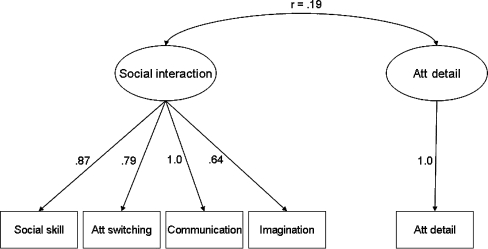
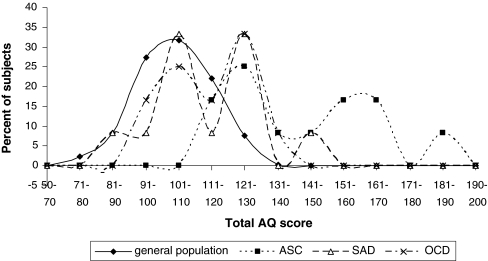
The factor structure of the Dutch translation of the Autism-Spectrum Quotient (AQ; a continuous, quantitative measure of autistic traits) was evaluated with confirmatory factor analyses in a large general population and student sample. The criterion validity of the AQ was examined in three matched patient groups (autism spectrum conditions (ASC), social anxiety disorder, and obsessive-compulsive disorder). A two factor model, consisting of a "Social interaction" factor and "Attention to detail" factor could be identified. The internal consistency and test-retest reliability of the AQ were satisfactory. High total AQ and factor scores were specific to ASC patients. Men scored higher than women and science students higher than non-science students. The Dutch translation of the AQ is a reliable instrument to assess autism spectrum conditions.
Overview
The claims and statistics of this paper haven’t been checked yet.
Free: it reads the open-access text and checks the first 5 claims that cite a source we can check. Create a free account to check every claim.
Integrity signals
Registry
Cites
Statistics
Figures
Verification
Claims the paper makes
The claims and statistics of this paper haven’t been checked yet.
Free: it reads the open-access text and checks the first 5 claims that cite a source we can check. Create a free account to check every claim.
Claims other papers make about this one
Each is checked against this paper’s own text: does it say what the citing paper says it does?
The source backs part of the claim, not all of it — or backs it for a different population, condition or comparison.
In the citing paper
“The test has good internal consistency and test-retest reliability and has been translated into many languages [57, 58].”
From A 'choice', an 'addiction', a way 'out of the lost': Exploring self-injury in autistic people without intellectual disability (2019) · cites this paper as [58]
Experimental — accuracy not yet measuredThe cited source says what the claim attributes to it.
In the citing paper
“High total AQ scores are specific to patients with an ASD and set them apart from both the general population and from patients with SAD [65].”
The check wasn’t confident either way, so it gives no verdict — never disputed.
In the citing paper
“The most widely used measure for adults with ASC is the Adolescent/Adult Sensory Profile (AASP), a 60-item self-report measure that finds differences in sensory processing in more than 90% of adults with ASC [17,19].”
From The Sensory Perception Quotient (SPQ): development and validation of a new sensory questionnaire for adults with and without autism (2014) · cites this paper as [19]
Experimental — accuracy not yet measured
Self-check
Percentages, sums and reported differences re-computed from the paper’s own numbers.
The self-check needs the paper’s full text.
Citations
Cites
Lord, C., Rutter, M., & Le Couteur, A. (1994) · Journal of Autism and Developmental Disorders · doi:10.1007/bf02172145 · Cited by 9,065 · cited 2×
“Keywords Autism Factor analysis Validity Reliability Autism phenotype”
MethodSchermelleh-Engel, K., Moosbrugger, H., & Müller, H. (2003) · Department of Psychology - University of Koblenz-Landau · doi:10.23668/psycharchives.12784 · Cited by 8,975
Lord, C., Risi, S., Lambrecht, L., Cook, E. H., Leventhal, B. L., DiLavore, P. C., Pickles, A., & Rutter, M. (2000) · Journal of Autism and Developmental Disorders · doi:10.1023/a:1005592401947 · Cited by 7,520 · cited 2×
“Keywords Autism Factor analysis Validity Reliability Autism phenotype”
MethodBaron-Cohen, S., Wheelwright, S., Skinner, R., Martin, J., & Clubley, E. (2001) · Journal of Autism and Developmental Disorders · doi:10.1023/a:1005653411471 · Cited by 6,450 · cited 13×
“Both the British (Baron-Cohen et al. 2001) and the Japanese version (Kurita et al. 2005) of the AQ reported good test-retest reliability and moderate internal consistency (Cronbach’s a varying from .63 to .78).”
BackgroundMethodResultInfluentialStructured Clinical Interview for DSM-IV Axis I Disorders
Spitzer, R. L., First, M. B., & Gibbon, M. (1997) · Medical Entomology and Zoology · Cited by 4,096
Autism as a strongly genetic disorder: evidence from a British twin study
Bailey, A., Le Couteur, A., Gottesman, I., Bolton, P., Simonoff, E., Yuzda, E., & Rutter, M. (1995) · Psychological Medicine · doi:10.1017/s0033291700028099 · Cited by 2,461
The extreme male brain theory of autism
Baron-Cohen, S. (2002) · Trends in Cognitive Sciences · doi:10.1016/s1364-6613(02)01904-6 · Cited by 2,007 · cited 2×
“In line with the empathizing–systemizing theory of autism (Baron-Cohen 2002; Baron-Cohen et al. 2005) and findings from previous studies (Baron-Cohen et al. 2001; Hoekstra et al. 2007; Wakabayashi et al. 2006) we expected: (a) AQ scores to be continuously distributed in the general population; (b)…”
ResultThe Extreme Male-Brain Theory of Autism
Baron-Cohen, S. (1999) · Neurodevelopmental Disorders · doi:10.7551/mitpress/4945.003.0023 · Cited by 1,413
Autistic Traits in the General Population: A Twin Study
Constantino, J. N., & Todd, R. D. (2003) · Archives of General Psychiatry · doi:10.1001/archpsyc.60.5.524 · Cited by 1,317 · cited 2×
“continuously distributed in the population (Constantino and Todd 2003; Piven et al. 1997; Spiker et al. 2002).”
BackgroundSex differences in the brain: implications for explaining autism
Baron-Cohen, S., Knickmeyer, R. C., & Belmonte, M. K. (2005) · Science · doi:10.1126/science.1115455 · Cited by 1,145 · cited 2×
“In line with the empathizing–systemizing theory of autism (Baron-Cohen 2002; Baron-Cohen et al. 2005) and findings from previous studies (Baron-Cohen et al. 2001; Hoekstra et al. 2007; Wakabayashi et al. 2006) we expected: (a) AQ scores to be continuously distributed in the general population; (b)…”
Result
Research works printed but not linked: 2
- 1. American Psychiatric Association (2000). Diagnostic and Statistical Manual for Mental Disorders, 4th Ed., Text Revision (DSM-IV-TR). Washington: American Psychiatric Press.
- 26. Neale M. C., Boker S. M., Xie G., Maes H. H. Mx: Statistical modeling. 7. Richmond: VCU; 2006.
Cited by
Items 401–500 of 761
Is it still autism? The increasing broadening of the autism spectrum
Bertelli, M. O., Boniotti, V., & Scior, K. (2024) · Autism Research · doi:10.1002/aur.3282 · Cited by 10
Leth‐Steensen, C., Gallitto, E., Mintah, K., & Parlow, S. E. (2021) · Journal of Autism and Developmental Disorders · doi:10.1007/s10803-020-04823-7 · Cited by 10
Using EEG movement tagging to isolate brain responses coupled to biological movements
Cracco, E., Oomen, D., Papeo, L., & Wiersema, J. R. (2022) · Neuropsychologia · doi:10.1016/j.neuropsychologia.2022.108395 · Cited by 10
van Oort, J., Llera, A., Kohn, N., Mei, T., Collard, R. M., Duyser, F. A., Vrijsen, J. N., Beckmann, C. F., Schene, A. H., Fernández, G., et al. (2023) · eLife · doi:10.7554/elife.85006 · Cited by 10
Central Sensitivity Symptoms and Autistic Traits in Autistic and Non‐Autistic Adults
Grant, S., Norton, S., & Hoekstra, R. A. (2025) · Autism Research · doi:10.1002/aur.3297 · Cited by 10
Self-citationÖzgen, M. H., & van den Brink, W. (2022) · Psychiatry and Clinical Psychopharmacology · doi:10.5152/pcp.2022.22037 · Cited by 10
Wolford, E., Pesonen, A., Heinonen, K., Lahti‐Pulkkinen, M., Pyhälä, R., Lahti, J. M. T., Hovi, P., Strang‐Karlsson, S., Eriksson, J. G., Andersson, S., et al. (2016) · Journal of Developmental Origins of Health and Disease · doi:10.1017/s2040174416000738 · Cited by 10
Hashmi, S. I., Cosmas, G., Sombuling, A., Nawi, N. H. M., & Ahmad, P. H. M. (2021) · Malaysian Journal of Medical Sciences · doi:10.21315/mjms2021.28.6.11 · Cited by 10
Wielemaker, J. (2009) · EUR Research Repository (Erasmus University Rotterdam) · Cited by 10
Schröder, Y., Hohmann, D. M., Meller, T., Evermann, U., Pfarr, J., Jansen, A., Kamp‐Becker, I., Grezellschak, S., & Nenadić, I. (2021) · European Psychiatry · doi:10.1192/j.eurpsy.2021.15 · Cited by 9
Zappullo, I., Senese, V. P., Cecere, R., Raimo, G., Baiano, C., Lauro, A., & Conson, M. (2023) · Mindfulness · doi:10.1007/s12671-023-02116-5 · Cited by 9
Bayesian Network Structure and Predictability of Autistic Traits
Briganti, G., Williams, D. R., Mulder, J., & Linkowski, P. (2020) · Psychological Reports · doi:10.1177/0033294120978159 · Cited by 9
Measuring the Autistic Women’s Experience (AWE)
Groen, Y., Ebert, W. M., Dittner, F. M., Stapert, A. F., Henning, D., Greaves‐Lord, K., Davids, R. C. D., Castelein, S., Baron‐Cohen, S., Allison, C. L., et al. (2023) · International Journal of Environmental Research and Public Health · doi:10.3390/ijerph20247148 · Cited by 9
Sörnyei, D., Vass, Á., Németh, D., & Farkas, K. (2024) · BMC Psychiatry · doi:10.1186/s12888-024-06048-9 · Cited by 9
Torenvliet, C., Groenman, A. P., van Rentergem, J. A. A., Radhoe, T. A., & Geurts, H. M. (2024) · Psychiatry Research · doi:10.1016/j.psychres.2024.115759 · Cited by 9
Yaguchi, A., & Hidaka, S. (2020) · Multisensory Research · doi:10.1163/22134808-bja10042 · Cited by 9
Hidaka, S., & Yaguchi, A. (2018) · Multisensory Research · doi:10.1163/22134808-20181304 · Cited by 9
When 2 become 1: Autistic simultaneity judgements about asynchronous audiovisual speech
Poole, D., Gowen, E., Poliakoff, E., Lambrechts, A., & Jones, L. A. (2023) · Quarterly Journal of Experimental Psychology · doi:10.1177/17470218231197518 · Cited by 9
Dekker, L. P., Visser, K., van der Vegt, E. J. M., Maras, A., van der Ende, J., Tick, N. T., Verhulst, F. C., & Greaves‐Lord, K. (2019) · Journal of Research on Adolescence · doi:10.1111/jora.12539 · Cited by 9
Therianthropy: Wellbeing, Schizotypy, and Autism in Individuals Who Self-Identify as Non-Human
Clegg, H., Collings, R., & Roxburgh, E. C. (2019) · Society and Animals · doi:10.1163/15685306-12341540 · Cited by 9
The influence of joint attention and partner trustworthiness on cross-modal sensory cueing
de Jong, M. C., & Dijkerman, H. C. (2019) · Cortex · doi:10.1016/j.cortex.2019.04.005 · Cited by 9
Tamizaje de Trastornos del Espectro Autista en adultos: una versión en español del AQ-10
López, M. B. (2020) · Revista Neuropsicologia Latinoamericana · doi:10.5579/rnl.2020.0515 · Cited by 9
Cantarero, K., Byrka, K., & Król, M. E. (2021) · Research in Autism · doi:10.1016/j.rasd.2021.101806 · Cited by 9
Exploring the Effects of Cerebellar tDCS on Brain Connectivity Using Resting‐State fMRI
Catoira, B., Lombardo, D., Smet, S. D., Guiomar, R. N. R. M., Schuerbeek, P. V., Raeymaekers, H., Deroost, N., Overwalle, F. V., & Baeken, C. (2025) · Brain and Behavior · doi:10.1002/brb3.70302 · Cited by 9
Inner speech moderates the relationship between autism spectrum traits and emotion regulation
Albein-Urios, N., Youssef, G., Klas, A., & Enticott, P. G. (2021) · Journal of Autism and Developmental Disorders · doi:10.1007/s10803-020-04750-7 · Cited by 8
Radhoe, T. A., van Rentergem, J. A. A., Torenvliet, C., Groenman, A. P., van der Putten, W., & Geurts, H. M. (2023) · Autism · doi:10.1177/13623613231198544 · Cited by 8
Athar, M. E., Ebrahimi, A., Karimi, S., Esmailzadeh, R., Asl, E. M., Azizi, M., Heidarzadeh, S., Siahkamari, E., Sharifi, A., Jazi, E. A., et al. (2021) · Frontiers in Psychiatry · doi:10.3389/fpsyt.2021.744180 · Cited by 8
McKernan, E. P., & Russo, N. N. (2023) · Journal of Autism and Developmental Disorders · doi:10.1007/s10803-023-05944-5 · Cited by 8
Comprehension of “Narrow Focus” by Adolescents in the Autism Spectrum
Segal, O., Kaplan, D., Patael, S. Z., & Kishon‐Rabin, L. (2017) · Folia Phoniatrica et Logopaedica · doi:10.1159/000477399 · Cited by 8
Lu, H., Yi, L., & Zhang, H. (2019) · PLoS Computational Biology · doi:10.1371/journal.pcbi.1006964 · Cited by 8
Positive and Negative Sexual Cognitions of Autistic Individuals
García-Barba, M., Nichols, S. L., Ballester‐Arnal, R., & Byers, E. S. (2023) · Sexuality and Disability · doi:10.1007/s11195-023-09824-9 · Cited by 8
Jiang, J., von Kriegstein, K., & Jiang, J. (2020) · Scientific Reports · doi:10.1038/s41598-020-71547-0 · Cited by 8
Measuring autism spectrum disorder: associated features and diagnostic criteria
Kent, R. (2014) · ORCA Online Research @Cardiff (Cardiff University) · Cited by 8
Bilevičiūtė-Ljungar, I., Maroti, D., & Bejerot, S. (2018) · Scandinavian Journal of Psychology · doi:10.1111/sjop.12451 · Cited by 8
Khanjani, Z., Azmoodeh, S., Mahmoud-Aliloo, M., & Noorazar, G. (2018) · PubMed Central · Cited by 8
Godoy‐Giménez, M., González-Rodríguez, A., Cañadas, F., Estévez, Á. F., & Sayans‐Jiménez, P. (2021) · Journal of Autism and Developmental Disorders · doi:10.1007/s10803-021-05158-7 · Cited by 8
Autistic characteristics in adults with epilepsy
Wakeford, S., Hinvest, N. S., RING, H. A., & Brosnan, M. (2014) · Epilepsy & Behavior · doi:10.1016/j.yebeh.2014.09.045 · Cited by 8
Objective pupillometry shows that perceptual styles covary with autistic-like personality traits
Tortelli, C., Turi, M., Burr, D. C., & Binda, P. (2021) · eLife · doi:10.7554/elife.67185 · Cited by 8
Decision-making in autism spectrum conditions
Luke, L. (2011) · Apollo (University of Cambridge) · doi:10.17863/cam.16549 · Cited by 7
Dolfi, A., Faur, D., Scălcău, M.-R., Sorescu, E.-M., Ciumăgeanu, M. D., & Tudose, C. (2025) · Psychiatric Quarterly · doi:10.1007/s11126-025-10144-8 · Cited by 7
Identifying Autism through Empathizing and Systemizing Abilities
van der Zee, E., & Derksen, J. J. L. (2017) · Social Sciences · doi:10.3390/socsci6040124 · Cited by 7
van der Meer, H. A., Simanova, I., Kan, C. C., & Trujillo, J. P. (2021) · Journal of Autism and Developmental Disorders · doi:10.1007/s10803-021-05082-w · Cited by 7
Langenbach, B. P., Grotegerd, D., Mulders, P. C. R., Tendolkar, I., van Oort, J., Duyser, F. A., van Eijndhoven, P., Vrijsen, J. N., Dannlowski, U., Kampmann, Z., et al. (2024) · Molecular Autism · doi:10.1186/s13229-024-00582-9 · Cited by 7
Markiewicz, K., Kaczmarek, B. L. J., & Filipiak, S. (2020) · Journal of Autism and Developmental Disorders · doi:10.1007/s10803-020-04756-1 · Cited by 7
Autistic, schizotypal traits, and insight level in patients with obsessive–compulsive disorder
Farouk, M., Nasr, M., Khalil, M. A. E. F., Dozebik, I., El-Makawi, S. M., Fakher, W., & Ayoub, D. R. (2024) · Middle East Current Psychiatry · doi:10.1186/s43045-024-00402-z · Cited by 7
Naito, Y., Enomoto, N., Kameno, Y., Yamasue, H., Suda, T., & Hotta, Y. (2021) · SAGE Open · doi:10.1177/2158244021994590 · Cited by 7
Factor Structure of ASD Symptoms in Russian 3-4-Year-Olds
Nasledov, A., Александрович, М. С., Tkacheva, L. O., & Fedorov, S. (2023) · OBM Neurobiology · doi:10.21926/obm.neurobiol.2304190 · Cited by 6
Involvement in the Online Autistic Community, Identity, Community, and Well-Being
Kidney, C. A. (2000) · doi:10.15760/etd.627 · Cited by 6
Francis, L. J., Sailer, A. B., Payne, V. J., & McKenna, U. (2024) · Journal of Religion and Health · doi:10.1007/s10943-024-02006-7 · Cited by 6
The Autistic Spectrum Disorders (ASD): From the Clinics to the Molecular Analysis
Roubertoux, P. L., & Tordjman, S. (2014) · Neuromethods · doi:10.1007/978-1-4939-2250-5_2 · Cited by 6
Brief report: Validity and reliability of the Nigerian Autism Screening Questionnaire
Bakare, M. O., Frazier, T. W., Karpur, A., Abubakar, A. A., Nyongesa, M. K., Mwangi, P. M., Dixon, P. J., Khaliq, I. N., Gase, N., Sandstrom, J., et al. (2022) · Autism · doi:10.1177/13623613221080250 · Cited by 6
Robinson, L. (2010) · ERA · Cited by 6
Ameli, S., Ghaderi, S., Lighvan, M. A., Davazdahemami, M. H., & Dadashzadeh, H. (2019) · Practice in Clinical Psychology · doi:10.32598/jpcp.7.4.303 · Cited by 6
Kadak, M. T., Demirel, Ö. F., Gökalp, B., Erdoğdu, Z., & Demirel, A. (2015) · International Journal of Psychiatry in Clinical Practice · doi:10.3109/13651501.2015.1050401 · Cited by 6
van den Heuvel, R. M., Teunisse, J., Radhoe, T. A., van der Putten, W., Torenvliet, C., Wen, S., Wensing, M., & Geurts, H. M. (2025) · Journal of Autism and Developmental Disorders · doi:10.1007/s10803-025-06722-1 · Cited by 6
Cherewick, M., Cruz, C. M., Giri, P., Matergia, M., & Rai, R. P. (2024) · Brain and Behavior · doi:10.1002/brb3.3646 · Cited by 6
An investigation of social self-efficacy and depressed mood in adults with Autism Spectrum Disorders
Butler, B. (2012) · OhioLink ETD Center (Ohio Library and Information Network) · Cited by 6
Doğan, M. K., Prachason, T., Lin, B. D., Pries, L.-K., Arias-Magnasco, A., Bortoletto, R., Menne‐Lothmann, C., Decoster, J., van Winkel, R., Collip, D., et al. (2025) · Schizophrenia Bulletin Open · doi:10.1093/schizbullopen/sgaf005 · Cited by 6
A Role for Fetal Testosterone in Human Sex Differences
Auyeung, B., & Baron‐Cohen, S. (2008) · Humana Press eBooks · doi:10.1007/978-1-60327-489-0_8 · Cited by 6
The three-factor structure of the Autism-Spectrum Quotient Japanese version in pregnant women
Zain, E., Fukui, N., Watanabe, Y., Hashijiri, K., Motegi, T., Ogawa, M., Egawa, J., Nishijima, K., & Someya, T. (2023) · Frontiers in Psychiatry · doi:10.3389/fpsyt.2023.1275043 · Cited by 6
Using Virtual Reality to explore individual differences in perception due to neurodiversity
Savickaite, S. (2024) · Enlighten: Theses (The University of Glasgow) · doi:10.5525/gla.thesis.84098 · Cited by 6
OTİSTİK ÇOCUK EBEVEYNLERİNİN GENİŞ OTİZM FENOTİPİ VE ALEKSİTİMİ ÖZELLİKLERİ ARASINDAKİ İLİŞKİ
Aydın, A., & Saraç, T. (2015) · Dumlupınar Üniversitesi Sosyal Bilimler Dergisi · Cited by 6
Podesta, L. M., & Bosman, A. M. T. (2025) · Emerging Adulthood · doi:10.1177/21676968251327246 · Cited by 5
van Oort, J., Tendolkar, I., Vrijsen, J. N., Collard, R. M., Gardner, G., Duyser, F. A., Fernández, G., Bachi, K., & van Eijndhoven, P. (2025) · Journal of Affective Disorders · doi:10.1016/j.jad.2025.03.194 · Cited by 5
Rutten, A. X., Vermeiren, R. R. J. M., Bongers, I. L., & van Nieuwenhuizen, C. (2023) · BMC Psychiatry · doi:10.1186/s12888-023-05200-1 · Cited by 5
Emotion, Personality, and the Frontal Lobe
Umeda, S. (2012) · The science of the mind · doi:10.1007/978-4-431-54123-3_10 · Cited by 5
Slow segmentation of faces in Autism Spectrum Disorder
van den Boomen, C., Fahrenfort, J. J., Snijders, T. M., & Kemner, C. (2019) · Neuropsychologia · doi:10.1016/j.neuropsychologia.2019.02.005 · Cited by 5
Obuchi, C., Kawase, T., Sasame, Y., Yamamoto, Y., Sasaki, K., Iwasaki, J., Okamoto, H., & Kaga, K. (2024) · Journal of Clinical Medicine · doi:10.3390/jcm13206281 · Cited by 5
Deficit in Social Relationships and Reduced Field of Interest in Mice
Roubertoux, P. L., Carlier, M., & Tordjman, S. (2014) · Neuromethods · doi:10.1007/978-1-4939-2250-5_14 · Cited by 5
The Relationship Between Autism Diagnostic Criteria and Problematic Eating Behaviors
Young, R. L., Smith, P., Lim, A., & Short, M. A. (2022) · Advances in Neurodevelopmental Disorders · doi:10.1007/s41252-021-00231-9 · Cited by 5
Overwalle, J. V., Geusens, B., der Donck, S. V., Boets, B., & Wagemans, J. P. (2024) · Molecular Autism · doi:10.1186/s13229-024-00604-6 · Cited by 5
No evidence that autistic traits predict programming learning outcomes
Graafsma, I. L., Marinus, E., Robidoux, S., Nickels, L., & Caruana, N. (2022) · Computers in Human Behavior Reports · doi:10.1016/j.chbr.2022.100215 · Cited by 5
The relationship between autistic traits, expressiveness, readability and social perceptions
Alkhaldi, R. S., Sheppard, E., Ellerby, Z. W., Burdett, E., & Mitchell, P. (2024) · PLoS ONE · doi:10.1371/journal.pone.0301003 · Cited by 5
Implicit social cognition in autism spectrum disorder
Macinska, S. T. (2019) · Repository@Hull (Worktribe) (University of Hull) · Cited by 5
Groot, K. D., & Strien, J. W. V. (2018) · European Journal of Neuroscience · doi:10.1111/ejn.13973 · Cited by 5
Zappullo, I., Senese, V. P., Milo, R., Positano, M., Cecere, R., Raimo, G., & Conson, M. (2022) · Journal of Autism and Developmental Disorders · doi:10.1007/s10803-021-05412-y · Cited by 5
The influence of parental and offspring ASD and ADHD symptoms on family functioning
Steijn, D. J. V.-V. (2013) · Radboud Repository (Radboud University) · Cited by 5
Leder, J., Schilbach, L., & Mojzisch, A. (2016) · International Journal of Financial Studies · doi:10.3390/ijfs4040022 · Cited by 5
Spanish Validation of the Autism Spectrum Quotient for Children (AQ-Child-SV)
Fernández-Álvarez, C. J., Yon-Hernández, J. A., Wojcik, D. Z., García, A. H., Bejarano‐Martín, Á., Villoria, E. D., de la Paz, M. P., & Canal‐Bedia, R. (2025) · Journal of Autism and Developmental Disorders · doi:10.1007/s10803-025-07068-4 · Cited by 4
Visual Attention to Social and Non-Social Objects in the Autism Spectrum
Black, J. (2015) · The University of Bath Online Publications Store (The University of Bath) · Cited by 4
From the Profound to the Mundane: Questionnaires as Emerging Technologies in Autism Genetics
Hollin, G. J. S. (2019) · Science Technology & Human Values · doi:10.1177/0162243919841691 · Cited by 4
Zukerman, G., Tikochinsky, S., Yahav, G., & Ben‐Itzchak, E. (2024) · Psychiatry Research · doi:10.1016/j.psychres.2024.116304 · Cited by 4
Fekih‐Romdhane, F., Sakr, F., Alhuwailah, A., Chaibi, L. S., Helmy, M. S., Shuwiekh, H. A. M., Boudouda, N. E., Zarrouq, B., Naser, A. Y., Jebreen, K., et al. (2025) · Journal of Public Health Research · doi:10.1177/22799036251377610 · Cited by 4
Psychometric characteristics of the AQ-Adolescent in autistic and non-autistic adolescents
de Vries, M., Begeer, S., & Geurts, H. M. (2023) · Research in Autism · doi:10.1016/j.rasd.2023.102201 · Cited by 4
Oomen, D., Wiersema, J. R., Orgs, G., & Cracco, E. (2024) · Biological Psychology · doi:10.1016/j.biopsycho.2024.108820 · Cited by 4
Autistic Traits in Men With Substance Use Disorder
Işık, Ü., Çokünlü, Y., Şimşek, F., Demirel, B., Kılıç, F., Demirdaş, A., & Eren, İ. (2020) · The Journal of Nervous and Mental Disease · doi:10.1097/nmd.0000000000001165 · Cited by 4
Assessing Adults with Normal Intelligence for ASD
Eriksson, J., Andersen, L. M. J., & Bejerot, S. (2013) · Springer eBooks · doi:10.1007/978-1-4614-4788-7_177 · Cited by 4
The autism spectrum as a source of cognitive and cultural diversity
Belmonte, M. K. (2011) · Nottingham Trent University's Institutional Repository (Nottingham Trent Repository) · Cited by 4
The AQ scores of school-age children referred to educational psychologists
Melling, R., Swinson, J. M., & Brett, M. (2017) · Educational Psychology in Practice · doi:10.1080/02667363.2017.1279128 · Cited by 4
Vicarious Ratings of Social Touch, the Effect of Age and Autistic TraitsPreprint
Haggarty, C. J., Moore, D., Trotter, P. D., Hagan, R., McGlone, F., & Walker, S. C. (2021) · Research Square · doi:10.21203/rs.3.rs-671854/v1 · Cited by 4
Spek, A. A., SCHOLTE, E. M., & van Berckelaer‐Onnes, I. A. (2009) · GZ - Psychologie · doi:10.1007/s41480-009-0003-2 · Cited by 4
Lies and Cognition: How do we tell lies and can we detect them?
Williams, E. (2012) · ORCA Online Research @Cardiff (Cardiff University) · Cited by 4
O’Connor, E. E., Treyvaud, K., Green, C. C., Green, J., Iacono, T. A., Maybery, M. T., Segal, L., Slonims, V., Varcin, K. J., Wan, M. W., et al. (2025) · Infant Behavior and Development · doi:10.1016/j.infbeh.2025.102093 · Cited by 4
Assortative Mating, Autistic Traits, Empathizing, and SystemizingPreprint
Richards, G., Baron‐Cohen, S., Stokes, H., Warrier, V., Mellor, B., Winspear, E., Davies, J., Gee, L., & Galvin, J. (2020) · bioRxiv (Cold Spring Harbor Laboratory) · doi:10.1101/2020.10.28.358895 · Cited by 4
Einadab, Z. S., Mojtahedzadeh, M., Khalili, E., Dristchel, B., & Pirnia, B. (2022) · Iranian Journal of Public Health · doi:10.18502/ijph.v51i10.10993 · Cited by 4
Martin, R. C., Rabba, A. S., & Sellbom, M. (2026) · British Journal of Clinical Psychology · doi:10.1111/bjc.70037 · Cited by 4
Autistic traits in synaesthesia: atypical sensory sensitivity and enhanced perception of detailsPreprint
van Leeuwen, T. M., van Petersen, E., Burghoorn, F., Dingemanse, M., & van Lier, R. (2019) · PsyArXiv (OSF Preprints) · doi:10.31234/osf.io/vbc68 · Cited by 4
Intact lip-reading but weaker McGurk effect in individuals with high autistic traits
Ujiie, Y., & Wakabayashi, A. (2019) · International Journal of Developmental Disabilities · doi:10.1080/20473869.2019.1699350 · Cited by 4
EEG frequency tagging evidence of intact social interaction recognition in adults with autism
Oomen, D., Cracco, E., Braß, M., & Wiersema, J. R. (2023) · Autism Research · doi:10.1002/aur.2929 · Cited by 4
Godoy‐Giménez, M., González-Rodríguez, A., Estévez, Á. F., Cañadas, F., & Sayans‐Jiménez, P. (2022) · Current Psychology · doi:10.1007/s12144-022-02789-6 · Cited by 4
Metadata
- Authors
- Hoekstra, R. A., Bartels, M., Cath, D. C., & Boomsma, D. I.
- Affiliations
- Vrije Universiteit Amsterdam (NL)
- Corresponding author
- Hoekstra, Rosa A.
- Venue
- Journal of Autism and Developmental Disorders
- Published
- 2008-02-27
- Volume
- 38
- Issue
- 8
- Pages
- 1555-1566
- ISSN
- 0162-3257 (ISSN-L)
- 1573-3432
- PMC
- PMC2516538
- OpenAlex
- W2150214803
- Cited by
- 651
- References
- 38
- Citations by year
- 2026: 32 · 2025: 33 · 2024: 34 · 2023: 43 · 2022: 26 · 2021: 58 · 2020: 46 · 2019: 46 · 2018: 45 · 2017: 43 · 2016: 29 · 2015: 37 · 2014: 44 · 2013: 36 · 2012: 32
- FWCI
- 11.06
- Type
- journal article
- Language
- en
- Open access
- hybrid
- doi.org
- Licence
- cc-by-nc
- Locations
- Journal of Autism and Developmental Disorders (publishedVersion, cc-by-nc)
- Europe PMC (PubMed Central) (publishedVersion, cc-by-nc)
- PubMed Central (publishedVersion, cc-by-nc)
- PubMed (publishedVersion)
- VU Research Portal (publishedVersion, other-oa)
- Open Research Online (The Open University) (acceptedVersion)
- Digital Academic REpository of VU University Amsterdam (Vrije Universiteit Amsterdam) (submittedVersion)
- Research Portal (King's College London) (submittedVersion, cc-by-nc)
- Data Archiving and Networked Services (DANS) (submittedVersion, other-oa)
- Funders
- Nederlandse Organisatie voor Wetenschappelijk Onderzoek (NWO/ SPI 56-464-14192, 56‐464‐14192, 451–04-034, Spi-56-464-14192, 14192, 575-25-006)
- Topics
- Life Sciences › Neuroscience › Cognitive Neuroscience › Autism Spectrum Disorder Research
- Social Sciences › Decision Sciences › Management Science and Operations Research › Psychometric Methodologies and Testing
- Social Sciences › Psychology › Experimental and Cognitive Psychology › Anxiety, Depression, Psychometrics, Treatment, Cognitive Processes
- Keywords
- Autism Spectrum Quotient, autistic traits, factor structure, criterion validity, Dutch translation, autism spectrum disorder, social anxiety disorder, obsessive-compulsive disorder, social interaction, attention to detail, gender differences, science students
- MeSH terms
- Adolescent, Adult, Autistic Disorder, Mental Disorders, Cross-Cultural Comparison, Female, Humans, Interview, Psychological, Male, Middle Aged, Netherlands, Personality Assessment, Psychometrics, Surveys and Questionnaires, Reference Values, Translating, Reproducibility of Results, Early Diagnosis
About these checks
Registry, retraction, Cites and statistics results are computed, not judged, with one exception: a printed reference that no index lists is read once by a model before it counts as a citation error. Claims are extracted by a model and kept only when their quote appears verbatim in the text; each cited source is then checked, with a model’s help, for whether it says what the claim relies on. Those verdicts can be wrong — read the claim’s quote and the cited source before relying on one.
Statistics and arithmetic are recomputed, not judged.
Confidence bands are shown only for fields calibrated on our annotated test set. None is calibrated yet, so no band is shown.
What counts as a claim ›How we measure confidence ›How we check this ›
Are you an author, or do you see a problem with this page? Request a review
Data sources
Bibliographic data: Semantic Scholar, OpenAlex, Crossref.
Contains information from the Semantic Scholar Academic Graph Datasets, made available under the ODC Attribution License (ODC-BY 1.0).
Semantic Scholar’s data is described in: Kinney, R., et al. (2023). The Semantic Scholar Open Data Platform. arXiv:2301.10140.
