

Factor Structure, Reliability and Criterion Validity of the Autism-Spectrum Quotient (AQ): A Study in Dutch Population and Patient Groups
Open accessThe DOI matches its Crossref record; 37 of the 38 references it cites were found in a registry or an index.
Abstract
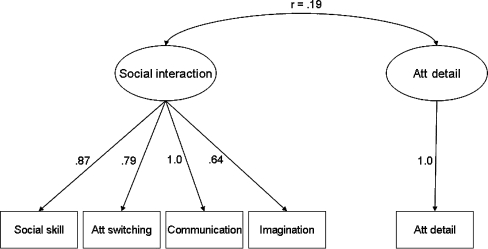
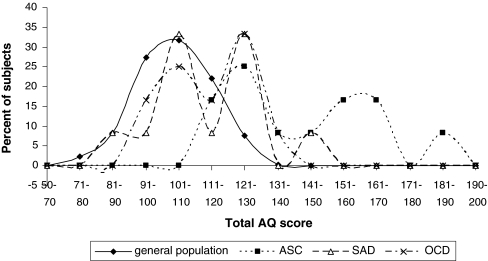
The factor structure of the Dutch translation of the Autism-Spectrum Quotient (AQ; a continuous, quantitative measure of autistic traits) was evaluated with confirmatory factor analyses in a large general population and student sample. The criterion validity of the AQ was examined in three matched patient groups (autism spectrum conditions (ASC), social anxiety disorder, and obsessive-compulsive disorder). A two factor model, consisting of a "Social interaction" factor and "Attention to detail" factor could be identified. The internal consistency and test-retest reliability of the AQ were satisfactory. High total AQ and factor scores were specific to ASC patients. Men scored higher than women and science students higher than non-science students. The Dutch translation of the AQ is a reliable instrument to assess autism spectrum conditions.
Overview
The claims and statistics of this paper haven’t been checked yet.
Free: it reads the open-access text and checks the first 5 claims that cite a source we can check. Create a free account to check every claim.
Integrity signals
Registry
Cites
Statistics
Figures
Verification
Claims the paper makes
The claims and statistics of this paper haven’t been checked yet.
Free: it reads the open-access text and checks the first 5 claims that cite a source we can check. Create a free account to check every claim.
Claims other papers make about this one
Each is checked against this paper’s own text: does it say what the citing paper says it does?
The source backs part of the claim, not all of it — or backs it for a different population, condition or comparison.
In the citing paper
“The test has good internal consistency and test-retest reliability and has been translated into many languages [57, 58].”
From A 'choice', an 'addiction', a way 'out of the lost': Exploring self-injury in autistic people without intellectual disability (2019) · cites this paper as [58]
Experimental — accuracy not yet measuredThe cited source says what the claim attributes to it.
In the citing paper
“High total AQ scores are specific to patients with an ASD and set them apart from both the general population and from patients with SAD [65].”
The check wasn’t confident either way, so it gives no verdict — never disputed.
In the citing paper
“The most widely used measure for adults with ASC is the Adolescent/Adult Sensory Profile (AASP), a 60-item self-report measure that finds differences in sensory processing in more than 90% of adults with ASC [17,19].”
From The Sensory Perception Quotient (SPQ): development and validation of a new sensory questionnaire for adults with and without autism (2014) · cites this paper as [19]
Experimental — accuracy not yet measured
Self-check
Percentages, sums and reported differences re-computed from the paper’s own numbers.
The self-check needs the paper’s full text.
Citations
Cites
Lord, C., Rutter, M., & Le Couteur, A. (1994) · Journal of Autism and Developmental Disorders · doi:10.1007/bf02172145 · Cited by 9,065 · cited 2×
“Keywords Autism Factor analysis Validity Reliability Autism phenotype”
MethodSchermelleh-Engel, K., Moosbrugger, H., & Müller, H. (2003) · Department of Psychology - University of Koblenz-Landau · doi:10.23668/psycharchives.12784 · Cited by 8,975
Lord, C., Risi, S., Lambrecht, L., Cook, E. H., Leventhal, B. L., DiLavore, P. C., Pickles, A., & Rutter, M. (2000) · Journal of Autism and Developmental Disorders · doi:10.1023/a:1005592401947 · Cited by 7,520 · cited 2×
“Keywords Autism Factor analysis Validity Reliability Autism phenotype”
MethodBaron-Cohen, S., Wheelwright, S., Skinner, R., Martin, J., & Clubley, E. (2001) · Journal of Autism and Developmental Disorders · doi:10.1023/a:1005653411471 · Cited by 6,450 · cited 13×
“Both the British (Baron-Cohen et al. 2001) and the Japanese version (Kurita et al. 2005) of the AQ reported good test-retest reliability and moderate internal consistency (Cronbach’s a varying from .63 to .78).”
BackgroundMethodResultInfluentialStructured Clinical Interview for DSM-IV Axis I Disorders
Spitzer, R. L., First, M. B., & Gibbon, M. (1997) · Medical Entomology and Zoology · Cited by 4,096
Autism as a strongly genetic disorder: evidence from a British twin study
Bailey, A., Le Couteur, A., Gottesman, I., Bolton, P., Simonoff, E., Yuzda, E., & Rutter, M. (1995) · Psychological Medicine · doi:10.1017/s0033291700028099 · Cited by 2,461
The extreme male brain theory of autism
Baron-Cohen, S. (2002) · Trends in Cognitive Sciences · doi:10.1016/s1364-6613(02)01904-6 · Cited by 2,007 · cited 2×
“In line with the empathizing–systemizing theory of autism (Baron-Cohen 2002; Baron-Cohen et al. 2005) and findings from previous studies (Baron-Cohen et al. 2001; Hoekstra et al. 2007; Wakabayashi et al. 2006) we expected: (a) AQ scores to be continuously distributed in the general population; (b)…”
ResultThe Extreme Male-Brain Theory of Autism
Baron-Cohen, S. (1999) · Neurodevelopmental Disorders · doi:10.7551/mitpress/4945.003.0023 · Cited by 1,413
Autistic Traits in the General Population: A Twin Study
Constantino, J. N., & Todd, R. D. (2003) · Archives of General Psychiatry · doi:10.1001/archpsyc.60.5.524 · Cited by 1,317 · cited 2×
“continuously distributed in the population (Constantino and Todd 2003; Piven et al. 1997; Spiker et al. 2002).”
BackgroundSex differences in the brain: implications for explaining autism
Baron-Cohen, S., Knickmeyer, R. C., & Belmonte, M. K. (2005) · Science · doi:10.1126/science.1115455 · Cited by 1,145 · cited 2×
“In line with the empathizing–systemizing theory of autism (Baron-Cohen 2002; Baron-Cohen et al. 2005) and findings from previous studies (Baron-Cohen et al. 2001; Hoekstra et al. 2007; Wakabayashi et al. 2006) we expected: (a) AQ scores to be continuously distributed in the general population; (b)…”
Result
Research works printed but not linked: 2
- 1. American Psychiatric Association (2000). Diagnostic and Statistical Manual for Mental Disorders, 4th Ed., Text Revision (DSM-IV-TR). Washington: American Psychiatric Press.
- 26. Neale M. C., Boker S. M., Xie G., Maes H. H. Mx: Statistical modeling. 7. Richmond: VCU; 2006.
Cited by
Allison, C., Auyeung, B., & Baron-Cohen, S. (2012) · Journal of the American Academy of Child & Adolescent Psychiatry · doi:10.1016/j.jaac.2011.11.003 · Cited by 1,016
Why are autism spectrum conditions more prevalent in males?
Baron-Cohen, S., Lombardo, M. V., Auyeung, B., Ashwin, E., Chakrabarti, B., & Knickmeyer, R. (2011) · PLoS Biology · doi:10.1371/journal.pbio.1001081 · Cited by 754
“Adult Autism Spectrum Quotient (AQ) 3 [104,121–124]”
Autism spectrum disorders and autistic traits: A decade of new twin studies
Ronald, A., & Hoekstra, R. A. (2011) · American Journal of Medical Genetics Part B: Neuropsychiatric Genetics · doi:10.1002/ajmg.b.31159 · Cited by 616
“…m en ta l ef fe ct s in de pe n de n t of D N A co de (s ee te xt ) SN P, si n gl e n uc le ot id e po ly m or ph is m ; CN V, co py n um be r va ri at io n ; M Zr , si m ila ri ty be tw ee n M Z tw in s in a pa ir ; D Zr , si m ila ri ty be tw ee n D Z tw in s in a p ai r. Hoekstra et al., 2008].”
BackgroundSelf-citationRuzich, E., Allison, C., Smith, P., Watson, P., Auyeung, B., Ring, H., & Baron-Cohen, S. (2015) · Molecular Autism · doi:10.1186/2040-2392-6-2 · Cited by 610
The Autism Spectrum Quotient: Children’s Version (AQ-Child)
Auyeung, B., Baron-Cohen, S., Wheelwright, S., & Allison, C. (2008) · Journal of Autism and Developmental Disorders · doi:10.1007/s10803-007-0504-z · Cited by 600
The Construction and Validation of an Abridged Version of the Autism-Spectrum Quotient (AQ-Short)
Hoekstra, R. A., Vinkhuyzen, A. A. E., Wheelwright, S., Bartels, M., Boomsma, D. I., Baron-Cohen, S., Posthuma, D., & van der Sluis, S. (2011) · Journal of Autism and Developmental Disorders · doi:10.1007/s10803-010-1073-0 · Cited by 506
“The first data set (Dutch controls reference sample, n = 1,263) consisted of a Dutch general population sample and a student group (respectively, n = 302 and 961) that both have been described in more detail elsewhere (Hoekstra et al. 2008).”
BackgroundMethodResultInfluentialSelf-citationHappé, F., & Ronald, A. (2008) · Neuropsychology Review · doi:10.1007/s11065-008-9076-8 · Cited by 498
“The Constantino et al. (2000) and Auyeung et al. (2008) studies had developmental samples, but with broad age ranges, whereas Austin (2005) and Hoekstra et al. (2008) studied young adults.”
BackgroundFetal testosterone and autistic traits
Auyeung, B., Baron‐Cohen, S., Ashwin, E., Knickmeyer, R., Taylor, K., & Hackett, G. (2009) · British Journal of Psychology · doi:10.1348/000712608x311731 · Cited by 462
Cassidy, S., Bradley, P., Robinson, J., Allison, C., McHugh, M., & Baron-Cohen, S. (2014) · The Lancet Psychiatry · doi:10.1016/s2215-0366(14)70248-2 · Cited by 432
Ingersoll, B., & Hambrick, D. Z. (2011) · Research in Autism Spectrum Disorders · doi:10.1016/j.rasd.2010.04.017 · Cited by 347
Sucksmith, E., Roth, I., & Hoekstra, R. A. (2011) · Neuropsychology Review · doi:10.1007/s11065-011-9183-9 · Cited by 336
“In the last 10 years, various researchers (e.g. Baron-Cohen et al. 2001b, Constantino et al. 2006, Hoekstra et al. 2008) advanced the notion that, rather than a discrete category, the autism phenotype can be conceptualised as a set of continuous, quantitative traits that merge into the general…”
Self-citationWheelwright, S., Auyeung, B., Allison, C., & Baron-Cohen, S. (2010) · Molecular Autism · doi:10.1186/2040-2392-1-10 · Cited by 308
“Some researchers have used a four-point Likert scale for the AQ [19-21], but this does not significantly alter the pattern of results.”
College students on the autism spectrum: Prevalence and associated problems
White, S. W., Ollendick, T. H., & Bray, B. C. (2011) · Autism · doi:10.1177/1362361310393363 · Cited by 308
Sensory over-responsivity in adults with autism spectrum conditions
Tavassoli, T., Miller, L. J., Schoen, S. A., Nielsen, D. M., & Baron-Cohen, S. (2014) · Autism · doi:10.1177/1362361313477246 · Cited by 291
Misophonia: Phenomenology, comorbidity and demographics in a large sample
Jager, I., de Koning, P., Bost, T., Denys, D., & Vulink, N. (2020) · PLOS ONE · doi:10.1371/journal.pone.0231390 · Cited by 271
Tavassoli, T., Hoekstra, R. A., & Baron-Cohen, S. (2014) · Molecular Autism · doi:10.1186/2040-2392-5-29 · Cited by 251
“The AQ shows also good test-retest reliability [22-24].”
BackgroundMethodSelf-citationFoetal testosterone and autistic traits in 18 to 24-month-old children
Auyeung, B., Taylor, K., Hackett, G., & Baron-Cohen, S. (2010) · Molecular Autism · doi:10.1186/2040-2392-1-11 · Cited by 208
“This pattern has also been observed cross-culturally using translated versions of the AQ [42-45].”
MethodDevelopment and Validation of the Social Emotional Competence Questionnaire (SECQ)
Zhou, M., & Ee, J. (2012) · International Journal of Emotional Education · Cited by 208
Regional EEG alpha power, coherence, and behavioral symptomatology in autism spectrum disorder
Mathewson, K. J., Jetha, M. K., Drmic, I., Bryson, S. E., Goldberg, J. O., & Schmidt, L. A. (2012) · Clinical Neurophysiology · doi:10.1016/j.clinph.2012.02.061 · Cited by 196
van Steijn, D. J., Oerlemans, A. M., van Aken, M. A. G., Buitelaar, J. K., & Rommelse, N. N. J. (2013) · Journal of Autism and Developmental Disorders · doi:10.1007/s10803-013-1958-9 · Cited by 186
Autism spectrum disorders and autistic traits share genetics and biology
Bralten, J., van Hulzen, K. J., Martens, M. B., Galesloot, T. E., Arias Vasquez, A., Kiemeney, L. A., Buitelaar, J. K., Muntjewerff, J. W., Franke, B., & Poelmans, G. (2018) · Molecular Psychiatry · doi:10.1038/mp.2017.98 · Cited by 184
“22,23 The sample size of the GWASs that we conducted was too small for discovering new single genetic variant associations, but it was large enough to provide proof of concept — through shared genetic etiology and gene-set/gene-wide analyses — for sharing beyond social communication traits.”
BackgroundMethodInfluentialPsychometric properties of the Chinese version of the Autism Spectrum Quotient (AQ)
Lau, W. Y.-P., Gau, S. S., Chiu, Y., Wu, Y., Chou, W., Liu, S.-K., & Chou, M. (2012) · Research in Developmental Disabilities · doi:10.1016/j.ridd.2012.08.005 · Cited by 176
The structure of the Autism-Spectrum Quotient (AQ): Evidence from a student sample in Scotland
Stewart, M. E., & Austin, E. J. (2009) · Personality and Individual Differences · doi:10.1016/j.paid.2009.03.004 · Cited by 175
Sex-specific serum biomarker patterns in adults with Asperger's syndrome
Schwarz, E., Guest, P. C., Rahmoune, H., Wang, L., Levin, Y., Ingudomnukul, E., Ruta, L., Kent, L., Spain, M., Baron-Cohen, S., et al. (2011) · Molecular Psychiatry · doi:10.1038/mp.2010.102 · Cited by 171
Ruta, L., Mazzone, D., Mazzone, L., Wheelwright, S., & Baron-Cohen, S. (2012) · Journal of Autism and Developmental Disorders · doi:10.1007/s10803-011-1290-1 · Cited by 166
Lundqvist, L., & Lindner, H. Y. N. (2017) · Journal of Autism and Developmental Disorders · doi:10.1007/s10803-017-3128-y · Cited by 162
Age‐related differences in cognition across the adult lifespan in autism spectrum disorder
Lever, A. G., & Geurts, H. M. (2016) · Autism Research · doi:10.1002/aur.1545 · Cited by 161
A Comparison of Three Self-Report Measures of the Broader Autism Phenotype in a Non-Clinical Sample
Ingersoll, B., Hopwood, C. J., Wainer, A., & Brent Donnellan, M. (2011) · Journal of Autism and Developmental Disorders · doi:10.1007/s10803-011-1192-2 · Cited by 160
“The AQ has been found to have between two and four factors (Austin 2005; Hoekstra et al. 2008; Hurst et al. 2007b; Stewart and Austin 2009).”
BackgroundResultInfluentialWestwood, H., Eisler, I., Mandy, W., Leppanen, J., Treasure, J., & Tchanturia, K. (2016) · Journal of Autism and Developmental Disorders · doi:10.1007/s10803-015-2641-0 · Cited by 160
Yu, A. C. L. (2010) · PLoS ONE · doi:10.1371/journal.pone.0011950 · Cited by 156
Grove, R., Roth, I., & Hoekstra, R. A. (2015) · Autism Research · doi:10.1002/aur.1560 · Cited by 148
Self-citationEnglish, M. C. W., Gignac, G. E., Visser, T. A. W., Whitehouse, A. J. O., Enns, J. T., & Maybery, M. T. (2021) · Molecular Autism · doi:10.1186/s13229-021-00445-7 · Cited by 148
Lexical effects on speech perception in individuals with “autistic” traits
Stewart, M. E., & Ota, M. (2008) · Cognition · doi:10.1016/j.cognition.2008.07.010 · Cited by 138
A Cross-Cultural Comparison of Autistic Traits in the UK, India and Malaysia
Freeth, M., Sheppard, E., Ramachandran, R., & Milne, E. (2013) · Journal of Autism and Developmental Disorders · doi:10.1007/s10803-013-1808-9 · Cited by 137
von dem Hagen, E. A. H., Nummenmaa, L., Yu, R., Engell, A. D., Ewbank, M. P., & Calder, A. J. (2011) · Cerebral Cortex · doi:10.1093/cercor/bhq062 · Cited by 133
Dell'Osso, L., Gesi, C., Massimetti, E., Cremone, I. M., Barbuti, M., Maccariello, G., Moroni, I., Barlati, S., Castellini, G., Luciano, M., et al. (2017) · Comprehensive Psychiatry · doi:10.1016/j.comppsych.2016.11.001 · Cited by 131
Atypical sensory profiles as core features of adult ADHD, irrespective of autistic symptoms
Bijlenga, D., Tjon-Ka-Jie, J. Y. M., Schuijers, F., & Kooij, J. J. S. (2017) · European Psychiatry · doi:10.1016/j.eurpsy.2017.02.481 · Cited by 131
Stevenson, J. L., & Hart, K. R. (2017) · Journal of Autism and Developmental Disorders · doi:10.1007/s10803-017-3109-1 · Cited by 130
“Finally, the AutismSpectrum Quotient has been translated into approximately two dozen languages (see https://www.autismresearchcentre.com/arc_tests) and published validation studies exist for versions in Dutch (Hoekstra et al.”
BackgroundMethodInfluentialEvaluation of the factor structure of the Autism-Spectrum Quotient
Kloosterman, P. H., Keefer, K. V., Kelley, E. A., Summerfeldt, L. J., & Parker, J. D. A. (2010) · Personality and Individual Differences · doi:10.1016/j.paid.2010.10.015 · Cited by 129
Do girls with anorexia nervosa have elevated autistic traits?
Baron-Cohen, S., Jaffa, T., Davies, S., Auyeung, B., Allison, C., & Wheelwright, S. (2013) · Molecular Autism · doi:10.1186/2040-2392-4-24 · Cited by 128
Sub‐threshold autism traits: The role of trait emotional intelligence and cognitive flexibility
Gökçen, E., Petrides, K. V., Hudry, K., Frederickson, N., & Smillie, L. D. (2014) · British Journal of Psychology · doi:10.1111/bjop.12033 · Cited by 125
Miller, L. E., & Saygın, A. P. (2013) · Cognition · doi:10.1016/j.cognition.2013.03.013 · Cited by 125
Self-Reported Autism Symptoms in Adults with Autism Spectrum Disorders
Bishop, S. L., & Seltzer, M. M. (2012) · Journal of Autism and Developmental Disorders · doi:10.1007/s10803-012-1483-2 · Cited by 123
Kessler, K., & Wang, H. (2012) · Spatial Cognition and Computation · doi:10.1080/13875868.2011.634533 · Cited by 122
Anholt, G. E., Cath, D. C., van Oppen, P., Eikelenboom, M., Smit, J. H., van Megen, H., & van Balkom, A. J. L. M. (2010) · Journal of Autism and Developmental Disorders · doi:10.1007/s10803-009-0922-1 · Cited by 121
Self-citationValidation of Autism Spectrum Quotient Adult Version in an Australian Sample
Broadbent, J., Galic, I., & Stokes, M. A. (2013) · Autism Research and Treatment · doi:10.1155/2013/984205 · Cited by 121
How Are Autism and Schizotypy Related? Evidence from a Non-Clinical Population
Dinsdale, N. L., Hurd, P. L., Wakabayashi, A., Elliot, M., & Crespi, B. J. (2013) · PLoS ONE · doi:10.1371/journal.pone.0063316 · Cited by 121
Personality disorders and autism spectrum disorders: what are the connections?
Lugnegård, T., Hallerbäck, M. U., & Gillberg, C. (2012) · Comprehensive Psychiatry · doi:10.1016/j.comppsych.2011.05.014 · Cited by 120
Zhang, L., Sun, Y., Chen, F., Wu, D., Tang, J., Han, X., Ye, J., & Wang, K. (2016) · BMC Psychiatry · doi:10.1186/s12888-016-0915-5 · Cited by 119
The Structure and Nature of the Broader Autism Phenotype in a Non-clinical Sample
Wainer, A., Ingersoll, B. R., & Hopwood, C. J. (2011) · Journal of Psychopathology and Behavioral Assessment · doi:10.1007/s10862-011-9259-0 · Cited by 118
The posterior Cerebellum is involved in constructing Social Action Sequences: An fMRI Study
Heleven, E., van Dun, K., & Overwalle, F. V. (2019) · Scientific Reports · doi:10.1038/s41598-019-46962-7 · Cited by 117
Mimicry and automatic imitation are not correlated
Genschow, O., van Den Bossche, S., Cracco, E., Bardi, L., Rigoni, D., & Brass, M. (2017) · PLoS ONE · doi:10.1371/journal.pone.0183784 · Cited by 115
Tavassoli, T., Miller, L. J., Schoen, S. A., Jo Brout, J., Sullivan, J., & Baron-Cohen, S. (2018) · Developmental Cognitive Neuroscience · doi:10.1016/j.dcn.2017.05.005 · Cited by 115
Poslawsky, I. E., Naber, F. B. A., van Daalen, E., & van Engeland, H. (2013) · Child Psychiatry & Human Development · doi:10.1007/s10578-013-0400-z · Cited by 112
Hessels, R. S., Holleman, G. A., Cornelissen, T. H. W., Hooge, I. T. C., & Kemner, C. (2018) · Journal of Experimental Psychopathology · doi:10.5127/jep.062917 · Cited by 111
Maij, D. L. R., van Harreveld, F., Gervais, W., Schrag, Y., Mohr, C., & van Elk, M. (2017) · PLOS ONE · doi:10.1371/journal.pone.0182764 · Cited by 110
“, asking participants to find out how autistic they are) as we had a very large sample and the AQ was normally distributed with comparable means to an earlier study using participants from the Dutch population [56].”
Russell-Smith, S. N., Maybery, M. T., & Bayliss, D. M. (2011) · Personality and Individual Differences · doi:10.1016/j.paid.2011.03.027 · Cited by 110
English, M. C. W., Gignac, G. E., Visser, T. A. W., Whitehouse, A., & Maybery, M. T. (2019) · Autism Research · doi:10.1002/aur.2198 · Cited by 107
Evidence for a Broad Autism Phenotype
Groot, K. D., & Strien, J. W. V. (2017) · Advances in Neurodevelopmental Disorders · doi:10.1007/s41252-017-0021-9 · Cited by 107
Individual differences in computational psychiatry: A review of current challenges
Karvelis, P., Paulus, M. P., & Diaconescu, A. O. (2023) · Neuroscience & Biobehavioral Reviews · doi:10.1016/j.neubiorev.2023.105137 · Cited by 105
Autism and transgender identity: Implications for depression and anxiety
Murphy, J., Prentice, F., Walsh, R. J., Catmur, C., & Bird, G. (2019) · Research in Autism · doi:10.1016/j.rasd.2019.101466 · Cited by 103
Autism and schizophrenia in high functioning adults: Behavioral differences and overlap
Spek, A. A., & Wouters, S. (2010) · Research in Autism · doi:10.1016/j.rasd.2010.01.009 · Cited by 102
Roelfsema, M. T., Hoekstra, R. A., Allison, C., Wheelwright, S., Brayne, C., Matthews, F. E., & Baron-Cohen, S. (2012) · Journal of Autism and Developmental Disorders · doi:10.1007/s10803-011-1302-1 · Cited by 101
Self-citationItahashi, T., Yamada, T., Watanabe, H., Nakamura, M., Ohta, H., Kanai, C., Iwanami, A., Kato, N., & Hashimoto, R.-I. (2015) · Molecular Autism · doi:10.1186/s13229-015-0026-z · Cited by 100
Liew, S. M., Thevaraja, N., Hong, R. Y. S., & Magiati, I. (2014) · Journal of Autism and Developmental Disorders · doi:10.1007/s10803-014-2238-z · Cited by 99
Mental health, quality of life and social relations in young adults born with low birth weight
Lund, L. K., Vik, T., Lydersen, S., Løhaugen, G. C., Skranes, J., Brubakk, A.-M., & Indredavik, M. S. (2012) · Health and Quality of Life Outcomes · doi:10.1186/1477-7525-10-146 · Cited by 99
van Steijn, D. J., Richards, J. S., Oerlemans, A. M., de Ruiter, S. W., van Aken, M. A. G., Franke, B., Buitelaar, J. K., & Rommelse, N. N. J. (2012) · Journal of Child Psychology and Psychiatry · doi:10.1111/j.1469-7610.2012.02556.x · Cited by 98
Nishiyama, T., Suzuki, M., Adachi, K., Sumi, S., Okada, K., Kishino, H., Sakai, S., Kamio, Y., Kojima, M., Suzuki, S., et al. (2013) · Journal of Autism and Developmental Disorders · doi:10.1007/s10803-013-2020-7 · Cited by 98
Ingersoll, B. R. (2009) · Journal of Autism and Developmental Disorders · doi:10.1007/s10803-009-0907-0 · Cited by 98
Moseley, R. L., Gregory, N. J., Smith, P., Allison, C., & Baron-Cohen, S. (2019) · Molecular Autism · doi:10.1186/s13229-019-0267-3 · Cited by 97
Baghdadli, A., Russet, F., & Mottron, L. (2017) · European Psychiatry · doi:10.1016/j.eurpsy.2017.04.009 · Cited by 95
Heylens, G., Aspeslagh, L., Dierickx, J., Baetens, K., hoorde, B. V., Cuypere, G. D., & Elaut, E. (2018) · Journal of Autism and Developmental Disorders · doi:10.1007/s10803-018-3480-6 · Cited by 95
Analyzing musical prodigiousness using Gagné’s Integrative Model of Talent Development
Gagné, F., & McPherson, G. E. (2016) · Oxford University Press eBooks · doi:10.1093/acprof:oso/9780199685851.003.0001 · Cited by 93
Facial emotion recognition in autistic adult females correlates with alexithymia, not autism
Ola, L., & Gullon-Scott, F. (2020) · Autism · doi:10.1177/1362361320932727 · Cited by 93
Tavassoli, T., Bellesheim, K. R., Siper, P. M., Wang, A. T., Halpern, D. B., Gorenstein, M., Grodberg, D., Kolevzon, A., & Buxbaum, J. D. (2015) · Journal of Autism and Developmental Disorders · doi:10.1007/s10803-015-2578-3 · Cited by 92
Freeth, M., Bullock, T., & Milne, E. (2013) · Autism · doi:10.1177/1362361312445511 · Cited by 90
Snijders, T. M., Milivojevic, B., & Kemner, C. (2013) · NeuroImage: Clinical · doi:10.1016/j.nicl.2013.06.015 · Cited by 89
Deserno, M. K., Borsboom, D., Begeer, S., & Geurts, H. M. (2017) · Autism · doi:10.1177/1362361316660309 · Cited by 89
Altered tactile processing in children with autism spectrum disorder
Tavassoli, T., Bellesheim, K., Tommerdahl, M., Holden, J. M., Kolevzon, A., & Buxbaum, J. D. (2016) · Autism Research · doi:10.1002/aur.1563 · Cited by 88
Correlates of autistic traits among patients with borderline personality disorder
Dell'Osso, L., Cremone, I. M., Carpita, B., Fagiolini, A., Massimetti, G., Bossini, L., Vita, A., Barlati, S., Carmassi, C., & Gesi, C. (2018) · Comprehensive Psychiatry · doi:10.1016/j.comppsych.2018.01.002 · Cited by 88
Groen, Y., Fuermaier, A. B. M., Den Heijer, A. E., Tucha, O., & Althaus, M. (2015) · Journal of Autism and Developmental Disorders · doi:10.1007/s10803-015-2448-z · Cited by 88
Kanne, S. M., Wang, J., & Christ, S. E. (2011) · Journal of Autism and Developmental Disorders · doi:10.1007/s10803-011-1308-8 · Cited by 88
Roestorf, A., Bowler, D. M., Deserno, M. K., Howlin, P., Klinger, L., McConachie, H., Parr, J. R., Powell, P., Van Heijst, B. F. C., & Geurts, H. M. (2019) · Research in Autism Spectrum Disorders · doi:10.1016/j.rasd.2018.08.007 · Cited by 87
“According to the survey responses, the most commonly used diagnostic screening measures were the Autism Quotient (AQ; BaronCohen et al., 2001; Hoekstra et al., 2008; Hoekstra et al., 2011) and the Social Responsiveness Scale–Second Edition (SRS-2; Constantino et al.”
BackgroundMethodInfluential‘Subtypes’ in the Presentation of Autistic Traits in the General Adult Population
Palmer, C. J., Paton, B., Enticott, P. G., & Hohwy, J. (2015) · Journal of Autism and Developmental Disorders · doi:10.1007/s10803-014-2289-1 · Cited by 87
Co-Occurrence of ASD and ADHD Traits in an Adult Population
Panagiotidi, M., Overton, P. G., & Stafford, T. (2017) · Journal of Attention Disorders · doi:10.1177/1087054717720720 · Cited by 86
Traits contributing to the autistic spectrum
Steer, C. D., Golding, J., & Bolton, P. F. (2010) · PLoS ONE · doi:10.1371/journal.pone.0012633 · Cited by 85
Lundin, A., Kosidou, K., & Dalman, C. (2018) · Journal of Autism and Developmental Disorders · doi:10.1007/s10803-018-3749-9 · Cited by 85
White, S. W., Bray, B. C., & Ollendick, T. H. (2012) · Journal of Autism and Developmental Disorders · doi:10.1007/s10803-011-1325-7 · Cited by 84
“Hoekstra et al. (2008) , with a large sample (n = 961) of university students in the Netherlands, conducted confirmatory factor analysis to determine if the theoretically derived 5-domain model proposed by Baron-Cohen et al. (2001) fit their sample.”
BackgroundResultInfluentialHow reward modulates mimicry: EMG evidence of greater facial mimicry of more rewarding happy faces
Sims, T. B., Van Reekum, C. M., Johnstone, T., & Chakrabarti, B. (2012) · Psychophysiology · doi:10.1111/j.1469-8986.2012.01377.x · Cited by 84
The evolution of autistic-like and schizotypal traits: a sexual selection hypothesis
Del Giudice, M. (2010) · Frontiers in Psychology · doi:10.3389/fpsyg.2010.00041 · Cited by 83
Autistic traits predict performance on the block design
Stewart, M. E., Watson, J., Allcock, A.-J., & Yaqoob, T. (2009) · Autism · doi:10.1177/1362361308098515 · Cited by 83
Phenomenology of Comorbid Autism Spectrum and Obsessive-Compulsive Disorders Among Children
Lewin, A. B., Wood, J. J., Gunderson, S., Murphy, T. K., & Storch, E. A. (2011) · Journal of Developmental and Physical Disabilities · doi:10.1007/s10882-011-9247-z · Cited by 81
The Relation Between Preference for Predictability and Autistic Traits
Goris, J., Braß, M., Cambier, C., Delplanque, J., Wiersema, J. R., & Braem, S. (2019) · Autism Research · doi:10.1002/aur.2244 · Cited by 80
Sensory Prediction Errors Are Less Modulated by Global Context in Autism Spectrum Disorder
Goris, J., Braem, S., Nijhof, A. D., Rigoni, D., Deschrijver, E., Van de Cruys, S., Wiersema, J. R., & Brass, M. (2018) · Biological Psychiatry: Cognitive Neuroscience and Neuroimaging · doi:10.1016/j.bpsc.2018.02.003 · Cited by 79
Relationship Between Symptom Domains in Autism Spectrum Disorders: A Population Based Twin Study
Dworzynski, K., Happé, F., Bolton, P., & Ronald, A. (2009) · Journal of Autism and Developmental Disorders · doi:10.1007/s10803-009-0736-1 · Cited by 79
A cross-cultural study of autistic traits across India, Japan and the UK
Carruthers, S., Kinnaird, E., Rudra, A., Smith, P., Allison, C., Auyeung, B., Chakrabarti, B., Wakabayashi, A., Baron-Cohen, S., Bakolis, I., et al. (2018) · Molecular Autism · doi:10.1186/s13229-018-0235-3 · Cited by 79
Self-citationPisula, E., Kawa, R., Szostakiewicz, Ł., Łucka, I., Kawa, M., & Rynkiewicz, A. (2013) · PLoS ONE · doi:10.1371/journal.pone.0075236 · Cited by 79
Husarova, V. M., Lakatosova, S., Pivovarciova, A., Babinska, K., Bakos, J., Durdiakova, J., Kubranska, A., Ondrejka, I., & Ostatnikova, D. (2016) · Psychiatry Investigation · doi:10.4306/pi.2016.13.2.174 · Cited by 79
Young, S., González, R. A., Mullens, H., Mutch, L., Malet-Lambert, I., & Gudjonsson, G. H. (2017) · Psychiatry Research · doi:10.1016/j.psychres.2017.12.036 · Cited by 79
Menstruation and menopause in autistic adults: Periods of importance?
Groenman, A. P., Torenvliet, C., Radhoe, T. A., van Rentergem, J. A. A., & Geurts, H. M. (2021) · Autism · doi:10.1177/13623613211059721 · Cited by 79
Metadata
- Authors
- Hoekstra, R. A., Bartels, M., Cath, D. C., & Boomsma, D. I.
- Affiliations
- Vrije Universiteit Amsterdam (NL)
- Corresponding author
- Hoekstra, Rosa A.
- Venue
- Journal of Autism and Developmental Disorders
- Published
- 2008-02-27
- Volume
- 38
- Issue
- 8
- Pages
- 1555-1566
- ISSN
- 0162-3257 (ISSN-L)
- 1573-3432
- PMC
- PMC2516538
- OpenAlex
- W2150214803
- Cited by
- 651
- References
- 38
- Citations by year
- 2026: 32 · 2025: 33 · 2024: 34 · 2023: 43 · 2022: 26 · 2021: 58 · 2020: 46 · 2019: 46 · 2018: 45 · 2017: 43 · 2016: 29 · 2015: 37 · 2014: 44 · 2013: 36 · 2012: 32
- FWCI
- 11.06
- Type
- journal article
- Language
- en
- Open access
- hybrid
- doi.org
- Licence
- cc-by-nc
- Locations
- Journal of Autism and Developmental Disorders (publishedVersion, cc-by-nc)
- Europe PMC (PubMed Central) (publishedVersion, cc-by-nc)
- PubMed Central (publishedVersion, cc-by-nc)
- PubMed (publishedVersion)
- VU Research Portal (publishedVersion, other-oa)
- Open Research Online (The Open University) (acceptedVersion)
- Digital Academic REpository of VU University Amsterdam (Vrije Universiteit Amsterdam) (submittedVersion)
- Research Portal (King's College London) (submittedVersion, cc-by-nc)
- Data Archiving and Networked Services (DANS) (submittedVersion, other-oa)
- Funders
- Nederlandse Organisatie voor Wetenschappelijk Onderzoek (NWO/ SPI 56-464-14192, 56‐464‐14192, 451–04-034, Spi-56-464-14192, 14192, 575-25-006)
- Topics
- Life Sciences › Neuroscience › Cognitive Neuroscience › Autism Spectrum Disorder Research
- Social Sciences › Decision Sciences › Management Science and Operations Research › Psychometric Methodologies and Testing
- Social Sciences › Psychology › Experimental and Cognitive Psychology › Anxiety, Depression, Psychometrics, Treatment, Cognitive Processes
- Keywords
- Autism Spectrum Quotient, autistic traits, factor structure, criterion validity, Dutch translation, autism spectrum disorder, social anxiety disorder, obsessive-compulsive disorder, social interaction, attention to detail, gender differences, science students
- MeSH terms
- Adolescent, Adult, Autistic Disorder, Mental Disorders, Cross-Cultural Comparison, Female, Humans, Interview, Psychological, Male, Middle Aged, Netherlands, Personality Assessment, Psychometrics, Surveys and Questionnaires, Reference Values, Translating, Reproducibility of Results, Early Diagnosis
About these checks
Registry, retraction, Cites and statistics results are computed, not judged, with one exception: a printed reference that no index lists is read once by a model before it counts as a citation error. Claims are extracted by a model and kept only when their quote appears verbatim in the text; each cited source is then checked, with a model’s help, for whether it says what the claim relies on. Those verdicts can be wrong — read the claim’s quote and the cited source before relying on one.
Statistics and arithmetic are recomputed, not judged.
Confidence bands are shown only for fields calibrated on our annotated test set. None is calibrated yet, so no band is shown.
What counts as a claim ›How we measure confidence ›How we check this ›
Are you an author, or do you see a problem with this page? Request a review
Data sources
Bibliographic data: Semantic Scholar, OpenAlex, Crossref.
Contains information from the Semantic Scholar Academic Graph Datasets, made available under the ODC Attribution License (ODC-BY 1.0).
Semantic Scholar’s data is described in: Kinney, R., et al. (2023). The Semantic Scholar Open Data Platform. arXiv:2301.10140.
