

Factor Structure, Reliability and Criterion Validity of the Autism-Spectrum Quotient (AQ): A Study in Dutch Population and Patient Groups
Open accessThe DOI matches its Crossref record; 37 of the 38 references it cites were found in a registry or an index.
Abstract
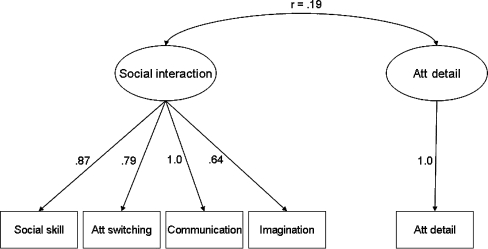
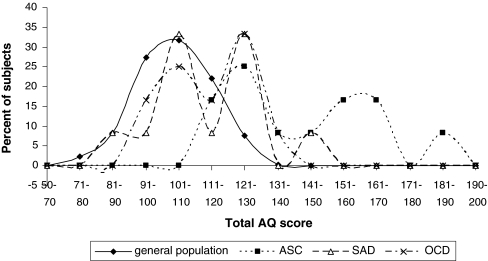
The factor structure of the Dutch translation of the Autism-Spectrum Quotient (AQ; a continuous, quantitative measure of autistic traits) was evaluated with confirmatory factor analyses in a large general population and student sample. The criterion validity of the AQ was examined in three matched patient groups (autism spectrum conditions (ASC), social anxiety disorder, and obsessive-compulsive disorder). A two factor model, consisting of a "Social interaction" factor and "Attention to detail" factor could be identified. The internal consistency and test-retest reliability of the AQ were satisfactory. High total AQ and factor scores were specific to ASC patients. Men scored higher than women and science students higher than non-science students. The Dutch translation of the AQ is a reliable instrument to assess autism spectrum conditions.
Overview
The claims and statistics of this paper haven’t been checked yet.
Free: it reads the open-access text and checks the first 5 claims that cite a source we can check. Create a free account to check every claim.
Integrity signals
Registry
Cites
Statistics
Figures
Verification
Claims the paper makes
The claims and statistics of this paper haven’t been checked yet.
Free: it reads the open-access text and checks the first 5 claims that cite a source we can check. Create a free account to check every claim.
Claims other papers make about this one
Each is checked against this paper’s own text: does it say what the citing paper says it does?
The source backs part of the claim, not all of it — or backs it for a different population, condition or comparison.
In the citing paper
“The test has good internal consistency and test-retest reliability and has been translated into many languages [57, 58].”
From A 'choice', an 'addiction', a way 'out of the lost': Exploring self-injury in autistic people without intellectual disability (2019) · cites this paper as [58]
Experimental — accuracy not yet measuredThe cited source says what the claim attributes to it.
In the citing paper
“High total AQ scores are specific to patients with an ASD and set them apart from both the general population and from patients with SAD [65].”
The check wasn’t confident either way, so it gives no verdict — never disputed.
In the citing paper
“The most widely used measure for adults with ASC is the Adolescent/Adult Sensory Profile (AASP), a 60-item self-report measure that finds differences in sensory processing in more than 90% of adults with ASC [17,19].”
From The Sensory Perception Quotient (SPQ): development and validation of a new sensory questionnaire for adults with and without autism (2014) · cites this paper as [19]
Experimental — accuracy not yet measured
Self-check
Percentages, sums and reported differences re-computed from the paper’s own numbers.
The self-check needs the paper’s full text.
Citations
Cites
Lord, C., Rutter, M., & Le Couteur, A. (1994) · Journal of Autism and Developmental Disorders · doi:10.1007/bf02172145 · Cited by 9,065 · cited 2×
“Keywords Autism Factor analysis Validity Reliability Autism phenotype”
MethodSchermelleh-Engel, K., Moosbrugger, H., & Müller, H. (2003) · Department of Psychology - University of Koblenz-Landau · doi:10.23668/psycharchives.12784 · Cited by 8,975
Lord, C., Risi, S., Lambrecht, L., Cook, E. H., Leventhal, B. L., DiLavore, P. C., Pickles, A., & Rutter, M. (2000) · Journal of Autism and Developmental Disorders · doi:10.1023/a:1005592401947 · Cited by 7,520 · cited 2×
“Keywords Autism Factor analysis Validity Reliability Autism phenotype”
MethodBaron-Cohen, S., Wheelwright, S., Skinner, R., Martin, J., & Clubley, E. (2001) · Journal of Autism and Developmental Disorders · doi:10.1023/a:1005653411471 · Cited by 6,450 · cited 13×
“Both the British (Baron-Cohen et al. 2001) and the Japanese version (Kurita et al. 2005) of the AQ reported good test-retest reliability and moderate internal consistency (Cronbach’s a varying from .63 to .78).”
BackgroundMethodResultInfluentialStructured Clinical Interview for DSM-IV Axis I Disorders
Spitzer, R. L., First, M. B., & Gibbon, M. (1997) · Medical Entomology and Zoology · Cited by 4,096
Autism as a strongly genetic disorder: evidence from a British twin study
Bailey, A., Le Couteur, A., Gottesman, I., Bolton, P., Simonoff, E., Yuzda, E., & Rutter, M. (1995) · Psychological Medicine · doi:10.1017/s0033291700028099 · Cited by 2,461
The extreme male brain theory of autism
Baron-Cohen, S. (2002) · Trends in Cognitive Sciences · doi:10.1016/s1364-6613(02)01904-6 · Cited by 2,007 · cited 2×
“In line with the empathizing–systemizing theory of autism (Baron-Cohen 2002; Baron-Cohen et al. 2005) and findings from previous studies (Baron-Cohen et al. 2001; Hoekstra et al. 2007; Wakabayashi et al. 2006) we expected: (a) AQ scores to be continuously distributed in the general population; (b)…”
ResultThe Extreme Male-Brain Theory of Autism
Baron-Cohen, S. (1999) · Neurodevelopmental Disorders · doi:10.7551/mitpress/4945.003.0023 · Cited by 1,413
Autistic Traits in the General Population: A Twin Study
Constantino, J. N., & Todd, R. D. (2003) · Archives of General Psychiatry · doi:10.1001/archpsyc.60.5.524 · Cited by 1,317 · cited 2×
“continuously distributed in the population (Constantino and Todd 2003; Piven et al. 1997; Spiker et al. 2002).”
BackgroundSex differences in the brain: implications for explaining autism
Baron-Cohen, S., Knickmeyer, R. C., & Belmonte, M. K. (2005) · Science · doi:10.1126/science.1115455 · Cited by 1,145 · cited 2×
“In line with the empathizing–systemizing theory of autism (Baron-Cohen 2002; Baron-Cohen et al. 2005) and findings from previous studies (Baron-Cohen et al. 2001; Hoekstra et al. 2007; Wakabayashi et al. 2006) we expected: (a) AQ scores to be continuously distributed in the general population; (b)…”
Result
Research works printed but not linked: 2
- 1. American Psychiatric Association (2000). Diagnostic and Statistical Manual for Mental Disorders, 4th Ed., Text Revision (DSM-IV-TR). Washington: American Psychiatric Press.
- 26. Neale M. C., Boker S. M., Xie G., Maes H. H. Mx: Statistical modeling. 7. Richmond: VCU; 2006.
Cited by
Items 201–300 of 761
Self-Reported Autism Spectrum Disorder Symptoms Among Adults Referred to a Gender Identity Clinic
Vermaat, L. E. W., van der Miesen, A. I. R., de Vries, A. L. C., Steensma, T. D., Popma, A., Cohen‐Kettenis, P. T., & Kreukels, B. P. C. (2018) · LGBT Health · doi:10.1089/lgbt.2017.0178 · Cited by 38
Valla, J. M., & Belmonte, M. K. (2013) · Developmental Review · doi:10.1016/j.dr.2013.08.004 · Cited by 38
Brolsma, S. C. A., Vrijsen, J. N., Vassena, E., Kandroodi, M. R., Bergman, M. A., van Eijndhoven, P., Collard, R. M., den Ouden, H. E. M., Schene, A. H., & Cools, R. (2020) · Psychological Medicine · doi:10.1017/s0033291720001956 · Cited by 38
van der Meer, J. M. J., Lappenschaar, M. G. A., Hartman, C. A., Greven, C. U., Buitelaar, J. K., & Rommelse, N. N. J. (2017) · Journal of Attention Disorders · doi:10.1177/1087054714533194 · Cited by 37
Are Autistic and Alexithymic Traits Distinct? A Factor-Analytic and Network Approach
Cuve, H. C., Murphy, J., Hobson, H., Ichijo, E., Catmur, C., & Bird, G. (2021) · Journal of Autism and Developmental Disorders · doi:10.1007/s10803-021-05094-6 · Cited by 35
Autistic traits modulate frontostriatal connectivity during processing of rewarding faces
Sims, T. B., Neufeld, J., Johnstone, T., & Chakrabarti, B. (2014) · Social Cognitive and Affective Neuroscience · doi:10.1093/scan/nsu010 · Cited by 37
Gudjonsson, G. H., González, R. A., & Young, S. (2019) · Journal of Attention Disorders · doi:10.1177/1087054719833169 · Cited by 37
Lord, C., & Bishop, S. L. (2021) · American Journal of Psychiatry · doi:10.1176/appi.ajp.2021.21060578 · Cited by 36
Autistic and schizotypal traits and global functioning in bipolar I disorder
Abu-Akel, A. M., Clark, J., Perry, A., Wood, S. J., Forty, L., Craddock, N. J., Jones, I. R., Gordon‐Smith, K., & Jones, L. A. (2016) · Journal of Affective Disorders · doi:10.1016/j.jad.2016.09.059 · Cited by 36
Allely, C. S. (2018) · Journal of Criminal Psychology · doi:10.1108/jcp-06-2017-0028 · Cited by 36
Jia, R., Steelman, Z. R., & Jia, H. H. (2022) · MIS Quarterly · doi:10.25300/misq/2022/16362 · Cited by 36
Lugo‐Marín, J., Villoria, E. D., Magán‐Maganto, M., Pérez‐Méndez, L., Alviani, M., de la Fuente‐Portero, J. A., & Canal‐Bedia, R. (2019) · Journal of Autism and Developmental Disorders · doi:10.1007/s10803-019-04127-5 · Cited by 36
Heyman, T., & Schaeken, W. (2015) · Psychologica Belgica · doi:10.5334/pb.bc · Cited by 36
Neural correlates of hierarchical predictive processes in autistic adults
Sapey-Triomphe, L.-A., Pattyn, L., Weilnhammer, V., Sterzer, P., & Wagemans, J. (2023) · Nature Communications · doi:10.1038/s41467-023-38580-9 · Cited by 35
Jamnadass, E. S. L., Keelan, J. A., Hollier, L. P., Hickey, M., Maybery, M. T., & Whitehouse, A. J. O. (2015) · Journal of Neurodevelopmental Disorders · doi:10.1186/s11689-015-9114-9 · Cited by 35
Pehlivanidis, A., Papanikolaou, Κ., Korobili, K., Kalantzi, E., Mantas, V., Pappa, D., & Papageorgiou, C. (2020) · Brain Sciences · doi:10.3390/brainsci11010018 · Cited by 35
Neural correlate of autistic-like traits and a common allele in the oxytocin receptor gene
Saito, Y., Suga, M., Tochigi, M., Abe, O., Yahata, N., Kawakubo, Y., Liu, X., Kawamura, Y., Sasaki, T., Kasai, K., et al. (2014) · Social Cognitive and Affective Neuroscience · doi:10.1093/scan/nst136 · Cited by 35
Wilson, J. E., Quinn, D. K., Wilson, J. K., Garcia, C. M., & Tesche, C. D. (2017) · Journal of Ect · doi:10.1097/yct.0000000000000445 · Cited by 35
Kaddouri, R. E., Bardi, L., Bremaeker, D. D., Braß, M., & Wiersema, J. R. (2019) · Psychological Research · doi:10.1007/s00426-019-01181-7 · Cited by 35
Hoekstra, R. A., Happé, F., Baron‐Cohen, S., & Ronald, A. (2010) · American Journal of Medical Genetics Part B: Neuropsychiatric Genetics · doi:10.1002/ajmg.b.31066 · Cited by 34
“2010 Wiley-Liss, Inc. 994 Neuropsychiatric Genetics 2003; Hurley et al., 2007] and that autistic traits may follow a continuous distribution in general population samples [BaronCohen et al., 2001; Constantino and Todd, 2003; Hoekstra et al., 2008].”
BackgroundSelf-citationSun, X., Allison, C. L., Auyeung, B., Zhang, Z., Matthews, F. E., Baron‐Cohen, S., & Brayne, C. (2015) · Autism · doi:10.1177/1362361314556785 · Cited by 34
van Passel, B., Danner, U. N., Dingemans, A. E., van Furth, E. F., Sternheim, L. C., Elburg, A. A. V., van Minnen, A., van den Hout, M., Hendriks, G., & Cath, D. C. (2016) · BMC Psychiatry · doi:10.1186/s12888-016-1109-x · Cited by 34
Self-citationBarnett, A., Edwards, K., Harper, R., Evans, E. H., Alexander, D., Choudhary, M., & Richards, G. (2020) · Journal of Autism and Developmental Disorders · doi:10.1007/s10803-020-04669-z · Cited by 34
Detecting Autism by Analyzing a Simulated Social Interaction
Drimalla, H., Landwehr, N., Baskow, I., Behnia, B., Roepke, S., Dziobek, I., & Scheffer, T. (2019) · Lecture notes in computer science · doi:10.1007/978-3-030-10925-7_12 · Cited by 34
Sasamoto, A., Miyata, J., Hirao, K., Fujiwara, H., Kawada, R., Fujimoto, S., Tanaka, Y. Z., Kubota, M., Sawamoto, N., Fukuyama, H., et al. (2011) · Social Neuroscience · doi:10.1080/17470919.2011.575693 · Cited by 33
Heart rate variability predicts inhibitory control in adults with autism spectrum disorders
Kuiper, M. W. M., Verhoeven, E. W. M., & Geurts, H. M. (2017) · Biological Psychology · doi:10.1016/j.biopsycho.2017.07.006 · Cited by 33
Is there an association between prenatal testosterone and autistic traits in adolescents?
Dooley, N., Ruigrok, A. N. V., Holt, R., Allison, C. L., Tsompanidis, A., Waldman, J., Auyeung, B., Lombardo, M. V., & Baron‐Cohen, S. (2021) · Psychoneuroendocrinology · doi:10.1016/j.psyneuen.2021.105623 · Cited by 33
The Relationship between Temperament and Autistic Traits in a Non-Clinical Students Sample
Pisula, E., Kawa, R., Danielewicz, D., & Pisula, W. (2015) · PLoS ONE · doi:10.1371/journal.pone.0124364 · Cited by 33
Nankoo, M. M. A., Palermo, R., Bell, J., & Pestell, C. (2018) · Journal of Attention Disorders · doi:10.1177/1087054718758901 · Cited by 32
Ruzich, E., Allison, C. L., Smith, P. L., Watson, P., Auyeung, B., RING, H. A., & Baron‐Cohen, S. (2015) · Molecular Autism · doi:10.1186/s13229-015-0038-8 · Cited by 32
Intact hedonic responses to sweet tastes in autism spectrum disorder
Damiano, C. R., Aloi, J., Burrus, C., Garbutt, J. C., Kampov-Polevoy, A. B., & Dichter, G. S. (2014) · Research in Autism Spectrum Disorders · doi:10.1016/j.rasd.2013.12.003 · Cited by 31
Autistic traits, personality, and evaluations of humanoid robots by young and older adults
Schweinberger, S. R., Pohl, M., & Winkler, P. (2020) · Computers in Human Behavior · doi:10.1016/j.chb.2020.106256 · Cited by 31
Geurts, H. M., van Rentergem, J. A. A., Radhoe, T. A., Torenvliet, C., van der Putten, W., & Groenman, A. P. (2021) · BMJ Open · doi:10.1136/bmjopen-2020-040943 · Cited by 31
Sizoo, B. B., van der Gaag, R. J., & van den Brink, W. (2014) · Autism · doi:10.1177/1362361314522352 · Cited by 31
van der Putten, W., van Rentergem, J. A. A., Radhoe, T. A., Torenvliet, C., Groenman, A. P., Mol, A. J. J., & Geurts, H. M. (2022) · Research in Autism · doi:10.1016/j.rasd.2022.102072 · Cited by 31
van Steijn, D. J., Oerlemans, A. M., van Aken, M. A. G., Buitelaar, J. K., & Rommelse, N. N. J. (2012) · Journal of Autism and Developmental Disorders · doi:10.1007/s10803-012-1746-y · Cited by 31
Immersive and Maladaptive Daydreaming and Divergent Thinking in Autism Spectrum Disorders
West, M. J., Somer, E., & Eigsti, I. (2022) · Imagination Cognition and Personality · doi:10.1177/02762366221129819 · Cited by 31
Grove, R., Baillie, A., Allison, C. L., Baron‐Cohen, S., & Hoekstra, R. A. (2015) · The British Journal of Psychiatry · doi:10.1192/bjp.bp.114.155101 · Cited by 30
Self-citationAutistic Traits, Empathizing–Systemizing, and Gender Diversity
Hendriks, O., Wei, Y., Warrier, V., & Richards, G. (2022) · Archives of Sexual Behavior · doi:10.1007/s10508-021-02251-x · Cited by 30
Lasagna, C. A., McLaughlin, M. M., Deng, W., Whiting, E. L., & Tso, I. F. (2020) · PLoS ONE · doi:10.1371/journal.pone.0230258 · Cited by 30
van Bergen, G., & Bosker, H. R. (2018) · Journal of Memory and Language · doi:10.1016/j.jml.2018.08.004 · Cited by 30
Lewis, G. J., Shakeshaft, N. G., & Plomin, R. J. (2018) · Journal of Autism and Developmental Disorders · doi:10.1007/s10803-018-3539-4 · Cited by 30
Ragsdale, G., & Foley, R. A. (2011) · PLoS ONE · doi:10.1371/journal.pone.0023236 · Cited by 29
“A higher order factor analysis places the first four subscales in one higher order factor termed ‘Social Interaction’ with Attention to Detail as a second higher order factor [79].”
A multilevel investigation of sensory sensitivity and responsivity in autistic adults
Sapey‐Triomphe, L., Dierckx, J., Vettori, S., Overwalle, J. V., & Wagemans, J. P. (2023) · Autism Research · doi:10.1002/aur.2962 · Cited by 29
Review of Five Instruments for the Assessment of Asperger's Disorder in Adults
Stoesz, B. M., Montgomery, J. M., Smart, S. L., & Hellsten, L.-A. M. (2011) · The Clinical Neuropsychologist · doi:10.1080/13854046.2011.559482 · Cited by 29
Kitazoe, N., Fujita, N., Izumoto, Y., Terada, S.-I., & Hatakenaka, Y. (2016) · Autism · doi:10.1177/1362361316638787 · Cited by 29
The obsessive-compulsive spectrum: A network analysis
Dingemans, A. E., Volkmer, S. A., Mulkens, S., Vuijk, R., & van Rood, Y. R. (2021) · Psychiatry Research · doi:10.1016/j.psychres.2021.114351 · Cited by 29
Occurrence and predictors of lifetime suicidality and suicidal ideation in autistic adults
van Bentum, J. S., Sijbrandij, M., Huibers, M. J. H., & Begeer, S. (2024) · Autism · doi:10.1177/13623613231225901 · Cited by 29
Mohammadi, M. R., Zarafshan, H., & Ghasempour, S. (2012) · PubMed Central · Cited by 29
Poljac, E., Poljac, E., & Yeung, N. (2012) · Journal of Autism and Developmental Disorders · doi:10.1007/s10803-012-1509-9 · Cited by 29
Ronald, A., & Hoekstra, R. A. (2014) · Springer eBooks · doi:10.1007/978-1-4614-9509-3_2 · Cited by 28
Self-citationWhyte, E. M., & Scherf, K. S. (2017) · Clinical Psychological Science · doi:10.1177/2167702617738380 · Cited by 28
Spek, A. A., Scholte, E. M., & Van Berckelaer-Onnes, I. A. (2011) · Journal of Autism and Developmental Disorders · doi:10.1007/s10803-010-1106-8 · Cited by 28
Prominence in Relative Clause Attachment: Evidence from Prosodic Priming
Jun, S., & Bishop, J. B. (2015) · Studies in theoretical psycholinguistics · doi:10.1007/978-3-319-12961-7_12 · Cited by 28
Islamic content-based learning: Kindergarten illustrated narrative song "Lulu and Tom"
Suharsiwi, S., Lestari, J. T., & Karim, S. (2023) · Assyfa Journal of Islamic Studies · doi:10.61650/ajis.v1i1.331 · Cited by 28
Screening and diagnostic assessment of neurodevelopmental disorders in a male prison
McCarthy, J., Chaplin, E., Underwood, L., Forrester, A., Hayward, H., Sabet, J., Young, S., Asherson, P., Mills, R., & Murphy, D. (2015) · Journal of Intellectual Disabilities and Offending Behaviour · doi:10.1108/jidob-08-2015-0018 · Cited by 27
Yaguchi, A., & Hidaka, S. (2017) · Multisensory Research · doi:10.1163/22134808-00002612 · Cited by 27
Autism-spectrum traits predict humor styles in the general population
Eriksson, K. (2013) · Humor - International Journal of Humor Research · doi:10.1515/humor-2013-0030 · Cited by 27
Burnett, H. G., & Jellema, T. (2012) · Journal of Autism and Developmental Disorders · doi:10.1007/s10803-012-1567-z · Cited by 27
The Broader Autism Phenotype and Visual Perception in Children
DiCriscio, A. S., & Troiani, V. (2018) · Journal of Autism and Developmental Disorders · doi:10.1007/s10803-018-3534-9 · Cited by 27
Ziermans, T. B., Swaab, H., Stockmann, A., de Bruin, E. I., & van Rijn, S. (2017) · Journal of Autism and Developmental Disorders · doi:10.1007/s10803-017-3104-6 · Cited by 26
Picardi, A., Fagnani, C., Medda, E., Toccaceli, V., Brambilla, P., & Stazi, M. A. (2014) · Comprehensive Psychiatry · doi:10.1016/j.comppsych.2014.12.018 · Cited by 26
The stability of autistic traits in transgender adults following cross-sex hormone treatment
Nobili, A., Glazebrook, C., Bouman, W. P., Baron‐Cohen, S., & Arcelus, J. (2020) · International Journal of Transgender Health · doi:10.1080/26895269.2020.1783738 · Cited by 26
Reduced Primacy Bias in Autism during Early Sensory Processing
Goris, J., Braem, S., Herck, S. V., Simoens, J., Deschrijver, E., Wiersema, J. R., Paton, B., Brass, M., & Todd, J. (2022) · Journal of Neuroscience · doi:10.1523/jneurosci.3088-20.2022 · Cited by 26
Yu, Y., Ren, Z., Ward, J., & Qiu, J. (2020) · Frontiers in Psychology · doi:10.3389/fpsyg.2020.00523 · Cited by 26
Acquired personality traits of autism following damage to the medial prefrontal cortex
Umeda, S., Mimura, M., & Kato, M. (2009) · Social Neuroscience · doi:10.1080/17470910902990584 · Cited by 26
The relationship between level of autistic traits and local bias in the context of the McGurk effect
Ujiie, Y., Asai, T., & Wakabayashi, A. (2015) · Frontiers in Psychology · doi:10.3389/fpsyg.2015.00891 · Cited by 26
The 2D : 4D Digit Ratio as a Biomarker for Autism Spectrum Disorder
Mackus, M., de Kruijff, D., Otten, L. S., Kraneveld, A. D., Garssen, J., & Verster, J. C. (2017) · Autism Research and Treatment · doi:10.1155/2017/1048302 · Cited by 26
Sun, X., Allison, C. L., Auyeung, B., Matthews, F. E., Norton, S., Baron‐Cohen, S., & Brayne, C. (2014) · Journal of Autism and Developmental Disorders · doi:10.1007/s10803-013-2024-3 · Cited by 25
Does the cognitive architecture of simplex and multiplex ASD families differ?
Oerlemans, A. M., Hartman, C. A., Franke, B., Buitelaar, J. K., & Rommelse, N. N. J. (2015) · Journal of Autism and Developmental Disorders · doi:10.1007/s10803-015-2572-9 · Cited by 25
Psychometric Properties and Overlap of the GSQ and AQ among Japanese University Students
Ujiie, Y., & Wakabayashi, A. (2015) · International Journal of Psychological Studies · doi:10.5539/ijps.v7n2p195 · Cited by 25
Autism Screening Tests: A Narrative Review
Gharamaleki, F. F., Bahrami, B., & Masumi, J. (2022) · Journal of Public Health Research · doi:10.4081/jphr.2021.2308 · Cited by 25
van der Linden, K., Simons, C. J. P., van Amelsvoort, T., & Marcelis, M. C. (2020) · Frontiers in Psychiatry · doi:10.3389/fpsyt.2020.00766 · Cited by 25
Autistic Traits are Linked to Individual Differences in Familiar Voice Identification
Skuk, V. G., Palermo, R., Broemer, L., & Schweinberger, S. R. (2017) · Journal of Autism and Developmental Disorders · doi:10.1007/s10803-017-3039-y · Cited by 25
Clinically relevant autistic traits predict greater reliance on detail for image recognition
Alink, A., & Charest, I. (2020) · Scientific Reports · doi:10.1038/s41598-020-70953-8 · Cited by 25
van Steijn, D. J., Oerlemans, A. M., van Aken, M. A. G., Buitelaar, J. K., & Rommelse, N. N. J. (2014) · Journal of Child and Family Studies · doi:10.1007/s10826-014-0002-9 · Cited by 25
The bouba-kiki effect and its relation to the Autism Quotient (AQ) in autistic adolescents
Gold, R., & Segal, O. (2017) · Research in Developmental Disabilities · doi:10.1016/j.ridd.2017.09.017 · Cited by 25
Kuenssberg, R., McKenzie, K., & Jones, J. (2011) · Research in Developmental Disabilities · doi:10.1016/j.ridd.2011.06.018 · Cited by 25
Grootscholten, I. A. C., van Wijngaarden, B., & Kan, C. C. (2018) · Journal of Autism and Developmental Disorders · doi:10.1007/s10803-017-3445-1 · Cited by 24
van der Putten, W., Mol, A. J. J., Radhoe, T. A., Torenvliet, C., van Rentergem, J. A. A., Groenman, A. P., & Geurts, H. M. (2023) · Autism · doi:10.1177/13623613231185402 · Cited by 24
Are Autistic Traits in the General Population Related to Global and Regional Brain Differences?
Koolschijn, P. C. M. P., Geurts, H. M., van der Leij, A. R., & Scholte, H. S. (2015) · Journal of Autism and Developmental Disorders · doi:10.1007/s10803-015-2441-6 · Cited by 24
Higuchi, Y., Inagaki, M., Koyama, T., Kitamura, Y., Sendo, T., Fujimori, M., Kataoka, H. U., Hayashibara, C., Uchitomi, Y., & Yamada, N. (2017) · Europe PMC (PubMed Central) · doi:10.5688/ajpe81474 · Cited by 24
Rusconi, E., Ferri, F., Viding, E. M., & Mitchener-Nissen, T. (2015) · Frontiers in Human Neuroscience · doi:10.3389/fnhum.2015.00439 · Cited by 24
Should I trust you? Autistic traits predict reduced appearance‐based trust decisions
Hooper, J. J., Sutherland, C. A. M., Ewing, L., Langdon, R. A., Caruana, N., Connaughton, E., Williams, N., Greenwell-Barnden, J. N., & Rhodes, G. (2018) · British Journal of Psychology · doi:10.1111/bjop.12357 · Cited by 24
Barros, F., Figueiredo, C., & Soares, S. C. (2022) · Research in Developmental Disabilities · doi:10.1016/j.ridd.2022.104361 · Cited by 23
Evaluating the latent structure of the non-social domain of autism in autistic adults
Grove, R., Begeer, S., Scheeren, A. M., Weiland, R. F., & Hoekstra, R. A. (2021) · Molecular Autism · doi:10.1186/s13229-020-00401-x · Cited by 23
Self-citationSpek, A. A., & Velderman, E. (2013) · Research in Autism · doi:10.1016/j.rasd.2013.02.002 · Cited by 23
Mansour, H., & Kuhn, G. (2019) · Quarterly Journal of Experimental Psychology · doi:10.1177/1747021818819094 · Cited by 23
Kondo, H. M., & Lin, I.-F. (2020) · Scientific Reports · doi:10.1038/s41598-020-65126-6 · Cited by 23
Pries, L.-K., Snijders, C., Menne‐Lothmann, C., Decoster, J., van Winkel, R., Collip, D., Delespaul, P., Binder, M. D., Derom, C. A., Thiery, E. W., et al. (2019) · Twin Research and Human Genetics · doi:10.1017/thg.2019.96 · Cited by 23
The subjective evaluation of task switch cues is related to voluntary task switching
Vermeylen, L., Braem, S., Notebaert, W., & Ruitenberg, M. F. L. (2022) · Cognition · doi:10.1016/j.cognition.2022.105063 · Cited by 23
Bothe, E., Palermo, R., Rhodes, G., Burton, N., & Jeffery, L. (2019) · Journal of Autism and Developmental Disorders · doi:10.1007/s10803-019-04158-y · Cited by 22
Adults with autism spectrum disorder show atypical patterns of thoughts and feelings during rest
Simpraga, S., Weiland, R. F., Mansvelder, H. D., Polderman, T. J. C., Begeer, S., Smit, D. J. A., & Linkenkaer‐Hansen, K. (2021) · Autism · doi:10.1177/1362361321990928 · Cited by 22
Broad Autism Phenotypic Traits and the Relationship to Sexual Orientation and Sexual Behavior
Qualls, L. R., Hartmann, K., & Paulson, J. F. (2018) · Journal of Autism and Developmental Disorders · doi:10.1007/s10803-018-3556-3 · Cited by 22
Hatta, K., Hosozawa, M., Tanaka, K., & Shimizu, T. (2018) · Journal of Autism and Developmental Disorders · doi:10.1007/s10803-018-3751-2 · Cited by 22
Are the Autism and Positive Schizotypy Spectra Diametrically Opposed in Empathizing and Systemizing?
Russell-Smith, S. N., Bayliss, D. M., Maybery, M. T., & Tomkinson, R. L. (2012) · Journal of Autism and Developmental Disorders · doi:10.1007/s10803-012-1614-9 · Cited by 22
van der Flier, F. E., Kwee, C., Cath, D. C., Batelaan, N. M., Groenink, L., Duits, P., van der Veen, D. C., van Balkom, A. J. L. M., & Baas, J. M. P. (2019) · BMC Psychiatry · doi:10.1186/s12888-019-2022-x · Cited by 22
Self-citationter Heege, F. M., Mijnster, T., van Veen, M., Pijnenborg, G. H. M., de Jong, P. J., Boersma, G. J., & Lancel, M. (2020) · BMC Psychiatry · doi:10.1186/s12888-020-02737-3 · Cited by 22
The Reliability and Validity of the Korean Version of the Autism-Spectrum Quotient
Ko, H.-Y., Lee, W.-H., Won, E.-K., Ban, J. J., Jung, D. E., & Kim, Y. (2018) · Psychiatry Investigation · doi:10.30773/pi.2018.02.18.1 · Cited by 22
Autistic traits and sleep in typically developing adolescents
Salmela, L., Kuula, L., Merikanto, I., Räikkönen, K., & Pesonen, A. (2018) · Sleep Medicine · doi:10.1016/j.sleep.2018.09.028 · Cited by 22
Metadata
- Authors
- Hoekstra, R. A., Bartels, M., Cath, D. C., & Boomsma, D. I.
- Affiliations
- Vrije Universiteit Amsterdam (NL)
- Corresponding author
- Hoekstra, Rosa A.
- Venue
- Journal of Autism and Developmental Disorders
- Published
- 2008-02-27
- Volume
- 38
- Issue
- 8
- Pages
- 1555-1566
- ISSN
- 0162-3257 (ISSN-L)
- 1573-3432
- PMC
- PMC2516538
- OpenAlex
- W2150214803
- Cited by
- 651
- References
- 38
- Citations by year
- 2026: 32 · 2025: 33 · 2024: 34 · 2023: 43 · 2022: 26 · 2021: 58 · 2020: 46 · 2019: 46 · 2018: 45 · 2017: 43 · 2016: 29 · 2015: 37 · 2014: 44 · 2013: 36 · 2012: 32
- FWCI
- 11.06
- Type
- journal article
- Language
- en
- Open access
- hybrid
- doi.org
- Licence
- cc-by-nc
- Locations
- Journal of Autism and Developmental Disorders (publishedVersion, cc-by-nc)
- Europe PMC (PubMed Central) (publishedVersion, cc-by-nc)
- PubMed Central (publishedVersion, cc-by-nc)
- PubMed (publishedVersion)
- VU Research Portal (publishedVersion, other-oa)
- Open Research Online (The Open University) (acceptedVersion)
- Digital Academic REpository of VU University Amsterdam (Vrije Universiteit Amsterdam) (submittedVersion)
- Research Portal (King's College London) (submittedVersion, cc-by-nc)
- Data Archiving and Networked Services (DANS) (submittedVersion, other-oa)
- Funders
- Nederlandse Organisatie voor Wetenschappelijk Onderzoek (NWO/ SPI 56-464-14192, 56‐464‐14192, 451–04-034, Spi-56-464-14192, 14192, 575-25-006)
- Topics
- Life Sciences › Neuroscience › Cognitive Neuroscience › Autism Spectrum Disorder Research
- Social Sciences › Decision Sciences › Management Science and Operations Research › Psychometric Methodologies and Testing
- Social Sciences › Psychology › Experimental and Cognitive Psychology › Anxiety, Depression, Psychometrics, Treatment, Cognitive Processes
- Keywords
- Autism Spectrum Quotient, autistic traits, factor structure, criterion validity, Dutch translation, autism spectrum disorder, social anxiety disorder, obsessive-compulsive disorder, social interaction, attention to detail, gender differences, science students
- MeSH terms
- Adolescent, Adult, Autistic Disorder, Mental Disorders, Cross-Cultural Comparison, Female, Humans, Interview, Psychological, Male, Middle Aged, Netherlands, Personality Assessment, Psychometrics, Surveys and Questionnaires, Reference Values, Translating, Reproducibility of Results, Early Diagnosis
About these checks
Registry, retraction, Cites and statistics results are computed, not judged, with one exception: a printed reference that no index lists is read once by a model before it counts as a citation error. Claims are extracted by a model and kept only when their quote appears verbatim in the text; each cited source is then checked, with a model’s help, for whether it says what the claim relies on. Those verdicts can be wrong — read the claim’s quote and the cited source before relying on one.
Statistics and arithmetic are recomputed, not judged.
Confidence bands are shown only for fields calibrated on our annotated test set. None is calibrated yet, so no band is shown.
What counts as a claim ›How we measure confidence ›How we check this ›
Are you an author, or do you see a problem with this page? Request a review
Data sources
Bibliographic data: Semantic Scholar, OpenAlex, Crossref.
Contains information from the Semantic Scholar Academic Graph Datasets, made available under the ODC Attribution License (ODC-BY 1.0).
Semantic Scholar’s data is described in: Kinney, R., et al. (2023). The Semantic Scholar Open Data Platform. arXiv:2301.10140.
