

Factor Structure, Reliability and Criterion Validity of the Autism-Spectrum Quotient (AQ): A Study in Dutch Population and Patient Groups
Open accessThe DOI matches its Crossref record; 37 of the 38 references it cites were found in a registry or an index.
Abstract
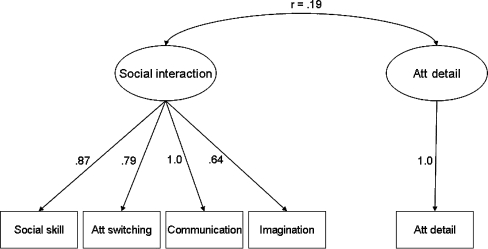
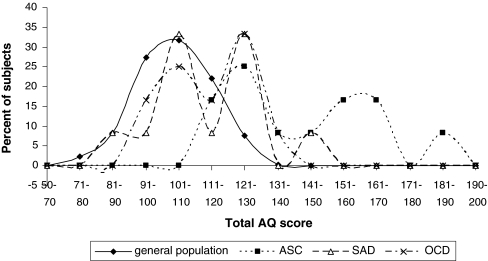
The factor structure of the Dutch translation of the Autism-Spectrum Quotient (AQ; a continuous, quantitative measure of autistic traits) was evaluated with confirmatory factor analyses in a large general population and student sample. The criterion validity of the AQ was examined in three matched patient groups (autism spectrum conditions (ASC), social anxiety disorder, and obsessive-compulsive disorder). A two factor model, consisting of a "Social interaction" factor and "Attention to detail" factor could be identified. The internal consistency and test-retest reliability of the AQ were satisfactory. High total AQ and factor scores were specific to ASC patients. Men scored higher than women and science students higher than non-science students. The Dutch translation of the AQ is a reliable instrument to assess autism spectrum conditions.
Overview
The claims and statistics of this paper haven’t been checked yet.
Free: it reads the open-access text and checks the first 5 claims that cite a source we can check. Create a free account to check every claim.
Integrity signals
Registry
Cites
Statistics
Figures
Verification
Claims the paper makes
The claims and statistics of this paper haven’t been checked yet.
Free: it reads the open-access text and checks the first 5 claims that cite a source we can check. Create a free account to check every claim.
Claims other papers make about this one
Each is checked against this paper’s own text: does it say what the citing paper says it does?
The source backs part of the claim, not all of it — or backs it for a different population, condition or comparison.
In the citing paper
“The test has good internal consistency and test-retest reliability and has been translated into many languages [57, 58].”
From A 'choice', an 'addiction', a way 'out of the lost': Exploring self-injury in autistic people without intellectual disability (2019) · cites this paper as [58]
Experimental — accuracy not yet measuredThe cited source says what the claim attributes to it.
In the citing paper
“High total AQ scores are specific to patients with an ASD and set them apart from both the general population and from patients with SAD [65].”
The check wasn’t confident either way, so it gives no verdict — never disputed.
In the citing paper
“The most widely used measure for adults with ASC is the Adolescent/Adult Sensory Profile (AASP), a 60-item self-report measure that finds differences in sensory processing in more than 90% of adults with ASC [17,19].”
From The Sensory Perception Quotient (SPQ): development and validation of a new sensory questionnaire for adults with and without autism (2014) · cites this paper as [19]
Experimental — accuracy not yet measured
Self-check
Percentages, sums and reported differences re-computed from the paper’s own numbers.
The self-check needs the paper’s full text.
Citations
Cites
Lord, C., Rutter, M., & Le Couteur, A. (1994) · Journal of Autism and Developmental Disorders · doi:10.1007/bf02172145 · Cited by 9,065 · cited 2×
“Keywords Autism Factor analysis Validity Reliability Autism phenotype”
MethodSchermelleh-Engel, K., Moosbrugger, H., & Müller, H. (2003) · Department of Psychology - University of Koblenz-Landau · doi:10.23668/psycharchives.12784 · Cited by 8,975
Lord, C., Risi, S., Lambrecht, L., Cook, E. H., Leventhal, B. L., DiLavore, P. C., Pickles, A., & Rutter, M. (2000) · Journal of Autism and Developmental Disorders · doi:10.1023/a:1005592401947 · Cited by 7,520 · cited 2×
“Keywords Autism Factor analysis Validity Reliability Autism phenotype”
MethodBaron-Cohen, S., Wheelwright, S., Skinner, R., Martin, J., & Clubley, E. (2001) · Journal of Autism and Developmental Disorders · doi:10.1023/a:1005653411471 · Cited by 6,450 · cited 13×
“Both the British (Baron-Cohen et al. 2001) and the Japanese version (Kurita et al. 2005) of the AQ reported good test-retest reliability and moderate internal consistency (Cronbach’s a varying from .63 to .78).”
BackgroundMethodResultInfluentialStructured Clinical Interview for DSM-IV Axis I Disorders
Spitzer, R. L., First, M. B., & Gibbon, M. (1997) · Medical Entomology and Zoology · Cited by 4,096
Autism as a strongly genetic disorder: evidence from a British twin study
Bailey, A., Le Couteur, A., Gottesman, I., Bolton, P., Simonoff, E., Yuzda, E., & Rutter, M. (1995) · Psychological Medicine · doi:10.1017/s0033291700028099 · Cited by 2,461
The extreme male brain theory of autism
Baron-Cohen, S. (2002) · Trends in Cognitive Sciences · doi:10.1016/s1364-6613(02)01904-6 · Cited by 2,007 · cited 2×
“In line with the empathizing–systemizing theory of autism (Baron-Cohen 2002; Baron-Cohen et al. 2005) and findings from previous studies (Baron-Cohen et al. 2001; Hoekstra et al. 2007; Wakabayashi et al. 2006) we expected: (a) AQ scores to be continuously distributed in the general population; (b)…”
ResultThe Extreme Male-Brain Theory of Autism
Baron-Cohen, S. (1999) · Neurodevelopmental Disorders · doi:10.7551/mitpress/4945.003.0023 · Cited by 1,413
Autistic Traits in the General Population: A Twin Study
Constantino, J. N., & Todd, R. D. (2003) · Archives of General Psychiatry · doi:10.1001/archpsyc.60.5.524 · Cited by 1,317 · cited 2×
“continuously distributed in the population (Constantino and Todd 2003; Piven et al. 1997; Spiker et al. 2002).”
BackgroundSex differences in the brain: implications for explaining autism
Baron-Cohen, S., Knickmeyer, R. C., & Belmonte, M. K. (2005) · Science · doi:10.1126/science.1115455 · Cited by 1,145 · cited 2×
“In line with the empathizing–systemizing theory of autism (Baron-Cohen 2002; Baron-Cohen et al. 2005) and findings from previous studies (Baron-Cohen et al. 2001; Hoekstra et al. 2007; Wakabayashi et al. 2006) we expected: (a) AQ scores to be continuously distributed in the general population; (b)…”
Result
Research works printed but not linked: 2
- 1. American Psychiatric Association (2000). Diagnostic and Statistical Manual for Mental Disorders, 4th Ed., Text Revision (DSM-IV-TR). Washington: American Psychiatric Press.
- 26. Neale M. C., Boker S. M., Xie G., Maes H. H. Mx: Statistical modeling. 7. Richmond: VCU; 2006.
Cited by
Items 701–761 of 761
Turnbull, G. (2023) · UWA Profiles and Research Repository (UWA) · doi:10.26182/jv6t-fy25
Mindfulness-based intervention for children with ADHD and their parents
Siebelink, N. M. (2022) · Radboud Repository (Radboud University)
Surprise, surprise! Dealing with unexpected information in autism spectrum disorder
Goris, J. (2020) · Ghent University Academic Bibliography (Ghent University)
Spatiotemporal prediction of observed actions : contrasts between different frames of reference
Brattan, V. (2016) · White Rose eTheses Online (University of Leeds, The University of Sheffield, University of York)
A cross-cultural study of autistic traits in the general population
Abu Bakar, S. (2022) · Nottingham ePrints (University of Nottingham)
Melatonin in physiological/biological ovarian aging
Reiter, R., Sharma, R., Romero, A., Manucha, W. A. F., Xian Tan, D., Pires de Campos Zuccari, D. A., & Chuffa, L. G. D. A. (2023) · CONICET Digital (CONICET)
Torenvliet, C. (2023) · UvA-DARE (University of Amsterdam)
Does intentionality decision-making depend on who you are? The role of individual differences.
Zucchelli, M. M. (2018) · AMS Dottorato Institutional Doctoral Theses Repository (University of Bologna) · doi:10.6092/unibo/amsdottorato/8410
Sieur, S. L. S. M. (2020) · Utrecht University Repository (Utrecht University)
Alkhun, N. A. K. (2021) · UWM Digital Commons (University of Wisconsin–Milwaukee)
eLife Assessment: Visuo-motor updating in individuals with heightened autistic traits
Huxlin, K. R. (2024) · eLife · doi:10.7554/elife.94946.2.sa3
The role of genes in the spectrum of childhood autism
Αγγέλη, Ε. Φ., & Αγγέλη, Ε. Φ. (2024) · University of Thessaly Institutional Repository (University of Thessaly)
3.58 Identifying Neurodevelopmental Domain Subgroups in ASD and ADHD
Krakowski, A. D., Cost, K. T., Szatmári, P., Anagnostou, E. A., Crosbie, J., Schachar, R. J., Georgiadis, S., Duku, E., Pullenayegum, E., & Barnett, C. (2022) · Journal of the American Academy of Child & Adolescent Psychiatry · doi:10.1016/j.jaac.2022.09.337
Vocal emotions on the brain the role of acoustic parameters and musicality
Nussbaum, C., Schweinberger, S. R., Schirmer, A., Lima, C. F., & Jena, F.-S.-U. (2023) · Common Library Network (Der Gemeinsame Bibliotheksverbund)
The relationship between musical sophistication, executive functions and autistic traits
Chee, Z. J. (2023) · Nottingham ePrints (University of Nottingham)
Kuusik, S. (2021) · DSpace repository (University of Tartu)
Winder, G., & Allen, J. A. (2026) · Research Square · doi:10.21203/rs.3.rs-11088656/v1
Executive dysfunction in high functioning autism
Burnett, H. G. (2017) · ERA
Wang, Y., Zhao, Y., Nik., W. S. B. W., Tan, C., Lu, F., & Xing, Q. (2026) · Medicine · doi:10.1097/md.0000000000047887
Catoira, B. (2025) · VUBIR (Vrije Universiteit Brussel)
Beales, G. (2015) · UEA Digital Repository (University of East Anglia)
\nNeural mechanisms of negative learning bias. A transdiagnostic approach to mental health
Brolsma, S. C. A. (2021) · Radboud Repository (Radboud University)
\nASS-diagnostiek bij volwassenen.
Spek, A. L., Teunisse, J. P. W. M., Tesink, C. M. J. Y., Mol, A. J., & Noens, I. (2010) · Radboud Repository (Radboud University)
Differensialdiagnostiske avveininger ved Asperger syndrom, ADHD og Reaktiv tilknytningsforstyrrelse
Høidal, R. (2013) · NVA (Nasjonalt vitenarkiv)
Individual differences in contextual effects on interpreting facial expressions
Lennon, N. N. N. (2026) · Nottingham ePrints (University of Nottingham) · doi:10.17639/9058
Lievän ennenaikaisuuden yhteys itsearvioituihin autistisiin piirteisiin nuorilla aikuisilla
Lamberg, S. (2017) · Helda - University of Helsinki Institutional Repository
Murray, A. L. (2016) · ERA
Individual differences in phonology: the realization of stem-final coronal obstruents in Korean
Jo, J. (2024) · eScholarship (California Digital Library)
自閉症的行動特性とオキシトシン受容体遺伝子多型を結ぶ中間表現型としての脳形態指標とその性差に関する研究
Saito, Y. (2013) · Institutional Repositories DataBase (IRDB) · doi:10.15083/00005465
Sapey‐Triomphe, L., Melis, K., Lemmens, L., & Wagemans, J. P. (2026) · Scientific Reports · doi:10.1038/s41598-026-78885-5
Diagnostic Instruments in Autism
KIM, S. H., JEONG, S., Corsello, C., GRZADZINSKI, R., & Lord, C. (2026) · Wiley eBooks · doi:10.1002/9781394489886.ch26
OCD: Spectrum theory and issues in measurement.
Anholt, G. E. (2010) · Pure Amsterdam UMC
The predictive social brain: On the processing of other people's behaviour
Heil, L. (2018) · Radboud Repository (Radboud University)
Misophonia revised: New insights in phenomenology and psychotherapy
Jager, I. (2022) · Pure Amsterdam UMC
Lewton, M. (2019) · ORCA Online Research @Cardiff (Cardiff University)
Fusar‐Poli, L., Prachason, T., Brondino, N., Nola, M., Lin, B. D., Pries, L.-K., Doğan, M. K., Menne‐Lothmann, C., Decoster, J., van Winkel, R., et al. (2026) · CNS Spectrums · doi:10.1017/s1092852926100947
Pinzino, M. (2017) · Electronic Theses and Dissertations Repository (University of Pisa)
The implications of abnormal stereopsis in typical and atypical development
Smith, D. (2017) · Nottingham ePrints (University of Nottingham)
Molina-Arcia, L., Tovar, Á. E., & García, O. A. (2025) · PsyArXiv (OSF Preprints) · doi:10.31234/osf.io/mxckz_v1
Decoding Autism: A Comprehensive Review of Adolescent Symptom Measurement Scales
Masih, J., Singh, G., & Yadav, D. K. (2025) · Journal of Neonatal Surgery · doi:10.52783/jns.v14.2007
Grindle, H., WESTPHAL, A., BROSNAN, M., PETE, B., & Volkmar, F. R. (2026) · Wiley eBooks · doi:10.1002/9781394489886.ch50
The Adoption of the Rain Classroom Online Learning System among Sophomores in Chengdu, China
Zhang, D.-R. (2024) · Scholar: Human Sciences · doi:10.14456/shserj.2024.27
Groot, K. D. (2015) · Student Undergraduate Research E-journal · doi:10.25609/sure.v1.1020
Chao, C. L. (2020) · eScholarship (California Digital Library)
Groen, Y., Greaves‐Lord, K., Stapert, A. F., Davids, L. R. C. D., Castelein, S., van Balkom, I., & Piening, S. (2026) · Wetenschappelijk Tijdschrift Autisme · doi:10.36254/wta.2026.2.01
FERRARO, M. (2016) · Electronic Theses and Dissertations Repository (University of Pisa)
Louwerse, A. (2014) · EUR Research Repository (Erasmus University Rotterdam)
Bodfield, K. S. (2022) · Liverpool John Moores University · doi:10.24377/ljmu.t.00017391
Autism spectrum disorders and substance use disorders
Sizoo, B. B., van Wijngaarden-Cremers, P. J. M., & van der Gaag, R. J. (2013) · Radboud Repository (Radboud University)
Autism as a multicausal system
Deserno, M. K. (2019) · UvA-DARE (University of Amsterdam)
Rahmah, R., Lestari, J. T., Suharsiwi, S., & Dhakal, A. (2023) · AMCA Journal of Education and Behavioral Change · doi:10.51773/ajeb.v3i2.332
Overwalle, J. V., Geusens, B., der Donck, S. V., Boets, B., & Wagemans, J. P. (2024) · Figshare · doi:10.6084/m9.figshare.25963292
Overwalle, J. V., Geusens, B., der Donck, S. V., Boets, B., & Wagemans, J. P. (2024) · Figshare · doi:10.6084/m9.figshare.25963097
Overwalle, J. V., Geusens, B., der Donck, S. V., Boets, B., & Wagemans, J. P. (2024) · Figshare · doi:10.6084/m9.figshare.26729302
定型発達者の自閉スペクトラム症傾向とシェパード錯視の錯視量の関係
小野島, 昂., & Takahiro, O. (2021) · Institutional Repositories DataBase (IRDB)
Concepts of collective intelligence and process of creating a knowledge
Szpunar, M. (2011) · Jagiellonian University Repository (Jagiellonian University)
Metadata
- Authors
- Hoekstra, R. A., Bartels, M., Cath, D. C., & Boomsma, D. I.
- Affiliations
- Vrije Universiteit Amsterdam (NL)
- Corresponding author
- Hoekstra, Rosa A.
- Venue
- Journal of Autism and Developmental Disorders
- Published
- 2008-02-27
- Volume
- 38
- Issue
- 8
- Pages
- 1555-1566
- ISSN
- 0162-3257 (ISSN-L)
- 1573-3432
- PMC
- PMC2516538
- OpenAlex
- W2150214803
- Cited by
- 651
- References
- 38
- Citations by year
- 2026: 32 · 2025: 33 · 2024: 34 · 2023: 43 · 2022: 26 · 2021: 58 · 2020: 46 · 2019: 46 · 2018: 45 · 2017: 43 · 2016: 29 · 2015: 37 · 2014: 44 · 2013: 36 · 2012: 32
- FWCI
- 11.06
- Type
- journal article
- Language
- en
- Open access
- hybrid
- doi.org
- Licence
- cc-by-nc
- Locations
- Journal of Autism and Developmental Disorders (publishedVersion, cc-by-nc)
- Europe PMC (PubMed Central) (publishedVersion, cc-by-nc)
- PubMed Central (publishedVersion, cc-by-nc)
- PubMed (publishedVersion)
- VU Research Portal (publishedVersion, other-oa)
- Open Research Online (The Open University) (acceptedVersion)
- Digital Academic REpository of VU University Amsterdam (Vrije Universiteit Amsterdam) (submittedVersion)
- Research Portal (King's College London) (submittedVersion, cc-by-nc)
- Data Archiving and Networked Services (DANS) (submittedVersion, other-oa)
- Funders
- Nederlandse Organisatie voor Wetenschappelijk Onderzoek (NWO/ SPI 56-464-14192, 56‐464‐14192, 451–04-034, Spi-56-464-14192, 14192, 575-25-006)
- Topics
- Life Sciences › Neuroscience › Cognitive Neuroscience › Autism Spectrum Disorder Research
- Social Sciences › Decision Sciences › Management Science and Operations Research › Psychometric Methodologies and Testing
- Social Sciences › Psychology › Experimental and Cognitive Psychology › Anxiety, Depression, Psychometrics, Treatment, Cognitive Processes
- Keywords
- Autism Spectrum Quotient, autistic traits, factor structure, criterion validity, Dutch translation, autism spectrum disorder, social anxiety disorder, obsessive-compulsive disorder, social interaction, attention to detail, gender differences, science students
- MeSH terms
- Adolescent, Adult, Autistic Disorder, Mental Disorders, Cross-Cultural Comparison, Female, Humans, Interview, Psychological, Male, Middle Aged, Netherlands, Personality Assessment, Psychometrics, Surveys and Questionnaires, Reference Values, Translating, Reproducibility of Results, Early Diagnosis
About these checks
Registry, retraction, Cites and statistics results are computed, not judged, with one exception: a printed reference that no index lists is read once by a model before it counts as a citation error. Claims are extracted by a model and kept only when their quote appears verbatim in the text; each cited source is then checked, with a model’s help, for whether it says what the claim relies on. Those verdicts can be wrong — read the claim’s quote and the cited source before relying on one.
Statistics and arithmetic are recomputed, not judged.
Confidence bands are shown only for fields calibrated on our annotated test set. None is calibrated yet, so no band is shown.
What counts as a claim ›How we measure confidence ›How we check this ›
Are you an author, or do you see a problem with this page? Request a review
Data sources
Bibliographic data: Semantic Scholar, OpenAlex, Crossref.
Contains information from the Semantic Scholar Academic Graph Datasets, made available under the ODC Attribution License (ODC-BY 1.0).
Semantic Scholar’s data is described in: Kinney, R., et al. (2023). The Semantic Scholar Open Data Platform. arXiv:2301.10140.
