

The DOI matches its Crossref record; 50 of the 50 references it cites were found in a registry or an index.
Atypical Social Modulation of Imitation in Autism Spectrum Conditions
Open accessAbstract
Appropriate modulation of imitation according to social context is important for successful social interaction. In the present study we subliminally primed high-functioning adults with ASC and age- and IQ-matched controls with either a pro- or non- social attitude. Following priming, an automatic imitation paradigm was used to acquire an index of imitation. Whereas imitation levels were higher for pro-socially primed relative to non-socially primed control participants, there was no difference between pro- and non- socially primed individuals with ASC. We conclude that high-functioning adults with ASC demonstrate atypical social modulation of imitation. Given the importance of imitation in social interaction we speculate that difficulties with the modulation of imitation may contribute to the social problems characteristic of ASC.
Overview
The claims and statistics of this paper haven’t been checked yet.
Run the check — free, no account needed. It reads the open-access text and checks the sources it cites.
Integrity signals
Registry
Cites
Statistics
Figures
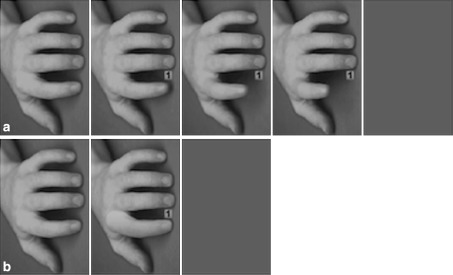
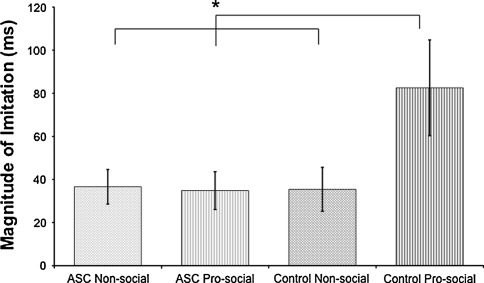
Verification
Claims the paper makes
The claims and statistics of this paper haven’t been checked yet.
Run the check — free, no account needed. It reads the open-access text and checks the sources it cites.
Claims other papers make about this one
Each is checked against this paper’s own text: does it say what the citing paper says it does?
The source backs part of the claim, not all of it — or backs it for a different population, condition or comparison.
In the citing paper
“While high-functioning ASD individuals do not show modulation of automatic imitation (Cook & Bird, 2012)”
From Interplay of self-other distinction and cognitive control mechanisms in a social automatic imitation task: An ERP study (2021) · cites this paper as Cook & Bird, 2012
Experimental — accuracy not yet measured
Self-check
Percentages, sums and reported differences re-computed from the paper’s own numbers.
The self-check needs the paper’s full text.
Citations
Cites
Diagnostic and Statistical Manual of Mental Disorders
Williams, J. B. W., & First, M. B. (2013) · Oxford University Press eBooks · doi:10.1093/acrefore/9780199975839.013.104 · Cited by 109,845
Diagnostic and Statistical Manual of Mental Disorders
American Psychiatric Association (2022) · doi:10.1176/appi.books.9780890425787 · Cited by 23,476
Philosophical transactions of the Royal Society of London. B
Press, H. (1886) · Cited by 10,087
Diagnostic and Statistical Manual of Mental Disorders
Siegel, L. J., & Fletcher‐Janzen, E. (2008) · Wiley eBooks · doi:10.1002/9780470373699.speced0655 · Cited by 8,467
Lord, C., Risi, S., Lambrecht, L., Cook, E. H., Leventhal, B. L., DiLavore, P. C., Pickles, A., & Rutter, M. (2000) · Journal of Autism and Developmental Disorders · doi:10.1023/a:1005592401947 · Cited by 7,520
The chameleon effect: the perception–behavior link and social interaction
Chartrand, T. L., & Bargh, J. A. (1999) · Journal of Personality and Social Psychology · doi:10.1037/0022-3514.76.6.893 · Cited by 3,674
Cortical mechanisms of human imitation
Iacoboni, M., Woods, R. P., Brass, M., Bekkering, H., Mazziotta, J. C., & Rizzolatti, G. (1999) · Science · doi:10.1126/science.286.5449.2526 · Cited by 2,683
Handbook of Research Methods in Social and Personality Psychology
West, T., Reis, H. T., Judd, C. M., Banaji, M. R., Crandall, C., Giner-Sorolla, R., Biernat, M., Fiedler, K., Ermark, F., Tepper, S. J., et al. (2024) · Cambridge University Press eBooks · doi:10.1017/9781009170123 · Cited by 2,134
Dapretto, M., Davies, M. S., Pfeifer, J. H., Scott, A. A., Sigman, M., Bookheimer, S. Y., & Iacoboni, M. (2006) · Nature Neuroscience · doi:10.1038/nn1611 · Cited by 1,694
Using nonconscious behavioral mimicry to create affiliation and rapport
Lakin, J. L., & Chartrand, T. L. (2003) · Psychological Science · doi:10.1111/1467-9280.14481 · Cited by 1,297
Research works printed but not linked: 1
- Brothers, L. (1990). The social brain: A project fr integrating primate behaviour and neurophysiology in a new domain. Concepts in Neuroscience, 1, 27–51.
Cited by
Sorted by citations
Bird, G., & Viding, E. (2014) · Neuroscience & Biobehavioral Reviews · doi:10.1016/j.neubiorev.2014.09.021 · Cited by 472
Self-citationThe Structure of Social Cognition: In(ter)dependence of Sociocognitive Processes
Happe, F. G. E., Cook, J. L., & Bird, G. (2016) · Annual Review of Psychology · doi:10.1146/annurev-psych-010416-044046 · Cited by 478
Self-citationSantiesteban (2012) · doi:10.1016/j.cub.2012.10.018 · Cited by 357
Self-citationReflecting on the mirror neuron system in autism: A systematic review of current theories
Hamilton, A. F. D. C. (2012) · Developmental Cognitive Neuroscience · doi:10.1016/j.dcn.2012.09.008 · Cited by 378
What Happened to Mirror Neurons?
Heyes, C. M., & Catmur, C. (2021) · Perspectives on Psychological Science · doi:10.1177/1745691621990638 · Cited by 318
Social top-down response modulation (STORM): a model of the control of mimicry in social interaction
Wang, Y., & Hamilton, A. F. D. C. (2012) · Frontiers in Human Neuroscience · doi:10.3389/fnhum.2012.00153 · Cited by 267
Automatic imitation: A meta-analysis.
Cracco, E., Bardi, L., Desmet, C., Genschow, O., Rigoni, D., De Coster, L., Radkova, I., Deschrijver, E., & Brass, M. (2018) · Psychological Bulletin · doi:10.1037/bul0000143 · Cited by 228
From movement kinematics to social cognition: the case of autism
Cook, J. L. (2016) · Philosophical Transactions of the Royal Society B Biological Sciences · doi:10.1098/rstb.2015.0372 · Cited by 161
Self-citationMimicry: causes and consequences
Duffy, K. A., & Chartrand, T. L. (2015) · Current Opinion in Behavioral Sciences · doi:10.1016/j.cobeha.2015.03.002 · Cited by 127
Cross, K. A., Torrisi, S., Reynolds Losin, E. A., & Iacoboni, M. (2013) · NeuroImage · doi:10.1016/j.neuroimage.2013.06.060 · Cited by 113
Brewer, R., Happé, F., Cook, R., & Bird, G. (2015) · Neuroscience & Biobehavioral Reviews · doi:10.1016/j.neubiorev.2015.07.006 · Cited by 117
Self-citationMimicry and automatic imitation are not correlated
Genschow, O., van Den Bossche, S., Cracco, E., Bardi, L., Rigoni, D., & Brass, M. (2017) · PLoS ONE · doi:10.1371/journal.pone.0183784 · Cited by 115
Santiesteban, I., Banissy, M. J., Catmur, C., & Bird, G. (2015) · European Journal of Neuroscience · doi:10.1111/ejn.13036 · Cited by 107
Self-citationHogeveen, J., Obhi, S. S., Banissy, M. J., Santiesteban, I., Press, C., Catmur, C., & Bird, G. (2015) · Social Cognitive and Affective Neuroscience · doi:10.1093/scan/nsu148 · Cited by 100
Self-citationKoehne, S., Behrends, A., Fairhurst, M. T., & Dziobek, I. (2015) · Psychotherapy and Psychosomatics · doi:10.1159/000441111 · Cited by 107
Bolis, D., & Schilbach, L. (2017) · Developmental Cognitive Neuroscience · doi:10.1016/j.dcn.2017.01.009 · Cited by 94
Imitation in Autism Spectrum Disorders
Vivanti, G., & Hamilton, A. F. D. C. (2014) · Wiley eBooks · doi:10.1002/9781118911389.hautc12 · Cited by 92
Klapper, A., Ramsey, R., Wigboldus, D., & Cross, E. S. (2014) · Journal of Cognitive Neuroscience · doi:10.1162/jocn_a_00651 · Cited by 85
Self-other control: a candidate mechanism for social cognitive function
Sowden, S., & Shah, P. (2014) · Frontiers in Human Neuroscience · doi:10.3389/fnhum.2014.00789 · Cited by 81
Sowden, S., Koehne, S., Catmur, C., Dziobek, I., & Bird, G. (2016) · Autism Research · doi:10.1002/aur.1511 · Cited by 74
Self-citationTop-down modulation of the perception of other people in schizophrenia and autism
Cook, J. L., Barbalat, G., & Blakemore, S. (2012) · Frontiers in Human Neuroscience · doi:10.3389/fnhum.2012.00175 · Cited by 86
Self-citationAction observation and imitation in autism spectrum disorders: an ALE meta-analysis of fMRI studies
Yang, J., & Hofmann, J. (2015) · Brain Imaging and Behavior · doi:10.1007/s11682-015-9456-7 · Cited by 77
Imitation and recognition of facial emotions in autism: a computer vision approach
Drimalla, H., Baskow, I., Behnia, B., Roepke, S., & Dziobek, I. (2021) · Molecular Autism · doi:10.1186/s13229-021-00430-0 · Cited by 69
Atypical interference effect of action observation in autism spectrum conditions
Cook, J. L., Swapp, D., Pan, X., Bianchi‐Berthouze, N., & Blakemore, S. (2013) · Psychological Medicine · doi:10.1017/s0033291713001335 · Cited by 58
Self-citationReduced Mimicry to Virtual Reality Avatars in Autism Spectrum Disorder
Forbes, P., Pan, X., & Hamilton, A. F. D. C. (2016) · Journal of Autism and Developmental Disorders · doi:10.1007/s10803-016-2930-2 · Cited by 64
Understanding the Role of the ‘Self’ in the Social Priming of Mimicry
Yin, W., & Hamilton, A. F. D. C. (2013) · PLoS ONE · doi:10.1371/journal.pone.0060249 · Cited by 58
Social affiliation motives modulate spontaneous learning in Williams syndrome but not in autism
Vivanti, G., Hocking, D. R., Fanning, P. A. J., & Dissanayake, C. (2016) · Molecular Autism · doi:10.1186/s13229-016-0101-0 · Cited by 52
Bamford, J. S., & Davidson, J. W. (2017) · Musicae Scientiae · doi:10.1177/1029864917701536 · Cited by 59
Investigating the Relationship between Stable Personality Characteristics and Automatic Imitation
Butler, E. E., Ward, R., & Ramsey, R. (2015) · PLOS ONE · doi:10.1371/journal.pone.0129651 · Cited by 44
“Direct evidence for this proposal comes from studies of automatic imitation using an RT paradigm, which shows that individuals with ASD have an intact congruency effect [43,44], but lack modulation of imitation based on social context [33].”
MethodGroup Dynamics in Automatic Imitation
Gleibs, I. H., Wilson, N., Reddy, G., & Catmur, C. (2016) · PLoS ONE · doi:10.1371/journal.pone.0162880 · Cited by 40
No evidence of reaction time slowing in autism spectrum disorder
Ferraro, F. R. (2014) · Autism · doi:10.1177/1362361314559986 · Cited by 43
The imitation game: Effects of social cues on ‘imitation’ are domain-general in nature
Marsh, L. E., Bird, G., & Catmur, C. (2016) · NeuroImage · doi:10.1016/j.neuroimage.2016.06.050 · Cited by 39
“Thus far,most theoretical and empiricalwork on the social modulation of imitation assumes that the social features of an interaction have a direct and specific impact on imitation (Cook and Bird, 2011, 2012; Leighton et al., 2010; Rauchbauer et al., 2015; Wang et al., 2011a,b).”
BackgroundResultInfluentialSelf-citationDeschrijver, E., Wiersema, J. R., & Brass, M. (2017) · Cognitive, Affective, & Behavioral Neuroscience · doi:10.3758/s13415-016-0485-5 · Cited by 32
Emotional Resonance Deficits in Autistic Children
Grecucci, A., Brambilla, P., Šiugždaitė, R., Londero, D., Fabbro, F., & Rumiati, R. I. (2012) · Journal of Autism and Developmental Disorders · doi:10.1007/s10803-012-1603-z · Cited by 33
Facilitation of action planning in children with autism: The contribution of the maternal body odor
Parma, V., Bulgheroni, M., Tirindelli, R., & Castiello, U. (2014) · Brain and Cognition · doi:10.1016/j.bandc.2014.05.002 · Cited by 31
Cook, J. L. (2014) · Neuroscience & Biobehavioral Reviews · doi:10.1016/j.neubiorev.2014.02.007 · Cited by 31
Self-citationSTORMy Interactions: Gaze and the Modulation of Mimicry in Adults on the Autism Spectrum
Forbes, P., Wang, Y., & Hamilton, A. F. D. C. (2016) · Psychonomic Bulletin & Review · doi:10.3758/s13423-016-1136-0 · Cited by 28
Automatic imitation and spatial compatibility in a key-pressing task
Jiménez, L., Recio, S. A., Méndez, A., Lorda, M. J., Permuy, B., & Paz, C. M. (2012) · Acta Psychologica · doi:10.1016/j.actpsy.2012.07.007 · Cited by 26
The Effect of Money Priming on Self-Focus in the Imitation-Inhibition Task
Genschow, O., Schuler, J., Cracco, E., Braß, M., & Wänke, M. (2019) · Experimental Psychology (formerly Zeitschrift für Experimentelle Psychologie) · doi:10.1027/1618-3169/a000466 · Cited by 28
EPS Prize Lecture: Cognitive underpinnings of social interaction
Hamilton, A. F. D. C. (2014) · Quarterly Journal of Experimental Psychology · doi:10.1080/17470218.2014.973424 · Cited by 25
Contingency and contiguity of imitative behaviour affect social affiliation
Dignath, D., Lotze-Hermes, P., Farmer, H., & Pfister, R. (2017) · Psychological Research · doi:10.1007/s00426-017-0854-x · Cited by 21
Rombouts, E., Maes, B., & Zink, I. (2017) · Augmentative and Alternative Communication · doi:10.1080/07434618.2017.1326066 · Cited by 19
The Influence of Facial Signals on the Automatic Imitation of Hand Actions
Butler, E. E., Ward, R. D., & Ramsey, R. (2016) · Frontiers in Psychology · doi:10.3389/fpsyg.2016.01653 · Cited by 18
Hayes, S. J., Dutoy, C. A., Elliott, D., Gowen, E., & Bennett, S. J. (2015) · Acta Psychologica · doi:10.1016/j.actpsy.2015.10.005 · Cited by 18
Status and Power Do Not Modulate Automatic Imitation of Intransitive Hand Movements
Farmer, H., Carr, E. W., Svartdal, M., Winkielman, P., & Hamilton, A. F. D. C. (2016) · PLoS ONE · doi:10.1371/journal.pone.0151835 · Cited by 17
Enhanced Automatic Action Imitation and Intact Imitation-Inhibition in Schizophrenia
Simonsen, A., Fusaroli, R., Skewes, J. C., Roepstorff, A., Campbell-Meiklejohn, D., Mors, O., & Bliksted, V. (2019) · Schizophrenia Bulletin · doi:10.1093/schbul/sby006 · Cited by 16
Hayes, S. J., Andrew, M., Elliott, D., Gowen, E., & Bennett, S. J. (2015) · Journal of Autism and Developmental Disorders · doi:10.1007/s10803-015-2588-1 · Cited by 17
Automatic imitation does not predict levels of prosocial behaviour in a modified dictator game
Galang, C. M., & Obhi, S. S. (2020) · Acta Psychologica · doi:10.1016/j.actpsy.2020.103022 · Cited by 16
Moon, J. (2018) · Multimodal Technologies and Interaction · doi:10.3390/mti2030053 · Cited by 14
An evolutionary account of impairment of self in cognitive disorders
Benítez‐Burraco, A., Adornetti, I., Ferretti, F., & Progovac, L. (2022) · Cognitive Processing · doi:10.1007/s10339-022-01110-4 · Cited by 14
Gordon, A., Geddert, R., Hogeveen, J., Krug, M. K., Obhi, S. S., & Solomon, M. (2020) · Journal of Autism and Developmental Disorders · doi:10.1007/s10803-019-04355-9 · Cited by 14
Neuroimaging results suggest the role of prediction in cross-domain priming
Amado, C., Kovács, P., Mayer, R., Ambrus, G. G., Trapp, S., & Kovács, G. (2018) · Scientific Reports · doi:10.1038/s41598-018-28696-0 · Cited by 17
Autistic children’s language imitation shows reduced sensitivity to ostracism
Hopkins, Z., Yuill, N., & Branigan, H. P. (2021) · Journal of Autism and Developmental Disorders · doi:10.1007/s10803-021-05041-5 · Cited by 15
Emulation and Mimicry in School Students with Typical Development and with High Functioning Autism
Jiménez, L., Lorda, M. J., & Paz, C. M. (2013) · Journal of Autism and Developmental Disorders · doi:10.1007/s10803-013-2027-0 · Cited by 12
Imitation and interindividual differences: Belief in free will is not related to automatic imitation
Westfal, M., Crusius, J., & Genschow, O. (2021) · Acta Psychologica · doi:10.1016/j.actpsy.2021.103374 · Cited by 13
Verbal social primes alter motor contagion during action observation
Sparks, S., Douglas, T., & Kritikos, A. (2016) · Quarterly Journal of Experimental Psychology · doi:10.1080/17470218.2015.1113304 · Cited by 11
Copying You Copying Me: Interpersonal Motor Co-Ordination Influences Automatic Imitation
Shaw, D. J., Czekóová, K., Chromec, J., Mareček, R., & Brázdil, M. (2013) · PLoS ONE · doi:10.1371/journal.pone.0084820 · Cited by 10
Shaw, D., Czekóová, K., & Porubanova, M. (2016) · Psychological Research · doi:10.1007/s00426-016-0814-x · Cited by 10
The way others move can influence what we choose
Forbes, P., Suddell, S. F., Farmer, H., Logeswaran, Y., & Hamilton, A. F. D. C. (2018) · Quarterly Journal of Experimental Psychology · doi:10.1177/1747021818808461 · Cited by 9
Conditional effects of gaze on automatic imitation: the role of autistic traits
Trilla, I., Wnendt, H., & Dziobek, I. (2020) · Scientific Reports · doi:10.1038/s41598-020-72513-6 · Cited by 10
Winkielman, P., Carr, E. W., Chakrabarti, B., Hofree, G., & Kavanagh, L. C. (2016) · Cambridge University Press eBooks · doi:10.1017/cbo9781107587595.009 · Cited by 9
Can measures of social cognition predict autistic traits?
Oliveros, J. C., Santiesteban, I., & Ulloa, J. L. (2023) · Acta Psychologica · doi:10.1016/j.actpsy.2023.104056 · Cited by 9
The controlled imitation task: a new paradigm for studying self-other control
Obhi, S. S., & Hogeveen, J. (2013) · PeerJ · doi:10.7717/peerj.161 · Cited by 10
Rauchbauer, B., Lorenz, C., Lamm, C., & Pfabigan, D. M. (2021) · Cognitive, Affective, & Behavioral Neuroscience · doi:10.3758/s13415-021-00878-w · Cited by 8
Empathic pain: Exploring the multidimensional impacts of biological and social aspects in pain
Cao, Y., Zhang, J., He, X., Wu, C., Liu, Z., Zhu, B., & Miao, L. (2024) · Neuropharmacology · doi:10.1016/j.neuropharm.2024.110091 · Cited by 7
Imitation in one's own presence: No specific effect of self-focus on imitation
Khemka, D., Ahmadilari, N., Bird, G., & Catmur, C. (2020) · Acta Psychologica · doi:10.1016/j.actpsy.2020.103194 · Cited by 8
Self-citationPictures of you: Dot stimuli cause motor contagion in presence of a still human form
Sparks, S., Sidari, M. J., Lyons, M., & Kritikos, A. (2016) · Consciousness and Cognition · doi:10.1016/j.concog.2016.08.004 · Cited by 7
Dissociable effects of averted "gaze" on the priming of bodily representations and motor actions.
Carr, E. W., Bird, G., Catmur, C., & Winkielman, P. (2020) · Acta Psychologica · doi:10.1016/j.actpsy.2020.103225 · Cited by 3
Self-citationCzekóová, K., Shaw, D., Lamoš, M., Spiláková, B., Salazar, M., & Brázdil, M. (2021) · Cognitive, Affective, & Behavioral Neuroscience · doi:10.3758/s13415-020-00860-y · Cited by 5
The inhibition of automatic imitation: a meta-analysis and synthesis of fMRI studies
Darda, K. M., & Ramsey, R. (2018) · bioRxiv · doi:10.1101/334938 · Cited by 43
“Further, atypical self-other control has been linked to disorders characterised by social dysfunction including autism and schizophrenia (Cook and Bird, 2012; Ferri et al., 2012).”
Mechanisms of Altered Imitation in Autism Spectrum Disorders
McWeeny, S., Kolday, A., Wodka, E. L., Mostofsky, S. H., Caffo, B. S., & Ewen, J. B. (2025) · Autism Research · doi:10.1002/aur.70046 · Cited by 5
The Control of Shared Representations and Social Cognition
Bardi, L., & Braß, M. (2016) · Cambridge University Press eBooks · doi:10.1017/cbo9781107279353.009 · Cited by 5
Observational learning of atypical biological kinematics in autism
Foster, N. C., Bennett, S. J., Pullar, K. F., Causer, J., Becchio, C., Clowes, D. P., & Hayes, S. J. (2023) · Autism Research · doi:10.1002/aur.3002 · Cited by 4
Automatic Imitation of Hand Movements in Clinical and Neurodiverse Populations
Poliakoff, E., & Gowen, E. (2024) · Springer eBooks · doi:10.1007/978-3-031-62634-0_12 · Cited by 4
Imitasi Dalam Komunikasi Matematis Siswa Untuk Menyelesaikan Masalah Matematika
Lestari, A. S. B., Nusantara, T., Susiswo, S., & Chandra, T. D. (2019) · IndoMath Indonesia Mathematics Education · doi:10.30738/indomath.v2i2.4681 · Cited by 4
Related Disorders (Intellectual, Attention, and Language Disorders) and ASD
Dieckhaus, M. F. S., Thomas, R. P., Frisch, M., Moreno, M. P., Suh, J., & FEIN, D. A. (2024) · Autism and child psychopathology series · doi:10.1007/978-3-031-64499-3_4 · Cited by 4
Higgins, J. P., Kaczmarek, L. A., & King, S. A. (2024) · Topics in Early Childhood Special Education · doi:10.1177/02711214241292030 · Cited by 3
Okamoto, Y., & Kosaka, H. (2018) · Contemporary clinical neuroscience · doi:10.1007/978-3-319-78926-2_10 · Cited by 4
Disordered Social Cognition: Alexithymia and Interoception
Brewer, R., & Bird, G. (2020) · The Cambridge Handbook of Evolutionary Perspectives on Human Behavior · doi:10.1017/9781108131797.036 · Cited by 3
Self-citationThompson, N. M., Luft, C. D. B., & Banissy, M. J. (2016) · Elsevier eBooks · doi:10.1016/b978-0-12-800935-2.00015-4 · Cited by 3
Son, J.-W., & Ghim, H.-R. (2013) · Journal of korean Academy of Child and Adolescent Psychiatry · doi:10.5765/jkacap.2013.24.3.109 · Cited by 3
Otizm Spektrum Bozukluğu Olan Çocuklarda Karşılıklı Taklit Eğitimi
Töret, G., & Özmen, R. G. (2016) · Ankara Üniversitesi Eğitim Bilimleri Fakültesi Özel Eğitim Dergisi · doi:10.21565/ozelegitimdergisi.268560 · Cited by 3
Prospective Social Entrainment: Imitation Interventions in Children With Autism
Doepke, K. J., Mulderink, T. D., D’Santiago, V., & Karlen, C. (2014) · Journal of Cognitive Education and Psychology · doi:10.1891/1945-8959.13.2.176 · Cited by 2
Syntactic priming and alignment in children with autism spectrum disorder
Hopkins, Z. (2022) · Trends in language acquisition research · doi:10.1075/tilar.31.08hop · Cited by 2
The Interplay Between Mimicry and Social Context in Facial Expression Perception
Orlowska, A., Rychlowska, M., & Krumhuber, E. G. (2020) · UCL Discovery (University College London) · Cited by 2
(2017) · Duke University Press eBooks · doi:10.1215/9780822372189-001 · Cited by 2
Cook, J. L. (2012) · UCL Discovery (University College London)
Self-citationDisorders of Shared Representations
Cook, J. L. (2016) · Cambridge University Press eBooks · doi:10.1017/cbo9781107279353.024
Self-citationImitation of atypical biological motion in autism spectrum disorders
Andrew, M. (2016) · Liverpool John Moores University · doi:10.24377/ljmu.t.00005086
Takeuchi, T., Ikudome, S., Mori, S., Ishikura, T., & Nakamoto, H. (2019) · Japanese Journal of Sport Psychology · doi:10.4146/jjspopsy.2018-1809
Experience Dependent Sensorimotor Functioning in Adults with Severe Autism Spectrum Disorder
Oulton, J. (2019) · Liverpool John Moores University · doi:10.24377/ljmu.t.00011673
(2017) · Duke University Press eBooks · doi:10.1215/9780822372189-003
(2017) · Duke University Press eBooks · doi:10.1215/9780822372189-008
(2017) · Duke University Press eBooks · doi:10.1215/9780822372189-004
(2017) · Duke University Press eBooks · doi:10.1215/9780822372189-006
(2017) · Duke University Press eBooks · doi:10.1215/9780822372189-005
Metadata
- Authors
- Cook, J. L., & Bird, G.
- Affiliations
- University College London (GB)
- Corresponding author
- Bird, Geoffrey
- Venue
- Journal of Autism and Developmental Disorders
- Published
- 2011-08-11
- Volume
- 42
- Issue
- 6
- Pages
- 1045-1051
- ISSN
- 0162-3257 (ISSN-L)
- 1573-3432
- PMC
- PMC3360861
- OpenAlex
- W2130002698
- Cited by
- 111
- References
- 50
- Citations by year
- 2026: 1 · 2025: 4 · 2024: 5 · 2023: 3 · 2022: 3 · 2021: 7 · 2020: 7 · 2019: 6 · 2018: 7 · 2017: 13 · 2016: 19 · 2015: 9 · 2014: 11 · 2013: 9 · 2012: 7
- FWCI
- 4.38
- Type
- journal article
- Language
- en
- Open access
- hybrid
- doi.org
- Licence
- cc-by-nc
- Locations
- Journal of Autism and Developmental Disorders (publishedVersion, cc-by-nc)
- PubMed Central (publishedVersion, cc-by-nc)
- PubMed (publishedVersion)
- City Research Online (City University London) (acceptedVersion)
- UCL Discovery (University College London) (submittedVersion)
- Research Portal (King's College London) (submittedVersion)
- University of Birmingham Research Portal (University of Birmingham) (submittedVersion)
- Funders
- Wellcome Trust
- Topics
- Life Sciences › Neuroscience › Cognitive Neuroscience › Autism Spectrum Disorder Research
- Social Sciences › Psychology › Social Psychology › Action Observation and Synchronization
- Social Sciences › Psychology › Developmental and Educational Psychology › Child and Animal Learning Development
- Keywords
- autism spectrum disorder, imitation, subliminal priming, prosocial attitudes, automatic imitation, high-functioning adults, social interaction
- MeSH terms
- Adult, Child, Child Development Disorders, Pervasive, Female, Humans, Imitative Behavior, Male, Middle Aged, Reaction Time, Social Behavior, Mirror Neurons
About these checks
Registry, retraction, Cites and statistics results are computed, not judged, with one exception: a printed reference that no index lists is read once by a model before it counts as a citation error. Claims are extracted by a model and kept only when their quote appears verbatim in the text; each cited source is then checked, with a model’s help, for whether it says what the claim relies on. Those verdicts can be wrong — read the claim’s quote and the cited source before relying on one.
Statistics and arithmetic are recomputed, not judged.
Confidence bands are shown only for fields calibrated on our annotated test set. None is calibrated yet, so no band is shown.
What counts as a claim ›How we measure confidence ›How we check this ›
Are you an author, or do you see a problem with this page? Request a review
