

Parent-Endorsed Sex Differences in Toddlers with and Without ASD: Utilizing the M-CHAT
Open accessThe DOI matches its Crossref record; 67 of the 67 references it cites were found in a registry or an index.
Abstract
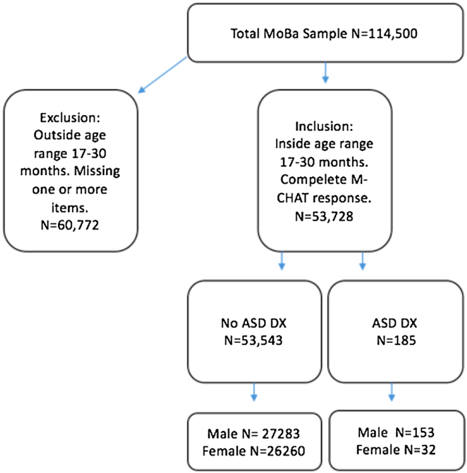
Sex differences in typical development can provide context for understanding ASD. Baron-Cohen (Trends Cogn Sci 6(6):248–254, 2002) suggested ASD could be considered an extreme expression of normal male, compared to female, phenotypic profiles. In this paper, sex-specific M-CHAT scores from N = 53,728 18-month-old toddlers, including n = 185 (32 females) with ASD, were examined. Results suggest a nuanced view of the “extreme male brain theory of autism”. At an item level, almost every male versus female disadvantage in the broader population was consistent with M-CHAT vulnerabilities in ASD. However, controlling for total M-CHAT failures, this male disadvantage was more equivocal and many classically ASD-associated features were found more common in non-ASD. Within ASD, females showed relative strengths in joint attention, but impairments in imitation.
Overview
The claims and statistics of this paper haven’t been checked yet.
Free: it reads the open-access text and checks the first 5 claims that cite a source we can check. Create a free account to check every claim.
Integrity signals
Registry
Cites
Statistics
Figures
Verification
Claims the paper makes
The claims and statistics of this paper haven’t been checked yet.
Free: it reads the open-access text and checks the first 5 claims that cite a source we can check. Create a free account to check every claim.
Self-check
Percentages, sums and reported differences re-computed from the paper’s own numbers.
The self-check needs the paper’s full text.
Citations
Cites
(1943) · The Nervous child · Cited by 8,870
Genetics of Food Intake Self-Regulation in Childhood: Literature Review and Research Opportunities
Faith, M. S., Carnell, S., & Kral, T. V. E. (2013) · Human Heredity · doi:10.1159/000353879 · Cited by 7,601
Insel, T., Cuthbert, B., Garvey, M., Heinssen, R., Pine, D. S., Quinn, K., Sanislow, C., & Wang, P. (2010) · American Journal of Psychiatry · doi:10.1176/appi.ajp.2010.09091379 · Cited by 7,067 · cited 1×
“We hypothesize that sex differences observed in ASD would follow similar patterns as those seen in males not receiving an ASD diagnosis (Baron-Cohen 2002, 2009).”
ResultInfluentialThe psychology of sex differences
(1975) · Behavior Therapy · doi:10.1016/s0005-7894(75)80031-1 · Cited by 5,488
Autistic disturbances of affective contact.
Kanner, L. (1968) · PubMed · Cited by 3,143
Die „Autistischen Psychopathen” im Kindesalter
Asperger, H. (1944) · Archiv für Psychiatrie und Nervenkrankheiten · doi:10.1007/bf01837709 · Cited by 2,163 · cited 1×
“The most frequently reported sex difference in ASD is the disproportionally higher male to female prevalence, consistently reported since the seminal studies by Kanner (1943) and Asperger (1944).”
ResultThe extreme male brain theory of autism
Baron-Cohen, S. (2002) · Trends in Cognitive Sciences · doi:10.1016/s1364-6613(02)01904-6 · Cited by 2,007 · cited 4×
“On the other hand Baron-Cohen and colleagues, have turned to the general population and suggest that he “systemizing cognitive profile” typically found in males within the general population is reflected in gender differences in autism (Auyeung et al. 2013; Baron-Cohen 2002; Baron-Cohen and Benenson 2003; Baron-Cohen…”
BackgroundResultInfluentialEmpathy: A Social Psychological Approach
Davis, M. H. (2018) · Routledge eBooks · doi:10.4324/9780429493898 · Cited by 1,839
Empathy: a social psychological approach
(1996) · Choice Reviews Online · doi:10.5860/choice.34-2454 · Cited by 1,809 · cited 1×
“…as being deficits within ASD, e.g. sensitivity to facial expressions (McClure 2000; Montagne et al. 2005), performance on questionnaires measuring empathy (Davis 1994), age when reaching developmental milestones e.g. theory of mind (Happé 1995), and language development (Halpern 1997;…”
BackgroundTrends in the prevalence of developmental disabilities in US children, 1997-2008
Boyle, C. A., Boulet, S., Schieve, L. A., Cohen, R. A., Blumberg, S. J., Yeargin-Allsopp, M., Visser, S., & Kogan, M. D. (2011) · Pediatrics · doi:10.1542/peds.2010-2989 · Cited by 1,732 · cited 2×
“…al. 2007; Kopp and Gillberg 2011; Lai et al. 2012; Mayes and Calhoun 2011), combined with the fact that males are more prone to developmental delay have led some to hypothesize that the higher prevalence of autism in males stems from a greater risk of developmental disability (Boyle et al. 2011).”
BackgroundRobins, D. L., Fein, D., Barton, M. L., & Green, J. A. (2001) · Journal of Autism and Developmental Disorders · doi:10.1023/a:1010738829569 · Cited by 1,563 · cited 5×
“The behavior rated on the Modified Checklist for Autism in Toddlers (M-CHAT; Robins et al. 2001) are examined regarding sex differences.”
BackgroundMethodInfluentialEpidemiological Surveys of Autism and Other Pervasive Developmental Disorders: An Update
Fombonne, E. (2003) · Journal of Autism and Developmental Disorders · doi:10.1023/a:1025054610557 · Cited by 1,505 · cited 2×
“The most frequently reported sex difference in ASD is the disproportionally higher male to female prevalence, consistently reported since the seminal studies by Kanner (1943) and Asperger (1944).”
BackgroundResultCouncil on Children With Disabilities, Pediatrics, S. O. D. B., Bright Futures Steering Committee, & Medical Home Initiatives for Children With Special Needs Project Advisory Committee (2006) · Pediatrics · doi:10.1542/peds.2006-1231 · Cited by 1,439
The Extreme Male-Brain Theory of Autism
Baron-Cohen, S. (1999) · Neurodevelopmental Disorders · doi:10.7551/mitpress/4945.003.0023 · Cited by 1,413
Newborn Infants Imitate Adult Facial Gestures
Meltzoff, A. N., & Moore, M. (1983) · Child Development · doi:10.1111/j.1467-8624.1983.tb00496.x · Cited by 1,307 · cited 1×
“Facial imitation represents a basic form of imitation emerging in early infancy (Meltzoff and Moore 1983), whereas later forms of imitation are more socially nuanced and complex.”
BackgroundNewborn infants imitate adult facial gestures
Meltzoff, A. N., & Moore, M. K. (1983) · Child Development · doi:10.2307/1130058 · Cited by 1,307
The Role of Age and Verbal Ability in the Theory of Mind Task Performance of Subjects with Autism
Happe, F. G. E. (1995) · Child Development · doi:10.2307/1131954 · Cited by 1,227 · cited 1×
“…within ASD, e.g. sensitivity to facial expressions (McClure 2000; Montagne et al. 2005), performance on questionnaires measuring empathy (Davis 1994), age when reaching developmental milestones e.g. theory of mind (Happé 1995), and language development (Halpern 1997; Zahn-Waxler et al. 2006).”
BackgroundSex differences in the brain: implications for explaining autism
Baron-Cohen, S., Knickmeyer, R. C., & Belmonte, M. K. (2005) · Science · doi:10.1126/science.1115455 · Cited by 1,145 · cited 1×
“2013; Baron-Cohen 2002; Baron-Cohen and Benenson 2003; Baron-Cohen et al. 2005; Bölte et al. 2011; Hattier et al. 2011; Mandy et al. 2012; Szatmari et al. 2012).”
BackgroundValidation of the Modified Checklist for Autism in Toddlers, Revised With Follow-up (M-CHAT-R/F)
Robins, D. L., Casagrande, K., Barton, M., Chen, C.-M. A., Dumont-Mathieu, T., & Fein, D. (2014) · Pediatrics · doi:10.1542/peds.2013-1813 · Cited by 1,081 · cited 1×
“The later M-CHAT-R (Robins et al. 2014) has been recommended in the United States for use with toddlers between 18 and 24 months of age (American Academy of Pediatrics 2006).”
MethodMcClure, E. B. (2000) · Psychological Bulletin · doi:10.1037/0033-2909.126.3.424 · Cited by 1,032 · cited 2×
“sensitivity to facial expressions (McClure 2000; Montagne et al. 2005), performance on questionnaires measuring empathy (Davis 1994), age when reaching developmental milestones e.”
BackgroundCohort profile: The Norwegian Mother and Child Cohort Study (MoBa)
Magnus, P., Irgens, L. M., Haug, K., Nystad, W., Skjærven, R., & Stoltenberg, C. (2006) · International Journal of Epidemiology · doi:10.1093/ije/dyl170 · Cited by 1,027
Self‐selection and bias in a large prospective pregnancy cohort in Norway
Nilsen, R. M., Vollset, S. E., Gjessing, H. K., Skjærven, R., Melve, K. K., Schreuder, P., Alsaker, E. R., Haug, K., Daltveit, A. K., & Magnus, P. (2009) · Paediatric and Perinatal Epidemiology · doi:10.1111/j.1365-3016.2009.01062.x · Cited by 835 · cited 1×
“Furthermore, being a large population sample, certain characteristics have been found to be overor under-represented due to self-selection (Nilsen et al. 2009).”
BackgroundAutism: The Empathizing–Systemizing (E‐S) Theory
Baron‐Cohen, S. (2009) · Annals of the New York Academy of Sciences · doi:10.1111/j.1749-6632.2009.04467.x · Cited by 830 · cited 1×
“We hypothesize that sex differences observed in ASD would follow similar patterns as those seen in males not receiving an ASD diagnosis (Baron-Cohen 2002, 2009).”
ResultInfluentialMandy, W., Chilvers, R., Chowdhury, U., Salter, G., Seigal, A., & Skuse, D. (2012) · Journal of Autism and Developmental Disorders · doi:10.1007/s10803-011-1356-0 · Cited by 715 · cited 4×
“On the other hand Baron-Cohen and colleagues, have turned to the general population and suggest that he “systemizing cognitive profile” typically found in males within the general population is reflected in gender differences in autism (Auyeung et al. 2013; Baron-Cohen 2002; Baron-Cohen and Benenson 2003; Baron-Cohen…”
BackgroundInfluentialRare de novo and transmitted copy-number variation in autistic spectrum disorders
Levy, D., Ronemus, M., Yamrom, B., Lee, Y.-H., Leotta, A., Kendall, J., Marks, S., Lakshmi, B., Pai, D., Ye, K., et al. (2011) · Neuron · doi:10.1016/j.neuron.2011.05.015 · Cited by 712 · cited 2×
“as illustrated by findings which note that higher genetic risk for autism may occur in females with idiopathic autism (Gilman et al. 2011; Levy et al. 2011; Robinson et al. 2013; Skuse 1997, 2000).”
BackgroundGilman, S. R., Iossifov, I., Levy, D., Ronemus, M., Wigler, M., & Vitkup, D. (2011) · Neuron · doi:10.1016/j.neuron.2011.05.021 · Cited by 701
Individual differences and the development of joint attention in infancy
Mundy, P., Block, J., Delgado, C., Pomares, Y., Van Hecke, A. V., & Parlade, M. V. (2007) · Child Development · doi:10.1111/j.1467-8624.2007.01042.x · Cited by 637 · cited 2×
“In contrast to Mundy et al. (2007), Harrop et al. (2015) did not find significant differences in joint attention between males and females with an ASD diagnosis.”
ResultDworzynski, K., Ronald, A., Bolton, P., & Happé, F. (2012) · Journal of the American Academy of Child & Adolescent Psychiatry · doi:10.1016/j.jaac.2012.05.018 · Cited by 633 · cited 2×
“This research suggests that this may be particularly true for females falling into the average range of IQ and who, as a group, typically tend to display fewer disruptive behavioral outbursts than their male peers (Dworzynski et al. 2012).”
BackgroundExamining and interpreting the female protective effect against autistic behavior
Robinson, E. B., Lichtenstein, P., Anckarsäter, H., Happé, F., & Ronald, A. (2013) · Proceedings of the National Academy of Sciences · doi:10.1073/pnas.1211070110 · Cited by 531 · cited 3×
“This is in line with previous studies (Dworzinsky et al. 2012; Robinson et al. 2013), that suggest that females need more severe developmental, behavioral or intellectual delay/deviance to be diagnosed with ASD.”
BackgroundResultObjective measurement of levels and patterns of physical activity
Riddoch, C. J., Mattocks, C., Deere, K., Saunders, J., Kirkby, J., Tilling, K., Leary, S. D., Blair, S. N., & Ness, A. R. (2007) · Archives of Disease in Childhood · doi:10.1136/adc.2006.112136 · Cited by 521 · cited 2×
“Differences include higher activity level in males, while social orienting, reciprocity, eye-contact and language development tend to represent areas of strength for females (Bouchard et al. 2009; Connellan et al. 2000; Hittelman and Dickes 1979; Lutchmaya and Baron-Cohen 2002; Maccoby and Jacklin 1974; Reilly et al.…”
BackgroundSex differences in human neonatal social perception
Connellan, J., Baron-Cohen, S., Wheelwright, S., Batki, A., & Ahluwalia, J. (2000) · Infant Behavior and Development · doi:10.1016/s0163-6383(00)00032-1 · Cited by 477 · cited 2×
“One study found that infants as young as 1-day of age showed sex-specific looking preferences, with males preferring mechanical objects while females showed a greater degree of interest in faces (Connellan et al. 2000).”
BackgroundHandbook of Autism and Pervasive Developmental Disorders
ORDONA, T. T. (1989) · American Journal of Psychiatry · doi:10.1176/ajp.146.6.793 · Cited by 434
Trouton, A., Spinath, F. M., & Plomin, R. (2002) · Twin Research · doi:10.1375/136905202320906255 · Cited by 410 · cited 2×
“Differences include higher activity level in males, while social orienting, reciprocity, eye-contact and language development tend to represent areas of strength for females (Bouchard et al. 2009; Connellan et al. 2000; Hittelman and Dickes 1979; Lutchmaya and Baron-Cohen 2002; Maccoby and Jacklin 1974; Reilly et al.…”
BackgroundThe Changing Epidemiology of Autism
Fombonne, E. (2005) · Journal of Applied Research in Intellectual Disabilities · doi:10.1111/j.1468-3148.2005.00266.x · Cited by 404 · cited 2×
“For moderate to severe intellectual disability male to female ratios of 1.33:1 (McCarthy et al. 1984) and 1.95:1 (Fombonne 2005, 2007) have been reported.”
BackgroundInfluentialMontagne, B., Kessels, R. P. C., Frigerio, E., de Haan, E. H. F., & Perrett, D. I. (2005) · Cognitive Processing · doi:10.1007/s10339-005-0050-6 · Cited by 379 · cited 2×
“sensitivity to facial expressions (McClure 2000; Montagne et al. 2005), performance on questionnaires measuring empathy (Davis 1994), age when reaching developmental milestones e.”
BackgroundSex differences in intelligence: Implications for education.
Halpern, D. F. (1997) · American Psychologist · doi:10.1037//0003-066x.52.10.1091 · Cited by 367 · cited 1×
“…within ASD, e.g. sensitivity to facial expressions (McClure 2000; Montagne et al. 2005), performance on questionnaires measuring empathy (Davis 1994), age when reaching developmental milestones e.g. theory of mind (Happé 1995), and language development (Halpern 1997; Zahn-Waxler et al. 2006).”
BackgroundAutism Symptoms and Internalizing Psychopathology in Girls and Boys with Autism Spectrum Disorders
Solomon, M., Miller, M., Taylor, S. L., Hinshaw, S. P., & Carter, C. S. (2012) · Journal of Autism and Developmental Disorders · doi:10.1007/s10803-011-1215-z · Cited by 326 · cited 2×
“Less disruptive behavior and outbursts might be related to the fact that females score higher on internalizing behavior and lower on externalizing behaviors compared to males (Bölte et al. 2011; Mandy et al. 2012; Solomon et al. 2012; Szatmari et al. 2012), an area of work which has achieved a somewhat greater degree…”
BackgroundNaviaux, J. C., Wang, L., Li, K., Bright, A., Alaynick, W. A., Williams, K. R., Powell, S. B., & Naviaux, R. K. (2015) · Molecular Autism · doi:10.1186/2040-2392-6-1 · Cited by 285
Skuse, D. H. (2000) · Pediatric Research · doi:10.1203/00006450-200001000-00006 · Cited by 285 · cited 7×
“This is in line with previous studies (Dworzinsky et al. 2012; Robinson et al. 2013), that suggest that females need more severe developmental, behavioral or intellectual delay/deviance to be diagnosed with ASD.”
InfluentialInfants’ understanding of the point gesture as an object-directed action
Woodward, A. L., & Guajardo, J. J. (2002) · Cognitive Development · doi:10.1016/s0885-2014(02)00074-6 · Cited by 278 · cited 1×
“Depending on how the imitation question is perceived and evaluated by parents, follow to point, a strength for ASD females, may in some instances encompass a relatively more complex social ability (Woodward and Guajardo 2002), when compared to very early imitation of facial expressions.”
BackgroundSex Differences in Toddlers with Autism Spectrum Disorders
Carter, A. S., Black, D. O., Tewani, S., Connolly, C. E., Kadlec, M. B., & Tager-Flusberg, H. (2007) · Journal of Autism and Developmental Disorders · doi:10.1007/s10803-006-0331-7 · Cited by 262 · cited 2×
“For example, the positive correlation between intellectual disability and severity of symptoms (Carter et al. 2007; Kopp and Gillberg 2011; Lai et al. 2012; Mayes and Calhoun 2011), combined with the fact that males are more prone to developmental delay have led some to hypothesize that the higher…”
BackgroundAutism Spectrum Disorder, ADHD, Epilepsy, and Cerebral Palsy in Norwegian Children
Surén, P., Bakken, I. J., Aase, H., Chin, R., Gunnes, N., Lie, K. K., Magnus, P., Reichborn-Kjennerud, T., Schjølberg, S., Øyen, A.-S., et al. (2012) · Pediatrics · doi:10.1542/peds.2011-3217 · Cited by 248 · cited 7×
“The possibility of person specific identification of diagnosis in the NPR registry started in 2008.”
BackgroundInfluentialSelf-citationKopp, S., & Gillberg, C. (2011) · Research in Developmental Disabilities · doi:10.1016/j.ridd.2011.05.017 · Cited by 215 · cited 2×
“For example, the positive correlation between intellectual disability and severity of symptoms (Carter et al. 2007; Kopp and Gillberg 2011; Lai et al. 2012; Mayes and Calhoun 2011), combined with the fact that males are more prone to developmental delay have led some to hypothesize that the higher prevalence of autism…”
BackgroundEarly sex differences are not autism-specific: A Baby Siblings Research Consortium (BSRC) study
Messinger, D. S., Young, G. S., Webb, S. J., Ozonoff, S., Bryson, S. E., Carter, A., Carver, L., Charman, T., Chawarska, K., Curtin, S., et al. (2015) · Molecular Autism · doi:10.1186/s13229-015-0027-y · Cited by 207 · cited 2×
“…and studies have found evidence that sex differences in cognitive performance, adaptive abilities and repetitive behaviors do not appear to be ASD specific, but instead bear a closer resemblance to those found in typically developing children (Messinger et al. 2015; Zweigenbaum et al. 2012).”
ResultSelf-citationSex differences in repetitive stereotyped behaviors in autism: Implications for genetic liability
Szatmari, P., Liu, X., Goldberg, J., Zwaigenbaum, L., Paterson, A. D., Woodbury‐Smith, M., Georgiades, S., Duku, E., & Thompson, A. (2012) · American Journal of Medical Genetics Part B: Neuropsychiatric Genetics · doi:10.1002/ajmg.b.31238 · Cited by 187 · cited 6×
“On the other hand Baron-Cohen and colleagues, have turned to the general population and suggest that he “systemizing cognitive profile” typically found in males within the general population is reflected in gender differences in autism (Auyeung et al. 2013; Baron-Cohen 2002; Baron-Cohen and Benenson 2003; Baron-Cohen…”
BackgroundInfluentialZwaigenbaum, L., Bryson, S. E., Szatmari, P., Brian, J., Smith, I. M., Roberts, W., Vaillancourt, T., & Roncadin, C. (2012) · Journal of Autism and Developmental Disorders · doi:10.1007/s10803-012-1515-y · Cited by 178
Bölte, S., Duketis, E., Poustka, F., & Holtmann, M. (2011) · Autism · doi:10.1177/1362361310391116 · Cited by 168 · cited 2×
“2013; Baron-Cohen 2002; Baron-Cohen and Benenson 2003; Baron-Cohen et al. 2005; Bölte et al. 2011; Hattier et al. 2011; Mandy et al. 2012; Szatmari et al. 2012).”
BackgroundHuman sex differences in social and non-social looking preferences, at 12 months of age
Lutchmaya, S., & Baron‐Cohen, S. (2002) · Infant Behavior and Development · doi:10.1016/s0163-6383(02)00095-4 · Cited by 153 · cited 2×
“Differences include higher activity level in males, while social orienting, reciprocity, eye-contact and language development tend to represent areas of strength for females (Bouchard et al. 2009; Connellan et al. 2000; Hittelman and Dickes 1979; Lutchmaya and Baron-Cohen 2002; Maccoby and Jacklin 1974; Reilly et al.…”
BackgroundZambrana, I. M., Ystrøm, E., & Pons, F. (2012) · Journal of Developmental & Behavioral Pediatrics · doi:10.1097/dbp.0b013e31823d4f83 · Cited by 152 · cited 2×
“Differences include higher activity level in males, while social orienting, reciprocity, eye-contact and language development tend to represent areas of strength for females (Bouchard et al. 2009; Connellan et al. 2000; Hittelman and Dickes 1979; Lutchmaya and Baron-Cohen 2002; Maccoby and Jacklin 1974; Reilly et al.…”
BackgroundThe Origins and Development of Psychopathology in Females and Males
Zahn‐Waxler, C., Crick, N. R., Shirtcliff, E. A., & Woods, K. E. (2015) · Developmental Psychopathology · doi:10.1002/9780470939383.ch4 · Cited by 148 · cited 2×
“…within ASD, e.g. sensitivity to facial expressions (McClure 2000; Montagne et al. 2005), performance on questionnaires measuring empathy (Davis 1994), age when reaching developmental milestones e.g. theory of mind (Happé 1995), and language development (Halpern 1997; Zahn-Waxler et al. 2006).”
BackgroundImpact of IQ, age, SES, gender, and race on autistic symptoms
Mayes, S. D., & Calhoun, S. L. (2011) · Research in Autism Spectrum Disorders · doi:10.1016/j.rasd.2010.09.002 · Cited by 146 · cited 2×
“For example, the positive correlation between intellectual disability and severity of symptoms (Carter et al. 2007; Kopp and Gillberg 2011; Lai et al. 2012; Mayes and Calhoun 2011), combined with the fact that males are more prone to developmental delay have led some to hypothesize that the higher prevalence of autism…”
BackgroundThe Autism Birth Cohort: a paradigm for gene–environment–timing research
Stoltenberg, C., Schjølberg, S., Bresnahan, M., Hornig, M., Hirtz, D., Dahl, C., Lie, K. K., Reichborn-Kjennerud, T., Schreuder, P., Alsaker, E., et al. (2010) · Molecular Psychiatry · doi:10.1038/mp.2009.143 · Cited by 119 · cited 7×
“Diagnoses of ASD were obtained from the Autism Birth Cohort´s (ABC) clinical records, in our sample, assessed at 3.5 years (Stoltenberg et al. 2010).”
BackgroundMethodInfluentialSelf-citationLai, D.-C., Tseng, Y.-C., Hou, Y.-M., & Guo, H.-R. (2012) · Research in Developmental Disabilities · doi:10.1016/j.ridd.2011.12.015 · Cited by 115 · cited 1×
“For example, the positive correlation between intellectual disability and severity of symptoms (Carter et al. 2007; Kopp and Gillberg 2011; Lai et al. 2012; Mayes and Calhoun 2011), combined with the fact that males are more prone to developmental delay have led some to hypothesize that the higher…”
BackgroundReilly, S., Bavin, E. L., Bretherton, L., Conway, L., Eadie, P., Cini, E., Prior, M., Ukoumunne, O. C., & Wake, M. (2009) · International Journal of Speech-Language Pathology · doi:10.1080/17549500903147560 · Cited by 108 · cited 2×
“Differences include higher activity level in males, while social orienting, reciprocity, eye-contact and language development tend to represent areas of strength for females (Bouchard et al. 2009; Connellan et al. 2000; Hittelman and Dickes 1979; Lutchmaya and Baron-Cohen 2002; Maccoby and Jacklin 1974; Reilly et al.…”
BackgroundHattier, M. A., Matson, J. L., Tureck, K., & Horovitz, M. (2011) · Research in Developmental Disabilities · doi:10.1016/j.ridd.2011.07.028 · Cited by 104 · cited 1×
“2013; Baron-Cohen 2002; Baron-Cohen and Benenson 2003; Baron-Cohen et al. 2005; Bölte et al. 2011; Hattier et al. 2011; Mandy et al. 2012; Szatmari et al. 2012).”
BackgroundBOUCHARD, C., TRUDEAU, N., SUTTON, A., BOUDREAULT, M.-C., & DENEAULT, J. (2009) · Applied Psycholinguistics · doi:10.1017/s0142716409990075 · Cited by 91 · cited 1×
“…activity level in males, while social orienting, reciprocity, eye-contact and language development tend to represent areas of strength for females (Bouchard et al. 2009; Connellan et al. 2000; Hittelman and Dickes 1979; Lutchmaya and Baron-Cohen 2002; Maccoby and Jacklin 1974; Reilly et al. 2009;…”
BackgroundScreening for Autism in Young Children
IbaÑez, L. V., Stone, W. L., & Coonrod, E. E. (2014) · Handbook of Autism and Pervasive Developmental Disorders, Fourth Edition · doi:10.1002/9781118911389.hautc24 · Cited by 74 · cited 2×
“The M-CHAT was designed to be completed quickly in the waiting room of a primary care provider and has become one of the most frequently used screening instruments for ASD (Ibanez et al. 2014).”
MethodSex differences in neonatal eye contact time.
Hittelman, J., & Dickes, R. (1979) · Merrill-palmer Quarterly · Cited by 64
Salomone, E., Charman, T., McConachie, H., & Warreyn, P. (2016) · Child: Care, Health and Development · doi:10.1111/cch.12261 · Cited by 62
Prevalence of childhood autism in Ireland.
McCarthy, P., Fitzgerald, M. P., & Smith, M. (1984) · PubMed · Cited by 61
Harrop, C., Shire, S. Y., Gulsrud, A. C., Chang, Y., Ishijima, E., Lawton, K., & Kasari, C. L. (2014) · Journal of Autism and Developmental Disorders · doi:10.1007/s10803-014-2234-3 · Cited by 61 · cited 1×
“In contrast to Mundy et al. (2007), Harrop et al. (2015) did not find significant differences in joint attention between males and females with an ASD diagnosis.”
Epidemiological surveys of pervasive developmental disorders
Fombonne, E. (2007) · Autism and Pervasive Developmental Disorders · doi:10.1017/cbo9780511544446.003 · Cited by 61 · cited 2×
“For moderate to severe intellectual disability male to female ratios of 1.33:1 (McCarthy et al. 1984) and 1.95:1 (Fombonne 2005, 2007) have been reported.”
BackgroundInfluentialScreening for Autism in Young Children
Coonrod, E. E., & Stone, W. L. (2005) · Handbook of Autism and Pervasive Developmental Disorders · doi:10.1002/9780470939352.ch1 · Cited by 56
Genetic factors in the etiology of child psychiatric disorders.
Skuse, D. (1997) · PubMed · Cited by 18
Genetic factors in the etiology of child psychiatric disorders
Skuse, D. (1997) · Current Opinion in Pediatrics · doi:10.1097/00008480-199708000-00009 · Cited by 11 · cited 7×
“This is in line with previous studies (Dworzinsky et al. 2012; Robinson et al. 2013), that suggest that females need more severe developmental, behavioral or intellectual delay/deviance to be diagnosed with ASD.”
InfluentialBenenson, J. F. (2003) · Nature · doi:10.1038/424132b · Cited by 5 · cited 1×
“2013; Baron-Cohen 2002; Baron-Cohen and Benenson 2003; Baron-Cohen et al. 2005; Bölte et al. 2011; Hattier et al. 2011; Mandy et al. 2012; Szatmari et al. 2012).”
BackgroundExtreme Male Brain (EMB) Theory
Auyeung, B., Lombardo, M. V., Knickmeyer, R. C., & Baron‐Cohen, S. (2021) · Springer eBooks · doi:10.1007/978-3-319-91280-6_445 · Cited by 1
Research works printed but not linked: 1
- 27. Baron-Cohen, S., & Benenson, J. F. (2003). Books and arts-essential difference: Men, women and the extreme male brain/essential difference: The truth about the male and female brain. Nature, 424(6945), 132-132.
Cited by
Sex differences in autism spectrum disorder: a review
Ferri, S. L., Abel, T., & Brodkin, E. S. (2018) · Current Psychiatry Reports · doi:10.1007/s11920-018-0874-2 · Cited by 392
What about the girls? Sex-based differences in autistic traits and adaptive skills
Ratto, A. B., Kenworthy, L., Yerys, B. E., Bascom, J., Wieckowski, A. T., White, S. W., Wallace, G. L., Pugliese, C., Schultz, R. T., Ollendick, T. H., et al. (2018) · Journal of Autism and Developmental Disorders · doi:10.1007/s10803-017-3413-9 · Cited by 342
“2016), and at least one recent study has found sex differences at the itemlevel on the Modified Checklist for Autism in Toddlers (M-CHAT), one of the most widelyused early ASD screening instruments (Øien et al. 2017).”
BackgroundThe Diagnosis of Autism: From Kanner to DSM-III to DSM-5 and Beyond
Rosen, N. E., Lord, C., & Volkmar, F. R. (2021) · Journal of Autism and Developmental Disorders · doi:10.1007/s10803-021-04904-1 · Cited by 302
Self-citationTillmann, J., Ashwood, K., Absoud, M., Bölte, S., Bonnet-Brilhault, F., Buitelaar, J. K., Calderoni, S., Calvo, R., Canal-Bedia, R., Canitano, R., et al. (2018) · Journal of Autism and Developmental Disorders · doi:10.1007/s10803-018-3510-4 · Cited by 121
“2007), others have not demonstrated sex differences in RRB in early development (Evans et al. 1997; Øien et al. 2017).”
BackgroundClinical Features of Children With Autism Who Passed 18-Month Screening
Øien, R. A., Schjølberg, S., Volkmar, F. R., Shic, F., Cicchetti, D. V., Nordahl-Hansen, A., Stenberg, N., Hornig, M., Havdahl, A., Øyen, A.-S., et al. (2018) · Pediatrics · doi:10.1542/peds.2017-3596 · Cited by 69
Self-citation
Metadata
- Authors
- Øien, R. A., Hart, L., Schjølberg, S., Wall, C. A., Kim, E. S., Nordahl-Hansen, A., Eisemann, M. R., Chawarska, K., Volkmar, F. R., & Shic, F.
- Affiliations
- Yale University (US)
- Norwegian Institute of Public Health (NO)
- Children's Hospital of Philadelphia (US)
- UiT The Arctic University of Norway (NO)
- Corresponding author
- Øien, Roald A.
- ORCID
- Venue
- Journal of Autism and Developmental Disorders
- Published
- 2016-10-18
- Volume
- 47
- Issue
- 1
- Pages
- 126-134
- ISSN
- 0162-3257 (ISSN-L)
- 1573-3432
- PMC
- PMC5222910
- OpenAlex
- W2535731683
- Semantic Scholar
- c127d2db44ca4b742554a22b228936eef3d233a0
- Cited by
- 31
- References
- 67
- Citations by year
- 2026: 3 · 2025: 2 · 2024: 2 · 2023: 2 · 2022: 5 · 2021: 6 · 2020: 1 · 2019: 2 · 2018: 5 · 2017: 3
- FWCI
- 2.12
- Type
- journal article
- Language
- en
- Open access
- hybrid
- doi.org
- Licence
- cc-by
- creativecommons.org/licenses/by/4.0/ (tdm)
- creativecommons.org/licenses/by/4.0/ (vor)
- Locations
- Journal of Autism and Developmental Disorders (publishedVersion, cc-by)
- PubMed Central (publishedVersion)
- PubMed (publishedVersion)
- BIBSYS Brage (BIBSYS (Norway)) (acceptedVersion)
- NORA - Norwegian Open Research Archives (submittedVersion, other-oa)
- Funders
- Helse- og Omsorgsdepartementet
- Norges Forskningsråd
- Utdannings- og forskningsdepartementet
- National Institutes of Health (n01es75558-11-0-1, UL1TR001863)
- National Institute of Mental Health (K01MH104739, R01MH111652, R21MH103550, R01MH100182)
- National Institute of Neurological Disorders and Stroke (U01NS047537)
- National Institute of Environmental Health Sciences (N01 ES075558)
- National Center for Advancing Translational Sciences
- Topics
- Life Sciences › Neuroscience › Cognitive Neuroscience › Autism Spectrum Disorder Research
- Life Sciences › Biochemistry, Genetics and Molecular Biology › Genetics › Genetics and Neurodevelopmental Disorders
- Social Sciences › Psychology › Developmental and Educational Psychology › Child and Animal Learning Development
- Keywords
- autism spectrum disorder, sex differences, toddlers, M-CHAT, extreme male brain theory, joint attention, imitation, gender differences in development
- MeSH terms
- Autism Spectrum Disorder, Adolescent, Attention, Child, Child, Preschool, Female, Follow-Up Studies, Humans, Infant, Male, Mass Screening, Norway, Parents, Phenotype, Prospective Studies, Registries, Sex Characteristics, Case-Control Studies
About these checks
Registry, retraction, Cites and statistics results are computed, not judged, with one exception: a printed reference that no index lists is read once by a model before it counts as a citation error. Claims are extracted by a model and kept only when their quote appears verbatim in the text; each cited source is then checked, with a model’s help, for whether it says what the claim relies on. Those verdicts can be wrong — read the claim’s quote and the cited source before relying on one.
Statistics and arithmetic are recomputed, not judged.
Confidence bands are shown only for fields calibrated on our annotated test set. None is calibrated yet, so no band is shown.
What counts as a claim ›How we measure confidence ›How we check this ›
Are you an author, or do you see a problem with this page? Request a review
Data sources
Bibliographic data: Semantic Scholar, OpenAlex, Crossref.
Contains information from the Semantic Scholar Academic Graph Datasets, made available under the ODC Attribution License (ODC-BY 1.0).
Semantic Scholar’s data is described in: Kinney, R., et al. (2023). The Semantic Scholar Open Data Platform. arXiv:2301.10140.
