

Understanding the Reasons, Contexts and Costs of Camouflaging for Autistic Adults
Open accessThe DOI matches its Crossref record; 61 of the 64 references it cites were found in a registry or an index.
Abstract
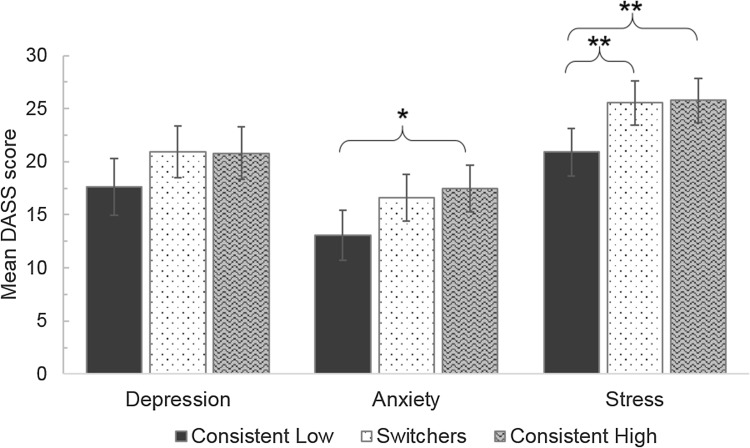
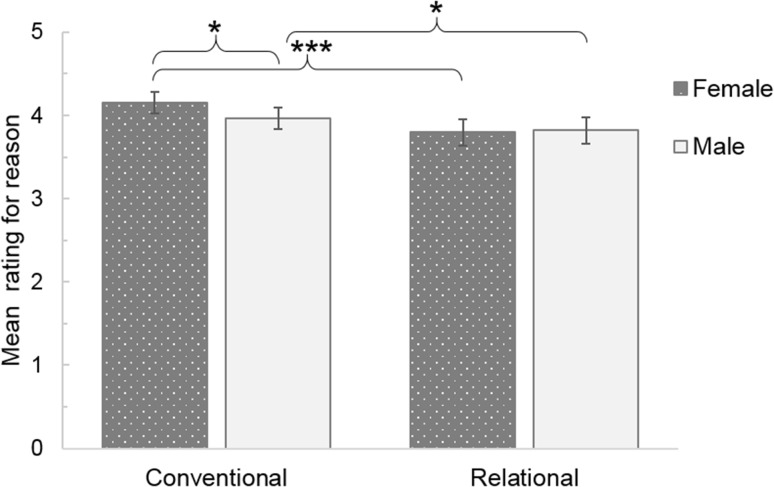
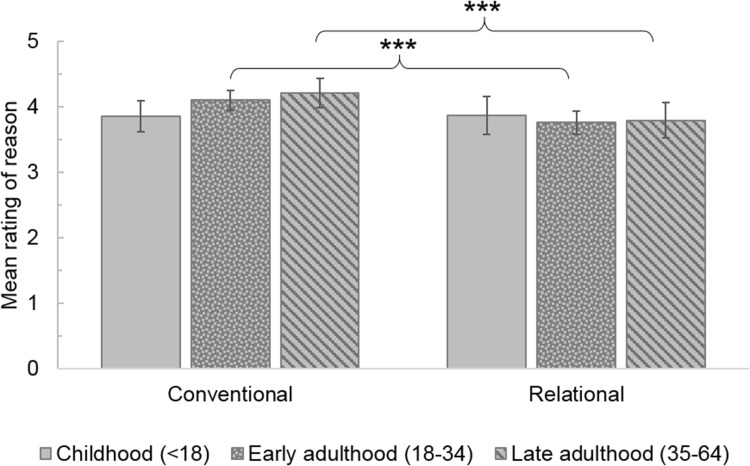
Camouflaging entails 'masking' in or 'passing' social situations. Research suggests camouflaging behaviours are common in autistic people, and may negatively impact mental health. To enhance understanding of camouflaging, this study examined reasons, contexts and costs of camouflaging. 262 autistic people completed measures of camouflaging behaviours, camouflaging contexts (e.g. work vs. family), camouflaging reasons (e.g. to make friends) and mental health symptoms. Findings indicated a gender difference in reasons for camouflaging, with autistic women more likely to endorse "conventional" reasons (e.g. getting by in formal settings such as work). Both camouflaging highly across contexts and 'switching' between camouflaging in some contexts but not in others, related to poorer mental health. These findings have implications for understanding camouflaging in autistic adults.
Overview
The claims and statistics of this paper haven’t been checked yet.
Free: it reads the open-access text and checks the first 5 claims that cite a source we can check. Create a free account to check every claim.
Integrity signals
Registry
Cites
Statistics
Figures
Verification
Claims the paper makes
The claims and statistics of this paper haven’t been checked yet.
Free: it reads the open-access text and checks the first 5 claims that cite a source we can check. Create a free account to check every claim.
Claims other papers make about this one
Each is checked against this paper’s own text: does it say what the citing paper says it does?
The source backs part of the claim, not all of it — or backs it for a different population, condition or comparison.
In the citing paper
“In this way, camouflaging may be thought of as a form of stigma management that is available to autistic individuals with more ‘concealable’ autism (Cage & Troxell-Whitman, 2019).”
From Camouflaging in an everyday social context: An interpersonal recall study (2021) · cites this paper as Cage & Troxell-Whitman, 2019
Experimental — accuracy not yet measuredThe source backs part of the claim, not all of it — or backs it for a different population, condition or comparison.
In the citing paper
“Furthermore , evidence remains inconclusive on whether the wellbeing of autistic individuals is directly related to the severity of their core traits.Instead, well-being appears to depend more significantly on the extent to which autistic individuals feel understood, accepted, and supported within an inclusive social environment (Cage & Troxell-Whitman, 2019; Pantazakos, 2023).”
From Rethinking psychological interventions in autism: Toward a neurodiversity‐affirming approach. (2025) · cites this paper as Cage & Troxell-Whitman, 2019
Experimental — accuracy not yet measuredThe cited source says what the claim attributes to it.
In the citing paper
“Cage and Troxel-Whitman (2019) found no gender differences on the Total CAT-Q score between autistic men or women.”
From Camouflaging in autism: A systematic review (2021) · cites this paper as Cage and Troxel-Whitman, 2019
The cited source says what the claim attributes to it.
In the citing paper
“Additionally, many Autistic adults report negative subjective outcomes as a result of having to meet inappropriate and unrealistic benchmarks, such as feeling they have to “pass” as neurotypical and mask or “camouflage” their Autistic behaviors (Bargiela et al., 2016; Cage & Troxell-Whitman, 2019; Cook et al., 2021; Hull et al., 2017; Livingston et al., 2019).”
From Neurodiversity and Autism Intervention: Reconciling Perspectives Through a Naturalistic Developmental Behavioral Intervention Framework (2022) · cites this paper as Cage & Troxell-Whitman, 2019
The cited source says what the claim attributes to it.
In the citing paper
“Emerging quantitative research examining associations between camouflaging and anxiety (e.g. Cage & Troxell-Whitman, 2019; Lai et al., 2017; Schuck et al., 2019) have yielded inconsistent results.”
From Camouflaging in an everyday social context: An interpersonal recall study (2021) · cites this paper as Cage & Troxell-Whitman, 2019
5 more claims about this paper
Create a free account to see every claim other papers make about this one.
Self-check
Percentages, sums and reported differences re-computed from the paper’s own numbers.
The self-check needs the paper’s full text.
Citations
Cites
Diagnostic and Statistical Manual of Mental Disorders
American Psychiatric Association (2013) · doi:10.1176/appi.books.9780890425596 · Cited by 116,369
Diagnostic and Statistical Manual of Mental Disorders
Williams, J. B. W., & First, M. (2013) · Encyclopedia of Social Work · doi:10.1093/acrefore/9780199975839.013.104 · Cited by 109,519
(2017) · Cited by 16,319
Lovibond, P. F., & Lovibond, S. H. (1995) · Behaviour Research and Therapy · doi:10.1016/0005-7967(94)00075-u · Cited by 14,523
(1943) · The Nervous child · Cited by 8,870
Lord, C., Risi, S., Lambrecht, L., Cook, E. H., Leventhal, B. L., DiLavore, P. C., Pickles, A., & Rutter, M. (2000) · Journal of Autism and Developmental Disorders · doi:10.1023/a:1005592401947 · Cited by 7,520
(1995) · Cited by 6,909
Henry, J. D., & Crawford, J. R. (2005) · British Journal of Clinical Psychology · doi:10.1348/014466505x29657 · Cited by 5,801
Autistic disturbances of affective contact.
Kanner, L. (1968) · PubMed · Cited by 3,143
What Is the Male-to-Female Ratio in Autism Spectrum Disorder? A Systematic Review and Meta-Analysis
Loomes, R., Hull, L., & Mandy, W. P. L. (2017) · Journal of the American Academy of Child & Adolescent Psychiatry · doi:10.1016/j.jaac.2017.03.013 · Cited by 2,804
Research works printed but not linked: 2
- Hudson, R. L. (2013). The effect of disability disclosure on the graduation rates of college students with disabilities (Unpublished doctoral dissertation). Virginia Tech, VA. Retrieved from https://vtechworks.lib.vt.edu/handle/10919/24072. Accessed Jan 18 2019.
- Smart J Challenges to the biomedical model of disability Advances in Medical Psychotherapy & Psychodiagnosis 2006 12 1 4
Cited by
Items 301–400 of 662
den Houting, J., Sesterka, A., & Pellicano, E. (2024) · Springer eBooks · doi:10.1007/978-3-031-66127-3_24 · Cited by 5
Benson, A. L., Colley, K. L., Prasad, J. J., Willis, C. M. G., & Powell-Rudy, T. (2024) · International Journal of Selection and Assessment · doi:10.1111/ijsa.12512 · Cited by 5
Self-reported masking in sexual minority and heterosexual autistic adults
McQuaid, G. A., Lee, N., & Wallace, G. L. (2025) · Autism · doi:10.1177/13623613251335738 · Cited by 7
“The literature (Beck et al., 2020; Cage & Troxell-Whitman, 2019; Cassidy et al., 2020; Hull et al., 2020; Jedrzejewska & Dewey, 2021; Schuck et al., 2019), including our work with portions of the sample reported on here (McQuaid et al., 2022), reports associations between female sex assigned at…”
InfluentialLow Battery Alarm; A Scoping Review of Autistic Burnout
Jahandideh, P., Seyedmirzaei, H., Rasoulian, P., & Memari, A. H. (2025) · Journal of Autism and Developmental Disorders · doi:10.1007/s10803-025-06860-6 · Cited by 8
“While unmasking may alleviate internal stress by allowing individuals to express their true selves, it can also expose them to negative social reactions due to existing biases (Cage & Troxell-Whitman, 2019).”
Sato, W., Omiya, T., Deguchi, N. K., Sankai, T., & Mayers, T. (2025) · Psychiatry International · doi:10.3390/psychiatryint6020061 · Cited by 5
Hollocks, M. J., McQuaid, G. A., Lee, N., & Wallace, G. L. (2025) · Autism Research · doi:10.1002/aur.70061 · Cited by 5
“Social camouflaging behaviors have been associated with exhaustion, burnout and more mental health challenges in autistic adults (Beck et al. 2020; Cage and Troxell-Whitman 2019; Hull et al. 2019, 2021; Lai et al. 2019), suggesting that social camouflaging can be linked to considerable costs.”
Rodríguez-Zafra, A., & García-Molina, I. (2025) · Research in Autism · doi:10.1016/j.reia.2025.202643 · Cited by 6
Leaf, J. B., Creem, A. N., Bukszpan, A. R., Hickey, J., & Hillhouse, B. J. (2023) · Education and Training in Autism and Developmental Disabilities · doi:10.1177/215416472305800304 · Cited by 8
“One experimental article (i.e., Cage & Troxell-Whitman, 2019), included a statement of when participants received diagnosis; with majority receiving a diagnosis after 18years of age.”
Bovill, H., Chicken, S., Bovill, E., Buckland, J., & McCartan, K. (2023) · Springer eBooks · doi:10.1007/978-3-031-32379-9_12 · Cited by 4
Because It’s the Right Thing to Do: Autism in the Workplace as an Ethical Imperative
Comer, D. R. (2024) · Palgrave studies in equity, diversity, inclusion, and indigenization in business · doi:10.1007/978-3-031-55072-0_6 · Cited by 4
Evaluating an Autistic Burnout Measurement in Women
Schoondermark, F., Spek, A. A., & Kiep, M. (2024) · Journal of Autism and Developmental Disorders · doi:10.1007/s10803-024-06438-8 · Cited by 8
“Delayed or missed diagnosis can further exacerbate these challenges, contrib - uting to increased stress and anxiety, ultimately leading to burnout (Bargiela et al., 2016 ; Cage & Troxell-Whitman, 2019; Hull et al., 2017 , 2020 ).”
BackgroundShort report: Prison-reported rates of autism in female prisons in England
Payne, K.-L., & Gooding, E. (2024) · Autism · doi:10.1177/13623613241275477 · Cited by 4
Unmasking Bias: Autistic Perspectives in Mental Health Training
Dabbs, C. R., Hutchins, C. H., Baird, R., Scaer, A. J., Kosanovich, S. E., & Spitler-Nigh, B. (2024) · Autism in Adulthood · doi:10.1037/e502802026-001 · Cited by 4
Meneguzzo, P., Magno, M., Garolla, A., Bonello, E., Tenconi, E., & Todisco, P. (2025) · International Journal of Eating Disorders · doi:10.1002/eat.24529 · Cited by 5
Fusar‐Poli, L., Bisso, E., Concas, I., Surace, T., Tinacci, S., Vanella, A., Furnari, R., Signorelli, M. S., Nylander, L., & Aguglia, E. (2020) · Research in Autism · doi:10.1016/j.rasd.2020.101668 · Cited by 5
Goldberg, C., & Willham, V. (2022) · Equality Diversity and Inclusion An International Journal · doi:10.1108/edi-10-2021-0268 · Cited by 6
Wang, M., Schuck, R. K., & Baiden, K. M. P. (2023) · IntechOpen eBooks · doi:10.5772/intechopen.108124 · Cited by 6
Uncertainty and Autism: How Changing with the Times is Harder for Some
Sheridan, K., Allen, K., Foggo, R. S. V., Hurem, A., Leif, E., & Freeman, N. C. (2022) · Springer eBooks · doi:10.1007/978-981-19-7757-2_13 · Cited by 6
The Gut Microbiome and the Imperative of Normalcy
Dryden, J. (2023) · International Journal of Feminist Approaches to Bioethics · doi:10.3138/ijfab-2022-0005 · Cited by 8
“Suppression of autistic traits, through masking or camouflaging, can lead to stress, anxiety, depression, and autistic burnout (Hull et al. 2019; Cage and Troxell-Whitman 2019; Cage et al. 2018; Hull et al. 2017; Raymaker et al. 2020).”
BackgroundLove, A. M. A., Cai, R. Y., Edwards, C., & Gibbs, V. (2023) · Autism in Adulthood · doi:10.1089/aut.2023.0005 · Cited by 6
Emotion recognition in autism spectrum condition during the COVID-19 pandemic
Schnitzler, T., Korn, C. W., Herpertz, S. C., & Fuchs, T. A. E. (2023) · Autism · doi:10.1177/13623613231203306 · Cited by 7
“But, such social camouflage is associated with stress, generalized anxiety, depression, and social anxiety (Cage & Troxell-Whitman, 2019; Hull et al., 2021).”
BackgroundA Mixed-Methods Analysis of Deception Detection by Neurodiverse Young Adults
Coburn, K. L., Miller, G. N., Martin, L. A., & Kana, R. K. (2024) · Topics in Language Disorders · doi:10.1097/tld.0000000000000329 · Cited by 4
Han, E. K. L., Scior, K., Grace, K., Heath, E. L., Dufresne, S. R., & Crane, L. (2023) · doi:10.31219/osf.io/bztuq · Cited by 4
Day, R., Simmons, L., Shade, E., Jennison, J., Allely, C. S., & Mukherjee, R. (2024) · Advances in Autism · doi:10.1108/aia-11-2022-0053 · Cited by 3
O impacto da camuflagem social no diagnóstico tardio do Transtorno do Espectro Autista
Rocha, P. A., Gomes, A. C. P., Souza, A., Penha, I. E. S., Santos, J. P. D. O. B., Lemes, L. D. A., & Macedo, L. R. (2024) · Revista Eletrônica Acervo Saúde · doi:10.25248/reas.e16579.2024 · Cited by 12
Inner experiences, mental health, and well‐being in autistic and non‐autistic adults
Mazurek, M. O., Pappagianopoulos, J. E., Brunt, S., Nevill, R. E. A., Menezes, M., Burroughs, C., Sadikova, E., Smith, J. V., & Howard, M. (2024) · Autism Research · doi:10.1002/aur.3273 · Cited by 4
The Role of Gender and Strong Interests in Self-Reported Camouflaging of Autistic Adults
Putnam, O. C., Swisher, M., McFayden, T. C., Chan, D. V., & Harrop, C. (2025) · Neurodiversity · doi:10.1177/27546330251351732 · Cited by 15
“…studies have described being conditioned to exhibit masking behaviors (e.g., mimicking others, making eye contact, limiting discussion of strong interests, reducing stimming behavior) to satisfy expectations of how girls should behave (Cage & Troxell-Whitman, 2019; Jedrzejewska & Dewey, 2022).”
Supporting Neurodiversity: Effective Teaching Strategies for Nursing Students
Cummings, J., Serembus, J. F., & Ossont, M. W. (2025) · Nurse Educator · doi:10.1097/nne.0000000000001967 · Cited by 6
Identification of autistic Māori in Aotearoa New Zealand: A national cross-sectional study
Tupou, J., Kewene, F., Morrison-Young, I., Wi-Hongi, A., Sporle, A. A., Diamond, T., Theodore, R. F., & Bowden, N. (2025) · Autism · doi:10.1177/13623613251380927 · Cited by 7
“This masking often comes at a significant cost to the well-being of the autistic person (Beck et al., 2020; Cage & Troxell-Whitman, 2019; Milner et al., 2019).”
Pollock, A., & Krupka, Z. (2025) · Autism · doi:10.1177/13623613251386983 · Cited by 7
“AW frequently practice ‘cam-ouflaging’ or ‘masking’ behaviours, where they mimic others and conceal their social difficulties to fit in (Cage & Troxell-Whitman, 2019; Pearson & Rose, 2021).”
Reduced Susceptibility to the Dunning–Kruger Effect in Autistic Employees
Hartman, L. M., Glassman, H., & Hartman, B. L. (2025) · Autism Research · doi:10.1002/aur.70139 · Cited by 3
Liu, C.-H., Chen, Y.-L., Ai, W., Ni, H., & Lai, M. (2026) · Child and Adolescent Psychiatry and Mental Health · doi:10.1186/s13034-026-01044-1 · Cited by 4
“Particularly in autistic adolescents, camouflaging may be a survival reaction in response to tangible threats like bullying, discrimination, and physical harm [10, 26, 79], on top of social anxiety.”
Hennekam, S., & Follmer, K. B. (2026) · Organization · doi:10.1177/13505084241295747 · Cited by 10
“” Echoing earlier studies on camouflaging (Cage and Troxell-Whitman, 2019; Radulski, 2022), the participants highlighted that attempts to conceal their neurocognitive conditions were “ definitely detrimental for your own health” (participant 13) and well-being.”
Dalmo, M. O. V. (2026) · Disability & Society · doi:10.1080/09687599.2026.2659101 · Cited by 8
“Masking is thus not only a personal coping strategy, but a socially conditioned and often necessary form of self-protection in a world that routinely misinterprets autistic ways of being (Cage and Troxell-Whitman 2019).”
Camouflaging in autism as a dual-normative construct: a philosophical critique
Adamou, M., & Koutsoklenis, A. (2026) · Metamedicine · doi:10.1007/s11017-026-09763-4 · Cited by 4
“Within this construct, camouflaging is often conceptualised as a compensatory strategy that enables autistic people to approximate or simulate non-autistic interactional norms in order to gain social acceptance or avoid stigma [1, 3, 21].”
Risk Factors and Preventative methods of Self-Harm and Suicidality for Autistic People
Forcey-Rodriguez, K. E. (2023) · Canadian Journal of Autism Equity · doi:10.15173/cjae.v3i1.5127 · Cited by 4
Nieradka, F., & Kossewska, J. (2023) · International Journal of Special Education (IJSE) · doi:10.52291/ijse.2023.38.33 · Cited by 4
Savard, L., Prelock, P., Medeiros, S., & Lodestone, A. “. (2024) · Topics in Language Disorders · doi:10.1097/tld.0000000000000351 · Cited by 3
Exploring lie frequency and emotional experiences of deceptive decision-making in autistic adults
Blackhurst, T., Warmelink, L., Roestorf, A., & Hartley, C. (2025) · Autism · doi:10.1177/13623613251315892 · Cited by 5
“A recent study discovered that over 70% of autistic adults reported that they consistently camouflaged during social interactions (Cage & Troxell-Whitman, 2019).”
Brown, S. A. (2025) · Discover Mental Health · doi:10.1007/s44192-025-00200-x · Cited by 5
A cross-cultural examination of bi-directional mentalising in autistic and non-autistic adults
Schuster, B. A., Okamoto, Y., Takahashi, T., Kurihara, Y., Keating, C. T., Cook, J. L., Kosaka, H., Ide, M., Naruse, H., Kraaijkamp, C., et al. (2025) · Molecular Autism · doi:10.1186/s13229-025-00659-z · Cited by 3
“…social deficit perspective places the burden to conform to the ‘social norm’ on autistic people, leading to stigma and consequently to camouflaging behaviour [4–6], both of which have been associated with poor mental health outcomes, including increased anxiety, depression, and suicidality [7–11].”
South, M., Park, S. Y., & Berman, M. (2025) · Autism in Adulthood · doi:10.1089/aut.2024.0122 · Cited by 4
Guidelines to Assist in Autism Diagnostic Assessments with Females: A Delphi Study
Trundle, G., Chester, V., Alexander, Z., Morris, P. O., & Crump, I. (2025) · Autism in Adulthood · doi:10.1089/aut.2024.0325 · Cited by 5
Traumatic Experiences, Psychological Distress and Suicide‐Related Behaviors in Autistic Adults
Chikaura, T., Weir, E. M., Griffiths, S., Procyshyn, T. L., Pelton, M., Allison, C. L., Hodges, H., White, S. R., Ford, T. J., & Baron‐Cohen, S. (2025) · Autism Research · doi:10.1002/aur.70137 · Cited by 5
“…and advocacy groups (Jordan 2010; Jaarsma and Welin 2012), autistic people can still be perceived negatively (Botha et al. 2022) and may feel the need to mask their autistic traits in order to fit in with societal expectations (Allely 2018; Livingston et al. 2019; Cage and Troxell-Whitman 2019).”
Lin, X. B., Lim, C. G., & Lee, T.-S. W. (2022) · Frontiers in Psychiatry · doi:10.3389/fpsyt.2022.823736 · Cited by 5
Bertoux, M. (2022) · EMC - Neurologia · doi:10.1016/s1634-7072(22)47091-7 · Cited by 5
Camouflaging in Autism Spectrum Conditions in the Context of Self-Esteem Level
Kossewska, J., & Milczarek, M. (2022) · Psychologia Rozwojowa · doi:10.4467/20843879pr.22.012.17469 · Cited by 4
Hotez, E., Hudson, S., Choi, K. R., & Kuo, A. A. (2025) · Autism in Adulthood · doi:10.1089/aut.2023.0088 · Cited by 4
McQuaid, G. A., Sadowski, L. Y., Lee, N., & Wallace, G. L. (2022) · doi:10.31234/osf.io/q375t · Cited by 3
Yip, J. W. C. (2024) · Language and Health · doi:10.1016/j.laheal.2024.08.002 · Cited by 2
Garg, S., Drewery, D. W., & Fannon, A. (2025) · Studies in Higher Education · doi:10.1080/03075079.2025.2472913 · Cited by 2
“Even then, the evidence suggests that identity concealment is linked with burnout (Cage and Troxell-Whitman 2019; Camacho, Reinka, and Quinn 2020), suggesting the longer-term consequences of hiding an authentic self are negative.”
Rojas, A., Cividini‐Motta, C., & Llinás, M. “. (2025) · Behavior Analysis in Practice · doi:10.1007/s40617-025-01056-x · Cited by 3
Non-autistic college students’ responses to the social behavior of autistic peers
Birnschein, A. M., Ward, O. F., Harmon, R. L., McClain, A. B., Rankin, J. A., & Tomeny, T. S. (2025) · Research in Autism · doi:10.1016/j.reia.2025.202647 · Cited by 4
Autistic people’s perception of social camouflaging: qualitative analysis of a Web forum
Larochelle-Guy, J., Martinez, I. L., & Dufour, M. (2025) · Advances in Autism · doi:10.1108/aia-04-2025-0032 · Cited by 2
The Relationship Between Camouflaging and Lifetime Depression Among Adult Autistic Males and Females
Gesi, C., Pisani, R., Tamburini, N., & Dell’Osso, B. M. (2025) · Brain Sciences · doi:10.3390/brainsci15090920 · Cited by 3
“Third, further mental disorders that have been shown to be associated with camouflaging, such as anxiety [13,15], were not included in the analyses.”
Martin, G. E., Ethridge, S. B., Butler, M., Landau, E., Guilfoyle, J. L., Crawford, S., Kumareswaran, M., Xing, J., Fragnito, G., & Losh, M. C. (2025) · Neurodiversity · doi:10.1177/27546330251381443 · Cited by 3
“…females are consistent with recent theories of social camou-fl aging, in which females with autism display reduced autism-related characteristics through effortful attempts to mask autistic traits (Beck et al., 2020; Cage & Troxell-Whitman, 2019; Hull et al., 2020; Parish-Morris et al., 2017).”
Tone Indicators: Designing Accessible CMC Cues for Neurodiverse Users
Xiao, A. W., Iftikhar, Z., & Huang, J. J. S. (2025) · Proceedings of the ACM on Human-Computer Interaction · doi:10.1145/3757677 · Cited by 2
“…absence that manifests in poor and dehumanizing practices like that of dismissing self-reporting methods because of perceived ‘mental incompetence’ or creating technology that intends to normalize ‘divergent social behavior’ at the expense of neurodivergent users themselves [12, 30].”
Zhuang, S., Bougoure, M., Reddrop, S., Dean, L., Naragon‐Gainey, K., Maybery, M. T., Tan, D. W., & Magiati, I. (2025) · Autism in Adulthood · doi:10.1177/25739581251386126 · Cited by 2
Kong, H., Xie, J., Dou, F., Li, X., Wang, X., & Huang, Y. (2025) · Psychology Health & Medicine · doi:10.1080/13548506.2025.2587969 · Cited by 3
Guan, S., Takahashi, F., Wada, M., Takashina, H. N., Ueda, M., Kawashima, M., Kawaguchi, Y., Kato, T., Ogawa, S., Tsuchiya, K. J., et al. (2025) · Autism · doi:10.1177/13623613251389876 · Cited by 4
“Autistic individuals often engage in social camouflage to conceal their characteristics and adapt to surrounding non-autistic groups, enabling them to secure employment and education and avoid harassment or victimisation (Cage & Troxell-Whitman, 2019; Cook et al., 2022; Hull et al., 2017).”
Liang, H., Wu, C., Duncan, M., Simpson, L., Smith, A., Harrold, K., Pearman, Z., Warren, A., Shavel‐Jessop, S., Murphy, T. L., et al. (2026) · Archives of Disease in Childhood · doi:10.1136/archdischild-2024-328445 · Cited by 3
“22 Better screening for autism is required for young people assigned female at birth without global cognitive delay, as autism in this group is associated with poor mental health outcomes, 23 which may include FTLB/FND.”
Foster, S. J., Dunn, D. H., Patel, S. D., Pinkham, A. E., Ackerman, R. A., & Sasson, N. J. (2026) · Autism · doi:10.1177/13623613251415129 · Cited by 3
“Non-autistic people may misinterpret such expressions as a lack of emotional authenticity or sincerity (Cage & Troxell-Whitman, 2019) or a lack of emotional connection (Heasman & Gillespie, 2018).”
Shore, E., & Powell, L. (2026) · Journal of Research in Special Educational Needs · doi:10.1111/1471-3802.70077 · Cited by 3
Rebours, C., Kostrubiec, V., & Kruck, J. (2026) · Autism · doi:10.1177/13623613261433985 · Cited by 7
“Qualitative accounts further indicate that camouflaging often develops as a survival strategy in response to bullying, rejection, or violence or trauma (Bradley et al., 2021; Cage & Troxell-Whitman, 2019; Pearson & Rose, 2021; Perry et al., 2022).”
Presence Without Belonging: A Conceptual Analysis of Loneliness in Autism
Srinivasan, H. (2026) · Autism in Adulthood · doi:10.1177/25739581261448524 · Cited by 2
Unmasking: A Mixed-Methods Study of Autistic College Students’ Efforts to Stop Masking/Camouflaging
Durben, D. L. (2026) · Journal of Autism and Developmental Disorders · doi:10.1007/s10803-026-07409-x · Cited by 5
Figueroa, K., Baczewski, L. M., & Kasari, C. L. (2022) · Autism and child psychopathology series · doi:10.1007/978-3-030-98507-3_22 · Cited by 4
Doran, J. D., McCrary, S. G., Morrison, B., Hiruma, L., & Chan, D. V. (2023) · Rehabilitation Counseling Bulletin · doi:10.1177/00343552231155217 · Cited by 5
“Some adults with ASD, women in particular, socially camouflage themselves to disguise their symptoms to integrate with the neurotypical population (Cage & Troxell-Whitman, 2019; Mandy, 2019).”
Managing self-regulatory behaviour in young autistic children in the Western Cape, South Africa
Veerasamy, S. (2024) · South African Journal of Childhood Education · doi:10.4102/sajce.v14i1.1352 · Cited by 4
Mealings, K. T., Miles, K., & Buchholz, J. M. (2024) · Journal of Speech Language and Hearing Research · doi:10.1044/2024_jslhr-23-00586 · Cited by 5
Hayward, S. M., Bury, S. M., Hedley, D., & Spoor, J. R. (2024) · Palgrave studies in equity, diversity, inclusion, and indigenization in business · doi:10.1007/978-3-031-55072-0_4 · Cited by 4
Internalizing Disorders and Female Autism
Davico, C., Secci, I., & Vitiello, B. (2024) · Springer eBooks · doi:10.1007/978-3-031-62072-0_6 · Cited by 4
Alhusayni, A., Sheppard, E., & Marsh, L. E. (2025) · Autism in Adulthood · doi:10.1089/aut.2024.0107 · Cited by 2
“41,30 Research has demonstrated that autistic children are aware of, 42 and will work to manage their reputation in the eyes of others.”
Experiences of autistic people in supported employment in France: a participatory research project
Dachez, J., Seksek, S., Ete, N., Bianciotto, M., Toubhans, M.-P., Nasri, Z. R., Bureau, R., & Garnier, P. (2024) · Advances in Autism · doi:10.1108/aia-03-2024-0022 · Cited by 3
Schuck, R. K., Baiden, K. M. P., Wang, M., Olis, S., Ingram, C., & Fisher, G. (2024) · Review of Research in Education · doi:10.3102/0091732x241281268 · Cited by 2
“This is concerning because there is some literature to support the idea that masking is linked to poor mental health outcomes (Cage & Troxell-Whitman, 2019).”
Stim culture: Outlining anime's appeal to the autistic community
Rose, M. C., Galbraith, P. W., & Thomas-Parr, G. (2024) · International Journal of Cultural Studies · doi:10.1177/13678779241293159 · Cited by 3
“…from neurotypical stigma, anime fandom invites ‘ unmasking ’ (Pearson and Rose, 2021; Miller et al., 2021), which is a colloquial term in the autistic community for undoing attempts to mirror, copy or fi t in with allistic others (Hull et al., 2017; Cage and Troxell-Whitman, 2019; Radulski, 2022).”
Neurological consultation with an autistic patient
Cooper, M., Gale, K., Langley, K., Broughton, T., Massey, T. H., Hall, N. J., & Jones, C. R. G. (2021) · Practical Neurology · doi:10.1136/practneurol-2020-002856 · Cited by 2
Monahan, J. L., Freedman, B. H., Singh, V., Kalb, L. G., & Edmondson, C. (2023) · Measurement and Evaluation in Counseling and Development · doi:10.1080/07481756.2023.2170246 · Cited by 2
“Many report the need to mask (hiding autistic traits to fit within neurotypical norms) as a common cause of mental health concerns (Cage et al., 2018; Cage & Troxell-Whitman, 2019; Mandy, 2019).”
BackgroundLewis, M. A. (2023) · Person-Centered & Experiential Psychotherapies · doi:10.1080/14779757.2023.2297384 · Cited by 2
“Whilst each of the participants recalled experiences reminiscent of the high levels of stigma reported by individuals with ADHD (Cage & Troxell-Whitman, 2019; Shaw, 2021), they felt that these had encouraged a greater acceptance of others.”
BackgroundAutism Acceptance and Mental Health
Cage, E. (2019) · Springer eBooks · doi:10.1007/978-1-4614-6435-8_102427-1 · Cited by 5
Self-citationSugrim, G. (2021) · CUNY Academic Works (City University of New York) · Cited by 4
Loo, B. R. Y., Teo, T. J. Y., Liang, M. J., Leong, D.-J., Tan, D. W., Zhuang, S., Hull, L., Livingston, L. A., Mandy, W., Happe, F. G. E., et al. (2021) · doi:10.31219/osf.io/cg8ak · Cited by 2
Autism Acceptance and Mental Health
Cage, E. (2021) · Springer eBooks · doi:10.1007/978-3-319-91280-6_102427 · Cited by 2
Self-citationCrowson, S., Poole, D., Scargill, K., & Freeth, M. (2022) · doi:10.31219/osf.io/5hwnr · Cited by 2
Girls, autism identities, and education
Carrington, S. B., Saggers, B. R., Harper‐Hill, K., Aberdein, R., Wilde, J., Smith, H., & Harper-Hill, B. (2022) · Elsevier eBooks · doi:10.1016/b978-0-12-818630-5.12047-0 · Cited by 2
Hotez, E., & Hudson, S. (2023) · Journal of Autism and Developmental Disorders · doi:10.1007/s10803-023-06001-x · Cited by 4
Diverse Brains, Shared Humanity: Neurodiversity and Neurodevelopmental Disorders
Sharma, P., Chauhan, N., & Gupta, N. (2025) · Journal of Indian Association for Child and Adolescent Mental Health · doi:10.1177/09731342251325440 · Cited by 4
Rickson, D. (2022) · Springer eBooks · doi:10.1007/978-3-031-05233-0 · Cited by 4
Attaullah, S. (2023) · Journal of Development and Social Sciences · doi:10.47205/jdss.2023(4-iii)75 · Cited by 2
Izuno‐Garcia, A. K., Vanderburg, J. L., Pagán, A. F., & Loveland, K. A. (2024) · Journal of Autism and Developmental Disorders · doi:10.1007/s10803-024-06397-0 · Cited by 2
“These individuals are at high-risk for bullying, social isolation, and exclusion as well as substantial stress induced by attempting to camou-flage or mask social and behavioral differences (e.g., Cage & Troxell-Whitman, 2019).”
Camouflage in autism: a bibliometric perspective
Hernández, O., Durán, L. R., Fresno, A., & Chamorro, M. F. (2024) · Advances in Autism · doi:10.1108/aia-01-2024-0007 · Cited by 1
Sutton, E., Scott, S., & Deemer, P. (2025) · Neurodiversity · doi:10.1177/27546330251328411 · Cited by 5
“This is because neurodivergent people who are trying to conform can experience exhaustion, anxiety and burnout (Cage & Troxell-Whitman, 2019; Miller et al., 2021).”
Kofke, M., Brown, H. M., & Lindstrom, L. (2025) · Career Development and Transition for Exceptional Individuals · doi:10.1177/21651434251337452 · Cited by 1
“On the contrary, masking can lead to feelings of inauthenticity, exhaustion, anxiety, and shame (Cage & Troxell-Whitman, 2019; Mandy, 2019).”
Ruffin, N. M., & Sanusi, P. (2025) · Neurodiversity · doi:10.1177/27546330251353629 · Cited by 1
“…marginalized racial/ethnic backgrounds may engage in impression management or camou fl age behaviors to avoid further stigmatization, making it more dif fi cult for researchers to detect autistic traits (Cage & Troxell-Whitman, 2019; Shtayermman, 2009; Stewart et al., 2006; Williams et al., 2022).”
Taylor, F., Ahmed, N., Pemovska, T., Dar, F., Lloyd‐Evans, B., & Johnson, S. (2026) · PLOS mental health. · doi:10.1371/journal.pmen.0000581 · Cited by 2
“Other qualitative studies have also reported that this lack of expertise led to patients’ needs being overlooked, exacerbating feelings of anxiety and exhaustion [27,28].”
Rethinking Face‐to‐Face Interaction: Lessons from Studies of “Autistic Sociality”
Johannessen, L. E. F. (2025) · Symbolic Interaction · doi:10.1002/symb.70017 · Cited by 1
FEM-A Questionnaire: Assessment Tool for Level 1 Autism in Women
de Haro, E. O., & Negrillo, E. A. (2025) · Education Sciences · doi:10.3390/educsci15091242 · Cited by 2
Mosquera, M. L., Zhong, Y., Mandy, W., & Dimitriou, D. (2025) · Research in Neurodiversity · doi:10.1016/j.rin.2025.100008 · Cited by 2
Gardiner, J. H. (2025) · mBio · doi:10.1128/mbio.00873-25 · Cited by 1
McComas, J. J., Wilczynski, S., Cerda, M.-L., Beavis, H. S., Drossel, C., Sundberg, S., & Anderson‐Carpenter, K. D. (2025) · Behavior Analysis in Practice · doi:10.1007/s40617-025-01128-y · Cited by 4
“…designed to reduce responses that are adaptive for an Autistic person have been reported to lead to adverse situations such as increased tantrums, social withdrawal, dysregulation, masking, and emotional harm to Autistic people (see Cage & Troxell-Whitman, 2019; Cage et al., 2018; Ne’eman, 2021).”
Metadata
- Authors
- Cage, E., & Troxell-Whitman, Z.
- Affiliations
- Royal Holloway University of London (GB)
- Corresponding author
- Cage, Eilidh
- ORCID
- Cage, Eilidh
- Venue
- Journal of Autism and Developmental Disorders
- Published
- 2019-01-09
- Volume
- 49
- Issue
- 5
- Pages
- 1899-1911
- ISSN
- 0162-3257 (ISSN-L)
- 1573-3432
- PMC
- PMC6483965
- OpenAlex
- W2909219349
- Semantic Scholar
- 12cce267ca6d3c1855d17f3f5faf6a824ceed884
- Cited by
- 661
- References
- 64
- Citations by year
- 2026: 184 · 2025: 111 · 2024: 104 · 2023: 84 · 2022: 67 · 2021: 64 · 2020: 29 · 2019: 18
- FWCI
- 25.87
- Type
- journal article
- Language
- en
- Open access
- hybrid
- doi.org
- Licence
- cc-by
- creativecommons.org/licenses/by/4.0 (tdm)
- Locations
- Journal of Autism and Developmental Disorders (publishedVersion, cc-by)
- PubMed Central (publishedVersion, cc-by)
- PubMed (publishedVersion)
- Stirling Online Research Repository (University of Stirling) (submittedVersion, cc-by)
- Topics
- Life Sciences › Neuroscience › Cognitive Neuroscience › Autism Spectrum Disorder Research
- Social Sciences › Psychology › Clinical Psychology › Family and Disability Support Research
- Social Sciences › Psychology › Social Psychology › Social Robot Interaction and HRI
- Keywords
- camouflaging, autistic adults, masking, mental health, gender differences
- MeSH terms
- Adult, Autistic Disorder, Female, Humans, Male, Mental Health, Middle Aged, Sex Factors, Social Behavior
About these checks
Registry, retraction, Cites and statistics results are computed, not judged, with one exception: a printed reference that no index lists is read once by a model before it counts as a citation error. Claims are extracted by a model and kept only when their quote appears verbatim in the text; each cited source is then checked, with a model’s help, for whether it says what the claim relies on. Those verdicts can be wrong — read the claim’s quote and the cited source before relying on one.
Statistics and arithmetic are recomputed, not judged.
Confidence bands are shown only for fields calibrated on our annotated test set. None is calibrated yet, so no band is shown.
What counts as a claim ›How we measure confidence ›How we check this ›
Are you an author, or do you see a problem with this page? Request a review
Data sources
Bibliographic data: Semantic Scholar, OpenAlex, Crossref.
Contains information from the Semantic Scholar Academic Graph Datasets, made available under the ODC Attribution License (ODC-BY 1.0).
Semantic Scholar’s data is described in: Kinney, R., et al. (2023). The Semantic Scholar Open Data Platform. arXiv:2301.10140.
