

Understanding the Reasons, Contexts and Costs of Camouflaging for Autistic Adults
Open accessThe DOI matches its Crossref record; 61 of the 64 references it cites were found in a registry or an index.
Abstract
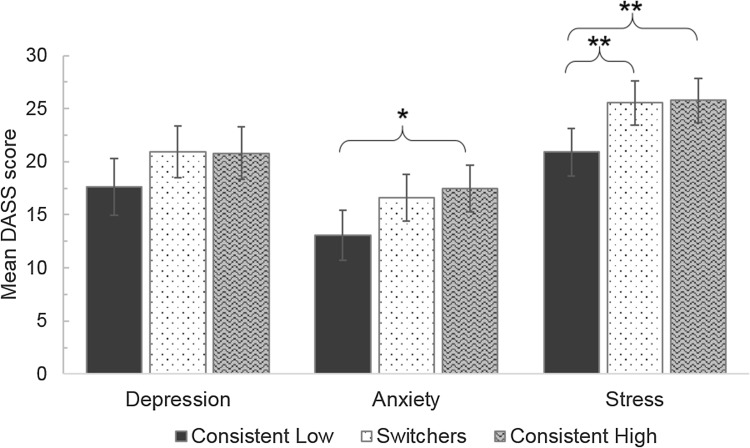
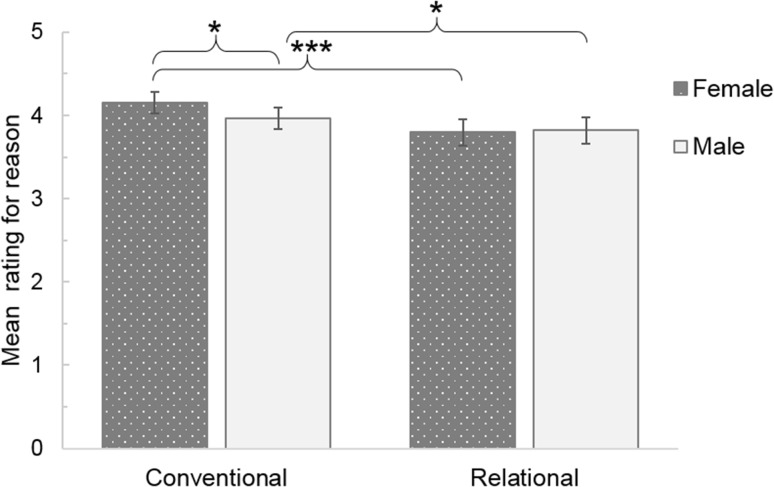
Camouflaging entails 'masking' in or 'passing' social situations. Research suggests camouflaging behaviours are common in autistic people, and may negatively impact mental health. To enhance understanding of camouflaging, this study examined reasons, contexts and costs of camouflaging. 262 autistic people completed measures of camouflaging behaviours, camouflaging contexts (e.g. work vs. family), camouflaging reasons (e.g. to make friends) and mental health symptoms. Findings indicated a gender difference in reasons for camouflaging, with autistic women more likely to endorse "conventional" reasons (e.g. getting by in formal settings such as work). Both camouflaging highly across contexts and 'switching' between camouflaging in some contexts but not in others, related to poorer mental health. These findings have implications for understanding camouflaging in autistic adults.
Overview
The claims and statistics of this paper haven’t been checked yet.
Free: it reads the open-access text and checks the first 5 claims that cite a source we can check. Create a free account to check every claim.
Integrity signals
Registry
Cites
Statistics
Figures
Verification
Claims the paper makes
The claims and statistics of this paper haven’t been checked yet.
Free: it reads the open-access text and checks the first 5 claims that cite a source we can check. Create a free account to check every claim.
Claims other papers make about this one
Each is checked against this paper’s own text: does it say what the citing paper says it does?
The source backs part of the claim, not all of it — or backs it for a different population, condition or comparison.
In the citing paper
“In this way, camouflaging may be thought of as a form of stigma management that is available to autistic individuals with more ‘concealable’ autism (Cage & Troxell-Whitman, 2019).”
From Camouflaging in an everyday social context: An interpersonal recall study (2021) · cites this paper as Cage & Troxell-Whitman, 2019
Experimental — accuracy not yet measuredThe source backs part of the claim, not all of it — or backs it for a different population, condition or comparison.
In the citing paper
“Furthermore , evidence remains inconclusive on whether the wellbeing of autistic individuals is directly related to the severity of their core traits.Instead, well-being appears to depend more significantly on the extent to which autistic individuals feel understood, accepted, and supported within an inclusive social environment (Cage & Troxell-Whitman, 2019; Pantazakos, 2023).”
From Rethinking psychological interventions in autism: Toward a neurodiversity‐affirming approach. (2025) · cites this paper as Cage & Troxell-Whitman, 2019
Experimental — accuracy not yet measuredThe cited source says what the claim attributes to it.
In the citing paper
“Cage and Troxel-Whitman (2019) found no gender differences on the Total CAT-Q score between autistic men or women.”
From Camouflaging in autism: A systematic review (2021) · cites this paper as Cage and Troxel-Whitman, 2019
The cited source says what the claim attributes to it.
In the citing paper
“Additionally, many Autistic adults report negative subjective outcomes as a result of having to meet inappropriate and unrealistic benchmarks, such as feeling they have to “pass” as neurotypical and mask or “camouflage” their Autistic behaviors (Bargiela et al., 2016; Cage & Troxell-Whitman, 2019; Cook et al., 2021; Hull et al., 2017; Livingston et al., 2019).”
From Neurodiversity and Autism Intervention: Reconciling Perspectives Through a Naturalistic Developmental Behavioral Intervention Framework (2022) · cites this paper as Cage & Troxell-Whitman, 2019
The cited source says what the claim attributes to it.
In the citing paper
“Emerging quantitative research examining associations between camouflaging and anxiety (e.g. Cage & Troxell-Whitman, 2019; Lai et al., 2017; Schuck et al., 2019) have yielded inconsistent results.”
From Camouflaging in an everyday social context: An interpersonal recall study (2021) · cites this paper as Cage & Troxell-Whitman, 2019
5 more claims about this paper
Create a free account to see every claim other papers make about this one.
Self-check
Percentages, sums and reported differences re-computed from the paper’s own numbers.
The self-check needs the paper’s full text.
Citations
Cites
Diagnostic and Statistical Manual of Mental Disorders
American Psychiatric Association (2013) · doi:10.1176/appi.books.9780890425596 · Cited by 116,369
Diagnostic and Statistical Manual of Mental Disorders
Williams, J. B. W., & First, M. (2013) · Encyclopedia of Social Work · doi:10.1093/acrefore/9780199975839.013.104 · Cited by 109,519
(2017) · Cited by 16,319
Lovibond, P. F., & Lovibond, S. H. (1995) · Behaviour Research and Therapy · doi:10.1016/0005-7967(94)00075-u · Cited by 14,523
(1943) · The Nervous child · Cited by 8,870
Lord, C., Risi, S., Lambrecht, L., Cook, E. H., Leventhal, B. L., DiLavore, P. C., Pickles, A., & Rutter, M. (2000) · Journal of Autism and Developmental Disorders · doi:10.1023/a:1005592401947 · Cited by 7,520
(1995) · Cited by 6,909
Henry, J. D., & Crawford, J. R. (2005) · British Journal of Clinical Psychology · doi:10.1348/014466505x29657 · Cited by 5,801
Autistic disturbances of affective contact.
Kanner, L. (1968) · PubMed · Cited by 3,143
What Is the Male-to-Female Ratio in Autism Spectrum Disorder? A Systematic Review and Meta-Analysis
Loomes, R., Hull, L., & Mandy, W. P. L. (2017) · Journal of the American Academy of Child & Adolescent Psychiatry · doi:10.1016/j.jaac.2017.03.013 · Cited by 2,804
Research works printed but not linked: 2
- Hudson, R. L. (2013). The effect of disability disclosure on the graduation rates of college students with disabilities (Unpublished doctoral dissertation). Virginia Tech, VA. Retrieved from https://vtechworks.lib.vt.edu/handle/10919/24072. Accessed Jan 18 2019.
- Smart J Challenges to the biomedical model of disability Advances in Medical Psychotherapy & Psychodiagnosis 2006 12 1 4
Cited by
Items 401–500 of 662
Caruana, N., Goetz, T., Nalepka, P., & Pellicano, E. (2025) · Autism · doi:10.1177/13623613251406114 · Cited by 3
“…echoes broader findings that autistic people often experience stigma and bias in social settings, which in turn encourages camouflaging or masking strategies that can be cognitively demanding and lead to poor mental health and well-being outcomes (Cage & Troxell-Whitman, 2019; Hull et al., 2017).”
Johnson, A., Murray, E., Schenke, K. C., & Stephens-Lewis, D. (2025) · Research in Autism · doi:10.1016/j.reia.2025.202704 · Cited by 3
Embracing Ubuntu: Promoting Inclusion of Learners With Autism Spectrum Disorders in Education
Mpofu, J., & Sefotho, M. M. (2025) · IGI Global eBooks · doi:10.4018/979-8-3373-7163-4.ch005 · Cited by 1
Prosser, R., Rumball, F., King, D. X., & Steel, C. (2025) · Autism · doi:10.1177/13623613251403405 · Cited by 3
“These may also be related to internalised stigma, which has been associated with feelings of shame about being autistic, identified as a reason for camouflaging of autistic characteristics (Cage & Troxell-Whitman, 2019).”
Dépenses de santé et recours aux soins des hommes et des femmes: Différences et effets de genre
Pierre, A., Bithorel, P.-L., & Solotareff, R. (2025) · médecine/sciences · doi:10.1051/medsci/2025233 · Cited by 2
Uglik‐Marucha, N., Show, S., Vitoratou, S., Happe, F. G. E., & Belcher, H. (2026) · PLoS ONE · doi:10.1371/journal.pone.0337600 · Cited by 4
“…often as a result of gendered socialisation into performing corresponding gender roles, should not negate one’s autistic identity, as these skills are not innate but learnt and maintained at considerable personal cost, with the impacts of masking well-documented in the literature [100,101].”
Autistic and clinician perspectives on the influence of camouflaging in adult autism assessments
Tassone, A. U., Andrzejewski, T. M., Breitenfeldt, K. E., Miller, M., & McDonnell, C. G. (2026) · Research in Autism · doi:10.1016/j.reia.2026.202788 · Cited by 2
Exploring Repetitive Behaviours in Autism and Obsessive-Compulsive Disorder: A Qualitative Analysis
O’Loghlen, J., McKenzie, M. L., Lang, C. P., Malone, S. A., & Paynter, J. M. (2026) · Neurodiversity · doi:10.1177/27546330261417368 · Cited by 4
Neurodiversity‐Affirming Emotion‐Focused Group Therapy: An Exploratory Outcome Study
Robinson, A., & Elliott, R. (2026) · Counselling and Psychotherapy Research · doi:10.1002/capr.70075 · Cited by 2
Escudero, A. M. I. N., Resa, P. L., & Gracia, R. S. (2026) · Revista de Logopedia Foniatría y Audiología · doi:10.1016/j.rlfa.2026.100558 · Cited by 2
Crafting Livable Worlds: Sensory, Creative, and Nonhuman Supports in Autistic Adults’ Everyday Lives
Rose, M. C., & Lupton, D. (2026) · Autism in Adulthood · doi:10.1177/25739581261426633 · Cited by 1
Mattsson, M., Dettweiler, U., Winje, Ø., Truelsen, S. L. B., Løhaugen, G. C. C., & Fernee, C. R. (2026) · Journal of Environmental Psychology · doi:10.1016/j.jenvp.2026.103013 · Cited by 2
Sperry, M. P., & O’Neill, T. A. (2026) · PLoS ONE · doi:10.1371/journal.pone.0345801 · Cited by 3
“Nearly three-quarters of autistic individuals report “masking” and “camouflaging” to make their autistic traits less noticeable [29].”
Hwang, S. K., Heslop, P., Wang, P., Pandya, S., Zhai, B., Metcalfe, D., Woo, W. L., & Morgan, C. (2026) · The British Journal of Social Work · doi:10.1093/bjsw/bcag063 · Cited by 1
Autistic Masking, Neurotypical Mindshaping, and Self-understanding
Grodniewicz, J. P., & Urbanek, A. (2026) · Review of Philosophy and Psychology · doi:10.1007/s13164-026-00811-5 · Cited by 2
Gordon, A. G., Fox, L., & Asbury, K. (2026) · Disabilities · doi:10.3390/disabilities6030051 · Cited by 1
“…can be defined as the use of specific strategies to conceal the aspects of oneself that are deemed to be ‘undesirable’ by neurotypical norms—can support social connections and help individuals fit in within existing social structures, which may be key when navigating school settings [17,18].”
Albin, M., Rosenbaum, P., Bode-Akinboye, E., Hamdani, Y., & Phoenix, M. P. (2026) · Autism · doi:10.1177/13623613261448948 · Cited by 1
Cheak‐Zamora, N., Boccardi, L., & Bertucci, G. (2026) · International Journal of Language & Communication Disorders · doi:10.1111/1460-6984.70267 · Cited by 1
Understanding school stress/distress: moving beyond the functional model of school attendance
Leslie, R., Thomas, A., Jensen, K., Oberg, G., & Oberg, G. (2026) · Cambridge Journal of Education · doi:10.1080/0305764x.2026.2695070 · Cited by 1
“Prior research has documented the hidden costs of masking, including identity strain, exhaustion and diminished learning opportunities (Cage & Troxell-Whitman, 2019; Hull et al., 2020).”
Unmasking Authenticity: Introducing the Integrative Neuroaffirming Framework for Theory and Practice
Pyland, C. P., & Tackett, A. R. (2026) · The Counseling Psychologist · doi:10.1177/00110000261462571 · Cited by 4
Grieve, C. M., Roest, A. M., White, S. W., Ganzevoort, C. O. W., Smit, R. W. H., Bekius, J., van Balkom, I. D. C., & Greaves‐Lord, K. (2026) · Review Journal of Autism and Developmental Disorders · doi:10.1007/s40489-026-00580-y · Cited by 1
Exploring the Lack of Research About Autistic Women
Bennett, M., & Goodall, E. (2022) · Emerald Group Publishing Limited eBooks · doi:10.1108/978-1-80382-463-520221005 · Cited by 3
Social Behavior and Social Interventions for Adults on the Autism Spectrum
Moody, C. T., & Laugeson, E. A. (2022) · Autism and child psychopathology series · doi:10.1007/978-3-030-98507-3_20 · Cited by 2
Friendship and Anxiety/Depression Symptoms in Boys With and Without Autism Spectrum Disorder
Harkins, C. M., Menezes, M., Sadikova, E., & Mazurek, M. O. (2023) · American Journal on Intellectual and Developmental Disabilities · doi:10.1352/1944-7558-128.2.119 · Cited by 2
Autism Through an Intersectional Neurodiversity Lens
Coburn, K. L. (2024) · Topics in Language Disorders · doi:10.1097/tld.0000000000000335 · Cited by 1
Lynch, J., Murphy, A. F., & da Cruz, D. M. C. (2024) · Discover Psychology · doi:10.1007/s44202-024-00234-2 · Cited by 4
“Moreover, the study concluded that camouflaging in different contexts and ‘switching’ in others was related to poor mental health [11].”
Meta-Analysis of Psychometric Measures in Autism Assessment Tools Across the Lifespan
Barnhart, G. (2024) · British journal of healthcare and medical research · doi:10.14738/bjhmr.116.17967
Sex differences in the prevalence of common comorbidities in autism: a narrative review
Hong, Y., Song, D., & Yoo, H. (2025) · Ewha Medical Journal · doi:10.12771/emj.2024.e79 · Cited by 4
“In their research, Cage and Troxell-Whitman [44] underscore the critical need for clinicians to recognize the impact of camouflaging.”
Waite, M., Fouladi, R. T., & Iarocci, G. (2025) · Journal of Autism and Developmental Disorders · doi:10.1007/s10803-024-06707-6 · Cited by 3
“Further, autistic individuals report feeling social pressure to change to better fit in, prevent discrimina - tion, and to gain education or employment (Cage & Troxell-Whitman, 2019 ; Hull et al., 2017).”
Libster, N., Adams, R. E., Bishop, S. L., Zheng, S., & Taylor, J. L. (2025) · JAACAP Open · doi:10.1016/j.jaacop.2024.11.009 · Cited by 2
Roberts, M. F. (2025) · IGI Global eBooks · doi:10.4018/979-8-3373-4445-4.ch017 · Cited by 2
Brickwood, E. (2025) · IGI Global eBooks · doi:10.4018/979-8-3373-4445-4.ch007 · Cited by 1
Autism Spectrum Disorder Versus Anxiety Disorders
South, M., Brewe, A. M., Kerns, C. M., & White, S. (2022) · Oxford University Press eBooks · doi:10.1093/med-psych/9780197516881.003.0006 · Cited by 2
The female side of ADHD and ASD
Kok, F. M. (2021) · University of Groningen research database (University of Groningen / Centre for Information Technology) · doi:10.33612/diss.179073089 · Cited by 2
McQuaid, G. A., Gendy, J., Lee, N., & Wallace, G. L. (2021) · doi:10.31234/osf.io/qrxed · Cited by 1
Social Camouflaging in Adults with ASD
Hull, L., & Mandy, W. (2021) · Springer eBooks · doi:10.1007/978-3-319-91280-6_102389 · Cited by 1
Mosquera, M. L., Zubizarreta, S. C.-P., Tubío-Fungueiriño, M., Navarro, M. A., Hull, L., Álvarez, A. C., Gándara-Gafo, B., & Fernández‐Prieto, M. (2022) · Research Square · doi:10.21203/rs.3.rs-2048328/v1 · Cited by 1
Understanding camouflaging, stigma, and mental health for autistic people in JapanPreprint
Oshima, F., Tamura, M., Cage, E., Perry, E., Hongo, M., Seto, M., Takahashi, T., & Shimizu, E. (2023) · Research Square · doi:10.21203/rs.3.rs-2614748/v1 · Cited by 1
Self-citationMcCrossin, R. (2024) · Preprints.org · doi:10.20944/preprints202402.0185.v1
Exploring the friendship experiences of autistic children in mainstream primary schoolPreprint
Fox, L., & Asbury, K. (2024) · doi:10.31234/osf.io/rzxqm · Cited by 1
McCrossin, R. (2024) · Preprints.org · doi:10.20944/preprints202402.0185.v2
Narducci, D. M. (2025) · British Journal of Sports Medicine · doi:10.1136/bjsports-2024-109026 · Cited by 1
“1 4–8 According to the Centers for Disease Control, boys are four times more likely to be diagnosed with ASD and twice as likely to be diagnosed with Attention Deficit Hyperactivity Disorder (ADHD).”
McCrossin, R. (2025) · Preprints.org · doi:10.20944/preprints202504.1047.v1
Browne, T. (2020) · Stirling Online Research Repository (University of Stirling)
Challenged Motherhood: Mothers to Adult Daughters With Asperger Syndrome
Haller, R. L. (2021) · The European Proceedings of Social & Behavioural Sciences · doi:10.15405/epsbs.2021.03.02.43
Review on Contributing Factors to Anxiety in High-Functioning Autism
Syriopoulou–Delli, C. K., & Πάσουλα, Ε. (2021) · Advances in early childhood and K-12 education · doi:10.4018/978-1-7998-8217-6.ch011
Lancrenon, A. (2021) · ISU Red - Research and eData (Illinois State University) · doi:10.30707/etd2021.20211012065804061323.999977 · Cited by 1
CAT-Q MSCS BASC2 Pre-PrintPreprint
Aime, H., Scheerer, N. E., Boucher, T. Q., & Iarocci, G. (2021) · PsyArXiv (OSF Preprints) · doi:10.31234/osf.io/s93c4
Rationale and Neurodivergence: Reflections on, and Repercussions of, the Quintessence Project
Thomson, Q. (2022) · Context · doi:10.46580/cx60127
Social Camouflaging in Adults with ASD
Hull, L., & Mandy, W. (2020) · Springer eBooks · doi:10.1007/978-1-4614-6435-8_102389-1
Social camouflaging and mental health in adolescence: differences by sex and diagnosis
Bernardin, C. J. (2021) · MOspace Institutional Repository (University of Missouri) · doi:10.32469/10355/90961
“However, findings in this area are mixed and others have reported no sex differences (e.g., Cage & Troxell-Whitman, 2019).”
BackgroundJohnson, A. L., M'gadzah, S. H., & Watson, S. D. (2022) · Advances in higher education and professional development book series · doi:10.4018/978-1-7998-9628-9.ch010
Lacroix, A. (2023) · UGA Éditions eBooks · doi:10.4000/books.ugaeditions.29935
Comprehensive Assessment of Autism Spectrum Disorders
Bigham, M. H., Keister, D., Johnston, S., & Rieske, R. D. (2023) · Autism and child psychopathology series · doi:10.1007/978-3-031-27587-6_4
Alkhafaji, P. A. M. Z. (2023) · لارك · doi:10.31185/lark.vol2.iss50.2788
Meaningful Social Interactions as a Foundation for Affection and Learning for Autistic Individuals
Wachholtz, D., Vidal, V., Latimer, O., & Jiménez, M. (2023) · Springer eBooks · doi:10.1007/978-3-031-31709-5_33 · Cited by 1
The Art of Blending In Unveiling Camouflaging Traits in Adults with or Without Autism
Rehman, F. (2023) · Siazga Research Journal · doi:10.58341/srj.v2i4.34 · Cited by 1
Xie, Q., Li, X., Lin, L., Weng, X., Wang, S., Zhang, K., Pan, N., & Wang, X. (2024) · Research Square · doi:10.21203/rs.3.rs-4419703/v1
Self-reported Social Camouflaging in Sexual Minority and Heterosexual Autistic AdultsPreprint
McQuaid, G. A., Lee, N., & Wallace, G. L. (2024) · doi:10.31234/osf.io/p2tdy
Gordon, A. G., Fox, L., & Asbury, K. (2024) · OSF Preprints (OSF Preprints) · doi:10.31219/osf.io/hse29
Mills, J., & Duffy, O. M. (2024) · doi:10.2196/preprints.63235
Zhong, J., Ahmad, E., Kalvin, C. B., & Sukhodolsky, D. G. (2024) · Springer eBooks · doi:10.1007/978-3-031-62072-0_9
Cognition and Neuropsychological Profiles
Siracusano, M., Arturi, L., Riccioni, A., & Mazzone, L. (2024) · Springer eBooks · doi:10.1007/978-3-031-62072-0_3
Sutherland, H. E. A., Crompton, C. J., Long, J., & Fletcher‐Watson, S. (2024) · doi:10.31219/osf.io/kn2wr
Byrnes, K., & Idrizi, K. (2024) · Elsevier eBooks · doi:10.1016/b978-0-443-27366-7.00020-1 · Cited by 1
Included but Not Inclusive: A Femme Theory Analysis of Autism Research on the Feminine Spectrum
Coombs, E. C., Maroney, M. R., Brown, H. M., & McMorris, C. A. (2024) · Journal of femininities. · doi:10.1163/29501229-bja10008 · Cited by 2
Wachholtz, D., Vidal, V., Latimer, O., & Jiménez, M. (2024) · Springer eBooks · doi:10.1007/978-3-031-58979-9_33
Misunderstood, excluded, and othered: Lay constructions of autistic women
Rhodes, M., & Seeley-Wait, E. (2025) · Feminism & Psychology · doi:10.1177/09593535241306535 · Cited by 1
“They are also more likely to camou fl age autism, and prolonged efforts to blend in with neurotypical peers can lead to poor mental health and loss of sense of identity (Cage & Troxell-Whitman, 2019; Driver & Chester, 2021).”
Kamuflaż u osób z zaburzeniami ze spektrum autyzmu. Analiza zjawiska w świetle dotychczasowych badań
Nieradka, F. (2022) · Man – Disability – Society · doi:10.5604/01.3001.0015.8513 · Cited by 2
Grant, S., Norton, S., & Hoekstra, R. A. (2025) · Autism in Adulthood · doi:10.1089/aut.2024.0186
“71,72 Camou fl aging is associated with delayed autism diagnosis and poor mental health 73 – 75 and has also been associated with poorer physical health outcomes, 76 – 78 with a recent study positing that camou fl aging could be a chronic stressor that can lead to a pathophysiological state…”
Abdallah, S., Fiorelli, N. M., Reardon, K. W., & Poreh, A. (2025) · Autism in Adulthood · doi:10.1089/aut.2024.0278 · Cited by 1
Brief Report: Mental Health and Wellbeing Across the Autism Assessment Experience
Tivey, P., Blatchford, L., Kaspar, P., Powell, A., & Surtees, A. D. R. (2025) · Journal of Autism and Developmental Disorders · doi:10.1007/s10803-025-06826-8
Senior, C., & Waller, L. (2025) · PsyArXiv (OSF Preprints) · doi:10.31234/osf.io/yx7bd_v1
A transdisciplinary scoping review of social identity among African youths with autism
Mpofu, J., & Sefotho, M. M. (2025) · The Journal for Transdisciplinary Research in Southern Africa · doi:10.4102/td.v21i1.1484
Tucker‐Retter, E. K., & Westermeyer, H. D. (2025) · Veterinary Ophthalmology · doi:10.1111/vop.70030 · Cited by 1
“…perceived by others, masking in ASC requires significant effort and comes at the cost of the individual's sense of identity and self-esteem [19, 46], often exacerbating the already increased rates of depression and anxiety in this population that can arise due to lack of accommodations [23, 45].”
Wilkinson, E. (2024) · Scholars Archive - University at Albany (University at Albany, State University of New York) · doi:10.54014/7sew-4fp4
Agency in Defining Autism: A Hierarchical Regression Analysis
Zhou, K., Park, S., & Qin, S. (2025) · Rehabilitation Counseling Bulletin · doi:10.1177/00343552251349504
“For example, Cage and Troxell-Whitman (2020) found that individuals who strongly identify with being autistic may still use camou-flaging, a maladaptive coping strategy related to poor well-being (Cage & Troxell-Whitman, 2019; Perry et al., 2022; Tamura et al., 2024).”
Les croyances, un frein au processus de retour au travail après un cancer ?
Daul, J., Boudjemadi, V., Sgambati, L., & Rohmer, O. (2025) · Bulletin du Cancer · doi:10.1016/j.bulcan.2025.03.021 · Cited by 2
Autism paradigms in a developing country setting: Results and implications of a Zimbabwean study
Mpofu, J., & Sefotho, M. M. (2025) · African Journal of Disability · doi:10.4102/ajod.v14i0.1638
“Scan this QR code with your smart phone or mobile device to read online. where minority minds are valued according to their own niche (Cage & Troxell-Whitman 2019).”
Spirituality at the Workplace and Female ADHD Employees’ Flourishing
Rocha, Y. G., & Rocha, R. G. (2025) · Springer eBooks · doi:10.1007/978-3-031-32257-0_244-1
Exposing Socialization and Systemic Exclusion Barriers in UK Universities
Dean, L. A. (2025) · IGI Global eBooks · doi:10.4018/979-8-3693-8920-1.ch006 · Cited by 1
Inclusive Group Work for Neurodivergent Students
Santhanam, S. P., Gürbüz, E., & VanUitert, V. J. (2025) · IGI Global eBooks · doi:10.4018/979-8-3373-6350-9.ch007
Fernandes, L., & Welsh, S. (2025) · International Journal of Lifelong Education · doi:10.1080/02601370.2025.2547762
“The challenges Robert faced, for example, questioning his abilities and the pressure to mask behaviours in order to fit in with a neurotypical society, are representative of the wider struggle for recognition that many neurodiverse people may endure (Cage & Troxell-Whitman, 2019; Wharmby, 2022).”
Li, J., & Shum, K. K. (2025) · Journal of Autism and Developmental Disorders · doi:10.1007/s10803-025-07039-9 · Cited by 2
The Impact of Autism-Affirming and Autism-Stigmatizing Cues on Autistic Adults’ Camouflaging Efforts
Cottington, A. C. K., & Shoda, Y. (2025) · Autism in Adulthood · doi:10.1177/25739581251379187
Reconceptualising Neuroinclusion: A Relational Perspective on Neurodiversity at WorkPreprint
Kavanagh, N., van der Werff, L., & Freeney, Y. M. (2025) · SSRN Electronic Journal · doi:10.2139/ssrn.5646291
McFarlane, Z., & Wilson, A. C. (2025) · Autism in Adulthood · doi:10.1177/25739581251388228 · Cited by 1
Gálvez-Merlín, A., Arqueros, M., Fuentes‐García, N., Díaz-González, S., de la Torre‐Luque, A., López‐Villatoro, J. M., Díaz‐Marsá, M., & Carrasco, J. L. (2025) · Journal of Psychiatric Research · doi:10.1016/j.jpsychires.2025.10.072
Soubiran, V. (2025) · Springer eBooks · doi:10.1007/978-3-662-72015-8_6
Soubiran, V. (2025) · Springer eBooks · doi:10.1007/978-3-662-72015-8_1
Kommunikation & inklusive Sprache
Soubiran, V. (2025) · Springer eBooks · doi:10.1007/978-3-662-72015-8_3
Soubiran, V. (2025) · Springer eBooks · doi:10.1007/978-3-662-72015-8_4
Soubiran, V. (2025) · Springer eBooks · doi:10.1007/978-3-662-72015-8_2
Sherif, M., Ghanem, M. M., Atta, S., Eljohary, N. M., Sarhan, M. M., Yousef, A. M., & Alawam, M. A. (2025) · Middle East Current Psychiatry · doi:10.1186/s43045-025-00599-7
“…working with autistic clients can use CAT-Q scores to initiate conversations about the psychological costs of camouflaging and to develop interventions aimed at reducing these costs while supporting individuals’ autonomy and choices about when and how to present themselves socially [16, 17].”
Łaskawiec, J., & Krogulska, A. (2025) · Psychology and Sexuality · doi:10.1080/19419899.2025.2596049
“In turn, decreased masking could promote deeper self-acceptance of neurodivergence (Cage & Troxell-Whitman, 2019; Kossewska & Milczarek, 2022; Zhuang et al., 2023).”
Narrow competencies as a basis for preferential hiring
de Vries, B. (2025) · Economics and Philosophy · doi:10.1017/s0266267125100400
“…the fact that they have come out will spare them the psychological costs that staying in the closet at work has for many autistic people (Cage and Troxell-Whitman 2019; Sarrett 2017; Cook et al. 2021), which include the feeling that one cannot be oneself (for example, one person…”
Oshima, F., Takahashi, T., Tamura, M., Guan, S., Seto, M., Hull, L., Mandy, W., Tsuchiya, K., & Shimizu, E. (2024) · Figshare · doi:10.6084/m9.figshare.26660942
Metadata
- Authors
- Cage, E., & Troxell-Whitman, Z.
- Affiliations
- Royal Holloway University of London (GB)
- Corresponding author
- Cage, Eilidh
- ORCID
- Cage, Eilidh
- Venue
- Journal of Autism and Developmental Disorders
- Published
- 2019-01-09
- Volume
- 49
- Issue
- 5
- Pages
- 1899-1911
- ISSN
- 0162-3257 (ISSN-L)
- 1573-3432
- PMC
- PMC6483965
- OpenAlex
- W2909219349
- Semantic Scholar
- 12cce267ca6d3c1855d17f3f5faf6a824ceed884
- Cited by
- 661
- References
- 64
- Citations by year
- 2026: 184 · 2025: 111 · 2024: 104 · 2023: 84 · 2022: 67 · 2021: 64 · 2020: 29 · 2019: 18
- FWCI
- 25.87
- Type
- journal article
- Language
- en
- Open access
- hybrid
- doi.org
- Licence
- cc-by
- creativecommons.org/licenses/by/4.0 (tdm)
- Locations
- Journal of Autism and Developmental Disorders (publishedVersion, cc-by)
- PubMed Central (publishedVersion, cc-by)
- PubMed (publishedVersion)
- Stirling Online Research Repository (University of Stirling) (submittedVersion, cc-by)
- Topics
- Life Sciences › Neuroscience › Cognitive Neuroscience › Autism Spectrum Disorder Research
- Social Sciences › Psychology › Clinical Psychology › Family and Disability Support Research
- Social Sciences › Psychology › Social Psychology › Social Robot Interaction and HRI
- Keywords
- camouflaging, autistic adults, masking, mental health, gender differences
- MeSH terms
- Adult, Autistic Disorder, Female, Humans, Male, Mental Health, Middle Aged, Sex Factors, Social Behavior
About these checks
Registry, retraction, Cites and statistics results are computed, not judged, with one exception: a printed reference that no index lists is read once by a model before it counts as a citation error. Claims are extracted by a model and kept only when their quote appears verbatim in the text; each cited source is then checked, with a model’s help, for whether it says what the claim relies on. Those verdicts can be wrong — read the claim’s quote and the cited source before relying on one.
Statistics and arithmetic are recomputed, not judged.
Confidence bands are shown only for fields calibrated on our annotated test set. None is calibrated yet, so no band is shown.
What counts as a claim ›How we measure confidence ›How we check this ›
Are you an author, or do you see a problem with this page? Request a review
Data sources
Bibliographic data: Semantic Scholar, OpenAlex, Crossref.
Contains information from the Semantic Scholar Academic Graph Datasets, made available under the ODC Attribution License (ODC-BY 1.0).
Semantic Scholar’s data is described in: Kinney, R., et al. (2023). The Semantic Scholar Open Data Platform. arXiv:2301.10140.
