

Understanding the Reasons, Contexts and Costs of Camouflaging for Autistic Adults
Open accessThe DOI matches its Crossref record; 61 of the 64 references it cites were found in a registry or an index.
Abstract
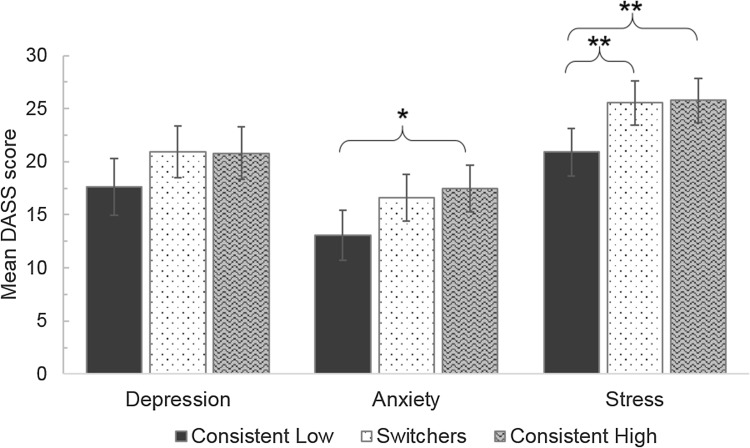
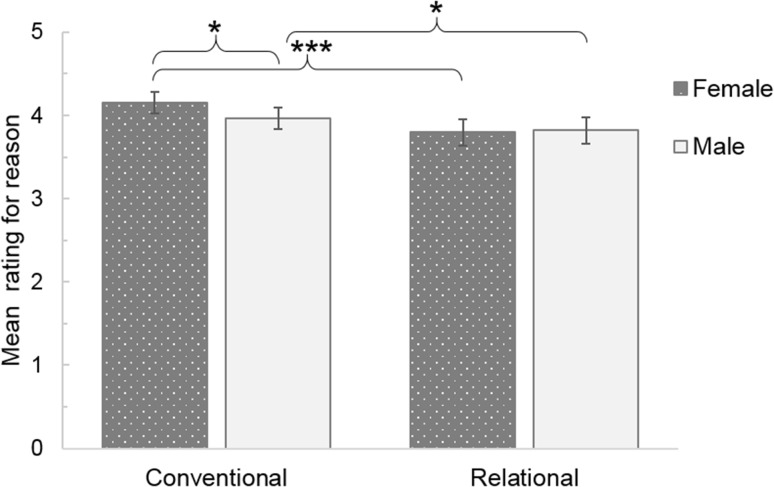
Camouflaging entails 'masking' in or 'passing' social situations. Research suggests camouflaging behaviours are common in autistic people, and may negatively impact mental health. To enhance understanding of camouflaging, this study examined reasons, contexts and costs of camouflaging. 262 autistic people completed measures of camouflaging behaviours, camouflaging contexts (e.g. work vs. family), camouflaging reasons (e.g. to make friends) and mental health symptoms. Findings indicated a gender difference in reasons for camouflaging, with autistic women more likely to endorse "conventional" reasons (e.g. getting by in formal settings such as work). Both camouflaging highly across contexts and 'switching' between camouflaging in some contexts but not in others, related to poorer mental health. These findings have implications for understanding camouflaging in autistic adults.
Overview
The claims and statistics of this paper haven’t been checked yet.
Free: it reads the open-access text and checks the first 5 claims that cite a source we can check. Create a free account to check every claim.
Integrity signals
Registry
Cites
Statistics
Figures
Verification
Claims the paper makes
The claims and statistics of this paper haven’t been checked yet.
Free: it reads the open-access text and checks the first 5 claims that cite a source we can check. Create a free account to check every claim.
Claims other papers make about this one
Each is checked against this paper’s own text: does it say what the citing paper says it does?
The source backs part of the claim, not all of it — or backs it for a different population, condition or comparison.
In the citing paper
“In this way, camouflaging may be thought of as a form of stigma management that is available to autistic individuals with more ‘concealable’ autism (Cage & Troxell-Whitman, 2019).”
From Camouflaging in an everyday social context: An interpersonal recall study (2021) · cites this paper as Cage & Troxell-Whitman, 2019
Experimental — accuracy not yet measuredThe source backs part of the claim, not all of it — or backs it for a different population, condition or comparison.
In the citing paper
“Furthermore , evidence remains inconclusive on whether the wellbeing of autistic individuals is directly related to the severity of their core traits.Instead, well-being appears to depend more significantly on the extent to which autistic individuals feel understood, accepted, and supported within an inclusive social environment (Cage & Troxell-Whitman, 2019; Pantazakos, 2023).”
From Rethinking psychological interventions in autism: Toward a neurodiversity‐affirming approach. (2025) · cites this paper as Cage & Troxell-Whitman, 2019
Experimental — accuracy not yet measuredThe cited source says what the claim attributes to it.
In the citing paper
“Cage and Troxel-Whitman (2019) found no gender differences on the Total CAT-Q score between autistic men or women.”
From Camouflaging in autism: A systematic review (2021) · cites this paper as Cage and Troxel-Whitman, 2019
The cited source says what the claim attributes to it.
In the citing paper
“Additionally, many Autistic adults report negative subjective outcomes as a result of having to meet inappropriate and unrealistic benchmarks, such as feeling they have to “pass” as neurotypical and mask or “camouflage” their Autistic behaviors (Bargiela et al., 2016; Cage & Troxell-Whitman, 2019; Cook et al., 2021; Hull et al., 2017; Livingston et al., 2019).”
From Neurodiversity and Autism Intervention: Reconciling Perspectives Through a Naturalistic Developmental Behavioral Intervention Framework (2022) · cites this paper as Cage & Troxell-Whitman, 2019
The cited source says what the claim attributes to it.
In the citing paper
“Emerging quantitative research examining associations between camouflaging and anxiety (e.g. Cage & Troxell-Whitman, 2019; Lai et al., 2017; Schuck et al., 2019) have yielded inconsistent results.”
From Camouflaging in an everyday social context: An interpersonal recall study (2021) · cites this paper as Cage & Troxell-Whitman, 2019
5 more claims about this paper
Create a free account to see every claim other papers make about this one.
Self-check
Percentages, sums and reported differences re-computed from the paper’s own numbers.
The self-check needs the paper’s full text.
Citations
Cites
Diagnostic and Statistical Manual of Mental Disorders
American Psychiatric Association (2013) · doi:10.1176/appi.books.9780890425596 · Cited by 116,369
Diagnostic and Statistical Manual of Mental Disorders
Williams, J. B. W., & First, M. (2013) · Encyclopedia of Social Work · doi:10.1093/acrefore/9780199975839.013.104 · Cited by 109,519
(2017) · Cited by 16,319
Lovibond, P. F., & Lovibond, S. H. (1995) · Behaviour Research and Therapy · doi:10.1016/0005-7967(94)00075-u · Cited by 14,523
(1943) · The Nervous child · Cited by 8,870
Lord, C., Risi, S., Lambrecht, L., Cook, E. H., Leventhal, B. L., DiLavore, P. C., Pickles, A., & Rutter, M. (2000) · Journal of Autism and Developmental Disorders · doi:10.1023/a:1005592401947 · Cited by 7,520
(1995) · Cited by 6,909
Henry, J. D., & Crawford, J. R. (2005) · British Journal of Clinical Psychology · doi:10.1348/014466505x29657 · Cited by 5,801
Autistic disturbances of affective contact.
Kanner, L. (1968) · PubMed · Cited by 3,143
What Is the Male-to-Female Ratio in Autism Spectrum Disorder? A Systematic Review and Meta-Analysis
Loomes, R., Hull, L., & Mandy, W. P. L. (2017) · Journal of the American Academy of Child & Adolescent Psychiatry · doi:10.1016/j.jaac.2017.03.013 · Cited by 2,804
Research works printed but not linked: 2
- Hudson, R. L. (2013). The effect of disability disclosure on the graduation rates of college students with disabilities (Unpublished doctoral dissertation). Virginia Tech, VA. Retrieved from https://vtechworks.lib.vt.edu/handle/10919/24072. Accessed Jan 18 2019.
- Smart J Challenges to the biomedical model of disability Advances in Medical Psychotherapy & Psychodiagnosis 2006 12 1 4
Cited by
Items 601–662 of 662
Rodrigues, S. (2026) · Oxford University Press eBooks · doi:10.1093/9780197843413.003.0003
Environmental Fit and the Ecology of Inclusion
Rodrigues, S. (2026) · Oxford University Press eBooks · doi:10.1093/9780197843413.003.0015
Rodrigues, S. (2026) · Oxford University Press eBooks · doi:10.1093/9780197843413.003.0012
Rodrigues, S. (2026) · Oxford University Press eBooks · doi:10.1093/9780197843413.005.0007
Rodrigues, S. (2026) · Oxford University Press eBooks · doi:10.1093/9780197843413.005.0005
Gender, Masking, and the Performance of Acceptability
Rodrigues, S. (2026) · Oxford University Press eBooks · doi:10.1093/9780197843413.003.0019
Recognizing Strengths and Challenges Across Neurodivergent Profiles
Rodrigues, S. (2026) · Oxford University Press eBooks · doi:10.1093/9780197843413.003.0005
Centering Sensory Inclusivity and Student Voice in Neurodiversity-Affirming SEL
Rodrigues, S. (2026) · Oxford University Press eBooks · doi:10.1093/9780197843413.003.0033
Advocacy in Special Education Systems
Rodrigues, S. (2026) · Oxford University Press eBooks · doi:10.1093/9780197843413.003.0023
Rodrigues, S. (2026) · Oxford University Press eBooks · doi:10.1093/9780197843413.005.0003
Supporting Neurodivergent Caregivers
Rodrigues, S. (2026) · Oxford University Press eBooks · doi:10.1093/9780197843413.003.0045
Accessible Design for Learning
Rodrigues, S. (2026) · Oxford University Press eBooks · doi:10.1093/9780197843413.003.0029
Rodrigues, S. (2026) · Oxford University Press eBooks · doi:10.1093/9780197843413.005.0004
Rodrigues, S. (2026) · Oxford University Press eBooks · doi:10.1093/9780197843413.003.0017
Honoring Dedicated Interests as Pathways to Learning and Connection
Rodrigues, S. (2026) · Oxford University Press eBooks · doi:10.1093/9780197843413.003.0041
Accessible Design for Learning
Rodrigues, S. (2026) · Oxford University Press eBooks · doi:10.1093/9780197843413.003.0010
Rodrigues, S. (2026) · Oxford University Press eBooks · doi:10.1093/9780197843413.002.0006
Measurement Invariance of the Autism Spectrum Rating Scales Across Gender
Golson, M. E., McClain, M. B., Schwartz, S., Harris, B., & Gabrielsen, T. P. (2026) · Contemporary School Psychology · doi:10.1007/s40688-026-00612-8
Parallel Circles: Living With Neurodiversity Within the Family
Tasiou, K., & Nikolaou, E. N. (2026) · IGI Global eBooks · doi:10.4018/979-8-3373-7072-9.ch004
A Systematic Review of the Risk and Protective Factors for Suicide in Autism Spectrum Disorder
Tubío-Fungueiriño, M., Cruz, S., Zubizarreta, S. C.-P., Pozo-Rodríguez, M., Hervas, A., Carracedo, Á., & Fernández-Prieto, M. (2026) · The Spanish Journal of Psychology · doi:10.1017/sjp.2026.10034
“Camouflaging is associated with anxiety, depressive symptoms, and low self-esteem, especially in autistic females with preserved intellectual functioning (Cage & Troxell-Whitman, 2019).”
Hinze, E., Adams, D., Dargue, N., & Paynter, J. M. (2026) · Autism in Adulthood · doi:10.1177/25739581261473056
Sherwood, K. L., Erickson, D., Burke-Miller, J. K., & Smith, M. J. (2026) · Journal of Autism and Developmental Disorders · doi:10.1007/s10803-026-07476-0
Navigating Mixed-Neurotype Dialogue: Environmental and Affective Influences on Autistic Speakers
Miller, Z. A., Conner, C. M., Chang, J. C., & Mazefsky, C. A. (2026) · Autism · doi:10.1177/13623613261469909
“Moreover, studies indicate that autistic individuals report higher levels of social anxiety and greater difficulty in interactions with allistic individuals relative to interactions with other autistic people (Cage & Troxell-Whitman, 2019; Pickard et al., 2020).”
Barahmand, U., Davis, S. W., Zhou, C., Gebril, A., Khan, M. A., & Akhtar, S. (2026) · Health Psychology Report · doi:10.5114/hpr/224375
“PWA commonly report camouflaging to fit in socially, make friends, feel safe, avoid negative judgments or stigma, and as a practical strategy to navigate situations with high social expectations (e.g., academia or work) (Cage & Troxell-Whitman, 2019; Hull et al., 2017).”
Social Masking at Work: Authenticity, Alienation, and Humanistic Management
Smith, R. D., & Kulkarni, S. P. (2026) · Humanistic Management Journal · doi:10.1007/s41463-026-00231-8 · Cited by 1
Psychiatric Hospitalizations Among Autistic and Non-Autistic Older Adults
Deitsch, A., Nikahd, M., Hyer, J. M., Wolf, B., Patterson, B. W., Bishop, L., & Hand, B. N. (2026) · Autism in Adulthood · doi:10.1177/25739581261467375
Chatbot appearance and loneliness trajectories in women with high autistic traits
Feng, X., & Fu, J. (2026) · Computers in Human Behavior Artificial Humans · doi:10.1016/j.chbah.2026.100369
Kumar, S., & Sakpal, S. S. (2026) · Research in Neurodiversity · doi:10.1016/j.rin.2026.100059
Stimming and support assemblages: autistic improvisation, sensory worlds and wellbeing
Rose, M. C., & Lupton, D. (2026) · Disability & Society · doi:10.1080/09687599.2026.2715012
“…adults are often expected to suppress stimming and to ‘mask’ or ‘camouflage’ their practices, especially in social contexts, despite the benefits they provide (Cage and Troxell-Whitman 2019; Charlton et al. 2021; Felepchuk 2021; Kapp et al. 2019; Quadt et al. 2024; Radulski 2022; Wassell 2026).”
Autistic experiences of breast cancer: an interpretative phenomenological analysis
Goodwin, C. W., Shaw, S. C. K., Turner, E. J., Russell, G., Doherty, M., & Barreto, M. (2026) · Psychology and Health · doi:10.1080/08870446.2026.2716038
Disclosure, Masking, and Passing: Graduate Student Experiences Navigating the STEM Academy
Beardmore, D. C., & Bielefeldt, A. R. (2026) · ASEE Annual Conference & Exposition · doi:10.18260/1-2--58925
Cordeiro, A. F. M., & Dalfovo, C. (2026) · Tesis Psicológica · doi:10.37511/tesis.v21n1a7
Reclaiming selfhood: towards a conceptualisation of the autistic unmasking process
Hedlund, Å., Unéus, D., Wik, J., Ingard, C., Isakson, K., Black, M. H., Hirvikoski, T., & Rosqvist, H. B. (2026) · Frontiers in Psychiatry · doi:10.3389/fpsyt.2026.1929738
Harrison, S., Mathew, D., Iarocci, G., & Boldut, E. (2026) · Advances in Autism · doi:10.1108/aia-05-2026-0067
Anunciação, L., & Rochelle, J. L. (2026) · Research in Neurodiversity · doi:10.1016/j.rin.2026.100066
Sebreghts, B., Backer, J. D., Vriendt, N. D., & Foubert, K. (2026) · Nordic Journal of Music Therapy · doi:10.1080/08098131.2026.2704793
Quinlan, E., Kamenetsky, A., Emery, H., & Wilson, J. (2026) · Neurodiversity · doi:10.1177/27546330261489096
Online Dating as a Middleman: Autistic Young Adults’ Pursuit of Romantic Connection
Safran, S., & Hurwitz, S. (2026) · Journal of Autism and Developmental Disorders · doi:10.1007/s10803-026-07528-5
From medical school to foundation training: supporting autistic doctors in early medical careers
Groenewald, C. (2026) · BJPsych Bulletin · doi:10.1192/bjb.2026.10282
Samoilis, G., & Lewis, C. (2026) · Neurodiversity · doi:10.1177/27546330261490701
The Autism Odyssey: Camouflaged and Split
Edwards-Adams, K. (2026) · Autism in Adulthood · doi:10.1177/25739581261491351
Cooke, K., Pecora, L. A., Westrupp, E., Hedley, D., Moseley, R. L., Hooley, M., & Stokes, M. A. (2026) · Autism in Adulthood · doi:10.1177/25739581261489785
Claresta, A., & Romualdez, A. M. (2026) · Neurodiversity · doi:10.1177/27546330261490696
Neurodiversity-Affirmative Psychoeducation: Co-creating Psychoeducation Through Community Materials
Plas, L. V. D., Tilkin-Franssens, E., Vannieuwenhuysen, L.-E., & Noens, I. L. J. (2026) · Springer eBooks · doi:10.1007/978-3-032-18034-6_15
Minority Stress and Resilience Among Autistic-trans Adolescents
Rubin, A. (2026) · Digital Commons - DU (University of Denver) · doi:10.56902/etdcrp.2026.188
Autism Research and Social Psychology: Reciprocal Learnings and Mutual Benefit
Khudiakova, V., & O’Connor, C. (2026) · Neurodiversity · doi:10.1177/27546330261496731 · Cited by 1
Boateng, P. A. (2026) · Autism in Adulthood · doi:10.1177/25739581261495703
Co-Designing Social Robots for Social-Cognition Training with Autistic Adults
Zohar, Y., Benhamou, M., & Laban, G. (2026) · IEEE RO-MAN · doi:10.1109/ro-man72286.2026.11714771
“…documents the cognitive, emotional, and social costs autistic adults bear when suppressing or imitating behaviour to pass as neurotypical [8], [16], this provides a principled argument for training environments that are private, non-judgemental, and oriented toward genuine competence rather…”
Özbaran, N. B., Şener, Z. İ., Sarı, S., & Şahin, G. K. (2026) · Frontiers in Child and Adolescent Psychiatry · doi:10.3389/frcha.2026.1910194
Castaldo, R., Capiotto, F., Bari, S., & Keller, R. (2026) · Research in Autism · doi:10.1016/j.reia.2026.203026
Chronic Invalidation: An Underexplored Source of Autistic Distress
Palser, E. R., Catron, E. J., & Kuo, J. R. (2026) · Autism in Adulthood · doi:10.1177/25739581261495704
Gao, S., Liao, J., Li, R., & Yanjie, S. U. (2026) · Research Square · doi:10.21203/rs.3.rs-10903525/v1
wheeler, M. (2026) · Neurodiversity · doi:10.1177/27546330261497301
Pemberton, E., Milne, E., & Fox, J. R. E. (2026) · Autism · doi:10.1177/13623613261490599
Hayden‐Evans, M., Inkster, T., Fimmano, I., Smith, Z., Leamon, J., Girdler, S. J., & Milbourn, B. T. (2026) · Australian Occupational Therapy Journal · doi:10.1111/1440-1630.70132
“Expression of autistic characteristics has traditionally been discouraged and autistic adolescents may consequently ‘ mask ’ their true selves, negatively impacting their mental wellbeing (Cage & Troxell-Whitman, 2019; Hull et al., 2017).”
Das, M., & Saha, A. (2026) · International ACM SIGACCESS Conference on Computers and Accessibility (ASSETS) · doi:10.1145/3797867.3829053
“Moreover, the compensatory strategies these children developed (e.g., memorizing, imitating) to circumvent CVI-related dysfunctions could make them appear as using their vision typically, which further masked [14, 45] children’s condition from parents without CVI-related knowledge.”
Ferreira, L. F. D. A., Landim, L. S., Teixeira, G. M. B., Coleman, C., & Benevides, A. M. L. N. (2026) · JMIR Formative Research · doi:10.2196/106266
Teal-inspired practices for neurodivergent inclusion at work: stakeholder viewpoints
Alipour, S., Rastgar, A. A., & Sorooshian, S. (2026) · Journal of Managerial Psychology · doi:10.1108/jmp-03-2026-0307
Jenca, A., Lee, A., & Hantula, D. A. (2026) · Journal of Organizational Behavior Management · doi:10.1080/01608061.2026.2751649
Metadata
- Authors
- Cage, E., & Troxell-Whitman, Z.
- Affiliations
- Royal Holloway University of London (GB)
- Corresponding author
- Cage, Eilidh
- ORCID
- Cage, Eilidh
- Venue
- Journal of Autism and Developmental Disorders
- Published
- 2019-01-09
- Volume
- 49
- Issue
- 5
- Pages
- 1899-1911
- ISSN
- 0162-3257 (ISSN-L)
- 1573-3432
- PMC
- PMC6483965
- OpenAlex
- W2909219349
- Semantic Scholar
- 12cce267ca6d3c1855d17f3f5faf6a824ceed884
- Cited by
- 661
- References
- 64
- Citations by year
- 2026: 184 · 2025: 111 · 2024: 104 · 2023: 84 · 2022: 67 · 2021: 64 · 2020: 29 · 2019: 18
- FWCI
- 25.87
- Type
- journal article
- Language
- en
- Open access
- hybrid
- doi.org
- Licence
- cc-by
- creativecommons.org/licenses/by/4.0 (tdm)
- Locations
- Journal of Autism and Developmental Disorders (publishedVersion, cc-by)
- PubMed Central (publishedVersion, cc-by)
- PubMed (publishedVersion)
- Stirling Online Research Repository (University of Stirling) (submittedVersion, cc-by)
- Topics
- Life Sciences › Neuroscience › Cognitive Neuroscience › Autism Spectrum Disorder Research
- Social Sciences › Psychology › Clinical Psychology › Family and Disability Support Research
- Social Sciences › Psychology › Social Psychology › Social Robot Interaction and HRI
- Keywords
- camouflaging, autistic adults, masking, mental health, gender differences
- MeSH terms
- Adult, Autistic Disorder, Female, Humans, Male, Mental Health, Middle Aged, Sex Factors, Social Behavior
About these checks
Registry, retraction, Cites and statistics results are computed, not judged, with one exception: a printed reference that no index lists is read once by a model before it counts as a citation error. Claims are extracted by a model and kept only when their quote appears verbatim in the text; each cited source is then checked, with a model’s help, for whether it says what the claim relies on. Those verdicts can be wrong — read the claim’s quote and the cited source before relying on one.
Statistics and arithmetic are recomputed, not judged.
Confidence bands are shown only for fields calibrated on our annotated test set. None is calibrated yet, so no band is shown.
What counts as a claim ›How we measure confidence ›How we check this ›
Are you an author, or do you see a problem with this page? Request a review
Data sources
Bibliographic data: Semantic Scholar, OpenAlex, Crossref.
Contains information from the Semantic Scholar Academic Graph Datasets, made available under the ODC Attribution License (ODC-BY 1.0).
Semantic Scholar’s data is described in: Kinney, R., et al. (2023). The Semantic Scholar Open Data Platform. arXiv:2301.10140.
