

Understanding the Reasons, Contexts and Costs of Camouflaging for Autistic Adults
Open accessThe DOI matches its Crossref record; 61 of the 64 references it cites were found in a registry or an index.
Abstract
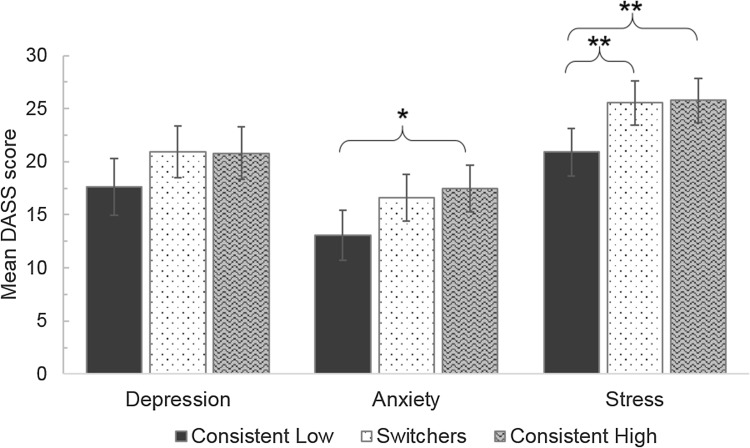
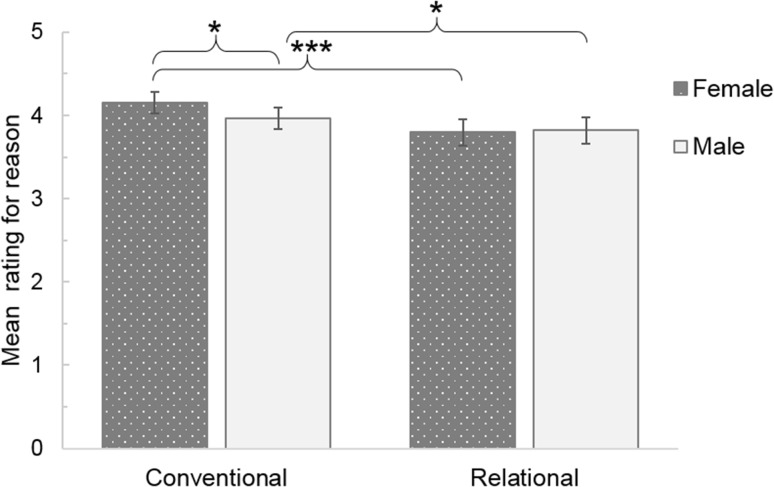
Camouflaging entails 'masking' in or 'passing' social situations. Research suggests camouflaging behaviours are common in autistic people, and may negatively impact mental health. To enhance understanding of camouflaging, this study examined reasons, contexts and costs of camouflaging. 262 autistic people completed measures of camouflaging behaviours, camouflaging contexts (e.g. work vs. family), camouflaging reasons (e.g. to make friends) and mental health symptoms. Findings indicated a gender difference in reasons for camouflaging, with autistic women more likely to endorse "conventional" reasons (e.g. getting by in formal settings such as work). Both camouflaging highly across contexts and 'switching' between camouflaging in some contexts but not in others, related to poorer mental health. These findings have implications for understanding camouflaging in autistic adults.
Overview
The claims and statistics of this paper haven’t been checked yet.
Free: it reads the open-access text and checks the first 5 claims that cite a source we can check. Create a free account to check every claim.
Integrity signals
Registry
Cites
Statistics
Figures
Verification
Claims the paper makes
The claims and statistics of this paper haven’t been checked yet.
Free: it reads the open-access text and checks the first 5 claims that cite a source we can check. Create a free account to check every claim.
Claims other papers make about this one
Each is checked against this paper’s own text: does it say what the citing paper says it does?
The source backs part of the claim, not all of it — or backs it for a different population, condition or comparison.
In the citing paper
“In this way, camouflaging may be thought of as a form of stigma management that is available to autistic individuals with more ‘concealable’ autism (Cage & Troxell-Whitman, 2019).”
From Camouflaging in an everyday social context: An interpersonal recall study (2021) · cites this paper as Cage & Troxell-Whitman, 2019
Experimental — accuracy not yet measuredThe source backs part of the claim, not all of it — or backs it for a different population, condition or comparison.
In the citing paper
“Furthermore , evidence remains inconclusive on whether the wellbeing of autistic individuals is directly related to the severity of their core traits.Instead, well-being appears to depend more significantly on the extent to which autistic individuals feel understood, accepted, and supported within an inclusive social environment (Cage & Troxell-Whitman, 2019; Pantazakos, 2023).”
From Rethinking psychological interventions in autism: Toward a neurodiversity‐affirming approach. (2025) · cites this paper as Cage & Troxell-Whitman, 2019
Experimental — accuracy not yet measuredThe cited source says what the claim attributes to it.
In the citing paper
“Cage and Troxel-Whitman (2019) found no gender differences on the Total CAT-Q score between autistic men or women.”
From Camouflaging in autism: A systematic review (2021) · cites this paper as Cage and Troxel-Whitman, 2019
The cited source says what the claim attributes to it.
In the citing paper
“Additionally, many Autistic adults report negative subjective outcomes as a result of having to meet inappropriate and unrealistic benchmarks, such as feeling they have to “pass” as neurotypical and mask or “camouflage” their Autistic behaviors (Bargiela et al., 2016; Cage & Troxell-Whitman, 2019; Cook et al., 2021; Hull et al., 2017; Livingston et al., 2019).”
From Neurodiversity and Autism Intervention: Reconciling Perspectives Through a Naturalistic Developmental Behavioral Intervention Framework (2022) · cites this paper as Cage & Troxell-Whitman, 2019
The cited source says what the claim attributes to it.
In the citing paper
“Emerging quantitative research examining associations between camouflaging and anxiety (e.g. Cage & Troxell-Whitman, 2019; Lai et al., 2017; Schuck et al., 2019) have yielded inconsistent results.”
From Camouflaging in an everyday social context: An interpersonal recall study (2021) · cites this paper as Cage & Troxell-Whitman, 2019
5 more claims about this paper
Create a free account to see every claim other papers make about this one.
Self-check
Percentages, sums and reported differences re-computed from the paper’s own numbers.
The self-check needs the paper’s full text.
Citations
Cites
Diagnostic and Statistical Manual of Mental Disorders
American Psychiatric Association (2013) · doi:10.1176/appi.books.9780890425596 · Cited by 116,369
Diagnostic and Statistical Manual of Mental Disorders
Williams, J. B. W., & First, M. (2013) · Encyclopedia of Social Work · doi:10.1093/acrefore/9780199975839.013.104 · Cited by 109,519
(2017) · Cited by 16,319
Lovibond, P. F., & Lovibond, S. H. (1995) · Behaviour Research and Therapy · doi:10.1016/0005-7967(94)00075-u · Cited by 14,523
(1943) · The Nervous child · Cited by 8,870
Lord, C., Risi, S., Lambrecht, L., Cook, E. H., Leventhal, B. L., DiLavore, P. C., Pickles, A., & Rutter, M. (2000) · Journal of Autism and Developmental Disorders · doi:10.1023/a:1005592401947 · Cited by 7,520
(1995) · Cited by 6,909
Henry, J. D., & Crawford, J. R. (2005) · British Journal of Clinical Psychology · doi:10.1348/014466505x29657 · Cited by 5,801
Autistic disturbances of affective contact.
Kanner, L. (1968) · PubMed · Cited by 3,130
What Is the Male-to-Female Ratio in Autism Spectrum Disorder? A Systematic Review and Meta-Analysis
Loomes, R., Hull, L., & Mandy, W. P. L. (2017) · Journal of the American Academy of Child & Adolescent Psychiatry · doi:10.1016/j.jaac.2017.03.013 · Cited by 2,804
Research works printed but not linked: 2
- Hudson, R. L. (2013). The effect of disability disclosure on the graduation rates of college students with disabilities (Unpublished doctoral dissertation). Virginia Tech, VA. Retrieved from https://vtechworks.lib.vt.edu/handle/10919/24072 . Accessed Jan 18 2019.
- Smart, J. (2006). Challenges to the biomedical model of disability. Advances in Medical Psychotherapy & Psychodiagnosis, 12, 1–4.
Cited by
Items 501–600 of 662
Hull, L., Levy, L., Lai, M., Petrides, K. V., Baron‐Cohen, S., Allison, C. L., Smith, P. L., & Mandy, W. (2021) · Figshare · doi:10.6084/m9.figshare.14052675
Oshima, F., Takahashi, T., Tamura, M., Guan, S., Seto, M., Hull, L., Mandy, W., Tsuchiya, K., & Shimizu, E. (2024) · Figshare · doi:10.6084/m9.figshare.26660939
When Lived Experience Becomes Clinical Expertise: Perspectives of Autistic Mental Health Therapists
Hogan, J., Anderson-Gutierrez, J., Holmgren, I., Neff, M. A., Laksman, C., & Mills, D. (2025) · Autism in Adulthood · doi:10.1177/25739581251406897
Altschuler, M. R., Krueger, R. F., Mohr, A. H., & Faja, S. (2026) · Development and Psychopathology · doi:10.1017/s0954579425101077 · Cited by 1
“…put on their best normal, ” as people who camouflage autistic behaviors have been found to have worse depression, anxiety, and stress across multiple studies (Bernardin et al., 2021; Cage et al., 2018; Cage & Troxell-Whitman, 2019; Hull et al., 2021; Livingston et al., 2018; Zhuang et al., 2023).”
Diagnoza różnicowa zaburzeń ze spektrum autyzmu i zaburzeń osobowości
Danielewicz, D. (2025) · Man – Disability – Society · doi:10.71358/cns.2785
Existential Reflections on Autistic Masking: A Heideggerian Approach
Zhang, J. (2026) · Journal of Applied Philosophy · doi:10.1002/japp.70065
Halsall, J., Robinson, E., Cook, A., Halsall, A., & Crane, L. (2026) · Autism · doi:10.1177/13623613251414302
“This tension suggests that well-intentioned efforts to promote normative friendships may inadvertently undermine autistic children’s autonomy and identity, increasing the risk of stress and reduced wellbeing (Cage & Troxell-Whitman, 2019).”
Spirituality at the Workplace and Female ADHD Employees’ Flourishing
Rocha, Y. G., & Rocha, R. G. (2026) · Springer eBooks · doi:10.1007/978-3-031-76750-0_244
D’Acunto, G., Sarno, C. D., Lenzi, F., Liboni, F., Ricci, M., Narzisi, A., Masi, G., & Mucci, M. (2026) · Brain Sciences · doi:10.3390/brainsci16030250
“Camouflaging behaviors have been associated with increased internalizing symptoms, identity difficulties [40], and a heightened risk of suicidal behaviors [41,42].”
An Arts-Based Inquiry into Autistic Meltdown
Gumert, L. (2026) · Voices A World Forum for Music Therapy · doi:10.15845/voices.v26i1.4463
“…individuals share that masking and reducing stimming behaviors leads to increased emotional dysregulation, autistic women are more susceptible to experiences of meltdown (Charlton et al., 2021; Hull et al., 2017; Kapp et al., 2019) and mental health challenges (Cage & Troxell-Whitman, 2019).”
Dwyer, P. S. R. (2025) · Psychological Inquiry · doi:10.1080/1047840x.2025.2605591
“…et al., 2025), including through routes requiring social cognitive thinking (Livingston et al., 2019), but while these efforts may help people navigate the world and protect themselves from violence, they appear to come at a substantial cost (Cage & Troxell-Whitman, 2019; Klein et al., 2025).”
Klein, J., Krahn, R., Howe, S. J., Cormier, A., Rush, J., Ames, M. E., McMorris, C. A., & Macoun, S. J. (2026) · BMJ Open · doi:10.1136/bmjopen-2025-111221
Dell’Osso, L., Nardi, B., Calvaruso, M., Lohse, A., Pronestì, C., Bonelli, C., Massimetti, G., Cremone, I. M., Luciano, M., Pini, S., et al. (2026) · Brain Sciences · doi:10.3390/brainsci16030303
“…in manifestation due to cultural variation [78] and, while it may be grant a better adjustment to social environment, it has been associated with increased psychological distress, emotional exhaustion, poorer well-being, and a heightened risk of internalizing disorders in the long term [28–32, 79].”
Feng, X. (2025) · doi:10.1145/3783862.3783897
“Such behaviors, while adaptive in the short term, can lead to heightened anxiety, exhaustion, and identity distress [3].”
Schuck, R. K., MacDonald, R., Herrera, J., & Baker-Ericzén, M. J. (2026) · Emerald Group Publishing Limited eBooks · doi:10.1108/978-1-80686-387-720261009
Colley, K. L., Jameson, T. P., Jeff-Eke, E., & Slack, K. J. (2026) · Emerald Group Publishing Limited eBooks · doi:10.1108/978-1-80686-387-720261007
Ai, W., Yu, J. X., Jacob, B. K., & Lai, M. (2026) · Molecular Autism · doi:10.1186/s13229-026-00715-2
Discrimination, self-stigma and microaggressions: perspectives of adults with autism in Slovenia
Žumbar, T., & Lesar, I. (2026) · Advances in Autism · doi:10.1108/aia-11-2025-0121
Hollis, A. S. (2026) · CHI Conference on Human Factors in Computing Systems · doi:10.1145/3772318.3790586 · Cited by 6
Witzmann, M., Auer, E., & Prommersberger, M. (2026) · Prävention und Gesundheitsförderung · doi:10.1007/s11553-026-01318-8
Dipeolu, A. O., Li, H., Shivers, C. H., Rodriguez, S., Galindo), S. C. T. (., & Benavidez, B. R. (2026) · Journal of Prevention & Intervention in the Community · doi:10.1080/10852352.2026.2660523
Dantas, S., Botha, M., Grainger, C., Rafetseder, E., & Jasper, C. (2026) · Societies · doi:10.3390/soc16050145 · Cited by 1
Pearlman, A., Abell, A., Jauhar, P., Christensen, E., & Dhamala, E. (2026) · Biological Psychiatry Global Open Science · doi:10.1016/j.bpsgos.2026.100747
“Camouflaging refers to behaviors that hide or mask aspects of oneself to fit in with social norms and avoid negative consequences (17).”
Alwis, S. D., Pearson, A., & Hodgetts, S. (2026) · Feminism & Psychology · doi:10.1177/09593535261445110
“Their comments align with Cage & Troxell-Whitman (2019), who suggested that autistic women tend to mask in these more “ established ” settings, where (often unspoken) norms regarding behaviour are present.”
Alexander, S. H. (2026) · Psychology in the Schools · doi:10.1002/pits.70175 · Cited by 1
Suhumaran, S., Aishworiya, R., & Wong, C. M. (2026) · Autism · doi:10.1177/13623613261441734
“Societal misconceptions and stereotyping of those on the autism spectrum and failure to recognize each autistic individual as distinct may result in further stigma-tization (Botha et al., 2023; Cage & Troxell-Whitman, 2019).”
“Can We Be Accepted as We Are?”: The Inner Voices of Adults With Disabilities
Salma, H. H., Winardy, G. C. B., Anggraini, F., Khuzaimah, U., & Yunus, A. (2026) · IGI Global eBooks · doi:10.4018/979-8-3373-7986-9.ch017
Smith, J. D. E., & Agostino, A. (2026) · Research in Neurodiversity · doi:10.1016/j.rin.2026.100041
Li, J., & Shum, K. K. (2026) · Autism · doi:10.1177/13623613261445631
“For example, an individual might understand that having friends is socially desirable but feel minimal intrinsic joy in socializing, leading to superficial or effortful interactions (Cage & Troxell-Whitman, 2019).”
Kaur, K., & Bhatti, J. S. (2026) · International Journal of Developmental Disabilities · doi:10.1080/20473869.2026.2679725 · Cited by 1
The hidden cost of fitting in: social camouflage in adolescents with social communication disorder
Azizpour, A., Alamdarloo, G. H., Shojaei, S., & Moradi, S. (2026) · Frontiers in Psychology · doi:10.3389/fpsyg.2026.1839647
Thomas, M. R. (2026) · Autism in Adulthood · doi:10.1177/25739581261456658
Dantas, S., Grainger, C., Botha, M., Rafetseder, E., & Jasper, C. (2026) · Autism in Adulthood · doi:10.1177/25739581261456241 · Cited by 3
Vostrý, M., Meierová, A., Lanková, B., Zilcher, L., & Pešatová, I. (2026) · Advances in Autism · doi:10.1108/aia-02-2026-0013
Giblett, M. J., Lind, P. A., & Medland, S. E. (2026) · Research in Neurodiversity · doi:10.1016/j.rin.2026.100047 · Cited by 1
Greenlee, J. L. (2026) · Theory & Psychology · doi:10.1177/09593543261458008
Neurodivergence in Acting and Performance
Lovesey, D. (2026) · Emerald Group Publishing Limited eBooks · doi:10.1108/978-1-83708-402-920261004
Psychiatric difficulties in females with fragile X syndrome: a systematic review and meta-analyses
Jenner, L., Koenig, C., Hantman, R. M., Hogan, A. L., Roberts, J. E., & Klusek, J. (2026) · Frontiers in Psychiatry · doi:10.3389/fpsyt.2026.1886787
Zwolska-Płusa, K. (2026) · Edukacyjna Analiza Transakcyjna · doi:10.16926/eat.2026.15.03.en
Zwolska-Płusa, K. (2026) · Edukacyjna Analiza Transakcyjna · doi:10.16926/eat.2026.15.03.pl
Lucie, W. (2026) · Emerald Group Publishing Limited eBooks · doi:10.1108/978-1-83708-452-420261017
Individual and In-Session Strategies
Rodrigues, S. (2026) · Oxford University Press eBooks · doi:10.1093/9780197843413.003.0046
Reimagining Family Engagement Through a Neurodiversity Lens
Rodrigues, S. (2026) · Oxford University Press eBooks · doi:10.1093/9780197843413.003.0044
Takahashi, Y. (2026) · Autism in Adulthood · doi:10.1177/25739581261467967
Rodrigues, S. (2026) · Oxford University Press eBooks · doi:10.1093/9780197843413.002.0008
Restorative Practices and Regulation-Informed Discipline
Rodrigues, S. (2026) · Oxford University Press eBooks · doi:10.1093/9780197843413.003.0043
Neurodivergence and Socioeconomic Class
Rodrigues, S. (2026) · Oxford University Press eBooks · doi:10.1093/9780197843413.003.0020
Performative Inclusion and the Burden of Adaptation
Rodrigues, S. (2026) · Oxford University Press eBooks · doi:10.1093/9780197843413.003.0038
Reorienting the System: Unpacking Bias
Rodrigues, S. (2026) · Oxford University Press eBooks · doi:10.1093/9780197843413.003.0024
Designing Accessible and Inclusive Social Emotional Learning
Rodrigues, S. (2026) · Oxford University Press eBooks · doi:10.1093/9780197843413.003.0031
The Ethical Imperative of Action
Rodrigues, S. (2026) · Oxford University Press eBooks · doi:10.1093/9780197843413.003.0058
Rodrigues, S. (2026) · Oxford University Press eBooks · doi:10.1093/9780197843413.003.0001
Sustaining the Work: Burnout, Compassion Fatigue, and Systemic Support
Rodrigues, S. (2026) · Oxford University Press eBooks · doi:10.1093/9780197843413.003.0034
Rodrigues, S. (2026) · Oxford University Press eBooks · doi:10.1093/9780197843413.003.0053
Rodrigues, S. (2026) · Oxford University Press eBooks · doi:10.1093/9780197843413.003.0049
Rodrigues, S. (2026) · Oxford University Press eBooks · doi:10.1093/9780197843413.005.0002
Glossary of Key Terms and Concepts
Rodrigues, S. (2026) · Oxford University Press eBooks · doi:10.1093/9780197843413.005.0001
Transformative Social Emotional Learning
Rodrigues, S. (2026) · Oxford University Press eBooks · doi:10.1093/9780197843413.003.0032
Rodrigues, S. (2026) · Oxford University Press eBooks · doi:10.1093/9780197843413.003.0050
Applying the Person-In-Environment Framework
Rodrigues, S. (2026) · Oxford University Press eBooks · doi:10.1093/9780197843413.003.0008
Cultural Humility in Neurodiversity Affirming Practice
Rodrigues, S. (2026) · Oxford University Press eBooks · doi:10.1093/9780197843413.003.0009
Rodrigues, S. (2026) · Oxford University Press eBooks · doi:10.1093/9780197843413.003.0036
Peer Relationships and Dedicated Interests
Rodrigues, S. (2026) · Oxford University Press eBooks · doi:10.1093/9780197843413.003.0040
Rodrigues, S. (2026) · Oxford University Press eBooks · doi:10.1093/9780197843413.002.0002
Communication Justice as a Social Work Imperative
Rodrigues, S. (2026) · Oxford University Press eBooks · doi:10.1093/9780197843413.003.0011
Rodrigues, S. (2026) · Oxford University Press eBooks · doi:10.1093/9780197843413.003.0051
Rodrigues, S. (2026) · Oxford University Press eBooks · doi:10.1093/9780197843413.003.0002
Rodrigues, S. (2026) · Oxford University Press eBooks · doi:10.1093/9780197843413.003.0042
School Social Workers as Policy Advocates
Rodrigues, S. (2026) · Oxford University Press eBooks · doi:10.1093/9780197843413.003.0055
Rodrigues, S. (2026) · Oxford University Press eBooks · doi:10.1093/9780197843413.003.0035
Narrative Theory and the Reclamation of Neurodivergent Identity
Rodrigues, S. (2026) · Oxford University Press eBooks · doi:10.1093/9780197843413.003.0016
Advocacy in a Shifting Political Landscape
Rodrigues, S. (2026) · Oxford University Press eBooks · doi:10.1093/9780197843413.003.0057
Rodrigues, S. (2026) · Oxford University Press eBooks · doi:10.1093/9780197843413.005.0006
Rethinking Social Intelligence
Rodrigues, S. (2026) · Oxford University Press eBooks · doi:10.1093/9780197843413.003.0027
Rodrigues, S. (2026) · Oxford University Press eBooks · doi:10.1093/9780197843413.003.0048
Rodrigues, S. (2026) · Oxford University Press eBooks · doi:10.1093/9780197843413.003.0004
Culturally Responsive and Sustaining Practice
Rodrigues, S. (2026) · Oxford University Press eBooks · doi:10.1093/9780197843413.003.0030
Neurodivergent Cultural Communication at the Intersection of Race
Rodrigues, S. (2026) · Oxford University Press eBooks · doi:10.1093/9780197843413.003.0021
Applying Critical Disability Studies in Practice
Rodrigues, S. (2026) · Oxford University Press eBooks · doi:10.1093/9780197843413.003.0014
Intersectionality as Praxis in Inclusive Social Work
Rodrigues, S. (2026) · Oxford University Press eBooks · doi:10.1093/9780197843413.003.0018
Building Coalitions and Cross-System Partnerships
Rodrigues, S. (2026) · Oxford University Press eBooks · doi:10.1093/9780197843413.003.0056
Rodrigues, S. (2026) · Oxford University Press eBooks · doi:10.1093/9780197843413.002.0005
Spotlighting Communication Diversity as a Strategy
Rodrigues, S. (2026) · Oxford University Press eBooks · doi:10.1093/9780197843413.003.0047
Rodrigues, S. (2026) · Oxford University Press eBooks · doi:10.1093/9780197843413.003.0025
Modeling Youth-Adult Relationships
Rodrigues, S. (2026) · Oxford University Press eBooks · doi:10.1093/9780197843413.003.0028
Bridging Individual Work to Systemic Change
Rodrigues, S. (2026) · Oxford University Press eBooks · doi:10.1093/9780197843413.003.0054
Crisis Intervention through a Neurodiversity-Affirming Lens
Rodrigues, S. (2026) · Oxford University Press eBooks · doi:10.1093/9780197843413.003.0052
Rodrigues, S. (2026) · Oxford University Press eBooks · doi:10.1093/9780197843413.002.0007
Rodrigues, S. (2026) · Oxford University Press eBooks · doi:10.1093/9780197843413.003.0013
Rodrigues, S. (2026) · Oxford University Press eBooks · doi:10.1093/9780197843413.003.0037
Revisiting the Theory of Mind Narrative
Rodrigues, S. (2026) · Oxford University Press eBooks · doi:10.1093/9780197843413.003.0006
Rodrigues, S. (2026) · Oxford University Press eBooks · doi:10.1093/9780197843413.003.0039
Cultural Humility and Reflexivity in Practice
Rodrigues, S. (2026) · Oxford University Press eBooks · doi:10.1093/9780197843413.003.0022
Centering Dignity, Strength, and Self-Determination
Rodrigues, S. (2026) · Oxford University Press eBooks · doi:10.1093/9780197843413.003.0007
Reimagining Behavior Support in Schools
Rodrigues, S. (2026) · Oxford University Press eBooks · doi:10.1093/9780197843413.003.0026
Metadata
- Authors
- Cage, E., & Troxell-Whitman, Z.
- Affiliations
- Royal Holloway University of London (GB)
- Corresponding author
- Cage, Eilidh
- ORCID
- Cage, Eilidh
- Venue
- Journal of Autism and Developmental Disorders
- Published
- 2019-01-09
- Volume
- 49
- Issue
- 5
- Pages
- 1899-1911
- ISSN
- 0162-3257 (ISSN-L)
- 1573-3432
- PMC
- PMC6483965
- OpenAlex
- W2909219349
- Cited by
- 661
- References
- 64
- Citations by year
- 2026: 184 · 2025: 111 · 2024: 104 · 2023: 84 · 2022: 67 · 2021: 64 · 2020: 29 · 2019: 18
- FWCI
- 25.87
- Type
- journal article
- Language
- en
- Open access
- hybrid
- doi.org
- Licence
- cc-by
- creativecommons.org/licenses/by/4.0 (tdm)
- Locations
- Journal of Autism and Developmental Disorders (publishedVersion, cc-by)
- PubMed Central (publishedVersion, cc-by)
- PubMed (publishedVersion)
- Stirling Online Research Repository (University of Stirling) (submittedVersion, cc-by)
- Topics
- Life Sciences › Neuroscience › Cognitive Neuroscience › Autism Spectrum Disorder Research
- Social Sciences › Psychology › Clinical Psychology › Family and Disability Support Research
- Social Sciences › Psychology › Social Psychology › Social Robot Interaction and HRI
- Keywords
- camouflaging, autistic adults, masking, mental health, gender differences
- MeSH terms
- Adult, Autistic Disorder, Female, Humans, Male, Mental Health, Middle Aged, Sex Factors, Social Behavior
About these checks
Registry, retraction, Cites and statistics results are computed, not judged, with one exception: a printed reference that no index lists is read once by a model before it counts as a citation error. Claims are extracted by a model and kept only when their quote appears verbatim in the text; each cited source is then checked, with a model’s help, for whether it says what the claim relies on. Those verdicts can be wrong — read the claim’s quote and the cited source before relying on one.
Statistics and arithmetic are recomputed, not judged.
Confidence bands are shown only for fields calibrated on our annotated test set. None is calibrated yet, so no band is shown.
What counts as a claim ›How we measure confidence ›How we check this ›
Are you an author, or do you see a problem with this page? Request a review
Data sources
Bibliographic data: Semantic Scholar, OpenAlex, Crossref.
Contains information from the Semantic Scholar Academic Graph Datasets, made available under the ODC Attribution License (ODC-BY 1.0).
Semantic Scholar’s data is described in: Kinney, R., et al. (2023). The Semantic Scholar Open Data Platform. arXiv:2301.10140.
