

Oxidation After Breakdown of the Chromium-Rich Scale on Stainless Steels at High Temperature: Internal Oxidation
Open accessThe DOI matches its Crossref record; 42 of the 43 references it cites were found in a registry or an index.
Abstract
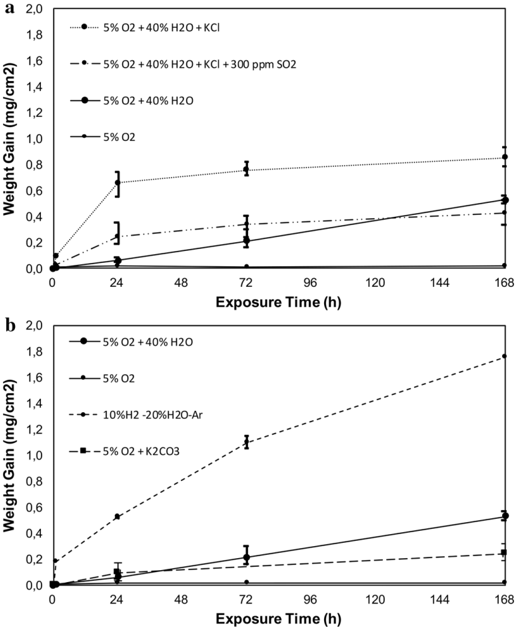
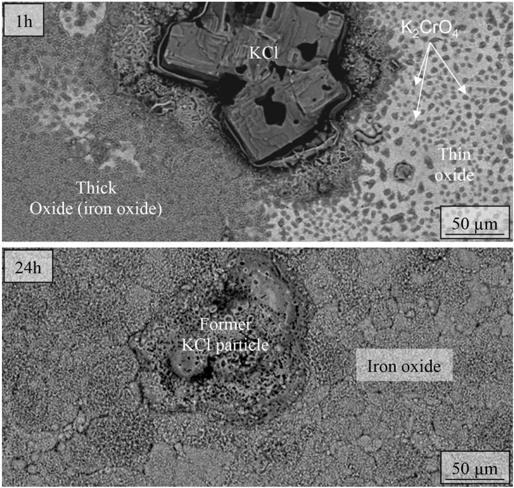
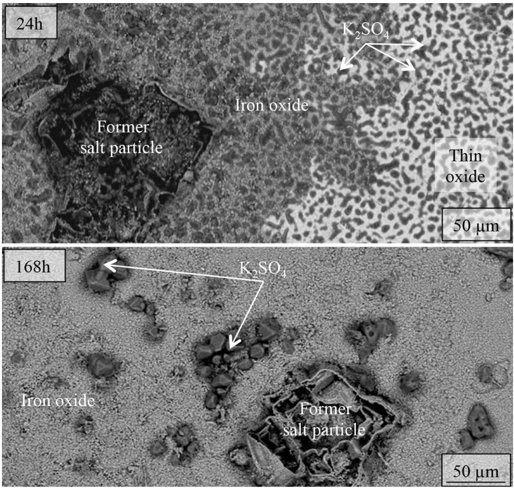
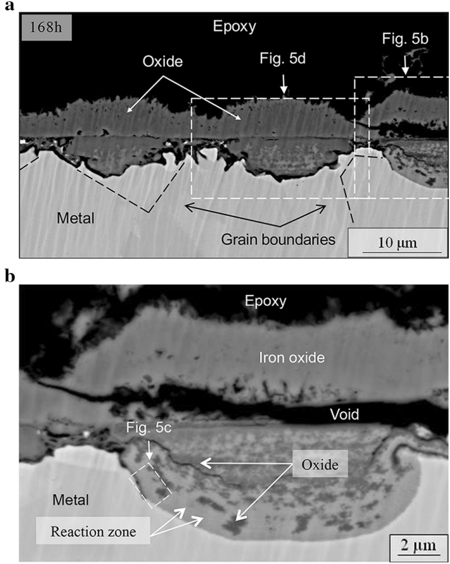
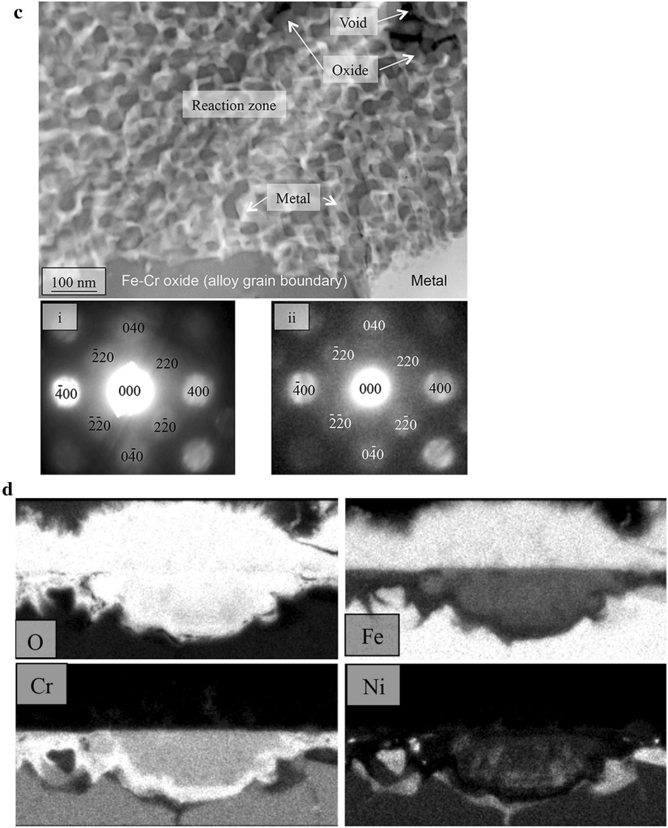
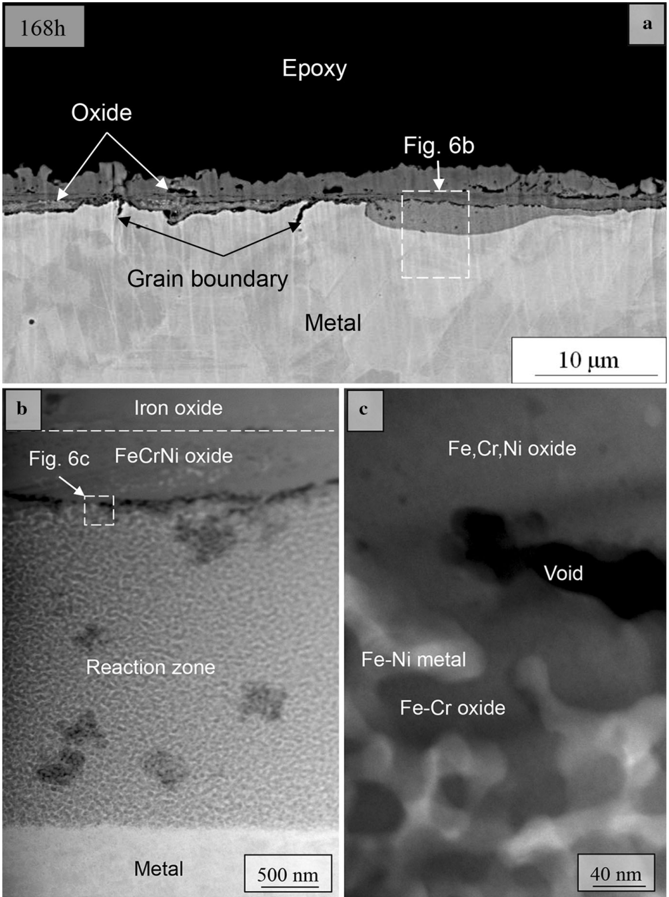
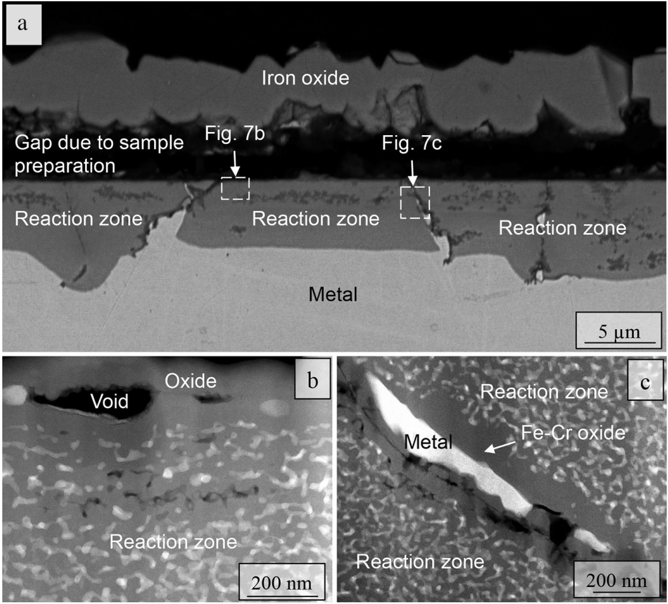
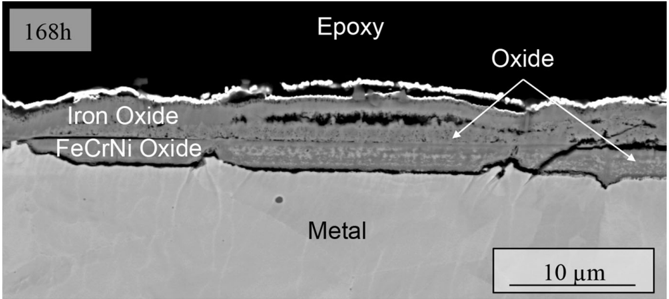
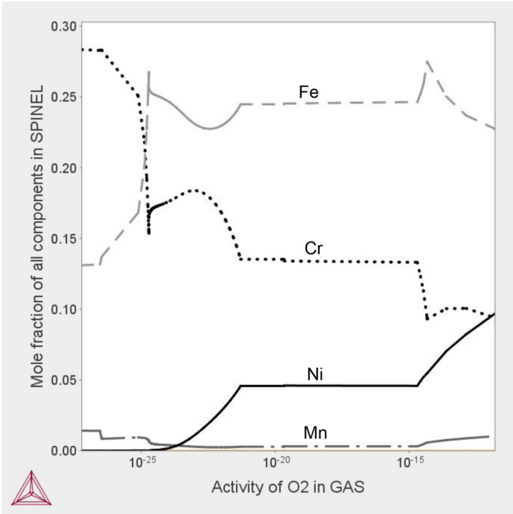
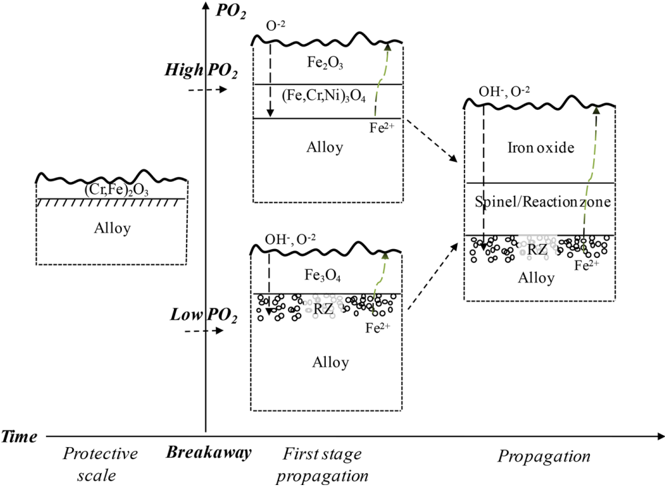
Breakaway oxidation of alloy 304L at 600 °C was studied in four environments (O2 + H2O + KCl, O2 + H2O + SO2 + KCl, H2 + H2O + Ar, O2 + K2CO3) for up to 168 h. The resulting scales were investigated by FIB/SEM, SEM/EDX, STEM/EELS, STEM/EDS and oxidation was elucidated by thermodynamic calculations (Thermo-Calc). The initial thin protective scale broke down in all cases. After breakaway, the scale consisted of two layers, i.e. an inward growing spinel/reaction zone and an outward growing iron-rich layer. The general features and microstructure of the scales after breakaway were similar in all environments and were explained in terms of: (1) Different diffusivities of Cr3+ and Fe2+ in the spinel oxide. (2) The appearance of a miscibility gap in the FeCr and FeCrNi spinel oxides. (3) The equilibrium composition of the spinel (at low pO2 Ni is not present in the spinel).
Overview
The claims and statistics of this paper haven’t been checked yet.
Free: it reads the open-access text and checks the first 5 claims that cite a source we can check. Create a free account to check every claim.
Integrity signals
Registry
Cites
Statistics
Figures
Verification
Claims the paper makes
The claims and statistics of this paper haven’t been checked yet.
Free: it reads the open-access text and checks the first 5 claims that cite a source we can check. Create a free account to check every claim.
Claims other papers make about this one
Each is checked against this paper’s own text: does it say what the citing paper says it does?
The cited source says what the claim attributes to it.
In the citing paper
“Previous studies performed on FeCr [25,37] and FeCrNi [37,26,27] alloys showed that the reaction zone was composed of Cr-rich oxide precipitates and Cr-depleted metal.”
From Beyond breakaway corrosion – Influence of chromium, nickel and aluminum on corrosion of iron-based alloys at 600 °C (2020) · cites this paper as [37]
The cited source says what the claim attributes to it.
In the citing paper
“Previous research, focused on the initiation/breakaway event, indicate a similar microstructure obtained after the onset of breakaway of Fe-based alloys, seemingly independent of suggested breakaway-reaction [8,20,22,29,31].”
From The influence of Nickel on the corrosion protection of FeCrNi alloys after breakaway corrosion at 600 °C (2024) · cites this paper as [29]
The cited source says what the claim attributes to it.
In the citing paper
“The microstructure suggest that the internal oxidation was of reaction zone-type (RZ) on the majority of the samples, meaning a region with mixed spinel type oxide and metal [37].”
From Beyond breakaway corrosion – Influence of chromium, nickel and aluminum on corrosion of iron-based alloys at 600 °C (2020) · cites this paper as [37]
The cited source says what the claim attributes to it.
In the citing paper
“Jonsson et al. [37] showed that several different corrosion environments gave similar oxide microstructure after breakaway at 600 • C.”
From Beyond breakaway corrosion – Influence of chromium, nickel and aluminum on corrosion of iron-based alloys at 600 °C (2020) · cites this paper as [37]
The cited source says what the claim attributes to it.
In the citing paper
“Jonsson et al. [37] showed that the environment had limited influence on the microstructure formed after breakaway oxidation.”
From Beyond breakaway corrosion – Influence of chromium, nickel and aluminum on corrosion of iron-based alloys at 600 °C (2020) · cites this paper as [37]
2 more claims about this paper
Create a free account to see every claim other papers make about this one.
Self-check
Percentages, sums and reported differences re-computed from the paper’s own numbers.
The self-check needs the paper’s full text.
Citations
Cites
Thermo-Calc & DICTRA, computational tools for materials science
Andersson, J.-O., Helander, T., Höglund, L., Shi, P., & Sundman, B. (2002) · Calphad · doi:10.1016/s0364-5916(02)00037-8 · Cited by 4,322
Introduction to the High Temperature Oxidation of Metals
Birks, N., Meier, G. H., & Pettit, F. S. (2006) · doi:10.1017/cbo9781139163903 · Cited by 2,189
Electron Energy-Loss Spectroscopy in the Electron Microscope
Egerton, R. F. (2011) · Springer eBooks · doi:10.1007/978-1-4419-9583-4 · Cited by 1,850
(2006) · Electrochemistry and Corrosion Science · doi:10.1007/1-4020-7860-9_10 · Cited by 1,814
BIRKS, N., MEIER, G. H., & PETTIT, F. S. (1989) · Superalloys Supercomposites Superceramics · doi:10.1016/b978-0-12-690845-9.50020-8 · Cited by 1,513
High Temperature Oxidation and Corrosion of Metals
(2016) · Elsevier eBooks · doi:10.1016/c2014-0-00259-6 · Cited by 957
Introduction to Focused Ion Beams: Instrumentation, Theory, Techniques and Practice
(2005) · Springer eBooks · doi:10.1007/b101190 · Cited by 830
High Temperature Oxidation and Corrosion of Metals
(2008) · Corrosion Series · doi:10.1016/s1875-9491(08)00023-9 · Cited by 738
Asteman, H., Svensson, J.-E., Norell, M., & Johansson, L.-G. (2000) · Oxidation of Metals · doi:10.1023/a:1004642310974 · Cited by 325
Self-citationEnhanced oxidation of the 9%Cr steel P91 in water vapour containing environments
Ehlers, J., Young, D. J., Smaardijk, E. J., Tyagi, A. K., Penkalla, H. J., Singheiser, L., & Quadakkers, W. J. (2006) · Corrosion Science · doi:10.1016/j.corsci.2006.02.002 · Cited by 325
Research works printed but not linked: 3
- 25. Hooshyar, H., J. Liske, and J. E. Svensson, in International symposium of High Temperature Oxi- dation and Corrosion (ISHOC) (2014).
- 32. H. Asteman, J.-E. Svensson, M. Norell and L.-G. Johansson, Oxidition of Metals 54, 11 (2000). · DOI · Paper page
- 33. B. Pujilaksono, T. Jonsson, H. Heidari, M. Halvarsson, J. E. Svensson and L. G. Johansson, Oxi- dation of Metals 75, 183 (2011). · DOI · Paper page
Cited by
Col, A., Parry, V., & Pascal, C. (2017) · Corrosion Science · doi:10.1016/j.corsci.2016.10.029 · Cited by 144
Bai, M., Reddy, L., & Hussain, T. (2018) · Corrosion Science · doi:10.1016/j.corsci.2018.02.047 · Cited by 81
Eklund, J., Jönsson, B., Persdotter, A., Liske, J., Svensson, J.-E., & Jonsson, T. (2018) · Corrosion Science · doi:10.1016/j.corsci.2018.09.004 · Cited by 55
Self-citationOxidation behaviors and mechanical properties of L12-strengthened high-entropy alloys at 700 ℃
Liu, S., Kai, W., Hou, J., Zhao, Y., Li, Q., Yang, C.-H., Yang, T., & Kai, J. (2022) · Corrosion Science · doi:10.1016/j.corsci.2022.110499 · Cited by 47
Persdotter, A., Eklund, J., Liske, J., & Jonsson, T. (2020) · Corrosion Science · doi:10.1016/j.corsci.2020.108961 · Cited by 44
Self-citationBodner, S. C., van de Vorst, L. T. G., Zálešák, J., Todt, J., Keckes, J. F., Maier‐Kiener, V., Sartory, B., Schell, N., Hooijmans, J. W., Saurwalt, J. J., et al. (2019) · Additive manufacturing · doi:10.1016/j.addma.2019.101027 · Cited by 45
“The dispersoid’s formation is interpreted by the oxidation of Cr and other elements and resembles the formation of protective Cr2O3 oxide layers in Cr-rich stainless steels [50].”
BackgroundSiri, C., Popa, I., Vion, A., Langlade, C., & Chevalier, S. (2020) · Oxidation of Metals · doi:10.1007/s11085-020-10005-8 · Cited by 39
Liu, T., Zheng, K., Wang, J., Lin, Y., Zheng, Z., & Long, J. (2019) · Corrosion Science · doi:10.1016/j.corsci.2019.108423 · Cited by 38
Phother-Simon, J., Hanif, I., Liske, J., & Jonsson, T. (2021) · Corrosion Science · doi:10.1016/j.corsci.2021.109315 · Cited by 37
Self-citationDu, D., Chen, K., Zhang, L., & Shen, Z. (2020) · Corrosion Science · doi:10.1016/j.corsci.2020.108652 · Cited by 36
“[9] reported that the network oxide-metal interfaces may act as fast diffusion channels, which could further enhance the internal oxidation.”
BackgroundInfluentialZhou, R., Wang, F., Xu, K., Yuan, Y., Chen, L., Lou, M., Khvan, A. V., & Chang, K. (2023) · Materials Characterization · doi:10.1016/j.matchar.2023.113221 · Cited by 27
Apell, J., Wonneberger, R., Seyring, M., Stöcker, H., Rettenmayr, M., & Undisz, A. (2021) · Corrosion Science · doi:10.1016/j.corsci.2021.109642 · Cited by 27
Li, Z., Cao, G., Lin, F., Cui, C., Wang, H., & Liu, Z. (2018) · ISIJ International · doi:10.2355/isijinternational.isijint-2018-365 · Cited by 27
Sui, J., Lehmusto, J., Bergelin, M., & Hupa, L. (2019) · Corrosion Science · doi:10.1016/j.corsci.2019.04.010 · Cited by 26
Continuous KCl addition in high temperature exposures of 304 L – A way to mimic a boiler environment
Phother-Simon, J., Jonsson, T., & Liske, J. (2020) · Corrosion Science · doi:10.1016/j.corsci.2020.108511 · Cited by 25
Self-citationErosion-corrosion of 304N austenitic steels in liquid Pb Bi flow perpendicular to steel surface
Li, C., Liu, Y., Zhang, F., Fang, X., & Liu, Z. (2021) · Materials Characterization · doi:10.1016/j.matchar.2021.111054 · Cited by 25
Alkali-wall interactions in a laboratory-scale reactor for chemical looping combustion studies
Andersson, V., Soleimanisalim, A. H., Kong, X., Hildor, F., Leion, H., Mattisson, T., & Pettersson, J. B. C. (2021) · Fuel Processing Technology · doi:10.1016/j.fuproc.2021.106828 · Cited by 25
Eklund, J., Hanif, I., Bigdeli, S., & Jonsson, T. (2022) · Corrosion Science · doi:10.1016/j.corsci.2022.110114 · Cited by 25
Self-citationSsenteza, V., Eklund, J., Bigdeli, S., & Jonsson, T. (2024) · Corrosion Science · doi:10.1016/j.corsci.2023.111654 · Cited by 23
Self-citationEklund, J., Persdotter, A., Hanif, I., Bigdeli, S., & Jonsson, T. (2021) · Corrosion Science · doi:10.1016/j.corsci.2021.109584 · Cited by 23
Self-citationGrowth mechanism of surface scales on Ni–Fe–Cr alloys at 960 °C in air
Wei, W., Shujiang, G., Chen, G., & Wang, F. (2020) · Corrosion Science · doi:10.1016/j.corsci.2020.108737 · Cited by 25
Asokan, V., Eklund, J., Bigdeli, S., & Jonsson, T. (2020) · Corrosion Science · doi:10.1016/j.corsci.2020.109155 · Cited by 26
Self-citationThe long-term corrosion behavior of fecral(Si) alloys after breakaway oxidation at 600 °C
Eklund, J., Persdotter, A., Ssenteza, V., & Jonsson, T. (2023) · Corrosion Science · doi:10.1016/j.corsci.2023.111155 · Cited by 22
Self-citationIsothermal oxidation behavior of HVAF-sprayed Ni and NiCr coatings in H 2 -H 2 O environment
Sadeghimeresht, E., Markocsan, N., & Joshi, S. V. (2017) · Surface and Coatings Technology · doi:10.1016/j.surfcoat.2017.03.049 · Cited by 23
Phother-Simon, J., Hanif, I., Jonsson, T., & Liske, J. (2024) · Fuel · doi:10.1016/j.fuel.2023.130012 · Cited by 21
Self-citationHigh temperature oxidation of AISI 441 in simulated solid oxide fuel cell anode side conditions
Chyrkin, A., Gunduz, K. O., Asokan, V., Svensson, J., & Froitzheim, J. (2022) · Corrosion Science · doi:10.1016/j.corsci.2022.110338 · Cited by 20
Self-citationBigdeli, S., Kjellqvist, L., Naraghi, R., Höglund, L., Larsson, H., & Jonsson, T. (2021) · Journal of Phase Equilibria and Diffusion · doi:10.1007/s11669-021-00893-x · Cited by 19
Self-citationLarsen, K., Cobbina, S. J., Ofori, S. A., & Addo, D. (2020) · Food Science & Nutrition · doi:10.1002/fsn3.1714 · Cited by 23
“A reduced level of Cr in the milled millet samples could be determined by possible chemical reaction with Fe during the milling process, thereby causing the formation of stainless steel (Jonsson et al., 2016) (Table 4).”
BackgroundEklund, J., Paz, M. D., Jönsson, B., Liske, J., Svensson, J., & Jonsson, T. (2019) · Materials and Corrosion · doi:10.1002/maco.201810618 · Cited by 18
Self-citationJa’baz, I., Chen, J., Etschmann, B. E., Ninomiya, Y., & Zhang, L. (2016) · Fuel · doi:10.1016/j.fuel.2016.09.040 · Cited by 18
The effect of surface texture on the oxidation behaviour of polycrystalline Fe-Cr
Zijlstra, G. S., de Jeer, L. T. H., Ocelík, V., & Hosson, J. T. M. D. (2018) · Applied Surface Science · doi:10.1016/j.apsusc.2018.08.036 · Cited by 18
Khantisopon, K., Tharajak, J., Nawarat, P., Sanpo, N., & Ang, A. S. M. (2022) · Corrosion Science · doi:10.1016/j.corsci.2022.110470 · Cited by 16
García-Mendoza, A. P., Vargas, G., & López‐Cuevas, J. (2018) · Surface and Coatings Technology · doi:10.1016/j.surfcoat.2018.08.078 · Cited by 16
Zarei, F., Nuranian, H., & Shirvani, K. (2020) · Surface and Coatings Technology · doi:10.1016/j.surfcoat.2020.125901 · Cited by 15
A Laboratory Study of the in Situ Sulfation of Alkali Chloride Rich Deposits: Corrosion Perspective
Karlsson, S., Larsson, E., Jonsson, T., Svensson, J.-E., & Liske, J. (2016) · Energy & Fuels · doi:10.1021/acs.energyfuels.6b00372 · Cited by 16
Self-citationOlivas-Ogaz, M. A., Eklund, J., Svensson, J.-E., Liske, J., & Jonsson, T. (2017) · Oxidation of Metals · doi:10.1007/s11085-017-9763-z · Cited by 13
Self-citationEffect of microstructure on KCl corrosion attack of modified AISI 310 steel
Malede, Y. C., Montgomery, M., Dahl, K. V., & Hald, J. K. (2017) · Materials at High Temperatures · doi:10.1080/09603409.2017.1389381 · Cited by 14
The Atmosphere’s Effect on Stainless Steel Slabs’ Oxide Formation in a CH4-Fuelled Reheating Furnace
Laukka, A., Heikkinen, E., & Fabritius, T. M. J. (2021) · Metals · doi:10.3390/met11040621 · Cited by 12
Interface effect of Fe and Fe2O3 on the distributions of ion induced defects
Kim, H., Chancey, M. R., Chung, T. H., Brackenbury, I. D., Liedke, M. O., Butterling, M., Hirschmann, E., Wagner, A., Baldwin, J. K., Derby, B. K., et al. (2022) · Journal of Applied Physics · doi:10.1063/5.0095013 · Cited by 12
Characterization of pack cemented Ni2Al3 coating exposed to KCl(s) induced corrosion at 600 °C
Dahl, K. V., Slomian, A., Lomholt, T. N., Kiamehr, S., Grumsen, F. B., Montgomery, M., & Jonsson, T. (2017) · Materials at High Temperatures · doi:10.1080/09603409.2017.1392112 · Cited by 13
“This results in a chromium poor oxide consisting of an outward growing iron rich oxide and an inward growing Cr,Fe,Ni oxide [18].”
BackgroundSelf-citationResidual heavy metals in industrial chitosan: State of distribution
Александровна, Б. Е., Vyshivannaya, O. V., Polezhaev, A. V., Abramchuk, S. S., Blagodatskikh, I. V., & Tikhonov, V. E. (2019) · International Journal of Biological Macromolecules · doi:10.1016/j.ijbiomac.2019.11.059 · Cited by 12
Oxide scale on stainless steels and its effect on sticking during hot-rolling
Kim, S., Lee, S., Kang, H.-G., & Park, J. (2019) · Corrosion Science · doi:10.1016/j.corsci.2019.108357 · Cited by 12
Fireside Corrosion of Heat Exchanger Materials for Advanced Solid Fuel Fired Power Plants
Mori, S., Pidcock, A., Sumner, J., Simms, N., & Oakey, J. (2022) · Oxidation of Metals · doi:10.1007/s11085-021-10094-z · Cited by 11
Sanyal, S., Bhuyan, P., Karthikeyan, R., Alroy, R. J., Kumar, G. S., Mandal, S., Kamaraj, M., Seshadri, S., & Sarma, V. S. (2024) · High Temperature Corrosion of Materials · doi:10.1007/s11085-024-10252-z · Cited by 12
Jing, Y., Cui, X., Liu, A., Liu, D., Chen, Z., Wang, X., & Jin, G. D. (2023) · Journal of Alloys and Compounds · doi:10.1016/j.jallcom.2023.172034 · Cited by 10
High temperature oxidation of Fe-Cr alloys in atmospheres containing 2.0 % SO2 + 5.0 % O2
Cao, G., Gao, X., Shan, W., Pan, S., Wang, H., Li, J., & Liu, Z. (2021) · Corrosion Science · doi:10.1016/j.corsci.2021.109481 · Cited by 9
Sattari, M., Hooshyar, H., Liske, J., & Jonsson, T. (2023) · Corrosion Science · doi:10.1016/j.corsci.2023.110959 · Cited by 9
Self-citationMalyutina, Y. N., Pukhova, E. A., Dudareva, A. A., Batyrov, B. B., Lazurenko, D. V., & Bataev, I. A. (2025) · Materials Today Communications · doi:10.1016/j.mtcomm.2025.111730 · Cited by 10
KCl‐induced corrosion of Ni‐based alloys containing 35–45 wt% Cr
Malede, Y. C., Simon, J. P., Jonsson, T., Montgomery, M., Dahl, K. V., & Hald, J. (2019) · Materials and Corrosion · doi:10.1002/maco.201810658 · Cited by 8
Self-citationParry, V., Wongpromrat, P., Latu-Romain, L., Pascal, C., Chandra-ambhorn, W., Chandra-ambhorn, S., Wouters, Y., & Galerie, A. (2018) · Corrosion Science · doi:10.1016/j.corsci.2018.06.036 · Cited by 8
Lindmark, H., Faust, R. L., Sand, T., Johansson, L.-G., Knutsson, P., & Liske, J. (2024) · Fuel · doi:10.1016/j.fuel.2024.133178 · Cited by 7
Self-citationLü, C., Wang, M., Tan, J., Hao, X., Tian, L., & Ma, Y. (2024) · Corrosion Science · doi:10.1016/j.corsci.2024.112664 · Cited by 7
Zimina, M., Warren, A. D., Coghlan, L., Thomas, P. J., Chevalier, M., Flewitt, P. E. J., & Martin, T. L. (2025) · Journal of Nuclear Materials · doi:10.1016/j.jnucmat.2025.155625 · Cited by 7
Li, Z., He, Y., Cao, G., Lin, F., & Liu, Z. (2018) · Journal of Wuhan University of Technology-Mater Sci Ed · doi:10.1007/s11595-018-1997-3 · Cited by 7
“EPMA analysis revealed that the elements in micro-cracks were mainly chromium and oxygen, combined with the previous researches([23,24]), it can be initially confirmed that these gray micro-cracks were the grain boundary.”
Modiri, F., & Savaloni, H. (2020) · Journal of theoretical and applied physics · doi:10.1007/s40094-020-00381-6 · Cited by 6
Li, J., Cao, T., Cheng, C., & Zhao, J. (2022) · Journal of Materials Science · doi:10.1007/s10853-022-07060-8 · Cited by 6
“the heating and cooling process in cyclic oxidation [19, 37, 38].”
BackgroundEffect of service exposure on KCl corrosion attack of AISI 347H FG steel
Malede, Y. C., Dahl, K. V., Montgomery, M., Grumsen, F. B., & Hald, J. K. (2019) · Journal of Materials Science · doi:10.1007/s10853-019-03863-4 · Cited by 6
Ssenteza, V., Jonsson, T., Nockert, J., & Liske, J. (2024) · High Temperature Corrosion of Materials · doi:10.1007/s11085-024-10265-8 · Cited by 5
Self-citationOxidation studies of Indian reduced activation ferritic martensitic steel
Mukherjee, A., Jain, U., & Dey, G. K. (2016) · Journal of Thermal Analysis and Calorimetry · doi:10.1007/s10973-016-6009-2 · Cited by 5
“However, the tendency to breakaway oxidation occurs where the protective layer of Cr2O3 is removed (either due to lower content of Cr present in the base alloy or by evaporation of Cr2O3), and formation of less protective iron oxide layer takes place [16].”
BackgroundHigh-temperature oxidation of inner and outer surfaces of magnesium production steel retort tubes
Sadeghi, A., Maarefvand, M., & Nazari-Onlaghi, S. (2020) · Engineering Failure Analysis · doi:10.1016/j.engfailanal.2020.104473 · Cited by 4
Liu, T., Lin, Y., Zheng, K., Wang, H., & Zheng, Z. (2019) · Materials Research Express · doi:10.1088/2053-1591/ab5f73 · Cited by 4
Galan, F., DUCU, C. M., Fulger, M., & Negrea, D. A. (2020) · Revista de Chimie · doi:10.37358/rc.20.8.8284 · Cited by 4
Migration and enrichment of chromium and silicon element in glass coating at high temperature
Fu, G. Y., Wei, L., Zhang, X. M., Cui, Y., Yu, B., Lv, C., Wang, Y. L., & Ye, S. F. (2018) · Journal of Non-Crystalline Solids · doi:10.1016/j.jnoncrysol.2018.03.055 · Cited by 4
Laukka, A., Heikkinen, E., & Fabritius, T. M. J. (2018) · steel research international · doi:10.1002/srin.201800447 · Cited by 4
Persdotter, A., Boll, T., Ssenteza, V., & Jonsson, T. (2024) · Corrosion Science · doi:10.1016/j.corsci.2024.112175 · Cited by 3
“Previous studies, in combination with thermodynamics, suggest that the oxides are mixed spinel-oxides [6,15,17,19,25], see Fig.”
BackgroundMethodResultInfluentialSelf-citationMicrostructure Evolution and High-Temperature Oxidation Mechanism of Press-Hardening Steel
Li, Z., Wang, C., Wu, H., Sun, C., & Zhang, Y. (2025) · Journal of Materials Engineering and Performance · doi:10.1007/s11665-025-11415-y · Cited by 3
Choi, J., Lee, J. H., Kim, S. H., Lee, U., Kim, D., & Yoon, Y. S. (2025) · Journal of Nuclear Materials · doi:10.1016/j.jnucmat.2025.156366 · Cited by 3
Xu, X., Wang, G., Yuan, R., Zhang, R., & Cao, J. (2026) · Corrosion Science · doi:10.1016/j.corsci.2026.113977 · Cited by 3
Sundaresan, C., Ghule, B., Vijayshankar, D., & Raja, V. S. (2025) · Corrosion Science · doi:10.1016/j.corsci.2025.113339 · Cited by 3
Noticeable localized corrosion of solid boric acid on 304 stainless steel
Li, X., Sun, W., & Ning, G. (2024) · Nuclear Engineering and Technology · doi:10.1016/j.net.2024.04.013 · Cited by 2
High-Temperature Corrosion of Fe-Cr Alloys in Water and HCl Vapor Environments at 500–600 °C
Alcántara-Cárdenas, J. A., Ramírez-López, A., Alcalá, J. F. C., Macías‐Hernández, M. J., & Morales-Ramírez, Á. D. J. (2025) · Solids · doi:10.3390/solids7010003 · Cited by 3
“…were removed using chemical etching in a KMnO 4 solution at 80 ◦ C; after this, the samples were cleaned inside a NaOH ultrasonic bath [4–7, 22, 24, In the left side of Figure 1, a cylinder of nitrogen (N 2 ) is shown; this inert gas draws the aggressive HCl and H 2 O towards the furnace…”
Zuo, S., Li, S., Zhang, Y., Zhang, X., Bei, G., Chen, F., & Liu, D. (2026) · Coatings · doi:10.3390/coatings16010088 · Cited by 2
Fireside corrosion of SS304HCu alloy for advanced ultra super critical coal-fired boiler plants
Anushree, C., Vetrivendan, E., & Ningshen, S. (2026) · Fuel · doi:10.1016/j.fuel.2026.139623 · Cited by 2
Steam Oxidation Behavior of Highly Alloyed Steels in Pure Water Conditions at High Temperatures
Dudziak, T. P. (2018) · CORROSION · doi:10.5006/2965 · Cited by 2
Castañeda, S. I., Arévalo, J. L. M., & Pérez, F. J. (2021) · Corrosion Engineering Science and Technology The International Journal of Corrosion Processes and Corrosion Control · doi:10.1080/1478422x.2021.2019880 · Cited by 2
Luo, Q., Zhang, W., Liu, S., Mao, W., Jin, X., & Wu, G. (2025) · Materials Today Communications · doi:10.1016/j.mtcomm.2025.112445 · Cited by 2
Persdotter, A., Larsson, H., Eklund, J., Bigdeli, S., & Jonsson, T. (2024) · Corrosion Science · doi:10.1016/j.corsci.2024.112473 · Cited by 1
Self-citationFormation of multilayered scale in the process of high-temperature oxidation of steel S235
Przyłucka, A., Augustyn-Nadzieja, J., & Rywotycki, M. (2022) · Journal of Thermal Analysis and Calorimetry · doi:10.1007/s10973-022-11309-4 · Cited by 1
Shu, M., Zheng, W. J., Zhou, Q., Wu, B., Yu, Z., Gu, X., Ming, H., & Xiao, J. (2026) · Journal of Materials Research and Technology · doi:10.1016/j.jmrt.2026.08.286 · Cited by 1
Kateusz, F., Polkowska, A., Chrzan, K., Polczyk, T., Serafin, D., Pawlik, S., Dudziak, T. P., & Jedliński, J. (2025) · Surface and Coatings Technology · doi:10.1016/j.surfcoat.2025.132914 · Cited by 1
Effect of residual Cu and Ni on high-temperature oxidation behavior of 40Cr steel
Dong, S., Zhang, C., Xu, Z., Dong, G., Wang, S., Gao, J., Wu, H., Zhao, H., Lu, J., Huang, Y., et al. (2026) · Journal of Materials Research and Technology · doi:10.1016/j.jmrt.2026.05.320 · Cited by 1
Depth Profile Analysis of Thin Oxide Layers on Polycrystalline Fe–Cr
Zijlstra, G. S., Šamořil, T., Tesařová, H., Ocelík, V., & Hosson, J. T. M. D. (2020) · Microscopy and Microanalysis · doi:10.1017/s1431927619015319 · Cited by 1
“At high temperatures, the thickness of this layer can reach the sub-millimeter range, as seen on steel exposed to steam at 600°C (Pujilaksono et al., 2011; Jonsson et al., 2013, 2016), 700°C (Yuan et al., 2016), and 1,000°C (Saeki et al., 1998).”
BackgroundGraham, J., Malinov, S., Douglas, R., & Stalker, R. M. (2017) · Key engineering materials · doi:10.4028/www.scientific.net/kem.737.3
“The scale formed on the alloy surface consisted of two distinct layers, an inner layer consisting of high levels of Cr, Fe, Ni and Si and an outer layer which had a more porous and less compact structure with higher levels of Fe and lower levels of Cr than the inner layer, these findings again suggested that the proce…”
BackgroundGraham, J., Malinov, S., Douglas, R., & Stalker, R. M. (2017) · Defect and diffusion forum/Diffusion and defect data, solid state data. Part A, Defect and diffusion forum · doi:10.4028/www.scientific.net/ddf.380.141
Étude de l'oxydation catastrophique de l'acier 304L : mécanismes et effet d'une prédéformation
Col, A. (2016) · theses.fr (ABES) · doi:10.70675/fb4e7451z1ed3z41dfz9a1ezf293fe1f50ea · Cited by 4
Material structure and functionality in product manufacturing
Zijlstra, G. S. (2018) · University of Groningen research database (University of Groningen / Centre for Information Technology)
Pack cementation of high chromium steel for high temperature application in steam condition
Alia, F. F. (2018) · UMP Institutional Repository (Universiti Malaysia Pahang)
Hooshyar, H., Sattari, M., Jonsson, T., Johansson, L., Svensson, J., & Liske, J. (2023) · SSRN Electronic Journal · doi:10.2139/ssrn.4514530
Self-citationEffect of KCl on high‐temperature corrosion of low‐alloyed steel under low oxygen partial pressure
Núñez, A. M., & Norling, R. (2024) · Materials and Corrosion · doi:10.1002/maco.202414314 · Cited by 1
Malyutina, Y. N., Pukhova, E. A., Dudareva, A. A., Batyrov, B. B., & Lazurenko, D. V. (2024) · SSRN Electronic Journal · doi:10.2139/ssrn.4884667
Niemi, J., Balint, R., & Lehmusto, J. (2025) · Chemical Engineering Science · doi:10.1016/j.ces.2025.121726
Fulton, A. J., Bag, S., Ly, L. Q., Thangadurai, V., & Shi, Y. J. (2025) · Canadian Journal of Chemistry · doi:10.1139/cjc-2025-0141
Creep–Fatigue–Oxidation Behaviors of 316H in Oxygen‐Saturated Lead‐Bismuth Eutectic
Nie, W.-R., Wang, R., He, D.-C., Tan, J., Liu, L., Zhang, X., & Tu, S. (2026) · Fatigue & Fracture of Engineering Materials & Structures · doi:10.1111/ffe.70194
Liu, Q., Han, L., Wu, M., Wang, G., & Liu, J. (2026) · High Temperature Corrosion of Materials · doi:10.1007/s11085-026-10376-4
Etude de l'endommagement des matériaux pour face échappement des moteurs automobiles en service
Ebel, A. (2018) · theses.fr (ABES) · doi:10.70675/488cef33zb53bz4038zabd5zc9ab5749eda6
High-Temperature Isothermal Oxidation Behavior of Newly Developed Fe–Cr–Ni Austenite Stainless Steel
Husain, M. N., Muniyandi, T., Balaguru, B., Kirubaharan, A. M. K., Chandrasekar, A., & Devarajan, D. (2026) · Materials · doi:10.3390/ma19071461
“After reaching the threshold limit, the adhesion between the alloy and the oxide layer weakens, resulting in the detachment of the oxide layer from the alloy subsurface [31,32].”
Allam, M. (2021) · theses.fr (ABES) · doi:10.70675/a45f721az4157z4827za48ezcb99bb4306ff
Mahajan, A., Kaur, P., Devgan, S., Singh, G., & Sidhu, S. S. (2026) · Journal of materials research/Pratt's guide to venture capital sources · doi:10.1557/s43578-026-01836-3
Metadata
- Authors
- Jonsson, T., Karlsson, S., Hooshyar, H., Sattari, M., Liske, J., Svensson, J.-E., & Johansson, L.-G.
- Affiliations
- Chalmers University of Technology (SE)
- Corresponding author
- Jonsson, T.
- Venue
- Oxidation of Metals
- Published
- 2016-01-20
- Volume
- 85
- Issue
- 5-6
- Pages
- 509-536
- ISSN
- 0030-770X (ISSN-L)
- 1573-4889
- OpenAlex
- W2287046081
- Cited by
- 103
- References
- 43
- Citations by year
- 2026: 16 · 2025: 10 · 2024: 9 · 2023: 7 · 2022: 7 · 2021: 11 · 2020: 12 · 2019: 9 · 2018: 12 · 2017: 6 · 2016: 4
- FWCI
- 12.62
- Type
- journal article
- Language
- en
- Open access
- hybrid
- doi.org
- Locations
- Oxidation of Metals (publishedVersion, cc-by)
- Chalmers Research (Chalmers University of Technology) (submittedVersion)
- Funders
- Chalmers Tekniska Högskola
- Topics
- Physical Sciences › Materials Science › Surfaces, Coatings and Films › High-Temperature Coating Behaviors
- Physical Sciences › Materials Science › Metals and Alloys › Hydrogen embrittlement and corrosion behaviors in metals
- Physical Sciences › Materials Science › Materials Chemistry › Advancements in Solid Oxide Fuel Cells
- Keywords
- breakaway oxidation, internal oxidation, high-temperature oxidation, spinel oxides, miscibility gap, scale microstructure, thermodynamic calculation
About these checks
Registry, retraction, Cites and statistics results are computed, not judged, with one exception: a printed reference that no index lists is read once by a model before it counts as a citation error. Claims are extracted by a model and kept only when their quote appears verbatim in the text; each cited source is then checked, with a model’s help, for whether it says what the claim relies on. Those verdicts can be wrong — read the claim’s quote and the cited source before relying on one.
Statistics and arithmetic are recomputed, not judged.
Confidence bands are shown only for fields calibrated on our annotated test set. None is calibrated yet, so no band is shown.
What counts as a claim ›How we measure confidence ›How we check this ›
Are you an author, or do you see a problem with this page? Request a review
Data sources
Bibliographic data: Semantic Scholar, OpenAlex, Crossref.
Contains information from the Semantic Scholar Academic Graph Datasets, made available under the ODC Attribution License (ODC-BY 1.0).
Semantic Scholar’s data is described in: Kinney, R., et al. (2023). The Semantic Scholar Open Data Platform. arXiv:2301.10140.
