

The DOI matches its Crossref record; 44 of the 45 references it cites were found in a registry or an index.
Psychiatric Co-Morbidities in Post-Traumatic Stress Disorder: Detailed Findings from the Adult Psychiatric Morbidity Survey in the English Population
Open accessAbstract
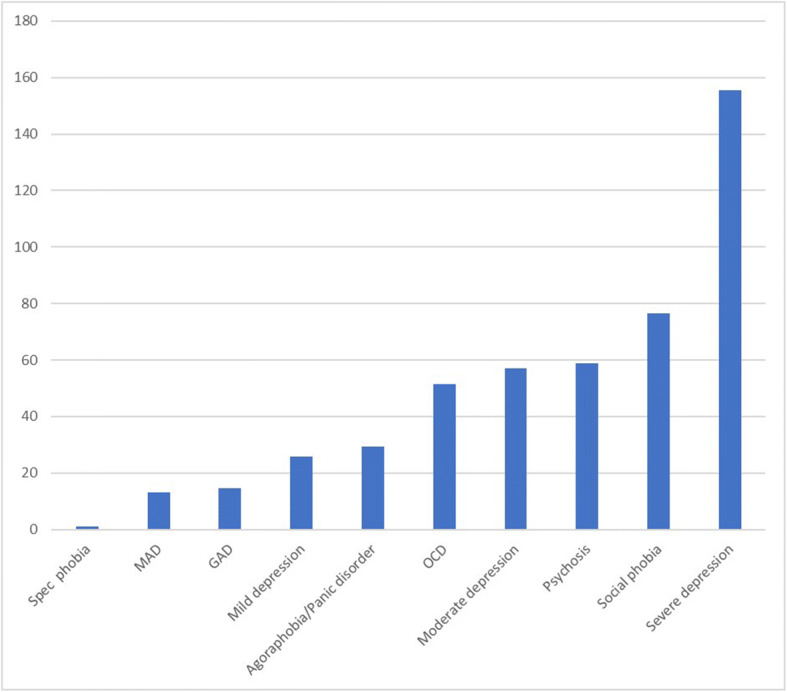
Post Traumatic Stress Disorder (PTSD) is a condition which causes great sufferance to the individuals affected. The occurrence of comorbidities in PTSD is a frequent event with a negative impact on outcome. This study investigated the frequency of PTSD in relation to comorbidities by analyzing the results of the 2007 'Adult Psychiatric Morbidity Survey' in the English population, which included data on comorbidities. A population study conducted in the United Kingdom, this survey investigated the frequency of PTSD in the community and the relationship to comorbidities by adopting a random design to minimize selection bias, stratified by region and socioeconomic characteristics, and weighted according to design and non-response. The survey interviewed 7403 adults living in private households. Socio-demographic characteristics and psychiatric morbidity were systematically assessed. Results indicated that PTSD prevalence was 2.9%, with an excess in women (3.3%) compared to men (2.4%) as reported by the 2007 survey. Comorbidity was a very frequent occurrence in PTSD reaching 78.5% in affected cases. Major depression was the commonest condition and its frequency increased with symptoms severity up to 54%. Among anxiety disorders, social phobia was the most frequent, followed by generalized anxiety disorder, obsessive-compulsive disorder, agoraphobia and panic disorder. Substance use disorders were also common. The presence of psychotic symptoms was particularly significant with over 30% prevalence in PTSD. These results indicate that attention needs to be devoted to the presence of comorbidities. In view of the impact of comorbidities on PTSD severity, chronicity and functional impairment, early detection and treatment are likely to improve outcome.
Overview
The claims and statistics of this paper haven’t been checked yet.
Run the check — free, no account needed. It reads the open-access text and checks the sources it cites.
Integrity signals
Registry
Cites
Statistics
Figures
Verification
Claims the paper makes
The claims and statistics of this paper haven’t been checked yet.
Run the check — free, no account needed. It reads the open-access text and checks the sources it cites.
Self-check
Percentages, sums and reported differences re-computed from the paper’s own numbers.
The self-check needs the paper’s full text.
Citations
Cites
Diagnostic and Statistical Manual of Mental Disorders
American Psychiatric Association (2013) · doi:10.1176/appi.books.9780890425596 · Cited by 116,369
Diagnostic and Statistical Manual of Mental Disorders
Williams, J. B. W., & First, M. B. (2013) · Oxford University Press eBooks · doi:10.1093/acrefore/9780199975839.013.104 · Cited by 109,845
von Elm, E., Altman, D. G., Egger, M., Pocock, S. J., Gøtzsche, P. C., Vandenbroucke, J. P., & Initiative, F. T. S. (2007) · PLoS Medicine · doi:10.1371/journal.pmed.0040296 · Cited by 23,020
von Elm, E., Altman, D. G., Egger, M., Pocock, S. J., Gøtzsche, P. C., Vandenbroucke, J. P., & Initiative, F. T. S. (2007) · Annals of Internal Medicine · doi:10.7326/0003-4819-147-8-200710160-00010 · Cited by 17,796
SAUNDERS, J. B., AASLAND, O. G., BABOR, T. F., DE LA FUENTE, J. R., & GRANT, M. (1993) · Addiction · doi:10.1111/j.1360-0443.1993.tb02093.x · Cited by 13,597 · cited 2×
“If any event occurred from the age of 16 onwards, PTSD experiences were explored by using the Trauma Screening Questionnaire (TSQ) [26].”
MethodKessler, R. C., Chiu, W. T., Demler, O., & Walters, E. E. (2005) · Archives of General Psychiatry · doi:10.1001/archpsyc.62.6.617 · Cited by 12,052 · cited 1×
“The co-occurrence of psychiatric morbidity is significant in PTSD [1–5] with concerning estimates for major depression reaching 48% of PTSD cases [6], often coexisting with suicidal ideation [7], the frequent presence of symptoms of generalized anxiety disorder [8] and of alcohol dependence with increased levels of ag…”
BackgroundElm, E. V., Altman, D. G., Egger, M., Pocock, S. J., Gøtzsche, P. C., & Vandenbroucke, J. P. (2007) · BMJ · doi:10.1136/bmj.39335.541782.ad · Cited by 10,766
Posttraumatic Stress Disorder in the National Comorbidity Survey
Kessler, R. C. (1995) · Archives of General Psychiatry · doi:10.1001/archpsyc.1995.03950240066012 · Cited by 10,379 · cited 4×
“This is relevant because differences in PTSD prevalence shown globally [1, 16] might also reflect on comorbidities [17].”
BackgroundResultInfluentialLewis, G., Pelosi, A. J., Araya, R., & Dunn, G. (1992) · Psychological Medicine · doi:10.1017/s0033291700030415 · Cited by 1,487 · cited 1×
“Furthermore, the sample was stratified by region and socioeconomic characteristics and weighted for survey design and non-response [22].”
MethodPosttraumatic stress disorder in the world mental health surveys
Koenen, K. C., Ratanatharathorn, A., Ng, L., McLaughlin, K. A., Bromet, E. J., Stein, D. J., Karam, E. G., Meron Ruscio, A., Benjet, C., Scott, K., et al. (2017) · Psychological Medicine · doi:10.1017/s0033291717000708 · Cited by 1,453 · cited 1×
“This is relevant because differences in PTSD prevalence shown globally [1, 16] might also reflect on comorbidities [17].”
BackgroundResilience to loss and potential trauma
Bonanno, G. A., Westphal, M., & Mancini, A. D. (2011) · Annual Review of Clinical Psychology · doi:10.1146/annurev-clinpsy-032210-104526 · Cited by 1,250 · cited 2×
“Algorithms that implement numerical weights for counting repeated items in assessment inventories could help reduce diagnostic overlap [37].”
BackgroundPietrzak, R. H., Goldstein, R. B., Southwick, S. M., & Grant, B. F. (2011) · Journal of Anxiety Disorders · doi:10.1016/j.janxdis.2010.11.010 · Cited by 963
Psychiatric morbidity among adults living in private households, 2000
Singleton, N., Bumpstead, R., O'Brien, M. S., Lee, A., & Meltzer, H. (2003) · International Review of Psychiatry · doi:10.1080/0954026021000045967 · Cited by 896
(2000) · PubMed · Cited by 858
Adult psychiatric morbidity in England, 2007: Results of a household survey
Mcmanus, S., Meltzer, H., Brugha, T., Bebbington, P., & Jenkins, R. (2009) · Unpublished · doi:10.13140/2.1.1563.5205 · Cited by 814
Inflammation in Fear- and Anxiety-Based Disorders: PTSD, GAD, and Beyond
Michopoulos, V., Powers, A., Gillespie, C. F., Ressler, K. J., & Jovanovic, T. (2017) · Neuropsychopharmacology · doi:10.1038/npp.2016.146 · Cited by 786 · cited 1×
“the relationship between immunology and the stress response [44], which might explain the overlap between PTSD and some of the comorbid conditions.”
BackgroundBrief screening instrument for post-traumatic stress disorder
Brewin, C. R., Rose, S., Andrews, B., Green, J., Tata, P., McEvedy, C., Turner, S., & Foa, E. B. (2002) · British Journal of Psychiatry · doi:10.1192/bjp.181.2.158 · Cited by 623 · cited 1×
“The experience of a traumatic events was systematically assessed with the non-patient version of the Structured Clinical Interview for DSM-IV (SCID) [25].”
MethodPsychosis Screening Questionnaire
Bebbington, P., & Nayani, T. (1995) · PsycTESTS Dataset · doi:10.1037/t30040-000 · Cited by 546 · cited 1×
“The Revised Clinical Interview Schedule (CIS-R) [23] was used to establish the presentation of prevalent current mental disorders.”
MethodPosttraumatic Stress Disorder in Adults: Impact, Comorbidity, Risk Factors, and Treatment
Sareen, J. (2014) · The Canadian Journal of Psychiatry · doi:10.1177/070674371405900902 · Cited by 467 · cited 1×
“prolongs illness, service utilisation, and negatively affects functionality [3, 43].”
BackgroundAustralia's Mental Health: An Overview of the General Population Survey
Henderson, S., Andrews, G., & Hall, W. (2000) · Australian & New Zealand Journal of Psychiatry · doi:10.1080/j.1440-1614.2000.00686.x · Cited by 368 · cited 1×
“Furthermore, some of the current literature alludes to the diagnostic boundaries of PTSD not being as specific as it is purported to be [38, 39, 41].”
BackgroundPosttraumatic stress disorder: An empirical evaluation of core assumptions
Rosen, G. M., & Lilienfeld, S. O. (2007) · Clinical Psychology Review · doi:10.1016/j.cpr.2007.12.002 · Cited by 282 · cited 1×
“Other explanations are however possible, including that trauma could trigger PTSD as well schizophrenia and there is evidence that PTSD could be a prodromal manifestation of Schizophrenia [35, 36].”
BackgroundIs life stress more traumatic than traumatic stress?
Gold, S. D., Marx, B. P., Soler-Baillo, J. M., & Sloan, D. M. (2004) · Journal of Anxiety Disorders · doi:10.1016/j.janxdis.2004.06.002 · Cited by 271 · cited 2×
“Another way might be to amend the diagnostic overlap by re-examining the constructs that define PTSD [38].”
BackgroundThe ESEMeD/MHEDEA 2000 investigators, Alonso, J., Angermeyer, M. C., Bernert, S., Bruffaerts, R., Brugha, T. S., Bryson, H., de Girolamo, G., de Graaf, R., Demyttenaere, K., et al. (2004) · Acta Psychiatrica Scandinavica · doi:10.1111/j.1600-0047.2004.00328.x · Cited by 242 · cited 1×
“prolongs illness, service utilisation, and negatively affects functionality [3, 43].”
BackgroundPATTERNS OF LIFETIME PTSD COMORBIDITY: A LATENT CLASS ANALYSIS
Galatzer‐Levy, I. R., Nickerson, A., Litz, B. T., & Marmar, C. R. (2012) · Depression and Anxiety · doi:10.1002/da.22048 · Cited by 228
Andrews, G., Slade, T. N., & Issakidis, C. (2002) · The British Journal of Psychiatry · doi:10.1192/bjp.181.4.306 · Cited by 212 · cited 2×
“This observation would be consistent with some studies that have referred to the fact that the onset of the classic form of trauma as a main diagnostic component is neither sufficient nor necessary for the onset of PTSD [39, 40].”
BackgroundResultThe measurement of alcohol dependence and impaired control in community samples
Stockwell, T. R., Sitharthan, T., McGRATH, D., & Lang, E. (1994) · Addiction · doi:10.1111/j.1360-0443.1994.tb00875.x · Cited by 202 · cited 1×
“The Alcohol Use Disorders Identification Test (AUDIT) [27], the community version of the Severity of Alcohol Dependence Questionnaire (SADQ-C) [28] and the Comprehensive Addiction Severity, based on the Diagnostic Interview Schedule [29] were used to assess and identify alcohol misuse over the preceding 6 months and d…”
MethodImpact of PTSD comorbidity on one-year outcomes in a depression trial
Green, B. L., KRUPNICK, J. L., Chung, J. Y., Siddique, J., Krause, E. D., Revicki, D. A., Frank, L. B., & Miranda, J. M. (2006) · Journal of Clinical Psychology · doi:10.1002/jclp.20279 · Cited by 162
Braga, R. J., Mendlowicz, M. V., Marrocos, R. P., & Figueira, I. L. D. V. (2004) · Journal of Psychiatric Research · doi:10.1016/j.jpsychires.2004.09.003 · Cited by 160 · cited 1×
“The association between PTSD and psychosis is also recognized as contributing to the burden and quality of life of patients with schizophrenia [13] and in some studies is related to negative symptoms [14].”
BackgroundTull, M. T., Jakupcak, M., Paulson, A., & Gratz, K. L. (2007) · Anxiety Stress & Coping · doi:10.1080/10615800701379249 · Cited by 152
Posttraumatic stress disorder : issues and controversies
Rosen, G. M. (2004) · Cited by 144
Cougle, J. R., Resnick, H. S., & Kilpatrick, D. G. (2009) · Depression and Anxiety · doi:10.1002/da.20621 · Cited by 142 · cited 1×
“The co-occurrence of psychiatric morbidity is significant in PTSD [1–5] with concerning estimates for major depression reaching 48% of PTSD cases [6], often coexisting with suicidal ideation [7], the frequent presence of symptoms of generalized anxiety disorder [8] and of alcohol dependence with increased levels of ag…”
BackgroundPrice, M., & van Stolk‐Cooke, K. (2015) · Journal of Affective Disorders · doi:10.1016/j.jad.2015.06.012 · Cited by 139 · cited 1×
“The co-occurrence of psychiatric morbidity is significant in PTSD [1–5] with concerning estimates for major depression reaching 48% of PTSD cases [6], often coexisting with suicidal ideation [7], the frequent presence of symptoms of generalized anxiety disorder [8] and of alcohol dependence with increased levels of ag…”
BackgroundBurri, A. V., & Maercker, A. R. A. (2014) · BMC Research Notes · doi:10.1186/1756-0500-7-407 · Cited by 129 · cited 1×
“This is relevant because differences in PTSD prevalence shown globally [1, 16] might also reflect on comorbidities [17].”
BackgroundBraakman, M. H., Kortmann, F. A. M., & Van Den Brink, W. (2009) · Acta Psychiatrica Scandinavica · doi:10.1111/j.1600-0447.2008.01252.x · Cited by 128 · cited 2×
“The significantly high rates of comorbidity detected may be a reflection of the limitations of the diagnostic criteria used [32].”
BackgroundThe Effects of Alcohol Intoxication on Violent Versus Other Offending
Felson, R. B., & Staff, J. (2010) · Criminal Justice and Behavior · doi:10.1177/0093854810382003 · Cited by 127
The Role of Criterion A2 in the DSM-IV Diagnosis of Posttraumatic Stress Disorder
Karam, E. G., Andrews, G., Bromet, E. J., Petukhova, M. V., Ruscio, A. M., Salamoun, M., Sampson, N. A., Stein, D. J., Alonso, J., Andrade, L. H., et al. (2010) · Biological Psychiatry · doi:10.1016/j.biopsych.2010.04.032 · Cited by 97 · cited 1×
“the definition of trauma may not result in better precision [40, 42].”
BackgroundIssues of validity in the diagnostic interview schedule
Malgady, R. G., Rogler, L. H., & Tryon, W. W. (1992) · Journal of Psychiatric Research · doi:10.1016/0022-3956(92)90016-h · Cited by 85 · cited 1×
“The Alcohol Use Disorders Identification Test (AUDIT) [27], the community version of the Severity of Alcohol Dependence Questionnaire (SADQ-C) [28] and the Comprehensive Addiction Severity, based on the Diagnostic Interview Schedule [29] were used to assess and identify alcohol misuse over the preceding 6 months and d…”
MethodDissociation and posttraumatic stress disorder: a latent profile analysis
Blevins, C. A., Weathers, F. W., & Witte, T. K. (2014) · Journal of Traumatic Stress · doi:10.1002/jts.21933 · Cited by 85 · cited 1×
“For example, thoughts which could be described as persecutory, the occurrence of abnormal multimodal perceptions [33] and the phenomenon of depersonalization/derealisation have been described in PTSD [34, 35].”
BackgroundRojas, S. M., Bujarski, S. J., Babson, K. A., Dutton, C. E., & Feldner, M. T. (2014) · Journal of Anxiety Disorders · doi:10.1016/j.janxdis.2014.02.004 · Cited by 82 · cited 1×
“More accurate information, based on data from local samples, is essential for devising more precise care models and tailored services for more complex forms of PTSD [18].”
BackgroundDistinguishing schizophrenia from posttraumatic stress disorder with psychosis
O’Conghaile, A., & DeLisi, L. E. (2015) · Current Opinion in Psychiatry · doi:10.1097/yco.0000000000000158 · Cited by 68 · cited 1×
“For example, thoughts which could be described as persecutory, the occurrence of abnormal multimodal perceptions [33] and the phenomenon of depersonalization/derealisation have been described in PTSD [34, 35].”
Background(2004) · Wiley eBooks · doi:10.1002/9780470713570 · Cited by 45
Alcohol Dependence and Suicidal Behavior: From Research to Clinical Challenges
Modesto‐Lowe, V., Brooks, D., & Ghani, M. (2006) · Harvard Review of Psychiatry · doi:10.1080/10673220600975089 · Cited by 35
Evaluation of evidence for the psychotic subtyping of post-traumatic stress disorder
Gaudiano, B. A., & Zimmerman, M. A. (2010) · The British Journal of Psychiatry · doi:10.1192/bjp.bp.110.078824 · Cited by 31 · cited 2×
“For example, thoughts which could be described as persecutory, the occurrence of abnormal multimodal perceptions [33] and the phenomenon of depersonalization/derealisation have been described in PTSD [34, 35].”
BackgroundPosttraumatic Stress Disorder and Negative Symptoms of Schizophrenia
Strauss, G. P., Duke, L. A., Ross, S., & Allen, D. N. (2009) · Schizophrenia Bulletin · doi:10.1093/schbul/sbp122 · Cited by 28 · cited 1×
“The association between PTSD and psychosis is also recognized as contributing to the burden and quality of life of patients with schizophrenia [13] and in some studies is related to negative symptoms [14].”
Background
Research works printed but not linked: 4
- Arkowitz H, Lilienfeld, SO. Chichester, West Sussex, UK, 2017: Wiley Blackwell.
- Kish L. Survey sampling. New York: Wiley; 1965.
- First MB, Spitzer RL, Gibbon M, Williams JBW: Structured Clinical Interview for DSM-IV-TR Axis I Disorders, Research Version, Non-patient Edition. (SCID-I/NP) New York: Biometrics Research, 2002 New York State Psychiatric Institute.
- Meltzer H, Gill B, Petticrew M. OPCS Surveys of Psychiatric Morbidity in Great Britain, Bulletin No.1: The prevalence of psychiatric morbidity among adults aged 16–64, living in private households, in Great Britain, 1994 OPCS: London.
Cited by
Sorted by citations
Brewin, C. R., Atwoli, L., Bisson, J. I., Galea, S., Koenen, K. C., & Lewis‐Fernández, R. (2025) · World Psychiatry · doi:10.1002/wps.21269 · Cited by 121
“An analysis of the Adult Psychiatric Morbidity Survey in England reported a prevalence rate for current PTSD of 2.9% 77 , similar to the 2.4% reported for Canada 78 and Italy 79 .”
InfluentialA Public Health Perspective of Post-Traumatic Stress Disorder
Jowf, G. I. A., Ahmed, Z. T., An, N., Reijnders, R. A., Ambrosino, E., Rutten, B. P. F., de Nijs, L., & Eijssen, L. (2022) · International Journal of Environmental Research and Public Health · doi:10.3390/ijerph19116474 · Cited by 93
Brewerton, T. D. (2022) · Journal of Eating Disorders · doi:10.1186/s40337-022-00696-6 · Cited by 76
The potential of ketamine for posttraumatic stress disorder: a review of clinical evidence
Ragnhildstveit, A., Roscoe, J., Bass, L. C., Averill, C. L., Abdallah, C. G., & Averill, L. A. (2023) · Therapeutic Advances in Psychopharmacology · doi:10.1177/20451253231154125 · Cited by 54
Brewerton, T. D., Gavidia, I., Suro, G., & Perlman, M. M. (2023) · Journal of Eating Disorders · doi:10.1186/s40337-023-00773-4 · Cited by 38
Metadata
- Authors
- Qassem, T., Aly-ElGabry, D., Alzarouni, A., Abdel-Aziz, K., & Arnone, D.
- Affiliations
- Ain Shams University (EG)
- University of Nebraska–Lincoln (US)
- King's College London (GB)
- Corresponding author
- Arnone, Danilo
- Venue
- Psychiatric Quarterly
- Published
- 2020-07-23
- Volume
- 92
- Issue
- 1
- Pages
- 321-330
- ISSN
- 0033-2720 (ISSN-L)
- 1573-6709
- PMC
- PMC7904722
- OpenAlex
- W3044333918
- Cited by
- 107
- References
- 45
- Citations by year
- 2026: 21 · 2025: 27 · 2024: 27 · 2023: 18 · 2022: 10 · 2021: 4
- FWCI
- 3.20
- Type
- journal article
- Language
- en
- Open access
- hybrid
- doi.org
- Locations
- Psychiatric Quarterly (publishedVersion, cc-by)
- PubMed Central (publishedVersion, cc-by)
- PubMed (publishedVersion)
- Research Portal (King's College London) (publishedVersion, other-oa)
- Funders
- King's College London
- Topics
- Social Sciences › Psychology › Clinical Psychology › Posttraumatic Stress Disorder Research
- Social Sciences › Psychology › Clinical Psychology › Migration, Health and Trauma
- Health Sciences › Medicine › Clinical Neurology › Traumatic Brain Injury Research
- Keywords
- post-traumatic stress disorder, psychiatric comorbidity, prevalence, major depressive disorder, anxiety disorders, social anxiety disorder, generalized anxiety disorder, obsessive-compulsive disorder, agoraphobia, panic disorder, substance use disorders, psychotic symptoms, sex differences, symptom severity, community mental health, Adult Psychiatric Morbidity Survey
- MeSH terms
- Adolescent, Adult, Anxiety Disorders, Female, Health Surveys, Humans, Male, Middle Aged, Obsessive-Compulsive Disorder, Stress Disorders, Post-Traumatic, Comorbidity, Prevalence, Panic Disorder, Substance-Related Disorders, Young Adult
About these checks
Registry, retraction, Cites and statistics results are computed, not judged, with one exception: a printed reference that no index lists is read once by a model before it counts as a citation error. Claims are extracted by a model and kept only when their quote appears verbatim in the text; each cited source is then checked, with a model’s help, for whether it says what the claim relies on. Those verdicts can be wrong — read the claim’s quote and the cited source before relying on one.
Statistics and arithmetic are recomputed, not judged.
Confidence bands are shown only for fields calibrated on our annotated test set. None is calibrated yet, so no band is shown.
What counts as a claim ›How we measure confidence ›How we check this ›
Are you an author, or do you see a problem with this page? Request a review
