

Software sensors in the monitoring of microalgae cultivations
Open accessThe DOI matches its Crossref record; 159 of the 161 references it cites were found in a registry or an index, and 1 are not checked yet; 22 of the 71 sources its claims cite were checked for support.
Abstract
Review of software sensors, input measurements, and model-driven versus data-driven estimators for microalgae cultivation monitoring.
Verified 2026-11-25 · 1 reference not checked yet
Overview
CoChat Summary
TL;DR
This review surveys software sensors for monitoring microalgae cultivation, covering biochemical targets, model-driven/data-driven/hybrid estimators, and applications grouped by optical, non-optical, combined, or simulated inputs. It concludes that software sensors can estimate otherwise hard-to-measure biological variables in near real time, but microalgae applications remain early-stage and mostly laboratory-scale.
Key findings
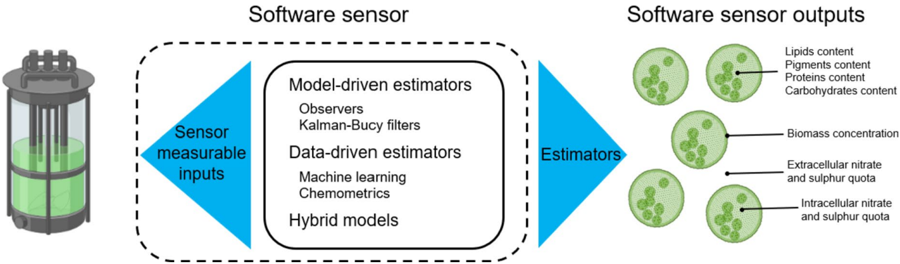
- Software sensors combine hardware sensor inputs with a model to indirectly estimate process variables; main approaches are model-driven (e.g., Luenberger observers, Kalman filters) and data-driven (e.g., ANN, PCA/PLS), with hybrid “grey-box” models also described.
- Optical methods dominate reported microalgae applications, especially fluorescence/2D fluorescence and chemometrics; examples report R² values such as 0.66 for cell concentration, 0.78 for chlorophyll, 0.78 for total fatty acids, 0.81 for saturated fatty acids, and 0.74 for unsaturated fatty acids in *Nannochloropsis oceanica* (Sá et al. 2020a).
- Other reported estimates include *D. salina* cell number R²=0.8 and viability R²=0.9, with orange-phase cell damage R²=0.95 training/0.87 validation (Sá et al. 2017); *T. lutea*/*P. tricornutum* biomass R²=0.96 individually and 0.93 combined, fucoxanthin R²=0.63/0.64 individually and 0.77 combined (Gao et al. 2021); and *C. reinhardtii* cell counts R²=0.99 with GA-ANN vs 0.98 ANN alone (Liu et al. 2020a).
- Non-optical/combined/simulated examples include pH prediction with nonlinear polynomial model RMSE=1.29% and R²=0.975 (Paladino et al. 2022), pH in raceway ponds with fit 71.3% and 73.75% and MSE 0.02 and 0.01 (Otálora et al. 2023), and LASSO image-based density RMSE=1.54 vs 2.16 and 3.68 for other methods (Nguyen et al. 2023).
Methods
- Narrative review; no primary experiments. It first describes microalgal biochemical components of interest (biomass, lipids, pigments, vitamins, proteins, carbohydrates) and their spectroscopic characteristics, then overviews software sensor methodologies and tools.
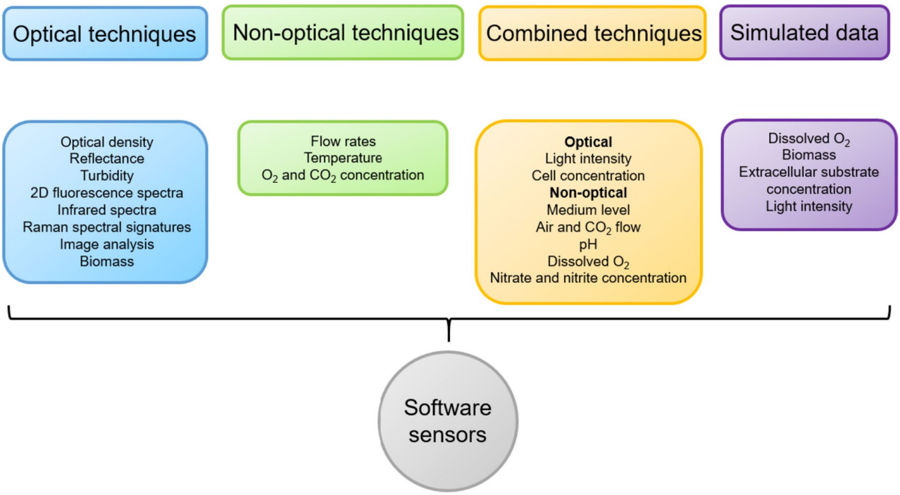
- The literature on software sensors in microalgae cultivation is grouped by measurement method used as sensor input: optical, non-optical, combined optical/non-optical, and simulated data; simulated-data examples are further grouped as model-driven or data-driven estimators. Table 1 summarizes input, sensor type, estimated variables, and references.
- No systematic search strategy, inclusion criteria, or quantitative meta-analysis is reported.
Limitations
- Stated: software sensor application to microalgal processes is in early stages, investigated under laboratory conditions, and relatively few compared with other engineering branches; challenges include variable process lengths, multiple process phases, faults of physical sensors used as inputs, and selection of process outputs/sensors with observability.
- Stated: many biological variables still require sampling and offline/atline analysis; preferred future inputs are noninvasive optical methods, and some reviewed examples use offline calibration or simulated data, limiting demonstrated real-time implementation.
- Evident: as a narrative review, it does not provide a systematic search protocol, risk-of-bias assessment, or meta-analysis; performance numbers are drawn from heterogeneous studies and are not directly comparable.
Model-written summary. Check it against the paper before relying on it.
Integrity signals
Registry
Cites
Statistics
Figures
Verification
Claims the paper makes
19 Valid · 0 Not valid · 33 Not checked · 19 Own results and interpretations
Every source the paper cites for this claim was checked and supports it.
In the paper
“On the other hand, integral proportional observers have demonstrated in multiple applications a higher robustness to system input disturbances compared to high-gain and adaptive observers (Flores et al. 2020).”
What the sources say
- Supportedcites Flores et al. 2020 matched to “A turbidity sensor development based on NL-PI observers: Experimental application to the control of a Sinaloa’s River Spirulina maxima cultivation” (2020) source
Section 2 (Overview) identifies integral proportional observers and says they have diverse applications and are considerably more robust to system input disturbances than the previously cited observers. That discussion previously identifies high-gain and adaptive observers. (LLM, conf=0.93)
boostedstates a cause- Asserted: passes — The authors put it forward as true.
- Checkable: passes — It can be checked against evidence.
- Load-bearing: unclear — It is unclear whether the paper’s conclusions depend on it.
- Based: passes — The paper gives a reason why it holds.
- Supported
The sources with a verdict support this claim; the rest weren’t checked yet, have no full text we could read, or their verdicts aren’t rated yet.
In the paper
“The Luenberger observer and high gain observers have also been applied to microalgae cultivation (Benavides et al. 2015; Flores et al. 2020).”
What the sources say
- Not checked — no full text of the sourcecites Benavides et al. 2015 matched to “Robust Luenberger observers for microalgal cultures” (2015) source
- Supportedcites Flores et al. 2020 matched to “A turbidity sensor development based on NL-PI observers: Experimental application to the control of a Sinaloa’s River Spirulina maxima cultivation” (2020) source
Flores et al. supports the high-gain-observer part of the sentence: Section 5.2 describes using a robust high-gain observer in microalgae-growth experiments. The cited sentence also names Benavides et al. for the Luenberger-observer part; this verdict does not assess that separate source. (LLM, conf=0.92)
plain- Asserted: passes — The authors put it forward as true.
- Checkable: passes — It can be checked against evidence.
- Load-bearing: unclear — It is unclear whether the paper’s conclusions depend on it.
- Based: passes — The paper gives a reason why it holds.
Every source the paper cites for this claim was checked and supports it.
In the paper
“Essentially, this technique allows the estimation of process variables without the requirement of a process model (Noll and Henkel 2020).”
What the sources say
- Supportedcites Noll and Henkel 2020 matched to “History and Evolution of Modeling in Biotechnology: Modeling & Simulation, Application and Hardware Performance” (2020) source
The “Neural networks” section says ANNs were used to predict process variables independently of a process model, using historical cultivation data. This directly supports the attributed claim. (LLM, conf=0.94)
plainstates a cause- Asserted: passes — The authors put it forward as true.
- Checkable: passes — It can be checked against evidence.
- Load-bearing: unclear — It is unclear whether the paper’s conclusions depend on it.
- Based: passes — The paper gives a reason why it holds.
- Supported
Every source the paper cites for this claim was checked and supports it.
In the paper
“Biomass measurement is not only important for its association with valuable compounds but also for estimating culture metabolic state variables (e.g., specific growth rate) necessary in fedbatch strategies (Wechselberger et al. 2013).”
What the sources say
- Supportedcites Wechselberger et al. 2013 matched to “Real-time estimation of biomass and specific growth rate in physiologically variable recombinant fed-batch processes” (2013) source
The Introduction (Motivation) states that biomass concentration is required to calculate variables describing the culture’s metabolic state, including specific growth rate, and places this need in the context of fed-batch feeding strategies. It also links the strategy to product yield and quality. (LLM, conf=0.95)
plainstates an association- Asserted: passes — The authors put it forward as true.
- Checkable: passes — It can be checked against evidence.
- Load-bearing: passes — The paper’s conclusions depend on it.
- Based: passes — The paper gives a reason why it holds.
- Supported
Every source the paper cites for this claim was checked and supports it.
In the paper
“High-gain observers, whose structure does not depend primarily on the input, have demonstrated satisfactory performance in nonlinear systems, especially in systems with biological and environmental processes, when estimating variables and disturbances with uncertainties.”
What the sources say
- Supportedcites Flores et al. 2020 matched to “A turbidity sensor development based on NL-PI observers: Experimental application to the control of a Sinaloa’s River Spirulina maxima cultivation” (2020) source
The Overview (§2; page not supplied) says high-gain observers estimate states and uncertainties in nonlinear systems and have shown excellent performance despite uncertain parameters and disturbances, particularly in biological and environmental processes. (LLM, conf=0.95)
boostedstates an association- Asserted: passes — The authors put it forward as true.
- Checkable: passes — It can be checked against evidence.
- Load-bearing: unclear — It is unclear whether the paper’s conclusions depend on it.
- Based: passes — The paper gives a reason why it holds.
- Supported
23 more claims · 2 with their cited sources checked
Create a free account to see all 71 claims and to verify the 3 references still open.
- It may state two separate claims as one. 20
- Probably not a substantial claim. 29
Claims other papers make about this one
Each is checked against this paper’s own text: does it say what the citing paper says it does?
The source backs part of the claim, not all of it — or backs it for a different population, condition or comparison.
In the citing paper
“This enables real-time process monitoring and allows a rapid response to fluctuations, directly improving cultivation performance [19].”
From Multi-Sensing Monitoring of the Microalgae Biomass Cultivation Systems for Biofuels and Added Value Products Synthesis—Challenges and Opportunities (2025) · cites this paper as [19]
Experimental — accuracy not yet measuredThe source backs part of the claim, not all of it — or backs it for a different population, condition or comparison.
In the citing paper
“For industrial-scale systems, especially for large-scale operations, the use of online monitoring is recommended.”
From Multi-Sensing Monitoring of the Microalgae Biomass Cultivation Systems for Biofuels and Added Value Products Synthesis—Challenges and Opportunities (2025) · cites this paper as [19]
Experimental — accuracy not yet measured
Self-check
Percentages, sums and reported differences re-computed from the paper’s own numbers.
Each contradiction between two passages listed here was confirmed by an independent check.
Rated minor: it would not touch a result — a value no result rests on, a p-value that stays on the same side of the significance level, or a conflict that is clerical, resolved elsewhere in the paper, or outside its own findings.
In the paper
§ 4.1.1 UV-VIS spectroscopy · p. 12
“Flores et al. (2020) used a turbidity sensor that allowed them to estimate biomass and substrate (glucose) after using a high-gain, robust nonlinear observer in mixotrophic cultures with the cyanobacterium A. platensis .”
§ References · p. 22
“A turbidity sensor development based on NL-PI observers: experimental application to the control of a Sinaloa's River Spirulina maxima cultivation.”
Cited works that were retracted
Works this paper cites that were later retracted, from the retraction notices publishers deposit. Major when the notice came out before this paper was published.
A note, not an issue: for example, a cited work that was retracted only after this paper was published, which its authors could not have known.
In the paper
“…compounds (e.g., pigments, lipids, carbohydrates, proteins, and vitamins) (Jacob-Lopes et al. 2020), as food sources (e.g., Chlorella sp. and Arthrospira sp.) or in environmental applications, e.g., wastewater treatment (Martínez-Roldán and Cañizares-Villanueva 2020; Tan et al. 2020).”
Cited work 10.1080/21655979.2020.1711626 · retracted 2026-01-19 · notice 10.1080/21655979.2026.2614863 · this paper published 2024-01-10
Citations
Cites
1 retracted
Tan, J. S., Lee, S. Y., Chew, K. W., Lam, M. K., Lim, J. W., Ho, S.-H., & Show, P. L. (2020) · Bioengineered · doi:10.1080/21655979.2020.1711626 · Cited by 524 · cited 2×
“…compounds (e.g., pigments, lipids, carbohydrates, proteins, and vitamins) (Jacob-Lopes et al. 2020), as food sources (e.g., Chlorella sp. and Arthrospira sp.) or in environmental applications, e.g., wastewater treatment (Martínez-Roldán and Cañizares-Villanueva 2020; Tan et al. 2020).”
RetractedA New Approach to Linear Filtering and Prediction Problems
Kalman, R. E. (1960) · Journal of Basic Engineering · doi:10.1115/1.3662552 · Cited by 31,751 · cited 1×
“The Kalman filter, originally developed in the 1960s, is a model-driven estimator used to improve the reliability of estimated data and noise filtering (Kalman 1960; Kalman and Bucy 1961; Noll and Henkel 2020).”
The FAIR Guiding Principles for scientific data management and stewardship
Wilkinson, M. D., Dumontier, M., Aalbersberg, I. J., Appleton, G., Axton, M., Baak, A., Blomberg, N., Boiten, J.-W., da Silva Santos, L. B., Bourne, P. E., et al. (2016) · Scientific Data · doi:10.1038/sdata.2016.18 · Cited by 18,423 · cited 1×
“In this respect, the FAIR concept (Findable, Acces-sible, Interoperable, Reusable) for archiving suitably structured scholarly data on (bio)processes in order to facilitate data access by data mining and learning tools should be mentioned (Wilkinson et al. 2016).”
Approximation by superpositions of a sigmoidal function
Cybenko, G. (1989) · Mathematics of Control, Signals, and Systems · doi:10.1007/bf02551274 · Cited by 13,883
PLS-regression: a basic tool of chemometrics
Wold, S., Sjöström, M., & Eriksson, L. (2001) · Chemometrics and Intelligent Laboratory Systems · doi:10.1016/s0169-7439(01)00155-1 · Cited by 10,084 · cited 2×
“PLS regression is a quantitative method using a linear multivariate algorithm, that relates and models two data matrices, X and Y (Wold et al. 2001).”
New Results in Linear Filtering and Prediction Theory
Kalman, R. E., & Bucy, R. S. (1961) · Journal of Basic Engineering · doi:10.1115/1.3658902 · Cited by 6,387 · cited 1×
“The Kalman filter, originally developed in the 1960s, is a model-driven estimator used to improve the reliability of estimated data and noise filtering (Kalman 1960; Kalman and Bucy 1961; Noll and Henkel 2020).”
What is principal component analysis?
Ringnér, M. (2008) · Nature Biotechnology · doi:10.1038/nbt0308-303 · Cited by 2,407 · cited 2×
“A brief explanation of PCA and PLS, two commonly used chemometric tools, is given below: The PCA is a mathematical algorithm that reduces the dimensionality of the data while retaining most of the variation in the data set (Ringnér 2008).”
Micro-algae as a source of protein
Becker, E. W. (2007) · Biotechnology Advances · doi:10.1016/j.biotechadv.2006.11.002 · Cited by 2,311 · cited 2×
“Carbohydrates comprise between 12 and 64% of microalgal biomass (Becker 2007; Markou et al. 2012).”
Data-driven Soft Sensors in the process industry
Kadlec, P., Gabrys, B., & Strandt, S. (2009) · Computers & Chemical Engineering · doi:10.1016/j.compchemeng.2008.12.012 · Cited by 1,845 · cited 1×
“Vol.: (0123456789) In general, the development of software sensors can be carried out using two different types of methodologies: model-driven estimators and data-driven estimators, which are terms generally accepted in the literature (Kadlec et al. 2009; Luttmann et al. 2012).”
A simple observer for nonlinear systems applications to bioreactors
Gauthier, J. P., Hammouri, H., & Othman, S. (1992) · IEEE Transactions on Automatic Control · doi:10.1109/9.256352 · Cited by 1,801 · cited 1×
“Several types of observers are described in the literature, including the integral proportional observer, adaptive observer, interval observer, high gain observer, and asymptotic observer (AO) (Gauthier et al. 1992; Ploix et al. 1997; Noll and Henkel 2020; Flores et al. 2020).”
Observers for multivariable systems
Luenberger, D. (1966) · IEEE Transactions on Automatic Control · doi:10.1109/tac.1966.1098323 · Cited by 1,763 · cited 1×
“The simplest observer described is the Luenberger observer (Luenberger 1966).”
Lin, S. (2005) · Journal of Phycology · doi:10.1111/j.1529-8817.2005.00114.x · Cited by 1,332
(2005) · Choice Reviews Online · doi:10.5860/choice.43-0925 · Cited by 1,290
Microalgae as a raw material for biofuels production
Gouveia, L., & Oliveira, A. C. (2009) · Journal of Industrial Microbiology & Biotechnology · doi:10.1007/s10295-008-0495-6 · Cited by 1,284 · cited 2×
“…by a mixture of C16 and C18 saturated and unsaturated fatty acids, as well as long-chain (C20-C22) polyunsaturated fatty acids (PUFAS), e.g., eicosapentaenoic acid (EPA), doco-sahexaenoic acid (DHA), and docosapentaeonoic acid (DPA) (Gouveia and Oliveira 2009; Barkia et al. 2019; Yang et al. 2020).”
Williams, P. J. L. B., & Laurens, L. M. L. (2010) · Energy & Environmental Science · doi:10.1039/b924978h · Cited by 1,223
Microalgal production — A close look at the economics
Norsker, N.-H., Barbosa, M. J., Vermuë, M. H., & Wijffels, R. H. (2011) · Biotechnology Advances · doi:10.1016/j.biotechadv.2010.08.005 · Cited by 819 · cited 1×
“Moreover, industrial processes using microalgae require the biomass as a variable for the estimation of process productivity (e.g., g DW/L, ton DW/ha), yields, and economics, e.g., €/kg DW (Norsker et al. 2011).”
Carotenoids: biochemistry, pharmacology and treatment
Milani, A., Basirnejad, M., Shahbazi, S., & Bolhassani, A. (2017) · British Journal of Pharmacology · doi:10.1111/bph.13625 · Cited by 781 · cited 1×
“…different types of carotenoids on human health (e.g., cardiovascular protection, prevention of liver fibrosis, prevention against different types of cancer) can be widely consulted in the literature (Park et al. 2010; Yoshida et al. 2010; Milani et al. 2017; Langi et al. 2018; Barkia et al. 2019).”
Constraints to Commercialization of Algal Fuels
Chisti, Y. (2013) · Journal of Biotechnology · doi:10.1016/j.jbiotec.2013.07.020 · Cited by 719 · cited 1×
“However, this application has encountered several limitations in its step toward commercialization (Chisti 2013).”
Microalgae for High-Value Products Towards Human Health and Nutrition
Barkia, I., Saari, N., & Manning, S. R. (2019) · Marine Drugs · doi:10.3390/md17050304 · Cited by 719 · cited 9×
“…by a mixture of C16 and C18 saturated and unsaturated fatty acids, as well as long-chain (C20-C22) polyunsaturated fatty acids (PUFAS), e.g., eicosapentaenoic acid (EPA), doco-sahexaenoic acid (DHA), and docosapentaeonoic acid (DPA) (Gouveia and Oliveira 2009; Barkia et al. 2019; Yang et al. 2020).”
Influential(2013) · doi:10.1007/978-94-007-5479-9 · Cited by 670
Trends in Microalgae Incorporation Into Innovative Food Products With Potential Health Benefits
Caporgno, M. P., & Mathys, A. (2018) · Frontiers in Nutrition · doi:10.3389/fnut.2018.00058 · Cited by 639 · cited 1×
“Microalgal biomass is known to be a rich source of lipids, pigments, vitamins, amino acids, proteins, carbohydrates, e.g., poly-saccharides and oligosaccharides, and essential minerals (Caporgno and Mathys 2018; Jacob-Lopes et al. 2020).”
Astaxanthin decreased oxidative stress and inflammation and enhanced immune response in humans
Park, J. S., Chyun, J. H., Kim, Y. K., Line, L. L., & Chew, B. P. (2010) · Nutrition & Metabolism · doi:10.1186/1743-7075-7-18 · Cited by 569 · cited 1×
“…different types of carotenoids on human health (e.g., cardiovascular protection, prevention of liver fibrosis, prevention against different types of cancer) can be widely consulted in the literature (Park et al. 2010; Yoshida et al. 2010; Milani et al. 2017; Langi et al. 2018; Barkia et al. 2019).”
Advanced Fluorescence Microscopy Techniques—FRAP, FLIP, FLAP, FRET and FLIM
Ishikawa-Ankerhold, H. C., Ankerhold, R., & Drummen, G. P. C. (2012) · Molecules · doi:10.3390/molecules17044047 · Cited by 557 · cited 1×
“…(fluorescence lifetime), followed by a return to a basal state in which the excess energy is dissipated through the emission of photons, i.e., energy whose wavelength is larger than that which generated the excited state, due to energy loss by, e.g., vibration (Ishikawa-Ankerhold et al. 2012).”
Markou, G., Angelidaki, I., & Georgakakis, D. (2012) · Applied Microbiology and Biotechnology · doi:10.1007/s00253-012-4398-0 · Cited by 549 · cited 1×
“Carbohydrates comprise between 12 and 64% of microalgal biomass (Becker 2007; Markou et al. 2012).”
Lang, I., Hodac, L., Friedl, T., & Feussner, I. (2011) · BMC Plant Biology · doi:10.1186/1471-2229-11-124 · Cited by 498 · cited 1×
“An extensive study of the long-chain fatty acid profile (C14-C24) in 2076 microalgae strains that investigate cyanobacteria and different phyla and classes of eukaryotic algae has been reported (Lang et al. 2011).”
(2016) · doi:10.1007/978-3-319-24945-2 · Cited by 487
Computer-Aided Chemical Engineering
(2007) · Computer Aided Chemical Engineering · doi:10.1016/s1570-7946(13)70001-4 · Cited by 452
Partial Least Squares Methods: Partial Least Squares Correlation and Partial Least Square Regression
Abdi, H., & Williams, L. J. (2013) · Methods in Molecular Biology · doi:10.1007/978-1-62703-059-5_23 · Cited by 448 · cited 1×
“The PLS model not only captures the maximum variances linked to the predictor (e.g., spectroscopic data) and prediction (e.g., concentration data), but also ensures the maximum correlation between them (Abdi and Williams 2013).”
Algae: anatomy, biochemistry, and biotechnology
(2006) · Choice Reviews Online · doi:10.5860/choice.44-0924 · Cited by 441
Fluorescence Correlation Spectroscopy: Past, Present, Future
Elson, E. L. (2011) · Biophysical Journal · doi:10.1016/j.bpj.2011.11.012 · Cited by 438 · cited 1×
“…due to the differences between excitation and emission wave-lengths, selectivity due to the ability to recognize specific fluorophores within a mixture with non-fluorescent molecules, and its applicability to living organisms in a non-invasive and non-destructive way (Elson 2011; Sá et al. 2020a).”
Microalgae, old sustainable food and fashion nutraceuticals
García, J. L., de Vicente, M., & Galán, B. (2017) · Microbial Biotechnology · doi:10.1111/1751-7915.12800 · Cited by 422 · cited 3×
“Currently, the U.S. (García et al. 2017; Diaz et al. 2023).”
Fabris, M., Abbriano, R. M., Pernice, M., Sutherland, D. L., Commault, A. S., Hall, C. C., Labeeuw, L., McCauley, J. I., Kuzhiuparambil, U., Ray, P., et al. (2020) · Frontiers in Plant Science · doi:10.3389/fpls.2020.00279 · Cited by 382 · cited 3×
“…lipid products not for biofuels but products with higher added value within the pharmaceutical and food sectors due to their beneficial properties for human health, e.g., PUFAs, phytosterols, food supplements and infant formulas (Barkia et al. 2019; Fabris et al. 2020; Fernandes and Cordeiro 2021).”
Biomass from microalgae: the potential of domestication towards sustainable biofactories
Benedetti, M., Vecchi, V., Barera, S., & Dall’Osto, L. (2018) · Microbial Cell Factories · doi:10.1186/s12934-018-1019-3 · Cited by 362 · cited 1×
“Unlike plants, microalgae have higher photosynthetic rates, do not require land used for agriculture, consume less water for growth, grow fast and are meta-bolically more flexible (Benedetti et al. 2018; Vecchi et al. 2020).”
Perera, Y. S., Ratnaweera, D. A. A. C., Dasanayaka, C. H., & Abeykoon, C. (2023) · Engineering Applications of Artificial Intelligence · doi:10.1016/j.engappai.2023.105988 · Cited by 286 · cited 1×
“Application of software sensors to microalgal processes is now in the early stages and is being investigated under laboratory conditions, and applications are, up to this day, relatively few compared to the number of applications in other engineering branches (Perera et al. 2023).”
Masojídek, J., Torzillo, G., & Koblížek, M. (2013) · Handbook of Microalgal Culture · doi:10.1002/9781118567166.ch2 · Cited by 275 · cited 1×
“Photosynthesis implies an attractive process for the development of biotechnological processes: there is an inexhaustible supply of energy (light) with which CO 2 capture, production of different biomolecules and biomass are performed (Masojídek et al. 2013).”
Microalgal lipids: A review of lipids potential and quantification for 95 phytoplankton species
Morales, M., Aflalo, C., & Bernard, O. (2021) · Biomass and Bioenergy · doi:10.1016/j.biombioe.2021.106108 · Cited by 273 · cited 1×
“Environmental conditions and growth conditions (e.g., pH, light intensity, nutrient limitation, and oxidative stress) are other factors that shape the lipid profile in microalgae (Andersen 2013; Borowit-zka et al. 2016; Bi and He 2020; Morales et al. 2021).”
Yoshida, H., Yanai, H., Ito, K., Tomono, Y., Koikeda, T., Tsukahara, H., & Tada, N. (2010) · Atherosclerosis · doi:10.1016/j.atherosclerosis.2009.10.012 · Cited by 269 · cited 1×
“…different types of carotenoids on human health (e.g., cardiovascular protection, prevention of liver fibrosis, prevention against different types of cancer) can be widely consulted in the literature (Park et al. 2010; Yoshida et al. 2010; Milani et al. 2017; Langi et al. 2018; Barkia et al. 2019).”
Introduction to the Algae: Structure and Reproduction
Schmid, R., Bold, H. C., & Wynne, M. J. (1985) · Taxon · doi:10.2307/1221247 · Cited by 259
Chlorophyll Modifications and Their Spectral Extension in Oxygenic Photosynthesis
Chen, M. (2014) · Annual Review of Biochemistry · doi:10.1146/annurev-biochem-072711-162943 · Cited by 255 · cited 4×
“…absorption maxima (λ max) are found; the short wavelength absorption band, i.e., the Soret band (in vitro and in vivo ∼ 400–470 nm) and the long wave-length absorption band, i.e., the Q y band (in vitro ∼ 620–710 nm and in vivo ∼ 640–710 nm) (Papageor-giou and Govindjee 2004; Chen 2014).”
InfluentialMicroalgae-Derived Pigments: A 10-Year Bibliometric Review and Industry and Market Trend Analysis
Silva, S. C., Ferreira, I. C. F. R., Dias, M. M., & Barreiro, M. F. (2020) · Molecules · doi:10.3390/molecules25153406 · Cited by 248 · cited 7×
“Carotenoids are lipid-soluble accessory pigments made up of isoprene units whose coloration mainly spans the visible light spectrum between yellow and red, i.e., 400–600 nm (Langi et al. 2018; Silva et al. 2020).”
InfluentialSoft sensors development for on-line bioreactor state estimation
de Assis, A. J., & Filho, R. M. (2000) · Computers & Chemical Engineering · doi:10.1016/s0098-1354(00)00489-0 · Cited by 246 · cited 2×
“ANNs are used to provide approximations to nonlinear systems (de Assis and Filho 2000).”
Soft sensors in bioprocessing: A status report and recommendations
Luttmann, R., Bracewell, D. G., Cornelissen, G., Gernaey, K. V., Glassey, J., Hass, V. C., Kaiser, C., Preusse, C., Striedner, G., & Mandenius, C. (2012) · Biotechnology Journal · doi:10.1002/biot.201100506 · Cited by 238 · cited 6×
“…issued by the European Federation of Biotechnology, which identified critical needs and issues for the successful development of soft sensor methods in bioprocess research and industry and concluded with a set of eight recommendations highlighting areas requiring development (Luttmann et al. 2012).”
InfluentialPhycobiliproteins: Structural aspects, functional characteristics, and biotechnological perspectives
Dagnino-Leone, J., Figueroa, C. P., Castañeda, M. L., Youlton, A. D., Vallejos-Almirall, A., Agurto-Muñoz, A., Pavón Pérez, J., & Agurto-Muñoz, C. (2022) · Computational and Structural Biotechnology Journal · doi:10.1016/j.csbj.2022.02.016 · Cited by 234
Roche, J. L., van der Staay, G. W. M., Partensky, F., Ducret, A., Aebersold, R., Li, R., Golden, S. S., Hiller, R. G., Wrench, P. M., Larkum, A. W. D., et al. (1996) · Proceedings of the National Academy of Sciences · doi:10.1073/pnas.93.26.15244 · Cited by 232 · cited 1×
“An interesting exception within the cyanobacteria is the group of prochlorophytes, i.e., Prochloron , Prochlorothrix , and Prochlorococcus , which, in addition to Chl a, contains Chl b and lacks phycobiliproteins (Roche et al. 1996).”
Sensor systems for bioprocess monitoring
Biechele, P., Busse, C., Solle, D., Scheper, T., & Reardon, K. (2015) · Engineering in Life Sciences · doi:10.1002/elsc.201500014 · Cited by 224 · cited 5×
“Chemometrics, a concept initially introduced by Svante Wolf in 1971, is the method of extracting information from chemical systems by data-driven methods (Sarker and Nahar 2015; Biechele et al. 2015).”
InfluentialChallenging microalgal vitamins for human health
Del Mondo, A., Smerilli, A., Sané, E., Sansone, C., & Brunet, C. (2020) · Microbial Cell Factories · doi:10.1186/s12934-020-01459-1 · Cited by 220 · cited 2×
“More details on the production of different types of vitamins by some microalgae genera can be found elsewhere (Del Mondo et al. 2020).”
On‐line prediction of fermentation variables using neural networks
Thibault, J., Van Breusegem, V., & Chéruy, A. (1990) · Biotechnology and Bioengineering · doi:10.1002/bit.260361009 · Cited by 220 · cited 1×
“Further theoretical principles behind ANN were described in the 1950s; however, its application in the context of bioprocesses became relevant in the early 1990s (Thibault et al. 1990).”
On-line monitoring equipment for wastewater treatment processes: state of the art
Vanrolleghem, P. A., & Lee, D. S. (2003) · Water Science and Technology · doi:10.2166/wst.2003.0074 · Cited by 217 · cited 1×
“The third group includes issues partially specific to micro-algae cultivation due to the properties of microalgae cells (e.g., biofilm formation) as well as questions of sensor cleaning that occur in other bioprocesses (Vanrolleghem and Lee 2003).”
Spirulina platensis, a super food?
Jung, F., Krüger-Genge, A., Waldeck, P., & Küpper, J.-H. (2019) · Journal of Cellular Biotechnology · doi:10.3233/jcb-189012 · Cited by 216 · cited 1×
“For example, in A. platensis (formerly Spirulina platensis ) (http:// www. algae base. org/) the presence of vitamins B 1 , B 2 , B 3 , B 6 , B 9 , B 12 , vitamin C, vitamin D and vitamin E has been reported (Jung et al. 2019).”
Richardson, J. W., Johnson, M. D., Zhang, X., Zemke, P., Chen, W., & Hu, Q. (2014) · Algal Research · doi:10.1016/j.algal.2013.12.003 · Cited by 216 · cited 1×
“…biomass, both in open and closed systems, limit the economic success of the sector; however, scenarios that integrate biofuel production processes with "next generation cultivation systems and processes" could favor the profitability of this activity (Richardson et al. 2014; Bi and He 2020).”
Microalgae Lipid Characterization
Yao, L., Gerde, J. A., Lee, S.-L., Wang, T., & Harrata, K. A. (2015) · Journal of Agricultural and Food Chemistry · doi:10.1021/jf5050603 · Cited by 213 · cited 1×
“Other studies on lipid characterization employing different microalgae can be found elsewhere (Yao et al. 2015; Shen et al. 2016).”
Carotenoids: From Plants to Food and Feed Industries
Langi, P., Kiokias, S., Varzakas, T., & Proestos, C. (2018) · Methods in Molecular Biology · doi:10.1007/978-1-4939-8742-9_3 · Cited by 205 · cited 4×
“This feature confers a relative hydrophilic character to xanthophylls (Langi et al. 2018).”
InfluentialDeveloping algae as a sustainable food source
Diaz, C. J., Douglas, K. J., Kang, K., Kolarik, A. L., Malinovski, R., Torres-Tiji, Y., Molino, J. V., Badary, A., & Mayfield, S. P. (2023) · Frontiers in Nutrition · doi:10.3389/fnut.2022.1029841 · Cited by 194 · cited 2×
“Covalently attached to their polypeptide structure through cysteine residues, chromophore molecules called phycobilins are found (Kovaleski Vol.: (0123456789) et al. 2022).”
Machine learning for biochemical engineering: A review
Mowbray, M., Savage, T., Wu, C., Song, Z., Cho, B. A., Del Rio-Chanona, E. A., & Zhang, D. (2021) · Biochemical Engineering Journal · doi:10.1016/j.bej.2021.108054 · Cited by 188 · cited 6×
“The model achieves this reduction by identifying directions or uncorrelated variables, i.e., latent variables, called principal components, in which the variation of the data is maximal (Ringnér 2008; Mowbray et al. 2021).”
InfluentialClaßen, J., Aupert, F., Reardon, K. F., Solle, D., & Scheper, T. (2017) · Analytical and Bioanalytical Chemistry · doi:10.1007/s00216-016-0068-x · Cited by 176 · cited 4×
“Measurements are performed at defined time intervals, and a time gap occurs between the time of sampling and sample analysis (Claßen et al. 2017).”
InfluentialBorowitzka, M. A., & Moheimani, N. R. (2013) · Algae for Biofuels and Energy · doi:10.1007/978-94-007-5479-9_8 · Cited by 167
Mairet, F., Bernard, O., Masci, P., Lacour, T., & Sciandra, A. (2011) · Bioresource Technology · doi:10.1016/j.biortech.2010.06.138 · Cited by 160 · cited 1×
“In both cases, the nitrate (NO 3− ) and nitrite (NO 2− ) concentrations were measured with a Technicon Auto-analyzer coupled to an automated data acquisition system and the biomass (cell/mL) with an optical particle counter using the principle of light blockage (Mairet et al. 2011).”
Potential and Challenges of Improving Photosynthesis in Algae
Vecchi, V., Barera, S., Bassi, R., & Dall’Osto, L. (2020) · Plants · doi:10.3390/plants9010067 · Cited by 157 · cited 1×
“Unlike plants, microalgae have higher photosynthetic rates, do not require land used for agriculture, consume less water for growth, grow fast and are meta-bolically more flexible (Benedetti et al. 2018; Vecchi et al. 2020).”
Photobioreactors for Mass Production of Microalgae
Zittelli, G. C., Biondi, N., Rodolfi, L., & Tredici, M. R. (2013) · Handbook of Microalgal Culture · doi:10.1002/9781118567166.ch13 · Cited by 155 · cited 1×
“The description of these systems is not the subject of this article; however, available scientific literature can be reviewed elsewhere (Borowitzka and Moheimani 2013; Zittelli et al. 2013; Tan et al. 2020; Chanquia et al. 2021).”
Riboflavin, niacin, folate and vitamin B12 in commercial microalgae powders
Edelmann, M., Aalto, S., Chamlagain, B., Kariluoto, S., & Piironen, V. (2019) · Journal of Food Composition and Analysis · doi:10.1016/j.jfca.2019.05.009 · Cited by 152 · cited 1×
“C. vulgaris constitutes another source of multiple vitamins, e.g., B 2 , B 3 , B 9 , and B 12 (Edelmann et al. 2019).”
Photobioreactors for cultivation and synthesis: Specifications, challenges, and perspectives
Chanquia, S. N., Vernet, G., & Kara, S. (2022) · Engineering in Life Sciences · doi:10.1002/elsc.202100070 · Cited by 148 · cited 1×
“The description of these systems is not the subject of this article; however, available scientific literature can be reviewed elsewhere (Borowitzka and Moheimani 2013; Zittelli et al. 2013; Tan et al. 2020; Chanquia et al. 2021).”
Nutraceuticals From Algae and Cyanobacteria
Udayan, A., Arumugam, M., & Pandey, A. (2017) · Algal Green Chemistry · doi:10.1016/b978-0-444-63784-0.00004-7 · Cited by 143
Bioprocess Control: Current Progress and Future Perspectives
Rathore, A. S., Mishra, S., Nikita, S., & Priyanka, P. (2021) · Life · doi:10.3390/life11060557 · Cited by 141 · cited 2×
“Partially created in Biorender.com mechanistic model, support vector regression (SVR) together with random forest regression (RFR), both data-driven approaches, among others (Rathore et al. 2021; Havlik et al. 2022).”
Between the Poles of Data‐Driven and Mechanistic Modeling for Process Operation
Solle, D., Hitzmann, B., Herwig, C., Pereira Remelhe, M., Ulonska, S., Wuerth, L., Prata, A., & Steckenreiter, T. (2017) · Chemie Ingenieur Technik · doi:10.1002/cite.201600175 · Cited by 134 · cited 5×
“…representations (e.g., artificial neural network(ANN)) and chemometric tools (e.g., principal component analysis (PCA), partial least squares (PLS), and principal component regression(PCR)) in order to obtain values of relevant process variables obtained from the data (Solle et al. 2017).”
InfluentialOn-Line Monitoring of Large Cultivations of Microalgae and Cyanobacteria
Havlik, I., Lindner, P., Scheper, T., & Reardon, K. F. (2013) · Trends in Biotechnology · doi:10.1016/j.tibtech.2013.04.005 · Cited by 131 · cited 3×
“Online monitoring of cell count and cell morphology that could be used for online estimation of cultivation productivity was carried out by using the in situ microscope (Havlik et al. 2013b; Marba-Arde-bol et al. 2019).”
Self-citationBarsanti, L., & Gualtieri, P. (2014) · CRC Press eBooks · doi:10.1201/b16544 · Cited by 131
Modern Sensor Tools and Techniques for Monitoring, Controlling, and Improving Cell Culture Processes
Reyes, S. J., Durocher, Y., Pham, P. L., & Henry, O. (2022) · Processes · doi:10.3390/pr10020189 · Cited by 130
Fluorescence Spectroscopy and Chemometric Modeling for Bioprocess Monitoring
Faassen, S., & Hitzmann, B. (2015) · Sensors · doi:10.3390/s150510271 · Cited by 120 · cited 3×
“In biotechnology, fluorescence measurements are commonly used for the detection of biological molecules such as proteins, amino acids (e.g., tryptophan, tyrosine, and phenylalanine), vitamins, and cofactors, e.g., FAD and NADH (Faassen and Hitzmann 2015).”
Microalgae classification based on machine learning techniques
Otálora, P., Guzmán, J. L., Acién, F. G., Berenguel, M., & Reul, A. (2021) · Algal Research · doi:10.1016/j.algal.2021.102256 · Cited by 110 · cited 1×
“Some works in these directions are listed below: In (Otálora et al. 2021), two neural network-based models were developed and validated capable of distinguishing two microalgae species, C.vulgaris and S.almeriensis , in a mixed sample and calculating the proportion of each species in the sample.”
Santos-Ballardo, D. U., Rossi, S., Hernández, V., Gómez, R. V., del Carmen Rendón-Unceta, M., Caro-Corrales, J., & Valdez-Ortiz, A. (2015) · Aquaculture · doi:10.1016/j.aquaculture.2015.05.044 · Cited by 105 · cited 1×
“In a short study, four different wavelengths comprised in a range between 677 and 688 nm (within the maximum chlorophyll absorption), using four different microalgae species, were employed for the purpose of correlating absorbance and cell concentration (Santos-Ballardo et al. 2015).”
Cyanobacterial phycobilisomes and phycobiliproteins
Stadnichuk, I. N., Krasilnikov, P. M., & Zlenko, D. V. (2015) · Microbiology · doi:10.1134/s0026261715020150 · Cited by 105 · cited 1×
“A classification of the phyco-biliproteins includes three main groups: allophycocy-anin, phycocyanins, and phycoerythrins (Stadnichuk et al. 2015).”
Wechselberger, P., Sagmeister, P., & Herwig, C. (2013) · Bioprocess and Biosystems Engineering · doi:10.1007/s00449-012-0848-4 · Cited by 102 · cited 3×
“…this approach, a prior knowledge of the sys-tem/process is essential to describe the variables of interest; nevertheless, detailed knowledge of the process mechanisms is not always available, or its use becomes challenging due to the intrinsic complexity of living cells (Wechselberger et al. 2013).”
InfluentialGouda, M., Tadda, M. A., Zhao, Y., Farmanullah, F., Chu, B., Li, X., & He, Y. (2022) · Frontiers in Nutrition · doi:10.3389/fnut.2022.806692 · Cited by 100 · cited 2×
“Glycogen and paramylon constitute other storage polysaccharides present in microalgae (Gouda et al. 2022).”
Challenges in the Development of Soft Sensors for Bioprocesses: A Critical Review
Brunner, V., Siegl, M., Geier, D., & Becker, T. (2021) · Frontiers in Bioengineering and Biotechnology · doi:10.3389/fbioe.2021.722202 · Cited by 100 · cited 3×
“Hence, a software sensor implies an indirect measurement of the desired variable (Brunner et al. 2021).”
Novel chlorophylls and new directions in photosynthesis research
Li, Y., & Chen, M. (2015) · Functional Plant Biology · doi:10.1071/fp14350 · Cited by 96 · cited 1×
“( 1234567890) from oxygenic photosynthetic organisms (Li and Chen 2015).”
Fernandes, T., & Cordeiro, N. (2021) · Marine Drugs · doi:10.3390/md19100573 · Cited by 95 · cited 1×
“…lipid products not for biofuels but products with higher added value within the pharmaceutical and food sectors due to their beneficial properties for human health, e.g., PUFAs, phytosterols, food supplements and infant formulas (Barkia et al. 2019; Fabris et al. 2020; Fernandes and Cordeiro 2021).”
Microalgae: A Promising Source of Bioactive Phycobiliproteins
Tounsi, L., Hlima, H. B., Hentati, F., Hentati, O., Derbel, H., Michaud, P., & Abdelkafi, S. (2023) · Marine Drugs · doi:10.3390/md21080440 · Cited by 92 · cited 1×
“Other applications related to the use of these molecules are related to protein markers, cell sorting, and phycobiliprotein-derived conjugates that take advantage of their properties as fluorescent probes (Tounsi et al. 2023).”
Chlorophyll c Pigments: Current Status
Zapata, M., Garrido, J. L., & Jeffrey, S. W. (2007) · Springer eBooks · doi:10.1007/1-4020-4516-6_3 · Cited by 88 · cited 1×
“It should be noted that different types of Chl c, present in golden-brown eukaryotic algae but absent in plants, present an additional λ max at ∼ 580 nm under in vitro conditions (Zapata et al. 2006).”
On-line soft sensing in upstream bioprocessing
Randek, J., & Mandenius, C.-F. (2018) · Critical Reviews in Biotechnology · doi:10.1080/07388551.2017.1312271 · Cited by 86 · cited 3×
“These estimators use mass and energy balance models as well as kinetic models (Randek and Mandenius 2018).”
Mini‐review: soft sensors as means for PAT in the manufacture of bio‐therapeutics
Mandenius, C., & Gustavsson, R. (2015) · Journal of Chemical Technology & Biotechnology · doi:10.1002/jctb.4477 · Cited by 84 · cited 1×
“A drawback of these models may be the difficulty in understanding and validating the parameters (Mandenius and Gustavsson 2015).”
Machine learning for microalgae detection and utilization
Ning, H., Li, R., & Zhou, T. (2022) · Frontiers in Marine Science · doi:10.3389/fmars.2022.947394 · Cited by 83 · cited 2×
“A typical ANN is composed of three layers of interconnected nodes: an inner layer, a hidden layer, and an outer layer (Ning et al. 2022).”
Phycobiliproteins: Structure, functions and biotechnological applications
Stadnichuk, I. N., & Tropin, I. V. (2017) · Applied Biochemistry and Microbiology · doi:10.1134/s0003683817010185 · Cited by 77 · cited 1×
“Considering that the range of fluorescence spectra of phycobilipro-teins is between 585 and 665 nm (Stadnichuk and Tropin 2017), selective online monitoring of different types of phycobiliproteins, e.g., phycocyanin or phy-coerythrin, in microalgae cultivation systems poses interesting challenges.”
Extraction and purification of phycobiliproteins from algae and their applications
Kovaleski, G., Kholany, M., Dias, L. M. S., Correia, S. F. H., Ferreira, R. A. S., Coutinho, J. A. P., & Ventura, S. P. M. (2022) · Frontiers in Chemistry · doi:10.3389/fchem.2022.1065355 · Cited by 75 · cited 3×
“Based primarily on structural features and their absorption spectra, phycobiliproteins are divided into four groups: phycoerythrin (λmax = 490–570 nm), phyco-cyanin (λmax = 610–620 nm), phycoerythrocya-nin (λmax = 560–600 nm), and allophycocyanin (λmax = 650–655 nm) (Kovaleski et al. 2022).”
Microalgae biomass and biomolecule quantification: Optical techniques, challenges and prospects
Thiviyanathan, V. A., Ker, P. J., Tang, S. G. H., Amin, E. P. P., Yee, W., Hannan, M. A., Jamaludin, M. Z., Nghiem, L. D., & Mahlia, T. M. I. (2023) · Renewable and Sustainable Energy Reviews · doi:10.1016/j.rser.2023.113926 · Cited by 75 · cited 1×
“These methods can monitor biomass, microorganism stress and lipid and pigment accumulation (Podevin et al. 2018; Liu et al. 2020b; Solovchenko 2023; Thiviyanathan et al. 2024).”
On-Line Monitoring of Biological Parameters in Microalgal Bioprocesses Using Optical Methods
Havlik, I., Beutel, S., Scheper, T., & Reardon, K. F. (2022) · Energies · doi:10.3390/en15030875 · Cited by 73 · cited 5×
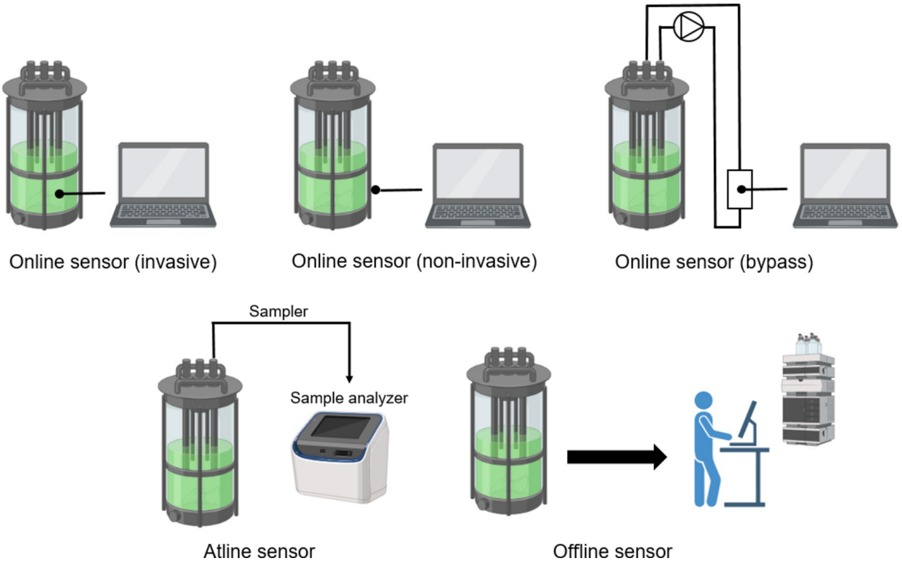
“There are different terms related to process monitoring that are based on the way the sampling is done and the location of the sensor within the process (Havlik et al. 2022).”
InfluentialSelf-citationTimira, V., Meki, K., Li, Z., Lin, H., Xu, M., & Pramod, S. N. (2022) · Critical Reviews in Food Science and Nutrition · doi:10.1080/10408398.2021.1873734 · Cited by 65 · cited 1×
“Other species such as D. salina , H. pluvialis , Nanno‑ chloropsis sp., A. platensis and A. maxima show protein amounts of 49–57%, 29–45%, 50–55%, 46–63%, and 60–71% on a dry cell basis, respectively (Timira et al. 2022).”
Ferro, L., Gojkovic, Z., Gorzsás, A., & Funk, C. (2019) · Molecules · doi:10.3390/molecules24183237 · Cited by 65 · cited 1×
“The analysis with OPLS presented the best results compared to the other two methods for the prediction of proteins, lipids and carbohydrates (Ferro et al. 2019).”
Partial Least Square (PLS) Analysis: Most Favorite Tool in Chemometrics to Build a Calibration Model
Kumar, K. (2021) · Resonance · doi:10.1007/s12045-021-1140-1 · Cited by 62 · cited 1×
“Therefore, it is used when the goal of the analysis is to predict a set of variables (denoted Y) from a set of predictors (called X) (Kumar 2021).”
Andersen, R. A. (2013) · Handbook of Microalgal Culture · doi:10.1002/9781118567166.ch1 · Cited by 62 · cited 2×
“Environmental conditions and growth conditions (e.g., pH, light intensity, nutrient limitation, and oxidative stress) are other factors that shape the lipid profile in microalgae (Andersen 2013; Borowit-zka et al. 2016; Bi and He 2020; Morales et al. 2021).”
Monoalgal and mixed algal cultures discrimination by using an artificial neural network
Franco, B. M., Navas, L. M., Gómez, C., Sepúlveda, C., & Acién, F. G. (2019) · Algal Research · doi:10.1016/j.algal.2019.101419 · Cited by 61 · cited 2×
“…cultivation has been reported for the estimation of cell counts, contamination in monoalgal cultures, or biomass concentration using fluorescence spectra, multispectral absorption, and reflectance through offline monitoring (López Expósito et al. 2017; Franco et al. 2019; Liu et al. 2020a).”
Noll, P., & Henkel, M. (2020) · Computational and Structural Biotechnology Journal · doi:10.1016/j.csbj.2020.10.018 · Cited by 60 · cited 4×
“Essentially, this technique allows the estimation of process variables without the requirement of a process model (Noll and Henkel 2020).”
InfluentialLi, X., Liao, R., Zhou, J., Leung, P. T. Y., Yan, M., & Ma, H. (2017) · Applied Optics · doi:10.1364/ao.56.006520 · Cited by 59 · cited 1×
“In (Li et al. 2017), morphologically similar algae were classified by several types of convolutional neural networks (CNN) trained on a dataset of Mueller matrices containing the shapes of eight species of microalgae and one species of cyanobacteria.”
Recent application of spectroscopy for the detection of microalgae life information: A review
Liu, J.-Y., Zeng, L.-H., & Ren, Z.-H. (2020) · Applied Spectroscopy Reviews · doi:10.1080/05704928.2018.1509345 · Cited by 59 · cited 2×
“Here, preferred are optical methods that can be constructed as noninvasive, e.g., spectroscopy as Raman, terahertz, FTIR, fluorescence, further derivative spectroscopy, color measurement and hyperspectral imaging (Méléder et al. 2013; Podevin et al. 2018; Liu et al. 2020b; Havlik et al. 2022).”
A Low-Cost Automated Digital Microscopy Platform for Automatic Identification of Diatoms
Salido, J., Sánchez, C., Ruiz-Santaquiteria, J., Cristóbal, G., Blanco, S., & Bueno, G. (2020) · Applied Sciences · doi:10.3390/app10176033 · Cited by 59 · cited 1×
“In (Salido et al. 2020), diatoms serving as a bioindicator of water quality were detected and classified by using an automated sys-tem consisting of a microcomputer-controlled optical microscope scanning the manually fed slides and a PC processing the acquired images.”
Identification of Characteristic Fatty Acids to Quantify Triacylglycerols in Microalgae
Shen, P.-L., Wang, H.-T., Pan, Y.-F., Meng, Y.-Y., Wu, P.-C., & Xue, S. (2016) · Frontiers in Plant Science · doi:10.3389/fpls.2016.00162 · Cited by 58 · cited 1×
“Other studies on lipid characterization employing different microalgae can be found elsewhere (Yao et al. 2015; Shen et al. 2016).”
Monitoring of microalgal cultivations with on-line, flow-through microscopy
Havlik, I., Reardon, K. F., Ünal, M., Lindner, P., Prediger, A., Babitzky, A., Beutel, S., & Scheper, T. (2013) · Algal Research · doi:10.1016/j.algal.2013.04.001 · Cited by 56 · cited 3×
“Online monitoring of cell count and cell morphology that could be used for online estimation of cultivation productivity was carried out by using the in situ microscope (Havlik et al. 2013b; Marba-Arde-bol et al. 2019).”
Self-citationLiu, J.-Y., Zeng, L.-H., Ren, Z.-H., Du, T.-M., & Liu, X. (2020) · Algal Research · doi:10.1016/j.algal.2019.101739 · Cited by 55 · cited 4×
“…cultivation has been reported for the estimation of cell counts, contamination in monoalgal cultures, or biomass concentration using fluorescence spectra, multispectral absorption, and reflectance through offline monitoring (López Expósito et al. 2017; Franco et al. 2019; Liu et al. 2020a).”
InfluentialTotal Lipids Content, Lipid Class and Fatty Acid Composition of Ten Species of Microalgae
Yang, Y., Du, L., Hosokawa, M., & Miyashita, K. (2020) · Journal of Oleo Science · doi:10.5650/jos.ess20140 · Cited by 54 · cited 1×
“…by a mixture of C16 and C18 saturated and unsaturated fatty acids, as well as long-chain (C20-C22) polyunsaturated fatty acids (PUFAS), e.g., eicosapentaenoic acid (EPA), doco-sahexaenoic acid (DHA), and docosapentaeonoic acid (DPA) (Gouveia and Oliveira 2009; Barkia et al. 2019; Yang et al. 2020).”
The Use of UV-Vis Spectroscopy in Bioprocess and Fermentation Monitoring
Roberts, J., Power, A., Chapman, J., Chandra, S., & Cozzolino, D. (2018) · Fermentation · doi:10.3390/fermentation4010018 · Cited by 53 · cited 1×
“In biotechnology, UV–VIS spectroscopy uses the interaction of ultraviolet and visible light, i.e., wave-lengths from 200 to 780 nm, with molecules in a biological sample to gather information from them (Roberts et al. 2018).”
A two-stage solar photobioreactor for cultivation of microalgae based on solar concentrators
Masojídek, J., Sergejevová, M., Rottnerová, K., Jirka, V., Korečko, J., Kopecký, J., Zaťková, I., Torzillo, G., & Štys, D. (2008) · Journal of Applied Phycology · doi:10.1007/s10811-008-9324-6 · Cited by 53 · cited 1×
“…parameters to be monitored in microalgae cultures are particularly distinctive (e.g., light monitoring given the autotrophic capacity of microalgae (Masojídek et al. 2009), the monitoring of intracellular products, or the presence of contaminants, e.g., rotifers or undesirable algae strains (Deore…”
Front-Face Fluorescence of Honey of Different Botanic Origin: A Case Study from Tuscany (Italy)
Parri, E., Santinami, G., & Domenici, V. (2020) · Applied Sciences · doi:10.3390/app10051776 · Cited by 50 · cited 1×
“Vitamin B 6 , B 2 and B 9 , in aqueous solution, exhibit a fluorescence region at λex/λem = 330/380–390 nm, λex/ λem = 445/520 nm, and λex/λem = 330/450 nm, respectively (Parri et al. 2020).”
Production and monitoring of biomass and fucoxanthin with brown microalgae under outdoor conditions
Gao, F., Sá, M., Teles (Cabanelas, I., Wijffels, R. H., & Barbosa, M. J. (2021) · Biotechnology and Bioengineering · doi:10.1002/bit.27657 · Cited by 47 · cited 1×
“On the other hand, the individual models in the validation of the estimation of the fucoxanthin content showed an R 2 = 0.63 ( T. lutea ) and 0.64 ( P. tricornutum ), while the results of both showed an R 2 = 0.77 (Gao et al. 2021).”
InfluentialSensors and Techniques for On-Line Determination of Cell Viability in Bioprocess Monitoring
Rösner, L., Walter, F., Ude, C., John, G., & Beutel, S. (2022) · Bioengineering · doi:10.3390/bioengineering9120762 · Cited by 42 · cited 4×
“Offline measurements are laborious, not immediate, require qualified manpower, and are prone to an increased risk of contamination (Claßen et al. 2017; Noll and Henkel 2020; Rösner et al. 2022).”
InfluentialSelf-citationChemically-Mediated Interactions in Microalgae
Borowitzka, M. A. (2016) · Springer eBooks · doi:10.1007/978-3-319-24945-2_15 · Cited by 41
Continuous ‐ discrete interval observers for monitoring microalgae cultures
Goffaux, G., Vande Wouwer, A., & Bernard, O. (2009) · Biotechnology Progress · doi:10.1002/btpr.167 · Cited by 39 · cited 1×
“Examples of interval observers applied to micro-algae cultivation can be found in literature (Goffaux et al. 2009; Mairet et al. 2014a).”
Applications of High Performance Liquid Chromatography in the Analysis of Herbal Products
Sarker, S. D., & Nahar, L. (2015) · Evidence-Based Validation of Herbal Medicine · doi:10.1016/b978-0-12-800874-4.00019-2 · Cited by 39 · cited 1×
“Chemometrics, a concept initially introduced by Svante Wolf in 1971, is the method of extracting information from chemical systems by data-driven methods (Sarker and Nahar 2015; Biechele et al. 2015).”
Accurate Classification of Algae Using Deep Convolutional Neural Network with a Small Database
Xu, L., Xu, L., Chen, Y., Zhang, Y. T., & Yang, J. (2022) · ACS ES&T Water · doi:10.1021/acsestwater.1c00466 · Cited by 38 · cited 1×
“…of ANN have been described in biological and engineering applications, e.g., feed-forward neural network, convolutional neural network (CNN), recurrent neural network (RNN), and deep neural network (DNN), among others (Bei-roti et al. 2019; Mowbray et al. 2021; Ning et al. 2022; Xu et al. 2022).”
Sarpal, A. S., Teixeira, C. M. L. L., Silva, P. R. M., Lima, G. M., Silva, S. R., Monteiro, T. V., Cunha, V. S., & Daroda, R. J. (2015) · Analytical and Bioanalytical Chemistry · doi:10.1007/s00216-015-8613-6 · Cited by 37 · cited 1×
“In general, the lipid profile of micro-algae consists of neutral lipids (or non-polar lipids) such as triacylglycerols (TGA), free fatty acids (FFA) and carotenoids, i.e., lipidic pigments, and polar lipids mainly represented by glycolipids and phospholipids (Sarpal et al. 2015).”
Suparmi, S., Fasitasari, M., Martosupono, M., & Mangimbulude, J. C. (2016) · Journal of Toxicology · doi:10.1155/2016/8515089 · Cited by 36 · cited 1×
“In vivo evaluations of plant-derived chlorophyll extracts have demonstrated their protective capacity as antioxidants (Suparmi et al. 2016).”
Méléder, V., Laviale, M., Jesus, B., Mouget, J., Lavaud, J., Kazemipour, F., Launeau, P., & Barillé, L. (2013) · Journal of Photochemistry and Photobiology B Biology · doi:10.1016/j.jphotobiol.2013.10.005 · Cited by 36 · cited 1×
“Here, preferred are optical methods that can be constructed as noninvasive, e.g., spectroscopy as Raman, terahertz, FTIR, fluorescence, further derivative spectroscopy, color measurement and hyperspectral imaging (Méléder et al. 2013; Podevin et al. 2018; Liu et al. 2020b; Havlik et al. 2022).”
Podevin, M., Fotidis, I. A., & Angelidaki, I. (2018) · Critical Reviews in Biotechnology · doi:10.1080/07388551.2017.1398132 · Cited by 34
Industrial Internet of Things as a Challenge for Higher Education
Turcu, C. O., & Elena, C. (2018) · International Journal of Advanced Computer Science and Applications · doi:10.14569/ijacsa.2018.091108 · Cited by 34
Seeing good and bad: Optical sensing of microalgal culture condition
Solovchenko, A. (2023) · Algal Research · doi:10.1016/j.algal.2023.103071 · Cited by 33 · cited 1×
“These methods can monitor biomass, microorganism stress and lipid and pigment accumulation (Podevin et al. 2018; Liu et al. 2020b; Solovchenko 2023; Thiviyanathan et al. 2024).”
Lieutaud, C., Assaf, A., Gonçalves, O., Wielgosz‐Collin, G., & Thouand, G. (2019) · Algal Research · doi:10.1016/j.algal.2019.101595 · Cited by 33 · cited 1×
“Raman spectrometry is employed for the estimation of the physiological state of C. reinhardtii cultures grown in batch mode using an airlift photobioreactor (Lieutaud et al. 2019).”
Simutis, R., Havlik, I., & Lübbert, A. (1992) · Journal of Biotechnology · doi:10.1016/0168-1656(92)90033-6 · Cited by 32 · cited 1×
“Essentially, this model is a combination of the model-driven and data-driven approaches (Simutis et al. 1992; Noll and Hen-kel 2020).”
Self-citationCanelli, G., Abiusi, F., García, A. V., Canziani, S., & Mathys, A. (2023) · Innovative Food Science & Emerging Technologies · doi:10.1016/j.ifset.2023.103287 · Cited by 32 · cited 1×
“A recent work shows a protein content of 51% and 64% (w/w) in two Galdieria sulphuraria extremophile strains (Canelli et al. 2023).”
You, Y., Cheng, S., Zhang, L., Zhu, Y., Zhang, C., & Xian, Y. (2020) · Analytical Chemistry · doi:10.1021/acs.analchem.9b05468 · Cited by 32 · cited 1×
“Recent applications employ the fluorescent properties of phycoerythrin and phycocy-anin to sense different analytes as part of nanoprobes or complexed with other molecules like DNA (You et al. 2020; Ghosh et al. 2020).”
García-Mañas, F., Guzmán, J. L., Berenguel, M., & Acién, F. G. (2019) · Algal Research · doi:10.1016/j.algal.2018.11.009 · Cited by 29 · cited 2×
“In this research, the experimental measurements of dissolved oxygen, pH, gas injection (air flow and CO 2 flow), and solar radiation were used as state estimator inputs (García-Mañas et al. 2019).”
Probing heavy metal binding to phycobiliproteins
Bellamy‐Carter, J., Sound, J. K., & Leney, A. C. (2022) · FEBS Journal · doi:10.1111/febs.16396 · Cited by 29
Yoo, S. J., Jeong, D. H., Kim, J. H., & Lee, J. M. (2016) · Bioprocess and Biosystems Engineering · doi:10.1007/s00449-016-1602-0 · Cited by 28 · cited 1×
“It was pointed out that significant improvements in biomass and lipid productivity were achieved when MPC calculation was applied, however, inaccuracies as “lag phase” were observed due to the introduction of large amounts of inputs (Yoo et al. 2016).”
Sá, M., Monte, J., Brazinha, C., Galinha, C. F., & Crespo, J. G. (2017) · Algal Research · doi:10.1016/j.algal.2017.04.013 · Cited by 28 · cited 1×
“Also, the model prediction of cell damage for orange D. salina was achieved with an R 2 = 0.95 for training and R 2 = 0.87 for validation (Sá et al. 2017).”
InfluentialOn-line monitoring of marine cyanobacterial cultivation based on phycocyanïn fluorescence
Sode, K., Horikoshi, K., Takeyama, H., Nakamura, N., & Matsunaga, T. (1991) · Journal of Biotechnology · doi:10.1016/0168-1656(91)90042-t · Cited by 27 · cited 1×
“The online monitoring of phycocyanins using fluorescence spectrophotometry in the marine cyano-bacterium Synechoccocus sp. has demonstrated the feasibility of this approach to obtain direct information from cell cultures (Sode et al. 1991).”
A perspective on the current status of approaches for early detection of microalgal grazing
Deore, P., Beardall, J., & Noronha, S. B. (2020) · Journal of Applied Phycology · doi:10.1007/s10811-020-02241-x · Cited by 27 · cited 1×
“…cultures are particularly distinctive (e.g., light monitoring given the autotrophic capacity of microalgae (Masojídek et al. 2009), the monitoring of intracellular products, or the presence of contaminants, e.g., rotifers or undesirable algae strains (Deore et al. 2020; Sauer et al. 2021)).”
Study on Fluorescence Spectra of Thiamine and Riboflavin
Yang, H., Xiao, X., Zhao, X. S., et al. (2016) · MATEC Web of Conferences · doi:10.1051/matecconf/20166303013 · Cited by 26
Cultivation of Green Microalgae in Bubble Column Photobioreactors and an Assay for Neutral Lipids
Wang, Q., Peng, H., & Higgins, B. T. (2019) · Journal of Visualized Experiments · doi:10.3791/59106 · Cited by 26 · cited 1×
“Traditionally, the wavelengths at 750 nm (OD 750 ) and 550 nm (OD 550 ) have been employed for this purpose due to minimal interference with the cellular pigments that are present, e.g., chlorophyll and carotenoids (Borowitzka and Moheimani 2013; Wang et al. 2019).”
Continuous measurements of volatile gases as detection of algae crop health
Sauer, J. S., Simkovsky, R., Moore, A. N., Camarda, L., Sherman, S. L., Prather, K. A., & Pomeroy, R. S. (2021) · Proceedings of the National Academy of Sciences · doi:10.1073/pnas.2106882118 · Cited by 24 · cited 1×
“…cultures are particularly distinctive (e.g., light monitoring given the autotrophic capacity of microalgae (Masojídek et al. 2009), the monitoring of intracellular products, or the presence of contaminants, e.g., rotifers or undesirable algae strains (Deore et al. 2020; Sauer et al. 2021)).”
Sá, M., Bertinetto, C. G., Ferrer-Ledo, N., Jansen, J. J., Wijffels, R., Crespo, J. G., Barbosa, M., & Galinha, C. F. (2020) · Scientific Reports · doi:10.1038/s41598-020-64628-7 · Cited by 21 · cited 4×
“Models for total carotenoids and specific carotenoids showed R 2 values between 0.7 and 0.9 and 0.6 and 0.9 for trained and validated data, respectively (Sá et al. 2020b).”
InfluentialData-Driven pH Model in Raceway Reactors for Freshwater and Wastewater Cultures
Otálora, P., Guzmán, J. L., Berenguel, M., & Acién, F. G. (2023) · Mathematics · doi:10.3390/math11071614 · Cited by 21 · cited 1×
“The pH dynamics over 12 h were estimated using a data-driven approach in two raceway ponds using freshwater and wastewater cultures (Otálora et al. 2023).”
Asgharnejad, H., Sarrafzadeh, M., Abhar-Shegofteh, O., Nazloo, E. K., & Oh, H. (2021) · Algal Research · doi:10.1016/j.algal.2021.102243 · Cited by 20 · cited 1×
“A simple and non-invasive image-based approach using RGB analysis was used to quantitatively estimate the biofilm growth thickness of Ettlia sp. and its 3D topographic features (Asgharnejad et al. 2021).”
Coutinho, D., Vargas, A., Feudjio, C., Benavides, M., & Wouwer, A. V. (2019) · Computers & Chemical Engineering · doi:10.1016/j.compchemeng.2018.07.006 · Cited by 19 · cited 1×
“The internal substrate quota q , required in the Droop model, was predicted using super twisting observers (STO) and an AO in microalgae cultivation (Coutinho et al. 2019).”
Estimation of neutral lipid and carbohydrate quotas in microalgae using adaptive interval observers
Mairet, F., Moisan, M., & Bernard, O. (2014) · Bioprocess and Biosystems Engineering · doi:10.1007/s00449-013-0913-7 · Cited by 17
López Expósito, P., Blanco Suárez, A., & Negro Álvarez, C. (2017) · Journal of Biotechnology · doi:10.1016/j.jbiotec.2016.12.020 · Cited by 17 · cited 3×
“…cultivation has been reported for the estimation of cell counts, contamination in monoalgal cultures, or biomass concentration using fluorescence spectra, multispectral absorption, and reflectance through offline monitoring (López Expósito et al. 2017; Franco et al. 2019; Liu et al. 2020a).”
InfluentialSá, M., Ramos, A., Monte, J., Brazinha, C., Galinha, C. F., & Crespo, J. G. (2020) · Journal of Applied Phycology · doi:10.1007/s10811-019-01999-z · Cited by 16 · cited 2×
“Models for total carotenoids and specific carotenoids showed R 2 values between 0.7 and 0.9 and 0.6 and 0.9 for trained and validated data, respectively (Sá et al. 2020b).”
InfluentialThe Kalman Filter for the Supervision of Cultivation Processes
Yousefi-Darani, A., Paquet-Durand, O., & Hitzmann, B. (2020) · Advances in Biochemical Engineering/Biotechnology · doi:10.1007/10_2020_145 · Cited by 15 · cited 1×
“It is worth mentioning that the different variants of Kalman filters differ in the way the error is calculated (Yousefi-Darani et al. 2021).”
Beiroti, A., Aghasadeghi, M. R., Hosseini, S. N., & Norouzian, D. (2019) · Preparative Biochemistry and Biotechnology · doi:10.1080/10826068.2019.1566153 · Cited by 15
Analysis of Microalgal Density Estimation by Using LASSO and Image Texture Features
Nguyen, L. V., Nguyen, D. K., Nguyen, T. T., Bình, N. T., & Nghiem, T. X. (2023) · Sensors · doi:10.3390/s23052543 · Cited by 15 · cited 1×
“By using the chemometrical approach and employing the least absolute shrinkage and selection operator (LASSO) regression method, (Nguyen et al. 2023) developed a monitoring system with a software-based human–machine interface to effectively monitor the microalgae density (cell/mL).”
Flores, G., Rodriguez-Mata, A. E., Amabilis-Sosa, L. E., Gonzalez-Huitron, V. A., Hernández-González, O., & Lopéz-Peréz, P. A. (2020) · Open Chemistry · doi:10.1515/chem-2020-0119 · Cited by 14 · cited 5×
“The Luenberger observer and high gain observers have also been applied to microalgae cultivation (Benavides et al. 2015; Flores et al. 2020).”
InfluentialYoo, S. J., Jung, D. H., Kim, J. H., & Lee, J. M. (2015) · Bioresource Technology · doi:10.1016/j.biortech.2014.12.029 · Cited by 14 · cited 8×
“The comparison of the applicability of these three algorithms yielded favorable results for the use of UKF and PF compared to EKF (Yoo et al. 2015).”
InfluentialDigitale Zwillinge in der Bioprozesstechnik – Chancen und Möglichkeiten
Richter, J., Lange, F., Scheper, T. H., Solle, D., & Beutel, S. (2022) · Chemie Ingenieur Technik · doi:10.1002/cite.202200166 · Cited by 13 · cited 2×
“An interesting approach is the method of Digital Twins (Richter et al. 2023).”
Self-citationRobust Luenberger observers for microalgal cultures
Benavides, M., Coutinho, D., Hantson, A.-L., Van Impe, J., & Vande Wouwer, A. (2015) · Journal of Process Control · doi:10.1016/j.jprocont.2015.09.005 · Cited by 12 · cited 2×
“The Luenberger observer and high gain observers have also been applied to microalgae cultivation (Benavides et al. 2015; Flores et al. 2020).”
Estimation of Chlamydomonas reinhardtii biomass concentration from chord length distribution data
Lopez-Exposito, P., Suarez, A. B., & Negro, C. (2016) · Journal of Applied Phycology · doi:10.1007/s10811-015-0749-4 · Cited by 11
Mairet, F., Moisan, M., & Bernard, O. (2014) · International Journal of Robust and Nonlinear Control · doi:10.1002/rnc.2934 · Cited by 11 · cited 1×
“The lipid content was estimated using an adaptive interval observer approach in cultures of Isochrysis galbana (Mairet et al. 2014b).”
Ghosh, T., Mondal, A., Vyas, A., & Mishra, S. (2020) · International Journal of Biological Macromolecules · doi:10.1016/j.ijbiomac.2020.06.286 · Cited by 11 · cited 1×
“Recent applications employ the fluorescent properties of phycoerythrin and phycocy-anin to sense different analytes as part of nanoprobes or complexed with other molecules like DNA (You et al. 2020; Ghosh et al. 2020).”
Bi, Z., & He, B. (2020) · Handbook of Microalgae-Based Processes and Products · doi:10.1016/b978-0-12-818536-0.00013-0 · Cited by 11
Farza, M., Rodriguez-Mata, A. E., Magdaleno, J. L. R., & M’Saad, M. (2019) · IFAC-PapersOnLine · doi:10.1016/j.ifacol.2019.06.177 · Cited by 10 · cited 1×
“A study reported the use of a new high-gain observer to predict the microalgae biomass concentration and the dissolved carbon dioxide (Farza et al. 2019).”
Chirivella-Martorell, J., Briz-Redón, Á., & Serrano-Aroca, Á. (2018) · Energies · doi:10.3390/en11051089 · Cited by 8 · cited 1×
“Their results showed consistency between OD measurements regardless of the wavelength used (Pearson coefficient = 0.92–0.97) which suggests that the wavelength selected is not a determining factor (Chirivella-Martorell et al. 2018).”
InfluentialKaya, V., Akgül, İ., & Tanır, Ö. Z. (2023) · Phyton · doi:10.32604/phyton.2023.029811 · Cited by 8 · cited 1×
“In another recent study (Kaya et al. 2023), a sys-tem for the classification of microalgae based on deep learning techniques was designed.”
Paladino, O., Neviani, M., Ciancio, D., & De Francesco, M. (2024) · Biomass Conversion and Biorefinery · doi:10.1007/s13399-022-03634-3 · Cited by 7 · cited 1×
“A recent report (Paladino et al. 2022) indicates the use of data-driven model approaches for pH prediction employing linear polynomial, nonlinear polynomial, and Hammerstein-Wiener models in fed-batch cultures of C. vulgaris grown mixotrophi-cally.”
Wastewater treatment based in microalgae
Martínez–Roldán, A. D. J., & Cañizares–Villanueva, R. O. (2020) · Elsevier eBooks · doi:10.1016/b978-0-12-818536-0.00007-5 · Cited by 7
Cultivation of Green Microalgae in Bubble Column Photobioreactors and an Assay for Neutral Lipids
Wang, Q., Peng, H., & Higgins, B. T. (2019) · Journal of Visualized Experiments · doi:10.3791/59106-v · Cited by 7
Asymptotic Observer for a Non-Linear Descriptor System
Ploix, S., Maquin, D., & Ragot, J. (1997) · IFAC Proceedings Volumes · doi:10.1016/s1474-6670(17)42472-4 · Cited by 6 · cited 1×
“Several types of observers are described in the literature, including the integral proportional observer, adaptive observer, interval observer, high gain observer, and asymptotic observer (AO) (Gauthier et al. 1992; Ploix et al. 1997; Noll and Henkel 2020; Flores et al. 2020).”
In Situ Microscopy for Real-time Determination of Single-cell Morphology in Bioprocesses
Marbà-Ardébol, A. M., Emmerich, J., Muthig, M., Neubauer, P., & Junne, S. (2019) · Journal of Visualized Experiments · doi:10.3791/57823 · Cited by 5
Daboussy, M., Titica, M., & Boillereaux, L. (2014) · The Canadian Journal of Chemical Engineering · doi:10.1002/cjce.22007 · Cited by 4 · cited 2×
“The inputs feeding the observer, i.e., CO 2 and O 2 concentrations, were quantified at the outlet of the system and in an online fashion using a mass spectrometer (Daboussy et al. 2014).”
Freshwater Microalage Image Identification and Classification Based on Machine Learning Technique
Mary, A. V. A., Prabakaran, G., & Mohan, S. (2018) · Asian Journal of Computer Science and Technology · doi:10.51983/ajcst-2018.7.s1.1803 · Cited by 4
A hybrid asymptotic-Kalman observer for estimation of microalgae growth in a closed photobioreactor
Arango, J. P., Titica, M., & Tebbani, S. (2022) · International Conference on Systems and Control (ICSC) · doi:10.1109/icsc57768.2022.9993822 · Cited by 4 · cited 1×
“In an approach with simulated data, the online measurements of dissolved oxygen (inputs) were used to predict the biomass concentration of C. reinhardtii in a closed photobioreactor under autotrophic and continuous cultivation (Arango Restrepo et al. 2022).”
Sulaiman, L., Abidin, Z. H. Z., Yunus, S., Mazni, N. A., Hadi, A. N., Arof, A. K., & Simarani, K. (2019) · Pigment & Resin Technology · doi:10.1108/prt-11-2017-0086 · Cited by 2 · cited 1×
“A more recent work describes the process for stabilizing chlorophyll extracts with Cu(NO 3 ) 2 in paints (Sulaiman et al. 2019).”
In Situ Microscopy for Real-time Determination of Single-cell Morphology in Bioprocesses
Marbà‐Ardébol, A., Emmerich, J., Muthig, M., et al. (2019) · Journal of Visualized Experiments · doi:10.3791/57823-v · Cited by 1
Software sensors design and selection for the production of biodiesel from grease trap wastes
Aguilar-Garnica, E., & García-Sandoval, J. P. (2015) · Computer Aided Chemical Engineering · doi:10.1016/b978-0-444-63577-8.50110-8 · Cited by 1 · cited 1×
“Generally, all software sensors are observers in the broad sense of the word in control theory (Luttmann et al. 2012; Aguilar-Garnica and García-Sandoval 2015).”
Canelli, G., Abiusi, F., Vidal, A. G., et al. (2022) · SSRN Electronic Journal · doi:10.2139/ssrn.4108475
Soft sensor design with state estimator for lipid estimation of microalgal photobioreactor system
Yoo, S. J., Kim, J. H., & Lee, J. M. (2014) · International Conference on Control, Automation and Systems (ICCAS) · doi:10.1109/iccas.2014.6987757
Andersen, R. A. (2005) · Algal Culturing Techniques · doi:10.1016/b978-012088426-1/50001-9
Research works printed but not linked: 5
- Appl C, Moser A, Baganz F, Hass VC (2021) Digital Twins for bioprocess control strategy development and realisation. In: Herwig C, Pörtner R, Möller J (eds) Digital Twins: applications to the design and optimization of bioprocesses. Springer International Publishing, Cham, pp 63-94
- Avagyan A (2018) Algae to energy and sustainable development technologies, resources, economics and system analyses. New design of global environmental policy and live conserve industry. First edition. CreateSpace, p 196
- Gerón A (2019) Hands-On Machine Learning with ScikitLearn, Keras, and TensorFlow. Second edition. O'Reilly Media, Sebastopol
- Jacob-Lopes E, Maroneze MM, Queiroz MI, Zepka LQ (eds) (2020) Handbook of microalgae-based processes and products, First edition. Elsevier Academic Press
- Papageorgiou GC, Govindjee, (eds) (2004) Chlorophyll a fluorescence: a signature of photosynthesis, 1st edn. Springer, Netherlands, Dordrecht
Cited by
Recent advancements in photo-bioreactors for microalgae cultivation: a brief overview
Penloglou, G., Pavlou, A., & Kiparissides, C. (2024) · Processes · doi:10.3390/pr12061104 · Cited by 166
“…trends in lab-scale PBRs may include the integration of advanced sensors and monitoring systems for real-time data collection and process control [80]; the utilization of novel materials and coatings to improve light transmission, heat dissipation and nutrient absorption [81]; the development of…”
BackgroundDębowski, M., Kazimierowicz, J., & Zieliński, M. (2025) · Applied Sciences · doi:10.3390/app15137324 · Cited by 30
Patella, B., Lima, S., Spinoso, A., Moukri, N., Cosenza, A., Aiello, G., Caputo, G., Scargiali, F., & Inguanta, R. (2025) · Sensors and Actuators B Chemical · doi:10.1016/j.snb.2025.137463 · Cited by 16
Jayabal, R. (2025) · Algal Research · doi:10.1016/j.algal.2025.104228 · Cited by 15
Biological contaminants analysis in microalgae culture by UV–vis spectroscopy and machine learning
Paiva, E. M., Hyttinen, E., Dönsberg, T., & Barth, D. (2025) · Spectrochimica Acta Part A Molecular and Biomolecular Spectroscopy · doi:10.1016/j.saa.2024.125690 · Cited by 16
Metadata
- Authors
- Porras Reyes, L., Havlik, I., & Beutel, S.
- Affiliations
- Leibniz University Hannover (DE)
- Corresponding author
- Havlik, Ivo
- Beutel, Sascha
- ORCID
- Beutel, Sascha
- Venue
- Reviews in Environmental Science and Bio/Technology
- Published
- 2024-01-10
- Volume
- 23
- Issue
- 1
- Pages
- 67-92
- ISSN
- 1569-1705 (ISSN-L)
- 1572-9826
- OpenAlex
- W4390699920
- Semantic Scholar
- e86cf769c7439242defb36b4e352a35c1f10c3aa
- Cited by
- 48
- References
- 147
- Citations by year
- 2026: 18 · 2025: 27 · 2024: 3
- FWCI
- 3.21
- Type
- journal article
- Language
- en
- Open access
- hybrid
- doi.org
- Licence
- cc-by
- creativecommons.org/licenses/by/4.0 (tdm)
- creativecommons.org/licenses/by/4.0 (vor)
- Locations
- Reviews in Environmental Science and Bio/Technology (publishedVersion, cc-by)
- PUBLISSO (German National Library of Medicine) (submittedVersion, cc-by)
- Institutional Repository of Leibniz Universität Hannover (Leibniz Universität Hannover) (submittedVersion, cc-by-nc-nd)
- Institutional Repository of Leibniz Universität Hannover (Leibniz Universität Hannover) (submittedVersion, cc-by)
- Leibniz Universität Hannover (cc-by)
- Funders
- H2020 Marie Skłodowska-Curie Actions (955520)
- Gottfried Wilhelm Leibniz Universität Hannover
- Topics
- Physical Sciences › Energy › Renewable Energy, Sustainability and the Environment › Algal biology and biofuel production
- Physical Sciences › Engineering › Control and Systems Engineering › Fault Detection and Control Systems
- Physical Sciences › Engineering › Control and Systems Engineering › Control Systems and Identification
- Keywords
- soft sensors, microalgae cultivation, bioprocess monitoring, real-time process monitoring, data-driven estimation, optical metrology, Industry 4.0, bioprocess automation
About these checks
Registry, retraction, Cites and statistics results are computed, not judged, with one exception: a printed reference that no index lists is read once by a model before it counts as a citation error. Claims are extracted by a model and kept only when their quote appears verbatim in the text; each cited source is then checked, with a model’s help, for whether it says what the claim relies on. Those verdicts can be wrong — read the claim’s quote and the cited source before relying on one.
The claim verdicts this report counts are experimental: their accuracy is not yet measured.
A language model drew the claims from the paper on 2026-10-10, under version 3 of the claim definition (model deepseek-v4.1-flash, prompt extract-v3).
A second model labelled each claim on 2026-10-10 (model jev-1.13-20260917, definition revision gold-guideline-v0.2).
Cited sources are checked with a language model’s help (gpt-6-sol).
Statistics and arithmetic are recomputed, not judged.
Confidence bands are shown only for fields calibrated on our annotated test set. None is calibrated yet, so no band is shown.
What counts as a claim ›How we measure confidence ›How we check this ›
Are you an author, or do you see a problem with this page? Request a review
Data sources
Bibliographic data: Semantic Scholar, OpenAlex, Crossref.
Contains information from the Semantic Scholar Academic Graph Datasets, made available under the ODC Attribution License (ODC-BY 1.0).
Semantic Scholar’s data is described in: Kinney, R., et al. (2023). The Semantic Scholar Open Data Platform. arXiv:2301.10140.
