

The anticipating brain is not a scientist: the free-energy principle from an ecological-enactive perspective
Open accessThe DOI matches its Crossref record; 86 of the 90 references it cites were found in a registry or an index.
Abstract
In this paper, we argue for a theoretical separation of the free-energy principle from Helmholtzian accounts of the predictive brain. The free-energy principle is a theoretical framework capturing the imperative for biological self-organization in information-theoretic terms. The free-energy principle has typically been connected with a Bayesian theory of predictive coding, and the latter is often taken to support a Helmholtzian theory of perception as unconscious inference. If our interpretation is right, however, a Helmholtzian view of perception is incompatible with Bayesian predictive coding under the free-energy principle. We argue that the free energy principle and the ecological and enactive approach to mind and life make for a much happier marriage of ideas. We make our argument based on three points. First we argue that the free energy principle applies to the whole animal-environment system, and not only to the brain. Second, we show that active inference, as understood by the free-energy principle, is incompatible with unconscious inference understood as analagous to scientific hypothesis-testing, the main tenet of a Helmholtzian view of perception. Third, we argue that the notion of inference at work in Bayesian predictive coding under the free-energy principle is too weak to support a Helmholtzian theory of perception. Taken together these points imply that the free energy principle is best understood in ecological and enactive terms set out in this paper.
Overview
The claims and statistics of this paper haven’t been checked yet.
Free: it reads the open-access text and checks the first 5 claims that cite a source we can check. Create a free account to check every claim.
Integrity signals
Registry
Cites
Statistics
Figures
Verification
Claims the paper makes
The claims and statistics of this paper haven’t been checked yet.
Free: it reads the open-access text and checks the first 5 claims that cite a source we can check. Create a free account to check every claim.
Claims other papers make about this one
Each is checked against this paper’s own text: does it say what the citing paper says it does?
The cited source says what the claim attributes to it.
In the citing paper
“Ecological psychology and the FEP have often been framed as competing frameworks for cognitive science (Bruineberg et al., 2022; though for an argument to the contrary, see Bruineberg et al., 2018), given that the former rejects representational notions, and the latter relies on them extensively.”
From A potential mechanism for Gibsonian resonance: behavioral entrainment emerges from local homeostasis in an unsupervised reservoir network (2024) · cites this paper as Bruineberg et al., 2018
Self-check
Percentages, sums and reported differences re-computed from the paper’s own numbers.
The self-check needs the paper’s full text.
Citations
Cites
The Ecological Approach to Visual Perception
Bornstein, M. H., & Gibson, J. J. (1980) · The Journal of Aesthetics and Art Criticism · doi:10.2307/429816 · Cited by 22,935 · cited 1×
“…2000),metastability (Kelso2012; Rabinovich et al. 2008), autopoiesis (Maturana and Varela 1980; but see Kirchhoff (2016)) and ecological psychology (Gibson 1979).5 Not all of this work is theoretically consistent with a Helmholtzian theory of perception, some of it is even explicitly aimed against…”
Background(1988) · Cited by 16,582
The Ecological Approach to Visual Perception: Classic Edition
Gibson, J. J. (2014) · doi:10.4324/9781315740218 · Cited by 12,132
Journal of Consciousness Studies
(2022) · Journal of Consciousness Studies · doi:10.53765/20512201 · Cited by 6,832
Whatever next? Predictive brains, situated agents, and the future of cognitive science
Clark, A. (2013) · Behavioral and Brain Sciences · doi:10.1017/s0140525x12000477 · Cited by 5,924 · cited 10×
“30 The recent literature (Clark 2013) on Helmholtzian interpretations of predictive processing contains a number of commentaries from enactivists that overlap with the arguments of this paper in suggestive ways.”
BackgroundInfluentialAutopoiesis and Cognition: The Realization of the Living
Maturana, H. R., & Varela, F. J. (1980) · Boston Studies in the Philosophy and History of Science · doi:10.1007/978-94-009-8947-4 · Cited by 5,815
The Embodied Mind: Cognitive Science and Human Experience
Varela, F. J., Rosch, E., & Thompson, E. (1991) · doi:10.7551/mitpress/6730.001.0001 · Cited by 5,765
Rao, R. P. N., & Ballard, D. H. (1999) · Nature Neuroscience · doi:10.1038/4580 · Cited by 5,483
Intelligence without representation
Brooks, R. A. (1991) · Artificial Intelligence · doi:10.1016/0004-3702(91)90053-m · Cited by 4,853 · cited 1×
“…the conclusion that, because of the organism’s skills and affordance-related states of action readiness, the organism itself is its own best model of the causal structure of its niche, a paradoxical sounding twist on the familiar embodied theme that “the world is its own best model” (Brooks 1991).”
BackgroundThe brainweb: phase synchronization and large-scale integration
Varela, F., Lachaux, J.-P., Rodriguez, E., & Martinerie, J. (2001) · Nature Reviews Neuroscience · doi:10.1038/35067550 · Cited by 4,761 · cited 1×
“Phenomena like entrainment and synchronization seem to play a crucial role in brain functioning (Varela et al. 2001; Engel et al. 2001).”
Background
Research works printed but not linked: 7
- Dewey, J. (1976). Lectures on psychological and political ethics: 1898. New York: Hafner Press. (Edited with an introduction by D. L. Koch).
- Friston, K. (2011). Embodied inference: Or "I think therefore I am, if I am what I think.". In W. Tschacher & C. Bergomi (Eds.), The implications of embodiment (cognition and communication) (pp. 89-125). Exeter: Imprint Academic.
- Helmholtz, H. (1860/1962). Handbuch der physiologischen optik (Southall, J. P. C. (Ed.), English trans.), Vol. 3. New York: Dover.
- C. Horoloqium Oscilatorium (Apud F. Muquet, Parisiis, 1673); English translation: The pendulum clock (Iowa State University Press, Ames)
- Murphy, K. (2012). Machine learning: A probabilistic approach. Cambridge: MIT Press.
- Port, R. F., & Van Gelder, T. (1995). Mind as motion. Cambridge, MA: MIT Press.
- Newen, L. de Bruin, & S. Gallagher (Eds.), Oxford handbook of cognition: Embodied, enactive, embedded and extended. Oxford: Oxford University Press.
Cited by
Items 101–200 of 383
Laying down a forking path: Incompatibilities between enaction and the free energy principlePreprint
Paolo, E. A. D., Beer, R. D., & Thompson, E. T. (2021) · doi:10.31234/osf.io/d9v8f · Cited by 23
Pragmatism and the predictive mind
Williams, D. (2018) · Phenomenology and the Cognitive Sciences · doi:10.1007/s11097-017-9556-5 · Cited by 22
“As Bruineberg et al. (2016) stress, this makes active inference functionally primary in predictive processing: it is only by acting on the environment to maintain its optimal states that an organism can change its sensory input and thus avoid surprising experiences.”
BackgroundInfluentialEmpirical translation process research: Past and possible future perspectives
Carl, M. (2023) · Translation Cognition & Behavior · doi:10.1075/tcb.00088.car · Cited by 24
Pezzulo, G., D’Amato, L., Mannella, F., Priorelli, M., de Maele, T. V., Stoianov, I. P., & Friston, K. J. (2024) · Annals of the New York Academy of Sciences · doi:10.1111/nyas.15118 · Cited by 32
“14 Adding complexity to the debate is the variance in implicit notions of representation among researchers, each accentuating distinct criteria.”
BackgroundJones, M. (2018) · Synthese · doi:10.1007/s11229-018-01922-y · Cited by 23
Thinking through prior bodies: autonomic uncertainty and interoceptive self-inference
Allen, M., Legrand, N., Corrêa, C. M. C., & Fardo, F. (2020) · Behavioral and Brain Sciences · doi:10.1017/s0140525x19002899 · Cited by 23
Sims, M., & Pezzulo, G. (2021) · Synthese · doi:10.1007/s11229-021-03140-5 · Cited by 29
“…from radical enactivist or ecological perspectives, sensorimotor models do not involve the use of representations; they mediate the reciprocal exchanges between the agent and the environment without involving internal representation of the latter (Bruineberg et al., 2016; Gallagher & Allen, 2016).”
BackgroundGendron, M., Mesquita, B., & Barrett, L. F. (2020) · Culture, Mind, and Brain · doi:10.1017/9781108695374.010 · Cited by 20
Body as First Teacher: The Role of Rhythmic Visceral Dynamics in Early Cognitive Development
Corcoran, A. W., Perrykkad, K., Feuerriegel, D., & Robinson, J. (2023) · Perspectives on Psychological Science · doi:10.1177/17456916231185343 · Cited by 21
“…generative model (a) extend beyond the brain and (b) are intimately bound up with (or “attuned” to) environmental dynamics would seem to comport well with certain strong varieties of embodied cognition (see, e.g., Bruineberg et al., 2018; Bruineberg & Rietveld, 2014; Kirchhoff & Kiverstein, 2020).”
Animal affect, welfare and the Bayesian brain
Lecorps, B., & Weary, D. M. (2024) · Animal Welfare · doi:10.1017/awf.2024.44 · Cited by 23
“In other words, people may show selective attention to confirmatory evidence, may interpret new data in a way that confirms pre-existing beliefs, and avoid information that would contradict these beliefs (Bruineberg et al. 2018; Kube & Rozenkrantz 2021).”
BackgroundBayesian brain theory: Computational neuroscience of belief
Bottemanne, H. (2024) · Neuroscience · doi:10.1016/j.neuroscience.2024.12.003 · Cited by 32
Reconceiving rationality: situating rationality into radically enactive cognition
Rolla, G. (2019) · Synthese · doi:10.1007/s11229-019-02362-y · Cited by 28
Arrigoni, A., Rossettini, G., Palese, A., Thacker, M. A., & Esteves, J. E. (2024) · Musculoskeletal Science and Practice · doi:10.1016/j.msksp.2024.103164 · Cited by 25
A New Look at Young Children’s Referential Informativeness
Vasil, J. (2022) · Perspectives on Psychological Science · doi:10.1177/17456916221112072 · Cited by 21
Prediction Error Minimization as a Framework for Social Cognition Research
de Bruin, L., & Michael, J. (2018) · Erkenntnis · doi:10.1007/s10670-018-0090-9 · Cited by 27
Generative models as parsimonious descriptions of sensorimotor loops
Baltieri, M., & Buckley, C. L. (2019) · Behavioral and Brain Sciences · doi:10.1017/s0140525x19001353 · Cited by 22
The Dialectics of Free Energy Minimization
Boonstra, E., & Slagter, H. A. (2019) · Frontiers in Systems Neuroscience · doi:10.3389/fnsys.2019.00042 · Cited by 25
“Due to the proximity in starting point and scope of both Hegel’s and Friston’s work, the first question we address is this: is free energy minimization a formalization of the dialectical process of plasticity, understood as the capacity both to receive and to produce form? While Friston’s approach to neural functionin…”
BackgroundEcological-enactive account of autism spectrum disorder
Nešić, J. (2023) · Synthese · doi:10.1007/s11229-023-04073-x · Cited by 26
Surfing uncertainty with screams: predictive processing, error dynamics and horror films
Miller, M. M., White, B. P., & Scrivner, C. (2023) · Philosophical Transactions of the Royal Society B Biological Sciences · doi:10.1098/rstb.2022.0425 · Cited by 29
“This close and reciprocal coupling of states means that we can view the environment and the agent as two parts of an integrated agent – environment system [11,55].”
BackgroundTison, R., & Poirier, P. (2021) · Ecological Psychology · doi:10.1080/10407413.2021.1965480 · Cited by 23
“…level precision (typically decreasing the precision of lower level sensory models) allows organisms with deep hierarchies to entertain reenactments (Kiverstein & Rietveld, 2018) or simulations of fields of affordances32 which enable them to organize their behavior and entertain action policies…”
BackgroundFalandays, J. B., Yoshimi, J., Warren, W. H., & Spivey, M. J. (2024) · Cognitive Neurodynamics · doi:10.1007/s11571-023-09988-2 · Cited by 19
“Ecological psychology and the FEP have often been framed as competing frameworks for cognitive science (Bruineberg et al., 2022; though for an argument to the contrary, see Bruineberg et al., 2018), given that the former rejects representational notions, and the latter relies on them extensively.”
Change-Ability for a World in Flux
Rietveld, E. (2022) · Adaptive Behavior · doi:10.1177/10597123221133869 · Cited by 21
Self-citationSocial and Enactive Perspectives on Pretending
Rucińska, Z. (2019) · Avant · doi:10.26913/avant.2019.03.15 · Cited by 21
“…as well as explanatory models, such as sensorimotor theories of perception (O’Regan & Noë, 2001), dynamical systems (Chemero, 2009), or even predictive processing mechanisms (Bruineberg et al., 2016).13 The enactive account thereby re-describes what is, and how to explain, pretense as well.”
BackgroundWhat Should A “Gibsonian Neuroscience” Look Like? Introduction to the Special Issue
de Wit, M. M., & Withagen, R. (2019) · Ecological Psychology · doi:10.1080/10407413.2019.1615203 · Cited by 16
Surprise! Why enactivism and predictive processing are parting ways: The case of improvisation
Gallagher, S. (2023) · Possibility Studies & Society · doi:10.1177/27538699221132691 · Cited by 15
“The question remains, how does it work when it enables creativity? And then, almost as if on cue: “These powerful effects are further explored in work by ‘enactivists’ sympathetic to PP—for example, Rietveld and Kiverstein (2014), Bruineberg et al. (2018), Gallagher et al.”
BackgroundMcParlin, Z., Cerritelli, F., Manzotti, A., Friston, K. J., & Esteves, J. E. (2023) · Frontiers in Pediatrics · doi:10.3389/fped.2023.961075 · Cited by 22
Zahedi, A., Lynn, S. J., & Sommer, W. (2024) · Frontiers in Psychology · doi:10.3389/fpsyg.2024.1388347 · Cited by 19
Culture, Mind, and Brain: Emerging Concepts, Models, and Applications
Kirmayer, L. J., Worthman, C. M., Kitayama, S., Lemelson, R., & Cummings, C. A. (2020) · Cited by 48
The ant colony as a test for scientific theories of consciousness
Friedman, D., & Søvik, E. (2019) · Synthese · doi:10.1007/s11229-019-02130-y · Cited by 16
Phenomenal transparency, cognitive extension, and predictive processing
Facchin, M. (2022) · Phenomenology and the Cognitive Sciences · doi:10.1007/s11097-022-09831-9 · Cited by 18
Anticipating and enacting worlds: moods, illness and psychobehavioral adaptation
Crippen, M. (2023) · Phenomenology and the Cognitive Sciences · doi:10.1007/s11097-023-09934-x · Cited by 17
“Others (e.g., Bruineberg et al. 2018) attempt to preserve core ideas from predictive processing, while rejecting the theory itself, partly on the grounds that it is too representational (which also means at odds with their ecological and enactive commitments). downplay the need to talk about mental…”
Bodies and Other Objects: The Sensorimotor Foundations of Cognition
Ellis, R. (2018) · Cambridge University Press eBooks · doi:10.1017/9781107446809 · Cited by 24
Wang, B. (2021) · Energy Reports · doi:10.1016/j.egyr.2021.10.054 · Cited by 14
Objecthood, Agency and Mutualism in Valenced Farm Animal Environments
Colditz, I. G. (2018) · Animals · doi:10.3390/ani8040050 · Cited by 12
“It is important to recognize that the “Bayesian brain” analogy does not imply that an algorithm-based statistical computation underpins perception and sensori-motor actions [22,29].”
BackgroundThe Predictive Brain: A Modular View of Brain and Cognitive Function?Preprint
Hipólito, I., & Kirchhoff, M. D. (2019) · Preprints.org · doi:10.20944/preprints201911.0111.v1 · Cited by 13
“Others are possible (Bruineberg et al. 2018).”
Hovhannisyan, G., & Vervaeke, J. (2021) · Phenomenology and the Cognitive Sciences · doi:10.1007/s11097-021-09768-5 · Cited by 20
Adversarial inference: predictive minds in the attention economy
Bruineberg, J. P. (2023) · Neuroscience of Consciousness · doi:10.1093/nc/niad019 · Cited by 19
“Early active inference models assumed that the agent’s generative model was biased toward adaptive states (cf. Bruineberg et al. 2018a).”
Self-citationBitbol (2018) · doi:10.1016/j.plrev.2017.12.011 · Cited by 13
Reconstructing Probabilistic Realism: Re-enacting Syntactical Structures
Beni, M. D. (2018) · Journal for General Philosophy of Science · doi:10.1007/s10838-018-9426-z · Cited by 13
A match made in heaven: predictive approaches to (an unorthodox) sensorimotor enactivism
Vázquez, M. J. C. (2019) · Phenomenology and the Cognitive Sciences · doi:10.1007/s11097-019-09647-0 · Cited by 20
Understanding Predictive Processing. A Review
Piekarski, M. (2021) · Avant · doi:10.26913/avant.2021.01.04 · Cited by 18
In defense of picturing; Sellars’s philosophy of mind and cognitive neuroscience
Sachs, C. B. (2018) · Phenomenology and the Cognitive Sciences · doi:10.1007/s11097-018-9598-3 · Cited by 23
“Insofar as predictive processing tells us how embodied brains are continually regaining a precarious grip on relevant affordances, this process is not analogous to how scientists build testable models of causal structures (Bruineberg et al. 2016).”
BackgroundIs the brain an organ for free energy minimisation?
Williams, D. (2021) · Philosophical Studies · doi:10.1007/s11098-021-01722-0 · Cited by 24
An active inference approach to second-person neurosciencePreprint
Lehmann, K., Bolis, D., Ramstead, M. J. D., Friston, K. J., & Kanske, P. (2022) · doi:10.31234/osf.io/6y5ve · Cited by 13
Di Paolo, L. D., White, B., Guénin-Carlut, A., Constant, A., & Clark, A. (2024) · Philosophical Transactions of the Royal Society B: Biological Sciences · doi:10.1098/rstb.2023.0148 · Cited by 14
“Revised (more accurate) predictions better ground the agent to act effectively: the embodied brain, is, however, as interested in changing the world to fit its own predictions as it is in describing how things currently are [38].”
BackgroundThe Extended Mind Thesis and Its Applications
Farina, M., & Levin, S. M. (2021) · Springer eBooks · doi:10.1007/978-3-030-78471-3_6 · Cited by 16
Minimizing prediction errors in predictive processing: from inconsistency to non-representationalism
van Es, T. (2019) · Phenomenology and the Cognitive Sciences · doi:10.1007/s11097-019-09649-y · Cited by 19
Active Inference and Cooperative Communication: An Ecological Alternative to the Alignment View
Tison, R., & Poirier, P. (2021) · Frontiers in Psychology · doi:10.3389/fpsyg.2021.708780 · Cited by 16
The illusion of internal models in biological movement
Mangalam, M. (2025) · European Journal of Applied Physiology · doi:10.1007/s00421-025-05963-3 · Cited by 13
“Even within frameworks that emphasize prediction, alternatives to representational internal models have emerged that focus on dynamic coupling rather than computational representation (Bruineberg et al. 2018; Gallagher 2017).”
Error-Correction for AI Safety
Aliman, N.-M., Elands, P. J. M., Hürst, W., Kester, L. J. H. M., Þórisson, K. R., Werkhoven, P. J., Yampolskiy, R. V., & Ziesche, S. (2020) · Lecture notes in computer science · doi:10.1007/978-3-030-52152-3_2 · Cited by 13
On the importance of correctly locating content: why and how REC can afford affordance perception
Myin, E. (2020) · Synthese · doi:10.1007/s11229-020-02607-1 · Cited by 15
“…with REC’s claim that cognition can be selectively sensitive to particular aspects of the world, and active only when a certain wordly condition occurs, without having to assume that these processes in any way describe or characterize what they are sensitive to (Kelso 1995; Bruineberg et al. 2018).”
BackgroundPerceptual justification in the Bayesian brain: a foundherentist account
Gładziejewski, P. (2021) · Synthese · doi:10.1007/s11229-021-03295-1 · Cited by 11
“In particular, forceful arguments have been put forward for the claim that Active Inference is best read along enactivist rather than representationalist and inferentialist lines (c.f. Bruineberg et al., 2016; Ramstead et al., 2019).”
BackgroundActive inference, preference learning and adaptive behaviour
Sajid, N., Tigas, P., & Friston, K. J. (2022) · IOP Conference Series Materials Science and Engineering · doi:10.1088/1757-899x/1261/1/012020 · Cited by 24
“In other words, active inference with preference learning (Bruineberg et al., 2018a; Sajid et al., 2021c) changes the epistemic dispositions of an agent.”
BackgroundPredictive processing and foundationalism about perception
Ghijsen, H. (2018) · Synthese · doi:10.1007/s11229-018-1715-x · Cited by 12
“…on the grounds that many inaccessible things appear to have an impact on justification.16 For instance, I might now apparently remember 14 But see Bruineberg et al. (2016) for a radically different content-free version of PP, though this is so different that one might even hesitate to still call…”
BackgroundIt Just Doesn’t Feel Right: OCD and the ‘Scaling Up’ Problem
Downey, A. (2019) · Phenomenology and the Cognitive Sciences · doi:10.1007/s11097-019-09644-3 · Cited by 12
Lessons From Astronomy and Biology for the Mind—Copernican Revolution in Neuroscience
Northoff, G. (2019) · Frontiers in Human Neuroscience · doi:10.3389/fnhum.2019.00319 · Cited by 12
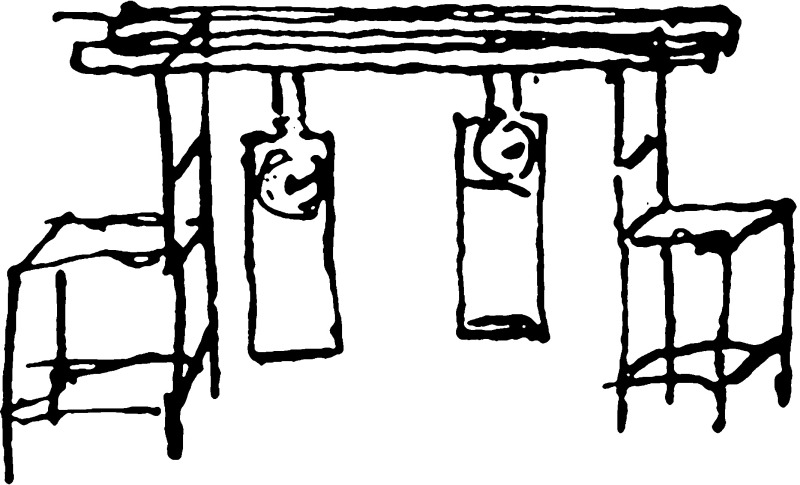
“Generalized synchrony refers to the ‘‘coupled dynamics’’ between two systems who synchronize their different time scales with each other like the Huygens clocks where two clocks synchronize their time scales with each other over time—such synchronization can then be conceived as manifestation of free energy minimizati…”
BackgroundBetween pebbles and organisms: weaving autonomy into the Markov blanket
van Es, T., & Kirchhoff, M. D. (2021) · Synthese · doi:10.1007/s11229-021-03084-w · Cited by 13
Commentary: Brain, Mind, World: Predictive Coding, Neo-Kantianism, and Transcendental Idealism
Piekarski, M. (2017) · Frontiers in Psychology · doi:10.3389/fpsyg.2017.02077 · Cited by 11
“A number of authors have stressed that the concept is dependent on Gibson’s ecological psychology and his belief about our direct cognitive access to the world (e.g., Bruineberg et al., 2016; Orlandi, 2016, 2017; Bruineberg, 2017).”
BackgroundHybrid Cognitive-Affective Strategies for AI Safety
Aliman, N.-M. (2020) · Utrecht University Repository (Utrecht University) · doi:10.33540/203 · Cited by 13
Parvizi-Wayne, D. (2024) · Phenomenology and the Cognitive Sciences · doi:10.1007/s11097-024-10028-5 · Cited by 17
“…that the hand holding the spotlight is clearly biased, shedding light solely on the information that is relevant to it and its action-based goals (Bruineberg et al., 2018; Hommel, 2010; Hommel & Wiers, 2017; Krauzlis et al., 2014)—albeit in a gradated manner, given that “conscious perception is…”
Vaisvaser, S. (2024) · Frontiers in Psychology · doi:10.3389/fpsyg.2024.1417035 · Cited by 13
Human-Robot Kinaesthetic Interactions Based on the Free-Energy Principle
Sawada, H., Ohata, W., & Tani, J. (2024) · IEEE Transactions on Systems Man and Cybernetics Systems · doi:10.1109/tsmc.2024.3481251 · Cited by 14
“The current study investigated such human–robot kinaes-thetic interactions by applying the system neuroscience theory and the free-energy principle, proposed by Friston [8] which is consonant with enactivism [9], [10].”
Desire and Motivation in Predictive Processing: An Ecological-Enactive Perspective
Kiverstein, J. D., Miller, M. M., & Rietveld, E. (2024) · Review of Philosophy and Psychology · doi:10.1007/s13164-024-00757-6 · Cited by 14
“…service of prediction-error minimization (Friston & Stephan 2007; Friston 2010, 2011; Clark 2013, 2016; Hohwy 2013; Seth 2015, 2021; Fotopoulou & Tsakiris 2017; Allen & Friston 2018; Kirchhoff 2018; Ramstead et al. 2020; Bruineberg & Rietveld 2014; Bruineberg et al. 2018a; Kiverstein et al. 2019).”
InfluentialSelf-citationSupercomplexity: bridging the gap between aesthetics and cognition
Bortolotti, A., Candeloro, G., Palumbo, R., & Sacco, P. L. (2025) · Frontiers in Neuroscience · doi:10.3389/fnins.2025.1552363 · Cited by 11
Goekoop, R., & de Kleijn, R. (2021) · Entropy · doi:10.3390/e23121701 · Cited by 9
Models of the Translation Process and the Free Energy Principle
Carl, M. (2023) · Entropy · doi:10.3390/e25060928 · Cited by 17
The dark room problem in predictive processing and active inference, a legacy of cognitivism?
Baltieri, M., & Buckley, C. L. (2019) · Conference on Artificial Life (ALIFE) · doi:10.1162/isal_a_00137 · Cited by 19
Sims, M. (2019) · Philosophical Psychology · doi:10.1080/09515089.2019.1646898 · Cited by 11
Neuroanthropological Perspectives on Culture, Mind, and Brain
Lende, D. H., & Downey, G. (2020) · Cambridge University Press eBooks · doi:10.1017/9781108695374.014 · Cited by 10
Un-debunking Ordinary Objects with the Help of Predictive Processing
Gładziejewski, P. (2021) · The British Journal for the Philosophy of Science · doi:10.1086/715105 · Cited by 10
How particular is the physics of the free energy principle?
Aguilera, M., Millidge, B., Tschantz, A., & Buckley, C. L. (2021) · Physics of Life Reviews · doi:10.1016/j.plrev.2021.11.001 · Cited by 104
“This is especially relevant for emergent discussions about the compatibility of the FEP with enactive and autopoietic theories of cognition (e.g. [52, 53, 54]).”
BackgroundCommentary: The Predictive Processing Paradigm Has Roots in Kant
Beni, M. D. (2018) · Frontiers in Systems Neuroscience · doi:10.3389/fnsys.2017.00098 · Cited by 11
“This alternative construal seems to be gaining momentum recently (see Bruineberg et al., 2016).”
BackgroundMcGann, M., Lucas, M., McHugh, C., & Barrett, L. (2024) · Philosophical Transactions of the Royal Society B Biological Sciences · doi:10.1098/rstb.2023.0282 · Cited by 13
Tal, H., Wright, M., Prest, S., Sandved-Smith, L., & Sacchet, M. D. (2025) · Neuroscience & Biobehavioral Reviews · doi:10.1016/j.neubiorev.2025.106539 · Cited by 17
Extended Predictive Minds: do Markov Blankets Matter?
Facchin, M. (2021) · Review of Philosophy and Psychology · doi:10.1007/s13164-021-00607-9 · Cited by 15
Ecological Neuroscience: From Reduction to Proliferation of Our Resources
van Dijk, L., & Myin, E. (2019) · Ecological Psychology · doi:10.1080/10407413.2019.1615221 · Cited by 9
Mutual Constitution of Culture and the Mind: Insights from Cultural Neuroscience
Kitayama, S., & Yu, Q. (2020) · Cambridge University Press eBooks · doi:10.1017/9781108695374.006 · Cited by 10
Talking about Talking : an Ecological-Enactive Perspective on Language
van deHerik, J. C. (2019) · Cited by 8
Ecological Mechanistic Research and Modelling
Wilson, A. D. (2022) · Ecological Psychology · doi:10.1080/10407413.2022.2050912 · Cited by 8
“…Local Neural Subsystems (TALoNS; Raja & Anderson, 2019), structured flow on manifolds (Jirsa et al., 2019), the formalisms of the Free Energy Principle ( Bruineberg & Rietveld, 2019; see also Bruineberg et al., 2018; Bruineberg & Rietveld, 2014 ), and neural resonance 9 (Fultot et al., 2019).”
BackgroundSchlicht, T. (2022) · De Gruyter eBooks · doi:10.1515/9783110706611-001 · Cited by 17
Epilogue: Interdisciplinarity in the Study of Culture, Mind, and Brain
Kirmayer, L. J., Worthman, C. M., & Kitayama, S. (2020) · Cambridge University Press eBooks · doi:10.1017/9781108695374.028 · Cited by 9
A Model Solution: On the Compatibility of Predictive Processing and Embodied Cognition
Kersten, L. (2022) · Minds and Machines · doi:10.1007/s11023-022-09617-7 · Cited by 10
SELF-ORGANIZATION, AUTOPOIESIS, FREE-ENERGY PRINCIPLE AND AUTONOMY
Negru, T. (2018) · Organon F · Cited by 6
Neurodiversity as a Conceptual Lens and Topic of Cross-Cultural Study
Cascio, M. A. (2020) · Cambridge University Press eBooks · doi:10.1017/9781108695374.027 · Cited by 10
Williams, D. G. (2018) · Apollo (University of Cambridge) · doi:10.17863/cam.33386 · Cited by 17
Carving teleology at its joints
Beni, M. D., & Friston, K. J. (2024) · Synthese · doi:10.1007/s11229-024-04660-6 · Cited by 7
Culture, Self, and Agency: An Ecosocial View
Kirmayer, L. J., Gómez-Carrillo, A., Langlois‐Thérien, T., Ramstead, M. J. D., & Gold, I. (2020) · Cambridge University Press eBooks · doi:10.1017/9781108695374.012 · Cited by 7
Introduction: The Relational Self: Basic Forms of Self-Awareness
Ciaunica, A. (2020) · Topoi · doi:10.1007/s11245-020-09689-z · Cited by 10
Sepúlveda-Pedro, M. A. (2020) · Frontiers in Psychology · doi:10.3389/fpsyg.2020.01666 · Cited by 12
“Active inference can produce changes in the system that reorganizes the brain, body, environment system, thanks to processes of motor action (Bruineberg et al., 2016).”
BackgroundWeiss, S. M., Laconi, R. N., & Marshall, P. J. (2020) · Cognitive Affective & Behavioral Neuroscience · doi:10.3758/s13415-020-00809-1 · Cited by 8
“Furthermore, studying anticipation can inform allostatic theories of neural self-regulation and prediction, given that variability in anticipatory neural activity may integrate prior experience with ecologically driven expectancies (Allen & Friston, 2018; Bruineberg et al., 2018; Jones, 2019).”
BackgroundThe fanciest sort of intentionality: Active inference, mindshaping and linguistic content
Tison, R. (2022) · Philosophical Psychology · doi:10.1080/09515089.2022.2062315 · Cited by 10
“…does not only passively learns the statistical properties of the niche, but also actively alter the niche so as to favor a better attunement: “Agents can not only come to fit their environments, but environments can come to fit an agent, or a species” (Bruineberg, Rietveld et al., 2018, p. 161).”
BackgroundInfluentialScience-Driven Societal Transformation, Part III: Design
Boik, J. C. (2021) · Sustainability · doi:10.3390/su13020726 · Cited by 9
“Much of what we take to be central to intelligence—perception, attention, emotion, learning, and language—can be understood within a framework of prediction, action, error correction, and uncertainty reduction [61,67].”
BackgroundBogotá, J. D. (2023) · Phenomenology and the Cognitive Sciences · doi:10.1007/s11097-023-09898-y · Cited by 7
Just how conservative is conservative predictive processing?
Gładziejewski, P. (2017) · Hybris · doi:10.18778/1689-4286.38.07 · Cited by 9
Realism without tears II: The structuralist legacy of sensory physiology
Isaac, A. (2019) · Studies in History and Philosophy of Science Part A · doi:10.1016/j.shpsa.2019.01.003 · Cited by 8
“…mathematics provides an empirically adequate model for some neural mechanism does not thereby imply that the interpretation of that mathematics as involving inferences over sets of worlds and their respective degrees of possibility follows as well (cf. Bruineberg, Kiverstein, and Rietveld 2016).”
Cultural Priming Effects and the Human Brain
Han, S., & Northoff, G. (2020) · Cambridge University Press eBooks · doi:10.1017/9781108695374.011 · Cited by 7
Introduction: Co-constructing Culture, Mind, and Brain
Kirmayer, L. J., Worthman, C. M., & Kitayama, S. (2020) · Cambridge University Press eBooks · doi:10.1017/9781108695374.002 · Cited by 11
Embodying Dynamical Systems in Music Performance
Nijs, L., Bremmer, M., van der Schyff, D., & Schiavio, A. (2023) · Music Performance Research · doi:10.14439/mpr.11.3 · Cited by 13
The unbearable rightness of seeing? Conceptualism, enactivism, and skilled engagement
Robertson, I. (2023) · Synthese · doi:10.1007/s11229-023-04385-y · Cited by 11
Ritual and Religion as Social Technologies of Cooperation
Kavanagh, C. M., Jong, J., & Whitehouse, H. (2020) · Cambridge University Press eBooks · doi:10.1017/9781108695374.016 · Cited by 10
Metadata
- Authors
- Bruineberg, J., Kiverstein, J., & Rietveld, E.
- Affiliations
- University of Amsterdam (NL)
- Amsterdam University Medical Centers (NL)
- Amsterdam UMC Location University of Amsterdam (NL)
- Corresponding author
- Bruineberg, Jelle
- Venue
- Synthese
- Published
- 2016-10-21
- Volume
- 195
- Issue
- 6
- Pages
- 2417-2444
- ISSN
- 0039-7857 (ISSN-L)
- 1573-0964
- PMC
- PMC6438652
- OpenAlex
- W2534098824
- Cited by
- 383
- References
- 90
- Citations by year
- 2026: 18 · 2025: 24 · 2024: 34 · 2023: 57 · 2022: 35 · 2021: 41 · 2020: 66 · 2019: 42 · 2018: 46 · 2017: 18 · 2016: 1
- FWCI
- 22.70
- Type
- journal article
- Language
- en
- Open access
- hybrid
- doi.org
- Locations
- Synthese (publishedVersion, cc-by)
- Europe PMC (PubMed Central) (publishedVersion, cc-by)
- PubMed Central (publishedVersion, cc-by)
- PubMed (publishedVersion)
- Pure Amsterdam UMC (publishedVersion, cc-by)
- Data Archiving and Networked Services (DANS) (submittedVersion)
- UvA-DARE (University of Amsterdam) (submittedVersion, cc-by)
- Pure Amsterdam UMC (submittedVersion)
- Data Archiving and Networked Services (DANS) (submittedVersion, other-oa)
- Funders
- NWO (276-20-019)
- European Research Council (ERC-StG679190)
- Topics
- Life Sciences › Neuroscience › Cognitive Neuroscience › Embodied and Extended Cognition
- Social Sciences › Arts and Humanities › History and Philosophy of Science › Philosophy of Biology and Scientific Explanation
- Social Sciences › Arts and Humanities › Philosophy › Philosophy and Theoretical Science
- Keywords
- free energy principle, active inference, predictive coding, unconscious inference, Bayesian inference, self-organization, hypothesis testing, perception
About these checks
Registry, retraction, Cites and statistics results are computed, not judged, with one exception: a printed reference that no index lists is read once by a model before it counts as a citation error. Claims are extracted by a model and kept only when their quote appears verbatim in the text; each cited source is then checked, with a model’s help, for whether it says what the claim relies on. Those verdicts can be wrong — read the claim’s quote and the cited source before relying on one.
Statistics and arithmetic are recomputed, not judged.
Confidence bands are shown only for fields calibrated on our annotated test set. None is calibrated yet, so no band is shown.
What counts as a claim ›How we measure confidence ›How we check this ›
Are you an author, or do you see a problem with this page? Request a review
Data sources
Bibliographic data: Semantic Scholar, OpenAlex, Crossref.
Contains information from the Semantic Scholar Academic Graph Datasets, made available under the ODC Attribution License (ODC-BY 1.0).
Semantic Scholar’s data is described in: Kinney, R., et al. (2023). The Semantic Scholar Open Data Platform. arXiv:2301.10140.
