

The anticipating brain is not a scientist: the free-energy principle from an ecological-enactive perspective
Open accessThe DOI matches its Crossref record; 86 of the 90 references it cites were found in a registry or an index.
Abstract
In this paper, we argue for a theoretical separation of the free-energy principle from Helmholtzian accounts of the predictive brain. The free-energy principle is a theoretical framework capturing the imperative for biological self-organization in information-theoretic terms. The free-energy principle has typically been connected with a Bayesian theory of predictive coding, and the latter is often taken to support a Helmholtzian theory of perception as unconscious inference. If our interpretation is right, however, a Helmholtzian view of perception is incompatible with Bayesian predictive coding under the free-energy principle. We argue that the free energy principle and the ecological and enactive approach to mind and life make for a much happier marriage of ideas. We make our argument based on three points. First we argue that the free energy principle applies to the whole animal-environment system, and not only to the brain. Second, we show that active inference, as understood by the free-energy principle, is incompatible with unconscious inference understood as analagous to scientific hypothesis-testing, the main tenet of a Helmholtzian view of perception. Third, we argue that the notion of inference at work in Bayesian predictive coding under the free-energy principle is too weak to support a Helmholtzian theory of perception. Taken together these points imply that the free energy principle is best understood in ecological and enactive terms set out in this paper.
Overview
The claims and statistics of this paper haven’t been checked yet.
Free: it reads the open-access text and checks the first 5 claims that cite a source we can check. Create a free account to check every claim.
Integrity signals
Registry
Cites
Statistics
Figures
Verification
Claims the paper makes
The claims and statistics of this paper haven’t been checked yet.
Free: it reads the open-access text and checks the first 5 claims that cite a source we can check. Create a free account to check every claim.
Claims other papers make about this one
Each is checked against this paper’s own text: does it say what the citing paper says it does?
The cited source says what the claim attributes to it.
In the citing paper
“Ecological psychology and the FEP have often been framed as competing frameworks for cognitive science (Bruineberg et al., 2022; though for an argument to the contrary, see Bruineberg et al., 2018), given that the former rejects representational notions, and the latter relies on them extensively.”
From A potential mechanism for Gibsonian resonance: behavioral entrainment emerges from local homeostasis in an unsupervised reservoir network (2024) · cites this paper as Bruineberg et al., 2018
Self-check
Percentages, sums and reported differences re-computed from the paper’s own numbers.
The self-check needs the paper’s full text.
Citations
Cites
The Ecological Approach to Visual Perception
Bornstein, M. H., & Gibson, J. J. (1980) · The Journal of Aesthetics and Art Criticism · doi:10.2307/429816 · Cited by 22,935 · cited 1×
“…2000),metastability (Kelso2012; Rabinovich et al. 2008), autopoiesis (Maturana and Varela 1980; but see Kirchhoff (2016)) and ecological psychology (Gibson 1979).5 Not all of this work is theoretically consistent with a Helmholtzian theory of perception, some of it is even explicitly aimed against…”
Background(1988) · Cited by 16,582
The Ecological Approach to Visual Perception: Classic Edition
Gibson, J. J. (2014) · doi:10.4324/9781315740218 · Cited by 12,132
Journal of Consciousness Studies
(2022) · Journal of Consciousness Studies · doi:10.53765/20512201 · Cited by 6,832
Whatever next? Predictive brains, situated agents, and the future of cognitive science
Clark, A. (2013) · Behavioral and Brain Sciences · doi:10.1017/s0140525x12000477 · Cited by 5,924 · cited 10×
“30 The recent literature (Clark 2013) on Helmholtzian interpretations of predictive processing contains a number of commentaries from enactivists that overlap with the arguments of this paper in suggestive ways.”
BackgroundInfluentialAutopoiesis and Cognition: The Realization of the Living
Maturana, H. R., & Varela, F. J. (1980) · Boston Studies in the Philosophy and History of Science · doi:10.1007/978-94-009-8947-4 · Cited by 5,815
The Embodied Mind: Cognitive Science and Human Experience
Varela, F. J., Rosch, E., & Thompson, E. (1991) · doi:10.7551/mitpress/6730.001.0001 · Cited by 5,765
Rao, R. P. N., & Ballard, D. H. (1999) · Nature Neuroscience · doi:10.1038/4580 · Cited by 5,483
Intelligence without representation
Brooks, R. A. (1991) · Artificial Intelligence · doi:10.1016/0004-3702(91)90053-m · Cited by 4,853 · cited 1×
“…the conclusion that, because of the organism’s skills and affordance-related states of action readiness, the organism itself is its own best model of the causal structure of its niche, a paradoxical sounding twist on the familiar embodied theme that “the world is its own best model” (Brooks 1991).”
BackgroundThe brainweb: phase synchronization and large-scale integration
Varela, F., Lachaux, J.-P., Rodriguez, E., & Martinerie, J. (2001) · Nature Reviews Neuroscience · doi:10.1038/35067550 · Cited by 4,761 · cited 1×
“Phenomena like entrainment and synchronization seem to play a crucial role in brain functioning (Varela et al. 2001; Engel et al. 2001).”
Background
Research works printed but not linked: 7
- Dewey, J. (1976). Lectures on psychological and political ethics: 1898. New York: Hafner Press. (Edited with an introduction by D. L. Koch).
- Friston, K. (2011). Embodied inference: Or "I think therefore I am, if I am what I think.". In W. Tschacher & C. Bergomi (Eds.), The implications of embodiment (cognition and communication) (pp. 89-125). Exeter: Imprint Academic.
- Helmholtz, H. (1860/1962). Handbuch der physiologischen optik (Southall, J. P. C. (Ed.), English trans.), Vol. 3. New York: Dover.
- C. Horoloqium Oscilatorium (Apud F. Muquet, Parisiis, 1673); English translation: The pendulum clock (Iowa State University Press, Ames)
- Murphy, K. (2012). Machine learning: A probabilistic approach. Cambridge: MIT Press.
- Port, R. F., & Van Gelder, T. (1995). Mind as motion. Cambridge, MA: MIT Press.
- Newen, L. de Bruin, & S. Gallagher (Eds.), Oxford handbook of cognition: Embodied, enactive, embedded and extended. Oxford: Oxford University Press.
Cited by
The Markov blankets of life: autonomy, active inference and the free energy principle
Kirchhoff, M., Parr, T., Palacios, E., Friston, K., & Kiverstein, J. (2018) · Journal of The Royal Society Interface · doi:10.1098/rsif.2017.0792 · Cited by 473
Self-citationAnswering Schrödinger's question: A free-energy formulation
Ramstead, M. J. D., Badcock, P. B., & Friston, K. J. (2018) · Physics of Life Reviews · doi:10.1016/j.plrev.2017.09.001 · Cited by 354
“This inferential aspect leads us to notions like embodied inference [44,45], the Bayesian brain [46], the Bayesian cell [27], and even a Bayesian culture [29,47].”
Generalised free energy and active inference
Parr, T., & Friston, K. J. (2019) · Biological Cybernetics · doi:10.1007/s00422-019-00805-w · Cited by 236
A tale of two densities: active inference is enactive inference
Ramstead, M. J., Kirchhoff, M. D., & Friston, K. J. (2020) · Adaptive Behavior · doi:10.1177/1059712319862774 · Cited by 220
“As such, generative models are more about the control and regulation of action than they are about figuring out what is ‘out there’ beyond the veil of sensory impressions, and representing the world (Anderson, 2017; Bruineberg et al., 2016).”
BackgroundActive inference, enactivism and the hermeneutics of social cognition
Gallagher, S., & Allen, M. (2018) · Synthese · doi:10.1007/s11229-016-1269-8 · Cited by 214
“On the one hand, it has been argued, the general framework of the predictive model (specifically the free-energy principle, and the concept of active inference) is consistent with autopoietic enactivist views (Bruineberg and Rietveld 2014; Bruineberg et al. 2016; Kirchhoff 2016).”
Resultvan Dijk, L., & Rietveld, E. (2017) · Frontiers in Psychology · doi:10.3389/fpsyg.2016.01969 · Cited by 209
“…the agent-environment system as a whole, or focus on a part and use the tools and concepts of dynamical systems theory to increase our understanding of the dynamics of multiple simultaneous affordance-related states of action readiness (see Bruineberg and Rietveld, 2014; Bruineberg et al., 2016).”
BackgroundSelf-citationThe Anatomy of Inference: Generative Models and Brain Structure
Parr, T., & Friston, K. J. (2018) · Frontiers in Computational Neuroscience · doi:10.3389/fncom.2018.00090 · Cited by 204
“Descending connections from frontal to parietal areas can then be thought of as predictions about the sensory input expected contingent upon a given action (Zimmermann and Lappe, 2016), endorsing an enactive perspective (Bruineberg et al., 2016; Kiverstein, 2018) on perceptual inference.”
BackgroundEmbodied and Enactive Approaches to Cognition
Gallagher, S. (2023) · Cambridge University Press eBooks · doi:10.1017/9781009209793 · Cited by 190
From many to (n)one: Meditation and the plasticity of the predictive mind
Laukkonen, R. E., & Slagter, H. A. (2021) · Neuroscience & Biobehavioral Reviews · doi:10.1016/j.neubiorev.2021.06.021 · Cited by 187
de Haan, S. (2020) · Cambridge University Press eBooks · doi:10.1017/9781108685214 · Cited by 166
A nice surprise? Predictive processing and the active pursuit of novelty
Clark, A. (2018) · Phenomenology and the Cognitive Sciences · doi:10.1007/s11097-017-9525-z · Cited by 156
“But as a kind of spin-off from all this deep (and language-enriched – see (Lupyan and Clark 2015)) model-building activity, we humans also began to construct complex social and physical environments. Our human minds are now marinated in the unique statistical baths of a succession of such designer worlds –worlds chara…”
BackgroundInfluentialReconceiving representation-hungry cognition: an ecological-enactive proposal
Kiverstein, J. D., & Rietveld, E. (2018) · Adaptive Behavior · doi:10.1177/1059712318772778 · Cited by 150
Self-citationMultiscale integration: beyond internalism and externalism
Ramstead, M. J. D., Kirchhoff, M. D., Constant, A., & Friston, K. J. (2021) · Synthese · doi:10.1007/s11229-019-02115-x · Cited by 150
The feeling of grip: novelty, error dynamics, and the predictive brain
Kiverstein, J., Miller, M., & Rietveld, E. (2019) · Synthese · doi:10.1007/s11229-017-1583-9 · Cited by 143
“In earlier work (Bruineberg and Rietveld 2014; Bruineberg et al. 2016), we’ve proposed an ecological-enactive reading of the FEP, providing an analysis of freeenergy in terms of disattunement of internal and external dynamics, a dynamic state of disequilibrium within the agent-environment system as…”
BackgroundMethodInfluentialSelf-citationVariational ecology and the physics of sentient systems
Ramstead, M. J. D., Constant, A., Badcock, P. B., & Friston, K. J. (2019) · Physics of Life Reviews · doi:10.1016/j.plrev.2018.12.002 · Cited by 141
“It has since been extended to explain the dynamics of biological systems within and beyond the brain, ranging from the cellular level [15] and action–perception loops [16], to psychiatry [17–22], psychology [14,23–25] and embodied cognitive science [26], through to evolutionary dynamics (cf.”
BackgroundMarkov blankets, information geometry and stochastic thermodynamics
Parr, T., Da Costa, L., & Friston, K. (2020) · Philosophical Transactions of the Royal Society A Mathematical Physical and Engineering Sciences · doi:10.1098/rsta.2019.0159 · Cited by 141
“Interpreting the latter as ‘preferences’, in the sense that the most likely trajectories tend towards these, we are left with a creature who acts like a ‘crooked’ scientist [43], seeking out those data that are most informative, with a bias towards those that comply with its prior beliefs.”
BackgroundRietveld, E., Denys, D. A. J. P., & van Westen, M. (2018) · Oxford University Press eBooks · doi:10.1093/oxfordhb/9780198735410.013.3 · Cited by 213
“On our (Bruineberg and Rietveld 2014; Bruineberg, Kiverstein, and Rietveld 2016) interpretation, Friston’s Free Energy Principle applied to living organisms is about improving the individual’s grip on the environment.16 Crucially, Friston argues that you can predict the structure of the embodied…”
BackgroundSelf-citationWhen Beliefs Face Reality: An Integrative Review of Belief Updating in Mental Health and Illness
Kube, T., & Rozenkrantz, L. (2021) · Perspectives on Psychological Science · doi:10.1177/1745691620931496 · Cited by 136
Predictive Processing and the Representation Wars
Williams, D. (2018) · Minds and Machines · doi:10.1007/s11023-017-9441-6 · Cited by 134
Vanilla PP for Philosophers: A Primer on Predictive Processing
Wiese, W., & Metzinger, T. K. (2017) · Theoretical Philosophy/MIND Group – JGU Mainz · doi:10.15502/9783958573024 · Cited by 130
“Frankfurt am Main: MIND Group. doi: 10.15502/9783958573024 11 | 18 skeptical position is maintained by Jelle Bruineberg (see Bruineberg 2017 and Bruineberg et al. 2016).”
BackgroundInfluentialThe Emperor's New Markov Blankets
Bruineberg, J., Dołęga, K., Dewhurst, J., & Baltieri, M. (2022) · Behavioral and Brain Sciences · doi:10.1017/s0140525x21002351 · Cited by 124
Self-citationLearning action-oriented models through active inference
Tschantz, A., Seth, A. K., & Buckley, C. L. (2020) · PLOS Computational Biology · doi:10.1371/journal.pcbi.1007805 · Cited by 121
“The arguments and simulations presented in this paper resonate with previous work which views an active inference agent as a ‘crooked scientist’ [76, 77].”
Where There is Life There is Mind: In Support of a Strong Life-Mind Continuity Thesis
Kirchhoff, M. D., & Froese, T. (2017) · Entropy · doi:10.3390/e19040169 · Cited by 114
“, [12]) • Non-Cognitivist FEP + Strong Life-Mind Continuity Views ([13,14] and this paper).”
BackgroundMethodInfluentialContent and misrepresentation in hierarchical generative models
Kiefer, A. B., & Hohwy, J. (2017) · Synthese · doi:10.1007/s11229-017-1435-7 · Cited by 149
“…there are more theoretical discussions of what it implies for our overall conception of the mind and its place in nature (Orlandi 2014; Hohwy 2015a, b, 2016a, b; Allen and Friston 2016; Bruineberg 2016; Burr and Jones 2016; Gallagher and Allen 2016; Kirchhoff 2016; Sims 2016; Hutto 2017).”
BackgroundGeneral ecological information supports engagement with affordances for ‘higher’ cognition
Bruineberg, J., Chemero, A., & Rietveld, E. (2019) · Synthese · doi:10.1007/s11229-018-1716-9 · Cited by 91
“We have discussed in earlier work how to conceive of selective openness to affordances within radical embodied cognitive science and the Skilled Intentionality Framework (Chemero 2003a; Bruineberg and Rietveld 2014; Bruineberg et al. 2016).”
BackgroundSelf-citationThe math is not the territory: navigating the free energy principle
Andrews, M. (2021) · Biology & Philosophy · doi:10.1007/s10539-021-09807-0 · Cited by 154
Active inference as a theory of sentient behavior
Pezzulo, G., Parr, T., & Friston, K. (2024) · Biological Psychology · doi:10.1016/j.biopsycho.2023.108741 · Cited by 109
“Besides this specific topic, there is a vivid debate in philosophy that concerns the most appropriate way to consider active inference, in relation to internalist (Hohwy, 2013), externalist (Clark, 2013) or enactivist theories (Bruineberg et al., 2018).”
BackgroundDynamical Relations in the Self-Pattern
Gallagher, S., & Daly, A. (2018) · Frontiers in Psychology · doi:10.3389/fpsyg.2018.00664 · Cited by 144
Extended active inference: Constructing predictive cognition beyond skulls
Constant, A., Clark, A., Kirchhoff, M. D., & Friston, K. J. (2020) · Mind & Language · doi:10.1111/mila.12330 · Cited by 130
The Hitchhiker’s Guide to Neurophenomenology – The Case of Studying Self Boundaries With Meditators
Berkovich-Ohana, A., Dor-Ziderman, Y., Trautwein, F.-M., Schweitzer, Y., Nave, O., Fulder, S., & Ataria, Y. (2020) · Frontiers in Psychology · doi:10.3389/fpsyg.2020.01680 · Cited by 100
First principles in the life sciences: the free-energy principle, organicism, and mechanism
Colombo, M., & Wright, C. (2021) · Synthese · doi:10.1007/s11229-018-01932-w · Cited by 101
The Predictive Brain as a Stubborn Scientist
Yon, D., de Lange, F. P., & Press, C. (2019) · Trends in Cognitive Sciences · doi:10.1016/j.tics.2018.10.003 · Cited by 84
“The possibility that certain predictions are evidence-resistant recasts the brain as sometimes operating like a ‘stubborn’ scientist, possessing some hypotheses that evidence cannot change [9].”
BackgroundFree-energy minimization in joint agent-environment systems: A niche construction perspective
Bruineberg, J., Rietveld, E., Parr, T., van Maanen, L., & Friston, K. J. (2018) · Journal of Theoretical Biology · doi:10.1016/j.jtbi.2018.07.002 · Cited by 99
Self-citationThe active construction of the visual world
Parr, T., & Friston, K. J. (2017) · Neuropsychologia · doi:10.1016/j.neuropsychologia.2017.08.003 · Cited by 96
“Note, however, that such experiments are necessarily designed in a biased, unscientific, manner (Bruineberg et al., 2016).”
Representation Wars: Enacting an Armistice Through Active Inference
Constant, A., Clark, A., & Friston, K. J. (2021) · Frontiers in Psychology · doi:10.3389/fpsyg.2020.598733 · Cited by 95
A World Unto Itself: Human Communication as Active Inference
Vasil, J., Badcock, P. B., Constant, A., Friston, K., & Ramstead, M. J. D. (2020) · Frontiers in Psychology · doi:10.3389/fpsyg.2020.00417 · Cited by 94
Laying down a forking path: tensions between enaction and the free energy principle
Di Paolo, E., Thompson, E., & Beer, R. (2022) · Philosophy and the Mind Sciences · doi:10.33735/phimisci.2022.9187 · Cited by 94
“For instance, Bruineberg et al. (2018) accept that FEP is applicable to biological systems, but they reject its association with Helmholtzian approaches, in which perception is mediated by unconscious inferences about the causes of sensation.”
BackgroundInfluentialPerceptual awareness and active inference
Parr, T., Corcoran, A. W., Friston, K. J., & Hohwy, J. (2019) · Neuroscience of Consciousness · doi:10.1093/nc/niz012 · Cited by 91
“To illustrate the importance of action in perception (MartinezConde et al. 2004; Zimmermann and Lappe 2016; Parr and Friston 2017a; Bruineberg et al. 2018), we constructed a generative model of the sort that might be used by the brain in visual scene construction (Mirza et al. 2016).”
MethodLinson, A., Clark, A., Ramamoorthy, S., & Friston, K. (2018) · Frontiers in Robotics and AI · doi:10.3389/frobt.2018.00021 · Cited by 90
“When a potentially significant aspect of the environment recruits a policy, it becomes relevant; this is equivalent to the notion of a “solicitation” in affordance theory and phenomenological philosophy (see Bruineberg and Rietveld, 2014; Bruineberg et al., 2016).”
Nave, K., Deane, G., Miller, M., & Clark, A. (2020) · WIREs Cognitive Science · doi:10.1002/wcs.1542 · Cited by 64
The Extended Mind: State of the Question
Gallagher, S. (2018) · The Southern Journal of Philosophy · doi:10.1111/sjp.12308 · Cited by 101
Brain, Mind, World: Predictive Coding, Neo-Kantianism, and Transcendental Idealism
Zahavi, D. (2017) · Husserl Studies · doi:10.1007/s10743-017-9218-z · Cited by 91
Embodying addiction: A predictive processing account
Miller, M., Kiverstein, J. D., & Rietveld, E. (2019) · Brain and Cognition · doi:10.1016/j.bandc.2019.105495 · Cited by 99
Self-citationHow particular is the physics of the free energy principle?
Millidge, B. (2022) · Sussex Research Online (University of Sussex) · Cited by 83
Beyond Desire? Agency, Choice, and the Predictive Mind
Clark, A. (2020) · Australasian Journal of Philosophy · doi:10.1080/00048402.2019.1602661 · Cited by 78
Therapeutic Alliance as Active Inference: The Role of Therapeutic Touch and Synchrony
McParlin, Z., Cerritelli, F., Friston, K. J., & Esteves, J. E. (2022) · Frontiers in Psychology · doi:10.3389/fpsyg.2022.783694 · Cited by 77
van Dijk, L., & Rietveld, E. (2018) · Synthese · doi:10.1007/s11229-018-02013-8 · Cited by 90
Self-citationGallagher, S. (2023) · doi:10.1093/oso/9780198873068.001.0001 · Cited by 82
Cellular sentience as the primary source of biological order and evolution
Baluška, F., Reber, A. S., & Miller, W. B. (2022) · Biosystems · doi:10.1016/j.biosystems.2022.104694 · Cited by 71
Hierarchical models of pain: Inference, information-seeking, and adaptive control.
Seymour, B., & Mancini, F. (2020) · NeuroImage · doi:10.1016/j.neuroimage.2020.117212 · Cited by 64
“For completeness, it is worth noting that there are notions of predictive coding that are not fully internalistic , incorporating enactive, embod-ied and extended cognition ( Allen et al., 2018 ; Ramstead et al., 2019 ; Bruineberg et al., 2018 ).”
Computational Resource Demands of a Predictive Bayesian Brain
Kwisthout, J., & van Rooij, I. (2019) · Computational Brain & Behavior · doi:10.1007/s42113-019-00032-3 · Cited by 73
Motor and Predictive Processes in Auditory Beat and Rhythm Perception
Proksch, S., Comstock, D. C., Médé, B., Pabst, A., & Balasubramaniam, R. (2020) · Frontiers in Human Neuroscience · doi:10.3389/fnhum.2020.578546 · Cited by 79
Kiverstein, J., Miller, M., & Rietveld, E. (2020) · Neuroscience of Consciousness · doi:10.1093/nc/niaa003 · Cited by 55
Self-citationEsteves, J. E., Cerritelli, F., Kim, J., & Friston, K. J. (2022) · Frontiers in Psychology · doi:10.3389/fpsyg.2022.812926 · Cited by 76
Free Energy and the Self: An Ecological–Enactive Interpretation
Kiverstein, J. (2020) · Topoi · doi:10.1007/s11245-018-9561-5 · Cited by 54
Self-citationSyntactical Informational Structural Realism
Beni, M. D. (2018) · Minds and Machines · doi:10.1007/s11023-018-9463-8 · Cited by 55
“The similarity between action-oriented construal of PP and theories of classical pragmatists such as John Dewey has been spotted previously (Bruineberg et al. 2016; Engel et al. 2013).”
BackgroundActive inference and the anatomy of oculomotion
Parr, T., & Friston, K. J. (2018) · Neuropsychologia · doi:10.1016/j.neuropsychologia.2018.01.041 · Cited by 51
“Sensing a temperature that is comfortably within this range carries greater evidence for existence than one outside it, so the free energy principle mandates that humans should act to ensure the former (Bruineberg et al., 2016).”
BackgroundCoutinho, D., Gonçalves, B. V., Travassos, B. F. R., Abade, E., Wong, D. P., & Sampaio, J. E. (2018) · Journal of Sports Sciences · doi:10.1080/02640414.2018.1523671 · Cited by 74
How to determine the boundaries of the mind: a Markov blanket proposal
Kirchhoff, M. D., & Kiverstein, J. D. (2019) · Synthese · doi:10.1007/s11229-019-02370-y · Cited by 65
Self-citationLiving models or life modelled? On the use of models in the free energy principle
van Es, T. (2020) · Adaptive Behavior · doi:10.1177/1059712320918678 · Cited by 65
“1, I discuss that models in FEP as thought to be implemented in organisms are not representational, but covariational in nature (Bruineberg et al., 2016; Bruineberg & Rietveld, 2014; Kirchhoff & Robertson, 2018; Ramstead, Kirchhoff, & Friston, 2020).”
BackgroundResultInfluentialEcological approaches to perceptual learning: learning to perceive and perceiving as learning
Szokolszky, Á., Read, C., Palatinus, Z., & Palatinus, K. (2019) · Adaptive Behavior · doi:10.1177/1059712319854687 · Cited by 52
What’s Inside Your Head Once You’ve Figured Out What Your Head’s Inside Of
Bruineberg, J., & Rietveld, E. (2019) · Ecological Psychology · doi:10.1080/10407413.2019.1615204 · Cited by 46
Self-citationModel-Based Approaches to Active Perception and Control
Pezzulo, G., Donnarumma, F., Iodice, P., Maisto, D., & Stoianov, I. (2017) · Entropy · doi:10.3390/e19060266 · Cited by 45
“, the contribution of action to cognitive processing and the importance of self-organizing processes and autopoiesis [101,102]) and it has been advocated by proponents of both representational and internalist theories [99] and ecological perspectives [103]; see also [98,104].”
BackgroundIlan, Y. (2022) · Computational and Structural Biotechnology Journal · doi:10.1016/j.csbj.2022.11.015 · Cited by 49
Competence to thrive: resilience as an indicator of positive health and positive welfare in animals
Colditz, I. G. (2022) · Animal Production Science · doi:10.1071/an22061 · Cited by 56
McParlin, Z., Cerritelli, F., Rossettini, G., Friston, K. J., & Esteves, J. E. (2022) · Frontiers in Behavioral Neuroscience · doi:10.3389/fnbeh.2022.897247 · Cited by 49
Selfhood triumvirate: From phenomenology to brain activity and back again
Fingelkurts, A. A., Fingelkurts, A. A., & Kallio-Tamminen, T. (2020) · Consciousness and Cognition · doi:10.1016/j.concog.2020.103031 · Cited by 41
“This understanding is consistent with enactivist notion of system autonomy (see Bitbol & Gallagher, 2018; Gallagher & Allen, 2018; Bruineberg et al., 2018): “An autonomous system produces and sustains its own identity [.”
BackgroundProspective memory in autism: theory and literature review
Sheppard, D. P., Bruineberg, J. P., Kretschmer-Trendowicz, A., & Altgassen, M. (2018) · The Clinical Neuropsychologist · doi:10.1080/13854046.2018.1435823 · Cited by 46
“Only if an agent has the right predictions (both about what will be an optimal state, and about how it can reach that state), it can cause the environment to confirm to those expectations and consequently lead to an actually optimal state beneficial to the agent (Bruineberg et al., 2016).”
Self-citationAn Active-Inference Approach to Second-Person Neuroscience
Lehmann, K., Bolis, D., Friston, K. J., Schilbach, L., Ramstead, M. J. D., & Kanske, P. (2023) · Perspectives on Psychological Science · doi:10.1177/17456916231188000 · Cited by 62
“These are enactive, ecological, pragmatist, and embodied approaches to the study of the brain (Bolis & Schilbach, 2020a; Bruineberg, Kiverstein, & Rietveld, 2018; Engel et al., 2015; Ramstead et al., 2019; Thompson, 2010).”
BackgroundPredictive brains and embodied, enactive cognition: an introduction to the special issue
Kirchhoff, M. D. (2017) · Synthese · doi:10.1007/s11229-017-1534-5 · Cited by 56
“…Hohwy (2016, this issue), predictive processing (associated with Andy Clark Clark 2015, 2016; this issue) and what they call predictive engagement (associated with enactivist approaches to cognition, see e.g., Bruineberg and Rietveld 2014; Bruineberg et al. 2016; Kirchhoff 2015a, b, this issue).”
InfluentialAttuning to the World: The Diachronic Constitution of the Extended Conscious Mind
Kirchhoff, M. D., & Kiverstein, J. D. (2020) · Frontiers in Psychology · doi:10.3389/fpsyg.2020.01966 · Cited by 36
Self-citationToward an Embodied, Embedded Predictive Processing Account
Venter, E. (2021) · Frontiers in Psychology · doi:10.3389/fpsyg.2021.543076 · Cited by 47
“Though the two concepts are difficult to separate and often used interchangeably in the literature, they make different predictions and vary in scope and application (Bruineberg et al., 2018; Hohwy, 2020).”
BackgroundOrder and change in art: towards an active inference account of aesthetic experience
de Cruys, S. V., Frascaroli, J., & Friston, K. J. (2023) · Philosophical Transactions of the Royal Society B Biological Sciences · doi:10.1098/rstb.2022.0411 · Cited by 57
“…or meanings to even partial perceptual cues and to readily situate those meanings in the external world instead of our mind regularly obstructs us from finding better, less complex and more evidenced solutions: we can sometimes be quite unscientific in our sensory exchanges with the world [42].”
BackgroundUnderstanding, Explanation, and Active Inference
Parr, T., & Pezzulo, G. (2021) · Frontiers in Systems Neuroscience · doi:10.3389/fnsys.2021.772641 · Cited by 36
Wiese, W., & Friston, K. J. (2021) · Philosophies · doi:10.3390/philosophies6010018 · Cited by 45
The Problem of Meaning: The Free Energy Principle and Artificial Agency
Kiverstein, J. D., Kirchhoff, M. D., & Froese, T. (2022) · Frontiers in Neurorobotics · doi:10.3389/fnbot.2022.844773 · Cited by 50
“Free energy can thus be thought of as quantifying mathematically the mismatch between the organism’s internal dynamics and the external dynamics of its environment ( Bruineberg et al., 2018).”
BackgroundInfluentialSelf-citationLearned uncertainty: The free energy principle in anxiety
McGovern, H. T., De Foe, A., Biddell, H., Leptourgos, P., Corlett, P., Bandara, K., & Hutchinson, B. T. (2022) · Frontiers in Psychology · doi:10.3389/fpsyg.2022.943785 · Cited by 33
“However, too much uncertainty or error inherently contradicts the system’s goal of restricting itself to its attractor states—those that characterize the kind of thing that it is (Bruineberg and Rietveld, 2014; Badcock et al., 2017, 2019; Bruineberg et al., 2018; Ramstead et al., 2018).”
BackgroundAttentional actions – an ecological-enactive account of utterances of concrete words
van den Herik, J. C. (2018) · Psychology of Language and Communication · doi:10.2478/plc-2018-0005 · Cited by 38
“See Bruineberg, Kiverstein, and Rietveld (2016) for an ecological-enactive interpretation of the free energy principle that similarly describes the self-organisation of the brain-organism-environment system.”
BackgroundPredictive Processing and Some Disillusions about Illusions
Gallagher, S., Hutto, D. D., & Hipólito, I. (2021) · Review of Philosophy and Psychology · doi:10.1007/s13164-021-00588-9 · Cited by 36
An Enactive–Ecological Model to Guide Patient-Centered Osteopathic Care
Cerritelli, F., & Esteves, J. E. (2022) · Healthcare · doi:10.3390/healthcare10061092 · Cited by 41
Parvizi-Wayne, D., Sandved-Smith, L., Pitliya, R. J., Limanowski, J., Tufft, M. R. A., & Friston, K. J. (2024) · Frontiers in Psychology · doi:10.3389/fpsyg.2024.1354719 · Cited by 43
“…to act on affordances, possibilities for action offered to the organism from its environment (Dewey, 1922; Ryle, 1949; Gibson, 1979; Friston et al., 2012; Bruineberg and Rietveld, 2014; Kiverstein and Rietveld, 2015; Bruineberg et al., 2018; Scholz et al., 2022; Pitliya and Murphy, 2023).”
BackgroundRadical embodied cognitive science and “Real Cognition”
de Oliveira, G. S., Raja, V., & Chemero, A. P. (2019) · Synthese · doi:10.1007/s11229-019-02475-4 · Cited by 35
Predictions in the eye of the beholder: an active inference account of Watt governors
Baltieri, M., Buckley, C. L., & Bruineberg, J. P. (2020) · Conference on Artificial Life (ALIFE) · doi:10.1162/isal_a_00288 · Cited by 43
“…computational processes in a more classical sense (Hohwy, 2013, 2020), some others claim that representations are detrimental for a proper understanding of predictive processing (Bruineberg et al., 2018), while others attempt to reconcile these different interpretations (Seth, 2014; Clark, 2015).”
BackgroundMethodInfluentialSelf-citationPsychology in an Indeterminate World
van Dijk, L. (2021) · Perspectives on Psychological Science · doi:10.1177/1745691620958005 · Cited by 36
How the conception of control influences our understanding of actions
Floegel, M., Kasper, J., Perrier, P., & Kell, C. A. (2023) · Nature reviews. Neuroscience · doi:10.1038/s41583-023-00691-z · Cited by 39
Wiese, W., & Friston, K. J. (2021) · Philosophy and the Mind Sciences · doi:10.33735/phimisci.2021.81 · Cited by 27
Minds and Brains, Sleep and Psychiatry
Hobson, J. A., Gott, J., & Friston, K. J. (2020) · Psychiatric Research and Clinical Practice · doi:10.1176/appi.prcp.20200023 · Cited by 29
“In short, our foundational assumption is that consciousness is itself a scientific enterprise (9).”
Culture, Mind, and Brain: Emerging Concepts, Models, and Applications
Kirmayer, L. J., Worthman, C. M., Kitayama, S., Lemelson, R., & Cummings, C. (2020) · Cambridge University Press eBooks · doi:10.1017/9781108695374 · Cited by 32
Culture in Mind – An Enactivist Account: Not Cognitive Penetration but Cultural Permeation
Hutto, D. D., Gallagher, S., Ilundáin‐Agurruza, J., & Hipólito, I. (2020) · Cambridge University Press eBooks · doi:10.1017/9781108695374.009 · Cited by 40
Resonance as a Design Strategy for AI and Social Robots
Lomas, D., Lin, A., Dikker, S., Förster, D., Lupetti, M. L., Huisman, G., Habekost, J., Beardow, C., Pandey, P., Ahmad, N., et al. (2022) · Frontiers in Neurorobotics · doi:10.3389/fnbot.2022.850489 · Cited by 36
“Resonance, entrainment and synchronization occur in human dynamics for the same reason it occurs in all other physical systems: it reduces free energy (Bruineberg et al., 2018; Koban et al., 2019).”
BackgroundAarts, E., Akkerman, A., Altgassen, M., Bartels, R., Beckers, D. G. J., Bevelander, K. E., Bijleveld, E., Davidson, E. N. B., Boleij, A., Bralten, J., et al. (2021) · PLoS ONE · doi:10.1371/journal.pone.0260952 · Cited by 28
Understanding brain functional architecture through robotics
Prescott, T. J., & Wilson, S. P. (2023) · Science Robotics · doi:10.1126/scirobotics.adg6014 · Cited by 44
“Implementations of robot control systems based on the FEP have recently been reviewed in ( 57 ).”
BackgroundInfluentialInnovative action as skilled affordance‐responsiveness: An embodied‐mind approach
Yakhlef, A., & Rietveld, E. (2019) · Creativity and Innovation Management · doi:10.1111/caim.12345 · Cited by 27
Self-citationIs free-energy minimisation the mark of the cognitive?
Kiverstein, J., & Sims, M. (2021) · Biology & Philosophy · doi:10.1007/s10539-021-09788-0 · Cited by 23
Self-citationTestable or bust: theoretical lessons for predictive processing
Miłkowski, M., & Litwin, P. (2022) · Synthese · doi:10.1007/s11229-022-03891-9 · Cited by 47
“These three theories are quite distinct and sometimes even mutually exclusive: Hohwy’s internalism may be difficult to reconcile with Clark’s externalism, and is utterly incompatible with radical externalist versions of PP (Bruineberg et al., 2016; Kirchhoff & Robertson, 2018).”
BackgroundReasons for pragmatism: affording epistemic contact in a shared environment
van Dijk, L., & Myin, E. (2018) · Phenomenology and the Cognitive Sciences · doi:10.1007/s11097-018-9595-6 · Cited by 23
“The conflation of epistemic and pragmatic issues is widespread in cognitive science (Hutto and Myin 2013, 2017; see also Bruineberg et al. 2016 eluding to it in contemporary neuroscience).”
BackgroundComputational enactivism under the free energy principle
Korbak, T. (2019) · Synthese · doi:10.1007/s11229-019-02243-4 · Cited by 43
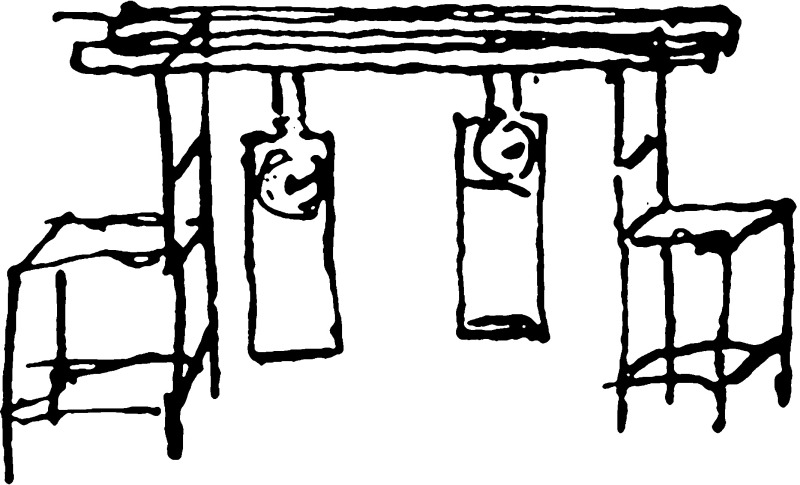
“But should we ascribe “an inferential interpretation of the coupling of the two clocks, in which one clock ‘infers’ the state of the other clock hidden behind the veil of the connecting beam” (Bruineberg et al. 2016)?”
BackgroundInfluentialMechanistic unity of the predictive mind
Gładziejewski, P. (2019) · Theory & Psychology · doi:10.1177/0959354319866258 · Cited by 30
Duquette, P., & Ainley, V. (2019) · Frontiers in Psychology · doi:10.3389/fpsyg.2019.02173 · Cited by 29
The modularity of action and perception revisited using control theory and active inference
Baltieri, M., & Buckley, C. L. (2018) · Conference on Artificial Life (ALIFE) · doi:10.1162/isal_a_00031 · Cited by 17
“Our work provides thus support for hypotheses highlighting how active inference is more in agreement with 4Es theories than with traditional accounts of cognition (Clark, 2015b; Bruineberg et al., 2018; Pezzulo et al., 2017).”
BackgroundMethodResult
Metadata
- Authors
- Bruineberg, J., Kiverstein, J., & Rietveld, E.
- Affiliations
- University of Amsterdam (NL)
- Amsterdam University Medical Centers (NL)
- Amsterdam UMC Location University of Amsterdam (NL)
- Corresponding author
- Bruineberg, Jelle
- Venue
- Synthese
- Published
- 2016-10-21
- Volume
- 195
- Issue
- 6
- Pages
- 2417-2444
- ISSN
- 0039-7857 (ISSN-L)
- 1573-0964
- PMC
- PMC6438652
- OpenAlex
- W2534098824
- Cited by
- 383
- References
- 90
- Citations by year
- 2026: 18 · 2025: 24 · 2024: 34 · 2023: 57 · 2022: 35 · 2021: 41 · 2020: 66 · 2019: 42 · 2018: 46 · 2017: 18 · 2016: 1
- FWCI
- 22.70
- Type
- journal article
- Language
- en
- Open access
- hybrid
- doi.org
- Locations
- Synthese (publishedVersion, cc-by)
- Europe PMC (PubMed Central) (publishedVersion, cc-by)
- PubMed Central (publishedVersion, cc-by)
- PubMed (publishedVersion)
- Pure Amsterdam UMC (publishedVersion, cc-by)
- Data Archiving and Networked Services (DANS) (submittedVersion)
- UvA-DARE (University of Amsterdam) (submittedVersion, cc-by)
- Pure Amsterdam UMC (submittedVersion)
- Data Archiving and Networked Services (DANS) (submittedVersion, other-oa)
- Funders
- NWO (276-20-019)
- European Research Council (ERC-StG679190)
- Topics
- Life Sciences › Neuroscience › Cognitive Neuroscience › Embodied and Extended Cognition
- Social Sciences › Arts and Humanities › History and Philosophy of Science › Philosophy of Biology and Scientific Explanation
- Social Sciences › Arts and Humanities › Philosophy › Philosophy and Theoretical Science
- Keywords
- free energy principle, active inference, predictive coding, unconscious inference, Bayesian inference, self-organization, hypothesis testing, perception
About these checks
Registry, retraction, Cites and statistics results are computed, not judged, with one exception: a printed reference that no index lists is read once by a model before it counts as a citation error. Claims are extracted by a model and kept only when their quote appears verbatim in the text; each cited source is then checked, with a model’s help, for whether it says what the claim relies on. Those verdicts can be wrong — read the claim’s quote and the cited source before relying on one.
Statistics and arithmetic are recomputed, not judged.
Confidence bands are shown only for fields calibrated on our annotated test set. None is calibrated yet, so no band is shown.
What counts as a claim ›How we measure confidence ›How we check this ›
Are you an author, or do you see a problem with this page? Request a review
Data sources
Bibliographic data: Semantic Scholar, OpenAlex, Crossref.
Contains information from the Semantic Scholar Academic Graph Datasets, made available under the ODC Attribution License (ODC-BY 1.0).
Semantic Scholar’s data is described in: Kinney, R., et al. (2023). The Semantic Scholar Open Data Platform. arXiv:2301.10140.
