

SimLab: an intervention to promote expansive learning and organisational change in team-based emergency care simulation
Open accessThe DOI matches its Crossref record; 61 of the 61 references it cites were found in a registry or an index; 6 of the 57 sources its claims cite were checked for support.
Abstract
Research highlights the potential of interprofessional in-situ simulation (ISS); however it is often limited by individualistic outcome measures. Using an activity theoretical design, this research aimed to develop, implement and analyse an ISS programme intended to promote expansive learning and organisational change for paediatric emergencies in general practice. An interprofessional team participated in an adapted Change Laboratory intervention ‘SimLab’, which consisted of four sessions comprising two ISS and four facilitated group discussions. Audio recorded group discussions were transcribed and analysed using activity-theoretical analytical tools, the cycle of expansive learning, and the concept of contradictions. Participants mapped a learning process, from questioning their current practice to consolidation and generalisation of collaboratively designed new practices. This enabled the team to develop their collective expansive learning and adopt a systemic perspective during discussions, enhancing paediatric emergency care preparedness and facilitating organisational change. This research provides new knowledge on theory guided design and instruction applied to paediatric emergency care ISS training in general practice. The study provides tools to improve our understanding of how to pedagogically facilitate and enhance delivery of interprofessional ISS training to enable expansive learning. The SimLab design, is potentially transferrable providing exciting learning opportunities for other clinical settings and contexts.
Overview
CoChat Summary
TL;DR
SimLab is a four-session, activity-theory-guided adaptation of Change Laboratory combining two in-situ simulations with facilitated group discussions for paediatric emergencies in one general practice. It reports that the interprofessional team identified and resolved contradictions, moved through expansive learning actions, and made organisational changes to emergency equipment, roles, and training.
Key findings
- Participants mapped an expansive learning process from questioning current practice to consolidation and generalisation of collaboratively designed new practices, developing a collective and systemic perspective on paediatric emergency care.
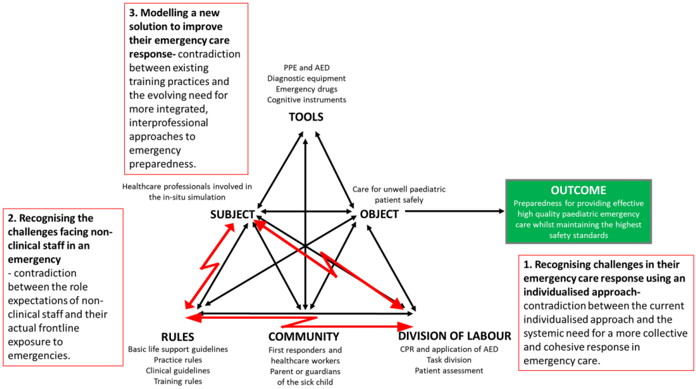
- Three main contradictions were identified: (1) an individualised emergency response versus the need for a collective, cohesive response; (2) role expectations of non-clinical staff versus their actual frontline exposure to emergencies; and (3) existing training practices versus the need for more integrated, interprofessional emergency preparedness.
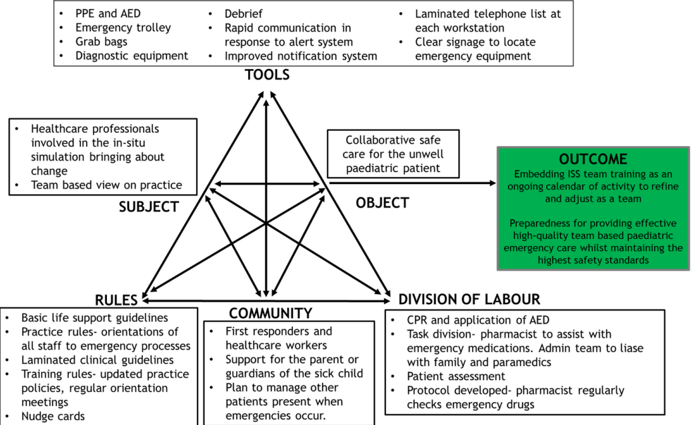
- Resolutions included new practices such as induction/orientation of new staff to emergency equipment, an emergency trolley and “grab bags,” laminated extension-number lists at workstations, notifying the practice-based pharmacist in emergencies and extending their role to regular emergency medication checks, and regular in-situ simulation. In the second ISS, one trainee GP reported equipment access “cut the time in half,” and the pharmacist said “everything was at your fingertips.”
- Before session 4, a real-life paediatric emergency presented to the practice; staff not involved in SimLab managed it, and participants reported the transformed system benefited the response, with a new GP trainee saying prompt cards were easy to follow and paramedics reportedly saying the same.
Methods
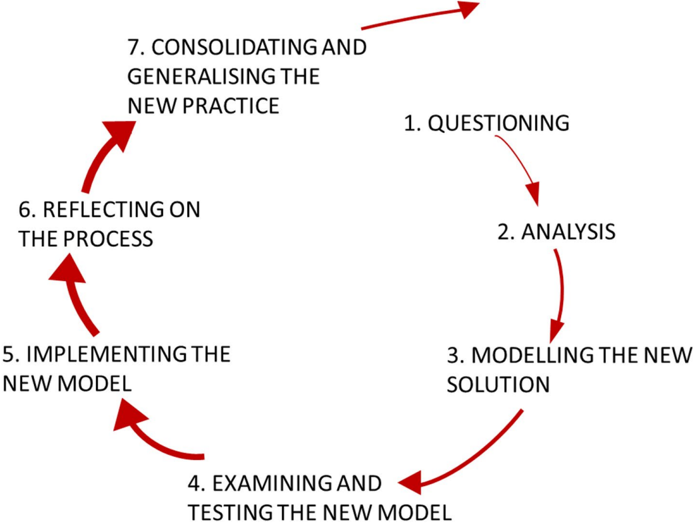
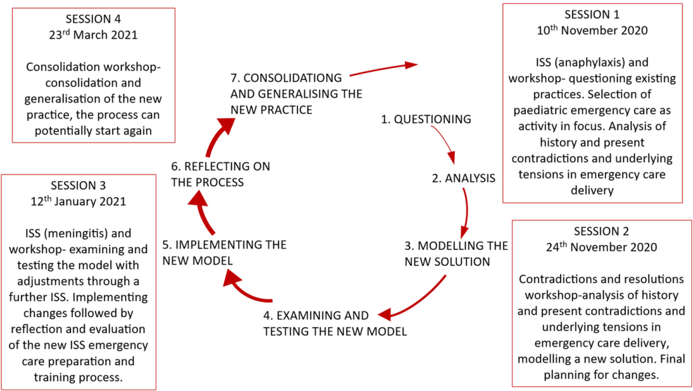
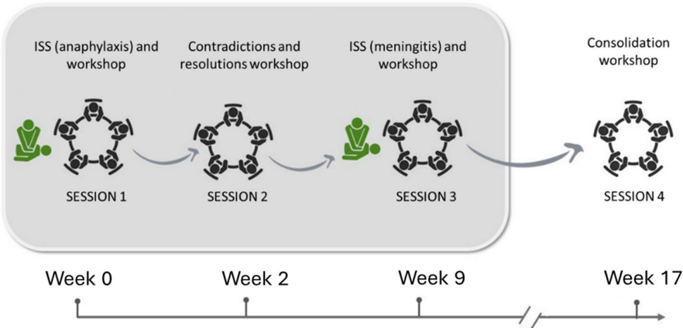
- Design: a longitudinal formative intervention, an adapted Change Laboratory named “SimLab,” delivered over four months from November 2020 to March 2021; four sessions comprised two in-situ simulations (paediatric anaphylaxis and meningitis) and four facilitated group discussions, designed to follow the cycle of expansive learning.
- Sample and setting: one suburban general practice; the interprofessional team included a general practitioner, nursing professional, general practice trainee, practice-based pharmacist, and administration team member; all had prior Basic Life Support training but no in-situ simulation experience; sessions occurred over lunch when the practice was closed, with no patients present.
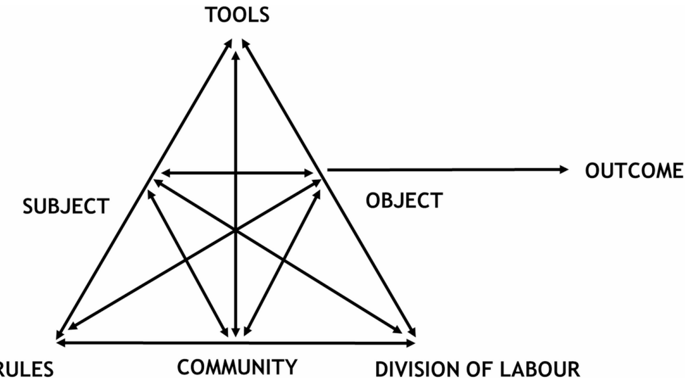
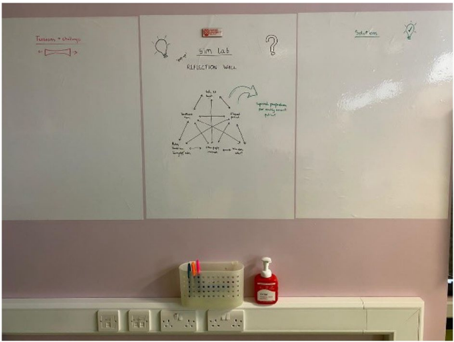
- Data and analysis: 157 minutes of audio-recorded group discussions were transcribed verbatim, complemented by video recordings and reflection wall notes; analysis used Cultural-Historical Activity Theory, the activity system as unit of analysis, Engeström and Sannino’s contradiction framework, and the seven expansive learning actions.
Limitations
- Stated: the study used one suburban GP practice with a small number of participants; it was a case study not intended to be “generalisable,” though the authors argue it is potentially transferable; in-situ simulation is not the same as real-life emergency care, and positive effects during ISS cannot be assumed to transfer to practice.
- Stated: the four field diagrams mapping the Zone of Proximal Development were not demonstrated as a second stimulus; the researchers chose the activity system model as the focus for conveying theory to participants.
- Evident from the text: the design is a single-case qualitative study with no control or comparison group, and the authors were also the researcher interventionists/facilitators; outcomes rely heavily on participant discourse and self-report, although the reported real-life emergency is used as an illustrative follow-up.
Model-written summary. Check it against the paper before relying on it.
Integrity signals
Registry
Cites
Statistics
Figures
Verification
Claims the paper makes
5 Valid · 2 Not valid · 27 Not checked · 96 Own results and interpretations
The cited sources support only part of this claim — read each source’s verdict below.
In the paper
“These paediatric emergencies, in particular, are challenging and General Practitioners (GPs) report that they often feel less prepared in managing such acute and time dependent situations (Ramanayake et al., 2014).”
§ SimLab: an intervention to promote expansive learning and organisational change in team-based emergency care simulation > Introduction
What the sources say
- Partly supportedcites Ramanayake et al., 2014 matched to “Management of emergencies in general practice: Role of general practitioners” (2014) sourceExperimental — accuracy not yet measured
The 'Knowledge and skills' subsection (Competencies Required) states that 'It is a challenge for a primary care doctor to be updated and competent in every emergency that he may come across' and that 'GPs are less comfortable in managing emergencies which they encounter less frequently' — the latter credited in our copy to survey work (refs [2] Bury et al., [3] Dick et al.), so the feeling-of-unpreparedness element is reported here rather than originally measured. However, no passage of our copy addresses paediatric emergencies as such: the paper's examples are adult-weighted (myocardial infarction, ectopic pregnancy, hypoglycaemic coma) with only febrile convulsion and acute asthma touching children, and it never says GPs feel less prepared specifically in children. The paediatric qualifier in the citing sentence is therefore not supported by this source. (LLM, conf=0.75)
plain- Asserted: passes — The authors put it forward as true.
- Checkable: passes — It can be checked against evidence.
- Load-bearing: passes — The paper’s conclusions depend on it.
- Based: passes — The paper gives a reason why it holds.
- Partly supported
Every source the paper cites for this claim was checked and supports it.
In the paper
“There is a lack of published research relating to theoretical work in the field of simulation based education (Hopwood et al., 2016).”
§ SimLab: an intervention to promote expansive learning and organisational change in team-based emergency care simulation > Theory guided simulation
What the sources say
- Supportedcites Hopwood et al., 2016 matched to “Simulation in Higher Education: A sociomaterial view” (2016) source
The Introduction states that a paucity of theoretical work is a feature of the current simulation-pedagogy literature. The section ‘Simulation pedagogy and the need for new theoretical approaches’ likewise calls the paucity of rich theoretical work an explicit concern. This supports the citing sentence’s paraphrase. (LLM, conf=0.94)
plain- Asserted: passes — The authors put it forward as true.
- Checkable: passes — It can be checked against evidence.
- Load-bearing: unclear — It is unclear whether the paper’s conclusions depend on it.
- Based: passes — The paper gives a reason why it holds.
- Supported
The sources with a verdict support this claim; the rest weren’t checked yet, have no full text we could read, or their verdicts aren’t rated yet.
In the paper
“Existing research has evaluated the emerging potential of ISS, but instead of evaluating the whole simulation process -has tended to focus on individualistic outcome measures, such as improved confidence of participants (Strachan et al., 2011;Monachino et al., 2019;Forde et al., 2018).”
§ SimLab: an intervention to promote expansive learning and organisational change in team-based emergency care simulation > Background
What the sources say
- Not checked yetcites Strachan et al., 2011 matched to “What were the perceptions of primary care teams on learning from a single multidisciplinary simulation-based training intervention?” (2011) source
- Not checked yetcites Monachino et al., 2019 matched to “Medical Emergencies in the Primary Care Setting: An Evidence Based Practice Approach Using Simulation to Improve Readiness” (2019) source
- Supportedcites Forde et al., 2018 matched to “Practical management of emergencies in primary care: taking simulation out of the classroom and into real-life environments” (2018) source
Forde et al. (2018) is exactly the kind of study the citing sentence offers it for: an in-situ simulation project run in real GP surgeries with mixed primary care staff (INTRODUCTION, 10 workshops, 71 staff = 59 doctors, 11 practice nurses, 1 HCA), whose reported outcomes are individual-level — self-rated confidence rising from a mean of 4.7 to 7.5 on a 9-point Likert scale (P < 0.01) in 'PARTICIPANTS' CONFIDENCE IN MANAGING EMERGENCIES IN THE COMMUNITY', plus satisfaction ratings and qualitative comments in 'FEEDBACK'. No passage of our copy reports team-, system- or process-level evaluation of the simulation as a whole, so the characterisation 'individualistic outcome measures, such as improved confidence of participants' fits this source. Note the paper itself makes no claim about the state of ISS research; that framing is the citing authors', but the exemplifying citation is accurate. (LLM, conf=0.85)
plain- Asserted: passes — The authors put it forward as true.
- Checkable: passes — It can be checked against evidence.
- Load-bearing: passes — The paper’s conclusions depend on it.
- Based: passes — The paper gives a reason why it holds.
The cited sources support only part of this claim — read each source’s verdict below.
In the paper
“systematic review evidence links team-based training to improved patient outcomes within general practice (Ramanayake et al., 2014).”
§ SimLab: an intervention to promote expansive learning and organisational change in team-based emergency care simulation > Introduction
What the sources say
- Partly supportedcites Ramanayake et al., 2014 matched to “Management of emergencies in general practice: Role of general practitioners” (2014) sourceExperimental — accuracy not yet measured
The Introduction says trained paramedical staff are vital to optimum care, and the Competencies Required section recommends training staff to respond to emergencies. But the paper does not present systematic-review evidence or report that team-based training improved patient outcomes. (LLM, conf=0.84)
plainstates an association- Asserted: passes — The authors put it forward as true.
- Checkable: passes — It can be checked against evidence.
- Load-bearing: passes — The paper’s conclusions depend on it.
- Based: passes — The paper gives a reason why it holds.
- Partly supported
A result the paper reports from its own data — it cites no other source for it, so there is none to check. The quote shows it is in the paper.
In the paper
“This highlights a contradiction between the current individualised approach and the systemic need for a more collective and cohesive response in emergency care.”
§ SimLab: an intervention to promote expansive learning and organisational change in team-based emergency care simulation > Results
plain- Asserted: passes — The authors put it forward as true.
- Checkable: passes — It can be checked against evidence.
- Load-bearing: passes — The paper’s conclusions depend on it.
- Based: passes — The paper gives a reason why it holds.
- Rests on an assumption not shown here.
34 more claims
Create a free account to see all 130 claims and to verify the 51 references still open.
- Probably not a substantial claim. 66
- It may state two separate claims as one. 47
Self-check
Percentages, sums and reported differences re-computed from the paper’s own numbers.
Each contradiction between two passages listed here was confirmed by an independent check.
Rated minor: it would not touch a result — a value no result rests on, a p-value that stays on the same side of the significance level, or a conflict that is clerical, resolved elsewhere in the paper, or outside its own findings.
In the paper
§ SimLab: an intervention to promote expansive learning and organisational change in team-based emergency care simulation > The change laboratory method
“A typical CL includes participation in (maximum of) ten sessions and several follow up sessions.”
§ SimLab: an intervention to promote expansive learning and organisational change in team-based emergency care simulation > Methods
“A CL usually involves participants attending up to twelve sessions with one or two additional follow up meetings (Virkkunen & Newnham, 2013).”
Citations
Cites
Learning by Expanding: An Activity-Theoretical Approach to Developmental Research
Engeström, Y. (2014) · Cambridge University Press eBooks · doi:10.1017/cbo9781139814744 · Cited by 4,991 · cited 13×
“Cultural-historical activity theory (CHAT) includes theory of expansive learning (Engeström, 2015).”
InfluentialCrowe, S., Cresswell, K., Robertson, A., Huby, G., Avery, A., & Sheikh, A. (2011) · BMC Medical Research Methodology · doi:10.1186/1471-2288-11-100 · Cited by 2,697 · cited 1×
“The study was based at one suburban general practice with a case study approach (Crowe et al., 2011).”
Studies of expansive learning: Foundations, findings and future challenges
Engeström, Y., & Sannino, A. (2010) · Educational Research Review · doi:10.1016/j.edurev.2009.12.002 · Cited by 1,655 · cited 2×
“1) includes six elements of human activity (Table 1) and “enables a collaborative enquiry into systemic contradictions” (Engeström & Sannino, 2010; Engeström, 2015).”
Eppich, W., & Cheng, A. (2015) · Simulation in Healthcare: The Journal of the Society for Simulation in Healthcare · doi:10.1097/sih.0000000000000072 · Cited by 1,106 · cited 3×
“Previous research (Eppich & Cheng, 2015a) has described how a CHAT guided debrief could potentially be incorporated with PEARLs.”
Engeström, Y., & Sannino, A. (2011) · Journal of Organizational Change Management · doi:10.1108/09534811111132758 · Cited by 547 · cited 4×
“Table 2 Learning actions in the expansive learning process adapted from (Engeström, 2015) This is important as the identification of challenges in complex work practices can become catalysts for change (Bøje et al., 2021; Engeström & Sannino, 2011).”
InfluentialSimulation in Medical Education
So, H. Y., Chen, P. P., Wong, G. K. C., & Chan, T. T. N. (2019) · Journal of the Royal College of Physicians of Edinburgh · doi:10.4997/jrcpe.2019.112 · Cited by 360
(1996) · Lifelong learning in Europe · Cited by 340
The emergence of learners’ transformative agency in a Change Laboratory intervention
Haapasaari, A., Engeström, Y., & Kerosuo, H. (2016) · Journal of Education and Work · doi:10.1080/13639080.2014.900168 · Cited by 259 · cited 1×
“2 Cycle of expansive learning adapted from Engeström (2015) ment changes beyond the accepted conditions of an activity through collaboration and discourse (Virkkunen, 2006; Haapasaari et al., 2016).”
The principle of double stimulation: A path to volitional action
Sannino, A. (2015) · Learning, Culture and Social Interaction · doi:10.1016/j.lcsi.2015.01.001 · Cited by 248 · cited 1×
“Through deliberate facilitation of double stimulation participants were presented with mirror data to highlight problematic activity, challenges in their collective activity and stimulate discussion (Sannino, 2015).”
Virkkunen, J., & Newnham, D. S. (2013) · doi:10.1007/978-94-6209-326-3 · Cited by 245
Dilemmas in building shared transformative agency
Virkkunen, J. (2006) · Activites · doi:10.4000/activites.1850 · Cited by 203 · cited 1×
“2 Cycle of expansive learning adapted from Engeström (2015) ment changes beyond the accepted conditions of an activity through collaboration and discourse (Virkkunen, 2006; Haapasaari et al., 2016).”
Expansive Learning in a Library: Actions, Cycles and Deviations from Instructional Intentions
Engeström, Y., Rantavuori, J., & Kerosuo, H. (2013) · Vocations and Learning · doi:10.1007/s12186-012-9089-6 · Cited by 163 · cited 1×
“If this process is successful, the participants will move through the seven learning actions in the learning cycle (Table 2) and qualitative transformation will occur in all aspects of the activity system (Engeström, 2007, Engeström et al., 2013, Nummijoki et al., 2018).”
Using activity theory to transform medical work and learning
Engeström, Y., & Pyörälä, E. (2021) · Medical Teacher · doi:10.1080/0142159x.2020.1795105 · Cited by 160 · cited 4×
“There have been several examples of CL interventions in medical education (Reid et al., 2015; Dornan et al., 2021; Engeström & Pyörälä, 2021) and healthcare (Skipper, 2016; Vilela et al., 2020; Morris et al., 2021; Kerosuo et al., 2010 ).”
InfluentialTransformative agency as warping: how collectives accomplish change amidst uncertainty
Sannino, A. (2022) · Pedagogy, Culture & Society · doi:10.1080/14681366.2020.1805493 · Cited by 132 · cited 1×
“Transformative agency and expansive learning are intertwined, transformative agency is both part of the expansive learning process and an outcome for collective participants (Sannino, 2020).”
Cognitive Load Theory for debriefing simulations: implications for faculty development
Fraser, K. L., Meguerdichian, M. J., Haws, J. T., Grant, V. J., Bajaj, K., & Cheng, A. (2018) · Advances in Simulation · doi:10.1186/s41077-018-0086-1 · Cited by 132 · cited 1×
“Another important component of simulation design to consider for psychological safety includes debrief (Holmes & Mellanby, 2022; Fraser et al., 2018).”
Role of in-situ simulation for training in healthcare
Kurup, V., Matei, V. A., & Ray, J. M. (2017) · Current Opinion in Anaesthesiology · doi:10.1097/aco.0000000000000514 · Cited by 127 · cited 2×
“It has a long history in healthcare, originating in 18th Century France (Buck, 1991), and it has achieved recognition as an important and useful training modality in healthcare education (Viji et al., 2017; Bearman et al., 2019; Cook et al., 2018).”
Theory in medical education research: how do we get there?
Rees, C. E., & Monrouxe, L. V. (2010) · Medical Education · doi:10.1111/j.1365-2923.2009.03615.x · Cited by 119 · cited 1×
“The emphasis on integrating theory into medical education research (Varpio et al., 2017; Rees & Monrouxe, 2010; Prideaux & Spencer, 2000) suggests that action research may face challenges in meeting these expectations, as it does not inherently provide a theoretical framework for design and…”
The value proposition of simulation-based education
Cook, D. A., Andersen, D. K., Combes, J. R., Feldman, D. L., & Sachdeva, A. K. (2018) · Surgery · doi:10.1016/j.surg.2017.11.008 · Cited by 109 · cited 1×
“It has a long history in healthcare, originating in 18th Century France (Buck, 1991), and it has achieved recognition as an important and useful training modality in healthcare education (Viji et al., 2017; Bearman et al., 2019; Cook et al., 2018).”
Rooney, D., Hopwood, N., Boud, D. J., & Kelly, M. (2015) · Vocations and Learning · doi:10.1007/s12186-015-9138-z · Cited by 106 · cited 1×
“Proceeding through the learning actions of expansive learning participants were enabled and empowered become agile learners (Rooney et al., 2015) and design their own solutions to the problems highlighted through mirror data.”
Transformative agency: The challenges of sustainability in a long chain of double stimulation
Haapasaari, A., & Kerosuo, H. (2014) · Learning Culture and Social Interaction · doi:10.1016/j.lcsi.2014.07.006 · Cited by 100 · cited 1×
“6 Prototypical layout of CL adapted from (Engeström et al., 1996) 1 3 to facilitate collaborative discussions and provide a systemic view on contradictions stimulated by mirror data and identified by the interprofessional team (Haapasaari & Kerosuo, 2015).”
Beyond Discontinuity: Expansive Organizational Learning Remembered
Engeström, Y., Kerosuo, H., & Kajamaa, A. (2007) · Management Learning · doi:10.1177/1350507607079032 · Cited by 96 · cited 3×
“If this process is successful, the participants will move through the seven learning actions in the learning cycle (Table 2) and qualitative transformation will occur in all aspects of the activity system (Engeström, 2007, Engeström et al., 2013, Nummijoki et al., 2018).”
Self-citationDevelopment of simulators in medical education
Buck, G. H. (1991) · Gesnerus · doi:10.1163/22977953-04801002 · Cited by 96 · cited 1×
“It has a long history in healthcare, originating in 18th Century France (Buck, 1991), and it has achieved recognition as an important and useful training modality in healthcare education (Viji et al., 2017; Bearman et al., 2019; Cook et al., 2018).”
Simulation in Higher Education: A sociomaterial view
Hopwood, N., Rooney, D., Boud, D., & Kelly, M. (2016) · Educational Philosophy and Theory · doi:10.1080/00131857.2014.971403 · Cited by 88
The power of simulation: a large‐scale narrative analysis of learners’ experiences
Bearman, M., Greenhill, J., & Nestel, D. (2019) · Medical Education · doi:10.1111/medu.13747 · Cited by 79
Tackling wicked problems: how theories of agency can provide new insights
Varpio, L., Aschenbrener, C., & Bates, J. (2017) · Medical Education · doi:10.1111/medu.13160 · Cited by 75 · cited 2×
“Several articles which emphasise the importance of theory within the field of healthcare edu - cation to help respond to the complexity of problems in health professions education (Varpio et al., 2017; Prideaux & Spencer, 2000; Conn et al., 2020).”
Tying knots: an activity theory analysis of student learning goals in clinical education
Larsen, D. P., Wesevich, A., Lichtenfeld, J., Artino, A. R., Brydges, R., & Varpio, L. (2017) · Medical Education · doi:10.1111/medu.13295 · Cited by 61 · cited 2×
“In CHAT studies (Larsen et al., 2017; Kajamaa, 2011) the focus is on collectives and organisational change which occurs through the emergence of transformative agency, the expansive movement from the individual to collective through improved understanding towards enhanced ways of working (Hopwood &…”
Management of emergencies in general practice: Role of general practitioners
Ramanayake, R. P. J. C., Ranasingha, S., & Lakmini, S. (2014) · Journal of Family Medicine and Primary Care · doi:10.4103/2249-4863.148089 · Cited by 57 · cited 2×
“These paediatric emergencies, in particular, are challenging and General Practitioners (GPs) report that they often feel less prepared in managing such acute and time dependent situations (Ramanayake et al., 2014).”
Theory and Simulation-Based Education: Definitions, Worldviews and Applications
Nestel, D., & Bearman, M. (2015) · Clinical Simulation in Nursing · doi:10.1016/j.ecns.2015.05.013 · Cited by 50 · cited 1×
“This study also answers previous calls for the incorporation of theory to simulation design to provide an improved understanding of how to further simulation as a pedagogy (Eppich & Reedy, 2022; Nestel & Bearman, 2015 ).”
Promoting Innovation and Learning Through Change Laboratory : An Example from Finnish Health Care
Kerosuo, H., Kajamaa, A. M., & Engeström, Y. (2010) · Central European Journal of Public Policy · Cited by 50
Self-citationAdvancing healthcare simulation research: innovations in theory, methodology, and method
Eppich, W., & Reedy, G. B. (2022) · Advances in Simulation · doi:10.1186/s41077-022-00219-y · Cited by 50 · cited 2×
“This study also answers previous calls for the incorporation of theory to simulation design to provide an improved understanding of how to further simulation as a pedagogy (Eppich & Reedy, 2022; Nestel & Bearman, 2015 ).”
The Changing Landscape of Simulation-Based Education
Morse, C., Fey, M. K., Kardong‐Edgren, S., Mullen, A., Barlow, M., & Barwick, S. (2019) · AJN American Journal of Nursing · doi:10.1097/01.naj.0000577436.23986.81 · Cited by 47 · cited 1×
“Simulation modalities, scenario designs, pre-brief and debrief, psychological safety and training goals incorporating the complexity of care are thus important elements, which require careful consideration in planning the design and instruction for ISS trainings (Morse et al., 2019, (ASPiH), 2016).”
Kajamaa, A. M. (2011) · Helda - University of Helsinki Institutional Repository · Cited by 43
Self-citationKajamaa, A. M., Mattick, K. L., Parker, H., Hilli, A., & Rees, C. E. (2019) · BMJ Open · doi:10.1136/bmjopen-2018-028733 · Cited by 42
Self-citationDebriefing strategies for interprofessional simulation—a qualitative study
Holmes, C., & Mellanby, E. (2022) · Advances in Simulation · doi:10.1186/s41077-022-00214-3 · Cited by 42 · cited 1×
“Another important component of simulation design to consider for psychological safety includes debrief (Holmes & Mellanby, 2022; Fraser et al., 2018).”
Activity theory: mediating research in medical education
Johnston, J., & Dornan, T. (2015) · Wiley eBooks · doi:10.1002/9781118838983.ch9 · Cited by 40 · cited 2×
“Healthcare is an example of an organisation that is a dynamic system continually undergoing change, CHAT responds to this through the observation of historically rooted contradictions and future orientated activity 1 3 (Engeström & Pyörälä, 2021; Qureshi, 2021; Johnston & Dornan, 2015).”
Twenty-five years of change laboratories in schools: a critical and formative review
Hopwood, N. (2024) · Educational Action Research · doi:10.1080/09650792.2024.2379343 · Cited by 39 · cited 1×
“…theory into medical education research (Varpio et al., 2017; Rees & Monrouxe, 2010; Prideaux & Spencer, 2000) suggests that action research may face challenges in meeting these expectations, as it does not inherently provide a theoretical framework for design and analysis (Hopwood, 2024).”
Qureshi, S. P. (2021) · Advances in Medical Education and Practice · doi:10.2147/amep.s313250 · Cited by 37 · cited 4×
“Healthcare is an example of an organisation that is a dynamic system continually undergoing change, CHAT responds to this through the observation of historically rooted contradictions and future orientated activity 1 3 (Engeström & Pyörälä, 2021; Qureshi, 2021; Johnston & Dornan, 2015).”
InfluentialDefensive and Expansive Cycles of Learning: A Study of Home Care Encounters
Nummijoki, J., Engeström, Y., & Sannino, A. (2018) · Journal of the Learning Sciences · doi:10.1080/10508406.2017.1412970 · Cited by 31 · cited 2×
“If this process is successful, the participants will move through the seven learning actions in the learning cycle (Table 2) and qualitative transformation will occur in all aspects of the activity system (Engeström, 2007, Engeström et al., 2013, Nummijoki et al., 2018).”
Reid, A.-M., Ledger, A., Kilminster, S., & Fuller, R. (2015) · Advances in Health Sciences Education · doi:10.1007/s10459-014-9553-1 · Cited by 31 · cited 1×
“There have been several examples of CL interventions in medical education (Reid et al., 2015; Dornan et al., 2021; Engeström & Pyörälä, 2021) and healthcare (Skipper, 2016; Vilela et al., 2020; Morris et al., 2021; Kerosuo et al., 2010 ).”
Expansive learning in medical education: Putting Change Laboratory to work
Morris, C., Reid, A.-M., Ledger, A., & Teodorczuk, A. (2021) · Medical Teacher · doi:10.1080/0142159x.2020.1796948 · Cited by 31 · cited 2×
“There have been several examples of CL interventions in medical education (Reid et al., 2015; Dornan et al., 2021; Engeström & Pyörälä, 2021) and healthcare (Skipper, 2016; Vilela et al., 2020; Morris et al., 2021; Kerosuo et al., 2010 ).”
How Cultural-Historical Activity Theory can Inform Interprofessional Team Debriefings
Eppich, W., & Cheng, A. (2015) · Clinical Simulation in Nursing · doi:10.1016/j.ecns.2015.05.012 · Cited by 28 · cited 3×
“Previous research (Eppich & Cheng, 2015a) has described how a CHAT guided debrief could potentially be incorporated with PEARLs.”
The paediatric change laboratory: optimising postgraduate learning in the outpatient clinic
Skipper, M., Musaeus, P., & Nøhr, S. B. (2016) · BMC Medical Education · doi:10.1186/s12909-016-0563-y · Cited by 27
Halls, A., Kanagasundaram, M., Lau‐Walker, M., Diack, H., & Bettles, S. (2019) · BMJ Open · doi:10.1136/bmjopen-2018-028572 · Cited by 23 · cited 1×
“Other work in the field of ISS has also acknowledged that more research is required to refine primary care ISS scenarios (Halls et al., 2019).”
Monachino, A., Caraher, C., Ginsberg, J., Bailey, C., & White, E. (2019) · Journal of Pediatric Nursing · doi:10.1016/j.pedn.2019.09.017 · Cited by 22 · cited 2×
“This research extends previous work in in-situ simulations directed to general practitioners (Monachino et al., 2019; Forde et al., 2018) by viewing contradictions as catalysts for organisational change.”
On theory in medical education
Prideaux, D. J., & Spencer, J. (2000) · Medical Education · doi:10.1046/j.1365-2923.2000.00825.x · Cited by 22 · cited 2×
“Several articles which emphasise the importance of theory within the field of healthcare edu - cation to help respond to the complexity of problems in health professions education (Varpio et al., 2017; Prideaux & Spencer, 2000; Conn et al., 2020).”
In-Situ Simulation Enhances Emergency Preparedness in Pediatric Care Practices
Kalidindi, S., Kirk, M., & Griffith, E. G. (2018) · Cureus · doi:10.7759/cureus.3389 · Cited by 20 · cited 2×
“However, more information is needed on its effects and impacts on team training (Shiva Kalidindi, 2018).”
Strachan, A. N., Graham, A. C., Hormis, A. P., & Hilton, G. (2011) · Education for Primary Care · doi:10.1080/14739879.2011.11494005 · Cited by 19 · cited 4×
“…train personnel in high acuity, low frequency events, such as medical emergencies (Sanseau et al., 2018; Yuknis et al., 2022), but existing approaches are often individually focused and take place outside the clinical context such as a simulation centre (Weller et al., 2005; Strachan et al., 2011).”
InfluentialGormley, G. J., Kajamaa, A., Conn, R. L., & O’Hare, S. (2020) · Advances in Simulation · doi:10.1186/s41077-020-00148-8 · Cited by 19 · cited 4×
“Application of adult learning theories is considered important also to help ensure effective delivery of simulation training (So et al., 2019b; Gormley et al., 2020).”
InfluentialSelf-citationThe change laboratory in medical education: Two examples of tackling contradictory challenges
Skipper, M., Nøhr, S. B., & Engeström, Y. (2021) · Medical Education · doi:10.1111/medu.14298 · Cited by 17 · cited 1×
“For this reason, some studies (Skipper et al., 2021, Skipper, 2016) have advised how researchers among medical education could modify a CL, to better suit the complex setting in which it is delivered.”
Hopwood, N., Sannino, A., Stetsenko, A., et al. (2023) · Cambridge University Press eBooks · doi:10.1017/9781009153799 · Cited by 14
(2012) · Policy Press eBooks · doi:10.56687/9781447300144 · Cited by 13
Pediatric Simulation Cases for Primary Care Providers: Asthma, Anaphylaxis, Seizure in the Office
Sanseau, E., Reid, J. R., Stone, K. P., et al. (2018) · MedEdPORTAL · doi:10.15766/mep_2374-8265.10762 · Cited by 12 · cited 1×
“Simulation is also well placed to train personnel in high acuity, low frequency events, such as medical emergencies (Sanseau et al., 2018; Yuknis et al., 2022), but existing approaches are often individually focused and take place outside the clinical context such as a simulation centre (Weller et…”
Forde, E., Bromilow, J., & Wedderburn, C. (2018) · BMJ Simulation and Technology Enhanced Learning · doi:10.1136/bmjstel-2016-000166 · Cited by 9 · cited 4×
“In general practice, staff for example, are often mandated to attend regular cardio-pulmonary resuscitation (CPR) training, which provides individualised guidance on the delivery of high-quality chest compressions and basic life support (Forde et al., 2018).”
InfluentialSimulation training for medical emergencies in general practice
Weller, J., Dowell, A., Kljakovic, M., & Robinson, B. (2005) · Medical Education · doi:10.1111/j.1365-2929.2005.02291.x · Cited by 9 · cited 3×
“…train personnel in high acuity, low frequency events, such as medical emergencies (Sanseau et al., 2018; Yuknis et al., 2022), but existing approaches are often individually focused and take place outside the clinical context such as a simulation centre (Weller et al., 2005; Strachan et al., 2011).”
Yuknis, M. L., Abulebda, K., Whitfill, T., Pearson, K. J., Montgomery, E. E., & Auerbach, M. A. (2022) · Academic Pediatrics · doi:10.1016/j.acap.2022.03.018 · Cited by 9 · cited 1×
“Simulation is also well placed to train personnel in high acuity, low frequency events, such as medical emergencies (Sanseau et al., 2018; Yuknis et al., 2022), but existing approaches are often individually focused and take place outside the clinical context such as a simulation centre (Weller et…”
Bøje, R. B., Musaeus, P., Sørensen, D., & Ludvigsen, M. S. (2021) · Nurse Education Today · doi:10.1016/j.nedt.2021.104950 · Cited by 9 · cited 1×
“Table 2 Learning actions in the expansive learning process adapted from (Engeström, 2015) This is important as the identification of challenges in complex work practices can become catalysts for change (Bøje et al., 2021; Engeström & Sannino, 2011).”
Dornan, T., Kearney, G. P., & Pyörälä, E. (2021) · Medical Teacher · doi:10.1080/0142159x.2020.1795102 · Cited by 7 · cited 1×
“There have been several examples of CL interventions in medical education (Reid et al., 2015; Dornan et al., 2021; Engeström & Pyörälä, 2021) and healthcare (Skipper, 2016; Vilela et al., 2020; Morris et al., 2021; Kerosuo et al., 2010 ).”
Activity Theory in Health Professions Education Research and Practice
Conn, R., Gormley, G., O’Hare, S., & Kajamaa, A. M. (2023) · Springer eBooks · doi:10.1007/978-981-15-3344-0_30 · Cited by 6
Self-citationLearning in and from Change Laboratory Interventions for Developing Workers’ Health in Brazil
Vilela, R. A. D. G., Querol, M. A. P., Silva-Macaia, A. A., & Hurtado, S. L. B. (2020) · Collaborative Development for the Prevention of Occupational Accidents and Diseases · doi:10.1007/978-3-030-24420-0_15 · Cited by 3 · cited 2×
“There have been several examples of CL interventions in medical education (Reid et al., 2015; Dornan et al., 2021; Engeström & Pyörälä, 2021) and healthcare (Skipper, 2016; Vilela et al., 2020; Morris et al., 2021; Kerosuo et al., 2010 ).”
Kajamaa, A. M., Lahtinen, P., Mattick, K. L., & Bethune, R. M. (2024) · Medical Education · doi:10.1111/medu.15407 · Cited by 2 · cited 1×
“There are several studies which use CHAT in the context of medical education and health care (Kajamaa et al., 2024; Larsen et al., 2017; Qureshi, 2021, Kajamaa).”
Self-citationActivity theory in health professions education research and practice
Conn, R., Gormley, G., O’Hare, S., et al. (2021) · Research Portal (Queen's University Belfast) · doi:10.1007/978-981-13-6106-7_30-1 · Cited by 1 · cited 1×
“Several articles which emphasise the importance of theory within the field of healthcare edu - cation to help respond to the complexity of problems in health professions education (Varpio et al., 2017; Prideaux & Spencer, 2000; Conn et al., 2020).”
Self-citation
Research works printed but not linked: 4
- http://europepmc.org/articles/PMC6342362
- http://europepmc.org/articles/PMC6342362?pdf=render
- 50. Sanseau, E., Reid, J., Stone, K., Burns, R., & Uspal, N. (2018). Pediatric Simulation Cases for Primary Care Providers: Asthma, Anaphylaxis, Seizure in the Office. MedEdPORTAL: the journal of teaching and learning resources [Online], 14. Available: http://europepmc.org/abstract/MED/30800962 · DOI
- 56. So, H. Y., Chen, P. P., Wong, G. K. C., & Chan, T. T. N. (2019a). Simulation in medical education. J R Coll Physicians Edinb, 49, 52-57. · DOI · Paper page
Cited by
Sellberg, C., & Lindwall, O. (2025) · Instructional Science · doi:10.1007/s11251-025-09763-2 · Cited by 17
“O’Hare et al. (2025) position simulation within organisational learning design, where debriefing becomes a mechanism for collective inquiry and the expansive redesign of rou - tines rather than mere error correction.”
Wiig, A. C., & Säljö, R. (2026) · Vocations and Learning · doi:10.1007/s12186-026-09392-x
Malm, M., Flodin, E., Ramberg, A., Okwori, E., Flydén, Å., & Marklund, L. (2026) · H2Open Journal · doi:10.2166/h2oj.2025.051 · Cited by 1
Metadata
- Authors
- O’Hare, S., Kajamaa, A., Conn, R., & Gormley, G.
- Affiliations
- Queen's University Belfast (GB)
- University of Oulu (FI)
- University of Ulster (GB)
- Corresponding author
- O’Hare, Sarah
- Venue
- Instructional Science
- Published
- 2025-07-28
- Volume
- 53
- Issue
- 6
- Pages
- 1809-1838
- ISSN
- 0020-4277 (ISSN-L)
- 1573-1952
- OpenAlex
- W4412905202
- Cited by
- 3
- References
- 61
- Citations by year
- 2026: 2 · 2025: 1
- FWCI
- 1.94
- Type
- journal article
- Language
- en
- Open access
- hybrid
- doi.org
- Licence
- cc-by
- creativecommons.org/licenses/by/4.0 (tdm)
- creativecommons.org/licenses/by/4.0 (vor)
- Locations
- Instructional Science (publishedVersion, cc-by)
- Ulster University Research Portal (Ulster University) (publishedVersion, cc-by)
- Research Portal (Queen's University Belfast) (publishedVersion, cc-by)
- Funders
- KN Cheung SK Chin Scholarship and Public Health Agency - HSC Research and Development Office and General Practice Academic Research Training Scheme (Reference number: EAT/5533/19.)
- Topics
- Social Sciences › Education › Simulation-Based Education in Healthcare
- Social Sciences › Education › Innovative Education and Learning Practices
- Social Sciences › Education › Innovations in Medical Education
- Keywords
- expansive learning, organizational change, pediatric emergency care, general practice, Change Laboratory, activity theory, contradiction, group discussion facilitation, disaster preparedness, systems approach
About these checks
Registry, retraction, Cites and statistics results are computed, not judged, with one exception: a printed reference that no index lists is read once by a model before it counts as a citation error. Claims are extracted by a model and kept only when their quote appears verbatim in the text; each cited source is then checked, with a model’s help, for whether it says what the claim relies on. Those verdicts can be wrong — read the claim’s quote and the cited source before relying on one.
The claim verdicts this report counts are experimental: their accuracy is not yet measured.
A language model drew the claims from the paper on 2026-09-29, under version 3 of the claim definition (model deepseek-v4.1-flash, prompt extract-v3).
A second model labelled each claim on 2026-09-29 (model jev-1.13-20260917, definition revision gold-guideline-v0.2).
Cited sources are checked with a language model’s help (qwen3.8-omni-flash and gpt-6-sol).
Statistics and arithmetic are recomputed, not judged.
Confidence bands are shown only for fields calibrated on our annotated test set. None is calibrated yet, so no band is shown.
What counts as a claim ›How we measure confidence ›How we check this ›
Are you an author, or do you see a problem with this page? Request a review
Data sources
Bibliographic data: Semantic Scholar, OpenAlex, Crossref.
Contains information from the Semantic Scholar Academic Graph Datasets, made available under the ODC Attribution License (ODC-BY 1.0).
Semantic Scholar’s data is described in: Kinney, R., et al. (2023). The Semantic Scholar Open Data Platform. arXiv:2301.10140.
