

Financial literacy, financial advice, and financial behavior
Open accessThe DOI matches its Crossref record; 199 of the 204 references it cites were found in a registry or an index, and 1 are not checked yet; 42 of the 189 sources its claims cite were checked for support.
Abstract
In this survey, we review the voluminous body of literature on the measurement and the determinants of financial literacy... Our survey suggests that the evidence with respect to the effectiveness of the programs is rather disappointing.
Verified 2026-11-25 · 1 reference not checked yet
Overview
CoChat Summary
TL;DR
This survey reviews the literature on measuring and explaining financial literacy and its links to financial behavior, financial education, and professional advice, supplementing the review with descriptive evidence from the German Panel on Household Finances (PHF). It finds generally low but heterogeneous financial literacy, disappointing evidence on financial education effectiveness, and inconclusive evidence on whether financial advice substitutes for financial literacy.
Key findings
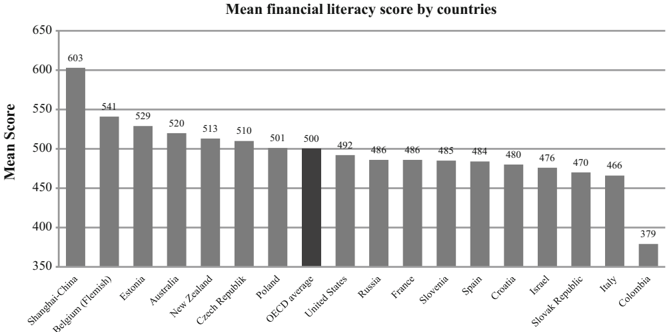
- Financial literacy is generally low and heterogeneous. In the PHF, 59% answered all Big Three questions correctly; Germany ranks among the highest worldwide (66% in the S&P FinLit Survey, 53% in SAVE, 59% in PHF), while transition economies can be as low as 4%.
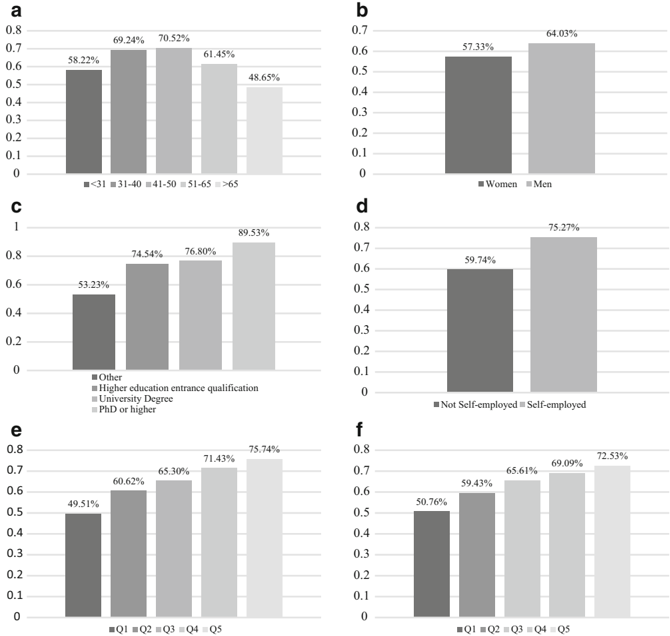
- Demographic gaps are large: in PHF, 64% of men versus 57% of women answered all Big Three correctly; highest educational attainment ~90% versus least educated 53%; highest income quintile 76% versus lowest 50%; highest wealth quintile 73% versus lowest 51%; age shows a hump shape, with >65 at 47%, <30 at 58%, and those in their forties at 70%.
- Financial education evidence is disappointing: Fernandes et al. (2014), meta-analyzing 90 studies, find financial education interventions explain no more than 0.1% of the variance in financial behavior, with effects declining over time and little impact when decisions are made 20 months or later.
- Financial advice as a substitute for literacy is inconclusive: some studies find low-literate individuals are less likely to seek advice, but once advice is obtained, low-literate individuals are most likely to follow it; overconfidence may reduce advice-seeking.
Methods
- Literature survey/review covering conceptualizations and measurement of financial literacy, determinants, financial behavior, financial education, and financial advice, including cross-country comparisons and summary tables.
- Supplemented with novel descriptive evidence from the first wave of the German PHF: face-to-face CAPI interviews between September 2010 and July 2011 with the financially knowledgeable person in 3,565 households, representative of the German population; analyses use survey weights and multiple imputation.
- Reviews studies using the Big Three, extended measures, PISA 2012, the S&P Global FinLit Survey, and discusses endogeneity and instrumental-variable approaches.
Limitations
- Stated: there is no universally accepted definition or operationalization of financial literacy; test-based measures have caveats including lack of incentives, no access to outside information, framing sensitivity, guessing, and measurement error; household survey data quality has declined; endogeneity complicates causal interpretation; evidence on financial advice and education effectiveness is mixed or inconclusive.
- Evident: as a survey, most reviewed evidence is correlational and non-experimental; the PHF component is descriptive rather than causal; the review emphasizes Germany and the U.S., with limited cross-country comparability.
Model-written summary. Check it against the paper before relying on it.
Integrity signals
Registry
Cites
Statistics
Figures
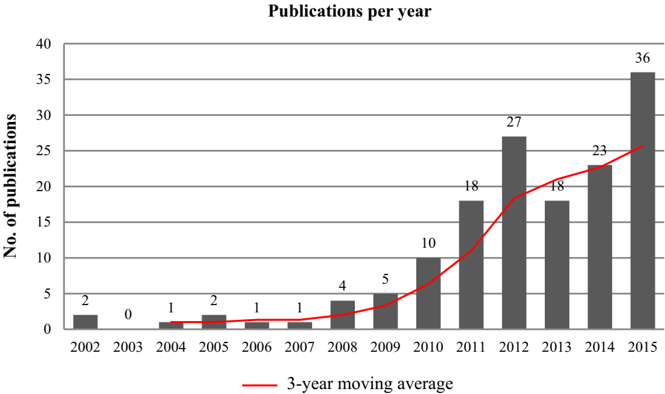
Verification
Claims the paper makes
34 Valid · 3 Not valid · 123 Not checked · 71 Own results and interpretations
Every source the paper cites for this claim was checked and supports it.
In the paper
“Hastings et al. (2013) document that respondents with higher cognitive abilities and more comfortable with numerical calculations on average exhibit higher levels of financial literacy.”
§ Financial literacy, financial advice, and financial behavior > 2.1.2 Cognitive abilities versus financial literacy
What the sources say
- Supportedcites Hastings et al. (2013) matched to “Financial Literacy, Financial Education, and Economic Outcomes” (2013) source
Section 4 (page not provided) states that individuals with higher general cognitive abilities or greater facility with numbers and numerical calculations tend to have higher financial literacy. This directly supports the citing sentence's association without implying causation. (LLM, conf=0.94)
plainstates an association- Asserted: passes — The authors put it forward as true.
- Checkable: passes — It can be checked against evidence.
- Load-bearing: unclear — It is unclear whether the paper’s conclusions depend on it.
- Based: passes — The paper gives a reason why it holds.
- Supported
The cited sources support only part of this claim — read each source’s verdict below.
In the paper
“In fact, the percentage of correct answers doubled in the latter study when the wording for the third question of the Big Three was ''buying company stock usually provides a safer return than a stock mutual fund'' as compared to phrasing the question reversely”
§ Financial literacy, financial advice, and financial behavior > 2.2.3 Caveats of test-based financial literacy measures
What the sources say
- Partly supportedcites van Rooij et al. (2011b) matched to “Financial literacy and stock market participation” (2011) sourceExperimental — accuracy not yet measured
Box 2, p. 13, says the number of correct answers doubled for the quoted wording compared with its reverse. Box 2, pp. 12–13, presents this as an advanced financial-literacy question, not as the third question of the “Big Three”; that identification is not supported by our copy. (LLM, conf=0.85)
plainstates a cause- Asserted: passes — The authors put it forward as true.
- Checkable: passes — It can be checked against evidence.
- Load-bearing: passes — The paper’s conclusions depend on it.
- Based: passes — The paper gives a reason why it holds.
- Partly supported
Every source the paper cites for this claim was checked and supports it.
In the paper
“Choi et al. (2011) investigate contributions to 401(k) plans by employees who are eligible for an employer match and find that a large fraction of these employees either do not participate at all or contribute less than the amount required to be granted the full employer match, thus foregoing matching contributions which cumulate to substantial losses over time.”
§ Financial literacy, financial advice, and financial behavior > 1 Introduction
What the sources say
- Supportedcites Choi et al. (2011) matched to “$100 Bills on the Sidewalk: Suboptimal Investment in 401(k) Plans” (2011) source
Split into 2 atoms — 2 confirmed, 0 partially supported, 0 disputed, 0 misattributed, 0 unverifiable. Expand the claim to see per-atom verdicts.
plain- Asserted: passes — The authors put it forward as true.
- Checkable: passes — It can be checked against evidence.
- Load-bearing: passes — The paper’s conclusions depend on it.
- Based: passes — The paper gives a reason why it holds.
- Supported
The cited sources support only part of this claim — read each source’s verdict below.
In the paper
“Specifically, Lusardi and Mitchell (2011a, b) and van Rooij et al. (2011b) document that the answers of survey participants differ significantly based on the wording of the test questions.”
§ Financial literacy, financial advice, and financial behavior > 2.2.3 Caveats of test-based financial literacy measures
What the sources say
- Could not verifycites Lusardi and Mitchell (2011a, b) matched to “The Outlook for Financial Literacy” (2011) sourceExperimental — accuracy not yet measured
The Financial Literacy and Financial Decision-Making section reports how many respondents answered financial-literacy questions correctly, but does not compare answers to differently worded versions of a question. The Evaluating Financial Literacy Interventions section discusses how information is framed, not the wording of test questions. Searches for question wording and differently worded questions found no passage documenting the claimed difference in answers. (LLM, conf=0.73)
- Supportedcites van Rooij et al. (2011b) matched to “Financial literacy and stock market participation” (2011) source
Box 2 (pp. 12–13) describes giving randomly selected groups differently worded versions of the same questions. It reports that wording changed responses dramatically for complex questions, although the difference for a simple question was not significant at the 5% level. (LLM, conf=0.90)
plainstates a cause- Asserted: passes — The authors put it forward as true.
- Checkable: passes — It can be checked against evidence.
- Load-bearing: unclear — It is unclear whether the paper’s conclusions depend on it.
- Based: passes — The paper gives a reason why it holds.
- Could not verify
The cited sources support only part of this claim — read each source’s verdict below.
In the paper
“Besides, study designs usually do not permit participants to tap into other sources of information in order to prepare their decisions.”
§ Financial literacy, financial advice, and financial behavior > 2.2.3 Caveats of test-based financial literacy measures
What the sources say
- Partly supportedcites Hastings et al. (2013) matched to “Financial Literacy, Financial Education, and Economic Outcomes” (2013) sourceExperimental — accuracy not yet measured
Section 3, “Measuring Financial Literacy” (page not provided), says studies had not allowed participants to consult outside sources while completing financial-literacy performance tests. This supports the point about access to information in those tests, but not the broader claim about study designs generally or participants preparing decisions. (LLM, conf=0.85)
plain- Asserted: passes — The authors put it forward as true.
- Checkable: passes — It can be checked against evidence.
- Load-bearing: passes — The paper’s conclusions depend on it.
- Based: passes — The paper gives a reason why it holds.
- Partly supported
119 more claims · 17 with their cited sources checked
Create a free account to see all 231 claims and to verify the 30 references still open.
- It may state two separate claims as one. 70
- Probably not a substantial claim. 52
Self-check
Percentages, sums and reported differences re-computed from the paper’s own numbers.
Each contradiction between two passages listed here was confirmed by an independent check.
Rated minor: it would not touch a result — a value no result rests on, a p-value that stays on the same side of the significance level, or a conflict that is clerical, resolved elsewhere in the paper, or outside its own findings.
In the paper
§ Financial literacy, financial advice, and financial behavior > 1 Introduction
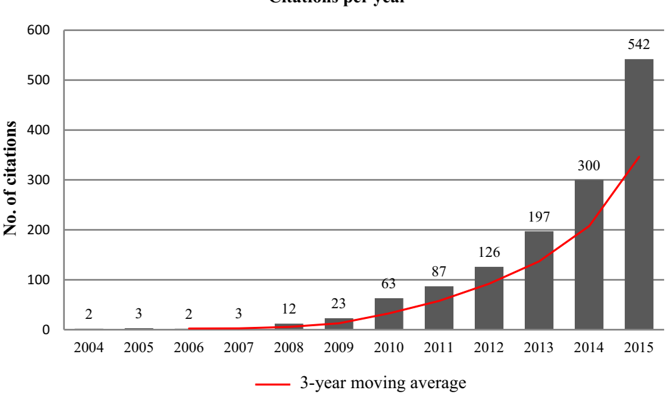
“From 2004 to 2006, the Web of Science database counts no more than two citations per year”
§ Financial literacy, financial advice, and financial behavior > 1 Introduction
“Publications per year 2 3 2 3 12 23 63 87 126 197 300 542 0 100 200 300 400 500 600 2004 2005 2006 2007 2008 2009 2010 2011 2012 2013 2014 2015No. of citations”
Citations
Cites
Kruger, J., & Dunning, D. (1999) · Journal of Personality and Social Psychology · doi:10.1037/0022-3514.77.6.1121 · Cited by 7,731 · cited 1×
“By contrast, this literature suggests that individuals who do not know much about a subject tend not to recognize their ignorance and therefore typically fail to seek better information (Kruger and Dunning 1999).”
(1996) · Institutional Research Information System University of Turin (University of Turin) · doi:10.1111/j · Cited by 5,486
The Economic Importance of Financial Literacy: Theory and Evidence
Lusardi, A., & Mitchell, O. S. (2014) · Journal of Economic Literature · doi:10.1257/jel.52.1.5 · Cited by 4,698 · cited 19×
“Although the Big Three generally do not demand advanced financial knowledge, only 34% of respondents in the original survey were able to answer all three questions correctly (Lusardi and Mitchell 2014).”
InfluentialMultiple imputation after 18+ years
Rubin, D. B. (1996) · Journal of the American Statistical Association · doi:10.1080/01621459.1996.10476908 · Cited by 4,072
Financial literacy and stock market participation
van Rooij, M., Lusardi, A., & Alessie, R. (2011) · Journal of Financial Economics · doi:10.1016/j.jfineco.2011.03.006 · Cited by 3,554 · cited 9×
“Specifically, van Rooij et al. (2011b) document that financial sophistication is positively related to stock market participation of retail investors in the Netherlands.”
BackgroundMethodInfluentialMultiple Imputation After 18+ Years
Rubin, D. B. (1996) · Journal of the American Statistical Association · doi:10.2307/2291635 · Cited by 2,686 · cited 1×
“For robustness, we re-estimate our main model using multiple imputations via Rubin’s rule (Rubin 1996).”
MethodHUSTON, S. J. (2010) · Journal of Consumer Affairs · doi:10.1111/j.1745-6606.2010.01170.x · Cited by 2,558 · cited 2×
“In another extensive review of financial literacy operationalizations, Huston (2010) surveys 71 studies using 52 different data sets and corroborates that there is no such thing as a standardized conceptualization of financial literacy.”
BackgroundSave More Tomorrow™: Using Behavioral Economics to Increase Employee Saving
Thaler, R. H., & Benartzi, S. (2004) · Journal of Political Economy · doi:10.1086/380085 · Cited by 2,483 · cited 1×
“Indeed, this approach is promoted by, e.g., Choi et al. (2004) and Thaler and Benartzi (2004) who find that opt-out regimes in 401(k) pension plans result in a large and persistent increase in pension participation rates relative to conventional opt-in arrangements. prepare a detailed transcript of…”
BackgroundEndogeneity in Empirical Corporate Finance1
Roberts, M. R., & Whited, T. M. (2013) · Handbook of the Economics of Finance · doi:10.1016/b978-0-44-453594-8.00007-0 · Cited by 2,459 · cited 1×
“Moreover, Roberts and Whited (2013) stress that truly exogenous instruments are difficult to find and, in particular, that it should be rigorous economic arguments rather than formal falsification tests that eventually decide over the instrument’s validity.”
BackgroundAngrist, J. D., & Krueger, A. B. (2001) · Journal of Economic Perspectives · doi:10.1257/jep.15.4.69 · Cited by 2,355
Research works printed but not linked: 5
- 53. Collins JM, Gorey RN, Schmeiser MD, Baker CA, Ziegler D (2009) Building indicators measures: analysis and recommendations. Anne E. Casey Foundation, Baltimore
- 56. Danes SM, Huddleston-Casas C, Boyce L (1999) Financial planning curriculum for teens: Impact evaluation. J Financ Couns Plan 10(1):26-39
- 58. Deevy M, Lucich S, Beals M (2012) Scams, schemes and swindles-a review of consumer financial fraud research. Working paper
- 94. Hilgert MA, Hogarth JM, Beverly SG (2003) Household financial management: the connection between knowdlege and behavior. Federal Reserv Bull 89(7):309-322
- 103. Investment Company Institute (2007) Why do mutual fund investors use professional financial advisors? Res Fundam 16(1):1-8
Cited by
Items 101–200 of 469
Ayuningtyas, M. F., & Irawan, A. (2021) · Advanced International Journal of Business Entrepreneurship and SMEs · doi:10.35631/aijbes.39012 · Cited by 22
“At the same time, consumers must find their bearings in a market marked by a growing complexity which requires both a firm grasp of increasingly sophisticated products and the ability to determine the quality (Stolper & Walter, 2017).”
BackgroundFinancial literacy among Chinese rural households and its impact on stock-market participation
Zhao, M., Dai, Y., Chen, H., & Li, Z. (2024) · Borsa Istanbul Review · doi:10.1016/j.bir.2024.05.011 · Cited by 26
Does gender matter in financial literacy? A case study of young people in Tirana
Çera, G., & Tuzi, B. (2019) · Digitální knihovna Univerzity Pardubice (Univerzity Pardubice) · Cited by 24
Debt literacy and debt advice-seeking behaviour among Facebook users: the role of social networks
Cwynar, A., Cwynar, W., Kowerski, M. S., Filipek, K., & Szuba, P. (2019) · Baltic Journal of Economics · doi:10.1080/1406099x.2019.1693142 · Cited by 28
“…show that the advice complements financial literacy, others report substitutability between these two variables; there are also studies that did not find a significant association between financial literacy and professional advice-seeking (see Stolper & Walter, 2017 for an overview and discussion).”
BackgroundWomen and financial literacy in spain. Does marital status matter?
Díaz, I. A., & Jiménez, J. R. Z. (2021) · Journal of Women & Aging · doi:10.1080/08952841.2021.1991194 · Cited by 29
“In this regard, most research on FL has been focused on the U.S., and there is far less evidence available for Europe (Stolper & Walter, 2017).”
BackgroundInfluentialRabbani, A. G., Heo, W., & Grable, J. E. (2021) · Journal of Financial Services Marketing · doi:10.1057/s41264-021-00109-w · Cited by 32
Chatterjee, S., & Fan, L. (2022) · International Journal of Bank Marketing · doi:10.1108/ijbm-01-2022-0022 · Cited by 32
Financial Literacy and Retirees' Resource Allocation Decisions in New Zealand
Noviarini, J., Coleman, A., Roberts, H., & Whiting, R. H. (2022) · Pacific-Basin Finance Journal · doi:10.1016/j.pacfin.2023.101985 · Cited by 28
Entrepreneurs on their financial literacy: evidence from the Netherlands
Alperovych, Y., Calcagno, R., & Lentz, M. (2023) · Venture Capital · doi:10.1080/13691066.2023.2234078 · Cited by 28
“Moreover, it is not clear whether and how financial literacy is related to the demand for advice neither among households nor among entrepreneurs (again, see Stolper and Walter (2017) for an exhaustive survey on this topic).”
InfluentialShafiee, S., Zhang, L. L., & Rasmussen, K. M. (2023) · Journal of the Knowledge Economy · doi:10.1007/s13132-023-01651-9 · Cited by 17
“Sweeping changes in the pension landscape have marked the principal catalyst for this increased autonomy of consumers by passing financial decisions including saving, investing, and decumulating wealth to employees and retirees (Stolper & Walter, 2017).”
RetractedOut-of-pocket vs. out-of-investment in financial advisory fees: Evidence from the lab
Mugerman, Y., Sade, O., & Winter, E. (2020) · Journal of Economic Psychology · doi:10.1016/j.joep.2020.102317 · Cited by 14
The Use and Value of Financial Advice for Retirement Planning
Harlow, W. V., Brown, K. C., & Jenks, S. E. (2019) · The Journal of Retirement · doi:10.3905/jor.2019.1.060 · Cited by 26
“…correlated with the markers for higher financial literacy.11 11 In fact, there is no evidence in either Exhibit 2 or 3 to support the view framed in Stolper and Walter (2017) that engaging a retirement advisor can serve as an effective substitute for those households with low financial literacy…”
BackgroundArifah, J. N., & Dalimunthe, Z. (2021) · International Journal of Business and Society · doi:10.33736/ijbs.3310.2020 · Cited by 30
“Then, Stolper and Walter (2017) summarize factors that influence financial literacy, including education, income and wealth, age, sex, occupation, and IQ.”
Fang, J., Hao, W., & Reyers, M. (2022) · Applied Economics · doi:10.1080/00036846.2022.2053654 · Cited by 26
“Further robustness checks are carried out to address the endogeneity issue in this field reviewed in depth by Stolper and Walter (2017).”
BackgroundInfluentialCappelli, T., Banks, A. P., & Gardner, B. (2024) · PLoS ONE · doi:10.1371/journal.pone.0307137 · Cited by 48
Variations in Investment Advice Provision: A Study of Financial Advisors of Millionaire Investors
Baeckström, Y., Marsh, I. W., & Silvester, J. (2018) · Journal of Economic Behavior & Organization · doi:10.1016/j.jebo.2021.05.008 · Cited by 23
Financial literacy and its relationship with sociodemographic variables
Hernández-Mejía, S., García-Santıllán, A., & Moreno-García, E. (2022) · Economics & Sociology · doi:10.14254/2071-789x.2022/15-1/3 · Cited by 16
“From the different proposals on the concept and measurement of financial literacy, two main non-exclusive approaches have been identified which have been the basis for comparison of financial literacy in several countries (Stolper & Walter, 2017).”
BackgroundPénzügyi kultúra és pénzügyi műveltség, a pénzügyi magatartás meghatározó tényezői
Csorba, L. (2020) · Pénzügyi Szemle = Public Finance Quarterly · doi:10.35551/psz_2020_1_6 · Cited by 20
Understanding finfluencers: Roles and strategic partnerships in retail investor engagement
Mölders, M., Bock, L., Barrantes, E., & Zülch, H. (2025) · Journal of Business Research · doi:10.1016/j.jbusres.2025.115462 · Cited by 31
Aristei, D., & Gallo, M. (2023) · International Journal of Bank Marketing · doi:10.1108/ijbm-06-2023-0355 · Cited by 26
Cwynar, A., Śwıecka, B., Filipek, K., & Porzak, R. (2021) · Journal of Consumer Affairs · doi:10.1111/joca.12424 · Cited by 21
Purwidianti, W., Tubastuvi, N., Darmawan, A., & Rahmawati, I. Y. (2022) · Advances in economics, business and management research/Advances in Economics, Business and Management Research · doi:10.2991/aebmr.k.211225.033 · Cited by 32
“Stolper & Walter (2017) states that low financial literacy will be associated with non-optimal financial behavior and will have long-term consequences.”
BackgroundThe Influence of Financial Culture on SME’s Financial Performance
Makdissi, R., Nehme, A., & Chahine, R. (2020) · Journal of Financial Risk Management · doi:10.4236/jfrm.2020.91001 · Cited by 28
“Financial culture should be provided in an equitable and unbiased manner, with coordinated and effectively developed programs (Stolper & Walter, 2017).”
BackgroundRobo-Advisors Today and Tomorrow: Investment Advice Is Just an App Away
Grealish, A., & Kolm, P. N. (2021) · The Journal of Wealth Management · doi:10.3905/jwm.2021.1.149 · Cited by 16
Jugnandan, S., & Willows, G. D. (2023) · International Journal of Consumer Studies · doi:10.1111/ijcs.12935 · Cited by 21
Why do consumers remain financially illiterate? The empirical test of some less investigated reasons
Oratowski, P., Cwynar, A., Cwynar, W., Dankiewicz, R. A., & Ostrowska-Dankiewicz, A. (2019) · Journal of Eastern European and Central Asian Research (JEECAR) · doi:10.15549/jeecar.v6i1.285 · Cited by 14
Çera, G., Khan, K. A., Rowland, Z., & Ribeiro, H. (2021) · E+M Ekonomie a Management · doi:10.15240/tul/001/2021-4-007 · Cited by 23
“However, this phenomenon is not much yet in other parts of the world except the USA and a few other countries (Stolper & Walter, 2017). limited regarding how financial literacy can affect financial advice.”
BackgroundInfluentialXu, S., Ali, S. T., Yang, Z., & Li, Y. (2022) · Kybernetes · doi:10.1108/k-03-2022-0321 · Cited by 24
Family Communication, Privacy Orientation, & Financial Literacy: A Survey of U.S. College Students
Hanson, T. A. (2022) · Journal of risk and financial management · doi:10.3390/jrfm15110528 · Cited by 29
The token economy in a developing country
Thetlek, R., Kraiwanit, T., Jangjarat, K., Limna, P., & Shaengchart, Y. (2023) · Journal of Governance and Regulation · doi:10.22495/jgrv12i3siart18 · Cited by 17
Defining and measuring financial literacy in the Indian context: a systematic literature review
Arjun, T. P., & Subramanian, R. (2024) · Managerial Finance · doi:10.1108/mf-08-2022-0358 · Cited by 22
Cryptocurrencies as a means of payment in online shopping
AlReshaid, F. A., Tosun, P., & Gürce, M. Y. (2024) · Digital Policy Regulation and Governance · doi:10.1108/dprg-12-2023-0185 · Cited by 25
Análisis de la Relación entre Rentabilidad y Riesgo en la Planeación de las Finanzas Personales
Villada, F., Lezama, J. M. L., & Muñóz-Galeano, N. (2018) · Formación universitaria · doi:10.4067/s0718-50062018000600041 · Cited by 25
Intention to Use AI-Powered Financial Investment Robo-Advisors in the M-Banking Sector of Pakistan
Wang, X., Butt, A. H., Zhang, Q., Ahmad, H., & Shafique, M. N. (2021) · Information Resources Management Journal · doi:10.4018/irmj.2021100101 · Cited by 17
Financial Literacy of Adults in Germany FILSA Study Results
Schuhen, M., Kollmann, S., Seitz, M., Mau, G., & Froitzheim, M. (2022) · Journal of risk and financial management · doi:10.3390/jrfm15110488 · Cited by 19
Do Women Receive Worse Financial Advice?Preprint
Bhattacharya, U., Кумар, А., Visaria, S., et al. (2020) · SSRN Electronic Journal · doi:10.2139/ssrn.3671377 · Cited by 13
Pham, M. H., Nguyen, H., Young, M. R., & Dao, A. (2024) · Journal of Business Ethics · doi:10.1007/s10551-024-05618-x · Cited by 22
“Financial advisers, therefore, have a strong influence on household portfolio choices and performance (Baeckström et al., 2021; Danilov et al., 2013; Kramer, 2016; Stolper & Walter, 2017).”
Rijanto, B. P., & Utami, N. (2024) · Jurnal Manajemen Maranatha · doi:10.28932/jmm.v23i2.8717 · Cited by 60
“…encompassing knowledge, skills, and beliefs affecting financial decision-making and effective financial management for improved well-being (Stolper & Walter, 2017), remains low in Indonesia, with the financial literacy index reaching only 49.68% in 2022, according to a survey by OJK…”
BackgroundInfluentialSocial security, relative deprivation, digital capacity, and household financial investment behavior
Jiao, L., Lu, S., Chen, C., & Yu, F. (2024) · International Review of Financial Analysis · doi:10.1016/j.irfa.2024.103771 · Cited by 15
Schmidt, T. F. N., & Tzamourani, P. (2017) · Vierteljahrshefte zur Wirtschaftsforschung · doi:10.3790/vjh.86.4.31 · Cited by 20
A Decomposition Analysis of Racial/Ethnic Differences in Financial Knowledge and Overconfidence
Lee, S. T., & Kim, K. T. (2021) · Journal of Family and Economic Issues · doi:10.1007/s10834-021-09795-z · Cited by 17
Financial knowledge of university students in Korea and Germany
Happ, R., Hahn, J., Jang, K., & Rueter, I. (2022) · Research in Comparative and International Education · doi:10.1177/17454999221086357 · Cited by 24
“Some studies have shown that knowledge alone does not necessarily lead to deliberate behaviour (Stolper and Walter, 2017).”
BackgroundDamayanti, S. M., & Zakarias, R. (2020) · Ekonomi dan Bisnis · doi:10.35590/jeb.v7i2.2193 · Cited by 12
“Setelah itu, untuk mengukur literasi keuangan seseorang akan menggunakan cara yang berbeda untuk mengumpulkan pertanyaan-pertanyaan tersebut (Stolper & Walter, 2017).”
BackgroundInfluentialGPT as a Financial AdvisorPreprint
Niszczota, P., & Abbas, S. (2023) · SSRN Electronic Journal · doi:10.2139/ssrn.4384861 · Cited by 12
A PÉNZÜGYI KULTÚRA ÉS TUDATOSSÁG MEGHATÁROZÁSA ÉS MAGYARORSZÁGI HELYZETE
Szóka, K. (2022) · Economica · doi:10.47282/economica/2021/12/3-4/10417 · Cited by 28
Бовчак, С. В., Селиванова, М. А., Сочнева, Е. Н., et al. (2019) · Perspectives of science and education · doi:10.32744/pse.2019.5.10 · Cited by 11
“В 2008 году стартовало исследование, проводимое странами ОЭСР по вопросам финансовой грамотности населения [6].”
The acceptance of financial robo-advisors among investors: The emerging market study
Kraiwanit, T., Jangjarat, K., & Atcharanuwat, J. (2022) · Journal of Governance and Regulation · doi:10.22495/jgrv11i2siart12 · Cited by 11
“Previous research has established that individuals with greater financial literacy are more likely to make superior financial judgements and engage in safer financial behaviours across a variety of life domains (Stolper & Walter, 2017).”
BackgroundThe Legal Framework for Financial Advertising: Curbing Behavioural Exploitation
Brenncke, M. (2018) · European Business Organization Law Review · doi:10.1007/s40804-018-0111-9 · Cited by 18
Myopic Savings Behaviour of Future Polish Pensioners
Buchholtz, S., Gąska, J., & Góra, M. (2021) · Risks · doi:10.3390/risks9020036 · Cited by 14
“For instance, van Rooij et al. (2007) argue that even though risk aversion in the pension domain is very high, most participants consider themselves as financially illiterate and do not fully understand the details of the pension programme. They also show that individuals lack the financial knowledge to manage their o…”
BackgroundDo Women Behave Financially Worse than Men? Evidence from Married and Cohabiting Couples
Cwynar, A. (2021) · Central European Business Review · doi:10.18267/j.cebr.270 · Cited by 16
“The literature has long been documenting a positive association between financial literacy and prudent financial behaviour: more literate individuals are more likely to perform desirable financial behaviour (Stolper and Walter 2017 provide a comprehensive review of studies on this issue).”
BackgroundLi, Z., Chatterjee, S., & Moorman, D. (2024) · International Journal of Bank Marketing · doi:10.1108/ijbm-02-2024-0106 · Cited by 17
The Panel on Household Finances (PHF) – Microdata on household wealth in Germany
Altmann, K., Bernard, R., Blanc, J. L., et al. (2020) · German Economic Review · doi:10.1515/ger-2019-0122 · Cited by 10
The profile of the Portuguese regarding the perception of financial literacy
Santos, E., Tavares, V. C., Ratten, V., & Tavares, F. O. (2021) · Managerial Finance · doi:10.1108/mf-05-2021-0210 · Cited by 17
Khan, F., & Surisetti, S. (2020) · SSRN Electronic Journal · doi:10.2139/ssrn.3882140 · Cited by 17
Ahmad, Z., & Oon, E. Y. N. (2025) · Management Decision · doi:10.1108/md-01-2024-0135 · Cited by 19
Financial advice: Who Exactly Follows It?
Gavish, L. R., Qadan, M., & Yagil, J. (2021) · Research in Economics · doi:10.1016/j.rie.2021.06.003 · Cited by 14
Defaults, disclosures, advice and calculators: One size does not fit all
Wang-Ly, N., Bateman, H., Dobrescu, L. I., Newell, B. R., & Thorp, S. (2022) · Journal of Behavioral and Experimental Finance · doi:10.1016/j.jbef.2022.100690 · Cited by 12
Hapsoro, D., Saputro, J. A., Indraswono, C., Hatta, A. J., & Sabandi, M. (2022) · Investment Management and Financial Innovations · doi:10.21511/imfi.19(4).2022.14 · Cited by 15
“Financial behavior is typically described as a multidimensional concept that incorporates many financial market actions (Jorgensen et al., 2017), These behaviors can be in the form of credit management, retirement planning, or cash management (Jorgensen et al., 2017; Stolper & Walter, 2017).”
BackgroundThe ‘fintech revolution’ is here! The disruptive impact of fintech on retail financial practices
Tan, G. K. S. (2022) · Finance and Society · doi:10.2218/finsoc.7763 · Cited by 24
“Yet, for reasons such as the failure to recognize their ignorance about a subject (Kruger and Dunning, 1999) or otherwise, studies have shown that this group is the least likely to seek financial advice (Stolper and Walter, 2017).”
BackgroundFinancial Literacy: Determinants and Impact on Financial Behaviour
Marinov, K. M. (2023) · Economic Alternatives · doi:10.37075/ea.2023.1.05 · Cited by 31
Kraitzek, A., & Förster, M. (2023) · Journal of risk and financial management · doi:10.3390/jrfm16040223 · Cited by 22
Bayakhmetova, A. T., Bayakhmetova, L., & Bayakhmetova, L. (2023) · Asian Development Policy Review · doi:10.55493/5008.v11i3.4917 · Cited by 21
“Based on the obtained results, which to a certain extent correlated with the works (Cupak et al., 2021; Karakurum-Ozdemir et al., 2019; Stolper & Walter, 2017), it is necessary to further develop educational initiatives to increase the financial literacy of the population.”
BackgroundResultTambun, S., Sitorus, R. R., & Nurwanti, F. (2022) · Jurnal Keuangan dan Perbankan · doi:10.26905/jkdp.v26i2.7387 · Cited by 25
Financial Literacy and Asset Behaviour: Poor Education and Zero for Conduct?
Arrondel, L. (2018) · Comparative Economic Studies · doi:10.1057/s41294-018-0053-9 · Cited by 9
Elshaer, I. A., & Sobaih, A. E. E. (2023) · Mathematics · doi:10.3390/math11020353 · Cited by 31
(2023) · Journal of Logistics Informatics and Service Science · doi:10.33168/jliss.2024.0109 · Cited by 9
“Financial literacy will add insight and knowledge about how to manage finances correctly and adequately and make it easier for someone to make transactions related to numbers or money (Walter, 2017).”
Exploring Game Design for the Financial Education of Millenials
Hoffmann, G., & Matysiak, L. (2019) · International Conference on Virtual Worlds and Games for Serious Applications (VS-Games) · doi:10.1109/vs-games.2019.8864517 · Cited by 9
“With regards to the knowledge that people should have about finances and financial planning, we looked at literature about financial literacy [12], [13] as well as at the recommendations of non-fiction books and influential popular articles, both online and offline [1], [14].”
BackgroundKraitzek, A., Förster, M., & Walstad, W. B. (2022) · Research in Comparative and International Education · doi:10.1177/17454999221081333 · Cited by 11
Founder's Financial Knowledge and the New Firm's Ability to Obtain Debt Financing
Rijssegem, L., Paeleman, I., Vaznyte, E., & Andries, P. (2023) · British Journal of Management · doi:10.1111/1467-8551.12766 · Cited by 10
Arpacı, İ., Aslan, Ö., & Kevser, M. (2024) · Financial Innovation · doi:10.1186/s40854-023-00573-4 · Cited by 14
Ng, M., Law, M., Bo, B. W. C., & Liang, M. (2025) · Journal of Electronic Business & Digital Economics · doi:10.1108/jebde-11-2024-0043 · Cited by 16
Kurowski, Ł., Rutecka-Góra, J., & Smaga, P. (2025) · Climate Policy · doi:10.1080/14693062.2025.2511261 · Cited by 11
“…distinctions between green and conventional investment choices (Garg & Singh, 2018; Hastings et al., 2013; Huston, 2010; Lusardi & Mitchell, 2011; Stolper & Walter, 2017) apart from a study by Anderson and Robinson (2022), who examined the relation between pro-environmental attitudes and…”
Financial Literacy in Malaysia, 2015–2018
Loke, Y. J., Chin, P. N., & Hamid, F. S. (2022) · Malaysian Journal of Economic Studies · doi:10.22452/mjes.vol59no2.1 · Cited by 12
Fatmawati, I., & Lutfi, L. (2021) · Jurnal Manajemen dan Keuangan · doi:10.33059/jmk.v10i1.3340 · Cited by 8
Al-Agha, B. M., & Salem, M. (2022) · Lecture notes in networks and systems · doi:10.1007/978-3-031-08954-1_14 · Cited by 10
Information Sources for Investment Decisions: Evidence from Japanese Investors
Lal, S., Sulemana, A.-S., Nguyen, T. X. T., Khan, M. S. R., & Kadoya, Y. (2023) · International Journal of Financial Studies · doi:10.3390/ijfs11040117 · Cited by 15
Understanding FinTech Gender Gap: A Survey on Financial Literacy, Inclusion and FinTech Use
Ram, A. (2023) · Open Journal of Business and Management · doi:10.4236/ojbm.2023.116192 · Cited by 7
Zhang, Y., Qi, J., & Chatterjee, S. (2024) · Family Relations · doi:10.1111/fare.13089 · Cited by 12
Harnessing financial advice and literacy for financial well-being in the digital age
Gupta, A., Mishra, S., Behera, D. K., & Abhilash, A. (2025) · Investment Management and Financial Innovations · doi:10.21511/imfi.22(1).2025.23 · Cited by 8
Hasan, M., Asriani, A., Ahmad, M. I. S., Supatminingsih, T., Dinar, M., Sangkala, M., Rahim, A., Hasyim, S. H., & Idris, H. (2025) · Cogent Education · doi:10.1080/2331186x.2025.2510067 · Cited by 33
“Research by Navickas et al. (2014), Chong et al. (2021), Ramalho and Forte (2019), Stolper and Walter (2017), and Kaiser et al. (2022) says that financial knowledge can have an impact on money management.”
Stepnova, O. V., & Starchikova, I. Y. (2021) · Perspectives of science and education · doi:10.32744/pse.2021.1.6 · Cited by 7
Perspectives on financial literacy in undergraduate students
Almeida, F. L., & Costa, O. (2021) · Journal of Education for Business · doi:10.1080/08832323.2021.2005513 · Cited by 12
MODERN METHODS OF DEVELOPING FINANCIAL LITERACY AMONG THE UKRAINIAN CITIZENS
Dombrovska, S. (2022) · Educational Analytics of Ukraine · doi:10.32987/2617-8532-2022-3-5-14 · Cited by 7
Cognitive functioning, financial literacy, and judgment in older age
Gerrans, P., Asher, A., & Earl, J. K. (2021) · Accounting and Finance · doi:10.1111/acfi.12835 · Cited by 12
Financial literacy and educational level in Ecuadorian students: a structural analysis
Bastidas-Guerrón, J. L., Cárdenas-Fierro, G. M., Mora-Lucero, A. C., et al. (2025) · Frontiers in Education · doi:10.3389/feduc.2025.1596635 · Cited by 6
Financial literacy among young college students: Advancements and future directions
Rodríguez-Correa, P. A., García, S. A., Bermeo-Giraldo, M. C., Valencia-Arías, A., Rojas, E. M., Vigo, E. F. A., & Gallegos, A. (2025) · F1000Research · doi:10.12688/f1000research.159085.3 · Cited by 6
Shroff, S. J., Soni, R. N., & Rohira, S. (2026) · Journal of Financial Services Marketing · doi:10.1057/s41264-026-00344-z · Cited by 7
“…anchor their evaluations on broader financial logic, such as perceived monetary soundness, regulatory safeguards, privacy expectations, and institutional credibility, rather than relying exclusively on system-level convenience or social endorsement (Van Rooij et al. 2011; Stolper and Walter 2017).”
Skating on Thin Ice: New Evidence on Financial Fragility
Wiersma, J., Alessie, R. J. M., Kalwij, A., Lusardi, A., & van Rooij, M. C. J. (2025) · Journal of Consumer Affairs · doi:10.1111/joca.70017 · Cited by 11
Khan, K. A., & Akhtar, M. A. (2021) · Studies in Business and Economics · doi:10.2478/sbe-2021-0029 · Cited by 9
Prihastiwi, D. A., Fatimah, A. N., & Nurcahya, Y. A. (2023) · IOP Conference Series Earth and Environmental Science · doi:10.1088/1755-1315/1248/1/012015 · Cited by 10
“In the US, it is found that employees with low level of financial background either do not participate at all or contribute less than what is necessary to receive full employee benefit, thus foregoing matching payments that over time add up to significant losses [21].”
Background(2024) · Journal of Logistics Informatics and Service Science · doi:10.33168/jliss.2024.0716 · Cited by 44
“Conversely, limited financial literacy diminishes individuals' capacity to effectively manage affairs, thereby engendering long-term ramifications (Stolper & Walter, 2017).”
Advisors for micro-entrepreneurs: is one as good as another in accessing alternative finance?
Soana, M. G., Cucinelli, D., & Ronchini, B. (2024) · Small Business Economics · doi:10.1007/s11187-024-00942-y · Cited by 8
“Even excluding studies based on subjective financial knowledge, which is often biased by overconfidence (Gutsche et al., 2021), extant papers using objective financial knowledge (Lusardi & Mitchell, 2008) display conflicting results (Stolper & Walter, 2017).”
Financial literacy: different indicator, different insights?
Hove, L. V., & Ahunov, M. (2024) · Cogent Economics & Finance · doi:10.1080/23322039.2024.2437005 · Cited by 12
“For reviews, see Fernandes et al. (2014), Hastings et al. (2013), Lusardi and Mitchell (2014), Stolper and Walter (2017), and Goyal and Kumar (2021).”
Financial literacy among young college students: Advancements and future directions
Rodríguez-Correa, P. A., García, S. A., Bermeo-Giraldo, M. C., Valencia-Arías, A., Rojas, E. M., Vigo, E. F. A., & Gallegos, A. (2025) · F1000Research · doi:10.12688/f1000research.159085.1 · Cited by 13
Does Social Capital Influence Debt Literacy? The Case of Facebook Users in Poland
Filipek, K., Cwynar, A., & Cwynar, W. (2019) · Prague Economic Papers · doi:10.18267/j.pep.721 · Cited by 9
Mackenzie, L. (2020) · Journal of Hispanic Higher Education · doi:10.1177/1538192720920071 · Cited by 12
“(p. 33) Stolper and Walter (2017) note that individuals in middle- and low-income economies are more likely to lack financial literacy, which leads to an increased tendency to make uninformed or ill-advised decisions.”
BackgroundFinancial Literacy Education: Implication on the Economic and Social Life of the Teacher in Ghana
Matey, J., Duut, J. Y., & Kombian, M. F. (2021) · International Research Journal of Multidisciplinary Scope · doi:10.47857/irjms.2021.v02i01.046 · Cited by 8
Financial Literacy, Financial Attitude, and Household Financial Behavior
Permana, J. Z., & Lutfi, L. (2022) · Jurnal Maksipreneur Manajemen Koperasi dan Entrepreneurship · doi:10.30588/jmp.v12i1.1094 · Cited by 16
“The results of this study are in line with research by Brilianti and Lutfi (2020), Dwiastanti (2015), Grohmann (2018), and Stolper and Walter (2017) proving that good financial literacy will encourage good financial management behavior as well.”
BackgroundResultBeliefs that provide a foundation for heuristics and biases in financial decision-making
Facultad de Ciencias Económicas y Empresariales, U. P., Moya-Ponce, C., Madrazo-Lemarroy, P., & Facultad de Economía y Negocios, U. A. M. A. U. A. N. 4. (2023) · Cuadernos de Gestión · doi:10.5295/cdg.221703pm · Cited by 17
“…use of heuristics and biases could translate into an opportunity cost towards poor decision-making in matters such as investing (Hanson & Kalthoff, 2019) and saving (Jappelli & Padula, 2013), decisions that may affect their financial well-being during subsequent decades (Stolper & Walter, 2017).”
BackgroundProblemáticas y tendencias de la educación financiera
Pereira, D. J. M., Doria, D. D. F., Castro, D. T., & Núñez, K. R. H. (2023) · Económicas CUC · doi:10.17981/econcuc.44.2.2023.econ.3 · Cited by 10
Metadata
- Authors
- Stolper, O. A., & Walter, A.
- Affiliations
- Philipps University of Marburg (DE)
- Justus-Liebig-Universität Gießen (DE)
- Corresponding author
- Walter, Andreas
- Venue
- Journal of Business Economics
- Published
- 2017-03-04
- Volume
- 87
- Issue
- 5
- Pages
- 581-643
- ISSN
- 0044-2372 (ISSN-L)
- 1861-8928
- OpenAlex
- W2593560379
- Semantic Scholar
- ea990bccbdb09e1e574090c6c126459f5d7afdba
- Cited by
- 471
- References
- 204
- Citations by year
- 2026: 46 · 2025: 49 · 2024: 93 · 2023: 68 · 2022: 75 · 2021: 55 · 2020: 45 · 2019: 26 · 2018: 9 · 2017: 5
- FWCI
- 75.22
- Type
- journal article
- Language
- en
- Open access
- hybrid
- doi.org
- Locations
- Journal of Business Economics (publishedVersion, cc-by)
- RePEc: Research Papers in Economics (submittedVersion)
- Topics
- Social Sciences › Economics, Econometrics and Finance › Finance › Financial Literacy, Pension, Retirement Analysis
- Social Sciences › Business, Management and Accounting › Accounting › Financial Literacy and Behavior
- Social Sciences › Decision Sciences › General Decision Sciences › Decision-Making and Behavioral Economics
- Keywords
- financial literacy, financial advice, financial behavior, financial education, household finance, determinants of financial literacy
About these checks
Registry, retraction, Cites and statistics results are computed, not judged, with one exception: a printed reference that no index lists is read once by a model before it counts as a citation error. Claims are extracted by a model and kept only when their quote appears verbatim in the text; each cited source is then checked, with a model’s help, for whether it says what the claim relies on. Those verdicts can be wrong — read the claim’s quote and the cited source before relying on one.
The claim verdicts this report counts are experimental: their accuracy is not yet measured.
A language model drew the claims from the paper on 2026-10-10, under version 3 of the claim definition (model deepseek-v4.1-flash, prompt extract-v3).
A second model labelled each claim on 2026-10-10 (model jev-1.13-20260917, definition revision gold-guideline-v0.2).
Cited sources are checked with a language model’s help (gpt-6-sol).
Statistics and arithmetic are recomputed, not judged.
Confidence bands are shown only for fields calibrated on our annotated test set. None is calibrated yet, so no band is shown.
What counts as a claim ›How we measure confidence ›How we check this ›
Are you an author, or do you see a problem with this page? Request a review
Data sources
Bibliographic data: Semantic Scholar, OpenAlex, Crossref.
Contains information from the Semantic Scholar Academic Graph Datasets, made available under the ODC Attribution License (ODC-BY 1.0).
Semantic Scholar’s data is described in: Kinney, R., et al. (2023). The Semantic Scholar Open Data Platform. arXiv:2301.10140.
