

Financial literacy, financial advice, and financial behavior
Open accessThe DOI matches its Crossref record; 199 of the 204 references it cites were found in a registry or an index, and 1 are not checked yet; 42 of the 189 sources its claims cite were checked for support.
Abstract
In this survey, we review the voluminous body of literature on the measurement and the determinants of financial literacy... Our survey suggests that the evidence with respect to the effectiveness of the programs is rather disappointing.
Verified 2026-11-25 · 1 reference not checked yet
Overview
CoChat Summary
TL;DR
This survey reviews the literature on measuring and explaining financial literacy and its links to financial behavior, financial education, and professional advice, supplementing the review with descriptive evidence from the German Panel on Household Finances (PHF). It finds generally low but heterogeneous financial literacy, disappointing evidence on financial education effectiveness, and inconclusive evidence on whether financial advice substitutes for financial literacy.
Key findings
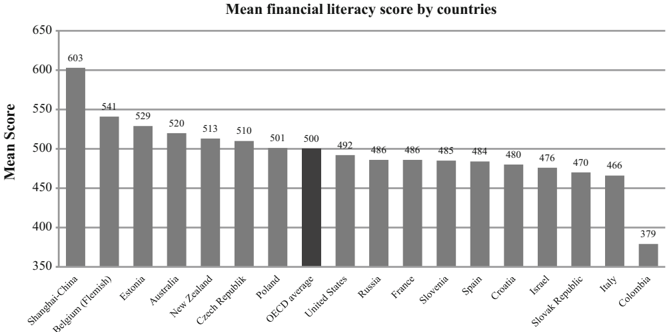
- Financial literacy is generally low and heterogeneous. In the PHF, 59% answered all Big Three questions correctly; Germany ranks among the highest worldwide (66% in the S&P FinLit Survey, 53% in SAVE, 59% in PHF), while transition economies can be as low as 4%.
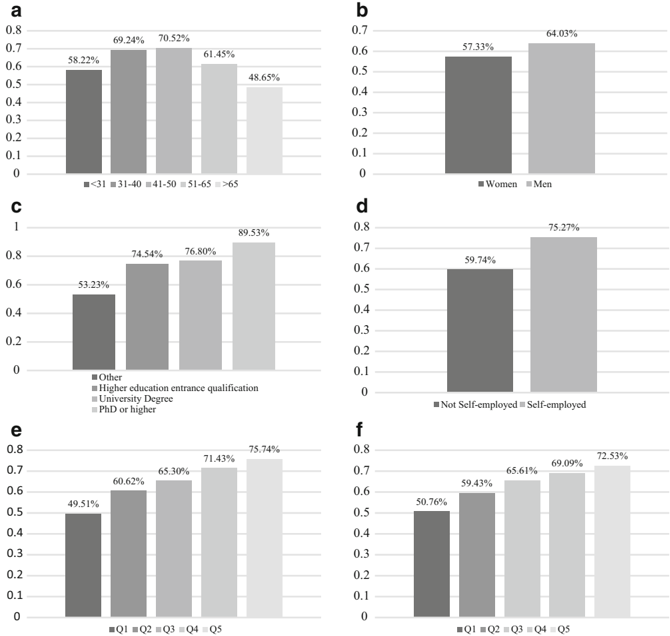
- Demographic gaps are large: in PHF, 64% of men versus 57% of women answered all Big Three correctly; highest educational attainment ~90% versus least educated 53%; highest income quintile 76% versus lowest 50%; highest wealth quintile 73% versus lowest 51%; age shows a hump shape, with >65 at 47%, <30 at 58%, and those in their forties at 70%.
- Financial education evidence is disappointing: Fernandes et al. (2014), meta-analyzing 90 studies, find financial education interventions explain no more than 0.1% of the variance in financial behavior, with effects declining over time and little impact when decisions are made 20 months or later.
- Financial advice as a substitute for literacy is inconclusive: some studies find low-literate individuals are less likely to seek advice, but once advice is obtained, low-literate individuals are most likely to follow it; overconfidence may reduce advice-seeking.
Methods
- Literature survey/review covering conceptualizations and measurement of financial literacy, determinants, financial behavior, financial education, and financial advice, including cross-country comparisons and summary tables.
- Supplemented with novel descriptive evidence from the first wave of the German PHF: face-to-face CAPI interviews between September 2010 and July 2011 with the financially knowledgeable person in 3,565 households, representative of the German population; analyses use survey weights and multiple imputation.
- Reviews studies using the Big Three, extended measures, PISA 2012, the S&P Global FinLit Survey, and discusses endogeneity and instrumental-variable approaches.
Limitations
- Stated: there is no universally accepted definition or operationalization of financial literacy; test-based measures have caveats including lack of incentives, no access to outside information, framing sensitivity, guessing, and measurement error; household survey data quality has declined; endogeneity complicates causal interpretation; evidence on financial advice and education effectiveness is mixed or inconclusive.
- Evident: as a survey, most reviewed evidence is correlational and non-experimental; the PHF component is descriptive rather than causal; the review emphasizes Germany and the U.S., with limited cross-country comparability.
Model-written summary. Check it against the paper before relying on it.
Integrity signals
Registry
Cites
Statistics
Figures
Verification
Claims the paper makes
34 Valid · 3 Not valid · 123 Not checked · 71 Own results and interpretations
Every source the paper cites for this claim was checked and supports it.
In the paper
“Hastings et al. (2013) document that respondents with higher cognitive abilities and more comfortable with numerical calculations on average exhibit higher levels of financial literacy.”
§ Financial literacy, financial advice, and financial behavior > 2.1.2 Cognitive abilities versus financial literacy
What the sources say
- Supportedcites Hastings et al. (2013) matched to “Financial Literacy, Financial Education, and Economic Outcomes” (2013) source
Section 4 (page not provided) states that individuals with higher general cognitive abilities or greater facility with numbers and numerical calculations tend to have higher financial literacy. This directly supports the citing sentence's association without implying causation. (LLM, conf=0.94)
plainstates an association- Asserted: passes — The authors put it forward as true.
- Checkable: passes — It can be checked against evidence.
- Load-bearing: unclear — It is unclear whether the paper’s conclusions depend on it.
- Based: passes — The paper gives a reason why it holds.
- Supported
The cited sources support only part of this claim — read each source’s verdict below.
In the paper
“In fact, the percentage of correct answers doubled in the latter study when the wording for the third question of the Big Three was ''buying company stock usually provides a safer return than a stock mutual fund'' as compared to phrasing the question reversely”
§ Financial literacy, financial advice, and financial behavior > 2.2.3 Caveats of test-based financial literacy measures
What the sources say
- Partly supportedcites van Rooij et al. (2011b) matched to “Financial literacy and stock market participation” (2011) sourceExperimental — accuracy not yet measured
Box 2, p. 13, says the number of correct answers doubled for the quoted wording compared with its reverse. Box 2, pp. 12–13, presents this as an advanced financial-literacy question, not as the third question of the “Big Three”; that identification is not supported by our copy. (LLM, conf=0.85)
plainstates a cause- Asserted: passes — The authors put it forward as true.
- Checkable: passes — It can be checked against evidence.
- Load-bearing: passes — The paper’s conclusions depend on it.
- Based: passes — The paper gives a reason why it holds.
- Partly supported
Every source the paper cites for this claim was checked and supports it.
In the paper
“Choi et al. (2011) investigate contributions to 401(k) plans by employees who are eligible for an employer match and find that a large fraction of these employees either do not participate at all or contribute less than the amount required to be granted the full employer match, thus foregoing matching contributions which cumulate to substantial losses over time.”
§ Financial literacy, financial advice, and financial behavior > 1 Introduction
What the sources say
- Supportedcites Choi et al. (2011) matched to “$100 Bills on the Sidewalk: Suboptimal Investment in 401(k) Plans” (2011) source
Split into 2 atoms — 2 confirmed, 0 partially supported, 0 disputed, 0 misattributed, 0 unverifiable. Expand the claim to see per-atom verdicts.
plain- Asserted: passes — The authors put it forward as true.
- Checkable: passes — It can be checked against evidence.
- Load-bearing: passes — The paper’s conclusions depend on it.
- Based: passes — The paper gives a reason why it holds.
- Supported
The cited sources support only part of this claim — read each source’s verdict below.
In the paper
“Specifically, Lusardi and Mitchell (2011a, b) and van Rooij et al. (2011b) document that the answers of survey participants differ significantly based on the wording of the test questions.”
§ Financial literacy, financial advice, and financial behavior > 2.2.3 Caveats of test-based financial literacy measures
What the sources say
- Could not verifycites Lusardi and Mitchell (2011a, b) matched to “The Outlook for Financial Literacy” (2011) sourceExperimental — accuracy not yet measured
The Financial Literacy and Financial Decision-Making section reports how many respondents answered financial-literacy questions correctly, but does not compare answers to differently worded versions of a question. The Evaluating Financial Literacy Interventions section discusses how information is framed, not the wording of test questions. Searches for question wording and differently worded questions found no passage documenting the claimed difference in answers. (LLM, conf=0.73)
- Supportedcites van Rooij et al. (2011b) matched to “Financial literacy and stock market participation” (2011) source
Box 2 (pp. 12–13) describes giving randomly selected groups differently worded versions of the same questions. It reports that wording changed responses dramatically for complex questions, although the difference for a simple question was not significant at the 5% level. (LLM, conf=0.90)
plainstates a cause- Asserted: passes — The authors put it forward as true.
- Checkable: passes — It can be checked against evidence.
- Load-bearing: unclear — It is unclear whether the paper’s conclusions depend on it.
- Based: passes — The paper gives a reason why it holds.
- Could not verify
The cited sources support only part of this claim — read each source’s verdict below.
In the paper
“Besides, study designs usually do not permit participants to tap into other sources of information in order to prepare their decisions.”
§ Financial literacy, financial advice, and financial behavior > 2.2.3 Caveats of test-based financial literacy measures
What the sources say
- Partly supportedcites Hastings et al. (2013) matched to “Financial Literacy, Financial Education, and Economic Outcomes” (2013) sourceExperimental — accuracy not yet measured
Section 3, “Measuring Financial Literacy” (page not provided), says studies had not allowed participants to consult outside sources while completing financial-literacy performance tests. This supports the point about access to information in those tests, but not the broader claim about study designs generally or participants preparing decisions. (LLM, conf=0.85)
plain- Asserted: passes — The authors put it forward as true.
- Checkable: passes — It can be checked against evidence.
- Load-bearing: passes — The paper’s conclusions depend on it.
- Based: passes — The paper gives a reason why it holds.
- Partly supported
119 more claims · 17 with their cited sources checked
Create a free account to see all 231 claims and to verify the 30 references still open.
- It may state two separate claims as one. 70
- Probably not a substantial claim. 52
Self-check
Percentages, sums and reported differences re-computed from the paper’s own numbers.
Each contradiction between two passages listed here was confirmed by an independent check.
Rated minor: it would not touch a result — a value no result rests on, a p-value that stays on the same side of the significance level, or a conflict that is clerical, resolved elsewhere in the paper, or outside its own findings.
In the paper
§ Financial literacy, financial advice, and financial behavior > 1 Introduction
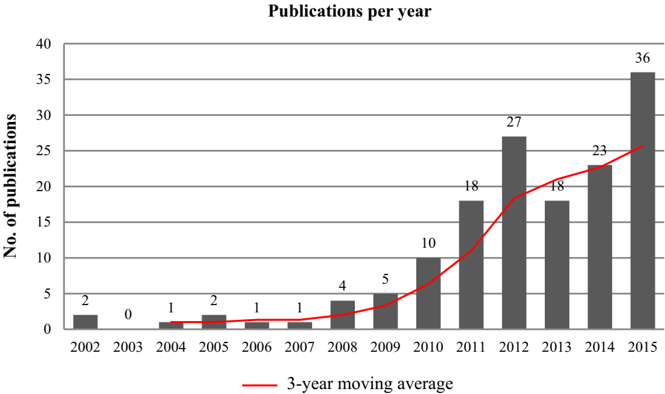
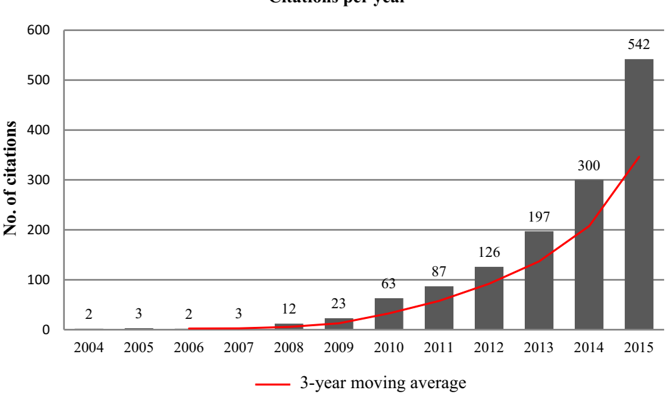
“From 2004 to 2006, the Web of Science database counts no more than two citations per year”
§ Financial literacy, financial advice, and financial behavior > 1 Introduction
“Publications per year 2 3 2 3 12 23 63 87 126 197 300 542 0 100 200 300 400 500 600 2004 2005 2006 2007 2008 2009 2010 2011 2012 2013 2014 2015No. of citations”
Citations
Cites
Kruger, J., & Dunning, D. (1999) · Journal of Personality and Social Psychology · doi:10.1037/0022-3514.77.6.1121 · Cited by 7,731 · cited 1×
“By contrast, this literature suggests that individuals who do not know much about a subject tend not to recognize their ignorance and therefore typically fail to seek better information (Kruger and Dunning 1999).”
(1996) · Institutional Research Information System University of Turin (University of Turin) · doi:10.1111/j · Cited by 5,486
The Economic Importance of Financial Literacy: Theory and Evidence
Lusardi, A., & Mitchell, O. S. (2014) · Journal of Economic Literature · doi:10.1257/jel.52.1.5 · Cited by 4,698 · cited 19×
“Although the Big Three generally do not demand advanced financial knowledge, only 34% of respondents in the original survey were able to answer all three questions correctly (Lusardi and Mitchell 2014).”
InfluentialMultiple imputation after 18+ years
Rubin, D. B. (1996) · Journal of the American Statistical Association · doi:10.1080/01621459.1996.10476908 · Cited by 4,072
Financial literacy and stock market participation
van Rooij, M., Lusardi, A., & Alessie, R. (2011) · Journal of Financial Economics · doi:10.1016/j.jfineco.2011.03.006 · Cited by 3,554 · cited 9×
“Specifically, van Rooij et al. (2011b) document that financial sophistication is positively related to stock market participation of retail investors in the Netherlands.”
BackgroundMethodInfluentialMultiple Imputation After 18+ Years
Rubin, D. B. (1996) · Journal of the American Statistical Association · doi:10.2307/2291635 · Cited by 2,686 · cited 1×
“For robustness, we re-estimate our main model using multiple imputations via Rubin’s rule (Rubin 1996).”
MethodHUSTON, S. J. (2010) · Journal of Consumer Affairs · doi:10.1111/j.1745-6606.2010.01170.x · Cited by 2,558 · cited 2×
“In another extensive review of financial literacy operationalizations, Huston (2010) surveys 71 studies using 52 different data sets and corroborates that there is no such thing as a standardized conceptualization of financial literacy.”
BackgroundSave More Tomorrow™: Using Behavioral Economics to Increase Employee Saving
Thaler, R. H., & Benartzi, S. (2004) · Journal of Political Economy · doi:10.1086/380085 · Cited by 2,483 · cited 1×
“Indeed, this approach is promoted by, e.g., Choi et al. (2004) and Thaler and Benartzi (2004) who find that opt-out regimes in 401(k) pension plans result in a large and persistent increase in pension participation rates relative to conventional opt-in arrangements. prepare a detailed transcript of…”
BackgroundEndogeneity in Empirical Corporate Finance1
Roberts, M. R., & Whited, T. M. (2013) · Handbook of the Economics of Finance · doi:10.1016/b978-0-44-453594-8.00007-0 · Cited by 2,459 · cited 1×
“Moreover, Roberts and Whited (2013) stress that truly exogenous instruments are difficult to find and, in particular, that it should be rigorous economic arguments rather than formal falsification tests that eventually decide over the instrument’s validity.”
BackgroundAngrist, J. D., & Krueger, A. B. (2001) · Journal of Economic Perspectives · doi:10.1257/jep.15.4.69 · Cited by 2,355
Research works printed but not linked: 5
- 53. Collins JM, Gorey RN, Schmeiser MD, Baker CA, Ziegler D (2009) Building indicators measures: analysis and recommendations. Anne E. Casey Foundation, Baltimore
- 56. Danes SM, Huddleston-Casas C, Boyce L (1999) Financial planning curriculum for teens: Impact evaluation. J Financ Couns Plan 10(1):26-39
- 58. Deevy M, Lucich S, Beals M (2012) Scams, schemes and swindles-a review of consumer financial fraud research. Working paper
- 94. Hilgert MA, Hogarth JM, Beverly SG (2003) Household financial management: the connection between knowdlege and behavior. Federal Reserv Bull 89(7):309-322
- 103. Investment Company Institute (2007) Why do mutual fund investors use professional financial advisors? Res Fundam 16(1):1-8
Cited by
Financial literacy: A systematic review and bibliometric analysis
Goyal, K., & Kumar, S. (2021) · International Journal of Consumer Studies · doi:10.1111/ijcs.12605 · Cited by 1,142
“Stolper and Walter (2017) examined financial literacy amongst adults across 22 single country studies, using the Big Three measure.”
Variables Influencing Cryptocurrency Use: A Technology Acceptance Model in Spain
Arias-Oliva, M., Pelegrín-Borondo, J., & Matías-Clavero, G. (2019) · Frontiers in Psychology · doi:10.3389/fpsyg.2019.00475 · Cited by 330
Kass-Hanna, J., Lyons, A. C., & Liu, F. (2022) · Emerging Markets Review · doi:10.1016/j.ememar.2021.100846 · Cited by 326
Talwar, M., Talwar, S., Kaur, P., Tripathy, N., & Dhir, A. (2021) · Journal of Retailing and Consumer Services · doi:10.1016/j.jretconser.2020.102341 · Cited by 273
“Since financial decision-making is tied to individuals’ geographic location (Stolper and Walter, 2017), the findings of our study can help regulators and firms develop a better understanding of Indian investors.”
BackgroundA methodological overview to defining and measuring “digital” financial literacy
Lyons, A. C., & Kass‐Hanna, J. (2021) · FINANCIAL PLANNING REVIEW · doi:10.1002/cfp2.1113 · Cited by 246
Ownership, uses and perceptions of cryptocurrency: Results from a population survey
Steinmetz, F., von Meduna, M., Ante, L., & Fiedler, I. (2021) · Technological Forecasting and Social Change · doi:10.1016/j.techfore.2021.121073 · Cited by 170
“The authors point out that financial literacy may improve the capacity for good financial decisions (e.g. Stolper & Walter, 2017), i.e. investment decisions, but not on the technological level (Arias-Oliva et al., 2019).”
BackgroundAccess to Finance for Artificial Intelligence Regulation in the Financial Services Industry
Lee, J. (2020) · European Business Organization Law Review · doi:10.1007/s40804-020-00200-0 · Cited by 221
Financial Vulnerability, Financial Literacy, and the Use of Digital Payment Technologies
Seldal, M. M. N., & Nyhus, E. K. (2022) · Journal of Consumer Policy · doi:10.1007/s10603-022-09512-9 · Cited by 234
“…pattern of financial literacy levels found in other countries is also found in Norway, e.g., women have significantly lower financial literacy scores than men (Bucher-Koenen et al., 2017; Lusardi & Mitchell, 2011a, 2011b, Mahdavi & Horton, 2014; Scheresberg et al., 2020; Stolper & Walter, 2017).”
BackgroundIt takes two to Tango: Households’ response to financial advice and the role of financial literacy
Stolper, O. A. (2017) · Journal of Banking & Finance · doi:10.1016/j.jbankfin.2017.04.014 · Cited by 135
Self-citationJariyapan, P., Mattayaphutron, S., Gillani, S. N., & Shafique, O. (2022) · Frontiers in Psychology · doi:10.3389/fpsyg.2021.814087 · Cited by 102
“effective and educated financial decision-making according to their ability (Stolper and Walter, 2017).”
BackgroundMapping Financial Literacy: A Systematic Literature Review of Determinants and Recent Trends
Zaimović, A., Torlaković, A., Arnaut-Berilo, A., Zaimović, T., Dedović, L., & Mešković, M. N. (2023) · Sustainability · doi:10.3390/su15129358 · Cited by 256
Alshebami, A. S., & Aldhyani, T. H. H. (2022) · Sustainability · doi:10.3390/su14148780 · Cited by 213
Financial education and digital asset management: What's in the black box?
Litterscheidt, R., & Streich, D. J. (2020) · Journal of Behavioral and Experimental Economics · doi:10.1016/j.socec.2020.101573 · Cited by 114
Financial literacy in the COVID-19 pandemic: pressure conditions in Indonesia
Yuesti, A., Rustiarini, N. W., & Suryandari, N. N. A. (2020) · Journal of Entrepreneurship and Sustainability Issues · doi:10.9770/jesi.2020.8.1(59 · Cited by 102
Financial literacy and family communication patterns
Hanson, T. A., & Olson, P. M. (2018) · Journal of Behavioral and Experimental Finance · doi:10.1016/j.jbef.2018.05.001 · Cited by 144
The Impact of Financial Literacy on Entrepreneurial Intention: The Mediating Role of Saving Behavior
Alshebami, A. S., & Marri, S. H. A. (2022) · Frontiers in Psychology · doi:10.3389/fpsyg.2022.911605 · Cited by 155
Does ChatGPT provide better advice than robo-advisors?
Oehler, A., & Horn, M. (2023) · Finance research letters · doi:10.1016/j.frl.2023.104898 · Cited by 92
Gilenko, E. V., & Chernova, A. (2021) · Children and Youth Services Review · doi:10.1016/j.childyouth.2021.106122 · Cited by 134
Sharif, S. P., Ahadzadeh, A. S., & Turner, J. J. (2020) · Journal of Family and Economic Issues · doi:10.1007/s10834-020-09674-z · Cited by 110
“2013; Stolper and Walter 2017).”
BackgroundResultInfluentialFinancial Literacy and Attitudes to CryptocurrenciesPreprint
Panos, G. A., Kärkkäinen, T., & Atkinson, A. (2019) · SSRN Electronic Journal · doi:10.2139/ssrn.3482083 · Cited by 111
“described to be an informal source of investment information (Stolper and Walter, 2017).”
BackgroundHwang, H., & Park, H. I. (2022) · Journal of Consumer Affairs · doi:10.1111/joca.12497 · Cited by 143
Birds of a Feather: The Impact of Homophily on the Propensity to Follow Financial Advice
Stolper, O. A., & Walter, A. (2018) · Review of Financial Studies · doi:10.1093/rfs/hhy082 · Cited by 123
Self-citationFinancial literacy, debt, risk tolerance and retirement preparedness: Evidence from New Zealand
Noviarini, J., Coleman, A., Roberts, H., & Whiting, R. H. (2021) · Pacific-Basin Finance Journal · doi:10.1016/j.pacfin.2021.101598 · Cited by 95
Financial self‐efficacy, financial literacy, and gender: A review
Furrebøe, E. F., & Nyhus, E. K. (2022) · Journal of Consumer Affairs · doi:10.1111/joca.12436 · Cited by 98
Birds of a Feather: The Impact of Homophily on the Propensity to Follow Financial AdvicePreprint
Stolper, O., & Walter, A. (2018) · The Review of financial studies · doi:10.2139/ssrn.2932737 · Cited by 61
Self-citationFinancial Knowledge, Confidence, and Sustainable Financial Behavior
Aristei, D., & Gallo, M. (2021) · Sustainability · doi:10.3390/su131910926 · Cited by 109
“Previous literature [43,44,46] has emphasized that an individual’s objective financial knowledge may be endogenously determined with respect to her/his financial behavior.”
BackgroundMethodInfluentialFintech literacy and digital entrepreneurial intention: Mediator and Moderator Effect
Nguyen, T. T., Dao, T. T., Tran, T. B., Nguyen, H. T. T., Le, L. T., & Pham, N. T. T. (2024) · International Journal of Information Management Data Insights · doi:10.1016/j.jjimei.2024.100222 · Cited by 114
The role of financial literacy for financial resilience in middle-age and older adulthood
Białowolski, P., Cwynar, A., & Węziak‐Białowolska, D. (2022) · International Journal of Bank Marketing · doi:10.1108/ijbm-10-2021-0453 · Cited by 95
Consumer over-indebtedness: A review and future research agenda
Leandro, J. C., & Botelho, D. (2022) · Journal of Business Research · doi:10.1016/j.jbusres.2022.03.023 · Cited by 102
“On the other hand, in a study assessing the literature to evaluate whether financial education can improve financial literacy and financial behavior, Stolper & Walter (2017) found disappointing results and a lack of evidence of the effectiveness of financial education in changing behavior.”
Financial literacy is not enough: The role of nudging toward adequate long-term saving behavior
García, J. M., & Vila, J. E. (2020) · Journal of Business Research · doi:10.1016/j.jbusres.2020.01.061 · Cited by 93
Identifying financially illiterate groups: An international comparison
Beckker, K. D., Witte, K. D., & Campenhout, G. V. (2019) · International Journal of Consumer Studies · doi:10.1111/ijcs.12534 · Cited by 83
Arias-Oliva, M., Sánchez, J. D. A., & Borondo, J. P. (2021) · Mathematics · doi:10.3390/math9040324 · Cited by 77
“Following [67] people’s financial literacy consists in the level of their knowledge about financial concepts and in the degree of confidence on their skills to apply that knowledge in real-world situations.”
BackgroundSun, S., Chen, Y., Ansong, D., Huang, J. X., & Sherraden, M. S. (2022) · Journal of Family and Economic Issues · doi:10.1007/s10834-022-09816-5 · Cited by 100
“Researchers have investigated how financial education and socialization contribute to financial capability (e.g., Fernandes et al., 2014; Lusardi, 2011; Stolper & Walter, 2017).”
BackgroundDoes Financial Literacy Affect Household Financial Behavior? The Role of Limited Attention
Xu, S., Yang, Z., Ali, S. T., Li, Y., & Cui, J. (2022) · Frontiers in Psychology · doi:10.3389/fpsyg.2022.906153 · Cited by 118
The Role of National Culture in Financial Literacy: Cross-Country Evidence
Beckker, K. D., Witte, K. D., & Campenhout, G. V. (2020) · Journal of Consumer Affairs · doi:10.1111/joca.12306 · Cited by 90
“This model is in line with the current strand of financial literary literature on socioeconomic determinants (see for an overview Lusardi and Mitchell, 2014; Stolper and Walter, 2017).”
de Andrés-Sánchez, J., & Gené-Albesa, J. (2023) · Journal of Theoretical and Applied Electronic Commerce Research · doi:10.3390/jtaer18030062 · Cited by 51
“Considering that the literature on technology acceptance is more prevalent in finance than in the insurance industry, which is logical due to the former being a broader and more general field, an initial definition of insurance literacy (IL) can be derived by adapting the definition of financial knowledge proposed by…”
MethodFinancial literacy as a determinant of market participation: New evidence from China using IV-GMM
Chen, H., Dai, Y., & Guo, D. (2022) · International Review of Economics & Finance · doi:10.1016/j.iref.2022.11.034 · Cited by 70
Shi, W., Ali, M., & Leong, C. (2024) · International Journal of Bank Marketing · doi:10.1108/ijbm-06-2023-0359 · Cited by 146
Morris, T., Maillet, S., & Koffi, V. (2022) · Cogent Social Sciences · doi:10.1080/23311886.2021.1996919 · Cited by 142
“…that financial confidence influences financial behavior (Asaad, 2015; Atlas et al., 2019; Bannier & Schwarz, 2018; Robb et al., 2012; O. A. Stolper & Walter, 2017), this study adds to the literature by showing that financial confidence is the construct with the highest explanatory…”
ResultLyons, A. C., Kass-Hanna, J., & Liu, F. (2019) · SSRN Electronic Journal · doi:10.2139/ssrn.3496562 · Cited by 48
“However, these studies also have pointed to low levels of financial literacy around the world, as well as large heterogeneities across populations, especially vulnerable subgroups with low socioeconomic status (De Beckker, De Witte, & Van Campenhout, 2019; OECD/INFE, 2015; Stolper & Walter, 2017).”
InfluentialInnovation management as basis of digitalization trends and security of financial sector
Khalatur, S. M., Павлова, Г. Є., Vasilieva, L., et al. (2022) · Journal of Entrepreneurship and Sustainability Issues · doi:10.9770/jesi.2022.9.4(3 · Cited by 45
Consumer debt attitudes: The role of gender, debt knowledge and skills
Białowolski, P., Cwynar, A., Cwynar, W., & Węziak‐Białowolska, D. (2020) · International Journal of Consumer Studies · doi:10.1111/ijcs.12558 · Cited by 57
Faktor - Faktor Yang Mempengaruhi Literasi Keuangan : Studi Kasus UMKM Kota Tangerang Selatan
Arianti, B. F., & Azzahra, K. (2020) · Jurnal Manajemen dan Keuangan · doi:10.33059/jmk.v9i2.2635 · Cited by 43
Financial inclusion and digital banking on an emergent economy
Guerra-Leal, E. M., Trapero, F. G. A., & Parra, J. C. V. (2021) · Review of Behavioral Finance · doi:10.1108/rbf-08-2021-0150 · Cited by 43
When financial literacy meets textual analysis: A conceptual review
Li, X. (2020) · Journal of Behavioral and Experimental Finance · doi:10.1016/j.jbef.2020.100402 · Cited by 69
Mpaata, E., Koske, N., & Saina, E. (2021) · Current Psychology · doi:10.1007/s12144-021-02176-7 · Cited by 109
“Financial literacy benefits individuals, businesses, and families by encouraging them to save and invest wisely (Stolper & Walter, 2017).”
BackgroundNegi, P., & Jaiswal, A. (2024) · International Journal of Consumer Studies · doi:10.1111/ijcs.13053 · Cited by 84
Showkat, M., Nagina, R., Baba, M. A., & Yahya, A. T. (2024) · Cogent Economics & Finance · doi:10.1080/23322039.2024.2440444 · Cited by 106
“Proactive and responsible financial behavior is key to improving financial capability and promoting long-term financial inclusion (Stolper & Walter, 2017).”
The racial/ethnic gap in financial literacy in the population and by income
Angrisani, M., Barrera, S., Blanco, L. R., & Contreras, S. A. (2020) · Contemporary Economic Policy · doi:10.1111/coep.12507 · Cited by 63
Responsible and human centric AI-based insurance advisors
Pisoni, G., & Díaz-Rodríguez, N. (2023) · Information Processing & Management · doi:10.1016/j.ipm.2023.103273 · Cited by 42
Cristofaro, M., Giardino, P. L., Misra, S., Phạm, Q. T., & Phan, H. H. (2022) · Management Research Review · doi:10.1108/mrr-06-2021-0493 · Cited by 63
“…education does not have an impact toward its reduction or toward guiding the users to avoid to use cryptocurrencies for electronic commerce purposes – in line with Arias-Oliva et al. (2019) and in contrast to Lusardi and Mitchell (2014), Stolper and Walter (2017); and Bannier et al. (2019).”
ResultSharif, S. P., Naghavi, N., Nia, H. S., & Waheed, H. (2020) · International Journal of Bank Marketing · doi:10.1108/ijbm-10-2019-0355 · Cited by 59
The Role of Financial Capability and Culture in Financial Satisfaction
Çera, G., Khan, K. A., Belás, J., & Ribeiro, H. (2020) · Economic Papers A journal of applied economics and policy · doi:10.1111/1759-3441.12299 · Cited by 56
“An individual can improve the quality of financial decisions through financial advice, delegating the responsibility of making better financial decision onto financial advisors (Stolper and Walter, 2017).”
BackgroundBiałowolski, P., Cwynar, A., & Cwynar, W. (2019) · Journal of Financial Counseling and Planning · doi:10.1891/jfcp-19-00056 · Cited by 56
“…of Financial Capability A significant and positive link between financial knowledge knowledge-related aspects of financial literacy and a wide range of financial behaviors (see Stolper & Walter, 2017, for a comprehensive overview discussion, including discussion on the issue of causality).”
BackgroundWijaya, H. R., Hati, S. R. H., Ekaputra, I. A., & Kassim, S. (2024) · Humanities and Social Sciences Communications · doi:10.1057/s41599-024-03309-6 · Cited by 175
“Financial literacy can be de fi ned as the knowledge of fundamental economic and fi nancial concepts and the ability to utilize that knowledge, along with other fi nancial skills, to manage fi nancial resources effectively for a lifetime of fi nancial well-being (Stolper and Walter, 2017).”
Gerrans, P. (2021) · Pacific-Basin Finance Journal · doi:10.1016/j.pacfin.2021.101552 · Cited by 60
Phạm, Q. T., Phan, H. H., Cristofaro, M., Misra, S., & Giardino, P. L. (2021) · International Journal of Applied Behavioral Economics · doi:10.4018/ijabe.2021070104 · Cited by 53
Wu, G., Yang, J., & Hu, Q. (2022) · Frontiers in Psychology · doi:10.3389/fpsyg.2022.928735 · Cited by 38
“Financial knowledge (FK) can be defined as the degree of knowledge that individuals have about various financial concepts (Stolper and Walter, 2017) and it would help people make informed financial decisions.”
BackgroundA Proposal for a New Financial Literacy Questionnaire
Stella, G. P., Filotto, U., & Cervellati, E. M. (2020) · International Journal of Business and Management · doi:10.5539/ijbm.v15n2p34 · Cited by 64
Białowolski, P., Cwynar, A., Xiao, J. J., & Węziak‐Białowolska, D. (2020) · International Journal of Consumer Studies · doi:10.1111/ijcs.12646 · Cited by 48
Khan, K. A., Çera, G., & Alves, S. R. P. (2022) · E+M Ekonomie a Management · doi:10.15240/tul/001/2022-1-009 · Cited by 67
“Financial advice is a major variable that contributes to financial decision making (Kim et al., 2018), and that alone could be a likely reason as to why a big chunk of households seek expert advice to arrive at a better financial decision making (Stolper & Walter, 2017).”
BackgroundFurrebøe, E. F., Nyhus, E. K., & Musau, A. (2022) · Journal of Consumer Affairs · doi:10.1111/joca.12490 · Cited by 52
A note on GameStop, short squeezes, and autodidactic herding: An evolution in financial literacy?
Klein, T. (2021) · Finance research letters · doi:10.1016/j.frl.2021.102229 · Cited by 53
Cryptocurrency Acceptance Model to Analyze Consumers’ Usage Intention: Evidence From Pakistan
Li, C., Khaliq, N., Chinove, L., Khaliq, U., Popp, J., & Oláh, J. (2023) · SAGE Open · doi:10.1177/21582440231156360 · Cited by 58
“Concerning H7, vast literature examines the issue of whether high levels of FL induce better financial decision-making (Stolper & Walter, 2017).”
BackgroundMethodInfluentialVelasco, M. S., Moreno‐Herrero, D., & Sánchez‐Campillo, J. (2020) · International Journal of Finance & Economics · doi:10.1002/ijfe.2005 · Cited by 65
Cwynar, A. (2020) · Review of Economic Perspectives · doi:10.2478/revecp-2020-0015 · Cited by 60
“…that consumers’ financial behaviours – including Millennials – are strongly related to financial literacy, with more literate individuals performing more healthy behaviours across all domains of household financial management (see Stolper and Walter 2017 for a comprehensive overview).”
BackgroundWhy do people choose to continue using cryptocurrencies?
Al-Omoush, K. S., Gómez‐Olmedo, A. M., & Funes, A. G. (2023) · Technological Forecasting and Social Change · doi:10.1016/j.techfore.2023.123151 · Cited by 50
Faulkner, A. E. (2021) · The Reference Librarian · doi:10.1080/02763877.2021.2009955 · Cited by 57
“All of this is intended to increase incidents of truly neutral advice (Stolper & Walter, 2017, pp. 626–627).”
BackgroundInfluentialSinnewe, E., & Nicholson, G. J. (2023) · Journal of Consumer Affairs · doi:10.1111/joca.12512 · Cited by 86
Factors affecting the adoption of cryptocurrencies for financial transactions
El-Chaarani, H., Abiad, Z. E., Nemar, S. E., & Sakka, G. (2023) · EuroMed Journal of Business · doi:10.1108/emjb-04-2023-0121 · Cited by 46
Financial Planning Ability, Risk Perception and Household Portfolio Choice
Jia, D., Li, R., Bian, S., & Gan, C. E. C. (2019) · Emerging Markets Finance and Trade · doi:10.1080/1540496x.2019.1643319 · Cited by 38
“The financial-related survey questions in previous studies mainly include four categories: interest rate, inflation, risk diversification, and other basic knowledge about central banks and financial products (Hung, Parker, and Yoong 2009; Stolper and Walter 2017).”
BackgroundThe Determining Factors of Financial Culture, Financial Literacy and Financial Behavior
Csorba, L. (2020) · Pénzügyi Szemle = Public Finance Quarterly · doi:10.35551/pfq_2020_1_6 · Cited by 51
Untangling financial stress and workplace productivity: A serial mediation model
Sabri, M. F., & Aw, E. C. (2020) · Journal of Workplace Behavioral Health · doi:10.1080/15555240.2020.1833737 · Cited by 59
Do Women Receive Worse Financial Advice?
Bhattacharya, U., KUMAR, A., Visaria, S., & ZHAO, J. (2020) · The Journal of Finance · doi:10.1111/jofi.13366 · Cited by 49
Białowolski, P., Cwynar, A., & Węziak‐Białowolska, D. (2020) · International Journal of Bank Marketing · doi:10.1108/ijbm-01-2020-0023 · Cited by 42
Erdem, D., & Rojahn, J. (2022) · Managerial Finance · doi:10.1108/mf-09-2021-0442 · Cited by 52
Adapting to the gig economy: Determinants of financial resilience among “Giggers”
Daud, S. N. M., Osman, Z., Samsudin, S., & Ing, G. P. (2024) · Economic Analysis and Policy · doi:10.1016/j.eap.2024.01.002 · Cited by 51
Does Citizens’ Financial Literacy Relate to Bank Financial Reporting Transparency?
Jin, J. Y., Kanagaretnam, K., Liu, Y., & Cheng, M. (2021) · European Accounting Review · doi:10.1080/09638180.2021.1965897 · Cited by 35
Shan, L. H., Lee, K. C. S., & Leong, S. (2023) · SAGE Open · doi:10.1177/21582440231188308 · Cited by 80
“The exploration of current condition of financial literacy among this unique generation investigates how giving financial education might favorably affect their degree of knowledge in this subject (Stolper & Walter, 2017).”
BackgroundImpact of gamification on mitigating behavioral biases of investors
Şenol, D., & Onay, C. (2022) · Journal of Behavioral and Experimental Finance · doi:10.1016/j.jbef.2022.100772 · Cited by 33
Hershey, D. A., van Dalen, H. P., Conen, W. S., & Henkens, K. (2016) · Work Aging and Retirement · doi:10.1093/workar/wax008 · Cited by 42
“The experience of both initiatives to either stimulate financial literacy programs or to facilitate of financial advice (Stolper & Walter, 2016; Van Dalen et al., 2016) remain disappointing although the advo-cates of financial literacy programs remain hopeful.”
The interdependence of financial literacy and crypto literacy
Jones, M. D., Luu, T. (., & Samuel, B. M. (2024) · Economics Letters · doi:10.1016/j.econlet.2024.111737 · Cited by 37
Investment in financial literacy and financial advice-seeking: Substitutes or complements?
Barthel, A.-C., & Lei, S. (2021) · The Quarterly Review of Economics and Finance · doi:10.1016/j.qref.2021.06.020 · Cited by 34
Financial Literacy Confidence and Retirement Planning: Evidence from China
Chen, B., Chen, Z., & Yao, T. (2018) · Risks · doi:10.3390/risks11020046 · Cited by 56
Islamic Financial Literacy for Indonesian MSMEs during COVID-19 Pandemic: Issues and Importance
Saifurrahman, A., & Kassim, S. (2021) · Journal of Islamic Finance · doi:10.31436/jif.v10i.526 · Cited by 54
“…people from enjoying their lives and utilising their wealth; rather, the financial literacy serves as a mechanism for individuals or households to enjoy their lives through appropriately utilising their financial resources to attain their respective financial goals (Stolper & Walter, 2017).”
Keep your customer knowledgeable: financial advisors as educators
Migliavacca, M. (2019) · European Journal of Finance · doi:10.1080/1351847x.2019.1700148 · Cited by 29
Financial literacy environment scan in Mozambique
Cossa, A. J., Madaleno, M., & Mota, J. (2022) · Asia Pacific Management Review · doi:10.1016/j.apmrv.2021.09.004 · Cited by 45
Sara, I. M., Putra, I. B. U., Saputra, K. A. K., & Utama, I. W. K. J. (2023) · Cogent Business & Management · doi:10.1080/23311975.2023.2166038 · Cited by 55
“These are financial planning, compound interest, debt management, good savings techniques, and insight into the ever-changing value of money (Morgan & Long, 2020; Stolper & Walter, 2017; Taft et al., 2013).”
BackgroundPhạm, D. K., & Le, T. L. V. (2023) · Sustainability · doi:10.3390/su152014854 · Cited by 77
Financial literacy, education and risk aversion: a survey of French students
Fur, E. L., & Outreville, J. F. (2022) · Managerial Finance · doi:10.1108/mf-10-2021-0509 · Cited by 49
Suryaningsih, I. B., Sumani, S., Hamid, R. S., & Noviasari, T. P. (2023) · International Journal of Tourism Cities · doi:10.1108/ijtc-05-2022-0139 · Cited by 23
Digital payments and GDP growth: A behavioural quantitative analysis
Birigozzi, A., Silva, C. D., & Luitel, P. (2025) · Research in International Business and Finance · doi:10.1016/j.ribaf.2025.102768 · Cited by 60
Financial Advice Seeking: A Review of the Barriers and Benefits
Westermann, S., Niblock, S. J., Harrison, J. L., & Kortt, M. A. (2020) · Economic Papers A journal of applied economics and policy · doi:10.1111/1759-3441.12294 · Cited by 34
Quality financial inclusion and its determinants in South Africa: evidence from survey data
Chipunza, K. J., & Fanta, A. B. (2021) · African Journal of Economic and Management Studies · doi:10.1108/ajems-06-2021-0290 · Cited by 29
Emerging trends in FinTech and financial inclusion: A review and bibliometric analysis
Vasishta, P., & Singla, A. (2024) · African Journal of Science Technology Innovation and Development · doi:10.1080/20421338.2024.2353428 · Cited by 38
“An emerging body of literature has investigated the relationship between fi nancial literacy and an individual ’ s income, saving habits, and use of various fi nancial products (Stolper and Walter 2017; Yoshino, Morgan, and Long 2020; Zaimovic et al. 2023).”
Financial Behavior in the Digital Economy Era: Financial Literacy and Digital Literacy
Firmansyah, D., & Susetyo, D. P. (2022) · Jurnal Ekonomi dan Bisnis Digital · doi:10.55927/ministal.v1i4.2368 · Cited by 55
Cwynar, A., Cwynar, W., Baryła‐Matejczuk, M., & Betancort, M. (2019) · Sustainability · doi:10.3390/su11247210 · Cited by 30
“, without the mediation of attitudes (see [43] for an overview of research on this association).”
BackgroundAn Exploration into People’s Perception and Intention on using Cryptocurrencies
McMorrow, J., & Esfahani, M. S. (2021) · HOLISTICA – Journal of Business and Public Administration · doi:10.2478/hjbpa-2021-0018 · Cited by 28
“Financial knowledge has been defined as the extent of knowledge a person holds about financial concepts and the capacity in which they can apply their knowledge for financial decision making (Stolper & Walter, 2017).”
Backgroundİşler, O., Rojas, A., & Dulleck, U. (2022) · Journal of Behavioral and Experimental Finance · doi:10.1016/j.jbef.2022.100639 · Cited by 22
Electronic payment system use: a mediator and a predictor of financial satisfaction
Khan, K. A., & Akhtar, M. A. (2020) · Investment Management and Financial Innovations · doi:10.21511/imfi.17(3).2020.19 · Cited by 20
“It is always better to seek competent financial advice before selecting any financial product (Stolper & Walter, 2017).”
Influential
Metadata
- Authors
- Stolper, O. A., & Walter, A.
- Affiliations
- Philipps University of Marburg (DE)
- Justus-Liebig-Universität Gießen (DE)
- Corresponding author
- Walter, Andreas
- Venue
- Journal of Business Economics
- Published
- 2017-03-04
- Volume
- 87
- Issue
- 5
- Pages
- 581-643
- ISSN
- 0044-2372 (ISSN-L)
- 1861-8928
- OpenAlex
- W2593560379
- Semantic Scholar
- ea990bccbdb09e1e574090c6c126459f5d7afdba
- Cited by
- 471
- References
- 204
- Citations by year
- 2026: 46 · 2025: 49 · 2024: 93 · 2023: 68 · 2022: 75 · 2021: 55 · 2020: 45 · 2019: 26 · 2018: 9 · 2017: 5
- FWCI
- 75.22
- Type
- journal article
- Language
- en
- Open access
- hybrid
- doi.org
- Locations
- Journal of Business Economics (publishedVersion, cc-by)
- RePEc: Research Papers in Economics (submittedVersion)
- Topics
- Social Sciences › Economics, Econometrics and Finance › Finance › Financial Literacy, Pension, Retirement Analysis
- Social Sciences › Business, Management and Accounting › Accounting › Financial Literacy and Behavior
- Social Sciences › Decision Sciences › General Decision Sciences › Decision-Making and Behavioral Economics
- Keywords
- financial literacy, financial advice, financial behavior, financial education, household finance, determinants of financial literacy
About these checks
Registry, retraction, Cites and statistics results are computed, not judged, with one exception: a printed reference that no index lists is read once by a model before it counts as a citation error. Claims are extracted by a model and kept only when their quote appears verbatim in the text; each cited source is then checked, with a model’s help, for whether it says what the claim relies on. Those verdicts can be wrong — read the claim’s quote and the cited source before relying on one.
The claim verdicts this report counts are experimental: their accuracy is not yet measured.
A language model drew the claims from the paper on 2026-10-10, under version 3 of the claim definition (model deepseek-v4.1-flash, prompt extract-v3).
A second model labelled each claim on 2026-10-10 (model jev-1.13-20260917, definition revision gold-guideline-v0.2).
Cited sources are checked with a language model’s help (gpt-6-sol).
Statistics and arithmetic are recomputed, not judged.
Confidence bands are shown only for fields calibrated on our annotated test set. None is calibrated yet, so no band is shown.
What counts as a claim ›How we measure confidence ›How we check this ›
Are you an author, or do you see a problem with this page? Request a review
Data sources
Bibliographic data: Semantic Scholar, OpenAlex, Crossref.
Contains information from the Semantic Scholar Academic Graph Datasets, made available under the ODC Attribution License (ODC-BY 1.0).
Semantic Scholar’s data is described in: Kinney, R., et al. (2023). The Semantic Scholar Open Data Platform. arXiv:2301.10140.
