

Mapping anhedonia-specific dysfunction in a transdiagnostic approach: an ALE meta-analysis
Open accessThe DOI matches its Crossref record; 142 of the 142 references it cites were found in a registry or an index.
Abstract
Anhedonia is a prominent symptom in neuropsychiatric disorders, most markedly in major depressive disorder (MDD) and schizophrenia (SZ). Emerging evidence indicates an overlap in the neural substrates of anhedonia between MDD and SZ, which supported a transdiagnostic approach. Therefore, we used activation likelihood estimation (ALE) meta-analysis of functional magnetic resonance imaging studies in MDD and SZ to examine the neural bases of three subdomains of anhedonia: consummatory anhedonia, anticipatory anhedonia and emotional processing. ALE analysis focused specifically on MDD or SZ was used later to dissociate specific anhedonia-related neurobiological impairments from potential disease general impairments. ALE results revealed that consummatory anhedonia was associated with decreased activation in ventral basal ganglia areas, while anticipatory anhedonia was associated with more substrates in frontal-striatal networks except the ventral striatum, which included the dorsal anterior cingulate, middle frontal gyrus and medial frontal gyrus. MDD and SZ patients showed similar neurobiological impairments in anticipatory and consummatory anhedonia, but differences in the emotional experience task, which may also involve affective/mood general processing. These results support that anhedonia is characterized by alterations in reward processing and relies on frontal-striatal brain circuitry. The transdiagnostic approach is a promising way to reveal the overall neurobiological framework that contributes to anhedonia and could help to improve targeted treatment strategies.
Overview
The claims and statistics of this paper haven’t been checked yet.
Free: it reads the open-access text and checks the first 5 claims that cite a source we can check. Create a free account to check every claim.
Integrity signals
Registry
Cites
Statistics
Figures
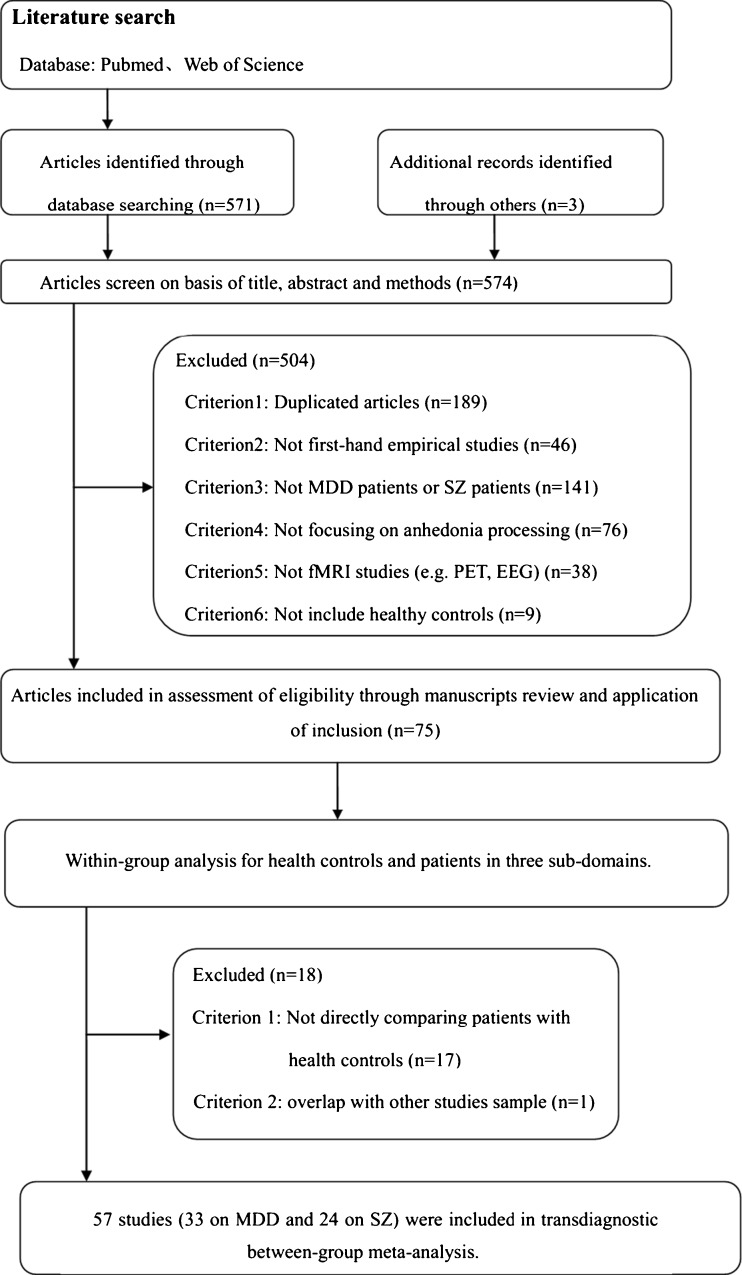
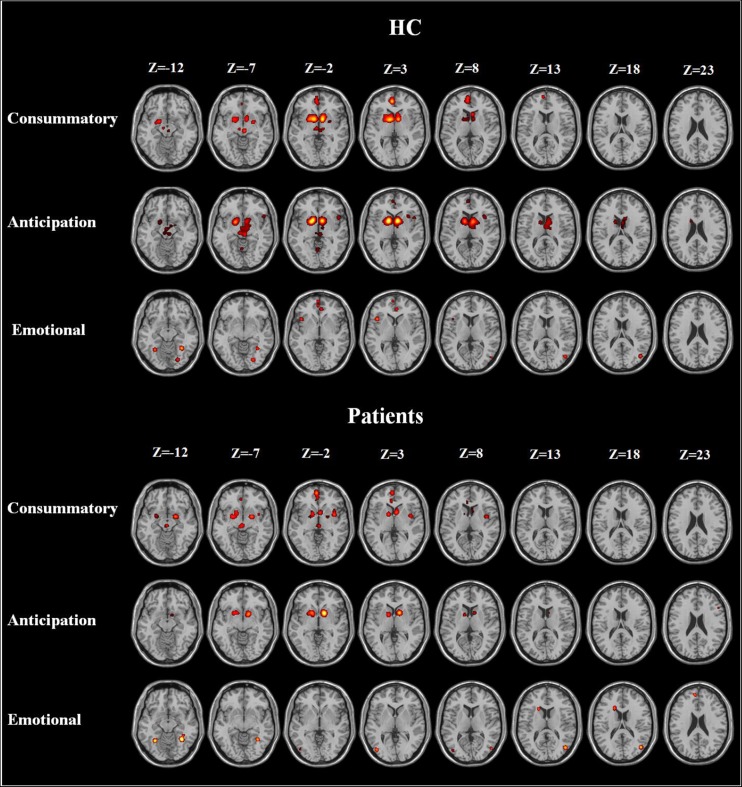
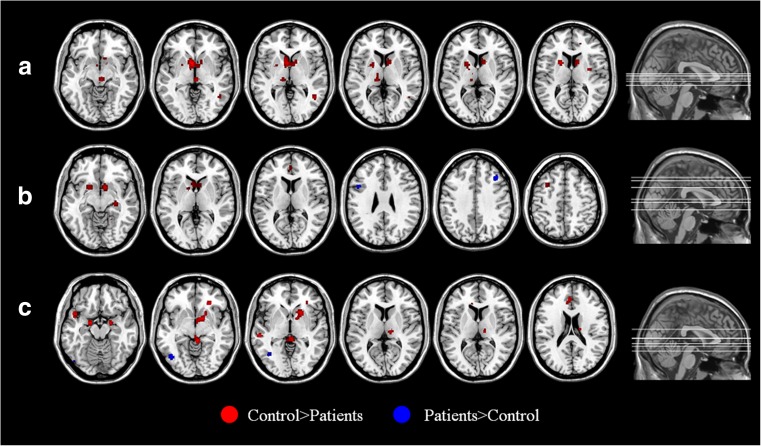
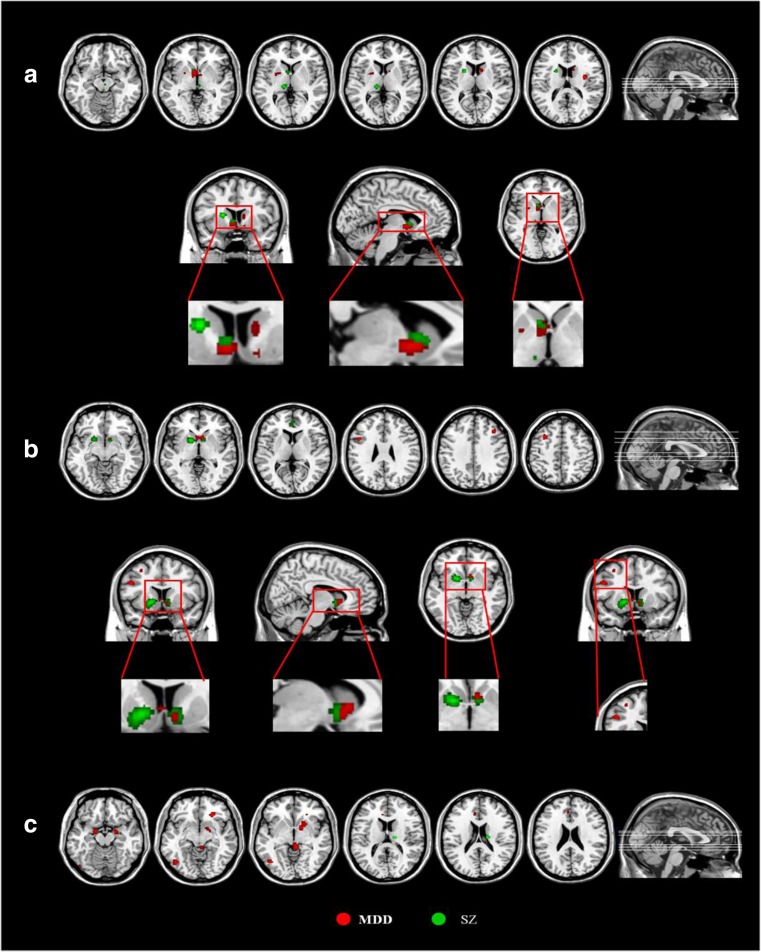
Verification
Claims the paper makes
The claims and statistics of this paper haven’t been checked yet.
Free: it reads the open-access text and checks the first 5 claims that cite a source we can check. Create a free account to check every claim.
Claims other papers make about this one
Each is checked against this paper’s own text: does it say what the citing paper says it does?
The cited source doesn’t support the claim as written.
In the citing paper
“In tasks probing consummatory anhedonia (e.g., receipt of secondary rewards such as money), MDD has been associated with reduced activation in ventral (nucleus accumbens) and dorsal (caudate, putamen) striatum, ACC (rostral, dorsal), and OFC but hyperactivation in the mPFC, vmPFC (including sgACC) and dlPFC [100, 102, 104].”
From Prefrontal cortex and depression (2022) · cites this paper as [100]
Checked by a reasoning model — may be wrong.
Experimental — accuracy not yet measured
Self-check
Percentages, sums and reported differences re-computed from the paper’s own numbers.
The self-check needs the paper’s full text.
Citations
Cites
Insel, T., Cuthbert, B., Garvey, M., Heinssen, R., Pine, D. S., Quinn, K., Sanislow, C., & Wang, P. (2010) · American Journal of Psychiatry · doi:10.1176/appi.ajp.2010.09091379 · Cited by 7,067 · cited 2×
“the NIMH Research Domain Criteria (RDoC) project (Insel et al. 2010), investigators are seeking to use the basic behavioral dimension of functioning, rather than t r a d i t i o n a l d i a gno s t i c c a t e go r i e s , t o i d e n t i f y transdiagnostic neural markers of anhedonia (CorralFrias et al.”
BackgroundMethodThe reward circuit: linking primate anatomy and human imaging
Haber, S. N., & Knutson, B. (2010) · Neuropsychopharmacology · doi:10.1038/npp.2009.129 · Cited by 3,718 · cited 2×
“…forthcoming rewards, including updating/maintaining the value of pleasant stimuli, effort-value computation, decision-making to engage in goal-directed activity and monitoring incentive-based behavioral responses (Haber and Knutson 2010; Pujara and Koenigs 2014; Wallis and Kennerley 2010).”
BackgroundToward the future of psychiatric diagnosis: the seven pillars of RDoC
Cuthbert, B. N., & Insel, T. R. (2013) · BMC Medicine · doi:10.1186/1741-7015-11-126 · Cited by 3,053 · cited 2×
“…(RDoC) project (Insel et al. 2010), investigators are seeking to use the basic behavioral dimension of functioning, rather than traditional diagnostic categories, to identify transdiagnostic neural markers of anhedonia (Corral-Frias et al. 2015; Cuthbert and Insel2013 ; Markou et al. 2009).”
BackgroundThe debate over dopamine’s role in reward: the case for incentive salience
Berridge, K. C. (2007) · Psychopharmacology · doi:10.1007/s00213-006-0578-x · Cited by 2,347 · cited 1×
“Most antidepressant treatments act on the serotonergic or noradrenergic circuits, but not directly enhance Dopamine (DA) neurotransmission, which plays a significant role in motivation and reward processing (Berridge 2007; Treadway and Zald 2011).”
BackgroundThe human orbitofrontal cortex: linking reward to hedonic experience
Kringelbach, M. L. (2005) · Nature Reviews Neuroscience · doi:10.1038/nrn1747 · Cited by 2,180 · cited 2×
“which is considered to be a key cortical region involved in anhedonia, in particular in the reward value presentation (Kringelbach 2005; Pizzagalli 2014).”
BackgroundEickhoff, S. B., Laird, A. R., Grefkes, C., Wang, L. E., Zilles, K., & Fox, P. T. (2009) · Human Brain Mapping · doi:10.1002/hbm.20718 · Cited by 1,924 · cited 6×
“Nevertheless, previous studies suggested that no individual study could significantly bias the results of ALE meta-analyses after including the sample size and number of reported foci into ALE algorithm, changing from fixed-effects to random-effects inference, and revising for multiple comparison correction (Eickhoff…”
BackgroundMethodResultInfluentialBerridge, K. C., & Robinson, T. E. (2003) · Trends in Neurosciences · doi:10.1016/s0166-2236(03)00233-9 · Cited by 1,869 · cited 2×
“…brain activity impairments in experience/ consummatory and motivational/anticipatory stages separately, and they discussed the link between anhedonia and the reward-processing components of ‘ liking ’ and ‘ wanting ’ from the preclinical literature (Berridge and Robinson 2003; Dillon et al. 2008).”
BackgroundPessoa, L., & Adolphs, R. (2010) · Nature Reviews Neuroscience · doi:10.1038/nrn2920 · Cited by 1,794 · cited 1×
“A more recent conceptualization of pulvinar function posited that this region plays an important role in emotional salience and awareness (Hamilton et al. 2012; Pessoa and Adolphs 2010) and has strong bidirectional connectivity with insula and dACC (Mufson and Mesulam 1984).”
BackgroundHaber, S. N., Fudge, J. L., & McFarland, N. R. (2000) · The Journal of Neuroscience · doi:10.1523/jneurosci.20-06-02369.2000 · Cited by 1,610 · cited 2×
“For instance, the striatum can be divided into three functional subregions (i.e., limbic, associative and sensorimotor) based on afferent inputs from the frontal cortex (Haber 2010; Haber et al.2000; Iversen 2010; van den Bos et al. 2014).”
BackgroundMeta-analysis of the functional neuroanatomy of single-word reading: method and validation
Turkeltaub, P. E., Eden, G. F., Jones, K. M., & Zeffiro, T. A. (2002) · NeuroImage · doi:10.1006/nimg.2002.1131 · Cited by 1,604
Cited by
Items 101–153 of 153
Gill, H., McIntyre, R. S., Hawco, C. S., Rodrigues, N. B., Gill, B., Vincenzo, J. D. D., Lieberman, J. M., Marks, C. A., Cha, D. S., Lipsitz, O., et al. (2023) · Psychiatry Research Neuroimaging · doi:10.1016/j.pscychresns.2023.111592 · Cited by 8
Consistency, Replication, and Meta-analyses of Altered Brain Activity in Unipolar Depression
Barch, D. M., & Pagliaccio, D. (2016) · JAMA Psychiatry · doi:10.1001/jamapsychiatry.2016.2844 · Cited by 7
Anhedonia Relates to the Altered Global and Local Grey Matter Network Properties in Schizophrenia
Kim, B.-H., Kim, H. E., Lee, J. S., & Kim, J. (2021) · Journal of Clinical Medicine · doi:10.3390/jcm10071395 · Cited by 6
Zeng, J., Yan, J., You, L., Liao, T., Luo, Y., Cheng, B., & Yang, X. (2023) · The International Journal of Neuropsychopharmacology · doi:10.1093/ijnp/pyad009 · Cited by 8
“Contrary to the finding of decreased activations in the PFC/ACC in SZ patients (Zhang et al., 2016; Leroy et al., 2020), CHR individuals exhibited increased mPFC/ACC activation in our meta-analysis.”
Renz, K. E., Schlier, B., & Lincoln, T. M. (2022) · International Journal of Methods in Psychiatric Research · doi:10.1002/mpr.1943 · Cited by 12
“…persistence in activities (Strauss et al., 2012) is considered a core symptom of negative symptoms in psychosis and depression (Bobes et al., 2010; Zhang et al., 2016) and a prevalent symptom in other mental disorders such as autism (Damiano et al., 2012) and substance use disorders (Leventhal…”
BackgroundJung, C. J., Kim, J., Choi, S.-Y., Seo, Y. K., Park, K.-S., Choi, Y., Choi, S. M., Kwon, O., Song, Y., Kim, J., et al. (2023) · NeuroImage Clinical · doi:10.1016/j.nicl.2023.103380 · Cited by 6
“Neuroimaging studies have shown that participants with depressive symptoms show blunted responses in the mPFC under both reward or aversive stimuli, and also demonstrate abnormalities in the frontal–striatal network (Rzepa et al., 2017; Zhang et al., 2016).”
BackgroundLee, S. W., Kim, S., Lee, H., Chang, Y., & Lee, S. J. (2024) · Journal of Psychiatric Research · doi:10.1016/j.jpsychires.2024.10.005 · Cited by 6
Shin, D., Lee, J., Kim, Y., Park, J., Shin, D., Song, Y., Joo, E.-J., Roh, S., Lee, K. Y., Oh, S., et al. (2023) · Journal of Proteome Research · doi:10.1021/acs.jproteome.3c00580 · Cited by 4
Uliana, D. L., Martinez, A., & Grace, A. A. (2024) · Schizophrenia Research · doi:10.1016/j.schres.2024.10.003 · Cited by 5
Mao, J., & Yuan, J. (2020) · Stress and Brain · doi:10.26599/sab.2020.9060002 · Cited by 7
“conducted a meta-analysis of the neural responses to consummatory pleasure (excluding the results of emotional experience task) [43], which revealed that MDD patients exhibited significant hypoactivation to rewards of gain in left globus pallidus, right caudate body, left putamen, right insula, and left ACC, compared…”
Damme, K. S. F., Gupta, T., Haase, C. M., & Mittal, V. A. (2022) · NeuroImage Clinical · doi:10.1016/j.nicl.2022.102946 · Cited by 5
“the nucleus accumbens (NAcc) failing to appropriately mark the anticipation or receipt of reward (Radua et al., 2015; Zhang et al., 2016).”
BackgroundGenetic Associations of Anhedonia: Insights into Overlap of Mental and Somatic Disorders
Kasyanov, E. D., Pinakhina, D. V., Rakitko, A., Vergasova, E., Yermakovich, D., Рукавишников, Г. В., Malyshko, L. V., Popov, I., Kovalenko, E. V., Ilinskaya, A. Y., et al. (2024) · Consortium Psychiatricum · doi:10.17816/cp15494 · Cited by 4
“Anhedonia is also associated with a decrease in volume and a change in functional activity in the medial frontal cortex and subcortical striatal areas (caudate nucleus and putamen) [12, 13].”
BackgroundMagioncalda, P., Yadav, A., & Martino, M. (2025) · Nature Mental Health · doi:10.1038/s44220-025-00493-5 · Cited by 5
“The task-based functional MRI/PET studies showed the following changes in brain activation (during perception, emotion and cognitive processing) in patients with schizophrenia compared with HC 15–17,20,21,24,25,32–34,36–39,41–44,47–50,52,53 .”
Ding, Y., Ou, Y., Yan, H., Liu, F., Li, H., Li, P., Xie, G., Cui, X., & Guo, W. (2023) · Biomedicines · doi:10.3390/biomedicines11123138 · Cited by 7
Thörnblom, E., Steinholtz, L., Persson, J., Axelson, H. W., & Bodén, R. (2024) · Journal of Psychiatric Research · doi:10.1016/j.jpsychires.2024.11.055 · Cited by 4
“Reward system impairments in both depression and schizophrenia potentially share dysfunctional activation of the medial prefrontal cortex and its network connections (Liang et al., 2022; Zhang et al., 2016).”
Li, J., Mo, X., Jiang, D., Huang, X., Wang, X., Xia, T., & Zhang, W. (2025) · Frontiers in Psychiatry · doi:10.3389/fpsyt.2024.1500113 · Cited by 4
Self-citationAnhedonia as a Crucial Factor of Depression: Assessment, Neurobiological Underpinnings and Treatment
Chow, T. K., Kennedy, S. H., & Rizvi, S. J. (2017) · Springer eBooks · doi:10.1007/978-981-10-6577-4_7 · Cited by 5
Kasyanov, E. D., Pinakhina, D. V., Rakitko, A., Vergasova, E., Yermakovich, D., Rukavishnikov, G. V., Malyshko, L. V., Popov, I., Kovalenko, E. V., Ilinskaya, A. Y., et al. (2023) · S S Korsakov Journal of Neurology and Psychiatry · doi:10.17116/jnevro202312304265 · Cited by 4
Pleasure, reward value and prediction error in anhedoniaPreprint
Kieslich, K., Valton, V., & Roiser, J. P. (2021) · doi:10.31234/osf.io/cya6r · Cited by 3
Zhu, H., Zhu, H., Liu, X., Wei, F., Li, H., & Guo, Z. (2022) · Current Alzheimer Research · doi:10.2174/1567205020666230303093112 · Cited by 3
Mavar, S., Lee, Y.-S., Baranova, E., Duncan, N. W., Magioncalda, P., & Martino, M. (2025) · Molecular Psychiatry · doi:10.1038/s41380-025-03194-8 · Cited by 8
Happy or not? An investigative study on well-being and anhedonia in everyday life
Merklein, S. A., Peterburs, J., & Mundorf, A. (2025) · PLoS ONE · doi:10.1371/journal.pone.0331769 · Cited by 3
“Anhedonia and related negative symptoms have been linked to impairments in the mesocorticolimbic dopamine pathway, which encompasses key regions such as the ventral tegmental area, nucleus accumbens, and prefrontal cortex [78,79].”
Maher, R. E., Klemballa, D. M., Walther, S., Mittal, V. A., Shankman, S. A., & Letkiewicz, A. M. (2025) · Journal of Psychopathology and Behavioral Assessment · doi:10.1007/s10862-025-10249-1 · Cited by 2
于, 雅. (2024) · Advances in Clinical Medicine · doi:10.12677/acm.2024.142463 · Cited by 2
Boisvert, M., Dugre, J. R., & Potvin, S. (2025) · PLoS ONE · doi:10.1371/journal.pone.0316330 · Cited by 2
Functional Neural Network Connectivity in Myalgic Encephalomyelitis
Zinn, M. L., Zinn, M. A., & Jason, L. A. (2016) · NeuroRegulation · doi:10.15540/nr.3.1.28 · Cited by 1
Kang, M. S., Wolf, D. H., Kazinka, R., Lee, S., Ruparel, K., Elliott, M. A., Xu, A., Cieslak, M., Prettyman, G., Satterthwaite, T. D., et al. (2020) · bioRxiv (Cold Spring Harbor Laboratory) · doi:10.1101/2020.12.01.407197 · Cited by 2
From memory disorders to the development of depression: A system approach
Grigoryan, G. A. (2025) · Biosystems · doi:10.1016/j.biosystems.2025.105440 · Cited by 1
The Neural Substrates of Individual Differences in Reward Sensitivity in Mental Health
Zald, D. H., & Dennis, N. J. (2025) · Springer eBooks · doi:10.1007/978-3-031-77967-1_6 · Cited by 1
Neonatal striatal volume is associated with infant anhedonia
Nevarez-Brewster, M., Demers, C. H., Irwin, J. L., Glynn, L. M., Styner, M. A., Haase, M. H., Hoffman, M. C., Pizzagalli, D. A., Hankin, B. L., & Davis, E. P. (2025) · Journal of Affective Disorders · doi:10.1016/j.jad.2025.120211 · Cited by 2
“…to pleasurable stimuli, is a transdiagnostic risk factor implicated in the development, onset, and severity of a myriad of mental health disorders (Auerbach et al., 2015; Der-Avakian et al., 2016; Eckstrand et al., 2019; Pizzagalli, 2014; Risbrough et al., 2018; Snaith, 1993; Zhang et al., 2016).”
Schäfer, N., Awasthi, S., Ripke, S., Daniels, A., Meyer‐Lindenberg, A., Tost, H., Heinz, A., Walter, H., & Erk, S. (2025) · Journal of Affective Disorders · doi:10.1016/j.jad.2025.120900 · Cited by 1
Luo, X., Wu, Y., Yuan, L., Wang, Y., Li, J., Xu, P., Lian, J., Liu, X. Y., & Shen, Z. (2026) · Neuropsychiatric Disease and Treatment · doi:10.2147/ndt.s577735 · Cited by 2
“This conclusion is supported by previous research findings showing a significant association between consummatory anhedonia and reduced putamen activation, 32 highlighting the potential contribution of putamen dysfunction to the neurobiological mechanisms of anhedonia in the MDD-WA population.”
Social Anhedonia among Academics: The Role of Type A Personality, Age & Gender Differences
Mahdi, R. K. (2022) · Journal of Social and Political Sciences · doi:10.31014/aior.1991.05.02.345 · Cited by 3
Meuwissen (2019) · Research Publications (Maastricht University) · doi:10.26481/dis.20191205kw
Klein, D. N., & Calentino, A. E. (2022) · Elsevier eBooks · doi:10.1016/b978-0-323-91497-0.00182-x · Cited by 2
Попов, М. М., Sorokin, S. A., & Kananovich, P. S. (2023) · Psikhiatriya · doi:10.30629/2618-6667-2023-21-3-45-53
Social Anhedonia: (f)MRI Studies
Мельников, М. Е. (2023) · Neuroscience and Behavioral Physiology · doi:10.1007/s11055-023-01502-9
Lv, R., Cai, M., Tang, N., Shi, Y., Zhang, Y., Liu, N., Han, T., Zhang, Y., & Wang, H. (2024) · Figshare · doi:10.6084/m9.figshare.24995477
The Social Anhedonia: (f)MRI Studies
Мельников, М. Е. (2023) · Успехи физиологических наук · doi:10.31857/s030117982301006x
Sawyers, C. K., Benstock, S. E., Verhulst, B., Straub, L. K., & Hettema, J. M. (2025) · medRxiv · doi:10.1101/2025.08.26.25334447
“Finding associations within the ventral striatum and depression in our study possibly aligns with the common clinical presentation of anhedonia (reduced positive affect) as well as with VS activation patterns observed in depressed patients(64–66).”
Neural Responses to Reward and Psychosis Dimensions
Nelson, B. D., Gallardo, M. E., Jonas, K. G., Bromet, E. J., & Kotov, R. (2025) · Schizophrenia Bulletin · doi:10.1093/schbul/sbaf165 · Cited by 1
Wu, Q., He, J., Fang, S., Zhang, P., Luo, X., Zhang, J., Xiong, Y., Luo, F., Wang, X., Yao, S., et al. (2020) · Figshare · doi:10.6084/m9.figshare.13212793
Self-citationLv, R., Cai, M., Tang, N., Shi, Y., Zhang, Y., Liu, N., Han, T., Zhang, Y., & Wang, H. (2024) · Figshare · doi:10.6084/m9.figshare.24995565
Struckmann, W., Wlad, M., Rosén, J., Fällmar, D., Bodén, R., Persson, J., & Gingnell, M. (2026) · Progress in Neuro-Psychopharmacology and Biological Psychiatry · doi:10.1016/j.pnpbp.2026.111606
“As symptoms of anhedonia have been linked to aberrant dmPFC function (Chai et al., 2011; Kinou et al., 2013; Salomons et al., 2014; Zhang et al., 2016), targeting the dmPFC could be of interest in rTMS treatment of anhedonia. rTMS over the dmPFC has been shown to modulate functional connectivity…”
Sustained consummatory reward processing deficits in remitted melancholic depression
Cheng, C., Liu, M., Zhou, Z., Wei, L., & Liu, Q. (2026) · Journal of Psychiatric Research · doi:10.1016/j.jpsychires.2026.02.032
Nance, M., Gupta, T., Lindenmuth, M., Eckstrand, K., Rengasamy, M. L., Chat, I. K.-Y., & Forbes, E. E. (2026) · Brain Behavior & Immunity - Health · doi:10.1016/j.bbih.2026.101246
Portela, R., Brister, T. S., Mattingly, G. W., Drissen, T., & Bowrey, H. E. (2026) · Annals of General Psychiatry · doi:10.1186/s12991-026-00662-5 · Cited by 1
“Although often defined as a loss of interest or pleasure, anhedonia is increasingly recognized as being multifaceted, involving dysregulation in multiple aspects of reward processing in the brain (desire, anticipation, effort, cognition, and anticipatory/consummatory pleasure) [28–31].”
Gorka, A. X., Evans, J. W., Kvarta, M. D., Ballard, E. D., & Zarate, C. (2026) · Journal of Psychiatry and Neuroscience · doi:10.1139/jpn-2025-0160
Levada, O. A., Troian, O., Myshakivska, O., & Пінчук, І. (2026) · Proceedings of the Shevchenko Scientific Society Medical Sciences · doi:10.25040/ntsh2026.01.23
Wen, X., Han, B., Zhang, J., Gao, Y., Fengge, Y., Dou, F., Hao, Z., Li, H., & Hou, G. (2026) · Journal of Affective Disorders · doi:10.1016/j.jad.2026.122383
Structural correlates of anhedonia across psychiatric diagnoses: a dimensional analysis
Şakiroğlu, M. A., Çallı, S. Y., Çiçek, Y., & Fidan, Y. S. (2026) · Psychiatry Research Neuroimaging · doi:10.1016/j.pscychresns.2026.112345
Metadata
- Authors
- Zhang, B., Lin, P., Shi, H., Öngür, D., Auerbach, R. P., Wang, X., Yao, S., & Wang, X.
- Affiliations
- Second Xiangya Hospital of Central South University (CN)
- Xi'an Jiaotong University (CN)
- Shanghai Normal University (CN)
- Harvard University (US)
- Central South University (CN)
- Corresponding author
- Wang, Xiaosheng
- Venue
- Brain Imaging and Behavior
- Published
- 2015-10-20
- Volume
- 10
- Issue
- 3
- Pages
- 920-939
- ISSN
- 1931-7557 (ISSN-L)
- 1931-7565
- PMC
- PMC4838562
- OpenAlex
- W2119831202
- Semantic Scholar
- 1d9332ed48f89a64ed99bbd8181003f5683bad03
- Cited by
- 152
- References
- 142
- Citations by year
- 2026: 11 · 2025: 13 · 2024: 14 · 2023: 21 · 2022: 24 · 2021: 16 · 2020: 16 · 2019: 13 · 2018: 11 · 2017: 7 · 2016: 6
- FWCI
- 0.79
- Type
- journal article
- Language
- en
- Open access
- hybrid
- doi.org
- Locations
- Brain Imaging and Behavior (publishedVersion, cc-by)
- PubMed Central (publishedVersion, cc-by)
- PubMed (publishedVersion)
- Digital Access to Scholarship at Harvard (DASH) (Harvard University) (submittedVersion, cc-by)
- Funders
- National Natural Science Foundation of China (61473221, 30700236)
- Program for New Century Excellent Talents in University
- National Institute of Mental Health (R01MH094594, K23MH097786)
- Topics
- Life Sciences › Neuroscience › Cognitive Neuroscience › Neural and Behavioral Psychology Studies
- Life Sciences › Neuroscience › Cellular and Molecular Neuroscience › Neurotransmitter Receptor Influence on Behavior
- Health Sciences › Medicine › Psychiatry and Mental health › Schizophrenia research and treatment
- Keywords
- anhedonia, transdiagnostic approach, major depressive disorder, schizophrenia, consummatory anhedonia, anticipatory anhedonia, emotional processing, reward processing, ventral striatum, dorsal anterior cingulate cortex
- MeSH terms
- Brain, Brain Mapping, Major Depressive Disorder, Humans, Schizophrenia, Anhedonia
About these checks
Registry, retraction, Cites and statistics results are computed, not judged, with one exception: a printed reference that no index lists is read once by a model before it counts as a citation error. Claims are extracted by a model and kept only when their quote appears verbatim in the text; each cited source is then checked, with a model’s help, for whether it says what the claim relies on. Those verdicts can be wrong — read the claim’s quote and the cited source before relying on one.
Statistics and arithmetic are recomputed, not judged.
Confidence bands are shown only for fields calibrated on our annotated test set. None is calibrated yet, so no band is shown.
What counts as a claim ›How we measure confidence ›How we check this ›
Are you an author, or do you see a problem with this page? Request a review
Data sources
Bibliographic data: Semantic Scholar, OpenAlex, Crossref.
Contains information from the Semantic Scholar Academic Graph Datasets, made available under the ODC Attribution License (ODC-BY 1.0).
Semantic Scholar’s data is described in: Kinney, R., et al. (2023). The Semantic Scholar Open Data Platform. arXiv:2301.10140.
