

A new criterion for assessing discriminant validity in variance-based structural equation modeling
Open accessThe DOI matches its Crossref record; 108 of the 112 references it cites were found in a registry or an index.
Abstract
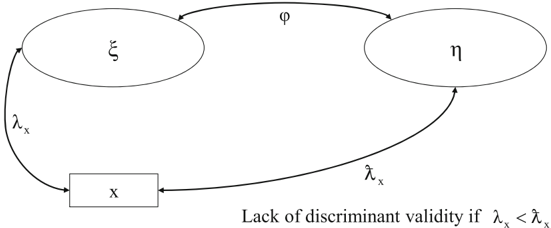
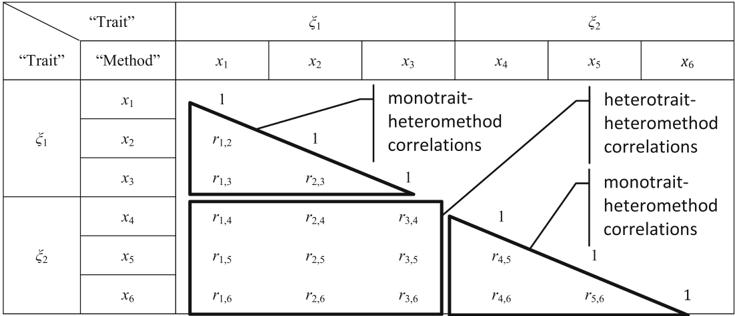
Discriminant validity assessment has become a generally accepted prerequisite for analyzing relationships between latent variables. For variance-based structural equation modeling, such as partial least squares, the Fornell-Larcker criterion and the examination of cross-loadings are the dominant approaches for evaluating discriminant validity. By means of a simulation study, we show that these approaches do not reliably detect the lack of discriminant validity in common research situations. We therefore propose an alternative approach, based on the multitrait-multimethod matrix, to assess discriminant validity: the heterotrait-monotrait ratio of correlations. We demonstrate its superior performance by means of a Monte Carlo simulation study, in which we compare the new approach to the Fornell-Larcker criterion and the assessment of (partial) cross-loadings. Finally, we provide guidelines on how to handle discriminant validity issues in variance-based structural equation modeling.
Overview
The claims and statistics of this paper haven’t been checked yet.
Free: it reads the open-access text and checks the first 5 claims that cite a source we can check. Create a free account to check every claim.
Integrity signals
Registry
Cites
Statistics
Figures






Verification
Claims the paper makes
The claims and statistics of this paper haven’t been checked yet.
Free: it reads the open-access text and checks the first 5 claims that cite a source we can check. Create a free account to check every claim.
Claims other papers make about this one
Each is checked against this paper’s own text: does it say what the citing paper says it does?
The cited source doesn’t support the claim as written.
In the citing paper
“Ultimately, they did not recommend HTMT inference , given it failed to detect discriminant validity violations even when inter-construct correlations were as high as 0.95.”
From Reporting reliability, convergent and discriminant validity with structural equation modeling: A review and best-practice recommendations (2024) · cites this paper as Henseler et al. (2015)
Checked by a reasoning model — may be wrong.
Experimental — accuracy not yet measuredThe cited source doesn’t support the claim as written.
In the citing paper
“First, intending to estimate the disattenuated construct score correlation, Henseler et al.'s (2015, Eq. 6) HTMT equation is incorrect.”
From Reporting reliability, convergent and discriminant validity with structural equation modeling: A review and best-practice recommendations (2024) · cites this paper as Henseler et al. (2015)
Checked by a reasoning model — may be wrong.
Experimental — accuracy not yet measuredThe source backs part of the claim, not all of it — or backs it for a different population, condition or comparison.
In the citing paper
“While Henseler et al.'s (2015) HTMT equation uses inter-item correlations instead of inter-item covariances, that becomes the disattenuated correlation between two composite scores formed by averaging the standardized item scores.”
From Reporting reliability, convergent and discriminant validity with structural equation modeling: A review and best-practice recommendations (2024) · cites this paper as Henseler et al. (2015)
Experimental — accuracy not yet measuredThe source backs part of the claim, not all of it — or backs it for a different population, condition or comparison.
In the citing paper
“Third, the recommended HTMT threshold of 0.85 was based on the power of detecting a population correlation at 1.0 in a simulation study (Henseler et al., 2015).”
From Reporting reliability, convergent and discriminant validity with structural equation modeling: A review and best-practice recommendations (2024) · cites this paper as Henseler et al., 2015
Experimental — accuracy not yet measuredThe source backs part of the claim, not all of it — or backs it for a different population, condition or comparison.
In the citing paper
“Hence, unless the construct scores are calculated by averaging the standardized item scores, Henseler et al.'s HTMT equation provides a biased estimate of the disattenuated correlation between two composites.”
From Reporting reliability, convergent and discriminant validity with structural equation modeling: A review and best-practice recommendations (2024) · cites this paper as Henseler et al. (2015)
Experimental — accuracy not yet measured
38 more claims about this paper
Create a free account to see every claim other papers make about this one.
Self-check
Percentages, sums and reported differences re-computed from the paper’s own numbers.
The self-check needs the paper’s full text.
Citations
Cites
R: A Language and Environment for Statistical Computing
R Core Team (2025) · doi:10.32614/r.manuals · Cited by 352,181
Evaluating Structural Equation Models with Unobservable Variables and Measurement Error
Fornell, C., & Larcker, D. F. (1981) · Journal of Marketing Research · doi:10.2307/3151312 · Cited by 109,314
Evaluating structural equation models with unobservable variables and measurement error
Fornell, C., & Larcker, D. F. (1981) · Journal of Marketing Research · doi:10.1177/002224378101800104 · Cited by 109,190
Perceived usefulness, perceived ease of use, and user acceptance of information technology
Davis, F. D. (1989) · MIS Quarterly · doi:10.2307/249008 · Cited by 68,483 · cited 1×
“Take, for example, the technology acceptance model and its variations (Davis 1989; Venkatesh et al. 2003), which include the constructs intention to use and the actual use.”
BackgroundUser Acceptance of Information Technology: Toward A Unified View1
Venkatesh, V., Morris, M. G., Davis, G. B., & Davis, F. D. (2003) · MIS Quarterly · doi:10.2307/30036540 · Cited by 45,035 · cited 1×
“Take, for example, the technology acceptance model and its variations (Davis 1989; Venkatesh et al. 2003), which include the constructs intention to use and the actual use.”
BackgroundStructural equation modeling in practice: A review and recommended two-step approach
Anderson, J. C., & Gerbing, D. W. (1988) · Psychological Bulletin · doi:10.1037/0033-2909.103.3.411 · Cited by 41,941 · cited 1×
“That is, discriminant validity assessment using HTMTinference needs to adjust the upper and lower bounds of the confidence interval in each test to maintain the familywise error rate at a predefined α level (Anderson and Gerbing 1988).”
Method(1998) · Cited by 36,049
Herne, H., Cooley, W. W., & Lohnes, P. R. (1973) · Journal of the Royal Statistical Society. Series A (General) · doi:10.2307/2344428 · Cited by 35,697
Pls-Sem: indeed a silver bullet
Hair, J. F., Ringle, C. M., & Sarstedt, M. (2011) · Journal of Marketing Theory and Practice · doi:10.2753/mtp1069-6679190202 · Cited by 21,631
Self-citationA Simple Sequentially Rejective Multiple Test Procedure
(1979) · Scandinavian Journal of Statistics · doi:10.2307/4615733 · Cited by 21,526 · cited 1×
“Furthermore, Bonferroni is a rather conservative approach to maintain the familywise error rate at a predefined level (Hochberg 1988; Holm 1979).”
Method
Research works printed but not linked: 3
- 29. Gefen, D., Straub, D. W., & Boudreau, M.-C. (2000). Structural equation modeling techniques and regression: guidelines for research prac- tice. Communications of the AIS, 4, 1-78.
- 65. Nunnally, J. (1978). Psychometric theory (2nd ed.). New York: McGraw-Hill.
- 76. Ringle, C. M., Sarstedt, M., & Straub, D. W. (2012). A critical look at the use of PLS-SEM in MIS Quarterly. MIS Quarterly, 36(1), iii-xiv.
Cited by
Items 501–600 of 1,265
Assessing the success behind the use of education management information systems in higher education
Martins, J., Branco, F., Gonçalves, R., Au-Yong-Oliveira, M., Oliveira, T., Naranjo-Zolotov, M., & Cruz-Jesus, F. (2019) · Telematics and Informatics · doi:10.1016/j.tele.2018.10.001 · Cited by 204
Teo, S. T. T., Bentley, T., & Nguyen, D. (2020) · International Journal of Hospitality Management · doi:10.1016/j.ijhm.2019.102415 · Cited by 204
Aldholay, A. H., Isaac, O., Abdullah, Z., & Ramayah, T. (2018) · Telematics and Informatics · doi:10.1016/j.tele.2018.03.012 · Cited by 203
Ashrafi, A., Zareravasan, A., Rabiee Savoji, S., & Amani, M. (2022) · Interactive Learning Environments · doi:10.1080/10494820.2020.1734028 · Cited by 202
Raza, A., Rather, R. A., Iqbal, M. K., & Bhutta, U. S. (2020) · Management Research Review · doi:10.1108/mrr-08-2019-0341 · Cited by 202
Zafar, A. U., Shen, J., Ashfaq, M., & Shahzad, M. (2021) · Journal of Retailing and Consumer Services · doi:10.1016/j.jretconser.2021.102751 · Cited by 204
Upadhyay, N., Upadhyay, S., Abed, S. S., & Dwivedi, Y. K. (2022) · International Journal of Bank Marketing · doi:10.1108/ijbm-06-2021-0262 · Cited by 201
Rehman Khan, S. A., Ahmad, Z., Sheikh, A. A., & Yu, Z. (2022) · Science Progress · doi:10.1177/00368504221145648 · Cited by 199
Huang, G., & Ren, Y. (2020) · Computers in Human Behavior · doi:10.1016/j.chb.2019.09.013 · Cited by 203
Abeysekara, N., Wang, H., & Kuruppuarachchi, D. (2019) · Business Process Management Journal · doi:10.1108/bpmj-09-2018-0241 · Cited by 202
Schikofsky, J., Dannewald, T., & Kowald, M. (2020) · Transportation Research Part A: Policy and Practice · doi:10.1016/j.tra.2019.09.022 · Cited by 201
Afum, E., Agyabeng-Mensah, Y., Sun, Z., Frimpong, B., Kusi, L. Y., & Acquah, I. S. K. (2020) · Journal of Manufacturing Technology Management · doi:10.1108/jmtm-02-2020-0036 · Cited by 202
The role of human resource practices in the implementation of digital transformation
Nicolás-Agustín, Á., Jiménez-Jiménez, D., & Maeso-Fernandez, F. (2022) · International Journal of Manpower · doi:10.1108/ijm-03-2021-0176 · Cited by 201
Ali, M., Ullah, S., Ahmad, M. S., Cheok, M. Y., & Alenezi, H. (2022) · Environmental Science and Pollution Research · doi:10.1007/s11356-022-23811-1 · Cited by 202
Ali, S., Khalid, N., Javed, H. M. U., & Islam, D. M. Z. (2021) · Journal of Open Innovation: Technology, Market, and Complexity · doi:10.3390/joitmc7010010 · Cited by 202
Consumer motives for peer-to-peer sharing
Hawlitschek, F., Teubner, T., & Gimpel, H. (2018) · Journal of Cleaner Production · doi:10.1016/j.jclepro.2018.08.326 · Cited by 202
Behl, A., Gaur, J., Pereira, V., Yadav, R., & Laker, B. (2022) · Journal of Business Research · doi:10.1016/j.jbusres.2022.05.009 · Cited by 200
Switching from cash to mobile payment: what's the hold-up?
Loh, X.-M., Lee, V.-H., Tan, G. W.-H., Ooi, K.-B., & Dwivedi, Y. K. (2020) · Internet Research · doi:10.1108/intr-04-2020-0175 · Cited by 201
Aldabbas, H., Pinnington, A., & Lahrech, A. (2023) · Current Psychology · doi:10.1007/s12144-021-01992-1 · Cited by 200
Rahman, M., Isa, C. R., Masud, M. M., Sarker, M., & Chowdhury, N. T. (2021) · Future Business Journal · doi:10.1186/s43093-021-00099-0 · Cited by 201
Zhao, H., Yao, X., Liu, Z., & Yang, Q. (2021) · Frontiers in Psychology · doi:10.3389/fpsyg.2021.720151 · Cited by 201
Odugbesan, J. A., Aghazadeh, S., Al Qaralleh, R. E., & Sogeke, O. S. (2023) · Journal of Knowledge Management · doi:10.1108/jkm-08-2021-0601 · Cited by 198
Hwang, H., Sarstedt, M., Cheah, J. H., & Ringle, C. M. (2020) · Behaviormetrika · doi:10.1007/s41237-019-00085-5 · Cited by 200
Self-citationTandon, A., Dhir, A., Talwar, S., Kaur, P., & Mäntymäki, M. (2022) · Technological Forecasting and Social Change · doi:10.1016/j.techfore.2021.121149 · Cited by 198
Nikookar, E., & Yanadori, Y. (2022) · International Journal of Operations & Production Management · doi:10.1108/ijopm-04-2021-0272 · Cited by 199
Chen, J., Siddik, A., Zheng, G.-W., Masukujjaman, M., & Bekhzod, S. (2022) · Energies · doi:10.3390/en15041292 · Cited by 199
Adoption of artificial intelligence (AI) based employee experience (EEX) chatbots
Pillai, R., Ghanghorkar, Y., Sivathanu, B., Algharabat, R., & Rana, N. P. (2024) · Information Technology & People · doi:10.1108/itp-04-2022-0287 · Cited by 197
Fong, L. H. N., Lam, L. W., & Law, R. (2017) · Tourism Management · doi:10.1016/j.tourman.2017.03.002 · Cited by 197
Public Transport Quality, Safety, and Perceived Accessibility
Friman, M., Lättman, K., & Olsson, L. E. (2020) · Sustainability · doi:10.3390/su12093563 · Cited by 195
Sharma, M., Kumar, A., Luthra, S., Joshi, S., & Upadhyay, A. (2022) · Business Strategy and the Environment · doi:10.1002/bse.2983 · Cited by 195
How does artificial intelligence create business agility? Evidence from chatbots
Wang, X., Lin, X., & Shao, B. (2022) · International Journal of Information Management · doi:10.1016/j.ijinfomgt.2022.102535 · Cited by 197
Aw, E. C.-X., & Labrecque, L. I. (2020) · Journal of Consumer Marketing · doi:10.1108/jcm-10-2019-3474 · Cited by 196
Understanding the determinants of mHealth apps adoption in Bangladesh: A SEM-Neural network approach
Alam, M. Z., Hu, W., Kaium, M. A., Hoque, M. R., & Alam, M. M. D. (2020) · Technology in Society · doi:10.1016/j.techsoc.2020.101255 · Cited by 196
Al-Okaily, M., Lutfi, A., Alsaad, A., Taamneh, A., & Alsyouf, A. (2020) · Technology in Society · doi:10.1016/j.techsoc.2020.101367 · Cited by 194
Qin, H., Osatuyi, B., & Xu, L. (2021) · Journal of Retailing and Consumer Services · doi:10.1016/j.jretconser.2021.102680 · Cited by 195
Le, T. T., Tran, P. Q., Lam, N. P., Tra, M. N. L., & Uyen, P. H. P. (2024) · Operations Management Research · doi:10.1007/s12063-023-00411-x · Cited by 194
Artificial intelligence in public services: When and why citizens accept its usage
Gesk, T. S., & Leyer, M. (2022) · Government Information Quarterly · doi:10.1016/j.giq.2022.101704 · Cited by 195
Gawankar, S. A., Gunasekaran, A., & Kamble, S. (2020) · International Journal of Production Research · doi:10.1080/00207543.2019.1668070 · Cited by 195
“Further, the heterotrait–monotrait (HTMT) ratio of correlations between the constructs (less than 0.90) also reported discriminant validity of the constructs (Henseler, Ringle, and Sarstedt 2015; Albort-Morant, Leal-Millán, and Cepeda-Carrión 2016).”
BackgroundInfluentialAl-Emran, M., Mezhuyev, V., & Kamaludin, A. (2020) · Technology in Society · doi:10.1016/j.techsoc.2020.101247 · Cited by 194
Flavián, C., Ibáñez-Sánchez, S., & Orús, C. (2019) · Journal of Travel & Tourism Marketing · doi:10.1080/10548408.2019.1618781 · Cited by 193
A PLS-SEM Neural Network Approach for Understanding Cryptocurrency Adoption
Sohaib, O., Hussain, W., Asif, M., Ahmad, M., & Mazzara, M. (2020) · IEEE Access · doi:10.1109/access.2019.2960083 · Cited by 190
Çelmeçe, N., & Menekay, M. (2020) · Frontiers in Psychology · doi:10.3389/fpsyg.2020.597624 · Cited by 193
Market orientation, positioning strategy and brand performance
Iyer, P., Davari, A., Zolfagharian, M., & Paswan, A. (2019) · Industrial Marketing Management · doi:10.1016/j.indmarman.2018.11.004 · Cited by 193
Understanding public transport satisfaction in post COVID-19 pandemic
Dong, H., Ma, S., Jia, N., & Tian, J. (2021) · Transport Policy · doi:10.1016/j.tranpol.2020.12.004 · Cited by 193
Camilleri, M. A. (2022) · Sustainable Development · doi:10.1002/sd.2256 · Cited by 191
An expectancy value theory (EVT) based instrument for measuring student perceptions of generative AI
Chan, C. K. Y., & Zhou, W. (2023) · Smart Learning Environments · doi:10.1186/s40561-023-00284-4 · Cited by 192
“The validity of constructs was measured by Average variance extracted (AVE), composite reliability (CR) (Fornell & Larcker, 1981; Hair et al., 2015), and Heterotrait-monotrait (HTMT) ratio (Henseler et al., 2015).”
BackgroundMethodInfluentialSaeed, A., Jun, Y., Nubuor, S. A., Priyankara, H. P. R., & Jayasuriya, M. P. F. (2018) · Sustainability · doi:10.3390/su10051517 · Cited by 190
Investigating the effects of tourist engagement on satisfaction and loyalty
Rasoolimanesh, S. M., Md Noor, S., Schuberth, F., & Jaafar, M. (2019) · The Service Industries Journal · doi:10.1080/02642069.2019.1570152 · Cited by 191
From chatting to self-educating: Can AI tools boost student learning outcomes?
Boubker, O. (2024) · Expert Systems with Applications · doi:10.1016/j.eswa.2023.121820 · Cited by 191
Puklavec, B., Oliveira, T., & Popovič, A. (2018) · Industrial Management & Data Systems · doi:10.1108/imds-05-2017-0170 · Cited by 191
“Finally, we analyzed the HTMT that is lower than 0.82 (results available by author request) that is lower than the recommend threshold of 0.9 (Henseler et al., 2015) (see Table 3).”
InfluentialQazi, A., Qazi, J., Naseer, K., Zeeshan, M., Hardaker, G., Maitama, J. Z., & Haruna, K. (2020) · Journal of Medical Virology · doi:10.1002/jmv.25840 · Cited by 191
Munerah, S., Koay, K. Y., & Thambiah, S. (2021) · Journal of Cleaner Production · doi:10.1016/j.jclepro.2020.124192 · Cited by 191
Does green intellectual capital spur corporate environmental performance through green workforce?
Mansoor, A., Jahan, S., & Riaz, M. (2021) · Journal of Intellectual Capital · doi:10.1108/jic-06-2020-0181 · Cited by 189
Examining the Predictors of Resilience and Work Engagement during the COVID-19 Pandemic
Ojo, A. O., Fawehinmi, O., & Yusliza, M. Y. (2021) · Sustainability · doi:10.3390/su13052902 · Cited by 190
Fauzi, M. A., Hanafiah, M. H., & Kunjuraman, V. (2024) · Journal of Tourism Futures · doi:10.1108/jtf-01-2022-0008 · Cited by 190
Almogren, A. S., Al-Rahmi, W. M., & Dahri, N. A. (2024) · Heliyon · doi:10.1016/j.heliyon.2024.e31887 · Cited by 190
Green competencies: Construct development and measurement validation
Cabral, C., & Lochan Dhar, R. (2019) · Journal of Cleaner Production · doi:10.1016/j.jclepro.2019.07.014 · Cited by 188
Abdullah, M. I., Huang, D., Sarfraz, M., Ivascu, L., & Riaz, A. (2021) · Nursing Open · doi:10.1002/nop2.665 · Cited by 188
Begum, S., Xia, E., Ali, F., Awan, U., & Ashfaq, M. (2022) · Journal of Manufacturing Technology Management · doi:10.1108/jmtm-01-2021-0003 · Cited by 189
Tian, W., Ge, J., Zhao, Y., & Zheng, X. (2024) · Frontiers in Psychology · doi:10.3389/fpsyg.2024.1268549 · Cited by 188
Remote Work, Work Stress, and Work–Life during Pandemic Times: A Latin America Situation
Sandoval-Reyes, J., Idrovo-Carlier, S., & Duque-Oliva, E. J. (2021) · International Journal of Environmental Research and Public Health · doi:10.3390/ijerph18137069 · Cited by 188
Fang, Y.-H. (2019) · Information & Management · doi:10.1016/j.im.2018.07.011 · Cited by 188
Crittenden, V. L., Crittenden, W. F., & Ajjan, H. (2019) · Journal of Business Research · doi:10.1016/j.jbusres.2019.01.045 · Cited by 188
“To evaluate discriminant validity, HTMT results were examined (Hair et al., 2016) using a threshold value of 0.90 given the conceptual similarities among the constructs (e.g., empowerment-impact and empowerment-goal internalization) (Henseler, Ringle, & Sarstedt, 2015).”
MethodInfluentialDigital content marketing as a catalyst for e-WOM in food tourism
Bu, Y., Parkinson, J., & Thaichon, P. (2021) · Australasian Marketing Journal · doi:10.1016/j.ausmj.2020.01.001 · Cited by 188
Coercive, Normative and Mimetic Pressures as Drivers of Environmental Management Accounting Adoption
Latif, B., Mahmood, Z., Tze San, O., Mohd Said, R., & Bakhsh, A. (2020) · Sustainability · doi:10.3390/su12114506 · Cited by 186
Mohd Suki, N., & Mohd Suki, N. (2019) · Journal of Cleaner Production · doi:10.1016/j.jclepro.2019.04.218 · Cited by 186
Wang, G., Tan, G. W.-H., Yuan, Y., Ooi, K.-B., & Dwivedi, Y. K. (2022) · Technological Forecasting and Social Change · doi:10.1016/j.techfore.2021.121345 · Cited by 184
Rehman, S. U., Giordino, D., Zhang, Q., & Alam, G. M. (2023) · Technology in Society · doi:10.1016/j.techsoc.2023.102227 · Cited by 181
Janson, A. (2023) · Computers in Human Behavior · doi:10.1016/j.chb.2023.107954 · Cited by 187
“We used SmartPLS 3.2.8 (Ringle et al., 2015) as well as SPSS 24 (analysis of group differences concerning manipulation checks and descriptive analysis) as our analysis tools.”
MethodInfluentialThe Government Metaverse: Charting the Coordinates of Citizen Acceptance
Al-Adwan, A. S. (2024) · Telematics and Informatics · doi:10.1016/j.tele.2024.102109 · Cited by 186
Using TikTok in tourism destination choice: A young Chinese tourists' perspective
Zhou, Q., Sotiriadis, M., & Shen, S. (2023) · Tourism Management Perspectives · doi:10.1016/j.tmp.2023.101101 · Cited by 187
Kessous, A., & Valette-Florence, P. (2019) · Journal of Business Research · doi:10.1016/j.jbusres.2019.02.033 · Cited by 187
FsQCA versus regression: The context of customer engagement
Gligor, D., & Bozkurt, S. (2020) · Journal of Retailing and Consumer Services · doi:10.1016/j.jretconser.2019.101929 · Cited by 186
Filimonau, V., Matute, J., Kubal-Czerwińska, M., Krzesiwo, K., & Mika, M. (2020) · Journal of Cleaner Production · doi:10.1016/j.jclepro.2019.119105 · Cited by 185
Abu-Rumman, A., Al Shraah, A., Al-Madi, F., & Alfalah, T. (2021) · Journal of Innovation and Entrepreneurship · doi:10.1186/s13731-021-00170-8 · Cited by 185
Camilleri, M. A., & Camilleri, A. C. (2022) · Technology, Knowledge and Learning · doi:10.1007/s10758-021-09561-y · Cited by 186
Ribeiro, M. A., Seyfi, S., Elhoushy, S., Woosnam, K. M., & Patwardhan, V. (2025) · Journal of Sustainable Tourism · doi:10.1080/09669582.2023.2230389 · Cited by 186
Duncan, L., Georgiades, K., Wang, L., Van Lieshout, R. J., MacMillan, H. L., Ferro, M. A., Lipman, E. L., Szatmari, P., Bennett, K., Kata, A., et al. (2018) · Psychological Assessment · doi:10.1037/pas0000541 · Cited by 185
Healthcare apps’ purchase intention: A consumption values perspective
Chakraborty, D., & Paul, J. (2023) · Technovation · doi:10.1016/j.technovation.2022.102481 · Cited by 185
Jafar, R. M. S., Ahmad, W., & Sun, Y. (2023) · Technology in Society · doi:10.1016/j.techsoc.2023.102265 · Cited by 185
Chatterjee, S., Chaudhuri, R., Thrassou, A., & Vrontis, D. (2021) · Journal of Business Research · doi:10.1016/j.jbusres.2021.02.033 · Cited by 185
Ogiemwonyi, O., Alam, M. N., Alshareef, R., Alsolamy, M., Azizan, N. A., & Mat, N. (2023) · Cleaner Environmental Systems · doi:10.1016/j.cesys.2023.100130 · Cited by 185
Resilience in healthcare systems: Cyber security and digital transformation
Garcia-Perez, A., Cegarra-Navarro, J. G., Sallos, M. P., Martinez-Caro, E., & Chinnaswamy, A. (2023) · Technovation · doi:10.1016/j.technovation.2022.102583 · Cited by 182
Laumer, S., Maier, C., & Weitzel, T. (2017) · European Journal of Information Systems · doi:10.1057/s41303-016-0029-7 · Cited by 183
Cheah, J.-H., Ting, H., Ramayah, T., Memon, M. A., Cham, T.-H., & Ciavolino, E. (2019) · Quality & Quantity · doi:10.1007/s11135-018-0821-7 · Cited by 183
Organizational readiness for digital financial innovation and financial resilience
Hussain, M., & Papastathopoulos, A. (2022) · International Journal of Production Economics · doi:10.1016/j.ijpe.2021.108326 · Cited by 182
Mukhtar, S., Wardana, L. W., Wibowo, A., & Narmaditya, B. S. (2021) · Cogent Education · doi:10.1080/2331186x.2021.1918849 · Cited by 183
Iranmanesh, M., Zailani, S., Hyun, S. S., Ali, M. H., & Kim, K. (2019) · Sustainability · doi:10.3390/su11041112 · Cited by 182
Organizational culture, innovation and performance: a study from a non-western context
Aboramadan, M., Albashiti, B., Alharazin, H., & Zaidoune, S. (2019) · Journal of Management Development · doi:10.1108/jmd-06-2019-0253 · Cited by 183
Sharabati, A.-A. A., Ali, A. A. A., Allahham, M. I., Hussein, A. A., Alheet, A. F., & Mohammad, A. S. (2024) · Sustainability · doi:10.3390/su16198667 · Cited by 175
Fintech Adoption Drivers for Innovation for SMEs in Indonesia
Nugraha, D. P., Setiawan, B., Nathan, R. J., & Fekete-Farkas, M. (2022) · Journal of Open Innovation: Technology, Market, and Complexity · doi:10.3390/joitmc8040208 · Cited by 188
Yener, S., Arslan, A., & Kilinç, S. (2021) · Information Technology & People · doi:10.1108/itp-09-2019-0462 · Cited by 182
Sthapit, E., Coudounaris, D. N., & Björk, P. (2019) · Scandinavian Journal of Hospitality and Tourism · doi:10.1080/15022250.2019.1689530 · Cited by 182
Geebren, A., Jabbar, A., & Luo, M. (2021) · Computers in Human Behavior · doi:10.1016/j.chb.2020.106584 · Cited by 179
Abbasi, G. A., Tiew, L. Y., Tang, J., Goh, Y.-N., & Thurasamy, R. (2021) · PLOS ONE · doi:10.1371/journal.pone.0247582 · Cited by 182
Vătămănescu, E.-M., Dabija, D.-C., Gazzola, P., Cegarro-Navarro, J. G., & Buzzi, T. (2021) · Journal of Cleaner Production · doi:10.1016/j.jclepro.2021.128945 · Cited by 181
Alyoussef, I. Y. (2023) · Heliyon · doi:10.1016/j.heliyon.2023.e13751 · Cited by 181
“This signifies the validity of the discriminants [116].”
BackgroundEl-Sayad, G., Md Saad, N. H., & Thurasamy, R. (2021) · Journal of Computers in Education · doi:10.1007/s40692-021-00191-y · Cited by 181
Kumar, S., Jain, A., & Hsieh, J.-K. (2021) · Journal of Retailing and Consumer Services · doi:10.1016/j.jretconser.2021.102686 · Cited by 179
Factors Influencing Learner Attitudes Towards ChatGPT-Assisted Language Learning in Higher Education
Cai, Q., Lin, Y., & Yu, Z. (2024) · International Journal of Human–Computer Interaction · doi:10.1080/10447318.2023.2261725 · Cited by 180
Metadata
- Authors
- Henseler, J., Ringle, C. M., & Sarstedt, M.
- Affiliations
- Universidade Nova de Lisboa (PT)
- University of Newcastle Australia (AU)
- Corresponding author
- Sarstedt, Marko
- Venue
- Journal of the Academy of Marketing Science
- Published
- 2014-08-22
- Volume
- 43
- Issue
- 1
- Pages
- 115-135
- ISSN
- 0092-0703 (ISSN-L)
- 1552-7824
- OpenAlex
- W2105846236
- Cited by
- 38,459
- References
- 112
- Citations by year
- 2026: 9160 · 2025: 7076 · 2024: 5683 · 2023: 5082 · 2022: 4007 · 2021: 2951 · 2020: 1857 · 2019: 1210 · 2018: 761 · 2017: 384 · 2016: 208 · 2015: 58 · 2014: 7
- FWCI
- 276.66
- Type
- journal article
- Language
- en
- Open access
- hybrid
- doi.org
- Locations
- Journal of the Academy of Marketing Science (publishedVersion, cc-by)
- New University of Lisbon's Repository (New University of Lisbon) (publishedVersion, other-oa)
- University of Twente Research Information (acceptedVersion, cc-by)
- Figshare (submittedVersion, cc-by)
- Portuguese National Funding Agency for Science, Research and Technology (RCAAP Project by FCT) (submittedVersion, other-oa)
- tub.dok (Hamburg University of Technology) (submittedVersion)
- NOVA (University of Newcastle Australia) (submittedVersion, cc-by)
- University of Twente Research Information (submittedVersion, cc-by)
- Funders
- Rijksuniversiteit Groningen
- Radboud Universiteit
- Topics
- Social Sciences › Decision Sciences › Management Science and Operations Research › Psychometric Methodologies and Testing
- Physical Sciences › Mathematics › Statistics and Probability › Statistical Methods and Applications
- Social Sciences › Business, Management and Accounting › Strategy and Management › Business Strategies and Management Research
- Keywords
- discriminant validity, partial least squares, cross-loadings, multitrait-multimethod matrix, latent variables, measurement validity
About these checks
Registry, retraction, Cites and statistics results are computed, not judged, with one exception: a printed reference that no index lists is read once by a model before it counts as a citation error. Claims are extracted by a model and kept only when their quote appears verbatim in the text; each cited source is then checked, with a model’s help, for whether it says what the claim relies on. Those verdicts can be wrong — read the claim’s quote and the cited source before relying on one.
Statistics and arithmetic are recomputed, not judged.
Confidence bands are shown only for fields calibrated on our annotated test set. None is calibrated yet, so no band is shown.
What counts as a claim ›How we measure confidence ›How we check this ›
Are you an author, or do you see a problem with this page? Request a review
Data sources
Bibliographic data: Semantic Scholar, OpenAlex, Crossref.
Contains information from the Semantic Scholar Academic Graph Datasets, made available under the ODC Attribution License (ODC-BY 1.0).
Semantic Scholar’s data is described in: Kinney, R., et al. (2023). The Semantic Scholar Open Data Platform. arXiv:2301.10140.
