

A new criterion for assessing discriminant validity in variance-based structural equation modeling
Open accessThe DOI matches its Crossref record; 108 of the 112 references it cites were found in a registry or an index.
Abstract
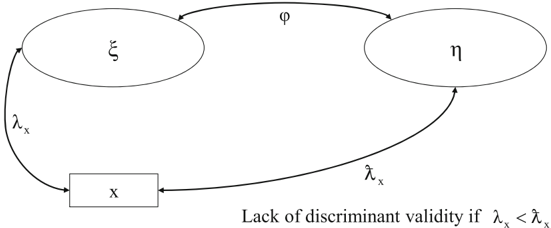
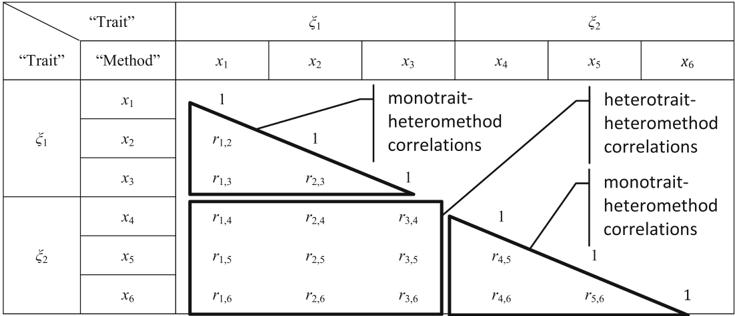
Discriminant validity assessment has become a generally accepted prerequisite for analyzing relationships between latent variables. For variance-based structural equation modeling, such as partial least squares, the Fornell-Larcker criterion and the examination of cross-loadings are the dominant approaches for evaluating discriminant validity. By means of a simulation study, we show that these approaches do not reliably detect the lack of discriminant validity in common research situations. We therefore propose an alternative approach, based on the multitrait-multimethod matrix, to assess discriminant validity: the heterotrait-monotrait ratio of correlations. We demonstrate its superior performance by means of a Monte Carlo simulation study, in which we compare the new approach to the Fornell-Larcker criterion and the assessment of (partial) cross-loadings. Finally, we provide guidelines on how to handle discriminant validity issues in variance-based structural equation modeling.
Overview
The claims and statistics of this paper haven’t been checked yet.
Free: it reads the open-access text and checks the first 5 claims that cite a source we can check. Create a free account to check every claim.
Integrity signals
Registry
Cites
Statistics
Figures






Verification
Claims the paper makes
The claims and statistics of this paper haven’t been checked yet.
Free: it reads the open-access text and checks the first 5 claims that cite a source we can check. Create a free account to check every claim.
Claims other papers make about this one
Each is checked against this paper’s own text: does it say what the citing paper says it does?
The cited source doesn’t support the claim as written.
In the citing paper
“Ultimately, they did not recommend HTMT inference , given it failed to detect discriminant validity violations even when inter-construct correlations were as high as 0.95.”
From Reporting reliability, convergent and discriminant validity with structural equation modeling: A review and best-practice recommendations (2024) · cites this paper as Henseler et al. (2015)
Checked by a reasoning model — may be wrong.
Experimental — accuracy not yet measuredThe cited source doesn’t support the claim as written.
In the citing paper
“First, intending to estimate the disattenuated construct score correlation, Henseler et al.'s (2015, Eq. 6) HTMT equation is incorrect.”
From Reporting reliability, convergent and discriminant validity with structural equation modeling: A review and best-practice recommendations (2024) · cites this paper as Henseler et al. (2015)
Checked by a reasoning model — may be wrong.
Experimental — accuracy not yet measuredThe source backs part of the claim, not all of it — or backs it for a different population, condition or comparison.
In the citing paper
“While Henseler et al.'s (2015) HTMT equation uses inter-item correlations instead of inter-item covariances, that becomes the disattenuated correlation between two composite scores formed by averaging the standardized item scores.”
From Reporting reliability, convergent and discriminant validity with structural equation modeling: A review and best-practice recommendations (2024) · cites this paper as Henseler et al. (2015)
Experimental — accuracy not yet measuredThe source backs part of the claim, not all of it — or backs it for a different population, condition or comparison.
In the citing paper
“Third, the recommended HTMT threshold of 0.85 was based on the power of detecting a population correlation at 1.0 in a simulation study (Henseler et al., 2015).”
From Reporting reliability, convergent and discriminant validity with structural equation modeling: A review and best-practice recommendations (2024) · cites this paper as Henseler et al., 2015
Experimental — accuracy not yet measuredThe source backs part of the claim, not all of it — or backs it for a different population, condition or comparison.
In the citing paper
“Hence, unless the construct scores are calculated by averaging the standardized item scores, Henseler et al.'s HTMT equation provides a biased estimate of the disattenuated correlation between two composites.”
From Reporting reliability, convergent and discriminant validity with structural equation modeling: A review and best-practice recommendations (2024) · cites this paper as Henseler et al. (2015)
Experimental — accuracy not yet measured
38 more claims about this paper
Create a free account to see every claim other papers make about this one.
Self-check
Percentages, sums and reported differences re-computed from the paper’s own numbers.
The self-check needs the paper’s full text.
Citations
Cites
R: A Language and Environment for Statistical Computing
R Core Team (2025) · doi:10.32614/r.manuals · Cited by 352,181
Evaluating Structural Equation Models with Unobservable Variables and Measurement Error
Fornell, C., & Larcker, D. F. (1981) · Journal of Marketing Research · doi:10.2307/3151312 · Cited by 109,314
Evaluating structural equation models with unobservable variables and measurement error
Fornell, C., & Larcker, D. F. (1981) · Journal of Marketing Research · doi:10.1177/002224378101800104 · Cited by 109,190
Perceived usefulness, perceived ease of use, and user acceptance of information technology
Davis, F. D. (1989) · MIS Quarterly · doi:10.2307/249008 · Cited by 68,483 · cited 1×
“Take, for example, the technology acceptance model and its variations (Davis 1989; Venkatesh et al. 2003), which include the constructs intention to use and the actual use.”
BackgroundUser Acceptance of Information Technology: Toward A Unified View1
Venkatesh, V., Morris, M. G., Davis, G. B., & Davis, F. D. (2003) · MIS Quarterly · doi:10.2307/30036540 · Cited by 45,035 · cited 1×
“Take, for example, the technology acceptance model and its variations (Davis 1989; Venkatesh et al. 2003), which include the constructs intention to use and the actual use.”
BackgroundStructural equation modeling in practice: A review and recommended two-step approach
Anderson, J. C., & Gerbing, D. W. (1988) · Psychological Bulletin · doi:10.1037/0033-2909.103.3.411 · Cited by 41,941 · cited 1×
“That is, discriminant validity assessment using HTMTinference needs to adjust the upper and lower bounds of the confidence interval in each test to maintain the familywise error rate at a predefined α level (Anderson and Gerbing 1988).”
Method(1998) · Cited by 36,049
Herne, H., Cooley, W. W., & Lohnes, P. R. (1973) · Journal of the Royal Statistical Society. Series A (General) · doi:10.2307/2344428 · Cited by 35,697
Pls-Sem: indeed a silver bullet
Hair, J. F., Ringle, C. M., & Sarstedt, M. (2011) · Journal of Marketing Theory and Practice · doi:10.2753/mtp1069-6679190202 · Cited by 21,631
Self-citationA Simple Sequentially Rejective Multiple Test Procedure
(1979) · Scandinavian Journal of Statistics · doi:10.2307/4615733 · Cited by 21,526 · cited 1×
“Furthermore, Bonferroni is a rather conservative approach to maintain the familywise error rate at a predefined level (Hochberg 1988; Holm 1979).”
Method
Research works printed but not linked: 3
- 29. Gefen, D., Straub, D. W., & Boudreau, M.-C. (2000). Structural equation modeling techniques and regression: guidelines for research prac- tice. Communications of the AIS, 4, 1-78.
- 65. Nunnally, J. (1978). Psychometric theory (2nd ed.). New York: McGraw-Hill.
- 76. Ringle, C. M., Sarstedt, M., & Straub, D. W. (2012). A critical look at the use of PLS-SEM in MIS Quarterly. MIS Quarterly, 36(1), iii-xiv.
Cited by
Items 601–700 of 1,265
Luo, X., Cheah, J.-H., Hollebeek, L. D., & Lim, X.-J. (2024) · Journal of Retailing and Consumer Services · doi:10.1016/j.jretconser.2023.103644 · Cited by 180
Hotels in contexts of uncertainty: Measuring organisational resilience
Melián-Alzola, L., Fernández-Monroy, M., & Hidalgo-Peñate, M. (2020) · Tourism Management Perspectives · doi:10.1016/j.tmp.2020.100747 · Cited by 177
Drivers of food waste reduction behaviour in the household context
Attiq, S., Danish Habib, M., Kaur, P., Junaid Shahid Hasni, M., & Dhir, A. (2021) · Food Quality and Preference · doi:10.1016/j.foodqual.2021.104300 · Cited by 179
Andriamahery, A., & Qamruzzaman, M. (2022) · Frontiers in Psychology · doi:10.3389/fpsyg.2021.776844 · Cited by 179
Hossain, M. A., Agnihotri, R., Rushan, M. R. I., Rahman, M. S., & Sumi, S. F. (2022) · Industrial Marketing Management · doi:10.1016/j.indmarman.2022.08.017 · Cited by 177
Nygaard, A., & Silkoset, R. (2023) · Business Strategy and the Environment · doi:10.1002/bse.3338 · Cited by 178
Enhancing Service Loyalty: The Roles of Delight, Satisfaction, and Service Quality
Ahrholdt, D. C., Gudergan, S. P., & Ringle, C. M. (2017) · Journal of Travel Research · doi:10.1177/0047287516649058 · Cited by 178
Self-citationAkbari, M., Bagheri, A., Imani, S., & Asadnezhad, M. (2020) · European Journal of Innovation Management · doi:10.1108/ejim-10-2019-0283 · Cited by 173
Nguyen, N. T. T., Nguyen, N. P., & Thanh Hoai, T. (2021) · Heliyon · doi:10.1016/j.heliyon.2021.e06809 · Cited by 178
Al-Okaily, A., Teoh, A. P., & Al-Okaily, M. (2023) · Business Process Management Journal · doi:10.1108/bpmj-10-2022-0546 · Cited by 177
Jan, I. U., Ji, S., & Kim, C. (2023) · Journal of Retailing and Consumer Services · doi:10.1016/j.jretconser.2023.103440 · Cited by 177
Drivers and outcomes of Instagram Addiction: Psychological well-being as moderator
Ponnusamy, S., Iranmanesh, M., Foroughi, B., & Hyun, S. S. (2020) · Computers in Human Behavior · doi:10.1016/j.chb.2020.106294 · Cited by 178
Moshtari, M. (2016) · Production and Operations Management · doi:10.1111/poms.12568 · Cited by 178
“In addition, assessing the discriminant validity of the measurement model through the HTMT criterion indicates that all HTMT values between reflective constructs are below 0.90, suggesting an adequate discriminant validity for all constructs (Henseler et al. 2015) (Table 4).”
InfluentialThe role of organizational capabilities in achieving superior sustainability performance
Gelhard, C., & von Delft, S. (2016) · Journal of Business Research · doi:10.1016/j.jbusres.2016.03.053 · Cited by 175
Co-creating service recovery after service failure: The role of brand equity
Hazée, S., Van Vaerenbergh, Y., & Armirotto, V. (2017) · Journal of Business Research · doi:10.1016/j.jbusres.2017.01.014 · Cited by 178
Engagement with chatbots versus augmented reality interactive technology in e-commerce
Moriuchi, E., Landers, V. M., Colton, D., & Hair, N. (2021) · Journal of Strategic Marketing · doi:10.1080/0965254x.2020.1740766 · Cited by 178
Khan, M. M., Mubarik, M. S., Islam, T., Rehman, A., Ahmed, S. S., Khan, E., & Sohail, F. (2022) · European Journal of Innovation Management · doi:10.1108/ejim-09-2020-0367 · Cited by 176
I Am too old for this! Barriers contributing to the non-adoption of mobile payment
Cham, T.-H., Cheah, J.-H., Cheng, B.-L., & Lim, X.-J. (2022) · International Journal of Bank Marketing · doi:10.1108/ijbm-06-2021-0283 · Cited by 175
Upadhyay, N., Upadhyay, S., Al-Debei, M. M., Baabdullah, A. M., & Dwivedi, Y. K. (2023) · International Journal of Entrepreneurial Behavior & Research · doi:10.1108/ijebr-02-2022-0154 · Cited by 177
The formation of visitor behavioral intention to creative tourism: The role of push–Pull motivation
Dean, D., & Suhartanto, D. (2019) · Asia Pacific Journal of Tourism Research · doi:10.1080/10941665.2019.1572631 · Cited by 177
Afraz, M. F., Bhatti, S. H., Ferraris, A., & Couturier, J. (2021) · Technological Forecasting and Social Change · doi:10.1016/j.techfore.2020.120370 · Cited by 177
Qasim, H., Yan, L., Guo, R., Saeed, A., & Ashraf, B. N. (2019) · International Journal of Environmental Research and Public Health · doi:10.3390/ijerph16071106 · Cited by 177
Qazi, W., Qureshi, J. A., Raza, S. A., Khan, K. A., & Qureshi, M. A. (2021) · Journal of Applied Research in Higher Education · doi:10.1108/jarhe-05-2020-0130 · Cited by 176
Jogezai, N. A., Baloch, F. A., Jaffar, M., Shah, T., Khilji, G. K., & Bashir, S. (2021) · Heliyon · doi:10.1016/j.heliyon.2021.e06781 · Cited by 177
“The veri fi cation of discriminant validity involved using the heterotrait-monotrait (HTMT) ratio criterion following the threshold value of 0.90 suggested by Henseler et al. (2015).”
InfluentialCheung, M. L., Pires, G. D., Rosenberger, P. J., Leung, W. K. S., & Salehhuddin Sharipudin, M.-N. (2021) · Journal of Retailing and Consumer Services · doi:10.1016/j.jretconser.2021.102574 · Cited by 177
“Discriminant validity was further verified using the more conservative Heterotrait and Monotrait (HTMT) ratio (Henseler et al., 2015).”
InfluentialThe bright side of online consumer behavior: Continuance intention for mobile payments
Purohit, S., Arora, R., & Paul, J. (2022) · Journal of Consumer Behaviour · doi:10.1002/cb.2017 · Cited by 177
Susanto, P., Hoque, M. E., Jannat, T., Emely, B., Zona, M. A., & Islam, M. A. (2022) · Frontiers in Psychology · doi:10.3389/fpsyg.2022.906876 · Cited by 174
Majali, T., Alkaraki, M., Asad, M., Aladwan, N., & Aledeinat, M. (2022) · Journal of Open Innovation: Technology, Market, and Complexity · doi:10.3390/joitmc8040191 · Cited by 175
Al-Adwan, A. S., Jafar, R. M. S., & Sitar-Tăut, D.-A. (2024) · Asia Pacific Management Review · doi:10.1016/j.apmrv.2024.09.004 · Cited by 168
Determinants of digital technology adoption in innovative SMEs
Faiz, F., Le, V., & Masli, E. K. (2024) · Journal of Innovation & Knowledge · doi:10.1016/j.jik.2024.100610 · Cited by 176
“A potential threat to discriminant validity is indicated by an HTMT value exceeding 0.9 for very similar indicators or 0.85 for distinct constructs (Henseler et al., 2015).”
InfluentialCarlson, J., Rahman, M. M., Taylor, A., & Voola, R. (2019) · Journal of Retailing and Consumer Services · doi:10.1016/j.jretconser.2017.10.002 · Cited by 175
Khosravi, P., Rezvani, A., & Ashkanasy, N. M. (2020) · International Journal of Project Management · doi:10.1016/j.ijproman.2019.11.001 · Cited by 175
Schlägel, C., & Sarstedt, M. (2016) · European Management Journal · doi:10.1016/j.emj.2016.06.002 · Cited by 175
Self-citationThe role of virtual try-on technology in online purchase decision from consumers’ aspect
Zhang, T., Wang, W. Y. C., Cao, L., & Wang, Y. (2019) · Internet Research · doi:10.1108/intr-12-2017-0540 · Cited by 174
Ibáñez‐Sánchez, S., Orús, C., & Flavián, C. (2022) · Psychology & Marketing · doi:10.1002/mar.21639 · Cited by 173
Khan, A., & Tao, M. (2022) · Journal of Innovation & Knowledge · doi:10.1016/j.jik.2022.100201 · Cited by 173
Al-Emran, M. (2023) · Technology in Society · doi:10.1016/j.techsoc.2023.102383 · Cited by 174
Kautish, P., & Sharma, R. (2019) · Young Consumers · doi:10.1108/yc-11-2018-0881 · Cited by 173
RetractedDo knowledge acquisition and knowledge sharing really affect e-learning adoption? An empirical study
Al-Emran, M., & Teo, T. (2020) · Education and Information Technologies · doi:10.1007/s10639-019-10062-w · Cited by 172
Ahmed, W., Ashraf, M. S., Khan, S. A., Kusi-Sarpong, S., Arhin, F. K., Kusi-Sarpong, H., & Najmi, A. (2020) · Operations Management Research · doi:10.1007/s12063-020-00152-1 · Cited by 174
Sustainable leadership in higher education institutions: social innovation as a mechanism
Iqbal, Q., & Piwowar-Sulej, K. (2022) · International Journal of Sustainability in Higher Education · doi:10.1108/ijshe-04-2021-0162 · Cited by 170
How Smart Should a Service Robot Be?
Schepers, J., Belanche, D., Casaló, L. V., & Flavián, C. (2022) · Journal of Service Research · doi:10.1177/10946705221107704 · Cited by 169
Al-Adwan, A. S., & Al-Debei, M. M. (2024) · Education and Information Technologies · doi:10.1007/s10639-023-12080-1 · Cited by 171
“Using a two-step procedure, the empirical data of this study (Ringle et al., 2015) were analyzed with the SmartPLS 3 software, specifically the estimation of the measurement model and the structural model assessment (Hair et al., 2019).”
ChatGPT in higher education learning: Acceptance and use
Habibi, A., Muhaimin, M., Danibao, B. K., Wibowo, Y. G., Wahyuni, S., & Octavia, A. (2023) · Computers and Education: Artificial Intelligence · doi:10.1016/j.caeai.2023.100190 · Cited by 173
Organizational resilience and financial performance
Prayag, G., Chowdhury, M., Spector, S., & Orchiston, C. (2018) · Annals of Tourism Research · doi:10.1016/j.annals.2018.06.006 · Cited by 173
Tourism impacts, emotions and stress
Jordan, E. J., Spencer, D. M., & Prayag, G. (2019) · Annals of Tourism Research · doi:10.1016/j.annals.2019.01.011 · Cited by 173
Seeing brands as humans: Development and validation of a brand anthropomorphism scale
Golossenko, A., Pillai, K. G., & Aroean, L. (2020) · International Journal of Research in Marketing · doi:10.1016/j.ijresmar.2020.02.007 · Cited by 171
“The confidence intervals did not contain the value one, indicating the distinctiveness of the dimensions (Henseler et al., 2015).”
BackgroundAmeen, N., Cheah, J., & Kumar, S. (2022) · Psychology & Marketing · doi:10.1002/mar.21715 · Cited by 173
Morschheuser, B., Riar, M., Hamari, J., & Maedche, A. (2017) · Computers in Human Behavior · doi:10.1016/j.chb.2017.08.026 · Cited by 172
Jiménez-Barreto, J., Rubio, N., Campo, S., & Molinillo, S. (2020) · Tourism Management · doi:10.1016/j.tourman.2020.104101 · Cited by 171
Using PLS-SEM Model to Explore the Influencing Factors of Learning Satisfaction in Blended Learning
Huang, C.-H. (2021) · Education Sciences · doi:10.3390/educsci11050249 · Cited by 171
Guang-Wen, Z., & Siddik, A. B. (2022) · Environmental Science and Pollution Research · doi:10.1007/s11356-022-23956-z · Cited by 170
Al-Adwan, A. S., Yaseen, H., Alkhwaldi, A. F., Jafar, R. M. S., Fauzi, M. A., & Abdullah, A. (2025) · Journal of Global Marketing · doi:10.1080/08911762.2025.2463897 · Cited by 163
Understanding SaaS adoption: The moderating impact of the environment context
Oliveira, T., Martins, R., Sarker, S., Thomas, M., & Popovič, A. (2019) · International Journal of Information Management · doi:10.1016/j.ijinfomgt.2019.02.009 · Cited by 170
Alghababsheh, M., & Gallear, D. (2021) · Journal of Business Ethics · doi:10.1007/s10551-020-04525-1 · Cited by 167
Discriminant Validity Assessment of Religious Teacher Acceptance: The Use of HTMT Criterion
Yusoff, A. S. M., Peng, F. S., Razak, F. Z. A., & Mustafa, W. A. (2020) · Journal of Physics: Conference Series · doi:10.1088/1742-6596/1529/4/042045 · Cited by 167
Zhao, F., Ahmed, F., & Faraz, N. A. (2020) · International Journal of Nursing Studies · doi:10.1016/j.ijnurstu.2020.103725 · Cited by 170
She, L., Ma, L., Jan, A., Sharif Nia, H., & Rahmatpour, P. (2021) · Frontiers in Psychology · doi:10.3389/fpsyg.2021.743936 · Cited by 170
Perceived Omnichannel Customer Experience (OCX): Concept, measurement, and impact
Rahman, S. M., Carlson, J., Gudergan, S. P., Wetzels, M., & Grewal, D. (2022) · Journal of Retailing · doi:10.1016/j.jretai.2022.03.003 · Cited by 171
Bresciani, S., Rehman, S. U., Giovando, G., & Alam, G. M. (2023) · Journal of Knowledge Management · doi:10.1108/jkm-12-2021-0953 · Cited by 168
Al-Abdullatif, A. M. (2024) · Education Sciences · doi:10.3390/educsci14111209 · Cited by 169
Brand experience effects on brand attachment: The role of brand trust, age, and income: anglais
Huaman‐Ramirez, R., & Merunka, D. R. (2019) · HAL · Cited by 169
Travel for Affection: A Stimulus-Organism-Response Model of Honeymoon Tourism Experiences
Chen, G., So, K. K. F., Hu, X., & Poomchaisuwan, M. (2022) · Journal of Hospitality & Tourism Research · doi:10.1177/10963480211011720 · Cited by 167
Jiang, Y., Yang, X., & Zheng, T. (2023) · Computers in Human Behavior · doi:10.1016/j.chb.2022.107485 · Cited by 167
Zhang, J. A., O'Kane, C., & Chen, G. (2020) · Journal of Business Research · doi:10.1016/j.jbusres.2020.08.055 · Cited by 168
Brandão, A., & Costa, A. G. D. (2021) · European Business Review · doi:10.1108/ebr-11-2020-0306 · Cited by 168
Gao, M., & Huang, L. (2021) · Journal of Retailing and Consumer Services · doi:10.1016/j.jretconser.2021.102688 · Cited by 166
Modelling electric vehicle purchase intention among generation Y consumers in Malaysia
Vafaei-Zadeh, A., Wong, T.-K., Hanifah, H., Teoh, A. P., & Nawaser, K. (2022) · Research in Transportation Business & Management · doi:10.1016/j.rtbm.2022.100784 · Cited by 164
Influencer marketing: When and why gen Z consumers avoid influencers and endorsed brands
Pradhan, D., Kuanr, A., Anupurba Pahi, S., & Akram, M. S. (2023) · Psychology & Marketing · doi:10.1002/mar.21749 · Cited by 164
Shehzad, M. U., Zhang, J., Dost, M., Ahmad, M. S., & Alam, S. (2023) · Journal of Intellectual Capital · doi:10.1108/jic-02-2022-0032 · Cited by 167
Socio-Demographic Predictors of Food Waste Behavior in Denmark and Spain
Grasso, A. C., Olthof, M. R., Boevé, A. J., van Dooren, C., Lähteenmäki, L., & Brouwer, I. A. (2019) · Sustainability · doi:10.3390/su11123244 · Cited by 167
Chiu, W., & Cho, H. (2020) · Asia Pacific Journal of Marketing and Logistics · doi:10.1108/apjml-09-2019-0534 · Cited by 166
Khan, O., Daddi, T., Slabbinck, H., Kleinhans, K., Vazquez-Brust, D., & De Meester, S. (2020) · Resources, Conservation and Recycling · doi:10.1016/j.resconrec.2020.105069 · Cited by 167
The impact of a 360° virtual tour on the reduction of psychological stress caused by COVID-19
Yang, T., Lai, I. K. W., Fan, Z. B., & Mo, Q. M. (2021) · Technology in Society · doi:10.1016/j.techsoc.2020.101514 · Cited by 167
AlNuaimi, B. K., Singh, S. K., & Harney, B. (2021) · Journal of Business Research · doi:10.1016/j.jbusres.2021.05.026 · Cited by 166
Jinru, L., Changbiao, Z., Ahmad, B., Irfan, M., & Nazir, R. (2022) · Economic Research-Ekonomska Istraživanja · doi:10.1080/1331677x.2021.2004437 · Cited by 167
Siddik, A. B., Rahman, M. N., & Yong, L. (2023) · Journal of Cleaner Production · doi:10.1016/j.jclepro.2023.137658 · Cited by 160
What Is Quantitative Research? An Overview and Guidelines
Lim, W. M. (2025) · Australasian Marketing Journal · doi:10.1177/14413582241264622 · Cited by 160
Jimenez-Jimenez, D., Martínez-Costa, M., & Sanchez Rodriguez, C. (2019) · Journal of Knowledge Management · doi:10.1108/jkm-01-2018-0019 · Cited by 165
Jamshed, S., & Majeed, N. (2019) · Journal of Knowledge Management · doi:10.1108/jkm-04-2018-0265 · Cited by 166
Felipe, C. M., Leidner, D. E., Roldán, J. L., & Leal‐Rodríguez, A. L. (2020) · Decision Sciences · doi:10.1111/deci.12379 · Cited by 165
Food consumption experiences: a framework for understanding food tourists’ behavioral intentions
Soltani, M., Soltani Nejad, N., Taheri Azad, F., Taheri, B., & Gannon, M. J. (2021) · International Journal of Contemporary Hospitality Management · doi:10.1108/ijchm-03-2020-0206 · Cited by 165
Kumar, P., Polonsky, M., Dwivedi, Y. K., & Kar, A. (2021) · European Journal of Marketing · doi:10.1108/ejm-10-2019-0808 · Cited by 165
Drowning in silence: a scale development and validation of quiet quitting and quiet firing
Anand, A., Doll, J. L., & Ray, P. (2023) · International journal of organizational analysis · doi:10.1108/ijoa-01-2023-3600 · Cited by 258
Ayanwale, M. A., & Ndlovu, M. (2024) · Computers in Human Behavior Reports · doi:10.1016/j.chbr.2024.100396 · Cited by 164
AI Companions Reduce Loneliness
De Freitas, J., Oğuz-Uğuralp, Z., Uğuralp, A. K., & Puntoni, S. (2026) · Journal of Consumer Research · doi:10.1093/jcr/ucaf040 · Cited by 165
Naz, S., Li, C., Nisar, Q. A., Khan, M. A. S., Ahmad, N., & Anwar, F. (2020) · Sage Open · doi:10.1177/2158244020924694 · Cited by 162
Formative Vs. Reflective Measurement Model: Guidelines for Structural Equation Modeling Research
(2020) · International Journal of Analysis and Applications · doi:10.28924/2291-8639-18-2020-876 · Cited by 165
Consumption of OTT Media Streaming in COVID-19 Lockdown: Insights from PLS Analysis
Gupta, G., & Singharia, K. (2021) · Vision: The Journal of Business Perspective · doi:10.1177/0972262921989118 · Cited by 165
Ahmad, I., Ullah, K., & Khan, A. (2022) · The International Journal of Human Resource Management · doi:10.1080/09585192.2021.1931938 · Cited by 165
A Primer on the Conditional Mediation Analysis in PLS-SEM
Cheah, J.-H., Nitzl, C., Roldán, J. L., Cepeda-Carrion, G., & Gudergan, S. P. (2021) · ACM SIGMIS Database: the DATABASE for Advances in Information Systems · doi:10.1145/3505639.3505645 · Cited by 161
Qalati, S. A., Ostic, D., Sulaiman, M. A. B. A., Gopang, A. A., & Khan, A. (2022) · Sage Open · doi:10.1177/21582440221094594 · Cited by 164
Awwad Al-Shammari, A. S., Alshammrei, S., Nawaz, N., & Tayyab, M. (2022) · Frontiers in Environmental Science · doi:10.3389/fenvs.2022.901235 · Cited by 161
What makes consumers trust and adopt FinTech? An empirical investigation in China
Roh, T., Yang, Y. S., Xiao, S., & Park, B. I. (2024) · Electronic Commerce Research · doi:10.1007/s10660-021-09527-3 · Cited by 164
Chaudhuri, R., Chatterjee, S., Vrontis, D., & Thrassou, A. (2024) · Annals of Operations Research · doi:10.1007/s10479-021-04407-3 · Cited by 164
Citizens’ intention to use and recommend e-participation: Drawing upon UTAUT and citizen empowerment
Naranjo-Zolotov, M., Oliveira, T., & Casteleyn, S. (2019) · Information Technology & People · doi:10.1108/itp-08-2017-0257 · Cited by 164
Li, K. (2019) · Computers & Education · doi:10.1016/j.compedu.2019.01.003 · Cited by 163
The role of the safety climate in the successful implementation of safety management systems
Kim, N. K., Rahim, N. F. A., Iranmanesh, M., & Foroughi, B. (2019) · Safety Science · doi:10.1016/j.ssci.2019.05.008 · Cited by 164
Lim, P. K., Koay, K. Y., & Chong, W. Y. (2020) · Internet Research · doi:10.1108/intr-03-2020-0165 · Cited by 163
Kloutsiniotis, P. V., Mihail, D. M., Mylonas, N., & Pateli, A. (2022) · International Journal of Hospitality Management · doi:10.1016/j.ijhm.2022.103177 · Cited by 164
Metadata
- Authors
- Henseler, J., Ringle, C. M., & Sarstedt, M.
- Affiliations
- Universidade Nova de Lisboa (PT)
- University of Newcastle Australia (AU)
- Corresponding author
- Sarstedt, Marko
- Venue
- Journal of the Academy of Marketing Science
- Published
- 2014-08-22
- Volume
- 43
- Issue
- 1
- Pages
- 115-135
- ISSN
- 0092-0703 (ISSN-L)
- 1552-7824
- OpenAlex
- W2105846236
- Cited by
- 38,459
- References
- 112
- Citations by year
- 2026: 9160 · 2025: 7076 · 2024: 5683 · 2023: 5082 · 2022: 4007 · 2021: 2951 · 2020: 1857 · 2019: 1210 · 2018: 761 · 2017: 384 · 2016: 208 · 2015: 58 · 2014: 7
- FWCI
- 276.66
- Type
- journal article
- Language
- en
- Open access
- hybrid
- doi.org
- Locations
- Journal of the Academy of Marketing Science (publishedVersion, cc-by)
- New University of Lisbon's Repository (New University of Lisbon) (publishedVersion, other-oa)
- University of Twente Research Information (acceptedVersion, cc-by)
- Figshare (submittedVersion, cc-by)
- Portuguese National Funding Agency for Science, Research and Technology (RCAAP Project by FCT) (submittedVersion, other-oa)
- tub.dok (Hamburg University of Technology) (submittedVersion)
- NOVA (University of Newcastle Australia) (submittedVersion, cc-by)
- University of Twente Research Information (submittedVersion, cc-by)
- Funders
- Rijksuniversiteit Groningen
- Radboud Universiteit
- Topics
- Social Sciences › Decision Sciences › Management Science and Operations Research › Psychometric Methodologies and Testing
- Physical Sciences › Mathematics › Statistics and Probability › Statistical Methods and Applications
- Social Sciences › Business, Management and Accounting › Strategy and Management › Business Strategies and Management Research
- Keywords
- discriminant validity, partial least squares, cross-loadings, multitrait-multimethod matrix, latent variables, measurement validity
About these checks
Registry, retraction, Cites and statistics results are computed, not judged, with one exception: a printed reference that no index lists is read once by a model before it counts as a citation error. Claims are extracted by a model and kept only when their quote appears verbatim in the text; each cited source is then checked, with a model’s help, for whether it says what the claim relies on. Those verdicts can be wrong — read the claim’s quote and the cited source before relying on one.
Statistics and arithmetic are recomputed, not judged.
Confidence bands are shown only for fields calibrated on our annotated test set. None is calibrated yet, so no band is shown.
What counts as a claim ›How we measure confidence ›How we check this ›
Are you an author, or do you see a problem with this page? Request a review
Data sources
Bibliographic data: Semantic Scholar, OpenAlex, Crossref.
Contains information from the Semantic Scholar Academic Graph Datasets, made available under the ODC Attribution License (ODC-BY 1.0).
Semantic Scholar’s data is described in: Kinney, R., et al. (2023). The Semantic Scholar Open Data Platform. arXiv:2301.10140.
