

A new criterion for assessing discriminant validity in variance-based structural equation modeling
Open accessThe DOI matches its Crossref record; 108 of the 112 references it cites were found in a registry or an index.
Abstract
Discriminant validity assessment has become a generally accepted prerequisite for analyzing relationships between latent variables. For variance-based structural equation modeling, such as partial least squares, the Fornell-Larcker criterion and the examination of cross-loadings are the dominant approaches for evaluating discriminant validity. By means of a simulation study, we show that these approaches do not reliably detect the lack of discriminant validity in common research situations. We therefore propose an alternative approach, based on the multitrait-multimethod matrix, to assess discriminant validity: the heterotrait-monotrait ratio of correlations. We demonstrate its superior performance by means of a Monte Carlo simulation study, in which we compare the new approach to the Fornell-Larcker criterion and the assessment of (partial) cross-loadings. Finally, we provide guidelines on how to handle discriminant validity issues in variance-based structural equation modeling.
Overview
The claims and statistics of this paper haven’t been checked yet.
Free: it reads the open-access text and checks the first 5 claims that cite a source we can check. Create a free account to check every claim.
Integrity signals
Registry
Cites
Statistics
Figures
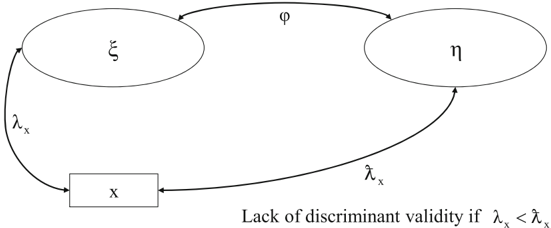

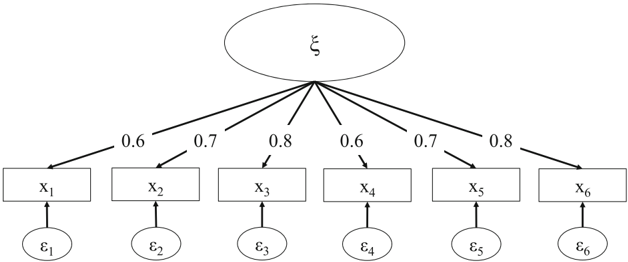

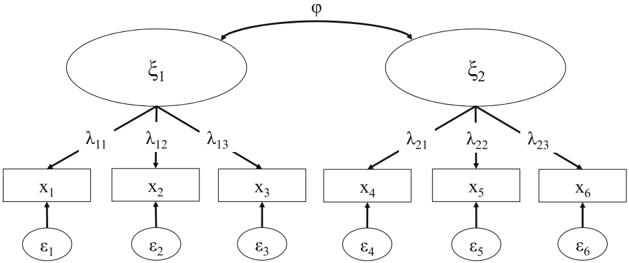

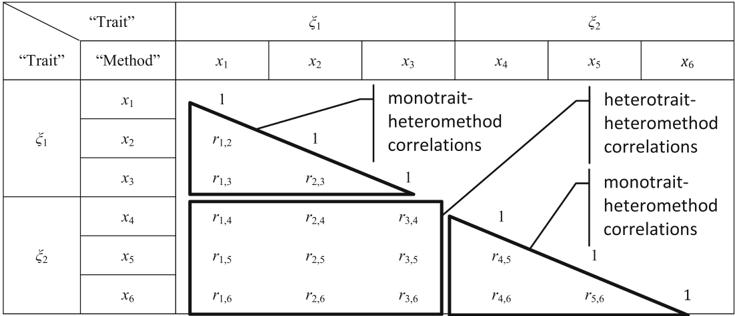



Verification
Claims the paper makes
The claims and statistics of this paper haven’t been checked yet.
Free: it reads the open-access text and checks the first 5 claims that cite a source we can check. Create a free account to check every claim.
Claims other papers make about this one
Each is checked against this paper’s own text: does it say what the citing paper says it does?
The cited source doesn’t support the claim as written.
In the citing paper
“Ultimately, they did not recommend HTMT inference , given it failed to detect discriminant validity violations even when inter-construct correlations were as high as 0.95.”
From Reporting reliability, convergent and discriminant validity with structural equation modeling: A review and best-practice recommendations (2024) · cites this paper as Henseler et al. (2015)
Checked by a reasoning model — may be wrong.
Experimental — accuracy not yet measuredThe cited source doesn’t support the claim as written.
In the citing paper
“First, intending to estimate the disattenuated construct score correlation, Henseler et al.'s (2015, Eq. 6) HTMT equation is incorrect.”
From Reporting reliability, convergent and discriminant validity with structural equation modeling: A review and best-practice recommendations (2024) · cites this paper as Henseler et al. (2015)
Checked by a reasoning model — may be wrong.
Experimental — accuracy not yet measuredThe source backs part of the claim, not all of it — or backs it for a different population, condition or comparison.
In the citing paper
“While Henseler et al.'s (2015) HTMT equation uses inter-item correlations instead of inter-item covariances, that becomes the disattenuated correlation between two composite scores formed by averaging the standardized item scores.”
From Reporting reliability, convergent and discriminant validity with structural equation modeling: A review and best-practice recommendations (2024) · cites this paper as Henseler et al. (2015)
Experimental — accuracy not yet measuredThe source backs part of the claim, not all of it — or backs it for a different population, condition or comparison.
In the citing paper
“Third, the recommended HTMT threshold of 0.85 was based on the power of detecting a population correlation at 1.0 in a simulation study (Henseler et al., 2015).”
From Reporting reliability, convergent and discriminant validity with structural equation modeling: A review and best-practice recommendations (2024) · cites this paper as Henseler et al., 2015
Experimental — accuracy not yet measuredThe source backs part of the claim, not all of it — or backs it for a different population, condition or comparison.
In the citing paper
“Hence, unless the construct scores are calculated by averaging the standardized item scores, Henseler et al.'s HTMT equation provides a biased estimate of the disattenuated correlation between two composites.”
From Reporting reliability, convergent and discriminant validity with structural equation modeling: A review and best-practice recommendations (2024) · cites this paper as Henseler et al. (2015)
Experimental — accuracy not yet measured
38 more claims about this paper
Create a free account to see every claim other papers make about this one.
Self-check
Percentages, sums and reported differences re-computed from the paper’s own numbers.
The self-check needs the paper’s full text.
Citations
Cites
R: A Language and Environment for Statistical Computing
R Core Team (2025) · doi:10.32614/r.manuals · Cited by 352,181
Evaluating Structural Equation Models with Unobservable Variables and Measurement Error
Fornell, C., & Larcker, D. F. (1981) · Journal of Marketing Research · doi:10.2307/3151312 · Cited by 109,314
Evaluating structural equation models with unobservable variables and measurement error
Fornell, C., & Larcker, D. F. (1981) · Journal of Marketing Research · doi:10.1177/002224378101800104 · Cited by 109,190
Perceived usefulness, perceived ease of use, and user acceptance of information technology
Davis, F. D. (1989) · MIS Quarterly · doi:10.2307/249008 · Cited by 68,483 · cited 1×
“Take, for example, the technology acceptance model and its variations (Davis 1989; Venkatesh et al. 2003), which include the constructs intention to use and the actual use.”
BackgroundUser Acceptance of Information Technology: Toward A Unified View1
Venkatesh, V., Morris, M. G., Davis, G. B., & Davis, F. D. (2003) · MIS Quarterly · doi:10.2307/30036540 · Cited by 45,035 · cited 1×
“Take, for example, the technology acceptance model and its variations (Davis 1989; Venkatesh et al. 2003), which include the constructs intention to use and the actual use.”
BackgroundStructural equation modeling in practice: A review and recommended two-step approach
Anderson, J. C., & Gerbing, D. W. (1988) · Psychological Bulletin · doi:10.1037/0033-2909.103.3.411 · Cited by 41,941 · cited 1×
“That is, discriminant validity assessment using HTMTinference needs to adjust the upper and lower bounds of the confidence interval in each test to maintain the familywise error rate at a predefined α level (Anderson and Gerbing 1988).”
Method(1998) · Cited by 36,049
Herne, H., Cooley, W. W., & Lohnes, P. R. (1973) · Journal of the Royal Statistical Society. Series A (General) · doi:10.2307/2344428 · Cited by 35,697
Pls-Sem: indeed a silver bullet
Hair, J. F., Ringle, C. M., & Sarstedt, M. (2011) · Journal of Marketing Theory and Practice · doi:10.2753/mtp1069-6679190202 · Cited by 21,631
Self-citationA Simple Sequentially Rejective Multiple Test Procedure
(1979) · Scandinavian Journal of Statistics · doi:10.2307/4615733 · Cited by 21,526 · cited 1×
“Furthermore, Bonferroni is a rather conservative approach to maintain the familywise error rate at a predefined level (Hochberg 1988; Holm 1979).”
Method
Research works printed but not linked: 3
- 29. Gefen, D., Straub, D. W., & Boudreau, M.-C. (2000). Structural equation modeling techniques and regression: guidelines for research prac- tice. Communications of the AIS, 4, 1-78.
- 65. Nunnally, J. (1978). Psychometric theory (2nd ed.). New York: McGraw-Hill.
- 76. Ringle, C. M., Sarstedt, M., & Straub, D. W. (2012). A critical look at the use of PLS-SEM in MIS Quarterly. MIS Quarterly, 36(1), iii-xiv.
Cited by
Items 301–400 of 1,265
Alshurideh, M., Al Kurdi, B., Salloum, S. A., Arpaci, I., & Al-Emran, M. (2023) · Interactive Learning Environments · doi:10.1080/10494820.2020.1826982 · Cited by 269
Fosso Wamba, S. (2022) · International Journal of Information Management · doi:10.1016/j.ijinfomgt.2022.102544 · Cited by 269
Gregory, G. D., Ngo, L. V., & Karavdic, M. (2019) · Industrial Marketing Management · doi:10.1016/j.indmarman.2017.03.002 · Cited by 268
User Innovativeness and Fintech Adoption in Indonesia
Setiawan, B., Nugraha, D. P., Irawan, A., Nathan, R. J., & Zoltan, Z. (2021) · Journal of Open Innovation: Technology, Market, and Complexity · doi:10.3390/joitmc7030188 · Cited by 267
“[59] proposed using the heterotrait-monotrait ratio (HTMT) to test the discriminant validity of constructs.”
MethodAnalysing the acceptation of online games in mobile devices: An application of UTAUT2
Ramírez-Correa, P., Rondán-Cataluña, F. J., Arenas-Gaitán, J., & Martín-Velicia, F. (2019) · Journal of Retailing and Consumer Services · doi:10.1016/j.jretconser.2019.04.018 · Cited by 266
Modeling domestic tourism: motivations, satisfaction and tourist behavioral intentions
Bayih, B. E., & Singh, A. (2020) · Heliyon · doi:10.1016/j.heliyon.2020.e04839 · Cited by 266
Faraz, N. A., Ahmed, F., Ying, M., & Mehmood, S. A. (2021) · Corporate Social Responsibility and Environmental Management · doi:10.1002/csr.2115 · Cited by 263
Sabokro, M., Masud, M. M., & Kayedian, A. (2021) · Journal of Cleaner Production · doi:10.1016/j.jclepro.2021.127963 · Cited by 263
The role of social capital on proactive and reactive resilience of organizations post-disaster
Jia, X., Chowdhury, M., Prayag, G., & Hossan Chowdhury, M. M. (2020) · International Journal of Disaster Risk Reduction · doi:10.1016/j.ijdrr.2020.101614 · Cited by 265
AlHamad, M. Q. M., Akour, I., Alshurideh, M., Al-Hamad, A. Q., Kurdi, B. A., & Alzoubi, H. (2021) · International Journal of Data and Network Science · doi:10.5267/j.ijdns.2021.6.002 · Cited by 265
Rasoolimanesh, S. M., Roldán, J. L., Jaafar, M., & Ramayah, T. (2017) · Journal of Travel Research · doi:10.1177/0047287516662354 · Cited by 264
Impact of Organizational Culture Values on Organizational Agility
Felipe, C., Roldán, J., & Leal-Rodríguez, A. (2017) · Sustainability · doi:10.3390/su9122354 · Cited by 262
“This is achieved by applying the Fornell-Larcker criterion [78] (Table 3).”
MethodChuah, S. H.-W., El-Manstrly, D., Tseng, M.-L., & Ramayah, T. (2020) · Journal of Cleaner Production · doi:10.1016/j.jclepro.2020.121348 · Cited by 261
Mohd Rahim, N. I., A. Iahad, N., Yusof, A. F., & A. Al-Sharafi, M. (2022) · Sustainability · doi:10.3390/su141912726 · Cited by 261
Using virtual reality for dynamic learning: an extended technology acceptance model
Fussell, S. G., & Truong, D. (2022) · Virtual Reality · doi:10.1007/s10055-021-00554-x · Cited by 261
Pu, G., Qamruzzaman, M., Mehta, A. M., Naqvi, F. N., & Karim, S. (2021) · Sustainability · doi:10.3390/su13169218 · Cited by 261
Camilleri, M. A. (2024) · Technological Forecasting and Social Change · doi:10.1016/j.techfore.2024.123247 · Cited by 261
“The constructs ’ discriminant validities were tested through Fornell and Larcker ’ s (1981) criterion as well as via the HTMT procedure (Henseler et al., 2015).”
MethodJamil, K., Dunnan, L., Gul, R. F., Shehzad, M. U., Gillani, S. H. M., & Awan, F. H. (2022) · Frontiers in Psychology · doi:10.3389/fpsyg.2021.808525 · Cited by 260
“6 cutoff, which meets the threshold (Henseler et al., 2015).”
Strzelecki, A., & ElArabawy, S. (2024) · British Journal of Educational Technology · doi:10.1111/bjet.13425 · Cited by 260
Qin, H., Peak, D. A., & Prybutok, V. (2021) · Journal of Retailing and Consumer Services · doi:10.1016/j.jretconser.2020.102337 · Cited by 259
Sultan, P., Wong, H. Y., & Azam, M. S. (2021) · Journal of Cleaner Production · doi:10.1016/j.jclepro.2021.127807 · Cited by 257
Queiroz, M. M., Fosso Wamba, S., Chiappetta Jabbour, C. J., & Machado, M. C. (2022) · International Journal of Production Economics · doi:10.1016/j.ijpe.2021.108405 · Cited by 257
Guo, R., Tao, L., Li, C. B., & Wang, T. (2017) · Journal of Business Ethics · doi:10.1007/s10551-015-2672-7 · Cited by 255
Isaac, O., Aldholay, A., Abdullah, Z., & Ramayah, T. (2019) · Computers & Education · doi:10.1016/j.compedu.2019.02.012 · Cited by 258
Dubey, R., Bryde, D. J., Blome, C., Roubaud, D., & Giannakis, M. (2021) · Industrial Marketing Management · doi:10.1016/j.indmarman.2021.05.003 · Cited by 255
Why do people purchase from food delivery apps? A consumer value perspective
Tandon, A., Kaur, P., Bhatt, Y., Mäntymäki, M., & Dhir, A. (2021) · Journal of Retailing and Consumer Services · doi:10.1016/j.jretconser.2021.102667 · Cited by 255
Acceptance of mobile banking in Islamic banks: Evidence from modified UTAUT model
Raza, S. A., Shah, N., & Ali, M. (2019) · Journal of Islamic marketing · doi:10.1108/jima-04-2017-0038 · Cited by 257
Workplace literacy skills—how information and digital literacy affect adoption of digital technology
Nikou, S., De Reuver, M., & Mahboob Kanafi, M. (2022) · Journal of Documentation · doi:10.1108/jd-12-2021-0241 · Cited by 257
Aramburu, I. A., & Pescador, I. G. (2019) · Journal of Business Ethics · doi:10.1007/s10551-017-3438-1 · Cited by 255
“9 (Henseler et al. 2015) (see Table 1) and supports discriminant validity.”
BackgroundResultInfluentialLin, H., Zhang, M., Gursoy, D., & Fu, X. (2019) · Annals of Tourism Research · doi:10.1016/j.annals.2019.03.009 · Cited by 256
Meira, J. V. D. S., & Hancer, M. (2021) · International Journal of Contemporary Hospitality Management · doi:10.1108/ijchm-06-2020-0538 · Cited by 256
Customer Experience in Fintech
Barbu, C. M., Florea, D. L., Dabija, D.-C., & Barbu, M. C. R. (2021) · Journal of Theoretical and Applied Electronic Commerce Research · doi:10.3390/jtaer16050080 · Cited by 255
Kurdi, B. A., Alshurideh, M., Akour, I., Tariq, E., AlHamad, A., & Alzoubi, H. M. (2022) · International Journal of Data and Network Science · doi:10.5267/j.ijdns.2022.7.006 · Cited by 257
Abou-Foul, M., Ruiz-Alba, J. L., & López-Tenorio, P. J. (2023) · Journal of Business Research · doi:10.1016/j.jbusres.2022.113609 · Cited by 253
Johnson, D., Gardner, M. J., & Perry, R. (2018) · International Journal of Human-Computer Studies · doi:10.1016/j.ijhcs.2018.05.003 · Cited by 254
How does travel affect emotional well-being and life satisfaction?
Friman, M., Gärling, T., Ettema, D., & Olsson, L. E. (2017) · Transportation Research Part A: Policy and Practice · doi:10.1016/j.tra.2017.09.024 · Cited by 254
Green human resource management: A two-study investigation of antecedents and outcomes
Shafaei, A., Nejati, M., & Mohd Yusoff, Y. (2020) · International Journal of Manpower · doi:10.1108/ijm-08-2019-0406 · Cited by 247
Alraja, M. N., Imran, R., Khashab, B. M., & Shah, M. (2022) · Information Systems Frontiers · doi:10.1007/s10796-022-10250-z · Cited by 252
A typology of validity: content, face, convergent, discriminant, nomological and predictive validity
Lim, W. M. (2024) · Journal of Trade Science · doi:10.1108/jts-03-2024-0016 · Cited by 247
An explanatory and predictive model for organizational agility
Felipe, C. M., Roldán, J. L., & Leal-Rodríguez, A. L. (2016) · Journal of Business Research · doi:10.1016/j.jbusres.2016.04.014 · Cited by 251
Chatterjee, S., Rana, N. P., Tamilmani, K., & Sharma, A. (2021) · Industrial Marketing Management · doi:10.1016/j.indmarman.2021.07.013 · Cited by 251
Ghazali, E. M., Nguyen, B., Mutum, D. S., & Yap, S.-F. (2019) · Sustainability · doi:10.3390/su11123237 · Cited by 248
“Second, the most conservative discriminant validity test available to date was applied [83]: the heterotrait-monotrait (HTMT) ratio of correlations [84].”
BackgroundMethodAlgorithmic control and gig workers: a legitimacy perspective of Uber drivers
Wiener, M., Cram, W. A., & Benlian, A. (2023) · European Journal of Information Systems · doi:10.1080/0960085x.2021.1977729 · Cited by 251
“To transform our research model into a structural equation model, we used SmartPLS, Version 3.2.9 (Ringle et al., 2015).”
MethodInfluentialSharma, S., Prakash, G., Kumar, A., Mussada, E. K., Antony, J., & Luthra, S. (2021) · Journal of Cleaner Production · doi:10.1016/j.jclepro.2021.127039 · Cited by 248
Effective influencer marketing: A social identity perspective
Farivar, S., & Wang, F. (2022) · Journal of Retailing and Consumer Services · doi:10.1016/j.jretconser.2022.103026 · Cited by 251
Faruquee, M., Paulraj, A., & Irawan, C. A. (2021) · International Journal of Operations & Production Management · doi:10.1108/ijopm-10-2020-0702 · Cited by 246
Migliore, G., Wagner, R., Cechella, F. S., & Liébana-Cabanillas, F. (2022) · Information Systems Frontiers · doi:10.1007/s10796-021-10237-2 · Cited by 246
“…whether the correlations between the various dimensions are lower than the value of the square root of AVE (Fornell & Larcker, 1981); and (c) heterotrait-monotrait (HTMT) ratio analysis, measuring whether the correlations between pairs of constructs reach less than 0.9 (Henseler et al., 2015).”
BackgroundMethodInfluentialChang, Y.-W., & Chen, J. (2021) · Journal of Retailing and Consumer Services · doi:10.1016/j.jretconser.2020.102325 · Cited by 249
Hamadamin, H. H., & Atan, T. (2019) · Sustainability · doi:10.3390/su11205782 · Cited by 249
“Similarly, for the HTMT values, they were all less than 0.85, which is an indication that the two tests proved the discriminant validity of our construct.”
MethodInfluentialAlazab, M., Alhyari, S., Awajan, A., & Abdallah, A. B. (2021) · Cluster Computing · doi:10.1007/s10586-020-03200-4 · Cited by 248
Online purchase intention in Chinese social commerce platforms: Being emotional or rational?
Akram, U., Junaid, M., Zafar, A. U., Li, Z., & Fan, M. (2021) · Journal of Retailing and Consumer Services · doi:10.1016/j.jretconser.2021.102669 · Cited by 249
Itani, O. S., & Hollebeek, L. D. (2021) · Tourism Management · doi:10.1016/j.tourman.2021.104290 · Cited by 246
Going beyond the untold facts in PLS–SEM and moving forward
Hair, J. F., Sarstedt, M., Ringle, C. M., Sharma, P. N., & Liengaard, B. D. (2024) · European Journal of Marketing · doi:10.1108/ejm-08-2023-0645 · Cited by 237
Self-citationNiemand, T., Rigtering, J. P. C., Kallmünzer, A., Kraus, S., & Maalaoui, A. (2021) · European Management Journal · doi:10.1016/j.emj.2020.04.008 · Cited by 247
Shahadat, M. M. H., Nekmahmud, M., Ebrahimi, P., & Fekete-Farkas, M. (2023) · Global Business Review · doi:10.1177/09721509221137199 · Cited by 247
From knowledge sharing to firm performance: A predictive model comparison
Wang, Z., Sharma, P. N., & Cao, J. (2016) · Journal of Business Research · doi:10.1016/j.jbusres.2016.03.055 · Cited by 246
Ali, M., Seny Kan, K. A., & Sarstedt, M. (2016) · Journal of Business Research · doi:10.1016/j.jbusres.2016.04.131 · Cited by 245
Self-citationDoes the service quality of urban public transport enhance sustainable mobility?
Mugion, R. G., Toni, M., Raharjo, H., Di Pietro, L., & Sebathu, S. P. (2018) · Journal of Cleaner Production · doi:10.1016/j.jclepro.2017.11.052 · Cited by 247
Determinants of big data analytics adoption in small and medium-sized enterprises (SMEs)
Maroufkhani, P., Iranmanesh, M., & Ghobakhloo, M. (2023) · Industrial Management & Data Systems · doi:10.1108/imds-11-2021-0695 · Cited by 246
Hosen, M., Ogbeibu, S., Giridharan, B., Cham, T.-H., Lim, W. M., & Paul, J. (2021) · Computers & Education · doi:10.1016/j.compedu.2021.104262 · Cited by 243
Rajesh, R., & Rajendran, C. (2020) · Business Strategy and the Environment · doi:10.1002/bse.2429 · Cited by 240
Vadakalu Elumalai, K., P Sankar, J., R, K., Ann John, J., Menon, N., Salem M Alqahtani, M., & Abdulaziz Abumelha, M. (2020) · Journal of Information Technology Education: Research · doi:10.28945/4628 · Cited by 243
COVID-19 and Higher Education: First-Year Students’ Expectations toward Distance Learning
Cicha, K., Rizun, M., Rutecka, P., & Strzelecki, A. (2021) · Sustainability · doi:10.3390/su13041889 · Cited by 243
Consumer engagement via interactive artificial intelligence and mixed reality
Sung, E. (., Bae, S., Han, D.-I. D., & Kwon, O. (2021) · International Journal of Information Management · doi:10.1016/j.ijinfomgt.2021.102382 · Cited by 240
Al-Sharafi, M. A., Al-Emran, M., Iranmanesh, M., Al-Qaysi, N., Iahad, N. A., & Arpaci, I. (2023) · Interactive Learning Environments · doi:10.1080/10494820.2022.2075014 · Cited by 239
Examining the Impact of Algorithmic Control on Uber Drivers’ Technostress
Cram, W. A., Wiener, M., Tarafdar, M., & Benlian, A. (2022) · Journal of Management Information Systems · doi:10.1080/07421222.2022.2063556 · Cited by 246
“Our HTMT results found that all values except the one for gatekeeping algorithmic control-workaround use were within the strict 0.85 threshold, and that all values were within the more liberal 0.90 threshold [44].”
BackgroundInfluentialConsumer acceptance of sports wearable technology: the role of technology readiness
Kim, T., & Chiu, W. (2019) · International Journal of Sports Marketing and Sponsorship · doi:10.1108/ijsms-06-2017-0050 · Cited by 242
Adoption intentions for micro-mobility – Insights from electric scooter sharing in Taiwan
Eccarius, T., & Lu, C.-C. (2020) · Transportation Research Part D: Transport and Environment · doi:10.1016/j.trd.2020.102327 · Cited by 240
Ali, M., Raza, S. A., Khamis, B., Puah, C. H., & Amin, H. (2021) · foresight · doi:10.1108/fs-09-2020-0095 · Cited by 238
Camilleri, M. A., & Falzon, L. (2021) · Spanish Journal of Marketing - ESIC · doi:10.1108/sjme-04-2020-0074 · Cited by 238
Almaiah, M. A., Alfaisal, R., Salloum, S. A., Hajjej, F., Thabit, S., El-Qirem, F. A., Lutfi, A., Alrawad, M., Al Mulhem, A., Alkhdour, T., et al. (2022) · Electronics · doi:10.3390/electronics11223662 · Cited by 236
Dahri, N. A., Yahaya, N., Al-Rahmi, W. M., Aldraiweesh, A., Alturki, U., Almutairy, S., Shutaleva, A., & Soomro, R. B. (2024) · Heliyon · doi:10.1016/j.heliyon.2024.e29317 · Cited by 239
Obeidat, S. M., Al Bakri, A. A., & Elbanna, S. (2020) · Journal of Business Ethics · doi:10.1007/s10551-018-4075-z · Cited by 238
“This approach is widely used not only in management research but also in virtually all social sciences disciplines (Hair et al. 2012; Henseler et al. 2015).”
BackgroundAitken, R., Watkins, L., Williams, J., & Kean, A. (2020) · Journal of Cleaner Production · doi:10.1016/j.jclepro.2020.120334 · Cited by 237
Cheng, Y., Wei, W., & Zhang, L. (2020) · International Journal of Contemporary Hospitality Management · doi:10.1108/ijchm-04-2020-0319 · Cited by 238
Examining artificial intelligence literacy among pre-service teachers for future classrooms
Ayanwale, M. A., Adelana, O. P., Molefi, R. R., Adeeko, O., & Ishola, A. M. (2024) · Computers and Education Open · doi:10.1016/j.caeo.2024.100179 · Cited by 238
Hauck, J., Suess-Reyes, J., Beck, S., Prügl, R., & Frank, H. (2016) · Journal of Family Business Strategy · doi:10.1016/j.jfbs.2016.08.001 · Cited by 235
Qin, Y., Omar, B., & Musetti, A. (2022) · Frontiers in Psychology · doi:10.3389/fpsyg.2022.932805 · Cited by 237
“Next, we adopted the Heterotrait Monotrait (HTMT) technique to test the discriminant validity (Henseler et al., 2015).”
MethodWoosnam, K. M., Stylidis, D., & Ivkov, M. (2020) · Journal of Sustainable Tourism · doi:10.1080/09669582.2019.1708920 · Cited by 237
Gong, T., & Yi, Y. (2018) · Psychology & Marketing · doi:10.1002/mar.21096 · Cited by 236
Rashid, A., Baloch, N., Rasheed, R., & Ngah, A. H. (2025) · Journal of Science and Technology Policy Management · doi:10.1108/jstpm-04-2023-0050 · Cited by 234
Yang, F., Tang, J., Men, J., & Zheng, X. (2021) · Journal of Retailing and Consumer Services · doi:10.1016/j.jretconser.2021.102683 · Cited by 235
Ali, M., & Park, K. (2016) · Journal of Business Research · doi:10.1016/j.jbusres.2015.10.036 · Cited by 234
The impact of value co-creation on hotel brand equity and customer satisfaction
González-Mansilla, Ó., Berenguer-Contrí, G., & Serra-Cantallops, A. (2019) · Tourism Management · doi:10.1016/j.tourman.2019.04.024 · Cited by 235
Al Halbusi, H., Williams, K. A., Ramayah, T., Aldieri, L., & Vinci, C. P. (2021) · Personnel Review · doi:10.1108/pr-09-2019-0522 · Cited by 235
“According to Henseler et al. (2015), the Fornell-Larcker criterion fails to accurately reveal the absence of discriminant validity during common research situations.”
BackgroundTrust me, I'm a bot – repercussions of chatbot disclosure in different service frontline settings
Mozafari, N., Weiger, W. H., & Hammerschmidt, M. (2022) · Journal of Service Management · doi:10.1108/josm-10-2020-0380 · Cited by 230
Christensen, J., Hansen, J. M., & Wilson, P. (2025) · Current Issues in Tourism · doi:10.1080/13683500.2023.2300032 · Cited by 228
Hernández-Sellés, N., Muñoz-Carril, P.-C., & González-Sanmamed, M. (2019) · Computers & Education · doi:10.1016/j.compedu.2019.04.012 · Cited by 232
Song, S., Zhao, Y. C., Yao, X., Ba, Z., & Zhu, Q. (2021) · Internet Research · doi:10.1108/intr-10-2020-0593 · Cited by 233
Sung, E. (. (2021) · Journal of Business Research · doi:10.1016/j.jbusres.2020.08.034 · Cited by 233
Lalicic, L., & Weismayer, C. (2021) · Journal of Business Research · doi:10.1016/j.jbusres.2020.11.005 · Cited by 233
Baah, C., Jin, Z., & Tang, L. (2020) · Journal of Cleaner Production · doi:10.1016/j.jclepro.2019.119125 · Cited by 230
Nekmahmud, M., Ramkissoon, H., & Fekete-Farkas, M. (2022) · Tourism Management Perspectives · doi:10.1016/j.tmp.2022.100980 · Cited by 228
Sánchez-Fernández, R., & Jiménez-Castillo, D. (2021) · Journal of Marketing Management · doi:10.1080/0267257x.2020.1866648 · Cited by 231
“Discriminant validity was assessed by using the heterotrait-monotrait ratio of correlations (HTMT) between the latent variables (Henseler et al., 2015).”
MethodMartínez García de Leaniz, P., Herrero Crespo, Á., & Gómez López, R. (2018) · Journal of Sustainable Tourism · doi:10.1080/09669582.2017.1349775 · Cited by 229
PLS-SEM for Software Engineering Research: An Introduction and Survey
Russo, D., & Stol, K.-J. (2022) · ACM Computing Surveys · doi:10.1145/3447580 · Cited by 217
Do green knowledge and attitude influence the youth's green purchasing? Theory of planned behavior
Amoako, G. K., Dzogbenuku, R. K., & Abubakari, A. (2020) · International Journal of Productivity and Performance Management · doi:10.1108/ijppm-12-2019-0595 · Cited by 229
Koay, K. Y., Ong, D. L. T., Khoo, K. L., & Yeoh, H. J. (2020) · Asia Pacific Journal of Marketing and Logistics · doi:10.1108/apjml-07-2019-0453 · Cited by 225
Gelderman, C. J., Schijns, J., Lambrechts, W., & Vijgen, S. (2021) · Business Strategy and the Environment · doi:10.1002/bse.2732 · Cited by 228
Alexa, what's on my shopping list? Transforming customer experience with digital voice assistants
Aw, E. C.-X., Tan, G. W.-H., Cham, T.-H., Raman, R., & Ooi, K.-B. (2022) · Technological Forecasting and Social Change · doi:10.1016/j.techfore.2022.121711 · Cited by 227
Metadata
- Authors
- Henseler, J., Ringle, C. M., & Sarstedt, M.
- Affiliations
- Universidade Nova de Lisboa (PT)
- University of Newcastle Australia (AU)
- Corresponding author
- Sarstedt, Marko
- Venue
- Journal of the Academy of Marketing Science
- Published
- 2014-08-22
- Volume
- 43
- Issue
- 1
- Pages
- 115-135
- ISSN
- 0092-0703 (ISSN-L)
- 1552-7824
- OpenAlex
- W2105846236
- Cited by
- 38,459
- References
- 112
- Citations by year
- 2026: 9160 · 2025: 7076 · 2024: 5683 · 2023: 5082 · 2022: 4007 · 2021: 2951 · 2020: 1857 · 2019: 1210 · 2018: 761 · 2017: 384 · 2016: 208 · 2015: 58 · 2014: 7
- FWCI
- 276.66
- Type
- journal article
- Language
- en
- Open access
- hybrid
- doi.org
- Locations
- Journal of the Academy of Marketing Science (publishedVersion, cc-by)
- New University of Lisbon's Repository (New University of Lisbon) (publishedVersion, other-oa)
- University of Twente Research Information (acceptedVersion, cc-by)
- Figshare (submittedVersion, cc-by)
- Portuguese National Funding Agency for Science, Research and Technology (RCAAP Project by FCT) (submittedVersion, other-oa)
- tub.dok (Hamburg University of Technology) (submittedVersion)
- NOVA (University of Newcastle Australia) (submittedVersion, cc-by)
- University of Twente Research Information (submittedVersion, cc-by)
- Funders
- Rijksuniversiteit Groningen
- Radboud Universiteit
- Topics
- Social Sciences › Decision Sciences › Management Science and Operations Research › Psychometric Methodologies and Testing
- Physical Sciences › Mathematics › Statistics and Probability › Statistical Methods and Applications
- Social Sciences › Business, Management and Accounting › Strategy and Management › Business Strategies and Management Research
- Keywords
- discriminant validity, partial least squares, cross-loadings, multitrait-multimethod matrix, latent variables, measurement validity
About these checks
Registry, retraction, Cites and statistics results are computed, not judged, with one exception: a printed reference that no index lists is read once by a model before it counts as a citation error. Claims are extracted by a model and kept only when their quote appears verbatim in the text; each cited source is then checked, with a model’s help, for whether it says what the claim relies on. Those verdicts can be wrong — read the claim’s quote and the cited source before relying on one.
Statistics and arithmetic are recomputed, not judged.
Confidence bands are shown only for fields calibrated on our annotated test set. None is calibrated yet, so no band is shown.
What counts as a claim ›How we measure confidence ›How we check this ›
Are you an author, or do you see a problem with this page? Request a review
Data sources
Bibliographic data: Semantic Scholar, OpenAlex, Crossref.
Contains information from the Semantic Scholar Academic Graph Datasets, made available under the ODC Attribution License (ODC-BY 1.0).
Semantic Scholar’s data is described in: Kinney, R., et al. (2023). The Semantic Scholar Open Data Platform. arXiv:2301.10140.
