

A new criterion for assessing discriminant validity in variance-based structural equation modeling
Open accessThe DOI matches its Crossref record; 108 of the 112 references it cites were found in a registry or an index.
Abstract
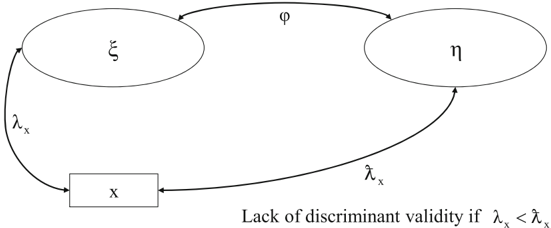
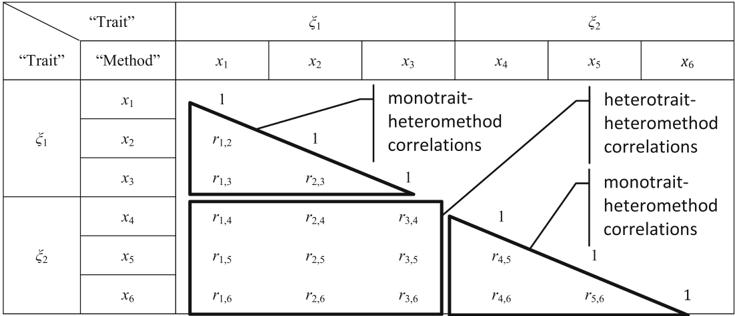
Discriminant validity assessment has become a generally accepted prerequisite for analyzing relationships between latent variables. For variance-based structural equation modeling, such as partial least squares, the Fornell-Larcker criterion and the examination of cross-loadings are the dominant approaches for evaluating discriminant validity. By means of a simulation study, we show that these approaches do not reliably detect the lack of discriminant validity in common research situations. We therefore propose an alternative approach, based on the multitrait-multimethod matrix, to assess discriminant validity: the heterotrait-monotrait ratio of correlations. We demonstrate its superior performance by means of a Monte Carlo simulation study, in which we compare the new approach to the Fornell-Larcker criterion and the assessment of (partial) cross-loadings. Finally, we provide guidelines on how to handle discriminant validity issues in variance-based structural equation modeling.
Overview
The claims and statistics of this paper haven’t been checked yet.
Free: it reads the open-access text and checks the first 5 claims that cite a source we can check. Create a free account to check every claim.
Integrity signals
Registry
Cites
Statistics
Figures






Verification
Claims the paper makes
The claims and statistics of this paper haven’t been checked yet.
Free: it reads the open-access text and checks the first 5 claims that cite a source we can check. Create a free account to check every claim.
Claims other papers make about this one
Each is checked against this paper’s own text: does it say what the citing paper says it does?
The cited source doesn’t support the claim as written.
In the citing paper
“Ultimately, they did not recommend HTMT inference , given it failed to detect discriminant validity violations even when inter-construct correlations were as high as 0.95.”
From Reporting reliability, convergent and discriminant validity with structural equation modeling: A review and best-practice recommendations (2024) · cites this paper as Henseler et al. (2015)
Checked by a reasoning model — may be wrong.
Experimental — accuracy not yet measuredThe cited source doesn’t support the claim as written.
In the citing paper
“First, intending to estimate the disattenuated construct score correlation, Henseler et al.'s (2015, Eq. 6) HTMT equation is incorrect.”
From Reporting reliability, convergent and discriminant validity with structural equation modeling: A review and best-practice recommendations (2024) · cites this paper as Henseler et al. (2015)
Checked by a reasoning model — may be wrong.
Experimental — accuracy not yet measuredThe source backs part of the claim, not all of it — or backs it for a different population, condition or comparison.
In the citing paper
“While Henseler et al.'s (2015) HTMT equation uses inter-item correlations instead of inter-item covariances, that becomes the disattenuated correlation between two composite scores formed by averaging the standardized item scores.”
From Reporting reliability, convergent and discriminant validity with structural equation modeling: A review and best-practice recommendations (2024) · cites this paper as Henseler et al. (2015)
Experimental — accuracy not yet measuredThe source backs part of the claim, not all of it — or backs it for a different population, condition or comparison.
In the citing paper
“Third, the recommended HTMT threshold of 0.85 was based on the power of detecting a population correlation at 1.0 in a simulation study (Henseler et al., 2015).”
From Reporting reliability, convergent and discriminant validity with structural equation modeling: A review and best-practice recommendations (2024) · cites this paper as Henseler et al., 2015
Experimental — accuracy not yet measuredThe source backs part of the claim, not all of it — or backs it for a different population, condition or comparison.
In the citing paper
“Hence, unless the construct scores are calculated by averaging the standardized item scores, Henseler et al.'s HTMT equation provides a biased estimate of the disattenuated correlation between two composites.”
From Reporting reliability, convergent and discriminant validity with structural equation modeling: A review and best-practice recommendations (2024) · cites this paper as Henseler et al. (2015)
Experimental — accuracy not yet measured
38 more claims about this paper
Create a free account to see every claim other papers make about this one.
Self-check
Percentages, sums and reported differences re-computed from the paper’s own numbers.
The self-check needs the paper’s full text.
Citations
Cites
R: A Language and Environment for Statistical Computing
R Core Team (2025) · doi:10.32614/r.manuals · Cited by 352,181
Evaluating Structural Equation Models with Unobservable Variables and Measurement Error
Fornell, C., & Larcker, D. F. (1981) · Journal of Marketing Research · doi:10.2307/3151312 · Cited by 109,314
Evaluating structural equation models with unobservable variables and measurement error
Fornell, C., & Larcker, D. F. (1981) · Journal of Marketing Research · doi:10.1177/002224378101800104 · Cited by 109,190
Perceived usefulness, perceived ease of use, and user acceptance of information technology
Davis, F. D. (1989) · MIS Quarterly · doi:10.2307/249008 · Cited by 68,483 · cited 1×
“Take, for example, the technology acceptance model and its variations (Davis 1989; Venkatesh et al. 2003), which include the constructs intention to use and the actual use.”
BackgroundUser Acceptance of Information Technology: Toward A Unified View1
Venkatesh, V., Morris, M. G., Davis, G. B., & Davis, F. D. (2003) · MIS Quarterly · doi:10.2307/30036540 · Cited by 45,035 · cited 1×
“Take, for example, the technology acceptance model and its variations (Davis 1989; Venkatesh et al. 2003), which include the constructs intention to use and the actual use.”
BackgroundStructural equation modeling in practice: A review and recommended two-step approach
Anderson, J. C., & Gerbing, D. W. (1988) · Psychological Bulletin · doi:10.1037/0033-2909.103.3.411 · Cited by 41,941 · cited 1×
“That is, discriminant validity assessment using HTMTinference needs to adjust the upper and lower bounds of the confidence interval in each test to maintain the familywise error rate at a predefined α level (Anderson and Gerbing 1988).”
Method(1998) · Cited by 36,049
Herne, H., Cooley, W. W., & Lohnes, P. R. (1973) · Journal of the Royal Statistical Society. Series A (General) · doi:10.2307/2344428 · Cited by 35,697
Pls-Sem: indeed a silver bullet
Hair, J. F., Ringle, C. M., & Sarstedt, M. (2011) · Journal of Marketing Theory and Practice · doi:10.2753/mtp1069-6679190202 · Cited by 21,631
Self-citationA Simple Sequentially Rejective Multiple Test Procedure
(1979) · Scandinavian Journal of Statistics · doi:10.2307/4615733 · Cited by 21,526 · cited 1×
“Furthermore, Bonferroni is a rather conservative approach to maintain the familywise error rate at a predefined level (Hochberg 1988; Holm 1979).”
Method
Research works printed but not linked: 3
- 29. Gefen, D., Straub, D. W., & Boudreau, M.-C. (2000). Structural equation modeling techniques and regression: guidelines for research prac- tice. Communications of the AIS, 4, 1-78.
- 65. Nunnally, J. (1978). Psychometric theory (2nd ed.). New York: McGraw-Hill.
- 76. Ringle, C. M., Sarstedt, M., & Straub, D. W. (2012). A critical look at the use of PLS-SEM in MIS Quarterly. MIS Quarterly, 36(1), iii-xiv.
Cited by
Items 201–300 of 1,265
Rahi, S., Othman Mansour, M. M., Alghizzawi, M., & Alnaser, F. M. (2019) · Journal of Research in Interactive Marketing · doi:10.1108/jrim-02-2018-0032 · Cited by 337
“For SEM, Smart PLS software 3.0 was used (Ringle et al. , 2015).”
BackgroundMethodInfluentialAsiaei, K., O'Connor, N. G., Barani, O., & Joshi, M. (2023) · Business Strategy and the Environment · doi:10.1002/bse.3136 · Cited by 334
A comparison of social media marketing between B2B, B2C and mixed business models
Iankova, S., Davies, I., Archer-Brown, C., Marder, B., & Yau, A. (2019) · Industrial Marketing Management · doi:10.1016/j.indmarman.2018.01.001 · Cited by 338
Estriegana, R., Medina-Merodio, J.-A., & Barchino, R. (2019) · Computers & Education · doi:10.1016/j.compedu.2019.02.010 · Cited by 334
Sokolova, K., & Perez, C. (2021) · Journal of Retailing and Consumer Services · doi:10.1016/j.jretconser.2020.102276 · Cited by 335
Borah, P. S., Iqbal, S., & Akhtar, S. (2022) · Technology in Society · doi:10.1016/j.techsoc.2022.101900 · Cited by 331
Miranda, F. J., Chamorro-Mera, A., & Rubio, S. (2017) · European Research on Management and Business Economics · doi:10.1016/j.iedeen.2017.01.001 · Cited by 333
“080, which means that our model fits the empirical data (Henseler et al., 2015).”
BackgroundWang, Y., Liang, J., Yang, J., Ma, X., Li, X., Wu, J., Yang, G., Ren, G., & Feng, Y. (2019) · Journal of Environmental Management · doi:10.1016/j.jenvman.2019.02.070 · Cited by 334
Transforming consumers' intention to purchase green products: Role of social media
Nekmahmud, M., Naz, F., Ramkissoon, H., & Fekete-Farkas, M. (2022) · Technological Forecasting and Social Change · doi:10.1016/j.techfore.2022.122067 · Cited by 332
Zhang, D., Mohsin, M., & Taghizadeh-Hesary, F. (2022) · Energy Economics · doi:10.1016/j.eneco.2022.106183 · Cited by 332
Mikalef, P., & Krogstie, J. (2020) · European Journal of Information Systems · doi:10.1080/0960085x.2020.1740618 · Cited by 331
“Recently, Henseler et al. (2015) argued that a new criterion called the heterotrait-monotrait ratio (HTMT) is a better assessment indicator of discriminant validity.”
BackgroundOkumus, B., Ali, F., Bilgihan, A., & Ozturk, A. B. (2018) · International Journal of Hospitality Management · doi:10.1016/j.ijhm.2018.01.001 · Cited by 331
Hult, G. T. M., Sharma, P. N., Morgeson, F. V., & Zhang, Y. (2019) · Journal of Retailing · doi:10.1016/j.jretai.2018.10.003 · Cited by 331
Teachers' AI-TPACK: exploring the relationship between knowledge elements
Ning, Y., Zhang, C., Xu, B., Zhou, Y., & Wijaya, T. T. (2024) · Sustainability · doi:10.3390/su16030978 · Cited by 330
“In addition, the Average Variance Extracted (AVE) is used to evaluate the convergent validity of the teacher’s AI-TPACK scale based on the criterion that this value should exceed 0.5 [84].”
MethodInfluentialAdoption of artificial intelligence in banking services: an empirical analysis
Rahman, M., Ming, T. H., Baigh, T. A., & Sarker, M. (2023) · International Journal of Emerging Markets · doi:10.1108/ijoem-06-2020-0724 · Cited by 325
Supply chain resilience during the COVID-19 pandemic
Ozdemir, D., Sharma, M., Dhir, A., & Daim, T. (2022) · Technology in Society · doi:10.1016/j.techsoc.2021.101847 · Cited by 329
Hameed, W. U., Nisar, Q. A., & Wu, H.-C. (2021) · International Journal of Hospitality Management · doi:10.1016/j.ijhm.2020.102745 · Cited by 328
Impulse buying behaviour: an online-offline comparative and the impact of social media
Aragoncillo, L., & Orus, C. (2018) · Spanish Journal of Marketing - ESIC · doi:10.1108/sjme-03-2018-007 · Cited by 326
Usakli, A., & Kucukergin, K. G. (2018) · International Journal of Contemporary Hospitality Management · doi:10.1108/ijchm-11-2017-0753 · Cited by 323
How perceived value drives the use of mobile financial services apps
Karjaluoto, H., Shaikh, A. A., Saarijärvi, H., & Saraniemi, S. (2019) · International Journal of Information Management · doi:10.1016/j.ijinfomgt.2018.08.014 · Cited by 323
Service robots: Applying social exchange theory to better understand human–robot interactions
Kim, H., So, K. K. F., & Wirtz, J. (2022) · Tourism Management · doi:10.1016/j.tourman.2022.104537 · Cited by 322
Delic, M., & Eyers, D. R. (2020) · International Journal of Production Economics · doi:10.1016/j.ijpe.2020.107689 · Cited by 325
Understanding fintech continuance: perspectives from self-efficacy and ECT-IS theories
Shiau, W.-L., Yuan, Y., Pu, X., Ray, S., & Chen, C. C. (2020) · Industrial Management & Data Systems · doi:10.1108/imds-02-2020-0069 · Cited by 322
Zenker, S., Braun, E., & Petersen, S. (2017) · Tourism Management · doi:10.1016/j.tourman.2016.10.008 · Cited by 320
“It is calculated as “the average of the heterotraitheteromethod correlations relative to the average of the monotrait-heteromethod correlations” (Henseler et al., 2015, p. 121).”
BackgroundMethodThis fast car can move faster: a review of PLS-SEM application in higher education research
Ghasemy, M., Teeroovengadum, V., Becker, J.-M., & Ringle, C. M. (2020) · Higher Education · doi:10.1007/s10734-020-00534-1 · Cited by 320
Self-citationAn empirical examination of continuous intention to use m-learning: An integrated model
Al-Emran, M., Arpaci, I., & Salloum, S. A. (2020) · Education and Information Technologies · doi:10.1007/s10639-019-10094-2 · Cited by 313
Boonlertvanich, K. (2019) · International Journal of Bank Marketing · doi:10.1108/ijbm-02-2018-0021 · Cited by 319
Rizun, M., & Strzelecki, A. (2020) · International Journal of Environmental Research and Public Health · doi:10.3390/ijerph17186468 · Cited by 317
Shahzad, M., Qu, Y., Zafar, A. U., & Appolloni, A. (2021) · Business Strategy and the Environment · doi:10.1002/bse.2865 · Cited by 312
Tiwari, C. K., Bhat, M. A., Khan, S. T., Subramaniam, R., & Khan, M. A. I. (2024) · Interactive Technology and Smart Education · doi:10.1108/itse-04-2023-0061 · Cited by 315
Asiaei, K., Bontis, N., Alizadeh, R., & Yaghoubi, M. (2022) · Business Strategy and the Environment · doi:10.1002/bse.2875 · Cited by 307
Hotel website quality, perceived flow, customer satisfaction and purchase intention
Ali, F. (2016) · Journal of Hospitality and Tourism Technology · doi:10.1108/jhtt-02-2016-0010 · Cited by 314
Fawehinmi, O., Yusliza, M. Y., Mohamad, Z., Noor Faezah, J., & Muhammad, Z. (2020) · International Journal of Manpower · doi:10.1108/ijm-07-2019-0347 · Cited by 308
Khayer, A., Talukder, M. S., Bao, Y., & Hossain, M. N. (2020) · Technology in Society · doi:10.1016/j.techsoc.2019.101225 · Cited by 308
A mixed methods UTAUT2-based approach to assess mobile health adoption
Duarte, P., & Pinho, J. C. (2019) · Journal of Business Research · doi:10.1016/j.jbusres.2019.05.022 · Cited by 309
The COVID-19 pandemic and organisational commitment of senior hotel managers
Filimonau, V., Derqui, B., & Matute, J. (2020) · International Journal of Hospitality Management · doi:10.1016/j.ijhm.2020.102659 · Cited by 309
“In addition, the composite reliability index and the recently introduced measure Rho_A (Dijkstra and Henseler, 2015) were both above a critical threshold of 0.7.”
InfluentialPartial least squares path modeling: Time for some serious second thoughts
Rönkkö, M., McIntosh, C. N., Antonakis, J., & Edwards, J. R. (2016) · Journal of Operations Management · doi:10.1016/j.jom.2016.05.002 · Cited by 303
Understanding the determinants of mobile banking continuance usage intention
Foroughi, B., Iranmanesh, M., & Hyun, S. S. (2019) · Journal of Enterprise Information Management · doi:10.1108/jeim-10-2018-0237 · Cited by 309
Miotto, G., Del-Castillo-Feito, C., & Blanco-González, A. (2020) · Journal of Business Research · doi:10.1016/j.jbusres.2019.11.076 · Cited by 305
Ahmed, M., Zehou, S., Raza, S. A., Qureshi, M. A., & Yousufi, S. Q. (2020) · Corporate Social Responsibility and Environmental Management · doi:10.1002/csr.1960 · Cited by 308
Toward a Validated Competence Framework for Sustainable Entrepreneurship
Ploum, L., Blok, V., Lans, T., & Omta, O. (2018) · Organization & Environment · doi:10.1177/1086026617697039 · Cited by 307
“Nevertheless, the Fornell–Larcker criterion and assessing the cross loadings are still the most dominant approaches for analyzing discriminant validity (Henseler et al., 2014).”
MethodAssessing the Mediating Role of Residents’ Perceptions toward Tourism Development
Gannon, M., Rasoolimanesh, S. M., & Taheri, B. (2021) · Journal of Travel Research · doi:10.1177/0047287519890926 · Cited by 308
Multifaceted trust in tourism service robots
Park, S. (2020) · Annals of Tourism Research · doi:10.1016/j.annals.2020.102888 · Cited by 307
Talukder, M. S., Sorwar, G., Bao, Y., Ahmed, J. U., & Palash, M. A. S. (2020) · Technological Forecasting and Social Change · doi:10.1016/j.techfore.2019.119793 · Cited by 305
Farooq, R., Zhang, Z., Talwar, S., & Dhir, A. (2022) · Journal of Sustainable Tourism · doi:10.1080/09669582.2021.1891239 · Cited by 303
Côrte-Real, N., Ruivo, P., & Oliveira, T. (2020) · Information & Management · doi:10.1016/j.im.2019.01.003 · Cited by 306
Quality of virtual reality and its impacts on behavioral intention
Lee, M., Lee, S. A., Jeong, M., & Oh, H. (2020) · International Journal of Hospitality Management · doi:10.1016/j.ijhm.2020.102595 · Cited by 320
Krasnova, H., Widjaja, T., Buxmann, P., Wenninger, H., & Benbasat, I. (2015) · Information Systems Research · doi:10.1287/isre.2015.0588 · Cited by 304
Nousheen, A., Yousuf Zai, S. A., Waseem, M., & Khan, S. A. (2020) · Journal of Cleaner Production · doi:10.1016/j.jclepro.2019.119537 · Cited by 304
Business model innovation and firm performance: Exploring causal mechanisms in SMEs
Latifi, M.-A., Nikou, S., & Bouwman, H. (2021) · Technovation · doi:10.1016/j.technovation.2021.102274 · Cited by 302
Effect of Covid-19 pandemic on tourist travel risk and management perceptions
Rahman, M. K., Gazi, M. A. I., Bhuiyan, M. A., & Rahaman, M. A. (2021) · PLOS ONE · doi:10.1371/journal.pone.0256486 · Cited by 302
Limaj, E., & Bernroider, E. W. N. (2019) · Journal of Business Research · doi:10.1016/j.jbusres.2017.10.052 · Cited by 303
Molinillo, S., Aguilar-Illescas, R., Anaya-Sánchez, R., & Vallespín-Arán, M. (2018) · Computers & Education · doi:10.1016/j.compedu.2018.04.012 · Cited by 303
The role of resilience capabilities in shaping how firms respond to disruptions
Parker, H., & Ameen, K. (2018) · Journal of Business Research · doi:10.1016/j.jbusres.2017.12.022 · Cited by 299
Ahmed, A., Bhatti, S. H., Gölgeci, I., & Arslan, A. (2022) · Technological Forecasting and Social Change · doi:10.1016/j.techfore.2022.121513 · Cited by 299
“The results of this study confirm the validity of our variables, and all the values obtained from HTMT are below 0.90 (Henseler et al. , 2015) which confirms the discriminant validity in our data.”
MethodResultInfluentialMerz, M. A., Zarantonello, L., & Grappi, S. (2018) · Journal of Business Research · doi:10.1016/j.jbusres.2017.08.018 · Cited by 300
Liu, G. L., Darvin, R., & Ma, C. (2025) · Computer Assisted Language Learning · doi:10.1080/09588221.2024.2310288 · Cited by 299
“To examine discriminant validity, we followed the advice of Henseler et al. (2015) and computed all factors’ Heterotrait-Monotrait Ratio of Correlations (HTMT), which were all below .90 and suggested the achievement of discriminant validity.”
Holdack, E., Lurie-Stoyanov, K., & Fromme, H. F. (2022) · Journal of Retailing and Consumer Services · doi:10.1016/j.jretconser.2020.102259 · Cited by 298
Khan, S. A. R., Yu, Z., & Farooq, K. (2023) · Business Strategy and the Environment · doi:10.1002/bse.3234 · Cited by 295
Zhu, G., So, K. K. F., & Hudson, S. (2017) · International Journal of Contemporary Hospitality Management · doi:10.1108/ijchm-09-2016-0496 · Cited by 298
Roh, M., & Park, K. (2019) · International Journal of Information Management · doi:10.1016/j.ijinfomgt.2018.09.017 · Cited by 295
Zhang, L., Ruiz-Menjivar, J., Luo, B., Liang, Z., & Swisher, M. E. (2020) · Journal of Environmental Psychology · doi:10.1016/j.jenvp.2020.101408 · Cited by 292
Opinion leadership vs. para-social relationship: Key factors in influencer marketing
Farivar, S., Wang, F., & Yuan, Y. (2021) · Journal of Retailing and Consumer Services · doi:10.1016/j.jretconser.2020.102371 · Cited by 295
Agyabeng-Mensah, Y., Afum, E., & Ahenkorah, E. (2020) · Journal of Cleaner Production · doi:10.1016/j.jclepro.2020.120613 · Cited by 291
Effects of sociocultural and economic factors on social entrepreneurship and sustainable development
Méndez-Picazo, M.-T., Galindo-Martín, M.-A., & Castaño-Martínez, M.-S. (2021) · Journal of Innovation & Knowledge · doi:10.1016/j.jik.2020.06.001 · Cited by 290
Cao, D., Meadows, M., Wong, D., & Xia, S. (2021) · Journal of Business Research · doi:10.1016/j.jbusres.2020.06.025 · Cited by 294
Impact of ICT development on economic growth. A study of OECD European union countries
Fernández-Portillo, A., Almodóvar-González, M., & Hernández-Mogollón, R. (2020) · Technology in Society · doi:10.1016/j.techsoc.2020.101420 · Cited by 293
Aftab, J., Abid, N., Sarwar, H., & Veneziani, M. (2022) · Journal of Cleaner Production · doi:10.1016/j.jclepro.2022.134639 · Cited by 287
Brill, T. M., Munoz, L., & Miller, R. J. (2019) · Journal of Marketing Management · doi:10.1080/0267257x.2019.1687571 · Cited by 291
“However, since the Fornell and Larcker (1981) criterion and cross-loadings are insu ffi ciently sensitive to detect problems with discriminant validity, the heterotrait-monotrait ratio (HTMT) was used (Henseler, Ringle, & Sarstedt, 2015).”
MethodUnderstanding adoption of intelligent personal assistants: A parasocial relationship perspective
Han, S., & Yang, H. (2018) · Industrial Management & Data Systems · doi:10.1108/imds-05-2017-0214 · Cited by 289
Iqbal, Q., Ahmad, N. H., Nasim, A., & Khan, S. A. R. (2020) · Journal of Cleaner Production · doi:10.1016/j.jclepro.2020.121429 · Cited by 287
Rasoolimanesh, S. M., Seyfi, S., Rastegar, R., & Hall, C. M. (2021) · Journal of Destination Marketing & Management · doi:10.1016/j.jdmm.2021.100620 · Cited by 288
“According to Fornell-Larcker criterion, the square root of AVE of each construct should be greater than the correlation with any other construct in the model, and the value of HTMT ratio should be less than 0.9 to establish discriminant validity (Hair et al., 2019; Henseler et al., 2015).”
BackgroundMethodInfluentialRehman, S. U., Bresciani, S., Ashfaq, K., & Alam, G. M. (2022) · Journal of Knowledge Management · doi:10.1108/jkm-06-2021-0453 · Cited by 289
dos Santos, P. M., & Cirillo, M. Â. (2023) · Communications in Statistics - Simulation and Computation · doi:10.1080/03610918.2021.1888122 · Cited by 289
Kimiagari, S., & Asadi Malafe, N. S. (2021) · Journal of Retailing and Consumer Services · doi:10.1016/j.jretconser.2021.102567 · Cited by 285
Sharma, A., Dwivedi, Y. K., Arya, V., & Siddiqui, M. Q. (2021) · Computers in Human Behavior · doi:10.1016/j.chb.2021.106919 · Cited by 287
Social media marketing: Who is watching the watchers?
Jacobson, J., Gruzd, A., & Hernández-García, Á. (2020) · Journal of Retailing and Consumer Services · doi:10.1016/j.jretconser.2019.03.001 · Cited by 285
Kumar, P., Pillai, R., Kumar, N., & Tabash, M. I. (2023) · Borsa Istanbul Review · doi:10.1016/j.bir.2022.09.012 · Cited by 280
Schiavo, G., Businaro, S., & Zancanaro, M. (2024) · Technology in Society · doi:10.1016/j.techsoc.2024.102537 · Cited by 284
Shuck, B., Adelson, J. L., & Reio, T. G. (2017) · Human Resource Management · doi:10.1002/hrm.21811 · Cited by 278
Gender and age: Do they really moderate mobile tourism shopping behavior?
Tan, G. W.-H., & Ooi, K.-B. (2018) · Telematics and Informatics · doi:10.1016/j.tele.2018.04.009 · Cited by 282
Munawar, S., Yousaf, D. H. Q., Ahmed, M., & Rehman, D. S. (2022) · Journal of Hospitality and Tourism Management · doi:10.1016/j.jhtm.2022.06.009 · Cited by 281
Svensson, G., Ferro, C., Høgevold, N., Padin, C., Carlos Sosa Varela, J., & Sarstedt, M. (2018) · Journal of Cleaner Production · doi:10.1016/j.jclepro.2018.06.226 · Cited by 280
Self-citationHinsch, C., Felix, R., & Rauschnabel, P. A. (2020) · Journal of Retailing and Consumer Services · doi:10.1016/j.jretconser.2019.101987 · Cited by 279
Fear from COVID-19 and technology adoption: the impact of Google Meet during Coronavirus pandemic
Al-Maroof, R. S., Salloum, S. A., Hassanien, A. E., & Shaalan, K. (2023) · Interactive Learning Environments · doi:10.1080/10494820.2020.1830121 · Cited by 279
“Keeping in mind, the fi rst technique, the partial least squares-structural equation modeling (PLS-SEM) is employed by this study via SmartPLS tool (Ringle et al., 2015).”
MethodGreen marketing orientation: achieving sustainable development in green hotel management
Chung, K. C. (2020) · Journal of Hospitality Marketing & Management · doi:10.1080/19368623.2020.1693471 · Cited by 275
Acceptance and use of lecture capture system (LCS) in executive business studies: Extending UTAUT2
Farooq, M. S., Salam, M., Jaafar, N., Fayolle, A., Ayupp, K., Radovic-Markovic, M., & Sajid, A. (2017) · Interactive Technology and Smart Education · doi:10.1108/itse-06-2016-0015 · Cited by 274
Sánchez-Prieto, J. C., Olmos-Migueláñez, S., & García-Peñalvo, F. J. (2017) · Computers in Human Behavior · doi:10.1016/j.chb.2016.09.061 · Cited by 274
Reverte, C., Gómez-Melero, E., & Cegarra-Navarro, J. G. (2016) · Journal of Cleaner Production · doi:10.1016/j.jclepro.2015.09.128 · Cited by 274
Cepeda Carrión, G., Henseler, J., Ringle, C. M., & Roldán, J. L. (2016) · Journal of Business Research · doi:10.1016/j.jbusres.2016.03.048 · Cited by 274
Self-citationMalik, S. Y., Hayat Mughal, Y., Azam, T., Cao, Y., WAN, Z., ZHU, H., & Thurasamy, R. (2021) · Sustainability · doi:10.3390/su13031044 · Cited by 271
Does data-driven culture impact innovation and performance of a firm? An empirical examination
Chatterjee, S., Chaudhuri, R., & Vrontis, D. (2024) · Annals of Operations Research · doi:10.1007/s10479-020-03887-z · Cited by 274
Understanding CRM adoption stages: empirical analysis building on the TOE framework
Cruz-Jesus, F., Pinheiro, A., & Oliveira, T. (2019) · Computers in Industry · doi:10.1016/j.compind.2019.03.007 · Cited by 271
Song, S., Yao, X., & Wen, N. (2021) · Information Processing & Management · doi:10.1016/j.ipm.2020.102407 · Cited by 272
Singh, S., Singh, N., Kalinić, Z., & Liébana-Cabanillas, F. J. (2021) · Expert Systems with Applications · doi:10.1016/j.eswa.2020.114241 · Cited by 273
Gao, W., Jiang, N., & Guo, Q. (2023) · Journal of Retailing and Consumer Services · doi:10.1016/j.jretconser.2023.103356 · Cited by 267
Influencer marketing: Homophily, customer value co-creation behaviour and purchase intention
Bu, Y., Parkinson, J., & Thaichon, P. (2022) · Journal of Retailing and Consumer Services · doi:10.1016/j.jretconser.2021.102904 · Cited by 271
Prayag, G., Spector, S., Orchiston, C., & Chowdhury, M. (2020) · Current Issues in Tourism · doi:10.1080/13683500.2019.1607832 · Cited by 270
Fernando, Y., & Hor, W. L. (2017) · Resources, Conservation and Recycling · doi:10.1016/j.resconrec.2017.07.023 · Cited by 268
Abbasi, G. A., Kumaravelu, J., Goh, Y.-N., & Dara Singh, K. S. (2021) · Spanish Journal of Marketing - ESIC · doi:10.1108/sjme-12-2019-0109 · Cited by 269
Metadata
- Authors
- Henseler, J., Ringle, C. M., & Sarstedt, M.
- Affiliations
- Universidade Nova de Lisboa (PT)
- University of Newcastle Australia (AU)
- Corresponding author
- Sarstedt, Marko
- Venue
- Journal of the Academy of Marketing Science
- Published
- 2014-08-22
- Volume
- 43
- Issue
- 1
- Pages
- 115-135
- ISSN
- 0092-0703 (ISSN-L)
- 1552-7824
- OpenAlex
- W2105846236
- Cited by
- 38,459
- References
- 112
- Citations by year
- 2026: 9160 · 2025: 7076 · 2024: 5683 · 2023: 5082 · 2022: 4007 · 2021: 2951 · 2020: 1857 · 2019: 1210 · 2018: 761 · 2017: 384 · 2016: 208 · 2015: 58 · 2014: 7
- FWCI
- 276.66
- Type
- journal article
- Language
- en
- Open access
- hybrid
- doi.org
- Locations
- Journal of the Academy of Marketing Science (publishedVersion, cc-by)
- New University of Lisbon's Repository (New University of Lisbon) (publishedVersion, other-oa)
- University of Twente Research Information (acceptedVersion, cc-by)
- Figshare (submittedVersion, cc-by)
- Portuguese National Funding Agency for Science, Research and Technology (RCAAP Project by FCT) (submittedVersion, other-oa)
- tub.dok (Hamburg University of Technology) (submittedVersion)
- NOVA (University of Newcastle Australia) (submittedVersion, cc-by)
- University of Twente Research Information (submittedVersion, cc-by)
- Funders
- Rijksuniversiteit Groningen
- Radboud Universiteit
- Topics
- Social Sciences › Decision Sciences › Management Science and Operations Research › Psychometric Methodologies and Testing
- Physical Sciences › Mathematics › Statistics and Probability › Statistical Methods and Applications
- Social Sciences › Business, Management and Accounting › Strategy and Management › Business Strategies and Management Research
- Keywords
- discriminant validity, partial least squares, cross-loadings, multitrait-multimethod matrix, latent variables, measurement validity
About these checks
Registry, retraction, Cites and statistics results are computed, not judged, with one exception: a printed reference that no index lists is read once by a model before it counts as a citation error. Claims are extracted by a model and kept only when their quote appears verbatim in the text; each cited source is then checked, with a model’s help, for whether it says what the claim relies on. Those verdicts can be wrong — read the claim’s quote and the cited source before relying on one.
Statistics and arithmetic are recomputed, not judged.
Confidence bands are shown only for fields calibrated on our annotated test set. None is calibrated yet, so no band is shown.
What counts as a claim ›How we measure confidence ›How we check this ›
Are you an author, or do you see a problem with this page? Request a review
Data sources
Bibliographic data: Semantic Scholar, OpenAlex, Crossref.
Contains information from the Semantic Scholar Academic Graph Datasets, made available under the ODC Attribution License (ODC-BY 1.0).
Semantic Scholar’s data is described in: Kinney, R., et al. (2023). The Semantic Scholar Open Data Platform. arXiv:2301.10140.
