

Osteocyte Mechanotransduction in Orthodontic Tooth Movement
Open accessThe DOI matches its Crossref record; 109 of the 109 references it cites were found in a registry or an index.
Abstract
PURPOSE OF REVIEW: Orthodontic tooth movement is characterized by periodontal tissue responses to mechanical loading, leading to clinically relevant functional adaptation of jaw bone. Since osteocytes are significant in mechanotransduction and orchestrate osteoclast and osteoblast activity, they likely play a central role in orthodontic tooth movement. In this review, we attempt to shed light on the impact and role of osteocyte mechanotransduction during orthodontic tooth movement. RECENT FINDINGS: Mechanically loaded osteocytes produce signaling molecules, e.g., bone morphogenetic proteins, Wnts, prostaglandins, osteopontin, nitric oxide, sclerostin, and RANKL, which modulate the recruitment, differentiation, and activity of osteoblasts and osteoclasts. The major signaling pathways activated by mechanical loading in osteocytes are the wingless-related integration site (Wnt)/β-catenin and RANKL pathways, which are key regulators of bone metabolism. Moreover, osteocytes are capable of orchestrating bone adaptation during orthodontic tooth movement. A better understanding of the role of osteocyte mechanotransduction is crucial to advance orthodontic treatment. The optimal force level on the periodontal tissues for orthodontic tooth movement producing an adequate biological response, is debated. This review emphasizes that both mechanoresponses and inflammation are essential for achieving tooth movement clinically. To fully comprehend the role of osteocyte mechanotransduction in orthodontic tooth movement, more knowledge is needed of the biological pathways involved. This will contribute to optimization of orthodontic treatment and enhance patient outcomes.
Overview
The claims and statistics of this paper haven’t been checked yet.
Free: it reads the open-access text and checks the first 5 claims that cite a source we can check. Create a free account to check every claim.
Integrity signals
Registry
Cites
Statistics
Figures
Verification
Claims the paper makes
The claims and statistics of this paper haven’t been checked yet.
Free: it reads the open-access text and checks the first 5 claims that cite a source we can check. Create a free account to check every claim.
Claims other papers make about this one
Each is checked against this paper’s own text: does it say what the citing paper says it does?
In the citing paper
“PGs, which are produced by hepatocytes, are cytokines that regulate the recruitment, differentiation, and activity of osteoblasts and osteoclasts [150].”
From Emerging role of liver-bone axis in osteoporosis (2024) · cites this paper as [150]
Self-check
Percentages, sums and reported differences re-computed from the paper’s own numbers.
The self-check needs the paper’s full text.
Citations
Cites
Wnt/β-catenin signaling and disease
Clevers, H., & Nusse, R. (2012) · Cell · doi:10.1016/j.cell.2012.05.012 · Cited by 5,554 · cited 3×
“The Wnt-sensitive signaling pathway is separated into the canonical signaling pathway which depends on the function of β-catenin (the so-called Wnt/β-catenin pathway) and the non-canonical pathway [65].”
BackgroundInfluentialWNT signaling in bone homeostasis and disease: From human mutations to treatments
Baron, R., & Kneissel, M. (2013) · Nature Medicine · doi:10.1038/nm.3074 · Cited by 2,093 · cited 1×
“Wnt signaling pathways have different roles in skeletal homeostasis [64].”
BackgroundTherapeutic Approaches to Bone Diseases
Rodan, G. A., & Martin, T. J. (2000) · Science · doi:10.1126/science.289.5484.1508 · Cited by 1,767 · cited 3×
“Bone matrix is continuously resorbed (degraded) by osteoclasts and rebuilt by osteoblasts at approximately 1–2 million microscopic sites in every adult skeleton [26].”
BackgroundInfluentialHADJIDAKIS, D. J., & ANDROULAKIS, I. I. (2006) · Annals of the New York Academy of Sciences · doi:10.1196/annals.1365.035 · Cited by 1,360 · cited 4×
“Osteocytes sense and respond to bone tissue strain, resulting in enhanced bone remodeling activity by osteoclasts at locations where bone remodeling is needed [12].”
BackgroundInfluentialBIOMECHANICAL AND MOLECULAR REGULATION OF BONE REMODELING
Robling, A. G., Castillo, A. B., & Turner, C. H. (2006) · Annual Review of Biomedical Engineering · doi:10.1146/annurev.bioeng.8.061505.095721 · Cited by 1,343 · cited 1×
“The balance between bone formation and resorption is affected by several factors, most notably ageing, hormones, and mechanical loading [28].”
BackgroundBone graft materials. An overview of the basic science.
Bauer, T. W., & Muschler, G. F. (2000) · PubMed · Cited by 1,073
Bone Graft Materials: An Overview of the Basic Science
Bauer, T. W., & Muschler, G. F. (2000) · Clinical Orthopaedics and Related Research · doi:10.1097/00003086-200002000-00003 · Cited by 998 · cited 1×
“This process of functional bone adaptation serves to acquire bones that unite a suitable resistance against mechanical failure with a minimum use of material [23, 24].”
BackgroundThree rules for bone adaptation to mechanical stimuli
Turner, C. H. (1998) · Bone · doi:10.1016/s8756-3282(98)00118-5 · Cited by 969 · cited 1×
“Bone is able to adapt its mass and structure to mechanical loading [17].”
BackgroundThe Promise and Perils of Wnt Signaling Through β-Catenin
Moon, R. T., Bowerman, B., Boutros, M., & Perrimon, N. (2002) · Science · doi:10.1126/science.1071549 · Cited by 969 · cited 1×
“The canonical signaling pathway includes critical molecular for cellular metabolism [102].”
BackgroundSclerostin is a delayed secreted product of osteocytes that inhibits bone formation
Poole, K. E. S., Van Bezooijen, R. L., Loveridge, N., Hamersma, H., Papapoulos, S. E., Löwik, C. W., & Reeve, J. (2005) · The FASEB Journal · doi:10.1096/fj.05-4221fje · Cited by 965
Targeted ablation of osteocytes induces osteoporosis with defective mechanotransduction.
Tatsumi, S., Ishii, K., Amizuka, N., Li, M., Kobayashi, T., Kohno, K., Ito, M., Takeshita, S., & Ikeda, K. (2007) · Cell Metabolism · doi:10.1016/j.cmet.2007.05.001 · Cited by 848
Cellular mechanisms of bone remodeling
Eriksen, E. F. (2010) · Reviews in Endocrine and Metabolic Disorders · doi:10.1007/s11154-010-9153-1 · Cited by 821 · cited 1×
“Additionally, NO exerts complex effects on the activity of both osteoblasts and osteoclasts, and the spatiotemporal NO generation may determine its specific biological effect on bone remodeling [87].”
BackgroundOsteoclast differentiation by RANKL and OPG signaling pathways
Udagawa, N., Koide, M., Nakamura, M., Nakamichi, Y., Yamashita, T., Uehara, S., Kobayashi, Y., Furuya, Y., Yasuda, H., Fukuda, C., et al. (2021) · Journal of Bone and Mineral Metabolism · doi:10.1007/s00774-020-01162-6 · Cited by 708 · cited 1×
“RANKL is produced by osteoblasts and osteocytes, and binds to its receptor RANK on the surface of osteoclasts [107].”
BackgroundMechanical regulation of bone remodeling
Wang, L., You, X., Zhang, L., Zhang, C., & Zou, W. (2022) · Bone Research · doi:10.1038/s41413-022-00190-4 · Cited by 641 · cited 3×
“Moreover, fluid shear stress triggers FAK inactivation via dephosphorylation, thus driving the nuclear translocation of class IIa HDAC by inhibition of HDAC5 tyrosine 642 phosphorylation [71, 75].”
BackgroundMechanosensation and transduction in osteocytes
Klein-Nulend, J., Bakker, A. D., Bacabac, R. G., Vatsa, A., & Weinbaum, S. (2013) · Bone · doi:10.1016/j.bone.2012.10.013 · Cited by 528 · cited 4×
“Mechanically loaded osteocytes produce signaling molecules like bone morphogenetic proteins (BMPs), Wnts, prostaglandins, osteopontin, sclerostin, NO, and RANKL, which modulate the recruitment, differentiation, and activity of osteoblasts and osteoclasts [14, 46, 56].”
BackgroundInfluentialSelf-citationWnt/β-Catenin Signaling Is a Normal Physiological Response to Mechanical Loading in Bone
Robinson, J. A., Chatterjee-Kishore, M., Yaworsky, P. J., Cullen, D. M., Zhao, W., Li, C., Kharode, Y., Sauter, L., Babij, P., Brown, E. L., et al. (2006) · Journal of Biological Chemistry · doi:10.1016/s0021-9258(19)84086-3 · Cited by 521 · cited 1×
“It is essential for remodeling of bone/cementum in response to orthodontic force [103].”
BackgroundVan'T Hof, R. J., & Ralston, S. H. (2001) · Immunology · doi:10.1046/j.1365-2567.2001.01261.x · Cited by 518
Transforming Growth Factor-β Gene Family Members and Bone*
CENTRELLA, M., HOROWITZ, M. C., WOZNEY, J. M., & MCCARTHY, T. L. (1994) · Endocrine Reviews · doi:10.1210/edrv-15-1-27 · Cited by 487 · cited 1×
“BMPs are powerful osteoinductive proteins that belong to the transforming growth factor-β (TGF-β) superfamily [57].”
BackgroundBone remodeling: an operational process ensuring survival and bone mechanical competence
Bolamperti, S., Villa, I., & Rubinacci, A. (2022) · Bone Research · doi:10.1038/s41413-022-00219-8 · Cited by 482 · cited 1×
“Osteocyte apoptosis affects bone remodeling [40].”
Orthodontic tooth movement: The biology and clinical implications
Li, Y., Jacox, L. A., Little, S. H., & Ko, C. (2018) · The Kaohsiung Journal of Medical Sciences · doi:10.1016/j.kjms.2018.01.007 · Cited by 435 · cited 5×
“Orthodontic tooth movement depends on coordinated tissue resorption and formation in the adjacent bone and periodontal ligament [11].”
BackgroundInfluentialKleinnulend, J., Semeins, C. M., Ajubi, N. E., Nijweide, P. J., & Burger, E. H. (1995) · Biochemical and Biophysical Research Communications · doi:10.1006/bbrc.1995.2822 · Cited by 425 · cited 1×
“Cultured osteocytes respond to fluid shear stress by enhanced NO production, and to a localized mechanical loading on the single osteocyte level [80, 81].”
BackgroundSelf-citationMechanical Signaling for Bone Modeling and Remodeling
Robling, A. G., & Turner, C. H. (2009) · Critical Reviews™ in Eukaryotic Gene Expression · doi:10.1615/critreveukargeneexpr.v19.i4.50 · Cited by 422 · cited 1×
“Mechanical loading has been shown to affect SOST gene expression, which leads to changes in bone remodeling [78].”
BackgroundBMP-2-induced Osterix expression is mediated by Dlx5 but is independent of Runx2
Lee, M.-H., Kwon, T.-G., Park, H.-S., Wozney, J. M., & Ryoo, H.-M. (2003) · Biochemical and Biophysical Research Communications · doi:10.1016/j.bbrc.2003.08.058 · Cited by 395 · cited 1×
“The BMP-induced signaling pathway results in expression of osteogenic master transcription factors osterix, Runx2, and Dlx5 [58].”
BackgroundOsteocyte-Related Cytokines Regulate Osteoclast Formation and Bone Resorption
Kitaura, H., Marahleh, A., Ohori, F., Noguchi, T., Shen, W.-R., Qi, J., Nara, Y., Pramusita, A., Kinjo, R., & Mizoguchi, I. (2020) · International Journal of Molecular Sciences · doi:10.3390/ijms21145169 · Cited by 380 · cited 1×
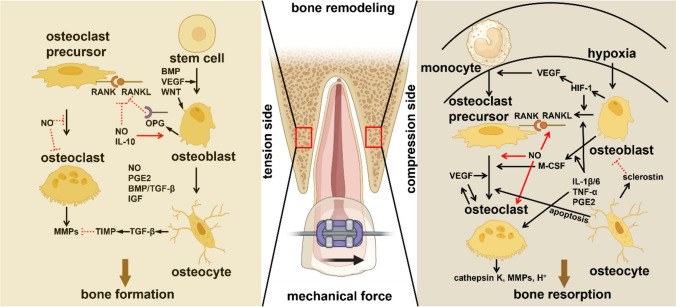
“…during orthodontic treatment: 1) the osteocyte mechanoresponse, 2) osteoclastogenesis, and 3) osteogenesis [95 and morphogens, as well as their inhibitors, while osteo-clast differentiation and function are affected by different molecules, such as RANKL, cytokines, and osteoprotegerin [96] (Fig.”
BackgroundThe role of the wnt/β-catenin signaling pathway in formation and maintenance of bone and teeth
Duan, P., & Bonewald, L. F. (2016) · The International Journal of Biochemistry & Cell Biology · doi:10.1016/j.biocel.2016.05.015 · Cited by 375 · cited 2×
“The Wnt signaling pathway is one of the key regulators of bone metabolism identified in mechanoresponsive osteocytes [101].”
BackgroundOn a Path to Unfolding the Biological Mechanisms of Orthodontic Tooth Movement
Krishnan, V., & Davidovitch, Z. (2009) · Journal of Dental Research · doi:10.1177/0022034509338914 · Cited by 360 · cited 1×
“…of periodontal ligament fibers on the “tension side” are followed by stimulation of osteoblast activity leading to increased bone formation, while disruption of fluid flow and cell death due to lack of nutrition on the “compression side” leads to bone resorption and allows tooth movement [94].”
BackgroundDepartment of Oral Cell Biology, R. I. M., Klein-Nulend, J., Bacabac, R., & Bakker, A. (2012) · European Cells and Materials · doi:10.22203/ecm.v024a20 · Cited by 336
Self-citationLi, Y., Zhan, Q., Bao, M., Yi, J., & Li, Y. (2021) · International Journal of Oral Science · doi:10.1038/s41368-021-00125-5 · Cited by 329
Survival and failure rates of orthodontic temporary anchorage devices: a systematic review
Schätzle, M., Männchen, R., Zwahlen, M., & Lang, N. P. (2009) · Clinical Oral Implants Research · doi:10.1111/j.1600-0501.2009.01754.x · Cited by 280 · cited 3×
“Osteoclast and osteoblast activity are thus related to opposite flow patterns, while mechanosensitive osteocytes orchestrate bone remodeling [10, 11, 50].”
BackgroundIshijima, M., Rittling, S. R., Yamashita, T., Tsuji, K., Kurosawa, H., Nifuji, A., Denhardt, D. T., & Noda, M. (2001) · The Journal of Experimental Medicine · doi:10.1084/jem.193.3.399 · Cited by 240 · cited 1×
“Osteoblasts and osteoclasts are not changed in unloaded osteopontin knockout mice, which suggests that osteopontin is a prerequisite for enhanced osteoclastic bone resorption and decreased osteoblastic bone formation under disuse [73].”
BackgroundRole of osteopontin in bone remodeling and orthodontic tooth movement: a review
Singh, A., Gill, G., Kaur, H., Amhmed, M., & Jakhu, H. (2018) · Progress in Orthodontics · doi:10.1186/s40510-018-0216-2 · Cited by 226 · cited 2×
“It contributes to bone remodeling by promoting osteoclastogenesis and osteo-clast activity through CD44 and αvβ3-mediated cell signaling [72].”
BackgroundOsteocytes subjected to fluid flow inhibit osteoclast formation and bone resorption
Tan, S. D., de Vries, T. J., Kuijpers-Jagtman, A. M., Semeins, C. M., Everts, V., & Klein-Nulend, J. (2007) · Bone · doi:10.1016/j.bone.2007.07.019 · Cited by 212 · cited 1×
“This causes almost complete fluid stasis in the osteocyte canaliculi [34], absence of fluid shear stress on the osteocytes, and decreased nitric oxide (NO) production [33].”
BackgroundSelf-citationInflammasomes in Alveolar Bone Loss
Li, Y., Ling, J., & Jiang, Q. (2021) · Frontiers in Immunology · doi:10.3389/fimmu.2021.691013 · Cited by 212 · cited 1×
“The two major signaling pathways activated by mechanical loading are the Wnt/β-catenin pathway and the RANKL pathway [100].”
BackgroundLocal RANKL gene transfer to the periodontal tissue accelerates orthodontic tooth movement
Kanzaki, H., Chiba, M., Arai, K., Takahashi, I., Haruyama, N., Nishimura, M., & Mitani, H. (2006) · Gene Therapy · doi:10.1038/sj.gt.3302707 · Cited by 192 · cited 1×
“During orthodontic tooth movement, RANKL expression increases in gingival crevicular fluid in juvenile patients [109].”
BackgroundShear stress inhibits while disuse promotes osteocyte apoptosis
Bakker, A., Klein-Nulend, J., & Burger, E. (2004) · Biochemical and Biophysical Research Communications · doi:10.1016/j.bbrc.2004.06.056 · Cited by 185 · cited 1×
“The insufficient NO production causes osteocytes to enter apoptosis via enhanced caspase-3 gene expression and activity, and decreased Bcl-2 gene expression [35].”
BackgroundSelf-citationRound versus flat: Bone cell morphology, elasticity, and mechanosensing
Bacabac, R. G., Mizuno, D., Schmidt, C. F., MacKintosh, F. C., Van Loon, J. J. W. A., Klein-Nulend, J., & Smit, T. H. (2008) · Journal of Biomechanics · doi:10.1016/j.jbiomech.2008.01.031 · Cited by 167
Self-citationHDAC5 Controls MEF2C-Driven Sclerostin Expression in Osteocytes
Wein, M. N., Spatz, J., Nishimori, S., Doench, J., Root, D., Babij, P., Nagano, K., Baron, R., Brooks, D., Bouxsein, M., et al. (2015) · Journal of Bone and Mineral Research · doi:10.1002/jbmr.2381 · Cited by 158 · cited 1×
“Mechanical loading represses sclerostin through the histone deacetylases HDAC4 and HDAC5 in osteocytes [71, 74].”
BackgroundPhysiological and pathological osteocytic osteolysis.
Tsourdi, E. A., Jähn, K., Rauner, M., Busse, B., & Bonewald, L. F. (2018) · PubMed Central · Cited by 151
Klein‐Nulend, J., Nijweide, P. J., & Burger, E. H. (2003) · Current Osteoporosis Reports · doi:10.1007/s11914-003-0002-y · Cited by 145 · cited 2×
“Mechanotransduction then comprises the translation of canalicular flow by osteocytes into cell signals that recruit osteoclasts and osteoblasts [44 • , 45].”
BackgroundSelf-citationTransforming growth factor-beta gene family members and bone
(1994) · Endocrine Reviews · doi:10.1210/er.15.1.27 · Cited by 145
Santos, A., Bakker, A. D., Zandieh‐Doulabi, B., Hogervorst, J. M. A., & Klein‐Nulend, J. (2009) · Biochemical and Biophysical Research Communications · doi:10.1016/j.bbrc.2009.11.064 · Cited by 127 · cited 1×
“Mechanical loading enhances, but disuse decreases Wnt activity [63].”
BackgroundSelf-citationOsteocyte regulation of orthodontic force-mediated tooth movement via RANKL expression
Ayumi, S., Ono, T., Hayashi, M., Takayanagi, H., Moriyama, K., & Nakashima, T. (2017) · Scientific Reports · doi:10.1038/s41598-017-09326-7 · Cited by 117 · cited 3×
“Mice with an osteocyte-specific RANKL-deficiency are resistant to orthodontic tooth movement due to inhibition of osteoclastogenesis in periodontal tissue [88].”
BackgroundInfluentialNitric oxide signaling in mechanical adaptation of bone
Klein‐Nulend, J., van Oers, R. F. M., Bakker, A. D., & Bacabac, R. G. (2013) · Osteoporosis International · doi:10.1007/s00198-013-2590-4 · Cited by 110 · cited 2×
“NO is a short-lived highly reactive free radical involved in e.g., the regulation of bone metabolism, and is produced through eNOS and/or iNOS activity [79].”
BackgroundSelf-citationSantos, A., Bakker, A. D., Zandieh‐Doulabi, B., Semeins, C. M., & Klein‐Nulend, J. (2009) · Journal of Orthopaedic Research · doi:10.1002/jor.20888 · Cited by 109 · cited 1×
“Osteocytes produce anabolic molecules including Wnts during mechanical loading [60, 61].”
BackgroundSelf-citationFourel, L., Valat, A., Faurobert, E., Guillot, R., Bourrin‐Reynard, I., Ren, K., Lafanéchère, L., Planus, E., Picart, C., & Albigès‐Rizo, C. (2016) · The Journal of Cell Biology · doi:10.1083/jcb.201508018 · Cited by 108 · cited 3×
“On the other hand, αvβ3 is required to inhibit glycogen synthase kinase-3β (GSK-3β) activity through the Src–FAK–ILK pathway [59].”
BackgroundInfluentialMechanotransduction in bone cells proceeds via activation of COX-2, but not COX-1
Bakker, A. D., Klein‐Nulend, J., & Burger, E. H. (2003) · Biochemical and Biophysical Research Communications · doi:10.1016/s0006-291x(03)00831-3 · Cited by 104 · cited 1×
“They are embedded in bone, and contact neighbouring osteocytes via long slender cell processes running through canaliculi, which contain interstitial fluid [47].”
BackgroundSelf-citationOrthodontic treatment in periodontally compromised patients: a systematic review
Erbe, C., Heger, S., Kašaj, A., Berres, M., & Wehrbein, H. (2022) · Clinical Oral Investigations · doi:10.1007/s00784-022-04822-1 · Cited by 104 · cited 1×
“The term ‘anchorage’ in orthodontics is used to describe the resistance to tooth movement resulting from reciprocal forces [6].”
BackgroundMechanistic Insight into Orthodontic Tooth Movement Based on Animal Studies: A Critical Review
Jeon, H. H., Teixeira, H. S., & Tsai, A. (2021) · Journal of Clinical Medicine · doi:10.3390/jcm10081733 · Cited by 102
The Biomechanical Function of Periodontal Ligament Fibres in Orthodontic Tooth Movement
McCormack, S. W., Witzel, U., Watson, P. J., Fagan, M. J., & Gröning, F. (2014) · PLoS ONE · doi:10.1371/journal.pone.0102387 · Cited by 98
Osteocytes and Estrogen Deficiency
McNamara, L. M. (2021) · Current Osteoporosis Reports · doi:10.1007/s11914-021-00702-x · Cited by 98 · cited 1×
“Enhanced osteocyte apoptosis is observed after estrogen withdrawal in rats [42], which suggests that estrogen loss during menopause compromises osteocyte viability, resulting in an altered response to mechanical loading and rapid bone loss.”
BackgroundRole of Osteocyte-PDL Crosstalk in Tooth Movement via SOST/Sclerostin
Odagaki, N., Ishihara, Y., Wang, Z., Hlaing, E. E., Nakamura, M., Hoshijima, M., Hayano, S., Kawanabe, N., & Kamioka, H. (2018) · Journal of Dental Research · doi:10.1177/0022034518771331 · Cited by 93 · cited 1×
“Sclerostin downregulates osteoblast activity and function [92].”
Pre-flight exercise and bone metabolism predict unloading-induced bone loss due to spaceflight
Gabel, L., Liphardt, A., Hulme, P. A., Heer, M. A., Zwart, S. R., Sibonga, J. D., Smith, S. M., & Boyd, S. K. (2021) · British Journal of Sports Medicine · doi:10.1136/bjsports-2020-103602 · Cited by 91
The Role of Osteocytes in Bone Resorption during Orthodontic Tooth Movement
Matsumoto, T., Iimura, T., Ogura, K., Moriyama, K., & Yamaguchi, A. (2013) · Journal of Dental Research · doi:10.1177/0022034513476037 · Cited by 86
Fluid Shear Stress Inhibits TNFα-induced Osteocyte Apoptosis
Tan, S. D., Kuijpers-Jagtman, A. M., Semeins, C. M., Bronckers, A. L. J. J., Maltha, J. C., Von den Hoff, J. W., Everts, V., & Klein-Nulend, J. (2006) · Journal of Dental Research · doi:10.1177/154405910608501006 · Cited by 86 · cited 3×
“Apoptotic osteocytes then attract osteoclasts [33, 36], leading to bone resorption and remodeling.”
BackgroundSelf-citationA FAK/HDAC5 signaling axis controls osteocyte mechanotransduction
Sato, T., Verma, S., Andrade, C. D. C., Omeara, M., Campbell, N., Wang, J. S., Cetinbas, M., Lang, A., Ausk, B. J., Brooks, D. J., et al. (2020) · Nature Communications · doi:10.1038/s41467-020-17099-3 · Cited by 86 · cited 1×
“Moreover, fluid shear stress triggers FAK inactivation via dephosphorylation, thus driving the nuclear translocation of class IIa HDAC by inhibition of HDAC5 tyrosine 642 phosphorylation [71, 75].”
BackgroundJin, Z., Kho, J., Dawson, B., Jiang, M., Chen, Y., Ali, S., Burrage, L. C., Grover, M., Palmer, D. J., Turner, D. L., et al. (2021) · Journal of Clinical Investigation · doi:10.1172/jci138935 · Cited by 85 · cited 1×
“NO promotes osteoblast differentiation and bone formation [84].”
Backgroundvan Tol, A. F., Roschger, A., Repp, F., Chen, J., Roschger, P., Berzlanovich, A. M., Gruber, G. M., Fratzl, P., & Weinkamer, R. (2019) · Biomechanics and Modeling in Mechanobiology · doi:10.1007/s10237-019-01250-1 · Cited by 84 · cited 2×
“Osteoclast and osteoblast activity are thus related to opposite flow patterns, while mechanosensitive osteocytes orchestrate bone remodeling [10, 11, 50].”
BackgroundThe role of nitric oxide in orthodontic tooth movement in rats.
Shirazi, M., Nilforoushan, D., Alghasi, H., & Dehpour, A. R. (2002) · PubMed · doi:10.1043/0003-3219(2002)072<0211:tronoi>2.0.co;2 · Cited by 81 · cited 1×
“NO is strongly involved in the biomechanical response of the periodontium to orthodontic forces [85].”
BackgroundHaas, A. N., Pannuti, C. M., de Andrade, A. K. P., ESCOBAR, E. C., de Almeida, E. R., Costa, F. O., Cortelli, J. R., Cortelli, S. C., Rode, S. D. M., Pedrazzi, V., et al. (2014) · Brazilian Oral Research · doi:10.1590/1807-3107bor-2014.vol28.0021 · Cited by 79 · cited 1×
“A healthy periodontium is needed to prevent damage to the tissues supporting the tooth [4].”
BackgroundMEPE expression in osteocytes during orthodontic tooth movement
Gluhak‐Heinrich, J., Pavlin, D., Yang, W., MacDougall, M. J., & Harris, S. E. (2007) · Archives of Oral Biology · doi:10.1016/j.archoralbio.2006.12.010 · Cited by 78 · cited 2×
“The results showed different expression of MEPE and DMP-1 during early (day 1) and late (days 4–7) periods of mechanical loading [90].”
BackgroundBio Imaging of Intracellular NO Production in Single Bone Cells After Mechanical Stimulation
Vatsa, A., Mizuno, D., Smit, T. H., Schmidt, C. F., MacKintosh, F. C., & Klein-Nulend, J. (2006) · Journal of Bone and Mineral Research · doi:10.1359/jbmr.060720 · Cited by 76 · cited 1×
“Cultured osteocytes respond to fluid shear stress by enhanced NO production, and to a localized mechanical loading on the single osteocyte level [80, 81].”
BackgroundSelf-citationExpression of biological mediators during orthodontic tooth movement: A systematic review
Vansant, L., de Llano‐Pérula, M. C., Verdonck, A., & Willems, G. (2018) · Archives of Oral Biology · doi:10.1016/j.archoralbio.2018.08.003 · Cited by 76 · cited 1×
“…of prostaglandins, prostaglandin E 2 (PGE 2 ) at high concentrations is strongly related to bone resorption [68], inhibits osteoprotegerin, and stimulates the receptor activator of nuclear factor-κB RANKL, which causes increased cyclooxygenase-1 (COX-1) and cyclooxygenase-2 (COX-2) expression [69].”
BackgroundLi, M. C. M., Chow, S. K., Wong, R. M. Y., Qin, L., & Cheung, W. (2021) · Journal of Orthopaedic Translation · doi:10.1016/j.jot.2021.04.005 · Cited by 74 · cited 1×
“…during orthodontic tooth movement, including connexin-43, transient receptor potential vanilloid 4, piezo1, sphingosine-1-phosphate, zinc finger protein, extracellular signal regulated kinase, adenosine triphosphate, extracellular vesicles, and cyclic adenosine monophosphate [110].”
BackgroundOsteoclasts secrete osteopontin into resorption lacunae during bone resorption
Luukkonen, J., Hilli, M., Nakamura, M., Ritamo, I., Valmu, L., Kauppinen, K., Tuukkanen, J., & Lehenkari, P. P. (2019) · Histochemistry and Cell Biology · doi:10.1007/s00418-019-01770-y · Cited by 71 · cited 1×
“Acute disuse rapidly upregulates osteopontin by osteocytes, which likely mediates bone resorption, since osteopontin is a known osteoclast chemotaxant and modulator of osteoclast attachment to bone [70].”
BackgroundSun-mediated mechanical LINC between nucleus and cytoskeleton regulates βcatenin nuclear access
Uzer, G., Bas, G., Sen, B., Xie, Z., Birks, S., Olcum, M., McGrath, C., Styner, M., & Rubin, J. (2018) · Journal of Biomechanics · doi:10.1016/j.jbiomech.2018.04.013 · Cited by 68 · cited 1×
“…phosphorylation, followed by translocation of dephosphoryl-ated β-catenin into the nucleus to induce LEF/TCF-responsive gene transcription [65]. β-catenin serves as one of the core hubs for mechanotransduction, and as a primary intracellular signal transducer for Wnt signaling pathways [66].”
BackgroundFu, H., Wang, B., Wan, Z.-Q., Lin, H., Chang, M., & Han, G. (2016) · Journal of Molecular Histology · doi:10.1007/s10735-016-9687-y · Cited by 65 · cited 1×
“Wnt-mediated canonical Wnt signaling pathway activation plays a role in tension force-induced bone remodeling during orthodontic tooth movement [62].”
BackgroundLerner, U. H. (2012) · Seminars in Orthodontics · doi:10.1053/j.sodo.2012.06.002 · Cited by 59 · cited 1×
“It converts mechanical loading during orthodontic tooth movement into biochemical responses that control bone mineralization [89].”
BackgroundThe osteocyte and its osteoclastogenic potential
Marahleh, A., Kitaura, H., Ohori, F., Noguchi, T., & Mizoguchi, I. (2023) · Frontiers in Endocrinology · doi:10.3389/fendo.2023.1121727 · Cited by 59
In silico experiments of bone remodeling explore metabolic diseases and their drug treatment
Kameo, Y., Miya, Y., Hayashi, M., Nakashima, T., & Adachi, T. (2020) · Science Advances · doi:10.1126/sciadv.aax0938 · Cited by 58 · cited 1×
“Bone adaptation occurs during bone remodeling [22].”
Sclerostin: From Molecule to Clinical Biomarker
Omran, A. S., Atanasova, D., Landgren, F., & Magnusson, P. (2022) · International Journal of Molecular Sciences · doi:10.3390/ijms23094751 · Cited by 55 · cited 1×
“Sclerostin (SOST) is a protein associated with the SOST gene, and is also produced by osteocytes [76].”
BackgroundMa, J., Wang, A., Zhang, H., Liu, B., Geng, Y., Xu, Y., Zuo, G., & Peng, J. (2022) · Bone · doi:10.1016/j.bone.2022.116511 · Cited by 55 · cited 1×
“It is associated with osteoclastic bone resorption in growing bone [41].”
BackgroundIs There a Governing Role of Osteocytes in Bone Tissue Regeneration?
Cao, W., Helder, M. N., Bravenboer, N., Wu, G., Jin, J., Bruggenkate, C. M. T., Klein‐Nulend, J., & Schulten, E. A. J. M. (2020) · Current Osteoporosis Reports · doi:10.1007/s11914-020-00610-6 · Cited by 54 · cited 1×
“Mechanically loaded osteocytes produce signaling molecules like bone morphogenetic proteins (BMPs), Wnts, prostaglandins, osteopontin, sclerostin, NO, and RANKL, which modulate the recruitment, differentiation, and activity of osteoblasts and osteoclasts [14, 46, 56].”
BackgroundSelf-citationOrthodontic Force Stimulates eNOS and iNOS in Rat Osteocytes
Tan, S., Xie, R., Klein‐Nulend, J., van Rheden, R. E. M., Bronckers, A. L. J. J., Kuijpers‐Jagtman, A. M., den Hoff, J. W. V., & Maltha, J. C. (2009) · Journal of Dental Research · doi:10.1177/0022034508330861 · Cited by 51
Self-citationInvolvement of nitric oxide in orthodontic tooth movement in rats
Hayashi, K., Igarashi, K., Miyoshi, K., Shinoda, H., & Mitani, H. (2002) · American Journal of Orthodontics and Dentofacial Orthopedics · doi:10.1067/mod.2002.126151 · Cited by 50
Comparative assessment of mouse models for experimental orthodontic tooth movement
Kirschneck, C., Bauer, M. L. M., Gubernator, J., Proff, P., & Schröder, A. (2020) · Scientific Reports · doi:10.1038/s41598-020-69030-x · Cited by 50
Wang, P., Tang, C., Wu, J., Yang, Y., Yan, Z., Liu, X., Shao, X., Zhai, M., Gao, J., Liang, S., et al. (2018) · Journal of Cellular Physiology · doi:10.1002/jcp.27734 · Cited by 48
Implantable Devices as Orthodontic Anchorage: A Review of Current Treatment Modalities
Heymann, G. C., & Tulloch, J. F. C. (2006) · Journal of Esthetic and Restorative Dentistry · doi:10.2310/6130.2006.00013_1.x · Cited by 43 · cited 1×
“Orthodontic tooth movement uses teeth segments that resist movement and operate as “anchors” to pull against other teeth segments that are intended to be moved [5].”
BackgroundBone adaptation to mechanical loading in mice is affected by circadian rhythms
Bouchard, A. L., Dsouza, C., Julien, C., Rummler, M., Gaumond, M.-H., Cermakian, N., & Willie, B. M. (2021) · Bone · doi:10.1016/j.bone.2021.116218 · Cited by 41 · cited 2×
“The coordinated cooperation of osteoclasts and osteoblasts during bone adaptation is generally believed to be orchestrated by osteocytes, which can respond to mechanical loading [13, 14].”
BackgroundEffects of ethanol on human periodontal ligament fibroblasts subjected to static compressive force
Schröder, A., Küchler, É. C., Omori, M. A., Spanier, G., Proff, P., & Kirschneck, C. (2018) · Alcohol · doi:10.1016/j.alcohol.2018.10.004 · Cited by 38 · cited 1×
“Periodontal ligament fibroblasts perform regulatory functions in the innate immune response, and respond to compressive and tensile forces during orthodontic treatment with prostaglandin release [67].”
BackgroundRole of nitric oxide in orthodontic tooth movement (Review)
Yan, T., Xie, Y., He, H., Fan, W., & Huang, F. P. (2021) · International Journal of Molecular Medicine · doi:10.3892/ijmm.2021.5001 · Cited by 37
Expression of Nitric Oxide Synthases in Orthodontic Tooth Movement
Nilforoushan, D., & Manolson, M. F. (2008) · The Angle Orthodontist · doi:10.2319/050808-252.1 · Cited by 33 · cited 3×
“NO production occurs through tension force during orthodontic force in periodontal ligament cells via eNOS [38 •• , 86].”
BackgroundInfluentialOsteocyte morphology and orientation in relation to strain in the jaw bone
Wu, V., van Oers, R. F. M., Schulten, E. A. J. M., Helder, M. N., Bacabac, R. G., & Klein‐Nulend, J. (2018) · International Journal of Oral Science · doi:10.1038/s41368-017-0007-5 · Cited by 33
Self-citationOsteocytes and mechanical loading: The Wnt connection
Bullock, W. A., Pavalko, F. M., & Robling, A. G. (2019) · Orthodontics and Craniofacial Research · doi:10.1111/ocr.12282 · Cited by 31 · cited 1×
“In addition, modulation of the expression of the SOST gene encoding, which encodes sclerostin, an inhibitor of Wnt signaling, stimulates bone formation on the “tension side” and inhibits bone formation on the “compression side”, thereby regulating orthodontic tooth movement [104].”
BackgroundPereira, L. J., Macari, S., Coimbra, C. C., Pereira, T. D. S. F., Barrioni, B. R., Gomez, R. S., Silva, T. A., & Paiva, S. M. (2020) · Bone · doi:10.1016/j.bone.2020.115496 · Cited by 30 · cited 1×
“However, bone remodeling can also be used e.g., during distraction osteogenesis of the mandible, or for orthodontic tooth movement [29, 30].”
BackgroundIandolo, D., Strigini, M., Guignandon, A., & Vico, L. (2021) · Current Osteoporosis Reports · doi:10.1007/s11914-021-00713-8 · Cited by 30 · cited 2×
“Throughout bone, this three-dimensional network of interconnected cells with its accompanying lacuna-canalicular porosity is mechanosensing site in bone [43].”
BackgroundWang, H., Du, T., Li, R., Main, R. P., & Yang, H. (2022) · Bone · doi:10.1016/j.bone.2022.116367 · Cited by 30 · cited 1×
“This fluid flow leads to a strain-driven interstitial fluid movement through the canaliculi and along the osteocyte processes, which is sensed and transduced by the osteocytes [51].”
BackgroundEffect of TNF-α on osteocyte RANKL expression during orthodontic tooth movement
Marahleh, A., Kitaura, H., Ohori, F., Noguchi, T., Nara, Y., Pramusita, A., Kinjo, R., Ma, J., Kanou, K., & Mizoguchi, I. (2021) · Journal of Dental Sciences · doi:10.1016/j.jds.2021.03.006 · Cited by 29 · cited 2×
“Periodontal ligament cells are stretched or compressed during orthodontic tooth movement [31], and cytokines such as tumor necrosis factor-α (TNF-α) and interleukin-1 (IL-1) are produced [32].”
BackgroundRoth, C. E., Craveiro, R. B., Niederau, C., Malyaran, H., Neuß, S., Jankowski, J., & Wolf, M. F. (2022) · International Journal of Molecular Sciences · doi:10.3390/ijms23158062 · Cited by 29 · cited 1×
“Orthodontic loading causes osteoclastic bone resorption at the “compression side” where normal strain of the periodontal ligament is decreased and local extracellular fluid stasis in the canaliculi occurs [54, 55].”
BackgroundPhysicochemical Niche Conditions and Mechanosensing by Osteocytes and Myocytes
Jin, J., Bakker, A. D., Wu, G., Klein‐Nulend, J., & Jaspers, R. T. (2019) · Current Osteoporosis Reports · doi:10.1007/s11914-019-00522-0 · Cited by 28 · cited 1×
“How the osteocytes sense mechanical loading via this three-dimensional network is explained by the “canalicular flow hypothesis” [49].”
BackgroundSelf-citationRole of nitric oxide in type 1 diabetes-induced osteoporosis
Jeddi, S., Yousefzadeh, N., Kashfi, K., & Ghasemi, A. (2021) · Biochemical Pharmacology · doi:10.1016/j.bcp.2021.114888 · Cited by 27 · cited 1×
“NO inhibits osteoclast activity [38 •• , 82], and mediates adaptive bone formation in vivo [79, 83].”
BackgroundZheng, L., Zhou, D., Ju, F., Liu, Z., Yan, C., Dong, Z., Chen, S., Deng, L., Chan, S., Deng, J., et al. (2023) · Advanced Science · doi:10.1002/advs.202204592 · Cited by 27
Sun, C., Ranković, M. J., Folwaczny, M., Stocker, T., Otto, S., Wichelhaus, A., & Baumert, U. (2022) · International Journal of Molecular Sciences · doi:10.3390/ijms23031525 · Cited by 23 · cited 2×
“NO is one of the key molecules involved in the regulation of bone homeostasis and activation or inhibition of osteoblasts and osteoclasts [53, 54].”
BackgroundWang, X., He, Y., Tian, S., Zhu, F., Huang, B., Zhang, J., Chen, Z., & Wang, H.-F. (2019) · Medical Science Monitor · doi:10.12659/msm.915986 · Cited by 22 · cited 1×
“Apoptotic osteocytes then attract osteoclasts [33, 36], leading to bone resorption and remodeling.”
BackgroundZhang, X., Chen, D., Zheng, J., Deng, L., Chen, Z., Ling, J., & Wu, L. (2019) · Experimental and Therapeutic Medicine · doi:10.3892/etm.2019.7248 · Cited by 20 · cited 1×
“Periodontal ligament cells are stretched or compressed during orthodontic tooth movement [31], and cytokines such as tumor necrosis factor-α (TNF-α) and interleukin-1 (IL-1) are produced [32].”
BackgroundFunctional Roles of Connexins and Gap Junctions in Osteo-Chondral Cellular Components
Zappalà, A., Romano, I. R., D’Angeli, F., Musumeci, G., Furno, D. L., Giuffrida, R., & Mannino, G. (2023) · International Journal of Molecular Sciences · doi:10.3390/ijms24044156 · Cited by 20 · cited 1×
“These cell processes also contact osteoblasts, bone lining cells, and osteoclasts at the bone surface [48].”
BackgroundJose, J., Somaiah, S., Muddaiah, S., Shetty, B., Reddy, G., & Roopa, S. (2018) · Contemporary Clinical Dentistry · doi:10.4103/ccd.ccd_859_17 · Cited by 19 · cited 1×
“Among the subclasses of prostaglandins, prostaglandin E 2 (PGE 2 ) at high concentrations is strongly related to bone resorption [68], inhibits osteoprotegerin, and stimulates the receptor activator of nuclear factor-κB RANKL, which causes increased cyclooxygenase-1 (COX-1) and cyclooxygenase-2…”
BackgroundWei, T., Shan, Z., Wen, X., Zhao, N., & Shen, G. (2022) · Molecular Medicine Reports · doi:10.3892/mmr.2022.12744 · Cited by 18
The expression and regulation of Wnt1 in tooth movement–initiated mechanotransduction
Hlaing, E. E., Ishihara, Y., Odagaki, N., Wang, Z., Ikegame, M., & Kamioka, H. (2020) · American Journal of Orthodontics and Dentofacial Orthopedics · doi:10.1016/j.ajodo.2020.08.006 · Cited by 17 · cited 1×
“Osteocytes produce anabolic molecules including Wnts during mechanical loading [60, 61].”
BackgroundAltay, B., Dede, E. Ç., Ozgul, O., Atıl, F., Kocyigit, I. D., Orhan, K., Tekin, U., Korkusuz, P., & Önder, M. E. (2020) · Journal of Oral and Maxillofacial Surgery · doi:10.1016/j.joms.2020.03.005 · Cited by 16 · cited 1×
“However, bone remodeling can also be used e.g., during distraction osteogenesis of the mandible, or for orthodontic tooth movement [29, 30].”
BackgroundA new cyte in orthodontics: Osteocytes in tooth movement
Bumann, E. E., & Frazier‐Bowers, S. A. (2017) · Orthodontics and Craniofacial Research · doi:10.1111/ocr.12176 · Cited by 15
Regulation of Bone Formation by Applied Dynamic Loads
Kumar, G., & Narayan, B. (2013) · Springer eBooks · doi:10.1007/978-1-4471-5451-8_134 · Cited by 10
Kalyanaraman, H., China, S. P., Cabriales, J. A., Moininazeri, J., Casteel, D. E., Garcia, J. J., Wong, V. W., Chen, A., Sah, R. L., Boss, G. R., et al. (2020) · Journal of Bone and Mineral Research · doi:10.1002/jbmr.4746 · Cited by 10
Kumar, G., Raghunath, N., & Jyothikiran, H. (2022) · International Journal of Applied Dental Sciences · doi:10.22271/oral.2022.v8.i2i.1568 · Cited by 9 · cited 3×
“The RANKL pathway defines bone mass as it discharges osteoclast progenitors into the circulation [105].”
BackgroundInfluentialEffects of anti-mouse RANKL antibody on orthodontic tooth movement in mice
Yoshimatsu, M., Kitaura, H., Morita, Y., Nakamura, T., & Ukai, T. (2022) · Journal of Dental Sciences · doi:10.1016/j.jds.2022.02.007 · Cited by 6 · cited 1×
“Although the underlying biological and biomechanical processes of orthodontic tooth movement are still not fully elucidated, there are several studies showing that osteocytes play a major role in controlling the entire response to mechanical loading [97–99].”
BackgroundAli, M. J., Bhardwaj, A., Khan, M. S., Alwadei, F. H., Gufran, K., Alqahtani, A. S., Alqhtani, N. R., Alasqah, M. N., Alsakr, A., & Alghabban, R. O. (2022) · Applied Sciences · doi:10.3390/app122010372 · Cited by 6 · cited 2×
“Throughout life, bone undergoes remodeling, which involves the resorption of mineralized bone by osteoclasts followed by the formation of new mineralized bone by osteoblasts [8, 9].”
BackgroundCuoghi, O. A., Tondelli, P. M., de Mendonça, M. R., Aiello, C. A., da Costa, S. C., & Tanaka, O. M. (2018) · European Journal of General Dentistry · doi:10.4103/ejgd.ejgd_89_18 · Cited by 5 · cited 1×
“Consequently bone resorption is induced in areas of compression, and bone formation in areas of traction or stretching, leading to tooth movement [3].”
BackgroundSkeletal Anchorage System [Miniplates] - An Orthodontic Perspective - A Review
Bhardwaj, A., Sharma, A. K., Mishra, K., & Jeswani, R. (2020) · Acta Scientific Dental Scienecs · doi:10.31080/asds.2020.04.0932 · Cited by 5 · cited 1×
“Assuming ideal treatment goals, anchorage requirements should be evaluated in all three planes of spaces: anterior–posterior, transverse, and vertical [7].”
BackgroundJeon, H. H., Kang, J. M., Li, J. (., Kim, D., Yuan, G., Almer, N., Liu, M., & Yang, S. (2022) · Life · doi:10.3390/life12081147 · Cited by 5
Haxhi, J., Mattia, L., Vitale, M., Pisarro, M., Conti, F., & Pugliese, G. (2022) · International Journal of Bone Fragility · doi:10.57582/ijbf.220201.020 · Cited by 4
Research works printed but not linked: 3
- Pereira Alexandre L Nava Lopes Cançado L Renato Jordão C Absolute orthodontic anchorage: A brief review Int J Appl Dent Sci. 2019 5 152 155
- Robling AG Castillo AB Turner CH Biomechanical and molecular regulation of bone remodeling Annu Rev Biomed Eng 2006 8 455 498 10.1146/annurev.bioeng.8.061505.095721 16834564 · DOI · Paper page
- Wasserman E. Differentially load-regulated gene expression in mouse trabecular osteocytes, Dissertation ETH Zurich, No. 18938, 2010.
Cited by
Emerging role of liver-bone axis in osteoporosis
Gao, H., Peng, X., Li, N., Gou, L., Xu, T., Wang, Y., Qin, J., Liang, H., Ma, P., Li, S., et al. (2024) · Journal of Orthopaedic Translation · doi:10.1016/j.jot.2024.07.008 · Cited by 36
“PGs, which are produced by hepatocytes, are cytokines that regulate the recruitment, differentiation, and activity of osteoblasts and osteoclasts [150].”
BackgroundThe central mechanotransducer in osteoporosis pathogenesis and therapy
Liu, C., Yang, J., Dong, Z., Zhao, S., Tian, Z., Li, Y., Hao, Y., & Wang, M. (2025) · Frontiers in Endocrinology · doi:10.3389/fendo.2025.1658967 · Cited by 25
“Mechanical loading activates Wnt/ b -catenin signaling, promoting osteoblast differentiation, while suppressing RANKL-mediated osteoclastogenesis (40).”
Liao, X.-M., Yang, Z.-J., Li, Y., Cui, Y., Ma, L., Liang, C., Guan, Z., & Hu, J. (2025) · Free Radical Biology and Medicine · doi:10.1016/j.freeradbiomed.2025.05.425 · Cited by 14
Emerging Technologies in Bone Tissue Engineering: A Review
Rastogi, S., Verma, R., Gouru, S. A., Venkatesan, K., Pandian, P. M., Khan, M. I., Deka, T., & Kumar, P. (2025) · Journal of Bionic Engineering · doi:10.1007/s42235-025-00765-x · Cited by 13
Cai, D., Shao, J., & Xiao, Y. (2026) · Dental Research · doi:10.1016/j.dtrs.2026.100025 · Cited by 9
Metadata
- Authors
- Seddiqi, H., Klein-Nulend, J., & Jin, J.
- Affiliations
- Academic Center for Dentistry Amsterdam (NL)
- Corresponding author
- Jin, Jianfeng
- Venue
- Current Osteoporosis Reports
- Published
- 2023-10-04
- Volume
- 21
- Issue
- 6
- Pages
- 731-742
- ISSN
- 1544-1873 (ISSN-L)
- 1544-2241
- PMC
- PMC10724326
- OpenAlex
- W4387326649
- Cited by
- 46
- References
- 109
- Citations by year
- 2026: 26 · 2025: 16 · 2024: 4
- FWCI
- 2.62
- Type
- journal article
- Language
- en
- Open access
- hybrid
- doi.org
- Licence
- cc-by
- creativecommons.org/licenses/by/4.0 (tdm)
- creativecommons.org/licenses/by/4.0 (vor)
- Locations
- Current Osteoporosis Reports (publishedVersion, cc-by)
- PubMed Central (publishedVersion, cc-by)
- PubMed (publishedVersion)
- VU Research Portal (submittedVersion, other-oa)
- Funders
- Health-Holland (LSHM19016, “BB”)
- Topics
- Health Sciences › Dentistry › Orthodontics › Orthodontics and Dentofacial Orthopedics
- Life Sciences › Biochemistry, Genetics and Molecular Biology › Molecular Biology › Bone Metabolism and Diseases
- Life Sciences › Biochemistry, Genetics and Molecular Biology › Cell Biology › Cellular Mechanics and Interactions
- Keywords
- osteocyte mechanotransduction, orthodontic tooth movement, periodontal tissue response, mechanical loading, Wnt/β-catenin signaling, RANKL signaling, bone remodeling, osteoblasts, osteoclasts, sclerostin, RANKL, bone morphogenetic proteins, prostaglandins, osteopontin, nitric oxide, bone adaptation, periodontal inflammation
- MeSH terms
- Humans, Osteoblasts, Osteoclasts, Osteocytes, Tooth Movement Techniques, Bone Remodeling, Mechanotransduction, Cellular
About these checks
Registry, retraction, Cites and statistics results are computed, not judged, with one exception: a printed reference that no index lists is read once by a model before it counts as a citation error. Claims are extracted by a model and kept only when their quote appears verbatim in the text; each cited source is then checked, with a model’s help, for whether it says what the claim relies on. Those verdicts can be wrong — read the claim’s quote and the cited source before relying on one.
Statistics and arithmetic are recomputed, not judged.
Confidence bands are shown only for fields calibrated on our annotated test set. None is calibrated yet, so no band is shown.
What counts as a claim ›How we measure confidence ›How we check this ›
Are you an author, or do you see a problem with this page? Request a review
Data sources
Bibliographic data: Semantic Scholar, OpenAlex, Crossref.
Contains information from the Semantic Scholar Academic Graph Datasets, made available under the ODC Attribution License (ODC-BY 1.0).
Semantic Scholar’s data is described in: Kinney, R., et al. (2023). The Semantic Scholar Open Data Platform. arXiv:2301.10140.
