

Effects of Mindfulness-Based Stress Reduction Intervention on Psychological Well-being and Quality of Life: Is Increased Mindfulness Indeed the Mechanism?
Open accessThe DOI matches its Crossref record; 48 of the 49 references it cites were found in a registry or an index.
Abstract
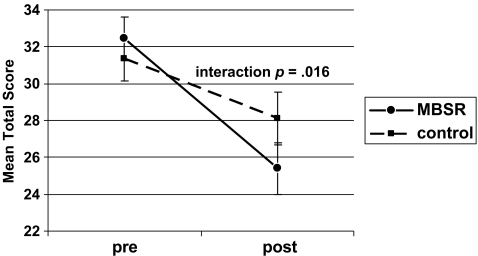
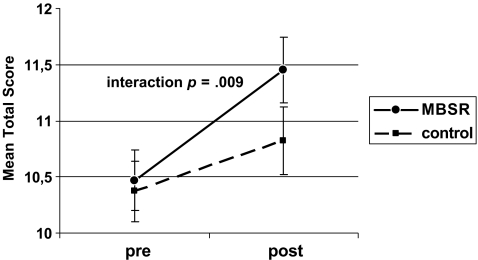
BACKGROUND: Although several studies have reported positive effects of mindfulness-based stress reduction (MBSR) intervention on psychological well-being, it is not known whether these effects are attributable to a change in mindfulness. PURPOSE: The aim of this study is to compare the effects of MBSR to a waiting-list control condition in a randomized controlled trial while examining potentially mediating effects of mindfulness. METHODS: Forty women and 20 men from the community with symptoms of distress (mean age 43.6 years, SD = 10.1) were randomized into a group receiving MBSR or a waiting-list control group. Before and after the intervention period, questionnaires were completed on psychological well-being, quality of life, and mindfulness. RESULTS: Repeated measures multiple analysis of variance (MANCOVAs) showed that, compared with the control group, the intervention resulted in significantly stronger reductions of perceived stress (p = 0.016) and vital exhaustion (p = 0.001) and stronger elevations of positive affect (p = 0.006), quality of life (p = .009), as well as mindfulness (p = 0.001). When mindfulness was included as a covariate in the MANCOVA, the group effects on perceived stress and quality of life were reduced to nonsignificance. CONCLUSION: Increased mindfulness may, at least partially, mediate the positive effects of mindfulness-based stress reduction intervention.
Overview
The claims and statistics of this paper haven’t been checked yet.
Free: it reads the open-access text and checks the first 5 claims that cite a source we can check. Create a free account to check every claim.
Integrity signals
Registry
Cites
Statistics
Figures
Verification
Claims the paper makes
The claims and statistics of this paper haven’t been checked yet.
Free: it reads the open-access text and checks the first 5 claims that cite a source we can check. Create a free account to check every claim.
Claims other papers make about this one
Each is checked against this paper’s own text: does it say what the citing paper says it does?
The source backs part of the claim, not all of it — or backs it for a different population, condition or comparison.
In the citing paper
“satisfaction with life, and quality of life (Grossman et al., 2010; Koszycki et al., 2007; Nyklíček, & Kuijpers,2008; Shapiro et al., 2005)”
From Effects of mindfulness on psychological health: A review of empirical studies (2011) · cites this paper as Nyklíček, & Kuijpers,2008
Experimental — accuracy not yet measuredThe source backs part of the claim, not all of it — or backs it for a different population, condition or comparison.
In the citing paper
“The effects of mindfulness training on mindfulness, depression and insomnia are now quite renowned8,10,21,53 and the mechanism guiding all these changes seems to be the increase in mindful attitude towards one’s own experience, in particular in terms of acceptance, nonreactivity and nonjudgment54–57.”
From Mindfulness-based online intervention increases well-being and decreases stress after Covid-19 lockdown (2022) · cites this paper as [57]
Experimental — accuracy not yet measuredThe source backs part of the claim, not all of it — or backs it for a different population, condition or comparison.
In the citing paper
“For pain, preliminary evidence suggested that mindfulness and pain catastrophizing mediated the relationship between interventions and reduced perceived stress and improved quality of life [22,25].”
From Delivering Mindfulness-Based Interventions for Insomnia, Pain, and Dysfunctional Eating Through a Text Messaging App: Three Randomized Controlled Trials Investigating the Effectiveness and Mediating Mechanisms. (2022) · cites this paper as [22]
Experimental — accuracy not yet measuredThe cited source says what the claim attributes to it.
In the citing paper
“satisfaction with life, and quality of life (Grossman et al., 2010; Koszycki et al., 2007; Nyklíček, & Kuijpers,2008; Shapiro et al., 2005)”
From Effects of mindfulness on psychological health: A review of empirical studies (2011) · cites this paper as Nyklíček, & Kuijpers,2008
The cited source says what the claim attributes to it.
In the citing paper
“It has been found to improve positive affect (Anderson et al., 2007; Bränström et al., 2010), Nyklíček, & Kuijpers, 2008)”
From Effects of mindfulness on psychological health: A review of empirical studies (2011) · cites this paper as Nyklíček, & Kuijpers, 2008
7 more claims about this paper
Create a free account to see every claim other papers make about this one.
Self-check
Percentages, sums and reported differences re-computed from the paper’s own numbers.
The self-check needs the paper’s full text.
Citations
Cites
Baron, R. M., & Kenny, D. A. (1986) · Journal of Personality and Social Psychology · doi:10.1037/0022-3514.51.6.1173 · Cited by 91,532 · cited 3×
“several outcome variables (see Tables 1 and 2), (b) the independent variable (group) had a significant effect on the potential mediators (change in mindfulness skills; see Table 3), and (c) in several cases, the potential mediator was associated with change in outcome (Table 4) [37].”
BackgroundMethodInfluentialA Global Measure of Perceived Stress
Cohen, S., Kamarck, T., & Mermelstein, R. (1983) · Journal of Health and Social Behavior · doi:10.2307/2136404 · Cited by 32,807 · cited 4×
“The PSS consists of 14 items, which are scored by using five-point Likert scales ranging from 0 (never) to 4 (very often).”
BackgroundInfluentialThe benefits of being present: Mindfulness and its role in psychological well-being
Brown, K. W., & Ryan, R. M. (2003) · Journal of Personality and Social Psychology · doi:10.1037/0022-3514.84.4.822 · Cited by 13,448 · cited 18×
“While several studies reported correlations between change in mindfulness skills and decrease in feelings of distress [20, 27], a mediation effect of mindfulness could not be obtained due to the lack of a control group.”
BackgroundMethodResultInfluentialDevelopment of the World Health Organization WHOQOL-BREF Quality of Life Assessment
THE WHOQOL GROUP (1998) · Psychological Medicine · doi:10.1017/s0033291798006667 · Cited by 7,933
Using Self-Report Assessment Methods to Explore Facets of Mindfulness
Baer, R. A., Smith, G. T., Hopkins, J., Krietemeyer, J., & Toney, L. (2006) · Assessment · doi:10.1177/1073191105283504 · Cited by 7,511 · cited 1×
“Since the recent introduction of instruments assessing various aspects of mindfulness [20, 26], the first published studies on this topic have not been able to illuminate this issue.”
Background(2008) · Medical Entomology and Zoology · Cited by 7,477
Kabat-Zinn, J. (1982) · General Hospital Psychiatry · doi:10.1016/0163-8343(82)90026-3 · Cited by 4,255 · cited 5×
“Several studies have been performed, especially in recent years, that have examined the effects of mindfulness-based stress reduction interventions, mainly in the form of the original MBSR protocol [1, 2] or derivatives thereof [3, 4].”
BackgroundResultInfluentialMindfulness-based stress reduction and health benefits
Grossman, P., Niemann, L., Schmidt, S., & Walach, H. (2004) · Journal of Psychosomatic Research · doi:10.1016/s0022-3999(03)00573-7 · Cited by 3,958
Alterations in brain and immune function produced by mindfulness meditation
Davidson, R. J., Kabat-Zinn, J., Schumacher, J., Rosenkranz, M., Muller, D., Santorelli, S. F., Urbanowski, F., Harrington, A., Bonus, K., & Sheridan, J. F. (2003) · Psychosomatic Medicine · doi:10.1097/01.psy.0000077505.67574.e3 · Cited by 2,925 · cited 1×
“Clear consistent associations have been obtained in some studies [10, 27, 45], while in most studies, no or inconsistent associations were found [9, 11, 13, 17, 23, 43, 46, 47].”
ResultAssessment of Mindfulness by Self-Report: The Kentucky Inventory of Mindfulness Skills
Baer, R. A., Smith, G. T., & Allen, K. B. (2004) · Assessment · doi:10.1177/1073191104268029 · Cited by 2,298 · cited 4×
“In addition, the pattern of intercorrelations between these scales were similar to correlations found for the original scales [ 35 ]: MAAS with Accept Without Judgment r=0.48 at baseline and r=0.62 at follow-up (both p 0.10) and r=0.32 (p= 0.014), and Accept Without Judgment with Observe r=0.07 and r=0.09 (both p>0.10…”
MethodResultInfluential
Research works printed but not linked: 1
- De Vries J, Van Heck GL. Nederlandse handleiding van de WHOQoL [Dutch manual of the WHOQoL]. Tilburg: Tilburg University; 2000.
Cited by
Items 301–400 of 533
Mindfulness Practice Outcomes Explained Through the Discourse of Experienced Practitioners
Machado, S. C. M., & Costa, M. E. (2015) · Mindfulness · doi:10.1007/s12671-015-0417-4 · Cited by 16
Youngvorst, L. J., & Jones, S. M. (2017) · Communication Quarterly · doi:10.1080/01463373.2017.1301508 · Cited by 15
“…interventions increase mindfulness dispositions, which in turn, have beneficial psychosocial effects, the apparent conclusion seems to be that the primary mechanism that induces positive effects is simply mindfulness itself (Gu, Strauss, Bond, & Cavanagh, 2015; Nyklicek & Kuijpers, 2008).”
BackgroundRaphiphatthana, B., & Jose, P. E. (2019) · Mindfulness · doi:10.1007/s12671-019-01265-w · Cited by 15
Mindfulness and Basic Psychological Needs among Patients with Coronary Heart Disease
Ghasemipour, Y., & Ghorbani, N. (2010) · Iranian Journal of Psychiatry and Clinical Psychology · Cited by 15
Investigating Mindfulness, Borderline Personality Traits, and Well-Being in a Nonclinical Population
Yu, M., & Clark, M. (2015) · Psychology · doi:10.4236/psych.2015.610121 · Cited by 15
Satomura, Y., Takizawa, R., Koike, S., Kawasaki, S., Kinoshita, A., Sakakibara, E., Nishimura, Y., & Kasai, K. (2013) · Social Neuroscience · doi:10.1080/17470919.2013.861359 · Cited by 13
“Some studies showed that subjective QOL was improved by stress reduction intervention (Nyklicek & Kuijpers, 2008; Reibel, Greeson, Brainard, & Rosenzweig, 2001).”
BackgroundRao, K. S., Chakraharti, S. K., Dongare, V. S., Chetana, K., Ramirez, C. M., Koka, P. S., & Deb, K. D. (2015) · PubMed · Cited by 11
Mindfulness Scholarship and Interventions: A Review
Ivtzan, I., & Hart, R. (2016) · Cambridge University Press eBooks · doi:10.1017/cbo9781139871310.002 · Cited by 23
Gordon, A., Young-Jones, A. D., Hayden, S. S., Fursa, S., & Hart, B. (2019) · New Ideas in Psychology · doi:10.1016/j.newideapsych.2019.05.003 · Cited by 18
Barogh, Z. S., Younesi, S. J., Sedaghati, A. H., & Sedaghati, Z. (2015) · PubMed Central · Cited by 17
D’elia, Y., Whitfield, T. J., Schlosser, M., Lutz, A., Barnhofer, T., Chételat, G., Marchant, N. L., Gonneaud, J., Klimecki, O., & The Medit‐Ageing group (2024) · Alzheimer s & Dementia Diagnosis Assessment & Disease Monitoring · doi:10.1002/dad2.12558 · Cited by 13
Guillén, J. M. B. (2015) · Revista de la Asociación Española de Neuropsiquiatría · doi:10.4321/s0211-57352015000200005 · Cited by 41
Tabadkan, B. B. Z. R., Jajarmi, M., & Vakili, Y. (2019) · Iranian Journal of Psychiatry and Clinical Psychology · doi:10.32598/ijpcp.24.4.370 · Cited by 15
Measuring Mindfulness in Summer Camp Staff
Gillard, A., Roark, M. F., Nyaga, L. R. K., & Bialeschki, M. D. (2011) · Journal of Experiential Education · doi:10.1177/105382591103400107 · Cited by 13
“…that resulted in outcomes such as greater selfregulation of emotions (Fredrickson, Cohn, Coffey, Pek, & Finkel, 2008), increased self-reported positive affect and quality of life (Nyklaaek & Kuijpers, 2008), and psychological and emotional well-being (Anderson, Lau, Segal, & Bishop, 2007).”
BackgroundGarland, E. L., Farb, N. A. S., Goldin, P. R., & Fredrickson, B. L. (2017) · MindRxiv (OSF Preprints) · doi:10.31231/osf.io/ea2q4 · Cited by 11
Introduction to the Core Practices and Exercises
Baer, R. A. (2014) · Elsevier eBooks · doi:10.1016/b978-0-12-416031-6.00001-3 · Cited by 9
Christopher, M., Rogers, B., Hunsinger, M., Colgan, D. D., Reiss, A. L., & Farwood, H. B. (2014) · Mindfulness · doi:10.1007/s12671-014-0305-3 · Cited by 10
Sneyers, E., Jacobs, K., & Struyf, E. (2016) · European Journal of Teacher Education · doi:10.1080/02619768.2015.1121985 · Cited by 16
Mindfulness Training and Quality of Life Among Pregnant Females: A Randomized Clinical Trial
Yazdanimehr, R., Omidi, A., Akbari, H., & Sadat, Z. (2016) · Nursing and Midwifery Studies · doi:10.5812/nmsjournal.32570 · Cited by 11
“In some studies mindfulness training improved physical aspects of QOL (30, 31), but in some other studies results were not statistically significant (32).”
Time evolution of affective processes in a mindfulness-based intervention
Congard, A., Vigouroux, S. L., Andreotti, E., Dauvier, B., Illy, J., Poinsot, R., & Antoine, P. (2019) · Current Psychology · doi:10.1007/s12144-019-00548-8 · Cited by 12
“A randomized controlled trial revealed that a community sample participants that took part to a mindfulness-based stress reduction program experienced significant improvements in positive affectivity (Nyklíček & Kuijpers, 2008).”
BackgroundResultWang, H., Han, Z. R., Yan, J. J., & Ahemaitijiang, N. (2020) · Mindfulness · doi:10.1007/s12671-020-01529-w · Cited by 12
“There is also evidence that the beneficial effects of mindfulness interventions on well-being may be mediated by improvements in dispositional mindfulness (Nyklíček and Kuijpers 2008).”
BackgroundSamira, M., Reza, S. M., & Hashemi, M. (2013) · Anesthesiology and Pain · Cited by 15
Nabipour, S., Rafiepour, A., & Alizadeh, K. H. (2018) · Zahedan Journal of Research in Medical Sciences · doi:10.5812/zjrms.10534 · Cited by 11
Short mindfulness meditation training: does it really reduce perceived stress?
Horrillo Álvarez, B., Marín Martín, C., Rodríguez Abuín, M., & Orio Ortiz, L. (2022) · Cognitive Processing · doi:10.1007/s10339-022-01108-y · Cited by 8
“2011; Nyklícek and Kuijpers 2008).”
Haghighinejad, H., Ghazipoor, H., Jafari, P., Taghipour, K., Rezaie, M., Liaghat, L., & Ramzi, M. (2022) · International Archives of Occupational and Environmental Health · doi:10.1007/s00420-022-01902-3 · Cited by 8
“Therefore, a healthy mind can be achieved through practicing to accept each moment without any judgment (Nyklíček and Kuijpers 2008).”
BackgroundDambrun, M., Hanley, A. W., Garland, E. L., De Oliveira, P., Stinus, C., Pellerin, N., Corman, M., & Juneau, C. (2024) · International Journal of Wellbeing · doi:10.5502/ijw.v14i3.3635 · Cited by 9
The relation between thinking and mood in daily life: The effects of content and context of thought
Nyklíček, I., Tinga, A. M., & Spapens, S. (2021) · Consciousness and Cognition · doi:10.1016/j.concog.2021.103193 · Cited by 11
Self-citationMindfulness as a path to fostering time affluence and well‐being
Schaupp, J., & Geiger, S. M. (2021) · Applied Psychology Health and Well-Being · doi:10.1111/aphw.12298 · Cited by 12
Pan, B., Fan, S., Song, Z., & Li, Y. (2023) · Psychology Research and Behavior Management · doi:10.2147/prbm.s393191 · Cited by 11
“When an individual’s level of mindfulness increases, he will maintain a more accepting attitude towards what he is focusing on at the moment, thereby enhancing the individual’s experience of environmental reinforcement.(52) Specifically, the individual does not contemplate boundlessly what has not happened, but instea…”
BackgroundGan, R., Wei, Y., Sun, L., Zhang, L., Wang, J., Zhu, T., Chen, S., & Xue, J. (2023) · Heliyon · doi:10.1016/j.heliyon.2023.e19608 · Cited by 13
Nondirective meditation used in stress management
Hersoug, A. G., Wærsted, M., & Lau, B. (2018) · Nordic Psychology · doi:10.1080/19012276.2018.1443278 · Cited by 8
“Nyklíček and Kuijpers (2008) and Keng, Smoski, Robins, Ekblad, and Brantley (2012) address the mechanisms of change, which still is a question for further research.”
BackgroundEvaluation of the Factor Structure of the Adolescent Stress Questionnaire in Chinese Adolescents
Ye, T., Cui, N., Yang, W., & Liu, J. (2018) · Psychological Reports · doi:10.1177/0033294118792686 · Cited by 11
“…reduction (MBSR) intervention facilitates psychological well-beings and health benefits has not been fully understood, Carmody and Baer (2008) and Nyklı́ček and Kuijpers (2008) revealed the mediating effect of mindfulness in MBSR program in which the mindfulness practices lead to increases in…”
Contemporary Perspectives on Stress Management: Medication, Meditation or Mitigation
Overholser, J. C., & Fisher, L. B. (2009) · Journal of Contemporary Psychotherapy · doi:10.1007/s10879-009-9114-8 · Cited by 16
“Mindfulness can reduce perceived stress (Carmody and Baer 2008; Nyklicek and Kuijpers 2008).”
Effectiveness of Mindfulness-Based Stress Reduction in a Community Sample over 2 Years
Madson, L., Klug, B., Madson, L., Stimatze, T., Eness-Potter, K., & MacDonald, J. A. (2018) · Annals of Clinical Psychiatry · doi:10.1177/154733251803000108 · Cited by 9
“43,44 Results are similarly mixed regarding other outcome variables.”
Development and validation of the Mindfulness Insight Scale
Jarukasemthawee, S., Halford, W. K., Fox, A. P., Smith, L., Pisitsungkagarn, K., Trower, P., Jones, C. A., Hamawandy, S., McLean, J. P., Leangsuksant, T., et al. (2023) · Personality and Individual Differences · doi:10.1016/j.paid.2023.112416 · Cited by 11
Mapurunga, M. V., de Oliveira, D. R., Andreoni, S., Sarubbi, V., Bonilha, A. C., D’Almeida, V., Tomita, L. Y., Ramos, L. R., & Demarzo, M. (2025) · Aging & Mental Health · doi:10.1080/13607863.2025.2488890 · Cited by 11
“…papers investigating the effects of Mindfulness-Based Interventions (MBIs) on health promotion and quality of life has grown globally (Chiesa & Serretti, 2009; Demarzo et al., 2014; Grossman et al., 2010; Hofmann et al., 2010; Hölzel et al., 2011; Kuyken et al., 2016; Nyklícek & Kuijpers, 2008).”
Lynn, S., & Basso, J. C. (2023) · JMIR Formative Research · doi:10.2196/40135 · Cited by 10
Gherardi‐Donato, E. C. D. S., Quinhoneiro, D. C. G., Gimenez, L. B. H., Siqueira, L. H., Díaz‐Serrano, K. V., & Zanetti, A. C. G. (2020) · SMAD Revista Eletrônica Saúde Mental Álcool e Drogas (Edição em Português) · doi:10.11606/issn.1806-6976.smad.2020.152589 · Cited by 27
Li, Y., Guo, Y., Hong, Y. A., Zeng, C., Zeng, Y., Zhang, H., Zhu, M., Qiao, J., Cai, W., Li, L., et al. (2021) · Journal of Medical Internet Research · doi:10.2196/27897 · Cited by 9
“Existing studies were often conducted with a preand post-design and a short-term follow-up, such as an 8- or 10-week follow-up [15,16].”
BackgroundMethodInfluentialMeditative Dialogue: Cultivating Compassion and Empathy with Survivors of Complex Childhood Trauma
Lord, S. A. (2013) · Journal of Aggression Maltreatment & Trauma · doi:10.1080/10926771.2013.834018 · Cited by 11
“…recent evidence- based practices that are used in work with survivors of CCT include therapies that are somatically and neurologically based (Baer & Krietemeyer, 2006; Emerson, Sharma, Chaudhry, & Turner, 2009; Fuchs, 2004; Levine, 2008, 2010; Nyklicek & Kuijpers, 2008; van der Kolk et al., 2007).”
MethodGreene, P., Philip, E. J., Poppito, S. R., & Schnur, J. B. (2012) · Palliative & Supportive Care · doi:10.1017/s1478951511001015 · Cited by 7
Nontraditional Cardiac Rehabilitation in Korean Patients with Coronary Artery Disease
Lee, J.-Y., Song, Y., Lindquist, R. A., Yoo, Y. S., Park, E., Lim, S.-J., Chung, Y., & Mathiason, M. A. (2016) · Rehabilitation Nursing · doi:10.1002/rnj.268 · Cited by 8
Effectiveness of a comprehensive yoga program on convicted extremist offenders
Kanchibhotla, D., Kulkarni, S., & Singh, S. (2020) · International Journal of Yoga · doi:10.4103/ijoy.ijoy_79_18 · Cited by 8
“Researches have shown that practicing meditation improves the well‐being and quality of life.[7,25] Being in an environment of peace and happiness – ‐both internal and external created by SKY and the community/ambiance at the art of living international center – allows one to move from the complaining and grumbling mi…”
BackgroundOkvat, H. A. (2011) · Cited by 8
Adaptation of Cognitive Behaviour Therapy for Depression in Pakistan
Naeem, F. (2012) · ePrints Soton (University of Southampton) · Cited by 14
Bienestar eudaimónico y meditación mindfulness en los contextos laborales: una revisión sistemática
Rincón, I. C., García‐Palacios, A., & Vázquez, S. S. (2023) · Anales de Psicología · doi:10.6018/analesps.493671 · Cited by 15
Gan, R., Chen, S., & Xue, J. (2024) · Human Resources for Health · doi:10.1186/s12960-024-00959-0 · Cited by 15
“These findings are consistent with other studies showing the beneficial effects of mindfulness intervention on mindfulness [46], emotion regulation [19, 22, 57], affect [27, 49], and burnout (Johannes C. [12, 13, 41, 53, 54]) (Fig.”
MindJourney: Employing Gamification to Support Mindfulness Practice
Ge, Y., & Han, T. (2021) · Lecture notes in networks and systems · doi:10.1007/978-3-030-80091-8_27 · Cited by 7
Wiggins, K. T. (2012) · UNM’s Digital Repository (University of New Mexico) · Cited by 19
A Comparison of Mindfulness-Based Programs for Stress in University Students
Hindman, R. K. (2013) · Cited by 7
Eisenlohr-Moul, T. A., Peters, J. R., & Baer, R. A. (2015) · Springer eBooks · doi:10.1007/978-1-4939-2263-5_12 · Cited by 7
Yagüe, L. M., Sánchez-Rodríguez, A. I., Mañas, I. M., Becerra, I. G., & Franco, C. (2016) · Psychology Society & Education · doi:10.25115/psye.v8i1.545 · Cited by 39
Tam, B., Lo, D., Seah, D., Lee, J., Foo, Z., Poh, Z., Thong, F., Sim, S., & Chee, C. (2016) · Singapore Medical Journal · doi:10.11622/smedj.2016172 · Cited by 7
Working Memory and Anxiety: Exploring the Interplay of Individual Differences across Development
(2013) · Psychology Press eBooks · doi:10.4324/9780203094600-21 · Cited by 7
Who experiences depressive symptoms following mindfulness-based stress reduction and why?
Dobkin, P. L., Zhao, Q., & Monshat, K. (2017) · International Journal of Whole Person Care · doi:10.26443/ijwpc.v4i1.123 · Cited by 8
Can Mindfulness Make Prison a Healthier Place?
Maull, F. W., & Crisp, K. (2018) · Springer eBooks · doi:10.1007/978-3-030-01030-0_10 · Cited by 7
Osborn, R., Girgis, M., Morse, S., Sladakovic, J., Kneebone, I., Shires, A., Durvasula, S., & Roberts, L. (2018) · Journal of Developmental and Physical Disabilities · doi:10.1007/s10882-018-9602-4 · Cited by 5
Casellas‐Pujol, E., Soler, J., Schmidt, C., Soria-Madrid, A., Elices, M., & Pascual, J. C. (2024) · Journal of Contextual Behavioral Science · doi:10.1016/j.jcbs.2024.100846 · Cited by 7
From metacognition to academic burnout in university students: The mediating role of mindfulness
Sapancı, A. (2023) · Journal of Pedagogical Research · doi:10.33902/jpr.202313708 · Cited by 11
“…asset that shields individuals from the detrimental ramifications of academic stress by amplifying coping resources (An et al., 2018; Arias et al., 2010; Bränström et al., 2011; Harrington et al., 2014; Martínez-Rubio et al., 2020; Nyklícek & Kuijpers, 2008; Salmon et al., 2004; Yuan et al., 2018).”
BackgroundZhang, D., Zhao, W., Yuan, L., Xu, Q., & Bi, H. (2024) · Journal of Pain and Symptom Management · doi:10.1016/j.jpainsymman.2024.10.022 · Cited by 6
Mindfulness in de geestelijke gezondheidszorg: het gaat zoals het gaat Reactie op Remco Havermans
Nyklíček, I. (2011) · Psychologie & gezondheid · doi:10.1007/s12483-011-0007-7 · Cited by 5
Self-citationXu, Q., Gu, Y., & Hu, X. (2025) · Applied Psychophysiology and Biofeedback · doi:10.1007/s10484-025-09718-w · Cited by 10
“Mindfulness practices have been shown to be effective in enhancing learning abilities, reducing stress, regulating emotions, and improving human well-being (Niedermeier et al., 2022 ; Nyklíček & Kuijpers, 2008; Vorontsova-Wenger et al., 2022; Yun et al., 2020).”
Žvelc, G. (2012) · International Journal of Integrative Psychotherapy · Cited by 5
Mindfulness training enhances individual's well-being:A review
Liu, X. (2013) · Zhongguo xinli weisheng zazhi · Cited by 6
Heo, J. M., Kim, M. J., & Gim, W. S. (2017) · Korean Journal of Stress Research · doi:10.17547/kjsr.2017.25.4.286 · Cited by 5
Alemi, S., Alhosseini, K. A., Malihialzackerini, S., & Khabiri, M. (2021) · Salmand · doi:10.32598/sija.16.2.3058.1 · Cited by 9
Moraiti, I., Fotoglou, A., & Drigas, A. S. (2023) · Journal Health and Technology - JHT · doi:10.47820/jht.v2i3.39 · Cited by 10
Mindfulness Meditation and the Perception of Beauty: Implications for an Ecological Well-Being
Langer, A. I., Schmidt, C., & Krogh, E. (2017) · InTech eBooks · doi:10.5772/intechopen.69529 · Cited by 5
“It also results in a strategy of emotional regulation [30], which demonstrates effectiveness in the reduction of symptomatology [39], and an increase in positive mood states [40] and in psychological well-being [41].”
BackgroundSard-Peck, T. E., Martín-Asuero, A., Oller, M. T., Calvo, A., & Santesteban‐Echarri, O. (2019) · Psiquiatría Biológica · doi:10.1016/j.psiq.2019.03.001 · Cited by 11
Mindfulness and Mindful Coaching
Baykal, E. (2019) · Advances in human resources management and organizational development book series · doi:10.4018/978-1-7998-0058-3.ch005 · Cited by 5
Gim, W.-S., & 전진수 (2012) · Korean Journal of Health Psychology · doi:10.17315/kjhp.2012.17.1.005 · Cited by 5
Dvořáková, K., Kishida, M., Elavsky, S., & Greenberg, M. T. (2022) · Mindfulness · doi:10.1007/s12671-022-01872-0 · Cited by 5
“2010); (Carmody and Baer 2008); (Nyklíček and Kuijpers 2008); (Roeser et al.”
Tanaka, C., Wakaizumi, K., Ninomiya, A., Tamura, N., Kosugi, S., Park, S., Sado, M., Mimura, M., & Fujisawa, D. (2023) · Psychiatry and Clinical Neurosciences Reports · doi:10.1002/pcn5.132 · Cited by 9
Effects of a mindfulness-based groupwork program on adolescents in a children’s home
Atak, I., & Artan, T. (2024) · Social Work in Health Care · doi:10.1080/00981389.2024.2302631 · Cited by 5
“Many studies show that as mindfulness increases, perceived stress decreases (Cenkseven Önder & Utkan, 2018; Hecht et al., 2021; Nyklíček & Kuijpers, 2008) while life satisfaction (Yıkılmaz & Demir Güdül, 2015) and subjective happiness (Hollis-Walker & Colosimo, 2011,; Tuzgöl Dost, 2010) increase.”
BackgroundWhitesman, S., & Mash, R. J. (2023) · Mindfulness · doi:10.1007/s12671-023-02279-1 · Cited by 6
“Mindfulness may be understood as a skill that can be developed through training (Davidson & McEwen, 2012), using stand-ardised scores to measure whether baseline levels of mind-fulness, or trait mindfulness, change as a result of an intervention (Nyklíček & Kuijpers, 2008; Shapiro et al., 2011).”
Stańko-Kaczmarek, M., Jankowski, T., Bartel, R., Stankowska, M., Andrzejewska, M., Rybakowski, F., Kaczmarek, L. D., & RYBAKOWSKI, J. K. (2025) · Journal of Happiness Studies · doi:10.1007/s10902-025-00932-1 · Cited by 4
“The same phenomenon occurs for changes in positive and negative affect and stress (Heeren et al., 2015; Nyklíček & Kuijpers, 2008; Schroevers & Brandsma, 2010).”
InfluentialJarukasemthawee, S., Pisitsungkagarn, K., Leangsuksant, T., & Lara, G. N. (2018) · International Journal of Adolescent Medicine and Health · doi:10.1515/ijamh-2018-0012 · Cited by 4
Adinda, R., & Bintari, D. R. (2020) · Journal of Educational Health and Community Psychology · doi:10.12928/jehcp.v9i2.15874 · Cited by 5
“Preceding studies on MBSR intervention for healthcare providers showed significant results of MBSR in decreasing stress and improving quality of life, self-compassion, and psychological well-being (Shapiro et al., 2005; Nyklíček & Kuijpers, 2008).”
BackgroundEvaluating a mindfulness-based group intervention for adults with intellectual disabilities
Power, N., Rawlings, G. H., & Bennett, C. (2022) · Advances in Mental Health and Intellectual Disabilities · doi:10.1108/amhid-01-2022-0001 · Cited by 6
Fini, M., Omidi, A., Akbari, H., & Akkasheh, G. (2017) · Archives of Trauma Research · doi:10.4103/atr.atr_4_18 · Cited by 4
“These findings were also consistent with the findings of another research.[15] In contrast, another study showed no effect of MBSR on psychological well-being that was inconsistent with the findings of the current study.”
ResultMindfulnesstraining in perspectief
Schroevers, M. J., Snippe, E., Bas, I. V., Tovote, A., & Fleer, J. (2011) · Psychologie & gezondheid · doi:10.1007/s12483-011-0006-8 · Cited by 4
Sherr, L. (2010) · University of Minnesota Digital Conservancy (University of Minnesota) · Cited by 5
Stefanelli, K. J. (2025) · Journal of American College Health · doi:10.1080/07448481.2024.2449426 · Cited by 3
“23,51,52 Further, both the meditation and PDMR with guided imagery groups showed a significant increase in reported mental health-related quality of life over time as measured on the SF-36v2.”
Neural correlates of interoception and mindful attention on stressful events
Coninck, S. D., Aben, B., den Bussche, E. V., Overwalle, F. V., & Mariën, P. (2025) · Cognitive Affective & Behavioral Neuroscience · doi:10.3758/s13415-025-01339-4 · Cited by 3
Sofyan, A., Ramli, M., Sugiyo, S., & Kurniawan, K. (2023) · COUNS-EDU| The International Journal of Counseling and Education · doi:10.23916/0020220736730 · Cited by 8
“Furthermore, Nyklíček & Kuijpers (2008) studied the effects of mindfulness-based stress reduction interventions (MBSR) and concluded that increased mindfulness could partially mediate the effects of perceived stress on quality of life.”
BackgroundFeasibility and preliminary effects of the mindful healthy family project among rural families
Kao, T. A., Ling, J., Alanazi, M. O., Bara, N., & Barnes-Najor, J. V. (2024) · Health Psychology and Behavioral Medicine · doi:10.1080/21642850.2024.2446368 · Cited by 4
“Nonetheless, MM-based interventions have been found to reduce adults’ perceived stress (Nyklíček & Kuijpers, 2008), which is recognized as a significant contributor to obe-sogenic behaviors (Scott et al., 2012).”
Mindfulness y regulación emocional: Un estudio piloto
Mateo, A. F., Rovira, T., & Asuero, A. M. (2014) · Dialnet (Universidad de la Rioja) · Cited by 3
Effects of Maum Meditation Training on Mental Health according to the Length of the Training Period
Lee, I.-S., Oh, J.-H., & Kwon, I.-S. (2013) · The Journal of the Korea Contents Association · doi:10.5392/jkca.2013.13.01.342 · Cited by 3
Belrose, C., Gibert, L., & Trousselard, M. (2019) · IntechOpen eBooks · doi:10.5772/intechopen.86813 · Cited by 6
“The attitude developed by the mindfulness practice finally insists on a trend towards experience leading to a cognitive curiosity allowing to open one’s mind to new experiences [51].”
BackgroundStress Management: Concept, Approaches, and Analysis
Ganapathi, P. B., Aithal, P. S., & Kanchana, D. (2023) · International Journal of Management Technology and Social Sciences · doi:10.47992/ijmts.2581.6012.0319 · Cited by 5
Kaemmerer, M., Congard, A., Vigouroux, S. L., Dauvier, B., Andreotti, E., & Antoine, P. (2022) · Mindfulness · doi:10.1007/s12671-022-01849-z · Cited by 4
“MBIs have been shown to be very beneficial in terms of psychological outcomes (Khoury et al., 2015) on stress (Nyklíček & Kuijpers, 2008; Raab et al., 2015; van Wietmarschen et al., 2018) and negative affectivity, such as anxiety (Antoine, Andreotti, et al., 2018) or depressive states (Goyal…”
BackgroundBergsma, A., Buijt, I., & Veenhoven, R. (2022) · Vide Leaf, Hyderabad eBooks · doi:10.37247/papsy2ed.2.2022.12 · Cited by 3
Song, Y., Lindquist, R. D., & Choi, E. (2010) · Korean Journal of Adult Nursing · Cited by 5
Rajamäki, S. (2011) · DiVA (Stockholm University) · Cited by 5
Etnografía del budismo zen argentino: rituales, cosmovisión e identidad
Carini, C. E. (2012) · El Servicio de Difusión de la Creación Intelectual (National University of La Plata) · doi:10.35537/10915/35194 · Cited by 18
Sweeney, T. (2016) · Nottingham ePrints (University of Nottingham) · Cited by 8
Bruggeman-Everts, F. Z. (2018) · doi:10.3990/1.9789402813319 · Cited by 4
“Social media and online advertising can be strong tools for reaching a large group of people [43] or even specific patients [44,45].”
BackgroundMethodMejora de la calidad de vida en la perimenopausia mediante un programa basado en mindfulness
Zamora, J. F. E., & Pastor, M. C. (2018) · Revista de Psicoterapia · doi:10.33898/rdp.v29i111.228 · Cited by 5
Metadata
- Authors
- Nyklíček, I., & Kuijpers, K. F.
- Affiliations
- Tilburg University (NL)
- Corresponding author
- Nyklíček, Ivan
- Venue
- Annals of Behavioral Medicine
- Publisher
- Oxford University Press (OUP)
- Published
- 2008-06
- Volume
- 35
- Issue
- 3
- Pages
- 331-340
- ISSN
- 0742-5554 (ISSN-L)
- 0883-6612
- 1532-4796
- PMC
- PMC2517090
- OpenAlex
- W2121397829
- Cited by
- 532
- References
- 49
- Citations by year
- 2026: 11 · 2025: 18 · 2024: 20 · 2023: 23 · 2022: 21 · 2021: 30 · 2020: 39 · 2019: 33 · 2018: 33 · 2017: 38 · 2016: 41 · 2015: 44 · 2014: 33 · 2013: 37 · 2012: 45
- FWCI
- 24.08
- Type
- journal article
- Language
- en
- Open access
- bronze
- doi.org
- Locations
- Annals of Behavioral Medicine (publishedVersion)
- Europe PMC (PubMed Central) (publishedVersion, cc-by-nc)
- PubMed Central (publishedVersion, cc-by-nc)
- Research portal (Tilburg University) (publishedVersion)
- PubMed (publishedVersion)
- Data Archiving and Networked Services (DANS) (submittedVersion, other-oa)
- Topics
- Social Sciences › Psychology › Clinical Psychology › Mindfulness and Compassion Interventions
- Social Sciences › Psychology › Social Psychology › Psychological Well-being and Life Satisfaction
- Health Sciences › Health Professions › General Health Professions › Health, psychology, and well-being
- Keywords
- mindfulness-based stress reduction, mindfulness, psychological well-being, quality of life, perceived stress, vital exhaustion, positive affect, mediation, psychological distress, community-dwelling adults
- MeSH terms
- Adult, Attention, Awareness, Female, Group Processes, Humans, Male, Middle Aged, Netherlands, Quality of Life, Stress, Psychological, Treatment Outcome, Meditation
About these checks
Registry, retraction, Cites and statistics results are computed, not judged, with one exception: a printed reference that no index lists is read once by a model before it counts as a citation error. Claims are extracted by a model and kept only when their quote appears verbatim in the text; each cited source is then checked, with a model’s help, for whether it says what the claim relies on. Those verdicts can be wrong — read the claim’s quote and the cited source before relying on one.
Statistics and arithmetic are recomputed, not judged.
Confidence bands are shown only for fields calibrated on our annotated test set. None is calibrated yet, so no band is shown.
What counts as a claim ›How we measure confidence ›How we check this ›
Are you an author, or do you see a problem with this page? Request a review
Data sources
Bibliographic data: Semantic Scholar, OpenAlex, Crossref.
Contains information from the Semantic Scholar Academic Graph Datasets, made available under the ODC Attribution License (ODC-BY 1.0).
Semantic Scholar’s data is described in: Kinney, R., et al. (2023). The Semantic Scholar Open Data Platform. arXiv:2301.10140.
