

Effects of Mindfulness-Based Stress Reduction Intervention on Psychological Well-being and Quality of Life: Is Increased Mindfulness Indeed the Mechanism?
Open accessThe DOI matches its Crossref record; 48 of the 49 references it cites were found in a registry or an index.
Abstract
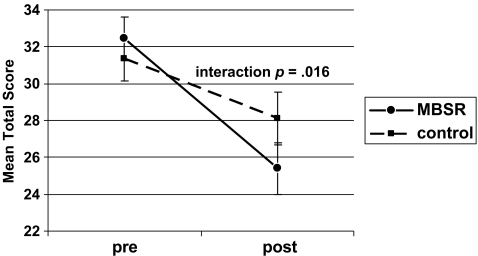
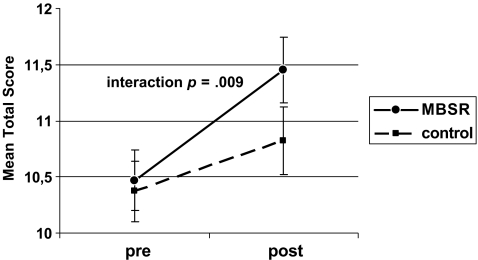
BACKGROUND: Although several studies have reported positive effects of mindfulness-based stress reduction (MBSR) intervention on psychological well-being, it is not known whether these effects are attributable to a change in mindfulness. PURPOSE: The aim of this study is to compare the effects of MBSR to a waiting-list control condition in a randomized controlled trial while examining potentially mediating effects of mindfulness. METHODS: Forty women and 20 men from the community with symptoms of distress (mean age 43.6 years, SD = 10.1) were randomized into a group receiving MBSR or a waiting-list control group. Before and after the intervention period, questionnaires were completed on psychological well-being, quality of life, and mindfulness. RESULTS: Repeated measures multiple analysis of variance (MANCOVAs) showed that, compared with the control group, the intervention resulted in significantly stronger reductions of perceived stress (p = 0.016) and vital exhaustion (p = 0.001) and stronger elevations of positive affect (p = 0.006), quality of life (p = .009), as well as mindfulness (p = 0.001). When mindfulness was included as a covariate in the MANCOVA, the group effects on perceived stress and quality of life were reduced to nonsignificance. CONCLUSION: Increased mindfulness may, at least partially, mediate the positive effects of mindfulness-based stress reduction intervention.
Overview
The claims and statistics of this paper haven’t been checked yet.
Free: it reads the open-access text and checks the first 5 claims that cite a source we can check. Create a free account to check every claim.
Integrity signals
Registry
Cites
Statistics
Figures
Verification
Claims the paper makes
The claims and statistics of this paper haven’t been checked yet.
Free: it reads the open-access text and checks the first 5 claims that cite a source we can check. Create a free account to check every claim.
Claims other papers make about this one
Each is checked against this paper’s own text: does it say what the citing paper says it does?
The source backs part of the claim, not all of it — or backs it for a different population, condition or comparison.
In the citing paper
“satisfaction with life, and quality of life (Grossman et al., 2010; Koszycki et al., 2007; Nyklíček, & Kuijpers,2008; Shapiro et al., 2005)”
From Effects of mindfulness on psychological health: A review of empirical studies (2011) · cites this paper as Nyklíček, & Kuijpers,2008
Experimental — accuracy not yet measuredThe source backs part of the claim, not all of it — or backs it for a different population, condition or comparison.
In the citing paper
“The effects of mindfulness training on mindfulness, depression and insomnia are now quite renowned8,10,21,53 and the mechanism guiding all these changes seems to be the increase in mindful attitude towards one’s own experience, in particular in terms of acceptance, nonreactivity and nonjudgment54–57.”
From Mindfulness-based online intervention increases well-being and decreases stress after Covid-19 lockdown (2022) · cites this paper as [57]
Experimental — accuracy not yet measuredThe source backs part of the claim, not all of it — or backs it for a different population, condition or comparison.
In the citing paper
“For pain, preliminary evidence suggested that mindfulness and pain catastrophizing mediated the relationship between interventions and reduced perceived stress and improved quality of life [22,25].”
From Delivering Mindfulness-Based Interventions for Insomnia, Pain, and Dysfunctional Eating Through a Text Messaging App: Three Randomized Controlled Trials Investigating the Effectiveness and Mediating Mechanisms. (2022) · cites this paper as [22]
Experimental — accuracy not yet measuredThe cited source says what the claim attributes to it.
In the citing paper
“satisfaction with life, and quality of life (Grossman et al., 2010; Koszycki et al., 2007; Nyklíček, & Kuijpers,2008; Shapiro et al., 2005)”
From Effects of mindfulness on psychological health: A review of empirical studies (2011) · cites this paper as Nyklíček, & Kuijpers,2008
The cited source says what the claim attributes to it.
In the citing paper
“It has been found to improve positive affect (Anderson et al., 2007; Bränström et al., 2010), Nyklíček, & Kuijpers, 2008)”
From Effects of mindfulness on psychological health: A review of empirical studies (2011) · cites this paper as Nyklíček, & Kuijpers, 2008
7 more claims about this paper
Create a free account to see every claim other papers make about this one.
Self-check
Percentages, sums and reported differences re-computed from the paper’s own numbers.
The self-check needs the paper’s full text.
Citations
Cites
Baron, R. M., & Kenny, D. A. (1986) · Journal of Personality and Social Psychology · doi:10.1037/0022-3514.51.6.1173 · Cited by 91,532 · cited 3×
“several outcome variables (see Tables 1 and 2), (b) the independent variable (group) had a significant effect on the potential mediators (change in mindfulness skills; see Table 3), and (c) in several cases, the potential mediator was associated with change in outcome (Table 4) [37].”
BackgroundMethodInfluentialA Global Measure of Perceived Stress
Cohen, S., Kamarck, T., & Mermelstein, R. (1983) · Journal of Health and Social Behavior · doi:10.2307/2136404 · Cited by 32,807 · cited 4×
“The PSS consists of 14 items, which are scored by using five-point Likert scales ranging from 0 (never) to 4 (very often).”
BackgroundInfluentialThe benefits of being present: Mindfulness and its role in psychological well-being
Brown, K. W., & Ryan, R. M. (2003) · Journal of Personality and Social Psychology · doi:10.1037/0022-3514.84.4.822 · Cited by 13,448 · cited 18×
“While several studies reported correlations between change in mindfulness skills and decrease in feelings of distress [20, 27], a mediation effect of mindfulness could not be obtained due to the lack of a control group.”
BackgroundMethodResultInfluentialDevelopment of the World Health Organization WHOQOL-BREF Quality of Life Assessment
THE WHOQOL GROUP (1998) · Psychological Medicine · doi:10.1017/s0033291798006667 · Cited by 7,933
Using Self-Report Assessment Methods to Explore Facets of Mindfulness
Baer, R. A., Smith, G. T., Hopkins, J., Krietemeyer, J., & Toney, L. (2006) · Assessment · doi:10.1177/1073191105283504 · Cited by 7,511 · cited 1×
“Since the recent introduction of instruments assessing various aspects of mindfulness [20, 26], the first published studies on this topic have not been able to illuminate this issue.”
Background(2008) · Medical Entomology and Zoology · Cited by 7,477
Kabat-Zinn, J. (1982) · General Hospital Psychiatry · doi:10.1016/0163-8343(82)90026-3 · Cited by 4,255 · cited 5×
“Several studies have been performed, especially in recent years, that have examined the effects of mindfulness-based stress reduction interventions, mainly in the form of the original MBSR protocol [1, 2] or derivatives thereof [3, 4].”
BackgroundResultInfluentialMindfulness-based stress reduction and health benefits
Grossman, P., Niemann, L., Schmidt, S., & Walach, H. (2004) · Journal of Psychosomatic Research · doi:10.1016/s0022-3999(03)00573-7 · Cited by 3,958
Alterations in brain and immune function produced by mindfulness meditation
Davidson, R. J., Kabat-Zinn, J., Schumacher, J., Rosenkranz, M., Muller, D., Santorelli, S. F., Urbanowski, F., Harrington, A., Bonus, K., & Sheridan, J. F. (2003) · Psychosomatic Medicine · doi:10.1097/01.psy.0000077505.67574.e3 · Cited by 2,925 · cited 1×
“Clear consistent associations have been obtained in some studies [10, 27, 45], while in most studies, no or inconsistent associations were found [9, 11, 13, 17, 23, 43, 46, 47].”
ResultAssessment of Mindfulness by Self-Report: The Kentucky Inventory of Mindfulness Skills
Baer, R. A., Smith, G. T., & Allen, K. B. (2004) · Assessment · doi:10.1177/1073191104268029 · Cited by 2,298 · cited 4×
“In addition, the pattern of intercorrelations between these scales were similar to correlations found for the original scales [ 35 ]: MAAS with Accept Without Judgment r=0.48 at baseline and r=0.62 at follow-up (both p 0.10) and r=0.32 (p= 0.014), and Accept Without Judgment with Observe r=0.07 and r=0.09 (both p>0.10…”
MethodResultInfluential
Research works printed but not linked: 1
- De Vries J, Van Heck GL. Nederlandse handleiding van de WHOQoL [Dutch manual of the WHOQoL]. Tilburg: Tilburg University; 2000.
Cited by
Items 201–300 of 533
Juul, L., Pallesen, K. J., Bjerggaard, M., Nielsen, C., & Fjorback, L. O. (2020) · BMC Public Health · doi:10.1186/s12889-020-08470-6 · Cited by 29
Mindfulness for Healthcare Providers: The Role of Non-Reactivity in Reducing Stress
Benzo, R. P., Anderson, P. M., Bronars, C., & Clark, M. (2018) · EXPLORE · doi:10.1016/j.explore.2018.03.008 · Cited by 29
Sabé, M., Kohler, R., Perez, N., Sauvain-Sabé, M., Sentissi, O., Jermann, F., Prada, P., Perroud, N., & Böge, K. (2024) · Schizophrenia Research · doi:10.1016/j.schres.2023.12.011 · Cited by 29
“…trials demonstrated fewer biases and revealed a pattern of similar outcomes among patients with SSD, including reductions in negative symptoms, increased well-being, and decreased hospitalization rates (B ¨ oge et al., 2020; Chai et al., 2022; Chien and Lee, 2013; Nyklí ˇ cek and Kuijpers, 2008).”
ResultCall, D. C., Pitcock, J. A., & Pyne, J. M. (2015) · Mindfulness · doi:10.1007/s12671-015-0400-0 · Cited by 34
“…was consistent with previous research examining the relationship between mindfulness and general well-being (Brown and Ryan 2003), quality of life (Nyklicek and Kuijpers 2008), general indices of mental health (Bohlmeijer et al. 2009), and stress/ burnout (Cohen-Katz et al. 2005) with diverse…”
Burton, M., Schmertz, S. K., Price, M., Masuda, A., & Anderson, P. L. (2013) · Journal of Clinical Psychology · doi:10.1002/jclp.21929 · Cited by 28
“The MAAS has theoretically consistent relationships to neural activity (Creswell, Way, Eisenberger, & Lieberman, 2007) and is a known mediator of outcome as a result of mindfulness based interventions (Nyklı́ček & Kuijpers, 2008).”
Effects of a Brief Mindfulness Based Group Intervention On College Students
Parcover, J. A., Coiro, M. J., Finglass, E., & Barr, E. (2017) · Journal of College Student Psychotherapy · doi:10.1080/87568225.2017.1407722 · Cited by 32
“These findings are consistent with prior literature conducted with noncollege samples, suggesting that increases in mindfulness statistically mediate the effects of interventions on a range of outcomes (Keng, Smoski, & Robins, 2011; Nyklicek & Kuijpers, 2008).”
ResultHassed, C. S., Flighty, A. J., Chambers, R., HOSEMANS, D. J. F., Bailey, N. W., Connaughton, S., Lee, S. J., & Kazantzis, N. (2020) · Cognitive Therapy and Research · doi:10.1007/s10608-020-10150-z · Cited by 35
Practical Strategies for Identifying and Managing Burnout in Plastic Surgeons
Santos, P. J. F., & Evans, G. R. D. (2020) · Plastic & Reconstructive Surgery · doi:10.1097/prs.0000000000007186 · Cited by 30
Nurturing Positive Mental Health: Mindfulness for Wellbeing in Counseling
Rybak, C. J. (2012) · International Journal for the Advancement of Counselling · doi:10.1007/s10447-012-9171-7 · Cited by 41
Dispositional mindfulness in people with HIV: Associations with psychological and physical health
Moskowitz, J. T., Duncan, L. G., Moran, P. J., Acree, M., Epel, E. S., Kemeny, M. E., Hecht, F. M., & Folkman, S. (2015) · Personality and Individual Differences · doi:10.1016/j.paid.2015.05.039 · Cited by 28
“…Stress Reduction (MBSR), demonstrate improvements in psychological well-being compared to control conditions (e.g.,Williams, Kolar, Reger, & Pearson, 2001) and there is evidence that this association is mediated by increases in mindfulness (Bränström et al., 2010; Nyklicek & Kuijpers, 2008).”
Mindfulness-based coaching: Conceptualisation, supporting evidence and emerging applications
Virgili, M. (2013) · International Coaching Psychology Review · doi:10.53841/bpsicpr.2013.8.2.40 · Cited by 27
Versteeg, H., Pedersen, S. S., Erdman, R. A. M., van Nierop, J. W. I., de Jaegere, P. P. T., & van Domburg, R. T. (2009) · Quality of Life Research · doi:10.1007/s11136-009-9511-1 · Cited by 33
Positive affect and cognitive decline: a 12‐year follow‐up of the Maastricht Aging Study
Berk, L., van Boxtel, M. P. J., Köhler, S., & van Os, J. (2016) · International Journal of Geriatric Psychiatry · doi:10.1002/gps.4611 · Cited by 29
Mindfulness and stress appraisals mediate the effect of neuroticism on physical health
O’Loughlin, R. E., Fryer, J. W., & Zuckerman, M. (2019) · Personality and Individual Differences · doi:10.1016/j.paid.2019.01.044 · Cited by 30
Erus, S. M., & Deniz, M. E. (2020) · Pegem Journal of Education and Instruction · doi:10.14527/pegegog.2020.011 · Cited by 40
“…Avny & Boniwell, 2008; Erkoç, 2017; Falkenström, 2010; Griebel, 2015; Hamarta, Özyeşil, Deniz & Dilmaç, 2013; Karremans et al., 2017; Mandal et al., 2012; Nyklíček & Kuijpers 2008; Schutte & Malouff, 2011; Terzioğlu, 2016; Visted, Vøllestad, Nielsen & Nielsen, 2015; Wang & Kong, 2014; Whitehead,…”
Fischer, J. M., Kandil, F. I., Keßler, C. S., Nayeri, L., Zager, L. S., Hennhöfer, T. R., Steckhan, N., Koppold, D. A., Bringmann, H. C., Schäfer, T., et al. (2022) · Journal of Clinical Medicine · doi:10.3390/jcm11195680 · Cited by 38
“Although the psychological mechanisms of action of mindfulness are well researched, it is unclear whether mindfulness-based relaxation techniques develop their effect solely through an improved capacity for mindfulness [39].”
BackgroundBabak, A., Motamedi, N., Mousavi, S. Z., & Darestani, N. G. (2022) · The Journal of Tehran University Heart Center · doi:10.18502/jthc.v17i3.10845 · Cited by 55
Meditation Based Therapies—A Systematic Review and Some Critical Observations
Fjorback, L. O., & Walach, H. (2012) · Religions · doi:10.3390/rel3010001 · Cited by 26
“[34] compared the effects of MBSR to a wait-list control condition while examining potentially mediating effects of mindfulness.”
BackgroundRodríguez-Carvajal, R., García-Rubio, C., Paniagua, D., García-Diex, G., & De Rivas, S. (2016) · Anales de Psicología · doi:10.6018/analesps.32.3.261681 · Cited by 26
“Some studies pointed out that an increase of positive affect and positive states of mind were related to a mindfulness trait increment (Baer et al. 2008; Nyklícek & Kuijpers, 2008; Orzech, Shapiro, Brown & McKay, 2009).”
BackgroundResultInfluentialvan der Donk, L. J., Fleer, J., Tovote, A., Ranchor, A. V., Smink, A., Mul, V. E. M., Sanderman, R., & Schroevers, M. J. (2020) · Mindfulness · doi:10.1007/s12671-019-01298-1 · Cited by 25
“…of studies in distinct samples in the general population (Brown and Ryan 2003; Macbeth and Gumley 2012; Muris and Petrocchi 2017; Nyklíček and Kuijpers 2008; Snippe et al. 2015) and cancer patients (Brown and Ryan 2003; Chambers et al. 2016; Garland et al. 2013a; Pinto-Gouveia et al. 2014;…”
BackgroundPiHearts: Resonating Experiences of Self and Others Enabled by a Tangible Somaesthetic Design
Aslan, I., Seiderer, A., Dang, C. T., Rädler, S., & André, E. (2020) · INTERNATIONAL CONFERENCE ON MULTIMODAL INTERACTION · doi:10.1145/3382507.3418848 · Cited by 25
“, children in schools or inmates in prisons), enabling different user groups ubiquitous access to mindfulness practices and to their benefits, such as enhanced wellbeing [5] or stress reduction [6].”
Klaassen, K., Nyklíček, I., Traa, S., & de Nijs, R. (2011) · Clinical Rheumatology · doi:10.1007/s10067-011-1905-0 · Cited by 30
“One may speculate if an intervention aimed at the enhancement of specific mindfulness skills may be useful to increase psychological well-being in type D patients, as such mindfulness interventions have been found to enhance psychological well-being, satisfaction with life and coping with pain in various patient popul…”
BackgroundSelf-citationWu, H., Li, F., & Zhang, F. (2022) · Translational Cancer Research · doi:10.21037/tcr-22-2530 · Cited by 28
“Our study results showed that compared with standard or (38,39) .”
Tamagawa, R., Speca, M., Stephen, J., Pickering, B., Lawlor-Savage, L., & Carlson, L. E. (2015) · Mindfulness · doi:10.1007/s12671-014-0381-4 · Cited by 24
Landmann, S., Cludius, B., Tuschen‐Caffier, B., Moritz, S., & Külz, A. K. (2020) · Psychiatry Research · doi:10.1016/j.psychres.2020.112842 · Cited by 28
Jalali, D., Abdolazimi, M., Alaei, Z., & Solati, K. (2019) · IJC Heart & Vasculature · doi:10.1016/j.ijcha.2019.100356 · Cited by 23
Iani, L., Quinto, R. M., Lauriola, M., Crosta, M. L., & Pozzi, G. (2019) · PLoS ONE · doi:10.1371/journal.pone.0225646 · Cited by 23
A Mindfulness-Based Intervention: Differential Effects on Affective and Processual Evolution
Antoine, P., Congard, A., Andreotti, E., Dauvier, B., Illy, J., & Poinsot, R. (2018) · Applied Psychology: Health and Well-Being · doi:10.1111/aphw.12137 · Cited by 23
“…subjective and psychological well-being, quality of life, and psychological health (Baer, 2003; Brown & Ryan, 2003; Eberth & Sedlmeier, 2012; Goyal et al., 2014; Grossman, Niemann, Schmidt, & Walach, 2004; Khoury et al., 2015; Nykl ı cek & Kuijpers, 2008; Shapiro, Schwartz, & Santerre, 2002).”
InfluentialSalmoirago‐Blotcher, E., & Carey, M. P. (2017) · EXPLORE · doi:10.1016/j.explore.2017.09.010 · Cited by 28
“Despite the limitations and challenges encountered in the measurement of mindfulness,(98) studies have shown that mindfulness skills improve in response to training and that the effect of mindfulness interventions on various health outcomes is mediated by improvements in mindfulness levels.(64,65,97) Our model builds…”
Asadi, D. M., Tajrishi, K. Z., & Banafsheh, G. (2022) · Frontiers in Psychiatry · doi:10.3389/fpsyt.2022.922360 · Cited by 32
Raja-Khan, N. T., Agito, K., Shah, J., Stetter, C., Gustafson, T. S., Socolow, H., Kunselman, A. R., Reibel, D. K., & Legro, R. S. (2015) · Contemporary Clinical Trials · doi:10.1016/j.cct.2015.01.021 · Cited by 35
“MBSR has been shown to reduce psychological distress and improve quality of life in various patient populations [30-33].”
BackgroundMartínez‐Rubio, D., Sanabria‐Mazo, J. P., Feliu‐Soler, A., Colomer‐Carbonell, A., Martínez-Brotóns, C., Solé, S., Robla, C. E., Fita, E. G., Moreno, Y., Pérez‐Aranda, A., et al. (2020) · International Journal of Environmental Research and Public Health · doi:10.3390/ijerph17197013 · Cited by 32
“improvement of awareness [44] and, in turn, increases access to coping resources and helps alleviate the negative effects of academic stress [50].”
BackgroundAzam, M. A., Mongrain, M., Vora, K., Pirbaglou, M., Azargive, S., Changoor, T., Wayne, N., Guglietti, C., Macpherson, A., Irvine, J., et al. (2016) · International Journal of Educational Psychology · doi:10.17583/ijep.2016.1504 · Cited by 19
Juul, L., Pallesen, K. J., Piet, J., Parsons, C., & Fjorback, L. O. (2018) · Mindfulness · doi:10.1007/s12671-017-0873-0 · Cited by 22
“In the review by de Vibe, we identified two relevant reference RCTs (de Vibe andMoum 2006; Nyklicek and Kuijpers 2008), which included participants with perceived stress, and which had used the Symptom Check List (SCL)-5 (Tambs and Moum 1993) and the Perceived Stress Scale (PSS) (Cohen et al.”
MethodResultInfluentialvan der Meulen, R. T., Valentin, S., Bögels, S. M., & de Bruin, E. I. (2020) · Mindfulness · doi:10.1007/s12671-020-01557-6 · Cited by 32
“The few mediational studies that did include these outcomes showed some evidence for mindfulness as a mediator of the effects of MBIs on perceived stress and vital exhaustion (Bränström et al. 2010; Haenen et al. 2016; Nyklíček and Kuijpers 2008; Shapiro et al. 2008).”
BackgroundBahraseman, Z. G., Shahrbabaki, P. M., & Nouhi, E. (2021) · BMC Psychology · doi:10.1186/s40359-021-00678-4 · Cited by 22
“Stress coping skills prepare individuals to better cope with life’s needs and challenges [11].”
BackgroundWirtz, J. G., Sar, S., & Ghuge, S. (2015) · Health Marketing Quarterly · doi:10.1080/07359683.2015.1033936 · Cited by 24
Oser, M. L., Khan, A. J., Kolodziej, M. S., Gruner, G., BARSKY, A. J., & Epstein, L. M. (2019) · Behavior Modification · doi:10.1177/0145445519877619 · Cited by 29
“…interventions have been successfully applied in various psychiatric and medical patient populations, including cardiac patients (Carlson et al., 2001; Nyklíček, Dijksman, Lenders, Fonteijn, & Koolen, 2012; Nyklíček & Kuijpers, 2008; Roth & Robbins, 2004; Speca, Carlson, Goodey, & Angen, 2000).”
BackgroundKong, L., Zhao, M., Huang, W., Zhang, W., & Liu, J. (2025) · BMC Psychology · doi:10.1186/s40359-025-02696-y · Cited by 21
Tıngaz, E. O., Solmaz, S., Ekiz, M. A., & Güvendi, B. (2021) · Journal of Rational-Emotive & Cognitive-Behavior Therapy · doi:10.1007/s10942-021-00397-0 · Cited by 25
Characteristics of Dispositional Mindfulness in Patients With Severe Cardiac Disease
Salmoirago‐Blotcher, E., Crawford, S. L., Carmody, J., ROSENTHAL, L. S., & Ockene, I. S. (2011) · Journal of Evidence-Based Complementary & Alternative Medicine · doi:10.1177/2156587211405525 · Cited by 26
Nyklíček, I., Truijens, S. E. M., Spek, V., & Pop, V. J. M. (2018) · Journal of Psychosomatic Research · doi:10.1016/j.jpsychores.2018.01.012 · Cited by 25
Self-citationПавлова, Ю., Zikrach, D., Mosler, D., Ortenburger, D. E., Góra, T., & Wąsik, J. (2020) · PLoS ONE · doi:10.1371/journal.pone.0239749 · Cited by 24
“There is a correlation between psychological stress and quality of life [52].”
BackgroundPerceiving an exclusive cause of affect prevents misattribution
Ruys, K. I., Aarts, H., Papies, E. K., Oikawa, M., & Oikawa, H. (2012) · Consciousness and Cognition · doi:10.1016/j.concog.2012.03.002 · Cited by 21
“…cues to a subsequent unrelated event is consistent with recent research on attention and emotion regulation (Hooper, Davies, Davies, & McHugh, 2011; Lieberman et al., 2007; Nielsen & Kaszniak, 2006; Nyklícek & Kuijpers, 2008; Papies, Barsalou, & Custers, in press; Wadlinger & Isaacowitz, 2011).”
Lo, H. H. M., Ng, S., Chan, C., Lam, K. F., & Lau, B. H. P. (2013) · Complementary Therapies in Medicine · doi:10.1016/j.ctim.2013.05.008 · Cited by 29
Kong, L., Zhao, M., Huang, W., Zhang, W., & Liu, J. (2025) · doi:10.21203/rs.3.rs-5898815/v1 · Cited by 21
Zgierska, A. E., Obasi, C. N., Brown, R., Ewers, T., Muller, D., Gassman, M., Barlow, S., & Barrett, B. P. (2013) · Evidence-based Complementary and Alternative Medicine · doi:10.1155/2013/952716 · Cited by 22
Salmoirago‐Blotcher, E., Druker, S., Meyer, F., Bock, B. C., Crawford, S. L., & Pbert, L. A. (2015) · Contemporary Clinical Trials · doi:10.1016/j.cct.2015.02.004 · Cited by 29
Medication adherence in Alzheimer’s disease: The mediator role of mindfulness
Lima, S., Gago, M., Garrett, C., & Pereira, M. G. (2016) · Archives of Gerontology and Geriatrics · doi:10.1016/j.archger.2016.06.021 · Cited by 19
What About the Different Shortened Versions of the Mindful Attention Awareness Scale?
Chiesi, F., Donati, M. A., Panno, A., Giacomantonio, M., & Primi, C. (2017) · Psychological Reports · doi:10.1177/0033294117711132 · Cited by 21
“As such, mindfulness, as measured by the MAAS, should be able to capture variations in positive/negative affect (Brown & Ryan, 2003; Giluk, 2009; Nyklicek & Kuijpers, 2008; Veneziani & Voci, 2015), anxiety (Brown & Ryan, 2003; Desrosiers, Klemanski, & Nolen-Hoeksema, 2013; Frewen, Evans, Maraj,…”
BackgroundHuang, C., Lu, S., Rios, J., Chen, Y., Stringham, M., & Cheung, S. (2020) · International Journal of Environmental Research and Public Health · doi:10.3390/ijerph17217796 · Cited by 23
“Thus, it is likely that mindfulness has positive effects on executive function and social-emotional skills, and then increase overall quality of life [32,56,57].”
BackgroundEvers, A. G., Somogie, J., Wong, I. L., Allen, J. D., & Cuevas, A. G. (2020) · Journal of Clinical Sport Psychology · doi:10.1123/jcsp.2019-0083 · Cited by 23
Stress-induced hemostasis: mechanisms and implications for health
Obeagu, E. I. (2025) · Annals of Medicine and Surgery · doi:10.1097/ms9.0000000000003012 · Cited by 25
The Daily Dose-Response Hypothesis of Mindfulness Meditation Practice: An Experience Sampling Study
Levi, K., Shoham, A., Amir, I., & Bernstein, A. (2021) · Psychosomatic Medicine · doi:10.1097/psy.0000000000000912 · Cited by 21
“Some previous work indicates that, perhaps, more advanced practitioners (53,54) or more intensive and longer-term training (55,56) may be more likely to show cumulative or additive effects of practice over time (57).”
BackgroundResultAsl, N. R. H., & Hosseinalipour, F. (2014) · Iranian Red Crescent Medical Journal · doi:10.5812/ircmj.12608 · Cited by 21
“In a research by Nyklicek and Kuijpers, the experiment group showed significantly stronger reductions of perceived stress and vital exhaustion as well as stronger improvement of QOL and mindfulness in comparison to controls (11).”
BackgroundNyklíček, I. (2020) · Mindfulness · doi:10.1007/s12671-020-01318-5 · Cited by 24
“…reported; the self-report measures have shown sensitivity to change during mindfulness interventions (Baer et al. 2004; Baer et al. 2006; Brown and Ryan 2003) and to mediate the effects of mindfulness interventions on psychological well-being (Bränström et al. 2011; Nyklíček and Kuijpers 2008).”
BackgroundSelf-citationMindfulness-Based Transactional Analysis
Žvelc, G., Černetič, M., & Košak, M. (2011) · Transactional Analysis Journal · doi:10.1177/036215371104100306 · Cited by 31
“Mindfulness interventions have been shown to decrease stress and improve quality of life (e.g., Nyklícek & Kuijpers, 2008; Rosenzweig, Reibel, Greeson, Brainard, & Hojat, 2003; Shapiro, Astin, Bishop, & Cordova, 2005).”
BackgroundLi, A. C., Wong, K. K., Chio, F. H., Mak, W. W., & Poon, L. W. (2022) · Journal of Medical Internet Research · doi:10.2196/30073 · Cited by 17
“For pain, preliminary evidence suggested that mindfulness and pain catastrophizing mediated the relationship between interventions and reduced perceived stress and improved quality of life [22,25].”
Zhang, D., Tsang, K. W. K., Duncan, L. G., Yip, B. H. K., Chan, D. C. C., Lee, E. K. P., Gao, T. T., Tam, W. H., Lam, K. Y., Tong, W. H., et al. (2023) · Mindfulness · doi:10.1007/s12671-022-02046-8 · Cited by 17
“Researchers have suggested that reduced rumination and worry, increased mindfulness, acceptance, 1 3 compassion, and cognitive flexibility might contribute to these positive changes (Gu et al., 2015; Lee & Orsillo, 2014; Nyklíček & Kuijpers, 2008).”
BackgroundSoler, J., Casellas‐Pujol, E., Pascual, J. C., Schmidt, C., Domínguez‐Clavé, E., Cebolla, A., Morón, D. A., Muro, A., & Elices, M. (2022) · Borderline Personality Disorder and Emotion Dysregulation · doi:10.1186/s40479-022-00204-x · Cited by 22
“Mindfulness and compassion-based interventions have been associated with increased positive affect, improved quality of life and pro-social behavior [4, 18, 20, 24, 28, 38, 59].”
BackgroundAndreu, C. I., & García‐Rubio, C. (2019) · Springer eBooks · doi:10.1007/978-3-030-25513-8_9 · Cited by 18
Adaptação e validação da Escala Filadélfia de Mindfulness para adultos brasileiros
da Silveira, A. D. C., de Castro, T. G., & Gomes, W. B. (2012) · Psico-USF · doi:10.1590/s1413-82712012000200005 · Cited by 21
Short, M. M., Mazmanian, D. S., Ozen, L. J., & Bédard, M. (2015) · Scholarship & Creative Works - Digital UNC a service of University Libraries (University of Northern Colorado) · Cited by 18
Comment mesurer la mindfulness ? Problèmes et perspectives
Trousselard, M., Steiler, D., Claverie, D., & Canini, F. (2016) · L Encéphale · doi:10.1016/j.encep.2013.09.004 · Cited by 16
Single, A., Bilevicius, E., Johnson, E. A., & Keough, M. T. (2019) · Mindfulness · doi:10.1007/s12671-019-1092-7 · Cited by 16
Kang, M., Yang, Y., Kim, H., Jung, S., Jin, H., & Choi, K. (2023) · Frontiers in Psychology · doi:10.3389/fpsyg.2023.1330207 · Cited by 23
“Mindfulness also partially mediated the positive outcome of an MBI; participants who had higher levels of mindfulness experienced reductions in perceived stress, anxiety, and depressive symptoms, leading to enhanced overall well-being and quality of life (Nyklícek and Kuijpers, 2008).”
BackgroundInchausti, F., Prieto, G., & Delgado, A. R. (2013) · Revista de Psiquiatría y Salud Mental (English Edition) · doi:10.1016/j.rpsmen.2013.07.001 · Cited by 18
Leggett, D. K. (2012) · doi:10.26053/0h-8ams-p400 · Cited by 16
Validation of the Dutch Freiburg Mindfulness Inventory in Patients With Medical Illness
Bruggeman-Everts, F. Z., van der Lee, M. L., Hooft, E. F. M. V. ‘., & Nyklíček, I. (2017) · SAGE Open · doi:10.1177/2158244017705936 · Cited by 17
“A Dutch translation has been used before (Nyklíček & Kuijpers, 2008).”
MethodSelf-citationBlasche, G., de Bloom, J., Chang, A., & Pichlhöfer, O. (2021) · PLoS ONE · doi:10.1371/journal.pone.0246038 · Cited by 17
“For this type of meditation program, the improvement of well-being and mindfulness are correlated, indicating a close relationship between these two variables [23, 26].”
BackgroundResultYoga for secondary prevention of coronary heart disease
Lau, H. L. C., Kwong, J. S., Yeung, F., Chau, P. H., & Woo, J. (2012) · Cochrane Database of Systematic Reviews · doi:10.1002/14651858.cd009506.pub2 · Cited by 18
Putting Buddhist understanding back into mindfulness training
Jarukasemthawee, S. (2015) · The University of Queensland · doi:10.14264/uql.2015.369 · Cited by 20
“These research studies have demonstrated significant improvements in positive psychological outcomes (Nyklíček & Kuijpers, 2008, Jain et al., 2007–details please see chapter 3).”
BackgroundZargar, F., Rahafrouz, L., & Tarrahi, M. J. (2021) · Advanced Biomedical Research · doi:10.4103/abr.abr_111_19 · Cited by 15
“5–150 mg daily for 8 weeks.[14] Initially, all patients in the two groups received 37.”
BackgroundJiga, K., Kaunhoven, R. J., & Dorjee, D. (2018) · Mindfulness · doi:10.1007/s12671-018-0977-1 · Cited by 19
Mindfulness and eudaimonic well-being: the mediating roles of rumination and emotion dysregulation
Jarukasemthawee, S., & Pisitsungkagarn, K. (2021) · International Journal of Adolescent Medicine and Health · doi:10.1515/ijamh-2021-0009 · Cited by 20
Some Concerns About the Psychological Implications of Mindfulness: A Critical Analysis
David, D. O. (2014) · Journal of Rational-Emotive & Cognitive-Behavior Therapy · doi:10.1007/s10942-014-0198-z · Cited by 16
Meditação, bem-estar e a ciência psicológica: revisão de estudos empíricos
Menezes, C. B., Dell’Aglio, D. D., & Bizarro, L. (2012) · Interação em Psicologia · doi:10.5380/psi.v15i2.20249 · Cited by 34
Exploring the benefits of a mindfulness program for Portuguese public healthcare workers
Gaspar, I., Martinho, A., & de Lima, M. P. (2018) · Current Psychology · doi:10.1007/s12144-018-9987-3 · Cited by 21
Review of Outcomes of Cardiac Support Groups After Cardiac Events
Song, Y., Lindquist, R. A., Windenburg, D. C., Cairns, B., & Thakur, A. (2010) · Western Journal of Nursing Research · doi:10.1177/0193945910371481 · Cited by 16
“…positive effects on psychological well-being and symptoms of depression, anxiety, exhaustion, positive affect, and perceived stress (Carmody & Baer, 2008; Freedland et al., 2009; Koszycki, Benger, Shlik, & Bradwejn, 2007; Nyklíček & Kuijpers, 2008; Ramel, Goldin, Carmona, & McQuaid, 2004).”
Pilot Mindfulness Intervention for Children Born with Esophageal Atresia and Their Parents
Andreotti, E., Antoine, P., Hanafi, M., Michaud, L., & Gottrand, F. (2017) · Journal of Child and Family Studies · doi:10.1007/s10826-017-0657-0 · Cited by 19
Mapurunga, M. V., Andreoni, S., de Oliveira, D. R., Sarubbi, V., Bonilha, A. C., D’Almeida, V., Tomita, L. Y., Ramos, L. R., & Demarzo, M. (2020) · Frontiers in Medicine · doi:10.3389/fmed.2020.563099 · Cited by 19
“Mindfulness-based interventions have been associated with quality of life in adults in several studies (14, 16, 85, 86), and a previous study has shown high levels of adherence to an MBI in Brazil (13).”
ResultSarfraz, A., Siddiqui, S., Galante, J., & Sikander, S. (2023) · International Journal of Environmental Research and Public Health · doi:10.3390/ijerph20085512 · Cited by 27
Eshete, A., Mohammed, S., Deresse, T., Kifleyohans, T., & Assefa, Y. A. (2023) · BMC Health Services Research · doi:10.1186/s12913-023-09752-6 · Cited by 31
“Stress management behaviors are skills that help individuals cope successfully with the demands and challenges of life [12].”
BackgroundInchausti, F., Prieto, G., & Delgado, A. R. (2013) · Revista de Psiquiatría y Salud Mental · doi:10.1016/j.rpsm.2013.07.003 · Cited by 22
Bernardi, M. L. D., Amorim, M. H. C., Salaroli, L. B., & Zandonade, E. (2019) · Escola Anna Nery · doi:10.1590/2177-9465-ean-2019-0133 · Cited by 16
Fiodorova, A., & Farb, N. A. S. (2021) · Anxiety Stress & Coping · doi:10.1080/10615806.2021.1949000 · Cited by 24
“The research literature supports both these constructs’ relevance for well-being (Baer et al., 2012; Frydenberg & Lewis, 2009; Nyklíček & Kuijpers, 2008), and their amenability to intervention (Bekker et al., 2001; Huppert & Johnson, 2010; Jazaieri et al., 2012).”
BackgroundArefian, M., & Asgari, K. (2025) · European Journal of Oncology Nursing · doi:10.1016/j.ejon.2025.102881 · Cited by 15
Meditation and Immune Function: The Impact of Stress Management on the Immune System
Thibodeaux, N., & Rossano, M. J. (2018) · OBM Integrative and Complementary Medicine · doi:10.21926/obm.icm.1804032 · Cited by 21
“Specifically, MBSR interventions have been shown to decrease depression and negative affect in healthy individuals [94], as well as HIV positive individuals [95].”
BackgroundMindfulness-Based Interventions for Postpartum Depression: A Systematic Review and Meta-Analysis
Yang, M., Song, B., Jiang, Y., Lin, Y., & Liu, J. (2023) · Iranian Journal of Public Health · doi:10.18502/ijph.v52i12.14311 · Cited by 31
“…of mindfulness intervention may be that mindfulness intervention has a direct positive effect on the brain, can reduce cortisol levels in the blood, reduce adverse psychological symptoms and negative emotional responses, increase subjective well-being, and improve behavioral regulation (10, 11).”
BackgroundNyklíček, I., Zonneveld, R., & Denollet, J. (2020) · Mindfulness · doi:10.1007/s12671-020-01439-x · Cited by 16
“The importance of acting with awareness in this study is supported by similar previous findings (Bränström et al. 2010; Nyklíček and Kuijpers 2008).”
ResultSelf-citationDaily change patterns in mindfulness and psychological health: A pilot intervention
Kim, S. Y., Suh, H., Oh, W., & Daheim, J. (2021) · Journal of Clinical Psychology · doi:10.1002/jclp.23043 · Cited by 13
Mindfulness Is Linked with Affectivity in Daily Life: An Experience-Sampling Study with Meditators
Tschacher, W., & Lienhard, N. (2021) · Mindfulness · doi:10.1007/s12671-021-01615-7 · Cited by 16
Irrelevant angry, but not happy, faces facilitate response inhibition in mindfulness meditators
Lodha, S., & Gupta, R. (2023) · Current Psychology · doi:10.1007/s12144-023-04384-9 · Cited by 15
“Previous studies have suggested that mindfulness enhances positive emotional states and reduces reactivity to negative emotions (Arch & Craske, 2006; Broderick, 2005; Canby et al., 2015; Nyklíček & Kuijpers, 2008; Rob-ins et al., 2012).”
Evaluation of Meditation in the Treatment of Chemical Dependency
Temme, L. J., Fenster, J., & Ream, G. L. (2012) · Journal of Social Work Practice in the Addictions · doi:10.1080/1533256x.2012.702632 · Cited by 17
“Our finding that increased mindfulness was associated with improved mood concurs with previous studies (Arch & Craske, 2006; Ivanovski & Malhi, 2007; Nyklicek & Kuijpers, 2008; Sephton et al., 2007), as do our findings about the effects of negative mood on risk of relapse (Fernandez-Montalvo et…”
ResultGardner, F. L., Moore, Z. E., & Marks, D. R. (2014) · Journal of Rational-Emotive & Cognitive-Behavior Therapy · doi:10.1007/s10942-014-0196-1 · Cited by 16
Krusche, A., Bradbury, K. J., Corbett, T. K., Barnett, J., Stuart, B. L., Yao, G., Bacon, R., Böhning, D., Cheetham‐Blake, T. J., Eccles, D., et al. (2019) · BMJ Open · doi:10.1136/bmjopen-2018-024862 · Cited by 16
“Mindfulness-based interventions place emphasis on the acceptance and awareness of the present through the use of mindfulness techniques, including meditation exercises.(23) Review evidence indicates mindfulness-based techniques can reduce stress and anxiety in breast cancer survivors(24) and improve QoL in cancer surv…”
BackgroundYoga for secondary prevention of coronary heart disease
Kwong, J. S., Lau, H. L. C., Yeung, F., Chau, P. H., & Woo, J. (2015) · Cochrane Database of Systematic Reviews · doi:10.1002/14651858.cd009506.pub3 · Cited by 26
ÇELEBİ, G. Y., Güngör, S., & Kaya, F. (2025) · Scientific Reports · doi:10.1038/s41598-025-16858-w · Cited by 21
“…demonstrating that mindfulness was positively correlated with well-being 38,116,117 , that psychological well-being increased as a result of experimental studies on raising mindfulness 65,118,119 , and that mindfulness interventions were generally effective in increasing well-being 120–122 .”
Menezes, C. B., & Dell’Aglio, D. D. (2010) · DOAJ (DOAJ: Directory of Open Access Journals) · Cited by 12
PREDICTION OF PSYCHOLOGICAL WELL-BEING BASED ON THE COMONENTS OF MINDFULNESS
Ahmadvand, Z., Heydarinasab, L., & Shairi, M. R. (2012) · Cited by 27
Metadata
- Authors
- Nyklíček, I., & Kuijpers, K. F.
- Affiliations
- Tilburg University (NL)
- Corresponding author
- Nyklíček, Ivan
- Venue
- Annals of Behavioral Medicine
- Publisher
- Oxford University Press (OUP)
- Published
- 2008-06
- Volume
- 35
- Issue
- 3
- Pages
- 331-340
- ISSN
- 0742-5554 (ISSN-L)
- 0883-6612
- 1532-4796
- PMC
- PMC2517090
- OpenAlex
- W2121397829
- Cited by
- 532
- References
- 49
- Citations by year
- 2026: 11 · 2025: 18 · 2024: 20 · 2023: 23 · 2022: 21 · 2021: 30 · 2020: 39 · 2019: 33 · 2018: 33 · 2017: 38 · 2016: 41 · 2015: 44 · 2014: 33 · 2013: 37 · 2012: 45
- FWCI
- 24.08
- Type
- journal article
- Language
- en
- Open access
- bronze
- doi.org
- Locations
- Annals of Behavioral Medicine (publishedVersion)
- Europe PMC (PubMed Central) (publishedVersion, cc-by-nc)
- PubMed Central (publishedVersion, cc-by-nc)
- Research portal (Tilburg University) (publishedVersion)
- PubMed (publishedVersion)
- Data Archiving and Networked Services (DANS) (submittedVersion, other-oa)
- Topics
- Social Sciences › Psychology › Clinical Psychology › Mindfulness and Compassion Interventions
- Social Sciences › Psychology › Social Psychology › Psychological Well-being and Life Satisfaction
- Health Sciences › Health Professions › General Health Professions › Health, psychology, and well-being
- Keywords
- mindfulness-based stress reduction, mindfulness, psychological well-being, quality of life, perceived stress, vital exhaustion, positive affect, mediation, psychological distress, community-dwelling adults
- MeSH terms
- Adult, Attention, Awareness, Female, Group Processes, Humans, Male, Middle Aged, Netherlands, Quality of Life, Stress, Psychological, Treatment Outcome, Meditation
About these checks
Registry, retraction, Cites and statistics results are computed, not judged, with one exception: a printed reference that no index lists is read once by a model before it counts as a citation error. Claims are extracted by a model and kept only when their quote appears verbatim in the text; each cited source is then checked, with a model’s help, for whether it says what the claim relies on. Those verdicts can be wrong — read the claim’s quote and the cited source before relying on one.
Statistics and arithmetic are recomputed, not judged.
Confidence bands are shown only for fields calibrated on our annotated test set. None is calibrated yet, so no band is shown.
What counts as a claim ›How we measure confidence ›How we check this ›
Are you an author, or do you see a problem with this page? Request a review
Data sources
Bibliographic data: Semantic Scholar, OpenAlex, Crossref.
Contains information from the Semantic Scholar Academic Graph Datasets, made available under the ODC Attribution License (ODC-BY 1.0).
Semantic Scholar’s data is described in: Kinney, R., et al. (2023). The Semantic Scholar Open Data Platform. arXiv:2301.10140.
