

Effects of Mindfulness-Based Stress Reduction Intervention on Psychological Well-being and Quality of Life: Is Increased Mindfulness Indeed the Mechanism?
Open accessThe DOI matches its Crossref record; 48 of the 49 references it cites were found in a registry or an index.
Abstract
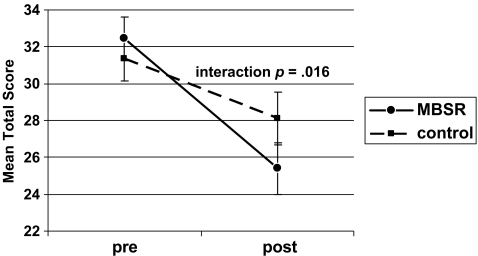
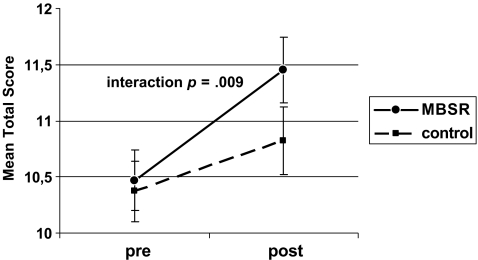
BACKGROUND: Although several studies have reported positive effects of mindfulness-based stress reduction (MBSR) intervention on psychological well-being, it is not known whether these effects are attributable to a change in mindfulness. PURPOSE: The aim of this study is to compare the effects of MBSR to a waiting-list control condition in a randomized controlled trial while examining potentially mediating effects of mindfulness. METHODS: Forty women and 20 men from the community with symptoms of distress (mean age 43.6 years, SD = 10.1) were randomized into a group receiving MBSR or a waiting-list control group. Before and after the intervention period, questionnaires were completed on psychological well-being, quality of life, and mindfulness. RESULTS: Repeated measures multiple analysis of variance (MANCOVAs) showed that, compared with the control group, the intervention resulted in significantly stronger reductions of perceived stress (p = 0.016) and vital exhaustion (p = 0.001) and stronger elevations of positive affect (p = 0.006), quality of life (p = .009), as well as mindfulness (p = 0.001). When mindfulness was included as a covariate in the MANCOVA, the group effects on perceived stress and quality of life were reduced to nonsignificance. CONCLUSION: Increased mindfulness may, at least partially, mediate the positive effects of mindfulness-based stress reduction intervention.
Overview
The claims and statistics of this paper haven’t been checked yet.
Free: it reads the open-access text and checks the first 5 claims that cite a source we can check. Create a free account to check every claim.
Integrity signals
Registry
Cites
Statistics
Figures
Verification
Claims the paper makes
The claims and statistics of this paper haven’t been checked yet.
Free: it reads the open-access text and checks the first 5 claims that cite a source we can check. Create a free account to check every claim.
Claims other papers make about this one
Each is checked against this paper’s own text: does it say what the citing paper says it does?
The source backs part of the claim, not all of it — or backs it for a different population, condition or comparison.
In the citing paper
“satisfaction with life, and quality of life (Grossman et al., 2010; Koszycki et al., 2007; Nyklíček, & Kuijpers,2008; Shapiro et al., 2005)”
From Effects of mindfulness on psychological health: A review of empirical studies (2011) · cites this paper as Nyklíček, & Kuijpers,2008
Experimental — accuracy not yet measuredThe source backs part of the claim, not all of it — or backs it for a different population, condition or comparison.
In the citing paper
“The effects of mindfulness training on mindfulness, depression and insomnia are now quite renowned8,10,21,53 and the mechanism guiding all these changes seems to be the increase in mindful attitude towards one’s own experience, in particular in terms of acceptance, nonreactivity and nonjudgment54–57.”
From Mindfulness-based online intervention increases well-being and decreases stress after Covid-19 lockdown (2022) · cites this paper as [57]
Experimental — accuracy not yet measuredThe source backs part of the claim, not all of it — or backs it for a different population, condition or comparison.
In the citing paper
“For pain, preliminary evidence suggested that mindfulness and pain catastrophizing mediated the relationship between interventions and reduced perceived stress and improved quality of life [22,25].”
From Delivering Mindfulness-Based Interventions for Insomnia, Pain, and Dysfunctional Eating Through a Text Messaging App: Three Randomized Controlled Trials Investigating the Effectiveness and Mediating Mechanisms. (2022) · cites this paper as [22]
Experimental — accuracy not yet measuredThe cited source says what the claim attributes to it.
In the citing paper
“satisfaction with life, and quality of life (Grossman et al., 2010; Koszycki et al., 2007; Nyklíček, & Kuijpers,2008; Shapiro et al., 2005)”
From Effects of mindfulness on psychological health: A review of empirical studies (2011) · cites this paper as Nyklíček, & Kuijpers,2008
The cited source says what the claim attributes to it.
In the citing paper
“It has been found to improve positive affect (Anderson et al., 2007; Bränström et al., 2010), Nyklíček, & Kuijpers, 2008)”
From Effects of mindfulness on psychological health: A review of empirical studies (2011) · cites this paper as Nyklíček, & Kuijpers, 2008
7 more claims about this paper
Create a free account to see every claim other papers make about this one.
Self-check
Percentages, sums and reported differences re-computed from the paper’s own numbers.
The self-check needs the paper’s full text.
Citations
Cites
Baron, R. M., & Kenny, D. A. (1986) · Journal of Personality and Social Psychology · doi:10.1037/0022-3514.51.6.1173 · Cited by 91,532 · cited 3×
“several outcome variables (see Tables 1 and 2), (b) the independent variable (group) had a significant effect on the potential mediators (change in mindfulness skills; see Table 3), and (c) in several cases, the potential mediator was associated with change in outcome (Table 4) [37].”
BackgroundMethodInfluentialA Global Measure of Perceived Stress
Cohen, S., Kamarck, T., & Mermelstein, R. (1983) · Journal of Health and Social Behavior · doi:10.2307/2136404 · Cited by 32,807 · cited 4×
“The PSS consists of 14 items, which are scored by using five-point Likert scales ranging from 0 (never) to 4 (very often).”
BackgroundInfluentialThe benefits of being present: Mindfulness and its role in psychological well-being
Brown, K. W., & Ryan, R. M. (2003) · Journal of Personality and Social Psychology · doi:10.1037/0022-3514.84.4.822 · Cited by 13,448 · cited 18×
“While several studies reported correlations between change in mindfulness skills and decrease in feelings of distress [20, 27], a mediation effect of mindfulness could not be obtained due to the lack of a control group.”
BackgroundMethodResultInfluentialDevelopment of the World Health Organization WHOQOL-BREF Quality of Life Assessment
THE WHOQOL GROUP (1998) · Psychological Medicine · doi:10.1017/s0033291798006667 · Cited by 7,933
Using Self-Report Assessment Methods to Explore Facets of Mindfulness
Baer, R. A., Smith, G. T., Hopkins, J., Krietemeyer, J., & Toney, L. (2006) · Assessment · doi:10.1177/1073191105283504 · Cited by 7,511 · cited 1×
“Since the recent introduction of instruments assessing various aspects of mindfulness [20, 26], the first published studies on this topic have not been able to illuminate this issue.”
Background(2008) · Medical Entomology and Zoology · Cited by 7,477
Kabat-Zinn, J. (1982) · General Hospital Psychiatry · doi:10.1016/0163-8343(82)90026-3 · Cited by 4,255 · cited 5×
“Several studies have been performed, especially in recent years, that have examined the effects of mindfulness-based stress reduction interventions, mainly in the form of the original MBSR protocol [1, 2] or derivatives thereof [3, 4].”
BackgroundResultInfluentialMindfulness-based stress reduction and health benefits
Grossman, P., Niemann, L., Schmidt, S., & Walach, H. (2004) · Journal of Psychosomatic Research · doi:10.1016/s0022-3999(03)00573-7 · Cited by 3,958
Alterations in brain and immune function produced by mindfulness meditation
Davidson, R. J., Kabat-Zinn, J., Schumacher, J., Rosenkranz, M., Muller, D., Santorelli, S. F., Urbanowski, F., Harrington, A., Bonus, K., & Sheridan, J. F. (2003) · Psychosomatic Medicine · doi:10.1097/01.psy.0000077505.67574.e3 · Cited by 2,925 · cited 1×
“Clear consistent associations have been obtained in some studies [10, 27, 45], while in most studies, no or inconsistent associations were found [9, 11, 13, 17, 23, 43, 46, 47].”
ResultAssessment of Mindfulness by Self-Report: The Kentucky Inventory of Mindfulness Skills
Baer, R. A., Smith, G. T., & Allen, K. B. (2004) · Assessment · doi:10.1177/1073191104268029 · Cited by 2,298 · cited 4×
“In addition, the pattern of intercorrelations between these scales were similar to correlations found for the original scales [ 35 ]: MAAS with Accept Without Judgment r=0.48 at baseline and r=0.62 at follow-up (both p 0.10) and r=0.32 (p= 0.014), and Accept Without Judgment with Observe r=0.07 and r=0.09 (both p>0.10…”
MethodResultInfluential
Research works printed but not linked: 1
- De Vries J, Van Heck GL. Nederlandse handleiding van de WHOQoL [Dutch manual of the WHOQoL]. Tilburg: Tilburg University; 2000.
Cited by
Items 101–200 of 533
Li, M. J., Black, D. S., & Garland, E. L. (2016) · Personality and Individual Differences · doi:10.1016/j.paid.2015.10.027 · Cited by 83
“…positive information, and promoting positive reappraisal (Garland, Farb, Goldin, & Fredrickson, 2015; Garland et al., 2011; Geschwind et al., 2011; Nyklícek & Kuijpers, 2008; Orzech, Shapiro, Brown, & McKay, 2009; Roberts-Wolfe, Sacchet, Hastings, Roth, & Britton, 2012; Troy et al., 2013; Pers…”
Mind–Body Skills Training to Improve Distress Tolerance in Medical Students: A Pilot Study
Kraemer, K. M., Luberto, C. M., O'Bryan, E. M., Mysinger, E., & Cotton, S. (2016) · Teaching and Learning in Medicine · doi:10.1080/10401334.2016.1146605 · Cited by 83
“other than medical students) have been successful in reducing symptomatology and improving psychological well-being.(18,19) The fastest growing area of integrative health and medicine approaches, mind–body medicine, offers”
BackgroundAlberts, H. J. E. M., & Thewissen, R. (2011) · Mindfulness · doi:10.1007/s12671-011-0044-7 · Cited by 83
“In addition, mood and affective processes have been found to improve after participation in mindfulnessbased stress reduction programs (Nyklícek and Kuijpers 2008; see also Brown and Ryan 2003).”
BackgroundThe Effects of Different Stages of Mindfulness Meditation Training on Emotion Regulation
Zhang, Q., Wang, Z., Wang, X., Liu, L., Zhang, J., & Zhou, R. (2019) · Frontiers in Human Neuroscience · doi:10.3389/fnhum.2019.00208 · Cited by 82
“Our findig that the mindfulness training method was effective in improving mindfulness is consistent with findings obtained from previous studies (Nyklícek and Kuijpers, 2008; Farb et al., 2010; Robins et al., 2012).”
ResultRosenkranz, M. A., Dunne, J. D., & Davidson, R. J. (2019) · Current Opinion in Psychology · doi:10.1016/j.copsyc.2018.12.022 · Cited by 81
Gaigg, S. B., Flaxman, P. E., McLaven, G., Shah, R., Bowler, D. M., Meyer, B., Roestorf, A., Haenschel, C., Rodgers, J., & South, M. (2020) · Autism · doi:10.1177/1362361320909184 · Cited by 80
“…been attracting increasing attention as an approach for managing anxiety in autism, partly because they cultivate present moment awareness and non-judgmental attitudes towards difficult thoughts, feelings and bodily sensations (Farb et al., 2012; Guendelman et al., 2017; Nyklíček & Kuijpers, 2008).”
BackgroundRoberts-Wolfe, D., Sacchet, M., Hastings, E., Roth, H., & Britton, W. (2012) · Frontiers in Human Neuroscience · doi:10.3389/fnhum.2012.00015 · Cited by 84
Bueno, V. F., Kozasa, E. H., da Silva, M. A., Alves, T. M., Louzã, M. R., & Pompéia, S. (2015) · BioMed Research International · doi:10.1155/2015/962857 · Cited by 79
Tanay, G., Lotan, G., & Bernstein, A. (2012) · Behavior Therapy · doi:10.1016/j.beth.2011.06.003 · Cited by 78
“The size of the observed effects of mindfulness training on measures of mindfulness were similar to those reported in earlier mindfulness intervention studies (Nyklíček & Kuijpers, 2008).”
ResultThe secret ingredient in mindfulness interventions? A case for practice quality over quantity.
Goldberg, S. B., Del Re, A. C., Hoyt, W. T., & Davis, J. M. (2014) · Journal of Counseling Psychology · doi:10.1037/cou0000032 · Cited by 78
“Several mechanisms of action have been proposed, including cognitive changes (especially changes in mindfulness itself; Nyklíček & Kuijpers, 2008), improved emotion regulation or induction of specific mental states (e.g., love; Kok, Simon B. Goldberg, Department of Counseling Psychology and Center…”
Ardebil, M., & Banth, S. (2015) · International Journal of Yoga · doi:10.4103/0973-6131.158476 · Cited by 76
“Baranoff et al., 2013,[18] Nyklícek and Kuijpers, 2008,[19] and Morone (2) et al., 2008[20] reported the same results.”
BackgroundResultThe Importance of Quality of Life in Patients with Alcohol Abuse and Dependence
Ugochukwu, C., Bagot, K. S., Delaloye, S., Pi, S., Vien, L., Garvey, T., Bolotaulo, N. I., Kumar, N., & IsHak, W. W. (2013) · Harvard Review of Psychiatry · doi:10.1097/hrp.0b013e31827fd8aa · Cited by 76
A psychological flexibility -based intervention for Burnout:A randomized controlled trial
Puolakanaho, A., Tolvanen, A., Kinnunen, S. M., & Lappalainen, R. (2020) · Journal of Contextual Behavioral Science · doi:10.1016/j.jcbs.2019.11.007 · Cited by 82
Bossi, F., Zaninotto, F., D’Arcangelo, S., Lattanzi, N., Malizia, A. P., & Ricciardi, E. (2022) · Scientific Reports · doi:10.1038/s41598-022-10361-2 · Cited by 74
The Promise of Well-Being Interventions for Improving Health Risk Behaviors
Boehm, J. K., Vie, L. L., & Kubzansky, L. D. (2012) · Current Cardiovascular Risk Reports · doi:10.1007/s12170-012-0273-x · Cited by 94
“In two other studies with similar designs, positive affect was significantly higher post-intervention for meditators versus control participants [49, 50].”
ResultA Framework for Interactive Mindfulness Meditation Using Attention-Regulation Process
Salehzadeh Niksirat, K., Silpasuwanchai, C., Mohamed Hussien Ahmed, M., Cheng, P., & Ren, X. (2017) · Proceedings of the 2017 CHI Conference on Human Factors in Computing Systems · doi:10.1145/3025453.3025914 · Cited by 73
“Our findings revealed that similar to traditional mindfulness practices [28, 30], training in mindfulness through MBMAs can increase the well-being of users.”
BackgroundResultBuilding personal resources through interventions: An integrative review
Gilbert, E. K., Foulk, T. A., & Bono, J. E. (2017) · Journal of Organizational Behavior · doi:10.1002/job.2198 · Cited by 96
Patient-reported functioning in major depressive disorder
IsHak, W. W., James, D. M., Mirocha, J., Youssef, H., Tobia, G., Pi, S., Collison, K. L., & Cohen, R. M. (2016) · Therapeutic Advances in Chronic Disease · doi:10.1177/2040622316639769 · Cited by 71
“2005], meditation [Nyklicek and Kuijpers, 2008], massage [Hamre et al.”
Nyklíček, I., van Beugen, S., & Denollet, J. (2013) · Journal of Behavioral Medicine · doi:10.1007/s10865-012-9431-3 · Cited by 70
“Studies have found positive effects of mindfulnessbased stress reduction on reducing general distress and enhancing quality of life (e.g., Nyklı́ček & Kuijpers, 2008; Speca et al., 2000) and reducing symptoms of anxiety (Miller et al., 1995; Shapiro et al., 1998; Speca et al., 2000) in a variety…”
BackgroundMethodResultInfluentialSelf-citationZimmaro, L. A., Salmon, P. M., Naidu, H., Rowe, J., Phillips, K. M., Rebholz, W. N., Giese‐Davis, J., Cash, E. D., Dreeben, S. J., Bayley-Veloso, R., et al. (2016) · Mindfulness · doi:10.1007/s12671-016-0526-8 · Cited by 99
Khaddouma, A., Coop Gordon, K., & Strand, E. B. (2017) · Family Process · doi:10.1111/famp.12226 · Cited by 69
Montero-Marin, J., Puebla-Guedea, M., Herrera-Mercadal, P., Cebolla, A., Soler, J., Demarzo, M., Vazquez, C., Rodríguez-Bornaetxea, F., & García-Campayo, J. (2016) · Frontiers in Psychology · doi:10.3389/fpsyg.2016.01935 · Cited by 68
“All the participants in both groups had focused meditation as their main practice (>80% of the total time devoted).”
BackgroundResultBerghoff, C. R., Wheeless, L. E., Ritzert, T. R., Wooley, C. M., & Forsyth, J. P. (2017) · Mindfulness · doi:10.1007/s12671-017-0717-y · Cited by 64
Milette, K., Roseman, M., & Thombs, B. D. (2010) · Journal of Psychosomatic Research · doi:10.1016/j.jpsychores.2010.09.015 · Cited by 71
Mirmahmoodi, M., Mangalian, P., Ahmadi, A., & Dehghan, M. (2020) · Integrative Cancer Therapies · doi:10.1177/1534735420946819 · Cited by 67
Intervenciones psicológicas basadas en mindfulness y sus beneficios: estado actual de la cuestión
Hervás, G., Cebolla, A., & Soler, J. (2016) · Clínica y Salud · doi:10.1016/j.clysa.2016.09.002 · Cited by 67
Evans, S., Wyka, K., Blaha, K. T., & Allen, E. S. (2018) · Mindfulness · doi:10.1007/s12671-017-0872-1 · Cited by 89
“…of Health and Health Policy, New York, NY, USA 3 McLean Hospital, Harvard Medical School, Boston, MA, USA community-based studies suggested that increases in mindfulness mediated the effects of MBSR on depression (Greeson et al. 2015), well-being, and quality of life (Nyklíček and Kuijpers 2008).”
BackgroundThe Turkish Version of Mindful Attention Awareness Scale: Preliminary Findings
Catak, P. D. (2011) · Mindfulness · doi:10.1007/s12671-011-0072-3 · Cited by 81
“This finding is consistent with previous studies that have reported similar findings regarding the relationship between mindfulness and increased wellbeing (Carlson and Brown 2005; Nyklíček and Kuijpers 2008).”
ResultQuality of life in panic disorder: looking beyond symptom remission
Davidoff, J., Christensen, S., Khalili, D. N., Nguyen, J., & IsHak, W. W. (2011) · Quality of Life Research · doi:10.1007/s11136-011-0020-7 · Cited by 80
“Preliminary evidence was demonstrated for exercise [69, 70], meditation [71], massage [72], humor [73], future directed therapy [74], and nutritional supplements [75].”
Lacaille, J., Sadikaj, G., Nishioka, M., Carrière, K., Flanders, J., & Knäuper, B. (2018) · Journal of Clinical Psychology · doi:10.1002/jclp.22489 · Cited by 64
“DOI: 10.1002/jclp.22489 & White, 2010; Labelle, Campbell, Faris, & Carlson, 2014; Nyklı́ček & Kuijpers, 2008; Nyklı́ček, Dijksman, Lenders, Fonteijn, & Koolen, 2012; Shapiro, Oman, Thoresen, Plante, & Flinders, 2008).”
InfluentialSonntag-Öström, E., Nordin, M., Slunga Järvholm, L., Lundell, Y., Brännström, R., & Dolling, A. (2011) · Scandinavian Journal of Forest Research · doi:10.1080/02827581.2011.558521 · Cited by 61
Giluk, T. L. (2018) · doi:10.17077/etd.4ax4yjs5 · Cited by 62
“…affect and decreased negative affect are an expected and generally realized benefit (Davidson et al., 2003; Jain et al., 2007; Jimenez, 2008; Nyklíček & Kuijpers, 2008; Ortner et al., 2007; Schroevers & Brandsma, 2010; Sears & Kraus, 2009; Shapiro et al., 2007; Tipsord, 2009; Vieten &…”
BackgroundResultColombo, S. L., Chiarella, S. G., Lefrançois, C., Fradin, J., Raffone, A., & Simione, L. (2023) · Sustainability · doi:10.3390/su152014859 · Cited by 129
Wong, S. Y. S., Sun, Y. Y., Chan, A. T. Y., Leung, M. K. W., Chao, D. V. K., Li, C. C. K., Chan, K. K. H., Tang, W. K., Mazzucchelli, T., Au, A. M. L., et al. (2018) · The Annals of Family Medicine · doi:10.1370/afm.2206 · Cited by 60
Feldman, G., Lavallee, J., Gildawie, K., & Greeson, J. M. (2016) · Mindfulness · doi:10.1007/s12671-015-0487-3 · Cited by 59
“Mindfulness-based interventions can increase dispositional mindfulness (Bränström et al. 2010; Carmody et al. 2009; Greeson et al. 2011; Nyklíček and Kuijpers 2008) with recent evidence supporting the notion that cultivating mindful states, over time, fosters more mindful traits (Kiken et al. 2015).”
A meta-analysis of the intervention effect of mindfulness training on athletes’ performance
Wei, X., Yang, Z. K., & Feng, X. (2024) · Frontiers in Psychology · doi:10.3389/fpsyg.2024.1375608 · Cited by 95
Van Dam, N. T., Hobkirk, A. L., Sheppard, S. C., Aviles-Andrews, R., & Earleywine, M. (2014) · Mindfulness · doi:10.1007/s12671-013-0229-3 · Cited by 59
“change on the PSS is inconsistent with previous findings (e.g., Bränsträm et al. 2010; Nyklicek and Kuijpers 2008), though effect size estimates for the PSS in the present study suggest that the study may simply have been underpowered (see Table 2).”
BackgroundResultSchroevers, M. J., Tovote, K. A., Snippe, E., & Fleer, J. (2016) · Mindfulness · doi:10.1007/s12671-016-0575-z · Cited by 59
“Similar findings have been reported in previous studies on group MBCT (Kuyken et al. 2010; Nyklicek and Kuijpers 2008).”
MethodResultMindfulness, Emotion Regulation, and Well-Being
Nyklíček, I. (2010) · Springer eBooks · doi:10.1007/978-1-4419-6953-8_7 · Cited by 53
Self-citationAssociation of mindfulness and stress with menopausal symptoms in midlife women
Sood, R., Kuhle, C. L., Kapoor, E., Thielen, J. M., Frohmader, K. S., Mara, K. C., & Faubion, S. S. (2019) · Climacteric · doi:10.1080/13697137.2018.1551344 · Cited by 69
van Son, J., Nyklíček, I., Pop, V. J., & Pouwer, F. (2011) · BMC Public Health · doi:10.1186/1471-2458-11-131 · Cited by 55
“In addition, we expect, consistent with two other studies [32,33], that changes in dispositional mindfulness will mediate the hypothesized effects of the intervention on above mentioned outcomes.”
ResultSelf-citationMindfulness‐Based Stress Reduction in Women with Overweight or Obesity: A Randomized Clinical Trial
Raja‐Khan, N., Agito, K., Shah, J., Stetter, C. M., Gustafson, T. S., Socolow, H., Kunselman, A. R., Reibel, D. K., & Legro, R. S. (2017) · Obesity · doi:10.1002/oby.21910 · Cited by 53
“Mindfulness-based interventions, including MBSR, have been shown to decrease stress in various patient populations (11-17).”
BackgroundMindfulness and Psychologic Well-Being: Are They Related to Type of Meditation Technique Practiced?
Schoormans, D., & Nyklíček, I. (2011) · The Journal of Alternative and Complementary Medicine · doi:10.1089/acm.2010.0332 · Cited by 53
Self-citationA randomized, controlled trial of mindfulness-based stress reduction in HIV infection
Hecht, F. M., Moskowitz, J. T., Moran, P., Epel, E. S., Bacchetti, P., Acree, M., Kemeny, M. E., Mendes, W. B., Duncan, L. G., Weng, H., et al. (2018) · Brain Behavior and Immunity · doi:10.1016/j.bbi.2018.05.017 · Cited by 52
Shin, Y.-K., Kim, D. J., Jung-Choi, K., Son, Y.-J., Koo, J.-W., Min, J.-A., & Chae, J.-H. (2013) · Scandinavian Journal of Forest Research · doi:10.1080/02827581.2012.706634 · Cited by 52
“…activity and high degrees of arousal and perception like mindfulness-based stress reduction (Geary & Rosenthal, 2011; Grossman et al., 2004; Nyklı́cek & Kuijpers, 2008), yoga (West et al., 2004), or quigong (Chow & Tsang, 2007) can induce relaxation, reducing sympathetic nervous system…”
BackgroundMindfulness in Sport Performance
Pineau, T. R., Glass, C. R., & Kaufman, K. A. (2014) · The Wiley Blackwell Handbook of Mindfulness · doi:10.1002/9781118294895.ch52 · Cited by 48
Schroevers, M. J., Tovote, K. A., Keers, J. C., Links, T. P., Sanderman, R., & Fleer, J. (2015) · Mindfulness · doi:10.1007/s12671-013-0235-5 · Cited by 50
“This finding is consistent with studies on mindfulness-based group interventions (Carmody and Baer, 2008; Nyklicek and Kuijpers, 2008).”
ResultPhang, C. K., Chiang, K. C., Ng, A. L. O., Keng, S., & Oei, T. P. S. (2015) · Mindfulness · doi:10.1007/s12671-015-0399-2 · Cited by 61
Goldstein, E., Topitzes, J., Brown, R. L., & Barrett, B. (2020) · Journal of Health Psychology · doi:10.1177/1359105318772608 · Cited by 48
“Mediating mechanisms of mindfulness meditation Changes in mindfulness may be a mechanism through which MBSR promotes positive outcomes (Branstrom et al., 2010; Demarzo et al., 2014; Nyklíček and Kuijpers, 2008; Salmoirago-Blotcher et al., 2013).”
BackgroundResultInfluentialAttention Regulation Framework: Designing Self-Regulated Mindfulness Technologies
Niksirat, K. S., Silpasuwanchai, C., Cheng, P., & Ren, X. (2019) · ACM Transactions on Computer-Human Interaction · doi:10.1145/3359593 · Cited by 55
“The results are consistent with previous studies of traditional static meditation [71], traditional kinetic meditation [83], and technology-mediated static meditation (Section 5.3.2).”
BackgroundResultInfluentialGambrel, L. E., & Piercy, F. P. (2015) · Journal of Marital and Family Therapy · doi:10.1111/jmft.12065 · Cited by 47
Cebolla, A., Luciano, J. V., DeMarzo, M. P., Navarro-Gil, M., & Campayo, J. G. (2013) · Health and Quality of Life Outcomes · doi:10.1186/1477-7525-11-6 · Cited by 47
“The MAAS has shown theoretically consistent relationships to brain activity [19], treatment outcome in mindfulness-based interventions (MBIs) [20] and mediation of targeted MBI outcomes [21].”
BackgroundDifferential Treatment Mechanisms in Mindfulness Meditation and Progressive Muscle Relaxation
Gao, L., Curtiss, J., Liu, X., & Hofmann, S. G. (2018) · Mindfulness · doi:10.1007/s12671-017-0869-9 · Cited by 46
Rung, A. L., Oral, E., Berghammer, L., & Peters, E. S. (2020) · JMIR mHealth and uHealth · doi:10.2196/15943 · Cited by 39
“MBSR is thought to improve certain health outcomes through its improvement of individuals’ levels of dispositional mindfulness [60-62].”
BackgroundBraden, B. B., Pagni, B. A., Monahan, L., Walsh, M. J. M., Dixon, M. V., Delaney, S., Ballard, L., & Ware, J. E. (2022) · Quality of Life Research · doi:10.1007/s11136-021-03013-x · Cited by 44
Nejati, S., Zahiroddin, A., Afrookhteh, G., Rahmani, S., & Hoveida, S. (2015) · PubMed Central · Cited by 70
van Son, J., Nyklíček, I., Nefs, G., Speight, J., Pop, V. J., & Pouwer, F. (2015) · Journal of Behavioral Medicine · doi:10.1007/s10865-014-9592-3 · Cited by 42
“…interventions have a positive influence on anxiety and depressive symptoms (Hofmann et al., 2010) and that these effects are (partly) mediated by an increase in levels of mindfulness (Bränström et al., 2010; Nyklı́ček et al., 2014; Nyklı́ček & Kuijpers, 2008; Vøllestad et al., 2011).”
BackgroundSelf-citationSchmertz, S. K., Masuda, A., & Anderson, P. L. (2012) · Journal of Clinical Psychology · doi:10.1002/jclp.20861 · Cited by 44
Naeem, F., Gobbi, M., Ayub, M., & Kingdon, D. (2009) · Mental Health, Religion & Culture · doi:10.1080/13674670903115226 · Cited by 42
“…used in the Western cultures (Atkinson & Permuth-Levine, 2009; Brotto, Krychman & Jacobson, 2008; Hanstede, Gideon & Nyklı́cek, 2008; Kozasa, Santos, Rueda, Benedito-Silva, De Ornellas & Leite, 2008; Lundgren, Dahla, Yardib & Melin, 2008; Nyklicek & Kuijpers, 2008; Ong, Shapiro & Manber, 2009).”
Senders, A., Hanes, D., Bourdette, D., Carson, K., Marshall, L. M., & Shinto, L. (2019) · Multiple Sclerosis Journal · doi:10.1177/1352458518786650 · Cited by 41
Emotion suppression affects cardiovascular responses to initial and subsequent laboratory stressors
Quartana, P. J., & Burns, J. W. (2010) · British Journal of Health Psychology · doi:10.1348/135910709x474613 · Cited by 42
Langer, Á. I., Ulloa, V. G., Cangas, A. J., Rojas, G., & Krause, M. (2015) · Estudios de Psicología · doi:10.1080/02109395.2015.1078553 · Cited by 40
“Non-clinical studies show that mindfulness can assist in stress reduction and improve the quality of peoples’ lives (e.g., Nyklíček & Kuijpers, 2008), improve attention skills (Jha, Krompinger, & Baime, 2007) and help with alexithymia or social skills issues (De la Fuente, Franco, & Salvador, 2010).”
BackgroundHwang, E.-Y., Chung, S.-Y., Cho, J., Song, M., Kim, S., & Kim, J.-W. (2013) · BMC Complementary and Alternative Medicine · doi:10.1186/1472-6882-13-113 · Cited by 45
“A previous paper reported that meditation reduces negative and increases positive emotions [24].”
BackgroundPerfectionism and Mindfulness: Effectiveness of a Bibliotherapy Intervention
Wimberley, T. E., Mintz, L. B., & Suh, H. (2015) · Mindfulness · doi:10.1007/s12671-015-0460-1 · Cited by 40
Nezlek, J. B., Holas, P., Rusanowska, M., & Krejtz, I. (2015) · Personality and Individual Differences · doi:10.1016/j.paid.2015.11.031 · Cited by 49
“More mindful people experience less stress (e.g., Nyklíček & Kuijpers, 2008), and they react to stress more adaptively than the less mindful (e.g., Bränström, Kvillemo, Brandberg, & Moskowitz, 2010).”
BackgroundYoga for secondary prevention of coronary heart disease
Kwong, J. S. W., Lau, H. L. C., Yeung, F., & Chau, P. H. (2015) · Cochrane Database of Systematic Reviews · doi:10.1002/14651858.cd009506.pub4 · Cited by 43
Nyklíček, I., Hoogwegt, F., & Westgeest, T. (2015) · Journal of Psychosomatic Research · doi:10.1016/j.jpsychores.2014.08.004 · Cited by 30
Self-citationCohen, Z. P., Cosgrove, K. T., Akeman, E., Coffey, S. M., Teague, T. K., Hays-Grudo, J., Paulus, M. P., Aupperle, R. L., & Kirlić, N. (2021) · BMC Complementary Medicine and Therapies · doi:10.1186/s12906-021-03295-1 · Cited by 48
Cherkin, D. C., Sherman, K. J., Balderson, B. H., Turner, J. A., Cook, A. J., Stoelb, B., Herman, P. M., Deyo, R. A., & Hawkes, R. J. (2014) · Trials · doi:10.1186/1745-6215-15-211 · Cited by 39
“MBSR and related mindfulness-based interventions have been found to be helpful for a broad range of mental and physical health conditions, including chronic pain [14-19], but they have not been well-studied for chronic back pain [20-24].”
BackgroundMindfulness and the aging brain: a proposed paradigm shift
Prakash, R. S., De Leon, A. A., Patterson, B., Schirda, B. L., & Janssen, A. L. (2014) · Frontiers in Aging Neuroscience · doi:10.3389/fnagi.2014.00120 · Cited by 38
“…(Brown and Ryan, 2003; de Vibe et al., 2012), physical health (Kabat-Zinn, 1982; Kabat-Zinn et al., 1985; Ludwig and KabatZinn, 2008), immunological functioning (Davidson et al., 2003; Creswell et al., 2012), and overall quality of life (Nyklícek and Kuijpers, 2008; Krygier et al., 2013).”
BackgroundHaenen, S., Nyklíček, I., van Son, J., Pop, V., & Pouwer, F. (2016) · Journal of Psychosomatic Research · doi:10.1016/j.jpsychores.2016.04.006 · Cited by 38
Self-citationWang, X., Li, J., Wang, C., & Lv, J. (2020) · International Journal of Geriatric Psychiatry · doi:10.1002/gps.5273 · Cited by 40
“Mindfulness mediation may enhance participants' trait mindfulness and further impact their mental health or physical health.(20) Thus, we examined the trait mindfulness of the participants.”
BackgroundSnippe, E., Bos, E. H., der Ploeg, K. M. V., Sanderman, R., Fleer, J., & Schroevers, M. J. (2014) · Mindfulness · doi:10.1007/s12671-014-0354-7 · Cited by 50
Compassion Fatigue and Mindfulness: Comparing Mental Health Professionals and MSW Student Interns
Brown, J. L. C., Ong, J., Mathers, J. M., & Decker, J. T. (2017) · Journal of Evidence-Informed Social Work · doi:10.1080/23761407.2017.1302859 · Cited by 48
“…Ludwig & Kabat-Zinn, 2008), college undergraduates (Shapiro, Oman, Thoresen, Plante, & Flinders, 2008), and community members reporting distress (Nyklíček & Kuijpers, 2008), but few studies have implemented mindfulness training with students (Harr, Brice, Riley, & Moore, 2014) and none have…”
BackgroundMindfulness-Based Stress Reduction in Prison: Experiences of Inmates, Instructors, and Prison Staff
Bouw, N., Huijbregts, S. C. J., Scholte, E., & Swaab, H. (2019) · International Journal of Offender Therapy and Comparative Criminology · doi:10.1177/0306624x19856232 · Cited by 36
“Regarding stress responsivity, clear and consistent effects of the MBSR intervention have been found, also after a short duration of intervention (e.g., Baer, 2003; Nyklíček & Kuijpers, 2008).”
BackgroundSelf-Acceptance Mediates the Relationship between Mindfulness and Perceived Stress
Rodriguez, M. A., Xu, W., Wang, X., & Liu, X. (2015) · Psychological Reports · doi:10.2466/07.pr0.116k19w4 · Cited by 50
“13_PR_Rodrigues_150010.indd 513 02/04/15 3:42 PM psychological symptoms and improvements in perceived stress ( Nyklíček & Kuipers, 2008 ; d = 0.64), as well as positive aff ect and subjective well-being ( Keng, Smoski, & Robins, 2011 ).”
BackgroundInfluentialFriedel, S., Whittle, S. L., Vijayakumar, N., Simmons, J. G., Byrne, M. L., Schwartz, O. S., & Allen, N. B. (2015) · Developmental Cognitive Neuroscience · doi:10.1016/j.dcn.2015.07.001 · Cited by 36
“When other measures of sychological distress were controlled for, higher levels of disposiional mindfulness were associated with widespread PFC activation nd left insula activation in synchrony with attenuated amygdala esponses during affect-labelling.”
BackgroundInfluentialHugh‐Jones, S., Rose, S., Koutsopoulou, G. Z., & Simms‐Ellis, R. (2017) · Mindfulness · doi:10.1007/s12671-017-0790-2 · Cited by 51
Müller, C., Dubiel, D., Kremeti, E., Lieb, M., Streicher, E., Oglou, N. S., Mickel, C., & Karbach, J. (2021) · Mindfulness · doi:10.1007/s12671-021-01601-z · Cited by 46
Bottaccioli, F., Carosella, A., Cardone, R., Mambelli, M., Cemin, M., D’Errico, M. M., Ponzio, E., Bottaccioli, A. G., & Minelli, A. (2014) · EXPLORE · doi:10.1016/j.explore.2014.02.002 · Cited by 40
Al‐Ghabeesh, S. H., Al‐Kalaldah, M., Rayan, A., Rifai, A. A., & Alhalaiqa, F. (2019) · European Journal of Cancer Care · doi:10.1111/ecc.13082 · Cited by 41
Will Happiness-Trainings Make Us Happier? A Research Synthesis Using an Online Findings-Archive
Bergsma, A., Buijt, I., & Veenhoven, R. (2020) · Frontiers in Psychology · doi:10.3389/fpsyg.2020.01953 · Cited by 42
Salmoirago-Blotcher, E., Crawford, S. L., Carmody, J., Rosenthal, L., Yeh, G., Stanley, M., Rose, K., Browning, C., & Ockene, I. S. (2013) · Annals of Behavioral Medicine · doi:10.1007/s12160-013-9505-7 · Cited by 34
“The finding of a significant change in mindfulness scores in the intervention group indicates that the phone-delivered mindfulness intervention increased mindfulness levels as observed in group-delivered interventions [41, 42].”
ResultSimione, L., Frolli, A., Sciattella, F., & Chiarella, S. G. (2024) · Brain Sciences · doi:10.3390/brainsci14101001 · Cited by 46
“The benefits attributed to focus attention meditation encompass improvements in attentional capabilities, spanning executive functions [17], sustained attention [18,19], and heightened interoceptive awareness [20], all of which contribute to enhanced psychological well-being [6,21].”
BackgroundExamining Mindfulness and Its Relation to Self-Differentiation and Alexithymia
Teixeira, R. J., & Pereira, M. G. (2013) · Mindfulness · doi:10.1007/s12671-013-0233-7 · Cited by 58
“However, some intervention studies (Nyklíček and Kuijpers 2008) reported that increased mindfulness may, at least partially, mediate the positive effects of a mindfulness-based stress reduction intervention.”
BackgroundUnderstanding the Role of Human Senses in Interactive Meditation
Ahmed, M. M. H., Silpasuwanchai, C., Niksirat, K. S., & Ren, X. (2017) · CHI Conference on Human Factors in Computing Systems · doi:10.1145/3025453.3026000 · Cited by 40
“, for improving brain function [44], improving emotion regulation [2, 9], and increasing well-being [22].”
BackgroundÖzdemir, A. A., & Kavak Budak, F. (2022) · Clinical Nursing Research · doi:10.1177/10547738211039069 · Cited by 32
Effectiveness of a Multidisciplinary Worksite Stress Reduction Programme for Women
Werneburg, B. L., Herman, L. L., Preston, H. R., Rausch, S. M., Warren, B. A., Olsen, K. D., & Clark, M. M. (2011) · Stress and Health · doi:10.1002/smi.1380 · Cited by 32
Effect of mindfulness based stress management on reduction of generalized anxiety disorder.
Majid, S. A., Seghatoleslam, T., Homan, H., Akhvast, A., & Habil, H. (2012) · PubMed Central · Cited by 52
Mindfulness in informal caregivers of palliative patients
Kögler, M., Brandstätter, M., Borasio, G. D., Fensterer, V., Küchenhoff, H., & Fegg, M. J. (2015) · Palliative and Supportive Care · doi:10.1017/s1478951513000400 · Cited by 31
Keng, S., Phang, C. K., & Oei, T. P. S. (2015) · International Journal of Cognitive Therapy · doi:10.1521/ijct.2015.8.4.335 · Cited by 36
Lopes, S. A., Vannucchi, B., Demarzo, M., Cunha, Â. G. J., & Nunes, M. D. P. T. (2018) · Pain Management Nursing · doi:10.1016/j.pmn.2018.02.065 · Cited by 34
“In a controlled study using the WHOQOL-BREF, Nyklí cek and Kuijpers (2008) reported that quality of life seems less sensitivite to change than measures of psychological distress and positive affect.”
MethodA critical methodological review of mixed methods designs used in mindfulness research
Huynh, T., Hatton-Bowers, H., & Howell Smith, M. (2019) · Mindfulness · doi:10.1007/s12671-018-1038-5 · Cited by 30
Mindfulness programming for parents and teachers of children with ADHD
Miller, C. J., & Brooker, B. A. (2017) · Complementary Therapies in Clinical Practice · doi:10.1016/j.ctcp.2017.05.015 · Cited by 45
Smith, B. M., Ong, C. W., Barrett, T. S., Bluett, E. J., Slocum, T. A., & Twohig, M. P. (2019) · Mindfulness · doi:10.1007/s12671-019-01165-z · Cited by 32
Bottaccioli, A. G., Bottaccioli, F., Carosella, A., Cofini, V., Muzi, P., & Bologna, M. (2019) · EXPLORE · doi:10.1016/j.explore.2019.10.006 · Cited by 37
Yu, L., Norton, S., Harrison, A. M., & McCracken, L. M. (2015) · Journal of Contextual Behavioral Science · doi:10.1016/j.jcbs.2015.10.003 · Cited by 39
Methods of mindfulness: how mindfulness is studied in the workplace
Choi, E., & Leroy, H. (2015) · Cambridge University Press eBooks · doi:10.1017/cbo9781107587793.006 · Cited by 53
Effects of Meditation on Stress Levels of Physical Therapist Students
Chambers, J., Phillips, B., Burr, M., & Xiao, D. (2016) · Journal of Physical Therapy Education · doi:10.1097/00001416-201630030-00007 · Cited by 37
Nyklíček, I., van Son, J., Pop, V. J., Denollet, J., & Pouwer, F. (2016) · Journal of Psychosomatic Research · doi:10.1016/j.jpsychores.2016.10.009 · Cited by 28
Self-citation
Metadata
- Authors
- Nyklíček, I., & Kuijpers, K. F.
- Affiliations
- Tilburg University (NL)
- Corresponding author
- Nyklíček, Ivan
- Venue
- Annals of Behavioral Medicine
- Publisher
- Oxford University Press (OUP)
- Published
- 2008-06
- Volume
- 35
- Issue
- 3
- Pages
- 331-340
- ISSN
- 0742-5554 (ISSN-L)
- 0883-6612
- 1532-4796
- PMC
- PMC2517090
- OpenAlex
- W2121397829
- Cited by
- 532
- References
- 49
- Citations by year
- 2026: 11 · 2025: 18 · 2024: 20 · 2023: 23 · 2022: 21 · 2021: 30 · 2020: 39 · 2019: 33 · 2018: 33 · 2017: 38 · 2016: 41 · 2015: 44 · 2014: 33 · 2013: 37 · 2012: 45
- FWCI
- 24.08
- Type
- journal article
- Language
- en
- Open access
- bronze
- doi.org
- Locations
- Annals of Behavioral Medicine (publishedVersion)
- Europe PMC (PubMed Central) (publishedVersion, cc-by-nc)
- PubMed Central (publishedVersion, cc-by-nc)
- Research portal (Tilburg University) (publishedVersion)
- PubMed (publishedVersion)
- Data Archiving and Networked Services (DANS) (submittedVersion, other-oa)
- Topics
- Social Sciences › Psychology › Clinical Psychology › Mindfulness and Compassion Interventions
- Social Sciences › Psychology › Social Psychology › Psychological Well-being and Life Satisfaction
- Health Sciences › Health Professions › General Health Professions › Health, psychology, and well-being
- Keywords
- mindfulness-based stress reduction, mindfulness, psychological well-being, quality of life, perceived stress, vital exhaustion, positive affect, mediation, psychological distress, community-dwelling adults
- MeSH terms
- Adult, Attention, Awareness, Female, Group Processes, Humans, Male, Middle Aged, Netherlands, Quality of Life, Stress, Psychological, Treatment Outcome, Meditation
About these checks
Registry, retraction, Cites and statistics results are computed, not judged, with one exception: a printed reference that no index lists is read once by a model before it counts as a citation error. Claims are extracted by a model and kept only when their quote appears verbatim in the text; each cited source is then checked, with a model’s help, for whether it says what the claim relies on. Those verdicts can be wrong — read the claim’s quote and the cited source before relying on one.
Statistics and arithmetic are recomputed, not judged.
Confidence bands are shown only for fields calibrated on our annotated test set. None is calibrated yet, so no band is shown.
What counts as a claim ›How we measure confidence ›How we check this ›
Are you an author, or do you see a problem with this page? Request a review
Data sources
Bibliographic data: Semantic Scholar, OpenAlex, Crossref.
Contains information from the Semantic Scholar Academic Graph Datasets, made available under the ODC Attribution License (ODC-BY 1.0).
Semantic Scholar’s data is described in: Kinney, R., et al. (2023). The Semantic Scholar Open Data Platform. arXiv:2301.10140.
