

Effects of Mindfulness-Based Stress Reduction Intervention on Psychological Well-being and Quality of Life: Is Increased Mindfulness Indeed the Mechanism?
Open accessThe DOI matches its Crossref record; 48 of the 49 references it cites were found in a registry or an index.
Abstract
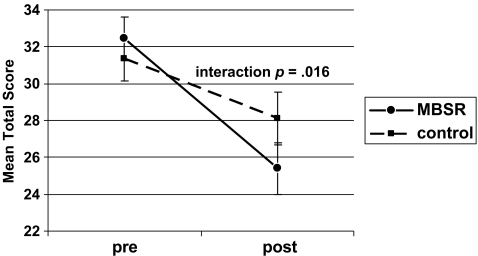
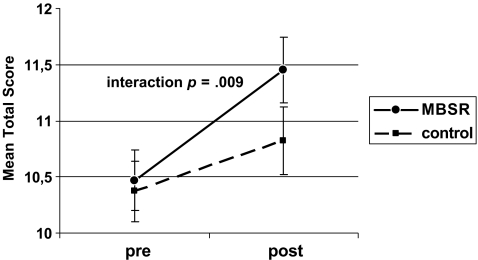
BACKGROUND: Although several studies have reported positive effects of mindfulness-based stress reduction (MBSR) intervention on psychological well-being, it is not known whether these effects are attributable to a change in mindfulness. PURPOSE: The aim of this study is to compare the effects of MBSR to a waiting-list control condition in a randomized controlled trial while examining potentially mediating effects of mindfulness. METHODS: Forty women and 20 men from the community with symptoms of distress (mean age 43.6 years, SD = 10.1) were randomized into a group receiving MBSR or a waiting-list control group. Before and after the intervention period, questionnaires were completed on psychological well-being, quality of life, and mindfulness. RESULTS: Repeated measures multiple analysis of variance (MANCOVAs) showed that, compared with the control group, the intervention resulted in significantly stronger reductions of perceived stress (p = 0.016) and vital exhaustion (p = 0.001) and stronger elevations of positive affect (p = 0.006), quality of life (p = .009), as well as mindfulness (p = 0.001). When mindfulness was included as a covariate in the MANCOVA, the group effects on perceived stress and quality of life were reduced to nonsignificance. CONCLUSION: Increased mindfulness may, at least partially, mediate the positive effects of mindfulness-based stress reduction intervention.
Overview
The claims and statistics of this paper haven’t been checked yet.
Free: it reads the open-access text and checks the first 5 claims that cite a source we can check. Create a free account to check every claim.
Integrity signals
Registry
Cites
Statistics
Figures
Verification
Claims the paper makes
The claims and statistics of this paper haven’t been checked yet.
Free: it reads the open-access text and checks the first 5 claims that cite a source we can check. Create a free account to check every claim.
Claims other papers make about this one
Each is checked against this paper’s own text: does it say what the citing paper says it does?
The source backs part of the claim, not all of it — or backs it for a different population, condition or comparison.
In the citing paper
“satisfaction with life, and quality of life (Grossman et al., 2010; Koszycki et al., 2007; Nyklíček, & Kuijpers,2008; Shapiro et al., 2005)”
From Effects of mindfulness on psychological health: A review of empirical studies (2011) · cites this paper as Nyklíček, & Kuijpers,2008
Experimental — accuracy not yet measuredThe source backs part of the claim, not all of it — or backs it for a different population, condition or comparison.
In the citing paper
“The effects of mindfulness training on mindfulness, depression and insomnia are now quite renowned8,10,21,53 and the mechanism guiding all these changes seems to be the increase in mindful attitude towards one’s own experience, in particular in terms of acceptance, nonreactivity and nonjudgment54–57.”
From Mindfulness-based online intervention increases well-being and decreases stress after Covid-19 lockdown (2022) · cites this paper as [57]
Experimental — accuracy not yet measuredThe source backs part of the claim, not all of it — or backs it for a different population, condition or comparison.
In the citing paper
“For pain, preliminary evidence suggested that mindfulness and pain catastrophizing mediated the relationship between interventions and reduced perceived stress and improved quality of life [22,25].”
From Delivering Mindfulness-Based Interventions for Insomnia, Pain, and Dysfunctional Eating Through a Text Messaging App: Three Randomized Controlled Trials Investigating the Effectiveness and Mediating Mechanisms. (2022) · cites this paper as [22]
Experimental — accuracy not yet measuredThe cited source says what the claim attributes to it.
In the citing paper
“satisfaction with life, and quality of life (Grossman et al., 2010; Koszycki et al., 2007; Nyklíček, & Kuijpers,2008; Shapiro et al., 2005)”
From Effects of mindfulness on psychological health: A review of empirical studies (2011) · cites this paper as Nyklíček, & Kuijpers,2008
The cited source says what the claim attributes to it.
In the citing paper
“It has been found to improve positive affect (Anderson et al., 2007; Bränström et al., 2010), Nyklíček, & Kuijpers, 2008)”
From Effects of mindfulness on psychological health: A review of empirical studies (2011) · cites this paper as Nyklíček, & Kuijpers, 2008
7 more claims about this paper
Create a free account to see every claim other papers make about this one.
Self-check
Percentages, sums and reported differences re-computed from the paper’s own numbers.
The self-check needs the paper’s full text.
Citations
Cites
Baron, R. M., & Kenny, D. A. (1986) · Journal of Personality and Social Psychology · doi:10.1037/0022-3514.51.6.1173 · Cited by 91,532 · cited 3×
“several outcome variables (see Tables 1 and 2), (b) the independent variable (group) had a significant effect on the potential mediators (change in mindfulness skills; see Table 3), and (c) in several cases, the potential mediator was associated with change in outcome (Table 4) [37].”
BackgroundMethodInfluentialA Global Measure of Perceived Stress
Cohen, S., Kamarck, T., & Mermelstein, R. (1983) · Journal of Health and Social Behavior · doi:10.2307/2136404 · Cited by 32,807 · cited 4×
“The PSS consists of 14 items, which are scored by using five-point Likert scales ranging from 0 (never) to 4 (very often).”
BackgroundInfluentialThe benefits of being present: Mindfulness and its role in psychological well-being
Brown, K. W., & Ryan, R. M. (2003) · Journal of Personality and Social Psychology · doi:10.1037/0022-3514.84.4.822 · Cited by 13,448 · cited 18×
“While several studies reported correlations between change in mindfulness skills and decrease in feelings of distress [20, 27], a mediation effect of mindfulness could not be obtained due to the lack of a control group.”
BackgroundMethodResultInfluentialDevelopment of the World Health Organization WHOQOL-BREF Quality of Life Assessment
THE WHOQOL GROUP (1998) · Psychological Medicine · doi:10.1017/s0033291798006667 · Cited by 7,933
Using Self-Report Assessment Methods to Explore Facets of Mindfulness
Baer, R. A., Smith, G. T., Hopkins, J., Krietemeyer, J., & Toney, L. (2006) · Assessment · doi:10.1177/1073191105283504 · Cited by 7,511 · cited 1×
“Since the recent introduction of instruments assessing various aspects of mindfulness [20, 26], the first published studies on this topic have not been able to illuminate this issue.”
Background(2008) · Medical Entomology and Zoology · Cited by 7,477
Kabat-Zinn, J. (1982) · General Hospital Psychiatry · doi:10.1016/0163-8343(82)90026-3 · Cited by 4,255 · cited 5×
“Several studies have been performed, especially in recent years, that have examined the effects of mindfulness-based stress reduction interventions, mainly in the form of the original MBSR protocol [1, 2] or derivatives thereof [3, 4].”
BackgroundResultInfluentialMindfulness-based stress reduction and health benefits
Grossman, P., Niemann, L., Schmidt, S., & Walach, H. (2004) · Journal of Psychosomatic Research · doi:10.1016/s0022-3999(03)00573-7 · Cited by 3,958
Alterations in brain and immune function produced by mindfulness meditation
Davidson, R. J., Kabat-Zinn, J., Schumacher, J., Rosenkranz, M., Muller, D., Santorelli, S. F., Urbanowski, F., Harrington, A., Bonus, K., & Sheridan, J. F. (2003) · Psychosomatic Medicine · doi:10.1097/01.psy.0000077505.67574.e3 · Cited by 2,925 · cited 1×
“Clear consistent associations have been obtained in some studies [10, 27, 45], while in most studies, no or inconsistent associations were found [9, 11, 13, 17, 23, 43, 46, 47].”
ResultAssessment of Mindfulness by Self-Report: The Kentucky Inventory of Mindfulness Skills
Baer, R. A., Smith, G. T., & Allen, K. B. (2004) · Assessment · doi:10.1177/1073191104268029 · Cited by 2,298 · cited 4×
“In addition, the pattern of intercorrelations between these scales were similar to correlations found for the original scales [ 35 ]: MAAS with Accept Without Judgment r=0.48 at baseline and r=0.62 at follow-up (both p 0.10) and r=0.32 (p= 0.014), and Accept Without Judgment with Observe r=0.07 and r=0.09 (both p>0.10…”
MethodResultInfluential
Research works printed but not linked: 1
- De Vries J, Van Heck GL. Nederlandse handleiding van de WHOQoL [Dutch manual of the WHOQoL]. Tilburg: Tilburg University; 2000.
Cited by
Effects of mindfulness on psychological health: A review of empirical studies
Keng, S.-L., Smoski, M. J., & Robins, C. J. (2011) · Clinical Psychology Review · doi:10.1016/j.cpr.2011.04.006 · Cited by 2,687
“…(again, assessed by theMAAS, the KIMS, and/or the FFMQ) statistically mediated the effects of mindfulness interventions on perceived stress (Nyklíček & Kuipers, 2008; Shapiro et al., 2008), rumination (Shapiro et al., 2008), cognitive reactivity (Raes et al., 2009), quality of life…”
BackgroundMethodInfluentialGu, J., Strauss, C., Bond, R., & Cavanagh, K. (2015) · Clinical Psychology Review · doi:10.1016/j.cpr.2015.01.006 · Cited by 1,712
Mindfulness meditation improves cognition: evidence of brief mental training
Zeidan, F., Johnson, S. K., Diamond, B. J., David, Z., & Goolkasian, P. (2010) · Consciousness and Cognition · doi:10.1016/j.concog.2010.03.014 · Cited by 1,363
“Mindfulness Based Stress Reduction (MBSR) programs, which are usually 8 weeks in duration and combine mindfulness meditation and gentle yoga, have been found to improve mood and affective processes (Nyklícek & Kuijpers, 2008); and are .”
BackgroundGarland, E. L., Fredrickson, B., Kring, A. M., Johnson, D. P., Meyer, P. S., & Penn, D. L. (2010) · Clinical Psychology Review · doi:10.1016/j.cpr.2010.03.002 · Cited by 1,035
“For instance, mindfulness training led to increases in positive affect among a sample of community adults relative to participants randomly assigned to a wait-list control group (Nyklíček & Kuijpers, 2008).”
The psychological effects of meditation: a meta-analysis
Sedlmeier, P., Eberth, J., Schwarz, M., Zimmermann, D., Haarig, F., Jaeger, S., & Kunze, S. (2012) · Psychological Bulletin · doi:10.1037/a0028168 · Cited by 910
Garland, E. L., Farb, N. A., R. Goldin, P., & Fredrickson, B. L. (2015) · Psychological Inquiry · doi:10.1080/1047840x.2015.1064294 · Cited by 810
Fjorback, L. O., Arendt, M., Ørnbøl, E., Fink, P., & Walach, H. (2011) · Acta Psychiatrica Scandinavica · doi:10.1111/j.1600-0447.2011.01704.x · Cited by 803
“Increase in mindfulness correlated significantly with improvements in mental health in two studies (24, 29), whereas the effects of mindfulness were in the predicted direction, but failed to reach significance in another study (34).”
BackgroundResultInfluentialThe Effects of Mindfulness Meditation: A Meta-Analysis
Eberth, J., & Sedlmeier, P. (2012) · Mindfulness · doi:10.1007/s12671-012-0101-x · Cited by 791
“…42 Yes Journal 0.22 48 MacKenzie et al. (2006) Shortened version of MBSR 0 28 Yes Journal 0.33 30 Morone et al. (2008) MBSR 0 56 Yes Journal 0.17 30 Nyklicek & Kuipers (2008) MBSR 0 56 Yes Journal 0.30 57 Oman et al. (2008) MBSR 60 % had none 56 Yes Journal 0.12 30 Shapiro et al. (1998) MBSR 0 56…”
BackgroundInfluentialVan Dam, N. T., Sheppard, S. C., Forsyth, J. P., & Earleywine, M. (2011) · Journal of Anxiety Disorders · doi:10.1016/j.janxdis.2010.08.011 · Cited by 592
“…& Ryan, 2003) because it (a) is psychometrically consistent across cultures (Christopher et al., 2009), (b) has shown theoretically consistent relationships to neural activity (Creswell, Way, Eisenberger, & Lieberman, 2007), and (c) is a known mediator of MBI outcomes (Nykliček & Kuijpers, 2008).”
BackgroundParsons, C. E., Crane, C., Parsons, L. J., Fjorback, L. O., & Kuyken, W. (2017) · Behaviour Research and Therapy · doi:10.1016/j.brat.2017.05.004 · Cited by 550
Weekly change in mindfulness and perceived stress in a mindfulness-based stress reduction program
Baer, R. A., Carmody, J., & Hunsinger, M. (2012) · Journal of Clinical Psychology · doi:10.1002/jclp.21865 · Cited by 546
“In a randomized trial, Nyklicek and Kuijpers (2008) found that increases in self-reported mindfulness fully or partially mediated the effects of MBSR (compared with the waitlist control group) on general distress, exhaustion, and quality of life in a community sample.”
BackgroundEffective and viable mind-body stress reduction in the workplace: A randomized controlled trial.
Wolever, R. Q., Bobinet, K. J., McCabe, K., Mackenzie, E. R., Fekete, E., Kusnick, C. A., & Baime, M. (2012) · Journal of Occupational Health Psychology · doi:10.1037/a0027278 · Cited by 539
Rosenzweig, S., Greeson, J. M., Reibel, D. K., Green, J. S., Jasser, S. A., & Beasley, D. (2010) · Journal of Psychosomatic Research · doi:10.1016/j.jpsychores.2009.03.010 · Cited by 517
“Numerous studies have found no or inconsistent associations between amount of home meditation practice and MBSR outcomes [37].”
BackgroundA systematic review and meta-analysis of psychological interventions to improve mental wellbeing
van Agteren, J., Iasiello, M., Lo, L., Bartholomaeus, J., Kopsaftis, Z., Carey, M., & Kyrios, M. (2021) · Nature Human Behaviour · doi:10.1038/s41562-021-01093-w · Cited by 510
Assessment of Mindfulness: Review on State of the Art
Sauer, S., Walach, H., Schmidt, S., Hinterberger, T., Lynch, S., Büssing, A., & Kohls, N. (2013) · Mindfulness · doi:10.1007/s12671-012-0122-5 · Cited by 464
Song, Y., & Lindquist, R. (2015) · Nurse Education Today · doi:10.1016/j.nedt.2014.06.010 · Cited by 434
“In a reviewof literature onmindfulness studies conductedwith samples from the general population, the practice of MBSR resulted in significant increases in mindfulness (Nyklíček and Kuijpers, 2008; Dobkin and Zhao, 2011; Robins et al., 2012).”
BackgroundResultIntensive meditation training, immune cell telomerase activity, and psychological mediators
Jacobs, T. L., Epel, E. S., Lin, J., Blackburn, E. H., Wolkowitz, O. M., Bridwell, D. A., Zanesco, A. P., Aichele, S. R., Sahdra, B. K., MacLean, K. A., et al. (2011) · Psychoneuroendocrinology · doi:10.1016/j.psyneuen.2010.09.010 · Cited by 432
“, 2004), a psychological factor that can be reduced by meditative practice (e.g., Brown and Ryan, 2003; Nyklı́čke and Kuijpers, 2008).”
de Vibe, M., Solhaug, I., Tyssen, R., Friborg, O., Rosenvinge, J. H., Sørlie, T., & Bjørndal, A. (2013) · BMC Medical Education · doi:10.1186/1472-6920-13-107 · Cited by 398
“This may be due to variations in the power of such studies to detect effects [24].”
BackgroundBaer, R. A., Lykins, E. L. B., & Peters, J. R. (2012) · The Journal of Positive Psychology · doi:10.1080/17439760.2012.674548 · Cited by 389
“In two randomized trials of mindfulness-based stress reduction (MBSR; KabatZinn, 1982, 1990), one with a community sample (Nyklı́ček & Kuipers, 2008) and one with patients with cancer (Bränström, Kvillemo, Brandberg, & Moskowitz, 2010), increases in self-reported mindfulness skills statistically…”
Huppert, F. A., & Johnson, D. M. (2010) · The Journal of Positive Psychology · doi:10.1080/17439761003794148 · Cited by 391
“Keywords: well-being; education; mindfulness; adolescents; intervention”
Alsubaie, M., Abbott, R., Dunn, B., Dickens, C., Keil, T. F., Henley, W., & Kuyken, W. (2017) · Clinical Psychology Review · doi:10.1016/j.cpr.2017.04.008 · Cited by 383
Quaglia, J. T., Braun, S. E., Freeman, S. P., McDaniel, M. A., & Brown, K. W. (2016) · Psychological Assessment · doi:10.1037/pas0000268 · Cited by 341
Measuring mindfulness? An item response theory analysis of the Mindful Attention Awareness Scale
Van Dam, N. T., Earleywine, M., & Borders, A. (2010) · Personality and Individual Differences · doi:10.1016/j.paid.2010.07.020 · Cited by 338
“…activity (e.g., Creswell, Way, Eisenberger, & Lieberman, 2007), treatment outcome in MBIs (e.g., Michalak, Heidenreich, Meibert, & Schulte, 2008), mediation of targeted MBI outcomes (e.g., Nykliček & Kuijpers, 2008), and salutary non-targeted benefits resulting from MBIs (Frewen et al., 2008).”
BackgroundRobins, C. J., Keng, S., Ekblad, A. G., & Brantley, J. G. (2012) · Journal of Clinical Psychology · doi:10.1002/jclp.20857 · Cited by 332
Williams, M. J., Dalgleish, T., Karl, A., & Kuyken, W. (2014) · Psychological Assessment · doi:10.1037/a0035566 · Cited by 321
“…mindfulness, as measured by the FFMQ pre to post-treatment, is a mediator of therapeutic change (e.g. Branstrom, Kvillemo, Brandberg, & Moskowitz, 2010; Carmody & Baer, 2008; McManus, Surawy, Muse, Vazquez-Montes, & Williams, 2012; Nyklicek & Kuijpers, 2008; Vollestad, Sivertsen, & Nielsen, 2011).”
BackgroundGalante, J., Friedrich, C., Dawson, A. F., Modrego-Alarcón, M., Gebbing, P., Delgado-Suárez, I., Gupta, R., Dean, L., Dalgleish, T., White, I. R., et al. (2021) · PLOS Medicine · doi:10.1371/journal.pmed.1003481 · Cited by 319
“Year, Country N Participants (category) Mean Age (SD) Women Outcomes Intervention (category) Control/s (category) Outcome Time Points Xu 2015 [277], China 90 Adults (1) 31 (8) 56% Dis, Mindf Mindfulness training (2) Waitlist (1) Post–int Yazdanimehr 2016 [278,279], Iran 80 Pregnant women (2) 26 (5.2) 100% Anx, Dep, Di…”
InfluentialBränström, R., Kvillemo, P., Brandberg, Y., & Moskowitz, J. T. (2010) · Annals of Behavioral Medicine · doi:10.1007/s12160-010-9168-6 · Cited by 312
“So far, very few studies have looked at the mediating effect of mindfulness on psychological outcomes [21, 22].”
BackgroundResultQuerstret, D., Morison, L., Dickinson, S., Cropley, M., & John, M. (2020) · International Journal of Stress Management · doi:10.1037/str0000165 · Cited by 315
“…(POMS) 33 Montero-Marin et al., 2018 Working adults (58) Spain 49.01, 77.5% Pre-post MBSR n/a Baseline; 4-weeks AA (MAAS); Burnout/ Fatigue (BCSQ-12) 34 Nyklicek & Kuijpers, 2008 Community (60) Netherlands 46, 67% RCT MBSR (28) WLC (29) Baseline; 8-weeks Stress (PSS-10); Burnout/ Fatigue (MQ);…”
InfluentialQuality of life: The ultimate outcome measure of interventions in major depressive disorder
IsHak, W. W., Greenberg, J. M., Balayan, K., Kapitanski, N., Jeffrey, J., Fathy, H., Fakhry, H., & Rapaport, M. H. (2011) · Harvard Review of Psychiatry · doi:10.3109/10673229.2011.614099 · Cited by 313
Prospects for a clinical science of mindfulness-based intervention
Dimidjian, S., & Segal, Z. V. (2015) · American Psychologist · doi:10.1037/a0039589 · Cited by 291
Chen, K. W., Berger, C. C., Manheimer, E., Forde, D., Magidson, J., Dachman, L., & Lejuez, C. W. (2012) · Depression and Anxiety · doi:10.1002/da.21964 · Cited by 286
“After inclusion and exclusion criteria were applied to the remaining 46 studies with additional information from the authors as available, six trials were excluded— two studies were based on inappropriate randomization procedures[44,45]; one study had an incompatible anxiety measure[46]; two studies were not true RCTs…”
MethodJimenez, S. S., Niles, B. L., & Park, C. L. (2010) · Personality and Individual Differences · doi:10.1016/j.paid.2010.05.041 · Cited by 286
Mindfulness-based therapy in adults with an autism spectrum disorder: a randomized controlled trial
Spek, A. A., van Ham, N. C., & Nyklíček, I. (2013) · Research in Developmental Disabilities · doi:10.1016/j.ridd.2012.08.009 · Cited by 274
Self-citationMindfulness meditation practice and executive functioning: Breaking down the benefit
Gallant, S. N. (2016) · Consciousness and Cognition · doi:10.1016/j.concog.2016.01.005 · Cited by 257
“Evidence from these studies have identified positive effects including stress management (Chiesa & Serretti, 2009; Nyklíček & Kuijpers, 2008), symptom reduction in depression (Coffman, Dimidjian, & Baer, 2006; Hoffman, Sawyer, Witt, & Oh, 2010; Ma & Teasdale, 2004; Piet & Hougaard, 2011) and…”
Michel, A., Bosch, C., & Rexroth, M. (2014) · Journal of Occupational and Organizational Psychology · doi:10.1111/joop.12072 · Cited by 256
Basso, J. C., McHale, A., Ende, V., Oberlin, D. J., & Suzuki, W. A. (2019) · Behavioural Brain Research · doi:10.1016/j.bbr.2018.08.023 · Cited by 255
de Vibe, M., Bjørndal, A., Tipton, E., Hammerstrøm, K., & Kowalski, K. (2012) · Campbell Systematic Reviews: Better Evidence for a Better World · doi:10.4073/csr.2012.3 · Cited by 253
Britton, W. B., Lepp, N. E., Niles, H. F., Rocha, T., Fisher, N. E., & Gold, J. S. (2014) · Journal of School Psychology · doi:10.1016/j.jsp.2014.03.002 · Cited by 249
Mindful Attention Prevents Mindless Impulses
Papies, E. K., Barsalou, L. W., & Custers, R. (2012) · Social Psychological and Personality Science · doi:10.1177/1948550611419031 · Cited by 246
Lindsay, E. K., Chin, B., Greco, C. M., Young, S., Brown, K. W., Wright, A. G. C., Smyth, J. M., Burkett, D., & Creswell, J. D. (2018) · Journal of Personality and Social Psychology · doi:10.1037/pspa0000134 · Cited by 218
“…largely relies on retrospective reporting of global positive affect (e.g., Bower et al., 2015; Chang et al., 2004; Howells, Ivtzan, & Eiroa-Orosa, 2016; Nyklíček & Kuijpers, 2008; Schroevers & Brandsma, 2010) and few of these studies are wellcontrolled (cf. Jain et al., 2007; Zautra et al., 2008).”
Bazzano, A., Wolfe, C., Zylowska, L., Wang, S., Schuster, E., Barrett, C., & Lehrer, D. (2015) · Journal of Child and Family Studies · doi:10.1007/s10826-013-9836-9 · Cited by 211
“The 33 % mean decrease in PSS-10 scores following the program compared favorably with 13–30 % improvements found in other populations participating in mindfulness interventions (Dobkin 2008; Nyklicek and Kuijpers 2008).”
BackgroundResultDo mindfulness-based interventions reduce pain intensity? A critical review of the literature
Reiner, K., Tibi, L., & Lipsitz, J. D. (2013) · Pain Medicine · doi:10.1111/pme.12006 · Cited by 208
Dutton, M. A., Bermudez, D., Matás, A., Majid, H., & Myers, N. L. (2013) · Cognitive and Behavioral Practice · doi:10.1016/j.cbpra.2011.08.003 · Cited by 195
“The nonjudgmental stance toward traumatic experiences that do arise may lead to positive cognitive changes such as desensitization, decreased rumination about traumatic events, and a reduction of perceived stress (Nyklicek & Kuijpers, 2008; Shapiro, Oman, Thoresen, Plante, & Flinders, 2008).”
deVibe, M., Bjørndal, A., Fattah, S., Dyrdal, G. M., Halland, E., & Tanner-Smith, E. E. (2017) · Campbell Systematic Reviews: Better Evidence for a Better World · doi:10.4073/csr.2017.11 · Cited by 198
Nyklíček, I., Mommersteeg, P. M. C., Van Beugen, S., Ramakers, C., & Van Boxtel, G. J. (2013) · Health Psychology · doi:10.1037/a0032200 · Cited by 194
“Those four groups, however, already showed favorable psychological effects (Nyklíček & Kuijpers, 2008).”
BackgroundMethodInfluentialSelf-citationGarland, E. L., Geschwind, N., Peeters, F., & Wichers, M. (2015) · Frontiers in Psychology · doi:10.3389/fpsyg.2015.00015 · Cited by 199
“Community samples undergoing mindfulness training have evidenced significant increases in positive affect (Nyklíček and Kuijpers, 2008; Orzech et al., 2009).”
BackgroundHoge, E. A., Bui, E., Goetter, E., Robinaugh, D. J., Ojserkis, R. A., Fresco, D. M., & Simon, N. M. (2015) · Cognitive Therapy and Research · doi:10.1007/s10608-014-9646-4 · Cited by 188
“More compelling are results from a randomized, wait-list controlled study of MBSR for adults with general psychological distress in which mindfulness partially mediated improvements in quality of life and reductions in stress (Baer et al. 2012; Nyklicek and Kuijpers 2008).”
BackgroundArslan, G., & Allen, K.-A. (2022) · Psychology, Health & Medicine · doi:10.1080/13548506.2021.1876892 · Cited by 190
“One applied example in the literature relates to the use of mindfulness and meditation to manage stress (Harris et al., 2016; Nyklíček & Kuijpers, 2008; Waters et al., 2014).”
BackgroundKeng, S.-L., Smoski, M. J., Robins, C. J., Ekblad, A. G., & Brantley, J. G. (2012) · Journal of Cognitive Psychotherapy · doi:10.1891/0889-8391.26.3.270 · Cited by 184
“The sample, recruitment procedures, treatment conditions, and measures used in the current analyses have been described in detail in Robins et al. (2012). We were interested in studying the effects of MBSR in a nonclinical sample, similar to the population for whom the MBSR program typically is provided.”
InfluentialVisted, E., Vøllestad, J., Nielsen, M. B., & Nielsen, G. H. (2015) · Mindfulness · doi:10.1007/s12671-014-0283-5 · Cited by 178
Mind the Gap in Mindfulness Research: A Comparative Account of the Leading Schools of Thought
Hart, R., Ivtzan, I., & Hart, D. (2013) · Review of General Psychology · doi:10.1037/a0035212 · Cited by 177
“…(Anderson et al., 2007; Baer, 2003), stress (Cordon, Brown, & Gibson, 2009; Astin, 1997; Bränström, Kvillemo, Brandberg, & Moskowitz, 2010; Nyklícek & Kuipers, 2008; Oman, Shapiro, Thoresen, Plante, & Flinders, 2008; S. L. Shapiro, Astin, Bishop, & Cordova, 2005; Speca et al., 2000;…”
InfluentialStrohmaier, S. (2020) · Mindfulness · doi:10.1007/s12671-020-01319-4 · Cited by 163
van Son, J., Nyklíček, I., Pop, V. J., Blonk, M. C., Erdtsieck, R. J., Spooren, P. F., Toorians, A. W., & Pouwer, F. (2013) · Diabetes Care · doi:10.2337/dc12-1477 · Cited by 169
Self-citationLengacher, C. A., Reich, R. R., Kip, K. E., Barta, M., Ramesar, S., Paterson, C. L., Moscoso, M. S., Carranza, I., Budhrani, P. H., Kim, S. J., et al. (2014) · Biological Research For Nursing · doi:10.1177/1099800413519495 · Cited by 169
“…mindfulness has been found to lead to (1) lower perceived stress, less rumination, and improved quality of life in nonclinical populations (Nyklicek & Kuijpers, 2008; Shapiro, Oman, Thoresen, Plante, & Flinders, 2008); (2) lower perceived stress and posttraumatic avoidance symptoms and…”
BackgroundGard, T., Brach, N., Hölzel, B. K., Noggle, J. J., Conboy, L. A., & Lazar, S. W. (2012) · The Journal of Positive Psychology · doi:10.1080/17439760.2012.667144 · Cited by 163
“Changes in mindfulness have been shown to highly correlate with increased psychological well-being and decreased stress (Carmody & Baer, 2008) and mediate the relationship between MBSR participation and decreases in stress and mental health symptoms (Carmody & Baer, 2008; Nyklicek & Kuijpers, 2008).”
InfluentialGreeson, J. M., Webber, D. M., Smoski, M. J., Brantley, J. G., Ekblad, A. G., Suarez, E. C., & Wolever, R. Q. (2011) · Journal of Behavioral Medicine · doi:10.1007/s10865-011-9332-x · Cited by 159
Allexandre, D., Bernstein, A. M., Walker, E., Hunter, J., Roizen, M. F., & Morledge, T. J. (2016) · Journal of Occupational & Environmental Medicine · doi:10.1097/jom.0000000000000680 · Cited by 157
Hou, R. J., Wong, S. Y.-S., Yip, B. H.-K., Hung, A. T. F., Lo, H. H.-M., Chan, P. H. S., Lo, C. S. L., Kwok, T. C.-Y., Tang, W. K., Mak, W. W. S., et al. (2014) · Psychotherapy and Psychosomatics · doi:10.1159/000353278 · Cited by 150
Feasibility of an Online Mindfulness Program for Stress Management—A Randomized, Controlled Trial
Morledge, T. J., Allexandre, D., Fox, E., Fu, A. Z., Higashi, M. K., Kruzikas, D. T., Pham, S. V., & Reese, P. R. (2013) · Annals of Behavioral Medicine · doi:10.1007/s12160-013-9490-x · Cited by 155
“These data imply mental health improvements; the magnitude of these changes was substantial (4 or 5 points; Table 2) and similar to other stress management programs [22, 40, 43, 44, 46].”
ResultFollow your breath: respiratory interoceptive accuracy in experienced meditators
Daubenmier, J., Sze, J., Kerr, C. E., Kemeny, M. E., & Mehling, W. (2013) · Psychophysiology · doi:10.1111/psyp.12057 · Cited by 148
“Individuals may have high levels of awareness but not necessarily high levels of accuracy (see Ceunen et al., 2013; Mirams, Poliakoff, Brown, & Lloyd, 2012; Parkin et al., 2013; Silvia & Gendolla, 2001, for discussions).”
Jones, S. M., Bodie, G. D., & Hughes, S. D. (2019) · Communication Research · doi:10.1177/0093650215626983 · Cited by 149
“…interventions tend to increase mindfulness dispositions, which, in turn, have beneficial psychosocial effects, the apparent conclusion seems to be that the primary mechanism of mindfulness interventions is simply mindfulness itself (Gu, Strauss, Bond, & Cavanagh, 2015; Nyklicek & Kuijpers, 2008).”
Kang, Y., Rahrig, H., Eichel, K., Niles, H. F., Rocha, T., Lepp, N. E., Gold, J., & Britton, W. B. (2018) · Journal of School Psychology · doi:10.1016/j.jsp.2018.03.004 · Cited by 143
“Mindfulness training specifically targets risk factors that are unique to female adolescents such as positive affectivity (Anderson, Lau, Segal, & Bishop, 2007; Nyklíček & Kuijpers, 2008; Ortner, Kilner, & Zelazo, 2007) and adaptive coping strategies (Birnie et al., 2010).”
BackgroundGreeson, J. M., Smoski, M. J., Suarez, E. C., Brantley, J. G., Ekblad, A. G., Lynch, T. R., & Wolever, R. Q. (2015) · The Journal of Alternative and Complementary Medicine · doi:10.1089/acm.2014.0285 · Cited by 143
Is learning mindfulness associated with improved affect after mindfulness-based cognitive therapy?
Schroevers, M. J., & Brandsma, R. (2010) · British Journal of Psychology · doi:10.1348/000712609x424195 · Cited by 146
“However, it is reassuring to see that some of our pre-and post-intervention mindfulness scores are similar to those found in a randomized controlled trial that demonstrated a greater increase in the intervention group compared to the control group (Nyklı´cek & Kuijpers, 2008).”
ResultQuality of life in obsessive compulsive disorder
Macy, A. S., Theo, J. N., Kaufmann, S. C. V., Ghazzaoui, R. B., Pawlowski, P. A., Fakhry, H. I., Cassmassi, B. J., & IsHak, W. W. (2013) · CNS Spectrums · doi:10.1017/s1092852912000697 · Cited by 150
IsHak, W. W., Mirocha, J., James, D., Tobia, G., Vilhauer, J., Fakhry, H., Pi, S., Hanson, E., Nashawati, R., Peselow, E. D., et al. (2015) · Acta Psychiatrica Scandinavica · doi:10.1111/acps.12301 · Cited by 140
“Interventions that appear in published original research and/or literature reviews, and are postulated to improve QOL include: cognitive behavioral therapy (28), future-directed therapy (29), combined psychotherapy and pharmacotherapy (30), occupational/vocational therapy (31), dopaminergic agents (32), nutrition and…”
BackgroundMindfulness-based positive psychology interventions: a systematic review
George, A. J., Romate, J., & Rajkumar, E. (2021) · BMC Psychology · doi:10.1186/s40359-021-00618-2 · Cited by 189
Developing an observing attitude: an analysis of meditation diaries in an MBSR clinical trial
Kerr, C. E., Josyula, K., & Littenberg, R. (2011) · Clinical Psychology & Psychotherapy · doi:10.1002/cpp.700 · Cited by 132
“(See for example Shapiro, Oman, Thoresen, Plante, & Flinders, 2008; Klatt, Buckworth, & Malarkey, 2009; Nyklicek & Kuijpers, 2008.)”
Characterizing Population EEG Dynamics throughout Adulthood
Hashemi, A., Pino, L., Moffat, G., Mathewson, K. J., Aimone, C., Bennett, P., Schmidt, L. A., & Sekuler, A. B. (2016) · eNeuro · doi:10.1523/eneuro.0275-16.2016 · Cited by 143
“In fact, MBSR training with healthy older individuals has been linked to improved well-being and a reduced rightward shift in activity (Moynihan et al., 2013).”
BackgroundMental Stress and Its Effects on Vascular Health
Sara, J. D. S., Toya, T., Ahmad, A., Clark, M. M., Gilliam, W. P., Lerman, L. O., & Lerman, A. (2022) · Mayo Clinic Proceedings · doi:10.1016/j.mayocp.2022.02.004 · Cited by 158
“n May 202 health care workers and reported that having a high level of perceived stress was associated with a poor quality of life and negative health behaviors.(5,6) In addition, despite variations in study design, patient characteristics and measurements of stress and clinical outcomes, most studies have shown signi…”
ResultJosefsson, T., Lindwall, M., & Broberg, A. G. (2014) · Mindfulness · doi:10.1007/s12671-012-0142-1 · Cited by 119
Lengacher, C. A., Shelton, M. M., Reich, R. R., Barta, M. K., Johnson-Mallard, V., Moscoso, M. S., Paterson, C., Ramesar, S., Budhrani, P., Carranza, I., et al. (2014) · Journal of Behavioral Medicine · doi:10.1007/s10865-012-9473-6 · Cited by 117
“…is an established source of significant emotional distress among breast cancer survivors, it represents a logical, clinically-relevant target for intervention (Connell et al., 2006; Costanzo et al., 2007; Fredette, 1995; Johnson Vickberg, 2001; Oxlad et al., 2008; SchmidBuchi et al., 2008).”
BackgroundBhayee, S., Tomaszewski, P., Lee, D. H., Moffat, G., Pino, L., Moreno, S., & Farb, N. A. S. (2016) · BMC Psychology · doi:10.1186/s40359-016-0168-6 · Cited by 118
“Mindfulness-based Stress Reduction (MBSR) and related programs have been found to improve mood and self-reported emotional health [29], and are associated with improvements in immune system functioning [30], stress [31], and emotion regulation [32].”
BackgroundA Comparison of Formal and Informal Mindfulness Programs for Stress Reduction in University Students
Hindman, R. K., Glass, C. R., Arnkoff, D. B., & Maron, D. D. (2015) · Mindfulness · doi:10.1007/s12671-014-0331-1 · Cited by 118
Mindfulness-Based Therapy in Adults with an Autism Spectrum Disorder: Do Treatment Effects Last?
Kiep, M., Spek, A. A., & Hoeben, L. (2015) · Mindfulness · doi:10.1007/s12671-014-0299-x · Cited by 113
The Utility of Home-Practice in Mindfulness-Based Group Interventions: A Systematic Review
Lloyd, A., White, R., Eames, C., & Crane, R. (2018) · Mindfulness · doi:10.1007/s12671-017-0813-z · Cited by 113
“As the amount of research evidence investigating the efficacy of MBIs increases, interest in identifying the mechanisms by which they lead to symptom improvement has also grown (Carmody and Baer 2008; Del Re et al. 2013; Hawley et al. 2014; Nyklíček and Kuijpers 2008).”
BackgroundSingleton, O., Hölzel, B. K., Vangel, M., Brach, N., Carmody, J., & Lazar, S. W. (2014) · Frontiers in Human Neuroscience · doi:10.3389/fnhum.2014.00033 · Cited by 110
Nyklíček, I., Dijksman, S. C., Lenders, P. J., Fonteijn, W. A., & Koolen, J. J. (2014) · Journal of Behavioral Medicine · doi:10.1007/s10865-012-9475-4 · Cited by 102
“Psychological interventions based on mindfulness have been developed and successfully applied in various patient groups to decrease emotional difficulties and enhance quality of life (Carlson et al., 2003; Nyklı́ček & Kuijpers, 2008; Roth & Robbins, 2004; Speca et al., 2000).”
BackgroundMethodResultInfluentialSelf-citationQuerstret, D., Cropley, M., & Fife-Schaw, C. (2018) · Mindfulness · doi:10.1007/s12671-018-0925-0 · Cited by 103
“…waitlist control design, assessed the impact of an MBSR intervention, found a medium between-groups effect size (d = − 0.70), and in another randomised waitlist control trial, the authors reported a large between-group effect size for an MBSR intervention (d = 0.91, Nyklicek and Kuijpers 2008).”
ResultInfluentialLabelle, L. E., Campbell, T. S., & Carlson, L. E. (2010) · Mindfulness · doi:10.1007/s12671-010-0005-6 · Cited by 102
“This finding is inconsistent with studies that have shown a mediating effect of mindfulness in distressed and student samples ( Nyklicek and Kuijpers 2008; Shapiro et al. 2008), although depression was not measured as an outcome in this research.”
BackgroundResultInfluentialRelational Aspects of Mindfulness: Implications for the Practice of Marriage and Family Therapy
Gambrel, L. E., & Keeling, M. L. (2010) · Contemporary Family Therapy · doi:10.1007/s10591-010-9129-z · Cited by 139
“There is extensive research on the positive outcomes of mindfulness training including: increased general life satisfaction and well being (Nyklicek and Kuijpers 2008), increased positive affect (Barnes et al. 2007), and increased secure self-esteem (Heppner and Kernis 2007).”
BackgroundSlonim, J., Kienhuis, M., Di Benedetto, M., & Reece, J. (2015) · Medical Education Online · doi:10.3402/meo.v20.27924 · Cited by 101
Stress Level, Health Behaviors, and Quality of Life in Employees Joining a Wellness Center
Clark, M. M., Warren, B. A., Hagen, P. T., Johnson, B. D., Jenkins, S. M., Werneburg, B. L., & Olsen, K. D. (2011) · American Journal of Health Promotion · doi:10.4278/ajhp.090821-quan-272 · Cited by 104
“Stress is a prevalent mental health problem in the workplace,(3) and having a high level of perceived stress is associated with poor work performance,(4) higher health care costs,(5) and poor quality of life.(6) It has been estimated that two-thirds of the general population has experienced stress within the past 2 we…”
BackgroundChu, S. T.-W., & Mak, W. W. S. (2020) · Mindfulness · doi:10.1007/s12671-019-01258-9 · Cited by 99
Resilience Intervention for Young Adults With Adverse Childhood Experiences
Chandler, G. E., Roberts, S. J., & Chiodo, L. M. (2015) · Journal of the American Psychiatric Nurses Association · doi:10.1177/1078390315620609 · Cited by 127
“…on MBSR in a normative healthy sample revealed a positive relationship with emotion regulation (Vujanovic, Bonn-Miller, Bernstein, McKee, & Zvolensky, 2010), psychological well-being, and quality of life (Nyklicek & Kuijpers, 2008), and a negative relationship with stress (Chiesa & Serretti, 2009).”
BackgroundAntwi, C. O., Fan, C., Aboagye, M. O., Brobbey, P., Jababu, Y., Affum‐Osei, E., & Avornyo, P. (2018) · Service Industries Journal · doi:10.1080/02642069.2018.1520220 · Cited by 117
“Though CSE and DM have received fair coverage in literature, evidence supporting their buffering effects as personal coping resources in job demand stressor-creativity relations has been sparse (Nyklíček & Kuijpers, 2008).”
BackgroundSnippe, E., Nyklíček, I., Schroevers, M. J., & Bos, E. H. (2015) · Journal of Counseling Psychology · doi:10.1037/cou0000057 · Cited by 93
“…well-being (Bränström, Kvillemo, Brandberg, & Moskowitz, 2010; Carmody & Baer, 2008; Heeren et al., 2014; Jislin-Goldberg, Tanay, & Bernstein, 2012; Nyklíček & Kuijpers, 2008; Shahar, Britton, Sbarra, Figueredo, & Bootzin, 2010; Shapiro, Oman, Thoresen, Plante, & Flinders, 2008; Vøllestad,…”
BackgroundSelf-citationAdvocat, J., Enticott, J., Vandenberg, B., Hassed, C., Hester, J., & Russell, G. (2016) · BMC Neurology · doi:10.1186/s12883-016-0685-1 · Cited by 94
“Despite many not engaging in continued formal practice, positive psychological benefits of the practice are still found [48].”
BackgroundIncreased mindfulness – The active component of the mindfulness-based stress reduction program?
Dobkin, P. L., & Zhao, Q. (2011) · Complementary Therapies in Clinical Practice · doi:10.1016/j.ctcp.2010.03.002 · Cited by 94
Labelle, L. E., Campbell, T. S., Faris, P., & Carlson, L. E. (2015) · Journal of Clinical Psychology · doi:10.1002/jclp.22117 · Cited by 90
“…that MBIs improve psychological outcomes through increased mindfulness in normal, distressed community, and cancer samples (Branstrom, Kvillemo, Brandberg, & Moskowitz, 2010; Carmody & Baer, 2008; Garland et al., 2013; Nyklicek & Kuijpers, 2008; Shapiro, Oman, Thoresen, Plante, & Flinders, 2008).”
BackgroundPassion and mindfulness: Accessing adaptive self-processes
St-Louis, A. C., Verner‐Filion, J., Bergeron, C. M., & Vallerand, R. J. (2016) · The Journal of Positive Psychology · doi:10.1080/17439760.2016.1245771 · Cited by 108
“Indeed, past research on mindfulness has shown that mindfulness enhances positive affect and decreases negative affect (Goldin & Gross, 2010; Grossman et al., 2004; Nyklíček & Kuijpers, 2008; Orzech et al., 2009).”
BackgroundRibeiro, L., Atchley, R. M., & Oken, B. S. (2018) · Mindfulness · doi:10.1007/s12671-017-0781-3 · Cited by 91
“Consistent with the literature, our sample showed improvements after the MM intervention, presenting increased scores on mindfulness, quality of life and perceived self-efficacy as well as reductions in depression and stress symptoms (Krasner et al. 2009; Lengacher et al. 2009; Nyklicek and Kuijpers 2008; Shapiro et a…”
ResultGarland, S. N., Tamagawa, R., Todd, S. C., Speca, M., & Carlson, L. E. (2013) · Integrative Cancer Therapies · doi:10.1177/1534735412442370 · Cited by 91
“Increases observed with the MAAS represent a medium effect size, similar to previous findings with both individuals with cancer(16,35) and a nonclinical population.(33) On the FFMQ, a medium effect size was demonstrated for the describing, acting with awareness, and nonjudging of inner experience scales, and a large e…”
ResultWoodruff, S. C., Glass, C. R., Arnkoff, D. B., Crowley, K. J., Hindman, R. K., & Hirschhorn, E. W. (2014) · Mindfulness · doi:10.1007/s12671-013-0195-9 · Cited by 89
“The cultivation of mindfulness has also been connected to increases in positive aspects of mental health (Nyklicek & Kuijpers 2008).”
BackgroundMurray, G., Leitan, N. D., Thomas, N., Michalak, E. E., Johnson, S. L., Jones, S., Perich, T., Berk, L., & Berk, M. (2017) · Clinical Psychology Review · doi:10.1016/j.cpr.2017.01.002 · Cited by 87
Liu, Q., Yang, X., Hu, Y., Zhang, C., & Nie, Y. (2020) · Children and Youth Services Review · doi:10.1016/j.childyouth.2020.104827 · Cited by 99
Shoham, A., Goldstein, P., Oren, R., Spivak, D., & Bernstein, A. (2017) · Journal of Consulting and Clinical Psychology · doi:10.1037/ccp0000154 · Cited by 87
“One theoretical perspective implicates mindfulness in the elevation of positive emotions (happiness, calmness) and corresponding reduction in negative emotions (sadness, nervousness; Garland et al., 2015; Geschwind et al., 2011; Nyklíček and Kuijpers, 2008; Orzech et al., 2009; Zautra et al., 2008).”
BackgroundGoldsmith, R. E., Gerhart, J. I., Chesney, S. A., Burns, J. W., Kleinman, B., & Hood, M. M. (2014) · Journal of Evidence-Based Complementary & Alternative Medicine · doi:10.1177/2156587214533703 · Cited by 86
Danucalov, M. A., Kozasa, E. H., Afonso, R. F., Galduroz, J. C., & Leite, J. R. (2017) · Geriatrics & Gerontology International · doi:10.1111/ggi.12675 · Cited by 86
Vilhauer, J. S., Cortes, J., Moali, N., Chung, S., Mirocha, J., & IsHak, W. W. (2013) · Europe PMC (PubMed Central) · Cited by 96
Metadata
- Authors
- Nyklíček, I., & Kuijpers, K. F.
- Affiliations
- Tilburg University (NL)
- Corresponding author
- Nyklíček, Ivan
- Venue
- Annals of Behavioral Medicine
- Publisher
- Oxford University Press (OUP)
- Published
- 2008-06
- Volume
- 35
- Issue
- 3
- Pages
- 331-340
- ISSN
- 0742-5554 (ISSN-L)
- 0883-6612
- 1532-4796
- PMC
- PMC2517090
- OpenAlex
- W2121397829
- Cited by
- 532
- References
- 49
- Citations by year
- 2026: 11 · 2025: 18 · 2024: 20 · 2023: 23 · 2022: 21 · 2021: 30 · 2020: 39 · 2019: 33 · 2018: 33 · 2017: 38 · 2016: 41 · 2015: 44 · 2014: 33 · 2013: 37 · 2012: 45
- FWCI
- 24.08
- Type
- journal article
- Language
- en
- Open access
- bronze
- doi.org
- Locations
- Annals of Behavioral Medicine (publishedVersion)
- Europe PMC (PubMed Central) (publishedVersion, cc-by-nc)
- PubMed Central (publishedVersion, cc-by-nc)
- Research portal (Tilburg University) (publishedVersion)
- PubMed (publishedVersion)
- Data Archiving and Networked Services (DANS) (submittedVersion, other-oa)
- Topics
- Social Sciences › Psychology › Clinical Psychology › Mindfulness and Compassion Interventions
- Social Sciences › Psychology › Social Psychology › Psychological Well-being and Life Satisfaction
- Health Sciences › Health Professions › General Health Professions › Health, psychology, and well-being
- Keywords
- mindfulness-based stress reduction, mindfulness, psychological well-being, quality of life, perceived stress, vital exhaustion, positive affect, mediation, psychological distress, community-dwelling adults
- MeSH terms
- Adult, Attention, Awareness, Female, Group Processes, Humans, Male, Middle Aged, Netherlands, Quality of Life, Stress, Psychological, Treatment Outcome, Meditation
About these checks
Registry, retraction, Cites and statistics results are computed, not judged, with one exception: a printed reference that no index lists is read once by a model before it counts as a citation error. Claims are extracted by a model and kept only when their quote appears verbatim in the text; each cited source is then checked, with a model’s help, for whether it says what the claim relies on. Those verdicts can be wrong — read the claim’s quote and the cited source before relying on one.
Statistics and arithmetic are recomputed, not judged.
Confidence bands are shown only for fields calibrated on our annotated test set. None is calibrated yet, so no band is shown.
What counts as a claim ›How we measure confidence ›How we check this ›
Are you an author, or do you see a problem with this page? Request a review
Data sources
Bibliographic data: Semantic Scholar, OpenAlex, Crossref.
Contains information from the Semantic Scholar Academic Graph Datasets, made available under the ODC Attribution License (ODC-BY 1.0).
Semantic Scholar’s data is described in: Kinney, R., et al. (2023). The Semantic Scholar Open Data Platform. arXiv:2301.10140.
