

Impact of Social Isolation Due to COVID-19 on Health in Older People: Mental and Physical Effects and Recommendations
Open accessThe DOI matches its Crossref record; 85 of the 85 references it cites were found in a registry or an index; 26 of the 37 sources its claims cite were checked for support.
Abstract
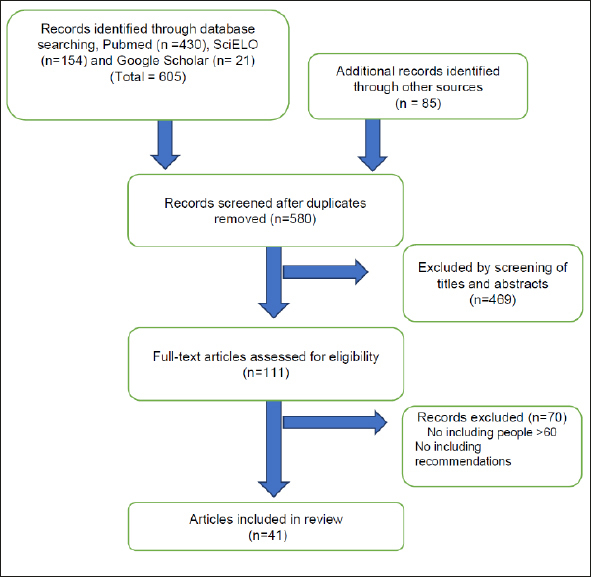
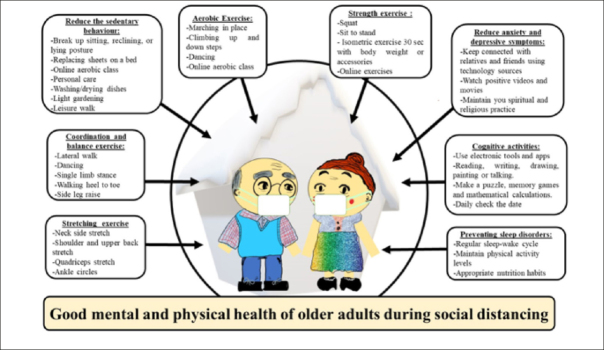
To review the impact of social isolation during COVID-19 pandemic on mental and physical health of older people and the recommendations for patients, caregivers and health professionals. Narrative review. Non-institutionalized community-living people. 20.069 individuals from ten descriptive cross-sectional papers. Articles since 2019 to 2020 published on Pubmed, Scielo and Google Scholar databases with the following MeSh terms (‘COVID-19’, ‘coronavirus’, ‘aging’, ‘older people’, ‘elderly’, ‘social isolation’ and ‘quarantine’) in English, Spanish or Portuguese were included. The studies not including people over 60 were excluded. Guidelines, recommendations, and update documents from different international organizations related to mental and physical activity were also analysed. 41 documents have been included in this narrative review, involving a total of 20.069 individuals (58% women), from Asia, Europe and America. 31 articles included recommendations and 10 addressed the impact of social distancing on mental or physical health. The main outcomes reported were anxiety, depression, poor sleep quality and physical inactivity during the isolation period. Cognitive strategies and increasing physical activity levels using apps, online videos, telehealth, are the main international recommendations. Mental and physical health in older people are negatively affected during the social distancing for COVID-19. Therefore, a multicomponent program with exercise and psychological strategies are highly recommended for this population during the confinement. Future investigations are necessary in this field.
Overview
CoChat Summary
## TL;DR
This narrative review concludes that COVID-19-related social isolation negatively affected older adults’ mental and physical health, with anxiety, depression, poor sleep quality, and reduced physical activity most often reported. It also compiles expert and organizational recommendations emphasizing social connection, cognitive support, and home-based physical activity.
## Key findings
- The review included 41 documents in total, with 10 studies involving 20,069 participants (58% women) from Asia, Europe, and America; 9 were cross-sectional and 1 was qualitative, and all were descriptive studies.
- Across the mental-health studies, reported prevalence ranged from 8.3% to 49.7% for anxiety, 14.6% to 47.2% for depression, and sleep disturbances were reported in 18.2% and 36.4% of participants in two studies.
- The main mental and physical outcomes reported were anxiety, depression, poor sleep quality, and physical inactivity during isolation.
- The main international recommendations were cognitive strategies and increasing physical activity using apps, online videos, and telehealth; expert organizations and WHO recommended 150–300 minutes/week of moderate-intensity aerobic activity and two sessions/week of muscle-strength training.
## Methods
- Design: Narrative review.
- Data/sample: Searches were done in PubMed, SciELO, and Google Scholar for articles published from 2019 to May 20, 2020, in English, Spanish, or Portuguese; studies without participants over 60 years old were excluded. The review also included guidelines, recommendations, and update documents from international organizations.
- Main analysis: The authors screened records for duplicates, titles, and abstracts, then organized the review into two areas: effects of quarantine/social isolation on mental and physical health, and recommendations for mental and physical health during quarantine.
## Limitations
- The paper states that included studies were cross-sectional, not specific to elderly populations, and descriptive, with no control group used.
- The paper states there is a lack of evidence on the most appropriate psychological and physical recommendations, and that most suggested interventions are based on expert opinion rather than high-evidence studies.
- Evident from the text: the review is based on studies from an early stage of the pandemic and the authors note these findings should be taken with caution because data were collected very early.
Model-written summary. Check it against the paper before relying on it.
Integrity signals
Registry
Cites
Statistics
Figures
Verification
Claims the paper makes
15 Valid · 1 Not valid · 6 Not checked · 6 Own results and interpretations
The cited sources support only part of this claim — read each source’s verdict below.
In the paper
“The prevalence of anxiety ranged from 8.3%, 18.7% and 35.1% to 49.7% (36, 38)”
- Also stated in: § Mental health · plain
“having a wide range from 8.3% (36) to 49.7% (42) for anxiety”
§ Impact of Social Isolation Due to COVID-19 on Health in Older People: Mental and Physical Effects and Recommendations > Results > Effect of the reduction of social participation produced by quarantine for COVID-19 on mental and physical health in elderly people
What the sources say
- Supportedcites [36] Lei L Huang X Zhang S Yang J Yang L Xu M Comparison of Prevalence and Associated Factors of Anxiety and Depression Among People Affected by versus People Unaffected by Quarantine During the COVID-19 Epidemic in Southwestern China Med Sci Monit. 26 2020 1 12 PMC7199435 32335579 source
The ‘Prevalence of anxiety and depression’ section reports anxiety in approximately 8.3% of the 1,593 participants in southwestern China. Because the citing sentence gives two references for a range across studies, this paper supports the 8.3% figure attributed to it. (LLM, conf=0.91)
- Partly supportedcites [38] Huang Y Zhao N Generalized anxiety disorder, depressive symptoms and sleep quality during COVID-19 outbreak in China: a web-based cross-sectional survey Psychiatry Res. 288 2020 10.1016/j.psychres.2020.112954 PMC7152913 32325383 sourceExperimental — accuracy not yet measured
The Results section reports a 35.1% prevalence of generalized anxiety disorder in this study’s Chinese survey sample. It does not report the 8.3% or 49.7% figures or establish a prevalence range across studies, so it supports only one value in the citing sentence. No page number is available in our copy. (LLM, conf=0.86)
- Could not verifycites [42] Losada-Baltar A, Jimenez-Gonzalo L, Gallego-Alberto L, Pedrosos-Chaparro M del S, Fernades-Pires J, Marquez-Gonzáles M. “We're staying at home”. Association of self-perceptions of aging, personal and family resources and loneliness with psychological distress during the lock-down period of COVID- 19. J Gerontol B Psychol Sci Soc Sci. 2020:1–10. PMC7184373 32282920 sourceExperimental — accuracy not yet measured
The Measures section mentions anxiety as one component of a psychological-distress scale, but gives no anxiety prevalence estimates. The Results section reports associations with distress rather than prevalence across studies; searches for 8.3%, 18.7%, 35.1%, 49.7%, and anxiety prevalence found no supporting passage in our copy. (LLM, conf=0.74)
plain- Asserted: passes — The authors put it forward as true.
- Checkable: passes — It can be checked against evidence.
- Load-bearing: unclear — It is unclear whether the paper’s conclusions depend on it.
- Based: passes — The paper gives a reason why it holds.
- Also stated in: § Mental health · plain
Every source the paper cites for this claim was checked and supports it.
In the paper
“Increased sedentary behavior has been associated with the prevalence of different comorbidities in elderly people (83).”
§ Impact of Social Isolation Due to COVID-19 on Health in Older People: Mental and Physical Effects and Recommendations > Discussion > Physical health
What the sources say
- Supportedcites [83] de Rezende L Rey-López J Matsudo V do Carmo Luiz O Sedentary behavior and health outcomes among older adults: a systematic review BMC Public Heal. 9 14 2014 333 10.1186/1471-2458-14-333 PMC4021060 24712381 source
The Results sections on metabolic syndrome and overweight/obesity report associations between greater sedentary behavior and both conditions in older adults. This supports the broad claim that sedentary behavior has been associated with different comorbidities, without implying causation. (LLM, conf=0.89)
plainstates an association- Asserted: passes — The authors put it forward as true.
- Checkable: passes — It can be checked against evidence.
- Load-bearing: passes — The paper’s conclusions depend on it.
- Based: passes — The paper gives a reason why it holds.
- Supported
The cited sources support only part of this claim — read each source’s verdict below.
In the paper
“This review has reported that social distancing because of the COVID-19 pandemic could lead to negative consequences for the physical health of older adults. This is caused by the decrease of physical activity levels due to the total or partial restriction of social participation in community groups and family activities during the pandemic (42, 43, 44).”
§ Impact of Social Isolation Due to COVID-19 on Health in Older People: Mental and Physical Effects and Recommendations > Discussion > Physical health
What the sources say
- Could not verifycites [42] Losada-Baltar A, Jimenez-Gonzalo L, Gallego-Alberto L, Pedrosos-Chaparro M del S, Fernades-Pires J, Marquez-Gonzáles M. “We're staying at home”. Association of self-perceptions of aging, personal and family resources and loneliness with psychological distress during the lock-down period of COVID- 19. J Gerontol B Psychol Sci Soc Sci. 2020:1–10. PMC7184373 32282920 sourceExperimental — accuracy not yet measured
The Introduction (page unavailable) suggests that lockdown may contribute to loneliness and psychological distress, and the Measures section assesses family contact. Our copy does not address the claimed decline in physical activity or a resulting effect on older adults’ physical health; searches for physical activity, exercise, social participation, and community groups found no supporting passage. (LLM, conf=0.76)
- Partly supportedcites [43] Goethals L Barth N Guyot J Hupin D Celarier T Bongue B Impact of home quarantine on physical activity among older adults living at home during the COVID-19 pandemic: Qualitative interview study J Med Internet Res. 22 5 2020 1 5 PMC7207013 32356777 sourceExperimental — accuracy not yet measured
The Discussion says quarantine and reduced social ties could decrease older adults’ physical activity, with possible consequences for physical functioning. The Results document reduced attendance and cancellation of group physical activity workshops. The paper does not specifically link restrictions on family activities to decreased physical activity. (LLM, conf=0.84)
- Partly supportedcites [44] Castañeda-babarro A. Impact of COVID-19 confinement on the time and intensity of physical activity in the Spanish population. Res Sq. 2020:1–14. doi: 10.21203/rs.3.rs-26074/vl. sourceExperimental — accuracy not yet measured
The cited preprint does support the general core: its Abstract and Discussion (Results, Conclusions) report that lockdown/social distancing during COVID-19 significantly reduced physical activity (vigorous −16.8%, walking −58.2%) and raised sedentary time (+23.8%), and the Discussion attributes part of this to 'forced sudden inaccessibility to community resources (e.g. sports facilities, urban trails, parks, green spaces)' and, via the socio-ecological model, to social isolation/loneliness (refs 18-20). However, the population is wrong: the study sampled 3800 healthy adults aged ≥18–≤64 residing in Spain (Abstract, Methods; Table 1 mean age 42.7), so it reports nothing about older adults, and its impact was greatest in men, young people, students and the very active. The specific causal attribution in the citing sentence — decreased activity due to 'total or partial restriction of social participation in community groups and family activities' — is also not stated in our copy, which instead cites prolonged stay at home, loss of active transport/work-related activity, e-learning/screen time and closure of fitness resources. (LLM, conf=0.78)
hedgedstates a possible cause- Asserted: passes — The authors put it forward as true.
- Checkable: passes — It can be checked against evidence.
- Load-bearing: passes — The paper’s conclusions depend on it.
- Based: passes — The paper gives a reason why it holds.
- Could not verify
The cited sources support only part of this claim — read each source’s verdict below.
In the paper
“Finally, sleep disturbances were observed in 18.2% (38) and 36.4% (37) among the participants.”
§ Impact of Social Isolation Due to COVID-19 on Health in Older People: Mental and Physical Effects and Recommendations > Results > Effect of the reduction of social participation produced by quarantine for COVID-19 on mental and physical health in elderly people
What the sources say
- Partly supportedcites [37] Yuan S Liao Z Huang H Comparison of the Indicators of Psychological Stress in the Population of Hubei Province and Non-Endemic Provinces in China During Two Weeks During the Coronavirus Disease 2019 (COVID-19) Outbreak in February 2020 Med Sci Monit. 26 2020 e923767 32294078 PMC7177041 sourceExperimental — accuracy not yet measured
Table 5 (Results; page not provided) reports that sleep quality worsened for 36.43% of the 527 participants included in that analysis, supporting the cited 36.4% figure. It excludes asymptomatic participants, however, and measures worsening sleep quality rather than the prevalence of sleep disturbances among all participants. The 18.2% figure is attached to a different citation and is not attributed to this paper. (LLM, conf=0.88)
- Supportedcites [38] Huang Y Zhao N Generalized anxiety disorder, depressive symptoms and sleep quality during COVID-19 outbreak in China: a web-based cross-sectional survey Psychiatry Res. 288 2020 10.1016/j.psychres.2020.112954 PMC7152913 32325383 source
The Results (Table 4) report poor sleep quality in 1,317 of 7,236 participants (18.2%), supporting the figure attached to this source, citation (38). The 36.4% figure is attached to a different citation, (37), and is not assessed here. (LLM, conf=0.93)
plain- Asserted: passes — The authors put it forward as true.
- Checkable: passes — It can be checked against evidence.
- Load-bearing: unclear — It is unclear whether the paper’s conclusions depend on it.
- Based: passes — The paper gives a reason why it holds.
- Partly supported
The cited sources support only part of this claim — read each source’s verdict below.
In the paper
“Goethals et al (43) reported that COVID-19 pandemic has affected the number of seniors attending group physical activity programs.”
§ Impact of Social Isolation Due to COVID-19 on Health in Older People: Mental and Physical Effects and Recommendations > Results > Effect of the reduction of social participation produced by quarantine for COVID-19 on mental and physical health in elderly people
What the sources say
- Partly supportedcites [43] Goethals L Barth N Guyot J Hupin D Celarier T Bongue B Impact of home quarantine on physical activity among older adults living at home during the COVID-19 pandemic: Qualitative interview study J Med Internet Res. 22 5 2020 1 5 PMC7207013 32356777 sourceExperimental — accuracy not yet measured
The Discussion says the study suggests that the epidemic affected seniors’ attendance at group physical activity programs before quarantine in two study territories. The citing sentence presents that qualified finding as a general fact, without the study’s uncertainty or limits of place and time. (LLM, conf=0.82)
plainstates a cause- Asserted: passes — The authors put it forward as true.
- Checkable: passes — It can be checked against evidence.
- Load-bearing: unclear — It is unclear whether the paper’s conclusions depend on it.
- Based: passes — The paper gives a reason why it holds.
- Partly supported
12 more claims · 7 with their cited sources checked
Create a free account to see all 28 claims and to verify the 4 references still open.
- It may state two separate claims as one. 10
- Probably not a substantial claim. 2
Claims other papers make about this one
Each is checked against this paper’s own text: does it say what the citing paper says it does?
The source backs part of the claim, not all of it — or backs it for a different population, condition or comparison.
In the citing paper
“During 2021, older adults faced social isolation due to the COVID-19 pandemic, resulting in a surge in articles at that time.”
From Smart Speakers for Health and Well-Being of Older Adults: A Mixed-Methods Review (2025) · cites this paper as [38]
Experimental — accuracy not yet measured
Citations
Cites
The Psychological Impact of Quarantine and How to Reduce It: Rapid Review of the Evidence
Brooks, S. K., Webster, R. K., Smith, L. E., Woodland, L., Wessely, S., Greenberg, N., & Rubin, G. J. (2020) · doi:10.2139/ssrn.3532534 · Cited by 16,394
The psychological impact of quarantine and how to reduce it: Rapid review of the evidence
Brooks, S. K., Webster, R. K., Smith, L. E., Woodland, L., Wessely, S., Greenberg, N., & Rubin, G. J. (2020) · The Lancet · doi:10.1016/s0140-6736(20)30460-8 · Cited by 16,378
(1985) · Europe PMC (PubMed Central) · Cited by 9,143
Social Relationships and Mortality Risk: A Meta-analytic Review
Holt-Lunstad, J., Smith, T. B., & Layton, J. B. (2010) · PLoS Medicine · doi:10.1371/journal.pmed.1000316 · Cited by 7,272 · cited 1×
“Evidence has demonstrated a relationship between social isolation and loneliness with disability, chronic diseases, risk of mortality and physical inactivity in elderly population (9, 19, 75-79).”
Holmes, E. A., O'Connor, R. C., Perry, V. H., Tracey, I., Wessely, S., Arseneault, L., Ballard, C., Christensen, H., Cohen Silver, R., Everall, I., et al. (2020) · The Lancet Psychiatry · doi:10.1016/s2215-0366(20)30168-1 · Cited by 5,715
Sedentary Behavior Research Network (SBRN)—Terminology Consensus Project process and outcome
on behalf of SBRN Terminology Consensus Project Participants, Tremblay, M. S., Aubert, S., Barnes, J. D., Saunders, T. J., Carson, V., Latimer-Cheung, A. E., Chastin, S. F. M., Altenburg, T. M., & Chinapaw, M. J. M. (2017) · International Journal of Behavioral Nutrition and Physical Activity · doi:10.1186/s12966-017-0525-8 · Cited by 3,793 · cited 1×
“…as any body movement using skeletal muscle that results in energy expenditure > 1.5 metabolic equivalent of task (MET), while sedentary behavior is defined as any waking behavior characterized by an energy expenditure 1.5 or less MET while in a sitting, reclining or lying posture (81, 82).”
InfluentialInternational Classification of Functioning, Disability and Health
World Health Organization (2021) · PsycTESTS Dataset · doi:10.1037/t76403-000 · Cited by 3,751
Huang, Y., & Zhao, N. (2020) · Psychiatry Research · doi:10.1016/j.psychres.2020.112954 · Cited by 3,736 · cited 3×
“Being female (36, 39, 42), having a negative self-perception of aging (42), healthcare workers (38), family and personal resources (42), time devoted to COVID-19 information (42), having an acquaintance or a family member infected with COVID-19 or a previous history of medical problems (39) seem to…”
Influential(2020) · PubMed · doi:10.3760/cma.j.issn.0254-6450.2020.02.003 · Cited by 3,323
The World report on ageing and health: a policy framework for healthy ageing
Beard, J. R., Officer, A., de Carvalho, I. A., Sadana, R., Pot, A. M., Michel, J.-P., Lloyd-Sherlock, P., Epping-Jordan, J. E., Peeters, G. M. E. E. (., Mahanani, W. R., et al. (2016) · The Lancet · doi:10.1016/s0140-6736(15)00516-4 · Cited by 3,287
Research works printed but not linked: 3
- Yazawa A Inoue Y Fujiwara T Association between social participation and hypertension among older people in Japan: the JAGES Study Hypertens Res. 39 11 2016 818 824 10.1038/hr.2016.78 27383510 · DOI
- Holmes EA O'Connor RC Perry VH Multidisciplinary research priorities for the COVID-19 pandemic: a call for action for mental health science The Lancet Psychiatry. 0366 20 2020 1 14 PMC7159850 32304649
- Arazi H Eghbali E Osteosarcopenia and Physical Activity Ann Sport Med Res. 5 1130 2018 3 6
Cited by
Items 301–400 of 709
Akaida, S., Nakai, Y., Shiratsuchi, D., Tomioka, K., Taniguchi, Y., Sato, N., Wada, A., Kiuchi, Y., Shono, S., Shiiba, R., et al. (2022) · Geriatrics and gerontology international/Geriatrics & gerontology international · doi:10.1111/ggi.14379 · Cited by 7
International Dementia Policies and Legacies of the Coronavirus Disease 2019 Pandemic
Dawson, W. D., & Comas‐Herrera, A. (2022) · Public Policy & Aging Report · doi:10.1093/ppar/prac008 · Cited by 6
Tsubouchi, Y., Tainosho, A., Shimomura, K., Kou, M., Yorozuya, K., Nakashima, D., & Naito, Y. (2022) · Healthcare · doi:10.3390/healthcare11010044 · Cited by 5
“In recent years, social distancing due to COVID-19 has resulted in loneliness and social isolation among older adults, thereby leading to anxiety, depression, poor sleep quality, and physical inactivity [32].”
BackgroundUrmanche, A. A., Solomonov, N., Sankin, L. S., Subramanyam, A., Pedreza-Cumba, M., Scaduto, L., Garcia, J., Jockers, K., Wolf, R., & Sirey, J. A. (2022) · American Journal of Geriatric Psychiatry · doi:10.1016/j.jagp.2022.12.191 · Cited by 5
“The rates in this sample are comparable to some recent reports.(59,60) However, the results may have been impacted by selection bias as case”
ResultCrnković, I., Lončarek, K., Železnik, D., Fičko, S. L., Vlahović, T., Režan, R., & Knežević, G. (2023) · International Journal of Environmental Research and Public Health · doi:10.3390/ijerph20136301 · Cited by 5
Shahabi, N. A., Mohseni, S., Dadipoor, S., Rad, R. E., & Hassani, L. (2022) · Health Science Reports · doi:10.1002/hsr2.993 · Cited by 4
“Younger people showed to have more occupational, financial, and social concerns(22,32) and, in contrast, the older adults with less of these obsessions stay more at home and, thus, face other problems such as reduced mobility, reduced sleep quality, loneliness and stress.(33) With increasing age, comorbidities also af…”
BackgroundLuo, Y., Zhu, S., Yang, F., Li, Y., Yan, S., Jiang, Y., & Bai, J. (2025) · Healthcare · doi:10.3390/healthcare13070794 · Cited by 4
Fernández-Roses, D., García-Aguña, S., Gallardo-Peralta, L. P., & Sánchez-Moreno, E. (2025) · Revista Española de Sociología · doi:10.22325/fes/res.2025.263 · Cited by 10
Surati, M., Patel, M. K., Nikumbh, S. B., Yadav, R. R., Kukde, A. D., Nigwekar, A. M., & Dhawale, K. M. (2022) · Journal of Integrated Standardized Homoeopathy · doi:10.25259/jish_24_2021 · Cited by 4
Notomi, S., Kitamura, M., Yamaguchi, K., Harada, T., Nishino, T., Funakoshi, S., & Kuno, K. (2022) · Nutrients · doi:10.3390/nu14081628 · Cited by 5
“pands social isolation—a stressor for the older adults [27]—and promotes frailty.”
BackgroundOlofsson, J., Connolly, F. F., Malmberg, G., Josefsson, M., & Stattin, M. (2023) · Journal of Aging & Social Policy · doi:10.1080/08959420.2023.2206077 · Cited by 7
“In previous studies, Radwan et al. (2021) and Sepúlveda-Loyola et al. (2020) also pointed to the possible negative long-term impact of stringent policy-mandated restrictions on older adults’ health, as the reduction in social contact and fewer physical activities may have long-term negative…”
Depresión y aislamiento social en personas mayores, análisis del rol de la participación tecnológica
Riquelme, V. C., Aguayo, E. C., Órdenes, D. Ó., & Parra, J. G. (2023) · Revista de Investigación en Psicología · doi:10.15381/rinvp.v26i1.24798 · Cited by 11
COVID-19: social isolation, social support, and depression among rural older adults
Jun, J. S., Lee, K. H., Baptist, J. A., Yanez, A., & Zimmermann, A. (2024) · Social Work in Mental Health · doi:10.1080/15332985.2024.2301971 · Cited by 6
“Physical distancing during COVID-19 not only led to social isolation but physical inactivity, poor sleep quality, anxiety, depression, cognitive decline, and mortality (Gorenko et al., 2021; Santini et al., 2020; Sepúlveda-Loyola et al., 2020).”
BackgroundOnline Mindful Movement Approach for Older Adults: Two Case Studies
Shim, M., Lacson, C. J., Kavanaugh, M., Goldstein‐Levitas, N., & Fisher, K. M. (2024) · Activities Adaptation & Aging · doi:10.1080/01924788.2024.2313372 · Cited by 4
“This led to an increased risk of psychological distress and compromised overall wellbeing, especially for those experiencing age-related cognitive changes (ACC) (Sepúlveda-Loyola et al., 2020).”
Peixoto, V. G. D. M. N. P., Facci, L. A., Barbalho, T. C. D. S., Souza, R. N., Duarte, A. M., & de Almondes, K. M. (2024) · Frontiers in Psychiatry · doi:10.3389/fpsyt.2024.1305945 · Cited by 9
Yaffe⃰, M. J., McCusker, J., Lambert, S., Haggerty, J. L., Meguerditchian, A. N., Pineault, M., Barnabé, A., Belzile, É., Minotti, S. C., & de Raad, M. (2024) · PLoS ONE · doi:10.1371/journal.pone.0297937 · Cited by 7
Impact of a pandemic shock on unmet medical needs of middle-aged and older adults in 10 countries
Guo, C., Yuan, D., Tang, H., Hu, X., & Lei, Y. (2024) · BMJ Health & Care Informatics · doi:10.1136/bmjhci-2023-100865 · Cited by 6
Novo coronavírus e os riscos do isolamento social para os idosos: revisão integrativa
Aydoğdu, A. L. F. (2020) · Revista de Enfermagem da UFJF · doi:10.34019/2446-5739.2019.v5.30691 · Cited by 4
Morley, J. E. (2021) · The journal of nutrition health & aging · doi:10.1007/s12603-020-1583-1 · Cited by 7
“Lockdown lead to increasing sarcopenia (41, 42).”
Cobos-Palacios, L., Muñoz-Úbeda, M., Ruiz-Moreno, M. I., Vilches-Pérez, A., Vargas‐Candela, A., Benítez‐Porres, J., Navarro-Sanz, A., Lopez-Carmona, M. D., Perez-Belmonte, L. M., Sanz‐Cánovas, J., et al. (2021) · International Journal of Environmental Research and Public Health · doi:10.3390/ijerph182211926 · Cited by 7
“As other studies have demonstrated, our work shows that the mental and physical health of elderly individuals have been negatively affected by COVID-19 restrictions [37,38].”
ResultChang, O., Layton, H., Amani, B., Merza, D., Owais, S., & Lieshout, R. J. V. (2021) · The Journal of Maternal-Fetal & Neonatal Medicine · doi:10.1080/14767058.2021.2014810 · Cited by 5
Smith, J., Whittington, F., Ackermann, C., Clarke, R., Hoten‐Walker, G., Kubba, Y., Low, C., Partridge, K., Wang, C., Dockerty, J. D., et al. (2022) · Australian Journal on Ageing · doi:10.1111/ajag.13040 · Cited by 5
Zhang, F., & Cheng, S. (2022) · Aging & Mental Health · doi:10.1080/13607863.2022.2048357 · Cited by 3
“In addition, a review found increased loneliness, depression, anxiety, poorer sleep quality, and less physical activity to be commonly reported among older adults in different parts of the world (Sepulveda-Loyola et al., 2020).”
O Impacto da Pandemia COVID‑19 na Saúde Mental da População Geriátrica
Pereira, D., Ferreira, S. R., & Firmino, H. (2022) · Revista Portuguesa de Psiquiatria e Saúde Mental · doi:10.51338/rppsm.253 · Cited by 39
Chow, B. C., Jiao, J., Man, D. W. K., & Lippke, S. (2022) · BMC Geriatrics · doi:10.1186/s12877-022-03031-5 · Cited by 8
“Along with the current outbreak of COVID-19, the impacts of social isolation are notable on the older population experiencing detraining and physical inactivity accompanied by a marked decline of mental well-being [4].”
BackgroundAlhofaian, A., Alharazi, R., Alaamri, M. M., Sofar, S. M., Tunsi, A., Elhady, M. M., Almutary, H. H., Sallam, L. A., & Asiri, S. (2022) · International Journal of Environmental Research and Public Health · doi:10.3390/ijerph19116808 · Cited by 4
“(2020) reported social participation to be associated with a better QOL and social distancing with reduced physical activity, which could harm physical health [18].”
BackgroundImpact of the COVID-19 pandemic on the physical and mental health of the elderly
Silişteanu, S. C. (2022) · Elsevier eBooks · doi:10.1016/b978-0-323-85174-9.00012-1 · Cited by 8
Oshio, T., Kimura, H., Nishizaki, T., & Kuwahara, S. (2022) · Preventive Medicine · doi:10.1016/j.ypmed.2022.107329 · Cited by 4
Adams, C., Gringart, E., McAullay, D. R., Sim, M., Scarfe, B., Budrikis, A., & Strobel, N. (2022) · Australian Journal of Psychology · doi:10.1080/00049530.2022.2139196 · Cited by 5
“During COVID-19 restrictions, high rates of anxiety, depression, and sleep disturbances have been observed in older adults, and one in eight older people reported they were lonely “very often” (Bailey et al., 2021; Sepúlveda-Loyola et al., 2020).”
BackgroundFactors Associated with Mental Health of Medicare Beneficiaries During the COVID-19 Pandemic
Ng, B. P., Peach, B. C., Keith, D., Park, C., & Li, Y. (2022) · Clinical Gerontologist · doi:10.1080/07317115.2022.2151962 · Cited by 4
Drazich, B. F., Lee, J. W., Bowles, K. H., Taylor, J. L. W., Shah, S., Resnick, B. M., Kim, N., & Szanton, S. L. (2023) · JMIR Aging · doi:10.2196/41692 · Cited by 6
“Numerous research studies have documented the psychosocial impact of such physical distancing measures for older adults such as increased depression, increased anxiety, increased loneliness, and decreased well-being [14-18].”
BackgroundEscribà-Salvans, A., Vemorel, C., Font-Jutglà, C., Minobes‐Molina, E., Goutan‐Roura, E., Oliveira, V. R., & Jerez‐Roig, J. (2023) · Revista Española de Geriatría y Gerontología · doi:10.1016/j.regg.2023.02.005 · Cited by 4
Older Adult Engagement With Symptom Reporting in a COVID-19 Citizen Science Application
Hobensack, M., Dreisbach, C., Topaz, M., Elhadad, N., Mamykina, O., & Henry, S. B. (2023) · Journal of Gerontological Nursing · doi:10.3928/00989134-20230309-02 · Cited by 4
da Silva, T. C., Scarmagnan, G. S., Batiston, A. P., et al. (2022) · Revista Brasileira de Geriatria e Gerontologia · doi:10.1590/1981-22562022025.220146.pt · Cited by 4
Wongmek, A., Wongviriyawong, T., Pitiyarn, S., Siritipakorn, P., Phannarus, H., & Muangpaisan, W. (2023) · Gerontology and Geriatric Medicine · doi:10.1177/23337214231176698 · Cited by 4
“There was no association found between loneliness and depression in this study, which might differ from other studies (Sepúlveda-Loyola et al., 2020).”
ResultGonzález, S. A., Adlakha, D., Cabas, S., Sánchez-Franco, S., Rubio, M. A., Ossa, N., Martínez, P. A., Montagut, N. E., & Sarmiento, O. L. (2023) · Journal of Aging and Physical Activity · doi:10.1123/japa.2022-0236 · Cited by 6
Connolly, F. F., Olofsson, J., & Josefsson, M. (2024) · Aging & Mental Health · doi:10.1080/13607863.2024.2313726 · Cited by 6
“Radwan et al. (2020) and Sepúlveda-Loyola et al. (2020) pointed to the possible negative long-term impact of stringent policy-mandated restrictions on older adults’ health, as the reduction in social contact and fewer physical activities may have long-term negative consequences for both their…”
BackgroundJiménez, E. M. F., Zavala-Calahorrano, A., & Aguilar-Salazar, A. F. (2023) · Medwave · doi:10.5867/medwave.2023.01.2592 · Cited by 7
Голубева, Е. И., Emelyanova, A., Kharkova, O. A., Rautio, A., & Soloviev, A. G. (2022) · International Journal of Environmental Research and Public Health · doi:10.3390/ijerph19052775 · Cited by 5
Watanabe, K., Yamada, M., Tatsuse, T., & Sekine, M. (2025) · Journal of Public Health · doi:10.1093/pubmed/fdaf066 · Cited by 4
Helbing, A., & Krumpal, I. (2025) · Socius Sociological Research for a Dynamic World · doi:10.1177/23780231251328202 · Cited by 6
“Explaining and researching the influence of self-isolation on mental health was the focus of various empirical studies (Ellis, Dumas, and Forbes 2020; Nkire et al. 2021; Sepúlveda-Loyola et al. 2020; Zhao et al. 2020).”
Liu, J. (2025) · Social Science Research · doi:10.1016/j.ssresearch.2025.103212 · Cited by 3
da Silva, T. C., Scarmagnan, G. S., Batiston, A. P., et al. (2022) · Revista Brasileira de Geriatria e Gerontologia · doi:10.1590/1981-22562022025.220146.en · Cited by 3
“Research points to effects arising from physical inactivity, social isolation and sequelae caused by the disease 7-9 .”
Predicting Depression in Older Adults after the COVID-19 Pandemic Using ICF Model
Been, S., & Byeon, H. (2023) · Healthcare · doi:10.3390/healthcare11081181 · Cited by 3
COVID-19 and the Prevalence of Physical Inactivity
Mazaheri‐Tehrani, S., & Kelishadi, R. (2023) · Springer eBooks · doi:10.1007/978-981-99-1802-7_1 · Cited by 4
Roy, E. S., Mathew, G., Prajnashree, R., George, S. M., Nandakumar, U. P., & Subramanya, C. (2024) · Sleep and Vigilance · doi:10.1007/s41782-023-00260-5 · Cited by 3
“This loss in social participation as a result of social isolation had detrimental effects on their mental and physical health [27, 28].”
Besselink, D., Herber-Gast, G.-C. M., van der Lucht, F., Sealy, M. J., Krijnen, W. P., Jager‐Wittenaar, H., & Finnema, E. (2024) · European Journal of Public Health · doi:10.1093/eurpub/ckae130 · Cited by 5
“Additionally, older adults struggled to maintain their exercise routines, which are essential for preventing physical decline and staying healthy [11].”
BackgroundResultHsu, Y.-P., & Walters, M. (2024) · Gerontology and Geriatric Medicine · doi:10.1177/23337214241298326 · Cited by 4
“The participants commonly experienced emotional challenges such as anxiety, loneliness, and frustration, which reflected the broader psychological impacts of the pandemic (Sepúlveda-Loyola et al., 2020).”
BackgroundPei, B., Yu, Y., Shen, X., Jia, Y., Wang, J., Zhang, Y., Shi, Y., Wang, W., Hu, F., & Wang, F. (2025) · The journal of nutrition health & aging · doi:10.1016/j.jnha.2025.100672 · Cited by 3
“These factors further increase the risk of onset NCDs [43,44].”
Poroes, C., Henchoz, Y., & Seematter‐Bagnoud, L. (2022) · Swiss Medical Weekly · doi:10.4414/smw.2022.w30161 · Cited by 3
Schweda, M. (2022) · Vallendarer Schriften der Pflegewissenschaft · doi:10.1007/978-3-658-34045-2_5 · Cited by 3
Oshio, T., Kimura, H., Nishizaki, T., & Kuwahara, S. (2022) · International Journal of Environmental Research and Public Health · doi:10.3390/ijerph19158918 · Cited by 3
Yang, M. C., Clayton, C., Harris, D. R., Pelletier, C., Schmidt, J., Zwicker, J. G., & Sakakibara, B. M. (2022) · Family Practice · doi:10.1093/fampra/cmac079 · Cited by 5
Nguyen, K. T., Macedo, L. G., Vrkljan, B. H., Kirkwood, R. N., Ma, J., Vesnaver, E., Keller, H., Wilson, J. L. A., & Beauchamp, M. (2022) · Physical Therapy · doi:10.1093/ptj/pzac132 · Cited by 4
Ekwonye, A. U., Malek, A., Chonyi, T., Nguyen, S., Ponce-Diaz, V., Haller, L. L., Farah, I., & Hearst, M. O. (2022) · Healthcare · doi:10.3390/healthcare10101967 · Cited by 5
Rival, G., Chalbet, S., Dupont, C., Brun, P., Letranchant, L., Reynaud, C., Dureault, A., Saison, J., Jeannot, M., Barbour, S., et al. (2023) · Canadian Journal of Respiratory Therapy · doi:10.29390/cjrt-2022-017 · Cited by 4
Zeitoun, T., Plante, A., Sabiston, C. M., Dieudé, M., & Doré, I. (2023) · International Journal of Environmental Research and Public Health · doi:10.3390/ijerph20032099 · Cited by 3
Yu, P., Bian, X., Xie, Z., Wang, X., Zhang, X., Gu, Z., Yang, Z., Feng, J. B., Qiu, W., Lin, J., et al. (2023) · Frontiers in Psychiatry · doi:10.3389/fpsyt.2023.1100849 · Cited by 3
Blasbalg, U., Sinai, D., Arnon, S., Hermon, Y., & Toren, P. (2023) · Comprehensive Psychiatry · doi:10.1016/j.comppsych.2023.152383 · Cited by 4
“…and quarantine measures (e.g., refraining from leaving the house, having less social support or inability to obtain medications on their own, less interactions with family\peers that may notice deterioration in mental health and encourage seeking care) than their younger counterparts [38,39].”
Physical activity and mental health during the COVID-19 pandemic among individuals with amputation
Leister, K. R., Heffernan, K. S., Miller, T. A., & Barreira, T. V. (2023) · PLoS ONE · doi:10.1371/journal.pone.0283762 · Cited by 3
Hong, J., McArthur, D. P., & Lee, J. (2023) · Cities · doi:10.1016/j.cities.2023.104517 · Cited by 8
Bai, J., & Lü, W. (2023) · Frontiers in Public Health · doi:10.3389/fpubh.2023.1207098 · Cited by 3
“6 % in patients aged over 60 years (10), and over 80% of deaths are among older adults (11).”
BackgroundAssociation between COVID-19 and sexual health: an umbrella review
Liu, W., Jiesisibieke, Z. L., Chien, C., & Tung, T. (2023) · Annals of Medicine · doi:10.1080/07853890.2023.2258902 · Cited by 3
“During the pandemic, many people experienced changes in their lives, such as illness and lower income, which reduced their recreational activities emotionally and physically and affected their frequency of sexual activity [5–8].”
BackgroundWong, M. Y. C., Ou, K.-L., & Leung, K. M. (2023) · PLoS ONE · doi:10.1371/journal.pone.0293512 · Cited by 4
“[35,34,33] Research indicated that older adults reported more snacks and undernutrition meals intake during COVID-19 [35]; however, other recent research studies revealed that older adults showed stress towards health-related issues thus resulting in healthier eating [36].”
BackgroundResultWu, J., Qiu, L., Xiong, W., Shen, Y., Li, J., Ju, W., & Zhou, Q. (2023) · BMJ Open · doi:10.1136/bmjopen-2023-072725 · Cited by 3
“The involvement of community health workers in targeted interventions is pivotal in delivering cost-effective psychosocial support to depressed elders during the pandemic.”
BackgroundPatrick, S. E., Knox, K. B., Evans, C. D., Levin, M. C., Linassi, G. A., Poliakov, I., Rajput, A. H., & Donkers, S. J. (2024) · Frontiers in Neurology · doi:10.3389/fneur.2024.1332859 · Cited by 3
Mosen, D. M., Banegas, M. P., Pihlstrom, D. J., Keast, E. M., Dickerson, J. F., & Fellows, J. L. (2024) · AJPM Focus · doi:10.1016/j.focus.2024.100212 · Cited by 3
Vishnumurthy, R. H., Priya, M. G. R., Tiwari, P. K., & Solomon, V. R. (2024) · Current Pharmaceutical Design · doi:10.2174/0113816128298289240723103828 · Cited by 3
Lee, J., & Seok, J. W. (2024) · BMJ Open · doi:10.1136/bmjopen-2024-083890 · Cited by 3
Tanhamira, L.-A., Randhawa, G., & Hewson, D. J. (2024) · Aging Clinical and Experimental Research · doi:10.1007/s40520-024-02878-5 · Cited by 2
“(2024) 36:220 [ 30 ].”
Chan, Y., Chen, C., Tu, Y., Hsu, W., Tsai, Y., Liu, T., Huang, P., Chuang, M., Hung, K., Lee, M., et al. (2024) · Journal of Medical Virology · doi:10.1002/jmv.70119 · Cited by 3
Porto, M., Lorenzi, L. J., Marson, M. A. G., Belo, L. F., Sobrinho, A. C. D. S., Bet, P., Delinocente, M. L. B., & Gomes, G. A. D. O. (2025) · Geriatric Nursing · doi:10.1016/j.gerinurse.2025.103449 · Cited by 5
Hara, S., Miura, H., Hita, T., Sasaki, S., Ito, H., Kozaki, Y., & Kawasaki, Y. (2021) · International Journal of Environmental Research and Public Health · doi:10.3390/ijerph182111512 · Cited by 3
“Several studies have reported on the health behavior of older adults at home during the COVID-19 pandemic [12,13].”
BackgroundFactors of Negative Affect in Elderly Patients With Substance Use Disorders During COVID-19 Pandemic
Wang, Q., Wang, Y., Zuo, J., Zhou, Y., Yang, W. F. Z., Liao, Y., Tang, J., Wang, X., Yang, Q., Wu, Q., et al. (2021) · Frontiers in Psychiatry · doi:10.3389/fpsyt.2021.697472 · Cited by 5
Oyeyemi, D. M., Omer, Z. B., Brown, B., Freimund, J., Gummerson, C. E., Rink, A., Gallant, N., & Marottoli, R. A. (2022) · Patient Education and Counseling · doi:10.1016/j.pec.2022.10.346 · Cited by 3
“[29] Likewise, dementia caregivers have reported experiencing great stress and burnout due to inadequate supports and unmet needs of their loved ones during the pandemic [1].”
Berní, F. C., Kanitz, A. C., Miranda, C. S., de Oliveira, D. B., Bergamin, M., Bullo, V., Schaun, G. Z., & Alberton, C. L. (2023) · Trials · doi:10.1186/s13063-023-07567-8 · Cited by 7
“Several reports indicate that the lockdown measures taken to contain the spread of the virus, although necessary, negatively impacted the physical and cognitive well-being of many of these individuals [8, 49].”
BackgroundSelf-citationMalhotra, V., Javed, D., Bharshankar, R., Singh, V., Gautam, N., Mishra, S., Chundawat, D. S., Kushwah, A., & Singh, G. (2022) · medRxiv · doi:10.1101/2022.03.10.22272024 · Cited by 8
“anxiety in older adults.[13] All these factors may explain the higher prevalence of depression, anxiety and stress in around 25% of sample in our study.”
BackgroundMental Health and Visual Acuity in Patients with Age-related Macular DegenerationPreprint
Fonteh, C. N., Mathias, M., Mandava, N., et al. (2022) · Research Square · doi:10.21203/rs.3.rs-1713337/v1 · Cited by 3
Almaimani, H. A., Moafa, W. A., Aqili, T. A., & Homadi, S. Y. (2024) · Cureus · doi:10.7759/cureus.74594 · Cited by 2
Steiner, L. M., Tolotti, A., Valcarenghi, D., Balice‐Bourgois, C., Luca, C. E., Villa, M., Liptrott, S. J., Biegger, A., & Bonetti, L. (2024) · Australian Critical Care · doi:10.1016/j.aucc.2023.12.001 · Cited by 4
How do Japanese Patients with Chronic Heart Failure View Their Disease, Self-care, and Support?
Nagata, S., Shiki, K., Yagi, N., & Sato, N. (2025) · Advances in Therapy · doi:10.1007/s12325-025-03203-w · Cited by 2
“Social distancing and restrictions on going out have continued among the elderly despite the lessening of the COVID-19 pandemic [30].”
Chen, I., & Phanumartwiwath, A. (2025) · Journal of Gerontological Social Work · doi:10.1080/01634372.2025.2545475 · Cited by 3
“Isolation has heightened anxiety, depression, and inactivity, weak-ening resilience in older adults (Sepúlveda-Loyola et al., 2020).”
González-Castro, A., Leirós‐Rodríguez, R., Nistal-Martínez, M., Bodero-Vidal, E., Benítez‐Andrades, J. A., & Hernández-Lucas, P. (2025) · Journal of Clinical Medicine · doi:10.3390/jcm14176229 · Cited by 3
“The COVID-19 pandemic simultaneously altered these components by limiting mobility, modifying routines, affecting supervision, and increasing loneliness [19,20].”
Vico, M. M. P., Martínez, J. M. M., Guerrero, J., Bódalo, J. L. H., Espinilla, M., & Cuevas-Martinez, J. C. (2026) · Sensors · doi:10.3390/s26072028 · Cited by 3
Loneliness Among Older Adults Receiving Long-Term Home Care Services: A Quantitative Study
Česonienė, A., Jaruševičienė, L., Capezuti, E., & Blaževičienė, A. (2026) · SAGE Open Nursing · doi:10.1177/23779608251411607 · Cited by 2
“This was the case during the COVID-19 pandemic, when prolonged social isolation negatively affected the psychological state of older adults (Sepúlveda-Loyola et al., 2020; Dove et al., 2022).”
Activity space patterns and loneliness: Evidence from the pan-Canadian COHESION cohort
MohammadEbrahimi, S., Thierry, B., Kestens, Y., & Moullec, G. (2026) · Health & Place · doi:10.1016/j.healthplace.2026.103657 · Cited by 2
Zhang, Y., Zhou, X., Wang, Y., Liu, M., Gao, P., & Ju, M. (2026) · Frontiers in Public Health · doi:10.3389/fpubh.2026.1789519 · Cited by 4
Physical Activity of the Elderly in Light of the 2020 WHO Guidelines
Husejko, J., Strugała, M., Modrzejewski, M., Wąsicki, M., Kędziora–Kornatowska, K., & Podhorecka, M. (2021) · Rehabilitacja Medyczna · doi:10.5604/01.3001.0014.8724 · Cited by 3
Promoción de salud en centros de personas mayores ante el coronavirus mediante el uso de títeres
Muñoz, M. F., Pérez, M. F., & Romero, L. G. L. (2021) · Arteterapia Papeles de arteterapia y educación artística para la inclusión social · doi:10.5209/arte.72062 · Cited by 2
Normalization of technology for social contact in a Norwegian care facility during COVID-19
Badawy, A., Solberg, M., Obstfelder, A. U., & Alnes, R. E. (2022) · BMC Health Services Research · doi:10.1186/s12913-022-08618-7 · Cited by 3
“Maintaining a social network and relationships with family and friends are widely considered to benefit the quality of life of older adults [5, 6].”
BackgroundShakuta, S., Yamashita, M., Kamiya, K., et al. (2022) · Heart and Vessels · doi:10.1007/s00380-022-02203-y · Cited by 2
“These new lifestyle approaches have affected people physically, psychologically, and socially [1].”
BackgroundUribe, J. C. G., & Muriel, F. A. Z. (2022) · Cultura de los Cuidados · doi:10.14198/cuid.2022.64.03 · Cited by 8
Mastrogiovanni, C., Rosenbaum, S., Delbaere, K., Tiedemann, A., Teasdale, S. B., McGavin, A., Briggs, N., & McKeon, G. (2022) · Trials · doi:10.1186/s13063-022-06978-3 · Cited by 7
“Due to the COVID-19 pandemic, there has been a decline in social connection [2] as well as physical activity among older adults [12].”
BackgroundCOVID in Older People: Some Answers, New Questions
Rodríguez-Sánchez, I., & Rodríguez‐Mañas, L. (2023) · The journal of nutrition health & aging · doi:10.1007/s12603-023-1891-3 · Cited by 2
“Functional impairment is also a consequence of COVID and COVID-hospitalization at short-, mid-, and long-term in older people with coronavirus disease in whom important functional and cognitive decline (quality of sleep, anxiety, and depression) have been reported (7, 8).”
BackgroundSelf-citationWeber, N., Xie, F., Kohlmann, T., Mohr, W., Platen, M., Rädke, A., Kilimann, I., Engel, L., & Michalowsky, B. (2023) · Frontiers in Public Health · doi:10.3389/fpubh.2023.1031978 · Cited by 2
“Especially aged adults are affected by the COVID-19 diseases and the imposed measures to protect against the spread of the disease (28).”
BackgroundJoaquín, A., Esparza–Varas, A. L., Olivares, D. I. T., Quispe-Lavado, O., & Huamán-Saavedra, J. J. (2022) · Revista del Cuerpo Médico Hospital Nacional Almanzor Aguinaga Asenjo · doi:10.35434/rcmhnaaa.2022.154.1513 · Cited by 2
Social Support Among Older South Africans During COVID-19
Geyer, S., Teater, B. A., & Chonody, J. M. (2023) · Activities Adaptation & Aging · doi:10.1080/01924788.2023.2218717 · Cited by 3
Cruise, D., Sinden, D., & Jaana, M. (2023) · Canadian Journal on Aging / La Revue canadienne du vieillissement · doi:10.1017/s0714980823000272 · Cited by 5
“Studies have shown that self-isolation restrictions during the pandemic have increased anxiety and lone-liness in older adults (Hwang, Rabheru, Peisah, Reichman, & Ikeda, 2020; Sepúlveda-Loyola et al., 2020).”
BackgroundDYNAMICS OF STUDENTS’ PHYSICAL WELL-BEING INDICATORS DURING QUARANTINE RESTRICTIONS
Sabirov, O., Syrovatko, Z. V., Єфременко, В. М., Havrylova, N. Y., Syrotynska, O., Chekhovska, A. Y., & Mokhunko, O. D. (2023) · Wiadomości Lekarskie · doi:10.36740/wlek202306116 · Cited by 3
Shum, E. N.-Y., Lau, B. H. P., Cheung, S. L. K., Chan, C., Siu, J. C.-Y., Luk, J. K.-H., Kwan, J. S. K., Chan, G., Pat, L. Y.-C., & Martin, P. (2023) · The International Journal of Aging and Human Development · doi:10.1177/00914150231208681 · Cited by 3
“Social isolation, the lack of physical activities, and the suspension of care services (e.g., daycare services, centers for older people) could have been costly to older adults ’ health and well-being (Heid et al., 2021; Sepúlveda-Loyola et al., 2020; Wettstein et al., 2022; Zaninotto et al., 2022).”
Metadata
- Authors
- Sepúlveda-Loyola, W., Rodríguez-Sánchez, I., Pérez-Rodríguez, P., Ganz, F., Torralba, R., Oliveira, D. V., & Rodríguez-Mañas, L.
- Affiliations
- Complejo Hospitalario de Navarra (ES)
- Hospital Universitario La Paz (ES)
- University of Alberta (CA)
- Hospital General Universitario de Ciudad Real (ES)
- Venue
- The Journal of nutrition, health and aging
- Publisher
- Elsevier BV
- Published
- 2020-09
- Volume
- 24
- Issue
- 9
- Pages
- 938-947
- ISSN
- 1279-7707 (ISSN-L)
- PMC
- PMC7597423
- OpenAlex
- W4233641204
- Cited by
- 1,081
- References
- 85
- Citations by year
- 2026: 71 · 2025: 114 · 2024: 158 · 2023: 263 · 2022: 286 · 2021: 175 · 2020: 14
- FWCI
- 68.49
- Type
- journal article
- Language
- en
- Open access
- hybrid
- doi.org
- Licence
- cc-by-nc-nd
- www.elsevier.com/tdm/userlicense/1.0/ (tdm)
- www.elsevier.com/legal/tdmrep-license (tdm)
- creativecommons.org/licenses/by-nc-nd/4.0/ (vor, 1186 d)
- Locations
- The journal of nutrition health & aging (publishedVersion, cc-by-nc-nd)
- PubMed Central (publishedVersion)
- PubMed (publishedVersion)
- Topics
- Social Sciences › Psychology › Clinical Psychology › COVID-19 and Mental Health
- Health Sciences › Medicine › Public Health, Environmental and Occupational Health › Aging, Health, and Disability
- Health Sciences › Medicine › Public Health, Environmental and Occupational Health › Physical Activity and Health
- Keywords
- social isolation, COVID-19 pandemic, older adults, mental health, physical health, anxiety, depression, sleep quality, physical inactivity, social distancing, quarantine, telemedicine, exercise recommendations, community-dwelling older adults
- MeSH terms
- COVID-19, SARS-CoV-2, Age Factors, Aged, Aged, 80 and over, Americas, Anxiety, Asia, Mental Disorders, Cross-Sectional Studies, Depression, Europe, Female, Humans, Male, Middle Aged, Quarantine, Sleep Wake Disorders, Social Isolation, Exercise, Sedentary Behavior, Pandemics
About these checks
Registry, retraction, Cites and statistics results are computed, not judged, with one exception: a printed reference that no index lists is read once by a model before it counts as a citation error. Claims are extracted by a model and kept only when their quote appears verbatim in the text; each cited source is then checked, with a model’s help, for whether it says what the claim relies on. Those verdicts can be wrong — read the claim’s quote and the cited source before relying on one.
The claim verdicts this report counts are experimental: their accuracy is not yet measured.
A language model drew the claims from the paper on 2026-10-10, under version 3 of the claim definition (model deepseek-v4.1-flash, prompt extract-v3).
A second model labelled each claim on 2026-10-10 (model jev-1.13-20260917, definition revision gold-guideline-v0.2).
Cited sources are checked with a language model’s help (gpt-6-sol and qwen3.8-omni-flash).
Statistics and arithmetic are recomputed, not judged.
Confidence bands are shown only for fields calibrated on our annotated test set. None is calibrated yet, so no band is shown.
What counts as a claim ›How we measure confidence ›How we check this ›
Are you an author, or do you see a problem with this page? Request a review
Data sources
Bibliographic data: Semantic Scholar, OpenAlex, Crossref.
Contains information from the Semantic Scholar Academic Graph Datasets, made available under the ODC Attribution License (ODC-BY 1.0).
Semantic Scholar’s data is described in: Kinney, R., et al. (2023). The Semantic Scholar Open Data Platform. arXiv:2301.10140.
