

Impact of Social Isolation Due to COVID-19 on Health in Older People: Mental and Physical Effects and Recommendations
Open accessThe DOI matches its Crossref record; 85 of the 85 references it cites were found in a registry or an index; 26 of the 37 sources its claims cite were checked for support.
Abstract
To review the impact of social isolation during COVID-19 pandemic on mental and physical health of older people and the recommendations for patients, caregivers and health professionals. Narrative review. Non-institutionalized community-living people. 20.069 individuals from ten descriptive cross-sectional papers. Articles since 2019 to 2020 published on Pubmed, Scielo and Google Scholar databases with the following MeSh terms (‘COVID-19’, ‘coronavirus’, ‘aging’, ‘older people’, ‘elderly’, ‘social isolation’ and ‘quarantine’) in English, Spanish or Portuguese were included. The studies not including people over 60 were excluded. Guidelines, recommendations, and update documents from different international organizations related to mental and physical activity were also analysed. 41 documents have been included in this narrative review, involving a total of 20.069 individuals (58% women), from Asia, Europe and America. 31 articles included recommendations and 10 addressed the impact of social distancing on mental or physical health. The main outcomes reported were anxiety, depression, poor sleep quality and physical inactivity during the isolation period. Cognitive strategies and increasing physical activity levels using apps, online videos, telehealth, are the main international recommendations. Mental and physical health in older people are negatively affected during the social distancing for COVID-19. Therefore, a multicomponent program with exercise and psychological strategies are highly recommended for this population during the confinement. Future investigations are necessary in this field.
Overview
CoChat Summary
## TL;DR
This narrative review concludes that COVID-19-related social isolation negatively affected older adults’ mental and physical health, with anxiety, depression, poor sleep quality, and reduced physical activity most often reported. It also compiles expert and organizational recommendations emphasizing social connection, cognitive support, and home-based physical activity.
## Key findings
- The review included 41 documents in total, with 10 studies involving 20,069 participants (58% women) from Asia, Europe, and America; 9 were cross-sectional and 1 was qualitative, and all were descriptive studies.
- Across the mental-health studies, reported prevalence ranged from 8.3% to 49.7% for anxiety, 14.6% to 47.2% for depression, and sleep disturbances were reported in 18.2% and 36.4% of participants in two studies.
- The main mental and physical outcomes reported were anxiety, depression, poor sleep quality, and physical inactivity during isolation.
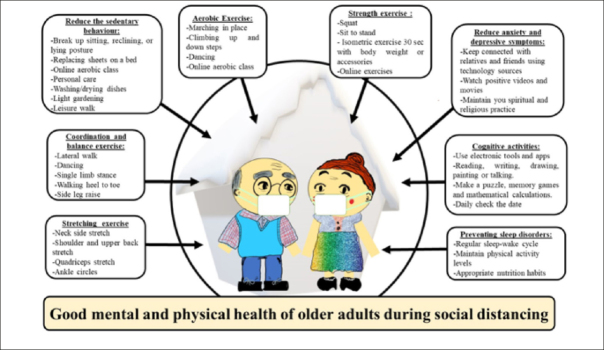
- The main international recommendations were cognitive strategies and increasing physical activity using apps, online videos, and telehealth; expert organizations and WHO recommended 150–300 minutes/week of moderate-intensity aerobic activity and two sessions/week of muscle-strength training.
## Methods
- Design: Narrative review.
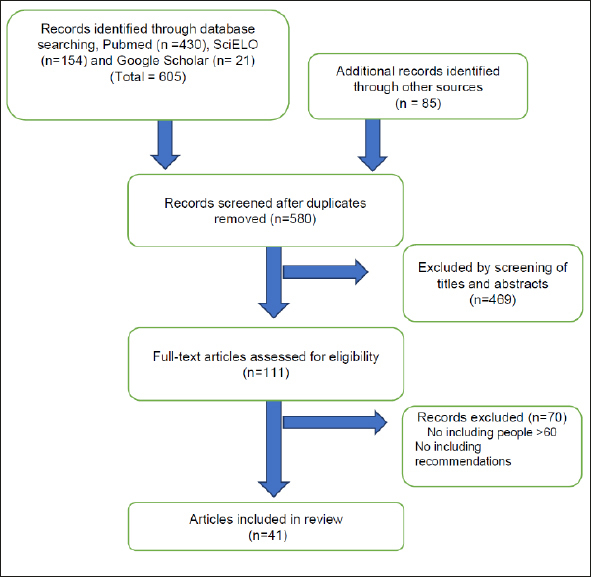
- Data/sample: Searches were done in PubMed, SciELO, and Google Scholar for articles published from 2019 to May 20, 2020, in English, Spanish, or Portuguese; studies without participants over 60 years old were excluded. The review also included guidelines, recommendations, and update documents from international organizations.
- Main analysis: The authors screened records for duplicates, titles, and abstracts, then organized the review into two areas: effects of quarantine/social isolation on mental and physical health, and recommendations for mental and physical health during quarantine.
## Limitations
- The paper states that included studies were cross-sectional, not specific to elderly populations, and descriptive, with no control group used.
- The paper states there is a lack of evidence on the most appropriate psychological and physical recommendations, and that most suggested interventions are based on expert opinion rather than high-evidence studies.
- Evident from the text: the review is based on studies from an early stage of the pandemic and the authors note these findings should be taken with caution because data were collected very early.
Model-written summary. Check it against the paper before relying on it.
Integrity signals
Registry
Cites
Statistics
Figures
Verification
Claims the paper makes
15 Valid · 1 Not valid · 6 Not checked · 6 Own results and interpretations
The cited sources support only part of this claim — read each source’s verdict below.
In the paper
“The prevalence of anxiety ranged from 8.3%, 18.7% and 35.1% to 49.7% (36, 38)”
- Also stated in: § Mental health · plain
“having a wide range from 8.3% (36) to 49.7% (42) for anxiety”
§ Impact of Social Isolation Due to COVID-19 on Health in Older People: Mental and Physical Effects and Recommendations > Results > Effect of the reduction of social participation produced by quarantine for COVID-19 on mental and physical health in elderly people
What the sources say
- Supportedcites [36] Lei L Huang X Zhang S Yang J Yang L Xu M Comparison of Prevalence and Associated Factors of Anxiety and Depression Among People Affected by versus People Unaffected by Quarantine During the COVID-19 Epidemic in Southwestern China Med Sci Monit. 26 2020 1 12 PMC7199435 32335579 source
The ‘Prevalence of anxiety and depression’ section reports anxiety in approximately 8.3% of the 1,593 participants in southwestern China. Because the citing sentence gives two references for a range across studies, this paper supports the 8.3% figure attributed to it. (LLM, conf=0.91)
- Partly supportedcites [38] Huang Y Zhao N Generalized anxiety disorder, depressive symptoms and sleep quality during COVID-19 outbreak in China: a web-based cross-sectional survey Psychiatry Res. 288 2020 10.1016/j.psychres.2020.112954 PMC7152913 32325383 sourceExperimental — accuracy not yet measured
The Results section reports a 35.1% prevalence of generalized anxiety disorder in this study’s Chinese survey sample. It does not report the 8.3% or 49.7% figures or establish a prevalence range across studies, so it supports only one value in the citing sentence. No page number is available in our copy. (LLM, conf=0.86)
- Could not verifycites [42] Losada-Baltar A, Jimenez-Gonzalo L, Gallego-Alberto L, Pedrosos-Chaparro M del S, Fernades-Pires J, Marquez-Gonzáles M. “We're staying at home”. Association of self-perceptions of aging, personal and family resources and loneliness with psychological distress during the lock-down period of COVID- 19. J Gerontol B Psychol Sci Soc Sci. 2020:1–10. PMC7184373 32282920 sourceExperimental — accuracy not yet measured
The Measures section mentions anxiety as one component of a psychological-distress scale, but gives no anxiety prevalence estimates. The Results section reports associations with distress rather than prevalence across studies; searches for 8.3%, 18.7%, 35.1%, 49.7%, and anxiety prevalence found no supporting passage in our copy. (LLM, conf=0.74)
plain- Asserted: passes — The authors put it forward as true.
- Checkable: passes — It can be checked against evidence.
- Load-bearing: unclear — It is unclear whether the paper’s conclusions depend on it.
- Based: passes — The paper gives a reason why it holds.
- Also stated in: § Mental health · plain
Every source the paper cites for this claim was checked and supports it.
In the paper
“Increased sedentary behavior has been associated with the prevalence of different comorbidities in elderly people (83).”
§ Impact of Social Isolation Due to COVID-19 on Health in Older People: Mental and Physical Effects and Recommendations > Discussion > Physical health
What the sources say
- Supportedcites [83] de Rezende L Rey-López J Matsudo V do Carmo Luiz O Sedentary behavior and health outcomes among older adults: a systematic review BMC Public Heal. 9 14 2014 333 10.1186/1471-2458-14-333 PMC4021060 24712381 source
The Results sections on metabolic syndrome and overweight/obesity report associations between greater sedentary behavior and both conditions in older adults. This supports the broad claim that sedentary behavior has been associated with different comorbidities, without implying causation. (LLM, conf=0.89)
plainstates an association- Asserted: passes — The authors put it forward as true.
- Checkable: passes — It can be checked against evidence.
- Load-bearing: passes — The paper’s conclusions depend on it.
- Based: passes — The paper gives a reason why it holds.
- Supported
The cited sources support only part of this claim — read each source’s verdict below.
In the paper
“This review has reported that social distancing because of the COVID-19 pandemic could lead to negative consequences for the physical health of older adults. This is caused by the decrease of physical activity levels due to the total or partial restriction of social participation in community groups and family activities during the pandemic (42, 43, 44).”
§ Impact of Social Isolation Due to COVID-19 on Health in Older People: Mental and Physical Effects and Recommendations > Discussion > Physical health
What the sources say
- Could not verifycites [42] Losada-Baltar A, Jimenez-Gonzalo L, Gallego-Alberto L, Pedrosos-Chaparro M del S, Fernades-Pires J, Marquez-Gonzáles M. “We're staying at home”. Association of self-perceptions of aging, personal and family resources and loneliness with psychological distress during the lock-down period of COVID- 19. J Gerontol B Psychol Sci Soc Sci. 2020:1–10. PMC7184373 32282920 sourceExperimental — accuracy not yet measured
The Introduction (page unavailable) suggests that lockdown may contribute to loneliness and psychological distress, and the Measures section assesses family contact. Our copy does not address the claimed decline in physical activity or a resulting effect on older adults’ physical health; searches for physical activity, exercise, social participation, and community groups found no supporting passage. (LLM, conf=0.76)
- Partly supportedcites [43] Goethals L Barth N Guyot J Hupin D Celarier T Bongue B Impact of home quarantine on physical activity among older adults living at home during the COVID-19 pandemic: Qualitative interview study J Med Internet Res. 22 5 2020 1 5 PMC7207013 32356777 sourceExperimental — accuracy not yet measured
The Discussion says quarantine and reduced social ties could decrease older adults’ physical activity, with possible consequences for physical functioning. The Results document reduced attendance and cancellation of group physical activity workshops. The paper does not specifically link restrictions on family activities to decreased physical activity. (LLM, conf=0.84)
- Partly supportedcites [44] Castañeda-babarro A. Impact of COVID-19 confinement on the time and intensity of physical activity in the Spanish population. Res Sq. 2020:1–14. doi: 10.21203/rs.3.rs-26074/vl. sourceExperimental — accuracy not yet measured
The cited preprint does support the general core: its Abstract and Discussion (Results, Conclusions) report that lockdown/social distancing during COVID-19 significantly reduced physical activity (vigorous −16.8%, walking −58.2%) and raised sedentary time (+23.8%), and the Discussion attributes part of this to 'forced sudden inaccessibility to community resources (e.g. sports facilities, urban trails, parks, green spaces)' and, via the socio-ecological model, to social isolation/loneliness (refs 18-20). However, the population is wrong: the study sampled 3800 healthy adults aged ≥18–≤64 residing in Spain (Abstract, Methods; Table 1 mean age 42.7), so it reports nothing about older adults, and its impact was greatest in men, young people, students and the very active. The specific causal attribution in the citing sentence — decreased activity due to 'total or partial restriction of social participation in community groups and family activities' — is also not stated in our copy, which instead cites prolonged stay at home, loss of active transport/work-related activity, e-learning/screen time and closure of fitness resources. (LLM, conf=0.78)
hedgedstates a possible cause- Asserted: passes — The authors put it forward as true.
- Checkable: passes — It can be checked against evidence.
- Load-bearing: passes — The paper’s conclusions depend on it.
- Based: passes — The paper gives a reason why it holds.
- Could not verify
The cited sources support only part of this claim — read each source’s verdict below.
In the paper
“Finally, sleep disturbances were observed in 18.2% (38) and 36.4% (37) among the participants.”
§ Impact of Social Isolation Due to COVID-19 on Health in Older People: Mental and Physical Effects and Recommendations > Results > Effect of the reduction of social participation produced by quarantine for COVID-19 on mental and physical health in elderly people
What the sources say
- Partly supportedcites [37] Yuan S Liao Z Huang H Comparison of the Indicators of Psychological Stress in the Population of Hubei Province and Non-Endemic Provinces in China During Two Weeks During the Coronavirus Disease 2019 (COVID-19) Outbreak in February 2020 Med Sci Monit. 26 2020 e923767 32294078 PMC7177041 sourceExperimental — accuracy not yet measured
Table 5 (Results; page not provided) reports that sleep quality worsened for 36.43% of the 527 participants included in that analysis, supporting the cited 36.4% figure. It excludes asymptomatic participants, however, and measures worsening sleep quality rather than the prevalence of sleep disturbances among all participants. The 18.2% figure is attached to a different citation and is not attributed to this paper. (LLM, conf=0.88)
- Supportedcites [38] Huang Y Zhao N Generalized anxiety disorder, depressive symptoms and sleep quality during COVID-19 outbreak in China: a web-based cross-sectional survey Psychiatry Res. 288 2020 10.1016/j.psychres.2020.112954 PMC7152913 32325383 source
The Results (Table 4) report poor sleep quality in 1,317 of 7,236 participants (18.2%), supporting the figure attached to this source, citation (38). The 36.4% figure is attached to a different citation, (37), and is not assessed here. (LLM, conf=0.93)
plain- Asserted: passes — The authors put it forward as true.
- Checkable: passes — It can be checked against evidence.
- Load-bearing: unclear — It is unclear whether the paper’s conclusions depend on it.
- Based: passes — The paper gives a reason why it holds.
- Partly supported
The cited sources support only part of this claim — read each source’s verdict below.
In the paper
“Goethals et al (43) reported that COVID-19 pandemic has affected the number of seniors attending group physical activity programs.”
§ Impact of Social Isolation Due to COVID-19 on Health in Older People: Mental and Physical Effects and Recommendations > Results > Effect of the reduction of social participation produced by quarantine for COVID-19 on mental and physical health in elderly people
What the sources say
- Partly supportedcites [43] Goethals L Barth N Guyot J Hupin D Celarier T Bongue B Impact of home quarantine on physical activity among older adults living at home during the COVID-19 pandemic: Qualitative interview study J Med Internet Res. 22 5 2020 1 5 PMC7207013 32356777 sourceExperimental — accuracy not yet measured
The Discussion says the study suggests that the epidemic affected seniors’ attendance at group physical activity programs before quarantine in two study territories. The citing sentence presents that qualified finding as a general fact, without the study’s uncertainty or limits of place and time. (LLM, conf=0.82)
plainstates a cause- Asserted: passes — The authors put it forward as true.
- Checkable: passes — It can be checked against evidence.
- Load-bearing: unclear — It is unclear whether the paper’s conclusions depend on it.
- Based: passes — The paper gives a reason why it holds.
- Partly supported
12 more claims · 7 with their cited sources checked
Create a free account to see all 28 claims and to verify the 4 references still open.
- It may state two separate claims as one. 10
- Probably not a substantial claim. 2
Claims other papers make about this one
Each is checked against this paper’s own text: does it say what the citing paper says it does?
The source backs part of the claim, not all of it — or backs it for a different population, condition or comparison.
In the citing paper
“During 2021, older adults faced social isolation due to the COVID-19 pandemic, resulting in a surge in articles at that time.”
From Smart Speakers for Health and Well-Being of Older Adults: A Mixed-Methods Review (2025) · cites this paper as [38]
Experimental — accuracy not yet measured
Citations
Cites
The Psychological Impact of Quarantine and How to Reduce It: Rapid Review of the Evidence
Brooks, S. K., Webster, R. K., Smith, L. E., Woodland, L., Wessely, S., Greenberg, N., & Rubin, G. J. (2020) · doi:10.2139/ssrn.3532534 · Cited by 16,394
The psychological impact of quarantine and how to reduce it: Rapid review of the evidence
Brooks, S. K., Webster, R. K., Smith, L. E., Woodland, L., Wessely, S., Greenberg, N., & Rubin, G. J. (2020) · The Lancet · doi:10.1016/s0140-6736(20)30460-8 · Cited by 16,378
(1985) · Europe PMC (PubMed Central) · Cited by 9,143
Social Relationships and Mortality Risk: A Meta-analytic Review
Holt-Lunstad, J., Smith, T. B., & Layton, J. B. (2010) · PLoS Medicine · doi:10.1371/journal.pmed.1000316 · Cited by 7,272 · cited 1×
“Evidence has demonstrated a relationship between social isolation and loneliness with disability, chronic diseases, risk of mortality and physical inactivity in elderly population (9, 19, 75-79).”
Holmes, E. A., O'Connor, R. C., Perry, V. H., Tracey, I., Wessely, S., Arseneault, L., Ballard, C., Christensen, H., Cohen Silver, R., Everall, I., et al. (2020) · The Lancet Psychiatry · doi:10.1016/s2215-0366(20)30168-1 · Cited by 5,715
Sedentary Behavior Research Network (SBRN)—Terminology Consensus Project process and outcome
on behalf of SBRN Terminology Consensus Project Participants, Tremblay, M. S., Aubert, S., Barnes, J. D., Saunders, T. J., Carson, V., Latimer-Cheung, A. E., Chastin, S. F. M., Altenburg, T. M., & Chinapaw, M. J. M. (2017) · International Journal of Behavioral Nutrition and Physical Activity · doi:10.1186/s12966-017-0525-8 · Cited by 3,793 · cited 1×
“…as any body movement using skeletal muscle that results in energy expenditure > 1.5 metabolic equivalent of task (MET), while sedentary behavior is defined as any waking behavior characterized by an energy expenditure 1.5 or less MET while in a sitting, reclining or lying posture (81, 82).”
InfluentialInternational Classification of Functioning, Disability and Health
World Health Organization (2021) · PsycTESTS Dataset · doi:10.1037/t76403-000 · Cited by 3,751
Huang, Y., & Zhao, N. (2020) · Psychiatry Research · doi:10.1016/j.psychres.2020.112954 · Cited by 3,736 · cited 3×
“Being female (36, 39, 42), having a negative self-perception of aging (42), healthcare workers (38), family and personal resources (42), time devoted to COVID-19 information (42), having an acquaintance or a family member infected with COVID-19 or a previous history of medical problems (39) seem to…”
Influential(2020) · PubMed · doi:10.3760/cma.j.issn.0254-6450.2020.02.003 · Cited by 3,323
The World report on ageing and health: a policy framework for healthy ageing
Beard, J. R., Officer, A., de Carvalho, I. A., Sadana, R., Pot, A. M., Michel, J.-P., Lloyd-Sherlock, P., Epping-Jordan, J. E., Peeters, G. M. E. E. (., Mahanani, W. R., et al. (2016) · The Lancet · doi:10.1016/s0140-6736(15)00516-4 · Cited by 3,287
Research works printed but not linked: 3
- Yazawa A Inoue Y Fujiwara T Association between social participation and hypertension among older people in Japan: the JAGES Study Hypertens Res. 39 11 2016 818 824 10.1038/hr.2016.78 27383510 · DOI
- Holmes EA O'Connor RC Perry VH Multidisciplinary research priorities for the COVID-19 pandemic: a call for action for mental health science The Lancet Psychiatry. 0366 20 2020 1 14 PMC7159850 32304649
- Arazi H Eghbali E Osteosarcopenia and Physical Activity Ann Sport Med Res. 5 1130 2018 3 6
Cited by
Items 501–600 of 709
Perera, R., Hart-Thompson, H., Hosseini, T. M., Sagehorn, M. A. P., Thomson, W., Milan, R. A., & Finlay, J. (2025) · The Professional Geographer · doi:10.1080/00330124.2025.2571204 · Cited by 2
Pandemic: A Crisis for Social Work
Zeynep, A. C. A. (2021) · Advances in public policy and administration (APPA) book series · doi:10.4018/978-1-7998-7772-1.ch011 · Cited by 1
Goodman, A. (2021) · Psychology · doi:10.4236/psych.2021.128074 · Cited by 1
“Similarly, a review of 41 articles including over 20 thousand interviews of individuals over age 60 years from countries in Asia, America and Europe confirmed the negative affects on mental and physical health of isolation (Sepúlveda-Loyola et al., 2020).”
Mental Health Outcomes of COVID-19 Quarantine and Social Isolation among MENA Region: A Rapid Review
Oraba, S. S. N. B., Al-Fahdi, A. Z. S., Al-Rawahi, M. F. A., Al-Rawahi, M. F. A., & Vincent, S. C. (2021) · EAS Journal of Nursing and Midwifery · doi:10.36349/easjnm.2021.v03i02.004
“Not only physical activity but also mental health is affected during quarantine [9], leading to depression, emotional disturbance, stress, low mood, irritability or insomnia, and suicidal ideation, especially in the elderly [10].”
BackgroundEfectividad de la ritmo terapia en las funciones cognitivas durante el aislamiento Covid-19
Ayala, J. G. B., Zavala-Calahorrano, A., & Villegas, G. C. A. (2021) · Mediciencias UTA (Impresa)/Mediciencias UTA (En línea) · doi:10.31243/mdc.uta.v5i4.1.1144.2021
Pedraza-Jarquín, B. (2021) · Casos y Revisiones de Salud · doi:10.22201/fesz.26831422e.2021.3.2s.5
Journal of Nutrition, Health & Aging: Summary of Recent Work and Future Directions
Barreto, P. D. S., Ruiz, J. G., & Merchant, R. A. (2022) · The journal of nutrition health & aging · doi:10.1007/s12603-022-1725-8 · Cited by 1
Universidad de San Martín de Porres, F. D. M. H., Parodi, J. F., Runzer-Colmenares, F. M., Universidad de San Martín de Porres, F. D. M. H., Mejía, P. J. N., Universidad de San Martín de Porres, F. D. M. H., Cruz, A. P., & Universidad de San Martín de Porres, F. D. M. H. (2021) · Horizonte Médico (Lima) · doi:10.24265/horizmed.2021.v21n4.14
Effect of covid-19 and social isolation on disease burden in the over 70s: we must act soon
Haseler, T. W. L. (2022) · BMJ · doi:10.1136/bmj.o906 · Cited by 1
Determination of the Care Needs of Individuals Over 65 in the COVID-19 Pandemic: A Qualitative Study
Özmaya, E., Uzun, S., & Kulakaç, N. (2022) · Turkiye Klinikleri Journal of Health Sciences · doi:10.5336/healthsci.2021-84970 · Cited by 1
O impacto na saúde mental durante o isolamento social da pandemia do SARS-CoV-2
Gomes, F. K., Mathias, A. S., & de Carvalho, M. L. P. P. (2022) · Research Society and Development · doi:10.33448/rsd-v11i12.34634 · Cited by 1
Silva, F. M. D. A., & Safons, M. P. (2022) · Revista Brasileira de Geriatria e Gerontologia · doi:10.1590/1981-22562022025.220086.en · Cited by 1
Summerville, S., Etu, E.-E., Sureshbabu, K., Parmar, A., & Huang, G. (2022) · Proceedings of the Human Factors and Ergonomics Society Annual Meeting · doi:10.1177/1071181322661340 · Cited by 1
“, the COVID-19 pandemic) and policies such as government lockdowns and quarantining if infected, older adults’ mobility may be impacted, resulting in potential declines in their emotional, physical, and social health (De Pue et al., 2021; Levasseur et al., 2015, 2020; Sepúlveda-Loyola et al., 2020).”
BackgroundSaldanha, M. F., de Moraes, E. N., dos Santos, R. R., & Jansen, A. K. (2022) · Revista Brasileira de Geriatria e Gerontologia · doi:10.1590/1981-22562022025.220077.en · Cited by 2
Living in a Pandemic: Social Isolation and Mental Health
Ostrovskyi, P. Y., Levkiv, M., & Boitsaniuk, S. I. (2023) · Ukrainian Scientific Medical Youth Journal · doi:10.32345/usmyj.1(136).2023.14-20 · Cited by 2
Ali, N. A., Feroz, A. S., Akber, N., & Khoja, A. A. (2023) · Arab Gulf Journal of Scientific Research · doi:10.1108/agjsr-12-2022-0309 · Cited by 3
Access & Crisis: Disrupting Ableist Definitions of Physical Activity & Culture
Olsen, S. H., Cork, S. J., Greenberg, M. M., & Gavel, E. H. (2023) · Global culture and sport series · doi:10.1007/978-3-031-14387-8_11 · Cited by 1
Li, J. (2023) · Cultura Ciencia y Deporte · doi:10.12800/ccd.v18i56.1916 · Cited by 2
Sexual health and behaviors in the COVID-19 pandemic era: a systematic review protocolPreprint
Qaderi, K., Namadian, M., Sharafkhani, R., Rahmani, N., Ezabadi, S. G., Kajbafvala, M., Norouzi, S., Motaqi, M., Alkatout, İ., Khodavirdilou, R., et al. (2021) · Research Square · doi:10.21203/rs.3.rs-885709/v1 · Cited by 1
“People reported more anxiety and high stress in their daily living (5, 6).”
BackgroundMiura, K. W., Sekiguchi, T., & Otake, M. (2022) · medRxiv · doi:10.1101/2022.06.29.22277075 · Cited by 1
Definitions and symptoms of the post-COVID syndrome: an updated systematic umbrella reviewPreprint
Gutzeit, J., Weiss, M. H., Nürnberger, C., et al. (2024) · doi:10.31219/osf.io/jrcb7 · Cited by 1
Osteoarthritis, COVID-19 Social Isolation-Impacts, and Counter Solutions
Marks, R. (2020) · Journal Of Aging Research And Healthcare · doi:10.14302/issn.2474-7785.jarh-20-3682 · Cited by 1
“Moreover, the current worldwide albeit artificially-induced withdrawal of socially supportive resources and contacts, especially mobility resources and personnel, coupled with possible exposure to poor ventilation and limited sunlight, in efforts to stem the COVID-19 pandemic, may also be expected to foster a lower se…”
Backgroundمبارک, ع., & الكيلانى, ا. م. (2021) · المجلة العلمية لعلوم وفنون الرياضة · doi:10.21608/ijssaa.2021.72952.1642
The Effect of Laughter Therapy on Sleep in Community-dwelling Elders with Sleep Disorders
Lee, Y. S., & Park, H. (2021) · Journal of Korean Academy of Fundamentals of Nursing · doi:10.7739/jkafn.2021.28.3.297
“거리 두기가 노인의 정신 및 신체 건강에 미치는 효과를 확인한 선행연구에서도 노인은 사회적 거리 두기에 특히 취약하며, 불 안, 우울, 수면, 신체활동 수준 감소 등을 호소하고 있다고 하였 다[27].”
Sertel, M., Kocaman, A. A., Arslan, S. A., & Uğurlu, K. (2021) · Ankara Eğitim ve Araştırma Hastanesi Tıp Dergisi · doi:10.20492/aeahtd.884532
Influence of Covid-19 Epidemic on Health of the Elderly in Latvia
Reine, I., Miķelsone, M., Koroļeva, I., & Snikere, S. (2021) · Akadēmiskā Dzīve · doi:10.22364/adz.57.07
Blume, A. W. (2022) · International and cultural psychology/International and cultural psychology series · doi:10.1007/978-3-030-92825-4_4
Prescrire l’activité physique : mais comment ? Les Maisons Sport-Santé, une initiative nationale
Halimi, S. (2021) · Médecine des Maladies Métaboliques · doi:10.1016/j.mmm.2021.12.004
Stay at home, connected, and get moving!
Dores, H. (2022) · Revista Portuguesa de Cardiologia · doi:10.1016/j.repc.2021.12.009
ISOLAMENTO SOCIAL, ATIVIDADE FÍSICA E SAÚDE MENTAL DURANTE A PANDEMIA DA COVID-19
Gomes, L., de Lucena, L. S., de Mont'Alverne, J. P. B., de Souza, L. I. B., Neves, P. G. P. D. V., & Fecury, A. A. (2022) · Editora Pasteur eBooks · doi:10.29327/547549.1-19
Романова, І., & Васильєва, М. (2021) · UNESCO Chair Journal Lifelong Professional Education in the XXI Century · doi:10.35387/ucj.2(4).2021.15-20
Medicina del Estilo de Vida: El Momento es Ahora
Frates, E. P., & Katz, D. L. (2021) · Revista de la Facultad de Medicina Humana · doi:10.25176/rfmh.v22i1.4390
O impacto da pandemia do covid-19 sob a saúde da população idosa: uma revisão integrativa
Ferraz, A. D. M., Larré, N. C., & da Silva, M. H. R. (2022) · JOURNAL OF RESEARCH AND KNOWLEDGE SPREADING · doi:10.20952/jrks3113153
COVID-19 in structure of risk factors for cognitive impairment, methods of correction
Kamchatnov, P. R., Cheremin, R. A., Skipetrova, L. A., Никонова, А. А., & Pyshkina, L. A. (2022) · Medical alphabet · doi:10.33667/2078-5631-2022-3-23-28
Gökmen, B. D., & ÇEKER, E. (2022) · Turkiye Klinikleri Journal of Nursing Sciences · doi:10.5336/nurses.2021-83275
Noguchi, K. S., Nguyen, L., Mehdipour, A., Wiley, E., Saunders, S., Moncion, K., Reid, J. C., Bakaa, N., Díaz, L. G., Damme, J. V., et al. (2022) · Frontiers in Rehabilitation Sciences · doi:10.3389/fresc.2022.881606 · Cited by 1
“Therefore, older adults and immunocompromised individuals who adhere to public health physical distancing often result in increased rates of social isolation and mental health challenges (12).”
BackgroundMcWade, C. (2022) · IntechOpen eBooks · doi:10.5772/intechopen.105182
Pujari, P., Kumar, A., & Pujari, P. (2022) · Working with Older People · doi:10.1108/wwop-06-2022-0023
Wüstner, K. (2022) · International Journal of Research in Medical Sciences · doi:10.18203/2320-6012.ijrms20221969
Intergenerational Connection in the COVID-19 Pandemic
Prokosch, L., Little, J. N., Childress, M. D., et al. (2022) · Academic Medicine · doi:10.1097/acm.0000000000004729
Reshaping Public Spaces Under Impacts of Covid-19
Al-Jarah, S. H. T., Radha, C. H., & Abdullah, R. J. (2022) · Lecture notes in networks and systems · doi:10.1007/978-3-031-06825-6_38
Tanrıkulu, A. B., Kaya, H., & Örüm, M. H. (2022) · Acibadem Universitesi Saglik Bilimleri Dergisi · doi:10.31067/acusaglik.1026886
ŞENOCAK, E., VARLİ, F., & Yıldız, A. (2022) · Karya Journal of Health Science · doi:10.52831/kjhs.1159578
Pollice verde 2.0: una nuova risorsa per un invecchiamento attivo
Guicciardi, M., Loi, D., Manca, A., Marini, M., Pazzona, R., & Raffo, L. (2022) · PSICOLOGIA DELLA SALUTE · doi:10.3280/pds2022-003005
Azushima, K., Wakui, H., & Tamura, K. (2022) · Hypertension Research · doi:10.1038/s41440-022-01106-9
“In particular, isolated elderly people are considered to be more susceptible to this situation, which results in an increased risk of frailty and sarcopenia [3, 4].”
BackgroundRamsayer, N., Philippe, M., Nunzio, A. M. D., & Johannsson, J. (2022) · Kinésithérapie la Revue · doi:10.1016/j.kine.2022.10.003 · Cited by 1
Jung, J. H., Choi, K. W., & Kim, H. H. (2022) · International Journal of Environmental Research and Public Health · doi:10.3390/ijerph192316058
Karande, A. B. (2022) · Texila international journal of public health · doi:10.21522/tijph.2013.se.22.01.art006
Choi, N. S., Li, T., Pan, J., Yue, S., & Li, J. (2022) · China CDC Weekly · doi:10.46234/ccdcw2022.203
Social Justice and Older Persons: Impact of the COVID-19 Pandemic
Cox, C. (2022) · Springer eBooks · doi:10.1007/978-3-030-96778-9_122-1
Silva, F. M. D. A., & Safons, M. P. (2022) · Revista Brasileira de Geriatria e Gerontologia · doi:10.1590/1981-22562022025.220086.pt · Cited by 1
Successful Aging, Social Isolation, and COVID-19: Do Restrictions Help or Hinder?
Marks, R. (2021) · Journal Of Aging Research And Healthcare · doi:10.14302/issn.2474-7785.jarh-21-3815
Missé, R. G., Borges, I. B. P., Correia, B. L., da Silva, L. R. S., Simões, M. S. M., dos Santos, A. M., & Shinjo, S. K. (2022) · Open Journal of Rheumatology and Autoimmune Diseases · doi:10.4236/ojra.2022.124010
Transformative Learning of Educationally Active Women in the Context of the COVID-19 Pandemic
Ciechanowska, D., & Kozerska, A. (2022) · The New Educational Review · doi:10.15804/tner.2022.70.4.05
Yavuz, C., & Şahin, S. (2023) · Uluslararası İnsan Çalışmaları Dergisi · doi:10.35235/uicd.1230818
Özkan, E., & Altuntaş, O. (2023) · İnönü Üniversitesi Sağlık Hizmetleri Meslek Yüksek Okulu Dergisi · doi:10.33715/inonusaglik.1231582
Physical and psychosocial wellbeing of elderly during COVID-19
Joseph, J., Marath, U., Sinny, N., Babu, R., Shibu, S. M., Jose, S., & Poulose, S. (2023) · Annals of Geriatric Education and Medical Sciences · doi:10.18231/j.agems.2022.016
Comparison of Sleep Disturbances Among Women with and without a History of COVID-19 Infection
Damsarsan, S., & Özcan, H. (2023) · Journal of Turkish Sleep Medicine · doi:10.4274/jtsm.galenos.2022.66376
Saga, M., Rkhaila, A., & Ounine, K. (2022) · Advances in public policy and administration (APPA) book series · doi:10.4018/978-1-6684-6496-0.ch003 · Cited by 2
The psychological impact of the COVID-19 outbreak among the fever patients in the lockdown zone
Chen, Y., Ma, Q., Xie, X., Cao, K., Hou, Z., & Zhang, P. (2023) · BMC Psychology · doi:10.1186/s40359-023-01113-6
“Some negative information about COVID-19 would also cause deeper harmful effects for the residents of quarantine, like the Increasing incidence of depression and suicide [25, 26].”
BackgroundShum, E. N.-Y., Lau, B. H. P., Cheung, S. L. K., et al. (2023) · Research Square · doi:10.21203/rs.3.rs-2659346/v1
Santos, V. R. D. S., Damasceno, A. W. C., da Silva, M. J. G., Cabral, D. F., & de Oliveira, A. C. A. (2023) · REVISTA CIÊNCIAS EM SAÚDE · doi:10.21876/rcshci.v13i1.1358 · Cited by 2
Factors contributing to cognitive dysfunction in patients suffering from COVID-19
Mei, X., Zheng, C., Zhang, Y., Zhou, D., & Bian, G. (2023) · Stress and Brain · doi:10.26599/sab.2022.9060031
Rocha, C. P. M. (2022) · Digital Library of Theses and Dissertations (Universidade de São Paulo) · doi:10.11606/t.5.2022.tde-27032023-150026
De, R., Acharya, R., Sasikumar, S., & Sangma, P. T. (2023) · Journal of South Asian Federation of Obstetrics and Gynaecology · doi:10.5005/jp-journals-10006-2175
Impact of Lockdown Measures on Health Outcomes of Adults with Type 2 Diabetes Mellitus in Bangladesh
Akter, F., Haq, M. A., Godman, B., Chowdhury, K., Kumar, S., & Haque, M. (2023) · Healthcare · doi:10.3390/healthcare11081191 · Cited by 1
The Impact of Japan’s Soft Lockdown on Depressive Symptoms among Community-Dwelling Older Adults
Ikeda, S., & Haga, H. (2023) · Healthcare · doi:10.3390/healthcare11091239
Physical activity may mediate pandemic effects on depression over time among older New ZealandersPreprint
McLean, T., Williams, M. N., & Stephens, C. V. (2023) · PsyArXiv (OSF Preprints) · doi:10.31234/osf.io/p4ae2
Geriatric vulnerability during COVID-19 pandemic
Madkor, O. R. E., Elsorady, K. E., Abdelhady, D. H., et al. (2023) · NILES Journal forGeriatric and Gerontology/NILES Journal for Geriatric and Gerontology · doi:10.21608/niles.2023.207049.1074
Sosa, J. V. C., Caycho, B. M. G., Lozano, O. A. C., & Huancahuire‐Vega, S. (2022) · Heliyon · doi:10.1016/j.heliyon.2023.e17576
“Likewise, several studies have reported increased physical inactivity and poor sleep quality in adult populations [7].”
Loneliness, Isolation, Neglect, and Abuse in Elderly Population Due to COVID-19 Pandemic
Das, A. (2023) · Springer eBooks · doi:10.1007/978-981-99-1467-8_6
Impact of COVID-19 on Visitation Policies and Family Dynamics in Long-Term Care Facilities in Taiwan
Chang, Y.-C., Hu, W., & Chang, Y. (2023) · Topics in Geriatric Rehabilitation · doi:10.1097/tgr.0000000000000404
“Staff members of such facilities may mediate the connection in a timely manner by updating family members about the health status of their resident relatives or adopting alternative modes (eg, phone or video calls and letters) for residentfamily member communication.(12,17) Feder et al(18) found that 328 family member…”
BackgroundPhysical activity on anxiety symptoms during the COVID-19 pandemic: a systematic review
David, I. R., Barbosa, E. D. O., Felício, L. F. F., Leão, L. L., Souza, E. H. E. E., de Paula, A. M. B., Silva, F. D. O., Machado, F. S. M., & Monteiro-Júnior, R. S. (2023) · Brazilian Journal of Kinanthropometry and Human Performance · doi:10.1590/1980-0037.2023v25e91715
Farão, E. M. D., Costa, D. V. S. D., Valvassoura, S. A., Andrade, V. R., Fernandes, E. V., Gouvêa-e-Silva, L. F., & de Oliveira, D. M. (2023) · Revista Interfaces Saúde Humanas e Tecnologia · doi:10.16891/2317-434x.v11.e2.a2023.pp1875-1887 · Cited by 4
Self-citationYavuz, C., & Şahin, S. (2023) · Sağlık Bilimleri Dergisi · doi:10.34108/eujhs.1130110
Uysal, H. H., Hüzmeli, İ., YILMAZ, Y., DEMİR, M. B., Hüzmeli, E. D., & Cavlak, U. (2023) · Karya Journal of Health Science · doi:10.52831/kjhs.1319187
Social Justice and Older Persons: Impact of the COVID-19 Pandemic
Cox, C. (2023) · Springer eBooks · doi:10.1007/978-3-031-25110-8_122
Villavicencio, M. E. F., Barbosa, M. A. V., López, M. G. V., et al. (2023) · Salud Jalisco · doi:10.35366/112485
Social isolation and loneliness in older adults in the context of COVID-19
Lachytová, L., & Horovenko, V. (2023) · International Journal of ADVANCED AND APPLIED SCIENCES · doi:10.21833/ijaas.2023.09.021 · Cited by 1
Lee, E., & Williams, J. M. (2023) · Journal of Social Service Research · doi:10.1080/01488376.2023.2263479 · Cited by 1
“In an effort to impede their contraction of the COVID-19 virus, many older adults have severely restricted their contact with others which has greatly reduced their engagement in leisure and social engagement activities (Lee & Prost, 2023; Sepúlveda-Loyola et al., 2020).”
BackgroundZhang, J. J., Sun, R., Guo, S., & Yang, S. (2023) · BMJ Open · doi:10.1136/bmjopen-2022-069614
Tahsin, M. U., Jasim, S., & Naheen, I. T. (2023) · Lecture notes in networks and systems · doi:10.1007/978-981-99-5166-6_22
According to Which Criteria Should Telemental Health Be Deemed Elder Inclusive?
Aderemi, J. O., & Akinyemi, E. (2023) · The AMA Journal of Ethic · doi:10.1001/amajethics.2023.740 · Cited by 1
Manuela, R., & Torres, Z. Z. (2022) · Universidad Peruana de Ciencias Aplicadas (UPC) · doi:10.19083/tesis/667227
da Silva, C. M. A. F., de Sá, K. S. G., Silva, H. V. D. O., & Silva, A. D. A. C. E. (2023) · Conexões · doi:10.20396/conex.v21i00.8668046
Defrancesco, M., Hofer, A., & Schurr, T. A. (2023) · Research Square · doi:10.21203/rs.3.rs-3481270/v1
Hohashi, N., Watanabe, M., Taniguchi, M., et al. (2023) · Healthcare · doi:10.3390/healthcare11233088
LOCKED DOWN IN THE RAINBOW NATION: ALLEVIATING THE LONELINESS OF SOUTH AFRICAN OLDER PERSONS
Geyer, S., Chonody, J. M., & Teater, B. A. (2023) · Social Work/Maatskaplike Werk · doi:10.15270/59-4-1171 · Cited by 2
Lee, H. Y., Lee, S. H., & Kim, G. L. (2023) · Preventive Medicine Reports · doi:10.1016/j.pmedr.2023.102532 · Cited by 1
“In addition, due to social restrictions such as social distancing, many health risks such as reduced exercise, weight gain, and increased social isolation increased during the COVID-19 pandemic (Sepúlveda-Loyola et al., 2020; Woods et al., 2020; Chang et al., 2021; Mutz and Gerke, 2021).”
BackgroundRelationship between COVID-19 and Neurological Disorder
Tripathi, S. M., Vishwakarma, P. K., Ojha, S., & Mishra, S. K. (2023) · Coronaviruses · doi:10.2174/0126667975253863230920070917
Areosa, S. V. C., Gaedke, M. Â., Freitas, C. R., Delboni, M. C. C., & Tuchtenhagen, P. H. (2023) · Contribuciones a las Ciencias Sociales · doi:10.55905/revconv.16n.12-077
Bayer, A., White, S. V., & Ehrenreich, S. E. (2023) · Oxford University Press eBooks · doi:10.1093/oso/9780197615133.003.0022
Er, F., & Kara, Y. (2023) · Dokuz Eylül Üniversitesi Sosyal Bilimler Enstitüsü Dergisi · doi:10.16953/deusosbil.1192220
Belova, E., Zhernov, Y. V., & Mitrokhin, O. V. (2023) · Вестник антропологии (Herald of Anthropology) · doi:10.33876/2311-0546/2023-4/217-235
Seki, M., Nagai, K., Tamada, M., & Kozaki, K. (2023) · Nippon Ronen Igakkai Zasshi Japanese Journal of Geriatrics · doi:10.3143/geriatrics.60.406
THE SECRETS OF HEALTHY AGING IN MEN: A MULTIDISCIPLINARY APPROACH
Akyol, A., Fedorchenko, Y., & Koçyiğit, B. F. (2023) · Anti-Aging Eastern Europe · doi:10.56543/aaeeu.2023.2.4.04
Changes in the Lifestyle of Older Adults in Khoy during the COVID-19 EraPreprint
Sherzavani, A., Jahangiry, L., Akbari, H., & Mohammadpoorasl, A. (2024) · Research Square · doi:10.21203/rs.3.rs-3847425/v1
Metadata
- Authors
- Sepúlveda-Loyola, W., Rodríguez-Sánchez, I., Pérez-Rodríguez, P., Ganz, F., Torralba, R., Oliveira, D. V., & Rodríguez-Mañas, L.
- Affiliations
- Complejo Hospitalario de Navarra (ES)
- Hospital Universitario La Paz (ES)
- University of Alberta (CA)
- Hospital General Universitario de Ciudad Real (ES)
- Venue
- The Journal of nutrition, health and aging
- Publisher
- Elsevier BV
- Published
- 2020-09
- Volume
- 24
- Issue
- 9
- Pages
- 938-947
- ISSN
- 1279-7707 (ISSN-L)
- PMC
- PMC7597423
- OpenAlex
- W4233641204
- Cited by
- 1,081
- References
- 85
- Citations by year
- 2026: 71 · 2025: 114 · 2024: 158 · 2023: 263 · 2022: 286 · 2021: 175 · 2020: 14
- FWCI
- 68.49
- Type
- journal article
- Language
- en
- Open access
- hybrid
- doi.org
- Licence
- cc-by-nc-nd
- www.elsevier.com/tdm/userlicense/1.0/ (tdm)
- www.elsevier.com/legal/tdmrep-license (tdm)
- creativecommons.org/licenses/by-nc-nd/4.0/ (vor, 1186 d)
- Locations
- The journal of nutrition health & aging (publishedVersion, cc-by-nc-nd)
- PubMed Central (publishedVersion)
- PubMed (publishedVersion)
- Topics
- Social Sciences › Psychology › Clinical Psychology › COVID-19 and Mental Health
- Health Sciences › Medicine › Public Health, Environmental and Occupational Health › Aging, Health, and Disability
- Health Sciences › Medicine › Public Health, Environmental and Occupational Health › Physical Activity and Health
- Keywords
- social isolation, COVID-19 pandemic, older adults, mental health, physical health, anxiety, depression, sleep quality, physical inactivity, social distancing, quarantine, telemedicine, exercise recommendations, community-dwelling older adults
- MeSH terms
- COVID-19, SARS-CoV-2, Age Factors, Aged, Aged, 80 and over, Americas, Anxiety, Asia, Mental Disorders, Cross-Sectional Studies, Depression, Europe, Female, Humans, Male, Middle Aged, Quarantine, Sleep Wake Disorders, Social Isolation, Exercise, Sedentary Behavior, Pandemics
About these checks
Registry, retraction, Cites and statistics results are computed, not judged, with one exception: a printed reference that no index lists is read once by a model before it counts as a citation error. Claims are extracted by a model and kept only when their quote appears verbatim in the text; each cited source is then checked, with a model’s help, for whether it says what the claim relies on. Those verdicts can be wrong — read the claim’s quote and the cited source before relying on one.
The claim verdicts this report counts are experimental: their accuracy is not yet measured.
A language model drew the claims from the paper on 2026-10-10, under version 3 of the claim definition (model deepseek-v4.1-flash, prompt extract-v3).
A second model labelled each claim on 2026-10-10 (model jev-1.13-20260917, definition revision gold-guideline-v0.2).
Cited sources are checked with a language model’s help (gpt-6-sol and qwen3.8-omni-flash).
Statistics and arithmetic are recomputed, not judged.
Confidence bands are shown only for fields calibrated on our annotated test set. None is calibrated yet, so no band is shown.
What counts as a claim ›How we measure confidence ›How we check this ›
Are you an author, or do you see a problem with this page? Request a review
Data sources
Bibliographic data: Semantic Scholar, OpenAlex, Crossref.
Contains information from the Semantic Scholar Academic Graph Datasets, made available under the ODC Attribution License (ODC-BY 1.0).
Semantic Scholar’s data is described in: Kinney, R., et al. (2023). The Semantic Scholar Open Data Platform. arXiv:2301.10140.
