

Impact of Social Isolation Due to COVID-19 on Health in Older People: Mental and Physical Effects and Recommendations
Open accessThe DOI matches its Crossref record; 85 of the 85 references it cites were found in a registry or an index; 26 of the 37 sources its claims cite were checked for support.
Abstract
To review the impact of social isolation during COVID-19 pandemic on mental and physical health of older people and the recommendations for patients, caregivers and health professionals. Narrative review. Non-institutionalized community-living people. 20.069 individuals from ten descriptive cross-sectional papers. Articles since 2019 to 2020 published on Pubmed, Scielo and Google Scholar databases with the following MeSh terms (‘COVID-19’, ‘coronavirus’, ‘aging’, ‘older people’, ‘elderly’, ‘social isolation’ and ‘quarantine’) in English, Spanish or Portuguese were included. The studies not including people over 60 were excluded. Guidelines, recommendations, and update documents from different international organizations related to mental and physical activity were also analysed. 41 documents have been included in this narrative review, involving a total of 20.069 individuals (58% women), from Asia, Europe and America. 31 articles included recommendations and 10 addressed the impact of social distancing on mental or physical health. The main outcomes reported were anxiety, depression, poor sleep quality and physical inactivity during the isolation period. Cognitive strategies and increasing physical activity levels using apps, online videos, telehealth, are the main international recommendations. Mental and physical health in older people are negatively affected during the social distancing for COVID-19. Therefore, a multicomponent program with exercise and psychological strategies are highly recommended for this population during the confinement. Future investigations are necessary in this field.
Overview
CoChat Summary
## TL;DR
This narrative review concludes that COVID-19-related social isolation negatively affected older adults’ mental and physical health, with anxiety, depression, poor sleep quality, and reduced physical activity most often reported. It also compiles expert and organizational recommendations emphasizing social connection, cognitive support, and home-based physical activity.
## Key findings
- The review included 41 documents in total, with 10 studies involving 20,069 participants (58% women) from Asia, Europe, and America; 9 were cross-sectional and 1 was qualitative, and all were descriptive studies.
- Across the mental-health studies, reported prevalence ranged from 8.3% to 49.7% for anxiety, 14.6% to 47.2% for depression, and sleep disturbances were reported in 18.2% and 36.4% of participants in two studies.
- The main mental and physical outcomes reported were anxiety, depression, poor sleep quality, and physical inactivity during isolation.
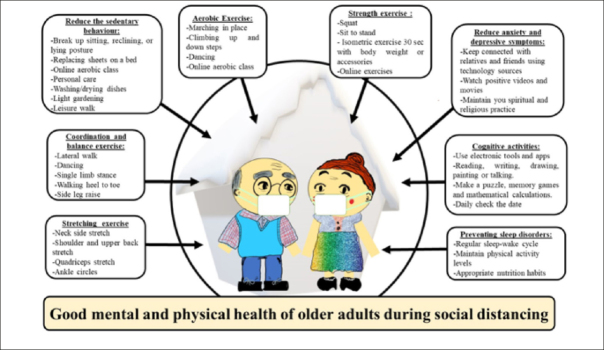
- The main international recommendations were cognitive strategies and increasing physical activity using apps, online videos, and telehealth; expert organizations and WHO recommended 150–300 minutes/week of moderate-intensity aerobic activity and two sessions/week of muscle-strength training.
## Methods
- Design: Narrative review.
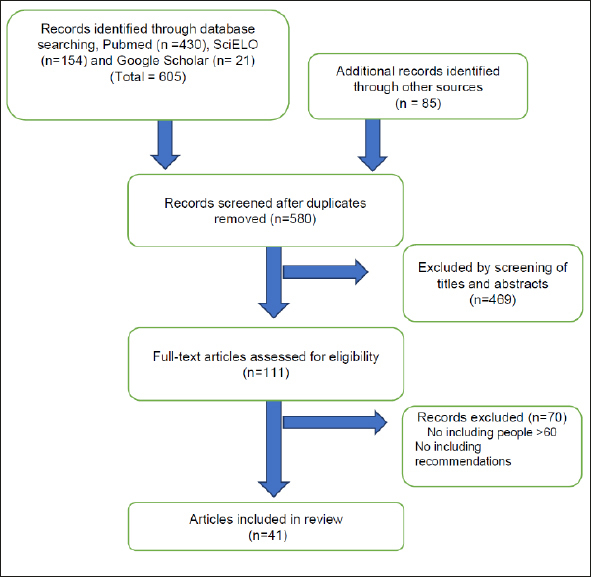
- Data/sample: Searches were done in PubMed, SciELO, and Google Scholar for articles published from 2019 to May 20, 2020, in English, Spanish, or Portuguese; studies without participants over 60 years old were excluded. The review also included guidelines, recommendations, and update documents from international organizations.
- Main analysis: The authors screened records for duplicates, titles, and abstracts, then organized the review into two areas: effects of quarantine/social isolation on mental and physical health, and recommendations for mental and physical health during quarantine.
## Limitations
- The paper states that included studies were cross-sectional, not specific to elderly populations, and descriptive, with no control group used.
- The paper states there is a lack of evidence on the most appropriate psychological and physical recommendations, and that most suggested interventions are based on expert opinion rather than high-evidence studies.
- Evident from the text: the review is based on studies from an early stage of the pandemic and the authors note these findings should be taken with caution because data were collected very early.
Model-written summary. Check it against the paper before relying on it.
Integrity signals
Registry
Cites
Statistics
Figures
Verification
Claims the paper makes
15 Valid · 1 Not valid · 6 Not checked · 6 Own results and interpretations
The cited sources support only part of this claim — read each source’s verdict below.
In the paper
“The prevalence of anxiety ranged from 8.3%, 18.7% and 35.1% to 49.7% (36, 38)”
- Also stated in: § Mental health · plain
“having a wide range from 8.3% (36) to 49.7% (42) for anxiety”
§ Impact of Social Isolation Due to COVID-19 on Health in Older People: Mental and Physical Effects and Recommendations > Results > Effect of the reduction of social participation produced by quarantine for COVID-19 on mental and physical health in elderly people
What the sources say
- Supportedcites [36] Lei L Huang X Zhang S Yang J Yang L Xu M Comparison of Prevalence and Associated Factors of Anxiety and Depression Among People Affected by versus People Unaffected by Quarantine During the COVID-19 Epidemic in Southwestern China Med Sci Monit. 26 2020 1 12 PMC7199435 32335579 source
The ‘Prevalence of anxiety and depression’ section reports anxiety in approximately 8.3% of the 1,593 participants in southwestern China. Because the citing sentence gives two references for a range across studies, this paper supports the 8.3% figure attributed to it. (LLM, conf=0.91)
- Partly supportedcites [38] Huang Y Zhao N Generalized anxiety disorder, depressive symptoms and sleep quality during COVID-19 outbreak in China: a web-based cross-sectional survey Psychiatry Res. 288 2020 10.1016/j.psychres.2020.112954 PMC7152913 32325383 sourceExperimental — accuracy not yet measured
The Results section reports a 35.1% prevalence of generalized anxiety disorder in this study’s Chinese survey sample. It does not report the 8.3% or 49.7% figures or establish a prevalence range across studies, so it supports only one value in the citing sentence. No page number is available in our copy. (LLM, conf=0.86)
- Could not verifycites [42] Losada-Baltar A, Jimenez-Gonzalo L, Gallego-Alberto L, Pedrosos-Chaparro M del S, Fernades-Pires J, Marquez-Gonzáles M. “We're staying at home”. Association of self-perceptions of aging, personal and family resources and loneliness with psychological distress during the lock-down period of COVID- 19. J Gerontol B Psychol Sci Soc Sci. 2020:1–10. PMC7184373 32282920 sourceExperimental — accuracy not yet measured
The Measures section mentions anxiety as one component of a psychological-distress scale, but gives no anxiety prevalence estimates. The Results section reports associations with distress rather than prevalence across studies; searches for 8.3%, 18.7%, 35.1%, 49.7%, and anxiety prevalence found no supporting passage in our copy. (LLM, conf=0.74)
plain- Asserted: passes — The authors put it forward as true.
- Checkable: passes — It can be checked against evidence.
- Load-bearing: unclear — It is unclear whether the paper’s conclusions depend on it.
- Based: passes — The paper gives a reason why it holds.
- Also stated in: § Mental health · plain
Every source the paper cites for this claim was checked and supports it.
In the paper
“Increased sedentary behavior has been associated with the prevalence of different comorbidities in elderly people (83).”
§ Impact of Social Isolation Due to COVID-19 on Health in Older People: Mental and Physical Effects and Recommendations > Discussion > Physical health
What the sources say
- Supportedcites [83] de Rezende L Rey-López J Matsudo V do Carmo Luiz O Sedentary behavior and health outcomes among older adults: a systematic review BMC Public Heal. 9 14 2014 333 10.1186/1471-2458-14-333 PMC4021060 24712381 source
The Results sections on metabolic syndrome and overweight/obesity report associations between greater sedentary behavior and both conditions in older adults. This supports the broad claim that sedentary behavior has been associated with different comorbidities, without implying causation. (LLM, conf=0.89)
plainstates an association- Asserted: passes — The authors put it forward as true.
- Checkable: passes — It can be checked against evidence.
- Load-bearing: passes — The paper’s conclusions depend on it.
- Based: passes — The paper gives a reason why it holds.
- Supported
The cited sources support only part of this claim — read each source’s verdict below.
In the paper
“This review has reported that social distancing because of the COVID-19 pandemic could lead to negative consequences for the physical health of older adults. This is caused by the decrease of physical activity levels due to the total or partial restriction of social participation in community groups and family activities during the pandemic (42, 43, 44).”
§ Impact of Social Isolation Due to COVID-19 on Health in Older People: Mental and Physical Effects and Recommendations > Discussion > Physical health
What the sources say
- Could not verifycites [42] Losada-Baltar A, Jimenez-Gonzalo L, Gallego-Alberto L, Pedrosos-Chaparro M del S, Fernades-Pires J, Marquez-Gonzáles M. “We're staying at home”. Association of self-perceptions of aging, personal and family resources and loneliness with psychological distress during the lock-down period of COVID- 19. J Gerontol B Psychol Sci Soc Sci. 2020:1–10. PMC7184373 32282920 sourceExperimental — accuracy not yet measured
The Introduction (page unavailable) suggests that lockdown may contribute to loneliness and psychological distress, and the Measures section assesses family contact. Our copy does not address the claimed decline in physical activity or a resulting effect on older adults’ physical health; searches for physical activity, exercise, social participation, and community groups found no supporting passage. (LLM, conf=0.76)
- Partly supportedcites [43] Goethals L Barth N Guyot J Hupin D Celarier T Bongue B Impact of home quarantine on physical activity among older adults living at home during the COVID-19 pandemic: Qualitative interview study J Med Internet Res. 22 5 2020 1 5 PMC7207013 32356777 sourceExperimental — accuracy not yet measured
The Discussion says quarantine and reduced social ties could decrease older adults’ physical activity, with possible consequences for physical functioning. The Results document reduced attendance and cancellation of group physical activity workshops. The paper does not specifically link restrictions on family activities to decreased physical activity. (LLM, conf=0.84)
- Partly supportedcites [44] Castañeda-babarro A. Impact of COVID-19 confinement on the time and intensity of physical activity in the Spanish population. Res Sq. 2020:1–14. doi: 10.21203/rs.3.rs-26074/vl. sourceExperimental — accuracy not yet measured
The cited preprint does support the general core: its Abstract and Discussion (Results, Conclusions) report that lockdown/social distancing during COVID-19 significantly reduced physical activity (vigorous −16.8%, walking −58.2%) and raised sedentary time (+23.8%), and the Discussion attributes part of this to 'forced sudden inaccessibility to community resources (e.g. sports facilities, urban trails, parks, green spaces)' and, via the socio-ecological model, to social isolation/loneliness (refs 18-20). However, the population is wrong: the study sampled 3800 healthy adults aged ≥18–≤64 residing in Spain (Abstract, Methods; Table 1 mean age 42.7), so it reports nothing about older adults, and its impact was greatest in men, young people, students and the very active. The specific causal attribution in the citing sentence — decreased activity due to 'total or partial restriction of social participation in community groups and family activities' — is also not stated in our copy, which instead cites prolonged stay at home, loss of active transport/work-related activity, e-learning/screen time and closure of fitness resources. (LLM, conf=0.78)
hedgedstates a possible cause- Asserted: passes — The authors put it forward as true.
- Checkable: passes — It can be checked against evidence.
- Load-bearing: passes — The paper’s conclusions depend on it.
- Based: passes — The paper gives a reason why it holds.
- Could not verify
The cited sources support only part of this claim — read each source’s verdict below.
In the paper
“Finally, sleep disturbances were observed in 18.2% (38) and 36.4% (37) among the participants.”
§ Impact of Social Isolation Due to COVID-19 on Health in Older People: Mental and Physical Effects and Recommendations > Results > Effect of the reduction of social participation produced by quarantine for COVID-19 on mental and physical health in elderly people
What the sources say
- Partly supportedcites [37] Yuan S Liao Z Huang H Comparison of the Indicators of Psychological Stress in the Population of Hubei Province and Non-Endemic Provinces in China During Two Weeks During the Coronavirus Disease 2019 (COVID-19) Outbreak in February 2020 Med Sci Monit. 26 2020 e923767 32294078 PMC7177041 sourceExperimental — accuracy not yet measured
Table 5 (Results; page not provided) reports that sleep quality worsened for 36.43% of the 527 participants included in that analysis, supporting the cited 36.4% figure. It excludes asymptomatic participants, however, and measures worsening sleep quality rather than the prevalence of sleep disturbances among all participants. The 18.2% figure is attached to a different citation and is not attributed to this paper. (LLM, conf=0.88)
- Supportedcites [38] Huang Y Zhao N Generalized anxiety disorder, depressive symptoms and sleep quality during COVID-19 outbreak in China: a web-based cross-sectional survey Psychiatry Res. 288 2020 10.1016/j.psychres.2020.112954 PMC7152913 32325383 source
The Results (Table 4) report poor sleep quality in 1,317 of 7,236 participants (18.2%), supporting the figure attached to this source, citation (38). The 36.4% figure is attached to a different citation, (37), and is not assessed here. (LLM, conf=0.93)
plain- Asserted: passes — The authors put it forward as true.
- Checkable: passes — It can be checked against evidence.
- Load-bearing: unclear — It is unclear whether the paper’s conclusions depend on it.
- Based: passes — The paper gives a reason why it holds.
- Partly supported
The cited sources support only part of this claim — read each source’s verdict below.
In the paper
“Goethals et al (43) reported that COVID-19 pandemic has affected the number of seniors attending group physical activity programs.”
§ Impact of Social Isolation Due to COVID-19 on Health in Older People: Mental and Physical Effects and Recommendations > Results > Effect of the reduction of social participation produced by quarantine for COVID-19 on mental and physical health in elderly people
What the sources say
- Partly supportedcites [43] Goethals L Barth N Guyot J Hupin D Celarier T Bongue B Impact of home quarantine on physical activity among older adults living at home during the COVID-19 pandemic: Qualitative interview study J Med Internet Res. 22 5 2020 1 5 PMC7207013 32356777 sourceExperimental — accuracy not yet measured
The Discussion says the study suggests that the epidemic affected seniors’ attendance at group physical activity programs before quarantine in two study territories. The citing sentence presents that qualified finding as a general fact, without the study’s uncertainty or limits of place and time. (LLM, conf=0.82)
plainstates a cause- Asserted: passes — The authors put it forward as true.
- Checkable: passes — It can be checked against evidence.
- Load-bearing: unclear — It is unclear whether the paper’s conclusions depend on it.
- Based: passes — The paper gives a reason why it holds.
- Partly supported
12 more claims · 7 with their cited sources checked
Create a free account to see all 28 claims and to verify the 4 references still open.
- It may state two separate claims as one. 10
- Probably not a substantial claim. 2
Claims other papers make about this one
Each is checked against this paper’s own text: does it say what the citing paper says it does?
The source backs part of the claim, not all of it — or backs it for a different population, condition or comparison.
In the citing paper
“During 2021, older adults faced social isolation due to the COVID-19 pandemic, resulting in a surge in articles at that time.”
From Smart Speakers for Health and Well-Being of Older Adults: A Mixed-Methods Review (2025) · cites this paper as [38]
Experimental — accuracy not yet measured
Citations
Cites
The Psychological Impact of Quarantine and How to Reduce It: Rapid Review of the Evidence
Brooks, S. K., Webster, R. K., Smith, L. E., Woodland, L., Wessely, S., Greenberg, N., & Rubin, G. J. (2020) · doi:10.2139/ssrn.3532534 · Cited by 16,394
The psychological impact of quarantine and how to reduce it: Rapid review of the evidence
Brooks, S. K., Webster, R. K., Smith, L. E., Woodland, L., Wessely, S., Greenberg, N., & Rubin, G. J. (2020) · The Lancet · doi:10.1016/s0140-6736(20)30460-8 · Cited by 16,378
(1985) · Europe PMC (PubMed Central) · Cited by 9,143
Social Relationships and Mortality Risk: A Meta-analytic Review
Holt-Lunstad, J., Smith, T. B., & Layton, J. B. (2010) · PLoS Medicine · doi:10.1371/journal.pmed.1000316 · Cited by 7,272 · cited 1×
“Evidence has demonstrated a relationship between social isolation and loneliness with disability, chronic diseases, risk of mortality and physical inactivity in elderly population (9, 19, 75-79).”
Holmes, E. A., O'Connor, R. C., Perry, V. H., Tracey, I., Wessely, S., Arseneault, L., Ballard, C., Christensen, H., Cohen Silver, R., Everall, I., et al. (2020) · The Lancet Psychiatry · doi:10.1016/s2215-0366(20)30168-1 · Cited by 5,715
Sedentary Behavior Research Network (SBRN)—Terminology Consensus Project process and outcome
on behalf of SBRN Terminology Consensus Project Participants, Tremblay, M. S., Aubert, S., Barnes, J. D., Saunders, T. J., Carson, V., Latimer-Cheung, A. E., Chastin, S. F. M., Altenburg, T. M., & Chinapaw, M. J. M. (2017) · International Journal of Behavioral Nutrition and Physical Activity · doi:10.1186/s12966-017-0525-8 · Cited by 3,793 · cited 1×
“…as any body movement using skeletal muscle that results in energy expenditure > 1.5 metabolic equivalent of task (MET), while sedentary behavior is defined as any waking behavior characterized by an energy expenditure 1.5 or less MET while in a sitting, reclining or lying posture (81, 82).”
InfluentialInternational Classification of Functioning, Disability and Health
World Health Organization (2021) · PsycTESTS Dataset · doi:10.1037/t76403-000 · Cited by 3,751
Huang, Y., & Zhao, N. (2020) · Psychiatry Research · doi:10.1016/j.psychres.2020.112954 · Cited by 3,736 · cited 3×
“Being female (36, 39, 42), having a negative self-perception of aging (42), healthcare workers (38), family and personal resources (42), time devoted to COVID-19 information (42), having an acquaintance or a family member infected with COVID-19 or a previous history of medical problems (39) seem to…”
Influential(2020) · PubMed · doi:10.3760/cma.j.issn.0254-6450.2020.02.003 · Cited by 3,323
The World report on ageing and health: a policy framework for healthy ageing
Beard, J. R., Officer, A., de Carvalho, I. A., Sadana, R., Pot, A. M., Michel, J.-P., Lloyd-Sherlock, P., Epping-Jordan, J. E., Peeters, G. M. E. E. (., Mahanani, W. R., et al. (2016) · The Lancet · doi:10.1016/s0140-6736(15)00516-4 · Cited by 3,287
Research works printed but not linked: 3
- Yazawa A Inoue Y Fujiwara T Association between social participation and hypertension among older people in Japan: the JAGES Study Hypertens Res. 39 11 2016 818 824 10.1038/hr.2016.78 27383510 · DOI
- Holmes EA O'Connor RC Perry VH Multidisciplinary research priorities for the COVID-19 pandemic: a call for action for mental health science The Lancet Psychiatry. 0366 20 2020 1 14 PMC7159850 32304649
- Arazi H Eghbali E Osteosarcopenia and Physical Activity Ann Sport Med Res. 5 1130 2018 3 6
Cited by
Onset and frequency of depression in post-COVID-19 syndrome: A systematic review
Renaud-Charest, O., Lui, L. M. W., Eskander, S., Ceban, F., Ho, R., Di Vincenzo, J. D., Rosenblat, J. D., Lee, Y., Subramaniapillai, M., & McIntyre, R. S. (2021) · Journal of Psychiatric Research · doi:10.1016/j.jpsychires.2021.09.054 · Cited by 374
Active Aging and Public Health: Evidence, Implications, and Opportunities
Dogra, S., Dunstan, D. W., Sugiyama, T., Stathi, A., Gardiner, P. A., & Owen, N. (2022) · Annual Review of Public Health · doi:10.1146/annurev-publhealth-052620-091107 · Cited by 334
“First, a shift away from cars to shared or public transport and active travel or electric-assisted micromobility may be invaluable for ensuring autonomy.”
BackgroundSayin Kasar, K., & Karaman, E. (2021) · Geriatric Nursing · doi:10.1016/j.gerinurse.2021.03.010 · Cited by 334
Su, Y., Rao, W., Li, M., Caron, G., D’Arcy, C., & Meng, X. (2023) · International Psychogeriatrics · doi:10.1017/s1041610222000199 · Cited by 275
“…of social isolation in part may be associated with social distancing which adds difficulties to connect others among the older population (Sepúlveda-Loyola et al., 2020), whereas loneliness may occur through pathways unrelated to the frequency of social network interaction, including…”
BackgroundHaimi, M. (2023) · BMC Medical Informatics and Decision Making · doi:10.1186/s12911-023-02194-4 · Cited by 182
An overview of mental health during the COVID-19 pandemic
Chen, P. J., Pusica, Y., Sohaei, D., Prassas, I., & Diamandis, E. P. (2021) · Diagnosis · doi:10.1515/dx-2021-0046 · Cited by 159
Alotaibi, M., Fox, M., Coman, R., Ratan, Z., & Hosseinzadeh, H. (2022) · International Journal of Environmental Research and Public Health · doi:10.3390/ijerph19063710 · Cited by 144
Masoudi, M., Maasoumi, R., & Bragazzi, N. L. (2022) · BMC Public Health · doi:10.1186/s12889-021-12390-4 · Cited by 149
“Governments have been closely monitoring the implementation of these measures, and, in the meantime, have been trying to mitigate against the societal burden generated by the COVID-19 related public health interventions [14].”
BackgroundProcrastination and Stress: A Conceptual Review of Why Context Matters
Sirois, F. M. (2023) · International Journal of Environmental Research and Public Health · doi:10.3390/ijerph20065031 · Cited by 126
Immigrant Communities and COVID-19: Strengthening the Public Health Response
Ðoàn, L. N., Chong, S. K., Misra, S., Kwon, S. C., & Yi, S. S. (2021) · American Journal of Public Health · doi:10.2105/ajph.2021.306433 · Cited by 109
Saraiva, M. D., Apolinário, D., Avelino‐Silva, T. J., Tavares, C. A. M., Gattás-Vernaglia, I. F., Fernandes, C. M., RABÊLO, L. M., Yamaguti, S. T. F., Karnakis, T., Filho, R. K., et al. (2020) · The journal of nutrition health & aging · doi:10.1007/s12603-020-1532-z · Cited by 109
“Anxiety (GAD-2 ≥ 3), n (%) 108 (19) 13 (10) 51 (17) 44 (34) <0.”
BackgroundLehtisalo, J., Palmer, K., Mangialasche, F., Solomon, A., Kivipelto, M., & Ngandu, T. (2021) · Frontiers in Psychiatry · doi:10.3389/fpsyt.2021.624125 · Cited by 112
“Previous studies suggest that, particularly, social isolation during the pandemic has negative impact on both physical andmental health (15).”
BackgroundWallinheimo, A.-S., & Evans, S. L. (2021) · Healthcare · doi:10.3390/healthcare9040393 · Cited by 85
“A review of studies into the impact of COVID-19 lockdowns on mental health in older adults [2] found that of eight crosssectional studies reviewed, six reported negative effects including higher depression and loneliness.”
BackgroundForest-bathing and physical activity as weapons against COVID-19: a review
Roviello, V., Gilhen-Baker, M., Vicidomini, C., & Roviello, G. N. (2021) · Environmental Chemistry Letters · doi:10.1007/s10311-021-01321-9 · Cited by 96
The COVID-19 disaster and mental health—assessing, responding and recovering
Lindert, J., Jakubauskienė, M., & Bilsen, J. J. R. (2021) · European Journal of Public Health · doi:10.1093/eurpub/ckab153 · Cited by 107
González-Gerez, J. J., Saavedra-Hernández, M., Anarte‐Lazo, E., Utrera, C. B., Pérez-Alé, M., & Rodríguez‐Blanco, C. (2021) · International Journal of Environmental Research and Public Health · doi:10.3390/ijerph18147511 · Cited by 94
“In addition, home isolation could reduce physical activity levels and, therefore, could lead to notable deconditioning [4]; this, combined with possible sequelae due to COVID-19 [5], makes it essential to manage isolated patients properly to offer the best possible treatment for them and as soon as possible.”
BackgroundColucci, E., Nadeau, S. M., Higgins, J., Kehayia, E., Poldma, T., Saj̈, A., & de Guise, É. (2021) · Archives of Gerontology and Geriatrics · doi:10.1016/j.archger.2021.104606 · Cited by 91
Pérez, L. M., Castellano‐Tejedor, C., Cesari, M., Soto-Bagaria, L., Ars, J., Zambom-Ferraresi, F., Baró, S., Díaz-Gallego, F., Vilaró, J., Enfedaque, M. B., et al. (2021) · International Journal of Environmental Research and Public Health · doi:10.3390/ijerph18020808 · Cited by 84
Noguchi, T., Kubo, Y., Hayashi, T., Tomiyama, N., Ochi, A., & Hayashi, H. (2021) · Journal of the American Medical Directors Association · doi:10.1016/j.jamda.2021.05.015 · Cited by 78
Promoting Healthy Aging During COVID ‐19
Batsis, J. A., Daniel, K. M., Eckstrom, E., Goldlist, K., Kusz, H., Lane, D. W., Loewenthal, J., Coll, P. P., & Friedman, S. M. (2021) · Journal of the American Geriatrics Society · doi:10.1111/jgs.17035 · Cited by 84
“Although protecting older adults from getting COVID-19 is a priority, we need to be more aware of the negative impact of physical distancing and social isolation on other aspects of an older adult’s health.(48) Promoting social connectedness for older adults during the pandemic is an important goal.”
BackgroundA Study of Older Adults’ Mental Health across 33 Countries during the COVID-19 Pandemic
Tyler, C. M., McKee, G. B., Alzueta, E., Perrin, P. B., Kingsley, K., Baker, F. C., & Arango‐Lasprilla, J. C. (2021) · International Journal of Environmental Research and Public Health · doi:10.3390/ijerph18105090 · Cited by 78
Ratan, Z. A., Parrish, A., Alotaibi, M. S., & Hosseinzadeh, H. (2022) · International Journal of Environmental Research and Public Health · doi:10.3390/ijerph192416583 · Cited by 93
Goto, T., Kishimoto, T., Fujiwara, S., Shirayama, Y., & Ichikawa, T. (2024) · Scientific Reports · doi:10.1038/s41598-024-53984-3 · Cited by 70
The Lived Experience of Already-Lonely Older Adults During COVID-19
Bundy, H. E., Lee, H. M., Sturkey, K. N., & Caprio, A. J. (2021) · The Gerontologist · doi:10.1093/geront/gnab078 · Cited by 79
“This is not to suggest that calls for action and caution related to COVID-19-related loneliness are exaggerated, as analysts have rightly stressed the physiological and emotional risks of physical and social distancing (Chu et al., 2020; Patel & Clark-Ginsberg, 2020; Portacolone et al., 2021; Sepúlveda-Loyola et al.,…”
BackgroundBarazzoni, R., Bischoff, S. C., Busetto, L., Cederholm, T., Chourdakis, M., Cuerda, C., Delzenne, N. M., Genton, L., Schneider, S. M., Singer, P., et al. (2021) · Clinical Nutrition · doi:10.1016/j.clnu.2021.05.006 · Cited by 71
“regarding physical activity, in order to maintain health, avoid functional limitations and improve immune function [65] but also to improve the sleep and limit psychological stress [66].”
Post–Intensive Care Unit Syndrome in a Cohort of COVID-19 Survivors in New York City
Weidman, K., LaFond, E., Hoffman, K. L., Goyal, P., Parkhurst, C. N., Derry, H. M., Schenck, E., & Lief, L. (2022) · Annals of the American Thoracic Society · doi:10.1513/annalsats.202104-520oc · Cited by 80
Dura-Perez, E., Goodman‐Casanova, J. M., Vega-Núñez, A., Guerrero-Pertiñez, G., Moreno, E. V., Garolera, M., Quintana, M., Vargas, A. I. C., Barnestein‐Fonseca, P., Sánchez-Lafuente, C. G., et al. (2022) · Journal of Medical Internet Research · doi:10.2196/30598 · Cited by 65
“However, we showed in a previous study based on the TV-AssistDem RCT how technology could be useful to maintain cognitive activities [61], and more studies need to clarify whether the evidence supports the recommendations on interventions that may improve the knowledge of ICTs and are related with the use of technolog…”
Freiberg, A., Schubert, M., Starke, K. R., Hegewald, J., & Seidler, A. (2021) · International Journal of Environmental Research and Public Health · doi:10.3390/ijerph18168567 · Cited by 64
“Some of these focus on specific age groups like children and adolescents [37–39,48], students [40], adults [45,47], or older adults [49].”
BackgroundRestout, J., Bernache‐Assollant, I., Morizio, C., Boujut, A., Angelini, L., Tchalla, A. E., & Perrochon, A. (2023) · Journal of the American Medical Directors Association · doi:10.1016/j.jamda.2022.12.026 · Cited by 63
Calvo-Paniagua, J., Díaz‐Arribas, M. J., Valera‐Calero, J. A., Gallardo-Vidal, M. I., Fernández‐de‐las‐Peñas, C., López‐de‐Uralde‐Villanueva, I., del Corral, T., & Plaza‐Manzano, G. (2022) · PLoS ONE · doi:10.1371/journal.pone.0271802 · Cited by 62
Dubey, S., Das, S., Ghosh, R., Dubey, M. J., Chakraborty, A. P., Roy, D., Das, G. C., Dutta, A., Santra, A., Sengupta, S., et al. (2023) · Journal of Alzheimer s Disease Reports · doi:10.3233/adr-220090 · Cited by 55
Rodríguez‐Blanco, C., Utrera, C. B., Anarte‐Lazo, E., Saavedra-Hernández, M., De-La-Barrera-Aranda, E., Serrera‐Figallo, M., Gonzalez-Martin, M., & González-Gerez, J. J. (2021) · Clinical Rehabilitation · doi:10.1177/02692155211061221 · Cited by 60
Siegmund, L. A., Distelhorst, K. S., Bena, J., & Morrison, S. L. (2021) · Geriatric Nursing · doi:10.1016/j.gerinurse.2021.08.012 · Cited by 52
“Further, reduced physical activity and its ramifications during COVID-19 has been widely reported in the literature.(6,7,8,9,10) Hence, it was recognized that a greater understanding of physical activity and social isolation and their relationship to depression among older adults was needed.”
InfluentialBeauchamp, M., Joshi, D., McMillan, J. M., Oz, U. E., Griffith, L. E., Basta, N. E., Kirkland, S., Wolfson, C. M., Raina, P. S., Canadian Longitudinal Study on Aging (CLSA) Team, et al. (2022) · JAMA Network Open · doi:10.1001/jamanetworkopen.2021.46168 · Cited by 51
Kadowaki, L., & Wister, A. (2023) · Canadian Journal on Aging / La Revue canadienne du vieillissement · doi:10.1017/s0714980822000459 · Cited by 47
Wallinheimo, A.-S., & Evans, S. (2022) · Healthcare · doi:10.3390/healthcare10071179 · Cited by 49
“There is consistent evidence of increased depression and loneliness levels amongst older adults as a result of COVID-19 lockdowns [10]; social isolation has been linked to psychological distress and mental health issues during the pandemic in adults aged ≥ 55 years [11,12].”
BackgroundPreparing for population ageing in the Western Pacific Region
Kasai, T. (2020) · The Lancet Regional Health - Western Pacific · doi:10.1016/j.lanwpc.2020.100069 · Cited by 53
The prevalence of social frailty among older adults: A systematic review and meta-analysis
Yu, S., Wang, J., Zeng, L., Yang, P., Tang, P., & Su, S. (2022) · Geriatric Nursing · doi:10.1016/j.gerinurse.2022.11.009 · Cited by 49
Qaderi, K., Yazdkhasti, M., Zangeneh, S., Morshed-Behbahani, B., Kalhor, M., Shamsabadi, A., Jesmani, Y., Norouzi, S., Kajbafvala, M., Khodavirdilou, R., et al. (2023) · Sexual Medicine · doi:10.1093/sexmed/qfad005 · Cited by 51
Badu, K., Oyebola, K. M., Zahouli, J. Z. B., Fagbamigbe, A. F., de Souza, D. K., Dukhi, N., Amankwaa, E. F., Tolba, M. F., Sylverken, A. A., Mosi, L., et al. (2021) · Frontiers in Medicine · doi:10.3389/fmed.2021.648660 · Cited by 47
“Shortcomings of this study included (1) the lack of effective antivirals, inadequate adherence to standard supportive therapy, and high-dose corticosteroid use, (2) limited frequency of respiratory specimen collection, (3) lack of quantitative viral RNA detection, (4) limited sample size, and (5) late transfer of pati…”
BackgroundInfluentialXu, L., Wang, Z., Li, M., & Li, Q. (2025) · Journal of Global Health · doi:10.7189/jogh.15.04156 · Cited by 62
“Long-term isolation, lack of social support, and psychological stress may have accelerated cognitive decline, resulting in a rise in AD and other dementia cases [ 31 , 32 ].”
Ejiri, M., Kawai, H., Kera, T., Ihara, K., Fujiwara, Y., Watanabe, Y., Hirano, H., Kim, H., & Obuchi, S. P. (2021) · Psychology of sport and exercise · doi:10.1016/j.psychsport.2021.102054 · Cited by 55
Teater, B. A., Chonody, J. M., & Hannan, K. (2021) · Journal of Human Behavior in the Social Environment · doi:10.1080/10911359.2020.1835777 · Cited by 52
“In another study, the negative impact of social isolation during the COVID-19 pandemic on the mental health and wellbeing of older adults was found (Sepúlveda-Loyola et al., 2020), including stress, anxiety, depressive symptoms, insomnia, denial, anger and fear all around the world (Torales et al.”
BackgroundO’Laughlin, K. N., Thompson, M., Hota, B. N., Gottlieb, M. A., Plumb, I. D., Chang, A. M., Wisk, L. E., Hall, A. J., Wang, R. C., Spatz, E. S., et al. (2022) · PLoS ONE · doi:10.1371/journal.pone.0264260 · Cited by 40
Zhang, L., Tao, Y., Hou, W., Niu, H., Ma, Z., Zheng, Z., Wang, S., Zhang, S., Lv, Y., Li, Q., et al. (2022) · Frontiers in Psychiatry · doi:10.3389/fpsyt.2022.919251 · Cited by 46
A detailed review of the outbreak of COVID-19
Das, K., Pingali, M. S., Paital, B., Panda, F., Pati, S. G., Singh, A. K., Varadwaj, P. K., & Samanta, S. K. (2021) · Frontiers in Bioscience-Landmark · doi:10.52586/4931 · Cited by 47
“Government has taken the phronetic decisions like to improve scientific communication that helps individual and collective interests, to give support to every mankind in the form of healthy life [152].”
BackgroundInfluentialAlhalaseh, L., Kasasbeh, F., Al‐Bayati, M., Haikal, L., Obeidat, K., Abuleil, A., & Wilkinson, I. (2022) · Psychogeriatrics · doi:10.1111/psyg.12833 · Cited by 49
Pragmatic approaches to handling practice effects in longitudinal cognitive aging research
Chen, R., Calmasini, C., Swinnerton, K. N., Wang, J., Haneuse, S., Ackley, S. F., Hirst, A. K., Hayes‐Larson, E., George, K. M., Peterson, R. L., et al. (2023) · Alzheimer s & Dementia · doi:10.1002/alz.13067 · Cited by 42
Sharifi, S., Khorzoughi, K. B., Khaledi‐Paveh, B., & Rahmati, M. (2023) · Geriatric Nursing · doi:10.1016/j.gerinurse.2023.05.014 · Cited by 43
COVID-19 and Alzheimer’s Disease: A Literature Review
Hardan, L., Filtchev, D., Kassem, R., Bourgi, R., Łukomska−Szymańska, M., Tarhini, H., Salloum-Yared, F., Mancino, D., Kharouf, N., & Haïkel, Y. (2021) · Medicina · doi:10.3390/medicina57111159 · Cited by 46
“Older people presented a five times higher risk of mortality than the general population, [1] straining health systems and disrupting societies, as well as putting individuals with AD and related dementias (ADRD) at risk of significant harm [2].”
BackgroundInfluentialLaddu, D., Biggs, E., Kaar, J. L., Khadanga, S., Alman, R., & Arena, R. A. (2022) · Progress in Cardiovascular Diseases · doi:10.1016/j.pcad.2022.11.017 · Cited by 39
Definitions and symptoms of the post-COVID syndrome: an updated systematic umbrella review
Gutzeit, J., Weiß, M., Nürnberger, C., Lemhöfer, C., Appel, K. S., Pracht, E., Reese, J., Lehmann, C., Polidori, M. C., Hein, G., et al. (2024) · European Archives of Psychiatry and Clinical Neuroscience · doi:10.1007/s00406-024-01868-y · Cited by 50
“…already existed before the SARS-CoV-2 infection [62], whether they were exacerbated but not caused by the infection [63, 64], or whether consequences such as sleep disturbances or impairments in physical activity were caused by pandemic response measures [65, 66], but not by the infection itself.”
Mistry, S. K., Ali, A. M., Irfan, N. M., Yadav, U. N., Siddique, R. F., Peprah, P., Reza, S., Rahman, Z., Casanelia, L. M., & O’Callaghan, C. (2021) · Cambridge Prisms Global Mental Health · doi:10.1017/gmh.2021.24 · Cited by 31
Casper, J. M., Bocarro, J. N., & Lothary, A. F. (2021) · World Leisure Journal · doi:10.1080/16078055.2021.1957708 · Cited by 43
“Our data supports prior evidence that COVID-19 restrictions impact psychological well-being (Blazer, 2020; Sepulveda-Loyala et al., 2020) as participants reported significantly lower mental health, higher loneliness, and lower life satisfaction.”
BackgroundResultMarzo, R. R., Khanal, P., Ahmad, A., Rathore, F. A., Chauhan, S., Singh, A., Shrestha, S., AlRifai, A., Lotfizadeh, M., Younus, D. A., et al. (2022) · Life · doi:10.3390/life12030365 · Cited by 37
“Sepúlveda-Loyola (2020) reviewed the impact of social isolation during the COVID-19 pandemic on the mental and physical health of older people and provided recommendations for patients, caregivers, and health professionals [27].”
BackgroundRodríguez-Sánchez, I., Rodríguez‐Mañas, L., & Laosa, O. (2022) · Clinics in Geriatric Medicine · doi:10.1016/j.cger.2022.03.005 · Cited by 41
Self-citationJin, Y., Sun, H., Lam, S. C., Su, Z., Hall, B. J., Cheung, T. C. C., Qin, M., Ng, C. H., & Xiang, Y. (2022) · International Journal of Biological Sciences · doi:10.7150/ijbs.69460 · Cited by 38
“Moreover, restricted outdoor exercise due to quarantines during the pandemic could lead to a lack of energy in this subpopulation [54].”
BackgroundClifton, K., Gao, F., Jabbari, J., Aman, M. V., Dulle, P., Hanson, J. L., & Wildes, T. M. (2022) · Journal of Geriatric Oncology · doi:10.1016/j.jgo.2022.08.003 · Cited by 41
“The COVID-19 pandemic and its attendant mitigation strategies, including stay-at-home orders and social distancing, have made consideration of the health impact of social connection increasingly relevant [1,2].”
BackgroundFerreira, A. C. L., Pereira, D. S., da Silva, S. L. A., Carvalho, G. A., & Pereira, L. S. M. (2023) · Geriatric Nursing · doi:10.1016/j.gerinurse.2023.04.011 · Cited by 33
Cipolletta, S., & Gris, F. (2021) · International Journal of Environmental Research and Public Health · doi:10.3390/ijerph182211832 · Cited by 36
“It has been suggested that people should limit their time searching for information—a maximum of once or twice per day [17] and preferably not at night, to facilitate falling asleep [32].”
BackgroundAlessandro de, S. I. R. E., Lippi, L., Aprile, V., Calafiore, D., Folli, A., D’Abrosca, F., Moalli, S., Lucchi, M., Ammendolia, A., & Invernizzi, M. (2022) · Journal of Personalized Medicine · doi:10.3390/jpm12101626 · Cited by 33
“In addition, the COVID-19 pandemic has highlighted new challenges in the management of patients with COPD that were isolated for months at home with decreased physical activity levels and reduced health care delivery [175,176].”
BackgroundBek, J., Leventhal, D., Groves, M., Growcott, C., & Poliakoff, E. (2022) · PLoS ONE · doi:10.1371/journal.pone.0277645 · Cited by 34
The influence of genetic and acquired factors on the vulnerability to develop depression: a review
Zhang, X., Qiao, Y., Wang, M., Liang, X., Zhang, M., Li, C., Cairang, J., Wang, J., Bi, H., & Gao, T. (2023) · Bioscience Reports · doi:10.1042/bsr20222644 · Cited by 40
COVID-19-related mental health difficulties among marginalised populations: A literature review
Camara, C., Surkan, P. J., van der Waerden, J. E. B., Tortelli, A., Downes, N., Vuillermoz, C., & Melchior, M. (2022) · Cambridge Prisms Global Mental Health · doi:10.1017/gmh.2022.56 · Cited by 31
“…groups is limited, unlike healthcare workers, children, women, older people and people with pre-existing mental health disorders who have been widely studied (Sepúlveda-Loyola et al., 2020; Thibaut and Van Wijngaarden-Cremers, 2020; Vizheh et al., 2020; Jones et al., 2021; Hards et al., 2022).”
BackgroundExamining the mental health services among people with mental disorders: a literature review
Gao, Y., Burns, R. A., Leach, L., Chilver, M. R., & Butterworth, P. (2024) · BMC Psychiatry · doi:10.1186/s12888-024-05965-z · Cited by 43
“The COVID-19 pandemic had a major impact on mental health service use worldwide, the hospital admission and consultation rate decreased dramatically during the first pandemic year [118].”
BackgroundCarvalho, J., Borges‐Machado, F., Pizarro, A. I. N., Bohn, L., & Barros, D. G. M. (2021) · Frontiers in Psychology · doi:10.3389/fpsyg.2021.643832 · Cited by 31
Exploring the Challenges of Afghan Refugee Women Facing COVID-19: A Qualitative Study in Iran
Lebni, J. Y., Enayat, H., Irandoost, S. F., & Dehghan, A. A. (2022) · Frontiers in Public Health · doi:10.3389/fpubh.2022.838965 · Cited by 36
Effect of Exergame Training on Working Memory and Executive Function in Older Adults
Zhao, C., Zhao, C., Zhao, M., Wang, L., Guo, J., Zhang, L., Li, Y., Sun, Y. L., Zhang, L., Li, Z., et al. (2022) · Sustainability · doi:10.3390/su141710631 · Cited by 33
“Currently, physical activity was reduced amongst older people because of the COVID19 home confinement, while physical fitness and cognitive function declined with aging [1,2].”
BackgroundCerami, C., Crespi, C., Bottiroli, S., Santi, G. C., Sances, G., Allena, M., Vecchi, T., & Tassorelli, C. (2021) · Cephalalgia · doi:10.1177/03331024211027568 · Cited by 32
“perception and individual adaptation to changes in life habits (16).”
BackgroundFarhang, M., Miranda‐Castillo, C., Behrens, M. I., Castillo, E., Amar, S. M., & Rojas, G. (2021) · Aging & Mental Health · doi:10.1080/13607863.2021.1958145 · Cited by 39
“It has been suggested that the association between social isolation and memory decline is driven by the effect of social isolation on memory, and not the other way around (Read et al., 2020; Shankar et al., 2013).”
BackgroundPost-acute sequelae of COVID-19 in older persons: multi-organ complications and mortality
Wan, E. Y. F., Zhang, R., Mathur, S., Yan, V. K. C., Lai, F. T. T., Chui, C. S. L., Li, X., Wong, C. K. H., Chan, E. W., Lau, C. S., et al. (2023) · Journal of Travel Medicine · doi:10.1093/jtm/taad082 · Cited by 33
Dukelow, T., Lawrence, E. G., Jacobson, L., Vassilev, P., Koychev, I. G., Muhammed, K., & Kennelly, S. (2023) · Frontiers in Psychology · doi:10.3389/fpsyg.2022.1070259 · Cited by 37
“, 2022) and mental and physical health have been negatively impacted over this period (Sepúlveda-Loyola et al., 2020).”
BackgroundStubbe, J. H., Tiemens, A., Keizer-Hulsebosch, S. C., Steemers, S., van Winden, D., Buiten, M., Richardson, A., & van Rijn, R. M. (2021) · Frontiers in Psychology · doi:10.3389/fpsyg.2021.676587 · Cited by 39
Valencak, T. G., Csiszár, A., Szalai, G., Podlutsky, A. J., Tarantini, S., Fazekas‐Pongor, V., Papp, M., & Ungvari, Z. I. (2021) · GeroScience · doi:10.1007/s11357-021-00444-9 · Cited by 30
“[63] Reportedly, older people were suffering from symptoms of anxiety, depression, poor sleep quality, and physical inactivity.”
BackgroundLorber, M., Kolarič, J. Č., Kmetec, S., & Kegl, B. (2023) · Sustainability · doi:10.3390/su15032825 · Cited by 35
Zheng, X., Guo, Y., Yang, H., Luo, L., Ya, B., Xu, H. M., Xue, Z., Li, Q., Shi, J., Bi, J., et al. (2021) · Frontiers in Psychiatry · doi:10.3389/fpsyt.2021.680202 · Cited by 28
“The psychological impact of COVID-19, which has been reported within the general public (7), healthcare workers (8), and elderly adults (9), was characterized by increases in anxiety, depression, and insomnia.”
BackgroundRusso, R. G., Li, Y., Ðoàn, L. N., Ali, S. H., Siscovick, D. S., Kwon, S. C., & Yi, S. S. (2021) · Journal of the American Heart Association · doi:10.1161/jaha.121.022721 · Cited by 32
la Rosa, A. D., Quintero, A. M., Villa, M. A. C., Arc‐Chagnaud, C., de Andrade, A. G. P., Reyes-Correa, S., Quintero-Bernal, R., & García, J. P. F. (2022) · International Journal of Environmental Research and Public Health · doi:10.3390/ijerph191811234 · Cited by 29
“The COVID-pandemic by itself produced acute panic, anxiety, obsessive behaviors, depression, insomnia, and poor sleep quality [10,43].”
BackgroundMarkotegi, M., Irazusta, J., Sanz, B., & Rodriguez‐Larrad, A. (2021) · Experimental Gerontology · doi:10.1016/j.exger.2021.111580 · Cited by 33
Halat, D. H., Younes, S., Safwan, J., Akiki, Z., Akel, M., & Rahal, M. K. (2022) · European Journal of Investigation in Health Psychology and Education · doi:10.3390/ejihpe12080077 · Cited by 30
“This finding has been previously replicated elsewhere [59], with evidence of the negative impact of social isolation on mental health, as well as on poor sleep quality and physical inactivity during confinement.”
Li, Y., Su, S., Luo, B., Wang, J., & Liao, S. (2022) · International Journal of Disaster Risk Reduction · doi:10.1016/j.ijdrr.2022.102793 · Cited by 30
Psychological Morbidity After COVID-19 Critical Illness
Sankar, K., Gould, M. K., & Prescott, H. C. (2022) · CHEST Journal · doi:10.1016/j.chest.2022.09.035 · Cited by 29
“Prevalence of depression was also increased because of social isolation, especially in older adults.(50) An international study based on online questionnaires to assess psychiatric symptoms demonstrated marked increases in anxiety, acute stress, and depression in the general worldwide population.”
BackgroundTucker, R. M., Contreras, D. A., Carlson, B. R., Carter, A., & Drake, C. L. (2021) · Nature and Science of Sleep · doi:10.2147/nss.s304035 · Cited by 26
“distancing have been problematic for everyone, these requirements have been particularly deleterious for the quality of life and health of older adults.(8,9) Insufficient and poorquality sleep exacerbate health problems by increasing the risk and/or severity of dementia, obesity, type 2 diabetes, hypertension, cardiov…”
BackgroundImpact of COVID ‐19 pandemic on mobility of older adults: A scoping review
Felipe, S. G. B., Batista, P. P., da Silva, C. C. R., de Melo, R. C., de Assumpção, D., & Perracini, M. R. (2022) · International Journal of Older People Nursing · doi:10.1111/opn.12496 · Cited by 30
Sensor-Based Assessment of Social Isolation and Loneliness in Older Adults: A Survey
Prabhu, D., Kholghi, M., Sandhu, M. M., Lü, W., Packer, K., Higgins, L., & Silvera‐Tawil, D. (2022) · Sensors · doi:10.3390/s22249944 · Cited by 24
Caycho‐Rodríguez, T., Tomás, J. M., Vilca, L. W., Cadena, C. H. G., Rojas-Jara, C., White, M., & Peña-Calero, B. N. (2021) · Psychology Health & Medicine · doi:10.1080/13548506.2021.1944655 · Cited by 28
“This population has been negatively impacted by the COVID-19 pandemic, resulting in the presence of symptoms for anxiety, depression, poor sleep quality, increased psychological distress and loneliness (García-Fernández et al., 2020; Sepulveda-Loyola et al., 2020).”
BackgroundBody composition, lifestyle, and depression: a prospective study in the UK biobank
Lv, X., Cai, J., Li, X., Wang, X., Ma, H., Heianza, Y., Qi, L., & Zhou, T. (2024) · BMC Public Health · doi:10.1186/s12889-024-17891-6 · Cited by 26
“Our present study applied the comprehensive lifestyle evaluation which included three new factors: sleep patterns [22], sedentary behaviors [42], and social connection [23, 43], which were all related to the risk of depression independently.”
MethodFalls in older adults: The new pandemic in the post COVID-19 era?
la Cámara, M. Á. D., de la Fuente, A. J., & Pardos‐Sevilla, A. I. (2020) · Medical Hypotheses · doi:10.1016/j.mehy.2020.110321 · Cited by 23
“As consequence, physical health in older people is negatively affected during the confinement caused by this pandemic [3].”
Weiskittle, R., Tsang, W., Schwabenbauer, A. K., Andrew, N., & Mlinac, M. E. (2021) · Clinical Gerontologist · doi:10.1080/07317115.2021.1906812 · Cited by 25
“Increased social isolation and anxiety related to the COVID-19 pandemic could lead to mental health crises in the older adult population (Luchetti et al., 2020; Sepulveda-Loyola et al., 2020; Wand, Zhong, Chiu, Draper, & De Leo, 2020).”
BackgroundCaycho‐Rodríguez, T., Vilca, L. W., Peña-Calero, B. N., Barboza-Palomino, M., White, M., & Reyes-Bossio, M. A. (2021) · Revista Española de Geriatría y Gerontología · doi:10.1016/j.regg.2021.09.001 · Cited by 23
Wong, L. P., Alias, H., Tan, Y. R., & Tan, K. M. (2021) · International Journal of Older People Nursing · doi:10.1111/opn.12436 · Cited by 26
Carlsson, G., Granbom, M., Fristedt, S., Jönsson, O., Hägg, L., Ericsson, J., & Kylén, M. (2022) · Journal of Occupational Science · doi:10.1080/14427591.2022.2057572 · Cited by 28
Markiewicz-Gospodarek, A., Górska, A., Markiewicz, R., Chilimoniuk, Z., Czeczelewski, M., Baj, J., Maciejewski, R., & Masiak, J. (2022) · International Journal of Environmental Research and Public Health · doi:10.3390/ijerph19159573 · Cited by 27
Social Media Use and Depression in Older Adults: A Systematic Review
Guzman, A. A., Brecht, M., Doering, L. V., Macey, P. M., & Mentes, J. C. (2023) · Research in Gerontological Nursing · doi:10.3928/19404921-20230220-05 · Cited by 31
Suryadi, D., Nasrulloh, A., Haryanto, J., Samodra, Y. T. J., Wati, I. D. P., Suganda, M. A., Nugroho, S., Dafun, P. B., Kushartanti, W., & Fauziah, E. (2024) · Pedagogy of Physical Culture and Sports · doi:10.15561/26649837.2024.0305 · Cited by 36
Consequences of COVID-19 on Health, Economy, and Tourism in Asia: A Systematic Review
Saengtabtim, K., Leelawat, N., Tang, J., Suppasri, A., & Imamura, F. (2022) · Sustainability · doi:10.3390/su14084624 · Cited by 25
Sińska, B. I., Jaworski, M., Pańczyk, M., Traczyk, I., & Kucharska, A. (2021) · Nutrients · doi:10.3390/nu13062108 · Cited by 22
“Changes in dietary habits may lead to the deterioration of the health status of isolated individuals depending on the time of isolation, its degree and the health status of the isolated people [10].”
BackgroundLüdecke, D., & Knesebeck, O. V. D. (2022) · Frontiers in Public Health · doi:10.3389/fpubh.2022.844560 · Cited by 25
Lippi, L., D’Abrosca, F., Folli, A., Molin, A. D., Moalli, S., Maconi, A., Ammendolia, A., Alessandro de, S. I. R. E., & Invernizzi, M. (2022) · International Journal of Environmental Research and Public Health · doi:10.3390/ijerph19159150 · Cited by 24
“During the COVID-19 pandemic, several frail patients became isolated at home with detrimental consequences in terms of their functional status and social participation [58,59].”
BackgroundJung, J., Kim, S. Y., Kim, B. S., Kim, M., Yang, J.-S., Chung, D., & Won, C. W. (2022) · International Journal of Environmental Research and Public Health · doi:10.3390/ijerph191710666 · Cited by 21
“The elderly engaged in less outdoor activities compared to the younger population [3].”
Background
Metadata
- Authors
- Sepúlveda-Loyola, W., Rodríguez-Sánchez, I., Pérez-Rodríguez, P., Ganz, F., Torralba, R., Oliveira, D. V., & Rodríguez-Mañas, L.
- Affiliations
- Complejo Hospitalario de Navarra (ES)
- Hospital Universitario La Paz (ES)
- University of Alberta (CA)
- Hospital General Universitario de Ciudad Real (ES)
- Venue
- The Journal of nutrition, health and aging
- Publisher
- Elsevier BV
- Published
- 2020-09
- Volume
- 24
- Issue
- 9
- Pages
- 938-947
- ISSN
- 1279-7707 (ISSN-L)
- PMC
- PMC7597423
- OpenAlex
- W4233641204
- Cited by
- 1,081
- References
- 85
- Citations by year
- 2026: 71 · 2025: 114 · 2024: 158 · 2023: 263 · 2022: 286 · 2021: 175 · 2020: 14
- FWCI
- 68.49
- Type
- journal article
- Language
- en
- Open access
- hybrid
- doi.org
- Licence
- cc-by-nc-nd
- www.elsevier.com/tdm/userlicense/1.0/ (tdm)
- www.elsevier.com/legal/tdmrep-license (tdm)
- creativecommons.org/licenses/by-nc-nd/4.0/ (vor, 1186 d)
- Locations
- The journal of nutrition health & aging (publishedVersion, cc-by-nc-nd)
- PubMed Central (publishedVersion)
- PubMed (publishedVersion)
- Topics
- Social Sciences › Psychology › Clinical Psychology › COVID-19 and Mental Health
- Health Sciences › Medicine › Public Health, Environmental and Occupational Health › Aging, Health, and Disability
- Health Sciences › Medicine › Public Health, Environmental and Occupational Health › Physical Activity and Health
- Keywords
- social isolation, COVID-19 pandemic, older adults, mental health, physical health, anxiety, depression, sleep quality, physical inactivity, social distancing, quarantine, telemedicine, exercise recommendations, community-dwelling older adults
- MeSH terms
- COVID-19, SARS-CoV-2, Age Factors, Aged, Aged, 80 and over, Americas, Anxiety, Asia, Mental Disorders, Cross-Sectional Studies, Depression, Europe, Female, Humans, Male, Middle Aged, Quarantine, Sleep Wake Disorders, Social Isolation, Exercise, Sedentary Behavior, Pandemics
About these checks
Registry, retraction, Cites and statistics results are computed, not judged, with one exception: a printed reference that no index lists is read once by a model before it counts as a citation error. Claims are extracted by a model and kept only when their quote appears verbatim in the text; each cited source is then checked, with a model’s help, for whether it says what the claim relies on. Those verdicts can be wrong — read the claim’s quote and the cited source before relying on one.
The claim verdicts this report counts are experimental: their accuracy is not yet measured.
A language model drew the claims from the paper on 2026-10-10, under version 3 of the claim definition (model deepseek-v4.1-flash, prompt extract-v3).
A second model labelled each claim on 2026-10-10 (model jev-1.13-20260917, definition revision gold-guideline-v0.2).
Cited sources are checked with a language model’s help (gpt-6-sol and qwen3.8-omni-flash).
Statistics and arithmetic are recomputed, not judged.
Confidence bands are shown only for fields calibrated on our annotated test set. None is calibrated yet, so no band is shown.
What counts as a claim ›How we measure confidence ›How we check this ›
Are you an author, or do you see a problem with this page? Request a review
Data sources
Bibliographic data: Semantic Scholar, OpenAlex, Crossref.
Contains information from the Semantic Scholar Academic Graph Datasets, made available under the ODC Attribution License (ODC-BY 1.0).
Semantic Scholar’s data is described in: Kinney, R., et al. (2023). The Semantic Scholar Open Data Platform. arXiv:2301.10140.
