

Impact of Social Isolation Due to COVID-19 on Health in Older People: Mental and Physical Effects and Recommendations
Open accessThe DOI matches its Crossref record; 85 of the 85 references it cites were found in a registry or an index; 26 of the 37 sources its claims cite were checked for support.
Abstract
To review the impact of social isolation during COVID-19 pandemic on mental and physical health of older people and the recommendations for patients, caregivers and health professionals. Narrative review. Non-institutionalized community-living people. 20.069 individuals from ten descriptive cross-sectional papers. Articles since 2019 to 2020 published on Pubmed, Scielo and Google Scholar databases with the following MeSh terms (‘COVID-19’, ‘coronavirus’, ‘aging’, ‘older people’, ‘elderly’, ‘social isolation’ and ‘quarantine’) in English, Spanish or Portuguese were included. The studies not including people over 60 were excluded. Guidelines, recommendations, and update documents from different international organizations related to mental and physical activity were also analysed. 41 documents have been included in this narrative review, involving a total of 20.069 individuals (58% women), from Asia, Europe and America. 31 articles included recommendations and 10 addressed the impact of social distancing on mental or physical health. The main outcomes reported were anxiety, depression, poor sleep quality and physical inactivity during the isolation period. Cognitive strategies and increasing physical activity levels using apps, online videos, telehealth, are the main international recommendations. Mental and physical health in older people are negatively affected during the social distancing for COVID-19. Therefore, a multicomponent program with exercise and psychological strategies are highly recommended for this population during the confinement. Future investigations are necessary in this field.
Overview
CoChat Summary
## TL;DR
This narrative review concludes that COVID-19-related social isolation negatively affected older adults’ mental and physical health, with anxiety, depression, poor sleep quality, and reduced physical activity most often reported. It also compiles expert and organizational recommendations emphasizing social connection, cognitive support, and home-based physical activity.
## Key findings
- The review included 41 documents in total, with 10 studies involving 20,069 participants (58% women) from Asia, Europe, and America; 9 were cross-sectional and 1 was qualitative, and all were descriptive studies.
- Across the mental-health studies, reported prevalence ranged from 8.3% to 49.7% for anxiety, 14.6% to 47.2% for depression, and sleep disturbances were reported in 18.2% and 36.4% of participants in two studies.
- The main mental and physical outcomes reported were anxiety, depression, poor sleep quality, and physical inactivity during isolation.
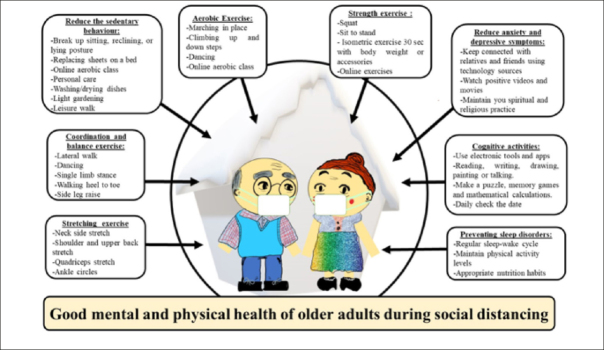
- The main international recommendations were cognitive strategies and increasing physical activity using apps, online videos, and telehealth; expert organizations and WHO recommended 150–300 minutes/week of moderate-intensity aerobic activity and two sessions/week of muscle-strength training.
## Methods
- Design: Narrative review.
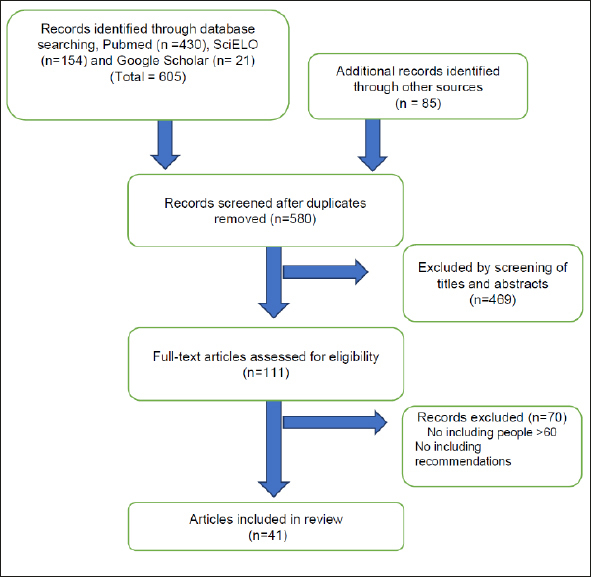
- Data/sample: Searches were done in PubMed, SciELO, and Google Scholar for articles published from 2019 to May 20, 2020, in English, Spanish, or Portuguese; studies without participants over 60 years old were excluded. The review also included guidelines, recommendations, and update documents from international organizations.
- Main analysis: The authors screened records for duplicates, titles, and abstracts, then organized the review into two areas: effects of quarantine/social isolation on mental and physical health, and recommendations for mental and physical health during quarantine.
## Limitations
- The paper states that included studies were cross-sectional, not specific to elderly populations, and descriptive, with no control group used.
- The paper states there is a lack of evidence on the most appropriate psychological and physical recommendations, and that most suggested interventions are based on expert opinion rather than high-evidence studies.
- Evident from the text: the review is based on studies from an early stage of the pandemic and the authors note these findings should be taken with caution because data were collected very early.
Model-written summary. Check it against the paper before relying on it.
Integrity signals
Registry
Cites
Statistics
Figures
Verification
Claims the paper makes
15 Valid · 1 Not valid · 6 Not checked · 6 Own results and interpretations
The cited sources support only part of this claim — read each source’s verdict below.
In the paper
“The prevalence of anxiety ranged from 8.3%, 18.7% and 35.1% to 49.7% (36, 38)”
- Also stated in: § Mental health · plain
“having a wide range from 8.3% (36) to 49.7% (42) for anxiety”
§ Impact of Social Isolation Due to COVID-19 on Health in Older People: Mental and Physical Effects and Recommendations > Results > Effect of the reduction of social participation produced by quarantine for COVID-19 on mental and physical health in elderly people
What the sources say
- Supportedcites [36] Lei L Huang X Zhang S Yang J Yang L Xu M Comparison of Prevalence and Associated Factors of Anxiety and Depression Among People Affected by versus People Unaffected by Quarantine During the COVID-19 Epidemic in Southwestern China Med Sci Monit. 26 2020 1 12 PMC7199435 32335579 source
The ‘Prevalence of anxiety and depression’ section reports anxiety in approximately 8.3% of the 1,593 participants in southwestern China. Because the citing sentence gives two references for a range across studies, this paper supports the 8.3% figure attributed to it. (LLM, conf=0.91)
- Partly supportedcites [38] Huang Y Zhao N Generalized anxiety disorder, depressive symptoms and sleep quality during COVID-19 outbreak in China: a web-based cross-sectional survey Psychiatry Res. 288 2020 10.1016/j.psychres.2020.112954 PMC7152913 32325383 sourceExperimental — accuracy not yet measured
The Results section reports a 35.1% prevalence of generalized anxiety disorder in this study’s Chinese survey sample. It does not report the 8.3% or 49.7% figures or establish a prevalence range across studies, so it supports only one value in the citing sentence. No page number is available in our copy. (LLM, conf=0.86)
- Could not verifycites [42] Losada-Baltar A, Jimenez-Gonzalo L, Gallego-Alberto L, Pedrosos-Chaparro M del S, Fernades-Pires J, Marquez-Gonzáles M. “We're staying at home”. Association of self-perceptions of aging, personal and family resources and loneliness with psychological distress during the lock-down period of COVID- 19. J Gerontol B Psychol Sci Soc Sci. 2020:1–10. PMC7184373 32282920 sourceExperimental — accuracy not yet measured
The Measures section mentions anxiety as one component of a psychological-distress scale, but gives no anxiety prevalence estimates. The Results section reports associations with distress rather than prevalence across studies; searches for 8.3%, 18.7%, 35.1%, 49.7%, and anxiety prevalence found no supporting passage in our copy. (LLM, conf=0.74)
plain- Asserted: passes — The authors put it forward as true.
- Checkable: passes — It can be checked against evidence.
- Load-bearing: unclear — It is unclear whether the paper’s conclusions depend on it.
- Based: passes — The paper gives a reason why it holds.
- Also stated in: § Mental health · plain
Every source the paper cites for this claim was checked and supports it.
In the paper
“Increased sedentary behavior has been associated with the prevalence of different comorbidities in elderly people (83).”
§ Impact of Social Isolation Due to COVID-19 on Health in Older People: Mental and Physical Effects and Recommendations > Discussion > Physical health
What the sources say
- Supportedcites [83] de Rezende L Rey-López J Matsudo V do Carmo Luiz O Sedentary behavior and health outcomes among older adults: a systematic review BMC Public Heal. 9 14 2014 333 10.1186/1471-2458-14-333 PMC4021060 24712381 source
The Results sections on metabolic syndrome and overweight/obesity report associations between greater sedentary behavior and both conditions in older adults. This supports the broad claim that sedentary behavior has been associated with different comorbidities, without implying causation. (LLM, conf=0.89)
plainstates an association- Asserted: passes — The authors put it forward as true.
- Checkable: passes — It can be checked against evidence.
- Load-bearing: passes — The paper’s conclusions depend on it.
- Based: passes — The paper gives a reason why it holds.
- Supported
The cited sources support only part of this claim — read each source’s verdict below.
In the paper
“This review has reported that social distancing because of the COVID-19 pandemic could lead to negative consequences for the physical health of older adults. This is caused by the decrease of physical activity levels due to the total or partial restriction of social participation in community groups and family activities during the pandemic (42, 43, 44).”
§ Impact of Social Isolation Due to COVID-19 on Health in Older People: Mental and Physical Effects and Recommendations > Discussion > Physical health
What the sources say
- Could not verifycites [42] Losada-Baltar A, Jimenez-Gonzalo L, Gallego-Alberto L, Pedrosos-Chaparro M del S, Fernades-Pires J, Marquez-Gonzáles M. “We're staying at home”. Association of self-perceptions of aging, personal and family resources and loneliness with psychological distress during the lock-down period of COVID- 19. J Gerontol B Psychol Sci Soc Sci. 2020:1–10. PMC7184373 32282920 sourceExperimental — accuracy not yet measured
The Introduction (page unavailable) suggests that lockdown may contribute to loneliness and psychological distress, and the Measures section assesses family contact. Our copy does not address the claimed decline in physical activity or a resulting effect on older adults’ physical health; searches for physical activity, exercise, social participation, and community groups found no supporting passage. (LLM, conf=0.76)
- Partly supportedcites [43] Goethals L Barth N Guyot J Hupin D Celarier T Bongue B Impact of home quarantine on physical activity among older adults living at home during the COVID-19 pandemic: Qualitative interview study J Med Internet Res. 22 5 2020 1 5 PMC7207013 32356777 sourceExperimental — accuracy not yet measured
The Discussion says quarantine and reduced social ties could decrease older adults’ physical activity, with possible consequences for physical functioning. The Results document reduced attendance and cancellation of group physical activity workshops. The paper does not specifically link restrictions on family activities to decreased physical activity. (LLM, conf=0.84)
- Partly supportedcites [44] Castañeda-babarro A. Impact of COVID-19 confinement on the time and intensity of physical activity in the Spanish population. Res Sq. 2020:1–14. doi: 10.21203/rs.3.rs-26074/vl. sourceExperimental — accuracy not yet measured
The cited preprint does support the general core: its Abstract and Discussion (Results, Conclusions) report that lockdown/social distancing during COVID-19 significantly reduced physical activity (vigorous −16.8%, walking −58.2%) and raised sedentary time (+23.8%), and the Discussion attributes part of this to 'forced sudden inaccessibility to community resources (e.g. sports facilities, urban trails, parks, green spaces)' and, via the socio-ecological model, to social isolation/loneliness (refs 18-20). However, the population is wrong: the study sampled 3800 healthy adults aged ≥18–≤64 residing in Spain (Abstract, Methods; Table 1 mean age 42.7), so it reports nothing about older adults, and its impact was greatest in men, young people, students and the very active. The specific causal attribution in the citing sentence — decreased activity due to 'total or partial restriction of social participation in community groups and family activities' — is also not stated in our copy, which instead cites prolonged stay at home, loss of active transport/work-related activity, e-learning/screen time and closure of fitness resources. (LLM, conf=0.78)
hedgedstates a possible cause- Asserted: passes — The authors put it forward as true.
- Checkable: passes — It can be checked against evidence.
- Load-bearing: passes — The paper’s conclusions depend on it.
- Based: passes — The paper gives a reason why it holds.
- Could not verify
The cited sources support only part of this claim — read each source’s verdict below.
In the paper
“Finally, sleep disturbances were observed in 18.2% (38) and 36.4% (37) among the participants.”
§ Impact of Social Isolation Due to COVID-19 on Health in Older People: Mental and Physical Effects and Recommendations > Results > Effect of the reduction of social participation produced by quarantine for COVID-19 on mental and physical health in elderly people
What the sources say
- Partly supportedcites [37] Yuan S Liao Z Huang H Comparison of the Indicators of Psychological Stress in the Population of Hubei Province and Non-Endemic Provinces in China During Two Weeks During the Coronavirus Disease 2019 (COVID-19) Outbreak in February 2020 Med Sci Monit. 26 2020 e923767 32294078 PMC7177041 sourceExperimental — accuracy not yet measured
Table 5 (Results; page not provided) reports that sleep quality worsened for 36.43% of the 527 participants included in that analysis, supporting the cited 36.4% figure. It excludes asymptomatic participants, however, and measures worsening sleep quality rather than the prevalence of sleep disturbances among all participants. The 18.2% figure is attached to a different citation and is not attributed to this paper. (LLM, conf=0.88)
- Supportedcites [38] Huang Y Zhao N Generalized anxiety disorder, depressive symptoms and sleep quality during COVID-19 outbreak in China: a web-based cross-sectional survey Psychiatry Res. 288 2020 10.1016/j.psychres.2020.112954 PMC7152913 32325383 source
The Results (Table 4) report poor sleep quality in 1,317 of 7,236 participants (18.2%), supporting the figure attached to this source, citation (38). The 36.4% figure is attached to a different citation, (37), and is not assessed here. (LLM, conf=0.93)
plain- Asserted: passes — The authors put it forward as true.
- Checkable: passes — It can be checked against evidence.
- Load-bearing: unclear — It is unclear whether the paper’s conclusions depend on it.
- Based: passes — The paper gives a reason why it holds.
- Partly supported
The cited sources support only part of this claim — read each source’s verdict below.
In the paper
“Goethals et al (43) reported that COVID-19 pandemic has affected the number of seniors attending group physical activity programs.”
§ Impact of Social Isolation Due to COVID-19 on Health in Older People: Mental and Physical Effects and Recommendations > Results > Effect of the reduction of social participation produced by quarantine for COVID-19 on mental and physical health in elderly people
What the sources say
- Partly supportedcites [43] Goethals L Barth N Guyot J Hupin D Celarier T Bongue B Impact of home quarantine on physical activity among older adults living at home during the COVID-19 pandemic: Qualitative interview study J Med Internet Res. 22 5 2020 1 5 PMC7207013 32356777 sourceExperimental — accuracy not yet measured
The Discussion says the study suggests that the epidemic affected seniors’ attendance at group physical activity programs before quarantine in two study territories. The citing sentence presents that qualified finding as a general fact, without the study’s uncertainty or limits of place and time. (LLM, conf=0.82)
plainstates a cause- Asserted: passes — The authors put it forward as true.
- Checkable: passes — It can be checked against evidence.
- Load-bearing: unclear — It is unclear whether the paper’s conclusions depend on it.
- Based: passes — The paper gives a reason why it holds.
- Partly supported
12 more claims · 7 with their cited sources checked
Create a free account to see all 28 claims and to verify the 4 references still open.
- It may state two separate claims as one. 10
- Probably not a substantial claim. 2
Claims other papers make about this one
Each is checked against this paper’s own text: does it say what the citing paper says it does?
The source backs part of the claim, not all of it — or backs it for a different population, condition or comparison.
In the citing paper
“During 2021, older adults faced social isolation due to the COVID-19 pandemic, resulting in a surge in articles at that time.”
From Smart Speakers for Health and Well-Being of Older Adults: A Mixed-Methods Review (2025) · cites this paper as [38]
Experimental — accuracy not yet measured
Citations
Cites
The Psychological Impact of Quarantine and How to Reduce It: Rapid Review of the Evidence
Brooks, S. K., Webster, R. K., Smith, L. E., Woodland, L., Wessely, S., Greenberg, N., & Rubin, G. J. (2020) · doi:10.2139/ssrn.3532534 · Cited by 16,394
The psychological impact of quarantine and how to reduce it: Rapid review of the evidence
Brooks, S. K., Webster, R. K., Smith, L. E., Woodland, L., Wessely, S., Greenberg, N., & Rubin, G. J. (2020) · The Lancet · doi:10.1016/s0140-6736(20)30460-8 · Cited by 16,378
(1985) · Europe PMC (PubMed Central) · Cited by 9,143
Social Relationships and Mortality Risk: A Meta-analytic Review
Holt-Lunstad, J., Smith, T. B., & Layton, J. B. (2010) · PLoS Medicine · doi:10.1371/journal.pmed.1000316 · Cited by 7,272 · cited 1×
“Evidence has demonstrated a relationship between social isolation and loneliness with disability, chronic diseases, risk of mortality and physical inactivity in elderly population (9, 19, 75-79).”
Holmes, E. A., O'Connor, R. C., Perry, V. H., Tracey, I., Wessely, S., Arseneault, L., Ballard, C., Christensen, H., Cohen Silver, R., Everall, I., et al. (2020) · The Lancet Psychiatry · doi:10.1016/s2215-0366(20)30168-1 · Cited by 5,715
Sedentary Behavior Research Network (SBRN)—Terminology Consensus Project process and outcome
on behalf of SBRN Terminology Consensus Project Participants, Tremblay, M. S., Aubert, S., Barnes, J. D., Saunders, T. J., Carson, V., Latimer-Cheung, A. E., Chastin, S. F. M., Altenburg, T. M., & Chinapaw, M. J. M. (2017) · International Journal of Behavioral Nutrition and Physical Activity · doi:10.1186/s12966-017-0525-8 · Cited by 3,793 · cited 1×
“…as any body movement using skeletal muscle that results in energy expenditure > 1.5 metabolic equivalent of task (MET), while sedentary behavior is defined as any waking behavior characterized by an energy expenditure 1.5 or less MET while in a sitting, reclining or lying posture (81, 82).”
InfluentialInternational Classification of Functioning, Disability and Health
World Health Organization (2021) · PsycTESTS Dataset · doi:10.1037/t76403-000 · Cited by 3,751
Huang, Y., & Zhao, N. (2020) · Psychiatry Research · doi:10.1016/j.psychres.2020.112954 · Cited by 3,736 · cited 3×
“Being female (36, 39, 42), having a negative self-perception of aging (42), healthcare workers (38), family and personal resources (42), time devoted to COVID-19 information (42), having an acquaintance or a family member infected with COVID-19 or a previous history of medical problems (39) seem to…”
Influential(2020) · PubMed · doi:10.3760/cma.j.issn.0254-6450.2020.02.003 · Cited by 3,323
The World report on ageing and health: a policy framework for healthy ageing
Beard, J. R., Officer, A., de Carvalho, I. A., Sadana, R., Pot, A. M., Michel, J.-P., Lloyd-Sherlock, P., Epping-Jordan, J. E., Peeters, G. M. E. E. (., Mahanani, W. R., et al. (2016) · The Lancet · doi:10.1016/s0140-6736(15)00516-4 · Cited by 3,287
Research works printed but not linked: 3
- Yazawa A Inoue Y Fujiwara T Association between social participation and hypertension among older people in Japan: the JAGES Study Hypertens Res. 39 11 2016 818 824 10.1038/hr.2016.78 27383510 · DOI
- Holmes EA O'Connor RC Perry VH Multidisciplinary research priorities for the COVID-19 pandemic: a call for action for mental health science The Lancet Psychiatry. 0366 20 2020 1 14 PMC7159850 32304649
- Arazi H Eghbali E Osteosarcopenia and Physical Activity Ann Sport Med Res. 5 1130 2018 3 6
Cited by
Items 601–700 of 709
van Hensbergen, M. (2024) · Research Publications (Maastricht University) · doi:10.26481/dis.20240131mh
COVID-19 e seus impactos na saúde mental e sintomas depressivos na população LGBTQIA+
de Lima, M. V. S., Rodrigues, M. D., de Souza, S. O., Costa, G. G. A., Alexandre, M. F. D. F., de Melo, S. D., Telles, L. E. D. B., Valença, A. M., & da Silva, A. G. (2023) · Debates em Psiquiatria · doi:10.25118/2763-9037.2023.v13.1039
Percepción de calidad de vida en estudiantes universitarios en época de pandemia
Albuja, M. J. R., Tapia, G. N. T., Vega, A. D. C. A., Lanas, I. S. R., & Taco, H. A. J. (2024) · REVISTA EUGENIO ESPEJO · doi:10.37135/ee.04.19.04 · Cited by 6
Kuijpers, T. G., Gerkema, M. H., Engels, G., Schipper, M., & Herber-Gast, G.-C. M. (2023) · Epidemiology · doi:10.1097/ede.0000000000001693
“6 The observed difference may therefore also be explained by the fact that older adults adhered to these regulations.”
BackgroundSintomas de ansiedade na população LGBTQIA+ durante a pandemia de COVID-19
Costa, G. G. A., Rodrigues, M. D., de Lima, M. V. S., de Souza, S. O., Alexandre, M. F. D. F., de Melo, S. D., Telles, L. E. D. B., Valença, A. M., & da Silva, A. G. (2024) · Debates em Psiquiatria · doi:10.25118/2763-9037.2024.v14.1130
Thorsteinsson, E., Cosh, S., & Loi, N. M. (2024) · Journal of Global Health Reports · doi:10.29392/001c.94210
Walsh-Monteiro, A., Uribe, F. A. R., Gouvêia, A., & Pedroso, J. D. S. (2024) · Psicologia e Saúde em Debate · doi:10.22289/2446-922x.v10n1a7 · Cited by 3
COVID-19 and aging adults: Virtual education and behavior impacts
Wong, L. Y. (2022) · doi:10.31274/td-20240329-179 · Cited by 1
Influência dos laços sociais e do processo de envelhecimento na memória e no bem-estar de idosos
Marques, V. D. S., Santos, R. S., de Oliveira, S. L., & Maciel, A. (2024) · Peer Review · doi:10.53660/prw-2064-3806
Content Analysis of Perceived Social Isolation Remedies Shared in a National E-Survey (Preprint)Preprint
Low, G., von Humboldt, S., GUTMAN, G. M., Gao, Z., Allana, H., AliSher, A. N., Wilson, D. M., & Vastani, M. (2024) · doi:10.2196/preprints.60078
Bratifische, S. A., da Cunha, D. T., Esteves, A. M., & Corona, L. P. (2024) · Sleep Science · doi:10.1055/s-0044-1780504
“Data infer that quarantine altered the life habits of older adults, compromising engagement in physical activity, 12 which has been identi fi ed as a predictor of improved sleep quality.”
Kim, E.-J., & Byun, M. (2024) · Medicina · doi:10.3390/medicina60050827 · Cited by 2
“However, individuals reported increased fatigue, depression, anxiety, and decreased quality of sleep and physical activity when they abide by social distancing [20,21].”
BackgroundKojima, K., Hirakawa, Y., Yamanaka, T., Hirahara, S., Okochi, J., Kuzuya, M., & Miura, H. (2024) · Psychogeriatrics · doi:10.1111/psyg.13131
“18,19 It should be noted that the use of video calls for maintaining social connections generally increased during the COVID-19 pandemic.”
BackgroundA Comparison of Loneliness and Social Support among South African Older Persons during a Pandemic
Geyer, S., & Teater, B. A. (2024) · SOUTHERN AFRICAN JOURNAL OF SOCIAL WORK AND SOCIAL DEVELOPMENT · doi:10.25159/2708-9355/14599
Einfluss von Interaktionsdatenbanken auf die Arzneimitteltherapiesicherheit im Krankenhaus
Ilgner, L. F. (2024) · Publication Server of Goethe University Frankfurt am Main (Goethe University Frankfurt) · doi:10.21248/gups.85694
Impacto da pandemia da COVID-19 no diagnóstico e tratamento da Tuberculose no nordeste do país
Medeiros, A. C. C., da Costa, A. T. C., dos Anjos, R. G., Medeiros, L. M. D. R., Medeiros, R. D. A., & Amorim, F. C. M. (2024) · OBSERVATÓRIO DE LA ECONOMÍA LATINOAMERICANA · doi:10.55905/oelv22n6-016 · Cited by 3
Pedraza, L., Laosa, O., Segovia‐Moreno, R., Alcalá, A. M., Tornero‐López, M. I., Corral‐Muñoz, G., López, P., Carnicero, J. A. C., Ramirez, M., Camprubi, M., et al. (2024) · JCSM Communications · doi:10.1002/rco2.97
Self-citationRisk factors related to COVID-19 among older adults
Satué-Gracia, E. M., del Pozo-Niubo, A., Forcadell-Peris, M. J., de Diego‐Cabanes, C., Vila-Córcoles, Á., & Martín‐Luján, F. (2024) · Elsevier eBooks · doi:10.1016/b978-0-323-95648-2.00036-8
Çetin, S. B., Akıl, Ö., & İlter, Z. Ç. (2024) · Medical Research Reports · doi:10.55517/mrr.1400086 · Cited by 1
Suryono, A. Z., Ananta, M. I., Hapsari, E. A., Soleha, I., Ramadhan, M. R. D., Zakaria, M., & Widayati, K. A. (2024) · Jurnal Sumberdaya Hayati · doi:10.29244/jsdh.10.2.85-90
“The elevated stress levels observed during the pandemic have been attributed to a number of lifestyle changes, including social isolation and reduced physical activity (Sepúlveda-Loyola et al. 2020; Caroppo et al. 2021; Walugembe et al. 2022).”
BackgroundCamino, A., Gómez, H., Camino, M., Bermúdez, L., Camino, D., & Patricio Romero, P. (2023) · Neurología, Neurocirugía y Psiquiatría · doi:10.35366/116471
Wlazlik-Supernak, A., Margey, R., O’Neill, E., Timmons, S., & O’Shea, E. (2024) · Physiotherapy Practice and Research · doi:10.3233/ppr-220722
Impact of COVID-19 on home care provision: A qualitative study
Darby, J., Allen, F. A., Logan, P., Bennett, C., & Kasonde1, C. (2024) · Journal of Social Work · doi:10.1177/14680173241258900
“A narrative review exploring the impact of social distancing policies concluded that the mental health of older people was affected negatively with higher levels of depression and anxiety identi fi ed (Sepulveda-Loyola et al., 2020).”
Anxiety and the COVID-19 pandemic: substance use behavior and substance use detoxification treatment
PERSON, U. S., Ajeti, A., Tahir, Z. A. I. D., Brendel, R. W., FOGEL, J., Kalash, G. R., & Ioannou, C. (2024) · Gazzetta Medica Italiana Archivio per le Scienze Mediche · doi:10.23736/s0393-3660.23.05262-2
Rossom, R. C., Knowlton, G., Yeh, H.-H. H., Penfold, R. B., Owen‐Smith, A. A., Hooker, S. A., Simon, G. E., Miller-Matero, L. R., Akinyemi, E., & Ahmedani, B. K. (2024) · Journal of Applied Gerontology · doi:10.1177/07334648241271922
“…visits worthwhile and more convenient than in-person visits at a time when their mental health needs may have increased related to loss and social isolation early in the pandemic, which also may have increased psychotherapy adherence (MacLeod et al., 2021; Sep´ulveda-Loyola et al., 2020).”
Tonetto, P. P. F. D. A., Ribeiro, A. M. P., Dessotte, C. A. M., & Dantas, R. A. S. (2024) · Advances in Nursing and Health · doi:10.5433/anh.2024v6.id47913
de Amorim, J. S. C., Perracini, M. R., Trombini-Souza, F., Batista, P. P., Moreira, M., & Fittipaldi, E. O. D. S. (2024) · Research Square · doi:10.21203/rs.3.rs-4724783/v1
Meny, A. H. (2024) · Frontiers in Public Health · doi:10.3389/fpubh.2024.1417857
Kim, S., An, M. H., Lee, D. Y., Kim, M.-G., Hwang, G., Heo, Y., & You, S. C. (2024) · Psychiatry Investigation · doi:10.30773/pi.2024.0089
“41 Moreover, since older adults are vulnerable during the disaster, feelings of being a burden to families and younger generations could exacerbate the suicide risk.”
Physical Activity and Neurocognitive Symptoms in Older Adults During COVID-19 Pandemic
Ortiz-Acosta, P. K., Martinez, J. E., Vila‐Castelar, C., Fox‐Fuller, J. T., Pluim, C. F., Babulal, G. M., Ramirez-Gomez, L. A., Munera, D., Quiroz, Y. T., & Guzmán‐Vélez, E. (2024) · Journal of Applied Gerontology · doi:10.1177/07334648241271975 · Cited by 1
“In response, governmental authorities implemented restrictions that increased social isolation and reduced mobility, altering people ’ s daily routines, including changes in physical activity engagement and mood (Sep´ulveda-Loyola et al., 2020).”
Suicide during the global COVID-19 pandemic
Wasserman, D., Iosue, M., & Carli, V. (2024) · Oxford University Press eBooks · doi:10.1093/med/9780198843405.003.0021
Marrapu, S. (2024) · University of North Texas Digital Library (University of North Texas) · doi:10.12794/metadc2356229
SAÚDE MENTAL DO IDOSO PÓS PANDEMIA DE COVID-19: UMA REVISÃO INTEGRATIVA
Prates, L. T., Ribeiro, S. S., de Menezes, V. S., & Ferreira, J. B. (2024) · Revista Contemporânea · doi:10.56083/rcv4n10-155 · Cited by 1
Guimarães, A. L., Vieira, K. R., Emele, N., Poltronieri, B. C., de Oliveira, Y. G., Carvalho, C. M., Mansour, G., Pelegrino, A., Lin, F. V., & Panizzutti, R. (2024) · The American Journal of Geriatric Psychiatry Open Science Education and Practice · doi:10.1016/j.osep.2024.10.002 · Cited by 1
Rodrigues, I. F. A., Silva, K. H. C. V. E., Stephanus, A. D., & de Carvalho, L. S. F. (2024) · Cogitare Enfermagem · doi:10.1590/ce.v29i0.96897
Rodrigues, I. F. A., Silva, K. H. C. V. E., Stephanus, A. D., & de Carvalho, L. S. F. (2024) · Cogitare Enfermagem · doi:10.1590/ce.v29i0.96896 · Cited by 1
Nikbakhsh, B., & Birghani, M. H. (2024) · Majmū’ah-i musavvabāt-i majlis-i showrā-yi millī. · doi:10.61186/scds.12.3.37
Grando, R. Z., da Silva, L. P., Elias, A. C. D. O., Rodacki, A. L. F., & Moreira, N. B. (2024) · Revista Brasileira de Atividade Física & Saúde · doi:10.12820/rbafs.29e0361 · Cited by 1
Diesel, M., Leonel, L. D. S., de Oliveira, S. N., Danielevicz, A., Sirydakis, M. E. D. M., Santo, B. C. D. R. D. E., Bandeira, A. C. N., Freitas, C. D. L. R., Gerage, A. M., & Delevatti, R. S. (2024) · Revista Brasileira de Ciências do Esporte · doi:10.1590/rbce.46.20240017
Gonçalves, A. K., Martins, V. F., Fank, F., Antunes, G. D. A., Gil, P. R., & Mazo, G. Z. (2024) · Cidadania em Ação Revista de Extensão e Cultura · doi:10.5965/259464120802e91105
The Role of Sociability in Mental Health in Mid to Late Life during COVID-19
Fiori, K. L., Rauer, A., Marini, C. M., Khan, A., & So, C. (2024) · Journal of Social Behavioral and Health Sciences · doi:10.5590/jsbhs.2024.18.1.23
“Among older adults in particular, loneliness (Heidinger & Richter, 2020), as well as anxiety and depression (Sepúlveda-Loyola et al., 2020), increased during the pandemic, at least in part due to required physical distancing (Kim & Jung, 2021; Krendl & Perry, 2021).”
Frain, J. (2025) · Wiley eBooks · doi:10.1002/9781394218844.ch13
La vie en EHPAD avant et pendant les premiers confinements de la COVID-19 : paroles de résidents
Zalai, M., Voltzenlogel, V., & Cuervo-Lombard, C.-V. (2025) · Annales Médico-psychologiques revue psychiatrique · doi:10.1016/j.amp.2025.02.006
Tanaka, S., Higuchi, D., Saida, K., Murayama, A., & Shinohara, T. (2025) · Research in Gerontological Nursing · doi:10.3928/19404921-20250304-02
Fan, X., Chen, Z., & Wu, Y. (2025) · Applied Mathematics and Nonlinear Sciences · doi:10.2478/amns-2025-0729
Monnerat, J. A. D. S., Kling, R., Lucchetti, B. B., de Souza, P. R., Camacho, F. A., Pereira, A. D., Rocha, G. D. S., & Medeiros, R. F. (2025) · Caderno Pedagógico · doi:10.54033/cadpedv22n5-119
Occupational Safety and Health Challenges Among Ageing Population in Asia
Hasbullah, N. W. N., Orhun, N. M., & Mollahaliloğlu, S. (2025) · Medical Research Reports · doi:10.55517/mrr.1560655
Awwad, M. S. (2025) · International Journal of Disaster Risk Reduction · doi:10.1016/j.ijdrr.2025.105468 · Cited by 1
Alp, A., Doud, W., Doud, C., Takesh, T., Wink, C., Miranda-Hoover, A., Foote, J. W., Liang, R., Messadi, D. V., Le, A. N., et al. (2025) · Cancers · doi:10.3390/cancers17081317
“These results are in agreement with the findings of some other studies that also reported a slight preference for Telehealth amongst older individuals [32,33].”
Sasaki, S., Ota, S., Takashima, K., et al. (2025) · Journal of Family Medicine and Primary Care · doi:10.4103/jfmpc.jfmpc_1137_24
“[2] In Japan, the first case of COVID-19 was confirmed in January 2020.”
InfluentialBiondi, F., Aprosoff, J., Dowell, G., Taylor, T., Yoon, S., Kertsman, E., Mendes, P. L., & Wickerson, L. M. (2025) · The Journal of Cardiovascular Nursing · doi:10.1097/jcn.0000000000001217 · Cited by 3
Olofsson, J., Connolly, F. F., Malmberg, G., Josefsson, M., & Stattin, M. (2025) · Routledge eBooks · doi:10.4324/9781003636472-25
Association of Game Use With Loneliness and Social Isolation: A Nationwide Korean Study
Jung, J. Y., Choi, H. M., Hong, J. P., Kim, M. H., Kim, D., Park, S., Hahm, B., & An, J. H. (2025) · Psychiatry Investigation · doi:10.30773/pi.2023.0385
“44,45 Moreover, previous studies have suggested that online gaming use has increased as a coping strategy during the pandemic.”
Lived Experiences of the Pandemic Survivors through the Lens of Sr. Callista Roy
Sendrijas, V. I., Tutor, E., & Bucar, J. (2025) · Psychology and Education A Multidisciplinary Journal · doi:10.70838/pemj.410106
Guo, C., Zhu, X., Yang, P., Du, Y., Wang, M., Li, W., & Mu, Y. (2025) · Journal of Aging & Social Policy · doi:10.1080/08959420.2025.2523136
Lee, S. K. (2025) · Transformation An International Journal of Holistic Mission Studies · doi:10.1177/02653788251361659
“Scienti fi c evidence demonstrates robust correlations between social isolation and elevated mortality risks, alongside various adverse health manifestations including psychological distress and cardiovascular complications (Sepúlveda-Loyola et al., 2020: 938 – 947).”
Liu, Y., Zhang, Z., Zhang, H., & Tian, S. (2025) · Medicine · doi:10.1097/md.0000000000044275 · Cited by 1
Elderly Women During COVID-19: Multiple Disadvantages and Deprivations
Tyagi, R. (2025) · Springer eBooks · doi:10.1007/978-981-99-7842-7_183
Shobha, M., Morgan, K., & Tan, M. P. (2025) · PLoS ONE · doi:10.1371/journal.pone.0332610
“…that the mental health of older adults should be monitored post-pandemic period to support them in coping with social and psychological impact [41,42], while also resonating with regional studies in Asia that highlight culturally specific concerns, such as filial support and intergenerational…”
Cameselle-Lago, C., Rico‐Blázquez, M., Sánchez-Ruano, R., Ayala, A., Pascual-García, M., Solé-Agustí, M., Pi, I. G., Echevarria-Echevarria, A., González‐Chordá, V. M., Esteban‐Sepúlveda, S., et al. (2025) · Frontiers in Public Health · doi:10.3389/fpubh.2025.1678003
Nam, J., & Choi, M. Y. (2025) · Asian Communication Research · doi:10.20879/acr.2025.22.017
Bertogg, A., & Brandt, M. (2025) · KZfSS Kölner Zeitschrift für Soziologie und Sozialpsychologie · doi:10.1007/s11577-025-01028-7 · Cited by 1
“Whereas the severe health crisis due to the recent COVID-19 pandemic has been studied extensively (e.g. Sepúlveda-Loyola et al. 2020; Tur-Sinai et al. 2022), research is only starting to assess the impacts of climate change on health, well-being, and mortality (e.g. Ebi and Hess 2020; Martinez et…”
Adra, M. G., Abdallah, N., & Saab, R. (2025) · Journal of Primary Care & Community Health · doi:10.1177/21501319251392532
“These findings corroborate with the results of studies conducted by Corbett et al, 64 Sepúlveda-Loyola et al. 65”
Li, Y., Guo, C., & Chen, R. (2025) · Journal of Transformative Education · doi:10.1177/15413446251399839
“At the same time, studies on isolation have largely emphasized its negative psychological effects, including increased anxiety and depression (Lei et al., 2020; Rohr et al., 2021; Sep´ulveda-Loyola et al., 2020).”
Azulai, A., Baluyot, B. M., Pitcher, A., & Catovic, S. (2025) · Journal of Social Work · doi:10.1177/14680173251369661
“…media platforms, and other forms of digital technology or electronic communication to facilitate connection and social health between residents and their social environment (Bilal et al., 2020; Clayton & Astell, 2022; Figueroa & Aguilera, 2020; Khowaja et al., 2023; Sepúlveda-Loyola et al., 2020).”
Aging, violence, and the Covid-19 pandemic in Brazil: an integrative review
de Morais, K. B., Pinto, L. W., & Andrade, C. B. (2025) · Revista Brasileira de Geriatria e Gerontologia · doi:10.1590/1981-22562025028.250101.en
Envelhecimento, violências e a pandemia de covid-19 no Brasil: revisão integrativa
de Morais, K. B., Pinto, L. W., & Andrade, C. B. (2025) · Revista Brasileira de Geriatria e Gerontologia · doi:10.1590/1981-22562025028.250101.pt · Cited by 1
Riddell, K., McDonough, M. H., Lavallée, N., Zimmer, C., & Kenny, S. J. (2025) · Qualitative Research in Sport Exercise and Health · doi:10.1080/2159676x.2025.2598365
“…and safety measures, and fear of contracting COVID-19 prevented or deterred many older adults from participating in group activities or using shared exercise spaces, which contributed to social isolation, loneliness, and sedentary behaviour (Morrison et al. 2022; Sepúlveda-Loyola et al. 2020).”
When age meets mind understanding the changing landscape of elderly mental healthPreprint
Herdian, H., Nuryana, Z., & Bashori, K. (2025) · Research Square · doi:10.21203/rs.3.rs-8038820/v1
Szydłak, D., Klein, E. G., & Brzęk, A. (2025) · Healthcare · doi:10.3390/healthcare14010084
“…seems appropriate in ensuring an adequate level of physical and mental health, leading to a reduction in functional and cognitive impairments, falls and fracture risks, depression, geriatric syndromes, hospitalization frequency, and ultimately decreasing mortality among older individuals [1,7].”
Hlávka, J. P., Ge, Y., Xu, S., & Capron, A. M. (2026) · Oxford University Press eBooks · doi:10.1093/9780197759370.003.0011
Hip fracture patients exhibit poorer premorbid quality of life during the COVID-19 pandemic
Wong, K. C., Fong, J., Kc, O., Lee, M., Zhang, K. T., Koh, J. S. B., Howe, T. S., Tay, K. X. K., & Yeo, W. (2026) · Proceedings of Singapore Healthcare · doi:10.1177/20101058261418453
Exercise Protects Bone Tissue Against Harmful Effects of Combined Electromagnetic Field in Aged Rats
Keskin, T., Başkurt, Z., Ergan, M., Aşçı, H., Çömlekçı, S., Savran, M., Candan, İ. A., Erzurumlu, Y., & Büyükbayram, H. İ. (2026) · Topics in Geriatric Rehabilitation · doi:10.1097/tgr.0000000000000497
Sato, K., 芳樹, 新., Ihara, R., et al. (2026) · Journal of Aging Research and Lifestyle · doi:10.1016/j.jarlif.2026.100060
“…or mortality from the COVID-19 infection [15], were also affected [16,17], and many studies reported increased psychological symptoms including depression or anxiety among elderly individuals following pandemic-related changes (e.g., quarantine or decreased physical/social activities) [18 – 20].”
InfluentialEvaluation of Applications and Services for the Elderly During the Covid-19 Outbreak in Turkey
DEMİREL, A. C., & SÜTÇÜ, S. (2021) · Opus uluslararası toplum araştırmaları dergisi · Cited by 2
Shared Trauma During COVID-19 Pandemic Among Social Work Clinicians: A Follow-up Study
Tosone, C., Cohen-Serrins, J., & Anastas, J. W. (2026) · Clinical Social Work Journal · doi:10.1007/s10615-026-01032-0
“The COVID-19 pandemic has had a global reach and has affected numerous aspects of society, including our socialization patterns (Loades et al., 2020; Sepúlveda-Loyola et al., 2020), employment practices (Karl et al., 2022), consumption of goods and services (Arora et al., 2020; Cruz-Cárdenas et…”
Paiva-Zuazánabar, D., Galvan, M. A., & Antúnez, J. V. V. (2026) · European Public & Social Innovation Review · doi:10.31637/epsir-2026-2930 · Cited by 1
Kelly, N., Skelly, F., Dowd, K., O’Neill, D. J., McCaffery, N., & McDermott, C. M. (2026) · Dementia · doi:10.1177/14713012261435732 · Cited by 1
Sentados no Banco da Vida: Comportamento Sedentário na Terceira Idade
dos Santos, M. G., Guerra, H. S., Silva, M. R., Santos, M. V. A. D., & Vieira, M. D. S. N. (2025) · Life Style · doi:10.19141/2237-3756.lifestyle.v13.n00.pe2035
Tefera, G. M., Robinson, E. L., & Park, G. (2026) · Discover Public Health · doi:10.1186/s12982-026-01809-1
Jiao, X., Wang, W., & Zhou, L. (2026) · Frontiers in Psychiatry · doi:10.3389/fpsyt.2026.1799213
“These adverse psychological effects stem not only from the pathological consequences of the infection and its associated stress but also from widespread public health measures, including isolation, reduced social contact, and decreased physical activity (2, 3).”
Jabbar, M. A., Kabir, M. R., Rabby, F., & Keya, Z. F. (2026) · Dr Sulaiman Al Habib Medical Journal · doi:10.4103/dshmj.dshmj_2_26
Cai, H., Chen, P., Sun, H., Zhang, Q., Li, X.-H., Su, Z., Cheung, T. C. C., Ungvari, G. S., Ng, C. H., Zhang, L., et al. (2026) · Asia-Pacific Psychiatry · doi:10.1111/appy.70023
Horovenko, V., & Lachytová, L. (2026) · Health Problems of Civilization · doi:10.29316/hpc/221606
“According to the systematic review by Sepúlveda-Loyola et al. [11], which analyzed results from ten studies involving 20,069 respondents from Asia, Europe, and America, older people exhibited a substantially higher prevalence of mental health problems during the pandemic.”
Besselink, D., Schaap, F. D., Jager-Wittenaar, H., Finnema, E. J., & van der Lucht, F. (2026) · BMC Public Health · doi:10.1186/s12889-026-27862-8
“Consequently, studies suggest that the pandemic adversely affected the well-being of older adults, increasing their risk of loneliness, functional decline, and reduced quality of life [17–19].”
Hossain, M. S., Hafsa, U., Nasim, M., & Azam, M. S. (2026) · Journal of Social Science and Multidisciplinary Enquiry · doi:10.65496/jssme.2026.83
CONDIÇÕES DE VULNERABILIDADES DE PESSOAS IDOSAS COM COVID-19
Piccinini, A. M., Ferraz, L., & Ferretti, F. K. (2026) · Revista de Geopolítica · doi:10.56238/revgeov17n5-102
Yıldız, S., Mattek, N., Steele, J. S., Gothard, S., James, B. D., Capuano, A. W., Barnes, L. L., Kaye, J. A., & Beattie, Z. (2026) · JMIR Formative Research · doi:10.2196/79432
“The COVID-19 pandemic significantly impacted the well-being of older adults, particularly concerning social isolation, loneliness, hospitalization, medication changes, physical activity, and sleep quality, among others [1-6], while disproportionately affecting older African American adults [7-9].”
Social Isolation in Older Adults in Japan: Sustainable Community-based Solutions
Nguyen, N. C., & Saito, M. (2026) · The International Journal of Community and Social Development · doi:10.1177/25166026261450796
“In strict constraints, such as the COVID-19 pandemic, studies demonstrated that shielding measures and reduced face-to-face contact were associated with an increased risk of social isolation among older adults (Armitage & Nellums, 2020; Sepúlveda-Loyola et al., 2020).”
Lian, R., Pu, H., Jiang, W., Gao, Y., He, T., Zhang, W., Luo, S., Chen, Q., & Yang, M. J. (2026) · Archives of Gerontology and Geriatrics · doi:10.1016/j.archger.2026.106339 · Cited by 1
Francisco, R., Domingos, S., Cruz, N., Gaspar, R., Pedro, M. F., & Godinho, C. I. A. (2026) · Frontiers in Public Health · doi:10.3389/fpubh.2026.1771874
“…in later life, suggesting that better self-rated health is often linked to higher engagement in social activities and stronger support networks (15, 25), including during COVID-19 pandemic [e.g., (68)], our study only revealed weak associations between these variables, suggesting that other…”
Influentialda Silva, K. F. M., Sczepanski, F., de Campos, V. P., & Sczepanski, C. R. B. (2026) · Musculoskeletal Care · doi:10.1002/msc.70247
“…symptoms during the acute phase include fever, cough, fatigue, dyspnoea, myalgia, headache, anosmia, and ageusia, frequently associated with the activation of inflammatory pathways, oxidative stress, and metabolic dysfunction (Iser et al. 2021; Sepúlveda‐Loyola et al. 2020; Botero et al. 2021).”
Pandemic Experiences of Older Adults Living Alone: A Qualitative Study
Aygüler, E., & Buz, S. (2026) · Anadolu Üniversitesi Sosyal Bilimler Dergisi · doi:10.18037/ausbd.1541976
Zhang, L., Wei, R., Zhou, J., Che, X., Zhong, Z., & Zhang, M. (2026) · Current Psychology · doi:10.1007/s12144-026-09627-z
“…widowed, have lower levels of education, or suffer from multiple chronic conditions are more likely to experience depressive symptoms, which is consistent with findings from other national studies (Briggs et al., 2021 ; Hajek et al., 2024; Pereira-Ávila et al., 2021; Sepúlveda-Loyola et al., 2020).”
Hu, H. (2026) · Archives of Gerontology and Geriatrics · doi:10.1016/j.archger.2026.106353
Sourani, F., Pértille, F., Sharif, M. E., Fröhlich, A. S., Jensen, P., & Guerrero‐Bosagna, C. (2026) · Philosophical Transactions of the Royal Society B Biological Sciences · doi:10.1098/rstb.2025.0016 · Cited by 3
Ferreira, A. P. A., Fleischmann, M., Muddle, L., Feehan, J., Sampath, K. K., & Vaughan, B. (2026) · Journal of Ageing and Longevity · doi:10.3390/jal6030056
Shrestha, S., Grindrod, A., Lee, S., et al. (2026) · Palliative Care and Social Practice · doi:10.1177/26323524261473623
Metadata
- Authors
- Sepúlveda-Loyola, W., Rodríguez-Sánchez, I., Pérez-Rodríguez, P., Ganz, F., Torralba, R., Oliveira, D. V., & Rodríguez-Mañas, L.
- Affiliations
- Complejo Hospitalario de Navarra (ES)
- Hospital Universitario La Paz (ES)
- University of Alberta (CA)
- Hospital General Universitario de Ciudad Real (ES)
- Venue
- The Journal of nutrition, health and aging
- Publisher
- Elsevier BV
- Published
- 2020-09
- Volume
- 24
- Issue
- 9
- Pages
- 938-947
- ISSN
- 1279-7707 (ISSN-L)
- PMC
- PMC7597423
- OpenAlex
- W4233641204
- Cited by
- 1,081
- References
- 85
- Citations by year
- 2026: 71 · 2025: 114 · 2024: 158 · 2023: 263 · 2022: 286 · 2021: 175 · 2020: 14
- FWCI
- 68.49
- Type
- journal article
- Language
- en
- Open access
- hybrid
- doi.org
- Licence
- cc-by-nc-nd
- www.elsevier.com/tdm/userlicense/1.0/ (tdm)
- www.elsevier.com/legal/tdmrep-license (tdm)
- creativecommons.org/licenses/by-nc-nd/4.0/ (vor, 1186 d)
- Locations
- The journal of nutrition health & aging (publishedVersion, cc-by-nc-nd)
- PubMed Central (publishedVersion)
- PubMed (publishedVersion)
- Topics
- Social Sciences › Psychology › Clinical Psychology › COVID-19 and Mental Health
- Health Sciences › Medicine › Public Health, Environmental and Occupational Health › Aging, Health, and Disability
- Health Sciences › Medicine › Public Health, Environmental and Occupational Health › Physical Activity and Health
- Keywords
- social isolation, COVID-19 pandemic, older adults, mental health, physical health, anxiety, depression, sleep quality, physical inactivity, social distancing, quarantine, telemedicine, exercise recommendations, community-dwelling older adults
- MeSH terms
- COVID-19, SARS-CoV-2, Age Factors, Aged, Aged, 80 and over, Americas, Anxiety, Asia, Mental Disorders, Cross-Sectional Studies, Depression, Europe, Female, Humans, Male, Middle Aged, Quarantine, Sleep Wake Disorders, Social Isolation, Exercise, Sedentary Behavior, Pandemics
About these checks
Registry, retraction, Cites and statistics results are computed, not judged, with one exception: a printed reference that no index lists is read once by a model before it counts as a citation error. Claims are extracted by a model and kept only when their quote appears verbatim in the text; each cited source is then checked, with a model’s help, for whether it says what the claim relies on. Those verdicts can be wrong — read the claim’s quote and the cited source before relying on one.
The claim verdicts this report counts are experimental: their accuracy is not yet measured.
A language model drew the claims from the paper on 2026-10-10, under version 3 of the claim definition (model deepseek-v4.1-flash, prompt extract-v3).
A second model labelled each claim on 2026-10-10 (model jev-1.13-20260917, definition revision gold-guideline-v0.2).
Cited sources are checked with a language model’s help (gpt-6-sol and qwen3.8-omni-flash).
Statistics and arithmetic are recomputed, not judged.
Confidence bands are shown only for fields calibrated on our annotated test set. None is calibrated yet, so no band is shown.
What counts as a claim ›How we measure confidence ›How we check this ›
Are you an author, or do you see a problem with this page? Request a review
Data sources
Bibliographic data: Semantic Scholar, OpenAlex, Crossref.
Contains information from the Semantic Scholar Academic Graph Datasets, made available under the ODC Attribution License (ODC-BY 1.0).
Semantic Scholar’s data is described in: Kinney, R., et al. (2023). The Semantic Scholar Open Data Platform. arXiv:2301.10140.
