

Impact of Social Isolation Due to COVID-19 on Health in Older People: Mental and Physical Effects and Recommendations
Open accessThe DOI matches its Crossref record; 85 of the 85 references it cites were found in a registry or an index; 26 of the 37 sources its claims cite were checked for support.
Abstract
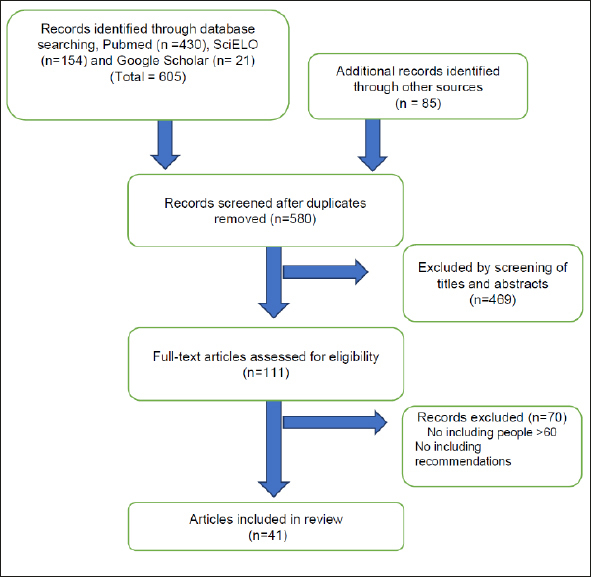
To review the impact of social isolation during COVID-19 pandemic on mental and physical health of older people and the recommendations for patients, caregivers and health professionals. Narrative review. Non-institutionalized community-living people. 20.069 individuals from ten descriptive cross-sectional papers. Articles since 2019 to 2020 published on Pubmed, Scielo and Google Scholar databases with the following MeSh terms (‘COVID-19’, ‘coronavirus’, ‘aging’, ‘older people’, ‘elderly’, ‘social isolation’ and ‘quarantine’) in English, Spanish or Portuguese were included. The studies not including people over 60 were excluded. Guidelines, recommendations, and update documents from different international organizations related to mental and physical activity were also analysed. 41 documents have been included in this narrative review, involving a total of 20.069 individuals (58% women), from Asia, Europe and America. 31 articles included recommendations and 10 addressed the impact of social distancing on mental or physical health. The main outcomes reported were anxiety, depression, poor sleep quality and physical inactivity during the isolation period. Cognitive strategies and increasing physical activity levels using apps, online videos, telehealth, are the main international recommendations. Mental and physical health in older people are negatively affected during the social distancing for COVID-19. Therefore, a multicomponent program with exercise and psychological strategies are highly recommended for this population during the confinement. Future investigations are necessary in this field.
Overview
CoChat Summary
## TL;DR
This narrative review concludes that COVID-19-related social isolation negatively affected older adults’ mental and physical health, with anxiety, depression, poor sleep quality, and reduced physical activity most often reported. It also compiles expert and organizational recommendations emphasizing social connection, cognitive support, and home-based physical activity.
## Key findings
- The review included 41 documents in total, with 10 studies involving 20,069 participants (58% women) from Asia, Europe, and America; 9 were cross-sectional and 1 was qualitative, and all were descriptive studies.
- Across the mental-health studies, reported prevalence ranged from 8.3% to 49.7% for anxiety, 14.6% to 47.2% for depression, and sleep disturbances were reported in 18.2% and 36.4% of participants in two studies.
- The main mental and physical outcomes reported were anxiety, depression, poor sleep quality, and physical inactivity during isolation.
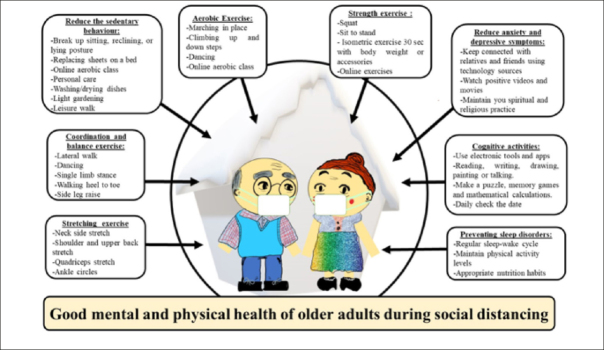
- The main international recommendations were cognitive strategies and increasing physical activity using apps, online videos, and telehealth; expert organizations and WHO recommended 150–300 minutes/week of moderate-intensity aerobic activity and two sessions/week of muscle-strength training.
## Methods
- Design: Narrative review.
- Data/sample: Searches were done in PubMed, SciELO, and Google Scholar for articles published from 2019 to May 20, 2020, in English, Spanish, or Portuguese; studies without participants over 60 years old were excluded. The review also included guidelines, recommendations, and update documents from international organizations.
- Main analysis: The authors screened records for duplicates, titles, and abstracts, then organized the review into two areas: effects of quarantine/social isolation on mental and physical health, and recommendations for mental and physical health during quarantine.
## Limitations
- The paper states that included studies were cross-sectional, not specific to elderly populations, and descriptive, with no control group used.
- The paper states there is a lack of evidence on the most appropriate psychological and physical recommendations, and that most suggested interventions are based on expert opinion rather than high-evidence studies.
- Evident from the text: the review is based on studies from an early stage of the pandemic and the authors note these findings should be taken with caution because data were collected very early.
Model-written summary. Check it against the paper before relying on it.
Integrity signals
Registry
Cites
Statistics
Figures
Verification
Claims the paper makes
15 Valid · 1 Not valid · 6 Not checked · 6 Own results and interpretations
The cited sources support only part of this claim — read each source’s verdict below.
In the paper
“The prevalence of anxiety ranged from 8.3%, 18.7% and 35.1% to 49.7% (36, 38)”
- Also stated in: § Mental health · plain
“having a wide range from 8.3% (36) to 49.7% (42) for anxiety”
§ Impact of Social Isolation Due to COVID-19 on Health in Older People: Mental and Physical Effects and Recommendations > Results > Effect of the reduction of social participation produced by quarantine for COVID-19 on mental and physical health in elderly people
What the sources say
- Supportedcites [36] Lei L Huang X Zhang S Yang J Yang L Xu M Comparison of Prevalence and Associated Factors of Anxiety and Depression Among People Affected by versus People Unaffected by Quarantine During the COVID-19 Epidemic in Southwestern China Med Sci Monit. 26 2020 1 12 PMC7199435 32335579 source
The ‘Prevalence of anxiety and depression’ section reports anxiety in approximately 8.3% of the 1,593 participants in southwestern China. Because the citing sentence gives two references for a range across studies, this paper supports the 8.3% figure attributed to it. (LLM, conf=0.91)
- Partly supportedcites [38] Huang Y Zhao N Generalized anxiety disorder, depressive symptoms and sleep quality during COVID-19 outbreak in China: a web-based cross-sectional survey Psychiatry Res. 288 2020 10.1016/j.psychres.2020.112954 PMC7152913 32325383 sourceExperimental — accuracy not yet measured
The Results section reports a 35.1% prevalence of generalized anxiety disorder in this study’s Chinese survey sample. It does not report the 8.3% or 49.7% figures or establish a prevalence range across studies, so it supports only one value in the citing sentence. No page number is available in our copy. (LLM, conf=0.86)
- Could not verifycites [42] Losada-Baltar A, Jimenez-Gonzalo L, Gallego-Alberto L, Pedrosos-Chaparro M del S, Fernades-Pires J, Marquez-Gonzáles M. “We're staying at home”. Association of self-perceptions of aging, personal and family resources and loneliness with psychological distress during the lock-down period of COVID- 19. J Gerontol B Psychol Sci Soc Sci. 2020:1–10. PMC7184373 32282920 sourceExperimental — accuracy not yet measured
The Measures section mentions anxiety as one component of a psychological-distress scale, but gives no anxiety prevalence estimates. The Results section reports associations with distress rather than prevalence across studies; searches for 8.3%, 18.7%, 35.1%, 49.7%, and anxiety prevalence found no supporting passage in our copy. (LLM, conf=0.74)
plain- Asserted: passes — The authors put it forward as true.
- Checkable: passes — It can be checked against evidence.
- Load-bearing: unclear — It is unclear whether the paper’s conclusions depend on it.
- Based: passes — The paper gives a reason why it holds.
- Also stated in: § Mental health · plain
Every source the paper cites for this claim was checked and supports it.
In the paper
“Increased sedentary behavior has been associated with the prevalence of different comorbidities in elderly people (83).”
§ Impact of Social Isolation Due to COVID-19 on Health in Older People: Mental and Physical Effects and Recommendations > Discussion > Physical health
What the sources say
- Supportedcites [83] de Rezende L Rey-López J Matsudo V do Carmo Luiz O Sedentary behavior and health outcomes among older adults: a systematic review BMC Public Heal. 9 14 2014 333 10.1186/1471-2458-14-333 PMC4021060 24712381 source
The Results sections on metabolic syndrome and overweight/obesity report associations between greater sedentary behavior and both conditions in older adults. This supports the broad claim that sedentary behavior has been associated with different comorbidities, without implying causation. (LLM, conf=0.89)
plainstates an association- Asserted: passes — The authors put it forward as true.
- Checkable: passes — It can be checked against evidence.
- Load-bearing: passes — The paper’s conclusions depend on it.
- Based: passes — The paper gives a reason why it holds.
- Supported
The cited sources support only part of this claim — read each source’s verdict below.
In the paper
“This review has reported that social distancing because of the COVID-19 pandemic could lead to negative consequences for the physical health of older adults. This is caused by the decrease of physical activity levels due to the total or partial restriction of social participation in community groups and family activities during the pandemic (42, 43, 44).”
§ Impact of Social Isolation Due to COVID-19 on Health in Older People: Mental and Physical Effects and Recommendations > Discussion > Physical health
What the sources say
- Could not verifycites [42] Losada-Baltar A, Jimenez-Gonzalo L, Gallego-Alberto L, Pedrosos-Chaparro M del S, Fernades-Pires J, Marquez-Gonzáles M. “We're staying at home”. Association of self-perceptions of aging, personal and family resources and loneliness with psychological distress during the lock-down period of COVID- 19. J Gerontol B Psychol Sci Soc Sci. 2020:1–10. PMC7184373 32282920 sourceExperimental — accuracy not yet measured
The Introduction (page unavailable) suggests that lockdown may contribute to loneliness and psychological distress, and the Measures section assesses family contact. Our copy does not address the claimed decline in physical activity or a resulting effect on older adults’ physical health; searches for physical activity, exercise, social participation, and community groups found no supporting passage. (LLM, conf=0.76)
- Partly supportedcites [43] Goethals L Barth N Guyot J Hupin D Celarier T Bongue B Impact of home quarantine on physical activity among older adults living at home during the COVID-19 pandemic: Qualitative interview study J Med Internet Res. 22 5 2020 1 5 PMC7207013 32356777 sourceExperimental — accuracy not yet measured
The Discussion says quarantine and reduced social ties could decrease older adults’ physical activity, with possible consequences for physical functioning. The Results document reduced attendance and cancellation of group physical activity workshops. The paper does not specifically link restrictions on family activities to decreased physical activity. (LLM, conf=0.84)
- Partly supportedcites [44] Castañeda-babarro A. Impact of COVID-19 confinement on the time and intensity of physical activity in the Spanish population. Res Sq. 2020:1–14. doi: 10.21203/rs.3.rs-26074/vl. sourceExperimental — accuracy not yet measured
The cited preprint does support the general core: its Abstract and Discussion (Results, Conclusions) report that lockdown/social distancing during COVID-19 significantly reduced physical activity (vigorous −16.8%, walking −58.2%) and raised sedentary time (+23.8%), and the Discussion attributes part of this to 'forced sudden inaccessibility to community resources (e.g. sports facilities, urban trails, parks, green spaces)' and, via the socio-ecological model, to social isolation/loneliness (refs 18-20). However, the population is wrong: the study sampled 3800 healthy adults aged ≥18–≤64 residing in Spain (Abstract, Methods; Table 1 mean age 42.7), so it reports nothing about older adults, and its impact was greatest in men, young people, students and the very active. The specific causal attribution in the citing sentence — decreased activity due to 'total or partial restriction of social participation in community groups and family activities' — is also not stated in our copy, which instead cites prolonged stay at home, loss of active transport/work-related activity, e-learning/screen time and closure of fitness resources. (LLM, conf=0.78)
hedgedstates a possible cause- Asserted: passes — The authors put it forward as true.
- Checkable: passes — It can be checked against evidence.
- Load-bearing: passes — The paper’s conclusions depend on it.
- Based: passes — The paper gives a reason why it holds.
- Could not verify
The cited sources support only part of this claim — read each source’s verdict below.
In the paper
“Finally, sleep disturbances were observed in 18.2% (38) and 36.4% (37) among the participants.”
§ Impact of Social Isolation Due to COVID-19 on Health in Older People: Mental and Physical Effects and Recommendations > Results > Effect of the reduction of social participation produced by quarantine for COVID-19 on mental and physical health in elderly people
What the sources say
- Partly supportedcites [37] Yuan S Liao Z Huang H Comparison of the Indicators of Psychological Stress in the Population of Hubei Province and Non-Endemic Provinces in China During Two Weeks During the Coronavirus Disease 2019 (COVID-19) Outbreak in February 2020 Med Sci Monit. 26 2020 e923767 32294078 PMC7177041 sourceExperimental — accuracy not yet measured
Table 5 (Results; page not provided) reports that sleep quality worsened for 36.43% of the 527 participants included in that analysis, supporting the cited 36.4% figure. It excludes asymptomatic participants, however, and measures worsening sleep quality rather than the prevalence of sleep disturbances among all participants. The 18.2% figure is attached to a different citation and is not attributed to this paper. (LLM, conf=0.88)
- Supportedcites [38] Huang Y Zhao N Generalized anxiety disorder, depressive symptoms and sleep quality during COVID-19 outbreak in China: a web-based cross-sectional survey Psychiatry Res. 288 2020 10.1016/j.psychres.2020.112954 PMC7152913 32325383 source
The Results (Table 4) report poor sleep quality in 1,317 of 7,236 participants (18.2%), supporting the figure attached to this source, citation (38). The 36.4% figure is attached to a different citation, (37), and is not assessed here. (LLM, conf=0.93)
plain- Asserted: passes — The authors put it forward as true.
- Checkable: passes — It can be checked against evidence.
- Load-bearing: unclear — It is unclear whether the paper’s conclusions depend on it.
- Based: passes — The paper gives a reason why it holds.
- Partly supported
The cited sources support only part of this claim — read each source’s verdict below.
In the paper
“Goethals et al (43) reported that COVID-19 pandemic has affected the number of seniors attending group physical activity programs.”
§ Impact of Social Isolation Due to COVID-19 on Health in Older People: Mental and Physical Effects and Recommendations > Results > Effect of the reduction of social participation produced by quarantine for COVID-19 on mental and physical health in elderly people
What the sources say
- Partly supportedcites [43] Goethals L Barth N Guyot J Hupin D Celarier T Bongue B Impact of home quarantine on physical activity among older adults living at home during the COVID-19 pandemic: Qualitative interview study J Med Internet Res. 22 5 2020 1 5 PMC7207013 32356777 sourceExperimental — accuracy not yet measured
The Discussion says the study suggests that the epidemic affected seniors’ attendance at group physical activity programs before quarantine in two study territories. The citing sentence presents that qualified finding as a general fact, without the study’s uncertainty or limits of place and time. (LLM, conf=0.82)
plainstates a cause- Asserted: passes — The authors put it forward as true.
- Checkable: passes — It can be checked against evidence.
- Load-bearing: unclear — It is unclear whether the paper’s conclusions depend on it.
- Based: passes — The paper gives a reason why it holds.
- Partly supported
12 more claims · 7 with their cited sources checked
Create a free account to see all 28 claims and to verify the 4 references still open.
- It may state two separate claims as one. 10
- Probably not a substantial claim. 2
Claims other papers make about this one
Each is checked against this paper’s own text: does it say what the citing paper says it does?
The source backs part of the claim, not all of it — or backs it for a different population, condition or comparison.
In the citing paper
“During 2021, older adults faced social isolation due to the COVID-19 pandemic, resulting in a surge in articles at that time.”
From Smart Speakers for Health and Well-Being of Older Adults: A Mixed-Methods Review (2025) · cites this paper as [38]
Experimental — accuracy not yet measured
Citations
Cites
The Psychological Impact of Quarantine and How to Reduce It: Rapid Review of the Evidence
Brooks, S. K., Webster, R. K., Smith, L. E., Woodland, L., Wessely, S., Greenberg, N., & Rubin, G. J. (2020) · doi:10.2139/ssrn.3532534 · Cited by 16,394
The psychological impact of quarantine and how to reduce it: Rapid review of the evidence
Brooks, S. K., Webster, R. K., Smith, L. E., Woodland, L., Wessely, S., Greenberg, N., & Rubin, G. J. (2020) · The Lancet · doi:10.1016/s0140-6736(20)30460-8 · Cited by 16,378
(1985) · Europe PMC (PubMed Central) · Cited by 9,143
Social Relationships and Mortality Risk: A Meta-analytic Review
Holt-Lunstad, J., Smith, T. B., & Layton, J. B. (2010) · PLoS Medicine · doi:10.1371/journal.pmed.1000316 · Cited by 7,272 · cited 1×
“Evidence has demonstrated a relationship between social isolation and loneliness with disability, chronic diseases, risk of mortality and physical inactivity in elderly population (9, 19, 75-79).”
Holmes, E. A., O'Connor, R. C., Perry, V. H., Tracey, I., Wessely, S., Arseneault, L., Ballard, C., Christensen, H., Cohen Silver, R., Everall, I., et al. (2020) · The Lancet Psychiatry · doi:10.1016/s2215-0366(20)30168-1 · Cited by 5,715
Sedentary Behavior Research Network (SBRN)—Terminology Consensus Project process and outcome
on behalf of SBRN Terminology Consensus Project Participants, Tremblay, M. S., Aubert, S., Barnes, J. D., Saunders, T. J., Carson, V., Latimer-Cheung, A. E., Chastin, S. F. M., Altenburg, T. M., & Chinapaw, M. J. M. (2017) · International Journal of Behavioral Nutrition and Physical Activity · doi:10.1186/s12966-017-0525-8 · Cited by 3,793 · cited 1×
“…as any body movement using skeletal muscle that results in energy expenditure > 1.5 metabolic equivalent of task (MET), while sedentary behavior is defined as any waking behavior characterized by an energy expenditure 1.5 or less MET while in a sitting, reclining or lying posture (81, 82).”
InfluentialInternational Classification of Functioning, Disability and Health
World Health Organization (2021) · PsycTESTS Dataset · doi:10.1037/t76403-000 · Cited by 3,751
Huang, Y., & Zhao, N. (2020) · Psychiatry Research · doi:10.1016/j.psychres.2020.112954 · Cited by 3,736 · cited 3×
“Being female (36, 39, 42), having a negative self-perception of aging (42), healthcare workers (38), family and personal resources (42), time devoted to COVID-19 information (42), having an acquaintance or a family member infected with COVID-19 or a previous history of medical problems (39) seem to…”
Influential(2020) · PubMed · doi:10.3760/cma.j.issn.0254-6450.2020.02.003 · Cited by 3,323
The World report on ageing and health: a policy framework for healthy ageing
Beard, J. R., Officer, A., de Carvalho, I. A., Sadana, R., Pot, A. M., Michel, J.-P., Lloyd-Sherlock, P., Epping-Jordan, J. E., Peeters, G. M. E. E. (., Mahanani, W. R., et al. (2016) · The Lancet · doi:10.1016/s0140-6736(15)00516-4 · Cited by 3,287
Research works printed but not linked: 3
- Yazawa A Inoue Y Fujiwara T Association between social participation and hypertension among older people in Japan: the JAGES Study Hypertens Res. 39 11 2016 818 824 10.1038/hr.2016.78 27383510 · DOI
- Holmes EA O'Connor RC Perry VH Multidisciplinary research priorities for the COVID-19 pandemic: a call for action for mental health science The Lancet Psychiatry. 0366 20 2020 1 14 PMC7159850 32304649
- Arazi H Eghbali E Osteosarcopenia and Physical Activity Ann Sport Med Res. 5 1130 2018 3 6
Cited by
Items 101–200 of 709
Utrera, C. B., Anarte‐Lazo, E., De-La-Barrera-Aranda, E., Fernandez-Bueno, L., Saavedra-Hernández, M., González-Gerez, J. J., Serrera‐Figallo, M., & Rodríguez‐Blanco, C. (2021) · International Journal of Environmental Research and Public Health · doi:10.3390/ijerph18157845 · Cited by 24
“We find this point very important since it has been argued in many studies that confinement leads to worsening mental health status in different populations [14,36].”
BackgroundSoares, C. G. D. S., Honorato, E. J. S., & Lemos, S. M. (2021) · International Journal for Innovation Education and Research · doi:10.31686/ijier.vol9.iss8.3269 · Cited by 19
Pandemics and consumers' mental well‐being
Minton, E. A. (2022) · Journal of Consumer Affairs · doi:10.1111/joca.12444 · Cited by 23
Rumbo-Rodríguez, L., Zaragoza-Martí, A., Sánchez‐SanSegundo, M., Ferrer‐Cascales, R., Laguna-Pérez, A., & Sánchez, J. A. H. (2022) · Nutrients · doi:10.3390/nu14224762 · Cited by 28
“A possible explanation for the lack of significant improvement in the scores of the GAD-7 questionnaire could be that, as mentioned previously, our intervention coincided with the period of COVID-19 lockdown, which generated a decrease in social interaction due to social distancing, which could have a negative impact…”
ResultInvestigating socially assistive systems from system design and evaluation: a systematic review
Qiu, S., An, P., Kang, K., Hu, J., Han, T., & Rauterberg, M. (2021) · Universal Access in the Information Society · doi:10.1007/s10209-021-00852-w · Cited by 24
“During the isolation period, anxiety, depression, poor sleep quality and physical inactivity have been reported [111].”
BackgroundMental health and visual acuity in patients with age-related macular degeneration
Fonteh, C. N., Mathias, M. T., Mandava, N., Manoharan, N., Lynch, A. M., Navo, R., Patnaik, J. L., Akau, M., Christopher, K. L., Davidson, R., et al. (2022) · BMC Ophthalmology · doi:10.1186/s12886-022-02602-9 · Cited by 23
Tadai, M. E., Straughan, P. T., Cheong, G., Ngu, R., & Er, T. Y. (2023) · Urban Governance · doi:10.1016/j.ugj.2023.02.002 · Cited by 23
“by governments during the pandemic heightened feelings of loneliness and social isolation, particularly among older adults who were living alone [41,42].”
Depressed mood and frailty among older people in Tokyo during the COVID ‐19 pandemic
Okamura, T., Sugiyama, M., Inagaki, H., Miyamae, F., Ura, C., Sakuma, N., Edahiro, A., Taga, T., Tsuda, S., & Awata, S. (2021) · Psychogeriatrics · doi:10.1111/psyg.12764 · Cited by 21
Cipriani, G. E., Bartoli, M., & Amanzio, M. (2021) · International Journal of Environmental Research and Public Health · doi:10.3390/ijerph182010676 · Cited by 25
Monistrol-Mula, A., Félez-Nóbrega, M., Domènech‐Abella, J., Mortier, P., Cristóbal-Narváez, P., Vilagut, G., Olaya, B., Ferrer, M., Gabarrell‐Pascuet, A., Alonso, J., et al. (2022) · Annals of General Psychiatry · doi:10.1186/s12991-022-00385-3 · Cited by 24
The Protective Role of the Internet in Depression for Europeans Aged 50+ Living Alone
Silva, P., Matos, A. D., & Martínez-Pecino, R. (2022) · Social Media + Society · doi:10.1177/20563051221077675 · Cited by 21
Li, M., Kor, P. P. K., Sui, Y.-F., & Liu, J. Y. W. (2023) · Experimental Gerontology · doi:10.1016/j.exger.2023.112128 · Cited by 22
Mayela, D. L. V.-C. E., López-Teros, M. T., Isabel, G.-G. A., Rosas‐Carrasco, Ó., & Alejandra, C.-A. (2023) · Geriatric Nursing · doi:10.1016/j.gerinurse.2023.08.018 · Cited by 28
Sports Health in Older Age: Prevalence and Risk Factors - Systematic Review
Suryadi, D., Komaini, A., Suganda, M. A., Rubiyatno, R., Faridah, E., Fauzan, L. A., Fauziah, E., Putra, M. E., & Ayubi, N. (2024) · Retos · doi:10.47197/retos.v53.102654 · Cited by 33
Suryadi, D., Susanto, N., Faridah, E., Wahidi, R., Samodra, Y. T. J., Nasrulloh, A., Suganda, M. A., Wati, I. D. P., Sinulingga, A., Arovah, N. I., et al. (2024) · Retos · doi:10.47197/retos.v55.103771 · Cited by 28
“As individuals age, maintaining both physical and mental well-being becomes essential (Oakman et al., 2020; Sepúlveda-Loyola et al., 2020).”
BackgroundAmanzio, M., Cipriani, G. E., & Bartoli, M. (2021) · Expert Review of Clinical Pharmacology · doi:10.1080/17512433.2021.1900728 · Cited by 20
“Moreover, the situational and contextual factors, such as isolation and lack of social contact, can lead to depression and anxiety [4], which can also be exacerbated by infodemia [31] represented by”
BackgroundAge-friendly communities during the time of COVID-19: a model for rapid community response
Dabelko‐Schoeny, H., White, K., Sheldon, M., Park, C., Happel, C., & Purvis, T. (2022) · Journal of Aging & Social Policy · doi:10.1080/08959420.2022.2049576 · Cited by 17
“…mitigate social isolation (Armitage & Nellums, 2020; Chatterjee & Yatnatti, 2020; Gao et al., 2020; Hoffman et al., 2020; Seifert et al., 2020; Sepulveda-Loyola et al., 2020; Xie, Charness, Fingerman, Kaye, Kim, Khurshid et al., 2020), older adults, in particular lower income older adults,…”
BackgroundBell, S. A., Krienke, L. K., Brown, A., Inloes, J. B., Rettell, Z., & Wyte‐Lake, T. (2022) · BMC Geriatrics · doi:10.1186/s12877-022-02907-w · Cited by 21
“Other studies have demonstrated that social isolation and the abrupt halt of informal support networks such as faith-based or community may contribute to increased adverse health outcomes for older adults [36, 37].”
BackgroundGodbout, A., Drolet, M., Mondor, M., Simard, M., Sauvageau, C., Serres, G. D., & Brisson, M. (2022) · BMC Medicine · doi:10.1186/s12916-022-02398-x · Cited by 18
Özdemir, K., Saruhan, E., Benli, T. K., Kaya, G., Meral, O., Yavuz, M. Y., Şen, T., Kızıloğlu, İ., & Kavak, S. (2022) · Journal of Trace Elements in Medicine and Biology · doi:10.1016/j.jtemb.2022.127015 · Cited by 18
“As a result, COVID-19 has radically altered the determinants of the behaviors (individual, interpersonal, environmental, regional, or national policies and global) [24].”
Impacts of the Depression among the Elderly in the South Korea Community in COVID-19 Pandemic
Suh, B.-D., & Kwon, K. H. (2021) · Journal of Health Informatics and Statistics · doi:10.21032/jhis.2021.46.1.54 · Cited by 16
“정서 그룹 참여와 같은 일상생활방식과 사회활동에 많은 제한을 초래 하여 정신적, 신체적, 사회적으로 부정적 영향을 가져왔다고 제시되었 다[19].”
Camilleri, C., Fogle, C. S., O'Brien, K. G., & Sammut, S. (2022) · Frontiers in Psychiatry · doi:10.3389/fpsyt.2021.801859 · Cited by 28
Klein, S., Fegert, J. M., Geprägs, A., Brähler, E., & Clemens, V. (2022) · Frontiers in Psychology · doi:10.3389/fpsyg.2022.844057 · Cited by 17
Mendoza-Ruvalcaba, N. M., Herrera, R. F. G., López, C., Hesse, H., Soto‐Añari, M., Ramos‐Henderson, M., Valverde, J. C. C., Camargo, L., Caldichoury, N., Herrera‐Pino, J., et al. (2022) · PLoS ONE · doi:10.1371/journal.pone.0264087 · Cited by 16
“In a review including individuals from Asia, Europe and America, the main outcomes reported were anxiety, depression, poor sleep quality and physical inactivity [7].”
BackgroundZegarra-López, A., Santisteban, B. F., Romero, J. F., Tenorio, A. L. D., & Ames, A. P. C. (2022) · International Journal of Environmental Research and Public Health · doi:10.3390/ijerph192114240 · Cited by 19
“Additionally, lockdown measures and social distancing have affected a large number of elderly people who depend on social support centers for their care, such as community care centers, social assistance, a volunteer group, or asylum in places of worship, limiting the support networks of the elderly, canceling importa…”
BackgroundEating habits and lifestyle behaviors during COVID-19 lockdown: The Lebanese experience
Haidar, S. A., Cherfane, M., Hallit, S. R., Rahal, M. K., & Safwan, J. (2023) · PLoS ONE · doi:10.1371/journal.pone.0284526 · Cited by 17
Psarrou, A., Αδαμακίδου, Θ., Apostolara, P., Koreli, A., Δρακοπούλου, Μ., Plakas, S., Mastrogiannis, D., Mantoudi, A., Parissopoulos, S., Zartaloudi, A., et al. (2023) · Geriatrics · doi:10.3390/geriatrics8030061 · Cited by 31
Karami, R., & Keshavarz, M. (2023) · Current Psychology · doi:10.1007/s12144-023-05167-y · Cited by 17
“During the COVID-19-induced isolation period, social isolation negatively affected individuals physical and mental health, leading to some degree of depression and anxiety, physical inactivity, and poor sleep quality for Asian, European, and American nations (Sepúlveda-Loyola et al., 2020).”
Covid-19 Salgınında Türkiye’de Yaşlılara Yönelik Uygulamalar ve Hizmetlerin Değerlendirilmesi
DEMİREL, A. C., & SÜTÇÜ, S. (2021) · Opus uluslararası toplum araştırmaları dergisi · doi:10.26466/opus.858337 · Cited by 20
Silver, J. K., Mina, D. S., Bates, A. S., Gillis, C., Silver, E. M., Hunter, T. L., & Jack, S. (2022) · Current anesthesiology reports · doi:10.1007/s40140-022-00520-6 · Cited by 19
Jia, H., & Chen, H. (2025) · Acta Psychologica · doi:10.1016/j.actpsy.2025.105395 · Cited by 17
Wiese, L. K., Williams, I. C., Schoenberg, N. E., Galvin, J. E., & Lingler, J. H. (2021) · Gerontology and Geriatric Medicine · doi:10.1177/23337214211058919 · Cited by 17
“…decline in rural settings have become more pronounced during the COVID-19 pandemic Isolation, which was already an element which places older persons at risk for dementia, has been exacerbated by the pandemic-associated mandatory quarantines (MacLeod et al., 2021; Sep´ulveda-Loyola et al., 2020).”
BackgroundAndo, M., Kao, Y., Lee, Y., Tai, S.-A., Mendez, S. R., Sasaki, K., Tang, W., & Papatheodorou, S. (2023) · Journal of Telemedicine and Telecare · doi:10.1177/1357633x231151788 · Cited by 17
“12 However, there is limited research investigating the effectiveness of remote CBT on the management of anxiety in older adults, who may face more barriers to access in-person CBT. 20 To our knowledge, currently, there is no meta-analysis on the effectiveness of remote CBT on the management of anxiety in older adults.”
InfluentialAdedeji, I. A., Wister, A., & Pickering, J. (2023) · Frontiers in Public Health · doi:10.3389/fpubh.2023.1158716 · Cited by 17
“, depression and anxiety), and severe cognitive impairments (13).”
BackgroundSen, K., Laheji, N., Ramamonjiarivelo, Z. H., Renick, C., Osborne, R. E., & Beauvais, B. (2024) · JMIR Aging · doi:10.2196/47908 · Cited by 21
“The crucial drivers of boredom [18,20], namely, lack of recreational opportunities; limited personal contacts; immobility; prescribed home office; and, especially, COVID-19 quarantine and isolation have dissuaded the everyday lives of older adults, triggering anxiety and monotony [4,16,21].”
BackgroundMeisgeier, A., Pienkohs, S. P., Dürrschnabel, F., et al. (2024) · Journal of Clinical Medicine · doi:10.3390/jcm13154438 · Cited by 14
D’Αddario, M., Zanatta, F., Adorni, R., Greco, A., Fattirolli, F., Franzelli, C., Giannattasio, C., & Steca, P. (2021) · Scientific Reports · doi:10.1038/s41598-021-96165-2 · Cited by 15
Zarghami, A., Hussain, M. A., Campbell, J. A., Ezegbe, C., van der Mei, I. A. F., Taylor, B. V., & Claflin, S. B. (2022) · Multiple Sclerosis and Related Disorders · doi:10.1016/j.msard.2022.103562 · Cited by 16
Social isolation and loneliness in older immigrants during COVID-19: a scoping review
Sidani, S., Northwood, M., Sethi, B., Zhuang, Z. C., & Edhi, K. (2022) · International Journal of Migration Health and Social Care · doi:10.1108/ijmhsc-08-2021-0071 · Cited by 17
The Impact of COVID-19 on Nursing Homes: Study Design and Population Description
Rodríguez, V. R., Rojo‐Pérez, F., Escribano, C. P. D. A., Molina, M. Á., Fernández‐Mayoralas, G., González, D. S., Rojo-Abuín, J.-M., Rodríguez‐Blázquez, C., Forjaz, M. J., & Martín‐García, S. (2022) · International Journal of Environmental Research and Public Health · doi:10.3390/ijerph192416629 · Cited by 23
Appel, L., Lewis-Fung, S. E., Kisonas, E., & Recknagel, J. (2022) · Educational Gerontology · doi:10.1080/03601277.2022.2039848 · Cited by 16
Scarfe, B., Adams, C., Gringart, E., McAullay, D. R., Sim, M., & Strobel, N. (2022) · Australian Journal of Psychology · doi:10.1080/00049530.2022.2141584 · Cited by 14
Moustakopoulou, L., Αδαμακίδου, Θ., Plakas, S., Δρακοπούλου, Μ., Apostolara, P., Mantoudi, A., Mastrogiannis, D., Zartaloudi, A., Parissopoulos, S., Koreli, A., et al. (2023) · Healthcare · doi:10.3390/healthcare11091234 · Cited by 19
Hernández‐López, M. J., Ruzafa‐Martínez, M., Leal‐Costa, C., Ramos‐Morcillo, A. J., García, I. D., López-Pérez, M. V., Méndez, S. H., & García‐González, J. (2023) · Healthcare · doi:10.3390/healthcare11182587 · Cited by 17
Neighbourhood Walkability and Physical Activity during the COVID-19 Pandemic
Arifwidodo, S. D., & Chandrasiri, O. (2024) · International Journal of Environmental Research and Public Health · doi:10.3390/ijerph21040387 · Cited by 17
Zhang, R., Jiang, Q., Cheng, M., & Rhim, Y.-T. (2024) · Psicologia Reflexão e Crítica · doi:10.1186/s41155-024-00308-z · Cited by 37
Nilsson, A., Emilsson, L., Kepp, K. P., Knudsen, A. K., Forthun, I., Madsen, C., Björk, J., & Lallukka, T. M. (2024) · European Journal of Epidemiology · doi:10.1007/s10654-024-01154-0 · Cited by 18
“Further examinations will also be necessary to assess the possible impact of other pandemic-related factors on cardiovascular mortality, such as social [64] and physical [65] inactivity, resulting from social distancing.”
BackgroundYan, Y., & Xing, H. (2025) · SSM - Population Health · doi:10.1016/j.ssmph.2025.101751 · Cited by 30
COVID19 Vaccination in Frail People. Lots of Hope and Some Questions
Rolland, Y., Cesari, M., Morley, J. E., Merchant, R. A., & Vellas, B. J. (2021) · The journal of nutrition health & aging · doi:10.1007/s12603-021-1591-9 · Cited by 14
Tanikaga, M., Uemura, J.-I., Hori, F., Hamada, T., & Tanaka, M. (2023) · International Journal of Environmental Research and Public Health · doi:10.3390/ijerph20054228 · Cited by 14
Liu, L., Wang, X.-L., Cheng, N., Yu, F.-M., Li, H.-J., Mu, Y., Yuan, Y., Dong, J.-X., Wu, Y.-D., Gong, D.-X., et al. (2024) · Journal of Medical Internet Research · doi:10.2196/63367 · Cited by 13
Soares, J. A. G., Sutley-Koury, S. N., Pomrenze, M. B., & Tucciarone, J. (2025) · Frontiers in Neuroanatomy · doi:10.3389/fnana.2024.1521016 · Cited by 15
Cândido, L. M., Wagner, K. J. P., da Costa, M. E., Pavesi, E., de Avelar, N. C. P., & Danielewicz, A. L. (2022) · Cadernos de Saúde Pública · doi:10.1590/0102-311x00128221 · Cited by 42
Cuomo, A., Amore, M., Arezzo, M. F., Filippis, S. D., ROSE, A. D., Pia, S. L., Pirani, A., Torta, R., & Fagiolini, A. M. (2022) · Annals of General Psychiatry · doi:10.1186/s12991-022-00410-5 · Cited by 16
Szychowska, A., Zimny-Zając, A., Dziankowska–Zaborszczyk, E., Grodzicki, T. K., Drygas, W., & Zdrojewski, T. R. (2022) · International Journal of Environmental Research and Public Health · doi:10.3390/ijerph20010556 · Cited by 14
Worsened self-rated health in the course of the COVID-19 pandemic among older adults in Europe
Lüdecke, D., & Knesebeck, O. V. D. (2023) · European Journal of Public Health · doi:10.1093/eurpub/ckad143 · Cited by 18
“3,36,37 Especially stricter government response mandates were associated with a decline in mental health.”
BackgroundSuccessful Aging and Self‐Neglect Among Community‐Dwelling Older People
Sert, E. N., & Ilgaz, A. (2024) · Public Health Nursing · doi:10.1111/phn.13439 · Cited by 12
Gen, A., Higuchi, Y., Ueda, T., Hashimoto, T., Kozuki, W., Murakami, T., & Ishigami, M. (2025) · Clinical Interventions in Aging · doi:10.2147/cia.s491979 · Cited by 21
Wagner-Gutiérrez, N., González, S. A., Rubio, M. A., Sánchez-Franco, S., Palencia-Pérez, L., Blanco, M., Adlakha, D., Aguirre-Patiño, J. S., Ossa, N., Vietto, G., et al. (2025) · International Journal for Equity in Health · doi:10.1186/s12939-025-02476-5 · Cited by 25
“…the need to comply with the containment measures and the urgence to provide opportunities for older people to stay mentally and physically active [13], Bogotá’s Recreovía program, a long-standing community-based physical activity initiative, was adapted during the pandemic to continue providing…”
Okechukwu, C. E. (2021) · Apollo Medicine · doi:10.4103/am.am_3_21 · Cited by 18
“[1] 1-8] Readiness to tackle and handle older people’s loneliness may reduce adverse psychological problem provoked by COVID-19 pandemic, as well as at after the COVID-19 period and lockdown.”
The influence of quarantine on the indicators of biopsychological age in Russia (longitudinal study)
Berezina, T. N., & Александрович, Р. С. (2021) · Journal of Modern Foreign Psychology · doi:10.17759/jmfp.2021100106 · Cited by 12
Overcoming language barriers to provide telerehabilitation for COVID-19 patients: a two-case report
Tatemoto, T., Mukaino, M., Kumazawa, N., Tanabe, S., Mizutani, K., Katoh, M., Saitoh, E., & Otaka, Y. (2021) · Disability and Rehabilitation Assistive Technology · doi:10.1080/17483107.2021.2013962 · Cited by 12
“However, concerns have been raised regarding the negative impact of these measures on people’s activity levels and mental and physical health, particularly among the elderly [2].”
BackgroundJun, H. J., & Jeong, Y. J. (2022) · Journal of Korean Gerontological Nursing · doi:10.17079/jkgn.2022.24.1.55 · Cited by 12
“국외의 선행연구[13]에서는 코로나19로 사회적 거리두기 와 격리로 인해 지역사회 노인들의 사회적 관계의 감소, 신체 활동 감소, 종교활동, 사적모임과 같은 전반적인 활동의 많은 제한이 있어 신체적, 사회적으로 나아가 정신적으로도 부정적 영향을 미치는 것으로 보고되고 있다.”
Efectos del aislamiento en adultos mayores durante la pandemia: una revisión de la literatura
Granda-Oblitas, A., Gil, G. X. Q., & Colmenares, F. M. R. (2022) · ACTA MEDICA PERUANA · doi:10.35663/amp.2021.384.2225 · Cited by 32
Impact of the COVID-19 Pandemic on Older Adult Driving in the United States
Betz, M. E., Fowler, N. R., Han, S. D., Hill, L. L., Johnson, R. L., Meador, L., Omeragic, F., Peterson, R., & DiGuiseppi, C. G. (2022) · Journal of Applied Gerontology · doi:10.1177/07334648221091556 · Cited by 13
“Early in the COVID-19 pandemic, the negative effects of stay-at-home orders and social distancing were identified as a potential problem for older adults, with calls for close monitoring and innovative interventions (Hwang et al., 2020; Roy et al., 2020; Sepúlveda-Loyola et al., 2020; Wu, 2020).”
BackgroundZhang, Y., Wu, Z., Wu, Z., Liu, Y., & Yang, Z. (2023) · Buildings · doi:10.3390/buildings13061456 · Cited by 14
Andrade, N. D. O., Azambuja, H. C. S., Martins, T. C. R., Seixas, R. A. M., & Luchesi, B. M. (2021) · Aging & Mental Health · doi:10.1080/13607863.2021.1942431 · Cited by 15
“• Encourage the regular practice of physical activities (Carriedo et al., 2020; Sepúlveda-Loyola et al., 2020), if possible, more than 3 times/week.”
BackgroundInfluentialMatsumoto, H., Kawagoe, M., & Hotta, S. (2021) · Annals of Geriatric Medicine and Research · doi:10.4235/agmr.21.0108 · Cited by 12
“The occurrence/suspicion of COVID-19 among clients or family was measured based on whether any client or family member had tested positive for or was suspected of having COVID-19 or had close contact with someone with COVID-19.”
BackgroundInfluentialGarrido‐Cumbrera, M., González‐Marín, A., Correa-Fernández, J., Braçe, O., & Foley, R. (2023) · Brain and Behavior · doi:10.1002/brb3.2875 · Cited by 13
“Other studies such as the literature review conducted by Sepúlveda-Loyola et al. (2020) that incorporated41 studieswhere theyevaluatedhowquarantinehad affected themental healthof thepopulationand themost repeated risk factor was being a woman.”
BackgroundShioya, R., Nakagomi, A., Ide, K., & Kondo, K. (2023) · Social Science & Medicine · doi:10.1016/j.socscimed.2023.115777 · Cited by 13
Wang, X., Zhang, C., & Luan, W. (2023) · BMJ Open · doi:10.1136/bmjopen-2023-072305 · Cited by 17
Perceived urban green spaces and youth mental health in the post-COVID-19 era
Mollaesmaeili, M., Hakimian, P., & Lak, A. (2024) · Frontiers in Public Health · doi:10.3389/fpubh.2024.1265682 · Cited by 14
“During this period, quarantine and social distancing, two methods of dealing with the pandemic, led to social isolation, a high risk of depression, inactivity, and limited access to essential services (4).”
BackgroundEffects of COVID ‐19 lockdown measures on emergency plastic and reconstructive surgery presentations
Cordova, L. Z., Savage, N. E., Ram, R., Ellis, L., Tobin, V. A., Rozen, W. M., & Seifman, M. A. (2021) · ANZ Journal of Surgery · doi:10.1111/ans.16625 · Cited by 12
“showed substantially lower levels of physical activity in older adults during periods where lockdown measures were in place, including reduced attendance to physical activity programmes.(30) This generalized deconditioning of the elderly is likely to be an important contributor to the higher rates of falls resulting i…”
BackgroundLevasseur, M., Routhier, S., Demers, K., Lacerte, J., Clapperton, I., Doré, C., & Gallagher, F. (2021) · Australian Occupational Therapy Journal · doi:10.1111/1440-1630.12761 · Cited by 13
Kera, T., Kawai, H., Ejiri, M., Takahashi, J., Nishida, K., Harai, A., Hirano, H., Watanabe, Y., Fujiwara, Y., Ihara, K., et al. (2021) · Geriatrics and gerontology international/Geriatrics & gerontology international · doi:10.1111/ggi.14276 · Cited by 12
Green, B. M., Hribar, C. A., Hayes, S. L., Bhowmick, A., & Herbert, L. B. (2021) · International Journal of Environmental Research and Public Health · doi:10.3390/ijerph182312743 · Cited by 15
“Further, the population of chronically ill individuals tends to be older, and inherently possesses an increased susceptibility to social isolation and deteriorating mental health [21].”
BackgroundGustafsson, P. E., Nilsson, I., & Sebastiån, M. S. (2022) · BMJ Open · doi:10.1136/bmjopen-2021-060209 · Cited by 13
Factors Influencing Mobility During the COVID-19 Pandemic in Community-Dwelling Older Adults
Saunders, S., Mayhew, A., Kirkwood, R. N., Nguyen, K. T., Kuspinar, A., Vesnaver, E., Keller, H., Wilson, J. L. A., Macedo, L. G., Vrkljan, B. H., et al. (2022) · Archives of Physical Medicine and Rehabilitation · doi:10.1016/j.apmr.2022.08.009 · Cited by 12
Hajipoor, M., Rahbarinejad, P., Irankhah, K., & Sobhani, S. R. (2023) · Journal of Health Population and Nutrition · doi:10.1186/s41043-023-00385-3 · Cited by 18
“Furthermore, almost all countries implemented health strategies including quarantine and social distancing to delay disease transmission [4].”
BackgroundSilva, P., Barbosa, F., André, M., & Matos, A. D. (2021) · SSM - Population Health · doi:10.1016/j.ssmph.2021.100999 · Cited by 15
Nakashita, M., Takagi, Y., Tanaka, H., Nakamura, H., Serizawa, Y., Ukai, T., Azuma, K., Chiba, H., Terada, K., Nakanishi, K., et al. (2022) · Open Forum Infectious Diseases · doi:10.1093/ofid/ofac158 · Cited by 12
“Karaoke may also potentially alleviate depression, which was reported to have worsened among the elderly during the COVID-19 epidemic [22, 23].”
Shao, J., Chen, D., Zhang, H., Wang, X., Jingjie, W. U., Tang, L., & Ye, Z. (2022) · Journal of Zhejiang University (Medical Sciences) · doi:10.3724/zdxbyxb-2021-0377 · Cited by 9
Nene, S., Rauch, M., Belanger, D., Bennett, R., Berry, G. K., Saad, N., Wall, M., Morais, J. A., & Morin, S. N. (2023) · Canadian Geriatrics Journal · doi:10.5770/cgj.26.641 · Cited by 12
“(1) For elderly patients with multiple comorbidities, this may result in fragmentation of care, in deterioration in their clinical status, and substantial anxiety.(2) In an attempt to reduce transmission of COVID-19 and close the divide in health-care accessibility, rapid transitions have been made towards telehealth…”
BackgroundMosen, D. M., Banegas, M. P., Keast, E. M., & Dickerson, J. F. (2023) · Population Health Management · doi:10.1089/pop.2023.0171 · Cited by 12
The impact of COVID-19 and long COVID on sexual function in cisgender women
Seehuus, M., Fertig, M. R., Handy, A. B., Clifton, J., & Stanton, A. M. (2023) · The Journal of Sexual Medicine · doi:10.1093/jsxmed/qdad155 · Cited by 12
Aymerich, C., Pedruzo, B., de Pablo, G. S., Olazabal, N., Catalán, A., & Torres, M. Á. G. (2024) · Frontiers in Psychiatry · doi:10.3389/fpsyt.2024.1380401 · Cited by 17
“This was fueled by a context of uncertainty and cumulative macroeconomic losses worldwide (4, 5), along with social isolation and its secondary impact on mental health and physical inactivity during this period (6).”
BackgroundXiong, X., Wang, J., Wu, H., & Peng, Z. (2024) · ISPRS International Journal of Geo-Information · doi:10.3390/ijgi13070262 · Cited by 13
Urban Microclimates and Their Relationship with Social Isolation: A Review
Olawade, D. B., McLaughlin, M., Adeniji, Y. J., Egbon, G. O., Rahimi, A., & Boussios, S. (2025) · International Journal of Environmental Research and Public Health · doi:10.3390/ijerph22060909 · Cited by 20
Santos, M. J., Merlo, S. A., Kaczer, L., & Pedreira, M. E. (2021) · Animal Cognition · doi:10.1007/s10071-021-01492-6 · Cited by 11
Coin, A., Devita, M., Trevisan, C., Biasin, F., Terziotti, C., Signore, S. D., Fumagalli, S., Gareri, P., Malara, A., Mossello, E., et al. (2021) · Frontiers in Medicine · doi:10.3389/fmed.2021.715294 · Cited by 11
“(23) in their metaanalysis, several consequences on mental health occur along with pandemics, such as depression, emotional disturbances, stress, deflection of mood, irritability and insomnia.”
BackgroundLiang, C., & Chen, L. (2021) · Archives of Gerontology and Geriatrics · doi:10.1016/j.archger.2021.104587 · Cited by 10
Lee, H., & Chu, H. S. (2022) · International Journal of Mental Health Nursing · doi:10.1111/inm.13008 · Cited by 10
“Depressive symptoms were measured using the Korean version of the Patient Health Questionnaire-9 (PHQ-9) (Lee et al. 2014; Spitzer et al. 1999).”
MethodA Tai Chi for Arthritis and Fall Prevention Program for Older Adults During COVID-19
Lee, K., Galet, C., Lilienthal, M. A., & Skeete, D. A. (2022) · AJN American Journal of Nursing · doi:10.1097/01.naj.0000854980.02057.ff · Cited by 12
Zsuffa, J. A., Koszovácz, V., Berente, D. B., Bálint, Z., Katz, S., Kamondi, A., Csukly, G., & Horvath, A. A. (2022) · Orvosi Hetilap · doi:10.1556/650.2022.32572 · Cited by 15
Bibliometric analysis of the top-50 cited articles on COVID-19 and physical activity
Zhang, F., Zhang, Y., Yu, Y., Lu, W., & Zhang, H. (2022) · Frontiers in Public Health · doi:10.3389/fpubh.2022.926244 · Cited by 17
“(42) Impact of Social Isolation Due to COVID-19 on Health in Older People: Mental and Physical Effects and Recommendations Journal of Nutrition Health & Aging 143 47.”
BackgroundLin, Y., Cai, H. X., Liu, H., Su, X.-J., Zhou, C.-Y., Li, J., Tang, Y., Jackson, T., & Xiang, Y. (2023) · Frontiers in Psychiatry · doi:10.3389/fpsyt.2023.1084792 · Cited by 13
Miura, K. W., Tokunaga, S., Sekiguchi, T., Sugimoto, H., & Otake, M. (2023) · Frontiers in Psychology · doi:10.3389/fpsyg.2023.1114790 · Cited by 11
“Since social isolation is related to physical, mental, and cognitive health, there is a huge concern about the physical and mental health implications of social isolation and loneliness (Sepúlveda-Loyola et al., 2020).”
BackgroundZemni, I., Gara, A., Nasraoui, H., Kacem, M., Maatouk, A., Trimeche, O., Abroug, H., Fredj, M. B., Bennasrallah, C., Dhouib, W., et al. (2023) · BMC Public Health · doi:10.1186/s12889-023-16104-w · Cited by 14
Camp, N., Ramos, A. C. F., Hunter, K. A., Boat, R., & Magistro, D. (2022) · Aging & Mental Health · doi:10.1080/13607863.2022.2046691 · Cited by 15
“Globally, mental wellbeing has decreased over the course of the pandemic (Carriedo et al., 2020; Cheval et al., 2021; Meyer et al., 2020; Sepúlveda-Loyola et al., 2020; Stockwell et al., 2021).”
BackgroundThe perception of public space of the elderly after social isolation and its effect on health
Turan, İ. A., & True, E. M. (2022) · Ain Shams Engineering Journal · doi:10.1016/j.asej.2022.101884 · Cited by 10
Metadata
- Authors
- Sepúlveda-Loyola, W., Rodríguez-Sánchez, I., Pérez-Rodríguez, P., Ganz, F., Torralba, R., Oliveira, D. V., & Rodríguez-Mañas, L.
- Affiliations
- Complejo Hospitalario de Navarra (ES)
- Hospital Universitario La Paz (ES)
- University of Alberta (CA)
- Hospital General Universitario de Ciudad Real (ES)
- Venue
- The Journal of nutrition, health and aging
- Publisher
- Elsevier BV
- Published
- 2020-09
- Volume
- 24
- Issue
- 9
- Pages
- 938-947
- ISSN
- 1279-7707 (ISSN-L)
- PMC
- PMC7597423
- OpenAlex
- W4233641204
- Cited by
- 1,081
- References
- 85
- Citations by year
- 2026: 71 · 2025: 114 · 2024: 158 · 2023: 263 · 2022: 286 · 2021: 175 · 2020: 14
- FWCI
- 68.49
- Type
- journal article
- Language
- en
- Open access
- hybrid
- doi.org
- Licence
- cc-by-nc-nd
- www.elsevier.com/tdm/userlicense/1.0/ (tdm)
- www.elsevier.com/legal/tdmrep-license (tdm)
- creativecommons.org/licenses/by-nc-nd/4.0/ (vor, 1186 d)
- Locations
- The journal of nutrition health & aging (publishedVersion, cc-by-nc-nd)
- PubMed Central (publishedVersion)
- PubMed (publishedVersion)
- Topics
- Social Sciences › Psychology › Clinical Psychology › COVID-19 and Mental Health
- Health Sciences › Medicine › Public Health, Environmental and Occupational Health › Aging, Health, and Disability
- Health Sciences › Medicine › Public Health, Environmental and Occupational Health › Physical Activity and Health
- Keywords
- social isolation, COVID-19 pandemic, older adults, mental health, physical health, anxiety, depression, sleep quality, physical inactivity, social distancing, quarantine, telemedicine, exercise recommendations, community-dwelling older adults
- MeSH terms
- COVID-19, SARS-CoV-2, Age Factors, Aged, Aged, 80 and over, Americas, Anxiety, Asia, Mental Disorders, Cross-Sectional Studies, Depression, Europe, Female, Humans, Male, Middle Aged, Quarantine, Sleep Wake Disorders, Social Isolation, Exercise, Sedentary Behavior, Pandemics
About these checks
Registry, retraction, Cites and statistics results are computed, not judged, with one exception: a printed reference that no index lists is read once by a model before it counts as a citation error. Claims are extracted by a model and kept only when their quote appears verbatim in the text; each cited source is then checked, with a model’s help, for whether it says what the claim relies on. Those verdicts can be wrong — read the claim’s quote and the cited source before relying on one.
The claim verdicts this report counts are experimental: their accuracy is not yet measured.
A language model drew the claims from the paper on 2026-10-10, under version 3 of the claim definition (model deepseek-v4.1-flash, prompt extract-v3).
A second model labelled each claim on 2026-10-10 (model jev-1.13-20260917, definition revision gold-guideline-v0.2).
Cited sources are checked with a language model’s help (gpt-6-sol and qwen3.8-omni-flash).
Statistics and arithmetic are recomputed, not judged.
Confidence bands are shown only for fields calibrated on our annotated test set. None is calibrated yet, so no band is shown.
What counts as a claim ›How we measure confidence ›How we check this ›
Are you an author, or do you see a problem with this page? Request a review
Data sources
Bibliographic data: Semantic Scholar, OpenAlex, Crossref.
Contains information from the Semantic Scholar Academic Graph Datasets, made available under the ODC Attribution License (ODC-BY 1.0).
Semantic Scholar’s data is described in: Kinney, R., et al. (2023). The Semantic Scholar Open Data Platform. arXiv:2301.10140.
