

Impact of Social Isolation Due to COVID-19 on Health in Older People: Mental and Physical Effects and Recommendations
Open accessThe DOI matches its Crossref record; 85 of the 85 references it cites were found in a registry or an index; 26 of the 37 sources its claims cite were checked for support.
Abstract
To review the impact of social isolation during COVID-19 pandemic on mental and physical health of older people and the recommendations for patients, caregivers and health professionals. Narrative review. Non-institutionalized community-living people. 20.069 individuals from ten descriptive cross-sectional papers. Articles since 2019 to 2020 published on Pubmed, Scielo and Google Scholar databases with the following MeSh terms (‘COVID-19’, ‘coronavirus’, ‘aging’, ‘older people’, ‘elderly’, ‘social isolation’ and ‘quarantine’) in English, Spanish or Portuguese were included. The studies not including people over 60 were excluded. Guidelines, recommendations, and update documents from different international organizations related to mental and physical activity were also analysed. 41 documents have been included in this narrative review, involving a total of 20.069 individuals (58% women), from Asia, Europe and America. 31 articles included recommendations and 10 addressed the impact of social distancing on mental or physical health. The main outcomes reported were anxiety, depression, poor sleep quality and physical inactivity during the isolation period. Cognitive strategies and increasing physical activity levels using apps, online videos, telehealth, are the main international recommendations. Mental and physical health in older people are negatively affected during the social distancing for COVID-19. Therefore, a multicomponent program with exercise and psychological strategies are highly recommended for this population during the confinement. Future investigations are necessary in this field.
Overview
CoChat Summary
## TL;DR
This narrative review concludes that COVID-19-related social isolation negatively affected older adults’ mental and physical health, with anxiety, depression, poor sleep quality, and reduced physical activity most often reported. It also compiles expert and organizational recommendations emphasizing social connection, cognitive support, and home-based physical activity.
## Key findings
- The review included 41 documents in total, with 10 studies involving 20,069 participants (58% women) from Asia, Europe, and America; 9 were cross-sectional and 1 was qualitative, and all were descriptive studies.
- Across the mental-health studies, reported prevalence ranged from 8.3% to 49.7% for anxiety, 14.6% to 47.2% for depression, and sleep disturbances were reported in 18.2% and 36.4% of participants in two studies.
- The main mental and physical outcomes reported were anxiety, depression, poor sleep quality, and physical inactivity during isolation.
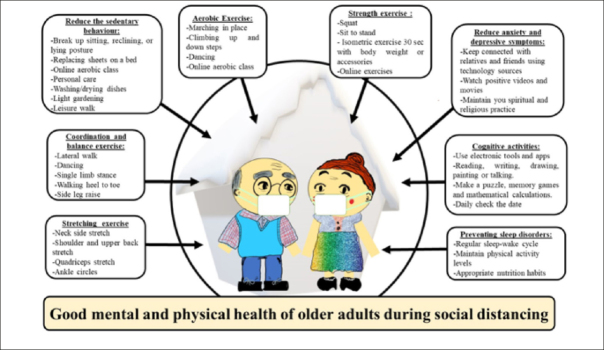
- The main international recommendations were cognitive strategies and increasing physical activity using apps, online videos, and telehealth; expert organizations and WHO recommended 150–300 minutes/week of moderate-intensity aerobic activity and two sessions/week of muscle-strength training.
## Methods
- Design: Narrative review.
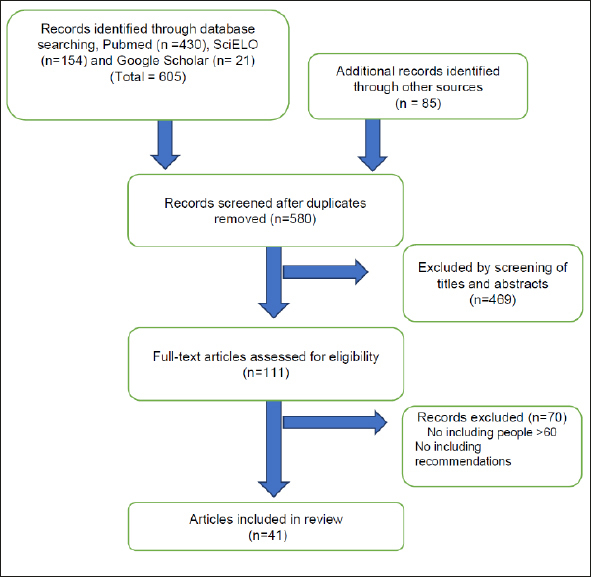
- Data/sample: Searches were done in PubMed, SciELO, and Google Scholar for articles published from 2019 to May 20, 2020, in English, Spanish, or Portuguese; studies without participants over 60 years old were excluded. The review also included guidelines, recommendations, and update documents from international organizations.
- Main analysis: The authors screened records for duplicates, titles, and abstracts, then organized the review into two areas: effects of quarantine/social isolation on mental and physical health, and recommendations for mental and physical health during quarantine.
## Limitations
- The paper states that included studies were cross-sectional, not specific to elderly populations, and descriptive, with no control group used.
- The paper states there is a lack of evidence on the most appropriate psychological and physical recommendations, and that most suggested interventions are based on expert opinion rather than high-evidence studies.
- Evident from the text: the review is based on studies from an early stage of the pandemic and the authors note these findings should be taken with caution because data were collected very early.
Model-written summary. Check it against the paper before relying on it.
Integrity signals
Registry
Cites
Statistics
Figures
Verification
Claims the paper makes
15 Valid · 1 Not valid · 6 Not checked · 6 Own results and interpretations
The cited sources support only part of this claim — read each source’s verdict below.
In the paper
“The prevalence of anxiety ranged from 8.3%, 18.7% and 35.1% to 49.7% (36, 38)”
- Also stated in: § Mental health · plain
“having a wide range from 8.3% (36) to 49.7% (42) for anxiety”
§ Impact of Social Isolation Due to COVID-19 on Health in Older People: Mental and Physical Effects and Recommendations > Results > Effect of the reduction of social participation produced by quarantine for COVID-19 on mental and physical health in elderly people
What the sources say
- Supportedcites [36] Lei L Huang X Zhang S Yang J Yang L Xu M Comparison of Prevalence and Associated Factors of Anxiety and Depression Among People Affected by versus People Unaffected by Quarantine During the COVID-19 Epidemic in Southwestern China Med Sci Monit. 26 2020 1 12 PMC7199435 32335579 source
The ‘Prevalence of anxiety and depression’ section reports anxiety in approximately 8.3% of the 1,593 participants in southwestern China. Because the citing sentence gives two references for a range across studies, this paper supports the 8.3% figure attributed to it. (LLM, conf=0.91)
- Partly supportedcites [38] Huang Y Zhao N Generalized anxiety disorder, depressive symptoms and sleep quality during COVID-19 outbreak in China: a web-based cross-sectional survey Psychiatry Res. 288 2020 10.1016/j.psychres.2020.112954 PMC7152913 32325383 sourceExperimental — accuracy not yet measured
The Results section reports a 35.1% prevalence of generalized anxiety disorder in this study’s Chinese survey sample. It does not report the 8.3% or 49.7% figures or establish a prevalence range across studies, so it supports only one value in the citing sentence. No page number is available in our copy. (LLM, conf=0.86)
- Could not verifycites [42] Losada-Baltar A, Jimenez-Gonzalo L, Gallego-Alberto L, Pedrosos-Chaparro M del S, Fernades-Pires J, Marquez-Gonzáles M. “We're staying at home”. Association of self-perceptions of aging, personal and family resources and loneliness with psychological distress during the lock-down period of COVID- 19. J Gerontol B Psychol Sci Soc Sci. 2020:1–10. PMC7184373 32282920 sourceExperimental — accuracy not yet measured
The Measures section mentions anxiety as one component of a psychological-distress scale, but gives no anxiety prevalence estimates. The Results section reports associations with distress rather than prevalence across studies; searches for 8.3%, 18.7%, 35.1%, 49.7%, and anxiety prevalence found no supporting passage in our copy. (LLM, conf=0.74)
plain- Asserted: passes — The authors put it forward as true.
- Checkable: passes — It can be checked against evidence.
- Load-bearing: unclear — It is unclear whether the paper’s conclusions depend on it.
- Based: passes — The paper gives a reason why it holds.
- Also stated in: § Mental health · plain
Every source the paper cites for this claim was checked and supports it.
In the paper
“Increased sedentary behavior has been associated with the prevalence of different comorbidities in elderly people (83).”
§ Impact of Social Isolation Due to COVID-19 on Health in Older People: Mental and Physical Effects and Recommendations > Discussion > Physical health
What the sources say
- Supportedcites [83] de Rezende L Rey-López J Matsudo V do Carmo Luiz O Sedentary behavior and health outcomes among older adults: a systematic review BMC Public Heal. 9 14 2014 333 10.1186/1471-2458-14-333 PMC4021060 24712381 source
The Results sections on metabolic syndrome and overweight/obesity report associations between greater sedentary behavior and both conditions in older adults. This supports the broad claim that sedentary behavior has been associated with different comorbidities, without implying causation. (LLM, conf=0.89)
plainstates an association- Asserted: passes — The authors put it forward as true.
- Checkable: passes — It can be checked against evidence.
- Load-bearing: passes — The paper’s conclusions depend on it.
- Based: passes — The paper gives a reason why it holds.
- Supported
The cited sources support only part of this claim — read each source’s verdict below.
In the paper
“This review has reported that social distancing because of the COVID-19 pandemic could lead to negative consequences for the physical health of older adults. This is caused by the decrease of physical activity levels due to the total or partial restriction of social participation in community groups and family activities during the pandemic (42, 43, 44).”
§ Impact of Social Isolation Due to COVID-19 on Health in Older People: Mental and Physical Effects and Recommendations > Discussion > Physical health
What the sources say
- Could not verifycites [42] Losada-Baltar A, Jimenez-Gonzalo L, Gallego-Alberto L, Pedrosos-Chaparro M del S, Fernades-Pires J, Marquez-Gonzáles M. “We're staying at home”. Association of self-perceptions of aging, personal and family resources and loneliness with psychological distress during the lock-down period of COVID- 19. J Gerontol B Psychol Sci Soc Sci. 2020:1–10. PMC7184373 32282920 sourceExperimental — accuracy not yet measured
The Introduction (page unavailable) suggests that lockdown may contribute to loneliness and psychological distress, and the Measures section assesses family contact. Our copy does not address the claimed decline in physical activity or a resulting effect on older adults’ physical health; searches for physical activity, exercise, social participation, and community groups found no supporting passage. (LLM, conf=0.76)
- Partly supportedcites [43] Goethals L Barth N Guyot J Hupin D Celarier T Bongue B Impact of home quarantine on physical activity among older adults living at home during the COVID-19 pandemic: Qualitative interview study J Med Internet Res. 22 5 2020 1 5 PMC7207013 32356777 sourceExperimental — accuracy not yet measured
The Discussion says quarantine and reduced social ties could decrease older adults’ physical activity, with possible consequences for physical functioning. The Results document reduced attendance and cancellation of group physical activity workshops. The paper does not specifically link restrictions on family activities to decreased physical activity. (LLM, conf=0.84)
- Partly supportedcites [44] Castañeda-babarro A. Impact of COVID-19 confinement on the time and intensity of physical activity in the Spanish population. Res Sq. 2020:1–14. doi: 10.21203/rs.3.rs-26074/vl. sourceExperimental — accuracy not yet measured
The cited preprint does support the general core: its Abstract and Discussion (Results, Conclusions) report that lockdown/social distancing during COVID-19 significantly reduced physical activity (vigorous −16.8%, walking −58.2%) and raised sedentary time (+23.8%), and the Discussion attributes part of this to 'forced sudden inaccessibility to community resources (e.g. sports facilities, urban trails, parks, green spaces)' and, via the socio-ecological model, to social isolation/loneliness (refs 18-20). However, the population is wrong: the study sampled 3800 healthy adults aged ≥18–≤64 residing in Spain (Abstract, Methods; Table 1 mean age 42.7), so it reports nothing about older adults, and its impact was greatest in men, young people, students and the very active. The specific causal attribution in the citing sentence — decreased activity due to 'total or partial restriction of social participation in community groups and family activities' — is also not stated in our copy, which instead cites prolonged stay at home, loss of active transport/work-related activity, e-learning/screen time and closure of fitness resources. (LLM, conf=0.78)
hedgedstates a possible cause- Asserted: passes — The authors put it forward as true.
- Checkable: passes — It can be checked against evidence.
- Load-bearing: passes — The paper’s conclusions depend on it.
- Based: passes — The paper gives a reason why it holds.
- Could not verify
The cited sources support only part of this claim — read each source’s verdict below.
In the paper
“Finally, sleep disturbances were observed in 18.2% (38) and 36.4% (37) among the participants.”
§ Impact of Social Isolation Due to COVID-19 on Health in Older People: Mental and Physical Effects and Recommendations > Results > Effect of the reduction of social participation produced by quarantine for COVID-19 on mental and physical health in elderly people
What the sources say
- Partly supportedcites [37] Yuan S Liao Z Huang H Comparison of the Indicators of Psychological Stress in the Population of Hubei Province and Non-Endemic Provinces in China During Two Weeks During the Coronavirus Disease 2019 (COVID-19) Outbreak in February 2020 Med Sci Monit. 26 2020 e923767 32294078 PMC7177041 sourceExperimental — accuracy not yet measured
Table 5 (Results; page not provided) reports that sleep quality worsened for 36.43% of the 527 participants included in that analysis, supporting the cited 36.4% figure. It excludes asymptomatic participants, however, and measures worsening sleep quality rather than the prevalence of sleep disturbances among all participants. The 18.2% figure is attached to a different citation and is not attributed to this paper. (LLM, conf=0.88)
- Supportedcites [38] Huang Y Zhao N Generalized anxiety disorder, depressive symptoms and sleep quality during COVID-19 outbreak in China: a web-based cross-sectional survey Psychiatry Res. 288 2020 10.1016/j.psychres.2020.112954 PMC7152913 32325383 source
The Results (Table 4) report poor sleep quality in 1,317 of 7,236 participants (18.2%), supporting the figure attached to this source, citation (38). The 36.4% figure is attached to a different citation, (37), and is not assessed here. (LLM, conf=0.93)
plain- Asserted: passes — The authors put it forward as true.
- Checkable: passes — It can be checked against evidence.
- Load-bearing: unclear — It is unclear whether the paper’s conclusions depend on it.
- Based: passes — The paper gives a reason why it holds.
- Partly supported
The cited sources support only part of this claim — read each source’s verdict below.
In the paper
“Goethals et al (43) reported that COVID-19 pandemic has affected the number of seniors attending group physical activity programs.”
§ Impact of Social Isolation Due to COVID-19 on Health in Older People: Mental and Physical Effects and Recommendations > Results > Effect of the reduction of social participation produced by quarantine for COVID-19 on mental and physical health in elderly people
What the sources say
- Partly supportedcites [43] Goethals L Barth N Guyot J Hupin D Celarier T Bongue B Impact of home quarantine on physical activity among older adults living at home during the COVID-19 pandemic: Qualitative interview study J Med Internet Res. 22 5 2020 1 5 PMC7207013 32356777 sourceExperimental — accuracy not yet measured
The Discussion says the study suggests that the epidemic affected seniors’ attendance at group physical activity programs before quarantine in two study territories. The citing sentence presents that qualified finding as a general fact, without the study’s uncertainty or limits of place and time. (LLM, conf=0.82)
plainstates a cause- Asserted: passes — The authors put it forward as true.
- Checkable: passes — It can be checked against evidence.
- Load-bearing: unclear — It is unclear whether the paper’s conclusions depend on it.
- Based: passes — The paper gives a reason why it holds.
- Partly supported
12 more claims · 7 with their cited sources checked
Create a free account to see all 28 claims and to verify the 4 references still open.
- It may state two separate claims as one. 10
- Probably not a substantial claim. 2
Claims other papers make about this one
Each is checked against this paper’s own text: does it say what the citing paper says it does?
The source backs part of the claim, not all of it — or backs it for a different population, condition or comparison.
In the citing paper
“During 2021, older adults faced social isolation due to the COVID-19 pandemic, resulting in a surge in articles at that time.”
From Smart Speakers for Health and Well-Being of Older Adults: A Mixed-Methods Review (2025) · cites this paper as [38]
Experimental — accuracy not yet measured
Citations
Cites
The Psychological Impact of Quarantine and How to Reduce It: Rapid Review of the Evidence
Brooks, S. K., Webster, R. K., Smith, L. E., Woodland, L., Wessely, S., Greenberg, N., & Rubin, G. J. (2020) · doi:10.2139/ssrn.3532534 · Cited by 16,394
The psychological impact of quarantine and how to reduce it: Rapid review of the evidence
Brooks, S. K., Webster, R. K., Smith, L. E., Woodland, L., Wessely, S., Greenberg, N., & Rubin, G. J. (2020) · The Lancet · doi:10.1016/s0140-6736(20)30460-8 · Cited by 16,378
(1985) · Europe PMC (PubMed Central) · Cited by 9,143
Social Relationships and Mortality Risk: A Meta-analytic Review
Holt-Lunstad, J., Smith, T. B., & Layton, J. B. (2010) · PLoS Medicine · doi:10.1371/journal.pmed.1000316 · Cited by 7,272 · cited 1×
“Evidence has demonstrated a relationship between social isolation and loneliness with disability, chronic diseases, risk of mortality and physical inactivity in elderly population (9, 19, 75-79).”
Holmes, E. A., O'Connor, R. C., Perry, V. H., Tracey, I., Wessely, S., Arseneault, L., Ballard, C., Christensen, H., Cohen Silver, R., Everall, I., et al. (2020) · The Lancet Psychiatry · doi:10.1016/s2215-0366(20)30168-1 · Cited by 5,715
Sedentary Behavior Research Network (SBRN)—Terminology Consensus Project process and outcome
on behalf of SBRN Terminology Consensus Project Participants, Tremblay, M. S., Aubert, S., Barnes, J. D., Saunders, T. J., Carson, V., Latimer-Cheung, A. E., Chastin, S. F. M., Altenburg, T. M., & Chinapaw, M. J. M. (2017) · International Journal of Behavioral Nutrition and Physical Activity · doi:10.1186/s12966-017-0525-8 · Cited by 3,793 · cited 1×
“…as any body movement using skeletal muscle that results in energy expenditure > 1.5 metabolic equivalent of task (MET), while sedentary behavior is defined as any waking behavior characterized by an energy expenditure 1.5 or less MET while in a sitting, reclining or lying posture (81, 82).”
InfluentialInternational Classification of Functioning, Disability and Health
World Health Organization (2021) · PsycTESTS Dataset · doi:10.1037/t76403-000 · Cited by 3,751
Huang, Y., & Zhao, N. (2020) · Psychiatry Research · doi:10.1016/j.psychres.2020.112954 · Cited by 3,736 · cited 3×
“Being female (36, 39, 42), having a negative self-perception of aging (42), healthcare workers (38), family and personal resources (42), time devoted to COVID-19 information (42), having an acquaintance or a family member infected with COVID-19 or a previous history of medical problems (39) seem to…”
Influential(2020) · PubMed · doi:10.3760/cma.j.issn.0254-6450.2020.02.003 · Cited by 3,323
The World report on ageing and health: a policy framework for healthy ageing
Beard, J. R., Officer, A., de Carvalho, I. A., Sadana, R., Pot, A. M., Michel, J.-P., Lloyd-Sherlock, P., Epping-Jordan, J. E., Peeters, G. M. E. E. (., Mahanani, W. R., et al. (2016) · The Lancet · doi:10.1016/s0140-6736(15)00516-4 · Cited by 3,287
Research works printed but not linked: 3
- Yazawa A Inoue Y Fujiwara T Association between social participation and hypertension among older people in Japan: the JAGES Study Hypertens Res. 39 11 2016 818 824 10.1038/hr.2016.78 27383510 · DOI
- Holmes EA O'Connor RC Perry VH Multidisciplinary research priorities for the COVID-19 pandemic: a call for action for mental health science The Lancet Psychiatry. 0366 20 2020 1 14 PMC7159850 32304649
- Arazi H Eghbali E Osteosarcopenia and Physical Activity Ann Sport Med Res. 5 1130 2018 3 6
Cited by
Items 401–500 of 709
Obesity and COVID-19 pandemic in South Korea: rapid review and a post-hoc analysis
Kim, Y., Kim, S., & Kim, M. S. (2023) · Life Cycle · doi:10.54724/lc.2023.e15 · Cited by 2
COVID-19 policy responses and subjective well-being
Adabor, O. (2024) · International Review of Applied Economics · doi:10.1080/02692171.2024.2316905 · Cited by 4
Defrancesco, M., Hofer, A., & Schurr, T. (2024) · Frontiers in Psychiatry · doi:10.3389/fpsyt.2024.1340498 · Cited by 4
Lee, H., Kim, H. K., Park, H. Y., & Park, K.-H. (2024) · Annals of Geriatric Medicine and Research · doi:10.4235/agmr.23.0174 · Cited by 2
“38) Second, the results of this study revealed significant differences in the descriptive characteristics of each social network type.”
Karimi, Z., Tamini, B. K., & Nourimoghadam, S. (2024) · Shiraz E-Medical Journal · doi:10.5812/semj-135961 · Cited by 4
Yu, H., & Alizadeh, F. (2024) · Psychology Research and Behavior Management · doi:10.2147/prbm.s462085 · Cited by 2
Social Isolation, Other Risk Factors’, and Emotional Well-Being Among Older African Immigrants
Adeniji, D. O., Gentle-Genitty, C. S., & Bonifas, R. P. (2024) · Journal of Gerontological Social Work · doi:10.1080/01634372.2024.2431852 · Cited by 2
“Generally, scholars concluded that the COVID-19 pandemic contributed to social isolation for many people across the globe (Hwang et al., 2020; Sepúlveda-Loyola et al., 2020; Williams et al., 2020).”
Nakada, T., Kurotani, K., Kozawa, T., Seino, S., Murota, S., Eto, M., Shimasawa, J., Shimizu, Y., Tsurugano, S., Katsukawa, F., et al. (2024) · Healthcare · doi:10.3390/healthcare12232365 · Cited by 4
Woo, C. J., Merkow, J., Renton, N., Crotty, K. J., Kudlowitz, D., Lazarus, R., & Blachman, N. L. (2025) · Gerontology & Geriatrics Education · doi:10.1080/02701960.2024.2447062 · Cited by 4
“…social isolation: Donizetti & Lagacé and Sepulveda-Loyola et al. showed that older adults experiencing greater isolation during the COVID-19 pandemic had increased levels of anxiety, depression, sleep disturbance, and physical inactivity (Donizzetti & Lagacé, 2022; Sepúlveda-Loyola et al., 2020).”
O’Grady, M., Barrett, E., & Connolly, D. (2025) · PLoS ONE · doi:10.1371/journal.pone.0318687 · Cited by 3
Orlandini, R., Kalcina, L. L., & Antičević, V. (2025) · Diseases · doi:10.3390/diseases13020045 · Cited by 4
“An initial pool of items was developed by reviewing relevant literature on stress and pandemic-specific stressors [37,66–69].”
Tam, C., Zhang, W., Moore, D. M., Salters, K. A., Trigg, J., Wesseling, T., Parashar, S., McLinden, T., Sereda, P., McDougall, P., et al. (2025) · AIDS · doi:10.1097/qad.0000000000004158 · Cited by 2
Käläntär, L., Gomi, T., Motokawa, K., Hayakawa, M., Mikami, Y., Shirobe, M., Iwasaki, M., Kojima, N., Osuka, Y., Sasai, H., et al. (2025) · Nippon Ronen Igakkai Zasshi Japanese Journal of Geriatrics · doi:10.3143/geriatrics.62.70 · Cited by 2
Lee, O. E., Baek, S., Lee, J.-S., & Park, D.-H. (2025) · Research on Social Work Practice · doi:10.1177/10497315251331847 · Cited by 3
“The closure of community centers and activities — key socialization hubs for many older individuals — further contributed to their isolation, leading to feelings of abandonment and emotional distress (Fakoya et al., 2020; Sepúlveda-Loyola et al., 2020).”
Jang, S., & Kim, Y. (2025) · Journal of Social Service Research · doi:10.1080/01488376.2025.2529194 · Cited by 2
Supporting Geriatric Patients During a Global Pandemic
Panwala, T. F., Tou, L. C., & Siddiqui, T. A. (2021) · Academic Medicine · doi:10.1097/acm.0000000000004416 · Cited by 2
Yaşlı Bireylerin COVID-19’a İlişkin Duygu ve Düşüncelerinin İncelenmesi
TEKİN, H., & Aşiret, G. D. (2022) · Turkish Journal of Family Medicine & Primary Care · doi:10.21763/tjfmpc.1101602 · Cited by 2
COVID-19 en las personas mayores: lecciones por aprender
Rodríguez‐Mañas, L., & Rodríguez-Sánchez, I. (2022) · Revista Española de Geriatría y Gerontología · doi:10.1016/j.regg.2022.10.002 · Cited by 2
Self-citationGreat Psychological Distress Induced by COVID-19 on Healthcare Workers in Japan
Sengoku, R. (2021) · Internal Medicine · doi:10.2169/internalmedicine.8014-21 · Cited by 2
“The mental and physical health of older people have been negatively affected by the social distancing encouraged during the COVID-19 pandemic, with the main reported outcomes including anxiety, depression, a poor sleep quality and physical inactivity during the isolation period (3).”
BackgroundSharma, R., Kumar, K., Saini, L. K., Dhiman, D., Ghai, B., Suri, V., Singh, S. M., Mohendra, R., Tyagi, P., Barre, V. P., et al. (2021) · International Journal of Community Medicine and Public Health · doi:10.18203/2394-6040.ijcmph20213781 · Cited by 2
Kaya, G., & Zeren, M. (2022) · Journal of Basic and Clinical Health Sciences · doi:10.30621/jbachs.1000969 · Cited by 3
Alexandrova, E. A., Валерьевна, П. Е., Вадимовна, Б. И., Yulin, V. S., Suslov, A. G., Михайлович, Б. К., & Fomin, S. V. (2022) · Meditsinskiy sovet = Medical Council · doi:10.21518/2079-701x-2022-16-2-76-84 · Cited by 6
The Influence of Natural Tempering on the Physiological Age of People of Different Ages
Хорошуха, М. Ф., Griban, G. P., Liakhova, N. A., Гордійчук, С. В., Makhnovska, I., Oleniev, D. G., & Andreychuk, V. (2022) · Acta Balneologica · doi:10.36740/abal202203110 · Cited by 2
“Moreover, nowadays humanity has to fight for life with the coronavirus (СOVID-19), using a large arsenal of psychophysical rehabilitation agents in the fight against the viral pandemic [6-8].”
BackgroundMeijer, K., Hoekstra, T., Brandenbarg, P., COVID-19 Disability Survey Group, ReSpAct 2.0 Group, & Hoekstra, F. (2022) · Disabilities · doi:10.3390/disabilities2040054 · Cited by 2
Wang, D., Zhang, A., & Feng, X. (2022) · Journal of Advanced Nursing · doi:10.1111/jan.15540 · Cited by 2
COVID-19 Pandemic's Socio-Economic Impact on SMEs
Baporikar, N. (2022) · International Journal of Entrepreneurship and Governance in Cognitive Cities · doi:10.4018/ijegcc.313043 · Cited by 2
Two‐year impact of COVID‐19 pandemic on hospitalized patients with skin diseases in China
Pan, J., Yang, S., Chen, X., Che, X., Lin, W., Chen, M., Chen, X., Deng, G., & Su, J. (2023) · Journal of Medical Virology · doi:10.1002/jmv.28511 · Cited by 2
Sanabria, M. R., Monar, P. S. C., Alonso‐Tarancón, A. M., Coco, R. M., & Mayo-Íscar, A. (2023) · Journal of Clinical Medicine · doi:10.3390/jcm12062394 · Cited by 5
Lawton, A., Miller-Lewis, L. R., & Gerace, A. (2023) · Journal of Adult Development · doi:10.1007/s10804-023-09455-6 · Cited by 6
“…(Vaterlaus et al., 2021) and were accompanied by reports of heightened levels of anxiety, loneliness, and severe depression (Brinkhof et al., 2022; Sepúlveda-Loyola et al., 2020; Shakespeare-Finch et al., 2020), as well as increased engagement in the use of sub-stances such as alcohol (Rahman et…”
Perceptions of Senior Center and Psychosocial Wellbeing During COVID-19
Lee, S. Y., Lim, X. J., Koh, H. Q. H., Yeo, P. A., Zhong, E. Y., & Wee, S. L. (2023) · Activities Adaptation & Aging · doi:10.1080/01924788.2023.2247718 · Cited by 3
“…activity were observed among community-dwelling older adults in Singapore during a “lockdown” period due to the COVID-19 pandemic (Lee et al., 2021), suggesting potential impact on physical and mental health such as anxiety, depression and poor sleep quality (Sepúlveda-Loyola et al., 2020).”
Ekegren, C. L., Ayton, D., Skouteris, H., & Soh, S. (2024) · Journal of Aging and Physical Activity · doi:10.1123/japa.2023-0199 · Cited by 3
Hussein, M., Gallais, F., Dégot, T., et al. (2024) · Respiratory Medicine and Research · doi:10.1016/j.resmer.2024.101100 · Cited by 2
Mitigating Social Isolation Following the COVID-19 Pandemic: Remedy Messages Shared by Older People
Low, G., von Humboldt, S., GUTMAN, G. M., Gao, Z., Allana, H., AliSher, A. N., Wilson, D. M., & Vastani, M. (2024) · COVID · doi:10.3390/covid4060053 · Cited by 3
Development of lifestyle assessment: A Delphi survey of multi-faceted health experts
Kim, A., Lim, Y., & Park, J. (2025) · PLoS ONE · doi:10.1371/journal.pone.0316597 · Cited by 2
“On the other hand, the importance of relationships and participation in social factors has been emphasized before [16], but the need for a comprehensive approach that includes them as key relatively unnoticed factors is increasing [16,17].”
Social Distancing to Avoid SARS-CoV-2 Infection in Cancer and Noncancer Patients
Kloecker, G. H., Nolan, J. R., Korbee, L. L., Calhoun, R. F., Logan, B. B., Flora, D., Flora, D. B., & Hartman, P. E. (2022) · Journal of Patient Safety · doi:10.1097/pts.0000000000001058 · Cited by 1
Hong, M., Yi, E.-H. G., & Kim, H. J. (2022) · Journal of Applied Gerontology · doi:10.1177/07334648221134370 · Cited by 1
“Therefore, based on COVID-19 research with older adults (e.g., Lee et al., 2021; Polenick et al., 2021) and about PTSD (Tortella-Feliu et al., 2019), the following four groups of independent variables, to explore risk factors for COVID-PTSD, were included: physical health, social support network,…”
MethodChoi, J., Koo, B., Seo, W. S., Cheon, E., Sung, H. M., Kim, J. Y., Jeong, H.-S., Kim, Y., & Kim, H.-G. (2023) · Psychiatry Investigation · doi:10.30773/pi.2022.0223 · Cited by 2
A community‐based cross‐sectional study of anxiety and metabolic syndrome
Liu, F., Hu, X., Zhu, X., Dong, X., Ge, J., Xu, S., Li, G., Li, L., Li, S., & Wei, Z. (2023) · Psychogeriatrics · doi:10.1111/psyg.12953 · Cited by 1
Structural Inequity and Racial/Ethnic Disparities in Sleep Health During the COVID-19 Pandemic
Alhasan, D. M., Gaston, S. A., & Jackson, C. L. (2023) · Progress in Sleep Research · doi:10.1007/978-981-99-0240-8_10 · Cited by 4
The Association of Hobbies and Leisure Activities with Physician Burnout and Disengagement
Li, Y., Lai, C. Y., Friedrich, B., Liu, C., & Popkin, J. H. (2023) · Journal of Wellness · doi:10.55504/2578-9333.1160 · Cited by 9
Shao, M., Luo, S., Qian, H., Li, X., Wei, Z., Hong, M., Wang, J., Li, X., & Meng, J. (2024) · Heliyon · doi:10.1016/j.heliyon.2024.e26082 · Cited by 2
“The decrease in social interaction resulting from social isolation has negatively impacted people ’ s physical and mental health [4,5], and people report generally feeling stressed [3,6 – 8].”
BackgroundMarco, P., Corella, M., & Redolat, R. (2024) · Arteterapia Papeles de arteterapia y educación artística para la inclusión social · doi:10.5209/arte.88560 · Cited by 2
Kim, K. (2024) · 대한임상노인의학회지 · doi:10.15656/kjgg.2024.25.1.13 · Cited by 2
Yang, H., Han, J.-Y., Wang, J., Duan, Y., & Jiang, J. (2024) · Experimental Gerontology · doi:10.1016/j.exger.2024.112515 · Cited by 1
McLean, T., Williams, M. N., & Stephens, C. (2024) · Psychology Health & Medicine · doi:10.1080/13548506.2024.2407437 · Cited by 1
“…of anxiety and depression causation (Beck, 1963; Dugas et al., 1998), and age-specific factors impacting older people (Brooke & Jackson, 2020; Sepúlveda-Loyola et al., 2020), suggests that the mental health of older people may well have been negatively impacted by the COVID-19 pandemic, and…”
Pak, S. S., Jiang, Y., Lituiev, D., Marchis, E. H. D., & Peterson, T. A. (2024) · PAIN Reports · doi:10.1097/pr9.0000000000001191 · Cited by 5
Pomiato, E., Palmieri, R., Panebianco, M., Già, G. D., Porta, M. D., Turchetta, A., Raponi, M., Gagliardi, M. G., & Perrone, M. A. (2024) · Journal of Functional Morphology and Kinesiology · doi:10.3390/jfmk9040226 · Cited by 2
Rodrigues, I. F. A., Silva, K. H. C. V. E., Stephanus, A. D., & de Carvalho, L. S. F. (2024) · Cogitare Enfermagem · doi:10.1590/ce.v29i0.93477 · Cited by 1
Wang, H., Gilbody, S. M., Littlewood, E., Baird, K., Ekers, D., McMillan, D., Bailey, D., Chew-Graham, C. A., Coventry, P. A., Fairhurst, C. M., et al. (2025) · BMJ Mental Health · doi:10.1136/bmjment-2024-301270 · Cited by 1
“Studies indicate that loneliness and social isolation not only harm the mental and physical health of older adults with depression 4 but also exacerbate depression for up to 12 years.”
Experiences of Elderly Living Alone During the COVID-19 Pandemic: A Phenomenological Research
Ilgaz, A., Sert, E. N., Gözüm, S., & Öncel, S. (2025) · Clinical and Experimental Health Sciences · doi:10.33808/clinexphealthsci.1507625 · Cited by 1
The Mental Health of 65+ Europeans and COVID-19: Resilient During and After the Pandemic?
Herreweghe, L. V. (2025) · Social Indicators Research · doi:10.1007/s11205-025-03627-5 · Cited by 1
“This because social restrictions and the reduction of social contacts increases the chances of becoming socially isolated (Sepúlveda-Loyola et al., 2020).”
Besselink, D., Schaap, F. D., Jager‐Wittenaar, H., Geelen, S. J. G., Sealy, M. J., Finnema, E., & van der Lucht, F. (2025) · Qualitative Health Research · doi:10.1177/10497323251345333 · Cited by 1
“The social distancing measures negatively affected older adults ’ well-being due to increased loneliness, reduced physical activity, and worsening mental health issues (Besselink et al., 2024; De Pue et al., 2021; Karmann et al., 2024; Lebrasseur et al., 2021; Sep´ulveda-Loyola et al., 2020).”
Pandemic-related experiences of older adults and people with disabilities
Mortenson, W. B., Esfandiari, E., Mohammadi, S., et al. (2025) · PLoS ONE · doi:10.1371/journal.pone.0325306 · Cited by 1
“Furthermore, in terms of conversion factors some people with disabilities may have increased resilience because of the skills they developed grappling with previous life changes [12,13,45].”
Small acts of resistance – community-dwelling oldest old reclaiming autonomy during a pandemic
Varjakoski, H., Tiilikainen, E., Lisko, I., Kulmala, J., & Solomon, A. (2025) · Journal of Aging Studies · doi:10.1016/j.jaging.2025.101361 · Cited by 1
The impact of common chronic diseases on the severity of clinical symptoms of COVID-19
Pietrzyk, B., Dolibog, P., Fajferek, T., Joniec, A., Mikołajczyk, J., Kaczara, S., & Kołodziej, E. (2025) · Annales Academiae Medicae Silesiensis · doi:10.18794/aams/205505 · Cited by 1
“Fewer new cases of viral infection were detected, especially in this group of patients, which could be related to their isolation or asymptomatic course [13].”
Choi, J., Son, G., Kim, Y.-S., Choi, K., Kim, J., & Park, S. (2025) · PLoS ONE · doi:10.1371/journal.pone.0330118 · Cited by 3
“Moreover, much of the existing literature focuses on the link between social isolation and mental health in the senior population and considers this population to be vulnerable [21,22].”
Influence of the SARS-CoV-2 pandemic and infection on musculoskeletal function
Reiter, A., Haack, A., Petersen, E. L., Blankenberg, S., Frosch, K., Thiesen, D. M., & Keller, J. (2025) · Scientific Reports · doi:10.1038/s41598-025-17780-x · Cited by 1
“…2 for men and 5.5 kg/m 2 for women identified through either Magnetic resonance imaging (MRI), computed tomography (CT), Dual-energy X-ray absorptiometry (DXA) or Bioelectrical Impedance Analysis (BIA); and low physical performance, identified through a timed up and go test taking 20 s or more 19 .”
InfluentialTemporal depressive symptom networks in older adults during the COVID-19 pandemic
Odenthal, M., Schlechter, P., Benke, C., & Melzig, C. A. (2025) · Journal of Mood and Anxiety Disorders · doi:10.1016/j.xjmad.2025.100156 · Cited by 2
“This finding is especially relevant as older people often suffer from physical inactivity and social withdrawal, representing risk factors in the development and maintenance of depression [16].”
Post-COVID-19 Rehabilitation Improves Mobility and Gait Performance: Evidence from TUG and 10MWT
Chiriac, O. C., Miricescu, D., Sporea, C., Stanciu, S. M., Luncă, D.-C., Bădoiu, S. C., Văcăroiu, I. A., Mititelu, R., Grigore, R., Mitrea, A. R., et al. (2025) · Healthcare · doi:10.3390/healthcare13222892 · Cited by 1
“This multidimensional approach enhances the robustness of functional assessment and should be considered a gold standard in rehabilitation practice [19,34].”
Reid, J. C., Semrau, J. S., O’Grady, H. K., Hoogenes, J., Gill, J., Hasan, H., von Teichman, S., Bogdanova, Y., McKenney, S., Sokol, O. E., et al. (2025) · Australian Critical Care · doi:10.1016/j.aucc.2025.101500 · Cited by 1
Association between vitamin D supplement use and cognitive functioning: a longitudinal cohort study
Hua, R., Lam, C. S., Mok, V., & Cheung, Y. T. (2026) · BMJ Open · doi:10.1136/bmjopen-2025-106050 · Cited by 1
Pathways to life satisfaction (happiness): well-being among older adults in Ghana
Oduro, J. K., Adu‐Gyamfi, A. B., Anokye, F. A., Boasinke, R. K., Oduro, M. A., Annang, A., Ferka, L., & Dogbatse, D. A. (2026) · Aging & Mental Health · doi:10.1080/13607863.2026.2621786 · Cited by 1
“…some studies suggest that social cohesion and family support contribute to stable happiness levels among older adults in SSA (Jiang et al., 2021; Sepúlveda-Loyola et al., 2020), others indicate that economic instability and lack of formal social protection systems negatively impact well-being…”
Barbosa, I., & de Oliveira, E. R. (2026) · Education and Information Technologies · doi:10.1007/s10639-026-13980-8 · Cited by 3
“Despite the potential of digital platforms to mitigate social isolation and enhance quality of life (Sepúlveda-Loyola et al., 2020 ), only one in four older Europeans possess basic or above-basic digital skills, exac - erbating inequalities in access to services and social connectivity in later…”
Chen, S., Wang, C., Cheng, S., Yang, Z., & Wang, Y. (2026) · Applied Psychology Health and Well-Being · doi:10.1111/aphw.70176 · Cited by 2
Hasegawa, Y., Tokumoto, K., Nagai, K., Tsuji, S., Kusunoki, T., Tamaki, K., Yamamoto, K., Kazuhiro, H. O. R. I., Nagasawa, Y., Kishimoto, H., et al. (2026) · Archives of Gerontology and Geriatrics · doi:10.1016/j.archger.2026.106397 · Cited by 1
Izawa, K. P., Ishihara, K., Noto, S., et al. (2022) · Reviews on Recent Clinical Trials · doi:10.2174/1574887117666220119122939 · Cited by 1
Oamen, P., & Ekhator, E. O. (2021) · African Human Rights Law Journal · doi:10.17159/1996-2096/2021/v21n2a31 · Cited by 1
Are the Psychological Effects of the COVID-19 Pandemic Similar in Old-aged and Young Patients?
Cengiz, O. K., & Yakaryılmaz, F. D. (2022) · European Journal of Geriatrics and Gerontology · doi:10.4274/ejgg.galenos.2022.2021-12-1 · Cited by 1
“Sepúlveda-Loyola et al. (22), in their study evaluating the effects of the isolation period on the old-aged during the COVID-19 epidemic, found that the old-aged experienced anxiety, depression, poor sleep quality, and physical inactivity problems.”
The Corona Pandemic and Its Implications for the Mental Health and Mental Healthcare of Older Adults
Albert, I., & Kornadt, A. E. (2022) · GeroPsych · doi:10.1024/1662-9647/a000286 · Cited by 2
The Association Between Social Network and Fear of COVID-19 Among Older Adults
Schilz, M., Steward, A. T., Wang, K., Ingle, M. P., Fries, C. M. D., & Hasche, L. K. (2022) · Journal of Gerontological Social Work · doi:10.1080/01634372.2022.2045661 · Cited by 1
“Additional strategies to boost older adults’ social network during the pandemic include socializing with family and friends via virtual communication, physical distancing interactions, or online games or courses (Sepúlveda-Loyola et al., 2020).”
BackgroundCosta, T. G., Ramos-Urrea, C., Santos, D. D. A. T., Ostolin, T. L. V. D. P., & de Lira, C. A. B. (2022) · Research Society and Development · doi:10.33448/rsd-v11i6.28689 · Cited by 2
Zhou, K., Chi, H., Wang, J., Zheng, Y., Pan, J., Yu, D., Xu, J., Zhu, H., Li, J., Chen, S., et al. (2022) · Frontiers in Psychiatry · doi:10.3389/fpsyt.2022.918679 · Cited by 1
Nutrition of elderly persons during a new coronavirus infection
Solgalova, S. A., & Kechedzhieva, S. G. (2022) · Meditsinskiy sovet = Medical Council · doi:10.21518/2079-701x-2022-16-15-144-151 · Cited by 2
Aubin, G., Marcoux, L., Larivière, N., Lord, M.-M., Thibault, S.-M., Langlois, C., & Lefebvre, A. (2022) · Journal of Gerontological Social Work · doi:10.1080/01634372.2022.2139318 · Cited by 1
“Indeed, free activities such as gatherings and community group activities (which had been part of many of these older adults’ routine) ceased completely (Sepúlveda-Loyola et al., 2020).”
BackgroundResultAlzheimer's disease and COVID-19
Koberskaya, N. N., & Roshchin, P. (2022) · Neurology neuropsychiatry Psychosomatics · doi:10.14412/2074-2711-2022-6-89-97 · Cited by 1
Pereiro, A. X., Leiva, D., Galvan, A. D. A., Hernandis, S. P., Pinazo‐Clapés, C., Dosil‐Díaz, C., Felpete, A., & Facal-Mayo, D. (2022) · Aging & Mental Health · doi:10.1080/13607863.2022.2158306 · Cited by 3
“There is some evidence for significant associations between pandemic-related social isolation and negative health outcomes (Lebrasseur et al., 2021; Sepúlveda-Loyola et al., 2020; Suárez-González et al., 2021).”
BackgroundResultPsychosocial experiences of patients diagnosed with COVID-19 at a teaching hospital in Ghana
Osei, E. A., Oti-Boadi, E., Agyeman‐Yeboah, J., Hennor, E., Ofosuwaa, B., Agyeiwaa, J., & Elikplem, R. (2022) · SAGE Open Medicine · doi:10.1177/20503121221144859 · Cited by 3
Kondisi Psikologis dan Kualitas Tidur pada Lansia Kelompok Prolanis
Susanto, J. P., Makhfudli, M., Ilkafah, I., Sairozi, A., Tyas, A. P. M., Wijayanti, E. S., Iswatun, I., & Umam, K. (2022) · Jurnal Kesehatan Vokasional · doi:10.22146/jkesvo.74460 · Cited by 6
The social, medical, emotional, and spiritual impact of confinement due to COVID-19 in older people
Gamboa-Esparza, M., Quintanilla-Flores, D. L., Salinas-Martínez, R., González-Galván, C. R., Garza-Moreno, D., & Morales-Delgado, R. (2023) · The Journal of Latin American Geriatric Medicine · doi:10.24875/lagm.22000007 · Cited by 1
Admission Avoidance for Older Adults Facilitated by Telemedicine during the COVID-19 Pandemic
Gregory, J., Noble, B., Ward, D., Wyrko, Z., & Laghi, L. (2023) · Endocrine Metabolic & Immune Disorders - Drug Targets · doi:10.2174/1871530323666230201103920 · Cited by 3
Elderly Women During COVID 19: Multiple Disadvantages and Deprivations
Tyagi, R. (2023) · Springer eBooks · doi:10.1007/978-981-16-1914-4_183-1 · Cited by 1
Stefańska, M., Koker, R. D., Vos, J., Wachter, E. D., Dębiec-Bąk, A., & Ptak, A. (2023) · International Journal of Environmental Research and Public Health · doi:10.3390/ijerph20054311 · Cited by 2
Murray, C. M., Milanese, S., Guerin, M., Bilton, R. L., Baldock, K. L., & Parfitt, G. (2023) · Quality of Life Research · doi:10.1007/s11136-023-03387-0 · Cited by 1
“This reduction in quality of life is perpetuated by social isolation and feelings of loneliness, possibly leading to negative physical and mental health among older adults [12, 13].”
BackgroundCarletti, T. M., Meira, I. A., Gama, L. T., de Medeiros, M. M. D., Cavalcanti, Y. W., & Garcia, R. C. M. R. (2023) · Brazilian journal of oral sciences/Brazilian Journal of Oral Sciences · doi:10.20396/bjos.v22i00.8668271 · Cited by 2
“The effects of quarantine on the mental and physical health of aged people have been summarized in only one review to date 19 .”
BackgroundForcén, F. E., & Freudenreich, O. (2023) · The Journal of Nervous and Mental Disease · doi:10.1097/nmd.0000000000001668 · Cited by 3
Building a Social Space through a Digital Library
Nafisah, S. (2023) · Librarianship in Muslim Societies · doi:10.15408/lims.v2i1.31755 · Cited by 1
Gutiérrez, M., Mauro, J., Asecio, J., Pérez, F. A., Herrada, J., Torres, C., Delgado, C., & Gerardo Fasce, P. (2023) · Revista médica de Chile · doi:10.4067/s0034-98872023000100061 · Cited by 3
Wittich, W., Kröger, E., Aubin, G., Fadhlaoui, A., Anderson, N. D., Gaied, N. B., Itzhak, I., & Belleville, S. (2023) · BMJ Open · doi:10.1136/bmjopen-2023-074555 · Cited by 2
A importância do exercício físico para a saúde mental: uma análise no período crítico da pandemia
Costa, K. L. P., Leite, M. D. S., Sousa, D. M. D., Sarmento, T. D. A. B., Leite, F. S. L. D. S., Gonçalves, T. R. F. T., Bezerra, W. K. T., de Oliveira, C. R. T., Adriano, M. P. F., & de Medeiros, Ê. K. M. (2023) · Contribuciones a las Ciencias Sociales · doi:10.55905/revconv.16n.9-130 · Cited by 1
Noguchi, M., Yokota, A., Kibayashi, T., Takeuchi, Y., & Maitani, K. (2023) · Physical & Occupational Therapy In Geriatrics · doi:10.1080/02703181.2023.2265980 · Cited by 1
“9 It has also been reported to be associated with mental health issues.”
BackgroundHokstad, A., Thommessen, B., Ihle‐Hansen, H., Indredavik, B., Døhl, Ø., & Askim, T. (2023) · Journal of Rehabilitation Medicine · doi:10.2340/jrm.v55.12352 · Cited by 3
“The importance of social support is also documented in other studies showing that older people participating in social activities, such as community groups and family activities, presented with better physical health compared with those not participating in such activities (8, 36, 37).”
ResultiCareLoop: Data Management System for Monitoring Gerontological Social Isolation and Loneliness
Ji, X., Yuh, A., Choi, H., Erdélyi, V., Mizumoto, T., Harrison, S. L., Weimer, J. E., Demiris, G., Nakagawa, T., Suehiro, T., et al. (2023) · International Conference on Mobile Computing and Ubiquitous Network (ICMU) · doi:10.23919/icmu58504.2023.10412232 · Cited by 4
Marcinow, M. L., Cadel, L., Birze, A., Sandercock, J., Baek, J., Wodchis, W. P., Guilcher, S. J. T., & Kuluski, K. (2024) · PLoS ONE · doi:10.1371/journal.pone.0297542 · Cited by 2
“Given the increased isolation experienced during the pandemic [30, 31], which can contribute to decon-ditioning, it is possible that unconventional environments further compounded these issues.”
BackgroundPathways to healthy ageing in Vanuatu: a qualitative evaluation of national policy priorities
Palagyi, A., Gadsden, T., Stephens, J., et al. (2024) · The Lancet Regional Health - Western Pacific · doi:10.1016/j.lanwpc.2024.101178 · Cited by 1
Using Film to Explore Ideas with University Students Around Intergenerational Social Connection
Dizon, L., Williams, L., Moeke‐Maxwell, T., Pearson, S., Kothari, S., Simpson, P. J., & Gott, M. (2024) · Journal of Intergenerational Relationships · doi:10.1080/15350770.2024.2406531 · Cited by 2
Blalock, D. V., Greene, L., Kane, R. M., Smith, V. A., Jacobs, J., Rao, M., Cohen, A. J., Zulman, D. M., & Maciejewski, M. L. (2024) · Journal of General Internal Medicine · doi:10.1007/s11606-024-09125-7 · Cited by 3
Jin, J., Lai, D. W. L., Lee, V. W. P., Yan, E., Ou, A. Y. T., & Wang, J. J. (2025) · Primary Health Care Research & Development · doi:10.1017/s1463423624000641 · Cited by 1
Ilkowski, J., Wieczorowska–Tobis, K., & Guzik, P. (2025) · Life · doi:10.3390/life15020271 · Cited by 1
“Misinformation and a lack of understanding of the disease amplified their isolation, causing decreased motivation, cognitive decline, and worsening health [16].”
The Impact of Demographic Characteristics on Elderly Lifestyle during the COVID-19 Pandemic
Ghorbanzadeh, K., Zare, M., Khalili, Z., Masomi, M., & Safari, Z. (2025) · Journal of Health and Hygiene · doi:10.61186/j.health.15.4.416 · Cited by 1
Effect of sleep quality on different aspects of executive function in older Iranians
Saei, R., Afshar, P. F., Gibson, R. H., & Alpass, F. (2025) · Australian Journal on Ageing · doi:10.1111/ajag.70092 · Cited by 2
“33 There has been work on cognitive assessment scales in Iran or among Persian-speaking populations, making it essential to investigate and establish standard scores for these assessments.”
Metadata
- Authors
- Sepúlveda-Loyola, W., Rodríguez-Sánchez, I., Pérez-Rodríguez, P., Ganz, F., Torralba, R., Oliveira, D. V., & Rodríguez-Mañas, L.
- Affiliations
- Complejo Hospitalario de Navarra (ES)
- Hospital Universitario La Paz (ES)
- University of Alberta (CA)
- Hospital General Universitario de Ciudad Real (ES)
- Venue
- The Journal of nutrition, health and aging
- Publisher
- Elsevier BV
- Published
- 2020-09
- Volume
- 24
- Issue
- 9
- Pages
- 938-947
- ISSN
- 1279-7707 (ISSN-L)
- PMC
- PMC7597423
- OpenAlex
- W4233641204
- Cited by
- 1,081
- References
- 85
- Citations by year
- 2026: 71 · 2025: 114 · 2024: 158 · 2023: 263 · 2022: 286 · 2021: 175 · 2020: 14
- FWCI
- 68.49
- Type
- journal article
- Language
- en
- Open access
- hybrid
- doi.org
- Licence
- cc-by-nc-nd
- www.elsevier.com/tdm/userlicense/1.0/ (tdm)
- www.elsevier.com/legal/tdmrep-license (tdm)
- creativecommons.org/licenses/by-nc-nd/4.0/ (vor, 1186 d)
- Locations
- The journal of nutrition health & aging (publishedVersion, cc-by-nc-nd)
- PubMed Central (publishedVersion)
- PubMed (publishedVersion)
- Topics
- Social Sciences › Psychology › Clinical Psychology › COVID-19 and Mental Health
- Health Sciences › Medicine › Public Health, Environmental and Occupational Health › Aging, Health, and Disability
- Health Sciences › Medicine › Public Health, Environmental and Occupational Health › Physical Activity and Health
- Keywords
- social isolation, COVID-19 pandemic, older adults, mental health, physical health, anxiety, depression, sleep quality, physical inactivity, social distancing, quarantine, telemedicine, exercise recommendations, community-dwelling older adults
- MeSH terms
- COVID-19, SARS-CoV-2, Age Factors, Aged, Aged, 80 and over, Americas, Anxiety, Asia, Mental Disorders, Cross-Sectional Studies, Depression, Europe, Female, Humans, Male, Middle Aged, Quarantine, Sleep Wake Disorders, Social Isolation, Exercise, Sedentary Behavior, Pandemics
About these checks
Registry, retraction, Cites and statistics results are computed, not judged, with one exception: a printed reference that no index lists is read once by a model before it counts as a citation error. Claims are extracted by a model and kept only when their quote appears verbatim in the text; each cited source is then checked, with a model’s help, for whether it says what the claim relies on. Those verdicts can be wrong — read the claim’s quote and the cited source before relying on one.
The claim verdicts this report counts are experimental: their accuracy is not yet measured.
A language model drew the claims from the paper on 2026-10-10, under version 3 of the claim definition (model deepseek-v4.1-flash, prompt extract-v3).
A second model labelled each claim on 2026-10-10 (model jev-1.13-20260917, definition revision gold-guideline-v0.2).
Cited sources are checked with a language model’s help (gpt-6-sol and qwen3.8-omni-flash).
Statistics and arithmetic are recomputed, not judged.
Confidence bands are shown only for fields calibrated on our annotated test set. None is calibrated yet, so no band is shown.
What counts as a claim ›How we measure confidence ›How we check this ›
Are you an author, or do you see a problem with this page? Request a review
Data sources
Bibliographic data: Semantic Scholar, OpenAlex, Crossref.
Contains information from the Semantic Scholar Academic Graph Datasets, made available under the ODC Attribution License (ODC-BY 1.0).
Semantic Scholar’s data is described in: Kinney, R., et al. (2023). The Semantic Scholar Open Data Platform. arXiv:2301.10140.
