

The DOI matches its Crossref record; 58 of the 88 references it cites were found in a registry or an index.
Connecting Diverse Knowledge Systems for Enhanced Ecosystem Governance: The Multiple Evidence Base Approach
Open accessAbstract
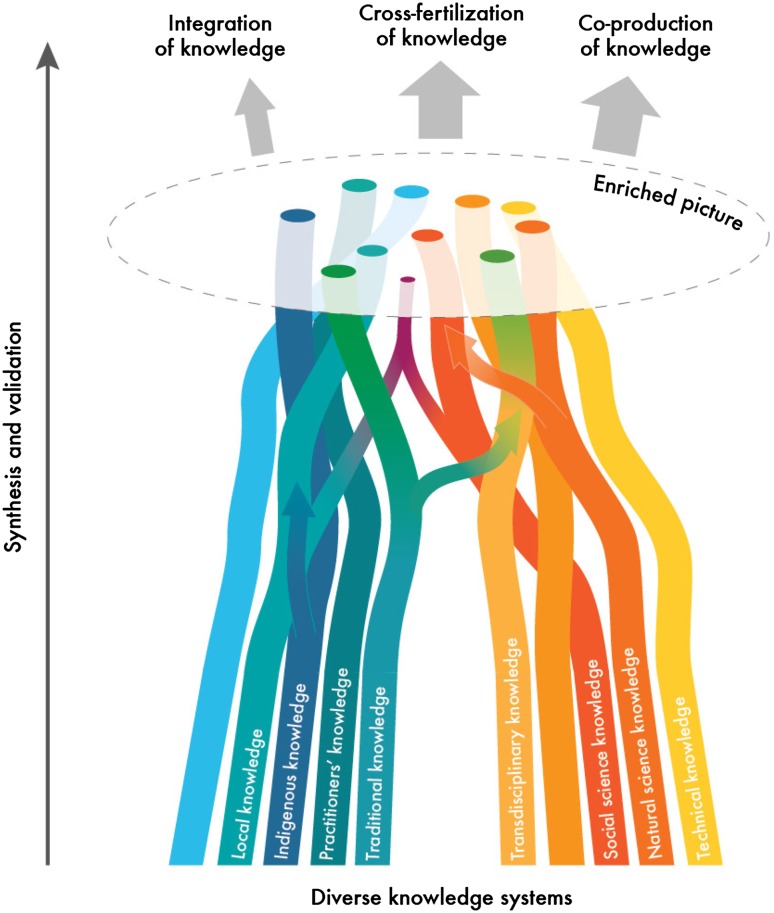
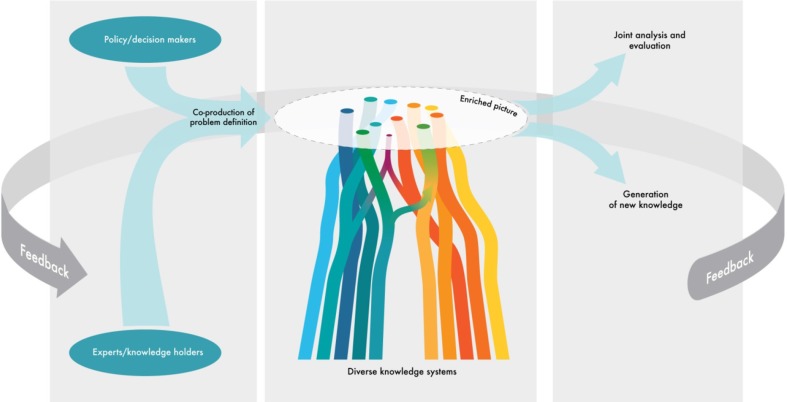
Indigenous and local knowledge systems as well as practitioners' knowledge can provide valid and useful knowledge to enhance our understanding of governance of biodiversity and ecosystems for human well-being. There is, therefore, a great need within emerging global assessment programs, such as the IPBES and other international efforts, to develop functioning mechanisms for legitimate, transparent, and constructive ways of creating synergies across knowledge systems. We present the multiple evidence base (MEB) as an approach that proposes parallels whereby indigenous, local and scientific knowledge systems are viewed to generate different manifestations of knowledge, which can generate new insights and innovations through complementarities. MEB emphasizes that evaluation of knowledge occurs primarily within rather than across knowledge systems. MEB on a particular issue creates an enriched picture of understanding, for triangulation and joint assessment of knowledge, and a starting point for further knowledge generation.
Overview
The claims and statistics of this paper haven’t been checked yet.
Run the check — free, no account needed. It reads the open-access text and checks the sources it cites.
Integrity signals
Registry
Cites
Statistics
Figures
Verification
Claims the paper makes
The claims and statistics of this paper haven’t been checked yet.
Run the check — free, no account needed. It reads the open-access text and checks the sources it cites.
Claims other papers make about this one
Each is checked against this paper’s own text: does it say what the citing paper says it does?
The source backs part of the claim, not all of it — or backs it for a different population, condition or comparison.
In the citing paper
“In their formative writing on multiple evidence base (MEB) approaches, Tengö et al. (2014) identify a need for new tools and approaches for co-developing questions, documenting and mobilizing knowledge, and co-producing insights and decisions-all under the guiding principle of valuing diversity in knowledge systems.”
From “Two‐Eyed Seeing”: An Indigenous framework to transform fisheries research and management (2021) · cites this paper as Tengö et al., 2014
Experimental — accuracy not yet measuredThe cited source says what the claim attributes to it.
In the citing paper
“In their view, “a MEB approach emphasizes the complementarity of knowledge systems and the values of letting each knowledge system speak for itself, within its own context, without assigning one dominant knowledge system with the role of external validator” (Tengö et al., 2014).”
From “Two‐Eyed Seeing”: An Indigenous framework to transform fisheries research and management (2021) · cites this paper as Tengö et al., 2014
The cited source says what the claim attributes to it.
In the citing paper
“MEB approaches seek to connect distinct knowledge systems (Alexander et al., 2019), often through parallel lines of Indigenous and Western scientific inquiry (Tengö et al., 2014), but mechanisms and successful examples of this or equivalent approaches in practice, especially in an aquatic or fisheries context, have been few and far between (e.g.Cooke et al., 2020;Laidler, 2006;Mackinson, 2001).”
From “Two‐Eyed Seeing”: An Indigenous framework to transform fisheries research and management (2021) · cites this paper as Tengö et al., 2014
Self-check
Percentages, sums and reported differences re-computed from the paper’s own numbers.
The self-check needs the paper’s full text.
Citations
Cites
Evidence based medicine: what it is and what it isn't
Sackett, D. L., Rosenberg, W. M. C., Gray, J. A. M., Haynes, R. B., & Richardson, W. S. (1996) · BMJ · doi:10.1136/bmj.312.7023.71 · Cited by 15,769 · cited 1×
“…of thinking around ‘‘evidence-based’’ and ‘‘evidence-based practice’’ has a long history, particularly in medicine and was formally defined in medicine by Sackett et al. (1996) as, ‘‘the conscientious and judicious use of current best evidence from clinical care research in the management of…”
BackgroundResearch methods in anthropology: qualitative and quantitative approaches
(2002) · Choice Reviews Online · doi:10.5860/choice.39-4047 · Cited by 5,622
Yeh, M. (2014) · Journal of Nursing Research · doi:10.1097/jnr.0000000000000065 · Cited by 3,836
Knowledge systems for sustainable development
Cash, D. W., Clark, W. C., Alcock, F., Dickson, N. M., Eckley, N., Guston, D. H., Jäger, J., & Mitchell, R. B. (2003) · Proceedings of the National Academy of Sciences · doi:10.1073/pnas.1231332100 · Cited by 3,660 · cited 1×
“…process may help to leverage the power dynamics, maintain integrity of knowledge systems, generate new questions, and thus enable ecosystem assessments and knowledge generation that are salient, credible, and legitimate for knowledge holders at different scales (Cash et al. 2003; Reid et al. 2006).”
BackgroundScale and Cross-Scale Dynamics: Governance and Information in a Multilevel World
Cash, D. W., Adger, W. N., Berkes, F., Garden, P., Lebel, L., Olsson, P., Pritchard, L., & Young, O. (2006) · Ecology and Society · doi:10.5751/es-01759-110208 · Cited by 2,254
Dismantling the Divide Between Indigenous and Scientific Knowledge
Agrawal, A. (1995) · Development and Change · doi:10.1111/j.1467-7660.1995.tb00560.x · Cited by 2,189 · cited 6×
“Scientific validation of traditional or local knowledge is often a more or less explicit requirement for inclusion of other knowledge systems (Agrawal 1995).”
BackgroundInfluentialBackground on the Institutional Analysis and Development Framework
Ostrom, E. (2011) · Policy Studies Journal · doi:10.1111/j.1541-0072.2010.00394.x · Cited by 1,719 · cited 2×
“Ostrom (2011) for instance suggests that conceptual frameworks facilitate the integration of different types of theories and models as they apply to different questions and parts of a research problem, but together contribute to the understanding of a whole.”
BackgroundConstantine, L. (2001) · CACM · doi:10.1145/365181.365239 · Cited by 1,660
Public Participation in Scientific Research: a Framework for Deliberate Design
Shirk, J., Ballard, H., Wilderman, C., Phillips, T., Wiggins, A., Jordan, R., McCallie, E., Minarchek, M., Lewenstein, B., Krasny, M., et al. (2012) · Ecology and Society · doi:10.5751/es-04705-170229 · Cited by 1,317 · cited 2×
“However, in the science-practice realm there are many emerging initiatives that use approaches similar to a MEB, see for example Danielsen et al. (2009, 2014), Rist et al. (2011), and Shirk et al. (2012), see also Box 2.”
BackgroundMethodAid, M. M., & Wiesbes, C. (2001) · doi:10.1080/714002815 · Cited by 1,299 · cited 1×
“New methods are needed to find innovative ways for legitimate and constructive ways of aggregating, evaluating, and synthesizing knowledge to inform scales beyond the local (Berkes et al. 2006).”
Background
Research works printed but not linked: 15
- Berkes, F., J. Colding, and C. Folke. 2003. Navigating social–ecological systems: building resilience for complexity and change. Cambridge: Cambridge University Press.
- Bernard, H.R. 2011. Research methods in anthropology. Altamira: Rowman.
- Brondizio, E.S. 2008. Amazonian Caboclo and the Acai Palm: Forest farmers in the global market. New York: The New York Botanical Garden Press.
- Brondizio, E.S., F. Gatzweiler, C. Zagrafos, and M. Kumar. 2010. Socio-cultural context of ecosystem and biodiversity valuation. In The economics of ecosystems and biodiversity (TEEB), ed. M. Kumar, 150–181. London: Earthscan Press.
- Brookfield, H., H. Parsons, and M. Brookfield. 2003. Agrodiversity: learning from farmers across the world. Tokyo: United Nations University Press.
- Gratani, M., J.R. Butler, F. Royee, P. Valentine, D. Burrows, W.I. Canendo, and A.S. Anderson. 2011. Is validation of indigenous ecological knowledge a disrespectful process? a case study of traditional fishing poisons and invasive fish management from the wet tropics, Australia. Ecology and Society 16: 25. · DOI
- Haverkort, B., F.D. Burgoa, D. Shankar, and D. Millar. 2012. Towards co-creation of sciences. New Delhi: Nimby Books.
- Japan Satoyama Satoumi Assessment. 2010. Japan Satoyama Satoumi Assessment: Socio-ecological production landscapes of Japan—Summary for decision makers. Tokyo: United Nations University.
- Nadasdy, P. 1999. The politics of TEK: Power and the “integration” of knowledge. Arctic Anthropology 36: 1–18.
- Nakashima, D., and M. Roué. 2002. Indigenous knowledge, peoples and sustainable practice. In Encyclopedia of global environmental change, ed. T. Munn, 314–324. Chichester: Wiley.
- Nakashima, D.J., K. Galloway McLean, H.D. Thulstrup, A. Ramos Castillo, and J.T. Rubis. 2012. Weathering uncertainty: Traditional knowledge for climate change assessment and adaptation. Paris and Darwin: UNESCO and UNU.
- Reid, W.V., F. Berkes, T. Milbanks, and D. Capistrano. 2006. Bridging scales and knowledge systems. Concepts and applications in ecosystem assessments. Washington DC: Island Press.
- Stankovich, M., C. Cariño, M.E. Regpala, J.A. Guillao, and G. Balawag. 2013. Developing and implementing community-based monitoring and information systems: The global workshop and the Philippine workshop reports. Baggio City: Tebtebba Foundation.
- Tengö, M., and P. Malmer (eds). 2012. Dialogue workshop on knowledge for the 21st century: Indigenous knowledge, traditional knowledge, science and connecting diverse knowledge systems. Usdub, Guna Yala, Panama, April 10–13, 2012. Workshop Report.
- Weismann, U., and H Hurni (eds.). 2011. Research for Sustainable Development: Foundations, Experiences, and Perspectives. Perspectives of the Swiss National Centre of Competence in Research (NCCR) North-South. Bern: University of Bern.
Cited by
Sorted by citations
Items 901–1,000 of 1,000
Felicien, A., Borges-Landáez, P., Chacón, N., López-Gasca, M., González, H., (Jedewanadi), H. A., (Masi), A. C., (Oto), E. C.-P., (Osebu), W. C.-P., (Sewoniyawa), S. C., et al. (2024) · INLAND WATERS · doi:10.1080/20442041.2024.2437933 · Cited by 2
“New tools and approaches for co-production are needed, several of which have been proposed to integrate and co-produce knowledge (Tengö et al. 2014, 2017).”
InfluentialTowards Transformative Soil Science: Who am I in relation to my research?
Wiersma, W., & López, D. E. (2024) · European Journal of Soil Science · doi:10.1111/ejss.13544 · Cited by 2
“Such an approach is relatively new in academic soil science, but it is well established in indigenous knowledge systems (Chilisa, 2017), and in emerging disciplines that emphasize synergies across diverse knowledges, such as sustainability science (Tengö et al., 2014).”
Xoxo, B. S., Mantel, S., de Vos, A., Tanner, J. L., & Maître, D. L. (2024) · Restoration Ecology · doi:10.1111/rec.14198 · Cited by 2
“Such consultation is vital to better integrate local ecological knowledge into EI investment plans (Tengö et al. 2014; Sapkota et al. 2018).”
Giroux, J.-F., Idrobo, C. J., & Sorais, M. (2024) · Socio-Ecological Practice Research · doi:10.1007/s42532-024-00182-0 · Cited by 2
“In that way, our research aligns with the multiple evidence-based approach (Tengö et al. 2014) and other knowledge co-production processes in which mutual learning reveals a more complex picture (Idrobo and Berkes 2012; Chapman and Schott 2020).”
Southern spatial stories: interdisciplinary perceptions of shifting spatial awareness and values
Gambrill, K., Palladino, C., Allen, K. E., Homoky, E. G., & Quinn, J. E. (2023) · Landscape Ecology · doi:10.1007/s10980-023-01625-x · Cited by 3
Mapping local knowledge through spatial text mining
Lee, J.-H. (2023) · Landscape and Ecological Engineering · doi:10.1007/s11355-023-00541-1 · Cited by 2
Clay, M., Smith-Mayo, J., & McGreavy, B. (2022) · Communication Design Quarterly · doi:10.1145/3531210.3531213 · Cited by 2
“…approach that is both a theoretical framework for how to conceptualize the relationship between knowledge and social order as well as a set of practical commitments that guide how collaborative research should be conducted (Jasanoff, 2004; Norström et al., 2020; Tallbear, 2013; Tengö et al., 2014).”
Background‘Getting the Science Right’? Epistemic Framings of Global Soil and Land Degradation
Donà, M. D. (2022) · Land · doi:10.3390/land11091418 · Cited by 2
Plitt, S., Andersson, E., & Johnson, M. L. (2022) · Arboriculture & Urban Forestry · doi:10.48044/jauf.2022.010 · Cited by 2
“Local and Indigenous knowledge are now understood as key components for understanding and improving the governance of ecosystems (Yli-Pelkonen and Kohl 2005 Ballard et al. 2008; Tengö et al. 2014; Whyte et al 2016).”
BackgroundHanson, R. B., Vano, J., Grant, G., Pandya, R., Shimamoto, M., & Lyon, L. (2021) · doi:10.1002/essoar.10507256.1 · Cited by 2
Decolonising science to open spaces of epistemic justice. The Usmeka system of thought.Preprint
Vargas-Mariño, A. F. (2021) · SocArXiv (OSF Preprints) · doi:10.31235/osf.io/27ft4 · Cited by 2
Mise en œuvre de la protection des sources d’eau potable : Portrait-diagnostic au Québec, Canada
Cerutti, J., Abi-Zeid, I., Lavoie, R., & Rodriguez, M. J. (2021) · Vertigo · doi:10.4000/vertigo.31489 · Cited by 2
“…: Portrait-diagnosti... VertigO - la revue électronique en sciences de l'environnement, Volume 21 numéro 1 | mai 2021 1 ministres de l’Environnement, 2004), afin de favoriser le partage des connaissances permettant sa mise en œuvre (Medema et al., 2017 ; Medema et al., 2015 ; Tengö et al., 2014).”
BackgroundBennett, E. M., Fraser, E. D. G., & Winkler, K. (2021) · Facets · doi:10.1139/facets-2021-0159 · Cited by 2
Coconstruction of Ecosystem Services Management in Tribal Lands: Elicit Expert Opinion Approach
Tarancón, A. A., Kim, Y., Padilla, T., Fulé, P., & Meador, A. J. S. (2020) · Weather, Climate, and Society · doi:10.1175/wcas-d-19-0159.1 · Cited by 2
Turreira-García, N., Brofeldt, S., Meilby, H., Nielsen, M., Girmansyah, D., Xuyen, D., Nguyễn, L., Siregar, I., & Theilade, I. (2020) · doi:10.1007/s10745-020-00142-8 · Cited by 2
Babu, M. S. U., Saha, L., & Garkoti, S. (2020) · Agroecology and Sustainable Food Systems · doi:10.1080/21683565.2019.1622618 · Cited by 2
“All key elements of participatory research described in the International Institute of Rural Reconstruction (IIRR) manual (1996), Huntington (2000), Tengo et al. (2014) and ethnographic methods (Atkinson et al. 2001; Sahu 2013) were followed for documenting the traditional knowledge of the Rai…”
MethodInclusive Engagement of Indigenous Communities in Scientific Research: Opportunities and Challenges
Sudhakar, P. (2019) · European journal of sustainable development research · doi:10.29333/ejosdr/6438 · Cited by 2
“Although epistemological differences exist, co-existence of ILC knowledge with modern scientific knowledge is thought to be beneficial (Tengö et al., 2014).”
BackgroundPostquantum: A Tale for the Time Being, Atomik Aztex, and Hacking Modern Space-Time
Lee, D. P. (2019) · MELUS · doi:10.1093/melus/mlz057 · Cited by 2
Challenges for local fisheries in the blue economy –fishers’ perceptions
Engen, S., Falk-Andersson, J., Murguzur, F. J., Hausner, V., & Gurney, G. G. (2026) · Marine Policy · doi:10.1016/j.marpol.2026.107142 · Cited by 2
Hastuti, P., & Hafidh, A. (2025) · BIO Web of Conferences · doi:10.1051/bioconf/202517505008 · Cited by 2
“When integrated with scientific approaches, traditional ecological knowledge enhances governance and ecosystem sustainability, enabling more effective management practices that respect indigenous wisdom and strengthen resilience in changing environments [13].”
Bieluch, K., Silka, L., & Lindenfeld, L. (2021) · Journal of community engagement and scholarship · doi:10.54656/sbjb4688 · Cited by 2
“Undergirding mutual learning are participants’ mindsets and attitudes and the processes used to facilitate the learning process (Smith, 2003; Tengö et al., 2014), including respect, equality, and reciprocity (Maiter et al., 2008; Tengö et al., 2014, p. 5).”
BackgroundMethodInfluentialTowards inclusive environmental governance in the Arganeraie Biosphere Reserve, Morocco
Romera, M., López-i-Gelats, F., Domínguez, P., Boujrouf, S., & Maneja, R. (2021) · eco.mont (Journal on Protected Mountain Areas Research) · doi:10.1553/eco.mont-13-sis38 · Cited by 2
Why primatology needs local knowledge
Collective, T. P., Adue, S., Akankwasa, W., Asua, J., Atyo, G., Chandia, B., Freymond, N., Kizza, V., Klein, H., M’Botella, M., et al. (2026) · Primates · doi:10.1007/s10329-026-01256-1 · Cited by 1
“Together, they can offer a more complete understanding of the natural world (Tengö et al. 2014).”
Situated expertise in integration and implementation processes in Latin America
Baptista, B. V., Mazzitelli, M. G., Bravo, M. H. G., Faure, I. R., Vanegas, D. F. M., & Hidalgo, C. (2022) · Humanities and Social Sciences Communications · doi:10.1057/s41599-022-01203-7 · Cited by 14
Roos, R. (2026) · Environmental Science & Policy · doi:10.1016/j.envsci.2026.104460 · Cited by 1
Cooke, S. J., Adeli, K. A., Rytwinski, T., Kadykalo, A. N., Provencher, J. F., Nguyen, V. M., Bennett, J., Davy, C. M., Buxton, R. T., Hanna, D. E. L., et al. (2026) · Socio-Ecological Practice Research · doi:10.1007/s42532-026-00255-2 · Cited by 1
“…to build long-term engagement, shared ownership of goals and methods, mutual learning and respect for different forms of knowledge (Indigenous science, local expertise, Western science), and the joint implementation of solutions (Ardichvili 2013; Tengö et al. 2014; Norström et al. 2020).”
Role of funders in embedding tests in conservation practice
Smith, R. K., Ockendon, N., Al‐Fulaij, N., Badalotti, A., Beattie, R., Byrne, J., Cooke, S., de Zoeten, T., Frick, W. F., Funk, S. M., et al. (2026) · Conservation Biology · doi:10.1111/cobi.70309 · Cited by 1
“When projects include complex social outcomes and multiple actors, it is important to ensure collaborative participatory design, monitoring, evaluation, and learning (e.g., Leisher et al., 2022; Raymond et al., 2010; Tengö et al., 2014).”
Akitwine, F., Wokibula, R., Mtama, J., Kwikiiriza, S., Anderson, A. D., & Burras, C. (2026) · Frontiers in Sustainable Resource Management · doi:10.3389/fsrma.2026.1814702 · Cited by 1
Bauwens, T., Friant, M. C., Beumer, K., & Velasco‐Herrejón, P. (2026) · Research Policy · doi:10.1016/j.respol.2026.105458 · Cited by 4
Whitehair, L., Fulé, P. Z., Ramos, S. C., & Marek-Martinez, O. V. (2026) · International Journal of Wildland Fire · doi:10.1071/wf25156 · Cited by 2
Menon, B. M., Rashed, T., P, L., Nidhi, V., & Bhavani, R. R. (2026) · Environmental Management · doi:10.1007/s00267-026-02430-3 · Cited by 1
Commercial and recreational fisher participation in marine fisheries management decision-making
Bratton, R., Havice, E., & Wade, E. (2026) · Marine Policy · doi:10.1016/j.marpol.2025.106988 · Cited by 1
Fuchs, M., Oriwol, J., Zimny, M., Lenze, L., & Greiving, S. (2026) · Journal of Flood Risk Management · doi:10.1111/jfr3.70203 · Cited by 1
“By engaging experts from emergency management, CI operators, and local authorities, the study co-produces knowledge that is both scientifically grounded and practically relevant (see e.g., Djenontin and Meadow 2018; Tengö et al. 2014).”
Hiramoto, K., Gao, Y.-N., Fang, L., Tian, Y., Cherian, S. M., Ozaki, Y., Prathap, N., & Shaw, R. (2026) · Journal of Hazards, Risk and Resilience · doi:10.53941/jhrr.2026.100008 · Cited by 1
“The “multiple evidence base” approach proposed by Tengö et al. [40,41] further expands this perspective, asserting that distinct knowledge systems can contribute complementary insights while maintaining their integrity.”
Beaulieu, A. (2026) · doi:10.2307/jj.31913410 · Cited by 1
Rethinking development: an SDG17-driven research-action approach in the Senegalese drylands
Diallo, A., Sinare, H., Stragier, C., & Goffner, D. (2026) · Sustainability Science · doi:10.1007/s11625-025-01794-5 · Cited by 1
“4 By weaving our different knowledge systems together, sensu the Multiple Evidence Base approach (Tengö et al. 2014, 2017), amongst ourselves (technical, social, environmental and institutional knowledge) with that of the process participants (local and traditional knowledge), we were able to…”
Drylands as frontlines of adaptation: A shift away from the climate-conflict narrative
Eklund, L. (2026) · Cambridge Prisms: Drylands · doi:10.1017/dry.2026.10022 · Cited by 1
“They may not be scalable across larger regions, but they can be ways to move away from the one-size-fits-all approach, to engage with local knowledge and integrate with scientific knowledge to generate new insights and innovations (Tengö et al., 2014).”
Stanworth, A., Imale, K., Isua, B., Anji, A. M., Dem, F., Novotný, V., Shepherd, H. E. R., Peh, K., & Morris, R. J. (2026) · People and Nature · doi:10.1002/pan3.70246 · Cited by 1
“…into interaction network studies including seed networks (Labeyrie et al., 2023 ), ecosystem service knowledge networks (Cámara-Leret, Fortuna, & Bascompte, 2019; Tengö et al., 2014 ), frugivory networks (Durand-Bessart et al., 2023 ; Ong et al., 2021 ) and fish food webs (Pereyra et al., 2023 ).”
Russo, F., Caniglia, G., & Sözüdoğru, E. (2026) · Social Epistemology · doi:10.1080/02691728.2025.2610492 · Cited by 1
Sowing trust in the machine: ethical pathways for large language models in farmer-centered extension
Kabir, K. H. (2025) · AI & Society · doi:10.1007/s00146-025-02788-8 · Cited by 1
“This leads to the underrepresentation of rich, context-specific and often orally transmitted Local and Traditional Knowledge (LTK), which is crucial for adaptation, resilience, and bio-cultural diversity (Agrawal 1995; Tengö et al. 2014).”
Citizen Science as a Tool in the Biomonitoring of Freshwater Ecosystems Using Aquatic Insects
Ribeiro, W., Guerrero-Moreno, M. A., da Silva, E. C., Oliveira, F. A., Lameira, H. L. N., Juen, L., Dias-Silva, K., Moura, J., & Oliveira-Junior, J. M. (2025) · Conservation · doi:10.3390/conservation5040075 · Cited by 1
Rocha, J., Schill, C., Lindkvist, E., Biggs, R., Blenckner, T., Crépin, A., Fetzer, I., Folke, C., Jiménez-Aceituno, A., Knecht, N., et al. (2026) · Annual Review of Environment and Resources · doi:10.1146/annurev-environ-121124-042312 · Cited by 2
“Transformation research has been concerned on how to engage with plurality of knowledge 216 , a perspective fully embraced by the IPBES transformative change assessment 7 .”
Woroniecki, S., Feetham, P. M., Linnér, B.-O., Movono, A., Singh, P., Vaccarino, F., Wibeck, V., & Zeiler, K. (2025) · Climatic Change · doi:10.1007/s10584-025-04032-0 · Cited by 1
“Further work could incorporate insights on weaving different kinds of knowledges together, through, for instance, the multiple evidence-based approach (Tengö et al. 2014).”
Jones, O., Munuŋgurr, L., Munuŋgurr, Y., Marrkula, T., Wunuŋmurra, B. B., Rangers, Y., Hutley, L. B., Fryirs, K., & Ens, E. J. (2025) · People and Nature · doi:10.1002/pan3.70153 · Cited by 2
“Multiple-objective schemes require multiple ways of monitoring or assessing outcomes, or a multiple evidence-based approach (Austin et al., 2018; Tengö et al., 2014 ).”
Fernández-Llamazares, Á., Álvarez-Fernández, S., Fraixedas, S., Calvet-Mir, L., García-del-Amo, D., Junqueira, A., Li, X.-Y., Porcher, V., Porcuna-Ferrer, A., Schlingmann, A., et al. (2025) · Oryx · doi:10.1017/s0030605325102615 · Cited by 1
Herse, M. R., McCarthy, J. K., Tylianakis, J. M., Scott, N. J., & Lyver, P. O. (2025) · Landscape Ecology · doi:10.1007/s10980-025-02209-7 · Cited by 2
“…catchment, landscape) through customary institutions that emphasize social-ecological balance and reciprocity (Roberts et al. 1995; Ojeda et al. 2022) and complement more reductionist and compartmentalized systems of contemporary environmental management (Tengö et al. 2014; Herse et al. 2020).”
Ouattara, M., Paut, R., Prost, L., Valantin-Morison, M., & Médiène, S. (2025) · Agronomy for Sustainable Development · doi:10.1007/s13593-025-01040-3 · Cited by 1
“Experts have localized experience that is often under-utilized but essential for integrating, enriching, and generating actionable knowledge (Tengö et al. 2014).”
Reber, U., Hofmann, B., Stamm, C., & Ingold, K. M. (2025) · Evidence & Policy · doi:10.1332/17442648y2025d000000064 · Cited by 2
Ecosystem services governance: A cross-realm lever for sustainability transformation
Farhad, S., Baird, J., Hickey, G., Holzer, J., Winkler, K., & Ruíz‐Ballesteros, E. (2025) · Ecosystem Services · doi:10.1016/j.ecoser.2025.101748 · Cited by 1
de Oliveira, C. D., Martinez, J., Zolano, E. J. H., Ahlert, A., Roesler, M. R. V. B., & Fariña, L. D. O. (2025) · Revista de Gestão Social e Ambiental · doi:10.24857/rgsa.v19n7-111 · Cited by 1
Haregeweyn, N., Tsunekawa, A., Fenta, A. A., Pasquale, B., Panagos, P., Aynekulu, E., Abe, T., Pablo, P., & West, S. (2025) · Global Challenges · doi:10.1002/gch2.202400261 · Cited by 1
Colby, A., Johnson, M. F., Wagner, C. H., & Wardropper, C. B. (2025) · Agriculture and Human Values · doi:10.1007/s10460-024-10694-w · Cited by 4
“Fabiana, a project developer in a startup, integrates transparency and techno-optimism– arguing that making data freely available could benefit more than just the small niche of technologically savvy project developers who have access to it now (Sumane et al. 2018; Tengo et al. 2014).”
InfluentialA co-created model for self-determined development objectives in Indigenous communities
Persaud, G., Chhetri, N., Scornavacca, E., & Parmentier, M. J. (2025) · Canadian Journal of Development Studies/Revue canadienne d études du développement · doi:10.1080/02255189.2025.2456008 · Cited by 2
“…lenses ” through which the world is perceived by the people who possess them (Coq-Huelva, Torres-Navarrete, and Bueno-Suárez 2018, 168), into twenty-first-century policies and practices can contribute to a more holistic, adaptive and culturally sensitive approach to development (Tengö et al. 2014).”
Swa-Twam-Tat Inquiry: Challenging Western-induced Epistemologies and Exploring Possibilities
Dahal, N., Ghimire, P., Luitel, B. C., & Pant, B. P. (2024) · Journal of Transformative Praxis · doi:10.51474/jrtp/15778 · Cited by 2
Caselli, A., Guerrero, M., Santos, A. T., Alzuagaray, M. S., Muchiutti, A., Milano, C., Felipe, A., Quintana, R., Santiago, M., & Silva, A. (2024) · Investigación Ciencia y Universidad · doi:10.59872/icu.v8i10.516 · Cited by 1
“Tanto los sistemas de conocimientos populares como los académicos, pueden ayudar a mejorar la comprensión de la gobernanza de la biodiversidad, los ecosistemas y sus problemáticas (Tengö et al. , 2014).”
Southall, S., Patrick, H., Harris, K., & Bird, C. (2024) · Journal of Patient Safety and Risk Management · doi:10.1177/25160435241282044 · Cited by 1
Ontologías políticas plurales en los procesos de transición sostenible
Zurbriggen, C., & Gioscia, L. (2024) · L'Ordinaire des Amériques · doi:10.4000/123fk · Cited by 1
“Estos conflictos ontológicos son constitutivos de procesos de cambio, pues diferentes actores y grupos sociales pueden tener visiones y objetivos divergentes sobre cómo abordar los desafíos socioambientales (Tengö et al .”
BackgroundSobral, S., de Wit, F., Carrilho, R., Cabete, D., Barbosa, A., & Vala, F. (2024) · Humanities and Social Sciences Communications · doi:10.1057/s41599-024-03064-8 · Cited by 4
“…perspectives and backgrounds —“ knowledge systems ”— and offers a conceptual basis from which to critically think about their interweaving as ways of valuing, sharing and combining multi-player knowledge enriching inclusive decision-making processes (Rathwell et al., 2015; Tengö et al., 2014).”
Interaction turns in knowledge production: actors, problems and methodologies
Mazzitelli, M. G., Lereté, C. Z., & Bianco, M. (2023) · Tapuya Latin American Science Technology and Society · doi:10.1080/25729861.2023.2279828 · Cited by 2
“As suggested by Tengö et al. (2014), cross-fertilization between di ff erent knowledge systems can provide new evidence and enhance the capacity to interpret conditions, changes, and responses to problems.”
It is Possible to Work with Them and Develop such a Mutually Good Relationship…”
Balogh, P. G. (2023) · Hungarian Studies Yearbook · doi:10.2478/hsy-2023-0006 · Cited by 1
Sakapaji, S. C., & Puthenkalam, J. (2023) · Journal of Environmental and Agricultural Studies · doi:10.32996/jeas.2023.4.2.5 · Cited by 1
“The idea is that by building this enriched picture, we can have an enhanced understanding of environmental conditions of environmental changes and also cause the relationships and social-ecological systems (Tengo et al., 2014).”
BackgroundInfluentialExtracción selectiva de chicahuastle: efectos, conocimiento local y lineamientos de manejo
Palacios-Wassenaar, O. M., Castillo-Campos, G., Vázquez-Torres, M., & Wojtarowski, A. (2022) · Madera y Bosques · doi:10.21829/myb.2022.2811833 · Cited by 1
Gutiérrez-Martínez, J., Triana-Quimbaya, J., Nemogá-Soto, G. R., Vargas, Y. M., Páez, C. C., Prieto, D. G., & Rojas, M. B. (2022) · Razón Crítica · doi:10.21789/25007807.1890 · Cited by 1
Bridging traditional and scientific knowledge on reindeer meat smoking - a pilot study
Hansen, K. K., Túri, I., Sundset, M. A., & Mathiesen, S. (2022) · International Journal of Circumpolar Health · doi:10.1080/22423982.2022.2073056 · Cited by 1
Three crucial considerations when presenting alternative paradigms in sustainability research
Boda, C. S., & Harnesk, D. (2022) · Journal of Environmental Studies and Sciences · doi:10.1007/s13412-022-00758-w · Cited by 1
How can academics contribute to biodiversity science?
Chapman, C., Loiselle, B., Sukumar, R., & Razafindratsima, O. (2022) · Biotropica · doi:10.1111/btp.13084 · Cited by 1
Challenges in Transdisciplinary Research
Dalingwater, L. (2022) · Postdigital Science and Education · doi:10.1007/s42438-022-00292-6 · Cited by 1
Crate, S. A. (2021) · Sibirica · doi:10.3167/sib.2021.200303 · Cited by 1
“It has also fortified multi-stakeholder negotiations and evolving policy initiatives (Beck et al. 2014; Diaz et al. 2015; IPCC 2019; Tengo et al. 2014; Thaman et al. 2013; Yeh 2016).”
BackgroundSievers, E., Zielhofer, C., & Hüesker, F. (2021) · Sustainability · doi:10.3390/su13169111 · Cited by 1
“It emphasises human dependency on ecosystems, supports crossdisciplinary collaboration, and allows researchers to understand systems [7,26].”
BackgroundAwuah, R., & Kyereh, B. (2020) · doi:10.1111/1477-8947.12210 · Cited by 1
Gottwald, S., Janssen, R., & Raymond, C. (2020) · doi:10.1017/9781108553827.010 · Cited by 1
Para adaptar la restauración de la tierra a un clima cambiante: aceptemos lo que sabemos y lo que no
Pramova, E., Locatelli, B., Djoudi, H., Lavorel, S., Colloff, M. J., & Martius, C. (2019) · Center for International Forestry Research (CIFOR) eBooks · doi:10.17528/cifor/007462 · Cited by 2
“Pero no se les puede ver desligados del poder (Tengö et al. 2014).”
BackgroundMainstreaming Natural Capital and Ecosystem Services into Development Policy
Kumar, P. (2019) · doi:10.4324/9781315531212 · Cited by 1
Making Sense of Coproduction: What Is It Good For?
Roesch-McNally, G., & Prendeville, H. R. (2017) · doi:10.32747/2017.6949546.ch · Cited by 1
“…parallels where indigenous, local, and scientific knowledge systems are viewed to generate different manifestations of valid and useful knowledge” (Tengö et al. 2014) and integrates these systems in ways that can empower stakeholders to design and conduct research or develop their own decision…”
BackgroundCo-governing multifunctional landscapes: heritage, rights, and knowledge co-production
Abazeri, M., & Moghani, H. (2026) · Current Opinion in Environmental Sustainability · doi:10.1016/j.cosust.2026.101683 · Cited by 1
Fertile grounds: Co-creating agroecological knowledge in a pluriverse
Steele, J., Steele-McCutchen, C., Gonchikara, S., Hossain, S., & McCutchen, B. (2024) · Elementa Science of the Anthropocene · doi:10.1525/elementa.2023.00080
From idealised transdisciplinary research to reality : Reflections from research practitioners
LEI Innovation, R. A. I. M., de Roo, N., Advisory, B., Studies, M., Programme team ESG, Programmes, N., Environmental Systems Analysis Group, Materia, V. C., Student, J., Nel, J. L., et al. (2023) · doi:10.18174/590630 · Cited by 1
“One strategy that was mentioned referred to the multiple evidence approach, as developed by the Intergovernmental Science-Policy Platform on Biodiversity and Ecosystem Services (IPBES; also described by Tengo (Tengö et al. 2014).”
MethodThe opportunities of changing ocean governance for sustainability
Österblom, H. (2019) · Elsevier eBooks · doi:10.1016/b978-0-12-817945-1.00033-2
Going to the Well: Water as a Community Builder
Fresque-Baxter, J., & Kelly, E. (2017) · Water security in a new world · doi:10.1007/978-3-319-50161-1_9 · Cited by 1
Knowledge Transfer Through Adaptive Management and Environmental Governance
Bruckmeier, K. (2016) · doi:10.1057/978-1-137-43828-7_6 · Cited by 1
Sustainability Through a Nomadic Lens: Resilience and Adaptation in Kazakh Nomadism
Faizova, R., & Zhakupbayev, M. (2026) · Critical Arts. A Journal for Cultural Studies · doi:10.1080/02560046.2026.2731926
Borgoyary, T., Das, B., & Malakar, A. J. (2026) · CABI Reviews · doi:10.1079/cabireviews.2026.0049
Ciocco, T. W., Schuurman, G. W., Miller, B. W., & Tangen, S. (2026) · Human Ecology · doi:10.1007/s10745-026-00805-y
“Exclusively focusing on etic hypotheses can lead to confirmation bias, as evidence supporting such hypoth - eses may be obtained while alternative hypotheses and their supporting evidence remain unexplored.”
Flores-Silva, A., Cuevas-Guzmán, R., & Olson, E. A. (2026) · Ethnobotany and Economic Botany · doi:10.1007/s12231-026-09702-3
Rural Social Systems and Agricultural Change
Idrees, M., Shahid, H., Manzoor, A., & Riaz, A. (2026) · doi:10.65758/isbn.9786277813680
Community Perspectives on Natural Resource Values in Liuwa Plain National Park, Western Zambia
Musenge, D. C., Phiri, D., Namukonde, N., Zulu, D., Mabo, L., Mwitwa, J., & Nyirenda, V. R. (2026) · Conservation · doi:10.3390/conservation6040125
DeLuca, J., Lahiri, S., Huang, Y.-X., Tran, H., Jin, D., Hamel, E., & Adah, E. (2026) · Journal for Multicultural Education · doi:10.1108/jme-08-2026-0274
From Herders’ Knowledge to Ecological Insight: Reindeer, Voles, and Food Caches in the Arctic
Terekhina, A., Volkovitskiy, A., Sokolova, N., Orekhov, P., Fufachev, I., Krasheninnikova, O., Ehrich, D., Alsos, I., Merkel, M., & Sokolov, A. A. (2026) · Human Ecology · doi:10.1007/s10745-026-00799-7
“Dialogue between scientists and Indigenous communities, and the co-production of knowledge, may lead to discussions of unexpected aspects of natural history and contribute to a broader understanding of Arctic ecosystems (Anderson & Nuttall, 2004; Tengö et al., 2014).”
Gaurav, P. J., Kri, S. K., & Gopi, G. V. (2026) · Frontiers in Conservation Science · doi:10.3389/fcosc.2026.1901817
Evaluating tools and methods for agroecosystem sustainability and performance: a critical review
Chimi, P. M., Abdel, K. N., Nkoué, B. B., Pokam, E. Y. N., Dikoume, A. M. N., Ndzana, B. L. N., & Mala, W. A. (2026) · Discover Environment · doi:10.1007/s44274-026-01121-4
“The critical question remains: Does the framework permit ILK to reframe the questions being asked, or merely consult it to provide answers to science-defined problems [105, 106]?”
Vimond, C. M., Hill, Z., Walsh, C. A. J., Weiant, P., Kupihea, K., Marko, P. B., & Nichols, P. K. (2026) · BMC Zoology · doi:10.1186/s40850-026-00293-z
“However, the interpretation and application of these multi-layered datasets are most effective when grounded in local context [121].”
Nguyen, T. T., Dao, D. M., Pham, P. C. M., Pham, H. G., Ngo, V.-A., Tran, T., Nguyễn, T. B. H., Nguyen, T. H., & Kieu, Q. (2026) · Geoheritage · doi:10.1007/s12371-026-01462-9
“This interpretation is consistent with approaches that recognise scientific and local knowledge as complementary sources of evidence in environmental governance (Berkes et al. 2000; Berkes 2012; Tengö et al. 2014 ).”
Milliet, E., Antonietti, J.-P., Roulin, A., & Butera, F. (2026) · Environment and Behavior · doi:10.1177/00139165261489989
Hunt, G., Makury, A., Fogerite, J., von der Mühlen, M., Htet, A., Bastide, J., Heinimann, A., & Rueff, H. (2026) · PLOS Sustainability and Transformation · doi:10.1371/journal.pstr.0000288
“In doing so, such approaches can advance epistemic justice by opening space for indigenous and local knowledge systems to be recognised as valid and complementary forms of evidence [44] in policy arenas that typically marginalise them.”
Indigenous Knowledge Stewardship in AI-Enabled Technology Education
Seleke, B. (2026) · Encyclopedia · doi:10.3390/encyclopedia6100220
Democratizing expertise: lived experience as evidence in citizens’ assemblies
Khoban, Z., Chisholm, A., Tabero, K., Mestre, R., & Ryan, M. (2026) · Critical Policy Studies · doi:10.1080/19460171.2026.2742220
Nair, N. V., Pittman, J. B., & Nayak, P. K. (2026) · Regional Environmental Change · doi:10.1007/s10113-026-02699-4
“Integrating LEK-derived observations with conventional scientific assessments could improve monitoring coverage, strengthen local participation, and increase the legitimacy of conservation initiatives (Danielsen et al. 2014; Tengö et al. 2014; IPBES 2022).”
InfluentialUnraveling stakeholder visions on small island sustainability based on resilience thinking & DPSIR
Ho, Y.-F., Chen, Y.-C., & Chang, Y.-C. (2026) · Ocean & Coastal Management · doi:10.1016/j.ocecoaman.2026.108313
Advancing ethical and relational disaster risk reduction
Partelow, S., Rafliana, I., O'Connor, J., Reksa, A. F. A., & Schipper, E. (2026) · International Journal of Disaster Risk Reduction · doi:10.1016/j.ijdrr.2026.106438
Potiracha, Y., & Baars, R. (2026) · International Journal of Disaster Risk Reduction · doi:10.1016/j.ijdrr.2026.106460
Metadata
- Authors
- Tengö, M., Brondizio, E. S., Elmqvist, T., Malmer, P., & Spierenburg, M.
- Affiliations
- Stockholm Resilience Centre (SE)
- Vrije Universiteit Amsterdam (NL)
- Corresponding author
- Tengö, Maria
- Venue
- AMBIO
- Published
- 2014-03-22
- Volume
- 43
- Issue
- 5
- Pages
- 579-591
- ISSN
- 0044-7447 (ISSN-L)
- 1654-7209
- PMC
- PMC4132468
- OpenAlex
- W2122925767
- Cited by
- 1,329
- References
- 88
- Citations by year
- 2026: 163 · 2025: 140 · 2024: 122 · 2023: 140 · 2022: 146 · 2021: 152 · 2020: 124 · 2019: 101 · 2018: 89 · 2017: 61 · 2016: 46 · 2015: 34 · 2014: 11
- FWCI
- 43.99
- Type
- journal article
- Language
- en
- Open access
- hybrid
- doi.org
- Locations
- AMBIO (publishedVersion, cc-by)
- PubMed Central (publishedVersion, cc-by)
- PubMed (publishedVersion)
- VU Research Portal (publishedVersion, other-oa)
- Data Archiving and Networked Services (DANS) (submittedVersion, other-oa)
- Digital Academic REpository of VU University Amsterdam (Vrije Universiteit Amsterdam) (submittedVersion)
- Radboud Repository (Radboud University) (submittedVersion)
- Funders
- Styrelsen för Internationellt Utvecklingssamarbete
- Stiftelsen för Miljöstrategisk Forskning
- Topics
- Physical Sciences › Environmental Science › Ecology › Environmental and Cultural Studies in Latin America and Beyond
- Physical Sciences › Environmental Science › Global and Planetary Change › Land Use and Ecosystem Services
- Social Sciences › Anthropology › Indigenous Studies and Ecology
- Keywords
- indigenous knowledge, local knowledge, scientific knowledge, knowledge integration, ecosystem governance, biodiversity governance, IPBES, knowledge assessment, human well-being, knowledge synergy
- MeSH terms
- Conservation of Natural Resources, Ecosystem, Biodiversity
About these checks
Registry, retraction, Cites and statistics results are computed, not judged, with one exception: a printed reference that no index lists is read once by a model before it counts as a citation error. Claims are extracted by a model and kept only when their quote appears verbatim in the text; each cited source is then checked, with a model’s help, for whether it says what the claim relies on. Those verdicts can be wrong — read the claim’s quote and the cited source before relying on one.
Statistics and arithmetic are recomputed, not judged.
Confidence bands are shown only for fields calibrated on our annotated test set. None is calibrated yet, so no band is shown.
What counts as a claim ›How we measure confidence ›How we check this ›
Are you an author, or do you see a problem with this page? Request a review
