

The DOI matches its Crossref record; 58 of the 88 references it cites were found in a registry or an index.
Connecting Diverse Knowledge Systems for Enhanced Ecosystem Governance: The Multiple Evidence Base Approach
Open accessAbstract
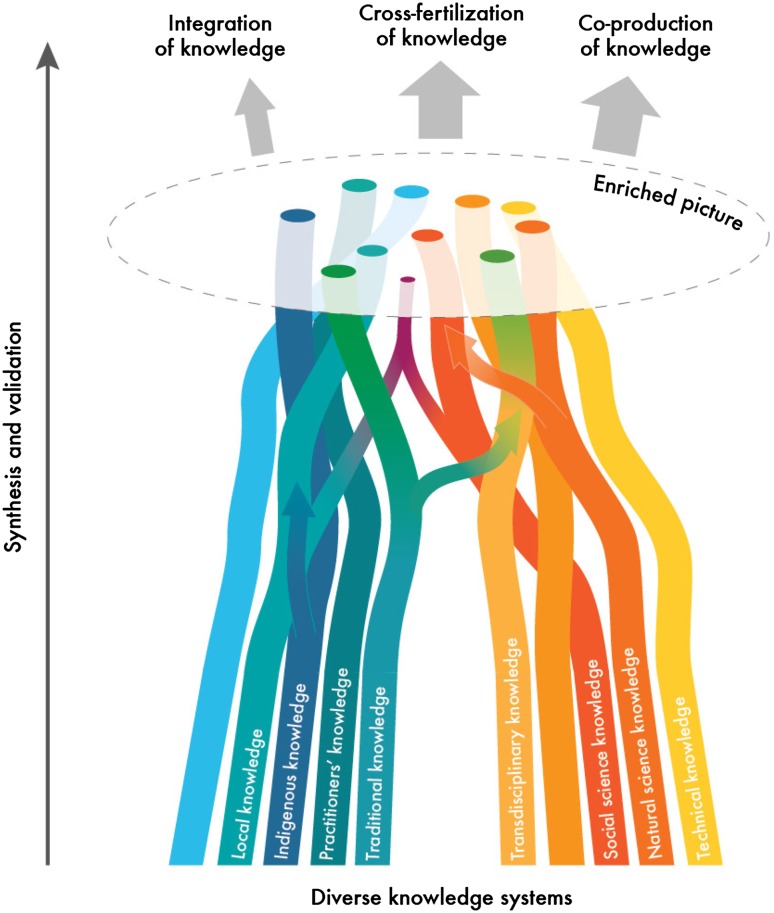
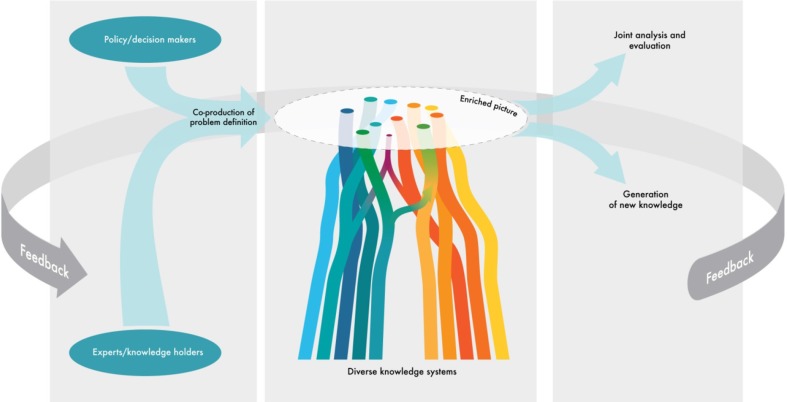
Indigenous and local knowledge systems as well as practitioners' knowledge can provide valid and useful knowledge to enhance our understanding of governance of biodiversity and ecosystems for human well-being. There is, therefore, a great need within emerging global assessment programs, such as the IPBES and other international efforts, to develop functioning mechanisms for legitimate, transparent, and constructive ways of creating synergies across knowledge systems. We present the multiple evidence base (MEB) as an approach that proposes parallels whereby indigenous, local and scientific knowledge systems are viewed to generate different manifestations of knowledge, which can generate new insights and innovations through complementarities. MEB emphasizes that evaluation of knowledge occurs primarily within rather than across knowledge systems. MEB on a particular issue creates an enriched picture of understanding, for triangulation and joint assessment of knowledge, and a starting point for further knowledge generation.
Overview
The claims and statistics of this paper haven’t been checked yet.
Run the check — free, no account needed. It reads the open-access text and checks the sources it cites.
Integrity signals
Registry
Cites
Statistics
Figures
Verification
Claims the paper makes
The claims and statistics of this paper haven’t been checked yet.
Run the check — free, no account needed. It reads the open-access text and checks the sources it cites.
Claims other papers make about this one
Each is checked against this paper’s own text: does it say what the citing paper says it does?
The source backs part of the claim, not all of it — or backs it for a different population, condition or comparison.
In the citing paper
“In their formative writing on multiple evidence base (MEB) approaches, Tengö et al. (2014) identify a need for new tools and approaches for co-developing questions, documenting and mobilizing knowledge, and co-producing insights and decisions-all under the guiding principle of valuing diversity in knowledge systems.”
From “Two‐Eyed Seeing”: An Indigenous framework to transform fisheries research and management (2021) · cites this paper as Tengö et al., 2014
Experimental — accuracy not yet measuredThe cited source says what the claim attributes to it.
In the citing paper
“In their view, “a MEB approach emphasizes the complementarity of knowledge systems and the values of letting each knowledge system speak for itself, within its own context, without assigning one dominant knowledge system with the role of external validator” (Tengö et al., 2014).”
From “Two‐Eyed Seeing”: An Indigenous framework to transform fisheries research and management (2021) · cites this paper as Tengö et al., 2014
The cited source says what the claim attributes to it.
In the citing paper
“MEB approaches seek to connect distinct knowledge systems (Alexander et al., 2019), often through parallel lines of Indigenous and Western scientific inquiry (Tengö et al., 2014), but mechanisms and successful examples of this or equivalent approaches in practice, especially in an aquatic or fisheries context, have been few and far between (e.g.Cooke et al., 2020;Laidler, 2006;Mackinson, 2001).”
From “Two‐Eyed Seeing”: An Indigenous framework to transform fisheries research and management (2021) · cites this paper as Tengö et al., 2014
Self-check
Percentages, sums and reported differences re-computed from the paper’s own numbers.
The self-check needs the paper’s full text.
Citations
Cites
Evidence based medicine: what it is and what it isn't
Sackett, D. L., Rosenberg, W. M. C., Gray, J. A. M., Haynes, R. B., & Richardson, W. S. (1996) · BMJ · doi:10.1136/bmj.312.7023.71 · Cited by 15,769 · cited 1×
“…of thinking around ‘‘evidence-based’’ and ‘‘evidence-based practice’’ has a long history, particularly in medicine and was formally defined in medicine by Sackett et al. (1996) as, ‘‘the conscientious and judicious use of current best evidence from clinical care research in the management of…”
BackgroundResearch methods in anthropology: qualitative and quantitative approaches
(2002) · Choice Reviews Online · doi:10.5860/choice.39-4047 · Cited by 5,622
Yeh, M. (2014) · Journal of Nursing Research · doi:10.1097/jnr.0000000000000065 · Cited by 3,836
Knowledge systems for sustainable development
Cash, D. W., Clark, W. C., Alcock, F., Dickson, N. M., Eckley, N., Guston, D. H., Jäger, J., & Mitchell, R. B. (2003) · Proceedings of the National Academy of Sciences · doi:10.1073/pnas.1231332100 · Cited by 3,660 · cited 1×
“…process may help to leverage the power dynamics, maintain integrity of knowledge systems, generate new questions, and thus enable ecosystem assessments and knowledge generation that are salient, credible, and legitimate for knowledge holders at different scales (Cash et al. 2003; Reid et al. 2006).”
BackgroundScale and Cross-Scale Dynamics: Governance and Information in a Multilevel World
Cash, D. W., Adger, W. N., Berkes, F., Garden, P., Lebel, L., Olsson, P., Pritchard, L., & Young, O. (2006) · Ecology and Society · doi:10.5751/es-01759-110208 · Cited by 2,254
Dismantling the Divide Between Indigenous and Scientific Knowledge
Agrawal, A. (1995) · Development and Change · doi:10.1111/j.1467-7660.1995.tb00560.x · Cited by 2,189 · cited 6×
“Scientific validation of traditional or local knowledge is often a more or less explicit requirement for inclusion of other knowledge systems (Agrawal 1995).”
BackgroundInfluentialBackground on the Institutional Analysis and Development Framework
Ostrom, E. (2011) · Policy Studies Journal · doi:10.1111/j.1541-0072.2010.00394.x · Cited by 1,719 · cited 2×
“Ostrom (2011) for instance suggests that conceptual frameworks facilitate the integration of different types of theories and models as they apply to different questions and parts of a research problem, but together contribute to the understanding of a whole.”
BackgroundConstantine, L. (2001) · CACM · doi:10.1145/365181.365239 · Cited by 1,660
Public Participation in Scientific Research: a Framework for Deliberate Design
Shirk, J., Ballard, H., Wilderman, C., Phillips, T., Wiggins, A., Jordan, R., McCallie, E., Minarchek, M., Lewenstein, B., Krasny, M., et al. (2012) · Ecology and Society · doi:10.5751/es-04705-170229 · Cited by 1,317 · cited 2×
“However, in the science-practice realm there are many emerging initiatives that use approaches similar to a MEB, see for example Danielsen et al. (2009, 2014), Rist et al. (2011), and Shirk et al. (2012), see also Box 2.”
BackgroundMethodAid, M. M., & Wiesbes, C. (2001) · doi:10.1080/714002815 · Cited by 1,299 · cited 1×
“New methods are needed to find innovative ways for legitimate and constructive ways of aggregating, evaluating, and synthesizing knowledge to inform scales beyond the local (Berkes et al. 2006).”
Background
Research works printed but not linked: 15
- Berkes, F., J. Colding, and C. Folke. 2003. Navigating social–ecological systems: building resilience for complexity and change. Cambridge: Cambridge University Press.
- Bernard, H.R. 2011. Research methods in anthropology. Altamira: Rowman.
- Brondizio, E.S. 2008. Amazonian Caboclo and the Acai Palm: Forest farmers in the global market. New York: The New York Botanical Garden Press.
- Brondizio, E.S., F. Gatzweiler, C. Zagrafos, and M. Kumar. 2010. Socio-cultural context of ecosystem and biodiversity valuation. In The economics of ecosystems and biodiversity (TEEB), ed. M. Kumar, 150–181. London: Earthscan Press.
- Brookfield, H., H. Parsons, and M. Brookfield. 2003. Agrodiversity: learning from farmers across the world. Tokyo: United Nations University Press.
- Gratani, M., J.R. Butler, F. Royee, P. Valentine, D. Burrows, W.I. Canendo, and A.S. Anderson. 2011. Is validation of indigenous ecological knowledge a disrespectful process? a case study of traditional fishing poisons and invasive fish management from the wet tropics, Australia. Ecology and Society 16: 25. · DOI
- Haverkort, B., F.D. Burgoa, D. Shankar, and D. Millar. 2012. Towards co-creation of sciences. New Delhi: Nimby Books.
- Japan Satoyama Satoumi Assessment. 2010. Japan Satoyama Satoumi Assessment: Socio-ecological production landscapes of Japan—Summary for decision makers. Tokyo: United Nations University.
- Nadasdy, P. 1999. The politics of TEK: Power and the “integration” of knowledge. Arctic Anthropology 36: 1–18.
- Nakashima, D., and M. Roué. 2002. Indigenous knowledge, peoples and sustainable practice. In Encyclopedia of global environmental change, ed. T. Munn, 314–324. Chichester: Wiley.
- Nakashima, D.J., K. Galloway McLean, H.D. Thulstrup, A. Ramos Castillo, and J.T. Rubis. 2012. Weathering uncertainty: Traditional knowledge for climate change assessment and adaptation. Paris and Darwin: UNESCO and UNU.
- Reid, W.V., F. Berkes, T. Milbanks, and D. Capistrano. 2006. Bridging scales and knowledge systems. Concepts and applications in ecosystem assessments. Washington DC: Island Press.
- Stankovich, M., C. Cariño, M.E. Regpala, J.A. Guillao, and G. Balawag. 2013. Developing and implementing community-based monitoring and information systems: The global workshop and the Philippine workshop reports. Baggio City: Tebtebba Foundation.
- Tengö, M., and P. Malmer (eds). 2012. Dialogue workshop on knowledge for the 21st century: Indigenous knowledge, traditional knowledge, science and connecting diverse knowledge systems. Usdub, Guna Yala, Panama, April 10–13, 2012. Workshop Report.
- Weismann, U., and H Hurni (eds.). 2011. Research for Sustainable Development: Foundations, Experiences, and Perspectives. Perspectives of the Swiss National Centre of Competence in Research (NCCR) North-South. Bern: University of Bern.
Cited by
Sorted by citations
Items 801–900 of 1,000
Adaptation through knowledge coexistence: insights for environmental and sea lamprey stewardship
Nonkes, C., Lauzon, R., Redford, B., & Duncan, A. T. (2024) · Local Environment · doi:10.1080/13549839.2024.2320820 · Cited by 4
“Lessons from the DDR about Two-Eyed Seeing include three components (Reid et al. 2021; Tengö et al. 2014): (1) co-developing questions, setting project parameters, and de fi ning the problem.”
BackgroundSudlovenick, E., Simonee, J., Jones, M. E. B., L'Hérault, V., Hernández-Ortiz, A., Jenkins, E. J., Parker, S., Mavrot, F., Schneider, A., Kutz, S. J., et al. (2023) · Arctic · doi:10.14430/arctic78294 · Cited by 4
“A multiple evidence-based approach, whereby different but potentially parallel knowledge systems can be combined to create new and complementary insights, has proven useful to untangle food safety questions (Tengö et al., 2014; Abu et al., 2020).”
BackgroundThe I-TrACE principles for legitimate food systems science–policy–society interfaces
Clapp, J., Lehmann, B., Moseley, W. G., Elver, H., & Webb, P. (2023) · Nature Food · doi:10.1038/s43016-022-00686-6 · Cited by 4
Social network analysis of a landscape-scale conservation initiative in South Africa
Culloch-Jones, S. M., Novellie, P., Roux, D., & Currie, B. (2022) · South African Journal of Science · doi:10.17159/sajs.2022/11703 · Cited by 4
Sannegowda, U. B. M., & Garkoti, S. (2022) · Climate Action · doi:10.1007/s44168-022-00020-7 · Cited by 4
Pietrzyk‐Kaszyńska, A., Olszańska, A., Rechciński, M., Tusznio, J., & Grodzińska‐Jurczak, M. (2022) · Land Use Policy · doi:10.1016/j.landusepol.2022.106193 · Cited by 4
Digital technologies and ILK in the Arctic: In search of epistemological pluralism
Roturier, S., & Beau, R. (2022) · Environmental Science & Policy · doi:10.1016/j.envsci.2022.03.025 · Cited by 4
Montesi, M. (2022) · J. Documentation · doi:10.1108/jd-03-2022-0056 · Cited by 4
Wild, R., & Walters, G. (2022) · Forest Ecology and Management · doi:10.1016/j.foreco.2021.119825 · Cited by 4
“The recognition of cultural practices, as now seen in international policy processes such as ecosystem services and Nature’s Contributions to People, is an important step for recognising other worldviews (DíazReviriego et al. 2019; Tengö et al. 2014).”
BackgroundDecolonizing land management in institutions of higher education
O’Brien, L., & Mudaliar, P. (2021) · Journal of Land Use Science · doi:10.1080/1747423x.2021.2011969 · Cited by 7
“However, the inclusion of different knowledge systems in Land management is vulnerable to existing power asymmetries, where SK is used to validate other ways of knowing, often excluding elements that do not align with SK norms (Tengö et al., 2014).”
BackgroundSoleri, D., Kleinman, N., & Newburn, R. (2021) · Citizen Science: Theory and Practice · doi:10.31235/osf.io/swv47 · Cited by 4
Giuliani, A., Undurraga, J. T., Dunkel, T., & Aung, S. (2021) · Sustainability · doi:10.3390/su132212372 · Cited by 4
Kaijage, J. (2021) · Eastern Africa Social Science Research Review · doi:10.1353/eas.2021.0012 · Cited by 4
“Such experience strengthens the observation that existence of different knowledge systems may also lead to innovation and identification of desirable trajectories or pathways into future (Tengo et. al., 2014).”
Hausner, V., Engen, S., Muñoz, L., & Fauchald, P. (2021) · doi:10.1016/j.ecoser.2021.101289 · Cited by 4
Cooperation without Consensus: Brokering Resiliency with Boundary Objects
Eisenhauer, D. C. (2021) · Weather Climate and Society · doi:10.1175/wcas-d-20-0149.1 · Cited by 3
Curry, T., & López, E. D. S. (2020) · Frontiers in Communication · doi:10.3389/fcomm.2020.00043 · Cited by 4
“The challenge of operationalizing diverse knowledge systems in governance is informed in this research by the Multiple Evidence Base (MEB) approach, which emphasizes both the separateness and complementarity of Indigenous, local, and Western knowledge systems for decision-making (Tengö et al., 2014).”
MethodLutter contre la pollution lumineuse
Lapostolle, D., & Challéat, S. (2019) · VertigO · doi:10.4000/vertigo.26057 · Cited by 10
Understanding Canoe Making as a Process of Preserving Cultural Heritage
Peterson, D., Hanazaki, N., & Li, F. (2019) · Ethnobiology Letters · doi:10.14237/ebl.10.1.2019.1363 · Cited by 4
“One way to do this is through knowledge co-production, a collaborative process that aims to use the range of knowledge available to help solve problems (Armitage et al. 2011; Tengö et al. 2014).”
BackgroundTell us how to engage you! Asking polar stakeholders about their engagement preferences
Baer, K. C., Latola, K., & Scheepstra, A. J. M. (2019) · Polar Record · doi:10.1017/s0032247419000354 · Cited by 4
Macura, B., Haddaway, N., Lesser, P., & Nilsson, A. E. (2019) · Environmental Evidence · doi:10.1186/s13750-019-0166-2 · Cited by 5
Over-simplifying evidence synthesis? A response to
Haddaway, N. R., & Dicks, L. (2017) · Biological Conservation · doi:10.1016/j.biocon.2017.11.003 · Cited by 4
Gardner, C., Andriamahenina, Z., Carro, A., Jones, T., & Jasper, L. D. (2016) · Wetlands Ecology and Management · doi:10.1007/s11273-016-9501-3 · Cited by 4
“As such, the integration of traditional and scientific knowledge systems to inform environmental management has been widely promoted (Raymond et al. 2010; Sutherland et al. 2014; Tengö et al. 2014; Thaman et al. 2013).”
BackgroundMbele, M., & Masinde, M. (2016) · IST-Africa Week Conference · doi:10.1109/istafrica.2016.7530659 · Cited by 4
“MEB, on a particular issue, creates an enriched picture of understanding, for triangulation and joint assessment of knowledge, and a starting point for further knowledge generation [31].”
BackgroundAdapting land restoration to a changing climate: Embracing the knowns and unknowns
Pramova, E., Locatelli, B., Djoudi, H., Lavorel, S., Colloff, M. J., & Martius, C. (2019) · Center for International Forestry Research (CIFOR) eBooks · doi:10.17528/cifor/007261 · Cited by 8
“But they cannot be contemplated independently of power (Tengö et al. 2014).”
BackgroundVierros, M., & Ota, Y. (2019) · Predicting Future Oceans · doi:10.1016/b978-0-12-817945-1.00031-9 · Cited by 4
Dudzai, C., Mugumbate, J. R., Keevers, L., & Muridzo, N. G. (2026) · Global Social Welfare · doi:10.1007/s40609-026-00462-5 · Cited by 3
Saha, S. K., Chakraborty, S., Tabassum, Z., Rahman, M. M., Kumar, P., & Khan, M. A. (2026) · Small-scale Forestry · doi:10.1007/s11842-026-09631-y · Cited by 3
No systems transformation without systems literacy: Insights from CGIAR
Ewell, H. L. D., Leñero, E. M. V., Bailey, A., Woltering, L., Schiller, K., & Hellin, J. (2026) · Agricultural Systems · doi:10.1016/j.agsy.2026.104662 · Cited by 4
Ali, A. M., & Bijay-Singh (2026) · Agroecology and Sustainable Food Systems · doi:10.1080/21683565.2026.2645346 · Cited by 3
“Integrating traditional knowledge with scientific evidence further strengthens CSA policies by leveraging indigenous practices, such as drought-resistant crop rotations and soil conservation techniques (Nyong et al. 2007; Tengö et al. 2014; Makondo and Thomas 2018; Leal Filho et al. 2022).”
Environmental data justice is key for developing more effective area-based conservation approaches
Goldstein, J. E., Brockington, D., Sandbrook, C. G., Meyfroidt, P., Geldmann, J., Kuemmerle, T., Pfeifer, M., Sauls, L. A., Vera, L. A., Dutta, A., et al. (2026) · Nature Reviews Biodiversity · doi:10.1038/s44358-025-00126-w · Cited by 3
“These tools could enrol rural communities — especially many Indigenous peoples — more centrally in conservation planning and will require proper recognition of the different worldviews and ways of producing knowledge that they bring 59,60 .”
Bhatnagar, S., Chaudhary, R., Janjhua, Y., Kashyap, A., Thakur, P., & Sharma, P. (2026) · Resources · doi:10.3390/resources15010014 · Cited by 3
“While traditional ecological knowledge plays an important role in farmers’ adaptation strategies, scientific knowledge, and modern innovations remain crucial for developing effective, evidence-based climate adaptation solutions [24,25].”
Eco-emotions in children and adolescents: A rapid review of the qualitative literature
Wu, J., Gina, M., Gislason, M., Julia, K., & Samji, H. (2025) · Journal of Environmental Psychology · doi:10.1016/j.jenvp.2025.102894 · Cited by 3
Overcoming barriers to build partnerships for managing plant invasions under global change
Bufford, J. L., Brandt, A. J., Chong, K. Y., Hooper, A., Kamelamela, K. L., Martin, C., Parker, I. M., Pauchard, A., Suding, K. N., & Peltzer, D. A. (2025) · Conservation Biology · doi:10.1111/cobi.70180
“…knowledge systems, including Indigenous knowledge systems, will enable science and community values to collectively inform management strategies and promote a more holistic understanding of the environment (Jordan et al., 2016; McAllister et al., 2020; Morelli et al., 2021; Tengö et al., 2014).”
Exploring narratives of human–nature connections in protected areas
Jay, M., Capano, G. C., Martin, R., Suntken, J., & Plieninger, T. (2025) · People and Nature · doi:10.1002/pan3.70195 · Cited by 3
“Integrating different types of knowledge encounters persisting challenges but has the potential to support more integrative conservation (Tengö et al., 2014 ).”
Matutini, E., Chiara, G., & Brondi, S. (2025) · Sustainability · doi:10.3390/su17209208 · Cited by 4
Mata‐Páez, R. I., Huber-Sannwald, E., Martínez-Tagüeña, N., Cázares‐Reyes, R., Reyes-Gómez, V. M., Pardo, J. J. L., & Hernández-Valdez, S. (2025) · People and Nature · doi:10.1002/pan3.70175 · Cited by 3
“Knowledge co-production is a collaborative, iterative process where diverse stakeholders share and integrate their knowledge systems to jointly produce new relevant knowledge to address a complex problem or system (Tengö et al., 2014; Wyborn et al., 2019).”
Hoelting, K. R., Martinez, D. E., Bair, L. S., Schuster, R. M., & Gavin, M. C. (2025) · Ecosystem Services · doi:10.1016/j.ecoser.2025.101759 · Cited by 4
Policy principles for sustainable and just land systems
Garrett, R. D., Meyfroidt, P., de Bremond, A., Wartenberg, A. C., Barbieri, L. K., Fernández‐Llamazares, Á., Acheampong, E., Addoah, T., Adeleye, M. A., Alexander, P. M., et al. (2025) · Royal Society Open Science · doi:10.1098/rsos.250810 · Cited by 6
“Seeking to establish clear but differentiated definitions that are coordinated by an overarching governance system acknowledges the importance of multiple sources of knowledge and context-specificity, akin to a multiple evidence base approach [91], while still providing coherence.”
Loos, J., Gohr, C., Zafra‐Calvo, N., Capano, G. C., Tonninger, A. L., & von Wehrden, H. (2025) · iScience · doi:10.1016/j.isci.2025.113889 · Cited by 4
“61 This ensures that methods are not only rigorous but also ethically grounded, fostering epistemic justice and directly contributing to more transformative EJ research.”
Chaves, P. (2025) · Frontiers in Sociology · doi:10.3389/fsoc.2025.1605618 · Cited by 3
Mäkinen-Rostedt, K., Oreschnikoff, A., & Uusikylä, P. (2025) · Environmental Science & Policy · doi:10.1016/j.envsci.2025.104181 · Cited by 3
Resilience Orientation in Bioeconomy Policies - A Global Comparative Analysis
Proestou, M., Goritz, N., & Feindt, P. H. (2025) · Circular Economy and Sustainability · doi:10.1007/s43615-025-00643-y · Cited by 3
“Radical changes and transformation agendas might increase vulnerability of local communities depending, for example, on stable farming systems and destabilize already existing, successful sustainable practices such as long-established agroecological systems [92, 93].”
Cárdenas, T., Teixidor‐Toneu, I., Navarrete, I., Montúfar, R., & Dangles, O. J. (2025) · Agriculture and Human Values · doi:10.1007/s10460-025-10755-8 · Cited by 3
“In smallholder farming systems (SHF), place-based knowledge from individuals and communities is often based on long experiences of agrobiodiversity management over generations (Altieri 2004; Tengö et al. 2014).”
Dahlin, K. J. ‐., Cleemput, E. V., Adhikari, S., Castillioni, K., & Strickland, L. R. (2025) · Communications Earth & Environment · doi:10.1038/s43247-025-02309-x · Cited by 3
“Indigenous perspectives often see nature as an intricate, interconnected web of relationships rather than as a set of isolated, unrelated objects 24,25 , and Indigenous land stewardship principles are often rootedinadeepunderstandingoflocalecosystems 26 ;aconceptreferredtoas TEK 27,28 .”
A new heuristic for understanding knowledge co-production processes: the co-innovation approach
Mazzitelli, M. G. (2025) · Humanities and Social Sciences Communications · doi:10.1057/s41599-025-04682-6 · Cited by 2
“Acknowl-edging them at each stage, even if not explicitly, was key to mitigating them and, more importantly, recognising power/ knowledge imbalances among stakeholders (Phillips et al., 2018; Tengö et al., 2014).”
Pervasive Indigenous and local knowledge of tropical wild species
Takasaki, Y., Coomes, O., & Abizaid, C. (2024) · Ambio · doi:10.1007/s13280-024-02100-w · Cited by 3
“…western science through the coproduction of knowledge (Roue and Nakashima 2018; Thompson et al. 2020; Brondı´zio et al. 2021), in formulating multiple evidence bases (Tengo¨ et al. 2014, 2017), and in addressing scale mismatching in socio-ecological systems (Cumming et al. 2006; Herse et al. 2020).”
Framing land degradation and restoration policy in India following the IPBES pathway
Mishra, P., Sena, D. R., Pande, V., & Singh, R. (2024) · Indian journal of soil conservation · doi:10.59797/ijsc.v52.i2.154 · Cited by 3
Co-production of sustainability indicators in a vulnerable South American agricultural frontier
Piquer-Rodríguez, M., Aragón, R., Pacheco, S., Malizia, S., & Zunino, H. (2024) · Regional Environmental Change · doi:10.1007/s10113-024-02340-2 · Cited by 3
“From a scientific perspective, we showed how the inclusion of different types of knowledge (i.e., actor’s views) is important to ensure the legitimacy of the research exercise (Fernández 2016; Game et al. 2015; Sala & Torchio 2019; Tengö et al. 2014).”
Enhancing Bio-Cultural Management in Indigenous Marine Areas in Chile
Anbleyth-Evans, J., Hiriart‐Bertrand, L., Leiva, F. A., Iwama, A. Y., & Henríquez-Antipa, L. (2024) · Social Science Research Network · doi:10.1177/10704965241271302 · Cited by 3
“It could also be described as bene fi ting from holistic approaches based on local and traditional knowledge combined with scienti fi c (Tengo et al., 2014).”
Kwon, K., Gunton, T., Rutherford, M., & Zeeg, T. (2024) · Environmental Management · doi:10.1007/s00267-024-02075-0 · Cited by 3
“…where long-term data is unavailable, a multiple evidence base approach to setting management triggers can enhance understanding of ecological systems and socio-economic conditions, including local and regional scale processes and patterns (Adams et al. 2014; Ban et al. 2018; Tengö et al. 2014).”
Mólnar, Z., Demeter, L., Szabados, K., Kiš, A., Ajvazović, M., Runjanin, B., Mandušić, V., Biró, M., Öllerer, K., Marinkov, J., et al. (2024) · People and Nature · doi:10.1002/pan3.10717 · Cited by 3
Quinn, J. E., Fergus, C., Hyland, E., Vickery, C., Lacher, I. L., & Akre, T. S. (2024) · Land · doi:10.3390/land13091340 · Cited by 3
Stakeholder-engaged research: a multidisciplinary historical analysis
Chung, J. Y. (2024) · Research for All · doi:10.14324/rfa.08.1.06 · Cited by 3
Mātauranga Māori framework for surveillance of plant pathogens
Wood, W., Lustig, A., Latham, M., & Anderson, D. P. (2024) · Frontiers in Forests and Global Change · doi:10.3389/ffgc.2024.1392083 · Cited by 3
Sobral, A., Feitosa, I. S., Ángeles, L. T.-C. M. D. L., Alves, R. R. N., Brito-Júnior, V. M., de Moura, J. M. B., da Silva, T. C., & Albuquerque, U. P. (2023) · Journal for Nature Conservation · doi:10.1016/j.jnc.2023.126538 · Cited by 3
Lennert, A., van der Wal, R., Zhang, J., Hausner, V., Ancin-Murguzur, F., & Miles, M. (2023) · Humanities and Social Sciences Communications · doi:10.1057/s41599-023-02310-9 · Cited by 3
Zarestky, J., Tomaszewski, L., Walker, S. E., & Ruyle, L. (2023) · Environment, Development and Sustainability · doi:10.1007/s10668-023-03238-5 · Cited by 3
“Studies focused on conservation conflicts highlight the importance of integrating different types of knowledge systems and capacities to reach conservation solutions (Ains-worth et al., 2020; Tengö et al., 2014).”
Azalou, M., Séidou, A. A., Worogo, H. S. S., Idrissou, Y., Azando, E. V. B., Pascal, C., & Alkoiret, I. T. (2023) · Tropical Animal Health and Production · doi:10.1007/s11250-023-03533-3 · Cited by 4
The Anthropocene is shifting the paradigm of geosciences and science
Coudrain, A., Duff, M. L., & Mitja, D. (2022) · Comptes rendus Geoscience · doi:10.5802/crgeos.156 · Cited by 3
Environment, absolute? The quality infrastructure of the planetary boundaries
Cornell, S., & Downing, A. (2021) · doi:10.31223/x50p6k · Cited by 3
“org/publications/reports-‐and-‐reviews/strategic-‐coordinating-‐committee-‐on-‐information-‐and-‐data-‐report/ad-‐hoc-‐ strategic-‐coordinating-‐committee-‐on-‐information-‐and-‐data 85 Tengö, M. et al. (2013) Connecting diverse knowledge systems for enhanced ecosystem governance: the Multiple Evidenc…”
Mayhew, M., & Perritt, J. C. (2020) · doi:10.1080/14615517.2020.1820848 · Cited by 3
Prado, H. M., & Murrieta, R. (2018) · Journal of Ethnobiology · doi:10.2993/0278-0771-38.3.297 · Cited by 3
“…cognitive structures (Berlin 1973; Hunn 2006), its contribution to collaborative conservation projects (Davis and Ruddle 2010; Posey et al. 1984; Tengö et al. 2014), and its forms of distribution and transmission within different populations (D’Andrade 1981; Romney and Moore 1998; Ross and…”
BackgroundBorrowing trouble. Finding ways out of value systems discord for biodiversity policy-making
Laurans, Y. (2017) · Innovation The European Journal of Social Science Research · doi:10.1080/13511610.2017.1418302 · Cited by 2
Schultz, M., Häggblom, M., Lindblad, C., Roth, E., Thrainsson, S., Vihervaara, P., & Vik, N. (2016) · doi:10.6027/tn2016-525 · Cited by 3
“Advancements are made under the IPBES task force on ILK and research such as the Multiple Evidence Base Approach (Tengö et al., 2014).”
MethodGordon, J. Y., Beaudreau, A. H., Williams, B. C., & Meyer, S. C. (2022) · Fisheries Research · doi:10.1016/j.fishres.2022.106333 · Cited by 4
Interweaving Knowledge Systems Through Sustainability Governance
Mourato, J. M., Bussler, A., & de Wit, F. (2020) · Encyclopedia of the UN sustainable development goals · doi:10.1007/978-3-319-71067-9_101-1 · Cited by 3
Policy Paradoxes: Challenges Confronting the Contemporary Arctic
Lovecraft, A., & Cost, D. (2019) · Springer Polar Sciences · doi:10.1007/978-3-030-03107-7_2 · Cited by 3
Singh, R. K., Singh, A., Kumar, A., Kumar, N., Kumar, S., Sheraon, P., & Sharma, D. (2019) · Springer eBooks · doi:10.1007/978-981-13-5832-6_30 · Cited by 4
Sustainability Storytelling Is Not Just Telling Stories About Sustainability
Bernier, A. (2019) · doi:10.1016/b978-0-12-409548-9.12133-5 · Cited by 3
Toward genuine co-production for just and sustainable agri-food system transformation
Ewell, H., Schwieger, D. A. M., Nishi, M., Chimonyo, V. G. P., Mam, K., Dludlu, M. N., Freed, S., & Remans, R. (2026) · Outlook on Agriculture · doi:10.1177/00307270261478653
“Policies should actively integrate diverse forms of knowledge and foster exchange between them — for example, by valuing both local and scienti fi c expertise (Tengö et al., 2014; also see Jersild, this issue).”
Which knowledge matters? Decision-making in conservation and development initiatives
Diebold, C. L., Messerli, P., Harimalala, P. C., Mathez-Stiefel, S.-L., & Zaehringer, J. G. (2026) · PLOS Sustainability and Transformation · doi:10.1371/journal.pstr.0000248 · Cited by 1
“Becoming subjects together”: Reflections on co-creating knowledge with Indigenous peoples
Porsani, J., Fortes, B. S., Sokolova, T., Camargo, M. F. D. C. M. F. D., & Costa, S. L. (2026) · Environmental Science & Policy · doi:10.1016/j.envsci.2026.104377 · Cited by 2
“This question has been explored by a diverse host of scholars (Krenak, 2024; Moreno-Cely et al., 2021; Pala-kiko et al., 2024; Teng ¨ o et al., 2014; Whyte, 2017).”
Rapidly declining seagrass meadows in Brazil: Findings from satellite imagery and local knowledge
Magalhães, K., Deeks, E., Cerqueira, A. S., Silva, G. H. F., Santos, F. A., Dawson, T. P., & Kratina, P. (2026) · People and Nature · doi:10.1002/pan3.70272 · Cited by 2
“…sensing and documentary evidence aligns with emerging frameworks of knowledge co-production, evidence pluralism and interdisciplinary sustainability science (e.g. Heatta et al., 2025 ; Moallemi et al., 2023 ; Tengö et al., 2014 ), which seek to bridge ecological and social understandings of change.”
Kinabo, N. R., Martin, D. A., Koggani, K. D., Martín‐López, B., Groß, M., Schleyer, C., Hackmann, V., Thiel, A., Böhning‐Gaese, K., & Manning, P. (2026) · People and Nature · doi:10.1002/pan3.70286 · Cited by 2
“Such knowledge integration is not only analytical but also action-oriented and helps form locally grounded solutions, a central theme of the knowledge co-production literature (Norström et al., 2020 ; Tengö et al., 2014 ).”
Kabisa, M., Pereira, L., Karuri-Sebina, G., Marais-Potgieter, A., Nkgothoe, B., Imataa, E., Nyambe, S., Mushunga, J., Hazemba, W., Chumya, C., et al. (2026) · World Future Review · doi:10.1177/19467567261433197 · Cited by 2
“Therefore, understanding it requires the use of methods, such as participatory scenario development with a variety of tools, that transcend disciplinary and methodological divides (Preiser et al. 2018; Teng¨o et al. 2014).”
Fletcher, M. (2026) · Ecological Management & Restoration · doi:10.1111/emr.70036 · Cited by 3
Improving wetland management through First Nations’ knowledge and a spatial visualisation tool
Adame, M. F., Kavehei, E., Dunn, B., Jackson, S., Duncan, P., Minjerribah-Moorgumpin Elders in Council, Cahill, J., Nadji, N., Brown, C. J., & Lymburner, L. (2026) · Ambio · doi:10.1007/s13280-025-02326-2 · Cited by 2
Prakofjewa, J., Conte, L., Ludwig, D., Šarka, P., Centorrino, P., Kalle, R., & Sõukand, R. (2026) · Journal of Ethnobiology and Ethnomedicine · doi:10.1186/s13002-025-00844-7 · Cited by 2
“These patterns align with Tengö et al.’s [68] multiple-evidence-based approach, which emphasises dialogic involvement as a step towards co-production rather than hierarchy across knowledge systems.”
Öllerer, K., Malmer, P., Biró, M., Noor, N., Shulbaeva, P., Ferrari, M. F., Subramanian, S., Báldi, A., & Mólnar, Z. (2026) · Conservation Biology · doi:10.1111/cobi.70205 · Cited by 2
“This lack of recognition of rights and agency is also evident in the number of policies and actions that indirectly undermine traditional practices (Báldi et al., 2023; Fernández-Llamazares et al., 2023; Tengö et al., 2014).”
Self-citationBowles, E., Henri, D. A., Provencher, J. F., Alexander, S. M., Love, N. E., Steel, J. R., Chelick, C., Khan, J. S., Taylor, J. J., Zacharuk, B., et al. (2026) · Ecology and Evolution · doi:10.1002/ece3.72358 · Cited by 3
“And Tengö et al. (2014, 2017) provide a contemporary example of the steps involved in the application of one of these models to a problem or question in such a way that respects the spirit of all the treaties and models, using the Multiple Evidence-Based Approach (MEBA).”
Perceptions and pathways: Linking biodiversity to health and well‐being in lower‐income contexts
Browne, A., Hodbod, J., Sait, S., Yiran, G. A. B., & Dallimer, M. (2025) · People and Nature · doi:10.1002/pan3.70217 · Cited by 2
Respecting indigenous knowledge in the era of big data: A call for ethical research practices
Fletcher, M., & Romano, A. (2025) · Journal of Quaternary Science · doi:10.1002/jqs.70032 · Cited by 3
“This knowledge is sometimes referred to as traditional ecological knowledge (TEK) and often involves the invention and deployment of specific technologies (McGregor, 2004; Tengö et al., 2014; Pascoe et al., 2023; Warbrick et al., 2023).”
Almroth, B. C., Ralston, R., Tilsted, J. P., Balayannis, A., Bertram, M. G., Olsen, T., & Short, D. (2025) · The International Journal of Human Rights · doi:10.1080/13642987.2025.2584007 · Cited by 2
“…epistemologies and power balances are significant, and have created obstacles to their integration, though some scholars and policy makers have sought to identify means to reconcile the tensions between these knowledge systems and flatten the hierarchy (Ijatuyi et al., 2025; Tengö et al., 2014).”
Martínez-Candelas, I., Espinoza‐Tenorio, A., & McClenachan, L. (2025) · Ocean & Coastal Management · doi:10.1016/j.ocecoaman.2025.107908 · Cited by 2
García, P. A. S., Schröter, B., Krause, T., Boonstra, W. J., Nielsen, J. Ø., & Loft, L. (2025) · Sustainability Science · doi:10.1007/s11625-025-01749-w · Cited by 4
“Participatory monitoring mechanisms, autonomous co-management arrangements, and plural legal frameworks that respect statutory and customary rights could help redistribute power and authority more equitably (Caniglia et al. 2020; Tengö et al. 2014).”
Salomaa, A. (2025) · Environmental Science & Policy · doi:10.1016/j.envsci.2025.104149 · Cited by 2
Truffer, O., Hofmann, B., & Lieberherr, E. (2025) · Humanities and Social Sciences Communications · doi:10.1057/s41599-025-05159-2 · Cited by 3
“While focusing on scienti fi c evidence in the following, we subscribe to the idea that evidence can and should inform effective policymaking alongside other evidence types (Tengö et al. 2014) and other in fl uential factors in a democratic decision-making process (Head 2016, pp. 474 – 475).”
Hernández-Valdez, S., Mata‐Páez, R. I., Martínez-Tagüeña, N., Huber-Sannwald, E., Lauterio-Martínez, C. L., Reyes-Gómez, V. M., Borré-González, D., & Rodríguez-Muñoz, M. (2025) · Sustainability Science · doi:10.1007/s11625-025-01706-7 · Cited by 2
“This leads to an integrated understanding and enriched ‘big picture’ of the shared social-ecological system, alongside emerging challenges, opportunities, and pathways towards sustainability (Tengö et al. 2014).”
Challenges of pluralizing knowledge(s) in climate related decision-making
Mansur, A. V., Neidig, J., & Zafra-Calvo, N. (2025) · PLOS Climate · doi:10.1371/journal.pclm.0000658 · Cited by 2
Chen, Y., Ye, Y.-T., & Ye, Y. (2025) · Buildings · doi:10.3390/buildings15111917 · Cited by 2
Rodríguez, T., Bonatti, M., Löhr, K., & Sieber, S. (2025) · Ambio · doi:10.1007/s13280-025-02189-7 · Cited by 2
Doney, E., Frank, B., & Clark, D. A. (2025) · PLoS ONE · doi:10.1371/journal.pone.0318566 · Cited by 2
Wu, B., Cao, C., Mosey, S., Daniell, T. J., Noy, P., Cui, Y.-Z., Rose, M., & Snape, J. (2025) · Food Policy · doi:10.1016/j.foodpol.2025.102813 · Cited by 2
The evolution of local engagement and the mode of knowledge production in Arctic research: 2011–2020
Brunet, N. D., & Fletcher, Q. (2025) · Facets · doi:10.1139/facets-2024-0114 · Cited by 2
Jones, B. D., Dickson, M., Ford, M., Hikuroa, D., Ryan, E., Carrington, A., & Chetham, J. (2024) · Cambridge Prisms: Coastal Futures · doi:10.1017/cft.2024.18 · Cited by 2
“In undertaking this kind of work, the “ braided method ” is a theoretical framework that enables the braiding of Indigenous and Western knowledge systems to examine the same physical environment, although from distinct ontological viewpoints (Tengö et al., 2014; Macfarlane et al., 2015).”
Suwono, I. (2024) · Global International Journal of Innovative Research · doi:10.59613/global.v2i9.332 · Cited by 2
“The interdisciplinary collaboration between TEK and scientific approaches, as explored by Tengö et al. (2014), provides a promising model for future environmental and public health initiatives.”
MethodA heart model of Earth Stewardship
Scheffer, M., Anderies, J., Bjordam, T., Bollen, J., Carpenter, S. R., Chapin, F., Folke, C., Gazitua, F., Holmgren, M., Marcone, J., et al. (2024) · Earth Stewardship · doi:10.1002/eas2.12019 · Cited by 2
Argentine Ethnobiology: A Future in Peril
Lenta, C. R., Grimaldi, P., & Ladio, A. (2024) · Ethnobiology and Conservation · doi:10.15451/ec2025-09-14.03-1-7 · Cited by 2
Gillis, C.-A., Gagnon, C. A., Chiasson, B., Gosselin, P., Arsenault, L., & Vicaire, J. M. (2024) · Environmental Biology of Fishes · doi:10.1007/s10641-024-01580-9 · Cited by 2
“Weaving ILK and Western Knowledge can improve collective knowledge of social–ecological inter-dependencies, promote innovation, and help determine sustainable future directions (Tengö et al. 2014; Aminpour et al. 2021; Reid et al. 2021).”
Suchá, L., Dušková, L., Leventon, J., Seidlová, A., Bubák, Š., & Harmáčková, Z. (2024) · Sustainability Science · doi:10.1007/s11625-024-01536-z · Cited by 2
“These processes would bring together existing knowledge in both the “donor” and “recipient” countries (Boucher and Roch 2017; Ojala and Hooli 2022) and allow for knowledge cross-fertilisation (Tengö et al. 2014).”
Metadata
- Authors
- Tengö, M., Brondizio, E. S., Elmqvist, T., Malmer, P., & Spierenburg, M.
- Affiliations
- Stockholm Resilience Centre (SE)
- Vrije Universiteit Amsterdam (NL)
- Corresponding author
- Tengö, Maria
- Venue
- AMBIO
- Published
- 2014-03-22
- Volume
- 43
- Issue
- 5
- Pages
- 579-591
- ISSN
- 0044-7447 (ISSN-L)
- 1654-7209
- PMC
- PMC4132468
- OpenAlex
- W2122925767
- Cited by
- 1,329
- References
- 88
- Citations by year
- 2026: 163 · 2025: 140 · 2024: 122 · 2023: 140 · 2022: 146 · 2021: 152 · 2020: 124 · 2019: 101 · 2018: 89 · 2017: 61 · 2016: 46 · 2015: 34 · 2014: 11
- FWCI
- 43.99
- Type
- journal article
- Language
- en
- Open access
- hybrid
- doi.org
- Locations
- AMBIO (publishedVersion, cc-by)
- PubMed Central (publishedVersion, cc-by)
- PubMed (publishedVersion)
- VU Research Portal (publishedVersion, other-oa)
- Data Archiving and Networked Services (DANS) (submittedVersion, other-oa)
- Digital Academic REpository of VU University Amsterdam (Vrije Universiteit Amsterdam) (submittedVersion)
- Radboud Repository (Radboud University) (submittedVersion)
- Funders
- Styrelsen för Internationellt Utvecklingssamarbete
- Stiftelsen för Miljöstrategisk Forskning
- Topics
- Physical Sciences › Environmental Science › Ecology › Environmental and Cultural Studies in Latin America and Beyond
- Physical Sciences › Environmental Science › Global and Planetary Change › Land Use and Ecosystem Services
- Social Sciences › Anthropology › Indigenous Studies and Ecology
- Keywords
- indigenous knowledge, local knowledge, scientific knowledge, knowledge integration, ecosystem governance, biodiversity governance, IPBES, knowledge assessment, human well-being, knowledge synergy
- MeSH terms
- Conservation of Natural Resources, Ecosystem, Biodiversity
About these checks
Registry, retraction, Cites and statistics results are computed, not judged, with one exception: a printed reference that no index lists is read once by a model before it counts as a citation error. Claims are extracted by a model and kept only when their quote appears verbatim in the text; each cited source is then checked, with a model’s help, for whether it says what the claim relies on. Those verdicts can be wrong — read the claim’s quote and the cited source before relying on one.
Statistics and arithmetic are recomputed, not judged.
Confidence bands are shown only for fields calibrated on our annotated test set. None is calibrated yet, so no band is shown.
What counts as a claim ›How we measure confidence ›How we check this ›
Are you an author, or do you see a problem with this page? Request a review
