

The DOI matches its Crossref record; 58 of the 88 references it cites were found in a registry or an index.
Connecting Diverse Knowledge Systems for Enhanced Ecosystem Governance: The Multiple Evidence Base Approach
Open accessAbstract
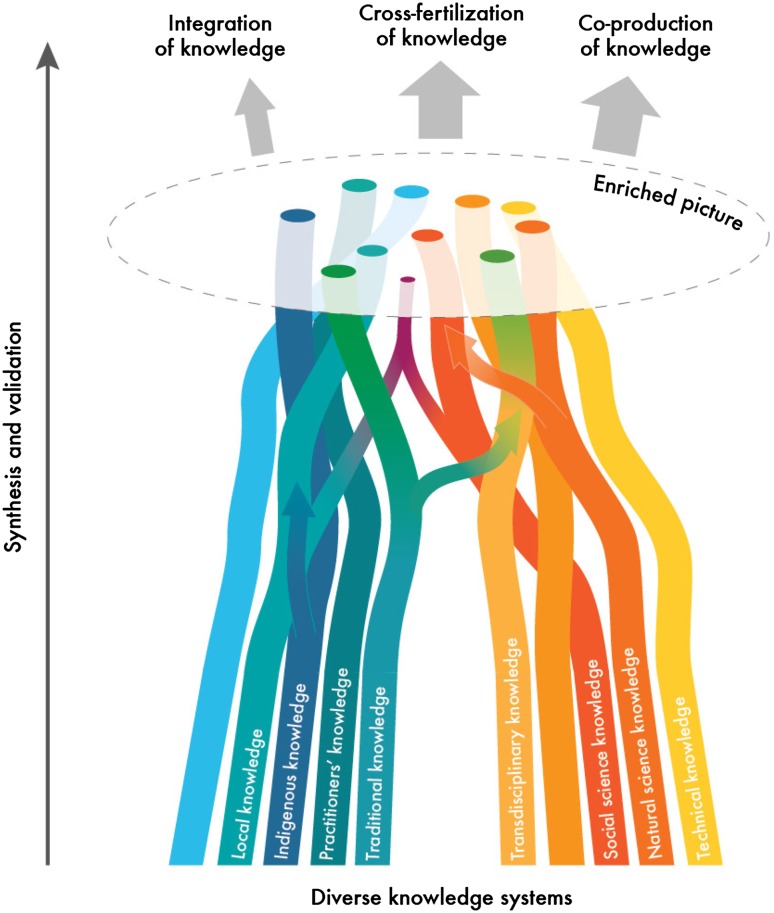
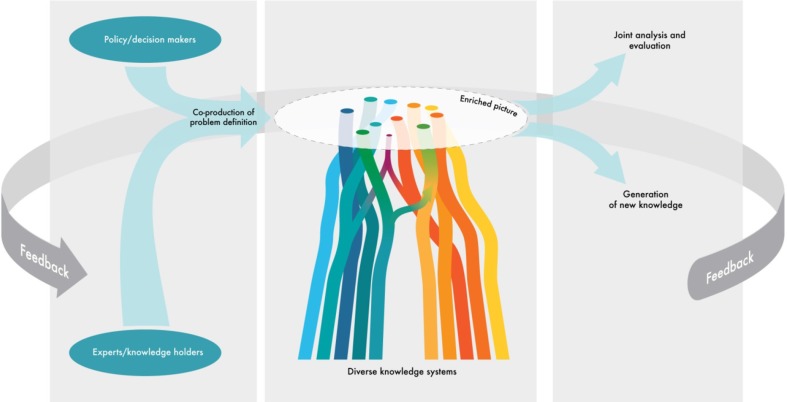
Indigenous and local knowledge systems as well as practitioners' knowledge can provide valid and useful knowledge to enhance our understanding of governance of biodiversity and ecosystems for human well-being. There is, therefore, a great need within emerging global assessment programs, such as the IPBES and other international efforts, to develop functioning mechanisms for legitimate, transparent, and constructive ways of creating synergies across knowledge systems. We present the multiple evidence base (MEB) as an approach that proposes parallels whereby indigenous, local and scientific knowledge systems are viewed to generate different manifestations of knowledge, which can generate new insights and innovations through complementarities. MEB emphasizes that evaluation of knowledge occurs primarily within rather than across knowledge systems. MEB on a particular issue creates an enriched picture of understanding, for triangulation and joint assessment of knowledge, and a starting point for further knowledge generation.
Overview
The claims and statistics of this paper haven’t been checked yet.
Run the check — free, no account needed. It reads the open-access text and checks the sources it cites.
Integrity signals
Registry
Cites
Statistics
Figures
Verification
Claims the paper makes
The claims and statistics of this paper haven’t been checked yet.
Run the check — free, no account needed. It reads the open-access text and checks the sources it cites.
Claims other papers make about this one
Each is checked against this paper’s own text: does it say what the citing paper says it does?
The source backs part of the claim, not all of it — or backs it for a different population, condition or comparison.
In the citing paper
“In their formative writing on multiple evidence base (MEB) approaches, Tengö et al. (2014) identify a need for new tools and approaches for co-developing questions, documenting and mobilizing knowledge, and co-producing insights and decisions-all under the guiding principle of valuing diversity in knowledge systems.”
From “Two‐Eyed Seeing”: An Indigenous framework to transform fisheries research and management (2021) · cites this paper as Tengö et al., 2014
Experimental — accuracy not yet measuredThe cited source says what the claim attributes to it.
In the citing paper
“In their view, “a MEB approach emphasizes the complementarity of knowledge systems and the values of letting each knowledge system speak for itself, within its own context, without assigning one dominant knowledge system with the role of external validator” (Tengö et al., 2014).”
From “Two‐Eyed Seeing”: An Indigenous framework to transform fisheries research and management (2021) · cites this paper as Tengö et al., 2014
The cited source says what the claim attributes to it.
In the citing paper
“MEB approaches seek to connect distinct knowledge systems (Alexander et al., 2019), often through parallel lines of Indigenous and Western scientific inquiry (Tengö et al., 2014), but mechanisms and successful examples of this or equivalent approaches in practice, especially in an aquatic or fisheries context, have been few and far between (e.g.Cooke et al., 2020;Laidler, 2006;Mackinson, 2001).”
From “Two‐Eyed Seeing”: An Indigenous framework to transform fisheries research and management (2021) · cites this paper as Tengö et al., 2014
Self-check
Percentages, sums and reported differences re-computed from the paper’s own numbers.
The self-check needs the paper’s full text.
Citations
Cites
Evidence based medicine: what it is and what it isn't
Sackett, D. L., Rosenberg, W. M. C., Gray, J. A. M., Haynes, R. B., & Richardson, W. S. (1996) · BMJ · doi:10.1136/bmj.312.7023.71 · Cited by 15,769 · cited 1×
“…of thinking around ‘‘evidence-based’’ and ‘‘evidence-based practice’’ has a long history, particularly in medicine and was formally defined in medicine by Sackett et al. (1996) as, ‘‘the conscientious and judicious use of current best evidence from clinical care research in the management of…”
BackgroundResearch methods in anthropology: qualitative and quantitative approaches
(2002) · Choice Reviews Online · doi:10.5860/choice.39-4047 · Cited by 5,622
Yeh, M. (2014) · Journal of Nursing Research · doi:10.1097/jnr.0000000000000065 · Cited by 3,836
Knowledge systems for sustainable development
Cash, D. W., Clark, W. C., Alcock, F., Dickson, N. M., Eckley, N., Guston, D. H., Jäger, J., & Mitchell, R. B. (2003) · Proceedings of the National Academy of Sciences · doi:10.1073/pnas.1231332100 · Cited by 3,660 · cited 1×
“…process may help to leverage the power dynamics, maintain integrity of knowledge systems, generate new questions, and thus enable ecosystem assessments and knowledge generation that are salient, credible, and legitimate for knowledge holders at different scales (Cash et al. 2003; Reid et al. 2006).”
BackgroundScale and Cross-Scale Dynamics: Governance and Information in a Multilevel World
Cash, D. W., Adger, W. N., Berkes, F., Garden, P., Lebel, L., Olsson, P., Pritchard, L., & Young, O. (2006) · Ecology and Society · doi:10.5751/es-01759-110208 · Cited by 2,254
Dismantling the Divide Between Indigenous and Scientific Knowledge
Agrawal, A. (1995) · Development and Change · doi:10.1111/j.1467-7660.1995.tb00560.x · Cited by 2,189 · cited 6×
“Scientific validation of traditional or local knowledge is often a more or less explicit requirement for inclusion of other knowledge systems (Agrawal 1995).”
BackgroundInfluentialBackground on the Institutional Analysis and Development Framework
Ostrom, E. (2011) · Policy Studies Journal · doi:10.1111/j.1541-0072.2010.00394.x · Cited by 1,719 · cited 2×
“Ostrom (2011) for instance suggests that conceptual frameworks facilitate the integration of different types of theories and models as they apply to different questions and parts of a research problem, but together contribute to the understanding of a whole.”
BackgroundConstantine, L. (2001) · CACM · doi:10.1145/365181.365239 · Cited by 1,660
Public Participation in Scientific Research: a Framework for Deliberate Design
Shirk, J., Ballard, H., Wilderman, C., Phillips, T., Wiggins, A., Jordan, R., McCallie, E., Minarchek, M., Lewenstein, B., Krasny, M., et al. (2012) · Ecology and Society · doi:10.5751/es-04705-170229 · Cited by 1,317 · cited 2×
“However, in the science-practice realm there are many emerging initiatives that use approaches similar to a MEB, see for example Danielsen et al. (2009, 2014), Rist et al. (2011), and Shirk et al. (2012), see also Box 2.”
BackgroundMethodAid, M. M., & Wiesbes, C. (2001) · doi:10.1080/714002815 · Cited by 1,299 · cited 1×
“New methods are needed to find innovative ways for legitimate and constructive ways of aggregating, evaluating, and synthesizing knowledge to inform scales beyond the local (Berkes et al. 2006).”
Background
Research works printed but not linked: 15
- Berkes, F., J. Colding, and C. Folke. 2003. Navigating social–ecological systems: building resilience for complexity and change. Cambridge: Cambridge University Press.
- Bernard, H.R. 2011. Research methods in anthropology. Altamira: Rowman.
- Brondizio, E.S. 2008. Amazonian Caboclo and the Acai Palm: Forest farmers in the global market. New York: The New York Botanical Garden Press.
- Brondizio, E.S., F. Gatzweiler, C. Zagrafos, and M. Kumar. 2010. Socio-cultural context of ecosystem and biodiversity valuation. In The economics of ecosystems and biodiversity (TEEB), ed. M. Kumar, 150–181. London: Earthscan Press.
- Brookfield, H., H. Parsons, and M. Brookfield. 2003. Agrodiversity: learning from farmers across the world. Tokyo: United Nations University Press.
- Gratani, M., J.R. Butler, F. Royee, P. Valentine, D. Burrows, W.I. Canendo, and A.S. Anderson. 2011. Is validation of indigenous ecological knowledge a disrespectful process? a case study of traditional fishing poisons and invasive fish management from the wet tropics, Australia. Ecology and Society 16: 25. · DOI
- Haverkort, B., F.D. Burgoa, D. Shankar, and D. Millar. 2012. Towards co-creation of sciences. New Delhi: Nimby Books.
- Japan Satoyama Satoumi Assessment. 2010. Japan Satoyama Satoumi Assessment: Socio-ecological production landscapes of Japan—Summary for decision makers. Tokyo: United Nations University.
- Nadasdy, P. 1999. The politics of TEK: Power and the “integration” of knowledge. Arctic Anthropology 36: 1–18.
- Nakashima, D., and M. Roué. 2002. Indigenous knowledge, peoples and sustainable practice. In Encyclopedia of global environmental change, ed. T. Munn, 314–324. Chichester: Wiley.
- Nakashima, D.J., K. Galloway McLean, H.D. Thulstrup, A. Ramos Castillo, and J.T. Rubis. 2012. Weathering uncertainty: Traditional knowledge for climate change assessment and adaptation. Paris and Darwin: UNESCO and UNU.
- Reid, W.V., F. Berkes, T. Milbanks, and D. Capistrano. 2006. Bridging scales and knowledge systems. Concepts and applications in ecosystem assessments. Washington DC: Island Press.
- Stankovich, M., C. Cariño, M.E. Regpala, J.A. Guillao, and G. Balawag. 2013. Developing and implementing community-based monitoring and information systems: The global workshop and the Philippine workshop reports. Baggio City: Tebtebba Foundation.
- Tengö, M., and P. Malmer (eds). 2012. Dialogue workshop on knowledge for the 21st century: Indigenous knowledge, traditional knowledge, science and connecting diverse knowledge systems. Usdub, Guna Yala, Panama, April 10–13, 2012. Workshop Report.
- Weismann, U., and H Hurni (eds.). 2011. Research for Sustainable Development: Foundations, Experiences, and Perspectives. Perspectives of the Swiss National Centre of Competence in Research (NCCR) North-South. Bern: University of Bern.
Cited by
Sorted by citations
The IPBES Conceptual Framework — connecting nature and people
Díaz, S., Demissew, S., Carabias, J., Joly, C., Lonsdale, M., Ash, N., Larigauderie, A., Adhikari, J. R., Arico, S., Báldi, A., et al. (2015) · Current Opinion in Environmental Sustainability · doi:10.1016/j.cosust.2014.11.002 · Cited by 2,617
Valuing nature’s contributions to people: the IPBES approach
Pascual, U., Balvanera, P., Díaz, S. M., Pataki, G., Roth, E., Stenseke, M., Watson, R. T., Başak, E., Işlar, M., Kelemen, E., et al. (2017) · Current Opinion in Environmental Sustainability · doi:10.1016/j.cosust.2016.12.006 · Cited by 1,949
“People perceive and judge reality, truth, and knowledge in ways that may differ from the mainstream scientific lens [3].”
BackgroundA spatial overview of the global importance of Indigenous lands for conservation
Garnett, S. T., Burgess, N. D., Fa, J. E., Fernández-Llamazares, Á., Molnár, Z., Robinson, C. J., Watson, J. E. M., Zander, K. K., Austin, B., Brondizio, E. S., et al. (2018) · Nature Sustainability · doi:10.1038/s41893-018-0100-6 · Cited by 1,447
Self-citationIndigenous Knowledge for Biodiversity Conservation
Gadgil, M., Berkes, F., & Folke, C. (2026) · Resonance · doi:10.1007/s12045-026-2064-6 · Cited by 1,192
“…conservation’’ would become a major topic in international biodiversity conservation, with contributions such as those by Garnett et al. (2018), Tengo¨ et al. (2014, 2017) and the Intergovernmental Science-Policy Platform on Biodiversity and Ecosystem Services (IPBES) (Dı´az et al. 2018) which…”
Collaborative environmental governance: Achieving collective action in social-ecological systems
Bodin, Ö. (2017) · Science · doi:10.1126/science.aan1114 · Cited by 1,234
Social-ecological resilience and biosphere-based sustainability science
Folke, C., Biggs, R., Norström, A. V., Reyers, B., & Rockström, J. (2016) · Ecology and Society · doi:10.5751/es-08748-210341 · Cited by 1,485
“New initiatives are explicitly taking into account and respecting traditional and indigenous knowledge systems and cosmologies as part of stewardship efforts of landscapes and seascapes (Tengö et al. 2014).”
BackgroundNatural capital and ecosystem services informing decisions: From promise to practice
Guerry, A. D., Polasky, S., Lubchenco, J., Chaplin-Kramer, R., Daily, G. C., Griffin, R., Ruckelshaus, M., Bateman, I. J., Duraiappah, A., Elmqvist, T., et al. (2015) · Proceedings of the National Academy of Sciences · doi:10.1073/pnas.1503751112 · Cited by 1,017
Self-citationFolke, C. (2016) · Ecology and Society · doi:10.5751/es-09088-210444 · Cited by 982
Weaving knowledge systems in IPBES, CBD and beyond—lessons learned for sustainability
Tengö, M., Hill, R., Malmer, P., Raymond, C., Spierenburg, M., Danielsen, F., Elmqvist, T., & Folke, C. (2017) · Current Opinion in Environmental Sustainability · doi:10.1016/j.cosust.2016.12.005 · Cited by 794
Self-citationBennett, E. M., Crämer, W., Begossi, A., Cundill, G., Díaz, S. M., Egoh, B. N., Geijzendorffer, I. R., Krug, C. B., Lavorel, S., Lazos, E., et al. (2015) · Current Opinion in Environmental Sustainability · doi:10.1016/j.cosust.2015.03.007 · Cited by 891
“Two‐Eyed Seeing”: An Indigenous framework to transform fisheries research and management
Reid, A. J., Eckert, L. E., Lane, J., Young, N., Hinch, S. G., Darimont, C. T., Cooke, S. J., Ban, N. C., & Marshall, A. (2021) · Fish and Fisheries · doi:10.1111/faf.12516 · Cited by 652
“In their formative writing on multiple evidence base (MEB) approaches, Tengö et al. (2014) identify a need for new tools and approaches for co-developing questions, documenting and mobilizing knowledge, and co-producing insights and decisions—all under the guiding principle of valuing diversity in…”
BackgroundInfluentialTransformations to sustainability: combining structural, systemic and enabling approaches
Scoones, I., Stirling, A., Abrol, D. K., Atela, J. O., Charli-Joseph, L., Eakin, H. C., Ely, A., Olsson, P., Pereira, L. M., Priya, R., et al. (2020) · Current Opinion in Environmental Sustainability · doi:10.1016/j.cosust.2019.12.004 · Cited by 836
Our future in the Anthropocene biosphere
Folke, C., Polasky, S., Rockström, J., Galaz, V., Westley, F. R., Lamont, M., Scheffer, M., Österblom, H., Carpenter, S. R., Chapin, F. S., et al. (2021) · AMBIO · doi:10.1007/s13280-021-01544-8 · Cited by 863
Defining biocultural approaches to conservation.
Gavin, M., McCarter, J., Mead, A., Berkes, F., Stepp, J., Peterson, D., & Tang, R. (2015) · Trends in Ecology & Evolution · doi:10.1016/j.tree.2014.12.005 · Cited by 514
Quinlan, A., Berbés-Blázquez, M., Haider, L., & Peterson, G. D. (2016) · Journal of Applied Ecology · doi:10.1111/1365-2664.12550 · Cited by 510
A pluralistic and integrated approach to action-oriented knowledge for sustainability
Caniglia, G., Luederitz, C., von Wirth, T., Fazey, I., Martín-López, B., Hondrila, K., König, A., von Wehrden, H., Schäpke, N. A., Laubichler, M. D., et al. (2020) · Nature Sustainability · doi:10.1038/s41893-020-00616-z · Cited by 510
Buytaert, W., Zulkafli, Z., Grainger, S., Acosta, L., Alemie, T. C., Bastiaensen, J., de Bièvre, B., Bhusal, J., Clark, J., Dewulf, A., et al. (2014) · Frontiers in Earth Science · doi:10.3389/feart.2014.00026 · Cited by 507
“For this to be realized in practice however, each knowledge and valuation system would need to be understood as legitimate in its own right, even when citizen- and science-based knowledges are pursued separately (Tengö et al., 2014).”
BackgroundEcosystem management as a wicked problem
DeFries, R., & Nagendra, H. (2017) · Science · doi:10.1126/science.aal1950 · Cited by 578
Assessing the evidence for stakeholder engagement in biodiversity conservation
Sterling, E., Betley, E., Sigouin, A., Gomez, A., Toomey, A., Cullman, G., Malone, C., Pekor, A., Arengo, F., Blair, M., et al. (2017) · Biological Conservation · doi:10.1016/j.biocon.2017.02.008 · Cited by 432
“More investments should be made to learn how to synthesize across knowledge systems, ensuring that the best available, appropriately validated evidence is brought to the decision-making process (Tengö et al., 2014).”
BackgroundPreiser, R., Biggs, R., Vos, A. D., & Folke, C. (2018) · Ecology and Society · doi:10.5751/es-10558-230446 · Cited by 678
Co-Producing Sustainability: Reordering the Governance of Science, Policy, and Practice
Wyborn, C. A., Datta, A. W., Montana, J., Ryan, M., Leith, P., Chaffin, B. C., Miller, C. A., & van Kerkhoff, L. E. (2019) · Annual Review of Environment and Resources · doi:10.1146/annurev-environ-101718-033103 · Cited by 533
“Adaptive governance researchers have, for instance, analyzed normative commitments of environmental governance (67) and the processes that facilitate dialogue among local, traditional, and scientific knowledge at local (40) and global scales (68).”
BackgroundBerkes, F. (2017) · Sustainability · doi:10.3390/su9071232 · Cited by 503
“It can be expressed as the multiple evidence base approach [58], emphasizing the advantages of combining different kinds of knowledge to approach problems.”
BackgroundBrondízio, E. S., Aumeeruddy-Thomas, Y., Bates, P., Carino, J., Fernández-Llamazares, Á., Ferrari, M. F., Galvin, K., Reyes-García, V., McElwee, P., Molnár, Z., et al. (2021) · Annual Review of Environment and Resources · doi:10.1146/annurev-environ-012220-012127 · Cited by 397
Environmental governance: A practical framework to guide design, evaluation, and analysis
Bennett, N. J., & Satterfield, T. A. (2018) · Conservation Letters · doi:10.1111/conl.12600 · Cited by 466
Hill, R., Adem, Ç., Alangui, W. V., Mólnar, Z., Aumeeruddy-Thomas, Y., Bridgewater, P., Tengö, M., Thaman, R., Yao, C. Y. A., Berkes, F., et al. (2020) · Current Opinion in Environmental Sustainability · doi:10.1016/j.cosust.2019.12.006 · Cited by 345
“Third, ILK is managed by distinctive cultural institutions, each with their own methods of validation, and rules about who can hold what types of knowledge, where and when it can be transmitted, and how it can be shared [7,39].”
BackgroundSelf-citationMakondo, C., & Thomas, D. (2018) · Environmental Science and Policy · doi:10.1016/j.envsci.2018.06.014 · Cited by 336
Biodiversity and the challenge of pluralism
Pascual, U., Adams, W. M., Díaz, S. M., Lélé, S. M., Mace, G. M., & Turnhout, E. (2021) · Nature Sustainability · doi:10.1038/s41893-021-00694-7 · Cited by 421
Methods and approaches to modelling the Anthropocene
Verburg, P. H., Dearing, J. A., Dyke, J. G., van der Leeuw, S., Seitzinger, S. P., Steffen, W., & Syvitski, J. P. M. (2015) · Global Environmental Change · doi:10.1016/j.gloenvcha.2015.08.007 · Cited by 394
Developing multi-scale and integrative nature-people scenarios using the Nature Futures FrameworkPreprint
Pereira, L. M., Davies, K., den Belder, E., Ferrier, S., Karlsson-Vinkhuysen, S., Kim, H., Kuiper, J. J., Okayasu, S., Palomo, M. G., Pereira, H. M., et al. (2020) · SocArXiv (OSF Preprints) · doi:10.31235/osf.io/ka69n · Cited by 21
Biocultural approaches to well-being and sustainability indicators across scales
Sterling, E., Filardi, C., Toomey, A., Sigouin, A., Betley, E., Gazit, N., Newell, J., Albert, S., Alvira, D., Bergamini, N., et al. (2017) · Nature Ecology & Evolution · doi:10.1038/s41559-017-0349-6 · Cited by 306
Transnational corporations and the challenge of biosphere stewardship
Folke, C., Österblom, H., Jouffray, J.-B., Lambin, E. F., Adger, W. N., Scheffer, M., Crona, B. I., Nyström, M., Levin, S. A., Carpenter, S. R., et al. (2019) · Nature Ecology & Evolution · doi:10.1038/s41559-019-0978-z · Cited by 290
Re-conceptualizing the Anthropocene: A call for collaboration
Brondízio, E. S., O’Brien, K. L., Bai, X., Biermann, F., Steffen, W., Berkhout, F., Cudennec, C., Lemos, M. C., Wolfe, A. P., Palma‐Oliveira, J. M., et al. (2016) · Global Environmental Change · doi:10.1016/j.gloenvcha.2016.02.006 · Cited by 329
“It also calls for breaking up some of the remaining barriers between knowledge systems (Tengö et al., 2014; Díaz et al., 2015), and across North-South divides, forwhichtheAnthropocenemightserve asausefulbridgingconcept, framing new analytical problems and offering ways of addressing them.”
BackgroundBoström, M., Andersson, E., Berg, M., Gustafsson, K. M., Gustavsson, E., Hysing, E., Lidskog, R., Löfmarck, E., Ojala, M., Olsson, J. I., et al. (2018) · Sustainability · doi:10.3390/su10124479 · Cited by 369
Ensuring effective implementation of the post-2020 global biodiversity targets
Xu, H., Cao, Y., Yu, D., Cao, M., He, Y., Gill, M. J., & Pereira, H. M. (2021) · Nature Ecology & Evolution · doi:10.1038/s41559-020-01375-y · Cited by 333
Scientists' Warning to Humanity on Threats to Indigenous and Local Knowledge Systems
Fernández‐Llamazares, Á., Lepofsky, D., Lertzman, K. P., Armstrong, C. G., Brondízio, E. S., Gavin, M. C., Lyver, P. O., Nicholas, G., Pascua, P., Reo, N. J., et al. (2021) · Journal of Ethnobiology · doi:10.2993/0278-0771-41.2.144 · Cited by 388
Social-Ecological Systems Insights for Navigating the Dynamics of the Anthropocene
Reyers, B., Folke, C., Moore, M., Biggs, R., & Galaz, V. (2018) · Annual Review of Environment and Resources · doi:10.1146/annurev-environ-110615-085349 · Cited by 355
Sense of Place, Fast and Slow: The Potential Contributions of Affordance Theory to Sense of Place
Raymond, C. M., Kyttä, M., & Stedman, R. C. (2017) · Frontiers in Psychology · doi:10.3389/fpsyg.2017.01674 · Cited by 302
“Such dynamics are already the source of intense investigation through areas such as social learning (Cheng and Mattor, 2010), complexity science, and sustainability transitions (Andersson, 2014) and co-production of knowledge (Armitage et al., 2011; Tengö et al., 2014; Reyers et al., 2015), and initial thinking has oc…”
BackgroundA Rosetta Stone for Nature’s Benefits to People
Díaz, S., Demissew, S., Joly, C., Lonsdale, W. M., & Larigauderie, A. (2015) · PLOS Biology · doi:10.1371/journal.pbio.1002040 · Cited by 247
Co-productive agility and four collaborative pathways to sustainability transformations
Chambers, J. M., Wyborn, C. A., Klenk, N. L., Ryan, M., Şerban, A., Bennett, N. J., Brennan, R. E., Charli-Joseph, L., Fernández‐Giménez, M. E., Galvin, K. A., et al. (2021) · Global Environmental Change · doi:10.1016/j.gloenvcha.2021.102422 · Cited by 304
Self-citationTransforming knowledge systems for life on Earth: Visions of future systems and how to get there
Fazey, I., Schäpke, N. A., Caniglia, G., Hodgson, A. M., Kendrick, I., Lyon, C. J., Page, G. G., Patterson, J., Riedy, C., Strasser, T., et al. (2020) · Energy Research & Social Science · doi:10.1016/j.erss.2020.101724 · Cited by 361
“Here, boundary organizations and institutional entrepreneurs that connect key actors of established systems with other voices are important [80] as well as approaches that facilitate integration of knowledge that specifically seek to empower marginalized knowledge holders [22,97].”
BackgroundClimate change and transdisciplinary science: Problematizing the integration imperative
Klenk, N., & Meehan, K. (2015) · Environmental Science & Policy · doi:10.1016/j.envsci.2015.05.017 · Cited by 248
“…in which the relevance and utility of different knowledge systems is assessed through experimentation, the ‘multiple evidence-base approach’ (MEBA) seeks to connect diverse knowledge systems through facilitating parallel lines of indigenous, local and scientific inquiry (Tengö et al, 2014).”
BackgroundKnowledge co‐production and boundary work to promote implementation of conservation plans
Nel, J., Roux, D., Driver, A., Hill, L., Maherry, A. C., Snaddon, K., Petersen, C., Smith-Adao, L. B., van Deventer, H., & Reyers, B. (2016) · Conservation Biology · doi:10.1111/cobi.12560 · Cited by 213
“This generates an enriched picture of an issue of concern, which serves as a legitimate starting point for multiple stakeholders to participate in producing further knowledge (Jasanoff 2004; Tengö et al. 2014).”
BackgroundConceptualising transdisciplinary integration as a multidimensional interactive process
Pohl, C., Klein, J., Hoffmann, S., Mitchell, C., & Fam, D. (2021) · Environmental Science & Policy · doi:10.1016/j.envsci.2020.12.005 · Cited by 210
“• “Weaving” different knowledge systems (Tengo et al., 2014): This metaphor explains how to achieve the goal of “a broadly accepted common knowledge that maintains the integrity of each knowledge system” (Tengo et al.”
BackgroundScharlemann, J., Brock, R., Balfour, N., Brown, C., Burgess, N., Guth, M., Ingram, D. J., Lane, R., Martin, J. G. C., Wicander, S., et al. (2020) · Sustainability Science · doi:10.1007/s11625-020-00799-6 · Cited by 205
Transformative spaces in the making: key lessons from nine cases in the Global South
Pereira, L., Frantzeskaki, N., Hebinck, A., Charli-Joseph, L., Drimie, S., Dyer, M., Eakin, H., Galafassi, D., Karpouzoglou, T., Marshall, F., et al. (2019) · Sustainability Science · doi:10.1007/s11625-019-00749-x · Cited by 194
Reyes-García, V., Fernández-Llamazares, Á., Aumeeruddy-Thomas, Y., Benyei, P., Bussmann, R., Diamond, S. K., García-del-Amo, D., Guadilla-Sáez, S., Hanazaki, N., Kosoy, N., et al. (2021) · Ambio · doi:10.1007/s13280-021-01561-7 · Cited by 185
“Alterna- tively, the co-production of new knowledge based on evidence from both science and ILK could contribute to setting realistic and effective biodiversity targets that simultaneously improve local livelihoods (Tengö et al. 2014).”
BackgroundNew directions in earth system governance research
Burch, S. L., Gupta, A., Inoue, C. Y. A., Kalfagianni, A. K., Persson, Å., Gerlak, A. K., Ishii, A., Patterson, J., Pickering, J., Scobie, M., et al. (2019) · Earth System Governance · doi:10.1016/j.esg.2019.100006 · Cited by 245
Reyers, B., Nel, J., O'Farrell, P., Sitas, N., & Nel, D. (2015) · Proceedings of the National Academy of Sciences of the United States of America · doi:10.1073/pnas.1414374112 · Cited by 179
Collaborative mapping of ecosystem services: The role of stakeholders׳ profiles
García-Nieto, A. P., Quintas-Soriano, C., García-Llorente, M., Palomo, I., Montes, C., & Martín-López, B. (2015) · Ecosystem Services · doi:10.1016/j.ecoser.2014.11.006 · Cited by 176
McElwee, P. D., Fernández‐Llamazares, Á., Aumeeruddy‐Thomas, Y., Babai, D., Bates, P., Galvin, K. A., Guèze, M., Liu, J., Molnár, Z., Ngo, H. T., et al. (2020) · Journal of Applied Ecology · doi:10.1111/1365-2664.13705 · Cited by 196
“Even though the systematic literature reviews used by the GA were open to multiple sources of evidence (Tengö et al., 2014), and on - line calls for references and case studies were useful for opening up the process beyond initial experts' knowledge, the GA still faced a number of challenges in…”
BackgroundWell grounded: Indigenous Peoples' knowledge, ethnobiology and sustainability
Turner, N., Cuerrier, A., & Joseph, L. (2022) · People and Nature · doi:10.1002/pan3.10321 · Cited by 167
Ziervogel, G., Enqvist, J., Metelerkamp, L., & van Breda, J. (2021) · Climate Policy · doi:10.1080/14693062.2020.1863180 · Cited by 197
Urban transformative capacity: From concept to practice
Wolfram, M., Borgström, S., & Farrelly, M. (2019) · Ambio · doi:10.1007/s13280-019-01169-y · Cited by 166
Why nature matters: A systematic review of intrinsic, instrumental, and relational values
Himes, A., Muraca, B., Anderson, C. B., Athayde, S. F. D., Beery, T. H., Cantú-Fernández, M., González-Jiménez, D., Gould, R. K., Hejnowicz, A. P., Kenter, J. O., et al. (2023) · BioScience · doi:10.1093/biosci/biad109 · Cited by 200
“…in this way, research on life-support values can offer a potential common ground for encounters across different epistemic traditions and knowledge systems, within and beyond academia, in which diverse articulations can coexist and in which cross-fertilization is possible (Tengö et al. 2014).”
BackgroundRoux, D. J., Nel, J. L., Cundill, G., O’Farrell, P. J., & Fabricius, C. (2017) · Sustainability Science · doi:10.1007/s11625-017-0446-0 · Cited by 205
“such issues and potentially uncovering complementarities across diverse knowledge systems (Polk 2014; Tengö et al. 2014).”
BackgroundBandola‐Gill, J., Arthur, M., & Leng, R. (2022) · Evidence & Policy · doi:10.1332/174426421x16420955772641 · Cited by 240
“Co-production has been understood as a problem of knowledge systems (Cornell et al, 2013; Tengö et al, 2014) and concerns over keeping them ‘open’ in order to solve complex challenges of sustainability.”
BackgroundGoffner, D., Sinare, H., & Gordon, L. J. (2019) · Regional Environmental Change · doi:10.1007/s10113-019-01481-z · Cited by 225
“It is essential to include knowledge from different sources and knowledge systems, including local and traditional knowledge, government institutions, and different research disciplines (Reynolds et al. 2007; Tengö et al. 2014; Tengö et al. 2017).”
BackgroundMethodThe progress of interdisciplinarity in invasion science
Vaz, A. S., Kueffer, C., Kull, C. A., Richardson, D. M., Schindler, S., Muñoz-Pajares, A. J., Vicente, J. R., Martins, J., Hui, C., Kühn, I., et al. (2017) · Ambio · doi:10.1007/s13280-017-0897-7 · Cited by 158
Raymond, C. M., Giusti, M., & Barthel, S. (2017) · Journal of Environmental Planning and Management · doi:10.1080/09640568.2017.1312300 · Cited by 179
Caillon, S., Cullman, G., Verschuuren, B., & Sterling, E. (2017) · doi:10.5751/es-09746-220427 · Cited by 155
“New approaches developed in the context of IPBES emphasize using validation systems from within each knowledge system rather than using one knowledge system (for instance, western science) to validate information from another system (for instance, local knowledge) (Tengö et al. 2014).”
MethodMarine and Coastal Cultural Ecosystem Services: knowledge gaps and research priorities
Rodrigues, J., Conides, A., Rodriguez, S. R., Raicevich, S., Pita, P., Kleisner, K., Pita, C., Lopes, P. F., Roldán, V. A., Ramos, S., et al. (2017) · One Ecosystem · doi:10.3897/oneeco.2.e12290 · Cited by 155
“Such approaches require value pluralism (Martinez-Alier 2002, O'Neill and Spash 2000) in the form of integrated sociocultural, ecological and economic values, and diverse knowledge systems (Berkes et al. 2000, Tengö et al. 2014, Sutherland et al. 2013).”
BackgroundBridging knowledge systems to enhance governance of environmental commons: A typology of settings
Rathwell, K. J., Armitage, D., & Berkes, F. (2015) · International Journal of the Commons · doi:10.18352/ijc.584 · Cited by 154
“Bridging knowledge systems to enhance governance 869 In recent years, there has been an expansion of the various methods and processes to bridge knowledge systems in an environmental change context (Gomez-Baggethun et al. 2013; Fazey et al. 2014; Tengö et al. 2014).”
BackgroundMethodInfluentialAssessment and valuation of recreational ecosystem services of landscapes.
Hermes, J., van Berkel, D. V., Burkhard, B., Plieninger, T., Fagerholm, N., Haaren, C., & Albert, C. (2018) · Ecosystem Services · doi:10.1016/j.ecoser.2018.04.011 · Cited by 151
“This will require the use of appropriate concepts and language to engage local communities, as well as new ways to identify and connect various knowledge systems (Tengö et al., 2014).”
BackgroundHill, R., Walsh, F., Davies, J., Sparrow, A., Mooney, M., Wise, R., & Tengö, M. (2020) · Global Environmental Change · doi:10.1016/j.gloenvcha.2020.102161 · Cited by 150
“, 2010; Gupta, 2016), and the joint analysis phase of the multiple evidence approach (Tengö et al., 2014).”
BackgroundSelf-citationWest, S., van Kerkhoff, L. E., & Wagenaar, H. (2019) · Policy Studies · doi:10.1080/01442872.2019.1618810 · Cited by 177
“that recognize a broader range of relevant knowledge including practitioner, experiential and traditional knowledge (Tengö et al. 2014) and seek to foster “learning-by-doing” (Lee 1993).”
BackgroundInfluentialDíaz-Reviriego, I., Turnhout, E., & Beck, S. (2019) · Nature Sustainability · doi:10.1038/s41893-019-0290-6 · Cited by 147
Interconnected place-based social–ecological research can inform global sustainability
Balvanera, P., Calderón-Contreras, R., Castro, A., Felipe-Lucia, M., Geijzendorffer, I., Jacobs, S., Martín-López, B., Arbieu, U., Speranza, C., Locatelli, B., et al. (2017) · Current Opinion in Environmental Sustainability · doi:10.1016/j.cosust.2017.09.005 · Cited by 144
“com some areas and increasing drought in others, and a variety of responses that are implemented and transmitted at local or regional scales are being developed [14,34].”
Self-citationCreating Synergies between Citizen Science and Indigenous and Local Knowledge
Tengö, M., Austin, B. J., Danielsen, F., & Fernández‐Llamazares, Á. (2021) · BioScience · doi:10.1093/biosci/biab023 · Cited by 183
Self-citationThe demise of caterpillar fungus in the Himalayan region due to climate change and overharvesting
Hopping, K. A., Chignell, S. M., & Lambin, É. F. (2018) · Proceedings of the National Academy of Sciences · doi:10.1073/pnas.1811591115 · Cited by 155
“However, causally linking gradual temperature changes to the complex caterpillar fungus life cycle may be beyond the scope of most collectors’ LEK, thus underscoring the complementary role of Western science in identifying additional causes of the population trends that collectors observe (16, 17).”
BackgroundResultInfluentialA deeper meaning of sustainability: Insights from indigenous knowledge
Mazzocchi, F. (2020) · The Anthropocene Review · doi:10.1177/2053019619898888 · Cited by 132
“What counts here is not so much the empirical usefulness of particular indigenous techniques, but rather the deeper levels of assumptions in which these techniques are grounded (Johnson et al., 2016; Tengö et al., 2014).”
BackgroundKey knowledge gaps to achieve global sustainability goals
Mastrángelo, M. E., Harguindeguy, N. P., Enrico, L., Bennett, E. M., Lavorel, S., Cumming, G. S., Abeygunawardane, D., Amarilla, L. D., Burkhard, B., Egoh, B. N., et al. (2019) · Nature Sustainability · doi:10.1038/s41893-019-0412-1 · Cited by 291
The contributions of resilience to reshaping sustainable development
Reyers, B., Moore, M.-L., Haider, L. J., & Schlüter, M. (2022) · Nature Sustainability · doi:10.1038/s41893-022-00889-6 · Cited by 131
Nature unsettled: How knowledge and power shape ‘nature-based’ approaches to societal challenges
Woroniecki, S., Wendo, H., Brink, E., Işlar, M., Krause, T., Falla, A. M. V., & Mahmoud, Y. (2020) · Global Environmental Change · doi:10.1016/j.gloenvcha.2020.102132 · Cited by 129
Knapp, C. N., Reid, R. S., Fernández‐Giménez, M. E., Klein, J. A., & Galvin, K. A. (2019) · Sustainability · doi:10.3390/su11184899 · Cited by 175
“This approach has moved the consideration of knowledge-integration products to the careful design of knowledge-integration or knowledge bridging processes [87], including co-science and coproduction of knowledge [59], dialogic networks [88], the Multiple Evidence Base (MEB) approach [89], and knowledge exchange [90].”
BackgroundJohnson, N., Alessa, L., Behe, C., Danielsen, F., Gearheard, S., Gofman-Wallingford, V., Kliskey, A., Krümmel, E.-M., Lynch, A., Mustonen, T., et al. (2015) · ARCTIC · doi:10.14430/arctic4447 · Cited by 129
“These efforts parallel global initiatives, such as those of the Intergovernmental Platform on Biodiversity and Ecosystem Services (IPBES), to champion the idea of a “multiple evidence base” that includes Indigenous and local knowledge and natural and social science to conceptualize the interactions between social and…”
BackgroundA framework for co-production of knowledge in the context of Arctic research
Yua, E., Raymond-Yakoubian, J., Daniel, R. A., & Behe, C. (2022) · Ecology and Society · doi:10.5751/es-12960-270134 · Cited by 209
“Building a relationship requires learning about and understanding each other’s knowledge systems, motivations, and goals.”
BackgroundInfluentialTranscendental values and the valuation and management of ecosystem services
Raymond, C. M., & Kenter, J. O. (2016) · Ecosystem Services · doi:10.1016/j.ecoser.2016.07.018 · Cited by 127
“The local and traditional ecological knowledge literatures suggest that there is a close connection between these values, the knowledge we maintain of the environment, and our practices (Raymond et al. 2010; Tengö et al., 2014).”
BackgroundGould, R. K., Pai, M., Muraca, B., & Chan, K. M. A. (2019) · Sustainability Science · doi:10.1007/s11625-019-00721-9 · Cited by 154
Haddaway, N., Cooke, S. J., Lesser, P., Macura, B., Nilsson, A. E., Taylor, J. J., & Raito, K. (2019) · Environmental Evidence · doi:10.1186/s13750-019-0152-8 · Cited by 169
The role of indigenous knowledge in climate change adaptation in Africa
Filho, W. L., Barbir, J., Gwenzi, J., Ayal, D. Y., Simpson, N. P., Adeleke, M. L., Tilahun, B., Chirisa, I. E., Gbedemah, S. F., Nzengya, D. M., et al. (2022) · Environmental Science & Policy · doi:10.1016/j.envsci.2022.06.004 · Cited by 186
“This knowledge is integral to socio-cultural complexity, which also encompasses location, language, systems of classification, resource use practices, social interactions, religion, belief, values, rituals, and spirituality (Teng ¨ o et al., 2014).”
BackgroundInfluentialAfrican community-based conservation: a systematic review of social and ecological outcomes
Galvin, K. A., Beeton, T. A., & Luizza, M. W. (2018) · Ecology and Society · doi:10.5751/es-10217-230339 · Cited by 167
“…Knowledge) into CBC projects and developing a crosscultural conservation ethic that promotes appropriate conservation incentives (Berkes 2004, Tengö et al. 2014), while acknowledging that conservation can have multiple objectives and stakeholders, which requires context-specific…”
BackgroundMerçon, J., Vetter, S., Tengö, M., Cocks, M., Balvanera, P., Rosell, J., & Ayala-Orozco, B. (2019) · Global Sustainability · doi:10.1017/sus.2019.4 · Cited by 123
Self-citationPeterson, G., Harmáčková, Z. V., Meacham, M., Queiroz, C., Jiménez-Aceituno, A., Kuiper, J. J., Malmborg, K., Sitas, N., & Bennett, E. M. (2018) · Ecology and Society · doi:10.5751/es-10134-230139 · Cited by 157
“IPBES has already used the multiple evidence base approach (Tengö et al. 2014, 2017) to engage with Indigenous and Local Knowledge (Tengö et al. 2017); however, we argue that this and similar approaches should be more widely applied in IPBES, and that this science-policy platform should reconsider…”
MethodHow can residents’ experiences inform planning of urban green infrastructure? Case Finland
Faehnle, M., Bäcklund, P., Tyrväinen, L., Niemelä, J., & Yli-Pelkonen, V. (2014) · Landscape and Urban Planning · doi:10.1016/j.landurbplan.2014.07.012 · Cited by 122
Raymond, C., Bieling, C., Fagerholm, N., Martín-López, B., & Plieninger, T. (2016) · Ambio · doi:10.1007/s13280-015-0694-0 · Cited by 121
Biocultural approaches to sustainability: A systematic review of the scientific literature
Hanspach, J., Haider, L. J., Oteros-Rozas, E., Olafsson, A. S., Gulsrud, N., Raymond, C., Torralba, M., Martín-López, B., Bieling, C., García-Martín, M., et al. (2020) · People and Nature · doi:10.1002/pan3.10120 · Cited by 119
Traversing the Wasteland: A Framework for Assessing Ecological Threats to Drylands
Hoover, D. L., Bestelmeyer, B. T., Grimm, N. B., Huxman, T. E., Reed, S. C., Sala, O. E., Seastedt, T. R., Wilmer, H., & Ferrenberg, S. M. (2019) · BioScience · doi:10.1093/biosci/biz126 · Cited by 140
The Hazards of Mainstreaming: Climate change adaptation politics in three dimensions
Scoville-Simonds, M., Jamali, H., & Hufty, M. (2019) · World Development · doi:10.1016/j.worlddev.2019.104683 · Cited by 148
Bumping against the boundary: IPBES and the knowledge divide
Löfmarck, E., & Lidskog, R. (2017) · doi:10.1016/j.envsci.2016.12.008 · Cited by 117
“Connecting diverse knowledge systems for enhanced ecosystems governance: the multiple evidence base approach (Tengö et al., 2014).”
BackgroundWilliams, P. A., Sikutshwa, L., & Shackleton, S. E. (2020) · Land · doi:10.3390/land9090331 · Cited by 163
“The understanding of the potential role of ILK has led to its incorporation in contemporary landscape, conservation and adaptation research and practice [15,19,24].”
BackgroundInfluentialBalvanera, P., Daw, T., Gardner, T., Martín-López, B., Norström, A., Speranza, C., Spierenburg, M., Bennett, E., Farfán, M., Hamann, M., et al. (2017) · Ecology and Society · doi:10.5751/es-08826-220114 · Cited by 114
“…the integration of indigenous, local, and ecological knowledge into the scientific process has been recognized recently as a crucial feature of understanding diverse SESs, but is also one of the key challenges facing PBSESR (Ifejika Speranza et al. 2010, Bohensky and Maru 2011, Tengö et al. 2014).”
BackgroundSelf-citationChapman, J. M., & Schott, S. (2020) · Sustainability Science · doi:10.1007/s11625-020-00781-2 · Cited by 149
Mistry, J., Schmidt, I., Eloy, L., & Bilbao, B. (2018) · Ambio · doi:10.1007/s13280-018-1054-7 · Cited by 113
“…processes for integrating multiple perspectives through an ‘intercultural interface’ of institutions and knowledge systems (Goldman et al. 2011; Howitt et al. 2013; Tengö et al. 2014) is critical as Brazil and Venezuela transition towards more participatory forms of fire management and governance.”
BackgroundZurba, M., Petriello, M. A., Madge, C., McCarney, P., Bishop, B., McBeth, S., Denniston, M., Bodwitch, H., & Bailey, M. (2021) · Sustainability Science · doi:10.1007/s11625-021-00996-x · Cited by 171
Considering Indigenous Peoples and local communities in governance of the global ocean commons
Vierros, M., Harrison, A., Sloat, M. R., Crespo, G. O., Moore, J. W., Dunn, D. C., Ota, Y., Cisneros-Montemayor, A. M., Shillinger, G. L., Watson, T. K., et al. (2020) · Marine Policy · doi:10.1016/j.marpol.2020.104039 · Cited by 144
Robinson, J. M., Gellie, N., MacCarthy, D., Mills, J. G., O'Donnell, K., & Redvers, N. (2021) · Restoration Ecology · doi:10.1111/rec.13381 · Cited by 105
“With transmission of ecological knowledge through “oral traditions,” Indigenous land stewardship principles are almost always based on an intimate knowledge of local ecosystems (Tengö et al. 2014).”
BackgroundCo-producing ecosystem services for adapting to climate change
Lavorel, S., Locatelli, B., Colloff, M. J., & Bruley, E. (2020) · Philosophical Transactions of the Royal Society B Biological Sciences · doi:10.1098/rstb.2019.0119 · Cited by 146
“Secondly, we considered two critical elements of adaptation pathways, multi-stakeholder management and feedbacks across co-production stages [46,47]:”
BackgroundHermans, T., Trogrlić, R. Š., van den Homberg, M. V. D., Bailon, H., Sarku, R., & Mosurska, A. (2022) · Natural Hazards · doi:10.1007/s11069-022-05468-8 · Cited by 104
Toward a holistic understanding of pastoralism
Manzano, P., Burgas, D., Cadahía, L., Eronen, J., Fernández-Llamazares, Á., Bencherif, S., Holand, Ø., Seitsonen, O., Byambaa, B., Fortelius, M., et al. (2021) · One Earth · doi:10.1016/j.oneear.2021.04.012 · Cited by 104
Alexander, S. M., Provencher, J. F., Henri, D. A., Taylor, J. J., Lloren, J. I., Nanayakkara, L., Johnson, J. T., & Cooke, S. J. (2019) · Environmental Evidence · doi:10.1186/s13750-019-0181-3 · Cited by 104
Metadata
- Authors
- Tengö, M., Brondizio, E. S., Elmqvist, T., Malmer, P., & Spierenburg, M.
- Affiliations
- Stockholm Resilience Centre (SE)
- Vrije Universiteit Amsterdam (NL)
- Corresponding author
- Tengö, Maria
- Venue
- AMBIO
- Published
- 2014-03-22
- Volume
- 43
- Issue
- 5
- Pages
- 579-591
- ISSN
- 0044-7447 (ISSN-L)
- 1654-7209
- PMC
- PMC4132468
- OpenAlex
- W2122925767
- Cited by
- 1,329
- References
- 88
- Citations by year
- 2026: 163 · 2025: 140 · 2024: 122 · 2023: 140 · 2022: 146 · 2021: 152 · 2020: 124 · 2019: 101 · 2018: 89 · 2017: 61 · 2016: 46 · 2015: 34 · 2014: 11
- FWCI
- 43.99
- Type
- journal article
- Language
- en
- Open access
- hybrid
- doi.org
- Locations
- AMBIO (publishedVersion, cc-by)
- PubMed Central (publishedVersion, cc-by)
- PubMed (publishedVersion)
- VU Research Portal (publishedVersion, other-oa)
- Data Archiving and Networked Services (DANS) (submittedVersion, other-oa)
- Digital Academic REpository of VU University Amsterdam (Vrije Universiteit Amsterdam) (submittedVersion)
- Radboud Repository (Radboud University) (submittedVersion)
- Funders
- Styrelsen för Internationellt Utvecklingssamarbete
- Stiftelsen för Miljöstrategisk Forskning
- Topics
- Physical Sciences › Environmental Science › Ecology › Environmental and Cultural Studies in Latin America and Beyond
- Physical Sciences › Environmental Science › Global and Planetary Change › Land Use and Ecosystem Services
- Social Sciences › Anthropology › Indigenous Studies and Ecology
- Keywords
- indigenous knowledge, local knowledge, scientific knowledge, knowledge integration, ecosystem governance, biodiversity governance, IPBES, knowledge assessment, human well-being, knowledge synergy
- MeSH terms
- Conservation of Natural Resources, Ecosystem, Biodiversity
About these checks
Registry, retraction, Cites and statistics results are computed, not judged, with one exception: a printed reference that no index lists is read once by a model before it counts as a citation error. Claims are extracted by a model and kept only when their quote appears verbatim in the text; each cited source is then checked, with a model’s help, for whether it says what the claim relies on. Those verdicts can be wrong — read the claim’s quote and the cited source before relying on one.
Statistics and arithmetic are recomputed, not judged.
Confidence bands are shown only for fields calibrated on our annotated test set. None is calibrated yet, so no band is shown.
What counts as a claim ›How we measure confidence ›How we check this ›
Are you an author, or do you see a problem with this page? Request a review
