

The DOI matches its Crossref record; 58 of the 88 references it cites were found in a registry or an index.
Connecting Diverse Knowledge Systems for Enhanced Ecosystem Governance: The Multiple Evidence Base Approach
Open accessAbstract
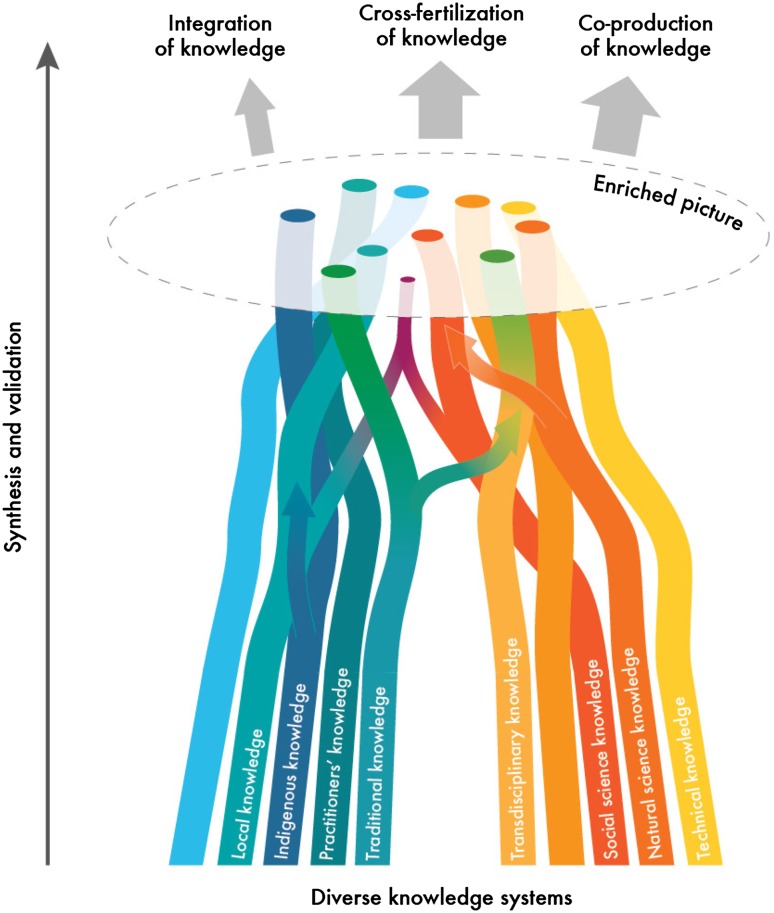
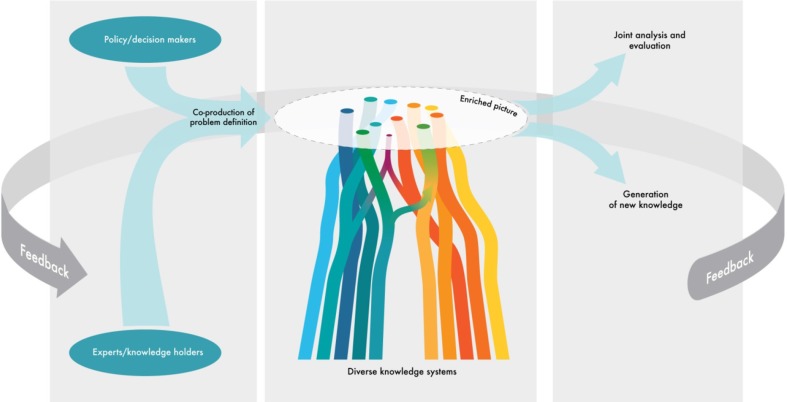
Indigenous and local knowledge systems as well as practitioners' knowledge can provide valid and useful knowledge to enhance our understanding of governance of biodiversity and ecosystems for human well-being. There is, therefore, a great need within emerging global assessment programs, such as the IPBES and other international efforts, to develop functioning mechanisms for legitimate, transparent, and constructive ways of creating synergies across knowledge systems. We present the multiple evidence base (MEB) as an approach that proposes parallels whereby indigenous, local and scientific knowledge systems are viewed to generate different manifestations of knowledge, which can generate new insights and innovations through complementarities. MEB emphasizes that evaluation of knowledge occurs primarily within rather than across knowledge systems. MEB on a particular issue creates an enriched picture of understanding, for triangulation and joint assessment of knowledge, and a starting point for further knowledge generation.
Overview
The claims and statistics of this paper haven’t been checked yet.
Run the check — free, no account needed. It reads the open-access text and checks the sources it cites.
Integrity signals
Registry
Cites
Statistics
Figures
Verification
Claims the paper makes
The claims and statistics of this paper haven’t been checked yet.
Run the check — free, no account needed. It reads the open-access text and checks the sources it cites.
Claims other papers make about this one
Each is checked against this paper’s own text: does it say what the citing paper says it does?
The source backs part of the claim, not all of it — or backs it for a different population, condition or comparison.
In the citing paper
“In their formative writing on multiple evidence base (MEB) approaches, Tengö et al. (2014) identify a need for new tools and approaches for co-developing questions, documenting and mobilizing knowledge, and co-producing insights and decisions-all under the guiding principle of valuing diversity in knowledge systems.”
From “Two‐Eyed Seeing”: An Indigenous framework to transform fisheries research and management (2021) · cites this paper as Tengö et al., 2014
Experimental — accuracy not yet measuredThe cited source says what the claim attributes to it.
In the citing paper
“In their view, “a MEB approach emphasizes the complementarity of knowledge systems and the values of letting each knowledge system speak for itself, within its own context, without assigning one dominant knowledge system with the role of external validator” (Tengö et al., 2014).”
From “Two‐Eyed Seeing”: An Indigenous framework to transform fisheries research and management (2021) · cites this paper as Tengö et al., 2014
The cited source says what the claim attributes to it.
In the citing paper
“MEB approaches seek to connect distinct knowledge systems (Alexander et al., 2019), often through parallel lines of Indigenous and Western scientific inquiry (Tengö et al., 2014), but mechanisms and successful examples of this or equivalent approaches in practice, especially in an aquatic or fisheries context, have been few and far between (e.g.Cooke et al., 2020;Laidler, 2006;Mackinson, 2001).”
From “Two‐Eyed Seeing”: An Indigenous framework to transform fisheries research and management (2021) · cites this paper as Tengö et al., 2014
Self-check
Percentages, sums and reported differences re-computed from the paper’s own numbers.
The self-check needs the paper’s full text.
Citations
Cites
Evidence based medicine: what it is and what it isn't
Sackett, D. L., Rosenberg, W. M. C., Gray, J. A. M., Haynes, R. B., & Richardson, W. S. (1996) · BMJ · doi:10.1136/bmj.312.7023.71 · Cited by 15,769 · cited 1×
“…of thinking around ‘‘evidence-based’’ and ‘‘evidence-based practice’’ has a long history, particularly in medicine and was formally defined in medicine by Sackett et al. (1996) as, ‘‘the conscientious and judicious use of current best evidence from clinical care research in the management of…”
BackgroundResearch methods in anthropology: qualitative and quantitative approaches
(2002) · Choice Reviews Online · doi:10.5860/choice.39-4047 · Cited by 5,622
Yeh, M. (2014) · Journal of Nursing Research · doi:10.1097/jnr.0000000000000065 · Cited by 3,836
Knowledge systems for sustainable development
Cash, D. W., Clark, W. C., Alcock, F., Dickson, N. M., Eckley, N., Guston, D. H., Jäger, J., & Mitchell, R. B. (2003) · Proceedings of the National Academy of Sciences · doi:10.1073/pnas.1231332100 · Cited by 3,660 · cited 1×
“…process may help to leverage the power dynamics, maintain integrity of knowledge systems, generate new questions, and thus enable ecosystem assessments and knowledge generation that are salient, credible, and legitimate for knowledge holders at different scales (Cash et al. 2003; Reid et al. 2006).”
BackgroundScale and Cross-Scale Dynamics: Governance and Information in a Multilevel World
Cash, D. W., Adger, W. N., Berkes, F., Garden, P., Lebel, L., Olsson, P., Pritchard, L., & Young, O. (2006) · Ecology and Society · doi:10.5751/es-01759-110208 · Cited by 2,254
Dismantling the Divide Between Indigenous and Scientific Knowledge
Agrawal, A. (1995) · Development and Change · doi:10.1111/j.1467-7660.1995.tb00560.x · Cited by 2,189 · cited 6×
“Scientific validation of traditional or local knowledge is often a more or less explicit requirement for inclusion of other knowledge systems (Agrawal 1995).”
BackgroundInfluentialBackground on the Institutional Analysis and Development Framework
Ostrom, E. (2011) · Policy Studies Journal · doi:10.1111/j.1541-0072.2010.00394.x · Cited by 1,719 · cited 2×
“Ostrom (2011) for instance suggests that conceptual frameworks facilitate the integration of different types of theories and models as they apply to different questions and parts of a research problem, but together contribute to the understanding of a whole.”
BackgroundConstantine, L. (2001) · CACM · doi:10.1145/365181.365239 · Cited by 1,660
Public Participation in Scientific Research: a Framework for Deliberate Design
Shirk, J., Ballard, H., Wilderman, C., Phillips, T., Wiggins, A., Jordan, R., McCallie, E., Minarchek, M., Lewenstein, B., Krasny, M., et al. (2012) · Ecology and Society · doi:10.5751/es-04705-170229 · Cited by 1,317 · cited 2×
“However, in the science-practice realm there are many emerging initiatives that use approaches similar to a MEB, see for example Danielsen et al. (2009, 2014), Rist et al. (2011), and Shirk et al. (2012), see also Box 2.”
BackgroundMethodAid, M. M., & Wiesbes, C. (2001) · doi:10.1080/714002815 · Cited by 1,299 · cited 1×
“New methods are needed to find innovative ways for legitimate and constructive ways of aggregating, evaluating, and synthesizing knowledge to inform scales beyond the local (Berkes et al. 2006).”
Background
Research works printed but not linked: 15
- Berkes, F., J. Colding, and C. Folke. 2003. Navigating social–ecological systems: building resilience for complexity and change. Cambridge: Cambridge University Press.
- Bernard, H.R. 2011. Research methods in anthropology. Altamira: Rowman.
- Brondizio, E.S. 2008. Amazonian Caboclo and the Acai Palm: Forest farmers in the global market. New York: The New York Botanical Garden Press.
- Brondizio, E.S., F. Gatzweiler, C. Zagrafos, and M. Kumar. 2010. Socio-cultural context of ecosystem and biodiversity valuation. In The economics of ecosystems and biodiversity (TEEB), ed. M. Kumar, 150–181. London: Earthscan Press.
- Brookfield, H., H. Parsons, and M. Brookfield. 2003. Agrodiversity: learning from farmers across the world. Tokyo: United Nations University Press.
- Gratani, M., J.R. Butler, F. Royee, P. Valentine, D. Burrows, W.I. Canendo, and A.S. Anderson. 2011. Is validation of indigenous ecological knowledge a disrespectful process? a case study of traditional fishing poisons and invasive fish management from the wet tropics, Australia. Ecology and Society 16: 25. · DOI
- Haverkort, B., F.D. Burgoa, D. Shankar, and D. Millar. 2012. Towards co-creation of sciences. New Delhi: Nimby Books.
- Japan Satoyama Satoumi Assessment. 2010. Japan Satoyama Satoumi Assessment: Socio-ecological production landscapes of Japan—Summary for decision makers. Tokyo: United Nations University.
- Nadasdy, P. 1999. The politics of TEK: Power and the “integration” of knowledge. Arctic Anthropology 36: 1–18.
- Nakashima, D., and M. Roué. 2002. Indigenous knowledge, peoples and sustainable practice. In Encyclopedia of global environmental change, ed. T. Munn, 314–324. Chichester: Wiley.
- Nakashima, D.J., K. Galloway McLean, H.D. Thulstrup, A. Ramos Castillo, and J.T. Rubis. 2012. Weathering uncertainty: Traditional knowledge for climate change assessment and adaptation. Paris and Darwin: UNESCO and UNU.
- Reid, W.V., F. Berkes, T. Milbanks, and D. Capistrano. 2006. Bridging scales and knowledge systems. Concepts and applications in ecosystem assessments. Washington DC: Island Press.
- Stankovich, M., C. Cariño, M.E. Regpala, J.A. Guillao, and G. Balawag. 2013. Developing and implementing community-based monitoring and information systems: The global workshop and the Philippine workshop reports. Baggio City: Tebtebba Foundation.
- Tengö, M., and P. Malmer (eds). 2012. Dialogue workshop on knowledge for the 21st century: Indigenous knowledge, traditional knowledge, science and connecting diverse knowledge systems. Usdub, Guna Yala, Panama, April 10–13, 2012. Workshop Report.
- Weismann, U., and H Hurni (eds.). 2011. Research for Sustainable Development: Foundations, Experiences, and Perspectives. Perspectives of the Swiss National Centre of Competence in Research (NCCR) North-South. Bern: University of Bern.
Cited by
Sorted by citations
Items 401–500 of 1,000
The Restoration of Degraded Lands by Local Communities and Indigenous Peoples
Santini, N., & Miquelajauregui, Y. (2022) · Frontiers in Conservation Science · doi:10.3389/fcosc.2022.873659 · Cited by 22
“Traditional knowledge can identify keystone species or sites that are foundational to restoration efforts (Raymond et al., 2010; Tengö et al., 2014).”
BackgroundSustaining Arctic Observing Networks’ (SAON) Roadmap for Arctic Observing and Data Systems (ROADS)
Starkweather, S., Larsen, J. R., Kruemmel, E., Eicken, H., Arthurs, D., Bradley, A., Carlo, N., Christensen, T., Daniel, R., Danielsen, F., et al. (2022) · Arctic · doi:10.14430/arctic74330 · Cited by 22
Junqueira, A. B., Fernández-Llamazares, Á., Torrents-Ticó, M., Hara, P. L., Naasak, J. G., Burgas, D., Fraixedas, S., Cabeza, M., & Reyes-García, V. (2021) · Journal of Ethnobiology · doi:10.2993/0278-0771-41.3.331 · Cited by 22
“…the potential of LEK for the understanding of environmental changes (Fernández-Llamazares et al. 2017; Nabhan 2010; Postigo 2014) and the potential synergies between LEK and scientific knowledge to enhance our capacity for dealing with environmental change (Shaffer 2014; Tengö et al. 2014).”
BackgroundG7 ülkelerinin bilgi performanslarının analizi: COCOSO yöntemi ile bir uygulama
Altıntaş, F. F. (2021) · Journal of Life Economics · doi:10.15637/jlecon.8.3.06 · Cited by 22
Monzón-Alvarado, C., Rendon, A. Z., & Pérez, A. D. S. V. (2020) · Environmental Science & Policy · doi:10.1016/j.envsci.2020.08.007 · Cited by 22
The Role of Knowledge in Food Democracy
Adelle, C. (2019) · Politics and Governance · doi:10.17645/pag.v7i4.2084 · Cited by 23
Intersectional boundary work in socializing new experts. The case of IPBES
Gustafsson, K. M., Berg, M., Lidskog, R., & Löfmarck, E. (2019) · Ecosystems and People · doi:10.1080/26395916.2019.1628105 · Cited by 22
“Pending explicit criteria within IPBES that challenge and replace the scientific view on how to determine which knowledge to include in the assessment, the traditional scientific way of operating has implicitly become IPBES’ way of operating (cf. Tengö et al. 2014).”
BackgroundInfluentialBasal ice formation in snow cover in Northern Finland between 1948 and 2016
Rasmus, S., Kivinen, S., & Irannezhad, M. (2018) · Environmental Research Letters · doi:10.1088/1748-9326/aae541 · Cited by 22
“Traditional ecological knowledge and local practitioners’ knowledge have received increasing attention as sources of information on changing environments (Ingold 2000, Tengö et al 2014, UNESCO 2017).”
BackgroundMartinez‐Harms, M. J., Gelcich, S., Krug, R. M., Maseyk, F. J. F., Moersberger, H., Rastogi, A., Wambugu, G. M., Krug, C. B., Spehn, E. M., & Pascual, U. (2018) · Sustainability Science · doi:10.1007/s11625-018-0599-5 · Cited by 29
Wayfinder: a new generation of resilience practice
Enfors, E., Järnberg, L., Quinlan, A., & Ryan, P. (2021) · Ecology and Society · doi:10.5751/es-12176-260239 · Cited by 34
“The process through which knowledge is generated and decisions are made is critical to build collective understanding, agency, and commitment for change (Tengö et al. 2014, van der Hel 2016).”
BackgroundWeaving science and traditional knowledge: Toward sustainable solutions for ocean management
Caldeira, M., Sekinairai, A., & Vierros, M. (2025) · Marine Policy · doi:10.1016/j.marpol.2025.106591 · Cited by 21
Power & protein—closing the ‘justice gap’ for food system transformation
Baudish, I., Sahlin, K. R., Béné, C., Oosterveer, P. J. M., Prins, H., & Pereira, L. M. (2024) · Environmental Research Letters · doi:10.1088/1748-9326/ad3d6f · Cited by 27
“Instead, inclusion demands actual engagement (being heard at the table) with a balanced range of human and non-human perspectives [ 5, 9, 118, 189].”
Ayala, A. B., Jiménez-Aceituno, A., & Rozas-Vásquez, D. (2022) · Journal for Nature Conservation · doi:10.1016/j.jnc.2022.126281 · Cited by 25
Maclean, K., Greenaway, A., & Grünbühel, C. (2022) · Sustainability Science · doi:10.1007/s11625-022-01103-4 · Cited by 21
Bennett, E. M., Morrison, P., Holzer, J., Winkler, K., Fraser, E., Green, S., Robinson, B. E., Sherren, K., Botzas-Coluni, J., & Palen, W. (2021) · Ecosystems and People · doi:10.1080/26395916.2021.1995046 · Cited by 21
Asmamaw, M., Mereta, S., & Ambelu, A. (2020) · PLoS ONE · doi:10.1371/journal.pone.0238460 · Cited by 21
“Besides, integrating knowledge from local and scientific sources is credible to formulate tangible outputs, interpret results, and basis to enhance social-ecological system resilience [7,8,16].”
BackgroundSánchez-Jiménez, A., Fujitani, M., MacMillan, D., Schlüter, A., & Wolff, M. (2019) · Frontiers in Marine Science · doi:10.3389/fmars.2019.00126 · Cited by 21
“However, when systematic scientific knowledge is complemented with available LEK, it is possible to see an overall and enriched image (Tengö et al., 2014).”
InfluentialPartelow, S., Fujitani, M. L., Soundararajan, V., & Schlüter, A. (2019) · Ecology and Society · doi:10.5751/es-10724-240115 · Cited by 37
“Participation and deliberative processes are social spaces for communicating ideas, collective action, creating or resolving conflicts, and for engaging in social learning (Stern 2005, Reed et al. 2010, Tengö et al. 2014).”
BackgroundColes, A. R., & Quintero-Ángel, M. (2017) · Environmental Hazards · doi:10.1080/17477891.2017.1382319 · Cited by 20
“Integrating diverse sources of knowledge from different social actors is required for enhancing the pool of information, creating meaning, sharing knowledge, and supporting learning (Aldunce, Beilin, et al., 2016; Tengö et al., 2014).”
BackgroundInfluentialUnderstanding Artisanal Fishers’ Behaviors: The Case of Ciénaga Grande de Santa Marta, Colombia
Torres‐Guevara, L. E., López, M. C., & Schlüter, A. (2016) · Sustainability · doi:10.3390/su8060549 · Cited by 24
“The use of the traditional ecological fishers’ knowledge as a complement to scientific research is becoming increasingly common [20–23] because it allows for better communication between scientists and resource users [24,25].”
BackgroundPremises, practices and politics of co-creation for urban sustainability transitions
Frantzeskaki, N., Collier, M. J., Hölscher, K., Gaziulusoy, İ., Ossola, A., Albulescu, P., Bonneau, M., Borgström, S. T., Connop, S. P., Dumitru, A., et al. (2025) · Urban Transformations · doi:10.1186/s42854-025-00075-9 · Cited by 19
Epistemic inclusion: a key challenge for global RRI
Zwart, H. A. E., Mendes, A. B., & Blok, V. (2024) · Journal of Responsible Innovation · doi:10.1080/23299460.2024.2326721 · Cited by 23
Karcher, D., Cvitanovic, C., Colvin, R., & van Putten, I. V. (2023) · Environmental Policy and Governance · doi:10.1002/eet.2078 · Cited by 20
A mixed‐methods assessment of human‐elephant conflict in the Western Okavango Panhandle, Botswana
Buchholtz, E. K., McDaniels, M. E., McCulloch, G. P., Songhurst, A., & Stronza, A. L. (2023) · People and Nature · doi:10.1002/pan3.10443 · Cited by 21
Hakkarainen, V., Soini, K., Dessein, J., & Raymond, C. M. (2022) · People and Nature · doi:10.1002/pan3.10365 · Cited by 31
Benansio, J. S., Funk, S. M., Lino, J. L., Balli, J. J., Dante, J. O., Dendi, D., Fa, J. E., & Luiselli, L. M. (2022) · Regional Environmental Change · doi:10.1007/s10113-022-01928-w · Cited by 28
Knowledge Integration and Good Marine Governance: A Multidisciplinary Analysis and Critical Synopsis
Poto, M. P., Kuhn, A., Tsiouvalas, A., Hodgson, K. K., Treffenfeldt, M. V., & Beitl, C. M. (2021) · Human Ecology · doi:10.1007/s10745-021-00289-y · Cited by 26
The role of environmental managers in knowledge co-production: Insights from two case studies
O'Connor, R. A., Nel, J., Roux, D., Leach, J., Lim-Camacho, L., Medvecky, F., van Kerkhoff, L., & Raman, S. (2021) · Environmental Science & Policy · doi:10.1016/j.envsci.2020.12.001 · Cited by 20
Castillo, L., Rostagno, C., & Ladio, A. (2020) · Rangeland Ecology & Management · doi:10.1016/j.rama.2020.06.001 · Cited by 20
Brunet, N. D., Jardine, T., Jones, P., Macdermid, F., Reed, G., Bogdan, A., Tchir, D., & Natcher, D. (2020) · doi:10.1016/j.exis.2020.06.014 · Cited by 20
Applying Neo‐Endogenous Development Theory to Delivering Sustainable Local Nature Conservation
Marango, S., Bosworth, G. R. F., & Curry, N. (2020) · Sociologia Ruralis · doi:10.1111/soru.12315 · Cited by 23
Sierra-Huelsz, J. A., Fernández, P., Binnqüist, C. L., Guibrunet, L., & Ellis, E. (2020) · Forests · doi:10.3390/f11040403 · Cited by 20
“As pervasive environmental and social crises have exposed the limitations of science and technology, other rationalities and alternative worldviews are pointed to as a potential source of solutions to those crises [18–20], leading environmental scientists to increasingly adopt more holistic approaches [13,21], some of…”
BackgroundEbhuoma, E. E. (2020) · doi:10.1080/09614524.2020.1723494 · Cited by 20
“…strand to speak for itself, on its own terms, and within its own boundaries, without assigning the duty of an external validator to any dominant knowledge system in order to generate an enriched picture of the issue under investigation through complementarities and synergies (Tengö et al. 2014).”
BackgroundMethodInfluentialHopkins, D., Joly, T., Sykes, H., Waniandy, A., Grant, J., Gallagher, L., Hansen, L., Wall, K., Fortna, P., & Bailey, M. (2019) · Journal of Ethnobiology · doi:10.2993/0278-0771-39.2.315 · Cited by 20
“It is a way to develop synergies across different knowledge systems, embracing multiple lines of evidence generating insights and innovations through complementarities, using a more humanistic approach (Gaudet 2014; Tengö et al. 2014).”
BackgroundUnpacking the Red List: Use (and Misuse?) of Expertise, Knowledge, and Power
Tomasini, S. (2018) · Conservation and Society · doi:10.4103/cs.cs_16_52 · Cited by 31
“knowledge holders in conservation issues is acknowledged by the scientific community (Tengö et al. 2014), as well as international policy platforms such as the Intergovernmental Science-Policy Platform on Biodiversity and Ecosystem Services (IPBES) (Turnhout et al.”
BackgroundLuizza, M., Evangelista, P., Jarnevich, C., West, A., & Stewart, H. (2016) · Environmental Management · doi:10.1007/s00267-016-0692-4 · Cited by 20
Collier, C., de Almeida, M. D., Aretakis, G. M., Santos, R. E., de Oliveira, T. D., Mourão, J. S., Severi, W., & El-Deir, A. C. A. (2015) · Journal of Ethnobiology and Ethnomedicine · doi:10.1186/s13002-015-0054-y · Cited by 20
“[16, 17]).”
Seiferth, C., Tengö, M., & Andersson, E. (2024) · Sustainability Science · doi:10.1007/s11625-024-01531-4 · Cited by 19
“Structured dialogue series may present a flexible, multi-purpose tool for bringing different perspectives and knowledge holders together, whose contributions to addressing complex challenges might otherwise be overlooked for various reasons (Cornell et al. 2013; Tengö et al. 2014).”
InfluentialSelf-citationRosellón-Druker, J., McAdam-Otto, L., Suca, J., Seary, R., Gaytán-Caballero, A., Escobar-Briones, E., Hazen, E., & Muller-Karger, F. (2023) · Ecosystems and People · doi:10.1080/26395916.2023.2253317 · Cited by 19
“The inclusion and involvement of all voices in this collaborative process is fundamental and, as has been recognized by Tengö et al. (2014) treating each knowledge system with equity, socially balanced into an ecosystem approach (Pinkerton et al. 2019).”
BackgroundWeaver, K. (2023) · Development Studies Research · doi:10.1080/21665095.2023.2203842 · Cited by 31
“Tengö et al. (2014, 579) observe that ‘ cross-fertili-zation among a diversity of knowledge-systems can contribute new evidence and also improve the capacity to interpret conditions, change, responses, and in some cases causal relationships in the dynamics of social – ecological systems ’ .”
BackgroundInfluentialGupta, T., Milner-Gulland, E., Dias, A., & Karnad, D. (2023) · People and Nature · doi:10.1002/pan3.10429 · Cited by 19
“Fishers' LEK must be brought into the scientific mainstream and incorporated into policy and manage - ment, which can be done through various participatory approaches and frameworks (Cowie et al., 2020 ; Tengö et al., 2014).”
Juri, S., Norberg, M. B., Clark, L. B., Riani, M. C., Jobbagy, E. G., Marcone, J., Mazzeo, N., Meerhoff, M., Trimble, M., Zurbriggen, C., et al. (2022) · Frontiers in Sustainable Food Systems · doi:10.3389/fsufs.2022.887034 · Cited by 24
“It posits the need for moving from knowledge to action in ways that engage the different voices and needs at stake (Grunwald, 2004; Tengö et al., 2014; Pereira et al., 2019).”
BackgroundMethodInfluentialSocial-ecological change: insights from the Southern African Program on Ecosystem Change and Society
Biggs, R., Clements, H. S., Cumming, G. S., Cundill, G., Vos, A. D., Hamann, M., Luvuno, L., Roux, D. J., Selomane, O., Blanchard, R., et al. (2022) · Ecosystems and People · doi:10.1080/26395916.2022.2097478 · Cited by 22
Self-citationPereira, L. M., Kushitor, S. B., Cramer, C., Drimie, S., Isaacs, M., Malgas, R. R., Phiri, E. E., Tembo, C. P., & Willis, J. (2022) · Sustainability Science · doi:10.1007/s11625-022-01182-3 · Cited by 21
“These knowledge gaps are best addressed in ways that complement these different knowledge systems, in that synergies are likely to lead to sustainability outcomes better than what each knowledge system could contribute on its own (Tengö et al. 2014).”
Nussey, C., Frediani, A., Lagi, R., Mazutti, J., & Nyerere, J. (2022) · Journal of Human Development and Capabilities · doi:10.1080/19452829.2021.2014427 · Cited by 19
“tance of indigenous and historically excluded wisdoms (Tengö et al. 2014).”
BackgroundHow Mongolian herders perceive ecological change in a “stable” landscape
Gantuya, B., Biró, M., Molnár, Á., Avar, Á., Bahraman, A. S., Babai, D., & Mólnar, Z. (2021) · Ecology and Society · doi:10.5751/es-12454-260221 · Cited by 19
“…ecological knowledge of herders and scientific knowledge, as equally contributing partners, can generate a more complete and relevant understanding of the dynamics of landscapes, ecosystems, and management systems (Huntington 2000, Moller et al. 2004, Tengö et al. 2014, Molnár et al. 2016a).”
BackgroundLoseto, L., Breton-Honeyman, K., Etiendem, D. N., Johnson, N., Pearce, T., Allen, J., Amos, A., Arqviq, J., Baak, J., Belanger, E., et al. (2020) · doi:10.1139/as-2020-0023 · Cited by 19
Challenges in combining Indigenous and scientific knowledge in the Arctic
Lauter, O. (2023) · Polar Geography · doi:10.1080/1088937x.2023.2233578 · Cited by 38
“…requires an approach that concentrates on selecting the best knowledge system practices that allow for their complementarity (Altman & Whitehead, 2003; Tengö et al., 2014), while each individual knowledge system remains distinctive and not absorbed by the integration (Bohensky & Maru, 2011).”
BackgroundTaking stories: The ethics of cross-cultural community conservation research in Samburu, Kenya
Walker, S. E., Bruyere, B. L., Grady, M., McHenry, A., Frickman, C., Davis, W. H., & Village, U. W. (2020) · Gateways : International Journal of Community Research & Engagement · doi:10.5130/ijcre.v13i1.7090 · Cited by 19
“The ability to triangulate varying sets of knowledge provides multiple lenses by which to analyse the social-ecological interactions at the crux of conservation and development issues (Bohensky & Maru 2011; Tengö et al. 2014).”
BackgroundAchieng, T., Maciejewski, K., Dyer, M., & Biggs, R. (2020) · Land · doi:10.3390/land9040097 · Cited by 19
“Geometric correction was not necessary since all the images were acquired from USGS (LIT), where data is already corrected using ground control points (GCPs) [38].”
Romm, N. R. A. (2017) · Contemporary systems thinking · doi:10.1007/978-3-319-58014-2_1 · Cited by 15
“Tengo et al. see the IPBES as having made important steps in this direction, which can be strengthened and carried over to other policy-making arenas.”
BackgroundInfluentialMihók, B., Kovács, E. K., Balázs, B., Pataki, G., Ambrus, A., Bartha, D., Czirák, Z., Csányi, S., Csépányi, P., Csőszi, M., et al. (2015) · Journal for Nature Conservation · doi:10.1016/j.jnc.2015.09.010 · Cited by 24
“The integration of different knowledge types (practitioner and science-driven knowledge) hold out for enhanced ecosystem governance (Tengö et al. 2014).”
BackgroundBiodiversity Governance: A Tower of Babel of Scales and Cultures
Soberón, J. M., & Peterson, A. T. (2015) · PLoS Biology · doi:10.1371/journal.pbio.1002108 · Cited by 23
“In many ILK systems, the spiritual, the factual, and the practical are deeply united [24,26,31], and trying to disentangle them may be a mistake.”
BackgroundDatta, A. W., & Chaffin, B. C. (2022) · Ecology and Society · doi:10.5751/es-13251-270230 · Cited by 23
“This question is not only relevant to the contexts where CMT is present, but also to the rapidly expanding range of localities in both developed and developing nations where the principle of interweaving knowledge types is applied (Tengö et al. 2014).”
BackgroundInfluentialEnvisioning sustainable carbon sequestration in Swedish farmland
Johansson, E. L., Brogaard, S., & Brodin, L. (2022) · Environmental Science & Policy · doi:10.1016/j.envsci.2022.04.005 · Cited by 23
Robinson, C., Macdonald, J., Perry, J., Nadji, J., Nadji, S., McCartney, S., Taylor, A., Hunter, F., Cooper, D., Moyle, F., et al. (2022) · Ecology and Society · doi:10.5751/es-13747-270436 · Cited by 19
“…of social-ecological systems have seen a diversity of knowledge weaving and coproduction frameworks emerge that draw on Indigenous knowledge and environmental stewardship systems, data analytical tools, and digital visualization platforms (Tengo et al. 2014, Austin et al. 2019, Zurba et al. 2019).”
BackgroundThe Roles of Lifelong Learning and Knowledge Management in Global Higher Education
Kasemsap, K. (2016) · Advances in educational marketing, administration, and leadership book series · doi:10.4018/978-1-4666-9455-2.ch004 · Cited by 19
Upholding Ethical Accountability in Ethnobotany and Ethnobiology Research
Vandebroek, I., Stepp, J. R., Kunwar, R. M., Hilgert, N. I., Silva, M. T. P., Ladio, A. H., Clement, C. R., Júnior, W. S. F., Towns, A., Borokini, I. T., et al. (2025) · Economic Botany · doi:10.1007/s12231-025-09634-4 · Cited by 23
“This approach values traditional knowledge systems alongside academic insights, empowers IPLCs to address local challenges, and generates contextually relevant outcomes for biocultural conservation (Tengö et al. 2014).”
Shemshad, M., Synowiec, A., Kopyra, M., & Benedek, Z. (2025) · Sustainability · doi:10.3390/su17083452 · Cited by 18
Re-grounding cumulative effects assessments in ecological resilience
Greaves, C., & Parrott, L. (2024) · Environmental impact assessment review · doi:10.1016/j.eiar.2023.107403 · Cited by 18
Gerhardinger, L. C., Brodie-Rudolph, T., Gaill, F., Mortyn, G., Littley, E., Vincent, A., Herbst, D. F., Ziveri, P., Jeanneau, L., Laamanen, M., et al. (2023) · Coastal Management · doi:10.1080/08920753.2023.2244082 · Cited by 18
Integrated watershed management solutions for healthy coastal ecosystems and people
Wakwella, A., Wenger, A. S., Jenkins, A., Lamb, J. B., Kuempel, C. D., Claar, D. C., Corbin, C., Falinski, K. A., Rivera, A., Grantham, H. S., et al. (2023) · Cambridge Prisms Coastal Futures · doi:10.1017/cft.2023.15 · Cited by 25
“Care should be taken to incorporate information from multiple knowledge systems in planning and practice to ensure alignment with local values and objectives (Tengö et al., 2014).”
Climate change governance and Indigenous Peoples participation: an analysis from the Chilean case
Carmona, R. (2023) · Environmental Politics · doi:10.1080/09644016.2023.2180911 · Cited by 18
Muhl, E., Armitage, D. R., Silver, J. J., Swerdfager, T., & Thorpe, H. (2022) · Environmental Management · doi:10.1007/s00267-022-01670-3 · Cited by 29
“There is clear evidence, for instance, that centering Indigenous and hereditary forms of knowledge and related processes is linked to improved social and ecological outcomes (Stevenson 2006; Berkes 2009; Tengö et al. 2014; Mistry and Berardi 2016; Ban et al. 2018).”
BackgroundRölfer, L., Elias-Ilosvay, X., Ferse, S., Jung, J., Karcher, D., Kriegl, M., Nijamdeen, T. M., Riechers, M., & Walker, E. (2022) · Frontiers in Marine Science · doi:10.3389/fmars.2022.893489 · Cited by 18
Li, Z., Diao, J.-H., Lu, S.-M., Tao, C., & Krauth, J. (2022) · Sustainability · doi:10.3390/su14073856 · Cited by 18
“Potential complementarity of knowledge can be generated from the spatial and temporal scales under the MEB method framework [29,63-64].”
MethodInfluentialAgroforestry for mountain development: Prospects, challenges and ways forward in Nepal
Atreya, K., Subedi, B., Ghimire, P., Khanal, S., Charmakar, S., & Adhikari, R. (2021) · Archives of Agriculture and Environmental Science · doi:10.26832/24566632.2021.0601012 · Cited by 18
“Traditional knowledge and practices are being recently recognized in the conservation and management of natural resources, governing socio-ecological resilience against the changing climate, and local adaptive management (Berkes et al., 2000; Tengö et al., 2014; MoSTE, 2015).”
BackgroundDo Conceptual Innovations Facilitate Transformative Change? The Case of Biodiversity Governance
Hysing, E., & Lidskog, R. (2021) · Frontiers in Ecology and Evolution · doi:10.3389/fevo.2020.612211 · Cited by 21
van Bavel, B., Berrang‐Ford, L., Harper, S. L., Ford, J. D., Elsey, H., Lwasa, S., & King, R. (2020) · Environmental Research Letters · doi:10.1088/1748-9326/ab875e · Cited by 23
Mellegård, V., & Boonstra, W. (2020) · doi:10.1080/08941920.2020.1729911 · Cited by 18
Nesshöver, C., Livoreil, B., Schindler, S., & Vandewalle, M. (2016) · Biodiversity and Conservation · doi:10.1007/s10531-016-1124-8 · Cited by 18
“A core part of IPBES is the participation of different knowledge holders from different knowledge domains, thus going beyond the contribution from the (natural) sciences alone (Tengö et al. 2014).”
BackgroundOne-Size Does Not Fit All—A Networked Approach to Community-Based Monitoring in Large River Basins
Parlee, B. L., Huntington, H. P., Berkes, F., Lantz, T. C., Andrew, L., Tsannie, J., Reece, C., Porter, C., Nicholson, V., Peter, S., et al. (2021) · Sustainability · doi:10.3390/su13137400 · Cited by 26
Researching Indigenous Ways of Knowing-and-Being
Romm, N. R. A. (2016) · Advances in knowledge acquisition, transfer, and management book series/Advances in knowledge acquisition, transfer and management book series · doi:10.4018/978-1-5225-0833-5.ch002 · Cited by 22
Natural resources governance and the vulnerability of indigenous communities in Indonesia
Karso, A. J. (2025) · Frontiers in Political Science · doi:10.3389/fpos.2025.1601480 · Cited by 26
Urban resilience through adaptive multifutures and nature-based solutions
Mahajan, S. (2025) · npj Urban Sustainability · doi:10.1038/s42949-025-00222-y · Cited by 17
Opportunities for improved consideration of cultural benefits in environmental decision-Making
Hoelting, K. R., Morse, J. W., Gould, R. K., Martinez, D. E., Hauptfeld, R. S., Cravens, A. E., Breslow, S. J., Bair, L. S., Schuster, R. M., & Gavin, M. C. (2024) · Ecosystem Services · doi:10.1016/j.ecoser.2023.101587 · Cited by 23
Otto, J., Borgström, S., Haase, D., & Andersson, E. (2024) · Urban Forestry & Urban Greening · doi:10.1016/j.ufug.2024.128266 · Cited by 17
“Acknowledging local knowledge supports generating suitable and accepted outcomes of environmental management actions (Raymond et al., 2009), coping with changing landscapes and fostering sustainable landscape governance (Teng ¨ o et al., 2014).”
BackgroundBoundaries of the future: A framework for reflexive scenario practice in sustainability science
Lazurko, A., Schweizer, V. J., Pintér, L., & Ferguson, D. (2023) · One Earth · doi:10.1016/j.oneear.2023.10.027 · Cited by 28
Haddaway, N., Smith, A., Taylor, J. J., Andrews, C., Cooke, S. J., Nilsson, A. E., & Lesser, P. (2022) · Environmental Evidence · doi:10.1186/s13750-022-00282-y · Cited by 29
“The broader 3MK project aims to develop a multiple evidence base methodology [46] combining systematic review approaches with documentation of Indigenous and local knowledge and to apply this approach in a study of the impacts of metal mining and impacts of mitigation measures.”
BackgroundThomson, G., Newman, P. W. G., Hes, D., Bennett, J. L., Taylor, M., & Johnstone, R. (2022) · Urban Science · doi:10.3390/urbansci6030047 · Cited by 17
“Disciplinary divides can result in siloed thinking, but transdisciplinary collaboration can generate new knowledge [30].”
BackgroundThe Cod and the Cut: Intra-Active Intuitions
Hertz, T., & García, M. M. (2021) · Frontiers in Sociology · doi:10.3389/fsoc.2021.724751 · Cited by 17
The messiness of co-produced research with gatekeepers of resettled refugee communities
Gibbes, C., & Skop, E. (2020) · doi:10.1080/08873631.2020.1759981 · Cited by 17
Systemic coordination and the problem of seasonal harmful algal blooms in Lake Erie
Berardo, R., Turner, V. K., & Rice, S. (2019) · Ecology and Society · doi:10.5751/es-11046-240324 · Cited by 19
“…leverage local knowledge about resource systems, improve downward flow of information by revealing how local resource users share information, and generally enhance the design and durability of natural resource management through coproduction processes (Tengö et al. 2014, Salpeteur et al. 2017).”
BackgroundSocial–ecological timelines to explore human adaptation to coastal change
Brattland, C., Eythórsson, E., Weines, J., & Sunnanå, K. (2018) · Ambio · doi:10.1007/s13280-018-1129-5 · Cited by 17
Biodiversity knowledge synthesis at the European scale: actors and steps
Livoreil, B., Geijzendorffer, I., Pullin, A., Schindler, S., Vandewalle, M., & Nesshöver, C. (2016) · Biodiversity and Conservation · doi:10.1007/s10531-016-1143-5 · Cited by 17
“This is considered to be of key importance for evaluating risks and feasibility (Tengö et al. 2014; Sutherland et al. 2013).”
BackgroundInfluentialInvestigating the Roles of Neuroscience and Knowledge Management in Higher Education
Kasemsap, K. (2017) · Advances in educational marketing, administration, and leadership book series · doi:10.4018/978-1-5225-0672-0.ch006 · Cited by 17
Recommendations for producing knowledge syntheses to inform climate change assessments
Ford, J. D., Biesbroek, R. G., Berrang‐Ford, L., Creutzig, F., Haddaway, N., Harper, S. L., Minx, J. C., New, M. G., Sietsma, A. J., Zavaleta-Cortijo, C., et al. (2025) · Nature Climate Change · doi:10.1038/s41558-025-02354-6 · Cited by 15
“…in CCAs is an increasing priority and methodologies including knowledge dialogues 48,49 (Box 2), circle of experts 50,51 and the multi-evidence-base approach 44,52 , among others, have been developed to document and synthesize knowledges in a culturally respectful, robust and transparent manner.”
Fa, J. E., & Luiselli, L. M. (2025) · African Journal of Ecology · doi:10.1111/aje.70030 · Cited by 13
Russell, S., Sultana, R., Rangers, N. Y., & Ens, E. (2023) · Austral ecology (Print) · doi:10.1111/aec.13353 · Cited by 16
Climate, caribou and human needs linked by analysis of Indigenous and scientific knowledge
Gagnon, C., Hamel, S., Russell, D. E., André, J., Buckle, A., Haogak, D., Pascal, J., Schafer, E., Powell, T., Svoboda, M. Y., et al. (2023) · Nature Sustainability · doi:10.1038/s41893-023-01085-w · Cited by 20
Walker, K. E., Baldwin, C., Conroy, G., Applegate, G., Archer-Lean, C., Arthington, A., Behrendorff, L., Gilby, B. L., Hadwen, W., Henderson, C. J., et al. (2022) · Coasts · doi:10.3390/coasts2030009 · Cited by 16
Exploring Partial Overlaps Between Knowledge Systems in a Brazilian Fishing Community
Renck, V., Ludwig, D., Bollettin, P., & El-Hani, C. N. (2022) · Human Ecology · doi:10.1007/s10745-022-00335-3 · Cited by 28
Dyrset, G., Margaryan, L., & Stensland, S. (2021) · Fisheries Management and Ecology · doi:10.1111/fme.12522 · Cited by 16
Toward actionable, coproduced research on boreal birds focused on building respectful partnerships
Westwood, A., Barker, N., Grant, S., Amos, A. L., Camfield, A., Cooper, K. L., Dénes, F. V., Jean-Gagnon, F., McBlane, L., Schmiegelow, F., et al. (2020) · Avian Conservation and Ecology · doi:10.5751/ace-01589-150126 · Cited by 16
“…many Western-led discussions of bridging knowledge systems or coproducing research between Indigenous and Western researchers (Gadgil et al. 1993, Tengö et al. 2014, Alexander et al. 2019, Institute on Governance 2019, Théberge et al. 2019), many Western conceptions of Indigenous knowledge have…”
BackgroundLarge intact forest landscapes and inclusive conservation: a political ecological perspective
Zanotti, L. C., & Knowles, N. L. B. (2020) · Journal of Political Ecology · doi:10.2458/v27i1.23165 · Cited by 29
“…to IPLCs as key stewards of biodiversity and retention of forest cover, both of which are key to maintaining critical ecosystem services, relational values, and addressing the effects of climate change (Caillon et al. 2017; Chao 2012; Davidson-Hunt 2006; Tengö et al. 2014; Wyborn and Bixler 2013).”
BackgroundInfluentialKilonzi, F., & Ota, T. (2019) · One Ecosystem · doi:10.3897/oneeco.4.e33368 · Cited by 16
“…in 2010 (CBD 2010), IPBES strongly acknowledges the importance of cultural ecosystem services through the indigenous and local knowledge and support the role of diversity of knowledge systems in international biodiversity assessments as well as in decision-making (IPBES 2013, Tengö et al. 2014).”
BackgroundAdvancing science on the multiple connections between biodiversity, ecosystems and people
van Oudenhoven, A. P. E., Martín‐López, B., Schröter, M., & de Groot, R. S. (2018) · International Journal of Biodiversity Science Ecosystems Services & Management · doi:10.1080/21513732.2018.1479501 · Cited by 22
“Yet, the consideration of different knowledge systems can be challenging because they ground on different ontologies and epistemologies (Tengö et al. 2014, 2017).”
BackgroundThe Monkeying of the Americas: Primate Biogeography in the Neotropics
Lynch, J. W. (2017) · Annual Review of Anthropology · doi:10.1146/annurev-anthro-102116-041510 · Cited by 19
“People who work toward biodiversity conservation and climate change impact mitigation have recognized the importance of the multiple evidence base approach, which values indigenous and local knowledge on an equal platform with scientific knowledge for informing policy change (Tengö et al. 2014).”
BackgroundA ETNOECOLOGIA EM PERSPECTIVA: ORIGENS, INTERFACES E CORRENTES ATUAIS DE UM CAMPO EM ASCENSÃO
Prado, H. M., & Murrieta, R. S. S. (2015) · doi:10.1590/1809-4422asoc986v1842015 · Cited by 16
McIlwain, L., Baird, J., Baldwin, C., Pickering, G. J., Manathunga, C. E., & Smith, T. S. (2024) · Ecology and Society · doi:10.5751/es-15109-290331 · Cited by 16
“So, although we know that diverse knowledge greatly supports learning processes and its outcomes (Tengö et al. 2014), the ability to control knowledge use and production, and the level of transparency and plurality around knowledge use largely affect the quality of the social learning process and…”
Metadata
- Authors
- Tengö, M., Brondizio, E. S., Elmqvist, T., Malmer, P., & Spierenburg, M.
- Affiliations
- Stockholm Resilience Centre (SE)
- Vrije Universiteit Amsterdam (NL)
- Corresponding author
- Tengö, Maria
- Venue
- AMBIO
- Published
- 2014-03-22
- Volume
- 43
- Issue
- 5
- Pages
- 579-591
- ISSN
- 0044-7447 (ISSN-L)
- 1654-7209
- PMC
- PMC4132468
- OpenAlex
- W2122925767
- Cited by
- 1,329
- References
- 88
- Citations by year
- 2026: 163 · 2025: 140 · 2024: 122 · 2023: 140 · 2022: 146 · 2021: 152 · 2020: 124 · 2019: 101 · 2018: 89 · 2017: 61 · 2016: 46 · 2015: 34 · 2014: 11
- FWCI
- 43.99
- Type
- journal article
- Language
- en
- Open access
- hybrid
- doi.org
- Locations
- AMBIO (publishedVersion, cc-by)
- PubMed Central (publishedVersion, cc-by)
- PubMed (publishedVersion)
- VU Research Portal (publishedVersion, other-oa)
- Data Archiving and Networked Services (DANS) (submittedVersion, other-oa)
- Digital Academic REpository of VU University Amsterdam (Vrije Universiteit Amsterdam) (submittedVersion)
- Radboud Repository (Radboud University) (submittedVersion)
- Funders
- Styrelsen för Internationellt Utvecklingssamarbete
- Stiftelsen för Miljöstrategisk Forskning
- Topics
- Physical Sciences › Environmental Science › Ecology › Environmental and Cultural Studies in Latin America and Beyond
- Physical Sciences › Environmental Science › Global and Planetary Change › Land Use and Ecosystem Services
- Social Sciences › Anthropology › Indigenous Studies and Ecology
- Keywords
- indigenous knowledge, local knowledge, scientific knowledge, knowledge integration, ecosystem governance, biodiversity governance, IPBES, knowledge assessment, human well-being, knowledge synergy
- MeSH terms
- Conservation of Natural Resources, Ecosystem, Biodiversity
About these checks
Registry, retraction, Cites and statistics results are computed, not judged, with one exception: a printed reference that no index lists is read once by a model before it counts as a citation error. Claims are extracted by a model and kept only when their quote appears verbatim in the text; each cited source is then checked, with a model’s help, for whether it says what the claim relies on. Those verdicts can be wrong — read the claim’s quote and the cited source before relying on one.
Statistics and arithmetic are recomputed, not judged.
Confidence bands are shown only for fields calibrated on our annotated test set. None is calibrated yet, so no band is shown.
What counts as a claim ›How we measure confidence ›How we check this ›
Are you an author, or do you see a problem with this page? Request a review
