

The DOI matches its Crossref record; 58 of the 88 references it cites were found in a registry or an index.
Connecting Diverse Knowledge Systems for Enhanced Ecosystem Governance: The Multiple Evidence Base Approach
Open accessAbstract
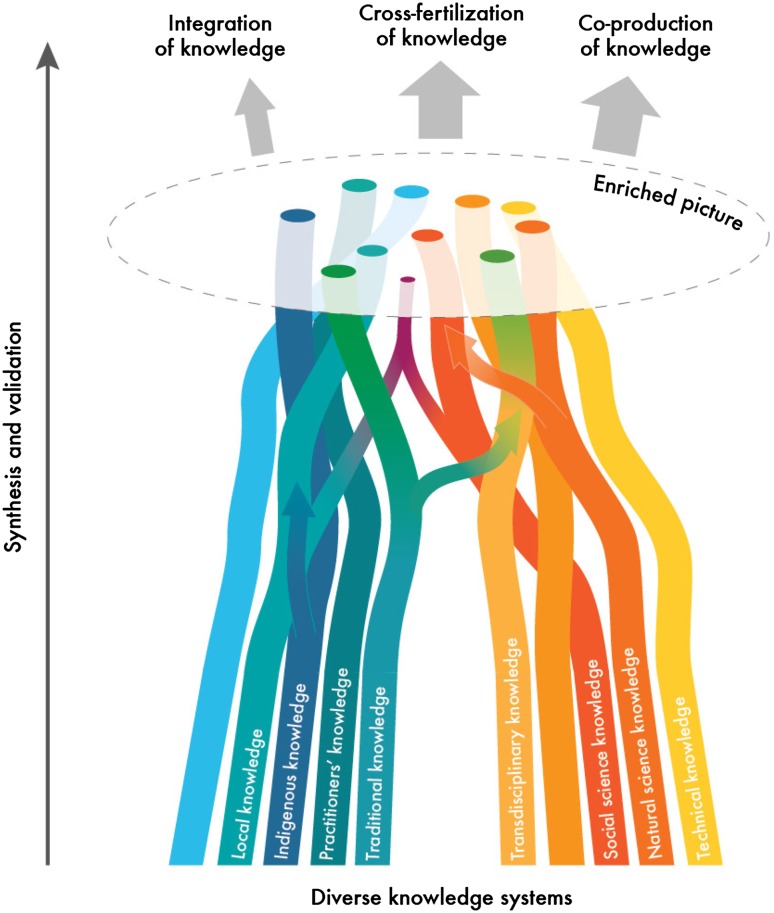
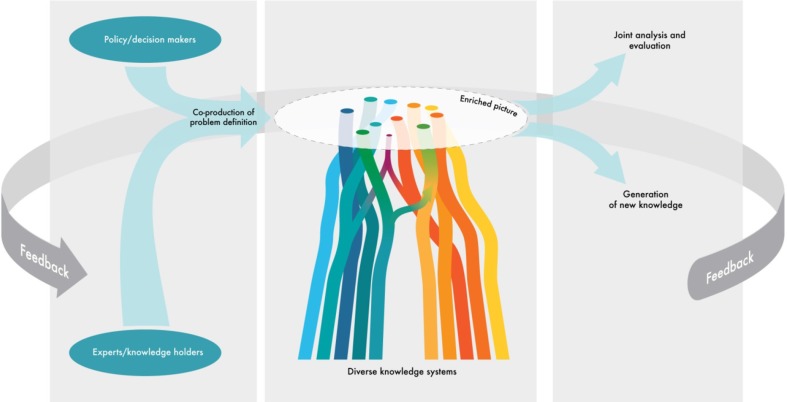
Indigenous and local knowledge systems as well as practitioners' knowledge can provide valid and useful knowledge to enhance our understanding of governance of biodiversity and ecosystems for human well-being. There is, therefore, a great need within emerging global assessment programs, such as the IPBES and other international efforts, to develop functioning mechanisms for legitimate, transparent, and constructive ways of creating synergies across knowledge systems. We present the multiple evidence base (MEB) as an approach that proposes parallels whereby indigenous, local and scientific knowledge systems are viewed to generate different manifestations of knowledge, which can generate new insights and innovations through complementarities. MEB emphasizes that evaluation of knowledge occurs primarily within rather than across knowledge systems. MEB on a particular issue creates an enriched picture of understanding, for triangulation and joint assessment of knowledge, and a starting point for further knowledge generation.
Overview
The claims and statistics of this paper haven’t been checked yet.
Run the check — free, no account needed. It reads the open-access text and checks the sources it cites.
Integrity signals
Registry
Cites
Statistics
Figures
Verification
Claims the paper makes
The claims and statistics of this paper haven’t been checked yet.
Run the check — free, no account needed. It reads the open-access text and checks the sources it cites.
Claims other papers make about this one
Each is checked against this paper’s own text: does it say what the citing paper says it does?
The source backs part of the claim, not all of it — or backs it for a different population, condition or comparison.
In the citing paper
“In their formative writing on multiple evidence base (MEB) approaches, Tengö et al. (2014) identify a need for new tools and approaches for co-developing questions, documenting and mobilizing knowledge, and co-producing insights and decisions-all under the guiding principle of valuing diversity in knowledge systems.”
From “Two‐Eyed Seeing”: An Indigenous framework to transform fisheries research and management (2021) · cites this paper as Tengö et al., 2014
Experimental — accuracy not yet measuredThe cited source says what the claim attributes to it.
In the citing paper
“In their view, “a MEB approach emphasizes the complementarity of knowledge systems and the values of letting each knowledge system speak for itself, within its own context, without assigning one dominant knowledge system with the role of external validator” (Tengö et al., 2014).”
From “Two‐Eyed Seeing”: An Indigenous framework to transform fisheries research and management (2021) · cites this paper as Tengö et al., 2014
The cited source says what the claim attributes to it.
In the citing paper
“MEB approaches seek to connect distinct knowledge systems (Alexander et al., 2019), often through parallel lines of Indigenous and Western scientific inquiry (Tengö et al., 2014), but mechanisms and successful examples of this or equivalent approaches in practice, especially in an aquatic or fisheries context, have been few and far between (e.g.Cooke et al., 2020;Laidler, 2006;Mackinson, 2001).”
From “Two‐Eyed Seeing”: An Indigenous framework to transform fisheries research and management (2021) · cites this paper as Tengö et al., 2014
Self-check
Percentages, sums and reported differences re-computed from the paper’s own numbers.
The self-check needs the paper’s full text.
Citations
Cites
Evidence based medicine: what it is and what it isn't
Sackett, D. L., Rosenberg, W. M. C., Gray, J. A. M., Haynes, R. B., & Richardson, W. S. (1996) · BMJ · doi:10.1136/bmj.312.7023.71 · Cited by 15,769 · cited 1×
“…of thinking around ‘‘evidence-based’’ and ‘‘evidence-based practice’’ has a long history, particularly in medicine and was formally defined in medicine by Sackett et al. (1996) as, ‘‘the conscientious and judicious use of current best evidence from clinical care research in the management of…”
BackgroundResearch methods in anthropology: qualitative and quantitative approaches
(2002) · Choice Reviews Online · doi:10.5860/choice.39-4047 · Cited by 5,622
Yeh, M. (2014) · Journal of Nursing Research · doi:10.1097/jnr.0000000000000065 · Cited by 3,836
Knowledge systems for sustainable development
Cash, D. W., Clark, W. C., Alcock, F., Dickson, N. M., Eckley, N., Guston, D. H., Jäger, J., & Mitchell, R. B. (2003) · Proceedings of the National Academy of Sciences · doi:10.1073/pnas.1231332100 · Cited by 3,660 · cited 1×
“…process may help to leverage the power dynamics, maintain integrity of knowledge systems, generate new questions, and thus enable ecosystem assessments and knowledge generation that are salient, credible, and legitimate for knowledge holders at different scales (Cash et al. 2003; Reid et al. 2006).”
BackgroundScale and Cross-Scale Dynamics: Governance and Information in a Multilevel World
Cash, D. W., Adger, W. N., Berkes, F., Garden, P., Lebel, L., Olsson, P., Pritchard, L., & Young, O. (2006) · Ecology and Society · doi:10.5751/es-01759-110208 · Cited by 2,254
Dismantling the Divide Between Indigenous and Scientific Knowledge
Agrawal, A. (1995) · Development and Change · doi:10.1111/j.1467-7660.1995.tb00560.x · Cited by 2,189 · cited 6×
“Scientific validation of traditional or local knowledge is often a more or less explicit requirement for inclusion of other knowledge systems (Agrawal 1995).”
BackgroundInfluentialBackground on the Institutional Analysis and Development Framework
Ostrom, E. (2011) · Policy Studies Journal · doi:10.1111/j.1541-0072.2010.00394.x · Cited by 1,719 · cited 2×
“Ostrom (2011) for instance suggests that conceptual frameworks facilitate the integration of different types of theories and models as they apply to different questions and parts of a research problem, but together contribute to the understanding of a whole.”
BackgroundConstantine, L. (2001) · CACM · doi:10.1145/365181.365239 · Cited by 1,660
Public Participation in Scientific Research: a Framework for Deliberate Design
Shirk, J., Ballard, H., Wilderman, C., Phillips, T., Wiggins, A., Jordan, R., McCallie, E., Minarchek, M., Lewenstein, B., Krasny, M., et al. (2012) · Ecology and Society · doi:10.5751/es-04705-170229 · Cited by 1,317 · cited 2×
“However, in the science-practice realm there are many emerging initiatives that use approaches similar to a MEB, see for example Danielsen et al. (2009, 2014), Rist et al. (2011), and Shirk et al. (2012), see also Box 2.”
BackgroundMethodAid, M. M., & Wiesbes, C. (2001) · doi:10.1080/714002815 · Cited by 1,299 · cited 1×
“New methods are needed to find innovative ways for legitimate and constructive ways of aggregating, evaluating, and synthesizing knowledge to inform scales beyond the local (Berkes et al. 2006).”
Background
Research works printed but not linked: 15
- Berkes, F., J. Colding, and C. Folke. 2003. Navigating social–ecological systems: building resilience for complexity and change. Cambridge: Cambridge University Press.
- Bernard, H.R. 2011. Research methods in anthropology. Altamira: Rowman.
- Brondizio, E.S. 2008. Amazonian Caboclo and the Acai Palm: Forest farmers in the global market. New York: The New York Botanical Garden Press.
- Brondizio, E.S., F. Gatzweiler, C. Zagrafos, and M. Kumar. 2010. Socio-cultural context of ecosystem and biodiversity valuation. In The economics of ecosystems and biodiversity (TEEB), ed. M. Kumar, 150–181. London: Earthscan Press.
- Brookfield, H., H. Parsons, and M. Brookfield. 2003. Agrodiversity: learning from farmers across the world. Tokyo: United Nations University Press.
- Gratani, M., J.R. Butler, F. Royee, P. Valentine, D. Burrows, W.I. Canendo, and A.S. Anderson. 2011. Is validation of indigenous ecological knowledge a disrespectful process? a case study of traditional fishing poisons and invasive fish management from the wet tropics, Australia. Ecology and Society 16: 25. · DOI
- Haverkort, B., F.D. Burgoa, D. Shankar, and D. Millar. 2012. Towards co-creation of sciences. New Delhi: Nimby Books.
- Japan Satoyama Satoumi Assessment. 2010. Japan Satoyama Satoumi Assessment: Socio-ecological production landscapes of Japan—Summary for decision makers. Tokyo: United Nations University.
- Nadasdy, P. 1999. The politics of TEK: Power and the “integration” of knowledge. Arctic Anthropology 36: 1–18.
- Nakashima, D., and M. Roué. 2002. Indigenous knowledge, peoples and sustainable practice. In Encyclopedia of global environmental change, ed. T. Munn, 314–324. Chichester: Wiley.
- Nakashima, D.J., K. Galloway McLean, H.D. Thulstrup, A. Ramos Castillo, and J.T. Rubis. 2012. Weathering uncertainty: Traditional knowledge for climate change assessment and adaptation. Paris and Darwin: UNESCO and UNU.
- Reid, W.V., F. Berkes, T. Milbanks, and D. Capistrano. 2006. Bridging scales and knowledge systems. Concepts and applications in ecosystem assessments. Washington DC: Island Press.
- Stankovich, M., C. Cariño, M.E. Regpala, J.A. Guillao, and G. Balawag. 2013. Developing and implementing community-based monitoring and information systems: The global workshop and the Philippine workshop reports. Baggio City: Tebtebba Foundation.
- Tengö, M., and P. Malmer (eds). 2012. Dialogue workshop on knowledge for the 21st century: Indigenous knowledge, traditional knowledge, science and connecting diverse knowledge systems. Usdub, Guna Yala, Panama, April 10–13, 2012. Workshop Report.
- Weismann, U., and H Hurni (eds.). 2011. Research for Sustainable Development: Foundations, Experiences, and Perspectives. Perspectives of the Swiss National Centre of Competence in Research (NCCR) North-South. Bern: University of Bern.
Cited by
Sorted by citations
Items 601–700 of 1,000
Purcell, S., Crona, B., & Pomeroy, R. (2020) · Frontiers in Marine Science · doi:10.3389/fmars.2020.00455 · Cited by 11
Brazil’s policies threaten Quilombola communities and their lands amid the COVID-19 pandemic
Coelho-Junior, M. G., Iwama, A., González, T. S., da Silva-Neto, E. C., Araos, F., Carolino, K., Campolina, D., Nogueira, A. S., Nascimento, V. D. D., dos Santos, R. B., et al. (2020) · Ecosystems and People · doi:10.1080/26395916.2020.1845804 · Cited by 11
“…the well-being and human rights of quilombolas would help safeguard their rich culture and traditional sustainable practices, since their local knowledge can contribute to sustainable eco-system management in their lands and sustainable use of nature’s contributions to people (Tengö et al. 2014).”
BackgroundInvestor aspirations for Indigenous land and sea management in Australia
Austin, B. J., Robinson, C., Tofa, M., & Garnett, S. T. (2019) · Australasian Journal of Environmental Management · doi:10.1080/14486563.2019.1579002 · Cited by 11
“…practices and © 2019 Environment Institute of Australia and New Zealand Inc. CONTACT B.J. Austin beaujaustin@gmail.com cultural connection to place (CBD 2011; Gorenflo et al. 2012; Maffi and Woodley 2012; Hill et al. 2012; Poe, Norman, and Levin 2014; Tengö et al. 2014, 2017; Ens et al. 2015).”
BackgroundFassnacht, S., Allegretti, A. M., Venable, N., Fernández-Giménez, M., Tumenjargal, S., Kappas, M., Laituri, M., Batbuyan, B., & Pfohl, A. (2018) · Hydrology · doi:10.3390/hydrology5030046 · Cited by 11
“Finally, there may be a variety in herders’ interpretation of meteorological conditions and sharing information, so this should be considered when writing survey questions [11,13,21,25,66,84].”
BackgroundFood as a daily art: ideas for its use as a method in development practice
Haider, L., & van Oudenhoven, F. V. (2018) · doi:10.5751/es-10274-230314 · Cited by 11
“Science has made many advances in recognizing and valuing indigenous and local knowledge (Tengö et al. 2014), but it is in facilitating this interaction of local and external ideas that scientific and development organizations still have much work to do.”
BackgroundHenze, J., Schröter, B., & Albert, C. (2018) · Water · doi:10.3390/w10070934 · Cited by 11
An Indigenous Autonomous Community-Based Model for Knowledge Production in the Peruvian Andes
Gonzales, T. (2015) · doi:10.1080/17442222.2015.1034433 · Cited by 11
Behboudian, M., Emami-Skardi, M. J., Anamaghi, S., Ferreira, C. S. S., Wang-Erlandsson, L., Halbac-Cotoara-Zamfir, R., & Kalantari, Z. (2025) · Journal of Environmental Management · doi:10.1016/j.jenvman.2025.127319 · Cited by 10
“This kind of involvement encourages shared ownership of forest management techniques, lowers conflict, and improves sustainability (Teng ¨ o et al., 2014).”
Harms, P., Joshi, N., & Knauß, S. (2025) · npj Urban Sustainability · doi:10.1038/s42949-025-00257-1 · Cited by 10
“Giventhecomplexityofproxyrepresentation,weencourage future games to constitute mixed teams to represent more-than-human interests, weaving together multiple evidence bases and leading to the creation of an “ enriched picture ” of multiple interests 50 .”
Social-ecological justice in cities: a spatial vulnerability approach
Langemeyer, J., Busse, S., Arabas, A., Benati, G., Bergier, T., Maestre‐Andrés, S., & Melo, I. (2025) · npj Urban Sustainability · doi:10.1038/s42949-025-00234-8 · Cited by 11
“Many studieshave proventhatby integrating and comparing different local and scienti fi c knowledge sources, it may be possible to develop a more rigorous understanding of ecological injustices, recognizing social and ecological needs more equally 58,59 .”
Jiménez-Aceituno, A., Burgos-Ayala, A., Cepeda-Rodríguez, E., Lâm, Đ., & Martín-López, B. (2025) · Communications Earth & Environment · doi:10.1038/s43247-025-02433-8 · Cited by 10
“…knowledge, we considered seven attributes (Table S4) in relation to the type of knowledge used in the initiative (i.e., lay and experiential, ILK, technological and/or scienti fi c 64 ) and the processes for knowledge building (i.e., co-design, co-production, and consultation & information 65 ).”
Sociocultural heritage of India: a review of studies of the sacred groves of Kerala
Amritesh, A. R., Ramachandran, V. S., Ormsby, A., & Viswanathan, P. K. (2025) · Forests, Trees and Livelihoods · doi:10.1080/14728028.2025.2461162 · Cited by 10
“To shift biodiversity and ecosystem governance towards sustainability, we need a deep comprehension of the intricate interactions between humans and nature across various scales, as well as the factors and feedback mechanisms influencing these interactions (Tengö et al. 2014).”
Overcoming lock-in of science-policy responses to reef heating
Morrison, T. H., Barnett, J., Gurney, G. G., Lau, J. D., Barnes, M. L., Cinner, J. E., Hettiarachchi, M., & Cohen, P. (2024) · Marine Policy · doi:10.1016/j.marpol.2024.106380 · Cited by 10
Zhao, G., Xu, H., Lu, Y., & Zhang, Y. (2024) · Discover Sustainability · doi:10.1007/s43621-024-00435-8 · Cited by 22
Waeber, P. O., Carmenta, R., Estrada-Carmona, N., García, C., Falk, T., Fellay, A., Ghazoul, J., REED, J. F., Willemen, L., Zhang, W., et al. (2023) · Environmental Science & Policy · doi:10.1016/j.envsci.2023.06.003 · Cited by 17
Carilla, J., Aráoz, E., Acosta, O. O., Malizia, A., Malizia, M., Jimenez, Y. G., Peralvo, M. F., Garcés, A., Lasso, G., & Llambí, L. D. (2023) · Mountain Research and Development · doi:10.1659/mrd.2022.00018 · Cited by 14
Little, M., Winters, N., Achouba, A., Magesky, A., Ayotte, P., Palliser, T., Naylor, A. W., Jararuse, W., & Lemire, M. (2023) · Arctic Science · doi:10.1139/as-2022-0039 · Cited by 12
Hamelin, K. M., Hutchings, J., & Bailey, M. (2023) · Canadian Journal of Fisheries and Aquatic Sciences · doi:10.1139/cjfas-2022-0025 · Cited by 10
Gobin, J., Duncan, A. T., & Lauzon, R. (2022) · Journal of Great Lakes Research · doi:10.1016/j.jglr.2022.10.010 · Cited by 12
Cardinal, C., Strubel, M. A., & Oxley, A. S. (2022) · International Journal of Primatology · doi:10.1007/s10764-022-00280-4 · Cited by 10
“Indigenous, traditional, and local knowledge can provide valuable contributions to conservation efforts, particularly at fine grain, spatial, and temporal scales (Tengö et al., 2014).”
BackgroundInfluentialLópez-Maldonado, Y. (2021) · Ambio · doi:10.1007/s13280-021-01663-2 · Cited by 10
“Authors’ Western visions display a limited understanding of how ILK works by suggesting co-production of knowledge processes as a way to establish partnerships between researchers and IPLC, and to integrate knowledge systems (Tengö et al. 2014).”
BackgroundMainstreaming climate change mitigation actions in Nepal: Influencing factors and processes
Baniya, B., Giurco, D., Kelly, S., & Aryal, P. (2021) · Environmental Science & Policy · doi:10.1016/j.envsci.2021.06.018 · Cited by 10
Lewandoski, S., Brenden, T. O., Siefkes, M., & Johnson, N. S. (2021) · Journal of Great Lakes research · doi:10.1016/j.jglr.2021.09.007 · Cited by 10
“Along with a multilevel organizational scheme, adaptation of multiple evidence-based approaches that foster synergies between diverse knowledge systems enhances collaboration (Mattes and Kitson, 2021; Reid et al., 2021; Tengö et al., 2014).”
BackgroundRubert‐Nason, K. F., Casper, A. M., Jurjonas, M., Mandeville, C. P., Potter, R., & Schwarz, K. (2021) · Rethinking Ecology · doi:10.3897/rethinkingecology.6.64103 · Cited by 11
“As part of this process, local, traditional and Indigenous knowledge systems must be valued and respected (Bell 2013; Tengö et al. 2014; DavidChavez and Gavin 2018).”
BackgroundInfluentialUsing proverbs to study local perceptions of climate change: a case study in Sierra Nevada (Spain)
Garteizgogeascoa, M., García-del-Amo, D., & Reyes-García, V. (2020) · Regional Environmental Change · doi:10.1007/s10113-020-01646-1 · Cited by 10
Seymour, V., King, M., & Antonaci, R. (2020) · Journal of Environmental Studies and Sciences · doi:10.1007/s13412-020-00590-0 · Cited by 10
Ethics to Intersect Civic Participation and Formal Guidance
Bohle, M., Nauen, C. E., & Marone, E. (2019) · Sustainability · doi:10.3390/su11030773 · Cited by 10
Morales, D., Molares, S., & Ladio, A. (2017) · doi:10.15451/ec2017-08-6.12-1-17 · Cited by 10
Carmona, R. (2024) · Climate Policy · doi:10.1080/14693062.2023.2194267 · Cited by 10
“As a result, this research promotes recognition of diverse knowledge systems (Adade Williams et al., 2020) and creates awareness of the challenges and signi fi cance of considering such knowledge beyond the local level (Tengö et al., 2014).”
Human Machine Teaming in Mobile Miniaturized Aviation Logistics Systems in Safety-Critical Settings
Morgan, G., & Grabowski, M. R. (2025) · Journal of Safety and Sustainability · doi:10.1016/j.jsasus.2025.02.001 · Cited by 10
Engaging faith for a sustainable urban future
Ives, C. D., & Baker, C. (2024) · Global Sustainability · doi:10.1017/sus.2024.32 · Cited by 7
“…from conventions of rational science-led decision-making (Gluckman, 2016), there is a need for religious actors to be engaged more explicitly in the mutual co-creation of urban climate policy through the weaving together of multiple forms of knowledge (Norström et al., 2020; Tengö et al., 2014).”
Copes-Gerbitz, K., Pascal, D., Comeau, V. M., & Daniels, L. D. (2024) · International Journal of Disaster Risk Reduction · doi:10.1016/j.ijdrr.2024.104933 · Cited by 9
Control or coexist with urban baboons: Exploring residents' views and values in Cape Town
Psiuk, K., & Enqvist, J. (2024) · Conservation Science and Practice · doi:10.1111/csp2.13203 · Cited by 9
“Similar efforts are seen in co-production and participatory research, which aim to acknowledge, respect, and bridge between diverse or otherwise unrecognized experiences to inspire new ways to address challenges (Tengö et al., 2014; Wyborn et al., 2021).”
Resilience Is Not Enough: Toward a More Meaningful Rangeland Adaptation Science
Wilmer, H., Ferguson, D. B., Dinan, M., Thacker, E., Adler, P. B., Walsh, K. B., Bradford, J. B., Brunson, M. W., Derner, J., Elias, E. H., et al. (2024) · Rangeland Ecology & Management · doi:10.1016/j.rama.2024.04.003 · Cited by 10
“SES scholarship has also contributed to the recognition of traditional and local ecological knowledge and conceptualized methods to co-produce research with human communities ( Tengö et al., 2014 ).”
Marquez, V., Carbone, L. M., Jiménez-Escobar, N. D., Britos, A., Aguilar, R., & Zamudio, F. (2024) · Journal of Arid Environments · doi:10.1016/j.jaridenv.2024.105167 · Cited by 7
Pereira, R. R., Brazílio, L. D. P., Trejo-Rangel, M. A., dos Santos, M. D., Silva, L. M. E., Souza, L. F., Barbosa, A. C. T. R., de Oliveira, M. R., dos Santos, R. B., Sato, D. P., et al. (2023) · Frontiers in Climate · doi:10.3389/fclim.2023.1243008 · Cited by 9
Gerhardinger, L., Mills, E. N., Mesquita, B., Rivera, V. S., Kefalás, H. C., & Colonese, A. (2023) · Development · doi:10.1057/s41301-023-00366-3 · Cited by 9
“This resonates with the broader body of critical social sciences literature that emphasizes the importance of integrating traditional ecological knowledge into environmental management and policy decisions (Berkes 1999; Tengö et al. 2014).”
Root‐Bernstein, M., du Plessis, P., Guerrero-Gatica, M., Narayan, T., Roturier, S., & Wheeler, H. C. (2023) · Sustainability · doi:10.3390/su15031831 · Cited by 10
Baumflek, M. J., Cabe, T., Schelhas, J., & Dunlavey, M. (2022) · The International Forestry Review · doi:10.1505/146554822835941841 · Cited by 10
“International scholarship emphasizes that management of socioecological systems is enhanced through the integration of multiple knowledge systems and worldviews (Ens et al. 2017, Sterling et al. 2017, Tengö et al. 2014).”
BackgroundStöfen-O'Brien, A., Ambrose, K. K., Alleyne, K. S. T., Lovell, T., & Graham, R. (2022) · Marine Pollution Bulletin · doi:10.1016/j.marpolbul.2021.113291 · Cited by 9
Witjes, S., Ahlström, H., Vildåsen, S., & Ramos‐Mejía, M. (2021) · Sustainable Development · doi:10.1002/sd.2254 · Cited by 9
Sakha and Alaas: Place Attachment and Cultural Identity in a Time of Climate Change
Crate, S. A. (2021) · Anthropology & Humanism · doi:10.1111/anhu.12353 · Cited by 8
A bibliometric analysis of publications in Ambio in the last four decades
Ho, Y., & Gatto, A. (2021) · Environmental science and pollution research international · doi:10.1007/s11356-021-14796-4 · Cited by 9
Bataille, C. Y., Luke, K., Kruger, T., Malinen, S. K., Allen, R. B., WHITEHEAD, A. L., & Lyver, P. O. (2020) · Human Ecology · doi:10.1007/s10745-020-00170-4 · Cited by 14
Organisational learning in small and medium sized South African energy project organisations
Venkatachalam, S., Marshall, A., Ojiako, U., & Chanshi, C. S. (2019) · Management Research Review · doi:10.1108/mrr-02-2019-0068 · Cited by 9
Pocock, M., Logie, M., Isaac, N. J. B., Outhwaite, C. L., & August, T. A. (2019) · bioRxiv · doi:10.1101/813626 · Cited by 9
Indigenous and Local Knowledge and Science: From Validation to Knowledge Coproduction
Roué, M., & Nakashima, D. (2018) · The International Encyclopedia of Anthropology · doi:10.1002/9781118924396.wbiea2215 · Cited by 9
Reyes‐García, V., Fernández‐Llamazares, Á., Guèze, M., & Gallois, S. (2017) · Weather Climate and Society · doi:10.1175/wcas-d-17-0064.1 · Cited by 12
“…as used here, fairly resembles to the term verification in forecasting parlance, but we prefer to avoid the latter, given that the term lies at the very intersection of the tensions between scientific and local knowledge, posing a number of deep epistemological challenges (see Tengö et al. 2014).”
BackgroundNeitzel, S., van Zwieten, P., Hendriksen, A., Duggan, D. E., & Bush, S. (2017) · Fisheries Research · doi:10.1016/j.fishres.2017.08.005 · Cited by 9
The Roles of Knowledge Management and Organizational Innovation in Global Business
Kasemsap, K. (2016) · IGI Global eBooks · doi:10.4018/978-1-4666-9562-7.ch087 · Cited by 9
Zhang, J., Salomon, H., Huber, M. N., Bugmann, H., Dölker, J. E., König, L. A., Krähenbühl, J., Lieberherr, E., Logar, I., McArdell, B., et al. (2025) · Ambio · doi:10.1007/s13280-025-02210-z · Cited by 8
“This aligns with existing research emphasizing that integrating diverse types of knowledge inherently requires repeated cycles of joint reflection and synthesis (Raymond et al. 2010; Tengo et al. 2014).”
Gagakuma, D. (2025) · Discover Cities · doi:10.1007/s44327-025-00105-y · Cited by 12
“Its predominantly qualitative, narrative, or practice-based form can be difficult to translate into the quantitative metrics and standardised formats typically required by conventional planning protocols and computational modelling frameworks [63].”
da Silva, E. C., Guerrero-Moreno, M. A., Oliveira, F. A., Dias-Silva, K., Juen, L., Moura, J. F., de Carvalho, F. G., & de Oliveira, J. M. B. (2025) · Journal for Nature Conservation · doi:10.1016/j.jnc.2025.126936 · Cited by 11
Barton, H. J., Harris, M. T., Rogers, C. C., Lange-Morales, K., Thatcher, A., Newman, L. C., Wooldridge, A. R., Rogers, W., Montague, E., Werner, N. E., et al. (2025) · Ergonomics · doi:10.1080/00140139.2025.2450726 · Cited by 8
“tengö et al. (2014) advocate for using a multiple-evidence-based approach to co-production problem-solving that aims to promote and enable connections across disciplinary knowledge systems (including local/indigenous knowledge systems). however, this still doesn’t address the issue of the…”
Lewandoski, S., Robinson, K. F., Brenden, T. O., Booth, R., Hrodey, P., Hume, J. B., Pratt, T. C., Scott, A. M., Symbal, M., Wagner, C., et al. (2024) · Journal of Environmental Management · doi:10.1016/j.jenvman.2024.123666 · Cited by 8
Block, K. (2024) · Social Epistemology · doi:10.1080/02691728.2024.2407639 · Cited by 9
“…the goal of empowering non-academic participants is one of the frequently mentioned core aims of participatory research (Alessa et al. 2016; Baumgartner et al. 2004; Cornell et al. 2013; N. Klenk et al. 2017; Lang et al. 2012; McMillan, Spronk, and Caswell 2014; Stirling 2008; Tengö et al. 2014).”
Das, B. K. (2024) · Environmental Management · doi:10.1007/s00267-024-02056-3 · Cited by 17
“Acknowledgement of the diversity of values that different worldviews offer, including the views of indigenous peoples and local knowledge holders can be useful in environmental governance (Tengö et al. 2014).”
Suárez, M., García-Nieto, A. P., Gómez-Baggethun, E., & Ametzaga-Arregi, I. (2024) · Urban Forestry & Urban Greening · doi:10.1016/j.ufug.2024.128555 · Cited by 8
Weinberg, A. E., Jordan, M. E., & Jongewaard, R. (2024) · Sustainability Science · doi:10.1007/s11625-024-01560-z · Cited by 9
“…of—and to reimagine through futures thinking—cultural, social, political, and economic systems and structures as well as the processes and relationships needed to arrive at these envisioned alternatives (Slaughter 1996; Tengö et al. 2014; Thomas 2022; Wyborn et al. 2021; Zipin et al 2012).”
Kadykalo, A. N., Findlay, C. S., Spencer, M., Callaghan, C. L., Cooke, S. J., & Young, N. (2024) · AMBIO · doi:10.1007/s13280-024-01979-9 · Cited by 8
An integrative approach to assess the impact of disturbance on native fish in lakes
Thomson‐Laing, G., Schallenberg, L., Kelly, D. J. A., Howarth, J., & Wood, S. A. (2023) · Biological reviews/Biological reviews of the Cambridge Philosophical Society · doi:10.1111/brv.13013 · Cited by 7
Actualizing Indigenous Knowledge in tribal wildlife management: basic preconditions
Ciocco, T. W., Tangen, S., & Smith, C. (2023) · Wildlife Society Bulletin · doi:10.1002/wsb.1467 · Cited by 10
Filling global gaps in monitoring data with local knowledge
Castello, L. (2023) · Aquatic Conservation Marine and Freshwater Ecosystems · doi:10.1002/aqc.3937 · Cited by 9
Sustainability in higher education in Ecuador- Universidad Técnica del Norte case study
Aguirre, P., Villota-González, F. H., & Pincay, S. L. M. (2023) · International Journal of Sustainability in Higher Education · doi:10.1108/ijshe-07-2021-0268 · Cited by 15
Virtanen, P., Apurinã, F., Ruokolainen, K., & Manchineri, L. (2022) · Human Ecology · doi:10.1007/s10745-022-00376-8 · Cited by 8
Bowles, E., Jeon, H.-B., Marin, K., Macleod, P., & Fraser, D. (2022) · Facets · doi:10.1139/facets-2021-0049 · Cited by 8
A mixed methodology for evaluating use of evidence in conservation planning
Stevens, M. T., & Norris, D. R. (2021) · Conservation Biology · doi:10.1111/cobi.13876 · Cited by 11
“Multiple evidencebased approaches (Tengö et al., 2014) and knowledge braiding or weaving (Kimmerer, 2020) offer pathways toward more ethical and equitable knowledge sharing across knowledge systems, with distinct potential to enhance conservation efforts and advance the goals of reconciliation…”
BackgroundRisvoll, C., Hovelsrud, G., & RISETHc, J. Å. (2021) · Weather, Climate, and Society · doi:10.1175/wcas-d-21-0052.1 · Cited by 8
Suárez, A., Ruíz-Agudelo, C., Castro-Escobar, E. S., Flórez-Yepes, G., & Vargas-Marín, L. A. (2021) · Forests · doi:10.3390/f12091274 · Cited by 8
“New developments include the integration of indigenous and local knowledge systems and practices [67], the development of integrative frameworks [68], and the comparative study of methods’ capacities to capture plural values [33,60].”
BackgroundLepofsky, D., Heckelsmiller, C., Fernández-Llamazares, Á., & Wall, J. (2021) · Journal of Ethnobiology · doi:10.2993/0278-0771-41.2.122 · Cited by 8
Lazurko, A., Alamenciak, T., Hill, L., Muhl, E., Osei, A. K., Pomezanski, D., Schang, K., & Sharmin, D. (2020) · World Futures Review · doi:10.1177/1946756720976710 · Cited by 8
Cruz, P. E. D. L., Acosta, L., Mendoza, D., Baltazar, E., Ibarra, A. M. A., & Estrada-Lugo, E. (2020) · doi:10.1016/j.indic.2020.100044 · Cited by 8
Etiendem, D. N., Jeppesen, R., Hoffman, J., Ritchie, K., Keats, B., Evans, P. G., & Quinn, D. (2020) · doi:10.1139/as-2020-0008 · Cited by 8
Reflecting on Global South planning and planning literature
Cilliers, E. (2020) · Development Southern Africa · doi:10.1080/0376835x.2019.1637717 · Cited by 8
“It is through such inquiry-based approaches that we can collectively become co-producers of knowledge (Tengo et al., 2014) and ultimately expand the (quantity and quality) planning literature base of the Global South.”
BackgroundKuiper, J. J., Kooi, B. W., Peterson, G., & Mooij, W. M. (2022) · Acta Biotheoretica · doi:10.1007/s10441-022-09441-7 · Cited by 8
Atlantic and Pacific halibut co-management initiatives by Canadian fishermen's organizations
Pinkerton, E., Allain, M., Decker, D., & Carew, K. A. (2018) · Fish and Fisheries · doi:10.1111/faf.12306 · Cited by 8
Strangway, R. E., Dunn, M., & Erless, R. (2016) · doi:10.1142/s1464333216500010 · Cited by 8
Seeing Through Fishers’ Lenses
Moshy, V. H., & Bryceson, I. (2016) · SAGE Open · doi:10.1177/2158244016641716 · Cited by 11
“The process has produced spaces for enhancing the equal treatment of TEK and CSK by promoting effective participation of TEK holders in knowledge production, before it was considered in parallel with existing CSK (Tengö et al., 2014).”
BackgroundMethodInfluentialEliciting the plurality of causal reasoning in social-ecological systems research
Hertz, T., Banitz, T., Peña, R. M., Radosavljevic, S., Lindkvist, E., Johansson, L., Ylikoski, P., & Schlüter, M. (2024) · Ecology and Society · doi:10.5751/es-14806-290114 · Cited by 12
“This is particularly relevant for SES research because the field studies a variety of knowledge systems, including local and indigenous ones, that use radically different concepts and framings, which might be incommensurable with one another (Tengö et al. 2014, 2021).”
BackgroundPau-brasil and string instrument bows telecouple nature, art, and heritage
Lichtenberg, S., Huber‐Sannwald, E., Reyes‐Agüero, J. A., Anhuf, D., & Nehren, U. M. (2022) · Ecology and Society · doi:10.5751/es-13047-270132 · Cited by 13
“…technical knowledge of wood sciences, artistic knowledge of musicians regarding requirements for string instrument bows) enriches the overall picture (Tengö et al. 2014) and ultimately permits an integrated assessment of complex telecoupled cultural-ecological systems— in our case, of the PB-CES.”
BackgroundCapacities for Watershed Resilience: Persistence, Adaptation, and Transformation
Baird, J., Quinlan, A., Plummer, R., Moore, M., & Krievins, K. (2020) · Springer eBooks · doi:10.1007/978-3-030-48110-0_7 · Cited by 6
Exploring Societal Intersections of Geoethical Thinking
Bohle, M., & Preiser, R. (2019) · Springer eBooks · doi:10.1007/978-3-030-12010-8_3 · Cited by 19
Tesfaye, S. K., Kebede, S. A., Tariku, G. D., Getahun, A. A., Derbib, T., & Gebeyehu, B. (2025) · Discover Sustainability · doi:10.1007/s43621-025-02295-2 · Cited by 6
“The other studies argued that extension workers often prioritize scientific knowledge over indigenous practices, leading to minimal integration [63, 65], and [54].”
Iheaturu, C., Akinyemi, F., Wingate, V., Eckebil, P. P. T., & Speranza, C. I. (2025) · Scientific Reports · doi:10.1038/s41598-025-23133-5 · Cited by 7
Sumani, J. B. B., Aduko, J., & Mula, S. (2025) · Discover Agriculture · doi:10.1007/s44279-025-00314-4 · Cited by 7
Relevance of the Sixth IPCC Assessment Report to Indigenous lived realities
Sherpa, P. Y. (2025) · AlterNative An International Journal of Indigenous Peoples · doi:10.1177/11771801251362621 · Cited by 9
“Their second approach involves prioritizing co-production of knowledge, where multiple distinct and separate paradigms are applied simultaneously at all stages of knowledge generation (Tengö et al., 2014; van Bavel et al., 2022).”
Thomsen, J., Måren, I., & Cusens, J. (2025) · Current Opinion in Environmental Sustainability · doi:10.1016/j.cosust.2025.101539 · Cited by 7
A typology of interdisciplinary collaborations: insights from agri-food transformation research
Hofmann, B., Reber, U., Ammann, P., Dötzer, J., Mark, J., McCallum, C., Wiget, M., & Zachmann, L. (2025) · Sustainability Science · doi:10.1007/s11625-025-01702-x · Cited by 7
“Beyond this, critical reflexivity entails that researchers are able to recognize how their own methods of knowledge creation are situated in the diversity of the sciences (Halffman 2019) and of plural knowledge systems more broadly (Tengö et al. 2014).”
From Sustainability to Regeneration: A Systems Approach to Mountain Forestscape Restoration
Majlingová, A. (2025) · Sustainability · doi:10.3390/su17094001 · Cited by 10
Demetrio, R. A., León, D. C., Delgado, C., Correa, R., & Espinoza, R. V. (2025) · Ethnobiology and Conservation · doi:10.15451/ec2025-03-14.10-1-12 · Cited by 7
“These ancient sustainable practices echoe the intricate relationship indigenous communities have with their environment as noted in previous studies (Dudgeon and Berkes 2003; Tengö et al. 2014).”
Harnesk, D., Baron, N., Kongsager, R., & Heidenreich, S. (2024) · Regional Environmental Change · doi:10.1007/s10113-024-02342-0 · Cited by 7
“One of the most prominent approaches is the multiple evidence-based approach (Tengö et al. 2014; see also Tengö et al. 2017).”
Campbell, B. L., Russell, S., Brennan, G., Condon, B., Gumana, Y., Morphy, F., & Ens, E. (2024) · Wildlife research (East Melbourne) · doi:10.1071/wr24071 · Cited by 7
Guibrunet, L., González-Jiménez, D., Arroyo-Robles, G., Cantú-Fernández, M., Contreras, V., Mendez, D. F., Castrejón, A. V. O., Lliso, B., Monroy‐Sais, A. S., Mwampamba, T. H., et al. (2024) · Global Sustainability · doi:10.1017/sus.2024.23 · Cited by 6
“IPBES rules of procedures suggest the teams of experts producing IPBES deliver-ables must be balanced in terms of gender, region of origin, and disciplinary representation (Borie et al., 2021; Tengö et al., 2014).”
The Mien people's ethnobotanical survey of medicinal plant use in Thailand and Vietnam
Panyadee, P., Pongamornkul, W., Trần, Ơ. V., Trong, N., Phạm, G. T. H., Kim, L. T., Inta, A., Sirisa-ard, P., & Chansakaow, S. (2024) · Biodiversitas Journal of Biological Diversity · doi:10.13057/biodiv/d250110 · Cited by 7
“Finally, understanding the current state of Mien ethnobotanical practices is crucial for developing strategies to preserve their traditional knowledge, especially in a rapidly changing world where such knowledge is increasingly at risk of being lost (Tengö et al. 2014; Cuerrier et al. 2015).”
BackgroundReta, B., & Soromessa, T. (2024) · Heliyon · doi:10.1016/j.heliyon.2024.e24847 · Cited by 7
Boundary Spanning Methodological Approaches for Collaborative Moose Governance in Eeyou Istchee
Badry, N. A., MacMillan, G. A., Stern, E. R., Landry‐Cuerrier, M., Hickey, G. M., & Humphries, M. M. (2023) · Environmental Management · doi:10.1007/s00267-023-01918-6 · Cited by 8
“…of knowledge, in which ILK is only considered reliable if validated by science, and that terms like knowledge co-production, which call for collaboration at every stage of a research project, better describes equitable processes of bringing together different knowl-edges (Tengö et al. 2014).”
BackgroundVlaminck, L., Berghen, B. V., Mertens, S., Wuyts, J., Aerts, L., Dingenen, J. V., Bekaert, S., Maere, S., Vranken, L., & Goormachtig, S. (2023) · Plants People Planet · doi:10.1002/ppp3.10463 · Cited by 10
Eco-Cultural Analysis on Barong Lodok, Manggarai Indonesia
Niman, E. (2023) · International journal of social science and human research · doi:10.47191/ijsshr/v6-i12-68 · Cited by 7
McMichael, C. N. H., Levis, C., Gosling, W. D., Junqueira, A. B., Piperno, D. R., Neves, E. G., Mayle, F. E., Peña‐Claros, M., & Bongers, F. (2023) · Quaternary Science Reviews · doi:10.1016/j.quascirev.2023.108354 · Cited by 10
“…data and knowledge sources, however, is vital for understanding multifaceted and complex problems, and to achieve a more reliable and robust assessment of the influence of pre-Columbian activities on Amazonian ecosystems (Mayle and Iriarte, 2014; McCle-nachan et al., 2015; Teng ¨ o et al., 2014).”
BackgroundSteger, C., Kande, S., Diop, D., Sall, M., Mbow, C., Sène-Harper, A. L., & Wood, S. A. (2023) · Human Ecology · doi:10.1007/s10745-023-00456-3 · Cited by 7
“To do that ethically, we would recommend a knowledge co-production approach that brings together remote sensing experts and Indigenous knowledge holders to share their relative understandings and interpretations (e.g., Tengö et al., 2014; Steger et al., 2020).”
Metadata
- Authors
- Tengö, M., Brondizio, E. S., Elmqvist, T., Malmer, P., & Spierenburg, M.
- Affiliations
- Stockholm Resilience Centre (SE)
- Vrije Universiteit Amsterdam (NL)
- Corresponding author
- Tengö, Maria
- Venue
- AMBIO
- Published
- 2014-03-22
- Volume
- 43
- Issue
- 5
- Pages
- 579-591
- ISSN
- 0044-7447 (ISSN-L)
- 1654-7209
- PMC
- PMC4132468
- OpenAlex
- W2122925767
- Cited by
- 1,329
- References
- 88
- Citations by year
- 2026: 163 · 2025: 140 · 2024: 122 · 2023: 140 · 2022: 146 · 2021: 152 · 2020: 124 · 2019: 101 · 2018: 89 · 2017: 61 · 2016: 46 · 2015: 34 · 2014: 11
- FWCI
- 43.99
- Type
- journal article
- Language
- en
- Open access
- hybrid
- doi.org
- Locations
- AMBIO (publishedVersion, cc-by)
- PubMed Central (publishedVersion, cc-by)
- PubMed (publishedVersion)
- VU Research Portal (publishedVersion, other-oa)
- Data Archiving and Networked Services (DANS) (submittedVersion, other-oa)
- Digital Academic REpository of VU University Amsterdam (Vrije Universiteit Amsterdam) (submittedVersion)
- Radboud Repository (Radboud University) (submittedVersion)
- Funders
- Styrelsen för Internationellt Utvecklingssamarbete
- Stiftelsen för Miljöstrategisk Forskning
- Topics
- Physical Sciences › Environmental Science › Ecology › Environmental and Cultural Studies in Latin America and Beyond
- Physical Sciences › Environmental Science › Global and Planetary Change › Land Use and Ecosystem Services
- Social Sciences › Anthropology › Indigenous Studies and Ecology
- Keywords
- indigenous knowledge, local knowledge, scientific knowledge, knowledge integration, ecosystem governance, biodiversity governance, IPBES, knowledge assessment, human well-being, knowledge synergy
- MeSH terms
- Conservation of Natural Resources, Ecosystem, Biodiversity
About these checks
Registry, retraction, Cites and statistics results are computed, not judged, with one exception: a printed reference that no index lists is read once by a model before it counts as a citation error. Claims are extracted by a model and kept only when their quote appears verbatim in the text; each cited source is then checked, with a model’s help, for whether it says what the claim relies on. Those verdicts can be wrong — read the claim’s quote and the cited source before relying on one.
Statistics and arithmetic are recomputed, not judged.
Confidence bands are shown only for fields calibrated on our annotated test set. None is calibrated yet, so no band is shown.
What counts as a claim ›How we measure confidence ›How we check this ›
Are you an author, or do you see a problem with this page? Request a review
