

The DOI matches its Crossref record; 58 of the 88 references it cites were found in a registry or an index.
Connecting Diverse Knowledge Systems for Enhanced Ecosystem Governance: The Multiple Evidence Base Approach
Open accessAbstract
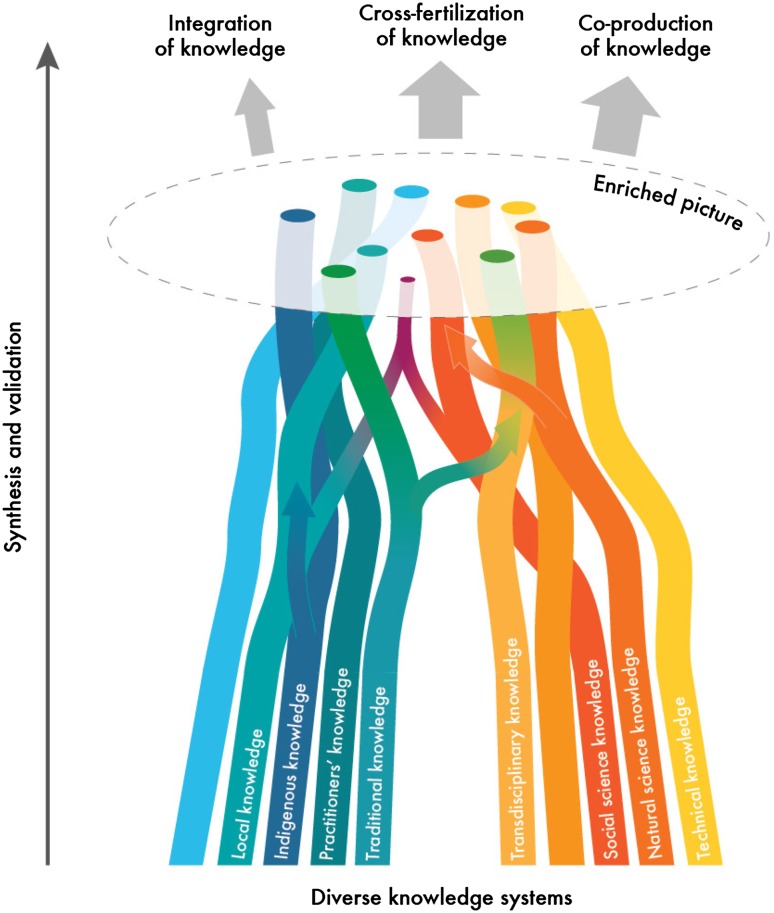
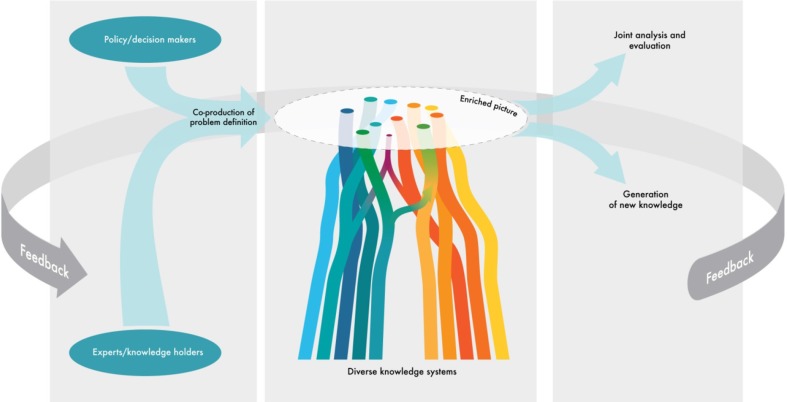
Indigenous and local knowledge systems as well as practitioners' knowledge can provide valid and useful knowledge to enhance our understanding of governance of biodiversity and ecosystems for human well-being. There is, therefore, a great need within emerging global assessment programs, such as the IPBES and other international efforts, to develop functioning mechanisms for legitimate, transparent, and constructive ways of creating synergies across knowledge systems. We present the multiple evidence base (MEB) as an approach that proposes parallels whereby indigenous, local and scientific knowledge systems are viewed to generate different manifestations of knowledge, which can generate new insights and innovations through complementarities. MEB emphasizes that evaluation of knowledge occurs primarily within rather than across knowledge systems. MEB on a particular issue creates an enriched picture of understanding, for triangulation and joint assessment of knowledge, and a starting point for further knowledge generation.
Overview
The claims and statistics of this paper haven’t been checked yet.
Run the check — free, no account needed. It reads the open-access text and checks the sources it cites.
Integrity signals
Registry
Cites
Statistics
Figures
Verification
Claims the paper makes
The claims and statistics of this paper haven’t been checked yet.
Run the check — free, no account needed. It reads the open-access text and checks the sources it cites.
Claims other papers make about this one
Each is checked against this paper’s own text: does it say what the citing paper says it does?
The source backs part of the claim, not all of it — or backs it for a different population, condition or comparison.
In the citing paper
“In their formative writing on multiple evidence base (MEB) approaches, Tengö et al. (2014) identify a need for new tools and approaches for co-developing questions, documenting and mobilizing knowledge, and co-producing insights and decisions-all under the guiding principle of valuing diversity in knowledge systems.”
From “Two‐Eyed Seeing”: An Indigenous framework to transform fisheries research and management (2021) · cites this paper as Tengö et al., 2014
Experimental — accuracy not yet measuredThe cited source says what the claim attributes to it.
In the citing paper
“In their view, “a MEB approach emphasizes the complementarity of knowledge systems and the values of letting each knowledge system speak for itself, within its own context, without assigning one dominant knowledge system with the role of external validator” (Tengö et al., 2014).”
From “Two‐Eyed Seeing”: An Indigenous framework to transform fisheries research and management (2021) · cites this paper as Tengö et al., 2014
The cited source says what the claim attributes to it.
In the citing paper
“MEB approaches seek to connect distinct knowledge systems (Alexander et al., 2019), often through parallel lines of Indigenous and Western scientific inquiry (Tengö et al., 2014), but mechanisms and successful examples of this or equivalent approaches in practice, especially in an aquatic or fisheries context, have been few and far between (e.g.Cooke et al., 2020;Laidler, 2006;Mackinson, 2001).”
From “Two‐Eyed Seeing”: An Indigenous framework to transform fisheries research and management (2021) · cites this paper as Tengö et al., 2014
Self-check
Percentages, sums and reported differences re-computed from the paper’s own numbers.
The self-check needs the paper’s full text.
Citations
Cites
Evidence based medicine: what it is and what it isn't
Sackett, D. L., Rosenberg, W. M. C., Gray, J. A. M., Haynes, R. B., & Richardson, W. S. (1996) · BMJ · doi:10.1136/bmj.312.7023.71 · Cited by 15,769 · cited 1×
“…of thinking around ‘‘evidence-based’’ and ‘‘evidence-based practice’’ has a long history, particularly in medicine and was formally defined in medicine by Sackett et al. (1996) as, ‘‘the conscientious and judicious use of current best evidence from clinical care research in the management of…”
BackgroundResearch methods in anthropology: qualitative and quantitative approaches
(2002) · Choice Reviews Online · doi:10.5860/choice.39-4047 · Cited by 5,622
Yeh, M. (2014) · Journal of Nursing Research · doi:10.1097/jnr.0000000000000065 · Cited by 3,836
Knowledge systems for sustainable development
Cash, D. W., Clark, W. C., Alcock, F., Dickson, N. M., Eckley, N., Guston, D. H., Jäger, J., & Mitchell, R. B. (2003) · Proceedings of the National Academy of Sciences · doi:10.1073/pnas.1231332100 · Cited by 3,660 · cited 1×
“…process may help to leverage the power dynamics, maintain integrity of knowledge systems, generate new questions, and thus enable ecosystem assessments and knowledge generation that are salient, credible, and legitimate for knowledge holders at different scales (Cash et al. 2003; Reid et al. 2006).”
BackgroundScale and Cross-Scale Dynamics: Governance and Information in a Multilevel World
Cash, D. W., Adger, W. N., Berkes, F., Garden, P., Lebel, L., Olsson, P., Pritchard, L., & Young, O. (2006) · Ecology and Society · doi:10.5751/es-01759-110208 · Cited by 2,254
Dismantling the Divide Between Indigenous and Scientific Knowledge
Agrawal, A. (1995) · Development and Change · doi:10.1111/j.1467-7660.1995.tb00560.x · Cited by 2,189 · cited 6×
“Scientific validation of traditional or local knowledge is often a more or less explicit requirement for inclusion of other knowledge systems (Agrawal 1995).”
BackgroundInfluentialBackground on the Institutional Analysis and Development Framework
Ostrom, E. (2011) · Policy Studies Journal · doi:10.1111/j.1541-0072.2010.00394.x · Cited by 1,719 · cited 2×
“Ostrom (2011) for instance suggests that conceptual frameworks facilitate the integration of different types of theories and models as they apply to different questions and parts of a research problem, but together contribute to the understanding of a whole.”
BackgroundConstantine, L. (2001) · CACM · doi:10.1145/365181.365239 · Cited by 1,660
Public Participation in Scientific Research: a Framework for Deliberate Design
Shirk, J., Ballard, H., Wilderman, C., Phillips, T., Wiggins, A., Jordan, R., McCallie, E., Minarchek, M., Lewenstein, B., Krasny, M., et al. (2012) · Ecology and Society · doi:10.5751/es-04705-170229 · Cited by 1,317 · cited 2×
“However, in the science-practice realm there are many emerging initiatives that use approaches similar to a MEB, see for example Danielsen et al. (2009, 2014), Rist et al. (2011), and Shirk et al. (2012), see also Box 2.”
BackgroundMethodAid, M. M., & Wiesbes, C. (2001) · doi:10.1080/714002815 · Cited by 1,299 · cited 1×
“New methods are needed to find innovative ways for legitimate and constructive ways of aggregating, evaluating, and synthesizing knowledge to inform scales beyond the local (Berkes et al. 2006).”
Background
Research works printed but not linked: 15
- Berkes, F., J. Colding, and C. Folke. 2003. Navigating social–ecological systems: building resilience for complexity and change. Cambridge: Cambridge University Press.
- Bernard, H.R. 2011. Research methods in anthropology. Altamira: Rowman.
- Brondizio, E.S. 2008. Amazonian Caboclo and the Acai Palm: Forest farmers in the global market. New York: The New York Botanical Garden Press.
- Brondizio, E.S., F. Gatzweiler, C. Zagrafos, and M. Kumar. 2010. Socio-cultural context of ecosystem and biodiversity valuation. In The economics of ecosystems and biodiversity (TEEB), ed. M. Kumar, 150–181. London: Earthscan Press.
- Brookfield, H., H. Parsons, and M. Brookfield. 2003. Agrodiversity: learning from farmers across the world. Tokyo: United Nations University Press.
- Gratani, M., J.R. Butler, F. Royee, P. Valentine, D. Burrows, W.I. Canendo, and A.S. Anderson. 2011. Is validation of indigenous ecological knowledge a disrespectful process? a case study of traditional fishing poisons and invasive fish management from the wet tropics, Australia. Ecology and Society 16: 25. · DOI
- Haverkort, B., F.D. Burgoa, D. Shankar, and D. Millar. 2012. Towards co-creation of sciences. New Delhi: Nimby Books.
- Japan Satoyama Satoumi Assessment. 2010. Japan Satoyama Satoumi Assessment: Socio-ecological production landscapes of Japan—Summary for decision makers. Tokyo: United Nations University.
- Nadasdy, P. 1999. The politics of TEK: Power and the “integration” of knowledge. Arctic Anthropology 36: 1–18.
- Nakashima, D., and M. Roué. 2002. Indigenous knowledge, peoples and sustainable practice. In Encyclopedia of global environmental change, ed. T. Munn, 314–324. Chichester: Wiley.
- Nakashima, D.J., K. Galloway McLean, H.D. Thulstrup, A. Ramos Castillo, and J.T. Rubis. 2012. Weathering uncertainty: Traditional knowledge for climate change assessment and adaptation. Paris and Darwin: UNESCO and UNU.
- Reid, W.V., F. Berkes, T. Milbanks, and D. Capistrano. 2006. Bridging scales and knowledge systems. Concepts and applications in ecosystem assessments. Washington DC: Island Press.
- Stankovich, M., C. Cariño, M.E. Regpala, J.A. Guillao, and G. Balawag. 2013. Developing and implementing community-based monitoring and information systems: The global workshop and the Philippine workshop reports. Baggio City: Tebtebba Foundation.
- Tengö, M., and P. Malmer (eds). 2012. Dialogue workshop on knowledge for the 21st century: Indigenous knowledge, traditional knowledge, science and connecting diverse knowledge systems. Usdub, Guna Yala, Panama, April 10–13, 2012. Workshop Report.
- Weismann, U., and H Hurni (eds.). 2011. Research for Sustainable Development: Foundations, Experiences, and Perspectives. Perspectives of the Swiss National Centre of Competence in Research (NCCR) North-South. Bern: University of Bern.
Cited by
Sorted by citations
Items 501–600 of 1,000
Borgström, S., Andersson, E., & Björklund, T. (2021) · Ecology and Society · doi:10.5751/es-12432-260417 · Cited by 16
“…assertion that plurality of types of knowledge need to be acknowledged and invited to the process to ensure that actionable new knowledge is generated (Cash et al. 2003, Tengö et al. 2014, Sellberg et al. 2018), this practice of resilience thinking often takes the form of participatory processes.”
BackgroundParticipatory Biodiversity Conservation: Concepts, Experiences, and Perspectives
Baldauf, C. (2020) · doi:10.1007/978-3-030-41686-7 · Cited by 16
Creating Product Innovation Strategies through Knowledge Management in Global Business
Kasemsap, K. (2016) · doi:10.4018/978-1-4666-9607-5.ch015 · Cited by 16
Cartagena, L. B., Hegger, D. L. T., Tittonell, P. A., & Runhaar, H. A. C. (2024) · Agroecology and Sustainable Food Systems · doi:10.1080/21683565.2024.2405885 · Cited by 18
“Credibility can thus relate to various aspects, such as the instruments used for data collection, the type of data collected with these instruments, the type of findings derived from the data and the kind of explanation derived from the interpretation of findings (Tengö et al. 2014).”
InfluentialFait, M., Palladino, R., Mennini, F. S., Graziano, D., & Manzo, M. (2023) · Journal of Knowledge Management · doi:10.1108/jkm-07-2022-0601 · Cited by 24
Wilcox, A., Provencher, J. F., Henri, D. A., Alexander, S. M., Taylor, J. J., Cooke, S. J., Thomas, P. J., & Johnson, L. R. (2023) · FACETS · doi:10.1139/facets-2022-0052 · Cited by 28
“A number of academic (Tengö et al. 2014) and regionally specific Indigenous approaches exist to guide the process of mobilizing multiple knowledge systems in ecological research (e.g., Two-Eyed Seeing, Two Row Wampum, Waka-Taurua; Reid et al. 2021).”
BackgroundBuilding trust through the Two-Eyed Seeing approach to joint fisheries research
Almack, K., Dunlop, E. S., Lauzon, R., Nadjiwon, S., & Duncan, A. T. (2022) · Journal of Great Lakes Research · doi:10.1016/j.jglr.2022.11.005 · Cited by 25
Exploring the relevance of engaging the Orang Asli in Malaysia’s forest management
Diansyah, M. W., Abas, A., & Sakawi, Z. (2022) · Frontiers in Forests and Global Change · doi:10.3389/ffgc.2022.1019994 · Cited by 15
“More recently, studies highlight the need to emphasize managing the resilience of social–ecological systems to sustain development rather than merely sustaining production for development (Berkes et al., 2003; Tengö et al., 2014; Folke, 2016).”
BackgroundEbhuoma, E. E. (2022) · Frontiers in Sustainable Food Systems · doi:10.3389/fsufs.2022.761195 · Cited by 15
la Mora, M. P.-D., Bennett, N. J., Fulton, S., Munguía‐Vega, A., Thaler, C. L., Walther-Mendoza, M., Zepeda-Domínguez, J. A., Finkbeiner, E. M., Green, A. L., Suárez, A., et al. (2021) · Frontiers in Marine Science · doi:10.3389/fmars.2021.778980 · Cited by 18
Adaptation Measures to Climate Change as Perceived by Smallholder Farmers in the Andes
Ballesteros, J., & Isaza, C. (2021) · Journal of Ethnobiology · doi:10.2993/0278-0771-41.3.428 · Cited by 15
Joshi, N., & Rawat, G. S. (2021) · Mitigation and Adaptation Strategies for Global Change · doi:10.1007/s11027-021-09962-5 · Cited by 15
Assessing Policy Issue Interdependencies in Environmental Governance
Hedlund, J., Bodin, Ö., & Nohrstedt, D. (2021) · International Journal of the Commons · doi:10.5334/ijc.1060 · Cited by 17
McKelvey, K., Block, W., Jain, T., Luce, C., Page-Dumroese, D., Richardson, B., Saab, V., Schoettle, A., Sieg, C., & Williams, D. R. (2021) · Frontiers in Forests and Global Change · doi:10.3389/ffgc.2021.644696 · Cited by 15
“Importantly, indigenous and local knowledge systems as well as practitioners’ knowledge can provide valid and useful knowledge to enhance our understanding of wildlands governance (Teng et al., 2014).”
BackgroundPyke, M. L., Close, P., Dobbs, R., Toussaint, S., Smith, B., Cox, Z., Cox, D., George, K., McCarthy, P., Angus, B., et al. (2021) · Wetlands (Wilmington, N.C.) · doi:10.1007/s13157-021-01410-z · Cited by 15
‘Ethnobiological equivocation’ and other misunderstandings in the interpretation of natures
Furlan, V., Jiménez-Escobar, N. D., Zamudio, F., & Medrano, C. (2020) · Studies in History and Philosophy of Science Part C Studies in History and Philosophy of Biological and Biomedical Sciences · doi:10.1016/j.shpsc.2020.101333 · Cited by 42
Roberts, R. M., Jones, K. W., Cottrell, S., & Duke, E. A. (2020) · Environmental Science & Policy · doi:10.1016/j.envsci.2020.02.021 · Cited by 15
Deléglise, C., Dodier, H., Garde, L., François, H., Arpin, I., & Nettier, B. (2019) · Mountain Research and Development · doi:10.1659/mrd-journal-d-18-00077.1 · Cited by 15
Nugroho, K., Carden, F., & Antlov, H. (2018) · Policy Press eBooks · doi:10.51952/9781447348085.ch001 · Cited by 15
The need for integrated spatial assessments in ecosystem service mapping
Tardieu, L. (2017) · Review of Agricultural Food and Environmental Studies · doi:10.1007/s41130-017-0054-5 · Cited by 15
Chambon, M., Wambiji, N., Fernandez, S. A., Azarian, C., Wandiga, J. N., Vialard, J., Ziveri, P., & Reyes-García, V. (2024) · Environmental Science & Policy · doi:10.1016/j.envsci.2024.103846 · Cited by 14
Knowledge co-production around the cormorant-fishing conflict using a joint fact-finding approach
Saarikoski, H., Vikström, S., & Peltonen, L. (2024) · Environmental Science & Policy · doi:10.1016/j.envsci.2023.103628 · Cited by 14
Unearthing assumptions and power: A framework for research, policy, and practice
Pérez-Hämmerle, K.-V., Moon, K.-T., & Possingham, H. P. (2024) · One Earth · doi:10.1016/j.oneear.2024.01.003 · Cited by 14
Campion, O., Djarrbal, M., Ramandjarri, C., Malibirr, G. W., Djigirr, P., Dalparri, M., Djanbadi, D., Malibirr, R., Malibirr, M., Munuygu, E., et al. (2023) · Ecological Management & Restoration · doi:10.1111/emr.12586 · Cited by 14
Ortiz, A. M. D., Jamero, M. L., Crespin, S. J., Ramirez, C. S., Matias, D., Reyes, J. J., Pauchard, A., & Viña, A. L. L. (2023) · npj Biodiversity · doi:10.1038/s44185-023-00023-5 · Cited by 14
“Principles of the Multiple Evidence Base can be applied when determining compensation for non-economic L&D to recognize that each relevant actor has their own interests that in fl uence their valuation of nature 27 .”
MethodRodríguez, T., Bonatti, M., Löhr, K., Bravo, A., Rio, M., Lana, M., & Sieber, S. (2023) · Sustainability Science · doi:10.1007/s11625-023-01303-6 · Cited by 14
“Reciprocity between diverse actors is also key for the co-production of knowledge (Tengö et al. 2014; Van Kerkhoff 2014; Berthet and Hickey 2018) because it allows complementarities of knowledge systems.”
BackgroundDuncan, A. T., Lauzon, R., & Harpur, C. (2023) · Journal of Great Lakes Research · doi:10.1016/j.jglr.2023.02.004 · Cited by 15
Horcea‐Milcu, A., Zaman, S., Filyushkina, A., López-Rodríguez, M. D., Cebrián‐Piqueras, M. A., & Raymond, C. M. (2022) · Ecosystems and People · doi:10.1080/26395916.2022.2108498 · Cited by 16
Daniels, C., rangers, N. Y., Russell, S., & Ens, E. J. (2022) · Ecological Management & Restoration · doi:10.1111/emr.12538 · Cited by 21
Considering practice frameworks for culturally diverse populations in the correctional domain
Strauss‐Hughes, A., Ward, T. J., & Neha, T. N. (2021) · Aggression and Violent Behavior · doi:10.1016/j.avb.2021.101673 · Cited by 25
Complexity-Aware Monitoring and Evaluation
Hertz, T., Brattander, E., & Rose, L. (2021) · Journal of MultiDisciplinary Evaluation · doi:10.56645/jmde.v17i41.679 · Cited by 17
“So, it is useful to combine learning from different knowledge systems (Tengö et al 2014).”
BackgroundIdentifying pathways to reduce discrepancies between desired and provided ecosystem services
Hanna, D. E. L., Roux, D. J., Currie, B., & Bennett, E. M. (2020) · Ecosystem Services · doi:10.1016/j.ecoser.2020.101119 · Cited by 17
Matuk, F. A., Behagel, J., Schaefer, C. E. G. R., Duque-Brasil, R., & Turnhout, E. (2019) · Geoforum · doi:10.1016/j.geoforum.2019.02.005 · Cited by 14
Harrison, H. L., Rybråten, S., & Aas, Ø. (2018) · Human Ecology · doi:10.1007/s10745-018-0001-3 · Cited by 14
Sustainability transformations as shifts in worldviews: a dynamic view of complementarity issues
Rigolot, C. (2018) · Ecology and Society · doi:10.5751/es-10101-230222 · Cited by 15
“…(Schader et al. 2014), but two key issues remain: (1) the integration problem, i.e., the fact that different tools produce different assessments (Schader et al. 2014); and (2) the implementation problem, i.e., the barrier between sustainability assessment and transformation (Triste et al. 2014).”
BackgroundNkambule, S., Buthelezi, H. Z., & Munien, S. (2016) · Bothalia · doi:10.4102/abc.v46i2.2120 · Cited by 21
Water Resilience: Management and Governance in Times of Change
Baird, J., & Plummer, R. (2021) · doi:10.1007/978-3-030-48110-0 · Cited by 14
Mapping mental barriers that prevent the use of neighborhood green spaces
Haase, D., Wolff, M., & Schumacher, N. (2021) · Ecology and Society · doi:10.5751/es-12675-260416 · Cited by 16
“By representing residents’ relation to and perception of specific places with mental maps, a local perspective can be captured, which M. Tengö et al. (2014) stated to be a means for approaching green infrastructure and ecosystem service-related topics.”
BackgroundReyes-García, V., Fernández-Llamazares, Á., García-del-Amo, D., & Cabeza, M. (2020) · Changing Climate, Changing Worlds · doi:10.1007/978-3-030-37312-2_9 · Cited by 14
Malmer, P., Tengö, M., Fernández-Llamazares, Á., Woodward, E., Crawhall, N., Hill, R., Trakansuphakon, P., Athayde, S., Carino, C., Crimella, D., et al. (2019) · Työväentutkimus Vuosikirja · doi:10.13140/rg.2.2.10606.87369 · Cited by 15
Self-citationBorie, M. (2016) · Routledge eBooks · doi:10.4324/9781315651095 · Cited by 14
“As illustrated by the recent reprise of the term by global change research programmes such as Future Earth, co-production is increasingly used as a synonym for ‘producing knowledge together’ (Lemos & Morehouse 2005; Tengö et al. 2014).”
MethodIndigenous governance and relationality have effectively avoided forest loss in the Southwest Amazon
Virtanen, P. K., Roa, A. G., Fernández‐Llamazares, Á., Apurinã, F., & Facundes, S. D. S. (2025) · Communications Earth & Environment · doi:10.1038/s43247-025-02174-8 · Cited by 13
“…from geospatial data and community-based ethnographic experience and data collection, our approach is inspired by the MultipleEvidenceBaseapproach 55 ,inwhichdatafromdifferentknowledge systems and methodological approaches is synthesized to provide an enriched picture of understanding about a…”
Intertwined people–nature relations are central to nature-based adaptation to climate change
Locatelli, B., Lavorel, S., Colloff, M. J., Crouzat, É., Bruley, E., Fedele, G., Grêt‐Regamey, A., Plieninger, T., Andersson, E., Abbott, M., et al. (2025) · Philosophical Transactions of the Royal Society B Biological Sciences · doi:10.1098/rstb.2023.0213 · Cited by 16
“‘Diversity’ (PP2) focuses on relations that ensure that the world views, knowledge systems and values of diverse people are recognized in decision-making [72–74].”
Conservation practitioners’ and researchers’ needs for bridging the knowledge–action gap
Sabo, A., Berger-Tal, O., Blumstein, D., Greggor, A., & Swaddle, J. (2024) · Frontiers in Conservation Science · doi:10.3389/fcosc.2024.1415127 · Cited by 13
Exploring the multifunctional landscapes model in areas dominated by non-native tree plantations
Ortiz, A. M. D., Gayó, E. M., Henríquez, N. G. C., Henríquez, B. J., & Pauchard, A. (2024) · Trees Forests and People · doi:10.1016/j.tfp.2024.100617 · Cited by 15
Vidal, D. G., Alvés, F., Valentim, C. S., & Freitas, H. M. D. O. (2024) · Environmental Sciences Europe · doi:10.1186/s12302-024-00934-5 · Cited by 19
“Tengo et al. [27] propose incorporating knowledge systems, including indigenous, local, and scientific knowledge, within global assessment frameworks like the Intergovernmental Platform on Biodiver-sity and Ecosystem Services (IPBES).”
Building Capabilities for Earth System Governance
Prantl, J., Barros-Platiau, A., Inoue, C., Pereira, J. C., Ribeiro, T., & Viola, E. (2024) · Cambridge University Press eBooks · doi:10.1017/9781108854030 · Cited by 13
Macusi, E. S., Sales, A. C., Macusi, E. D., Bongas, H. P., Cayacay, M. A., Omandam, J. L., Schuler, M. A. E., & Vidal, C. (2023) · Sustainability · doi:10.3390/su151411182 · Cited by 12
Ligtermoet, E., Gumurdul, J. N., Nayinggul, C., & Baker, R. (2023) · Biological Conservation · doi:10.1016/j.biocon.2022.109746 · Cited by 13
In people’s minds and on the ground: Values and power in climate change adaptation
Locatelli, B., Laurenceau, M., Chumpisuca, Y. R. C., Pramova, E., Vallet, A., Conde, Y. Q., Zavala, R. C., Djoudi, H., Lavorel, S., & Colloff, M. J. (2022) · Environmental Science & Policy · doi:10.1016/j.envsci.2022.08.002 · Cited by 16
McGreavy, B., Haynal, K., Smith-Mayo, J., Reilly-Moman, J., Kinnison, M. T., Ranco, D., & Leslie, H. M. (2022) · Frontiers in Communication · doi:10.3389/fcomm.2022.831727 · Cited by 20
“Finding ways to bring diverse forms of knowledge together in knowledge co-production processes is a key commitment in these types of efforts (Tengö et al., 2014).”
BackgroundEinbinder, N., Morales, H., Cacho, M. M. Y. T., Ferguson, B., Aldasoro, M., & Nigh, R. (2022) · Agriculture and Human Values · doi:10.1007/s10460-022-10299-1 · Cited by 13
Assessing the state of traditional knowledge at national level
Mistry, J., Jafferally, D., Xavier, R., Albert, G., Robertson, B., Benjamin, R., Mendonca, S., & Ingwall-King, L. (2021) · Global Environmental Change · doi:10.1016/j.gloenvcha.2021.102409 · Cited by 13
Smyth, R., Fatima, U., Segarra, M., Borre, L., Zilio, M., Reid, B., Pincetl, S., Astorga, A., Cisneros, M. A. H., Conde, D., et al. (2020) · doi:10.1016/j.envdev.2020.100582 · Cited by 13
Mazzocchi, F. (2018) · Social Epistemology · doi:10.1080/02691728.2018.1527412 · Cited by 13
“…across knowledge systems, which instead highlights complementarities (several examples of case studies using this type of approach can be found in Tengö et al. 2014, 581, Table 1); the assumption that a single (dominant) system could take on the role of universal (and ‘external’) validator is…”
BackgroundMethodResultGender and Cross-Scale Differences in the Perception of Social-Ecological Systems
Delgado-Serrano, M., & Semerena, R. E. (2018) · Sustainability · doi:10.3390/su10092983 · Cited by 13
“This diversity of approaches enriches the knowledge of the SES and can be a starting point for further knowledge generation [51].”
BackgroundInfluentialGambon, H., & Rist, S. (2017) · Human Ecology · doi:10.1007/s10745-017-9960-z · Cited by 12
Hillmer-Pegram, K. C., & Robards, M. D. (2015) · Ecology and Society · doi:10.5751/es-07081-200126 · Cited by 13
Climate change and Indigenous peoples' health in Canada
Atkinson, D., Stout, R., Halseth, R., & Greenwood, M. (2022) · doi:10.4095/329528 · Cited by 13
“The foundational values and traditional teachings related to Indigenous knowledges around reciprocity, inter-relationships, and spirituality can teach environmental stewardship and enhance governance of biodiversity and ecosystems for human health and well-being (Tengö et al., 2014; Hansen & Antsanen, 2018).”
BackgroundNordic Perspectives on the Responsible Development of the Arctic: Pathways to Action
Nord, D. C. (2021) · doi:10.1007/978-3-030-52324-4 · Cited by 13
How monitoring matters for nature conservation: 15 reasons framed in a theory of change
Helmstedt, K. J., Holden, M. H., Baker, C. M., Elliot-Kerr, S., Greiner, A., Hudgins, E. J., Shea, K., TULLOCH, A. I. T., Young, A., Zhang, L., et al. (2025) · Proceedings of the Royal Society B Biological Sciences · doi:10.1098/rspb.2025.2527 · Cited by 8
Ecotourism as a Catalyst for Sustainable Development: Conservation Governance in Mountain Regions
Castillo-Salazar, I. P., Sanagustín-Fons, V., & Pardo, I. L. (2025) · Societies · doi:10.3390/soc15070196 · Cited by 12
Sensemaking and abductive reasoning for transformative biodiversity conservation
Capano, G. C., Loos, J., Hausmann, A., & Kortetmäki, T. (2025) · People and Nature · doi:10.1002/pan3.70055 · Cited by 12
“…how knowledge is produced and applied (Pascual et al., 2021 ), integrating conservation science and practice with social sciences and humanities and drawing on diverse knowledge, rules and value systems (Bennett et al., 2017 ; Massarella et al., 2021 ; Tengö et al., 2014; Vadrot et al., 2018 ).”
Feagan, M., Muñoz‐Erickson, T. A., Hobbins, R., Baja, K., Chester, M., Cook, E. M., Grimm, N. B., Grove, J. M., Iwaniec, D. M., Iyer, S., et al. (2024) · Cities · doi:10.1016/j.cities.2024.105513 · Cited by 14
Russo, M., Fischer, A. P., & Huber‐Stearns, H. (2024) · Environmental Science & Policy · doi:10.1016/j.envsci.2024.103824 · Cited by 11
Virtual Reality in planning, design, and management of urban green and blue infrastructure
Schewenius, M., & Wallhagen, M. (2024) · Frontiers Virtual Real. · doi:10.3389/frvir.2024.1432556 · Cited by 12
“…in categories that re fl ect aspects of the VR process, from production to presentation. dialogues: with new ideas, spatially exact information about a site, and relevant knowledge from other places K regarding species, their use, or ecological management practices (e.g., Tengö et al., 2014).”
BackgroundEmbracing Implementation Science to Enhance Fisheries and Aquatic Management and Conservation
Cooke, S. J., Young, N., Alexander, S. M., Kadykalo, A. N., Danylchuk, A. J., Muir, A. M., Hinderer, J. L. M., Cvitanovic, C., & Nguyen, V. M. (2024) · Fisheries · doi:10.1002/fsh.11112 · Cited by 13
Dam the river: Ontological exclusion in global and Brazilian Integrated Water Resources Management
Rickard, T., & Ludwig, D. (2024) · Environmental Science & Policy · doi:10.1016/j.envsci.2024.103755 · Cited by 12
Söukand, R. (2024) · Journal of Ethnobiology and Ethnomedicine · doi:10.1186/s13002-024-00692-x · Cited by 12
“Today, numerous studies prove that local knowledge reveals aspects of reality that science cannot yet explain [34, 44] and I want to take a step forward from there.”
Knowledge co-production in the Helge å catchment: a comparative analysis
Malmborg, K., Wallin, I., Brukas, V., Do, T., Lodin, I., Neset, T., Norström, A., Powell, N., & Tonderski, K. (2022) · Ecosystems and People · doi:10.1080/26395916.2022.2125583 · Cited by 12
Dhakal, B., Chand, N., Shrestha, A., Dhakal, N., Karki, K. B., Shrestha, H. L., Bhandari, P. L., Adhikari, B., Shrestha, S. K., Regmi, S. P., et al. (2022) · Conservation · doi:10.3390/conservation2010011 · Cited by 14
Dencer-Brown, A., Jarvis, R., Alfaro, A. C., & Milne, S. (2021) · Journal of Mixed Methods Research · doi:10.1177/15586898211014422 · Cited by 12
“In addition, mixed methods provides a more holistic understanding of mangroves across different knowledge systems, used to inform both theory and practice, and aid researchers in navigating the spaces between them (R. B. Johnson & Onwuegbuzie, 2004; Tengö et al., 2014).”
BackgroundBreitmeier, H., Schwindenhammer, S., Checa, A., Manderbach, J., & Tanzer, M. (2021) · doi:10.17645/pag.v9i1.3591 · Cited by 12
Barraclough, A. D., Sakiyama, M., Schultz, L., & Måren, I. (2021) · Sustainable Earth · doi:10.1186/s42055-021-00041-w · Cited by 12
Russell, S., & Ens, E. (2021) · doi:10.1071/mf20080 · Cited by 12
Jackson, R., Shiferaw, A., Taye, B., & Woldemariam, Z. (2020) · doi:10.1080/01426397.2020.1831460 · Cited by 12
Ramarumo, L. J., & Maroyi, A. (2020) · Biodiversitas Journal of Biological Diversity · doi:10.13057/biodiv/d210543 · Cited by 16
“…et al. (2013), considered utilization and administration of herbal medicines in aboriginal cultural communities as completely experimental, whereas, Tengö et al. (2014), reported that traditional healing mechanisms required no validation of its phytochemical constituents, since it is trustworthy…”
BackgroundPrado, H. M., da Silva, R. C., Schlindwein, M. N., & Murrieta, R. S. S. (2020) · Journal of Ethnobiology and Ethnomedicine · doi:10.1186/s13002-020-0359-3 · Cited by 16
“Furthermore, identifying points of contact and promoting communication between scientific knowledge and local repertoire is a sine qua non for implementing effectively any proposal for the collaborative management of natural resources [115].”
BackgroundRafidison, V. M., Rakouth, B., Carrière, S. M., Kjellberg, F., & Aumeeruddy‐Thomas, Y. (2020) · Biodiversity and Conservation · doi:10.1007/s10531-019-01924-3 · Cited by 18
Bjørkan, M., & Rybråten, S. (2019) · Maritime Studies · doi:10.1007/s40152-019-00141-6 · Cited by 12
Asian Indigeneity, Indigenous Knowledge Systems, and Challenges of the 2030 Agenda
Buenavista, D., Wynne-Jones, S., & McDonald, M. (2018) · East Asian Community Review · doi:10.1057/s42215-018-00010-0 · Cited by 12
Governing the diverse forest: Polycentric climate governance in the Amazon
de Wit, F., & Mourato, J. M. (2022) · World Development · doi:10.1016/j.worlddev.2022.105955 · Cited by 21
How do Indigenous and local knowledge systems respond to climate change?
Popovici, R., Moraes, A. G. D. L., Ma, Z., Zanotti, L., Cherkauer, K., Erwin, A., Mazer, K. E., Delgado, E. F. B., Cáceres, J. P. P., Ranjan, P., et al. (2021) · Ecology and Society · doi:10.5751/es-12481-260327 · Cited by 12
“…as systems that are “locally or regionally maintained, adapted, and transmitted both orally and in practice, but [are] also in constant interaction with other forms of knowledge” (Tengö et al. 2014:579) and “incorporate cultural, economic, religious and pragmatic dimensions” (Hill et al. 2020:10).”
BackgroundThe Roles of Information Technology and Knowledge Management in Global Tourism
Kasemsap, K. (2017) · IGI Global eBooks · doi:10.4018/978-1-5225-1913-3.ch025 · Cited by 6
Kasoki, L. M., Essouman, P. F. E., Musavandalo, C. M., Wamba, F. R., Makanua, I. D., Nguba, T. B., Mavakala, K., Mweru, J.-P. M., Tsakem, S. C., Babale, M., et al. (2025) · Forests · doi:10.3390/f16101523 · Cited by 15
Himes, A., Muraca, B., Allen, K. E., Chapman, M., Coelho, M. G., Cundill, G., Gould, R. K., Herrmann, T. M., Kenter, J. O., Nakachi, ʻ., et al. (2025) · People and Nature · doi:10.1002/pan3.70016 · Cited by 15
“…ones can be a solution, where horizontal portability complements but does not replace vertical sub-sumption; this reduces challenges to validity (Muhl et al., 2022; Tengö et al., 2014 ). relationship can be shared with diverse groups of people to speak to a conservation challenge in the region.”
Ladio, A. H. (2025) · Journal of Ethnobiology and Ethnomedicine · doi:10.1186/s13002-024-00751-3 · Cited by 11
“These valuable contributions are particularly important for fostering synergies across different knowledge systems, such as between local knowledge systems and scientific knowledge systems [12].”
Ethnobiology! Until when will the colonialist legacy be reinforced?
Zank, S., Julião, C. G., de Lima, A. D. S., da Silva, M. T., Levis, C., Hanazaki, N., & Peroni, N. (2025) · Journal of Ethnobiology and Ethnomedicine · doi:10.1186/s13002-024-00750-4 · Cited by 11
“…that ethnobiol-ogy needs to validate their efficiency are a typical method of intellectual expropriation, as a mechanism of neocolo-nialism, aimed at the commercial exploitation of knowledge and traditions—while some aspects will always remain intangible and beyond the physical realm [18].”
Enhancing the transformative potential of interventions for the sustainable use of natural resources
Loos, J., Capano, G. C., Riechers, M., Walsh, C., & Leventon, J. (2024) · Biological Conservation · doi:10.1016/j.biocon.2024.110691 · Cited by 13
Loayza, G., Pozo, S., Lascano, M., Bilhaut, A., Krainer, A., Teixidor‐Toneu, I., & Montúfar, R. (2024) · People and Nature · doi:10.1002/pan3.10684 · Cited by 11
“To include local worldviews in sustainable transfor - mations, it is necessary to weave a diversity of knowledge systems through fair and respectful collaborations (Hill et al., 2021; Pascual et al., 2021; Tengö et al., 2014, 2017 ).”
Thatcher, A., Biyela, P., Field, T.-L., Hildebrandt, D., Kidd, M., Nadan, S., Petrik, L. F., Sheridan, C. M., & Topkin, J. L. (2024) · Journal of Cleaner Production · doi:10.1016/j.jclepro.2024.142084 · Cited by 11
Anticipatory co-governance for human rights to sciences across knowledge systems
Hill, R. (2023) · The International Journal of Human Rights · doi:10.1080/13642987.2023.2273290 · Cited by 37
“19 Figure 1b highlights recognition in this article of an encounter across Indigenous, Western and other knowledge systems ( sensu Tengo et al. 2014 20 ) each with sciences embedded in them.”
BackgroundBridging local and scientific knowledge for area-based conservation of useful plants in Colombia
Kor, L., Fernández-Lucero, M., Flórez, D. A. G., Dawson, T. P., & Diazgranados, M. (2023) · AMBIO · doi:10.1007/s13280-023-01921-5 · Cited by 25
Ponce-Martins, M., Lopes, C. K. M., de Carvalho-Jr, E. A. R., Castro, F. M. D. R., de Paula, M. D., & Pezzuti, J. C. B. (2022) · Perspectives in Ecology and Conservation · doi:10.1016/j.pecon.2022.08.007 · Cited by 11
Special Issue on Indigenous knowledge for water-related climate adaptation
Caretta, M., & Morgan, R. (2021) · Climate and Development · doi:10.1080/17565529.2021.1993627 · Cited by 11
“…of IK in similar formal academic assessments (e.g. the Intergovernmental Science-Policy Platform on Biodiversity and Ecosystem Services, see Tengö et al., 2014; Tengö et al., 2017), practitioners of positivistic Western science still tend to devalue IK and neglect its centrality to the…”
BackgroundSteger, C., Gebrehiwot, K., Chengere, S. A., Marinkovich, J., Dullo, B., Zewde, S. W., & Klein, J. (2021) · Environmental Science & Policy · doi:10.1016/j.envsci.2021.04.006 · Cited by 11
Gray, K., & Manuel‐Navarrete, D. (2021) · Sustainability Science · doi:10.1007/s11625-021-00980-5 · Cited by 14
Adat law and culture: The local authority elements of Baduy tribe on environment preservation
Asteria, D., Brotosusilo, A., Soedrajad, M. R., & Nugraha, F. (2021) · doi:10.1088/1755-1315/716/1/012049 · Cited by 11
Arroyo-Lambaer, D., Uscanga, A., Tejeda, V. M. P., Vázquez-Barrios, V., Reverchon, F., Rosell, J. A., Escalante, A. E., Peña-Ramírez, V. M., Benítez, M., & Wegier, A. (2021) · Frontiers in Sustainable Food Systems · doi:10.3389/fsufs.2020.522661 · Cited by 14
“, supporting both the cultural and biophysical components of local communities social-ecological systems) (Tengö et al., 2014; Lyver et al., 2019).”
BackgroundMustonen, T., & Huusari, N. (2020) · Reviews in Fish Biology and Fisheries · doi:10.1007/s11160-020-09619-7 · Cited by 11
Metadata
- Authors
- Tengö, M., Brondizio, E. S., Elmqvist, T., Malmer, P., & Spierenburg, M.
- Affiliations
- Stockholm Resilience Centre (SE)
- Vrije Universiteit Amsterdam (NL)
- Corresponding author
- Tengö, Maria
- Venue
- AMBIO
- Published
- 2014-03-22
- Volume
- 43
- Issue
- 5
- Pages
- 579-591
- ISSN
- 0044-7447 (ISSN-L)
- 1654-7209
- PMC
- PMC4132468
- OpenAlex
- W2122925767
- Cited by
- 1,329
- References
- 88
- Citations by year
- 2026: 163 · 2025: 140 · 2024: 122 · 2023: 140 · 2022: 146 · 2021: 152 · 2020: 124 · 2019: 101 · 2018: 89 · 2017: 61 · 2016: 46 · 2015: 34 · 2014: 11
- FWCI
- 43.99
- Type
- journal article
- Language
- en
- Open access
- hybrid
- doi.org
- Locations
- AMBIO (publishedVersion, cc-by)
- PubMed Central (publishedVersion, cc-by)
- PubMed (publishedVersion)
- VU Research Portal (publishedVersion, other-oa)
- Data Archiving and Networked Services (DANS) (submittedVersion, other-oa)
- Digital Academic REpository of VU University Amsterdam (Vrije Universiteit Amsterdam) (submittedVersion)
- Radboud Repository (Radboud University) (submittedVersion)
- Funders
- Styrelsen för Internationellt Utvecklingssamarbete
- Stiftelsen för Miljöstrategisk Forskning
- Topics
- Physical Sciences › Environmental Science › Ecology › Environmental and Cultural Studies in Latin America and Beyond
- Physical Sciences › Environmental Science › Global and Planetary Change › Land Use and Ecosystem Services
- Social Sciences › Anthropology › Indigenous Studies and Ecology
- Keywords
- indigenous knowledge, local knowledge, scientific knowledge, knowledge integration, ecosystem governance, biodiversity governance, IPBES, knowledge assessment, human well-being, knowledge synergy
- MeSH terms
- Conservation of Natural Resources, Ecosystem, Biodiversity
About these checks
Registry, retraction, Cites and statistics results are computed, not judged, with one exception: a printed reference that no index lists is read once by a model before it counts as a citation error. Claims are extracted by a model and kept only when their quote appears verbatim in the text; each cited source is then checked, with a model’s help, for whether it says what the claim relies on. Those verdicts can be wrong — read the claim’s quote and the cited source before relying on one.
Statistics and arithmetic are recomputed, not judged.
Confidence bands are shown only for fields calibrated on our annotated test set. None is calibrated yet, so no band is shown.
What counts as a claim ›How we measure confidence ›How we check this ›
Are you an author, or do you see a problem with this page? Request a review
