

The DOI matches its Crossref record; 58 of the 88 references it cites were found in a registry or an index.
Connecting Diverse Knowledge Systems for Enhanced Ecosystem Governance: The Multiple Evidence Base Approach
Open accessAbstract
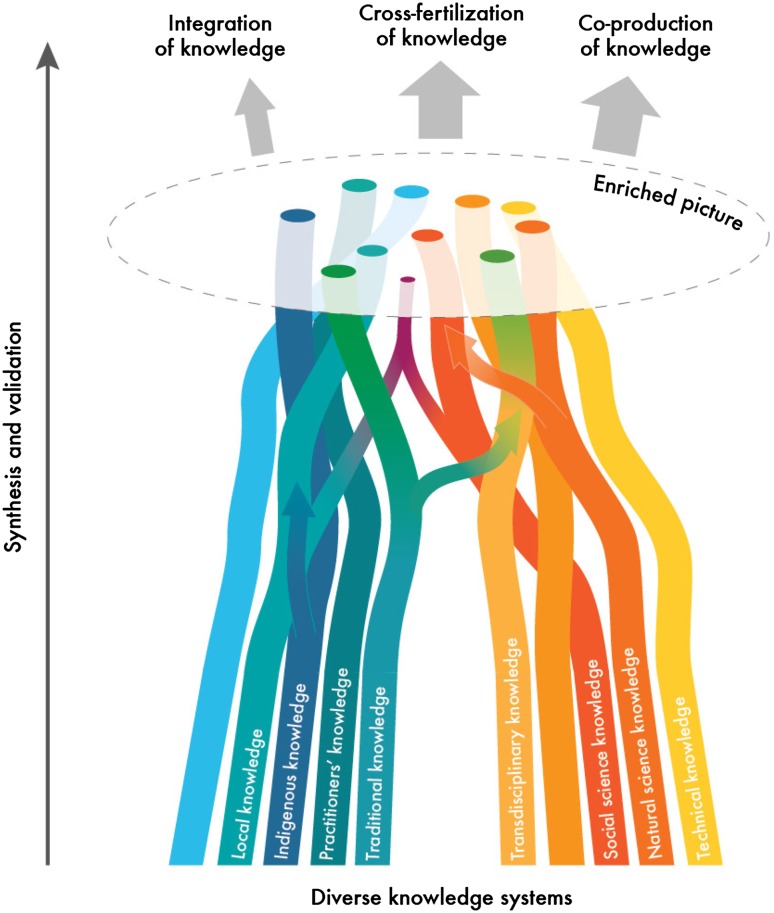
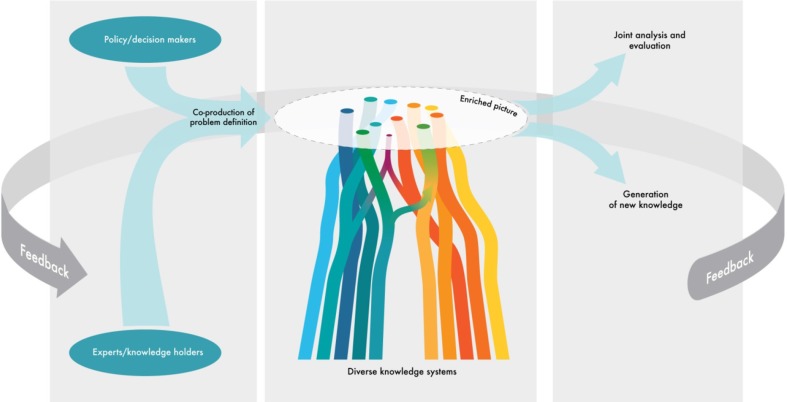
Indigenous and local knowledge systems as well as practitioners' knowledge can provide valid and useful knowledge to enhance our understanding of governance of biodiversity and ecosystems for human well-being. There is, therefore, a great need within emerging global assessment programs, such as the IPBES and other international efforts, to develop functioning mechanisms for legitimate, transparent, and constructive ways of creating synergies across knowledge systems. We present the multiple evidence base (MEB) as an approach that proposes parallels whereby indigenous, local and scientific knowledge systems are viewed to generate different manifestations of knowledge, which can generate new insights and innovations through complementarities. MEB emphasizes that evaluation of knowledge occurs primarily within rather than across knowledge systems. MEB on a particular issue creates an enriched picture of understanding, for triangulation and joint assessment of knowledge, and a starting point for further knowledge generation.
Overview
The claims and statistics of this paper haven’t been checked yet.
Run the check — free, no account needed. It reads the open-access text and checks the sources it cites.
Integrity signals
Registry
Cites
Statistics
Figures
Verification
Claims the paper makes
The claims and statistics of this paper haven’t been checked yet.
Run the check — free, no account needed. It reads the open-access text and checks the sources it cites.
Claims other papers make about this one
Each is checked against this paper’s own text: does it say what the citing paper says it does?
The source backs part of the claim, not all of it — or backs it for a different population, condition or comparison.
In the citing paper
“In their formative writing on multiple evidence base (MEB) approaches, Tengö et al. (2014) identify a need for new tools and approaches for co-developing questions, documenting and mobilizing knowledge, and co-producing insights and decisions-all under the guiding principle of valuing diversity in knowledge systems.”
From “Two‐Eyed Seeing”: An Indigenous framework to transform fisheries research and management (2021) · cites this paper as Tengö et al., 2014
Experimental — accuracy not yet measuredThe cited source says what the claim attributes to it.
In the citing paper
“In their view, “a MEB approach emphasizes the complementarity of knowledge systems and the values of letting each knowledge system speak for itself, within its own context, without assigning one dominant knowledge system with the role of external validator” (Tengö et al., 2014).”
From “Two‐Eyed Seeing”: An Indigenous framework to transform fisheries research and management (2021) · cites this paper as Tengö et al., 2014
The cited source says what the claim attributes to it.
In the citing paper
“MEB approaches seek to connect distinct knowledge systems (Alexander et al., 2019), often through parallel lines of Indigenous and Western scientific inquiry (Tengö et al., 2014), but mechanisms and successful examples of this or equivalent approaches in practice, especially in an aquatic or fisheries context, have been few and far between (e.g.Cooke et al., 2020;Laidler, 2006;Mackinson, 2001).”
From “Two‐Eyed Seeing”: An Indigenous framework to transform fisheries research and management (2021) · cites this paper as Tengö et al., 2014
Self-check
Percentages, sums and reported differences re-computed from the paper’s own numbers.
The self-check needs the paper’s full text.
Citations
Cites
Evidence based medicine: what it is and what it isn't
Sackett, D. L., Rosenberg, W. M. C., Gray, J. A. M., Haynes, R. B., & Richardson, W. S. (1996) · BMJ · doi:10.1136/bmj.312.7023.71 · Cited by 15,769 · cited 1×
“…of thinking around ‘‘evidence-based’’ and ‘‘evidence-based practice’’ has a long history, particularly in medicine and was formally defined in medicine by Sackett et al. (1996) as, ‘‘the conscientious and judicious use of current best evidence from clinical care research in the management of…”
BackgroundResearch methods in anthropology: qualitative and quantitative approaches
(2002) · Choice Reviews Online · doi:10.5860/choice.39-4047 · Cited by 5,622
Yeh, M. (2014) · Journal of Nursing Research · doi:10.1097/jnr.0000000000000065 · Cited by 3,836
Knowledge systems for sustainable development
Cash, D. W., Clark, W. C., Alcock, F., Dickson, N. M., Eckley, N., Guston, D. H., Jäger, J., & Mitchell, R. B. (2003) · Proceedings of the National Academy of Sciences · doi:10.1073/pnas.1231332100 · Cited by 3,660 · cited 1×
“…process may help to leverage the power dynamics, maintain integrity of knowledge systems, generate new questions, and thus enable ecosystem assessments and knowledge generation that are salient, credible, and legitimate for knowledge holders at different scales (Cash et al. 2003; Reid et al. 2006).”
BackgroundScale and Cross-Scale Dynamics: Governance and Information in a Multilevel World
Cash, D. W., Adger, W. N., Berkes, F., Garden, P., Lebel, L., Olsson, P., Pritchard, L., & Young, O. (2006) · Ecology and Society · doi:10.5751/es-01759-110208 · Cited by 2,254
Dismantling the Divide Between Indigenous and Scientific Knowledge
Agrawal, A. (1995) · Development and Change · doi:10.1111/j.1467-7660.1995.tb00560.x · Cited by 2,189 · cited 6×
“Scientific validation of traditional or local knowledge is often a more or less explicit requirement for inclusion of other knowledge systems (Agrawal 1995).”
BackgroundInfluentialBackground on the Institutional Analysis and Development Framework
Ostrom, E. (2011) · Policy Studies Journal · doi:10.1111/j.1541-0072.2010.00394.x · Cited by 1,719 · cited 2×
“Ostrom (2011) for instance suggests that conceptual frameworks facilitate the integration of different types of theories and models as they apply to different questions and parts of a research problem, but together contribute to the understanding of a whole.”
BackgroundConstantine, L. (2001) · CACM · doi:10.1145/365181.365239 · Cited by 1,660
Public Participation in Scientific Research: a Framework for Deliberate Design
Shirk, J., Ballard, H., Wilderman, C., Phillips, T., Wiggins, A., Jordan, R., McCallie, E., Minarchek, M., Lewenstein, B., Krasny, M., et al. (2012) · Ecology and Society · doi:10.5751/es-04705-170229 · Cited by 1,317 · cited 2×
“However, in the science-practice realm there are many emerging initiatives that use approaches similar to a MEB, see for example Danielsen et al. (2009, 2014), Rist et al. (2011), and Shirk et al. (2012), see also Box 2.”
BackgroundMethodAid, M. M., & Wiesbes, C. (2001) · doi:10.1080/714002815 · Cited by 1,299 · cited 1×
“New methods are needed to find innovative ways for legitimate and constructive ways of aggregating, evaluating, and synthesizing knowledge to inform scales beyond the local (Berkes et al. 2006).”
Background
Research works printed but not linked: 15
- Berkes, F., J. Colding, and C. Folke. 2003. Navigating social–ecological systems: building resilience for complexity and change. Cambridge: Cambridge University Press.
- Bernard, H.R. 2011. Research methods in anthropology. Altamira: Rowman.
- Brondizio, E.S. 2008. Amazonian Caboclo and the Acai Palm: Forest farmers in the global market. New York: The New York Botanical Garden Press.
- Brondizio, E.S., F. Gatzweiler, C. Zagrafos, and M. Kumar. 2010. Socio-cultural context of ecosystem and biodiversity valuation. In The economics of ecosystems and biodiversity (TEEB), ed. M. Kumar, 150–181. London: Earthscan Press.
- Brookfield, H., H. Parsons, and M. Brookfield. 2003. Agrodiversity: learning from farmers across the world. Tokyo: United Nations University Press.
- Gratani, M., J.R. Butler, F. Royee, P. Valentine, D. Burrows, W.I. Canendo, and A.S. Anderson. 2011. Is validation of indigenous ecological knowledge a disrespectful process? a case study of traditional fishing poisons and invasive fish management from the wet tropics, Australia. Ecology and Society 16: 25. · DOI
- Haverkort, B., F.D. Burgoa, D. Shankar, and D. Millar. 2012. Towards co-creation of sciences. New Delhi: Nimby Books.
- Japan Satoyama Satoumi Assessment. 2010. Japan Satoyama Satoumi Assessment: Socio-ecological production landscapes of Japan—Summary for decision makers. Tokyo: United Nations University.
- Nadasdy, P. 1999. The politics of TEK: Power and the “integration” of knowledge. Arctic Anthropology 36: 1–18.
- Nakashima, D., and M. Roué. 2002. Indigenous knowledge, peoples and sustainable practice. In Encyclopedia of global environmental change, ed. T. Munn, 314–324. Chichester: Wiley.
- Nakashima, D.J., K. Galloway McLean, H.D. Thulstrup, A. Ramos Castillo, and J.T. Rubis. 2012. Weathering uncertainty: Traditional knowledge for climate change assessment and adaptation. Paris and Darwin: UNESCO and UNU.
- Reid, W.V., F. Berkes, T. Milbanks, and D. Capistrano. 2006. Bridging scales and knowledge systems. Concepts and applications in ecosystem assessments. Washington DC: Island Press.
- Stankovich, M., C. Cariño, M.E. Regpala, J.A. Guillao, and G. Balawag. 2013. Developing and implementing community-based monitoring and information systems: The global workshop and the Philippine workshop reports. Baggio City: Tebtebba Foundation.
- Tengö, M., and P. Malmer (eds). 2012. Dialogue workshop on knowledge for the 21st century: Indigenous knowledge, traditional knowledge, science and connecting diverse knowledge systems. Usdub, Guna Yala, Panama, April 10–13, 2012. Workshop Report.
- Weismann, U., and H Hurni (eds.). 2011. Research for Sustainable Development: Foundations, Experiences, and Perspectives. Perspectives of the Swiss National Centre of Competence in Research (NCCR) North-South. Bern: University of Bern.
Cited by
Sorted by citations
Items 701–800 of 1,000
Mapuche Az-Mapu and Nature's Contribution to People: Eudemonic Values for Living Well
Anbleyth-Evans, J., Ñanculef-Huaiquinao, J., Coñuecar-Llancapani, Y., Leiva, F. J. A., Maulén, W. R., & Raymond, C. M. (2023) · Environmental Values · doi:10.3197/096327122x16569260361760 · Cited by 7
“Multiple evidence-based approaches seek to connect distinct knowledge systems, often through parallel lines of Indigenous and Western scientific inquiry (Tengö et al. 2014”
BackgroundMethodSahle, M., Subramanian, S., & Saito, O. (2023) · Environmental Management · doi:10.1007/s00267-023-01794-0 · Cited by 7
“…that surface from local contexts may hinder cross-case comparisons, but with careful hierarchical explanations of terms, common properties of resilience may be weighed and compared across sites, thus enabling multiple knowledge systems to notify results (Tengo et al. 2014; Quinlan et al. 2016).”
BackgroundGovernance Principles for the Wildlife Trade to Reduce Spillover and Pandemic Risk
Biggs, D., Peel, A., Astaras, C., Braczkowski, A. R., Cheung, H., Choi, C.-Y., Orume, R., Cáceres-Escobar, H., Phelps, J., Plowright, R., et al. (2023) · Social Science Research Network · doi:10.2139/ssrn.4304582 · Cited by 7
Engagement in a Citizen Science Project in the Amazon Basin
Eyng, V., Gomes, M., Câmpera, L., & Hercos, A. (2022) · Citizen Science: Theory and Practice · doi:10.5334/cstp.453 · Cited by 7
Alonzo, M., Hoek, J., Murillo-Sandoval, P., Steger, C., & Zinda, J. A. (2021) · Environmental Modelling & Software · doi:10.1016/j.envsoft.2021.105179 · Cited by 7
Barr, S., & Lemieux, C. (2021) · Mitigation and Adaptation Strategies for Global Change · doi:10.1007/s11027-021-09972-3 · Cited by 7
“Different types of knowledge important to climate change adaptation and protected areas include scientific knowledge, local knowledge, and Indigenous knowledge (Makondo and Thomas 2018; Tengo et al. 2014).”
BackgroundEmpirical pressure-response relations can benefit assessment of safe operating spaces
Lade, S., Wang-Erlandsson, L., Staal, A., & Rocha, J. (2021) · Nature Ecology & Evolution · doi:10.1038/s41559-021-01481-5 · Cited by 7
Asteria, D., Brotosusilo, A., Soedrajad, M. R., & Nugraha, F. (2021) · doi:10.1088/1755-1315/716/1/012051 · Cited by 7
Local communities and wildlife consumption bans
Matias, D., Pinto, E. F., Ramnath, M., & Jose, D. (2020) · Nature Sustainability · doi:10.1038/s41893-020-00662-7 · Cited by 7
Participation in Biocultural Diversity Conservation: Insights from Five Amazonian Examples
Fernández-Llamazares, Á., Benyei, P., Junqueira, A. B., & Reyes-García, V. (2020) · doi:10.1007/978-3-030-41686-7_11 · Cited by 7
Rathwell, K. (2020) · ARCTIC · doi:10.14430/arctic69945 · Cited by 20
“Together the expertise from two distinct ways of knowing is more enlightening than a singular worldview; hence bridging Indigenous and Western knowledge systems enhances global understandings of environmental change (Tuhiwai Smith, 1999; Reid et al., 2006; Tengö et al., 2014).”
BackgroundHansen, K. K., Moldenæs, T., & Mathiesen, S. (2019) · Polar Record · doi:10.1017/s0032247420000170 · Cited by 7
Winkler, K. J. (2019) · Ecosystems and People · doi:10.1080/26395916.2019.1617351 · Cited by 8
“…a governance shift: from a topdown, prohibitive approach with governments as main actors and decision-makers to more multi-level, polycentric and participatory approaches with multiple stakeholders involved in the decision-making and execution (Lockwood 2010; Eagles et al. 2013; Tengö et al. 2014).”
BackgroundNguyen, T., Luom, T. T., & Parnell, K. (2017) · Local Environment · doi:10.1080/13549839.2017.1342617 · Cited by 7
Advocating Entrepreneurship Education and Knowledge Management in Global Business
Kasemsap, K. (2017) · IGI Global eBooks · doi:10.4018/978-1-5225-1913-3.ch081 · Cited by 7
Transdisciplinarity in water management: A systematic review of concepts, practices, and challenges
Silva, A. P. D. C., Teixeira, M. R., & Nunes, L. M. (2026) · Environmental Science & Policy · doi:10.1016/j.envsci.2026.104317 · Cited by 4
Innovation curse: the wastefulness of technologies believed to mitigate climate change
Nguyen, M.-H., Gagnon, V. S., Tran, T. T., & Tran, T. M. A. (2025) · Humanities and Social Sciences Communications · doi:10.1057/s41599-025-06098-8 · Cited by 13
Mpofu, E., Penker, M., Musakwa, W., Radinger-Peer, V., & Gugerell, K. (2025) · Environmental Management · doi:10.1007/s00267-025-02309-9 · Cited by 8
“While communication precedes knowledge, these two are interrelated (Tengö et al. 2014; Galafassi et al. 2018).”
Wilmer, H., Spiess, J. W., Clark, P. E., Anderson, M. L., Burns, A., Crootof, A., Fanok, L., Hruska, T., Mincher, B. J., Miller, R. S., et al. (2025) · Sustainability · doi:10.3390/su17073086 · Cited by 8
Araneda, P., Bridgewater, P. B., Pizarro, J. C., & Ibarra, J. T. (2025) · Ecosystems and People · doi:10.1080/26395916.2025.2453476 · Cited by 6
“The challenge lies in recognizing that I&LK and scientific knowledge are distinct yet equally legitimate knowledge systems (Tengö et al. 2014).”
The cost of recovering Australia’s threatened species
Reside, A. E., Carwardine, J., Ward, M. S., Yong, C. J., Li, R. V., Rogers, A. M., Wintle, B. A., Silcock, J., Woinarski, J., Lintermans, M., et al. (2024) · Nature Ecology & Evolution · doi:10.1038/s41559-024-02617-z · Cited by 6
“Strategies were generalized rather than prescriptive at the site scale because implementation needs to be planned at local scales in partnership with local landholders, Indigenous custodians and the broader community 14 .”
Priadka, P., Moses, B., Kozmik, C., Kell, S., & Popp, J. (2024) · People and Nature · doi:10.1002/pan3.10706 · Cited by 6
Holt, G., Macqueen, A., & Lester, R. E. (2024) · Journal of Environmental Management · doi:10.1016/j.jenvman.2024.122054 · Cited by 6
Curtet, M., Barraclough, A. D., & Måren, I. E. (2024) · Journal of Environmental Policy & Planning · doi:10.1080/1523908x.2024.2381563 · Cited by 6
“The multi-stakeholder approach is known to be an e ffi cient method to improve knowledge in governance processes (Tengö et al., 2014).”
Co-creating coastal sustainability goals and indicators
Engen, S., Hausner, V. H., Mikkelsen, E., Gundersen, H., Christie, H., Falk‐Andersson, J., Halpern, B. S., & Fauchald, P. (2024) · Sustainability Science · doi:10.1007/s11625-024-01521-6 · Cited by 9
“This enriched picture can “serve as a legitimate starting point for further analysis and knowledge generation” (Tengö et al. 2014).”
BackgroundLocal people enhance our understanding of Afrotropical frugivory networks
Durand‐Bessart, C., Akomo-Okoue, E. F., Ella, G. W. E., Porcher, V., Essono, P.-Y. B., Bretagnolle, F., & Fontaine, C. (2024) · Current Biology · doi:10.1016/j.cub.2024.02.026 · Cited by 8
Ferrari, P., Zank, S., & Hanazaki, N. (2024) · Economic Botany · doi:10.1007/s12231-023-09597-4 · Cited by 6
The relevance of international restoration principles for ecosystem restoration practice in Rwanda
Frietsch, M., Fischer, J., Kaplin, B. A., & Martín-López, B. (2024) · Restoration Ecology · doi:10.1111/rec.14085 · Cited by 6
“In addition, it might open doors to integrate traditional ecological knowledge on historical conditions (Tengö et al. 2014), and may imply an explicit re-orientation away from species composition as the prime restoration goal toward a stronger focus on ecosystem function (Perring et al. 2015).”
BackgroundHealthy food, unhealthy food: Indigenous perspectives on the nutrition transition
Pesantes, M., Macera, M. B., Mercier, S., & Katic, P. G. (2024) · Global Public Health · doi:10.1080/17441692.2024.2329210 · Cited by 6
“Such emphasis on local Indigenous perspectives would ensure that any action done in the name of Indigenous people recognise Indigenous Knowledge as equally valid to Western approaches (Arotoma-Rojas et al., 2022; Callaghan et al., 2020; Tengö et al., 2014).”
Chakraborty, S., Yamamori, T., Su, J., Johnson, B. A., Kumar, P., Ashikaga, Y., & Gasparatos, A. (2023) · Ocean & Coastal Management · doi:10.1016/j.ocecoaman.2023.106729 · Cited by 8
Loivaranta, T. (2023) · Land Use Policy · doi:10.1016/j.landusepol.2023.106741 · Cited by 6
Islami, I., Azadi, H., Flores-Díaz, A., & Sadrabad, H. S. (2023) · Irrigation science · doi:10.1007/s00271-023-00856-9 · Cited by 6
“…management through a network of interdependent stakeholders that focus on frequent social learning, information sharing, and, moreover, seeking to develop beyond the performance of state actors (Tengö et al. 2014; Fliervoet et al 2016; Hasselman 2017; Huitema and Meijerink 2017; Sen et al. 2019).”
Ho-Tassone, E., Courtenay, S. C., Trant, A. J., & Miller, R. (2023) · Journal of Great Lakes Research · doi:10.1016/j.jglr.2023.03.005 · Cited by 10
A case-based reasoning tool to recommend drinking water source protection actions.
Cerutti, J., Abi-Zeid, I., Lamontagne, L., Lavoie, R., & Rodriguez-Pinzon, M. J. (2023) · Journal of Environmental Management · doi:10.1016/j.jenvman.2023.117228 · Cited by 6
Dabengwa, A. N., Archibald, S. A., Finch, J., Scott, L., Gillson, L., & Bond, W. J. (2022) · African Journal of Range and Forage Science · doi:10.2989/10220119.2021.2016965 · Cited by 6
“Studies already show the value of bringing together people from different knowledge domains in tackling existential issues like climate change (Makondo and Thomas 2018), biodiversity loss (Tengö et al. 2014), fire management (rodríguez 2007; Humphrey et al.”
BackgroundWysong, M. L., Gregory, P., Watson, A. W. T., Woolley, L.-A., Parker, C., Managers, Y. C., Rangers, K., & Rangers, N. M. (2022) · Ecological Management & Restoration · doi:10.1111/emr.12524 · Cited by 7
Maturano, J. M., Garcia-Serrano, L. A., Carmona-García, J. A., Magos, M. A. G. D. A., & Hersperger, A. (2021) · Environment, Development and Sustainability · doi:10.1007/s10668-021-01567-x · Cited by 6
“The SAIC method responds to a need among indigenous communities for an assessment method (Tengö et al., 2014).”
MethodRevisión Bibliométrica de la Gestión del Conocimiento Tradicional
Cárdenas-Salazar, P. J. (2021) · Scientia et Praxis · doi:10.55965/setp.1.01.a4 · Cited by 6
Sitas, N., Ryan, P., & Schultz, L. (2021) · Routledge eBooks · doi:10.4324/9781003021339-7 · Cited by 3
“This diversity can include diversity of knowledge based on disciplinary biases, which can minimise the inclusion of diverse disciplinary knowledge or non-disciplinary knowledge and expertise such as local and indigenous knowledge (Van Kerkhoff and Lebel 2006; Tengö et al. 2014).”
Indigenous peoples' displacement and jaguar survival in a warming planet
Craighead, K. A., & Yacelga, M. (2021) · Global Sustainability · doi:10.1017/sus.2021.6 · Cited by 4
“The successful design and implementation of coexistence strategies hinge upon equitable partnerships based on fundamental values (Tengö et al., 2014).”
Pynnönen, S. (2020) · Dissertationes Forestales · doi:10.14214/df.289 · Cited by 8
“Merging and mixing of various knowledge systems create new insights and hence can improve the understanding about the dynamics of social-ecological systems (Tengö et al. 2014).”
BackgroundInfluentialInformation Infrastructures and the Future of Ecological Citizenship in the Anthropocene
Dedeoğlu, Ç., & Ekmekcioglu, C. (2020) · Social Sciences · doi:10.3390/socsci9010003 · Cited by 7
“Others direct their attention towards value formation, assuming that individuals have different perceptions and judgments of (ecological) reality (Díaz et al. 2015; Tengö et al. 2014; Pascual et al. 2017).”
BackgroundExploring integrative research in the context of invasive alien plant management
Abrahams, B., Sitas, N., & Esler, K. J. (2019) · South African Journal of Science · doi:10.17159/sajs.2019/4263 · Cited by 6
Sundsvold, B., & Armstrong, C. W. (2019) · Ecosystems and People · doi:10.1080/26395916.2019.1596982 · Cited by 7
A demographic model to support customary management of a culturally important waterfowl species
Herse, M. R., Lyver, P., Gormley, A., Scott, N., Mcintosh, A., Fletcher, D., & Tylianakis, J. (2022) · Ecology and Society · doi:10.5751/es-13410-270314 · Cited by 6
“…2021), including recognition of the rights and aspirations of IPLC (United Nations General Assembly 2007, McGregor et al. 2020, Reyes-García et al. 2022), and establishment of collaborative cross-cultural learning and capacity-building initiatives (Whyte 2013, Tengö et al. 2014, Tipa et al. 2016).”
BackgroundFernández-Llamazares, Á., & Reyes-García, V. (2016) · doi:10.1007/978-3-319-28155-1_11 · Cited by 6
Cvitanovic, C., Partelow, S., BEDNAREK, A. T., Cairney, P., Pozza, R. D., Downe, J., Hilly, Z., Hornidge, A., Howden, M. S., Karcher, D. B., et al. (2026) · Environmental Science & Policy · doi:10.1016/j.envsci.2026.104361 · Cited by 6
Collaborative design for social resilience: lessons from the Indian Sundarbans Delta
Majumdar, A., & Ruj, C. (2026) · CoDesign · doi:10.1080/15710882.2026.2632233 · Cited by 4
Burkhart, S., & Schneider, F. (2026) · Environmental Science & Policy · doi:10.1016/j.envsci.2026.104322 · Cited by 5
Schmidt, S., & Albert, C. (2025) · Ecosystem Services · doi:10.1016/j.ecoser.2025.101795 · Cited by 5
Nyboer, E. A., Kadykalo, A. N., Young, N., Nguyen, V. M., Rytwinski, T., Lane, J.-F., Bennett, J., Harron, N., Aitken, S. M., Auld, G. A., et al. (2025) · Environmental Science & Policy · doi:10.1016/j.envsci.2025.104176 · Cited by 7
Renck, V., Vivacqua, M., Moura, G., Serafini, T. Z., Hellebrandt, L., & Gonçalves, L. R. (2025) · Marine Policy · doi:10.1016/j.marpol.2025.106904 · Cited by 5
Representing human agency in social-hydrological models, a water (re-) allocation perspective
Han, Z.-Y., Wei, Y., & Meng, J. (2025) · Journal of Hydrology · doi:10.1016/j.jhydrol.2025.133944 · Cited by 5
Wildfire risk perception survey: insights from local communities in Tuscany, Italy
Calvani, S., Paoloni, R., Foderi, C., Frassinelli, N., Kirschner, J., Menini, A., Galeotti, G., Neri, F., & Marchi, E. (2025) · Fire Ecology · doi:10.1186/s42408-025-00380-5 · Cited by 7
“Encouraging collaboration among diverse experts and actors through training and learning opportunities can foster new insights and innovations by leveraging complementary perspectives (Tengö et al. 2014).”
Enabling conditions for conservation on Indigenous and community lands
Brittain, S., Alatorre, A., Bullough, L., & Newing, H. (2025) · Conservation Biology · doi:10.1111/cobi.70055 · Cited by 5
“Tengö et al. (2014) further underscore the importance of knowledge sharing as an enabling condition for effective IP&LC contributions to conservation.”
Including Indigenous Knowledge in Land Use Governance and Decision-Making
Howlett, C., Brattland, C., Broderstad, E. G., Gross, L., Hausner, V., Horskotte, T., Kennedy, J., Larsen, R. K., Löf, A., & Seini, M. (2025) · Arctic Review on Law and Politics · doi:10.1163/23874562-20250004 · Cited by 5
Tran, T., Rigg, J., Pham, V. H. T., Yong, M., Vo, O. V., Phạm, P., Dang, P. T., Tran, H. V., Nguyen, C., & Vo, T. (2025) · Ambio · doi:10.1007/s13280-025-02172-2 · Cited by 5
Stakeholder perceptions of biodiversity in urban residential areas
Wojnowska-Heciak, M., Sikorski, P., Ciemniewska, J., Sikorska, D., & Wojnowska-Heciak, M. (2025) · Journal of Environmental Management · doi:10.1016/j.jenvman.2025.125368 · Cited by 6
Future-proofing nature-based tourism in Canada: a horizon scan of emerging challenges
Rushton, B., Lemieux, C. J., Scott, D., Halpenny, E. A., Tompkins, J., Jones, B., Plangger, F., Rubeling, D., Maher, P. T., Hoed, D. C. D., et al. (2024) · Current Issues in Tourism · doi:10.1080/13683500.2024.2431526 · Cited by 5
“The collaborative writing stage was instrumental in ensuring that the challenge statements were not only representative of current and future challenges but also supported by a multiple evidence-based approach (Tëngo et al., 2014).”
InfluentialGreening our future: cultural policy and the ecological imperative
Rodrigues, V. (2024) · European Journal of Cultural Management and Policy · doi:10.3389/ejcmp.2024.12707 · Cited by 5
“In fact, ecological transition has been identi fi ed as a transformation that requires “ action-oriented co-produced knowledge intertwined with multiple forms of knowledge ” and stakeholders (Tengö et al., 2014; Biggs et al., 2021, cited by Biggs et al., 2021).”
Washbourne, C., Murali, R., Saidi, N., Peter, S., Pisa, P., Sarzynski, T., Ryu, H., Filyushkina, A., Campagne, C. S., Kadykalo, A. N., et al. (2024) · Environmental Evidence · doi:10.1186/s13750-024-00334-5 · Cited by 5
“…policy can, therefore, be complex to navigate as it requires bringing together multiple actors with diverse knowledge and worldviews to facilitate the process of negotiation towards decision-making while navigating complex sets of priorities, jurisdictions and institutional settings [3, 37, 55].”
BackgroundÁvalos, I., Sepúlveda, C., Betanzos, J. E., Jimenes-Trujillo, J. A., Perez-Sanches, E., & Escobedo, A. (2024) · Frontiers in Sustainable Food Systems · doi:10.3389/fsufs.2024.1310507 · Cited by 5
“In Latin America, Eduardo Brondizio is distinguished for integrating anthropology with environmental sustainability (Tengo et al., 2014; Brondizio and Le Tourneau, 2016; Chazdon et al., 2021).”
BackgroundAyalew, B., Hylander, K., Börjeson, L., Adugna, G., Beche, D., Zignol, F., & Tack, A. (2024) · Plants, People, Planet · doi:10.1002/ppp3.10510 · Cited by 5
Teston, M., Sturaro, E., Muñoz-Ulecia, E., Tenza-Peral, A., Raniolo, S., Pisani, E., Pachoud, C., Ramanzin, M., & Martin‐Collado, D. (2024) · Italian Journal of Animal Science · doi:10.1080/1828051x.2024.2330658 · Cited by 5
“Cooperation and collaboration between different stakeholders enable the exchange of knowledge and resources to find common solutions (Lazega 2006; Ostrom 2009; Teng € o et al. 2014) and develop common initiatives (D � ıez-Vial and Montoro-S � anchez 2014).”
Caniglia, G., & Federica Russo, B. (2024) · History & Philosophy of the Life Sciences · doi:10.1007/s40656-023-00603-5 · Cited by 12
“The MEB encourages cross-fertilization “grounding collaboration on an equal starting point whereas contributors define the goal of the collaboration and mutually agreed ways to proceed” (Tengö et al., 2014, p. 548).”
BackgroundMethodInfluentialCommunity-Based Mangrove Protection to Mitigate Climate Change: A Socio-Ecological Approach
Sukarmen, A., Mubarak, Chairilsyah, D., Yoswaty, D., & Hamidy, R. (2023) · International Journal of Sustainable Development and Planning · doi:10.18280/ijsdp.180818 · Cited by 5
“Under such circumstances, the local wisdom of the community is recognized for its potential to play a key role in climate change adaptation [3], resource management, conservation, and sustainable use of biodiversity and ecosystems [4].”
The development of sustainable electric vehicle business ecosystems
Agbesi, P. K., Ruffino, R., & Hakovirta, M. (2023) · SN Business & Economics · doi:10.1007/s43546-023-00486-5 · Cited by 7
“Synergies must also be made to connect diverse knowledge systems and develop these ideas (Tengö et al. 2014).”
BackgroundDrake, A., Dunmall, K. M., Nguyen, V. M., Provencher, J. F., Henri, D. A., & Alexander, S. M. (2023) · Conservation Science and Practice · doi:10.1111/csp2.12972 · Cited by 26
“…of bridging1 sciences (see Table 1 for definitions), offers holism that can strengthen conservation2 practices and policies through research and monitoring (Ban et al., 2018; Buxton et al., 2021; Mistry & Berardi, 2016; Tengö et al., 2014; Wheeler & Root-Bernstein, 2020; Wilson et al., 2018).”
BackgroundZinngrebe, Y. (2023) · Sustainability · doi:10.3390/su15129774 · Cited by 5
Towards Knowledge Governance in Public Administration
de Wit, F. C. A., Lourenço, A., Moreira, H., & Vala, F. (2022) · European Conference on Knowledge Management · doi:10.34190/eckm.23.1.800 · Cited by 5
Sidorova, J., & Virla, L. D. (2022) · The School of Public Policy Publications · doi:10.55016/ojs/sppp.v15i1.73981 · Cited by 5
“These community-based indicators can suggest evidence for interpreting conditions, changes and trajectories in the environment (Tengö et al. 2014).”
BackgroundOuchi, S., Wilson, L., Wabnitz, C. C. C., Golden, C. D. W., Beaudreau, A. H., Kenny, T., Singh, G. G., Cheung, W. W. L., Chan, H. M., & Salomon, A. K. (2022) · FACETS · doi:10.1139/facets-2022-0048 · Cited by 5
Ward, C., Cundill, G., Midgley, G., & Jarre, A. (2021) · doi:10.5751/es-12712-260410 · Cited by 5
“Drawing on Tengö et al. (2014), our research used a parallel approach to bring together local climate knowledge from multiple sources, namely farmers, fishers, and scientists.”
BackgroundMethodInfluentialAccounting for Yolŋu ranger work in the Dhimurru Indigenous Protected Area, Australia
Ayre, M., Yunupingu, D., Wearne, J., O'dwyer, C., Vernes, T., & Marika, M. (2021) · Ecology and Society · doi:10.5751/es-12149-260124 · Cited by 5
“This is consistent with the multiple evidence base approach in ecosystem governance, which advocates the joint assessment of knowledge (Tengö et al. 2014) and promotes adaptive management processes that move “beyond aspects that can easily be fitted into conventional models and frameworks” (Tengö…”
BackgroundResultInfluentialCultivating our urban forest future: a value-chain perspective
McGrath, D., Plummer, R., & Bowen, A. J. (2021) · FACETS · doi:10.1139/facets-2021-0076 · Cited by 6
Vides‐Borrell, E., López, F. R., & Torres‐Mazuera, G. (2020) · Journal of Political Ecology · doi:10.2458/v27i1.23211 · Cited by 4
Horstkotte, T., Lépy, É., & Risvoll, C. (2020) · Nordic Perspectives on the Responsible Development of the Arctic: Pathways to Action · doi:10.1007/978-3-030-52324-4_14 · Cited by 5
Bohle, M. (2020) · Geological Society London Special Publications · doi:10.1144/sp508-2019-213 · Cited by 7
“…and factual dimensions and their interactions; see, for example, governance of marine environments (Berkes 2006; Bavinck et al. 2013); handling of global or environmental change (Tengö et al. 2014; Kowarsch et al. 2016); and studies of culture and justice (von Heland 2011; Huang and London 2016).”
BackgroundSustainable Development: Dimensions, Intersections and Knowledge Platform
Sharma, P., & Singh, K. (2020) · Sustainability · doi:10.1002/9781119434016.ch3 · Cited by 6
A framework to assess the degrowth transformative capacity of niche initiatives
Vrettos, C., Hinton, J. B., & Pereira, L. M. (2024) · Degrowth Journal · doi:10.36399/degrowth.002.01.07 · Cited by 5
“A transformative initiative should strive to balance expert/academic knowledge with multiple ways of knowing that are most attuned with the complexity and lived realities of the local context (Tengö et al ., 2014; Alarcón Ferrari and Chartier, 2018).”
BackgroundMubbin, M., Palamuleni, L., Ruhiiga, T., & Bokhar, S. A. (2022) · Present Environment and Sustainable Development · doi:10.47743/pesd2022161014 · Cited by 5
“Knowledge systems, developed through experimentation, adaptation, and co-evolution, provide valid and useful information/interpretations for sustainable development (Tengo et al., 2014).”
BackgroundAburto, J., Stotz, W., Cundill, G., & Tapia, C. (2021) · doi:10.5751/es-12479-260305 · Cited by 5
What is ‘relational thinking’, and how does it manifest in research?
Gould, R. K., Partelow, S., Gaston, K., Plieninger, T., Roy, H., Fish, R., & Rawluk, A. (2026) · People and Nature · doi:10.1002/pan3.70400 · Cited by 4
“The theme of plural understandings of the world (i.e., different ontologies in how the world is ordered), and of the relationships that fill those worlds, is thus central to relational thinking (Ban et al., 2026; Escobar, 2018 ; Tengö et al., 2014, 2017 ).”
Caughman, L., Lauer, C., & Carradını, S. (2025) · Information Design Journal · doi:10.1075/idj.25022.cau · Cited by 4
Mugeni, M. M., & Djenontin, I. N. S. (2025) · Climate and Development · doi:10.1080/17565529.2025.2590719 · Cited by 4
“Similarly, collaborative platforms and decision support systems have been identified as effective tools for enabling the integration of multiple perspectives and knowledge and enhancing adaptive capacity (Tengö et al., 2014; Voinov & Bousquet, 2010).”
Grimaldi, P., & Ladio, A. H. (2025) · Journal of Ethnobiology and Ethnomedicine · doi:10.1186/s13002-025-00821-0 · Cited by 4
“This locally-grounded information serves as a critical foundation for effective, community-based pollinator conservation [85].”
Improving cross-cultural knowledge exchange for collaborative forest stewardship
Swanwick, R. H., Schattman, R. E., D’Amato, A. W., Everett, T., Ranco, D., & Daigneault, A. (2025) · Environmental Science & Policy · doi:10.1016/j.envsci.2025.104241 · Cited by 3
Per, E., Kayacılar, C., Per, E., & Coşkun, G. (2025) · Frontiers in Sustainable Food Systems · doi:10.3389/fsufs.2025.1657538 · Cited by 5
Gould, J., Evans, S., & Barrett, D. (2025) · Maritime Studies · doi:10.1007/s40152-025-00437-w · Cited by 4
“In this work we have attempted to let Marra knowledge “speak for itself, within its own context” (Tengö et al. 2014:582).”
Indigenous knowledge, forest landscape modeling, and the cumulative effects of environmental changes
Bélisle, A. C., Mantyka‐Pringle, C., Boulanger, Y., Croteau, B., Wapachee, A., Drapeau, L., Desrochers, M., & Asselin, H. (2025) · Ecological Applications · doi:10.1002/eap.70053 · Cited by 4
“The recent annual burn rate ( 1940 – 2000) in the study”
Community‐informed and codesigned research to understand the impacts of railways on wildlife
Vincent, K. D., Litzgus, J. D., Kell, S. J., Kozmik, C., Belleau, A., & Popp, J. N. (2025) · Conservation Biology · doi:10.1111/cobi.70089 · Cited by 5
“Using multiple knowledge systems not only improves ecology research (Priadka et al., 2022; Tengö et al., 2014) but also should provide direct benefits to partner First Nations (Cannon et al., 2024; Ignace et al., 2023; Schnarch, 2004); our study highlights both of these values in the context of…”
Heatta, M. J., Hausner, V., & Utsi, T. A. (2025) · Ambio · doi:10.1007/s13280-024-02093-6 · Cited by 4
“…its potential to improve the quality and relevance of climate change research, and to ensure community engagement in addressing the climate-related challenges that the Arctic residents are facing (Tengo et al. 2014; Brattland et al. 2019; Kettle 2019; Curry and Lopez 2020; Norstro¨m et al. 2020).”
Tumbali, G. C. (2025) · Religion and Social Communication · doi:10.62461/gct101624 · Cited by 4
Understanding Adaptation Landscapes: Mapping the Complexity of Decision-Making in Reindeer Herding
Horstkotte, T., Löf, A., & Moen, J. (2024) · Arctic Review on Law and Politics · doi:10.23865/arctic.v15.6138 · Cited by 4
“65 Increasing herders’ meaningful influence can considerably reshape adaptation processes to meet present and future challenges caused by climate change and land use change in reindeer herding.”
Grassroots relational approaches to agricultural transformation in Latin America
Allen, K. E., Ortiz‐Przychodzka, S., Coelho, M. G., Herrmann, T. M., Atchley, M., Benra, F., Chavez, V., Darvin, E., McCabe, J., Laura Nahuelhual, M., et al. (2024) · Ecosystems and People · doi:10.1080/26395916.2024.2390470 · Cited by 9
“…of the terms relational values and natures contributions to people as methodological approaches that may integrate diverse knowledge systems (Tengö et al. 2014) in the IPBES assessments represents an important step in centering perspectives from local communities and Indigenous people, who…”
BackgroundRiechers, M., Baumann, L., Braun, M., Ganachaud, A. S., Heeg, P., & Sabinot, C. (2024) · Regional Environmental Change · doi:10.1007/s10113-024-02290-9 · Cited by 3
“…climate change, as it has been conceptualised as a form and a product of colonialisation (Gram-Hanssen et al. 2021), with national governments being detached from local needs (Jiren et al. 2021), and may lack integration of local knowledge systems in decision-making processes (Tengö et al. 2014).”
Evaluating models of expert judgment to inform assessment of ecosystem viability and collapse
Dorrough, J., Travers, S., Val, J., Scott, M. L., Moutou, C. J., & Oliver, I. (2024) · Conservation Biology · doi:10.1111/cobi.14370 · Cited by 4
“Their opinion may not only differ but may provide unique perspectives, important for identifying equitable land-use decisions and improving conservation outcomes and scope for restoration (Tengö et al., 2014).”
Li, Q., Sun, Y.-L., Liu, Z.-F., Ning, B., & Wu, Z.-L. (2024) · Land · doi:10.3390/land13081205 · Cited by 4
Eilola, S., Horstkotte, T., Forbes, B. C., Habeck, J. O., Komu, T., Rasmus, S., & Fagerholm, N. (2024) · Regional Environmental Change · doi:10.1007/s10113-024-02241-4 · Cited by 4
“These ways of knowing operate on different temporal and geographical scales, which provide scientists with both opportunities and challenges (see, e.g., Reyes-García et al. 2019; Tengö et al. 2014).”
Rittelmeyer, P., Caretta, M. A., Dowler, C., Vora, S., Seigerman, C. K., Reddy, E. U. B., Lakshmikantha, N. R., Jagadish, P. S., Srinivasan, J., Priya, R., et al. (2024) · AlterNative An International Journal of Indigenous Peoples · doi:10.1177/11771801241235332 · Cited by 6
“Thus, LK and IK are dynamic systems, that is, adaptable and unbounded practices that are maintained, altered, and transmitted orally and through routines, for example, written forms of communication, digital and not, and that constantly interact with other forms of knowledge (Tengö et al., 2014).”
Background
Metadata
- Authors
- Tengö, M., Brondizio, E. S., Elmqvist, T., Malmer, P., & Spierenburg, M.
- Affiliations
- Stockholm Resilience Centre (SE)
- Vrije Universiteit Amsterdam (NL)
- Corresponding author
- Tengö, Maria
- Venue
- AMBIO
- Published
- 2014-03-22
- Volume
- 43
- Issue
- 5
- Pages
- 579-591
- ISSN
- 0044-7447 (ISSN-L)
- 1654-7209
- PMC
- PMC4132468
- OpenAlex
- W2122925767
- Cited by
- 1,329
- References
- 88
- Citations by year
- 2026: 163 · 2025: 140 · 2024: 122 · 2023: 140 · 2022: 146 · 2021: 152 · 2020: 124 · 2019: 101 · 2018: 89 · 2017: 61 · 2016: 46 · 2015: 34 · 2014: 11
- FWCI
- 43.99
- Type
- journal article
- Language
- en
- Open access
- hybrid
- doi.org
- Locations
- AMBIO (publishedVersion, cc-by)
- PubMed Central (publishedVersion, cc-by)
- PubMed (publishedVersion)
- VU Research Portal (publishedVersion, other-oa)
- Data Archiving and Networked Services (DANS) (submittedVersion, other-oa)
- Digital Academic REpository of VU University Amsterdam (Vrije Universiteit Amsterdam) (submittedVersion)
- Radboud Repository (Radboud University) (submittedVersion)
- Funders
- Styrelsen för Internationellt Utvecklingssamarbete
- Stiftelsen för Miljöstrategisk Forskning
- Topics
- Physical Sciences › Environmental Science › Ecology › Environmental and Cultural Studies in Latin America and Beyond
- Physical Sciences › Environmental Science › Global and Planetary Change › Land Use and Ecosystem Services
- Social Sciences › Anthropology › Indigenous Studies and Ecology
- Keywords
- indigenous knowledge, local knowledge, scientific knowledge, knowledge integration, ecosystem governance, biodiversity governance, IPBES, knowledge assessment, human well-being, knowledge synergy
- MeSH terms
- Conservation of Natural Resources, Ecosystem, Biodiversity
About these checks
Registry, retraction, Cites and statistics results are computed, not judged, with one exception: a printed reference that no index lists is read once by a model before it counts as a citation error. Claims are extracted by a model and kept only when their quote appears verbatim in the text; each cited source is then checked, with a model’s help, for whether it says what the claim relies on. Those verdicts can be wrong — read the claim’s quote and the cited source before relying on one.
Statistics and arithmetic are recomputed, not judged.
Confidence bands are shown only for fields calibrated on our annotated test set. None is calibrated yet, so no band is shown.
What counts as a claim ›How we measure confidence ›How we check this ›
Are you an author, or do you see a problem with this page? Request a review
