

The DOI matches its Crossref record; 58 of the 88 references it cites were found in a registry or an index.
Connecting Diverse Knowledge Systems for Enhanced Ecosystem Governance: The Multiple Evidence Base Approach
Open accessAbstract
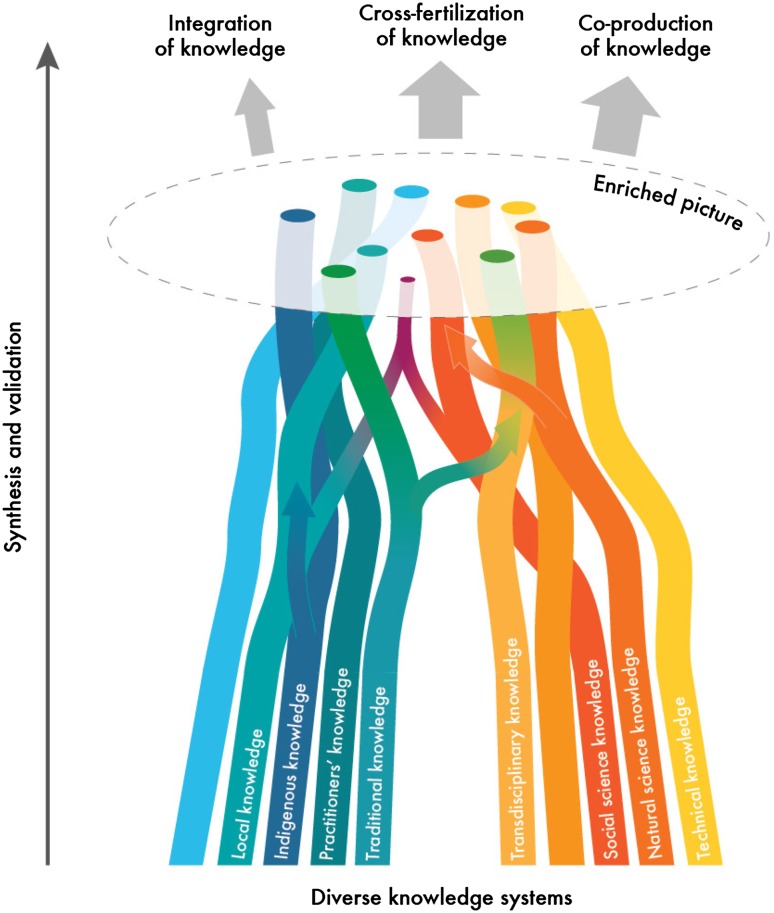
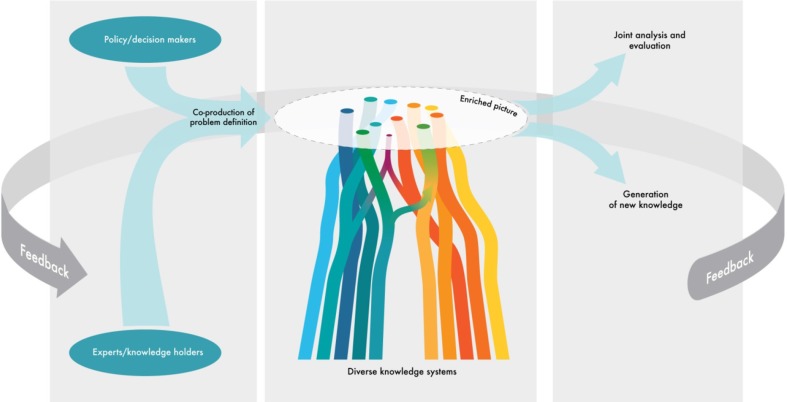
Indigenous and local knowledge systems as well as practitioners' knowledge can provide valid and useful knowledge to enhance our understanding of governance of biodiversity and ecosystems for human well-being. There is, therefore, a great need within emerging global assessment programs, such as the IPBES and other international efforts, to develop functioning mechanisms for legitimate, transparent, and constructive ways of creating synergies across knowledge systems. We present the multiple evidence base (MEB) as an approach that proposes parallels whereby indigenous, local and scientific knowledge systems are viewed to generate different manifestations of knowledge, which can generate new insights and innovations through complementarities. MEB emphasizes that evaluation of knowledge occurs primarily within rather than across knowledge systems. MEB on a particular issue creates an enriched picture of understanding, for triangulation and joint assessment of knowledge, and a starting point for further knowledge generation.
Overview
The claims and statistics of this paper haven’t been checked yet.
Run the check — free, no account needed. It reads the open-access text and checks the sources it cites.
Integrity signals
Registry
Cites
Statistics
Figures
Verification
Claims the paper makes
The claims and statistics of this paper haven’t been checked yet.
Run the check — free, no account needed. It reads the open-access text and checks the sources it cites.
Claims other papers make about this one
Each is checked against this paper’s own text: does it say what the citing paper says it does?
The source backs part of the claim, not all of it — or backs it for a different population, condition or comparison.
In the citing paper
“In their formative writing on multiple evidence base (MEB) approaches, Tengö et al. (2014) identify a need for new tools and approaches for co-developing questions, documenting and mobilizing knowledge, and co-producing insights and decisions-all under the guiding principle of valuing diversity in knowledge systems.”
From “Two‐Eyed Seeing”: An Indigenous framework to transform fisheries research and management (2021) · cites this paper as Tengö et al., 2014
Experimental — accuracy not yet measuredThe cited source says what the claim attributes to it.
In the citing paper
“In their view, “a MEB approach emphasizes the complementarity of knowledge systems and the values of letting each knowledge system speak for itself, within its own context, without assigning one dominant knowledge system with the role of external validator” (Tengö et al., 2014).”
From “Two‐Eyed Seeing”: An Indigenous framework to transform fisheries research and management (2021) · cites this paper as Tengö et al., 2014
The cited source says what the claim attributes to it.
In the citing paper
“MEB approaches seek to connect distinct knowledge systems (Alexander et al., 2019), often through parallel lines of Indigenous and Western scientific inquiry (Tengö et al., 2014), but mechanisms and successful examples of this or equivalent approaches in practice, especially in an aquatic or fisheries context, have been few and far between (e.g.Cooke et al., 2020;Laidler, 2006;Mackinson, 2001).”
From “Two‐Eyed Seeing”: An Indigenous framework to transform fisheries research and management (2021) · cites this paper as Tengö et al., 2014
Self-check
Percentages, sums and reported differences re-computed from the paper’s own numbers.
The self-check needs the paper’s full text.
Citations
Cites
Evidence based medicine: what it is and what it isn't
Sackett, D. L., Rosenberg, W. M. C., Gray, J. A. M., Haynes, R. B., & Richardson, W. S. (1996) · BMJ · doi:10.1136/bmj.312.7023.71 · Cited by 15,769 · cited 1×
“…of thinking around ‘‘evidence-based’’ and ‘‘evidence-based practice’’ has a long history, particularly in medicine and was formally defined in medicine by Sackett et al. (1996) as, ‘‘the conscientious and judicious use of current best evidence from clinical care research in the management of…”
BackgroundResearch methods in anthropology: qualitative and quantitative approaches
(2002) · Choice Reviews Online · doi:10.5860/choice.39-4047 · Cited by 5,622
Yeh, M. (2014) · Journal of Nursing Research · doi:10.1097/jnr.0000000000000065 · Cited by 3,836
Knowledge systems for sustainable development
Cash, D. W., Clark, W. C., Alcock, F., Dickson, N. M., Eckley, N., Guston, D. H., Jäger, J., & Mitchell, R. B. (2003) · Proceedings of the National Academy of Sciences · doi:10.1073/pnas.1231332100 · Cited by 3,660 · cited 1×
“…process may help to leverage the power dynamics, maintain integrity of knowledge systems, generate new questions, and thus enable ecosystem assessments and knowledge generation that are salient, credible, and legitimate for knowledge holders at different scales (Cash et al. 2003; Reid et al. 2006).”
BackgroundScale and Cross-Scale Dynamics: Governance and Information in a Multilevel World
Cash, D. W., Adger, W. N., Berkes, F., Garden, P., Lebel, L., Olsson, P., Pritchard, L., & Young, O. (2006) · Ecology and Society · doi:10.5751/es-01759-110208 · Cited by 2,254
Dismantling the Divide Between Indigenous and Scientific Knowledge
Agrawal, A. (1995) · Development and Change · doi:10.1111/j.1467-7660.1995.tb00560.x · Cited by 2,189 · cited 6×
“Scientific validation of traditional or local knowledge is often a more or less explicit requirement for inclusion of other knowledge systems (Agrawal 1995).”
BackgroundInfluentialBackground on the Institutional Analysis and Development Framework
Ostrom, E. (2011) · Policy Studies Journal · doi:10.1111/j.1541-0072.2010.00394.x · Cited by 1,719 · cited 2×
“Ostrom (2011) for instance suggests that conceptual frameworks facilitate the integration of different types of theories and models as they apply to different questions and parts of a research problem, but together contribute to the understanding of a whole.”
BackgroundConstantine, L. (2001) · CACM · doi:10.1145/365181.365239 · Cited by 1,660
Public Participation in Scientific Research: a Framework for Deliberate Design
Shirk, J., Ballard, H., Wilderman, C., Phillips, T., Wiggins, A., Jordan, R., McCallie, E., Minarchek, M., Lewenstein, B., Krasny, M., et al. (2012) · Ecology and Society · doi:10.5751/es-04705-170229 · Cited by 1,317 · cited 2×
“However, in the science-practice realm there are many emerging initiatives that use approaches similar to a MEB, see for example Danielsen et al. (2009, 2014), Rist et al. (2011), and Shirk et al. (2012), see also Box 2.”
BackgroundMethodAid, M. M., & Wiesbes, C. (2001) · doi:10.1080/714002815 · Cited by 1,299 · cited 1×
“New methods are needed to find innovative ways for legitimate and constructive ways of aggregating, evaluating, and synthesizing knowledge to inform scales beyond the local (Berkes et al. 2006).”
Background
Research works printed but not linked: 15
- Berkes, F., J. Colding, and C. Folke. 2003. Navigating social–ecological systems: building resilience for complexity and change. Cambridge: Cambridge University Press.
- Bernard, H.R. 2011. Research methods in anthropology. Altamira: Rowman.
- Brondizio, E.S. 2008. Amazonian Caboclo and the Acai Palm: Forest farmers in the global market. New York: The New York Botanical Garden Press.
- Brondizio, E.S., F. Gatzweiler, C. Zagrafos, and M. Kumar. 2010. Socio-cultural context of ecosystem and biodiversity valuation. In The economics of ecosystems and biodiversity (TEEB), ed. M. Kumar, 150–181. London: Earthscan Press.
- Brookfield, H., H. Parsons, and M. Brookfield. 2003. Agrodiversity: learning from farmers across the world. Tokyo: United Nations University Press.
- Gratani, M., J.R. Butler, F. Royee, P. Valentine, D. Burrows, W.I. Canendo, and A.S. Anderson. 2011. Is validation of indigenous ecological knowledge a disrespectful process? a case study of traditional fishing poisons and invasive fish management from the wet tropics, Australia. Ecology and Society 16: 25. · DOI
- Haverkort, B., F.D. Burgoa, D. Shankar, and D. Millar. 2012. Towards co-creation of sciences. New Delhi: Nimby Books.
- Japan Satoyama Satoumi Assessment. 2010. Japan Satoyama Satoumi Assessment: Socio-ecological production landscapes of Japan—Summary for decision makers. Tokyo: United Nations University.
- Nadasdy, P. 1999. The politics of TEK: Power and the “integration” of knowledge. Arctic Anthropology 36: 1–18.
- Nakashima, D., and M. Roué. 2002. Indigenous knowledge, peoples and sustainable practice. In Encyclopedia of global environmental change, ed. T. Munn, 314–324. Chichester: Wiley.
- Nakashima, D.J., K. Galloway McLean, H.D. Thulstrup, A. Ramos Castillo, and J.T. Rubis. 2012. Weathering uncertainty: Traditional knowledge for climate change assessment and adaptation. Paris and Darwin: UNESCO and UNU.
- Reid, W.V., F. Berkes, T. Milbanks, and D. Capistrano. 2006. Bridging scales and knowledge systems. Concepts and applications in ecosystem assessments. Washington DC: Island Press.
- Stankovich, M., C. Cariño, M.E. Regpala, J.A. Guillao, and G. Balawag. 2013. Developing and implementing community-based monitoring and information systems: The global workshop and the Philippine workshop reports. Baggio City: Tebtebba Foundation.
- Tengö, M., and P. Malmer (eds). 2012. Dialogue workshop on knowledge for the 21st century: Indigenous knowledge, traditional knowledge, science and connecting diverse knowledge systems. Usdub, Guna Yala, Panama, April 10–13, 2012. Workshop Report.
- Weismann, U., and H Hurni (eds.). 2011. Research for Sustainable Development: Foundations, Experiences, and Perspectives. Perspectives of the Swiss National Centre of Competence in Research (NCCR) North-South. Bern: University of Bern.
Cited by
Sorted by citations
Items 201–300 of 1,000
Gérin-Lajoie, J., Herrmann, T., MacMillan, G., Hébert-Houle, É., Monfette, M., Rowell, J. A., Soucie, T., Snowball, H., Townley, E., Lévesque, E., et al. (2018) · Ecoscience · doi:10.1080/11956860.2018.1498226 · Cited by 47
“ment of strategies for adaptation, interest is rising in using multiple knowledge systems, and in communitybased participatory approaches to science, particularly in environmental monitoring (Raymond et al. 2010; Riseth et al. 2011; Tengö et al. 2014).”
BackgroundBarraclough, A. D., Reed, M. G., Coetzer, K., Price, M. F., Schultz, L., Moreira‐Muñoz, A., & Måren, I. E. (2023) · People and Nature · doi:10.1002/pan3.10515 · Cited by 54
Cottrell, C. (2022) · Environmental Science & Policy · doi:10.1016/j.envsci.2022.05.003 · Cited by 46
“Knowledge integration is the result of mutual learning (Ray-mond et al., 2010) and often incorporates elements of one knowledge system into another (Tengo ¨¨¨ et al., 2014).”
BackgroundCusens, J., Barraclough, A. D., & Måren, I. E. (2021) · People and Nature · doi:10.1002/pan3.10287 · Cited by 52
Varghese, J., & Crawford, S. S. (2020) · Ecological Monographs · doi:10.1002/ecm.1431 · Cited by 61
Mainstreaming indigenous and local communities’ connections with nature for policy decision-making
Sangha, K., Russell-Smith, J., & Costanza, R. (2019) · Global Ecology and Conservation · doi:10.1016/j.gecco.2019.e00668 · Cited by 46
Storing and sharing: A review of indigenous and local knowledge conservation initiatives
Benyei, P., Arreola, G., & Reyes-García, V. (2019) · Ambio · doi:10.1007/s13280-019-01153-6 · Cited by 46
Timpte, M., Montana, J., Reuter, K., Borie, M., & Apkes, J. (2018) · doi:10.1080/13511610.2017.1383149 · Cited by 46
“Furthermore, it is also largely considered that biodiversity-related issues require more than scientific knowledge to be addressed (e.g. Sutherland et al. 2013; Tengö et al. 2014).”
BackgroundLevin, P. S., Francis, T. B., & Taylor, N. (2016) · Ecosystem Health and Sustainability · doi:10.1002/ehs2.1213 · Cited by 45
“…with other knowledge sources (e.g., conventional scientific data, local ecological knowledge) can improve the capacity to interpret changes in ecosystems, understand the species or ecosystem responses to management actions, and improve the mechanistic understanding of a system (Tengö et al. 2014).”
BackgroundTilliger, B., Rodríguez-Labajos, B., Bustamante, J. V., & Settele, J. (2015) · Land · doi:10.3390/land4030888 · Cited by 46
Co-producing theory of change to operationalize integrated landscape approaches
REED, J. F., Chervier, C., Borah, J. R., Gumbo, D., Moombe, K., Mbanga, T. M., O’Connor, A., Siangulube, F. S., Yanou, M. P., & Sunderland, T. (2022) · Sustainability Science · doi:10.1007/s11625-022-01190-3 · Cited by 43
Frantzeskaki, N., McPhearson, T., & Kabisch, N. (2021) · Ambio · doi:10.1007/s13280-021-01521-1 · Cited by 45
Imperiale, A., & Vanclay, F. (2020) · doi:10.17645/pag.v8i4.3179 · Cited by 45
Fernández-Llamazares, Á., Garcia, R. A., Díaz-Reviriego, I., Cabeza, M., Pyhälä, A., & Reyes-García, V. (2017) · Regional Environmental Change · doi:10.1007/s10113-017-1125-5 · Cited by 45
“In order to expand the range of available knowledge, scientific and indigenous knowledge should not be validated against each other, but rather complemented within a multiple evidence base (MEB) approach (Tengö et al. 2014).”
BackgroundInfluentialGaspare, L., Bryceson, I., & Kulindwa, K. (2015) · Ocean & Coastal Management · doi:10.1016/j.ocecoaman.2015.06.011 · Cited by 44
Razavi, S., Duffy, A., Eamen, L., Jakeman, A., Jardine, T., Wheater, H., Hunt, R. J., Maier, H. R., Abdelhamed, M. S., Ghoreishi, M., et al. (2025) · Water Resources Research · doi:10.1029/2024wr038088 · Cited by 44
Malapane, O. L., Musakwa, W., Chanza, N., & Radinger-Peer, V. (2022) · Land · doi:10.3390/land11081167 · Cited by 44
“When developing sustainability frameworks, the science-policy community and government research organizations need to embrace various IK from local or indigenous communities [98].”
BackgroundCockburn, J. (2021) · Sustainable Development · doi:10.1002/sd.2279 · Cited by 44
Political ecology and decolonial research: co-production with the Iñupiat in Utqiaġvik
Apok, C. A., Ambrozek, C. E., Carothers, C., Coleman, J., Zanotti, L. C., & Huang, S. (2020) · Journal of Political Ecology · doi:10.2458/v27i1.23335 · Cited by 51
“…or the integration of different knowledge systems to create new knowledge or, in the case of some decolonial approaches, a "two-eyed" way of seeing (Alhojärvi and Sirviö 2018; Iwama et al. 2012; Rodriguez 2017; Tengö et al. 2014; Gallopín and Vessuri 2006; Zanotti and Palomino-Schalscha 2016).”
BackgroundAn Indigenous-Led Approach for Regional Knowledge Partnerships in the Kimberley Region of Australia
Austin, B. J., Robinson, C., Mathews, D., Oades, D., Wiggin, A., Dobbs, R., Lincoln, G., & Garnett, S. (2019) · Human Ecology · doi:10.1007/s10745-019-00085-9 · Cited by 44
“In an effort to weave different knowledge systems across the region yet maintain linkages to both local and global communities, we build on the multiple evidence-based approach developed by Tengö et al. (2014, 2017).”
BackgroundMethodInfluentialJamsranjav, C., Fernández-Giménez, M., Reid, R., & Adya, B. (2019) · Ecological Applications · doi:10.1002/eap.1899 · Cited by 44
“We recognize the existence of indigenous science as a distinct and valid process of generating knowledge (Snively and Corsiglia 2001, Raymond et al. 2010, Teng ӧ et al. 2014), but use “ science ” as shorthand for “ Western science ” for simplicity.”
A representation of a Tuawhenua worldview guides environmental conservation
Timoti, P., Lyver, P., Matamua, R., Jones, C. J., & Tahi, B. (2017) · doi:10.5751/es-09768-220420 · Cited by 44
“…of worldviews and indigenous knowledge systems have emerged from these processes (Agrawal 2002, Raffles 2002, Stevenson 2006), although conceptual and institutional approaches to mitigate these issues are well described internationally (Davies et al. 2013, Tengö et al. 2014, Rathwell et al. 2015).”
BackgroundAndersson, E., Borgström, S. T., & McPhearson, T. (2017) · Theory and practice of urban sustainability transitions · doi:10.1007/978-3-319-56091-5_4 · Cited by 51
Laituri, M., Luizza, M. W., Hoover, J. D., & Allegretti, A. M. (2023) · Applied Geography · doi:10.1016/j.apgeog.2023.102900 · Cited by 64
Mansuy, N., Staley, D., Alook, S., Parlee, B., Thomson, A., Littlechild, D., Munson, M., & Didzena, F. (2023) · Facets · doi:10.1139/facets-2022-0118 · Cited by 43
Iwama, A. Y., Araos, F., Anbleyth‐Evans, J., Marchezini, V., Ruiz‐Luna, A., Ther-Ríos, F., Bacigalupe, G., & Perkins, P. E. (2021) · Current Opinion in Environmental Sustainability · doi:10.1016/j.cosust.2021.01.010 · Cited by 49
Harnessing the potential of vulnerability assessments for managing social-ecological systems
Thiault, L., Jupiter, S. D., Johnson, J. E., Cinner, J. E., Jarvis, R. M., Heron, S. F., Maina, J. M., Marshall, N., Marshall, P. A., & Claudet, J. (2021) · Ecology and Society · doi:10.5751/es-12167-260201 · Cited by 54
Lynch, A., Fernández-Llamazares, Á., Palomo, I., Jaureguiberry, P., Amano, T., Basher, Z., Lim, M., Mwampamba, T., Samakov, A., & Selomane, O. (2021) · One Earth · doi:10.1016/j.oneear.2021.01.002 · Cited by 43
Enhancing systems thinking in corporate sustainability through a transdisciplinary research process
Ahlström, H., Williams, A. N., & Vildåsen, S. S. (2020) · Journal of Cleaner Production · doi:10.1016/j.jclepro.2020.120691 · Cited by 50
Vadrot, A., Ranković, A., Lapeyre, R., Aubert, P., & Laurans, Y. (2018) · The Innovation · doi:10.1080/13511610.2018.1443799 · Cited by 43
“Tengö et al. (2014) for example call for the development of a new approach, which they name the “Multiple Evidence base approach” particularly suitable for “local to global knowledge-policy processes such as IPBES or the SDGs” (Tengö et al. 2014, 580).”
BackgroundMethodInfluentialHorstkotte, T., Utsi, T., Larsson-Blind, Å., Burgess, P., Johansen, B., Käyhkö, J., Oksanen, L., & Forbes, B. (2017) · doi:10.1002/ecs2.1931 · Cited by 43
Ocean equity: from assessment to action to improve social equity in ocean governance
Bennett, N. J., Relano, V., Roumbedakis, K., Blythe, J. L., Andrachuk, M., Claudet, J., Dawson, N., Gill, D., Lazzari, N., Mahajan, S. L., et al. (2025) · Frontiers in Marine Science · doi:10.3389/fmars.2025.1473382 · Cited by 42
Transdisciplinary partnerships for sustainability: an evaluation guide
Plummer, R., Blythe, J. L., Gurney, G. G., Witkowski, S., & Armitage, D. R. (2022) · Sustainability Science · doi:10.1007/s11625-021-01074-y · Cited by 55
“The inherent challenges of transdisciplinary evaluation and transdisciplinary partnerships for sustainability identified above necessitate careful consideration of multiple perspectives, knowledge systems, and types of evidence (Tengö et al. 2014).”
BackgroundWilmer, H., Meadow, A. M., Brymer, A. L. B., Carroll, S. R., Ferguson, D. B., Garba, I., Greene, C., Owen, G., & Peck, D. E. (2021) · Environmental Management · doi:10.1007/s00267-021-01508-4 · Cited by 64
Who knows best? Understanding the use of research-based knowledge in conservation conflicts
Hodgson, I. D., Redpath, S. M., Fischer, A., & Young, J. C. (2018) · Journal of Environmental Management · doi:10.1016/j.jenvman.2018.09.023 · Cited by 47
“Furthermore, evidence suggests that the more stakeholders are involved in the production of knowledge, the more likely they are to accept it as legitimate (Cash et al., 2003; Tengö et al., 2014; Young et al., 2016b).”
BackgroundIndigenous Peoples' Concerns About Loss of Forest Knowledge: Implications for Forest Management
Carson, S. L., Kentatchime, F., Nana, E. D., Njabo, K., Cole, B. L., & Godwin, H. A. (2018) · Conservation and Society · doi:10.4103/cs.cs_17_105 · Cited by 42
“…increases selfdetermination of indigenous populations, improves equilateral beneficial outcomes, and involves continuous feedback, reflection, and quality improvement in forest management (Kellert et al. 2000; Castro and Nielsen 2001; Brechin et al. 2002; Berkes 2009; Tengö et al. 2014).”
BackgroundAquaculture governance: five engagement arenas for sustainability transformation
Partelow, S., Asif, F., Béné, C., Bush, S., Manlosa, A. O., Nagel, B., Schlüter, A., Chadag, V. M., Choudhury, A., Cole, S. M., et al. (2023) · Current Opinion in Environmental Sustainability · doi:10.1016/j.cosust.2023.101379 · Cited by 41
Multiple values for the management and sustainable use of coastal and marine ecosystem services
Chakraborty, S., Gasparatos, A., & Blasiak, R. (2020) · doi:10.1016/j.ecoser.2019.101047 · Cited by 41
O'Connor, R. A., Nel, J., Roux, D., Lim-Camacho, L., van Kerkhoff, L., & Leach, J. (2019) · Journal of Environmental Management · doi:10.1016/j.jenvman.2019.109392 · Cited by 41
Tian, L., Xu, G., Fan, C., Zhang, Y., Gu, C., & Zhang, Y. (2019) · International Journal of Environmental Research and Public Health · doi:10.3390/ijerph16010114 · Cited by 42
The role of digital data entry in participatory environmental monitoring
Brammer, J., Brunet, N. D., Burton, A. C., Cuerrier, A., Danielsen, F., Dewan, K., Herrmann, T., Jackson, M., Kennett, R., Larocque, G., et al. (2016) · Conservation Biology · doi:10.1111/cobi.12727 · Cited by 41
“However, interest is increasing in multiple knowledge systems and in participatory approaches to science, particularly in environmental monitoring (Raymond et al. 2010; Tengö et al. 2014).”
BackgroundCatalyzing action towards the sustainability of deltas
Brondízio, E. S., Foufoula-Georgiou, E., Szabo, S., Vogt, N., Sebesvari, Z., Renaud, F., Newton, A., Anthony, E., Mansur, A. V., Matthews, Z., et al. (2016) · doi:10.1016/j.cosust.2016.05.001 · Cited by 41
“This step can help initiate a process of co-design and co-production of research and diagnostic efforts [41].”
BackgroundBenyei, P., Skarlatidou, A., Argyriou, D., Hall, R., Theilade, I., Turreira-García, N., Latreche, D., Albert, A., Berger, D., Cartró-Sabaté, M., et al. (2023) · Citizen Science: Theory and Practice · doi:10.5334/cstp.514 · Cited by 40
Cartney, A. M. M., Head, M. A., Tsosie, K. S., Sterner, B., Glass, J. R., Paez, S., Geary, J., & Hudson, M. L. (2023) · npj Biodiversity · doi:10.1038/s44185-023-00013-7 · Cited by 53
“This dialog facilitates multiple evidence-based approaches to be employed during the project co-design stage 39 .”
Burke, L., Díaz-Reviriego, I., Lam, D. P. M., & Hanspach, J. (2022) · Ecosystems and People · doi:10.1080/26395916.2022.2157490 · Cited by 40
“…focuses on convergences of diverse knowledge systems, co-production of knowledge seeks to co-produce new understandings of a defined problem by acknowledging convergences as well as possible divergences between ILK and scientific knowledge (Tengö et al. 2014; Roue and Nakashima 2018).”
BackgroundIndigenous knowledge: From local to global
Gadgil, M., Berkes, F., & Folke, C. (2021) · Ambio · doi:10.1007/s13280-020-01478-7 · Cited by 40
Ten important questions/issues for ethnobotanical research
Albuquerque, U. P., do Nascimento, A. L. B., Soldati, G. T., Feitosa, I. S., Campos, J. L. A., Hurrell, J. A., Hanazaki, N., de Medeiros, P. M., da Silva, R. R. V., Ludwinsky, R. H., et al. (2019) · Acta Botanica Brasilica · doi:10.1590/0102-33062018abb0331 · Cited by 62
García, M. M., & Bodin, Ö. (2019) · Global Environmental Change · doi:10.1016/j.gloenvcha.2019.02.005 · Cited by 40
Ulicsni, V., Babai, D., Vadász, C., Vadász-Besnyői, V., Báldi, A., & Mólnar, Z. (2018) · Ambio · doi:10.1007/s13280-018-1106-z · Cited by 40
Creative convergence: exploring biocultural diversity through art
Polfus, J., Simmons, D., Neyelle, M., Bayha, W., Andrew, F., Andrew, L., Merkle, B. G., Rice, K., & Manseau, M. (2017) · doi:10.5751/es-08711-220204 · Cited by 40
Reyes‐García, V., García‐del‐Amo, D., Porcuna-Ferrer, A., Schlingmann, A., Abazeri, M., Attoh, E. M. N. A. N., Ávila, J. V. D. C., Ayanlade, A., Babai, D., Benyei, P., et al. (2024) · Sustainable Earth Reviews · doi:10.1186/s42055-023-00063-6 · Cited by 74
“As a result, there have been multiple attempts to bring together different knowledge systems (e.g., [52–54]).”
BackgroundMethodBarriers to evidence use for sustainability: Insights from pesticide policy and practice
Hofmann, B., Ingold, K., Stamm, C., Ammann, P., Eggen, R., Finger, R., Fuhrimann, S., Lienert, J., Mark, J., McCallum, C., et al. (2022) · Ambio · doi:10.1007/s13280-022-01790-4 · Cited by 39
“We developed our argument through abduction, i.e., the creative construction or refinement of theory based on new empirical insights (Timmermans and Tavory 2012).”
BackgroundProtecting Indigenous and Local Knowledge Through a Biocultural Diversity Framework
Nemogá, G. R., Appasamy, A., & Romanow, C. A. (2022) · The Journal of Environment & Development · doi:10.1177/10704965221104781 · Cited by 62
“IP LM LC m ai nt ai n co nt ro lo ve r th ei r IL K Crucially, the biocultural framework is compatible with the understanding that ILK systems have their own institutions, knowledge experts, evidence indicators, and validity criteria (Tengo et al., 2014).”
BackgroundWhy care about theories? Innovative ways of theorizing in sustainability science
Schlüter, M., Caniglia, G., Orach, K., Bodin, Ö., Magliocca, N., Meyfroidt, P., & Reyers, B. (2022) · Current Opinion in Environmental Sustainability · doi:10.1016/j.cosust.2022.101154 · Cited by 39
“Such processes provide opportunities for including tacit theories embedded in local knowledge systems [51,52] and for leveraging different perspectives and competencies to co-produce knowledge about a complex problem under real-world conditions [35,53].”
BackgroundToward productive complicity: Applying ‘traditional ecological knowledge’ in environmental science
Singleton, B. E., Gillette, M. B., Burman, A., & Green, C. (2021) · The Anthropocene Review · doi:10.1177/20530196211057026 · Cited by 52
“Many environmental scientists who deploy TEK advocate for parallel knowledge systems, the multiple evidence base approach (Tengö et al., 2014), and the like (e.g. Davies et al., 2020; Ferreira-Rodríguez et al., 2021; Hall et al., 2021; Malmer et al., 2020; McElwee et al., 2020a).”
BackgroundRe-conceptualizing the role(s) of science in biodiversity conservation
Evans, M. (2021) · Environmental Conservation · doi:10.1017/s0376892921000114 · Cited by 58
“…been part of scientific discourse to varying degrees over the past four decades (Funtowicz & Ravetz 1993, Knapp et al. 2019, Wyborn et al. 2019), although it has only become prominent within conservation science relatively recently (Robertson & Hull 2001, Tengö et al. 2014, Colloff et al. 2017).”
Challéat, S., Barré, K., Laforge, A., Lapostolle, D., Franchomme, M., Sirami, C., Viol, I. L., Milian, J., & Kerbiriou, C. (2021) · Ecology and Society · doi:10.5751/es-12156-260115 · Cited by 65
“This is the challenge of the multiple evidencebased approach developed by Tengö et al. (2014, 2017), which recognizes as complementary different knowledge systems with distinct epistemic properties, and aims to link them in action.”
MethodMartínez‐Sastre, R., Garcı́a, D., Miñarro, M., & Martín‐López, B. (2020) · Journal of Environmental Management · doi:10.1016/j.jenvman.2020.110589 · Cited by 59
Plieninger, T., Abunnasr, Y., D’Ambrosio, U., Guo, T., Kizos, T., Kmoch, L. M., Topp, E. N., & Varela, E. (2022) · Sustainability Science · doi:10.1007/s11625-022-01155-6 · Cited by 52
“Recognizing the diversity of rule and knowledge types is also central to assessing the influences on social-ecological systems (Ostrom 2009; Tengö et al. 2014).”
BackgroundAlexander, S., Provencher, J., Henri, D., Nanayakkara, L., Taylor, J. J., Berberi, A., Lloren, J. I., Johnson, J. T., Ballard, M., & Cooke, S. (2021) · Ecological Solutions and Evidence · doi:10.1002/2688-8319.12085 · Cited by 38
“…(see Table 1), is an important undertaking, which can strengthen the evidence base for policy advice and decision making (Alexander, Provencher, Henri, Taylor, et al., 2019; Ban et al., 2018; Henri, Martinez-Levasseur et al., 2020; Johnson et al., 2016;Mistry&Berardi, 2016; Tengo et al., 2014).”
BackgroundTorrents‐Ticó, M., Fernández‐Llamazares, Á., Burgas, D., & Cabeza, M. (2021) · AMBIO · doi:10.1007/s13280-020-01443-4 · Cited by 41
García‐del‐Amo, D., Mortyn, P. G., & Reyes‐García, V. (2020) · Climatic Change · doi:10.1007/s10584-019-02628-x · Cited by 50
“However, IPLC and their advocates have argued that this process generates a situation of imbalance of power, in which the ILK has to be submitted and adapted to exogenous knowledge frameworks, often based on Western science (Berkes 2012; Cajete 2000; Johnson et al., 2016; Tengö et al. 2014).”
BackgroundInfluentialBorie, M., Ziervogel, G., Taylor, F. E., Millington, J., Sitas, R., & Pelling, M. (2019) · Environmental Science and Policy · doi:10.1016/j.envsci.2019.05.014 · Cited by 38
“This perspective demands interrogation of our current knowledge systems(2) (Tengö et al., 2014; Cornell et al., 2013) and how to integrate more appropriate ways of capturing and spatially mapping diverse forms of knowledge in order to identify opportunities for transformation.”
BackgroundBiodiversity and Ecosystem Services Knowledge in the Colombian Caribbean
Aldana-Domínguez, J., Montes, C., Martínez, M., Medina, N., Hahn, J., & Duque, M. (2017) · Tropical Conservation Science · doi:10.1177/1940082917714229 · Cited by 38
Linking model design and application for transdisciplinary approaches in social-ecological systems
Steger, C., Hirsch, S. L., Cosgrove, C. L., Inman, S., Nost, E., Shinbrot, X. A., Thorn, J., Brown, D. G., Grêt‐Regamey, A., Müller, B. H., et al. (2020) · Global Environmental Change · doi:10.1016/j.gloenvcha.2020.102201 · Cited by 44
Artificial intelligence in sustainable agriculture: Towards a socio-technical roadmap
Wu, P., & Zhong, Y. (2025) · Smart Agricultural Technology · doi:10.1016/j.atech.2025.101578 · Cited by 46
Falardeau, M., Bennett, E. M., Else, B., Fisk, A. T., Mundy, C. J., Choy, E. S., Ahmed, M. M. M., Harris, L. N., & Moore, J. (2022) · Global Environmental Change · doi:10.1016/j.gloenvcha.2022.102469 · Cited by 55
Scientific mobilization of keystone actors for biosphere stewardship
Österblom, H., Folke, C., Rocha, J., Bebbington, J., Blasiak, R., Jouffray, J., Selig, E. R., Wabnitz, C. C. C., Bengtsson, F., Crona, B., et al. (2022) · Scientific Reports · doi:10.1038/s41598-022-07023-8 · Cited by 51
Lim, V.-C., Justine, E., Yusof, K., Ariffin, W. N. S. W. M., Goh, H. C., & Fadzil, K. S. (2021) · PLoS ONE · doi:10.1371/journal.pone.0253740 · Cited by 37
“Therefore, incorporation of local knowledge in decision-making could enhance the management of protected area besides empowering the local communities to conserve their homeland [20, 21].”
BackgroundMerten, J., Stiegler, C., Hennings, N., Purnama, E. S., Röll, A., Agusta, H., Dippold, M. A., Fehrmann, L., Gunawan, D., Hölscher, D., et al. (2020) · Ecology and Society · doi:10.5751/es-11678-250314 · Cited by 69
“…local ecological knowledge into scientific analysis can address some of the above-mentioned uncertainties and risks when studying complex social-ecological phenomena (Pierotti and Wildcat 2000, Fabricius et al. 2006, Stringer and Reed 2007, Tengö et al. 2014, Leimona et al. 2015, Días et al. 2018).”
BackgroundSocial-ecological assessment of Lake Manyara basin, Tanzania: A mixed method approach
de Bisthoven, L. J., Vanhove, M. P. M., Rochette, A.-J., Hugé, J., Verbesselt, S., Machunda, R. L., Munishi, L. K., Wynants, M., Steensels, A., Malan-Meerkotter, M., et al. (2020) · Journal of Environmental Management · doi:10.1016/j.jenvman.2020.110594 · Cited by 46
Sen, S., & Kansal, A. (2019) · Journal of Environmental Management · doi:10.1016/j.jenvman.2019.05.132 · Cited by 37
Xie, Z., Li, X., Jiang, D., Lin, S., Yang, B., & Chen, S. (2018) · Ocean & Coastal Management · doi:10.1016/j.ocecoaman.2018.10.014 · Cited by 36
Porcuna-Ferrer, A., Calvet‐Mir, L., Faye, N. F., Klappoth, B., Reyes‐García, V., & Labeyrie, V. (2023) · Journal of Rural Studies · doi:10.1016/j.jrurstud.2023.103163 · Cited by 58
Cariño, J., & Ferrari, M. F. (2021) · Journal of Ethnobiology · doi:10.2993/0278-0771-41.2.192 · Cited by 37
Breaking down the silos: Building resilience through cohesive and collaborative social networks
Bouwer, R., Pasquini, L., & Baudoin, M.-A. (2021) · Environmental Development · doi:10.1016/j.envdev.2021.100646 · Cited by 44
Barraclough, A. D., Schultz, L., & Måren, I. E. (2021) · Global Environmental Change · doi:10.1016/j.gloenvcha.2021.102273 · Cited by 46
Bidegain, Í., López-Santiago, C., González, J., Martínez-Sastre, R., Ravera, F., & Cerda, C. (2020) · Land · doi:10.3390/land9100390 · Cited by 36
“It is worth identifying groups with opposing environmental interests [38] to address the underlying social dynamics that drive potential conflicts between the winners and losers in land management [56].”
BackgroundChakraborty, S., & Gasparatos, A. (2019) · Ecosystem Services · doi:10.1016/j.ecoser.2019.100940 · Cited by 39
Complementarity of indigenous and western scientific approaches for monitoring forest state
Lyver, P. O., Richardson, S. J., Gormley, A. M., Timoti, P., Jones, C. J., & Tahi, B. L. (2018) · Ecological Applications · doi:10.1002/eap.1787 · Cited by 49
Jellason, N. P., Salite, D., Conway, J., & Ogbaga, C. C. (2022) · Environmental Development · doi:10.1016/j.envdev.2022.100733 · Cited by 35
Carvalho, S. C. P., Oliveira, A. L., Pedersen, J. S. T., Manhice, H., Lisboa, F., Norguet, J., de Wit, F., & Santos, F. D. (2020) · Global and Planetary Change · doi:10.1016/j.gloplacha.2020.103328 · Cited by 58
“, 2018; Gudynas, 2011) and embracing indigenous knowledge systems as valid knowledge on conservation (Tengö et al., 2014).”
BackgroundBiocultural stewardship, Indigenous and local ecological knowledge, and the urban crucible
McMillen, H., Campbell, L. K., Svendsen, E., Kealiikanakaoleohaililani, K., Francisco, K. S., & Giardina, C. (2020) · Ecology and Society · doi:10.5751/es-11386-250209 · Cited by 35
Participatory Mapping in a Developing Country Context: Lessons from South Africa
Weyer, D. J., Bezerra, J., & Vos, A. D. (2019) · Land · doi:10.3390/land8090134 · Cited by 45
Kronenberg, J., & Andersson, E. (2019) · Sustainability Science · doi:10.1007/s11625-019-00688-7 · Cited by 35
Ethnobiology and research on Global Environmental Change: what distinctive contribution can we make?
Ladio, A. (2017) · doi:10.15451/ec2017-07-6.7-1-8 · Cited by 35
“Faced with this scenario, the IPCC (2014) established the need for “cross fertilisation” between TEK and SK, and the importance of defining action to moderate harm or take advantage of opportunities offered by actual or anticipated climate conditions to build adaptive capacity (Tengö et al. 2014).”
BackgroundCockburn, J., Schoon, M., Cundill, G., Robinson, C., Aburto, J., Alexander, S., Baggio, J., Barnaud, C., Chapman, M., Llorente, M. G., et al. (2020) · Ecology and Society · doi:10.5751/es-11527-250307 · Cited by 35
Disentangling the complexity of human–nature interactions
Bennett, E. M., & Reyers, B. (2024) · People and Nature · doi:10.1002/pan3.10611 · Cited by 48
“The fundamentally complex character of human–nature interactions implies that diverse perspectives and multiple approaches are required to further the aims of sustainable development (Stenseke, 2020 ; Tengo et al., 2014 ).”
BackgroundWinkler, K. J., Dade, M. C., & Rieb, J. T. (2021) · Current Landscape Ecology Reports · doi:10.1007/s40823-021-00063-2 · Cited by 42
Evaluating transdisciplinary research practices: insights from social network analysis
the Delta Dialogue Network, Steelman, T. A., Bogdan, A.-M., Mantyka‐Pringle, C., Bradford, L., Reed, M. G., Baines, S., Fresque-Baxter, J., Jardine, T. D., Shantz, S., et al. (2021) · Sustainability Science · doi:10.1007/s11625-020-00901-y · Cited by 41
“This would entail a network of actors who combines learning and doing, as well as creating original knowledgebased products and outcomes in appropriate formats (Tengö et al. 2014).”
BackgroundAdaptation and evolution of institutions and governance in community‐based conservation
Salerno, J., Romulo, C. L., Galvin, K., Brooks, J., Mupeta-Muyamwa, P., & Glew, L. (2021) · Conservation Science and Practice · doi:10.1111/csp2.355 · Cited by 34
The importance of Indigenous Territories for conserving bat diversity across the Amazon biome
Fernández‐Llamazares, Á., López‐Baucells, A., Velazco, P. M., Gyawali, A., Rocha, R., Terraube, J., & Cabeza, M. (2021) · Perspectives in Ecology and Conservation · doi:10.1016/j.pecon.2020.11.001 · Cited by 45
“Scholars are increasingly acknowledging the importance f establishing partnerships for knowledge co-production between cientists, practitioners and Indigenous Peoples to improve and nrich the knowledge basis that underpins conservation policy and ractice (Tengö et al., 2014; Sterling et al., 2017).”
BackgroundHerse, M. R., Lyver, P., Scott, N., Mcintosh, A., Coats, S., Gormley, A., & Tylianakis, J. (2020) · BioScience · doi:10.1093/biosci/biaa066 · Cited by 34
Lâm, S., Dodd, W., Skinner, K. A., Papadopoulos, A., Zivot, C., Ford, J. D., Garcia, P. J., & Harper, S. L. (2019) · Environmental Research Letters · doi:10.1088/1748-9326/ab13e4 · Cited by 45
Identifying transformational space for transdisciplinarity: using art to access the hidden third
Steelman, T., Andrews, E. J., Baines, S., Bharadwaj, L., Bjornson, E., Bradford, L., Cardinal, K., Carrière, G., Fresque-Baxter, J., Jardine, T., et al. (2018) · Sustainability Science · doi:10.1007/s11625-018-0644-4 · Cited by 34
“Furthermore, it has been increasingly recognized at multiple levels, across communities, academies, governments, and others that indigenous knowledge and wisdom can and should play a key role in problem-solving, management and decision making together with other forms of knowledge (Agenda 21, as cited in Pohl et al. 2…”
BackgroundMore than money - The costs of knowledge exchange at the interface of science and policy
Karcher, D. B., Cvitanovic, C., Shellock, R., Hobday, A. J., Stephenson, R. L., Dickey‐Collas, M., & van Putten, I. E. (2022) · Ocean & Coastal Management · doi:10.1016/j.ocecoaman.2022.106194 · Cited by 40
Bataille, C. Y., Malinen, S. K., Yletyinen, J., Scott, N. J., & Lyver, P. O. (2021) · People and Nature · doi:10.1002/pan3.10244 · Cited by 39
Carrillo, I. I. C., Partelow, S., Madrigal, R., Schlüter, A., & Gutiérrez-Montes, I. A. (2019) · International Journal of the Commons · doi:10.18352/ijc.923 · Cited by 42
“…the fit of governance to the local context, if it can facilitate knowledge integration and social learning among actors involved (Armitage et al. 2008; Tengö et al. 2014), rather than generalized panacea policies that often do not adapt to context or include local actors (Jentoft et al. 1998).”
BackgroundNavigating Multiple Tensions for Engaged Praxis in a Complex Social-Ecological System
Cockburn, J., Palmer, C., Biggs, H., & Rosenberg, E. (2018) · Land · doi:10.3390/land7040129 · Cited by 33
“They also favour different knowledge systems [76].”
Metadata
- Authors
- Tengö, M., Brondizio, E. S., Elmqvist, T., Malmer, P., & Spierenburg, M.
- Affiliations
- Stockholm Resilience Centre (SE)
- Vrije Universiteit Amsterdam (NL)
- Corresponding author
- Tengö, Maria
- Venue
- AMBIO
- Published
- 2014-03-22
- Volume
- 43
- Issue
- 5
- Pages
- 579-591
- ISSN
- 0044-7447 (ISSN-L)
- 1654-7209
- PMC
- PMC4132468
- OpenAlex
- W2122925767
- Cited by
- 1,329
- References
- 88
- Citations by year
- 2026: 163 · 2025: 140 · 2024: 122 · 2023: 140 · 2022: 146 · 2021: 152 · 2020: 124 · 2019: 101 · 2018: 89 · 2017: 61 · 2016: 46 · 2015: 34 · 2014: 11
- FWCI
- 43.99
- Type
- journal article
- Language
- en
- Open access
- hybrid
- doi.org
- Locations
- AMBIO (publishedVersion, cc-by)
- PubMed Central (publishedVersion, cc-by)
- PubMed (publishedVersion)
- VU Research Portal (publishedVersion, other-oa)
- Data Archiving and Networked Services (DANS) (submittedVersion, other-oa)
- Digital Academic REpository of VU University Amsterdam (Vrije Universiteit Amsterdam) (submittedVersion)
- Radboud Repository (Radboud University) (submittedVersion)
- Funders
- Styrelsen för Internationellt Utvecklingssamarbete
- Stiftelsen för Miljöstrategisk Forskning
- Topics
- Physical Sciences › Environmental Science › Ecology › Environmental and Cultural Studies in Latin America and Beyond
- Physical Sciences › Environmental Science › Global and Planetary Change › Land Use and Ecosystem Services
- Social Sciences › Anthropology › Indigenous Studies and Ecology
- Keywords
- indigenous knowledge, local knowledge, scientific knowledge, knowledge integration, ecosystem governance, biodiversity governance, IPBES, knowledge assessment, human well-being, knowledge synergy
- MeSH terms
- Conservation of Natural Resources, Ecosystem, Biodiversity
About these checks
Registry, retraction, Cites and statistics results are computed, not judged, with one exception: a printed reference that no index lists is read once by a model before it counts as a citation error. Claims are extracted by a model and kept only when their quote appears verbatim in the text; each cited source is then checked, with a model’s help, for whether it says what the claim relies on. Those verdicts can be wrong — read the claim’s quote and the cited source before relying on one.
Statistics and arithmetic are recomputed, not judged.
Confidence bands are shown only for fields calibrated on our annotated test set. None is calibrated yet, so no band is shown.
What counts as a claim ›How we measure confidence ›How we check this ›
Are you an author, or do you see a problem with this page? Request a review
