

Top or Middle? Up or Down? Toward a Standard Lexicon for Protein Top-Down and Allied Mass Spectrometry Approaches
Open accessThe DOI matches its Crossref record; 77 of the 77 references it cites were found in a registry or an index.
Abstract
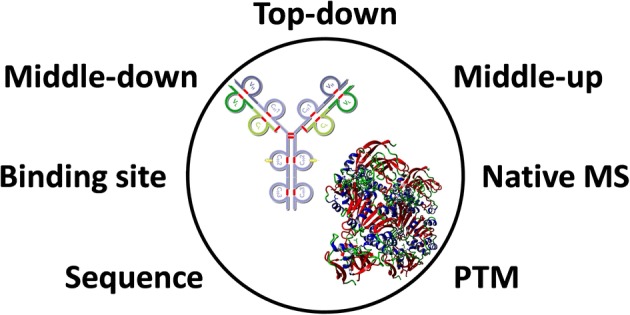
In recent years, there has been increasing interest in top-down mass spectrometry (TDMS) approaches for protein analysis, driven both by technological advancements and efforts such as those by the multinational Consortium for Top-Down Proteomics (CTDP). Today, diverse sample preparation and ionization methods are employed to facilitate TDMS analysis of denatured and native proteins and their complexes. The goals of these studies vary, ranging from protein and proteoform identification, to determination of the binding site of a (non)covalently-bound ligand, and in some cases even with the aim to study the higher order structure of proteins and complexes. Currently, however, no widely accepted terminology exists to precisely and unambiguously distinguish between the different types of TDMS experiments that can be performed. Instead, ad hoc developed terminology is often used, which potentially complicates communication of top-down and allied methods and their results. In this communication, we consider the different types of top-down (or top-down-related) MS experiments that have been performed and reported, and define distinct categories based on the protocol used and type(s) of information that can be obtained. We also consider the different possible conventions for distinguishing between middle- and top-down MS, based on both sample preparation and precursor ion mass. We believe that the proposed framework presented here will prove helpful for researchers to communicate about TDMS and will be an important step toward harmonizing and standardizing this growing field. Graphical Abstract.
Overview
The claims and statistics of this paper haven’t been checked yet.
Free: it reads the open-access text and checks the first 5 claims that cite a source we can check. Create a free account to check every claim.
Integrity signals
Registry
Cites
Statistics
Figures
Verification
Claims the paper makes
The claims and statistics of this paper haven’t been checked yet.
Free: it reads the open-access text and checks the first 5 claims that cite a source we can check. Create a free account to check every claim.
Claims other papers make about this one
Each is checked against this paper’s own text: does it say what the citing paper says it does?
The cited source says what the claim attributes to it.
In the citing paper
“Efficient sequencing can be combined with obtaining information on noncovalent complex stoichiometry through MSn (n = 3 or more) analysis of complexes ionised under non-denaturing conditions.”
From Higher-order structural characterisation of native proteins and complexes by top-down mass spectrometry (2020) · cites this paper as [17]
The check wasn’t confident either way, so it gives no verdict — never disputed.
In the citing paper
“Han et al. demonstrated the high separation efficiency of PEI coated capillaries for the analysis of protein complexes and Pyrococcus furiosus proteins via TDMS59,60.”
From Recent trends of capillary electrophoresis‐mass spectrometry in proteomics research (2019) · cites this paper as [59]
Experimental — accuracy not yet measuredIn the citing paper
“Interestingly, addition of organic solvents (e.g., propan-2-ol) to an acidic BGE enhances the separation efficiency and MS detection, as demonstrated by Yates group in a top-down analysis of Pyrococcus furiosus proteins using a sheathless interface59.”
From Recent trends of capillary electrophoresis‐mass spectrometry in proteomics research (2019) · cites this paper as [59]
Self-check
Percentages, sums and reported differences re-computed from the paper’s own numbers.
The self-check needs the paper’s full text.
Citations
Cites
Proteoform: a single term describing protein complexity
The Consortium for Top Down Proteomics, Smith, L. M., & Kelleher, N. L. (2013) · Nature Methods · doi:10.1038/nmeth.2369 · Cited by 1,528
Top Down versus Bottom Up Protein Characterization by Tandem High-Resolution Mass Spectrometry
Kelleher, N. L., Lin, H. Y., Valaskovic, G. A., Aaserud, D. J., Fridriksson, E. K., & McLafferty, F. W. (1999) · Journal of the American Chemical Society · doi:10.1021/ja973655h · Cited by 605 · cited 2×
“As a side note, the first publication that proposed the Btop-down^ nomenclature also demonstrated the benefits of employing limited digestion to complement standard bottom-up data [26].”
BackgroundNative Mass Spectrometry: What is in the Name?
Leney, A. C., & Heck, A. J. R. (2017) · Journal of the American Society for Mass Spectrometry · doi:10.1007/s13361-016-1545-3 · Cited by 602
Senko, M. W., Beu, S. C., & McLaffertycor, F. W. (1995) · Journal of the American Society for Mass Spectrometry · doi:10.1016/1044-0305(95)00017-8 · Cited by 451 · cited 1×
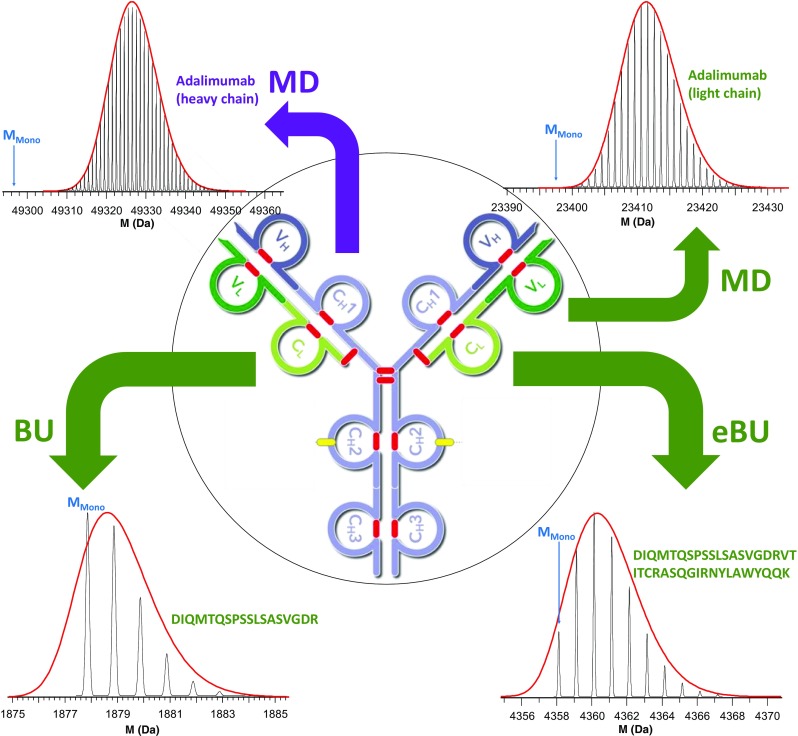
“As depicted in Figure 3, however, the monoisotopic peak is usually too low in intensity to be observed, potentially complicating data analysis [71].”
BackgroundActivated Ion Electron Capture Dissociation for Mass Spectral Sequencing of Larger (42 kDa) Proteins
Horn, D. M., Ge, Y., & McLafferty, F. W. (2000) · Analytical Chemistry · doi:10.1021/ac000494i · Cited by 333
Breuker, K., Oh, H., Horn, D. M., Cerda, B. A., & McLafferty, F. W. (2002) · Journal of the American Chemical Society · doi:10.1021/ja012267j · Cited by 324 · cited 1×
“In addition to probing the Bnative^ state of the protein, probing of the gas-phase structure(s) after unfolding and refolding of the protein has also been performed [41, 52], as well as varying the level of gas-phase activation to generate a Bmelting curve^ (i.”
BackgroundPhotodissociation mass spectrometry: new tools for characterization of biological molecules
Brodbelt, J. S. (2014) · Chem. Soc. Rev. · doi:10.1039/c3cs60444f · Cited by 322 · cited 1×
“, electron-based dissociation [4] and ultraviolet photodissociation [5]) and high-resolution MS (a requirement for the analysis of complex, crowded product ion spectra) have allowed TDMS and even its large-scale application, top-down proteomics, to become more mainstream, as evidenced by the recent establishment of th…”
BackgroundMass spectrometry for structural characterization of therapeutic antibodies
Zhang, Z., Pan, H., & Chen, X. (2009) · Mass Spectrometry Reviews · doi:10.1002/mas.20190 · Cited by 316
Loo, J. A., Edmonds, C. G., & Smith, R. D. (1990) · Science · doi:10.1126/science.2326633 · Cited by 300
Self-citationLi, H., Nguyen, H. H., Ogorzalek Loo, R. R., Campuzano, I. D. G., & Loo, J. A. (2018) · Nature Chemistry · doi:10.1038/nchem.2908 · Cited by 249
Self-citation
Cited by
Items 101–132 of 132
Degterev, M. B., & Shukurov, R. R. (2021) · Fine Chemical Technologies · doi:10.32362/2410-6593-2021-16-1-76-87 · Cited by 3
“Полученные масс-спектры интерпретируются с учетом теоретических данных о строении молекулы, что позволяет глубже охарактеризовать профиль модификаций, деградантные формы, интерпретировать результаты анализа белков, отличающихся высокой гетерогенностью форм [9].”
Mass Spectrometry-Based Methods for Immunoglobulin G N-Glycosylation Analysis
Habazin, S., Štambuk, J., Šimunović, J., Keser, T., Razdorov, G., & Novokmet, M. (2021) · Experientia supplementum · doi:10.1007/978-3-030-76912-3_3 · Cited by 3
Ion Activation Methods for Top‐Down Proteomics
Walker, J. N., & Brodbelt, J. S. (2026) · Mass Spectrometry Reviews · doi:10.1002/mas.70023 · Cited by 5
Deciphering the molecular organization of GET pathway chaperones through native mass spectrometry
Giska, F., Mariappan, M., Bhattacharyya, M., & Gupta, K. (2022) · Biophysical Journal · doi:10.1016/j.bpj.2022.02.026 · Cited by 2
New Insights into the Intrinsic Electron-Based Dissociation Behavior of Cytochrome c Oligomers
Brandner, S., Habeck, T., & Lermyte, F. (2023) · Journal of the American Society for Mass Spectrometry · doi:10.1021/jasms.3c00106 · Cited by 2
Self-citationDowling, P., Gargan, S., Zweyer, M., Henry, M. A., Meleady, P., Swandulla, D., & Ohlendieck, K. (2024) · European Journal of Translational Myology · doi:10.4081/ejtm.2024.12565 · Cited by 5
Lectin and Liquid Chromatography-Based Methods for Immunoglobulin (G) Glycosylation Analysis
Pribić, T., & Trbojević‐Akmačić, I. (2021) · Experientia supplementum · doi:10.1007/978-3-030-76912-3_2 · Cited by 4
Multiplexed Single Ion Mass Spectrometry Improves Measurement of Proteoforms and Their ComplexesPreprint
Kafader, J. O., Melani, R. D., Durbin, K. R., Ikwuagwu, B. C., Early, B. P., Fellers, R. T., Beu, S. C., Zabrouskov, V., Makarov, A., Maze, J. T., et al. (2019) · bioRxiv (Cold Spring Harbor Laboratory) · doi:10.1101/715425 · Cited by 2
Ledsgaard, L., Wade, J., Boddum, K., Oganesyan, I., Harrison, J. A., Jenkins, T. P., Villar, P., Leah, R. A., Zenobi, R., McCafferty, J., et al. (2022) · bioRxiv (Cold Spring Harbor Laboratory) · doi:10.1101/2022.06.17.496531 · Cited by 2
Mass spectrometry structural analysis of intrinsically disordered phosphoproteins
Lantz, C., Zenaidee, M. A., Tran, D. P., Biggs, K. E., Bitan, G., Loo, R. R. O., & Loo, J. A. (2025) · International Journal of Mass Spectrometry · doi:10.1016/j.ijms.2025.117455 · Cited by 1
Self-citationOhlendieck, K., & Dowling, P. (2025) · Advances in clinical chemistry · doi:10.1016/bs.acc.2025.10.002 · Cited by 1
Applications of Top‐Down Protein Analysis in Clinical Diagnostics
Mann, M. W., Yeung, P. S.-W., & Luo, Y. R. (2026) · Mass Spectrometry Reviews · doi:10.1002/mas.70030 · Cited by 2
Proteoforms in Disease: Biomedical Applications of Top‐Down Proteomics
Rogers, H. T., Gregorich, Z. R., Gant, M. S., Gao, Z., Chamot‐Rooke, J., & Ge, Y. (2026) · Mass Spectrometry Reviews · doi:10.1002/mas.70042 · Cited by 3
The need for open and FAIR data in top‐down proteomics
Lermyte, F. (2023) · PROTEOMICS · doi:10.1002/pmic.202300354 · Cited by 2
Self-citationGel electrophoresis-based proteoform separation and analysis
Dowling, P., & Ohlendieck, K. (2025) · Advances in clinical chemistry · doi:10.1016/bs.acc.2025.04.002 · Cited by 4
FluxPRT: An Adaptable and Extensible Proteomics LIMS
Alfaro-Espinoza, E. R., Ferreira-Paiva, L., Faria-Campos, A., Baracat‐Pereira, M. C., & Campos, S. (2021) · Lecture notes in computer science · doi:10.1007/978-3-030-91814-9_12 · Cited by 1
Zenaidee, M. A., Dodgen, T. M., Carroll, L., & Hart‐Smith, G. (2023) · ChemRxiv · doi:10.26434/chemrxiv-2023-zntk5
Ritmos diurnos de modificações pós-traducionais em histonas de cana-de-açúcar
Silva, J. P. D. L. (2020) · Digital Library of Theses and Dissertations (Universidade de São Paulo) · doi:10.11606/d.46.2020.tde-08112021-162240
Non‐canonical bivalent H3K4me3K9me3 recognition by Spindlin1/C11orf84 complex
Du, Y., & Qian, C. (2022) · BioEssays · doi:10.1002/bies.202100229 · Cited by 1
“[32] Top-down MS of whole histone or middle-down MS of N-terminal 50 amino acids may cover the intact histone H3 tail.[58,59] However, these MS strategies require large amount of pure histones that may put up a challenge, given that the abundancy of H3K4me3/H3K9me3 was reported to be lower than that of H3K4me3/H3K27me…”
BackgroundHermann, J. (2022) · Research Publications (Maastricht University) · doi:10.26481/dis.20220425jh
Probing highly polymorphic proteins by mass spectrometry: Proteins with a personalized touch
Hoek, M. (2022) · Utrecht University Repository (Utrecht University) · doi:10.33540/1535
Bioanalytical methodology to study the in vivo biotransformation of therapeutic proteins
Spanov, B. (2023) · University of Groningen research database (University of Groningen / Centre for Information Technology) · doi:10.33612/diss.603403111
Chapman, E. A., Roberts, D. S., Tiambeng, T. N., Andrews, J., Wang, M., Reasoner, E. A., Melby, J. A., Li, B. H., Kim, D., Alpert, A. J., et al. (2023) · bioRxiv (Cold Spring Harbor Laboratory) · doi:10.1101/2023.06.13.544817
Sequencing intact membrane proteins using MALDI mass spectrometry
Sánchez, E. Z., Hijazi, H., Haidar, J., Mecarelli, E., Bauda, E., Petit-Härtlein, I., Teulon, J., Pellequer, J., & Erba, E. B. (2023) · Frontiers in Analytical Science · doi:10.3389/frans.2023.1124741
Chan, H., Krichel, B., Bandura, L. J., Chapman, E. A., Rogers, H. T., Fischer, M. S., Roberts, D. S., Gao, Z., Wang, M., Wu, J., et al. (2025) · bioRxiv (Cold Spring Harbor Laboratory) · doi:10.1101/2025.04.15.648965
Dadouch, M. (2020) · theses.fr (ABES) · doi:10.70675/f003c2c2z07e0z4998zbd14zada08cd1ae13
Letissier, L., Beaumal, C., Nabiyeva, T., Criscuolo, F., Bertile, F., Schaeffer‐Reiss, C., Cianférani, S., & Hernandez‐Alba, O. (2026) · Journal of the American Society for Mass Spectrometry · doi:10.1021/jasms.6c00041
Zhang, M., Shi, L., Deng, Y., LIU, Z. ‐., Lu, H., Wang, X., Qiu, Y., Zhong, F., Liu, Z., Wang, Q., et al. (2026) · Journal of the American Chemical Society · doi:10.1021/jacs.6c08937
Application of mass spectrometry techniques for analysis of higher order structure of proteins
Herath, D., Walls, K. N., Dollar, A. N., & Webb, I. (2026) · The Analyst · doi:10.1039/d6an00710d
Proteomics of the skeletal muscle dystrophin complex
Dowling, P., Swandulla, D., & Ohlendieck, K. (2026) · Advances in clinical chemistry · doi:10.1016/bs.acc.2026.08.001 · Cited by 1
Keeping It Native: Non‐Denaturing Approaches to Top‐Down Protein Mass Spectrometry
Xiao, M., Maciel, E. V. S., Lermyte, F., & Skinner, O. S. (2026) · Mass Spectrometry Reviews · doi:10.1002/mas.70050
Self-citation
Metadata
- Authors
- Lermyte, F., Tsybin, Y. O., O’Connor, P. B., & Loo, J. A.
- Affiliations
- University of Warwick (GB)
- Spectroswiss (Switzerland) (CH)
- University of California, Los Angeles (US)
- Corresponding author
- Lermyte, Frederik
- Venue
- Journal of the American Society for Mass Spectrometry
- Publisher
- American Chemical Society (ACS)
- Published
- 2019-05-09
- Volume
- 30
- Issue
- 7
- Pages
- 1149-1157
- ISSN
- 1044-0305 (ISSN-L)
- PMC
- PMC6591204
- OpenAlex
- W2944518634
- Semantic Scholar
- dd05f4ba2c216da7453628c6776279e7281a6285
- Cited by
- 132
- References
- 76
- Citations by year
- 2026: 10 · 2025: 14 · 2024: 12 · 2023: 22 · 2022: 18 · 2021: 24 · 2020: 19 · 2019: 13
- FWCI
- 7.35
- Type
- journal article
- Language
- en
- Open access
- green
- www.ncbi.nlm.nih.gov
- Licence
- cc-by
- creativecommons.org/licenses/by/4.0 (tdm)
- Locations
- Journal of the American Society for Mass Spectrometry (publishedVersion)
- PubMed Central (publishedVersion, cc-by)
- PubMed (publishedVersion)
- Warwick Research Archive Portal (University of Warwick) (submittedVersion)
- Funders
- Engineering and Physical Sciences Research Council (EP/N033191/1)
- National Institutes of Health (R01GM103479)
- Topics
- Physical Sciences › Chemistry › Spectroscopy › Advanced Proteomics Techniques and Applications
- Physical Sciences › Chemistry › Spectroscopy › Mass Spectrometry Techniques and Applications
- Life Sciences › Biochemistry, Genetics and Molecular Biology › Molecular Biology › Metabolomics and Mass Spectrometry Studies
- Keywords
- top-down mass spectrometry, middle-down mass spectrometry, standard terminology, protein analysis, proteoforms, protein complexes, sample preparation, ionization methods, protein higher-order structure, ligand binding sites
- MeSH terms
- Amino Acid Sequence, Animals, Binding Sites, Humans, Models, Molecular, Protein Denaturation, Proteins, Mass Spectrometry, Proteomics
About these checks
Registry, retraction, Cites and statistics results are computed, not judged, with one exception: a printed reference that no index lists is read once by a model before it counts as a citation error. Claims are extracted by a model and kept only when their quote appears verbatim in the text; each cited source is then checked, with a model’s help, for whether it says what the claim relies on. Those verdicts can be wrong — read the claim’s quote and the cited source before relying on one.
Statistics and arithmetic are recomputed, not judged.
Confidence bands are shown only for fields calibrated on our annotated test set. None is calibrated yet, so no band is shown.
What counts as a claim ›How we measure confidence ›How we check this ›
Are you an author, or do you see a problem with this page? Request a review
Data sources
Bibliographic data: Semantic Scholar, OpenAlex, Crossref.
Contains information from the Semantic Scholar Academic Graph Datasets, made available under the ODC Attribution License (ODC-BY 1.0).
Semantic Scholar’s data is described in: Kinney, R., et al. (2023). The Semantic Scholar Open Data Platform. arXiv:2301.10140.
