

Natural hydroxyanthraquinoid pigments as potent food grade colorants: an overview
Open accessThe DOI matches its Crossref record; 121 of the 122 references it cites were found in a registry or an index.
Abstract
Natural pigments and colorants are widely used in the world in many industries such as textile dying, food processing or cosmetic manufacturing. Among the natural products of interest are various compounds belonging to carotenoids, anthocyanins, chlorophylls, melanins, betalains… The review emphasizes pigments with anthraquinoid skeleton and gives an overview on hydroxyanthraquinoids described in Nature, the first one ever published. Trends in consumption, production and regulation of natural food grade colorants are given, in the current global market. The second part focuses on the description of the chemical structures of the main anthraquinoid colouring compounds, their properties and their biosynthetic pathways. Main natural sources of such pigments are summarized, followed by discussion about toxicity and carcinogenicity observed in some cases. As a conclusion, current industrial applications of natural hydroxyanthraquinoids are described with two examples, carminic acid from an insect and Arpink red™ from a filamentous fungus.
Overview
The claims and statistics of this paper haven’t been checked yet.
Free: it reads the open-access text and checks the first 5 claims that cite a source we can check. Create a free account to check every claim.
Integrity signals
Registry
Cites
Statistics
Figures
Verification
Claims the paper makes
The claims and statistics of this paper haven’t been checked yet.
Free: it reads the open-access text and checks the first 5 claims that cite a source we can check. Create a free account to check every claim.
Claims other papers make about this one
Each is checked against this paper’s own text: does it say what the citing paper says it does?
The source backs part of the claim, not all of it — or backs it for a different population, condition or comparison.
In the citing paper
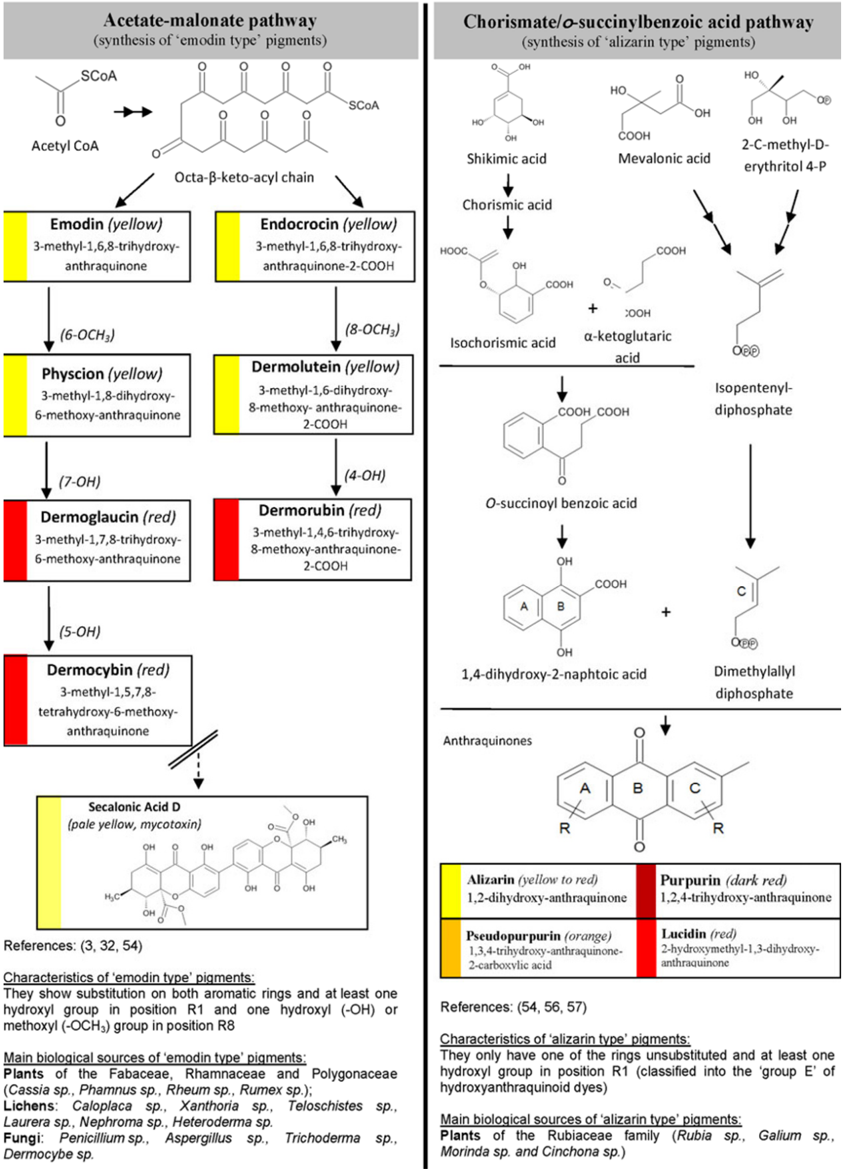
“Two different pathways have been proposed as biosynthesis routes for natural quinones in plants and other organisms (Fig. 2) [25,73].”
From Natural Quinone Dyes: A Review on Structure, Extraction Techniques, Analysis and Application Potential (2021) · cites this paper as [25]
Experimental — accuracy not yet measuredThe source backs part of the claim, not all of it — or backs it for a different population, condition or comparison.
In the citing paper
“In the food and pharmaceuticals industry, quinones are used as food and medicine colourant in either liquid or solid state for various reasons, such as improving the product's natural colour, restoring and standardising the colour and appearance of food and medicine lost during processing or cooking, and to add a novel sensory attraction [25].”
From Natural Quinone Dyes: A Review on Structure, Extraction Techniques, Analysis and Application Potential (2021) · cites this paper as [25]
Experimental — accuracy not yet measuredThe cited source says what the claim attributes to it.
In the citing paper
“Hydroxyanthraquinoids absorb visible light and are therefore coloured [25].”
From Natural Quinone Dyes: A Review on Structure, Extraction Techniques, Analysis and Application Potential (2021) · cites this paper as [25]
Self-check
Percentages, sums and reported differences re-computed from the paper’s own numbers.
The self-check needs the paper’s full text.
Citations
Cites
Progress in the Chemistry of Organic Natural Products 109
(2019) · Progress in the Chemistry of Organic Natural Products · doi:10.1007/978-3-030-12858-6 · Cited by 2,052
(1993) · Methods in Plant Biochemistry · doi:10.1016/b978-0-12-461020-0.50001-9 · Cited by 1,757
Dufossé, L., Galaup, P., Yaron, A., Arad, S. M., Blanc, P., Chidambara Murthy, K. N., & Ravishankar, G. A. (2005) · Trends in Food Science & Technology · doi:10.1016/j.tifs.2005.02.006 · Cited by 681
Self-citationColouring our foods in the last and next millennium
Downham, A., & Collins, P. (2000) · International Journal of Food Science and Technology · doi:10.1046/j.1365-2621.2000.00373.x · Cited by 616
Secondary metabolites from species of the biocontrol agent Trichoderma
Reino, J. L., Guerrero, R. F., Hernández-Galán, R., & Collado, I. G. (2007) · Phytochemistry Reviews · doi:10.1007/s11101-006-9032-2 · Cited by 603
(1989) · Methods in Plant Biochemistry · doi:10.1016/b978-0-12-461011-8.50001-9 · Cited by 569
(2009) · Wiley eBooks · doi:10.1002/9780470744970 · Cited by 535
Primary and Secondary Metabolism of Plant Cell Cultures
(1985) · Proceedings in Life Sciences · doi:10.1007/978-3-642-70717-9 · Cited by 444
Vinale, F., Marra, R., Scala, F., Ghisalberti, E. L., Lorito, M., & Sivasithamparam, K. (2006) · Letters in Applied Microbiology · doi:10.1111/j.1472-765x.2006.01939.x · Cited by 341
Microbial Production of Food Grade Pigments
Dufossé, L. (2006) · DOAJ (DOAJ: Directory of Open Access Journals) · Cited by 334
Research works printed but not linked: 15
- 2. Dufossé, L. Food Technol. Biotech. 2006, 44, 313-321.
- 7. Chattopadhyay, P.; Chatterjee, S.; Sen, S. K. Afr. J. Biotechnol. 2008, 7, 2972-2985.
- 11. Carvalho, J. C.; Pandey, A.; Batitha, S.; Soccol, C. R. Agro Food Ind Hi-tech. 2003, 14, 37-42.
- 16. Alitheen, N. B.; Mashitoh, A. R.; Yeap, S. K.; Shuhaimi, M.; Abdul-Manaf, A.; Nordin, L. Int. Food Res. J. 2010, 17, 711- 719.
- 39. Jasril; Lajis, N. H.; Mooi, L. Y.; Abdullah, M. A.; Sukari, M. A.; Ali, A. M. Asia Pacific J. Mol. Biol. Biotechnol. 2003, 11, 3-7.
- 42. Tanaka, C.; Miyagawa, H.; Kuwahara, Y.; Tsuda, M. Mycosci- ence 2002, 43, 317-320. · DOI
- 54. Van den Berg, A. J. J.; Labadie, R. P. Methods in Plant Bio- chemistry; Academic press: London, 1989; Vol. 1, pp 451-491
- 71. Arun, P.; Purushotham, K. G.; Jonhsy Jayarani, J.; Vasantha Kumari. J. Pharm. Sci. Technol. 2010, 2, 198-201.
- 73. Badr, J. M. Nat. Prod. Sci. 2008, 14, 227-232.
- 75. Li, L.; Zhang, C.; Xiao Y. Q.; Chen, D. D.; Tian, G. F.; Wang, Y. Chin. J. Nat. Med. 2011, 9, 410-413.
- 85. Mohanlall, V.; Steenkamp, P.; Odhav, B. J. Med. Plants Res. 2011, 5, 3132-3141.
- 95. Baker, R. A.; Tatum, J. H. J. Ferment. Bioeng. 1998, 85, 359- 361. · DOI
- 97. Nagia, F. A.; El-Mohamedy, R. S. R. Dyes Pigments 2007, 75, 550-555. · DOI · Paper page
- 117. Mueller, S. O.; Stopper, H.; Dekant, W. Drug Metab. Dispos. 1998, 26, 540-546.
- 121. Beaudouin, E.; Kanny, G.; Lambert, H.; Fremont, S.; Moneret- Vautrin, D. Ann. Allergy Asthma Immunol. 1995, 74, 427-430.
Cited by
Anthraquinones As Pharmacological Tools and Drugs
Malik, E. M., & Müller, C. E. (2016) · Medicinal Research Reviews · doi:10.1002/med.21391 · Cited by 448
Filamentous fungi are large-scale producers of pigments and colorants for the food industry
Dufossé, L., Fouillaud, M., Caro, Y., Mapari, S. A., & Sutthiwong, N. (2014) · Current Opinion in Biotechnology · doi:10.1016/j.copbio.2013.09.007 · Cited by 364
“repens) were found to produce known yellow and red HAQN compounds, such as emodin (yellow), physcion (yellow), questin (yellow to orange-brown), erythroglaucin (red), catenarin (red) and rubrocristin (red) [15 ].”
BackgroundSelf-citationRamesh, C., Vinithkumar, N., Kirubagaran, R., Venil, C., & Dufossé, L. (2019) · Microorganisms · doi:10.3390/microorganisms7070186 · Cited by 229
“Several natural pigment compounds originated from different sources are being used as food colorants [18].”
Ionic deep eutectic solvents for the extraction and separation of natural products
Huang, J., Guo, X., Xu, T., Fan, L., Zhou, X., & Wu, S. (2019) · Journal of Chromatography A · doi:10.1016/j.chroma.2019.03.046 · Cited by 221
Filamentous ascomycetes fungi as a source of natural pigments
Gmoser, R., Ferreira, J. A., Lennartsson, P. R., & Taherzadeh, M. J. (2017) · Fungal Biology and Biotechnology · doi:10.1186/s40694-017-0033-2 · Cited by 184
“Producing pigments from filamentous fungi has great potential [2, 4, 5], not only as an added-value product for biorefineries but also as an alternative to synthetic or other natural pigments that have limitations [6–8].”
BackgroundMethodInfluentialFouillaud, M., Venkatachalam, M., Girard-Valenciennes, E., Caro, Y., & Dufossé, L. (2016) · Marine Drugs · doi:10.3390/md14040064 · Cited by 185
“Anthraquinones from Marine-Derived Fungi About 700 anthraquinone derivatives were identified in plants, lichens, and fungi; 43 have already been described from fungal cultures [16,17].”
BackgroundSelf-citationDulo, B., Phan, K., Githaiga, J., Raes, K., & De Meester, S. (2021) · Waste and Biomass Valorization · doi:10.1007/s12649-021-01443-9 · Cited by 181
“Hydroxyanthraquinoids absorb visible light and are therefore coloured [25].”
BackgroundMethodInfluentialExtraction of eco-friendly natural dyes and biomordants for textile coloration: A critical review
Pranta, A. D., & Rahaman, M. T. (2024) · Nano-Structures & Nano-Objects · doi:10.1016/j.nanoso.2024.101243 · Cited by 190
Journey of anthraquinones as anticancer agents – a systematic review of recent literature
Malik, M. S., Alsantali, R. I., Jassas, R. S., Alsimaree, A. A., Syed, R., Alsharif, M. A., Kalpana, K., Morad, M. H., Althagafi, I. I., & Ahmed, S. A. (2021) · RSC Advances · doi:10.1039/d1ra05686g · Cited by 183
Ford, L., Theodoridou, K., Sheldrake, G. N., & Walsh, P. J. (2019) · Phytochemical Analysis · doi:10.1002/pca.2851 · Cited by 136
“nutrient availability in the surrounding water) and also between species.(29) It is noteworthy that there are some significant discrepancies between results in the literature and their methods of calculation.”
ResultToxicity of dyes to zebrafish at the biochemical level: Cellular energy allocation and neurotoxicity
Abe, F. R., Soares, A. M. V. M., de Oliveira, D. P., & Gravato, C. (2018) · Environmental Pollution · doi:10.1016/j.envpol.2017.12.020 · Cited by 138
Microbial Pigments: Major Groups and Industrial Applications
Barreto, J. V. D. O., Casanova, L. M., Neves, A., Reis-Mansur, M. C. P. P., & Vermelho, A. B. (2023) · Microorganisms · doi:10.3390/microorganisms11122920 · Cited by 143
“The former involves condensing acetyl ‐ CoA/malonyl ‐ CoA units to form a polyke ‐ tide chain subject to appropriate folding and cyclization, as exempli fi ed in Figure 13 [88,116,117].”
BackgroundFungal Pigments and Their Roles Associated with Human Health
Lin, L., & Xu, J. (2020) · Journal of Fungi · doi:10.3390/jof6040280 · Cited by 139
“This process has been employed for the production of natural food-grade colorants [50].”
BackgroundFood additives: production of microbial pigments and their antioxidant properties
Nigam, P. S. N., & Luke, J. S. (2016) · Current Opinion in Food Science · doi:10.1016/j.cofs.2016.02.004 · Cited by 133
Mohammadi, M. A., Ahangari, H., Mousazadeh, S., Hosseini, S. M., & Dufossé, L. (2021) · Bioprocess and Biosystems Engineering · doi:10.1007/s00449-021-02621-8 · Cited by 121
Fungal Pigments: Carotenoids, Riboflavin, and Polyketides with Diverse Applications
Toma, M. A., Rahman, M. H., Rahman, M. S., Arif, M., Nazir, K. H. M. N. H., & Dufossé, L. (2023) · Journal of Fungi · doi:10.3390/jof9040454 · Cited by 133
“Monascus roseus Orange, red/pink Canthaxanthin C40H52O2 Antioxidant and anticancer activities IP [51,74]”
BackgroundExploration of industrially important pigments from soil fungi
Akilandeswari, P., & Pradeep, B. V. (2015) · Applied Microbiology and Biotechnology · doi:10.1007/s00253-015-7231-8 · Cited by 108
“(Dufosse et al. 2005; Caro et al. 2012), flavins, ankaflavin, anthraquinone, and naphthoquinone (Dufosse 2006).”
BackgroundFungi as industrial producers of food ingredients
Copetti, M. V. (2019) · Current Opinion in Food Science · doi:10.1016/j.cofs.2019.02.006 · Cited by 96
Pigments and Colorants from Filamentous Fungi
Caro, Y., Venkatachalam, M., Lebeau, J., Fouillaud, M., & Dufossé, L. (2015) · Springer eBooks · doi:10.1007/978-3-319-19456-1_26-1 · Cited by 102
Self-citationRed colourants from filamentous fungi: Are they ready for the food industry?
Dufossé, L. (2017) · Journal of Food Composition and Analysis · doi:10.1016/j.jfca.2017.11.002 · Cited by 93
Lebeau, J., Venkatachalam, M., Fouillaud, M., Petit, T., Vinale, F., Dufossé, L., & Caro, Y. (2017) · Journal of Fungi · doi:10.3390/jof3030034 · Cited by 92
“Along similar lines, some species of the genus Aspergillus were found to produce known polyketide hydroxyantraquinone red pigments, such as erythroglaucin, catenarin, and rubrocristin [2,6,17].”
BackgroundSelf-citationColors of life: a review on fungal pigments
Meruvu, H., & Santos, J. C. F. S. (2021) · Critical Reviews in Biotechnology · doi:10.1080/07388551.2021.1901647 · Cited by 97
“Dermocybe sanguinea, which features a typically red fruiting body produces red glycoside (dermocybin-1- b-D-glycopyranoside) along with other pigments like emodin and physcion, using polyketide pathway [180].”
BackgroundInfluentialProduction and chemical characterization of pigments in filamentous fungi
Souza, P. N. D. C., Grigoletto, T. L. B., de Moraes, L. A. B., Abreu, L. M., Guimarães, L. H. S., Santos, C. R., Galvão, L. R., & Cardoso, P. G. (2015) · Microbiology · doi:10.1099/mic.0.000168 · Cited by 90
“repens, which were reported to produce known yellow and red hydroxyanthraquinoid pigments, such as emodin and physicion (yellow pigments), questin (yellow to orange–brown) and erythroglaucin, catenarin and rubrocistin (red) (Caro et al., 2012).”
BackgroundAntioxidant Molecules from Marine Fungi: Methodologies and Perspectives
Vitale, G. A., Coppola, D., Esposito, F. P., Buonocore, C., Ausuri, J., Tortorella, E., & de Pascale, D. (2020) · Antioxidants · doi:10.3390/antiox9121183 · Cited by 92
“When hydrogens are substituted only by hydroxyl groups, the molecule is called hydroxyanthraquinone (HAQN) [151].”
BackgroundArvindekar, A., More, T., Payghan, P. V., Laddha, K. S., Ghoshal, N., & Arvindekar, A. (2015) · Food & Function · doi:10.1039/c5fo00519a · Cited by 90
Renita, A. A., Gajaria, T. K., Sathish, S., Kumar, J. A., Lakshmi, D. S., Kujawa, J., & Kujawski, W. M. (2023) · Foods · doi:10.3390/foods12071521 · Cited by 96
Xu, M., Heiðmarsson, S., Ólafsdóttir, E. S., Buonfiglio, R., Kogej, T., & Ómarsdóttir, S. (2016) · Phytomedicine · doi:10.1016/j.phymed.2016.02.012 · Cited by 85
Microbial Pigments From Bacteria, Yeasts, Fungi, and Microalgae for the Food and Feed Industries
Dufossé, L. (2017) · Elsevier eBooks · doi:10.1016/b978-0-12-811518-3.00004-1 · Cited by 102
“For example, anthraquinones were found in Aspergillus sp., Eurotium sp., Fusarium sp., Drechslera sp., Penicillium sp., Emericella purpurea, Curvularia lunata, Mycosphaerella rubella, Microsporum sp. (Caro et al., 2012; Gessler et al., 2013).”
BackgroundNon-food applications of natural dyes extracted from agro-food residues: A critical review
Phan, K., Raes, K., Speybroeck, V. V., Roosen, M., Clerck, K. D., & Meester, S. D. (2021) · Journal of Cleaner Production · doi:10.1016/j.jclepro.2021.126920 · Cited by 87
Venkatachalam, M., Zelená, M., Cacciola, F., Česlová, L., Girard-Valenciennes, E., Clerc, P., Dugo, P., Mondello, L., Fouillaud, M., Rotondo, A., et al. (2018) · Journal of Food Composition and Analysis · doi:10.1016/j.jfca.2017.12.036 · Cited by 80
“With these advantages, special attention has been focused on filamentous fungi which are the potential producers of numerous shades of pigments ranging from yellow, red, reddish brown, bronze and maroon (Caro et al., 2012).”
BackgroundSelf-citationAbe, F. R., Mendonça, J. N., de Moraes, L. A. B., de Oliveira, G. A. R., Gravato, C., Soares, A. M. V. M., & de Oliveira, D. P. (2017) · Chemosphere · doi:10.1016/j.chemosphere.2017.03.030 · Cited by 73
Schweiggert, R. M. (2018) · Journal of Agricultural and Food Chemistry · doi:10.1021/acs.jafc.7b05930 · Cited by 72
Different Shades of Fungal Metabolites: An Overview
Goyal, S., Ramawat, K. G., & Mérillon, J. (2017) · Springer eBooks · doi:10.1007/978-3-319-25001-4_34 · Cited by 80
The red insect dyes: carminic, kermesic and laccaic acids and their derivatives
Cooksey, C. J. (2018) · Biotechnic & Histochemistry · doi:10.1080/10520295.2018.1511065 · Cited by 61
“, 2-α-D-glucopyranosyl-8-methyl-1,3,4,6-tetrahydroxyanthraquinone-7-carboxylic acid (Caro et al. 2012; Sánchez-García et al. 2018).”
BackgroundAnthraquinones, the Dr Jekyll and Mr Hyde of the food pigment family
Dufossé, L. (2014) · Food Research International · doi:10.1016/j.foodres.2014.09.012 · Cited by 68
“Focus on anthraquinones as potential food colorants is quite a recent issue (Caro et al., 2012).”
BackgroundLebeau, J., Petit, T., Clerc, P., Dufossé, L., & Caro, Y. (2018) · Biotechnology Progress · doi:10.1002/btpr.2738 · Cited by 67
“Among them, red naphthoquinone pigments such as bikaverin, aurofusarin, fusarubin, bostrycoidin, javanicin, and novarubin were described as the most abundant, followed by hydroxyanthraquinoic pigments (chrysophanol, catenarin, erythroglaucin, and tritisporin) (review in Caro et al.(3,27)).”
BackgroundSelf-citationRed beetroot: Health benefits, production techniques, and quality maintaining for food industry
Akan, S., Güneş, N. T., & Erkan, M. (2021) · Journal of Food Processing and Preservation · doi:10.1111/jfpp.15781 · Cited by 63
Antidiabetic potential of anthraquinones: A review
Mohammed, A., Ibrahim, M. A., Tajuddeen, N., Aliyu, A. B., & Isah, M. B. (2019) · Phytotherapy Research · doi:10.1002/ptr.6544 · Cited by 59
Current and Potential Natural Pigments From Microorganisms (Bacteria, Yeasts, Fungi, Microalgae)
Dufossé, L. (2016) · Elsevier eBooks · doi:10.1016/b978-0-08-100371-8.00016-6 · Cited by 63
Arikan, E. B., Canlı, O., Caro, Y., Dufossé, L., & Dızge, N. (2020) · Journal of Fungi · doi:10.3390/jof6040240 · Cited by 55
“It is known that yellow hydroxyanthraquinone (HAQ) pigments are produced by many species of Aspergillus [47].”
BackgroundSelf-citationHan, Y., Bai, W., Ding, C. X., Liang, J., Wu, S., & Tan, R. X. (2021) · Journal of the American Chemical Society · doi:10.1021/jacs.1c05421 · Cited by 57
de Mattos-Shipley, K. M. J., & Simpson, T. J. (2022) · Natural Product Reports · doi:10.1039/d2np00040g · Cited by 52
Venkatachalam, M., Magalon, H., Dufossé, L., & Fouillaud, M. (2018) · Journal of Food Composition and Analysis · doi:10.1016/j.jfca.2018.03.007 · Cited by 53
Self-citationAnthraquinone Production from Cell and Organ Cultures of Rubia Species: An Overview
Murthy, H. N., Joseph, K. S., Paek, K., & Park, S. (2022) · Metabolites · doi:10.3390/metabo13010039 · Cited by 53
Ardestani, N. S., Amani, M., & Moharrery, L. (2020) · Process Safety and Environmental Protection · doi:10.1016/j.cherd.2020.04.026 · Cited by 49
Palacio‐Barrera, A. M., Areiza, D., Zapata, P., Atehortúa, L., Correa-Álvarez, C. D., & Peñuela, M. (2019) · Biotechnology Reports · doi:10.1016/j.btre.2019.e00308 · Cited by 46
Pasdaran, A., Zare, M., Hamedi, A., & Hamedi, A. (2023) · Chemistry & Biodiversity · doi:10.1002/cbdv.202300561 · Cited by 47
Fouillaud, M., Venkatachalam, M., Llorente, M., Magalon, H., Cuet, P., & Dufossé, L. (2017) · Journal of Fungi · doi:10.3390/jof3030036 · Cited by 48
“Purpurin was chosen as a polyketide pigment in orange-red hue, which absorbs in the UV area (250–270 nm) as many polyketides [43], and also in the visible range 458–520 nm [44].”
BackgroundSelf-citationThe “Carmine Problem” and Potential Alternatives
Müller-Maatsch, J., & Gras, C. (2016) · Handbook on Natural Pigments in Food and Beverages · doi:10.1016/b978-0-08-100371-8.00018-x · Cited by 42
Biocolorants in food: Sources, extraction, applications and future prospects
Thakur, M., & Modi, V. K. (2022) · Critical Reviews in Food Science and Nutrition · doi:10.1080/10408398.2022.2144997 · Cited by 46
“For example, there is a chance of contamination with mycotoxin during the production of monascin-like pigments from filamentous fungi (Caro et al. 2012).”
BackgroundSuktham, K., Daisuk, P., & Shotipruk, A. (2021) · Separation and Purification Technology · doi:10.1016/j.seppur.2020.117844 · Cited by 39
Neubauer, L., Dopstadt, J., Humpf, H., & Tudzynski, P. (2016) · Fungal Biology and Biotechnology · doi:10.1186/s40694-016-0020-z · Cited by 39
“purpurea, have several advantages; for example, they are relatively stable and have good light-fastness and brightness [40].”
Venkatachalam, M., Sing, A. S. C., Dufossé, L., & Fouillaud, M. (2020) · Microorganisms · doi:10.3390/microorganisms8050711 · Cited by 38
Self-citationOptimal process conditions to recycled polyester dyeing using natural annatto dye
Bueno, A. M., Hoffmann, T. G., de Souza, C. K., de Carvalho, L. F., Bertoli, S. L., Barcellos, I. O., & Gonçalves, M. J. (2022) · Journal of Cleaner Production · doi:10.1016/j.jclepro.2022.133497 · Cited by 37
Bouhri, Y., Aşkun, T., Tunca, B., Deniz, G., Aksoy, S. A., & Mutlu, M. B. (2019) · Biocatalysis and Agricultural Biotechnology · doi:10.1016/j.bcab.2019.101451 · Cited by 37
Microbial metabolites in fermented food products and their potential benefits
Nagarajan, M., Rajasekaran, B., & Venkatachalam, K. (2022) · International Food Research Journal · doi:10.47836/ifrj.29.3.01 · Cited by 40
“Food-grade natural colourants derived from microorganisms during fermentation process are shown in Table 3 (Caro et al., 2012).”
BackgroundArvindekar, A. U., Pereira, G. R., & Laddha, K. S. (2015) · Journal of Food Science and Technology · doi:10.1007/s13197-015-1814-3 · Cited by 33
Collett, M. G. (2019) · Toxicon X · doi:10.1016/j.toxcx.2019.100012 · Cited by 33
Jamaludin, R., Kim, D.-S., Salleh, L. M., & Lim, S.-B. (2021) · Foods · doi:10.3390/foods10102260 · Cited by 38
“Alizarin is known to exist as free and glycoside forms, and the glycoside-to-aglycone ratio is known to be 237:1 mg/mL in ethanol extract from the roots of Iranian madder [34,36,37].”
BackgroundMicroalgal carotenoids: A promising alternative to synthetic dyes
Benbelkhir, F. Z., & Medjekal, S. (2022) · Algal Research · doi:10.1016/j.algal.2022.102823 · Cited by 34
Abe, F. R., Gravato, C., Soares, A. M. V. M., & de Oliveira, D. P. (2017) · Journal of Toxicology and Environmental Health · doi:10.1080/15287394.2017.1371091 · Cited by 30
“Therefore, interest in employment of natural dyes has increased over the last few years (Anantharaman et al. 2014; Boga et al. 2013; Caro et al. 2012).”
BackgroundWekre, M. E., Hellesen Brunvoll, S., & Jordheim, M. (2022) · Phytochemical Analysis · doi:10.1002/pca.3162 · Cited by 29
“However, variations of the polyphenol content in regard to harvest season have previously been reported in literature.(9,45,60,65,90) A significant difference between the TPC and”
BackgroundLv, D., Cui, J. L., Wang, Y., Zhu, G., Zhang, M., & Li, X. (2017) · RSC Advances · doi:10.1039/c7ra04024e · Cited by 29
An optimized protocol for anthraquinones isolation from Rhamnus frangula L.
Gonçalves, R. S., Silva, E. L., Hioka, N., Nakamura, C. V., Bruschi, M. L., & Caetano, W. (2018) · Natural Product Research · doi:10.1080/14786419.2017.1356836 · Cited by 29
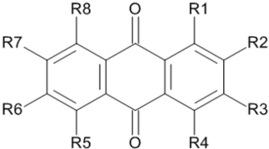
“Anthraquinones (AQs) are natural organic pigments derivatives of the basic structure 9,10-anthracenodione, whose ketone groups are positions on the central ring (Caro et al. 2012).”
BackgroundOliveira, F. E., Ferreira, L. C., Neto, Á. D. B., Teixeira, M. F. S., & Santos‐Ebinuma, V. C. (2020) · Biochemical Engineering Journal · doi:10.1016/j.bej.2020.107694 · Cited by 29
Lebeau, J., Petit, T., Fouillaud, M., Dufossé, L., & Caro, Y. (2020) · Microorganisms · doi:10.3390/microorganisms8121920 · Cited by 28
“As some synthetic colorants have carcinogenic and teratogenic effects, fungal pigments represent an alternative source of natural colorants that are independent of agro-climatic conditions [7,8].”
BackgroundSelf-citationDabas, D. (2018) · Advanced in Food Technology and Nutritional Sciences - Open Journal · doi:10.17140/aftnsoj-se-2-101 · Cited by 27
Andriamanantena, M., Danthu, P., Cardon, D., Razafimbelo, F. F., Ramaroson‐Raonizafinimanana, B., Razafintsalama, V. E., Rakotonandrasana, S. R., Ethève, A., Petit, T., & Caro, Y. (2019) · Chemistry & Biodiversity · doi:10.1002/cbdv.201900442 · Cited by 29
Self-citationXie, Z., Fan, X., Sallam, A. S., Dong, W., Sun, Y., Zeng, X., & Liu, Z. (2025) · Food Chemistry · doi:10.1016/j.foodchem.2025.143104 · Cited by 24
Malik, E. M., Baqi, Y., & Müller, C. E. (2015) · Beilstein Journal of Organic Chemistry · doi:10.3762/bjoc.11.253 · Cited by 24
Nanoencapsulation of Natural Food Colorants
Akhavan‐Mahdavi, S., & Jafari, S. M. (2017) · Elsevier eBooks · doi:10.1016/b978-0-12-809740-3.00006-4 · Cited by 24
Dye-Sensitized Solar Cells Prepared with Mexican Pre-Hispanic Dyes
Sánchez-García, M. A., Bokhimi, X., Velázquez-Martínez, S., & González, A. E. (2018) · Journal of Nanotechnology · doi:10.1155/2018/1236878 · Cited by 24
“CA is a hydroxyanthraquinone (2-α-Dglucopyranosyl-8-methyl-1,3,4,6-tetrahydroxy-anthraquinone7-carboxylic acid) [21, 23].”
Attributes of Polygonum multiflorum to transfigure red biotechnology
Ho, T.-T., Murthy, H. N., Dalawai, D., Bhat, M. A., Paek, K., & Park, S. (2019) · Applied Microbiology and Biotechnology · doi:10.1007/s00253-019-09709-y · Cited by 23
Pavlović, J., Farkas, Z., Kraková, L., & Pangallo, D. (2022) · Applied Sciences · doi:10.3390/app12199991 · Cited by 24
Diversity, stability and applications of mycopigments
Abel, G., Amobonye, A., Bhagwat, P. K., & Pillai, S. (2023) · Process Biochemistry · doi:10.1016/j.procbio.2023.09.002 · Cited by 23
Malik, E. M., Rashed, M., Wingen, L. M., Baqi, Y., & Müller, C. E. (2016) · Dyes and Pigments · doi:10.1016/j.dyepig.2016.03.023 · Cited by 22
Microencapsulation of Natural Anti-Oxidant Pigments
Vila, M. M. D. C., Chaud, M. V., & Balcão, V. M. (2015) · Elsevier eBooks · doi:10.1016/b978-0-12-800350-3.00024-8 · Cited by 22
Rivas-Sanchez, A. K., Guzmán‐Hernández, D. S., Ramírez-Silva, M. T., Romero-Romo, M., & Palomar-Pardave, M. E. (2020) · Dyes and Pigments · doi:10.1016/j.dyepig.2020.108641 · Cited by 21
Wei, Y., Liu, Q., Yu, J., Feng, Q., Zhao, L., Song, H., & Wang, W. (2014) · Natural Product Research · doi:10.1080/14786419.2014.964705 · Cited by 21
“Anthraquinone dihydroxy derivatives belong to the group of colouring pigments exploited in art and industry (Caro et al. 2012), and many of them have shown bioactivities, such as antimicrobial and cytotoxic properties (Xiang et al.”
BackgroundYamada, A., Kondo-Kaneko, M., Ishiuchi, K., Makino, T., & Terasaka, K. (2020) · Plant Biotechnology · doi:10.5511/plantbiotechnology.20.0413a · Cited by 19
“Anthraquinones are a large group of natural products with a quinone structure and are accumulated not only in higher plants but in bacteria and fungi (Caro et al. 2012).”
BackgroundZhang, R., Miao, Y., Chen, L., Yi, S., & Tan, N. (2022) · Genes · doi:10.3390/genes13030521 · Cited by 19
Bioactive Bianthraquinones and Meroterpenoids from a Marine-Derived Stemphylium sp. Fungus
Hwang, J., Park, S. C., Byun, W. S., Oh, D., Lee, S. K., Oh, K., & Shin, J. (2020) · Marine Drugs · doi:10.3390/md18090436 · Cited by 17
ASPERGILLUS TERREUS KMBF1501 A POTENTIAL PIGMENT PRODUCER UNDER SUBMERGED FERMENTATION
Akilandeswari, P., & Pradeep, B. V. (2017) · International Journal of Pharmacy and Pharmaceutical Sciences · doi:10.22159/ijpps.2017v9i4.16176 · Cited by 20
“The pigments commonly produced by the fungi belong to the aromatic polyketide groups such as melanins, quinines [9], flavins, ankaflavin, anthraquinone and naphthoquinone [10].”
BackgroundCurrent and potential natural pigments from microorganisms (bacteria, yeasts, fungi, and microalgae)
Dufossé, L. (2023) · Elsevier eBooks · doi:10.1016/b978-0-323-99608-2.00001-x · Cited by 17
In vitro elicitation of anthraquinones—a review
Nallakaruppan, N., & Thiagarajan, K. (2024) · Plant Cell Tissue and Organ Culture (PCTOC) · doi:10.1007/s11240-024-02691-y · Cited by 17
“1) (Caro et al. 2012).”
Do, K. L., Mushtaq, A., Zhao, F. W., & Su, M. (2023) · Coloration Technology · doi:10.1111/cote.12711 · Cited by 16
Tirumale, S., & Wani, N. A. (2018) · Springer eBooks · doi:10.1007/978-981-13-0393-7_23 · Cited by 15
Laub, A., Sendatzki, A.-K., Palfner, G., Wessjohann, L. A., Schmidt, J., & Arnold, N. (2020) · Foods · doi:10.3390/foods9020156 · Cited by 16
Mantareva, V. N., Braikova, D., Lazarova, I., & Genova, T. (2024) · Frontiers in Bioscience-Landmark · doi:10.31083/j.fbl2905168 · Cited by 14
Aromatic compounds and their fascinating boron complexes as potential quorum sensing molecules
Dembitsky, V. M., Terent'ev, A. O., Baranin, S. V., & Gursky, M. E. (2025) · Vietnam Journal of Chemistry · doi:10.1002/vjch.70013 · Cited by 15
Chemical characterization and microencapsulation of extracellular fungal pigments
Contreras-Machuca, P. I., Avello, M., Pastene, E., Machuca, Á., Aranda, M., Hernández, V., & Fernández, M. (2022) · Applied Microbiology and Biotechnology · doi:10.1007/s00253-022-12255-9 · Cited by 13
“Another group of polyketide pigments that are present in species of filamentous fungi of the genera Penicillium, Talaromyces, and Aspergillus are the hydroxyanthraquinoids, which also shows important antioxidant and antimicrobial activities (Caro et al. 2012; Li et al. 2017).”
BackgroundAmorim, J. C., Bermeo, A. E. C., Urgilés, V. E. V., León, M. D. R. M., & Arévalo, J. M. C. (2022) · Microorganisms · doi:10.3390/microorganisms10122434 · Cited by 15
“In addition, there are examples of anthraquinones that are approved drugs such as mitoxantrone used in chemotherapy and multiple sclerosis [27] or the food additive carmine, which also has the anthraquinone scaffold in its structure [28].”
BackgroundDifferent Shades of Fungal Metabolites: An Overview
Goyal, S., Ramawat, K. G., & Mérillon, J. (2016) · Springer eBooks · doi:10.1007/978-3-319-19456-1_34-1 · Cited by 29
Nature’s Own Pharmacy: Mushroom-Based Chemical Scaffolds and Their Therapeutic Implications
Hassan, M., Shahzadi, S., Ransom, R. F., & Kloczkowski, A. (2023) · International Journal of Molecular Sciences · doi:10.3390/ijms242115596 · Cited by 12
“…, Schizophyllum commune , Flammulina velutipes , Ganoderma lucidum , Phellinus linteus , Lentinus edodes , Cordyceps sinensis , Inonotus obliquus , and Grifola frondosa exhibit inhibitory effects on tumor growth and on the action of immunoceuticals, mainly by boosting the immune system of the host.”
BackgroundSang, M., Feng, P., Chi, L., & Zhang, W. (2024) · Natural Product Reports · doi:10.1039/d3np00040k · Cited by 13
Acid red dyes and the role of electrochemical sensors in their determination
Shen, Y., Zhao, S., Lv, Y., Chen, F., & Fu, L. (2024) · Microchemical Journal · doi:10.1016/j.microc.2024.111705 · Cited by 15
Lac dye as a potential anti-neoplastic agent
Shamim, G., Ranjan, S. K., Pandey, D. M., Sharma, K. K., & Ramani, R. (2016) · Journal of Cancer Research and Therapeutics · doi:10.4103/0973-1482.155975 · Cited by 12
A review on pigment producing soil fungi and its applications
(2021) · Asian Journal of Mycology · doi:10.5943/ajom/4/1/7 · Cited by 13
Industrially Important Pigments from Different Groups of Fungi
Kumar, A., Prajapati, S., Nikhil, Nandan, S., & Neogi, T. G. (2019) · Fungal biology · doi:10.1007/978-3-030-14846-1_10 · Cited by 11
Preet, G., Gomez-Banderas, J., Ebel, R., & Jaspars, M. (2022) · Frontiers in Natural Products · doi:10.3389/fntpr.2022.990822 · Cited by 11
“In addition to their bioactivity, many natural and synthetic anthraquinones are used in the textiles, paints, devices and biochips, foods, cosmetics, pharmaceuticals industries and as imaging photocleavable protecting groups (Furuta et al., 2001; Patnaik et al., 2007; Shaw, 2009; Caro et al., 2012; Dufossé, 2014; Mali…”
Background
Metadata
- Authors
- Caro, Y., Anamale, L., Fouillaud, M., Laurent, P., Petit, T., & Dufosse, L.
- Affiliations
- University of Reunion Island (RE)
- Corresponding author
- Caro, Yanis
- Venue
- Natural Products and Bioprospecting
- Published
- 2012-10
- Volume
- 2
- Issue
- 5
- Pages
- 174-193
- ISSN
- 2192-2195 (ISSN-L)
- 2192-2209
- PMC
- PMC4131637
- OpenAlex
- W2058447128
- Cited by
- 186
- References
- 122
- Citations by year
- 2026: 13 · 2025: 16 · 2024: 13 · 2023: 19 · 2022: 25 · 2021: 17 · 2020: 16 · 2019: 13 · 2018: 14 · 2017: 15 · 2016: 14 · 2015: 8 · 2014: 2 · 2013: 1
- FWCI
- 3.13
- Type
- journal article
- Language
- en
- Open access
- diamond
- doi.org
- Licence
- cc-by
- creativecommons.org/licenses/by/2.0 (tdm)
- Locations
- Natural Products and Bioprospecting (publishedVersion, cc-by)
- Europe PMC (PubMed Central) (publishedVersion)
- PubMed Central (publishedVersion)
- HAL (submittedVersion, other-oa)
- Funders
- Université de La Réunion
- Topics
- Life Sciences › Biochemistry, Genetics and Molecular Biology › Biotechnology › Microbial Metabolism and Applications
- Life Sciences › Agricultural and Biological Sciences › Food Science › Botanical Research and Applications
- Physical Sciences › Chemistry › Analytical Chemistry › Dye analysis and toxicity
- Keywords
- natural pigments, food colorants, carminic acid, fungal pigments, toxicity, carcinogenicity
About these checks
Registry, retraction, Cites and statistics results are computed, not judged, with one exception: a printed reference that no index lists is read once by a model before it counts as a citation error. Claims are extracted by a model and kept only when their quote appears verbatim in the text; each cited source is then checked, with a model’s help, for whether it says what the claim relies on. Those verdicts can be wrong — read the claim’s quote and the cited source before relying on one.
Statistics and arithmetic are recomputed, not judged.
Confidence bands are shown only for fields calibrated on our annotated test set. None is calibrated yet, so no band is shown.
What counts as a claim ›How we measure confidence ›How we check this ›
Are you an author, or do you see a problem with this page? Request a review
Data sources
Bibliographic data: Semantic Scholar, OpenAlex, Crossref.
Contains information from the Semantic Scholar Academic Graph Datasets, made available under the ODC Attribution License (ODC-BY 1.0).
Semantic Scholar’s data is described in: Kinney, R., et al. (2023). The Semantic Scholar Open Data Platform. arXiv:2301.10140.
