

The New Era of Drug Therapy for Obesity: The Evidence and the Expectations
Open accessThe DOI matches its Crossref record; 106 of the 106 references it cites were found in a registry or an index.
Abstract
There is an urgent need for effective pharmacological therapies to help tackle the growing obesity epidemic and the healthcare crisis it poses. The past 3 years have seen approval of a number of novel anti-obesity drugs. The majority of these influence hypothalamic appetite pathways via dopaminergic or serotoninergic signalling. Some are combination therapies, allowing lower doses to minimize the potential for off-target effects. An alternative approach is to mimic endogenous satiety signals using long-lasting forms of peripheral appetite-suppressing hormones. There is also considerable interest in targeting thermogenesis by brown adipose tissue to increase resting energy expenditure. Obesity pharmacotherapy has seen several false dawns, but improved understanding of the pathways regulating energy balance, and better-designed trials, give many greater confidence that recently approved agents will be both efficacious and safe. Nevertheless, a number of issues from preclinical and clinical development continue to attract debate, and additional large-scale trials are still required to address areas of uncertainty.
Overview
The claims and statistics of this paper haven’t been checked yet.
Free: it reads the open-access text and checks the first 5 claims that cite a source we can check. Create a free account to check every claim.
Integrity signals
Registry
Cites
Statistics
Figures
Verification
Claims the paper makes
The claims and statistics of this paper haven’t been checked yet.
Free: it reads the open-access text and checks the first 5 claims that cite a source we can check. Create a free account to check every claim.
Self-check
Percentages, sums and reported differences re-computed from the paper’s own numbers.
The self-check needs the paper’s full text.
Citations
Cites
Reduction in the incidence of type 2 diabetes with lifestyle intervention or metformin
(2002) · New England Journal of Medicine · doi:10.1056/nejmoa012512 · Cited by 19,011 · cited 1×
“A reduction in body weight of 5–10 % is enough for significant improvements in cardiovascular risk factor profiles [28–32], kidney disease [33] and osteoarthritis [34].”
BackgroundGlobal status report on noncommunicable diseases 2010.
Alwan, A. (2011) · Cited by 8,494
Genetics of Food Intake Self-Regulation in Childhood: Literature Review and Research Opportunities
Faith, M. S., Carnell, S., & Kral, T. V. E. (2013) · Human Heredity · doi:10.1159/000353879 · Cited by 7,601
Identification and Importance of Brown Adipose Tissue in Adult Humans
Cypess, A. M., Lehman, S., Williams, G., Tal, I., Rodman, D., Goldfine, A. B., Kuo, F. C., Palmer, E. L., Tseng, Y.-H., Doria, A., et al. (2009) · New England Journal of Medicine · doi:10.1056/nejmoa0810780 · Cited by 4,399
Predicting Obesity in Young Adulthood from Childhood and Parental Obesity
Whitaker, R. C., Wright, J. A., Pepe, M. S., Seidel, K. D., & Dietz, W. H. (1997) · New England Journal of Medicine · doi:10.1056/nejm199709253371301 · Cited by 4,397
2013 AHA/ACC/TOS Guideline for the Management of Overweight and Obesity in Adults
Jensen, M. D., Ryan, D. H., Apovian, C. M., Ard, J. D., Comuzzie, A. G., Donato, K. A., Hu, F. B., Hubbard, V. S., Jakicic, J. M., Kushner, R. F., et al. (2014) · Journal of the American College of Cardiology · doi:10.1016/j.jacc.2013.11.004 · Cited by 4,058
European Guidelines for Obesity Management in Adults
Yumuk, V., Tsigos, C., Fried, M., Schindler, K., Busetto, L., Micic, D., & Toplak, H. (2015) · Obesity Facts · doi:10.1159/000442721 · Cited by 3,432
Global burden of obesity in 2005 and projections to 2030
Kelly, T., Yang, W., Chen, C.-S., Reynolds, K., & He, J. (2008) · International Journal of Obesity · doi:10.1038/ijo.2008.102 · Cited by 3,319 · cited 1×
“Current projections anticipate that 20 % of adults will be obese by 2030 [4].”
BackgroundFunctional Brown Adipose Tissue in Healthy Adults
Virtanen, K. A., Lidell, M. E., Orava, J., Heglind, M., Westergren, R., Niemi, T., Taittonen, M., Laine, J., Savisto, N.-J., Enerbäck, S., et al. (2009) · New England Journal of Medicine · doi:10.1056/nejmoa0808949 · Cited by 3,058 · cited 1×
“Well known as a source of non-shivering thermogenesis in human infants, it was assumed not to persist into adulthood, until review of positron emission tomography (PET) images from adult cancer patients revealed extensive glucose-avid areas in the neck and thorax, subsequently identified as brown fat [16, 17].”
BackgroundGut hormone PYY3-36 physiologically inhibits food intake
Batterham, R. L., Cowley, M. A., Small, C. J., Herzog, H., Cohen, M. A., Dakin, C. L., Wren, A. M., Brynes, A. E., Low, M. J., Ghatei, M. A., et al. (2002) · Nature · doi:10.1038/nature00887 · Cited by 2,351 · cited 1×
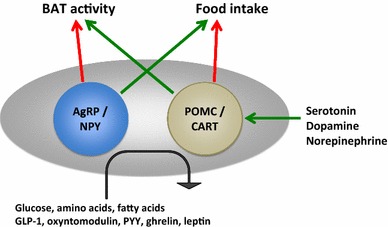
“PYY is a high-affinity agonist of the Y2 receptor, which inhibits the activity of orexigenic AgRP/NPY hypothalamic neurons [87].”
BackgroundSelf-citationFuller, N. R., Colagiuri, S., Schofield, D., Olson, A. D., Shrestha, R., Holzapfel, C., Wolfenstetter, S. B., Holle, R., Ahern, A. L., Hauner, H., et al. (2013) · International Journal of Obesity · doi:10.1038/ijo.2012.139 · Cited by 2,117
XENical in the Prevention of Diabetes in Obese Subjects (XENDOS) Study
Torgerson, J. S., Hauptman, J., Boldrin, M. N., & Sjöström, L. (2004) · Diabetes Care · doi:10.2337/diacare.27.1.155 · Cited by 1,915 · cited 1×
“Reduced progression to diabetes [47] and improved glycaemic control in patients who already have diabetes [48] have also been noted.”
BackgroundWing, R. R., Lang, W., Wadden, T. A., Safford, M., Knowler, W. C., Bertoni, A. G., Hill, J. O., Brancati, F. L., Peters, A., Wagenknecht, L., et al. (2011) · Diabetes Care · doi:10.2337/dc10-2415 · Cited by 1,828 · cited 1×
“A reduction in body weight of 5–10 % is enough for significant improvements in cardiovascular risk factor profiles [28–32], kidney disease [33] and osteoarthritis [34].”
BackgroundBariatric Surgery and Long-term Cardiovascular Events
Sjöström, L., Peltonen, M., Jacobson, P., Sjöström, C. D., Karason, K., Wedel, H., Ahlin, S., Anveden, Å., Bengtsson, C., Bergmark, G., et al. (2012) · JAMA · doi:10.1001/jama.2011.1914 · Cited by 1,656
Valvular heart disease associated with fenfluramine-phentermine
Connolly, H. M., Crary, J. L., McGoon, M. D., Hensrud, D. D., Edwards, B. S., Edwards, W. D., & Schaff, H. V. (1997) · New England Journal of Medicine · doi:10.1056/nejm199708283370901 · Cited by 1,632
Gloy, V. L., Briel, M., Bhatt, D. L., Kashyap, S. R., Schauer, P. R., Mingrone, G., Bucher, H. C., & Nordmann, A. J. (2013) · BMJ · doi:10.1136/bmj.f5934 · Cited by 1,351 · cited 1×
“Bariatric surgery is superior to nonsurgical approaches with regard to weight loss and diabetes remission, at least in the short-to-medium term [96].”
BackgroundPharmacological Management of Obesity: An Endocrine Society Clinical Practice Guideline
Apovian, C. M., Aronne, L. J., Bessesen, D. H., McDonnell, M. E., Murad, M. H., Pagotto, U., Ryan, D. H., & Still, C. D. (2015) · The Journal of Clinical Endocrinology & Metabolism · doi:10.1210/jc.2014-3415 · Cited by 1,347 · cited 1×
“Weight loss agents are generally licensed for use in patients with a BMI C30 kg/m(2), or C27–28 kg/ m(2) in those with an obesity-associated comorbidity [102].”
BackgroundBeneficial health effects of modest weight loss.
Dj, G. (1992) · PubMed · Cited by 1,263
Pi-Sunyer, F. X., Aronne, L. J., Heshmati, H. M., Devin, J., Rosenstock, J., & RIO-North America Study Group, F. T. (2006) · JAMA · doi:10.1001/jama.295.7.761 · Cited by 1,218
Nauck, M., Frid, A., Hermansen, K., Shah, N. S., Tankova, T., Mitha, I. H., Zdravkovic, M., Düring, M., Matthews, D. R., & for the LEAD-2 Study Group (2009) · Diabetes Care · doi:10.2337/dc08-1355 · Cited by 1,129
Gadde, K. M., Allison, D. B., Ryan, D. H., Peterson, C. A., Troupin, B., Schwiers, M. L., & Day, W. W. (2011) · The Lancet · doi:10.1016/s0140-6736(11)60205-5 · Cited by 1,064 · cited 1×
“5 mg phentermine/46 mg topiramate [58].”
Greenway, F. L., Fujioka, K., Plodkowski, R. A., Mudaliar, S., Guttadauria, M., Erickson, J., Kim, D. D., & Dunayevich, E. (2010) · The Lancet · doi:10.1016/s0140-6736(10)60888-4 · Cited by 1,036
Activation of Human Brown Adipose Tissue by a β3-Adrenergic Receptor Agonist
Cypess, A. M., Weiner, L. S., Roberts-Toler, C., Elía, E. F., Kessler, S. H., Kahn, P. A., English, J., Chatman, K., Trauger, S. A., Doria, A., et al. (2015) · Cell Metabolism · doi:10.1016/j.cmet.2014.12.009 · Cited by 1,027
Effect of Sibutramine on Cardiovascular Outcomes in Overweight and Obese Subjects
James, W. P. T., Caterson, I. D., Coutinho, W., Finer, N., Van Gaal, L. F., Maggioni, A. P., Torp-Pedersen, C., Sharma, A. M., Shepherd, G. M., Rode, R. A., et al. (2010) · New England Journal of Medicine · doi:10.1056/nejmoa1003114 · Cited by 943 · cited 2×
“Nevertheless, inferring positive health outcomes purely from weight loss is ill advised, as shown by the postapproval withdrawal of a number of agents—most recently, sibutramine due to increases in major adverse cardiac events [37].”
BackgroundMulticenter, placebo-controlled trial of lorcaserin for weight management.
Smith, S. R., Weissman, N. J., Anderson, C. M., Sanchez, M., Chuang, E., Stubbe, S., Bays, H., & Shanahan, W. R. (2010) · New England Journal of Medicine · doi:10.1056/nejmoa0909809 · Cited by 911 · cited 1×
“6 % better than placebo [50, 51], with 2.”
on behalf of the NN8022-1923 Investigators, Wadden, T. A., Hollander, P., Klein, S., Niswender, K., Woo, V, Hale, P. M., & Aronne, L. (2013) · International Journal of Obesity · doi:10.1038/ijo.2013.120 · Cited by 842
Long-term Follow-up After Bariatric Surgery: A Systematic Review
Puzziferri, N., Roshek, T. B., Mayo, H. G., Gallagher, R., Belle, S. H., & Livingston, E. H. (2014) · JAMA · doi:10.1001/jama.2014.10706 · Cited by 819 · cited 1×
“drome, hypoglycaemia, micronutrient malabsorption and cholelithiasis [97–99].”
Long term pharmacotherapy for obesity and overweight: updated meta-analysis
Rucker, D., Padwal, R., Li, S. K., Curioni, C., & Lau, D. C. W. (2007) · BMJ · doi:10.1136/bmj.39385.413113.25 · Cited by 801
Gut hormones and the regulation of energy homeostasis
Murphy, K. G., & Bloom, S. R. (2006) · Nature · doi:10.1038/nature05484 · Cited by 778 · cited 1×
“GLP-1 is an endogenous incretin, released by intestinal L cells in response to nutrient ingestion, which enhances glucose-stimulated insulin release by pancreatic b cells and acts on satiety pathways, including hypothalamic POMC neurons, to reduce food intake [68].”
BackgroundSelf-citationApovian, C. M., Aronne, L., Rubino, D., Still, C., Wyatt, H., Burns, C., Kim, D., Dunayevich, E., & for the COR‐II Study Group (2013) · Obesity · doi:10.1002/oby.20309 · Cited by 720
Allison, D. B., Gadde, K. M., Garvey, W. T., Peterson, C. A., Schwiers, M. L., Najarian, T., Tam, P. Y., Troupin, B., & Day, W. W. (2012) · Obesity · doi:10.1038/oby.2011.330 · Cited by 711
A rationally designed monomeric peptide triagonist corrects obesity and diabetes in rodents
Finan, B., Yang, B., Ottaway, N., Smiley, D. L., Ma, T., Clemmensen, C., Chabenne, J., Zhang, L., Habegger, K. M., Fischer, K., et al. (2015) · Nature Medicine · doi:10.1038/nm.3761 · Cited by 645 · cited 1×
“As enhancement of gut hormone release is suggested as a possible mechanism for the large weight reductions seen with Roux-en-Y gastric bypass, combined use of two or more of these gut-derived peptides has been suggested as a way to mimic the effect of bariatric surgery without the need for a surgical procedure [49, 93…”
BackgroundChristensen, R., Bartels, E. M., Astrup, A., & Bliddal, H. (2007) · Annals of the Rheumatic Diseases · doi:10.1136/ard.2006.065904 · Cited by 632
GLP-1 agonism stimulates brown adipose tissue thermogenesis and browning through hypothalamic AMPK
Beiroa, D., Imbernon, M., Gallego, R., Senra, A., Herranz, D., Villarroya, F., Serrano, M., Fernø, J., Salvador, J., Escalada, J., et al. (2014) · Diabetes · doi:10.2337/db14-0302 · Cited by 602 · cited 13×
“A possible role for GLP-1 in stimulating energy utilization via BAT [27] requires further”
InfluentialFidler, M. C., Sanchez, M., Raether, B., Weissman, N. J., Smith, S. R., Shanahan, W. R., & Anderson, C. M. (2011) · The Journal of Clinical Endocrinology & Metabolism · doi:10.1210/jc.2011-1256 · Cited by 561
Wadden, T. A., Foreyt, J. P., Foster, G. D., Hill, J. O., Klein, S., O'Neil, P. M., Perri, M. G., Pi‐Sunyer, F. X., Rock, C. L., Erickson, J. S., et al. (2011) · Obesity · doi:10.1038/oby.2010.147 · Cited by 558
O'Neil, P. M., Smith, S. R., Weissman, N. J., Fidler, M. C., Sanchez, M., Zhang, J., Raether, B., Anderson, C. M., & Shanahan, W. R. (2012) · Obesity · doi:10.1038/oby.2012.66 · Cited by 530
Effect of Degree of Weight Loss on Health Benefits
Blackburn, G. (1995) · Obesity Research · doi:10.1002/j.1550-8528.1995.tb00466.x · Cited by 503
Hollander, P., Gupta, A. K., Plodkowski, R., Greenway, F., Bays, H., Burns, C., Klassen, P., Fujioka, K., & for the COR-Diabetes Study Group (2013) · Diabetes Care · doi:10.2337/dc13-0234 · Cited by 501 · cited 1×
“2 % greater weight loss at 1 year over placebo [64–67], with an associated 0.”
BackgroundPancreatic safety of incretin-based drugs–FDA and EMA assessment
Egan, A. G., Blind, E., Dunder, K., de Graeff, P. A., Hummer, B. T., Bourcier, T., & Rosebraugh, C. (2014) · New England Journal of Medicine · doi:10.1056/nejmp1314078 · Cited by 498 · cited 1×
“In 2014, the FDA and EMA concluded that assertions of a causal link between incretin use and pancreatic pathology were inconsistent with current data [79].”
BackgroundStahl, S. M., Pradko, J., Haight, B. R., Modell, J. G., Rockett, C. B., & Learned-Coughlin, S. (2004) · The Primary Care Companion For CNS Disorders · doi:10.4088/pcc.v06n0403 · Cited by 495 · cited 1×
“Bupropion, an aminoketone which acts as a mixed dopamine/ norepinephrine reuptake inhibitor [60], is used as an antidepressant and in smoking cession, and has previously been evaluated as monotherapy in the treatment of obesity [61].”
A Two-Year Randomized Trial of Obesity Treatment in Primary Care Practice
Wadden, T. A., Volger, S., Sarwer, D. B., Vetter, M. L., Tsai, A. G., Berkowitz, R. I., Kumanyika, S., Schmitz, K. H., Diewald, L. K., Barg, R., et al. (2011) · New England Journal of Medicine · doi:10.1056/nejmoa1109220 · Cited by 487
Four-year weight losses in the Look AHEAD study: factors associated with long-term success
Wadden, T. A., Neiberg, R. H., Wing, R. R., Clark, J. M., Delahanty, L. M., Hill, J. O., Krakoff, J., Otto, A., Ryan, D. H., Vitolins, M. Z., et al. (2011) · Obesity · doi:10.1038/oby.2011.230 · Cited by 465 · cited 1×
“only 46 % of patients achieved 5 % weight loss [5].”
Increased Risk of Acute Pancreatitis and Biliary Disease Observed in Patients With Type 2 Diabetes
Noel, R. A., Braun, D. K., Patterson, R. E., & Bloomgren, G. L. (2009) · Diabetes Care · doi:10.2337/dc08-1755 · Cited by 435
Effects of intracerebroventricular injection of neuropeptide Y on energy metabolism
Billington, C. J., Briggs, J. E., Grace, M., & Levine, A. S. (1991) · American Journal of Physiology-Regulatory, Integrative and Comparative Physiology · doi:10.1152/ajpregu.1991.260.2.r321 · Cited by 413
Pancreatic Safety of Incretin-Based Drugs — FDA and EMA Assessment
(2014) · New England Journal of Medicine · doi:10.1056/nejmx140026 · Cited by 372
Rational Design of a Combination Medication for the Treatment of Obesity
Greenway, F. L., Whitehouse, M. J., Guttadauria, M., Anderson, J. W., Atkinson, R. L., Fujioka, K., Gadde, K. M., Gupta, A. K., O'Neil, P., Schumacher, D., et al. (2009) · Obesity · doi:10.1038/oby.2008.461 · Cited by 345
Drugs Commonly Associated With Weight Change: A Systematic Review and Meta-analysis
Domecq, J. P., Prutsky, G., Leppin, A., Sonbol, M. B., Altayar, O., Undavalli, C., Wang, Z., Elraiyah, T., Brito, J. P., Mauck, K. F., et al. (2015) · The Journal of Clinical Endocrinology & Metabolism · doi:10.1210/jc.2014-3421 · Cited by 334
The role of gut hormones and the hypothalamus in appetite regulation
Suzuki, K., Simpson, K. A., Minnion, J. S., Shillito, J. C., & Bloom, S. R. (2010) · Endocrine Journal · doi:10.1507/endocrj.k10e-077 · Cited by 319
Self-citation(2014) · The Lancet Diabetes & Endocrinology · doi:10.1016/s2213-8587(14)70156-1 · Cited by 319
Bupropion SR Enhances Weight Loss: A 48‐Week Double‐Blind, Placebo‐ Controlled Trial
Anderson, J. W., Greenway, F. L., Fujioka, K., Gadde, K. M., McKenney, J., & O'Neil, P. M. (2002) · Obesity Research · doi:10.1038/oby.2002.86 · Cited by 315
Nahmias, C., Blin, N., Elalouf, J. M., Mattei, M. G., Strosberg, A. D., & Emorine, L. J. (1991) · The EMBO Journal · doi:10.1002/j.1460-2075.1991.tb04940.x · Cited by 281
Oxyntomodulin Inhibits Food Intake in the Rat
Dakin, C. L., Gunn, I., Small, C. J., Edwards, C. M. B., Hay, D. L., Smith, D. M., Ghatei, M. A., & Bloom, S. R. (2001) · Endocrinology · doi:10.1210/endo.142.10.8430 · Cited by 281
Self-citationWeighing Risks and Benefits of Liraglutide — The FDA's Review of a New Antidiabetic Therapy
Parks, M., & Rosebraugh, C. (2010) · New England Journal of Medicine · doi:10.1056/nejmp1001578 · Cited by 275
Shi, Y.-C., Lau, J., Lin, Z., Zhang, H., Zhai, L., Sperk, G., Heilbronn, R., Mietzsch, M., Weger, S., Huang, X.-F., et al. (2013) · Cell Metabolism · doi:10.1016/j.cmet.2013.01.006 · Cited by 266 · cited 1×
“Furthermore, AgRP/NPY and POMC neurons control sympathetic innervation of BAT, revealing a central role for this system in various aspects of energy homeostasis [20–22].”
BackgroundTopol, E. J., Bousser, M.-G., Fox, K. A., Creager, M. A., Despres, J.-P., Easton, J. D., Hamm, C. W., Montalescot, G., Steg, P. G., Pearson, T. A., et al. (2010) · The Lancet · doi:10.1016/s0140-6736(10)60935-x · Cited by 266
Update on neuropharmacological treatments for alcoholism: Scientific basis and clinical findings
Johnson, B. A. (2008) · Biochemical Pharmacology · doi:10.1016/j.bcp.2007.08.005 · Cited by 264
Vanhala, M., Vanhala, P., Kumpusalo, E., Halonen, P., & Takala, J. (1998) · BMJ · doi:10.1136/bmj.317.7154.319 · Cited by 263
Mitochondrial uncoupling proteins and energy metabolism
Busiello, R. A., Savarese, S., & Lombardi, A. (2015) · Frontiers in Physiology · doi:10.3389/fphys.2015.00036 · Cited by 259
Ben‐Menachem, E., Henriksen, O., Dam, M., Mikkelsen, M., Schmidt, D., Reid, S., Reife, R., Kramer, L., Pledger, G., & Karim, R. (1996) · Epilepsia · doi:10.1111/j.1528-1157.1996.tb00606.x · Cited by 243
Lockie, S. H., Heppner, K. M., Chaudhary, N., Chabenne, J. R., Morgan, D. A., Veyrat-Durebex, C., Ananthakrishnan, G., Rohner-Jeanrenaud, F., Drucker, D. J., DiMarchi, R., et al. (2012) · Diabetes · doi:10.2337/db11-1556 · Cited by 237
Kushner, R. F., & Ryan, D. H. (2014) · JAMA · doi:10.1001/jama.2014.10432 · Cited by 235 · cited 1×
“The best evidence for their effectiveness is with intensive programmes addressing diet, activity and behavioural factors [33, 94, 95].”
BackgroundIkramuddin, S., Blackstone, R. P., Brancatisano, A., Toouli, J., Shah, S. N., Wolfe, B. M., Fujioka, K., Maher, J. W., Swain, J., Que, F. G., et al. (2014) · JAMA · doi:10.1001/jama.2014.10540 · Cited by 214 · cited 1×
“Implantable vagal nerve blockade devices are designed to exploit vagally mediated satiety signals to reduce food intake [104] and have been recently approved by the FDA.”
BackgroundBrown adipose tissue activity as a target for the treatment of obesity/insulin resistance
Poher, A.-L., Altirriba, J., Veyrat-Durebex, C., & Rohner-Jeanrenaud, F. (2015) · Frontiers in Physiology · doi:10.3389/fphys.2015.00004 · Cited by 211
Action and therapeutic potential of oxyntomodulin
Pocai, A. (2014) · Molecular Metabolism · doi:10.1016/j.molmet.2013.12.001 · Cited by 191 · cited 2×
“quently, treatments that target both sides of the energy equation have the potential for greater effectiveness [24, 25].”
BackgroundUpdated review on the benefits of weight loss
Vidal, J. (2002) · International Journal of Obesity · doi:10.1038/sj.ijo.0802215 · Cited by 188 · cited 1×
“A reduction in body weight of 5–10 % is enough for significant improvements in cardiovascular risk factor profiles [28–32], kidney disease [33] and osteoarthritis [34].”
BackgroundHauptman, J., Jeunet, F., & Hartmann, D. (1992) · The American Journal of Clinical Nutrition · doi:10.1093/ajcn/55.1.309s · Cited by 182
Complications of bariatric surgery: Dumping syndrome, reflux and vitamin deficiencies
Tack, J., & Deloose, E. (2014) · Best Practice & Research Clinical Gastroenterology · doi:10.1016/j.bpg.2014.07.010 · Cited by 181 · cited 1×
“drome, hypoglycaemia, micronutrient malabsorption and cholelithiasis [97–99].”
Mietlicki-Baase, E. G., Ortinski, P. I., Rupprecht, L. E., Olivos, D. R., Alhadeff, A. L., Pierce, R. C., & Hayes, M. R. (2013) · American Journal of Physiology-Endocrinology and Metabolism · doi:10.1152/ajpendo.00413.2013 · Cited by 174
Long-term weight control study I (weeks 0 to 34)
Weintraub, M., Sundaresan, P. R., Madan, M., Schuster, B., Balder, A., Lasagna, L., & Cox, C. (1992) · Clinical Pharmacology and Therapeutics · doi:10.1038/clpt.1992.69 · Cited by 173
Anorectics on Trial: A Half Century of Federal Regulation of Prescription Appetite Suppressants
Colman, E. (2005) · Annals of Internal Medicine · doi:10.7326/0003-4819-143-5-200509060-00013 · Cited by 167
EXPRESSION AND POSSIBLE FUNCTIONAL ROLE OF THE beta 3-ADRENOCEPTOR IN HUMAN AND RAT DETRUSOR MUSCLE
FUJIMURA, T., TAMURA, K., TSUTSUMI, T., YAMAMOTO, T., NAKAMURA, K., KOIBUCHI, Y., KOBAYASHI, M., & YAMAGUCHI, O. (1999) · Journal of Urology · doi:10.1016/s0022-5347(01)61994-3 · Cited by 166
Dinitrophenol and obesity: an early twentieth-century regulatory dilemma
Colman, E. (2007) · Regulatory Toxicology and Pharmacology · doi:10.1016/j.yrtph.2007.03.006 · Cited by 160
Original Articles Sibutramine Reduces Food Intake in Non‐Dieting Women with Obesity
Rolls, B. J., Shide, D. J., Thorwart, M. L., & Ulbrecht, J. S. (1998) · Obesity Research · doi:10.1002/j.1550-8528.1998.tb00308.x · Cited by 158
Distribution of β3-adrenoceptor mRNA in human tissues
Berkowitz, D. E., Nardone, N. A., Smiley, R. M., Price, D. T., Kreutter, D. K., Fremeau, R. T., & Schwinn, D. A. (1995) · European Journal of Pharmacology: Molecular Pharmacology · doi:10.1016/0922-4106(95)90098-5 · Cited by 153
Hanefeld, M., & Sachse, G. (2002) · Diabetes, Obesity and Metabolism · doi:10.1046/j.1463-1326.2002.00237.x · Cited by 151 · cited 1×
“Reduced progression to diabetes [47] and improved glycaemic control in patients who already have diabetes [48] have also been noted.”
BackgroundFerdinand, K. C., White, W. B., Calhoun, D. A., Lonn, E. M., Sager, P. T., Brunelle, R., Jiang, H. H., Threlkeld, R. J., Robertson, K. E., & Geiger, M. J. (2014) · Hypertension · doi:10.1161/hypertensionaha.114.03062 · Cited by 145
Brown adipose tissue in patients with phaeochromocytoma.
Lean, M. E. J., James, W. P. T., Jennings, G., & Trayhurn, P. (1986) · PubMed · Cited by 142
Topiramate selectively protects against seizures induced by ATPA, a GluR5 kainate receptor agonist
Kaminski, R. M., Banerjee, M., & Rogawski, M. A. (2004) · Neuropharmacology · doi:10.1016/j.neuropharm.2004.02.010 · Cited by 142
Topiramate Reduces Energy and Fat Gains in Lean (Fa/?) and Obese (fa/fa) Zucker Rats
Picard, F., Deshaies, Y., Lalonde, J., Samson, P., & Richard, D. (2000) · Obesity Research · doi:10.1038/oby.2000.84 · Cited by 132
Unraveling oxyntomodulin, GLP1's enigmatic brother
Pocai, A. (2012) · Journal of Endocrinology · doi:10.1530/joe-12-0368 · Cited by 130
The future role of gut hormones in the treatment of obesity
Troke, R. C., Tan, T. M., & Bloom, S. R. (2014) · Therapeutic Advances in Chronic Disease · doi:10.1177/2040622313506730 · Cited by 125
Self-citationObesity and the risk and prognosis of gallstone disease and pancreatitis
Bonfrate, L., Wang, D. Q.-H., Garruti, G., & Portincasa, P. (2014) · Best Practice & Research Clinical Gastroenterology · doi:10.1016/j.bpg.2014.07.013 · Cited by 125
Field, B. C. T., Wren, A. M., Peters, V., Baynes, K. C. R., Martin, N. M., Patterson, M., Alsaraf, S., Amber, V., Wynne, K., Ghatei, M. A., et al. (2010) · Diabetes · doi:10.2337/db09-1859 · Cited by 112
Self-citationThe Glucagon Receptor Is Involved in Mediating the Body Weight‐Lowering Effects of Oxyntomodulin
Kosinski, J. R., Hubert, J., Carrington, P. E., Chicchi, G. G., Mu, J., Miller, C., Cao, J., Bianchi, E., Pessi, A., SinhaRoy, R., et al. (2012) · Obesity · doi:10.1038/oby.2012.67 · Cited by 106
GLP-1 receptor agonists: A clinical perspective on cardiovascular effects
Mundil, D., Cameron-Vendrig, A., & Husain, M. (2012) · Diabetes and Vascular Disease Research · doi:10.1177/1479164112441526 · Cited by 104 · cited 1×
“Like other GLP-1 agents [72, 73], liraglutide increases heart rate, an observation that has not been satisfactorily explained, but evidence suggests it is not associated with an increase in arrhythmias or hypertension.”
BackgroundChorvat, R. J., Berbaum, J., Seriacki, K., & McElroy, J. F. (2012) · Bioorganic & Medicinal Chemistry Letters · doi:10.1016/j.bmcl.2012.08.004 · Cited by 102
Food and Drug Administration's Obesity Drug Guidance Document: A Short History
Colman, E. (2012) · Circulation · doi:10.1161/circulationaha.111.028381 · Cited by 101
Morgan, D. A., McDaniel, L. N., Yin, T., Khan, M., Jiang, J., Acevedo, M. R., Walsh, S. A., Ponto, L. L. B., Norris, A. W., Lutter, M., et al. (2015) · Diabetes · doi:10.2337/db14-1257 · Cited by 91
Dhurandhar, E. J., Kaiser, K. A., Dawson, J. A., Alcorn, A. S., Keating, K. D., & Allison, D. B. (2015) · International Journal of Obesity · doi:10.1038/ijo.2014.184 · Cited by 88
Long-term Weight Control Study VI
Weintraub, M., Sundaresan, P. R., & Cox, C. (1992) · Clinical Pharmacology and Therapeutics · doi:10.1038/clpt.1992.74 · Cited by 85
MacDonald, A. F., Billington, C. J., & Levine, A. S. (2004) · Brain Research · doi:10.1016/j.brainres.2004.05.043 · Cited by 83
Weissman, N. J., Sanchez, M., Koch, G. G., Smith, S. R., Shanahan, W. R., & Anderson, C. M. (2013) · Circulation Cardiovascular Imaging · doi:10.1161/circimaging.112.000128 · Cited by 70
Glucagon-like peptide-1 therapy and the exocrine pancreas: innocent bystander or friendly fire?
Butler, P. C., Matveyenko, A. V., Dry, S., Bhushan, A., & Elashoff, R. (2010) · Diabetologia · doi:10.1007/s00125-009-1591-5 · Cited by 69
Can medical therapy mimic the clinical efficacy or physiological effects of bariatric surgery?
Miras, A. D., & le Roux, C. W. (2014) · International Journal of Obesity · doi:10.1038/ijo.2013.205 · Cited by 64
Caricilli, A. M., Penteado, E., de Abreu, L. L., Quaresma, P. G. F., Santos, A. C., Guadagnini, D., Razolli, D., Mittestainer, F. C., Carvalheira, J. B., Velloso, L. A., et al. (2012) · Endocrinology · doi:10.1210/en.2012-1272 · Cited by 62
On-target Effects of GLP-1 Receptor Agonists on Thyroid C-cells in Rats and Mice
Rosol, T. J. (2013) · Toxicologic Pathology · doi:10.1177/0192623312472402 · Cited by 61
Thermogenic adipocytes: From cells to physiology and medicine
Díaz, M. B., Herzig, S., & Vegiopoulos, A. (2014) · Metabolism · doi:10.1016/j.metabol.2014.07.002 · Cited by 47
Serotonin 5-HT2C receptor-mediated inhibition of the M-current in hypothalamic POMC neurons
Roepke, T. A., Smith, A. W., Rønnekleiv, O. K., & Kelly, M. J. (2012) · American Journal of Physiology-Endocrinology and Metabolism · doi:10.1152/ajpendo.00565.2011 · Cited by 44
Do Incretin-Based Therapies Cause Acute Pancreatitis?
Olansky, L. (2010) · Journal of Diabetes Science and Technology · doi:10.1177/193229681000400129 · Cited by 32
Chalmer, T., Almdal, T. P., Vilsbøll, T., & Knop, F. K. (2015) · Expert Opinion on Drug Safety · doi:10.1517/14740338.2015.975205 · Cited by 31 · cited 1×
“The question of whether GLP-1-based agents can increase the risk of pancreatitis has attracted considerable debate [74–77].”
BackgroundPrice, D. W., Ma, Y., Rubin, R. R., Perreault, L., Bray, G. A., Marrero, D., Knowler, W. C., Barrett-Connor, E., LaCoursiere, D. Y., & for the Diabetes Prevention Program Research Group (2013) · Diabetes Care · doi:10.2337/dc12-0293 · Cited by 30
Chu, S., Chen, P., Hsieh, Y., Yu, C., Lin, M., Lin, Y., & Kuo, D. (2014) · British Journal of Pharmacology · doi:10.1111/bph.12667 · Cited by 27
Rohde, U., Hedbäck, N., Gluud, L. L., Vilsbøll, T., & Knop, F. K. (2013) · BMJ Open · doi:10.1136/bmjopen-2013-003417 · Cited by 22
Systemic control of brown fat thermogenesis: integration of peripheral and central signals
Schulz, T. J., & Tseng, Y. (2013) · Annals of the New York Academy of Sciences · doi:10.1111/nyas.12277 · Cited by 20
Feeding association between the nucleus of the solitary tract and the ventral tegmental area
Kim, E., Quinn, J. G., Spanswick, D. C., & O‘Hare, E. (2009) · Appetite · doi:10.1016/j.appet.2009.09.003 · Cited by 15
Research works printed but not linked: 1
- National Institute for Health and Care Excellence. Obesity: identification, assessment and management of overweight and obesity in children, young people and adults [Internet]. nice.org.uk. [cited 2015 Mar 8]. Available from: https://www.nice.org.uk/guidance/cg189/resources/guidance-obesity-identification-assessment-and-management-of-overweight-and-obesity-in-children-young-people-and-adults-pdf. 25535639
Cited by
Towards a multidisciplinary approach to understand and manage obesity and related diseases
Bischoff, S. C., Boirie, Y., Cederholm, T., Chourdakis, M., Cuerda, C., Delzenne, N. M., Deutz, N. E., Fouque, D., Genton, L., Gil, C., et al. (2017) · Clinical Nutrition · doi:10.1016/j.clnu.2016.11.007 · Cited by 206
Anti-obesity therapy: from rainbow pills to polyagonists
Müller, T. D., Clemmensen, C., Finan, B., DiMarchi, R. D., & Tschöp, M. H. (2018) · Pharmacological Reviews · doi:10.1124/pr.117.014803 · Cited by 199
Evolution of pharmacological obesity treatments: focus on adverse side‐effect profiles
Krentz, A. J., Fujioka, K., & Hompesch, M. (2016) · Diabetes, Obesity and Metabolism · doi:10.1111/dom.12657 · Cited by 168
Next generation GLP-1/GIP/glucagon triple agonists normalize body weight in obese mice
Knerr, P. J., Mowery, S. A., Douros, J. D., Premdjee, B., Hjøllund, K. R., He, Y., Kruse Hansen, A. M., Olsen, A. K., Perez-Tilve, D., DiMarchi, R. D., et al. (2022) · Molecular Metabolism · doi:10.1016/j.molmet.2022.101533 · Cited by 152
Dodd, G. T., Xirouchaki, C. E., Eramo, M., Mitchell, C. A., Andrews, Z. B., Henry, B. A., Cowley, M. A., & Tiganis, T. (2019) · Cell Reports · doi:10.1016/j.celrep.2019.08.019 · Cited by 92
Metadata
- Authors
- Jones, B. J., & Bloom, S. R.
- Affiliations
- Hammersmith Hospital (GB)
- Corresponding author
- Bloom, Stephen R.
- Venue
- Drugs
- Published
- 2015-05-19
- Volume
- 75
- Issue
- 9
- Pages
- 935-945
- ISSN
- 0012-6667 (ISSN-L)
- 1179-1950
- PMC
- PMC4464860
- OpenAlex
- W2118611271
- Cited by
- 58
- References
- 106
- Citations by year
- 2026: 1 · 2025: 2 · 2024: 4 · 2023: 1 · 2022: 4 · 2021: 3 · 2020: 8 · 2019: 8 · 2018: 4 · 2017: 9 · 2016: 12 · 2015: 2
- FWCI
- 6.44
- Type
- journal article
- Language
- en
- Open access
- hybrid
- doi.org
- Licence
- Locations
- Drugs (publishedVersion, cc-by-nc)
- PubMed Central (publishedVersion, cc-by-nc)
- PubMed (publishedVersion)
- Funders
- National Institute for Health and Care Research (FP7-HEALTH-2009-241592, FP7-HEALTH-2009-241592 EuroCHIP, NF-SI-0513-10080, NF-SI-0507-10337, ACF-2010-21-012, NF-SI-0513-10029)
- Imperial College London
- Directorate for Biological Sciences
- Medical Research Council (FP7-HEALTH-2009-241592, MR/K02115X/1, MR/K023667/1, MR/L013088/1)
- Biotechnology and Biological Sciences Research Council (BB/L004259/1, FP7-HEALTH-2009-241592 EuroCHIP, FP7-HEALTH-2009-241592)
- NIHR Imperial Biomedical Research Centre
- FP7 Health (2009-241592 EuroCHIP)
- Topics
- Health Sciences › Medicine › Pharmacology (medical) › Pharmacology and Obesity Treatment
- Life Sciences › Neuroscience › Endocrine and Autonomic Systems › Regulation of Appetite and Obesity
- Health Sciences › Medicine › Surgery › Bariatric Surgery and Outcomes
- Keywords
- anti-obesity drugs, obesity pharmacotherapy, appetite regulation, dopamine signaling, combination therapy, satiety hormones, brown adipose tissue, thermogenesis, resting energy expenditure, energy balance, drug approval, drug safety
- MeSH terms
- Energy Metabolism, Forecasting, Humans, Obesity, Anti-Obesity Agents
About these checks
Registry, retraction, Cites and statistics results are computed, not judged, with one exception: a printed reference that no index lists is read once by a model before it counts as a citation error. Claims are extracted by a model and kept only when their quote appears verbatim in the text; each cited source is then checked, with a model’s help, for whether it says what the claim relies on. Those verdicts can be wrong — read the claim’s quote and the cited source before relying on one.
Statistics and arithmetic are recomputed, not judged.
Confidence bands are shown only for fields calibrated on our annotated test set. None is calibrated yet, so no band is shown.
What counts as a claim ›How we measure confidence ›How we check this ›
Are you an author, or do you see a problem with this page? Request a review
Data sources
Bibliographic data: Semantic Scholar, OpenAlex, Crossref.
Contains information from the Semantic Scholar Academic Graph Datasets, made available under the ODC Attribution License (ODC-BY 1.0).
Semantic Scholar’s data is described in: Kinney, R., et al. (2023). The Semantic Scholar Open Data Platform. arXiv:2301.10140.
