

A Brief Review of Critical Processes in Exercise-Induced Muscular Hypertrophy
Open accessThe DOI matches its Crossref record; 72 of the 72 references it cites were found in a registry or an index.
Abstract
With regular practice, resistance exercise can lead to gains in skeletal muscle mass by means of hypertrophy. The process of skeletal muscle fiber hypertrophy comes about as a result of the confluence of positive muscle protein balance and satellite cell addition to muscle fibers. Positive muscle protein balance is achieved when the rate of new muscle protein synthesis (MPS) exceeds that of muscle protein breakdown (MPB). While resistance exercise and postprandial hyperaminoacidemia both stimulate MPS, it is through the synergistic effects of these two stimuli that a net gain in muscle proteins occurs and muscle fiber hypertrophy takes place. Current evidence favors the post-exercise period as a time when rapid hyperaminoacidemia promotes a marked rise in the rate of MPS. Dietary proteins with a full complement of essential amino acids and high leucine contents that are rapidly digested are more likely to be efficacious in this regard. Various other compounds have been added to complete proteins, including carbohydrate, arginine and glutamine, in an attempt to augment the effectiveness of the protein in stimulating MPS (or suppressing MPB), but none has proved particularly effective. Evidence points to a higher protein intake in combination with resistance exercise as being efficacious in allowing preservation, and on occasion increases, in skeletal muscle mass with dietary energy restriction aimed at the promotion of weight loss. The goal of this review is to examine practices of protein ingestion in combination with resistance exercise that have some evidence for efficacy and to highlight future areas for investigation.
Overview
The claims and statistics of this paper haven’t been checked yet.
Free: it reads the open-access text and checks the first 5 claims that cite a source we can check. Create a free account to check every claim.
Integrity signals
Registry
Cites
Statistics
Figures
Verification
Claims the paper makes
The claims and statistics of this paper haven’t been checked yet.
Free: it reads the open-access text and checks the first 5 claims that cite a source we can check. Create a free account to check every claim.
Claims other papers make about this one
Each is checked against this paper’s own text: does it say what the citing paper says it does?
The source backs part of the claim, not all of it — or backs it for a different population, condition or comparison.
In the citing paper
“Researchers have clearly illustrated that upon ingestion of a meal containing protein and/or amino acids, serum levels of amino acids as well as MPS rates will rise and stay elevated for three to 5 h depending on bolus size [147, 148].”
From International society of sports nutrition position stand: nutrient timing (2017) · cites this paper as [148]
Experimental — accuracy not yet measuredThe cited source says what the claim attributes to it.
In the citing paper
“To this point, a number of published studies are available that state the EAAs operate as a prerequisite to stimulate peak rates of muscle protein synthesis [212–215].”
From ISSN exercise & sports nutrition review update: research & recommendations (2018) · cites this paper as [214]
The cited source says what the claim attributes to it.
In the citing paper
“However, perhaps the most important candidate is the key essential amino acid leucine, as it alone appears to be the metabolic trigger for muscle protein synthesis [87, 88].”
From Periodized Nutrition for Athletes (2017) · cites this paper as [87]
Self-check
Percentages, sums and reported differences re-computed from the paper’s own numbers.
The self-check needs the paper’s full text.
Citations
Cites
Protein and amino acid requirements in human nutrition.
(2007) · PubMed · Cited by 2,792
Comparison of Weight-Loss Diets with Different Compositions of Fat, Protein, and Carbohydrates
Sacks, F. M., Bray, G. A., Carey, V. J., Smith, S. R., Ryan, D. H., Anton, S. D., McManus, K., Champagne, C. M., Bishop, L. M., Laranjo, N., et al. (2009) · New England Journal of Medicine · doi:10.1056/nejmoa0804748 · Cited by 1,966 · cited 1×
“Therefore, while general conclusions regarding weight loss in long-term free-living individuals have suggested that weight loss is no different with higher protein intakes [50, 51], short-term trials have shown important differences in the weight lost as fat with muscle ‘spared’ [48].”
BackgroundSlow and fast dietary proteins differently modulate postprandial protein accretion
Boirie, Y., Dangin, M., Gachon, P., Vasson, M.-P., Maubois, J.-L., & Beaufrère, B. (1997) · Proceedings of the National Academy of Sciences · doi:10.1073/pnas.94.26.14930 · Cited by 1,453 · cited 1×
“However, casein is digested much more slowly than whey and has even been termed a ‘slow’ protein by comparison to whey, which is an acid-soluble and rapidlydigested protein [43].”
BackgroundAnabolic signaling deficits underlie amino acid resistance of wasting, aging muscle
Cuthbertson, D., Smith, K., Babraj, J., Leese, G., Waddell, T., Atherton, P., Wackerhage, H., Taylor, P. M., & Rennie, M. J. (2005) · The FASEB Journal · doi:10.1096/fj.04-2640fje · Cited by 1,211 · cited 2×
“5–10 g of EAA) regardless of whether the subjects exercised [15] or not [32].”
BackgroundMixed muscle protein synthesis and breakdown after resistance exercise in humans
Phillips, S. M., Tipton, K. D., Aarsland, A., Wolf, S. E., & Wolfe, R. R. (1997) · American Journal of Physiology-Endocrinology and Metabolism · doi:10.1152/ajpendo.1997.273.1.e99 · Cited by 1,132 · cited 5×
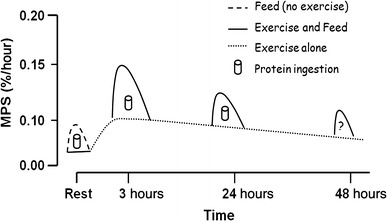
“As mentioned, the nascent stimulation of MPS from resistance exercise alone lasts at least 24 h [1].”
BackgroundInfluentialSelf-citationTang, J. E., Moore, D. R., Kujbida, G. W., Tarnopolsky, M. A., & Phillips, S. M. (2009) · Journal of Applied Physiology · doi:10.1152/japplphysiol.00076.2009 · Cited by 998
Self-citationMoore, D. R., Robinson, M. J., Fry, J. L., Tang, J. E., Glover, E. I., Wilkinson, S. B., Prior, T., Tarnopolsky, M. A., & Phillips, S. M. (2009) · The American Journal of Clinical Nutrition · doi:10.3945/ajcn.2008.26401 · Cited by 973 · cited 8×
“5–10 g of EAA) regardless of whether the subjects exercised [15] or not [32].”
BackgroundResultInfluentialSelf-citationKatsanos, C. S., Kobayashi, H., Sheffield-Moore, M., Aarsland, A., & Wolfe, R. R. (2006) · American Journal of Physiology-Endocrinology and Metabolism · doi:10.1152/ajpendo.00488.2005 · Cited by 923 · cited 2×
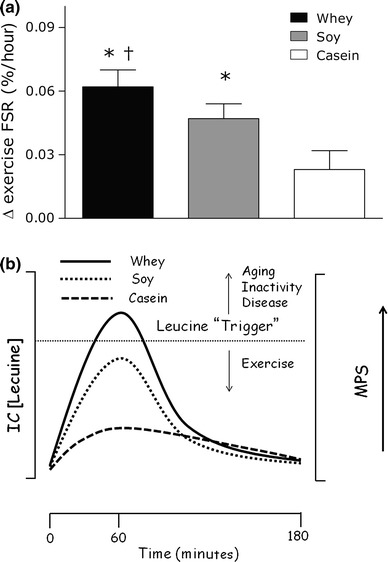
“As such, proteins that are richer in leucine would be more effective than proteins with lower leucine content [46].”
BackgroundVolpi, E., Kobayashi, H., Sheffield-Moore, M., Mittendorfer, B., & Wolfe, R. R. (2003) · The American Journal of Clinical Nutrition · doi:10.1093/ajcn/78.2.250 · Cited by 846 · cited 1×
“It is also now quite clear that it is really only the essential amino acids (EAA) that drive the process of MPS [16, 17].”
BackgroundAn abundant supply of amino acids enhances the metabolic effect of exercise on muscle protein
Biolo, G., Tipton, K. D., Klein, S., & Wolfe, R. R. (1997) · American Journal of Physiology-Endocrinology and Metabolism · doi:10.1152/ajpendo.1997.273.1.e122 · Cited by 825 · cited 3×
“In addition, postexercise hyperaminoacidemia suppresses the rise in MPB [4] that occurs following resistance exercise in the fasted state [1, 2].”
Background
Cited by
Items 201–300 of 372
“Diet and Exercise Will Help You Live Longer”: The Meme that Turns on Housekeeping Genes
Escobar, K. A., Visconti, L. M., Wallace, A., & VanDusseldorp, T. A. (2019) · Advances in Geriatric Medicine and Research · doi:10.20900/agmr20200002 · Cited by 2
“And while protein degradation is also activated [140,143], autophagy activity in the post-resistance exercise period is not well characterized.”
BackgroundNutritional Supplementation for the Prevention of Muscle Atrophy in Older People
Edwards, H., Jones, H. S., Moseley, J., Marshall, T., El‐Khamisy, S. F., Aung, M. N., & Farrow, M. (2023) · Nutrition Today · doi:10.1097/nt.0000000000000606 · Cited by 2
Hamarsland, H. (2017) · NVA (Nasjonalt vitenarkiv) · Cited by 2
Effect of time restricted eating and resistance exercise training on human muscle fiber size
Cabezon, G. A. (2022) · doi:10.46569/20.500.12680/9s161d54s · Cited by 2
Noriega, B. H. (2021) · University of Valladolid Documentary Repository (University of Valladolid) · Cited by 2
The effect of creatine supplementation on muscle protein synthesis in athletes: A review
Izadi, M. A., & Daryanoosh, F. (2025) · Nutrition Clinique et Métabolisme · doi:10.1016/j.nupar.2025.09.001 · Cited by 1
Intervenção nutricional para recomposição corporal e performance de praticantes de Crossfit
Junior, C. C. P. P., Junior, A. M. A. F., Paraguassu, L. T. V., Rodrigues, W. C. C., & da Silva, L. M. C. (2026) · Research Society and Development · doi:10.33448/rsd-v15i1.50524 · Cited by 1
Leońska‐Duniec, A. (2026) · Nutrients · doi:10.3390/nu18050762 · Cited by 1
“Such precision is necessary to avoid both underdosing and unintended interference with adaptive training responses [89,90].”
Nutrition in cricket: food for thought
Raghavan, R. (2026) · Precision Nutrition · doi:10.1097/pn9.0000000000000134 · Cited by 1
Xiong, C. (2026) · Frontiers in Nutrition · doi:10.3389/fnut.2026.1806863 · Cited by 1
“As a result, the supplementation of collagen in isolation is improbable to optimally induce myofibrillar hypertrophy, particularly in older adults who manifest anabolic resistance to protein consumption (33, 34).”
Cornish, S. M., & Peralta-Huertas, J. (2026) · Biomolecules · doi:10.3390/biom16060850 · Cited by 1
“Skeletal muscle hypertrophy is influenced by having a net positive balance in muscle protein synthesis as well as the activation of SC accumulation to muscle fibers [62].”
Ogbuefi, C., OL, E. O. E., Egbunike, J., & Ogbuefi, K. (2025) · IOSR Journal of Dental and Medical Sciences · doi:10.9790/0853-2411035267 · Cited by 1
Traoré, M., Guenné, S., Kobendé, G. T., Daboné, A. A. A., Diao, M., Sama, H., Bonzi, J. Y., Coulibaly, G., Hilou, A., Stevigny, C., et al. (2026) · Transformative Medical Materials · doi:10.1016/j.trmm.2026.100019 · Cited by 1
A Review of Maximizing Muscle Building Capabilities with Anabolic Enzymes
Agbons, E., & Egbaidomeh, O. (2017) · Malaysian Journal of Movement Health & Exercise · doi:10.15282/mohe.v6i2.147 · Cited by 1
“Their breakdown leads to stimulation of signalling pathways which cause more protein to be manufactured and incorporated into the sarcomere units (Phillips, 2014).”
BackgroundMacnaughton, L. S., & Tipton, K. D. (2015) · INSEP-Éditions eBooks · doi:10.4000/books.insep.1880 · Cited by 1
Comportamento de checagem corporal e treinamento com pesos: uma investigação com mulheres
Fortes, L. D. S., Ferreira, M. E. C., Vianna, J. M., Aranda, L. C., Paes, S. T., & Cyrino, E. S. (2014) · Revista Brasileira de Atividade Física & Saúde · doi:10.12820/rbafs.v.19n6p721 · Cited by 1
Rieger, D. K., Faraco, J. P., & Mendes, B. C. (2021) · Extensio Revista Eletrônica de Extensão · doi:10.5007/1807-0221.2021.e69879 · Cited by 1
Case Report of a COVID-19 Sub-acute Patient with Rehabilitation Therapy
Kashiwabara, K., Takekawa, T., Hama, M., Yamada, N., Watanabe, S., Hashimoto, G., Abo, M., & Shinfuku, K. (2022) · リハビリテーション医学 : 日本リハビリテーション医学会誌 · doi:10.2490/jjrmc.20064 · Cited by 1
Lander, E., Kirkhus, B., Lindberg, D., & Raastad, T. (2023) · Journal of Functional Foods · doi:10.1016/j.jff.2023.105452 · Cited by 1
Post-exercise Recovery Nutrition Strategies with RPE Scale
Sarkar, S., & Saranya, K. (2025) · Methods and protocols in food science · doi:10.1007/978-1-0716-4370-9_12 · Cited by 1
The oxidative capacity of skeletal muscle : effects of genotype, high-fat diet and physical activity
Silvennoinen, M. (2016) · Jyväskylä University Digital Archive (University of Jyväskylä) · Cited by 1
Handegard, V. (2016) · NVA (Nasjonalt vitenarkiv) · Cited by 1
Brownlee, T. E. (2017) · Liverpool John Moores University · doi:10.24377/ljmu.t.00006072 · Cited by 1
Massey, G. J. (2017) · Loughborough University Institutional Repository (Loughborough University) · Cited by 1
Estratégias nutricionais para hipertrofia muscular.
Rodrigues, J. F. E. (2017) · Portuguese National Funding Agency for Science, Research and Technology (RCAAP Project by FCT) · Cited by 1
Ontology-based personalized performance evaluation and dietary recommendation for weightlifting.
Tumnark, P. (2018) · Portuguese National Funding Agency for Science, Research and Technology (RCAAP Project by FCT) · doi:10.34626/b45d-4j49 · Cited by 1
Filho, J. C. J. (2018) · Digital Library of Theses and Dissertations (Universidade de São Paulo) · doi:10.11606/t.39.2018.tde-05112018-104212 · Cited by 1
Resistance exercise-induced muscle hypertrophy
Morton, R. W. (2019) · MacSphere (McMaster University) · doi:10.71548/17289 · Cited by 1
Maximal Strength Training for Breast Cancer Patients Undergoing Adjuvant Treatment. Doctoral Thesis
Cešeiko, R. (2021) · doi:10.25143/prom-rsu_2021-07_dt · Cited by 1
ten Haaf, D. S. M., Bongers, C. C. W. G., Hulshof, H. G., Eijsvogels, T. M. H., & Hopman, M. T. E. (2019) · doi:10.21203/rs.2.19249/v1 · Cited by 1
Montgomery, R. M. (2024) · Preprints.org · doi:10.20944/preprints202409.0684.v1 · Cited by 1
Nutritional Profile of Triathletes in a Week before a National Competition
da Cunha, N. B., Silva, J. F., & da Costa, T. N. F. (2015) · International Journal of Sports Science · doi:10.5923/j.sports.20150506.02
“Given that the rate of protein synthesis in several studies lasts some hours (0-6horas) [33] after the endurance exercise, it is essential that athletes have not only adequate protein intake immediately after exercise, but also a satisfactory total intake of protein distributed throughout the day, as has been recently…”
BackgroundBuilding muscle : a translation of training adaptation
Boman, N. (2016)
Palinkas, M. (2015) · Digital Library of Theses and Dissertations (Universidade de São Paulo) · doi:10.11606/t.58.2015.tde-19032015-094621
de Sousa, M. V. C. (2015) · Portuguese National Funding Agency for Science, Research and Technology (RCAAP Project by FCT) · doi:10.34626/0781-7p86
Expression profile of plakin crosslinking proteins in denervated skeletal muscle of mice
Blouin, P. (2015) · Lu Zone Ul (Laurentian University)
Prologo, J. D. (2015) · International Journal of Sports and Exercise Medicine · doi:10.23937/2469-5718/1510026
“Traditional calorie restriction protocols) [67,68].”
BackgroundGarcía, A. B., & José, F. (2017) · Institutional Repository of the University of Granada (University of Granada) · Cited by 1
Gonzalez, A. M. (2015) · STARS (University of Central Florida)
González, B., & Andrea, P. (2017) · Institutional Repository of the University of Granada (University of Granada)
The Effect Of Strength Training And Consumption Of Glutamine Supplement On Gh/Igf1 Axis
Barari, A. (2017) · Zenodo (CERN European Organization for Nuclear Research) · doi:10.5281/zenodo.1131048
Impact of Protein Intake on Protein Metabolism and Exercise Performance in Endurance-Trained Males
Williamson, E. (2017) · TSpace (University of Toronto)
Nutritional Status, Oxidant/Antioxidant and Inflammatory Markers in Scholar Athletes Adolescents
Bouchouicha, A., Ghomari-Boukhatem, H., & Bouchenak, M. (2017) · American journal of sports science and medicine · doi:10.12691/ajssm-5-4-3
“Evidence points indicated that in a dietary energy restriction with a higher protein intake, in combination with a regular practice, resistance exercise can lead to gains in skeletal muscle mass [21].”
BackgroundMolecular Regulation of Muscle Protein Synthesis at Rest and Following Endurance Exercise
Sawan, S. A. (2017) · TSpace (University of Toronto)
Neves, R. P. (2018) · Digital Library of Theses and Dissertations (Universidade de São Paulo) · doi:10.11606/d.39.2018.tde-08052018-143220
Viggars, M. R. (2018) · Liverpool John Moores University · doi:10.24377/researchonline.ljmu.ac.uk.00009368
Merlet, A. N. (2018) · theses.fr (ABES) · doi:10.70675/f4990fe2z0aa2z4ff2z8ca7z0620aed46fa4
Physiological and Molecular Responses to Concurrent Training in Endurance-Trained Athletes
Eddens, L. (2019) · Northumbria Research Link (Northumbria University)
Lesiones musculares. Nutrición, suplementación y aplicación en los procesos de recuperación
del Cauca, U. C. D. V., & Pulido, L. H. P. (2018) · Editorial Universidad Santiago de Cali eBooks · doi:10.35985/9789585522220.5
Hayashi, A. P. (2019) · Digital Library of Theses and Dissertations (Universidade de São Paulo) · doi:10.11606/t.5.2019.tde-06122019-110243
Demir, S. (2019) · Hacettepe University Institutional Repository (hacettepe.edu.tr)
Dairy milk as an ergogenic aid: assessing athletic performance and perceptions
Leaf, M. (2018) · Mspace (University of Manitoba)
Indices of metabolic stress following resistance exercise
Long, S. (2020) · UNI ScholarWorks (University of Northern Iowa)
The impact on high-fat diet on skeletal muscle stem cell recruitment in CD36 deficient mice
Verpoorten, S. (2019) · Repository@Hull (Worktribe) (University of Hull)
Hanslien, M. (2020) · NVA (Nasjonalt vitenarkiv)
Relatório de Estágio realizado no Laboratório Militar de Produtos Químicos e Farmacêuticos
Penelas, N. M. D. S. (2020) · Portuguese National Funding Agency for Science, Research and Technology (RCAAP Project by FCT) · doi:10.34626/7pc6-cx24
Gil, S. D. S. (2020) · Digital Library of Theses and Dissertations (Universidade de São Paulo) · doi:10.11606/t.39.2020.tde-13052021-140252
Significance of amino acid intake during postexercise recovery phase
加藤, 弘. (2018) · Institutional Repositories DataBase (IRDB) · doi:10.15083/00077394
Garcia, N. F. (2021) · Digital Library of Theses and Dissertations (Universidade de São Paulo) · doi:10.11606/t.17.2021.tde-07022022-165544
Effects of single ingestion of arginine on mTORC1 activation in rat fast- and slow-twitch muscles
Kanzaki, K., Yamasaki, Y., & Wada, M. (2022) · 体力科學 · doi:10.7600/jspfsm.71.213
筋タンパク合成から考えるPICS対策と急性期栄養療法のあり方
謙介, 中. (2020) · The Japanese Journal of SURGICAL METABOLISM and NUTRITION · doi:10.11638/jssmn.54.3_130
(2020) · American Academy of PediatricsItasca, IL eBooks · doi:10.1542/9781610023610-12
Regulation of muscle mass by microRNAs
Shin, J., & Akimoto, T. (2023) · 体力科學 · doi:10.7600/jspfsm.72.335
(2020) · American Academy of PediatricsItasca, IL eBooks · doi:10.1542/9781610024181-12
تأثير برنامج غذائي علي تحسين مستوي اللياقة البدنية والفسيولوجية للاعبي الكاتا في رياضة الكاراتيه
خضر, أ. ح. م., & ابوالحسن, و. ع. خ. (2024) · Mağallaẗ Al-Wadī Al-Ǧadīd Li ʿulūm Al-Rīyāḍaẗ /Mağallaẗ Al-Wadī Al-Ǧadīd Li ʿulūm Al-Rīyāḍaẗ · doi:10.21608/mnvs.2024.258013.1099
Martinez, S. A. G., & Lima, R. F. D. S. (2024) · doi:10.22533/at.ed.2612409082
Lobo, C. D. F. S., Fernandes, B. C., Melo, E. C., Feitosa, M. R., Pigosso, M. R., Almeida, G. E. G., Leite, A. D. C., Correia, R. A., Soares, T. R., Rodrigues, M. I. D. S., et al. (2024) · doi:10.22533/at.ed.2612409085
ABORDAGENS TERAPÊUTICAS E COMPLICAÇÕES DO MICROAGULHAMENTO
Neto, W. N., Santos, V. D. O., dos Santos, T. C., Taya, C. L., Sales, G. V., Nakamura, I. M., Paysano, M. L. B. D. A., Galvani, B. D. M., Pinheiro, L. A., de Carvalho, M. C. T., et al. (2024) · doi:10.22533/at.ed.2612409087
EVENTOS ACIDENTAIS DE IDOSOS ASSISTIDOS NOS SERVIÇOS DE URGÊNCIA E EMERGÊNCIA: REVISÃO INTEGRATIVA
Leandro, A. W. L., Horta, Â. C. C., Nunes, M. D. O., Lima, T. M. D. S., & Dowell, J. P. M. (2024) · doi:10.22533/at.ed.2612409089
EFEITO DO TREINAMENTO RESISTIDO PARA MULHERES COM OSTEOPOROSE
Martins, T. A., Pitanga, F. J. G., & Munaro, H. L. R. (2024) · doi:10.22533/at.ed.26124090811
FATORES ASSOCIADOS AO GANHO DE MASSA MUSCULAR: UMA REVISÃO DE LITERATURA
Dadalt, L. D., Tauyr, L. V., Júnior, M. T. G., Groto, G., Landim, A. M., Meirelles, R. C., Paganotto, M. E., & Carlos, C. P. (2024) · doi:10.22533/at.ed.26124090812
Saúde em foco: bem-estar e qualidade de vida
Praxedes, M. F. D. S. (2024) · doi:10.22533/at.ed.261240908
IMPORTÂNCIA DA LITERACIA EM SAÚDE E A SEGURANÇA DO PACIENTE NO PROCESSO DE MEDICAÇÃO
Praxedes, M. F. D. S. (2024) · doi:10.22533/at.ed.26124090815
Poltronieri, S. A. M., Umaña, I. A., Víquez, G. P. V., Núñez, K. C., Ramírez, C. A., Ceballos, M. Á. B., Monge, A. E., & Garita, C. C. (2024) · doi:10.22533/at.ed.2612409083
de Carvalho, L. T., Ramos, A. R., Tauyr, L. V., Gonçalves, M. F., Dadalt, L. D., Meirelles, R. C., Groto, G., Landim, A. M., & de Andrade, G. P. (2024) · doi:10.22533/at.ed.2612409086
Camargo, V. H. C., Luciani, L., & Davatz, G. C. (2024) · doi:10.22533/at.ed.26124090814
ANÁLISE DO ATENDIMENTO E DESFECHO DO POLITRAUMA PEDIÁTRICO: UMA REVISÃO DE LITERATURA
Garcia, J. L., de Oliveira, S. C. A., Nunes, M. L., Cunha, Í. T. D. F., & Júnior, R. B. D. S. (2024) · doi:10.22533/at.ed.26124090813
QUALIDADE DA ÁGUA: UM ENFOQUE NA AVALIAÇÃO MICROBIOLÓGICA E FÍSICO-QUÍMICA PARA A SAÚDE PÚBLICA
Rocha, S. P. D., do Nascimento, A. B., Guidone, G. H. M., de Oliva, B. H. D., Silva, L. C., de Almeida, L. K. S., & Alves, A. P. D. S. (2024) · doi:10.22533/at.ed.26124090810
IMPACTO DAS VITAMINAS NA SAÚDE OCULAR: UMA REVISÃO DAS HIPOVITAMINOSES E HIPERVITAMINOSES
Sales, C. V., Júnior, N. C. D. P., Duarte, N. D. A. C., Galvani, B. D. M., Arellaro, G. A., Gandini, B. D. A., Teixeira, G. C. A., Itikawa, M. M., Yokoyama, M. L., de Araújo, R. H. C., et al. (2024) · doi:10.22533/at.ed.2612409081
Wailand, S., & Renovato, R. D. (2024) · doi:10.22533/at.ed.2612409084
FUGA DISSOCIATIVA E AMNÉSIA DISSOCIATIVA: CORRELAÇÕES PSIQUIÁTRICAS E IMPACTO NA QUALIDADE DE VIDA
Pinto, R. A. C., Moreira, G. M., Zafra, V. B., Guimarães, L. F. D. S., Ferreira, B. M. L., Gonçalves, L. T., dos Santos, I. P., Ullian, N., de Souza, L. T., Fazilari, I. D. S., et al. (2024) · doi:10.22533/at.ed.2612409088
The role of nutritional strategies in enhancing athletic performance: A literature review
Gamen, L.-C. (2024) · Journal of Sports Science and Nutrition · doi:10.33545/27077012.2024.v5.i2b.278
INFLUENCE OF PLANNED EXERCISE PROGRAMME ON MUSCLE MASS OF ELDERLY AGED MALE
Thomas, K. M. (2023) · ShodhKosh Journal of Visual and Performing Arts · doi:10.29121/shodhkosh.v4.i2.2023.2640
“…than normal (1.2-1.5 grams per kilogram of body weight per day) to maximize the advantages of resistance training on muscle mass. Supplementation with essential amino acids, particularly leucine, has been demonstrated to increase muscle protein synthesis in response to exercise (Phillips, 2014).”
BackgroundInfluentialAraújo-Gregio, V., Martinelli, A., Malavazzi, T. C. D. S., Andreo, L., Terena, S. M. L., Bussadori, S. K., Marcos, R. L., Horliana, A. C. R. T., Fernandes, K. P. S., & Mesquita‐Ferrari, R. A. (2025) · Lasers in Medical Science · doi:10.1007/s10103-025-04290-5
American Academy of Pediatrics (2025) · American Academy of PediatricsItasca, IL eBooks · doi:10.1542/9781610027700-ch12
Dietary Pattern Analysis in Different Types of Sports Activity
Itrat, N., Nazir, A., Ali, A., Habib, A., & Shabbir, J. (2025) · Methods and protocols in food science · doi:10.1007/978-1-0716-4370-9_1
Intergenerational Enlargement of Human Organs as a Driver of Increased Cancer Risk?
Koufaris, C., & Nicolaidou, V. (2025) · BioEssays · doi:10.1002/bies.70024
“Examples of organ sizes responding to environmental conditions include increased muscle hypertrophy following resistance exercise [23], bone mass loss in astronauts due to reduced mechanical stress [24], negative feedback by bile acids on the liver [25], and chronic stress on adrenal glands [26].”
Plasticidade Muscular: Hipertrofia, Hiperplasia e Transição de Fibras Musculares
CANTO, A. V. D., Godoi, H. R. G., SANTOS, L. M. S. D., de Araújo, A., Frade, A. A. F., Teixeira, A., & Viana, J. A. (2025) · Simpósio Uninorte de Fisiologia e Biomecânica · doi:10.29327/9786527216148.1190102
Egzersiz Fizyolojisinde Alternatif Yaklaşımlar: Fonksiyonel Destekler
Şimşek, H., & Çakar, F. (2025) · Özgür Yayınları eBooks · doi:10.58830/ozgur.pub813.c3431
Brzyska, A., Tomasz, K., Steć, G., Magdalena, P., Sandra, P., Gajęcki, B., Kopala, J., Mikołaj, W., Siemianowski, J., & Kotnis, W. (2025) · Medical Science · doi:10.54905/disssi.v29i163.e176ms3652
Yüksek Dirençle Antrenman: Maksimal Kuvvetin Geliştirilmesi
Okut, S. (2025) · Akademisyen Kitabevi eBooks · doi:10.37609/akya.3849.c1233
FISIOLOGIA APLICADA À PERFORMANCE E À HIPERTROFIA
Fernandes, V. E., Dohler, P. H. A., & de Souza, W. S. (2025) · REVISTA MULTIDISCIPLINAR INTEGRADA - REMI · doi:10.61164/15m8kr36
ABORDAGEM E MANEJO CLÍNICO DO PACIENTE IDOSO COM EAP NA EMERGÊNCIA
́Anna, C. O. M. D. S., & Perez, M. C. A. (2025) · Jornada Científica do Internato Médico · doi:10.29327/1718890.46-24
TRANSTORNO DO ESPECTRO AUTISTA: O DIAGNÓSTICO TARDIO E O SUBDIAGNÓSTICO
Bernardino, L. F. M., & Desiderati, M. (2025) · Jornada Científica do Internato Médico · doi:10.29327/1718890.46-20
Metadata
- Authors
- Phillips, S. M.
- Affiliations
- McMaster University (CA)
- Corresponding author
- Phillips, Stuart M.
- ORCID
- Phillips, Stuart M.
- Venue
- Sports Medicine
- Published
- 2014-05
- Volume
- 44
- Issue
- S1
- Pages
- 71-77
- ISSN
- 0112-1642 (ISSN-L)
- 1179-2035
- PMC
- PMC4008813
- OpenAlex
- W2053768568
- Cited by
- 281
- References
- 72
- Citations by year
- 2026: 25 · 2025: 20 · 2024: 31 · 2023: 18 · 2022: 23 · 2021: 19 · 2020: 26 · 2019: 18 · 2018: 30 · 2017: 18 · 2016: 28 · 2015: 19 · 2014: 6
- FWCI
- 2.37
- Type
- journal article
- Language
- en
- Open access
- hybrid
- doi.org
- Locations
- Sports Medicine (publishedVersion, cc-by)
- Europe PMC (PubMed Central) (publishedVersion, cc-by)
- PubMed Central (publishedVersion, cc-by)
- PubMed (publishedVersion)
- Funders
- PepsiCo
- Dairy Farmers of Canada
- Gran Sasso Science Institute
- Canadian Institutes of Health Research
- Natural Sciences and Engineering Research Council of Canada
- Topics
- Health Sciences › Nursing › Nutrition and Dietetics › Muscle metabolism and nutrition
- Life Sciences › Biochemistry, Genetics and Molecular Biology › Molecular Biology › Muscle Physiology and Disorders
- Health Sciences › Medicine › Physiology (medical) › Cardiovascular and exercise physiology
- Keywords
- exercise-induced muscle hypertrophy, resistance training, muscle protein synthesis, muscle protein degradation, satellite cells, protein intake, leucine, essential amino acids, L-arginine, glutamine, carbohydrate supplementation, caloric restriction, weight loss, skeletal muscle mass
- MeSH terms
- Amino Acids, Dietary Proteins, Humans, Hypertrophy, Muscle Proteins, Weight Loss, Muscle, Skeletal, Resistance Training, Sports Nutritional Physiological Phenomena
About these checks
Registry, retraction, Cites and statistics results are computed, not judged, with one exception: a printed reference that no index lists is read once by a model before it counts as a citation error. Claims are extracted by a model and kept only when their quote appears verbatim in the text; each cited source is then checked, with a model’s help, for whether it says what the claim relies on. Those verdicts can be wrong — read the claim’s quote and the cited source before relying on one.
Statistics and arithmetic are recomputed, not judged.
Confidence bands are shown only for fields calibrated on our annotated test set. None is calibrated yet, so no band is shown.
What counts as a claim ›How we measure confidence ›How we check this ›
Are you an author, or do you see a problem with this page? Request a review
Data sources
Bibliographic data: Semantic Scholar, OpenAlex, Crossref.
Contains information from the Semantic Scholar Academic Graph Datasets, made available under the ODC Attribution License (ODC-BY 1.0).
Semantic Scholar’s data is described in: Kinney, R., et al. (2023). The Semantic Scholar Open Data Platform. arXiv:2301.10140.
