

Feature dimensionality reduction: a review
Open accessThe DOI matches its Crossref record; 142 of the 142 references it cites were found in a registry or an index.
Abstract
As basic research, it has also received increasing attention from people that the “curse of dimensionality” will lead to increase the cost of data storage and computing; it also influences the efficiency and accuracy of dealing with problems. Feature dimensionality reduction as a key link in the process of pattern recognition has become one hot and difficulty spot in the field of pattern recognition, machine learning and data mining. It is one of the most challenging research fields, which has been favored by most of the scholars’ attention. How to implement “low loss” in the process of feature dimension reduction, keep the nature of the original data, find out the best mapping and get the optimal low dimensional data are the keys aims of the research. In this paper, two-dimensionality reduction methods, feature selection and feature extraction, are introduced; the current mainstream dimensionality reduction algorithms are analyzed, including the method for small sample and method based on deep learning. For each algorithm, examples of their application are given and the advantages and disadvantages of these methods are evaluated.
Overview
The claims and statistics of this paper haven’t been checked yet.
Free: it reads the open-access text and checks the first 5 claims that cite a source we can check. Create a free account to check every claim.
Integrity signals
Registry
Cites
Statistics
Figures





Verification
Claims the paper makes
The claims and statistics of this paper haven’t been checked yet.
Free: it reads the open-access text and checks the first 5 claims that cite a source we can check. Create a free account to check every claim.
Self-check
Percentages, sums and reported differences re-computed from the paper’s own numbers.
The self-check needs the paper’s full text.
Citations
Cites
Deep Residual Learning for Image Recognition
He, K., Zhang, X., Ren, S., & Sun, J. (2016) · 2016 IEEE Conference on Computer Vision and Pattern Recognition (CVPR) · doi:10.1109/cvpr.2016.90 · Cited by 235,474 · cited 1×
“lution and pooling layers to extract high-level semantic information [136].”
BackgroundA Mathematical Theory of Communication
Shannon, C. E. (1948) · Bell System Technical Journal · doi:10.1002/j.1538-7305.1948.tb01338.x · Cited by 88,486
LeCun, Y., Bengio, Y., & Hinton, G. (2015) · Nature · doi:10.1038/nature14539 · Cited by 84,126
Regression shrinkage and selection via the lasso
Tibshirani, R. (1996) · Journal of the Royal Statistical Society Series B: Statistical Methodology · doi:10.1111/j.2517-6161.1996.tb02080.x · Cited by 51,482 · cited 1×
“The least absolute shrinkage and selection operator (Lasso) is also a compression estimation method with reducing feature quantity as the core [116].”
MethodHe, K., Gkioxari, G., Dollar, P., & Girshick, R. (2017) · 2017 IEEE International Conference on Computer Vision (ICCV) · doi:10.1109/iccv.2017.322 · Cited by 29,137
Learning Phrase Representations using RNN Encoder–Decoder for Statistical Machine Translation
Cho, K., van Merrienboer, B., Gulcehre, C., Bahdanau, D., Bougares, F., Schwenk, H., & Bengio, Y. (2014) · Proceedings of the 2014 Conference on Empirical Methods in Natural Language Processing (EMNLP) · doi:10.3115/v1/d14-1179 · Cited by 25,545 · cited 1×
“designed a new RNN Encoder-Decoder, containing two recurrent neural networks [147].”
MethodReducing the dimensionality of data with neural networks
Hinton, G. E., & Salakhutdinov, R. R. (2006) · Science · doi:10.1126/science.1127647 · Cited by 20,928
Deep learning in neural networks: an overview
Schmidhuber, J. (2015) · Neural Networks · doi:10.1016/j.neunet.2014.09.003 · Cited by 18,570 · cited 1×
“It will also promote the further development of deep learning [171–173].”
BackgroundA fast learning algorithm for deep belief nets
Hinton, G. E., Osindero, S., & Teh, Y.-W. (2006) · Neural Computation · doi:10.1162/neco.2006.18.7.1527 · Cited by 16,336 · cited 1×
“In 2006, Hinton pointed out that the difficulty of deep learning network training can be solved by “layer-by-layer initial-ization” [127, 128].”
BackgroundLearning Internal Representations by Error Propagation
Rumelhart, D. E., Hinton, G. E., & Williams, R. J. (1985) · doi:10.21236/ada164453 · Cited by 16,172
Nonlinear Dimensionality Reduction by Locally Linear Embedding
Roweis, S. T., & Saul, L. K. (2000) · Science · doi:10.1126/science.290.5500.2323 · Cited by 14,965 · cited 1×
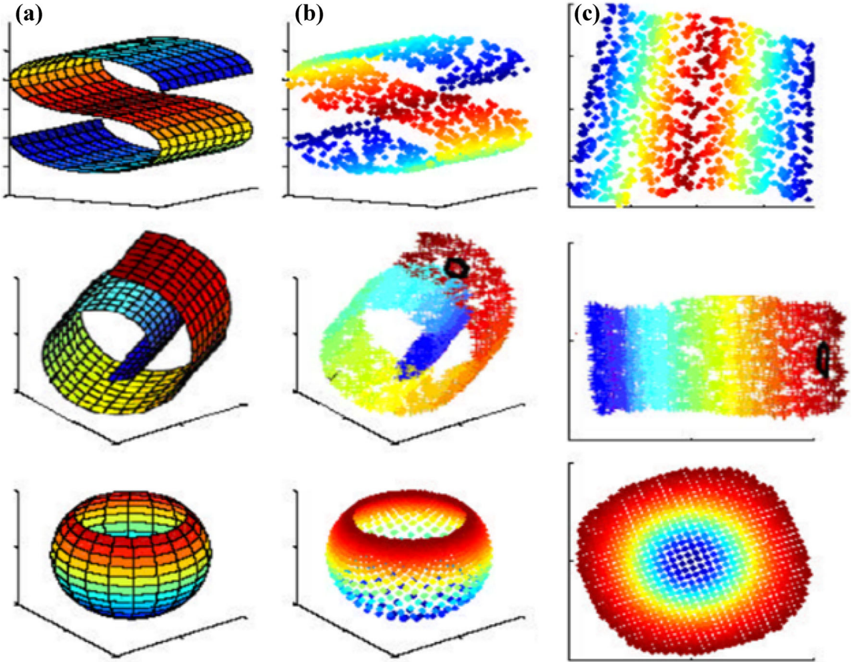
“It can be seen from the color in ( c ) that the data processed by the LLE algorithm can maintain the neighborhood characteristics of the original data well the high-dimensional measurement space can be preserved during the data reduction [95–98].”
MethodLearning the parts of objects by non-negative matrix factorization
Lee, D. D., & Seung, H. S. (1999) · Nature · doi:10.1038/44565 · Cited by 13,868 · cited 1×
“Nonnegative matrix factorization (NMF) [72], also known as non-negative matrix approximation or positive matrix factorization, is an unsupervised learning method.”
A Global Geometric Framework for Nonlinear Dimensionality Reduction
Tenenbaum, J. B., Silva, V. D., & Langford, J. C. (2000) · Science · doi:10.1126/science.290.5500.2319 · Cited by 13,585 · cited 1×
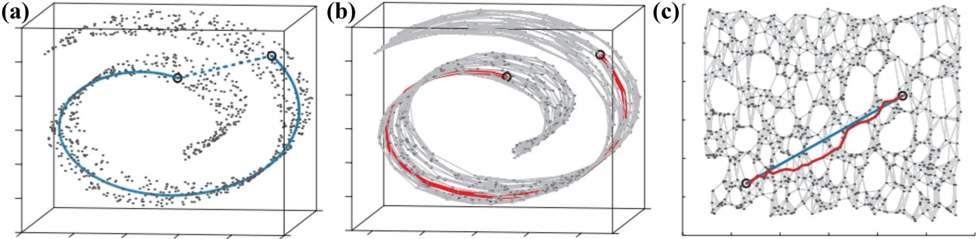
“9 Schematic diagram of ISOMAP algorithm [94].”
Abdi, H., & Williams, L. J. (2010) · WIREs Computational Statistics · doi:10.1002/wics.101 · Cited by 11,104
Peng, H., Long, F., & Ding, C. (2005) · IEEE Transactions on Pattern Analysis and Machine Intelligence · doi:10.1109/tpami.2005.159 · Cited by 10,544 · cited 2×
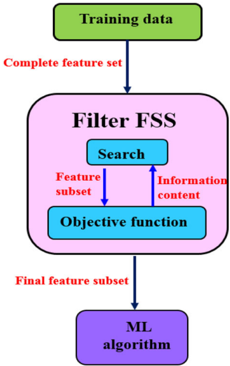
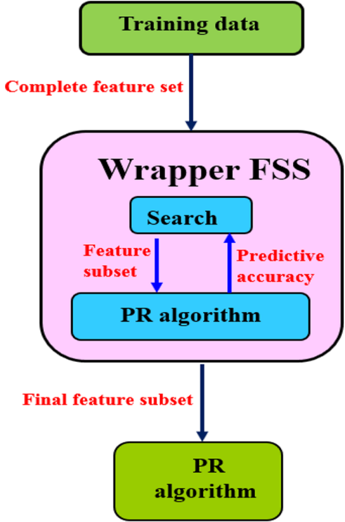
“Classical sequence search algorithms include Sequential Forward Selection (SFS) and Sequential Backward Selection (SBS) [25].”
MethodIndependent component analysis: algorithms and applications
Hyvärinen, A., & Oja, E. (2000) · Neural Networks · doi:10.1016/s0893-6080(00)00026-5 · Cited by 8,705 · cited 14×
“The main principle of ICA is to adopt an implicit statistical variable model: This statistical model is called the ICA model.”
MethodInfluentialIndependent component analysis, A new concept?
Comon, P. (1994) · Signal Processing · doi:10.1016/0165-1684(94)90029-9 · Cited by 8,205
Multi-scale context aggregation by dilated convolutions
Yu, F., & Koltun, V. (2015) · arXiv · doi:10.48550/arxiv.1511.07122 · Cited by 7,738 · cited 1×
“Dilated convolution uses a convolution kernel with a dilation convolution factor to enlarge receptive fields and extract features [139].”
MethodA Review of Recurrent Neural Networks: LSTM Cells and Network Architectures
Yu, Y., Si, X., Hu, C., & Zhang, J. (2019) · Neural Computation · doi:10.1162/neco_a_01199 · Cited by 5,591 · cited 1×
“To alleviate this problem, a variant of the RNN network of long shortterm memory (LSTM) is proposed, which uses the cell state with gate structure tomake information flow continuously [145].”
MethodPrincipal component analysis in linear systems: Controllability, observability, and model reduction
Moore, B. (1981) · IEEE Transactions on Automatic Control · doi:10.1109/tac.1981.1102568 · Cited by 5,282 · cited 1×
“PCA allows the original complex variable to be represented by several integrated factors that reflect the information contained in the original variable as much as possible, and these factors do not relate to each other, to achieve the purpose of simplification [48, 49].”
BackgroundPyramid Vision Transformer: A Versatile Backbone for Dense Prediction without Convolutions
Wang, W., Xie, E., Li, X., Fan, D.-P., Song, K., Liang, D., Lu, T., Luo, P., & Shao, L. (2021) · 2021 IEEE/CVF International Conference on Computer Vision (ICCV) · doi:10.1109/iccv48922.2021.00061 · Cited by 5,259
A survey on feature selection methods
Chandrashekar, G., & Sahin, F. (2014) · Computers & Electrical Engineering · doi:10.1016/j.compeleceng.2013.11.024 · Cited by 5,189 · cited 1×
“Feature selection can also be called variable selection or feature subset selection, and it is a process of selecting feature subsets that are applied to model construction [12].”
BackgroundFeature selection for classification
DASH, M., & LIU, H. (1997) · Intelligent Data Analysis · doi:10.1016/s1088-467x(97)00008-5 · Cited by 3,574
Front-End Factor Analysis for Speaker Verification
Dehak, N., Kenny, P. J., Dehak, R., Dumouchel, P., & Ouellet, P. (2011) · IEEE Transactions on Audio, Speech, and Language Processing · doi:10.1109/tasl.2010.2064307 · Cited by 3,549 · cited 1×
“In this modeling [55], a new low-dimensional speaker- and channel-dependent space is defined using simple factor analysis.”
MethodEncyclopedia of Machine Learning
(2010) · Springer eBooks · doi:10.1007/978-0-387-30164-8 · Cited by 3,465
Learning Phrase Representations using RNN Encoder-Decoder for Statistical Machine Translation
Cho, K., van Merrienboer, B., Gulcehre, C., Bahdanau, D., Bougares, F., Schwenk, H., & Bengio, Y. (2014) · arXiv · doi:10.48550/arxiv.1406.1078 · Cited by 3,317 · cited 1×
“designed a new RNN Encoder-Decoder, containing two recurrent neural networks [147].”
MethodOn the mean accuracy of statistical pattern recognizers
Hughes, G. (1968) · IEEE Transactions on Information Theory · doi:10.1109/tit.1968.1054102 · Cited by 2,859
Recurrent Neural Network Regularization
Zaremba, W., Sutskever, I., & Vinyals, O. (2014) · arXiv (Cornell University) · doi:10.48550/arxiv.1409.2329 · Cited by 2,123 · cited 1×
“Recurrent neural networks and its variants The biggest difference between RNN and convolutional neural networks is that RNN can realize some "memory function", which is the best choice for time series analysis [142].”
BackgroundA Critical Review of Recurrent Neural Networks for Sequence Learning
Lipton, Z. C., Berkowitz, J. A., & Elkan, C. (2015) · arXiv (Cornell University) · doi:10.48550/arxiv.1506.00019 · Cited by 1,996 · cited 1×
“RNN also implements a mechanism similar to the human brain, which retains a certain memory of the processed information, unlike other types of neural networks, which cannot retain the processed information [143, 144].”
BackgroundSensitivity Analysis of k-Fold Cross Validation in Prediction Error Estimation
Rodriguez, J. D., Perez, A., & Lozano, J. A. (2010) · IEEE Transactions on Pattern Analysis and Machine Intelligence · doi:10.1109/tpami.2009.187 · Cited by 1,890 · cited 1×
“K -fold cross-validation method [117] is applied to select the parameters to select a reasonable parameter.”
MethodConvolutional, Long Short-Term Memory, fully connected Deep Neural Networks
Sainath, T. N., Vinyals, O., Senior, A., & Sak, H. (2015) · 2015 IEEE International Conference on Acoustics, Speech and Signal Processing (ICASSP) · doi:10.1109/icassp.2015.7178838 · Cited by 1,678 · cited 1×
“The performance of the speech recognizer has a great influence on the performance of keyword detection, while the traditional keyword detection is an acoustic model of the LVCSR using the GMM (Gaussian Mixture Model) and the HMM (Hidden Markov Model) combined GMMHMM model [168, 169], its recognition rate is not high.”
MethodDepth-first iterative-deepening
Korf, R. E. (1985) · Artificial Intelligence · doi:10.1016/0004-3702(85)90084-0 · Cited by 1,562
A new LDA-based face recognition system which can solve the small sample size problem
Chen, L.-F., Liao, H.-Y. M., Ko, M.-T., Lin, J.-C., & Yu, G.-J. (2000) · Pattern Recognition · doi:10.1016/s0031-3203(99)00139-9 · Cited by 1,427 · cited 1×
“Linear discriminant analysis (LDA) has been used extensively in dimension reduction algorithms [120], but it is constrained by the small sample problem.”
MethodHan, K., Xiao, A., Wu, E., Guo, J., Xu, C., & Wang, Y. (2021) · arXiv · doi:10.48550/arxiv.2103.00112 · Cited by 1,394 · cited 1×
“Other methods are designed such as Transformer in Transformer (TNT) [152], bottleneck Transformer (BoTNet) [153].”
Bottleneck Transformers for Visual Recognition
Srinivas, A., Lin, T.-Y., Parmar, N., Shlens, J., Abbeel, P., & Vaswani, A. (2021) · 2021 IEEE/CVF Conference on Computer Vision and Pattern Recognition (CVPR) · doi:10.1109/cvpr46437.2021.01625 · Cited by 1,385 · cited 1×
“Other methods are designed such as Transformer in Transformer (TNT) [152], bottleneck Transformer (BoTNet) [153].”
MethodA Branch and Bound Algorithm for Feature Subset Selection
Narendra, & Fukunaga (1977) · IEEE Transactions on Computers · doi:10.1109/tc.1977.1674939 · Cited by 1,245 · cited 12×
“The results of using BBS to find the gate position that can produce the shortest fill time, and find the auxiliary gate position that can cancel the interference in the filling process, besides reduce the size of the dry point are more efficient and accurate than the results of exhaustive search and genetic algorithms.”
MethodInfluentialA review of unsupervised feature learning and deep learning for time-series modeling
Längkvist, M., Karlsson, L., & Loutfi, A. (2014) · Pattern Recognition Letters · doi:10.1016/j.patrec.2014.01.008 · Cited by 1,243
Dimensionality reduction for large-scale neural recordings
Cunningham, J. P., & Yu, B. M. (2014) · Nature Neuroscience · doi:10.1038/nn.3776 · Cited by 1,219
Singular Value Decomposition and Principal Component Analysis
Wall, M. E., Rechtsteiner, A., & Rocha, L. M. (2005) · A Practical Approach to Microarray Data Analysis · doi:10.1007/0-306-47815-3_5 · Cited by 1,215 · cited 1×
“It is the generalization of the Eigen decomposition of a positive semidefinite normal matrix (for example, symmetric matrix with positive eigenvalues) to any m × n matrix via an extension of polar decomposition [66].”
MethodDeep Machine Learning - A New Frontier in Artificial Intelligence Research [Research Frontier]
Arel, I., Rose, D. C., & Karnowski, T. P. (2010) · IEEE Computational Intelligence Magazine · doi:10.1109/mci.2010.938364 · Cited by 1,121
A genetic algorithm for the Flexible Job-shop Scheduling Problem
Pezzella, F., Morganti, G., & Ciaschetti, G. (2008) · Computers & Operations Research · doi:10.1016/j.cor.2007.02.014 · Cited by 1,014 · cited 1×
“Pezzella showed a GA for Flexible Job Shop Scheduling (FJSP) that integrates different initial population generation strategies and selects individuals for breeding [34].”
BackgroundA Review of Feature Selection and Feature Extraction Methods Applied on Microarray Data
Hira, Z. M., & Gillies, D. F. (2015) · Advances in Bioinformatics · doi:10.1155/2015/198363 · Cited by 936
Zebari, R., Abdulazeez, A., Zeebaree, D., Zebari, D., & Saeed, J. (2020) · Journal of Applied Science and Technology Trends · doi:10.38094/jastt1224 · Cited by 918 · cited 1×
“Mathematically, the mapping function can be expressed as This is the process of feature extraction and selection [10, 11].”
BackgroundHinton, G. (2009) · Scholarpedia · doi:10.4249/scholarpedia.5947 · Cited by 885 · cited 1×
“A deep belief network (DBN) is also a common unsupervised deep learning method to reduce the dimension of the feature vectors and extract features from high-dimensional data [159].”
MethodAccelerated exploration of multi-principal element alloys with solid solution phases
Senkov, O. N., Miller, J. D., Miracle, D. B., & Woodward, C. (2015) · Nature Communications · doi:10.1038/ncomms7529 · Cited by 871
The Isomap Algorithm and Topological Stability
Balasubramanian, M., & Schwartz, E. L. (2002) · Science · doi:10.1126/science.295.5552.7a · Cited by 839 · cited 1×
“ISOMAP believes that when the data set has an embedded manifold structure [92, 93], the corresponding description of the observation space data set in the low-dimensional structure can be obtained according to the distance map.”
BackgroundYang, J., Frangi, A. F., Yang, J.-Y., Zhang, D., & Jin, Z. (2005) · IEEE Transactions on Pattern Analysis and Machine Intelligence · doi:10.1109/tpami.2005.33 · Cited by 826 · cited 4×
“Such as kernel-based principal component analysis (KPCA) [69], its basic idea is to transform the input data x into the feature space F through a non-linear mapping (x), and then use the linear PCA on F.”
MethodInfluentialExtracting information from neuronal populations: information theory and decoding approaches
Quian Quiroga, R., & Panzeri, S. (2009) · Nature Reviews Neuroscience · doi:10.1038/nrn2578 · Cited by 811
Seide, F., Li, G., Chen, X., & Yu, D. (2011) · 2011 IEEE Workshop on Automatic Speech Recognition & Understanding · doi:10.1109/asru.2011.6163899 · Cited by 632 · cited 2×
“People have conducted deep research on DNN (Deep Neural Network) instead of GMM (Gaussian Mixture Model) to compose the DNN-HMM acoustic model [169, 170].”
MethodWang, J., & Chang, C.-I. (2006) · IEEE Transactions on Geoscience and Remote Sensing · doi:10.1109/tgrs.2005.863297 · Cited by 630
Nonnegative matrix factorization for spectral data analysis
Pauca, V. P., Piper, J., & Plemmons, R. J. (2006) · Linear Algebra and its Applications · doi:10.1016/j.laa.2005.06.025 · Cited by 584 · cited 1×
“In addition, the use of astronomical spectrometers is to analyze data [75].”
MethodAn evaluation of phrasal and clustered representations on a text categorization task
Lewis, D. D. (1992) · Proceedings of the 15th annual international ACM SIGIR conference on Research and development in information retrieval - SIGIR '92 · doi:10.1145/133160.133172 · Cited by 544 · cited 1×
“In this case, a single feature optimization algorithm such as mutual information [44] and other feature selection algorithms are used.”
MethodTime series forecasting using a deep belief network with restricted Boltzmann machines
Kuremoto, T., Kimura, S., Kobayashi, K., & Obayashi, M. (2014) · Neurocomputing · doi:10.1016/j.neucom.2013.03.047 · Cited by 527 · cited 1×
“To optimize the initialization and local optimization in time series prediction, a deep belief network was applied to predict time series, which was applied to the approximation and short-term prediction of chaotic time series such as a logistic map and Lorenz chaos [161].”
MethodJones, M. C., & Sibson, R. (1987) · Journal of the Royal Statistical Society. Series A (General) · doi:10.2307/2981662 · Cited by 522 · cited 1×
“Projection Pursuit (PP) is a kind of algorithm for processing high-dimensional observation data [78, 79, 86, 87].”
BackgroundDimensionality reduction of hyperspectral data using discrete wavelet transform feature extraction
Bruce, L. M., Koger, C. H., & Li, J. (2002) · IEEE Transactions on Geoscience and Remote Sensing · doi:10.1109/tgrs.2002.804721 · Cited by 491 · cited 1×
“Wavelet Transform (WT) solves the contradictions between time resolution and frequency resolution well [82].”
BackgroundLocality-Preserving Dimensionality Reduction and Classification for Hyperspectral Image Analysis
Li, W., Prasad, S., Fowler, J. E., & Bruce, L. M. (2012) · IEEE Transactions on Geoscience and Remote Sensing · doi:10.1109/tgrs.2011.2165957 · Cited by 472
Semi-Supervised Deep Learning Using Pseudo Labels for Hyperspectral Image Classification
Wu, H., & Prasad, S. (2018) · IEEE Transactions on Image Processing · doi:10.1109/tip.2017.2772836 · Cited by 463 · cited 1×
“The limited labeled data are applied to fine-tune parameters [167].”
BackgroundReview of swarm intelligence-based feature selection methods
Rostami, M., Berahmand, K., Nasiri, E., & Forouzandeh, S. (2021) · Engineering Applications of Artificial Intelligence · doi:10.1016/j.engappai.2021.104210 · Cited by 451
Deep convolution neural network for image recognition
Traore, B. B., Kamsu-Foguem, B., & Tangara, F. (2018) · Ecological Informatics · doi:10.1016/j.ecoinf.2018.10.002 · Cited by 417 · cited 1×
“A convolution neural network is composed of stacked convolution layers and pooling layers [133–135], where both convolution layers and pooling layers can be used to reduce the feature dimension.”
BackgroundPerformance of feature-selection methods in the classification of high-dimension data
Hua, J., Tembe, W. D., & Dougherty, E. R. (2009) · Pattern Recognition · doi:10.1016/j.patcog.2008.08.001 · Cited by 395 · cited 1×
“So in most practical situations, the search-optimized exhaustive search cannot be achieved [17].”
BackgroundFiltered beam search in scheduling†
OW, P. S., & MORTON, T. E. (1988) · International Journal of Production Research · doi:10.1080/00207548808947840 · Cited by 393 · cited 1×
“The BS algorithm searches for all promising nodes layer by layer and does not backtrack [21].”
Face recognition based on the uncorrelated discriminant transformation
Jin, Z., Yang, J.-Y., Hu, Z.-S., & Lou, Z. (2001) · Pattern Recognition · doi:10.1016/s0031-3203(00)00084-4 · Cited by 370 · cited 1×
“Statistically uncorrelated identification analysis method [54] and other methods”
MethodKokiopoulou, E., & Saad, Y. (2007) · IEEE Transactions on Pattern Analysis and Machine Intelligence · doi:10.1109/tpami.2007.1131 · Cited by 318 · cited 1×
“Locally preserved projection (LPP) is a recently proposed method of dimensionality reduction that attempts to capture the manifold structure of data [103, 104].”
MethodHuman emotion recognition using deep belief network architecture
Hassan, M. M., Alam, M. G. R., Uddin, M. Z., Huda, S., Almogren, A., & Fortino, G. (2019) · Information Fusion · doi:10.1016/j.inffus.2018.10.009 · Cited by 307 · cited 1×
“The prepared feature fusion vector is generated by combing DBN with the statistical features of EDA, PPG and zEMG for emotion classification [162].”
MethodReview of deep convolution neural network in image classification
Al-Saffar, A. A. M., Tao, H., & Talab, M. A. (2017) · 2017 International Conference on Radar, Antenna, Microwave, Electronics, and Telecommunications (ICRAMET) · doi:10.1109/icramet.2017.8253139 · Cited by 285
Incremental nonlinear dimensionality reduction by manifold learning
Law, M. H. C., & Jain, A. K. (2006) · IEEE Transactions on Pattern Analysis and Machine Intelligence · doi:10.1109/tpami.2006.56 · Cited by 284 · cited 1×
“Manifold is a term for general geometric objects, including curves and surfaces of various dimensions [89, 90].”
BackgroundSupervised Locally Linear Embedding
de Ridder, D., Kouropteva, O., Okun, O., Pietikäinen, M., & Duin, R. P. W. (2003) · Lecture Notes in Computer Science · doi:10.1007/3-540-44989-2_40 · Cited by 278
Proceedings., International Conference on Image Processing
(1995) · doi:10.1109/icip.1995 · Cited by 273
The Wavelet Transform, Time-Frequency Localization And Signal Analysis
Daubechies, I. (2009) · Fundamental Papers in Wavelet Theory · doi:10.1515/9781400827268.442 · Cited by 269
A Self-Organizing Learning Array System for Power Quality Classification Based on Wavelet Transform
He, H., & Starzyk, J. A. (2006) · IEEE Transactions on Power Delivery · doi:10.1109/tpwrd.2005.852392 · Cited by 261 · cited 1×
“Zhang demonstrated the feature extraction method based on WT from four aspects: WT-based modulus maxima feature, energy feature based onwavelet decomposition, entropy feature based on wavelet packet decomposition, and feature extraction method based on adaptive wavelet network, and use it for feature extraction of und…”
MethodFocal Self-attention for Local-Global Interactions in Vision Transformers
Yang, J., Li, C., Zhang, P., Dai, X., Xiao, B., Yuan, L., & Gao, J. (2021) · arXiv (Cornell University) · doi:10.48550/arxiv.2107.00641 · Cited by 256 · cited 1×
“The focal mechanism as a typical strategy is introduced to integrate global information and local information to improve the precision of target detection [151].”
BackgroundAn ant colony algorithm for the multi-compartment vehicle routing problem
Reed, M., Yiannakou, A., & Evering, R. (2014) · Applied Soft Computing · doi:10.1016/j.asoc.2013.10.017 · Cited by 243
Design of wind farm layout using ant colony algorithm
Eroğlu, Y., & Seçkiner, S. U. (2012) · Renewable Energy · doi:10.1016/j.renene.2011.12.013 · Cited by 243 · cited 1×
“Eroğlu proposed an algorithm based on the ant colony algorithm for maximizing the expected energy output [37], it considering the wake loss based on wind turbine position and wind direction fully.”
MethodLasso Meets Horseshoe: A Survey
Bhadra, A., Datta, J., Polson, N. G., & Willard, B. T. (2019) · Statistical Science · doi:10.1214/19-sts700 · Cited by 228 · cited 1×
“Lasso is a convex optimization method based on L1-norm to feature dimensionality reduction [118].”
Face representation using independent component analysis
Yuen, P. C., & Lai, J. H. (2002) · Pattern Recognition · doi:10.1016/s0031-3203(01)00101-7 · Cited by 197 · cited 1×
“The literature [59] used ICA for face recognition studies and demonstrated that ICA has a very broad prospect of development fully.”
MethodDong, G., Liao, G., Liu, H., & Kuang, G. (2018) · IEEE Geoscience and Remote Sensing Magazine · doi:10.1109/mgrs.2018.2853555 · Cited by 191
DCSR: Dilated Convolutions for Single Image Super-Resolution
Zhang, Z., Wang, X., & Jung, C. (2019) · IEEE Transactions on Image Processing · doi:10.1109/tip.2018.2877483 · Cited by 189 · cited 1×
“introduced multi-scale dilated convolution into the field of image super-pixels, and the dilated convolution and spatial convolution are fused in each layer [141].”
BackgroundGeneralized Linear Discriminant Analysis: A Unified Framework and Efficient Model Selection
Ji, S., & Ye, J. (2008) · IEEE Transactions on Neural Networks · doi:10.1109/tnn.2008.2002078 · Cited by 186
Information leverage in interconnected ecosystems: Overcoming the curse of dimensionality
Ye, H., & Sugihara, G. (2016) · Science · doi:10.1126/science.aag0863 · Cited by 179
Bidirectional Heuristic Search Reconsidered
Kaindl, H., & Kainz, G. (1997) · Journal of Artificial Intelligence Research · doi:10.1613/jair.460 · Cited by 165
Particle swarm optimisation for discrete optimisation problems: a review
Jordehi, A. R., & Jasni, J. (2012) · Artificial Intelligence Review · doi:10.1007/s10462-012-9373-8 · Cited by 164
Nabti, M., & Bouridane, A. (2007) · Pattern Recognition · doi:10.1016/j.patcog.2007.06.030 · Cited by 157 · cited 1×
“Combining iris technology with multi-dimensional scale analysis for feature extraction can improve the accuracy of iris recognition [114].”
MethodForward sequential algorithms for best basis selection
Cotter, S. F., Rao, B. D., Kreutz-Delgado, K., & Adler, J. (1999) · IEE Proceedings - Vision Image and Signal Processing · doi:10.1049/ip-vis:19990445 · Cited by 152 · cited 1×
“The SFS algorithm [26] is a top-down heuristic search.”
MethodA supervised non-linear dimensionality reduction approach for manifold learning
Raducanu, B., & Dornaika, F. (2011) · Pattern Recognition · doi:10.1016/j.patcog.2011.12.006 · Cited by 141 · cited 1×
“Manifold is a term for general geometric objects, including curves and surfaces of various dimensions [89, 90].”
BackgroundDimensionality reduction by Mixed Kernel Canonical Correlation Analysis
Zhu, X., Huang, Z. H., Shen, H. T., Cheng, J., & Xu, C. (2012) · Pattern Recognition · doi:10.1016/j.patcog.2012.02.007 · Cited by 141 · cited 1×
“Kernel FDA [70] and kernel canonical correlation discriminant analysis [71] refer to the kernel function well and overcome the weaknesses that can only solve the linear problem.”
BackgroundGenetic algorithm for building envelope calibration
Ruiz, G. R., Bandera, C. F., Gómez-Acebo, T., & Gutiérrez, A. S.-O. (2016) · Applied Energy · doi:10.1016/j.apenergy.2016.01.075 · Cited by 138
Semi-supervised linear discriminant analysis for dimension reduction and classification
Wang, S., Lu, J., Gu, X., Du, H., & Yang, J. (2016) · Pattern Recognition · doi:10.1016/j.patcog.2016.02.019 · Cited by 132 · cited 1×
“Semi-supervised linear discriminant analysis (SLDA) is proposed, which can use the limited number of labeled data and a quantity of the unlabeled ones for training so that LDA can accommodate the situation of a few labeled data available [53].”
BackgroundA survey on feature extraction for pattern recognition
Ding, S., Zhu, H. G., Jia, W., & Su, C. (2011) · Artificial Intelligence Review · doi:10.1007/s10462-011-9225-y · Cited by 128 · cited 1×
“Its basic task is to find the mapping and obtain an effective low-dimensional structure hidden in high-dimensional observable data [4–7].”
BackgroundSelf-citationSupervised optimal locality preserving projection
Wong, W. K., & Zhao, H. (2011) · Pattern Recognition · doi:10.1016/j.patcog.2011.05.014 · Cited by 122
A Review of Independent Component Analysis Application to Microarray Gene Expression Data
Kong, W., Vanderburg, C. R., Gunshin, H., Rogers, J. T., & Huang, X. (2008) · BioTechniques · doi:10.2144/000112950 · Cited by 121 · cited 1×
“Independent component analysis (ICA) also has been used for the feature extraction of microarray gene expression data in numerous works [61].”
MethodBeam search algorithms for multilabel learning
Kumar, A., Vembu, S., Menon, A. K., & Elkan, C. (2013) · Machine Learning · doi:10.1007/s10994-013-5371-6 · Cited by 113
Discovery and replication of gene influences on brain structure using LASSO regression
Kohannim, O. (2012) · Frontiers in Neuroscience · doi:10.3389/fnins.2012.00115 · Cited by 113 · cited 1×
“Lasso was adopted to assess gene effects in genome-wide association studies (GWAS) of brain images [119].”
MethodNON-NEGATIVE MATRIX FACTORIZATION FRAMEWORK FOR FACE RECOGNITION
Wang, Y., Jia, Y., Hu, C., & Turk, M. (2005) · International Journal of Pattern Recognition and Artificial Intelligence · doi:10.1142/s0218001405004198 · Cited by 112 · cited 1×
“" NMF has shown great success in the face and text recognition [73, 74], however, it is impossible to learn objects from different viewpoints or learn from highly expressed objects, because learning these complicated parts may require a fully layeredmodelwithmultiple layers of hiddenvariables,which is not satisfied by…”
BackgroundImproving wideband speech recognition using mixed-bandwidth training data in CD-DNN-HMM
Li, J., Yu, D., Huang, J.-T., & Gong, Y. (2012) · 2012 IEEE Spoken Language Technology Workshop (SLT) · doi:10.1109/slt.2012.6424210 · Cited by 109 · cited 1×
“People have conducted deep research on DNN (Deep Neural Network) instead of GMM (Gaussian Mixture Model) to compose the DNN-HMM acoustic model [169, 170].”
MethodLocally linear embedding: a survey
Chen, J., & Liu, Y. (2011) · Artificial Intelligence Review · doi:10.1007/s10462-010-9200-z · Cited by 109
Hamaneh, M. B., Chitravas, N., Kaiboriboon, K., Lhatoo, S. D., & Loparo, K. A. (2014) · IEEE Transactions on Biomedical Engineering · doi:10.1109/tbme.2013.2295173 · Cited by 105 · cited 1×
“WT is used to analyze EKG and EEG signals and extract effective features to simplify classifiers are helpful for clinical diagnosis [85].”
MethodWeighted locally linear embedding for dimension reduction
Pan, Y., Ge, S. S., & Mamun, A. A. (2008) · Pattern Recognition · doi:10.1016/j.patcog.2008.08.024 · Cited by 104
A survey on machine learning from few samples
Lu, J., Gong, P., Ye, J., Zhang, J., & Zhang, C. (2023) · Pattern Recognition · doi:10.1016/j.patcog.2023.109480 · Cited by 100
Learning a kernel function for classification with small training samples
Hertz, T., Bar-Hillel, A., & Weinshall, D. (2006) · International Conference on Machine Learning · doi:10.1145/1143844.1143895 · Cited by 99
Dimension reduction methods for microarray data: a review
Aziz, R. M., Verma, C. K., & Srivastava, N. (2017) · AIMS bioengineering · doi:10.3934/bioeng.2017.1.179 · Cited by 96 · cited 1×
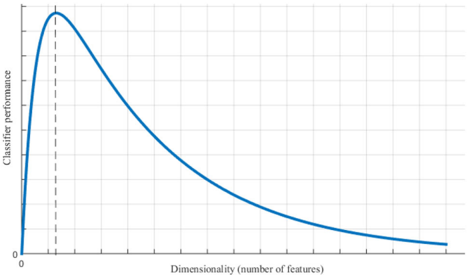
“1 Thetrendofclassifierperformancewiththechangeofdimension some important tasks in sugar content prediction [8], DNA microarray [9], and other tasks.”
BackgroundJia, W., Zhao, D., & Ding, L. (2016) · Applied Soft Computing · doi:10.1016/j.asoc.2016.07.037 · Cited by 92 · cited 2×
“When the sample size is smaller than the data dimensionality, which is the case for many high-dimensional and low sample size data, this sample is named the small sample [32, 115].”
BackgroundSelf-citationM-Isomap: Orthogonal Constrained Marginal Isomap for Nonlinear Dimensionality Reduction
Zhang, Z., Chow, T. W. S., & Zhao, M. (2013) · IEEE Transactions on Cybernetics · doi:10.1109/tsmcb.2012.2202901 · Cited by 88 · cited 1×
“ISOMAP believes that when the data set has an embedded manifold structure [92, 93], the corresponding description of the observation space data set in the low-dimensional structure can be obtained according to the distancemap.”
BackgroundApplication of deep convolution neural network
Yang, J., & Li, J. (2017) · International Computer Conference on Wavelet Active Media Technology and Information Processing (ICCWAMTIP) · doi:10.1109/iccwamtip.2017.8301485 · Cited by 87 · cited 1×
“A convolution neural network is composed of stacked convolution layers and pooling layers [133–135], where both convolution layers and pooling layers can be used to reduce the feature dimension.”
Ant colony algorithm for traffic signal timing optimization
He, J., & Hou, Z.-E. (2011) · Advances in Engineering Software · doi:10.1016/j.advengsoft.2011.09.002 · Cited by 84 · cited 1×
“In addition, the ACO algorithm has also been applied in traffic signal timing optimization [38] and multi-level vehicle routing problem [39].”
MethodEnhanced supervised locally linear embedding
Zhang, S. (2009) · Pattern Recognition Letters · doi:10.1016/j.patrec.2009.05.011 · Cited by 83
A novel approach for dimension reduction of microarray
Aziz, R. M., Verma, C. K., & Srivastava, N. (2017) · Computational Biology and Chemistry · doi:10.1016/j.compbiolchem.2017.10.009 · Cited by 81 · cited 1×
“To select informative genes based on a Naïve Bayes (NB) algorithm, a new hybrid search technique is proposed by ICA and ABC [125].”
MethodNovel machine learning approach for classification of high-dimensional microarray data
Aziz, R. M., Verma, C. K., & Srivastava, N. (2019) · Soft Computing · doi:10.1007/s00500-019-03879-7 · Cited by 81 · cited 1×
“feature selection approach [62], including two stages: ICAbased extraction method and ABC-based wrapper approach, respectively.”
MethodA beam search approach to the container loading problem
Araya, I. A., & Riff, M.-C. (2013) · Computers & Operations Research · doi:10.1016/j.cor.2013.09.003 · Cited by 78
Aziz, R. M., Verma, C. K., & Srivastava, N. (2018) · Annals of Data Science · doi:10.1007/s40745-018-0155-2 · Cited by 77 · cited 1×
“This is the process of feature extraction and selection [10, 11].”
MethodBranch and bound search to optimize injection gate locations in liquid composite molding processes
Gökçe, A., Hsiao, K., & Advani, S. G. (2002) · Composites Part A Applied Science and Manufacturing · doi:10.1016/s1359-835x(02)00047-7 · Cited by 71 · cited 2×
“In addition, in Liquid Composite Molding (LCM) [20], the BBS is used for filling the LCM process.”
MethodLiu, W., Yuan, K., & Ye, D. (2007) · Journal of Biomedical Informatics · doi:10.1016/j.jbi.2007.12.003 · Cited by 70 · cited 1×
“Liu describes the use of NMF as data analysis and interpretation tool in computational biology in various applications of computational biology [76], examples include molecular pattern discovery, class comparisons and predictions, cross-platform and cross-species analysis, gene function…”
MethodCambria, E., Mazzocco, T., & Hussain, A. (2013) · Biologically Inspired Cognitive Architectures · doi:10.1016/j.bica.2013.02.003 · Cited by 69
Kang, M., & Kim, J.-M. (2013) · Mechanical Systems and Signal Processing · doi:10.1016/j.ymssp.2013.08.002 · Cited by 67 · cited 1×
“Kang proposed an SVD-based feature extraction method [68], which is used to identify faults of induction motors and classify faults.”
MethodNIRS feature extraction based on deep auto-encoder neural network
Liu, T., Zhong-ren, L., Yu, C., & Qin, Y. (2017) · Infrared Physics & Technology · doi:10.1016/j.infrared.2017.07.015 · Cited by 66 · cited 1×
“For example, Liu provided us with a reference example of a deep auto-encoder to extract features for classification tasks [157].”
BackgroundArtificial neural network classification of microarray data using new hybrid gene selection method
Aziz, R. M., Verma, C. K., Jha, M. K., & Srivastava, N. (2017) · International Journal of Data Mining and Bioinformatics · doi:10.1504/ijdmb.2017.084026 · Cited by 56
2009 Advanced Video and Signal Based Surveillance
Shimada, A., Taniguchi, R.-I., Martínez-Contreras, F., Orrite-Uruñuela, C., Herrero, E., Ragheb, H., & Velastín, S. A. (2009) · Cited by 47
Pyramid Vision Transformer: A Versatile Backbone for Dense Prediction without Convolutions
Wang, W., Xie, E., Li, X., Fan, D.-P., Song, K., Liang, D., Lü, T., Luo, P., & Shao, L. (2021) · arXiv (Cornell University) · doi:10.48550/arxiv.2102.12122 · Cited by 47
Manifold learning techniques for unsupervised anomaly detection
Olson, C. C., Judd, K. P., & Nichols, J. M. (2017) · Expert Systems with Applications · doi:10.1016/j.eswa.2017.08.005 · Cited by 46 · cited 1×
“However, due to the need to calculate the distance metric between all data points, the computational cost is too high [91].”
BackgroundNaive semi-supervised deep learning using pseudo-label
Li, Z., Ko, B., & Choi, H. (2018) · Peer-to-Peer Networking and Applications · doi:10.1007/s12083-018-0702-9 · Cited by 43 · cited 1×
“To make full use of large-scale unlabeled data, Li et al. proposed an effective method for semi-supervised deep learning that optimized the performance of the model, where a classifier was trained and generated pseudo-labels on unlabeled data [166].”
MethodSilva, R., & Melo‐Pinto, P. (2021) · Applied Soft Computing · doi:10.1016/j.asoc.2021.107889 · Cited by 40 · cited 1×
“1 Thetrendofclassifierperformancewiththechangeofdimension some important tasks in sugar content prediction [8], DNA microarray [9], and other tasks.”
BackgroundSimek, K., Fujarewicz, K., Świerniak, A., Kimmel, M., Jarząb, B., Wiench, M., & Rzeszowska‐Wolny, J. (2004) · Engineering Applications of Artificial Intelligence · doi:10.1016/j.engappai.2004.04.015 · Cited by 38
On some variants of locality preserving projection
Shikkenawis, G., & Mitra, S. K. (2015) · Neurocomputing · doi:10.1016/j.neucom.2015.01.100 · Cited by 35 · cited 1×
“Therefore, some LPP variants [109] were proposed.”
Dimension reduction methods for microarray data: a review
Aziz, R. M., Verma, C. K., & Srivastava, N. (2017) · AIMS bioengineering · doi:10.3934/bioeng.2017.2.179 · Cited by 34
Efficient Selection of Time Samples for Higher-Order DPA with Projection Pursuits
Durvaux, F., Standaert, F., Veyrat-Charvillon, N., Mairy, J.-B., & Deville, Y. (2015) · Lecture notes in computer science · doi:10.1007/978-3-319-21476-4_3 · Cited by 33
Gogna, A., & Majumdar, A. (2016) · Lecture notes in computer science · doi:10.1007/978-3-319-46672-9_10 · Cited by 32 · cited 1×
“Specifically, there are two common deep learning methods based on semi-supervised: unsupervised pre-training [163] and pseudo-supervised pre-training [164].”
BackgroundDimensionality reduction on Anchorgraph with an efficient Locality Preserving Projection
Jiang, R., Fu, W., Wen, L., Hao, S., & Hong, R. (2015) · Neurocomputing · doi:10.1016/j.neucom.2015.07.128 · Cited by 31
Nonlinear supervised dimensionality reduction via smooth regular embeddings
Örnek, C., & Vural, E. (2018) · Pattern Recognition · doi:10.1016/j.patcog.2018.10.006 · Cited by 29
A highly scalable incremental facial feature extraction method
Song, F., Liu, H., Zhang, D. D., & Yang, J. (2008) · Neurocomputing · doi:10.1016/j.neucom.2007.09.022 · Cited by 26 · cited 1×
“And a new incremental facial feature extraction method—incremental weighted average sample analysis for real-time face recognition is proposed [52].”
MethodFiltered-beam-search-based algorithm for dynamic rescheduling in FMS
Wang, S., Xi, L., & Zhou, B. (2006) · Robotics and Computer-Integrated Manufacturing · doi:10.1016/j.rcim.2006.05.005 · Cited by 22
Reinforcing learning in Deep Belief Networks through nature-inspired optimization
Roder, M., Júnior, L. A. P., de Rosa, G. H., de Albuquerque, V. H. C., & Papa, J. P. (2021) · Applied Soft Computing · doi:10.1016/j.asoc.2021.107466 · Cited by 22 · cited 1×
“12 The DBN architecture [160] expand, and it is the structural basis for building a new type of deep learning network.”
BackgroundProceedings Ninth IEEE International Conference on Tools with Artificial Intelligence
(1997) · IEEE International Conference on Tools with Artificial Intelligence (ICTAI) · doi:10.1109/tai.1997.632228 · Cited by 22
A new deep auto-encoder using multiscale reconstruction errors and weight update correlation
Song, W., Li, W., Hua, Z., & Zhu, F. (2021) · Information Sciences · doi:10.1016/j.ins.2021.01.064 · Cited by 19
Learning New Semi-Supervised Deep Auto-encoder Features for Statistical Machine Translation
Lu, S., Chen, Z., & Xu, B. (2014) · Proceedings of the conference - Association for Computational Linguistics. Meeting · doi:10.3115/v1/p14-1012 · Cited by 16 · cited 1×
“learned some new and effective features with the help of the deep auto encoder (DAE) paradigm [165].”
BackgroundBidirectional Search for Interactive Motion Synthesis
Lo, W., & Zwicker, M. (2010) · Computer Graphics Forum · doi:10.1111/j.1467-8659.2009.01626.x · Cited by 13 · cited 1×
“The bi-directional search BDS is used both in artificial intelligence and path planning [29].”
MethodGeometrically local embedding in manifolds for dimension reduction
Ge, S. S., He, H., & Shen, C. (2011) · Pattern Recognition · doi:10.1016/j.patcog.2011.09.022 · Cited by 10 · cited 1×
“It can be seen from the color in ( c ) that the data processed by the LLE algorithm can maintain the neighborhood characteristics of the original data well the high-dimensional measurement space can be preserved during the data reduction [95–98].”
MethodApplication of Dimension Reduction on Using Improved LLE Based on Clustering
Wang, H. (2006) · Journal of Computer Research and Development · doi:10.1360/crad20060826 · Cited by 9 · cited 1×
“According to this disadvantage, LLE based on clustering and improved distance are proposed [102].”
MethodPerformance Analysis of Dimensionality Reduction Techniques: A Comprehensive Review
Mishra, D., & Sharma, S. (2021) · Lecture notes in mechanical engineering · doi:10.1007/978-981-16-0942-8_60 · Cited by 7 · cited 1×
“However, since many of the problems we meet are nonlinear and time-varying systems, the current research on nonlinear feature reduction methods is relatively more [47].”
BackgroundA New Algorithm for Text Clustering Based on Projection Pursuit
Gao, M., & Zheng-ou, W. (2007) · International Conference on Machine Learning and Cybernetics · doi:10.1109/icmlc.2007.4370736 · Cited by 6 · cited 1×
“MT Gao uses a genetic algorithm to find the best projection direction [88].”
MethodLee, C. W., Kang, H., Jung, K., & Kim, H. J. (2003) · Lecture notes in computer science · doi:10.1007/978-3-540-45179-2_58 · Cited by 5
Pereira, R. D. M. A., Sousa, J. M. C., Vieira, S. M., Reti, S. R., & Finkelstein, S. N. (2012) · Advances in intelligent systems and computing · doi:10.1007/978-3-642-33042-1_50 · Cited by 4
GENETIC ALGORITHMS FOR MULTIDIMENSIONAL SCALING / GENETINIŲ ALGORITMŲ TAIKYMAS DAUGIAMATĖMS SKALĖMS
Dzidolikaitė, A. (2015) · Mokslas - Lietuvos ateitis · doi:10.3846/mla.2015.781 · Cited by 4
Solving Systems of Difference Constraints Incrementally with Bidirectional Search
Zhou, J., & Müller, M. (2004) · Algorithmica · doi:10.1007/s00453-004-1081-6 · Cited by 1 · cited 1×
“Zhou proposed an incremental algorithm for differential constraint systems [31] and the bi-directional search was used in it.”
Method
Research works printed but not linked: 35
- Cunningham JP, Ghahramani Z (2015) Linear dimensionality reduction: survey, insights, and generalizations. J Mach Learn Res 16:2859-2900
- Hu J (2008) Survey on feature dimension reduction for high- dimensional data. Appl Res Comput 25(9):2601-2606
- Welch WJ (1982) Branch-and-bound search for experimental designs based on D optimality and other criteria. Technometrics 24(1):41-48
- Wang JH et al (2016) Analysis of imbalanced weather data based on branch-and-bound approach. Appl Res Comput 33(6):1648-1652
- Mao Y et al (2007) Survey for study of feature selection algo- rithms. Moshi Shibie yu Rengong Zhineng/Pattern Recogn Artif Intell 20(2):211-218
- Zhang HB, Sun GY (1999) Tabu search algorithm for feature selection. Acta Autom Sin 25(4):457-466
- Zhang X (1998) Dynamic programming method for feature selec- tion. Acta Autom Sin 24:680-684
- Fujarewicz K, Wiench M (2003) Selecting differentially expressed genes for colon tumor classification. Int J Appl Math Comput Sci 13:327-335
- Qiang LI et al (2005) Online palmprint identification based on improved 2D PCA. Acta Electron Sin 33(10):1886-1889
- Huang QH, Wang S, Liu Z (2007) Improved algorithm of image feature extraction based on independent component analysis. Opto-Electron Eng 1:121-125
- Chen Y et al (2018) Application of singular value decomposition algorithm to dimension-reduced clustering analysis of daily load profiles. Automat Electr Power Syst 42(3):105-111
- Mika S et al (1999) Fisher discriminant analysis with kernels. In: Neural networks for signal processing IX: Proceedings of the 1999 IEEE signal processing society workshop (cat. no. 98th8468). IEEE
- ShiZhong L, XiaoJun J, SuLei Z (1999) The application study of entropy analysis method in feature extraction. J North China Inst Technol 20(3):278-281
- Ding S, Jin F, Wang X (2005) Information feature compression algorithm based on SCEC. Mini-micro Syst 26(7):1202-1205
- Zhang J, Zhang B, Jiang X-Z (2000) Analyses of feature extraction methods based on wavelet transform. Signal Process 16(2):156-162
- Yin FP (2012) Based on improved LLE and FSVM method in face recognition of application. Sci Technol Eng 12(34):9390-9395 100.
- He X, Niyogi P (2003) Locality preserving projections. Adv Neu- ral Inf Process Syst 16:153-160 104.
- Shen Z-H, Pan Y-H, Wang S (2008) A supervised locality pre- serving projection algorithm for dimensionality reduction. Pattern Recogn Artif Intell 21(2):233-239 109.
- Zhan YB (2011) Research on manifold learning theories, methods and applications. Ph.D. thesis of University of Defence Technol- ogy 111.
- Ding S et al (2004) New PCA feature compression algorithm based on information theory. Mini-micro Syst 25(4):694-697 112.
- Ding S, Jin F, Wang J (2003) Information feature analysis and selection of orthogonal transformation. Acta Geodaetica Et Car- togr Sin 32(1):73-77 113.
- Huang R (2007) A margin based feature extraction algorithm for the small sample size problem. Chin J Comput 30(7):1173-1178 122.
- Lu J et al (2020) Learning from very few samples: a survey. arXiv preprint arXiv:2009.02653 123. · arXiv
- Wang Y et al (2020) Generalizing from a few examples: A survey on few-shot learning. ACM Comput Sur (CSUR) 53(3):1-34 124.
- Yi S, Wang X, Tang X (2014) Deep learning face representation by joint identification-verification. Adv Neural Inf Process Syst 27 131.
- Wen W et al (2016) Learning structured sparsity in deep neural networks. Adv Neural Inf Process Syst 29:2074-2082 132.
- Yu K et al (2013) Deep learning: yesterday, today, and tomorrow. J Comput Res Dev 50(9):1799-1804 133.
- Ren S et al (2015) Faster r-cnn: Towards real-time object detec- tion with region proposal networks. Adv Neural Inf Process Syst 28:91-99 138.
- Cui L et al (2020) Context-aware block net for small object detec- tion. IEEE Trans Cybern (Early access), pp 1-14 141.
- Jozefowicz R, Zaremba W, Sutskever I (2015) An empirical exploration of recurrent network architectures. In: International conference on machine learning. PMLR, pp 2342-2350 145.
- Koutnik J et al (2014) A clockwork rnn. In: International confer- ence on machine learning. PMLR, pp 1863-1871 147.
- Ergen T, Mirza AH, Kozat SS (2019) Energy-efficient LSTM net- works for online learning. IEEE Trans Neural Netw Learn Syst 99:1-13 149.
- Vaswani A et al (2017) Attention is all you need. In: Advances in neural information processing systems, pp 5998-6008 150.
- Hinton GE, Salakhutdinov RR (2006) Reducing the dimension- ality of data with neural networks. Science 313(5786):504-507 156. · DOI · Paper page
- Lee DH (2013) Pseudo-label: The simple and efficient semi- supervised learning method for deep neural networks. In Work- shop on challenges in representation learning, ICML 3(2):896 165.
Cited by
Small data machine learning in materials science
Xu, P., Ji, X., Li, M., & Lu, W. (2023) · npj Computational Materials · doi:10.1038/s41524-023-01000-z · Cited by 866
“In addition to the feature selection, the descriptors of the original high-dimensional space can also be reorganized to reduce the dimensionality by projecting the descriptors of the original high-dimensional space into the low-dimensional space, which is called dimensionality reduction 35,36 .”
BackgroundBoroujeni, S. P. H., Razi, A., Khoshdel, S., Afghah, F., Coen, J. L., O’Neill, L., Fule, P., Watts, A., Kokolakis, N.-M. T., & Vamvoudakis, K. G. (2024) · Information Fusion · doi:10.1016/j.inffus.2024.102369 · Cited by 194
Machine Learning for Perovskite Solar Cells and Component Materials: Key Technologies and Prospects
Liu, Y., Tan, X., Liang, J., Han, H., Xiang, P., & Yan, W. (2023) · Advanced Functional Materials · doi:10.1002/adfm.202214271 · Cited by 174
Machine learning and IoT-based approach for tool condition monitoring: A review and future prospects
Tran, M., Doan, H.-P., Vu, V. Q., & Lien, V. T. (2022) · Measurement · doi:10.1016/j.measurement.2022.112351 · Cited by 172
An extensive review of hyperspectral image classification and prediction: techniques and challenges
Tejasree, G., & Loganathan, A. (2024) · Multimedia Tools and Applications · doi:10.1007/s11042-024-18562-9 · Cited by 138
Metadata
- Authors
- Jia, W., Sun, M., Lian, J., & Hou, S.
- Affiliations
- Shandong Normal University (CN)
- Shandong Management University (CN)
- Corresponding author
- Jia, Weikuan
- Hou, Sujuan
- Venue
- Complex & Intelligent Systems
- Published
- 2022-01-21
- Volume
- 8
- Issue
- 3
- Pages
- 2663-2693
- ISSN
- 2198-6053 (ISSN-L)
- 2199-4536
- OpenAlex
- W4206095984
- Cited by
- 797
- References
- 134
- Citations by year
- 2026: 155 · 2025: 256 · 2024: 242 · 2023: 122 · 2022: 22
- FWCI
- 52.59
- Type
- journal article
- Language
- en
- Open access
- gold
- doi.org
- Licence
- cc-by
- creativecommons.org/licenses/by/4.0 (tdm)
- creativecommons.org/licenses/by/4.0 (vor)
- Locations
- Complex & Intelligent Systems (publishedVersion, cc-by)
- Funders
- National Natural Science Foundation of China (62072289)
- Natural Science Foundation of Shandong Province (ZR2020MF076, ZR2020MF133)
- Focus on Research and Development Plan in Shandong Province (2019GNC106115)
- Topics
- Physical Sciences › Computer Science › Computer Vision and Pattern Recognition › Face and Expression Recognition
- Physical Sciences › Mathematics › Statistics and Probability › Statistical Methods and Applications
- Physical Sciences › Computer Science › Artificial Intelligence › Stochastic Gradient Optimization Techniques
- Keywords
- dimensionality reduction, curse of dimensionality, feature selection, feature extraction, pattern recognition
About these checks
Registry, retraction, Cites and statistics results are computed, not judged, with one exception: a printed reference that no index lists is read once by a model before it counts as a citation error. Claims are extracted by a model and kept only when their quote appears verbatim in the text; each cited source is then checked, with a model’s help, for whether it says what the claim relies on. Those verdicts can be wrong — read the claim’s quote and the cited source before relying on one.
Statistics and arithmetic are recomputed, not judged.
Confidence bands are shown only for fields calibrated on our annotated test set. None is calibrated yet, so no band is shown.
What counts as a claim ›How we measure confidence ›How we check this ›
Are you an author, or do you see a problem with this page? Request a review
Data sources
Bibliographic data: Semantic Scholar, OpenAlex, Crossref.
Contains information from the Semantic Scholar Academic Graph Datasets, made available under the ODC Attribution License (ODC-BY 1.0).
Semantic Scholar’s data is described in: Kinney, R., et al. (2023). The Semantic Scholar Open Data Platform. arXiv:2301.10140.
