

Feature dimensionality reduction: a review
Open accessThe DOI matches its Crossref record; 142 of the 142 references it cites were found in a registry or an index.
Abstract
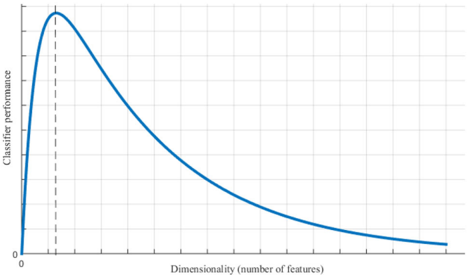
As basic research, it has also received increasing attention from people that the “curse of dimensionality” will lead to increase the cost of data storage and computing; it also influences the efficiency and accuracy of dealing with problems. Feature dimensionality reduction as a key link in the process of pattern recognition has become one hot and difficulty spot in the field of pattern recognition, machine learning and data mining. It is one of the most challenging research fields, which has been favored by most of the scholars’ attention. How to implement “low loss” in the process of feature dimension reduction, keep the nature of the original data, find out the best mapping and get the optimal low dimensional data are the keys aims of the research. In this paper, two-dimensionality reduction methods, feature selection and feature extraction, are introduced; the current mainstream dimensionality reduction algorithms are analyzed, including the method for small sample and method based on deep learning. For each algorithm, examples of their application are given and the advantages and disadvantages of these methods are evaluated.
Overview
The claims and statistics of this paper haven’t been checked yet.
Free: it reads the open-access text and checks the first 5 claims that cite a source we can check. Create a free account to check every claim.
Integrity signals
Registry
Cites
Statistics
Figures

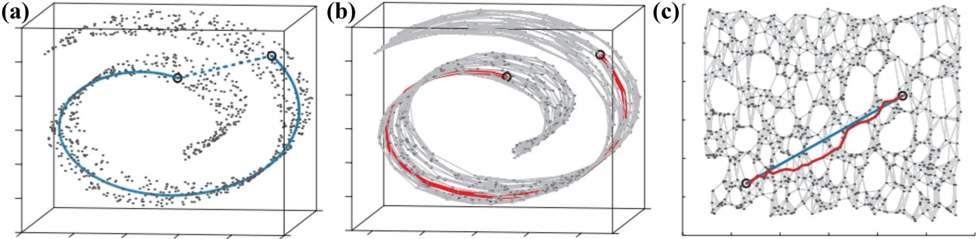
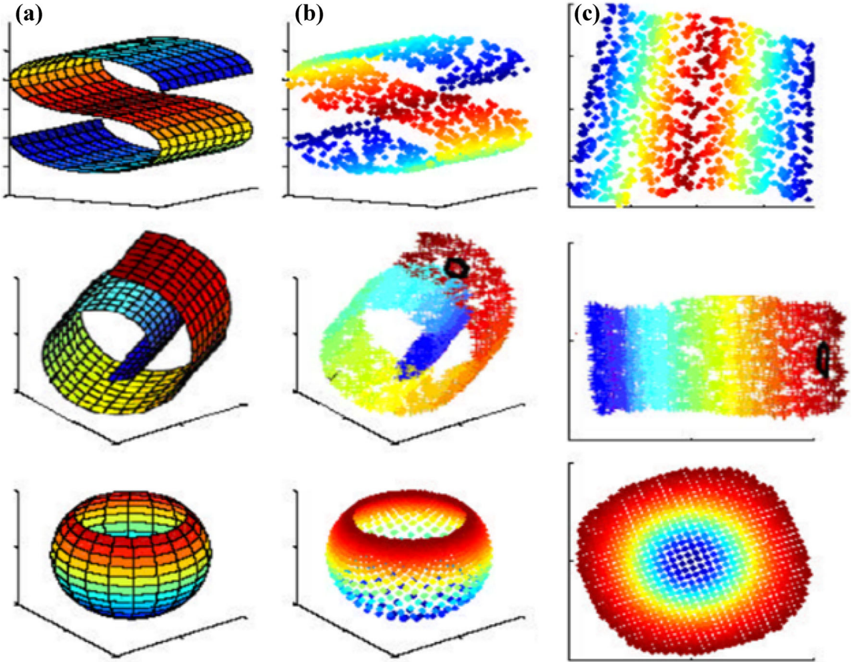
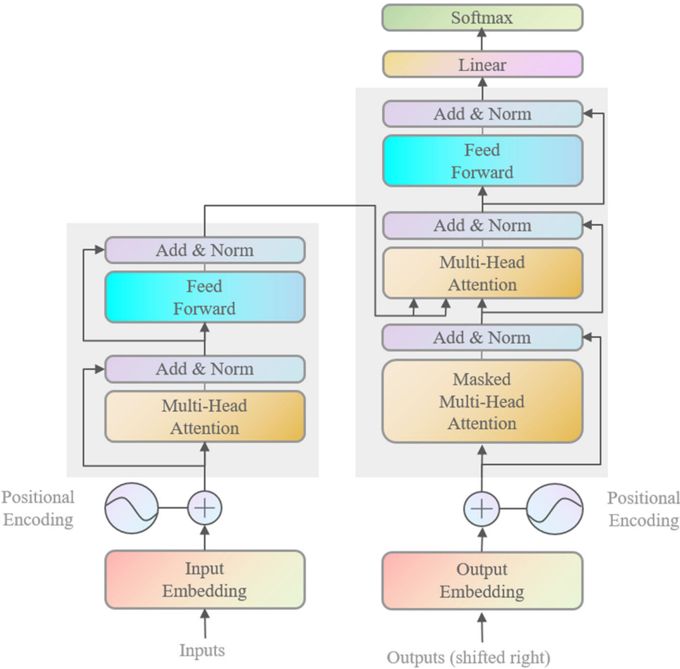
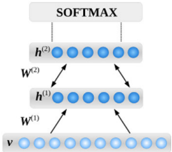
Verification
Claims the paper makes
The claims and statistics of this paper haven’t been checked yet.
Free: it reads the open-access text and checks the first 5 claims that cite a source we can check. Create a free account to check every claim.
Self-check
Percentages, sums and reported differences re-computed from the paper’s own numbers.
The self-check needs the paper’s full text.
Citations
Cites
Deep Residual Learning for Image Recognition
He, K., Zhang, X., Ren, S., & Sun, J. (2016) · 2016 IEEE Conference on Computer Vision and Pattern Recognition (CVPR) · doi:10.1109/cvpr.2016.90 · Cited by 235,474 · cited 1×
“lution and pooling layers to extract high-level semantic information [136].”
BackgroundA Mathematical Theory of Communication
Shannon, C. E. (1948) · Bell System Technical Journal · doi:10.1002/j.1538-7305.1948.tb01338.x · Cited by 88,486
LeCun, Y., Bengio, Y., & Hinton, G. (2015) · Nature · doi:10.1038/nature14539 · Cited by 84,126
Regression shrinkage and selection via the lasso
Tibshirani, R. (1996) · Journal of the Royal Statistical Society Series B: Statistical Methodology · doi:10.1111/j.2517-6161.1996.tb02080.x · Cited by 51,482 · cited 1×
“The least absolute shrinkage and selection operator (Lasso) is also a compression estimation method with reducing feature quantity as the core [116].”
MethodHe, K., Gkioxari, G., Dollar, P., & Girshick, R. (2017) · 2017 IEEE International Conference on Computer Vision (ICCV) · doi:10.1109/iccv.2017.322 · Cited by 29,137
Learning Phrase Representations using RNN Encoder–Decoder for Statistical Machine Translation
Cho, K., van Merrienboer, B., Gulcehre, C., Bahdanau, D., Bougares, F., Schwenk, H., & Bengio, Y. (2014) · Proceedings of the 2014 Conference on Empirical Methods in Natural Language Processing (EMNLP) · doi:10.3115/v1/d14-1179 · Cited by 25,545 · cited 1×
“designed a new RNN Encoder-Decoder, containing two recurrent neural networks [147].”
MethodReducing the dimensionality of data with neural networks
Hinton, G. E., & Salakhutdinov, R. R. (2006) · Science · doi:10.1126/science.1127647 · Cited by 20,928
Deep learning in neural networks: an overview
Schmidhuber, J. (2015) · Neural Networks · doi:10.1016/j.neunet.2014.09.003 · Cited by 18,570 · cited 1×
“It will also promote the further development of deep learning [171–173].”
BackgroundA fast learning algorithm for deep belief nets
Hinton, G. E., Osindero, S., & Teh, Y.-W. (2006) · Neural Computation · doi:10.1162/neco.2006.18.7.1527 · Cited by 16,336 · cited 1×
“In 2006, Hinton pointed out that the difficulty of deep learning network training can be solved by “layer-by-layer initial-ization” [127, 128].”
BackgroundLearning Internal Representations by Error Propagation
Rumelhart, D. E., Hinton, G. E., & Williams, R. J. (1985) · doi:10.21236/ada164453 · Cited by 16,172
Research works printed but not linked: 35
- Cunningham JP, Ghahramani Z (2015) Linear dimensionality reduction: survey, insights, and generalizations. J Mach Learn Res 16:2859-2900
- Hu J (2008) Survey on feature dimension reduction for high- dimensional data. Appl Res Comput 25(9):2601-2606
- Welch WJ (1982) Branch-and-bound search for experimental designs based on D optimality and other criteria. Technometrics 24(1):41-48
- Wang JH et al (2016) Analysis of imbalanced weather data based on branch-and-bound approach. Appl Res Comput 33(6):1648-1652
- Mao Y et al (2007) Survey for study of feature selection algo- rithms. Moshi Shibie yu Rengong Zhineng/Pattern Recogn Artif Intell 20(2):211-218
- Zhang HB, Sun GY (1999) Tabu search algorithm for feature selection. Acta Autom Sin 25(4):457-466
- Zhang X (1998) Dynamic programming method for feature selec- tion. Acta Autom Sin 24:680-684
- Fujarewicz K, Wiench M (2003) Selecting differentially expressed genes for colon tumor classification. Int J Appl Math Comput Sci 13:327-335
- Qiang LI et al (2005) Online palmprint identification based on improved 2D PCA. Acta Electron Sin 33(10):1886-1889
- Huang QH, Wang S, Liu Z (2007) Improved algorithm of image feature extraction based on independent component analysis. Opto-Electron Eng 1:121-125
- Chen Y et al (2018) Application of singular value decomposition algorithm to dimension-reduced clustering analysis of daily load profiles. Automat Electr Power Syst 42(3):105-111
- Mika S et al (1999) Fisher discriminant analysis with kernels. In: Neural networks for signal processing IX: Proceedings of the 1999 IEEE signal processing society workshop (cat. no. 98th8468). IEEE
- ShiZhong L, XiaoJun J, SuLei Z (1999) The application study of entropy analysis method in feature extraction. J North China Inst Technol 20(3):278-281
- Ding S, Jin F, Wang X (2005) Information feature compression algorithm based on SCEC. Mini-micro Syst 26(7):1202-1205
- Zhang J, Zhang B, Jiang X-Z (2000) Analyses of feature extraction methods based on wavelet transform. Signal Process 16(2):156-162
- Yin FP (2012) Based on improved LLE and FSVM method in face recognition of application. Sci Technol Eng 12(34):9390-9395 100.
- He X, Niyogi P (2003) Locality preserving projections. Adv Neu- ral Inf Process Syst 16:153-160 104.
- Shen Z-H, Pan Y-H, Wang S (2008) A supervised locality pre- serving projection algorithm for dimensionality reduction. Pattern Recogn Artif Intell 21(2):233-239 109.
- Zhan YB (2011) Research on manifold learning theories, methods and applications. Ph.D. thesis of University of Defence Technol- ogy 111.
- Ding S et al (2004) New PCA feature compression algorithm based on information theory. Mini-micro Syst 25(4):694-697 112.
- Ding S, Jin F, Wang J (2003) Information feature analysis and selection of orthogonal transformation. Acta Geodaetica Et Car- togr Sin 32(1):73-77 113.
- Huang R (2007) A margin based feature extraction algorithm for the small sample size problem. Chin J Comput 30(7):1173-1178 122.
- Lu J et al (2020) Learning from very few samples: a survey. arXiv preprint arXiv:2009.02653 123. · arXiv
- Wang Y et al (2020) Generalizing from a few examples: A survey on few-shot learning. ACM Comput Sur (CSUR) 53(3):1-34 124.
- Yi S, Wang X, Tang X (2014) Deep learning face representation by joint identification-verification. Adv Neural Inf Process Syst 27 131.
- Wen W et al (2016) Learning structured sparsity in deep neural networks. Adv Neural Inf Process Syst 29:2074-2082 132.
- Yu K et al (2013) Deep learning: yesterday, today, and tomorrow. J Comput Res Dev 50(9):1799-1804 133.
- Ren S et al (2015) Faster r-cnn: Towards real-time object detec- tion with region proposal networks. Adv Neural Inf Process Syst 28:91-99 138.
- Cui L et al (2020) Context-aware block net for small object detec- tion. IEEE Trans Cybern (Early access), pp 1-14 141.
- Jozefowicz R, Zaremba W, Sutskever I (2015) An empirical exploration of recurrent network architectures. In: International conference on machine learning. PMLR, pp 2342-2350 145.
- Koutnik J et al (2014) A clockwork rnn. In: International confer- ence on machine learning. PMLR, pp 1863-1871 147.
- Ergen T, Mirza AH, Kozat SS (2019) Energy-efficient LSTM net- works for online learning. IEEE Trans Neural Netw Learn Syst 99:1-13 149.
- Vaswani A et al (2017) Attention is all you need. In: Advances in neural information processing systems, pp 5998-6008 150.
- Hinton GE, Salakhutdinov RR (2006) Reducing the dimension- ality of data with neural networks. Science 313(5786):504-507 156. · DOI · Paper page
- Lee DH (2013) Pseudo-label: The simple and efficient semi- supervised learning method for deep neural networks. In Work- shop on challenges in representation learning, ICML 3(2):896 165.
Cited by
Small data machine learning in materials science
Xu, P., Ji, X., Li, M., & Lu, W. (2023) · npj Computational Materials · doi:10.1038/s41524-023-01000-z · Cited by 866
“In addition to the feature selection, the descriptors of the original high-dimensional space can also be reorganized to reduce the dimensionality by projecting the descriptors of the original high-dimensional space into the low-dimensional space, which is called dimensionality reduction 35,36 .”
BackgroundBoroujeni, S. P. H., Razi, A., Khoshdel, S., Afghah, F., Coen, J. L., O’Neill, L., Fule, P., Watts, A., Kokolakis, N.-M. T., & Vamvoudakis, K. G. (2024) · Information Fusion · doi:10.1016/j.inffus.2024.102369 · Cited by 194
Machine Learning for Perovskite Solar Cells and Component Materials: Key Technologies and Prospects
Liu, Y., Tan, X., Liang, J., Han, H., Xiang, P., & Yan, W. (2023) · Advanced Functional Materials · doi:10.1002/adfm.202214271 · Cited by 174
Machine learning and IoT-based approach for tool condition monitoring: A review and future prospects
Tran, M., Doan, H.-P., Vu, V. Q., & Lien, V. T. (2022) · Measurement · doi:10.1016/j.measurement.2022.112351 · Cited by 172
An extensive review of hyperspectral image classification and prediction: techniques and challenges
Tejasree, G., & Loganathan, A. (2024) · Multimedia Tools and Applications · doi:10.1007/s11042-024-18562-9 · Cited by 138
High‐temperature ablation resistance prediction of ceramic coatings using machine learning
Sun, J., Zhang, Z., Zhang, Y., Zhang, X., Guo, J., Fu, Q., & Wu, L. (2024) · Journal of the American Ceramic Society · doi:10.1111/jace.20136 · Cited by 105
“35 The ultimate goal of machine learning is to achieve higher model accuracy with fewer features.”
Wei, Z., He, D., Jin, Z., Liu, B., Shan, S., Chen, Y., & Miao, J. (2023) · IEEE Transactions on Intelligent Transportation Systems · doi:10.1109/tits.2023.3253087 · Cited by 104
“Dimensionality reduction may lose some original data information [33].”
BackgroundFederated Feature Selection for Horizontal Federated Learning in IoT Networks
Zhang, X., Mavromatis, A., Vafeas, A., Nejabati, R., & Simeonidou, D. E. (2023) · IEEE Internet of Things Journal · doi:10.1109/jiot.2023.3237032 · Cited by 110
“In our FL system, we consider L local devices L l , l ∈ [1 , L ] as data owners and an HFL server.”
BackgroundMethodAdvancements and future outlook of Artificial Intelligence in energy and climate change modeling
Shobanke, M., Bhatt, M., & Shittu, E. (2025) · Advances in Applied Energy · doi:10.1016/j.adapen.2025.100211 · Cited by 107
Yu, T., Fu, Y., He, J., Zhang, J., & Xianyu, Y. (2023) · ACS Nano · doi:10.1021/acsnano.2c10584 · Cited by 94
Machine learning powered financial credit scoring: a systematic literature review
Ayari, H., Guetari, R., & Kraïem, N. (2025) · Artificial Intelligence Review · doi:10.1007/s10462-025-11416-2 · Cited by 105
Sun, Y., Chen, S., Dai, X., Li, D., Jiang, H., & Jia, K. (2023) · Journal of Hazardous Materials · doi:10.1016/j.jhazmat.2023.130722 · Cited by 84
UAV Trajectory Prediction Based on Flight State Recognition
Zhang, J., Shi, Z., Zhang, A., Yang, Q., Shi, G., & Wu, Y. (2023) · IEEE Transactions on Aerospace and Electronic Systems · doi:10.1109/taes.2023.3303854 · Cited by 85
“In the field of machine learning, overlearning directly affects the classification accuracy [26].”
BackgroundKasiviswanathan, S., Gnanasekaran, S., Mohanraj, T., & Rakkiyannan, J. (2024) · Journal of Sensor and Actuator Networks · doi:10.3390/jsan13050053 · Cited by 88
Alaghbari, K. A., Lim, H. S., Saad, M. H. M., & Yong, Y. S. (2023) · IoT · doi:10.3390/iot4030016 · Cited by 80
“There are two techniques for dimensionality reduction, which are feature selection and feature extraction [10].”
MethodA Survey on Data-Driven Scenario Generation for Automated Vehicle Testing
Cai, J., Deng, W., Guang, H., Wang, Y., Li, J., & Ding, J. (2022) · Machines · doi:10.3390/machines10111101 · Cited by 103
Language writ large: LLMs, ChatGPT, meaning, and understanding
Harnad, S. R. (2025) · Frontiers in Artificial Intelligence · doi:10.3389/frai.2024.1490698 · Cited by 86
Multispectral Semantic Segmentation for Land Cover Classification: An Overview
Ramos, L., & Sappa, A. D. (2024) · IEEE Journal of Selected Topics in Applied Earth Observations and Remote Sensing · doi:10.1109/jstars.2024.3438620 · Cited by 92
“This involves transforming the original channels into a smaller set of components that retain most of the important information [151].”
BackgroundUnsupervised Learning in Precision Medicine: Unlocking Personalized Healthcare through AI
Trezza, A., Visibelli, A., Roncaglia, B., Spiga, O., & Santucci, A. (2024) · Applied Sciences · doi:10.3390/app14209305 · Cited by 75
Review of machine learning techniques for optimal power flow
Khaloie, H., Dolányi, M., Toubeau, J., & Vallée, F. (2025) · Applied Energy · doi:10.1016/j.apenergy.2025.125637 · Cited by 87
Enhancing the cognitive load theory and multimedia learning framework with AI insight
Twabu, K. Y. (2025) · Discover Education · doi:10.1007/s44217-025-00592-6 · Cited by 76
Sharkas, M., & Attallah, O. (2024) · Scientific Reports · doi:10.1038/s41598-024-56820-w · Cited by 71
“Achieving this equilibrium is essential for developing models that are computationally effective, generalize effectively to new data, and uphold outstanding precision in classification assignments 69,70 .”
BackgroundA Brief Survey of Data Preprocessing in Machine Learning and Deep Learning Techniques
Bala, B., & Behal, S. (2024) · International Conference on I-SMAC (IoT in Social, Mobile, Analytics and Cloud) (I-SMAC) · doi:10.1109/i-smac61858.2024.10714767 · Cited by 65
“However, these methods are computationally expensive [22].”
Garg, N., Choudhry, M. S., & Bodade, R. M. (2022) · Journal of Neuroscience Methods · doi:10.1016/j.jneumeth.2022.109745 · Cited by 69
PSTCGCN: Principal spatio-temporal causal graph convolutional network for traffic flow prediction
Yang, S., Wu, Q., Li, Z., & Wang, K. (2024) · Neural Computing and Applications · doi:10.1007/s00521-024-10591-7 · Cited by 70
Synergizing the enhanced RIME with fuzzy K-nearest neighbor for diagnose of pulmonary hypertension
Yu, X., Qin, W., Lin, X., Shan, Z., Huang, L., Shao, Q., Wang, L., & Chen, M. (2023) · Computers in Biology and Medicine · doi:10.1016/j.compbiomed.2023.107408 · Cited by 60
Data reduction in big data: a survey of methods, challenges and future directions
Khoei, T. T., & Singh, A. (2024) · International Journal of Data Science and Analytics · doi:10.1007/s41060-024-00603-z · Cited by 69
“Each technique has its strengths and limitations, and understanding their characteristics is essential for selecting the most appropriate approach for a given problem [64, 66, 68, 70, 75].”
An overview of methods and techniques in multimodal data fusion with application to healthcare
Chaabene, S., Boudaya, A., Bouaziz, B., & Chaâri, L. (2025) · International Journal of Data Science and Analytics · doi:10.1007/s41060-025-00715-0 · Cited by 72
“According to the literature, dimensionality reduction techniques are broadly classified into two categories [69] including feature selection and feature extraction.”
Habibi, A., Delavar, M. R., Nazari, B., Pirasteh, S., & Sadeghian, M. S. (2023) · International Journal of Applied Earth Observation and Geoinformation · doi:10.1016/j.jag.2023.103443 · Cited by 55
A review of unsupervised learning in astronomy
Fotopoulou, S. (2024) · Astronomy and Computing · doi:10.1016/j.ascom.2024.100851 · Cited by 69
A multi-swarm optimizer with a reinforcement learning mechanism for large-scale optimization
Wang, X., Wang, F., He, Q. F., & Guo, Y. (2024) · Swarm and Evolutionary Computation · doi:10.1016/j.swevo.2024.101486 · Cited by 54
Hazard Susceptibility Mapping with Machine and Deep Learning: A Literature Review
Viloria, A. D. J. P., Folini, A., Carrión, D., & Brovelli, M. A. (2024) · Remote Sensing · doi:10.3390/rs16183374 · Cited by 61
Spatiospectral Representation and Neural Decoding of Somatic Perception of Acupuncture Stimulations
Yu, H., Lin, Z., Li, F., Liu, J., Liu, C., & Wang, J. (2025) · IEEE Journal of Biomedical and Health Informatics · doi:10.1109/jbhi.2025.3601173 · Cited by 65
“However, studies have proven that an increase in representational dimensionality is not necessarily conducive to the improvement of representational accuracy [18], [19].”
GeneViT: Gene Vision Transformer with Improved DeepInsight for cancer classification
Gokhale, M., Mohanty, S. K., & Ojha, A. (2023) · Computers in Biology and Medicine · doi:10.1016/j.compbiomed.2023.106643 · Cited by 55
Murray, J. D., Lange, J. J., Bennett-Lenane, H., Holm, R., Kuentz, M., O’Dwyer, P. J., & Griffin, B. T. (2023) · European Journal of Pharmaceutical Sciences · doi:10.1016/j.ejps.2023.106562 · Cited by 61
Artificial intelligence and machine learning in cell-free-DNA-based diagnostics
Tsui, W., Ding, S. C., Jiang, P., & Lo, Y. M. D. (2025) · Genome Research · doi:10.1101/gr.278413.123 · Cited by 57
In-silico strategies in nano-drug design: Bridging nanomaterials and pharmacological applications
Dalbanjan, N. P., Korgaonkar, K., Eelager, M. P., Gonal, B. N., Kadapure, A. J., Arakera, S. B., & Kumar, S. K. P. (2025) · Nano TransMed · doi:10.1016/j.ntm.2025.100091 · Cited by 54
Živić, F., Kaplarevic-Malisic, A. M., Grujović, N., Stojanovic, B. S., & Ivanovic, M. R. (2025) · Materials Today Communications · doi:10.1016/j.mtcomm.2025.113525 · Cited by 65
Deng, W., Wang, J., Guo, A., & Zhao, H. (2024) · Information Sciences · doi:10.1016/j.ins.2024.120787 · Cited by 54
A Comprehensive Survey on Big Data Analytics: Characteristics, Tools and Techniques
Shahnawaz, M., & Kumar, M. (2025) · ACM Computing Surveys · doi:10.1145/3718364 · Cited by 68
Pham, H. T., Awange, J. L., & Kühn, M. (2022) · Sensors · doi:10.3390/s22176609 · Cited by 50
“Generally, wrapper techniques outperform filter techniques [6,48,49] as they consider the feature dependencies and their collective contribution to model generation [6].”
BackgroundMethodResultInfluentialSET: Spectral Enhancement for Tiny Object Detection
Sun, H., Wang, R., Li, Y., Yang, L., Lin, S., Cao, X., & Zhang, B. (2025) · IEEE Computer Society Conference on Computer Vision and Pattern Recognition/Proceedings - IEEE Computer Society Conference on Computer Vision and Pattern Recognition/Proceedings · doi:10.1109/cvpr52734.2025.00444 · Cited by 72
“Previous works [18, 41] reveal that feature dimensionality reduction methods can lead to smoother and more efficient feature spaces.”
Enhancing credit scoring accuracy with a comprehensive evaluation of alternative data
Hlongwane, R., Ramaboa, K. K. K. M., & Mongwe, W. T. (2024) · PLoS ONE · doi:10.1371/journal.pone.0303566 · Cited by 57
“Feature selection is a common technique used to select predictor variables for modelling purposes without losing significant information [38].”
BackgroundMethodInfluentialSecuring Mobile Edge Computing Using Hybrid Deep Learning Method
Adeniyi, O., Sadiq, A. S., Pillai, P., Aljaidi, M., & Kaiwartya, O. (2024) · Computers · doi:10.3390/computers13010025 · Cited by 53
“As a result of this intricate interplay among the high-dimensional data environment, the need for optimal accuracy and efficient model performance calls for innovative approaches to feature reduction [6].”
Energy Demand Forecasting and Optimizing Electric Systems for Developing Countries
Arnob, S. S., Arefin, A. I. M. S., Saber, A. Y., & Mamun, K. A. (2023) · IEEE Access · doi:10.1109/access.2023.3250110 · Cited by 51
Insights into radiomics: a comprehensive review for beginners
Mariotti, F., Agostini, A., Borgheresi, A., Marchegiani, M., Zannotti, A., Giacomelli, G., Pierpaoli, L., Tola, E., Galiffa, E., & Giovagnoni, A. (2025) · Clinical & Translational Oncology · doi:10.1007/s12094-025-03939-5 · Cited by 51
“The extraction of features both from the original and filtered images creates a larger set of features that includes redundant or irrelevant information [56].”
Lightweight Deep Learning Framework for Speech Emotion Recognition
Akinpelu, S. A., Viriri, S., & Adegun, A. A. (2023) · IEEE Access · doi:10.1109/access.2023.3297269 · Cited by 49
“Computational complexity [21] has been the major drawback in this case because of several convolutional layers.”
BackgroundWorkflow-Induced Uncertainty in Data-Driven Mineral Prospectivity Mapping
Zhang, S. E., Lawley, C. J. M., Bourdeau, J. E., Nwaila, G. T., & Ghorbani, Y. (2024) · Natural Resources Research · doi:10.1007/s11053-024-10322-8 · Cited by 45
“…(1) variability primarily controls the threshold between overfitting and underfit-ting that differs on a per-algorithm basis (through the curse of dimensionality; Jia et al., 2022; Ma´rquez, 2022), which further implies that the selection of data and feature engineering impacts algorithm selection.”
Data- and experience-driven neural networks for long-term settlement prediction of tunnel
Zhang, D., Guo, X., Shen, Y., Zhou, W.-D., & Chen, X. (2024) · Tunnelling and Underground Space Technology · doi:10.1016/j.tust.2024.105669 · Cited by 43
Kouraichi, M., Mansouri, M. M., Trabelsi, M., Mhalla, A., Abdel-Khalik, A. S., & Sakly, A. (2025) · IEEE Access · doi:10.1109/access.2025.3628908 · Cited by 46
“Techniques such as Principal Component Analysis (PCA), Kernel PCA, and their variations are commonly used for dimensionality reduction and feature extraction, helping to reduce the complexity of the data while retaining the essential information [25], [26].”
LiteVR: Interpretable and Lightweight Cybersickness Detection using Explainable AI
Kundu, R. K., Islam, R., Quarles, J. P., & Hoque, K. A. (2023) · IEEE Conference on Virtual Reality and 3D User Interfaces (VR) · doi:10.1109/vr55154.2023.00076 · Cited by 50
“This is because PCA maps high-dimensional data to low-dimensional space through projections, which often cause the loss of information from the original data [29].”
BackgroundFuadah, Y. N., & Lim, K. M. (2025) · Biomedical Engineering Letters · doi:10.1007/s13534-025-00473-9 · Cited by 50
“Dimensionality reduction techniques like Principal Component Analysis (PCA) optimize feature sets for machine learning applications, retaining the most informative characteristics while reducing computational complexity [87].”
Ouifak, H., & Idri, A. (2025) · Neurocomputing · doi:10.1016/j.neucom.2025.130602 · Cited by 48
Sattar, M. U., Dattana, V., Hasan, R., Mahmood, S., Khan, H. W., & Hussain, S. (2025) · Sustainability · doi:10.3390/su17135772 · Cited by 40
Zhang, Y., Stewart, C., Ranjan, Y., Conde, P., Sankesara, H., Rashid, Z., Sun, S., Dobson, R., & Folarin, A. (2025) · Journal of Affective Disorders · doi:10.1016/j.jad.2025.01.124 · Cited by 44
Jahani, M. S., Saberi-Movahed, F., Eftekhari, M., Aghamollaei, G., & Tiwari, P. (2023) · Expert Systems with Applications · doi:10.1016/j.eswa.2023.122556 · Cited by 38
Roadmap: Integrating artificial intelligence in structural health monitoring systems
Laflamme, S., Blasch, E., Ubertini, F., Liu, Z., Wertz, J. N., Knott, C. E., Cherry, M. R., Lindgren, E. A., Chang, F., Kumar, A. K., et al. (2026) · Measurement Science and Technology · doi:10.1088/1361-6501/ae3abb · Cited by 42
Díaz, E. O., Iino, H., Koyama, K., Kawamura, S., Koseki, S., & Lyu, S. (2023) · Food Chemistry · doi:10.1016/j.foodchem.2023.136907 · Cited by 36
Gahlan, N., & Sethia, D. (2024) · Biomedical Signal Processing and Control · doi:10.1016/j.bspc.2024.106353 · Cited by 43
Wang, S., Liu, C., Hao, W., Zhuang, Y., Zhu, X., Wang, L., Niu, X., Liu, S., Chen, B., & Zhao, Q. (2025) · ACS Nano · doi:10.1021/acsnano.5c07494 · Cited by 39
Design of Motor Skill Recognition and Hierarchical Evaluation System for Table Tennis Players
Shi, Z., Jia, Y., Shi, G., Zhang, K., Ji, L., Wang, D., & Wu, Y. (2024) · IEEE Sensors Journal · doi:10.1109/jsen.2023.3346880 · Cited by 38
“In the field of machine learning, overlearning directly has a negative influence on classification accuracy [24], [25], [26] and causes much more burden to machine learning.”
BackgroundStudy on Data Preprocessing for Machine Learning Based on Semiconductor Manufacturing Processes
Park, H.-J., Koo, Y.-S., Yang, H.-Y., Han, Y., & Nam, C. (2024) · Sensors · doi:10.3390/s24175461 · Cited by 35
“Methods for dimensionality reduction include feature selection and feature extraction [15].”
BackgroundMethodInfluentialYang, Q., Bao, R., Wang, Z., Guo, Q., Pan, Y., & Zhou, X. (2025) · Chemical Engineering Journal · doi:10.1016/j.cej.2025.161154 · Cited by 34
Applied machine learning to analyze and predict CO2 adsorption behavior of metal-organic frameworks
Li, X., Zhang, X., Zhang, J., Gu, J., Zhang, S., Li, G., Shao, J., He, Y., Yang, H., Zhang, S., et al. (2023) · Carbon Capture Science & Technology · doi:10.1016/j.ccst.2023.100146 · Cited by 48
A Review on AI-Based Data-Driven Models for Optimization of Nanocarriers as Drug Delivery Systems
Kantesaria, R., & Panda, H. S. (2026) · ACS Biomaterials Science & Engineering · doi:10.1021/acsbiomaterials.5c01998 · Cited by 41
A Review on Intelligent Recognition with Logging Data: Tasks, Current Status and Challenges
Zhu, X., Zhang, H., Ren, Q., Zhang, L., Huang, G., Shang, Z., & Sun, J. (2024) · Surveys in Geophysics · doi:10.1007/s10712-024-09853-9 · Cited by 32
“Dimension reduction is the most common means of feature transformation, which aims to maximize the retention of key information while mapping the original high-dimensional data to a new low-dimensional space (Anowar et al. 2021; Ayesha et al. 2020; Jia et al. 2022).”
Cè, M., Chiriac, M. D., Cozzi, A., Macrì, L., Rabaiotti, F. L., Irmici, G., Fazzini, D., Carrafiello, G., & Cellina, M. I. (2024) · Diagnostics · doi:10.3390/diagnostics14222473 · Cited by 37
“In the process of mapping high-dimensional data into a low-dimensional space, however, there is a risk of losing some important information; for this reason, the choice of the method is a crucial step in the pipeline of a radiomics study [112].”
InfluentialExplainable fault diagnosis method based on statistical features for gearboxes
Tang, H., Wang, H., & Li, C. (2025) · Engineering Applications of Artificial Intelligence · doi:10.1016/j.engappai.2025.110503 · Cited by 36
PET radiomics in lung cancer: advances and translational challenges
Zhang, Y., Huang, W., Jiao, H., & Kang, L. (2024) · EJNMMI Physics · doi:10.1186/s40658-024-00685-5 · Cited by 34
Advanced Machine Learning in Smart Grids: An overview
Noura, H., Yaacoub, J.-P. A., Salman, O., & Chehab, A. (2025) · Internet of Things and Cyber-Physical Systems · doi:10.1016/j.iotcps.2025.05.002 · Cited by 32
A systematic data characteristic understanding framework towards physical-sensor big data challenges
Ma, Z., Jôrgensen, B. N., & Ma, Z. G. (2024) · Journal Of Big Data · doi:10.1186/s40537-024-00942-5 · Cited by 33
“A feature is a unique characteristic or attribute that provides valuable information about individual instances in a dataset [48, 49].”
BackgroundOsteoinductive biomaterials: Machine learning for prediction and interpretation
Lin, S., Zhuang, Y., Chen, K., Lu, J., Wang, K., Han, L., Li, M., Li, X., Zhu, X., Yang, M., et al. (2024) · Acta Biomaterialia · doi:10.1016/j.actbio.2024.08.017 · Cited by 29
Jarocińska, A., Kopeć, D., & Kycko, M. (2024) · Scientific Reports · doi:10.1038/s41598-024-79209-1 · Cited by 32
Han, F., Lv, Y., Liu, Y., Zhang, X., Yu, W., Cheng, C., & Yang, W. B. (2023) · Construction and Building Materials · doi:10.1016/j.conbuildmat.2023.131781 · Cited by 31
Yao, L., Xie, P., Guan, J., Chung, C., Zhang, W., Deng, J., Huang, Y., Chiang, Y., & Lee, T.-Y. (2024) · Briefings in Bioinformatics · doi:10.1093/bib/bbae460 · Cited by 28
“However, the large dimension of the feature matrix might make the model difficult to train [49].”
RN-Autoencoder: Reduced Noise Autoencoder for classifying imbalanced cancer genomic data
Arafa, A., El-Fishawy, N. A., Badawy, M., & Radad, M. A. (2023) · Journal of Biological Engineering · doi:10.1186/s13036-022-00319-3 · Cited by 28
“Non-linear methods include kernel-optimized functions such as Kernel-based Principal Component Analysis (KPCA), Nonnegative Matrix Factorization (NMF), Wavelet Transformation (WT), Locally Linear Embed-ding (LLE) and deep learning approaches including deep autoencoders [18].”
MethodHassan, J., Saeed, S. M., Deka, L., Uddin, M. J., & Das, D. B. (2024) · Pharmaceutics · doi:10.3390/pharmaceutics16020260 · Cited by 35
“The purposes of using FS are, (a) model simplification to make it user-friendly to interpret, (b) cutback on run time, (c) subside curses of dimensionality, and (d) variance reduction [83].”
BackgroundMethodMachine learning to assess and support safe drinking water supply: a systematic review
Feng, F., Zhang, Y., Chen, Z., Ni, J., Feng, Y., Xie, Y., & Zhang, C. (2024) · Journal of environmental chemical engineering · doi:10.1016/j.jece.2024.114481 · Cited by 37
Benchmarking Pretrained Models for Speech Emotion Recognition: A Focus on Xception
Hassan, A., Masood, T., Ahmed, H. A., Shahzad, H. M., & Khushi, H. M. T. (2024) · Computers · doi:10.3390/computers13120315 · Cited by 28
Brunel, L., Balesdent, M., Brevault, L., Riche, R. L., & Sudret, B. (2024) · Computer Methods in Applied Mechanics and Engineering · doi:10.1016/j.cma.2024.117577 · Cited by 27
Parastar, H., & Weller, P. (2025) · Analytica Chimica Acta · doi:10.1016/j.aca.2025.343635 · Cited by 27
Systems Human Immunology and AI: Immune Setpoint and Immune Health
Lei, Y., & Tsang, J. S. (2025) · Annual Review of Immunology · doi:10.1146/annurev-immunol-090122-042631 · Cited by 31
Ketkaew, R., & Luber, S. (2022) · Journal of Chemical Information and Modeling · doi:10.1021/acs.jcim.2c00883 · Cited by 27
Chipless RFID Tag Implementation and Machine-Learning Workflow for Robust Identification
Sokoudjou, J. J. F., Villa-González, F., García-Cardarelli, P., Díaz, J., Valderas, D., & Ochoa, I. (2023) · IEEE Transactions on Microwave Theory and Techniques · doi:10.1109/tmtt.2023.3276011 · Cited by 27
“Dimensionality reduction techniques such as PCA, variational autoencoders (VAE), or feature extraction, among others, are widely used in the ML field, as they can make the models less complex and more robust [32].”
MethodZhang, X., Jiang, S., Zheng, N., Xia, X., Li, Z., Zhang, R., Zhang, J., & Wang, X. (2024) · Water Resources Research · doi:10.1029/2023wr036893 · Cited by 30
Road damage prediction and intelligent maintenance methods based on stacking ensemble learning
Ou, J., Zhang, J., Li, H., & Duan, B. (2025) · Advanced Engineering Informatics · doi:10.1016/j.aei.2025.103466 · Cited by 27
Wang, S., Liu, C., Hao, W., Zhu, X., Niu, X., Ma, D., Wang, L., & Zhao, Q. (2025) · Journal of Energy Chemistry · doi:10.1016/j.jechem.2025.11.031 · Cited by 27
Escobar-Linero, E., Luna-Perejón, F., Muñoz-Saavedra, L., Sevillano, J. L., & Domínguez-Morales, M. (2022) · Engineering Applications of Artificial Intelligence · doi:10.1016/j.engappai.2022.105170 · Cited by 26
The Cost of Understanding—XAI Algorithms towards Sustainable ML in the View of Computational Cost
Jean-Quartier, C., Bein, K., Hejny, L., Hofer, E., Holzinger, A., & Jeanquartier, F. (2023) · Computation · doi:10.3390/computation11050092 · Cited by 31
Best practices for machine learning in antibody discovery and development
Wossnig, L., Furtmann, N., Buchanan, A. G., Kumar, S., & Greiff, V. (2024) · Drug Discovery Today · doi:10.1016/j.drudis.2024.104025 · Cited by 32
Ferreira, R. E. P., & Dórea, J. R. R. (2025) · Journal of Dairy Science · doi:10.3168/jds.2024-25650 · Cited by 25
A New Fingerprint and Graph Hybrid Neural Network for Predicting Molecular Properties
Zhang, Q., Mao, D., Tu, Y., & Wu, Y. (2024) · Journal of Chemical Information and Modeling · doi:10.1021/acs.jcim.4c00586 · Cited by 27
Cai, H., Liu, Z., Guo, T., Cai, C. S. S., Sun, Z. H., Zong, Y., & Zhou, C. (2026) · Structures · doi:10.1016/j.istruc.2026.111112 · Cited by 24
Li, H., Zeng, B., Qiu, T., Huang, W., Wang, Y., Sheng, G., & Wang, Y. (2023) · Journal of Membrane Science · doi:10.1016/j.memsci.2023.122093 · Cited by 27
Eckhart, L., Lenhof, K., Rolli, L.-M., & Lenhof, H. (2024) · Briefings in Bioinformatics · doi:10.1093/bib/bbae242 · Cited by 25
“Two groups of DR algorithmscanbedistinguished:featureselection(FS)andfeature extraction (FE) techniques [38].”
BackgroundTiwari, A. K., Saini, R., Nath, A., Singh, P., & Shah, M. A. (2024) · Scientific Reports · doi:10.1038/s41598-024-55902-z · Cited by 23
“It deduces the target MI with minimum redundancy 10,77 among the selected features.”
BackgroundWang, S., Jiao, M., Zhou, R., Ren, Y., Liu, H., & Lian, C. (2024) · Journal of Power Sources · doi:10.1016/j.jpowsour.2024.235417 · Cited by 24
Alagarsamy, S., Vishnuram, P., Shanmugam, Y., Thentral, T. M. T., Goňo, R., Goňo, M., & Narayanamoorthi, R. (2025) · IEEE Open Journal of Power Electronics · doi:10.1109/ojpel.2025.3604475 · Cited by 23
“Feature selection algorithms, non-negative matrix factorization, principal component analysis, and Markov transition fields are all instances of dimension reduction methods that have developed and been successful in extracting useful information from massive datasets [122], [123].”
A Review on NLP Techniques and Associated Challenges in Extracting Features from Education Data
Lukwaro, E. A. E., Kalegele, K., & Nyambo, D. G. (2024) · International Journal of Computing and Digital Systems · doi:10.12785/ijcds/160170 · Cited by 28
“Factors influencing technique performance include data size, where larger datasets maximize e ffi ciency, and dimensionality, as low dimensionality improves performance by reducing computational costs and storage space [58].”
Speeding up the development of solid state electrolyte by machine learning
Hu, Q., Chen, K., Li, J., Zhao, T., Liang, F., & Xue, D. (2024) · Next Energy · doi:10.1016/j.nxener.2024.100159 · Cited by 25
Metadata
- Authors
- Jia, W., Sun, M., Lian, J., & Hou, S.
- Affiliations
- Shandong Normal University (CN)
- Shandong Management University (CN)
- Corresponding author
- Jia, Weikuan
- Hou, Sujuan
- Venue
- Complex & Intelligent Systems
- Published
- 2022-01-21
- Volume
- 8
- Issue
- 3
- Pages
- 2663-2693
- ISSN
- 2198-6053 (ISSN-L)
- 2199-4536
- OpenAlex
- W4206095984
- Cited by
- 797
- References
- 134
- Citations by year
- 2026: 155 · 2025: 256 · 2024: 242 · 2023: 122 · 2022: 22
- FWCI
- 52.59
- Type
- journal article
- Language
- en
- Open access
- gold
- doi.org
- Licence
- cc-by
- creativecommons.org/licenses/by/4.0 (tdm)
- creativecommons.org/licenses/by/4.0 (vor)
- Locations
- Complex & Intelligent Systems (publishedVersion, cc-by)
- Funders
- National Natural Science Foundation of China (62072289)
- Natural Science Foundation of Shandong Province (ZR2020MF076, ZR2020MF133)
- Focus on Research and Development Plan in Shandong Province (2019GNC106115)
- Topics
- Physical Sciences › Computer Science › Computer Vision and Pattern Recognition › Face and Expression Recognition
- Physical Sciences › Mathematics › Statistics and Probability › Statistical Methods and Applications
- Physical Sciences › Computer Science › Artificial Intelligence › Stochastic Gradient Optimization Techniques
- Keywords
- dimensionality reduction, curse of dimensionality, feature selection, feature extraction, pattern recognition
About these checks
Registry, retraction, Cites and statistics results are computed, not judged, with one exception: a printed reference that no index lists is read once by a model before it counts as a citation error. Claims are extracted by a model and kept only when their quote appears verbatim in the text; each cited source is then checked, with a model’s help, for whether it says what the claim relies on. Those verdicts can be wrong — read the claim’s quote and the cited source before relying on one.
Statistics and arithmetic are recomputed, not judged.
Confidence bands are shown only for fields calibrated on our annotated test set. None is calibrated yet, so no band is shown.
What counts as a claim ›How we measure confidence ›How we check this ›
Are you an author, or do you see a problem with this page? Request a review
Data sources
Bibliographic data: Semantic Scholar, OpenAlex, Crossref.
Contains information from the Semantic Scholar Academic Graph Datasets, made available under the ODC Attribution License (ODC-BY 1.0).
Semantic Scholar’s data is described in: Kinney, R., et al. (2023). The Semantic Scholar Open Data Platform. arXiv:2301.10140.
