

The DOI matches its Crossref record; 38 of the 38 references it cites were found in a registry or an index.
The Contribution of Neanderthals to Phenotypic Variation in Modern Humans
Open accessAbstract
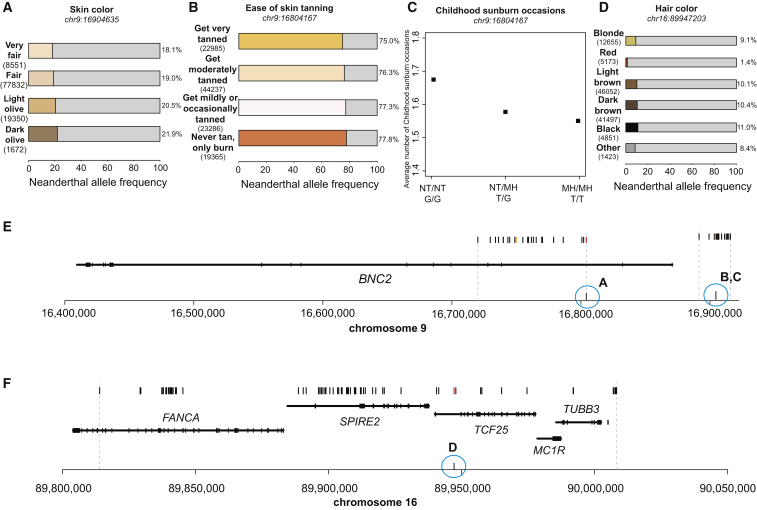
Assessing the genetic contribution of Neanderthals to non-disease phenotypes in modern humans has been difficult because of the absence of large cohorts for which common phenotype information is available. Using baseline phenotypes collected for 112,000 individuals by the UK Biobank, we can now elaborate on previous findings that identified associations between signatures of positive selection on Neanderthal DNA and various modern human traits but not any specific phenotypic consequences. Here, we show that Neanderthal DNA affects skin tone and hair color, height, sleeping patterns, mood, and smoking status in present-day Europeans. Interestingly, multiple Neanderthal alleles at different loci contribute to skin and hair color in present-day Europeans, and these Neanderthal alleles contribute to both lighter and darker skin tones and hair color, suggesting that Neanderthals themselves were most likely variable in these traits.
Overview
The claims and statistics of this paper haven’t been checked yet.
Run the check — free, no account needed. It reads the open-access text and checks the sources it cites.
Integrity signals
Registry
Cites
Statistics
Figures
Verification
Claims the paper makes
The claims and statistics of this paper haven’t been checked yet.
Run the check — free, no account needed. It reads the open-access text and checks the sources it cites.
Claims other papers make about this one
Each is checked against this paper’s own text: does it say what the citing paper says it does?
The source backs part of the claim, not all of it — or backs it for a different population, condition or comparison.
In the citing paper
“While further experimental validation of our observations is necessary in order to characterise the genome-wide impact of archaic introgression, the results presented in this study argue for a potential contribution of Denisovan variants to immune-related phenotypes amongst early modern humans in the region, potentially favouring adaptation to the local environment [15, 22].”
From Denisovan introgression has shaped the immune system of present-day Papuans (2022) · cites this paper as [15]
Experimental — accuracy not yet measuredThe source backs part of the claim, not all of it — or backs it for a different population, condition or comparison.
In the citing paper
“For psychiatric traits, tobacco use disorders trend towards enrichment (1.2-fold enriched, CI: 1.0-1.5, q = 0.23), consistent with previous observations, while introgressed variants are depleted for contribution to personality-related functions (1.4-fold depleted, CI: 1.1–1.8, q = 0.07, Fig. 2E)3,4.”
From Quantifying the contribution of Neanderthal introgression to the heritability of complex traits (2021) · cites this paper as [4]
Experimental — accuracy not yet measuredThe source backs part of the claim, not all of it — or backs it for a different population, condition or comparison.
In the citing paper
“Introgression from extinct Neanderthal and Denisovan human species has been shown to contribute to the genetic pool of modern human populations and their phenotypic spectrum.”
From Denisovan and Neanderthal archaic introgression differentially impacted the genetics of complex traits in modern populations (2022) · cites this paper as [16]
Experimental — accuracy not yet measuredThe source backs part of the claim, not all of it — or backs it for a different population, condition or comparison.
In the citing paper
“Additionally, signatures of archaic introgression have been reported in genes associated with hair and skin pigmentation, immunity [16, 17, 19, 20, 22], neoplasms and metabolic traits [19, 23, 24], and male sterility [17, 18].”
From Denisovan and Neanderthal archaic introgression differentially impacted the genetics of complex traits in modern populations (2022) · cites this paper as [16]
Experimental — accuracy not yet measuredThe source backs part of the claim, not all of it — or backs it for a different population, condition or comparison.
In the citing paper
“Several studies have associated Neandertal-introgressed genetic variants with variability in phenotypes in modern humans, such as immunity, metabolism, and adaptation to environmental conditions, like temperature and sunlight, as well as neurological and behavioral phenotypes related to depression and addiction [17–20, 51].”
From Neandertal Introgression Sheds Light on Modern Human Endocranial Globularity (2019) · cites this paper as [51]
Experimental — accuracy not yet measured
The source backs part of the claim, not all of it — or backs it for a different population, condition or comparison.
In the citing paper
“a second study has shown that among 136 diverse non-disease phenotypes, tested in ~122,000 individuals of the UK Biobank pilot release, Neandertal DNA was over-proportionally associated with two mood-related traits, sleeping patterns and smoking status [22].”
From Neandertal introgression partitions the genetic landscape of neuropsychiatric disorders and associated behavioral phenotypes (2022) · cites this paper as [22]
Experimental — accuracy not yet measuredThe source backs part of the claim, not all of it — or backs it for a different population, condition or comparison.
In the citing paper
“For example, archaic alleles have been associated with differences in hemoglobin levels at higher altitude in Tibetans, immune resistance to new pathogens, levels of skin pigmentation, and fat composition (Huerta-Sánchez et al. 2014; Racimo et al. 2015; Racimo, Gokhman, et al. 2017; Dannemann and Kelso 2017; Racimo, Marnetto, and Huerta-Sánchez 2017; McArthur et al. 2021).”
From Archaic Introgression Shaped Human Circadian Traits (2023) · cites this paper as Dannemann and Kelso 2017
Experimental — accuracy not yet measuredThe cited source says what the claim attributes to it.
In the citing paper
“For instance, substantial evidence suggests that some archaic alleles and haplotypes are adaptive and persist at high frequencies in human populations [10, 13–19].”
From A refined analysis of Neanderthal-introgressed sequences in modern humans with a complete reference genome (2025) · cites this paper as [16]
The cited source says what the claim attributes to it.
In the citing paper
“Analyses of available genome-wide association studies and large-scale biobank data revealed that alleles of Neanderthal ancestry are associated with diverse traits in modern Eurasians1,3–5.”
From Quantifying the contribution of Neanderthal introgression to the heritability of complex traits (2021) · cites this paper as [4]
The cited source says what the claim attributes to it.
In the citing paper
“We also recover previous links between Neanderthal introgression and chronotype surrounding ASB1 (overall r = −0.92, Fig. S15)4.”
From Quantifying the contribution of Neanderthal introgression to the heritability of complex traits (2021) · cites this paper as [4]
The cited source says what the claim attributes to it.
In the citing paper
“Furthermore, the partitioned heritability method for identifying enrichment considers LD and the full distribution of variant effect sizes from a GWAS rather than selecting an ad hoc significance threshold and attempting to generate appropriate comparison sets of nonintrogressed alleles as in the analysis of 136 traits in an earlier release of the UK Biobank by Dannemann et al.4.”
From Quantifying the contribution of Neanderthal introgression to the heritability of complex traits (2021) · cites this paper as [4]
The cited source says what the claim attributes to it.
In the citing paper
“Previous studies showed that Neanderthal-introgressed loci are associated with immunological, neurological, psychiatric, metabolic, cardiovascular, and dermatological outcomes in EUR populations [10, 15–17].”
From Denisovan and Neanderthal archaic introgression differentially impacted the genetics of complex traits in modern populations (2022) · cites this paper as [16]
The cited source says what the claim attributes to it.
In the citing paper
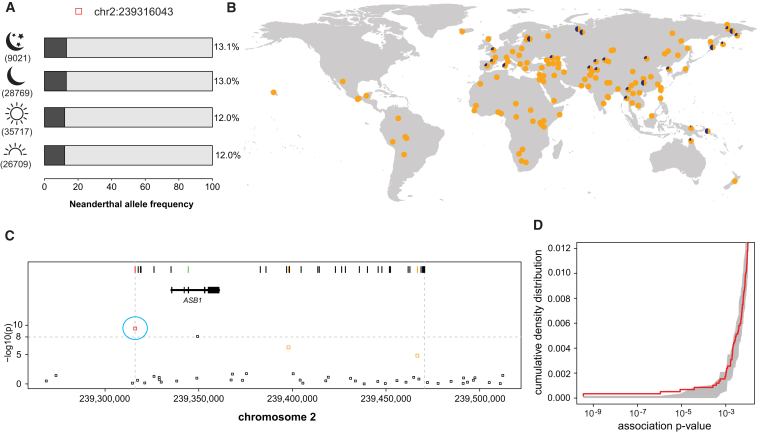
“First, a phenome-wide association study in the UK Biobank found loci near ASB1 and EXOC6 with introgressed variants that were significantly associated with self-reported sleeping patterns (Dannemann and Kelso 2017).”
From Archaic Introgression Shaped Human Circadian Traits (2023) · cites this paper as Dannemann and Kelso 2017
The cited source says what the claim attributes to it.
In the citing paper
“One of these alleles showed a significant association between frequency and latitude.”
From Archaic Introgression Shaped Human Circadian Traits (2023) · cites this paper as Dannemann and Kelso 2017
The cited source says what the claim attributes to it.
In the citing paper
“Motivated by the previous discovery of an introgressed haplotype on chr2 that is associated with chronotype and increases in frequency with latitude (Dannemann and Kelso 2017; Putilov et al. 2019), we also tested each introgressed circadian variant for a correlation between allele frequency and latitude in modern non-African populations from the 1000 Genomes Project.”
From Archaic Introgression Shaped Human Circadian Traits (2023) · cites this paper as Dannemann and Kelso 2017
The cited source says what the claim attributes to it.
In the citing paper
“previous studies have identified two introgressed loci associated with sleep patterns (Dannemann and Kelso 2017; Putilov et al. 2019).”
From Archaic Introgression Shaped Human Circadian Traits (2023) · cites this paper as Dannemann and Kelso 2017
Self-check
Percentages, sums and reported differences re-computed from the paper’s own numbers.
The self-check needs the paper’s full text.
Citations
Cites
PLINK: a tool set for whole-genome association and population-based linkage analyses.
Purcell, S., Neale, B., Todd-Brown, K., Thomas, L., Ferreira, M. A. R., Bender, D., Maller, J., Sklar, P., de Bakker, P. I. W., Daly, M. J., et al. (2007) · The American Journal of Human Genetics · doi:10.1086/519795 · Cited by 34,089
A global reference for human genetic variation
The 1000 Genomes Project Consortium, authors, C., Auton, A., Abecasis, G. R., Steering committee, Altshuler, D. M., Durbin, R. M., Abecasis, G. R., Bentley, D. R., Chakravarti, A., et al. (2015) · Nature · doi:10.1038/nature15393 · Cited by 18,247
Sudlow, C., Gallacher, J., Allen, N., Beral, V., Burton, P., Danesh, J., Downey, P., Elliott, P., Green, J., Landray, M., et al. (2015) · PLOS Medicine · doi:10.1371/journal.pmed.1001779 · Cited by 12,728 · cited 2×
“We obtained genotype and phenotype data from the pilot phase of the UK Biobank project.(13) Genotyping was performed with two arrays (UK BiLEVE and UK Biobank Axiom) that share 95% of markers, resulting in a merged dataset with genotype informa-”
The Ensembl Variant Effect Predictor
McLaren, W., Gil, L., Hunt, S. E., Riat, H. S., Ritchie, G. R. S., Thormann, A., Flicek, P., & Cunningham, F. (2016) · Genome Biology · doi:10.1186/s13059-016-0974-4 · Cited by 8,099 · cited 2×
“For each archaic-like haplotype, we identified protein sequence and regulatory variants among the aSNPs in each haplotype and computed the predicted effect of the amino acid changes by using the VEP.(17) Two of the haplotypes with significantly associated aSNPs carried an archaic missense allele (Table 1).”
Life between Clocks: Daily Temporal Patterns of Human Chronotypes
Roenneberg, T., Wirz-Justice, A., & Merrow, M. (2003) · Journal of Biological Rhythms · doi:10.1177/0748730402239679 · Cited by 2,662 · cited 1×
“Humans show wide variation in diurnal preferences and can be divided into ‘‘chronotypes,’’ which have been shown to have a genetic component.(33) Two previous studies of chronotypes identified strongly associated SNPs in the ASB1 region.”
The complete genome sequence of a Neanderthal from the Altai Mountains
Prüfer, K., Racimo, F., Patterson, N., Jay, F., Sankararaman, S., Sawyer, S., Heinze, A., Renaud, G., Sudmant, P. H., de Filippo, C., et al. (2014) · Nature · doi:10.1038/nature12886 · Cited by 2,254
Self-citationThe Simons Genome Diversity Project: 300 genomes from 142 diverse populations
Mallick, S., Li, H., Lipson, M., Mathieson, I., Gymrek, M., Racimo, F., Zhao, M., Chennagiri, N., Nordenfelt, S., Tandon, A., et al. (2016) · Nature · doi:10.1038/nature18964 · Cited by 1,584 · cited 1×
“Because the natural length of day-night cycles differs according to latitude and influences circadian rhythms, we tested for a correlation between the Neanderthal allele frequency at ASB1 and latitude in worldwide non-African populations.(36)We found a significant correlation between the frequency of the Neanderthal a…”
Self-citationCircadian typology: a comprehensive review
Adan, A., Archer, S. N., Hidalgo, M. P., Di Milia, L., Natale, V., & Randler, C. (2012) · Chronobiology International · doi:10.3109/07420528.2012.719971 · Cited by 1,384
Altitude adaptation in Tibetans caused by introgression of Denisovan-like DNA
Huerta-Sánchez, E., Jin, X., Asan, Bianba, Z., Peter, B. M., Vinckenbosch, N., Liang, Y., Yi, X., He, M., Somel, M., et al. (2014) · Nature · doi:10.1038/nature13408 · Cited by 1,208 · cited 2×
“We tested whether the lengths of archaic haplotypes exceeded the length of segments resulting from incomplete lineage sorting (ILS) by using a conservative age of the Altai Neanderthal according to a mutation rate of 1.0 3 10 9 per base pair per year and applying the approach presented by Huerta-Sánchez et al.19 and…”
InfluentialThe genomic landscape of Neanderthal ancestry in present-day humans
Sankararaman, S., Mallick, S., Dannemann, M., Prüfer, K., Kelso, J., Pääbo, S., Patterson, N., & Reich, D. (2014) · Nature · doi:10.1038/nature12961 · Cited by 1,107
Self-citationValverde, P., Healy, E., Jackson, I., Rees, J. L., & Thody, A. J. (1995) · Nature Genetics · doi:10.1038/ng1195-328 · Cited by 999
The genetic history of Ice Age Europe
Fu, Q., Posth, C., Hajdinjak, M., Petr, M., Mallick, S., Fernandes, D., Furtwängler, A., Haak, W., Meyer, M., Mittnik, A., et al. (2016) · Nature · doi:10.1038/nature17993 · Cited by 959
Self-citationHuman skin pigmentation as an adaptation to UV radiation
Jablonski, N. G., & Chaplin, G. (2010) · Proceedings of the National Academy of Sciences · doi:10.1073/pnas.0914628107 · Cited by 728 · cited 1×
“Given that Neanderthals had inhabited Eurasia for more than 200,000 years, they were most likely adapted to lower UVB levels and wider variation in sunlight duration than the early modern humans who arrived in Eurasia from Africa around 100,000 years ago.(38) Skin and hair color, circadian rhythms, and mood are all in…”
Pitfalls of predicting complex traits from SNPs
Wray, N. R., Yang, J., Hayes, B. J., Price, A. L., Goddard, M. E., & Visscher, P. M. (2013) · Nature Reviews Genetics · doi:10.1038/nrg3457 · Cited by 690 · cited 1×
“The America themodern human genetic background provides sufficient evidence for extrapolating effects in Neanderthals, especially given the challenges with predicting complex phenotypes in present-day humans on the basis of genomic data.(32) In addition to the introgressed haplotypes contributing to skin and hair trai…”
Resurrecting Surviving Neandertal Lineages from Modern Human Genomes
Vernot, B., & Akey, J. M. (2014) · Science · doi:10.1126/science.1245938 · Cited by 562 · cited 2×
“Strikingly, more than half of the significantly associated alleles that we identified are related to skin and hair traits, consistent with previous evidence that genes associated with skin and hair biology are over-represented in introgressed archaic regions.(4,9,11) It was previously only possible to speculate about…”
Evidence for archaic adaptive introgression in humans
Racimo, F., Sankararaman, S., Nielsen, R., & Huerta-Sánchez, E. (2015) · Nature Reviews Genetics · doi:10.1038/nrg3936 · Cited by 521 · cited 1×
“Strikingly, more than half of the significantly associated alleles that we identified are related to skin and hair traits, consistent with previous evidence that genes associated with skin and hair biology are over-represented in introgressed archaic regions.(4,9,11) It was previously only possible to speculate about…”
Genetic adaptation and Neandertal admixture shaped the immune system of human populations
Quach, H., Rotival, M., Pothlichet, J., Loh, Y.-H. E., Dannemann, M., Zidane, N., Laval, G., Patin, E., Harmant, C., Lopez, M., et al. (2016) · Cell · doi:10.1016/j.cell.2016.09.024 · Cited by 475
Self-citationThe Genetic Cost of Neanderthal Introgression
Harris, K., & Nielsen, R. (2016) · Genetics · doi:10.1534/genetics.116.186890 · Cited by 419
Human pigmentation genes: identification, structure and consequences of polymorphic variation
Sturm, R. A., Teasdale, R. D., & Box, N. F. (2001) · Gene · doi:10.1016/s0378-1119(01)00694-1 · Cited by 398
Evidence for Variable Selective Pressures at MC1R
Harding, R. M., Healy, E., Ray, A. J., Ellis, N. S., Flanagan, N., Todd, C., Dixon, C., Sajantila, A., Jackson, I. J., Birch-Machin, M. A., et al. (2000) · The American Journal of Human Genetics · doi:10.1086/302863 · Cited by 389
Detection of human adaptation during the past 2000 years
Field, Y., Boyle, E. A., Telis, N., Gao, Z., Gaulton, K. J., Golan, D., Yengo, L., Rocheleau, G., Froguel, P., McCarthy, M. I., et al. (2016) · Science · doi:10.1126/science.aag0776 · Cited by 383
Characterization of Melanocyte Stimulating Hormone Receptor Variant Alleles in Twins with Red Hair
Box, N. F., Wyeth, J. R., O'Gorman, L. E., Martin, N. G., & Sturm, R. A. (1997) · Human Molecular Genetics · doi:10.1093/hmg/6.11.1891 · Cited by 338
The phenotypic legacy of admixture between modern humans and Neandertals
Simonti, C. N., Vernot, B., Bastarache, L., Bottinger, E., Carrell, D. S., Chisholm, R. L., Crosslin, D. R., Hebbring, S. J., Jarvik, G. P., Kullo, I. J., et al. (2016) · Science · doi:10.1126/science.aad2149 · Cited by 330 · cited 5×
“It showed that a large number of Neanderthal variants at different loci influence risk of a number of disease traits, including depression, skin lesions, and blood-clotting disorders, and that Neanderthals contributed both risk and protective alleles for these traits.(12) However, evaluating the broader contribution o…”
InfluentialHu, Y., Shmygelska, A., Tran, D., Eriksson, N., Tung, J. Y., & Hinds, D. A. (2016) · Nature Communications · doi:10.1038/ncomms10448 · Cited by 321
Lane, J. M., Vlasac, I., Anderson, S. G., Kyle, S. D., Dixon, W. G., Bechtold, D. A., Gill, S., Little, M. A., Luik, A., Loudon, A., et al. (2016) · Nature Communications · doi:10.1038/ncomms10889 · Cited by 312 · cited 5×
“Given the association scores calculated by Hu et al.,34 the association is stronger for the set of aSNPs (p values ranging from 3.4 3 10 6 to 2.6 3 10 9; rs75804782 has the second-most-significant association at p ¼ 4.4 3 10 9) than for the non-archaic SNPs reported by Lane et al.35 (rs3769118, p ¼ 1.”
InfluentialThe Strength of Selection against Neanderthal Introgression
Juric, I., Aeschbacher, S., & Coop, G. (2016) · PLOS Genetics · doi:10.1371/journal.pgen.1006340 · Cited by 309
The Asp84Glu variant of the melanocortin 1 receptor (MC1R) is associated with melanoma
Valverde, P. (1996) · Human Molecular Genetics · doi:10.1093/hmg/5.10.1663 · Cited by 302
A Melanocortin 1 Receptor Allele Suggests Varying Pigmentation Among Neanderthals
Lalueza-Fox, C., Römpler, H., Caramelli, D., Stäubert, C., Catalano, G., Hughes, D., Rohland, N., Pilli, E., Longo, L., Condemi, S., et al. (2007) · Science · doi:10.1126/science.1147417 · Cited by 292 · cited 2×
“Further, a Neanderthal-specific variant (p.Arg307Gly) postulated to reduce the activity of MC1R and result in red hair was identified by PCR amplification of MC1R in two Neanderthals.29 However, this putative Neanderthalspecific variant is also not present in the Neanderthals r 5, 2017 genomes that have been sequenced…”
Pleiotropic effects of the melanocortin 1 receptor (MC1R) gene on human pigmentation
Flanagan, N. (2000) · Human Molecular Genetics · doi:10.1093/hmg/9.17.2531 · Cited by 276
Dannemann, M., Andrés, A. M., & Kelso, J. (2016) · The American Journal of Human Genetics · doi:10.1016/j.ajhg.2015.11.015 · Cited by 249
Self-citationBastiaens, M. T., ter Huurne, J. A. C., Kielich, C. J., Gruis, N. A., Westendorp, R. G. J., Vermeer, B. J., & Bavinck, J. N. B. (2001) · The American Journal of Human Genetics · doi:10.1086/319500 · Cited by 248
Hinds, D. A., McMahon, G., Kiefer, A. K., Do, C. B., Eriksson, N., Evans, D. M., St Pourcain, B., Ring, S. M., Mountain, J. L., Francke, U., et al. (2013) · Nature Genetics · doi:10.1038/ng.2686 · Cited by 246
Archaic Hominin Admixture Facilitated Adaptation to Out-of-Africa Environments
Gittelman, R. M., Schraiber, J. G., Vernot, B., Mikacenic, C., Wurfel, M. M., & Akey, J. M. (2016) · Current Biology · doi:10.1016/j.cub.2016.10.041 · Cited by 181
Sams, A. J., Dumaine, A., Nédélec, Y., Yotova, V., Alfieri, C., Tanner, J. E., Messer, P. W., & Barreiro, L. B. (2016) · Genome Biology · doi:10.1186/s13059-016-1098-6 · Cited by 140
Neandertal Origin of Genetic Variation at the Cluster of OAS Immunity Genes
Mendez, F. L., Watkins, J. C., & Hammer, M. F. (2013) · Molecular Biology and Evolution · doi:10.1093/molbev/mst004 · Cited by 113
Jacobs, L. C., Wollstein, A., Lao, O., Hofman, A., Klaver, C. C., Uitterlinden, A. G., Nijsten, T., Kayser, M., & Liu, F. (2013) · Human Genetics · doi:10.1007/s00439-012-1232-9 · Cited by 99 · cited 4×
“Using the UK Biobank cohort, we have now been able to test the contribution of introgressed Neanderthal alleles to 136 common, largely non-disease phenotypes in present-day Europeans.”
InfluentialFunctional implications of Neandertal introgression in modern humans
Dannemann, M., Prüfer, K., & Kelso, J. (2017) · Genome biology · doi:10.1186/s13059-017-1181-7 · Cited by 92 · cited 1×
“might modify gene regulation, we used a previously published set of associations between archaic haplotypes and differential expression in 48 human tissues from the Genotype-Tissue Expression (GTEx) dataset.(18) Of the haplotypes with significantly associated aSNPs, eight were also associated with the expression chang…”
Self-citationContribution of T cells to the development of autoimmune diabetes in the NOD mouse model
Toyoda, H., & Formby, B. (1998) · BioEssays · doi:10.1002/(sici)1521-1878(199809)20:9 · Cited by 34
Cited by
Sorted by citations
The genomic consequences of hybridization
Moran, B. M., Payne, C. Y., Langdon, Q. K., Powell, D. L., Brandvain, Y. J., & Schumer, M. E. (2021) · eLife · doi:10.7554/elife.69016 · Cited by 342
“, 2016), including genes that contribute to adaptation and genetic diseases (Dannemann et al., 2017; Dannemann and Kelso, 2017; Enard and Petrov, 2018; Zeberg and Pääbo, 2020).”
BackgroundThe influence of evolutionary history on human health and disease
Benton, M. L., Abraham, A., LaBella, A. L., Abbot, P., Rokas, A., & Capra, J. A. (2021) · Nature Reviews Genetics · doi:10.1038/s41576-020-00305-9 · Cited by 291
Ancient Genomics of Modern Humans: The First Decade
Skoglund, P., & Mathieson, I. (2018) · Annual Review of Genomics and Human Genetics · doi:10.1146/annurev-genom-083117-021749 · Cited by 246
A genomic region associated with protection against severe COVID-19 is inherited from Neandertals
Zeberg, H., & Pääbo, S. (2021) · Proceedings of the National Academy of Sciences · doi:10.1073/pnas.2026309118 · Cited by 239
Human Immunology through the Lens of Evolutionary Genetics
Quintana‐Murci, L. (2019) · Cell · doi:10.1016/j.cell.2019.02.033 · Cited by 182
“other autoimmune disorders, and allergies (Dannemann et al., 2016; Dannemann and Kelso, 2017; Sankararaman et al., 2014; Simonti et al., 2016).”
Metadata
- Authors
- Dannemann, M., & Kelso, J.
- Affiliations
- Max Planck Institute for Evolutionary Anthropology (DE)
- Corresponding author
- Kelso, Janet
- Venue
- The American Journal of Human Genetics
- Publisher
- Elsevier BV
- Published
- 2017-10
- Volume
- 101
- Issue
- 4
- Pages
- 578-589
- ISSN
- 0002-9297 (ISSN-L)
- PMC
- PMC5630192
- OpenAlex
- W2762049071
- Cited by
- 193
- References
- 38
- Citations by year
- 2026: 24 · 2025: 17 · 2024: 16 · 2023: 20 · 2022: 19 · 2021: 28 · 2020: 27 · 2019: 26 · 2018: 15 · 2017: 1
- FWCI
- 75.93
- Type
- journal article
- Language
- en
- Open access
- hybrid
- doi.org
- Licence
- Locations
- The American Journal of Human Genetics (publishedVersion, cc-by-nc-nd)
- Europe PMC (PubMed Central) (publishedVersion, cc-by-nc-nd)
- PubMed Central (publishedVersion, cc-by-nc-nd)
- PubMed (publishedVersion)
- MPG.PuRe (Max Planck Society) (submittedVersion, other-oa)
- Funders
- Max-Planck-Gesellschaft
- Topics
- Social Sciences › Anthropology › Pleistocene-Era Hominins and Archaeology
- Life Sciences › Biochemistry, Genetics and Molecular Biology › Genetics › Forensic and Genetic Research
- Life Sciences › Biochemistry, Genetics and Molecular Biology › Genetics › Genetic Associations and Epidemiology
- Keywords
- Neanderthal DNA, Neanderthal introgression, skin color, hair color, height, sleep patterns, mood, smoking status, positive selection, UK Biobank, European populations, phenotypic variability
- MeSH terms
- Animals, Biological Evolution, Gene Frequency, Hair Color, Haplotypes, Humans, Phenotype, Phylogeny, Skin Pigmentation, Cohort Studies, Linkage Disequilibrium, Genome, Human, Polymorphism, Single Nucleotide, White People, Neanderthals
About these checks
Registry, retraction, Cites and statistics results are computed, not judged, with one exception: a printed reference that no index lists is read once by a model before it counts as a citation error. Claims are extracted by a model and kept only when their quote appears verbatim in the text; each cited source is then checked, with a model’s help, for whether it says what the claim relies on. Those verdicts can be wrong — read the claim’s quote and the cited source before relying on one.
Statistics and arithmetic are recomputed, not judged.
Confidence bands are shown only for fields calibrated on our annotated test set. None is calibrated yet, so no band is shown.
What counts as a claim ›How we measure confidence ›How we check this ›
Are you an author, or do you see a problem with this page? Request a review
