

The DOI matches its Crossref record; 43 of the 44 references it cites were found in a registry or an index.
The Resting Human Brain and Motor Learning
Open accessAbstract
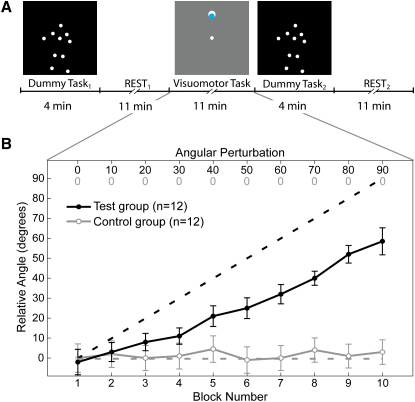
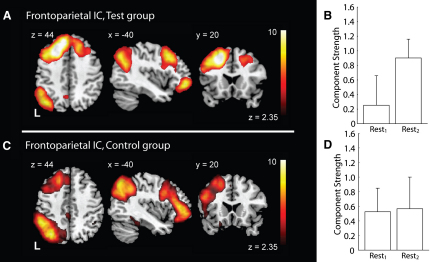
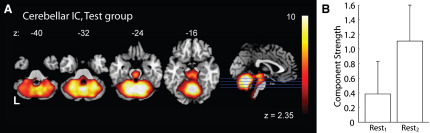
Functionally related brain networks are engaged even in the absence of an overt behavior. The role of this resting state activity, evident as low-frequency fluctuations of BOLD (see [1] for review, [2-4]) or electrical [5, 6] signals, is unclear. Two major proposals are that resting state activity supports introspective thought or supports responses to future events [7]. An alternative perspective is that the resting brain actively and selectively processes previous experiences [8]. Here we show that motor learning can modulate subsequent activity within resting networks. BOLD signal was recorded during rest periods before and after an 11 min visuomotor training session. Motor learning but not motor performance modulated a fronto-parietal resting state network (RSN). Along with the fronto-parietal network, a cerebellar network not previously reported as an RSN was also specifically altered by learning. Both of these networks are engaged during learning of similar visuomotor tasks [9-22]. Thus, we provide the first description of the modulation of specific RSNs by prior learning--but not by prior performance--revealing a novel connection between the neuroplastic mechanisms of learning and resting state activity. Our approach may provide a powerful tool for exploration of the systems involved in memory consolidation.
Overview
The claims and statistics of this paper haven’t been checked yet.
Run the check — free, no account needed. It reads the open-access text and checks the sources it cites.
Integrity signals
Registry
Cites
Statistics
Figures
Verification
Claims the paper makes
The claims and statistics of this paper haven’t been checked yet.
Run the check — free, no account needed. It reads the open-access text and checks the sources it cites.
Claims other papers make about this one
Each is checked against this paper’s own text: does it say what the citing paper says it does?
In the citing paper
“Clusters of brain regions involved in motor learning can be recognized, both at rest (Albert, Robertson, & Miall, 2009;Biswal, Yetkin, Haughton, & Hyde, 1995;Wu, Srinivasan, Kaur, & Cramer, 2014) and in-task (Hasan et al., 2013).”
From Optimizing performance through intrinsic motivation and attention for learning: The OPTIMAL theory of motor learning (2016) · cites this paper as Albert, Robertson, & Miall, 2009
In the citing paper
“Importantly, functional connectivity is related to motor skill learning (Albert et al., 2009;Song, Gotts, Dayan, & Cohen, 2015) and to higher levels of motor skill (Di, Zhu, Jin, Wang, Ye, Zhou et al., 2012;Ito, Matsuda, & Shimojo, 2015;Kim, Han, Kim, & Han, 2015;Milton, Solodkin, Hluštík, & Small, 2007;Li, He, Huang, Zhang, Lu, Lai et al., 2015).”
From Optimizing performance through intrinsic motivation and attention for learning: The OPTIMAL theory of motor learning (2016) · cites this paper as Albert et al., 2009
Self-check
Percentages, sums and reported differences re-computed from the paper’s own numbers.
The self-check needs the paper’s full text.
Citations
Cites
Tzourio-Mazoyer, N., Landeau, B., Papathanassiou, D., Crivello, F., Etard, O., Delcroix, N., Mazoyer, B., & Joliot, M. (2002) · NeuroImage · doi:10.1006/nimg.2001.0978 · Cited by 16,319
A default mode of brain function
Raichle, M. E., MacLeod, A. M., Snyder, A. Z., Powers, W. J., Gusnard, D. A., & Shulman, G. L. (2001) · Proceedings of the National Academy of Sciences · doi:10.1073/pnas.98.2.676 · Cited by 12,190
Jenkinson, M., Bannister, P., Brady, M., & Smith, S. (2002) · NeuroImage · doi:10.1006/nimg.2002.1132 · Cited by 11,888 · cited 2×
“Each EPI volume was motion-corrected using MCFLIRT [3], high-pass filtered (0.01HZ cutoff), masked to eliminate non-brain voxels, spatially-smoothed using a 5mm FWHM filter, demeaned on a voxel-by-voxel basis, whitened, and projected into a 48-dimensional subspace using PICA.”
Fast robust automated brain extraction
Smith, S. M. (2002) · Human Brain Mapping · doi:10.1002/hbm.10062 · Cited by 10,496 · cited 2×
“The role of this resting state activity, evident as low-frequency fluctuations of BOLD (see[1]forreview,[2‐4])orelectrical[ 5 ,6]signals,isunclear.”
The human brain is intrinsically organized into dynamic, anticorrelated functional networks
Fox, M. D., Snyder, A. Z., Vincent, J. L., Corbetta, M., Van Essen, D. C., & Raichle, M. E. (2005) · Proceedings of the National Academy of Sciences · doi:10.1073/pnas.0504136102 · Cited by 8,553
Fast and robust fixed-point algorithms for independent component analysis
Hyvärinen, A. (1999) · IEEE Transactions on Neural Networks · doi:10.1109/72.761722 · Cited by 6,304 · cited 2×
“The role of this resting state activity, evident as low-frequency fluctuations of BOLD (see[1]forreview,[2‐4])orelectrical[5, 6 ]signals,isunclear.”
Consistent resting-state networks across healthy subjects
Damoiseaux, J. S., Rombouts, S. A. R. B., Barkhof, F., Scheltens, P., Stam, C. J., Smith, S. M., & Beckmann, C. F. (2006) · Proceedings of the National Academy of Sciences · doi:10.1073/pnas.0601417103 · Cited by 4,326 · cited 1×
“We identified six previously reported RSNs (see Figures 2A–2E and 2H of [4]).”
BackgroundProbabilistic Independent Component Analysis for Functional Magnetic Resonance Imaging
Beckmann, C. F., & Smith, S. M. (2004) · IEEE Transactions on Medical Imaging · doi:10.1109/tmi.2003.822821 · Cited by 2,707 · cited 7×
“The change in strength of the two RSN components identified by PICA across participants within the test group (Figure 2, main paper) was not linearly correlated with behavioral measures of learning, but this does not imply there is no relationship.”
InfluentialMazziotta, J. C., Toga, A. W., Evans, A. C., Fox, P. T., Lancaster, J. L., Zilles, K., Woods, R. P., Paus, T., Simpson, G. V., Pike, G. B., et al. (2001) · Philosophical Transactions of the Royal Society B Biological Sciences · doi:10.1098/rstb.2001.0915 · Cited by 2,417 · cited 3×
“Non-brain structures were removed from the high-resolution structural image using BET [5] and the transformation matrix used for the affine registration of this image to the ICBM152 brain [2] was applied to the PICA output from each session.”
A default mode of brain function: a brief history of an evolving idea
Raichle, M. E., & Snyder, A. Z. (2007) · NeuroImage · doi:10.1016/j.neuroimage.2007.02.041 · Cited by 2,173
Cited by
Sorted by citations
Items 201–300 of 509
Thompson, G. J., Pan, W., Billings, J., Grooms, J. K., Shakil, S., Jaeger, D., & Keilholz, S. D. (2014) · Frontiers in Integrative Neuroscience · doi:10.3389/fnint.2014.00041 · Cited by 41
“…et al., 2005; Tian et al., 2006; Garrity et al., 2007; Zang et al., 2007; Van Den Heuvel and Hulshoff Pol, 2010) as well as behavior variation in healthy humans (Waites et al., 2005; Hampson et al., 2006; Weissman et al., 2006; Boly et al., 2007; Albert et al., 2009; Thompson et al., 2013c).”
BackgroundKlingner, C., Volk, G., Brodoehl, S., Witte, O., & Guntinas-Lichius, O. (2014) · NeuroImage: Clinical · doi:10.1016/j.nicl.2014.08.011 · Cited by 40
“Multiple studies have demonstrated that resting-state functional connectivity is correlated with behavioral output in multiple domains, particularly in the motor system (Albert et al., 2009).”
InfluentialCortico-cerebellar Networks Drive Sensorimotor Learning in Speech
Lametti, D. R., Smith, H. J., Freidin, P. F., & Watkins, K. E. (2017) · Journal of Cognitive Neuroscience · doi:10.1162/jocn_a_01216 · Cited by 42
King, B. R., Rumpf, J., Verbaanderd, E., Heise, K.-F., Dolfen, N., Sunaert, S. G., Doyon, J., Claßen, J., Mantini, D., Puts, N. A. J., et al. (2020) · Human Brain Mapping · doi:10.1002/hbm.25041 · Cited by 40
“…parameters; see Hermans, Leunissen, et al., 2018) were more likely to exhibit the learning-related decreases in GABA and increases in RS connectivity that have been previously reported in young adults (e.g., Albert et al., 2009; FloyerLea et al., 2006; Kolasinski et al., 2019; Sami et al., 2014).”
ResultStudying synaptic plasticity in the human brain and opportunities for drug discovery
Nathan, P. J., Cobb, S., Lu, B., Bullmore, E. T., & Davies, C. H. (2011) · Current Opinion in Pharmacology · doi:10.1016/j.coph.2011.06.008 · Cited by 42
“These resting state neural networks have been shown to exhibit adaptations of their activity through experience or learning by alternating strength of synaptic connections [68].”
BackgroundEarly visual learning induces long-lasting connectivity changes during rest in the human brain
Urner, M., Schwarzkopf, D. S., Friston, K. J., & Rees, G. E. (2013) · NeuroImage · doi:10.1016/j.neuroimage.2013.03.050 · Cited by 41
“Changes in spontaneous fluctuations have been shown after visuo-motor learning (Albert et al., 2009), episodic memory tasks (Tambini et al.”
BackgroundLiu, B., Li, T., Tang, W.-J., Zhang, J.-H., Sun, H.-P., Xu, W.-D., Liu, H.-Q., & Feng, X.-Y. (2013) · Neuroscience · doi:10.1016/j.neuroscience.2013.03.048 · Cited by 39
Spontaneous regional brain activity links restrained eating to later weight gain among young women
Dong, D., Jackson, T., Wang, Y., & Chen, H. (2015) · Biological Psychology · doi:10.1016/j.biopsycho.2015.05.003 · Cited by 42
Time Course of Cortical Plasticity After Facial Nerve Palsy
Klingner, C. M., Volk, G. F., Brodoehl, S., Burmeister, H. P., Witte, O. W., & Guntinas‐Lichius, O. (2011) · Neurorehabilitation and neural repair · doi:10.1177/1545968311418674 · Cited by 38
McGregor, H. E., & Gribble, P. L. (2015) · Journal of Neurophysiology · doi:10.1152/jn.00286.2015 · Cited by 38
“…between visual and frontoparietal attention areas after visual perceptual learning (Lewis et al. 2009), among fronto-parietal and cerebellar networks after visuomotor adaptation (Albert et al. 2009), and among premotor, motor, and cerebellar circuits after FF learning (Vahdat et al. 2011).”
BackgroundAge-Dependent Modulations of Resting State Connectivity Following Motor Practice
Solesio‐Jofre, E., Beets, I. A. M., Woolley, D. G., Pauwels, L., Chalavi, S., Mantini, D., & Swinnen, S. P. (2018) · Frontiers in Aging Neuroscience · doi:10.3389/fnagi.2018.00025 · Cited by 36
“In one of the earliest studies, Albert et al. (2009) found that initial learning modulated both a fronto-parietal and a cerebellar resting state network.”
ResultDong, M., Qin, W., Zhao, L., Yang, X., Yuan, K., Zeng, F., Sun, J., Yu, D., von Deneen, K. M., Liang, F., et al. (2013) · Human Brain Mapping · doi:10.1002/hbm.22235 · Cited by 36
“Studies have revealed that training/expertise-related neuroplasticity changes can shape subsequent spontaneous activity by changing engagement of resting state networks or altering strength of internetworks or intranetworks functional connectivity within the resting brain (Albert et al., 2009; Lewis et al., 2009; Ma e…”
BackgroundAltered regional homogeneity and efficient response inhibition in restrained eaters
Dong, D., Lei, X., Jackson, T., Wang, Y., Su, Y., & Chen, H. (2014) · Neuroscience · doi:10.1016/j.neuroscience.2014.01.062 · Cited by 36
BDNF Val66Met but not transcranial direct current stimulation affects motor learning after stroke
van der Vliet, R., Ribbers, G. M., Vandermeeren, Y., Frens, M. A., & Selles, R. W. (2017) · Brain stimulation · doi:10.1016/j.brs.2017.07.004 · Cited by 38
Aging, brain plasticity, and motor learning
Gooijers, J., Pauwels, L., Hehl, M., Seer, C., Cuypers, K., & Swinnen, S. P. (2024) · Ageing Research Reviews · doi:10.1016/j.arr.2024.102569 · Cited by 45
Bonzano, L., Palmaro, E., Teodorescu, R., Fleysher, L., Inglese, M., & Bove, M. (2014) · European Journal of Neuroscience · doi:10.1111/ejn.12755 · Cited by 33
“Indeed, it has been shown that a motor learning task can modulate restingstate activity (Albert et al., 2009; Vahdat et al., 2011; Sami & Miall, 2013).”
Mannfolk, P., Nilsson, M., Hansson, H., Ståhlberg, F., Fransson, P., Weibull, A., Svensson, J., Wirestam, R., & Olsrud, J. (2011) · Journal of Magnetic Resonance Imaging · doi:10.1002/jmri.22654 · Cited by 35
“For example, Albert et al (26) found that resting-state networks involved in the learning of a visuomotor task was altered following task performance, and Hasson et al (27) found that the default mode network was modulated following a language comprehension task.”
BackgroundFunctional Alteration of the DMN by Learned Regulation of the PCC Using Real-Time fMRI
Zhang, G., Zhang, H., Li, X., Zhao, X., Yao, L., & Long, Z. (2012) · IEEE Transactions on Neural Systems and Rehabilitation Engineering · doi:10.1109/tnsre.2012.2221480 · Cited by 34
“Many previous studies have reported that training can modulate resting activity and that the changes in resting state may reveal the consolidation of previous experience and indicate the cortical reorganization of resources [47], [49]–[51].”
BackgroundWang, X., Song, Y., Zhen, Z., & Jia Liu, B. (2016) · Human Brain Mapping · doi:10.1002/hbm.23145 · Cited by 35
“It has been shown that resting-state FC can be modulated by recent or ongoing experiences in functionally related networks [Albert et al., 2009; Gordon et al., 2014; Hasson et al., 2009; Lewis et al., 2009; Stevens et al., 2010], consistent with the hypothesis that coactivation during tasks likely leads to Hebbian str…”
BackgroundPain sensitivity and the primary sensorimotor cortices: a multimodal neuroimaging study
Niddam, D. M., Wang, S., & Tsai, S. (2020) · Pain · doi:10.1097/j.pain.0000000000002074 · Cited by 34
“Although the function of theSMN remains unclear, connectivity changes within the SMN has been found to be related to functional properties of the motor system such as for example,handedness,(28) motor weakness,(27) and motor learning.(2) By contrast, little is known about how theSMN, and inparticular the lateralizedSM…”
BackgroundFunctional connectivity‐based parcellation of the human sensorimotor cortex
Long, X., Goltz, D., Margulies, D. S., Nierhaus, T., & Villringer, A. (2014) · European Journal of Neuroscience · doi:10.1111/ejn.12473 · Cited by 34
“, 2009), and motor learning can affect subsequent activity within resting-state networks (Albert et al., 2009).”
BackgroundGabitov, E., Manor, D., & Karni, A. (2014) · Journal of Cognitive Neuroscience · doi:10.1162/jocn_a_00751 · Cited by 31
Izadi‐Najafabadi, S., Rinat, S., & Zwicker, J. G. (2021) · Pediatric Research · doi:10.1038/s41390-021-01517-3 · Cited by 34
Temporal Characteristics of EEG Microstates Mediate Trial-by-Trial Risk Taking
Pedroni, A., Gianotti, L. R. R., Koenig, T. W., Lehmann, D., Faber, P. L., & Knoch, D. (2016) · Brain Topography · doi:10.1007/s10548-016-0539-6 · Cited by 34
“2015) and network activity influences future behavior (Sadaghiani et al. 2015; Albert et al. 2009; Lewis et al. 2009).”
BackgroundSmith, K. (2012) · Nature · doi:10.1038/489356a · Cited by 34
Pediatric Tourette syndrome: Insights from recent neuroimaging studies
Church, J. A., & Schlaggar, B. L. (2014) · Journal of Obsessive-Compulsive and Related Disorders · doi:10.1016/j.jocrd.2014.04.002 · Cited by 33
“Tourette syndrome is a common genetic neuropsychiatric disease with pediatric onset, affecting approximately 1% of children and adolescents [1-3].”
BackgroundYe, Q., & Bai, F. (2018) · Stroke and Vascular Neurology · doi:10.1136/svn-2017-000080 · Cited by 33
Touroutoglou, A., Andreano, J. M., Barrett, L. F., & Dickerson, B. C. (2015) · Hippocampus · doi:10.1002/hipo.22480 · Cited by 32
“Other data show, however, that intrinsic connectivity networks can be dynamic (Hutchison et al., 2013), with recent task-evoked cognitive (Albert et al., 2009; Waites et al., 2005), and affective states (Harrison et al., 2008) or even task-free states of previous runs within the same resting-state…”
BackgroundFunctional connectivity MRI tracks memory networks after maze learning in rodents
Nasrallah, F. A., To, X. V., Chen, D.-Y., Routtenberg, A., & Chuang, K. (2015) · NeuroImage · doi:10.1016/j.neuroimage.2015.08.013 · Cited by 31
“Strengthened synchronous activity, also known as functional connectivity, has been reported after motor or visual perceptual learning in human (Albert et al., 2009; Lewis et al., 2009; Vahdat et al., 2011).”
BackgroundCerebellar BOLD signal during the acquisition of a new lexicon predicts its early consolidation
Lesage, E., Nailer, E. L., & Miall, R. C. (2015) · Brain and Language · doi:10.1016/j.bandl.2015.07.005 · Cited by 33
“Each of the resting state scans was preceded by a dummy task, where participants observed dynamic point light displays of human biological motion or scrambled version of these stimuli (see also Albert et al., 2009).”
BackgroundMethodInfluentialSelf-citationNishimoto, T., Higashi, H., Morioka, H., & Ishii, S. (2020) · Journal of Neural Engineering · doi:10.1088/1741-2552/ab6d89 · Cited by 30
Karlaftis, V. M., Giorgio, J., Vértes, P. E., Wang, R., Shen, Y., Peter Tiňo, B., Welchman, A. E., & Kourtzi, Z. (2019) · Nature Human Behaviour · doi:10.1038/s41562-018-0503-4 · Cited by 30
Lin, C., Yang, H., Knowlton, B. J., Wu, A. D., Iacoboni, M., Ye, Y.-L., Huang, S., & Chiang, M. (2018) · NeuroImage · doi:10.1016/j.neuroimage.2018.06.081 · Cited by 30
Striatal functional connectivity networks are modulated by fMRI resting state conditions
Gopinath, K., Ringe, W. K., Goyal, A., Carter, K., Dinse, H. R., Haley, R. W., & Briggs, R. W. (2010) · NeuroImage · doi:10.1016/j.neuroimage.2010.07.021 · Cited by 30
“Further, data from resting state studies could be affected by the subjects’priormood, mental state or immediate experiences (Albert et al., 2009; Miall and Robertson, 2006; Stevens et al., 2010; Waites et al., 2005), which may lead to increased variability in resting state fcMRI networks obtained from different subjec…”
BackgroundQin, J., Wei, M., Liu, H., Chen, J., Yan, R., Hua, L., Zhao, K., Yao, Z., & Lü, Q. (2014) · Magnetic Resonance Imaging · doi:10.1016/j.mri.2014.08.037 · Cited by 29
“[24], most of these features were pertained to frontal-parieto circuit.”
BackgroundElectroencephalographic identifiers of motor adaptation learning
Özdenizci, O., Yalçın, M., Erdoğan, A., Patoğlu, V., Grosse‐Wentrup, M., & Çetin, M. (2017) · Journal of Neural Engineering · doi:10.1088/1741-2552/aa6abd · Cited by 28
“Different neuroimaging studies provided evidence on existence of resting-state alterations in brain activity with various motor performance tasks [14, 56, 57].”
BackgroundTzvi, E., Gajiyeva, L., Bindel, L., Hartwigsen, G., & Claßen, J. (2022) · NeuroImage · doi:10.1016/j.neuroimage.2022.118985 · Cited by 28
Spontaneous fMRI activity during resting wakefulness and sleep
Duyn, J. H. (2011) · Progress in brain research · doi:10.1016/b978-0-444-53839-0.00019-3 · Cited by 29
“…been a number of recent reports showing increased spontaneous activity in specific functional networks during off-line periods following learning tasks, including motor learning (Albert et al., 2009), visual processing (Stevens et al., 2010), and visual perceptual learning (Lewis et al., 2009).”
BackgroundSergi, F., Krebs, H. I., Groissier, B., Rykman, A., Guglielmelli, E., Volpe, B. T., & Schaechter, J. D. (2011) · Annual International Conference of the IEEE Engineering in Medicine and Biology Society (EMBC) · doi:10.1109/iembs.2011.6091843 · Cited by 27
“Functional connectivity within the SMN is also modulated by prior activity, such as motor learning [7].”
Reithler, J., Mier, H. I. V., & Goebel, R. (2010) · NeuroImage · doi:10.1016/j.neuroimage.2010.03.073 · Cited by 27
“Additionally, in future studies it might be interesting to focus more on potential changes in resting baseline activity and/or task-related deactivations over time that might be linked to the ongoing learning process (Kincses et al., 2008; Albert et al., 2009; Xiong et al., 2009).”
BackgroundPalaniyappan, L. K. (2019) · Journal of Psychiatry and Neuroscience · doi:10.1503/jpn.180038 · Cited by 27
Neural Substrates of Muscle Co-contraction during Dynamic Motor Adaptation
Babadi, S., Vahdat, S., & Milner, T. E. (2021) · Journal of Neuroscience · doi:10.1523/jneurosci.2924-19.2021 · Cited by 26
“…activity to quantify co-contraction and used resting-state fMRI during distinct phases of the adaptation to investigate which changes in the resting-state functional connectivity of the sensorimotor network paralleled the regulation of co-contraction (Albert et al., 2009; Vahdat et al., 2011).”
MethodLarge‐scale functional brain network changes in taxi drivers: Evidence from resting‐state fMRI
Wang, L., Liu, Q., Shen, H., Li, H., & Hu, D. (2014) · Human Brain Mapping · doi:10.1002/hbm.22670 · Cited by 28
“…no definitive conclusion on whether the modulation of resting-state functional connectivity is a passive consequence of previous task performance [Hasson et al., 2009; Waites et al., 2005], or is directly related to training and learning [Albert et al., 2009; Duan et al., 2012; Lewis et al., 2009].”
BackgroundDong, M., Li, J., Shi, X., Gao, S., Fu, S., Liu, Z., Liang, F., Gong, Q., Shi, G., & Tian, J. (2015) · Frontiers in Human Neuroscience · doi:10.3389/fnhum.2015.00099 · Cited by 26
Dual enhancement mechanisms for overnight motor memory consolidation
Breton, J., & Robertson, E. M. (2017) · Nature Human Behaviour · doi:10.1038/s41562-017-0111 · Cited by 29
“423), whereas there were significant offline improvements following IPL stimulation (82 ± 17 ms versus 99 ± 18 ms; paired t-test, t(12) = 2.”
BackgroundSelf-citationBrain Functional Plasticity Driven by Career Experience: A Resting-State fMRI Study of the Seafarer
Wang, N., Zeng, W., Shi, Y., & Yan, H. (2017) · Frontiers in Psychology · doi:10.3389/fpsyg.2017.01786 · Cited by 26
“, 2006), extensive learning (Albert et al., 2009; Tung et al., 2013), and experiences (Jeong et al.”
BackgroundCallosal anisotropy predicts attentional network changes after parietal inhibitory stimulation
Schintu, S., Cunningham, C. A., Freedberg, M., Taylor, P. A., Gotts, S. J., Shomstein, S., & Wassermann, E. M. (2020) · NeuroImage · doi:10.1016/j.neuroimage.2020.117559 · Cited by 25
Resting state functional connectivity changes induced by prior brain state are not network specific
Tailby, C., Masterton, R. A. J., Huang, J., Jackson, G. D., & Abbott, D. F. (2014) · NeuroImage · doi:10.1016/j.neuroimage.2014.11.037 · Cited by 26
Apolinário‐Souza, T., Romano‐Silva, M. A., de Miranda, D. M., Malloy‐Diniz, L. F., Benda, R. N., Ugrinowitsch, H., & Lage, G. M. (2016) · Physiology & Behavior · doi:10.1016/j.physbeh.2016.03.025 · Cited by 24
Functional and Structural Plasticity of Brain in Elite Karate Athletes
Duru, A. D., & Balcıoğlu, T. H. (2018) · Journal of Healthcare Engineering · doi:10.1155/2018/8310975 · Cited by 26
Kim, J., Kwon, J. H., Kim, E. J., Kim, E. J., Kim, H. E., Kyeong, S.-H., & Kim, J. (2021) · Scientific Reports · doi:10.1038/s41598-021-94328-9 · Cited by 41
Magnuson, M. E., Thompson, G. J., Schwarb, H. D., Pan, W., McKinley, A., Schumacher, E. H., & Keilholz, S. D. (2015) · Brain Imaging and Behavior · doi:10.1007/s11682-014-9347-3 · Cited by 27
Rjosk, V., Lepsien, J., Kaminski, E., Hoff, M., Sehm, B., Steele, C. J., Villringer, A., & Ragert, P. (2017) · Frontiers in Human Neuroscience · doi:10.3389/fnhum.2017.00054 · Cited by 24
“…Vincent, 2007; Guerra-Carrillo et al., 2014), without confound of pure Frontiers in Human Neuroscience | www.frontiersin.org 2 February 2017 | Volume 11 | Article 54 motor performance, because participants perform no task during scanning (Albert et al., 2009; Ma et al., 2011; Vahdat et al., 2011).”
BackgroundSpatiotemporal trajectories in resting-state FMRI revealed by convolutional variational autoencoder
Zhang, X., Maltbie, E. A., & Keilholz, S. D. (2021) · NeuroImage · doi:10.1016/j.neuroimage.2021.118588 · Cited by 22
“…Kiviniemi et al., 2011; Majeed et al., 2011; Sakoğlu et al., 2010), and that these dynamics are sensitive to changes related to behavior, cognition (Albert et al., 2009; Bassett et al., 2011; Esposito et al., 2006; Fornito et al., 2012; Thompson et al., 2013), and pathology (Damaraju et al., 2014;…”
Livne, T., Kim, D., Metcalf, N. V., Zhang, L., Pini, L., Shulman, G. L., & Corbetta, M. (2022) · Scientific Reports · doi:10.1038/s41598-022-20866-5 · Cited by 23
Grön, G., Sokolov, A. N., Jonas, C., Roebling, R., & Spitzer, M. (2011) · PLoS ONE · doi:10.1371/journal.pone.0019985 · Cited by 25
“These studies used either resting-state low-frequency BOLD fluctuations [13], or compared averaged blocks of a rest condition against blocks of an active condition during a simple motor task [14].”
Cortical Processing of Multimodal Sensory Learning in Human Neonates
Dall’Orso, S., Fifer, W. P., Balsam, P. D., Brandon, J., O’Keefe, C., Poppe, T., Vecchiato, K., Edwards, A. D., Burdet, E., & Arichi, T. (2020) · Cerebral Cortex · doi:10.1093/cercor/bhaa340 · Cited by 25
“Activity across the sensorimotor network during learning is of particular significance, as learning can result in sustained changes in resting functional connectivity between coactivated regions in a task, in keeping with network specific neuroplasticity (Pascual-Leone et al. 1994; Büchel et al. 1999; Sanes 2003; Albe…”
BackgroundEvers, E. A. T., Klaassen, E. B., Rombouts, S. A. R. B., Backes, W. H., & Jolles, J. (2012) · Brain Connectivity · doi:10.1089/brain.2011.0060 · Cited by 23
“Previous studies have shown that learning can increase RS FC within the trained network (Albert et al., 2009; Jolles et al., 2011; Waites et al., 2005).”
InfluentialChen, S., Dong, D., Jackson, T., Su, Y., & Chen, H. (2015) · Neuropsychologia · doi:10.1016/j.neuropsychologia.2015.06.036 · Cited by 23
Altered Central Autonomic Network in Baseball Players: A Resting-state fMRI Study
Sie, J., Chen, Y.-H., Chang, C., Yen, N., Chu, W., & Shiau, Y.-H. (2019) · Scientific Reports · doi:10.1038/s41598-018-36329-9 · Cited by 23
The impact of early musical training on striatal functional connectivity
van Vugt, F. T., Hartmann, K., ALTENMÜLLER, E. O., Mohammadi, B., & Margulies, D. S. (2021) · NeuroImage · doi:10.1016/j.neuroimage.2021.118251 · Cited by 28
Verrel, J., Almagor, E., Schumann, F., Lindenberger, U., & Kühn, S. (2015) · Frontiers in Human Neuroscience · doi:10.3389/fnhum.2015.00232 · Cited by 25
“Also, extensive practice of new sensorimotor tasks influences spontaneous brain activity in functionally specific ways (Albert et al., 2009; Taubert et al., 2011; Vahdat et al., 2011).”
BackgroundMethodA neural mechanism of cognitive reserve: The case of bilingualism
Stevens, W. D., Khan, N., Anderson, J. A. E., Grady, C. L., & Bialystok, E. (2023) · NeuroImage · doi:10.1016/j.neuroimage.2023.120365 · Cited by 27
“Experience-dependent changes in RSFC are highly specific to the brain regions engaged during task performance (Albert et al., 2009; Lewis et al., 2009; Stevens et al., 2010; Tambini et al., 2010).”
BackgroundHan, L., Chan, M. Y., Agres, P. F., Winter-Nelson, E., Zhang, Z., & Wig, G. S. (2024) · Cerebral Cortex · doi:10.1093/cercor/bhad506 · Cited by 21
Huang, Z., Davis, H., Wolff, A., & Northoff, G. (2017) · Neural Plasticity · doi:10.1155/2017/1473783 · Cited by 26
Disrupted functional connectivity of the default mode network due to acute vestibular deficit
Klingner, C. M., Volk, G. F., Brodoehl, S., Witte, O. W., & Guntinas‐Lichius, O. (2014) · NeuroImage Clinical · doi:10.1016/j.nicl.2014.08.022 · Cited by 22
BCI Use and Its Relation to Adaptation in Cortical Networks
Casimo, K., Weaver, K. E., Wander, J. D., & Ojemann, J. G. (2017) · IEEE Transactions on Neural Systems and Rehabilitation Engineering · doi:10.1109/tnsre.2017.2681963 · Cited by 21
“However, because it is noninvasive, provides superior temporal resolution relative to fMRI, and is readily usable in many patients, EEG in particular possessed distinct advantages in the BCI framework [25], [27]–[32] In contrast, ECoG can be used in experimental settings at various levels of moderate spatial resolutio…”
Kreitz, S., Alonso, B. D. C., Uder, M., & Heß, A. (2018) · Frontiers in Neuroscience · doi:10.3389/fnins.2018.00334 · Cited by 20
“They are modulated by prior task activation, which supports the hypothesis that RS functional connectivity plays a role in learning processes andmemory consolidation (Albert et al., 2009; Tambini et al., 2010).”
BackgroundResultInfluentialYin, D., Wang, X. J., Zhang, X., Yu, Q., Wei, Y., Cai, Q., Fan, M., & Li, L. (2021) · Brain Structure and Function · doi:10.1007/s00429-021-02304-w · Cited by 20
“Based on resting-state fMRI (functional magnetic resonance imaging), an influential study has demonstrated that motor learning can modulate subsequent resting brain activity (Albert et al. 2009), which is recognized to play a vital contribution to the offline processing of motor skills and consolidation of memories (M…”
BackgroundVenkatakrishnan, A., Contreras-Vidal, J. L., Sandrini, M., & Cohen, L. G. (2011) · Annual International Conference of the IEEE Engineering in Medicine and Biology Society (EMBC) · doi:10.1109/iembs.2011.6091998 · Cited by 20
Mastrovito, D. (2013) · Journal of Neuroscience · doi:10.1523/jneurosci.2580-13.2013 · Cited by 21
Bazán, P. R., Biazoli, C. E., Sato, J. R., & Amaro, E. (2015) · Brain Connectivity · doi:10.1089/brain.2014.0332 · Cited by 20
“Previous studies have shown that language and motor learning tasks may induce long-term alterations of connectivity (Albert et al., 2009; Waites et al., 2005).”
Veldman, M. P., Maurits, N. M., Nijland, M., Wolters, N. E., Mizelle, J. C., & Hortobágyi, T. (2017) · Clinical Neurophysiology · doi:10.1016/j.clinph.2017.12.003 · Cited by 22
Lu, Y.-C., Liu, H., Hua, X., Xu, W.-D., Xu, J., & Gu, Y. (2015) · World Neurosurgery · doi:10.1016/j.wneu.2015.12.036 · Cited by 20
Agent-causal libertarianism, statistical neural laws and wild coincidences
Runyan, J. D. (2017) · Synthese · doi:10.1007/s11229-017-1419-7 · Cited by 19
Tracking plasticity of individual human brains
Newbold, D. J., & Dosenbach, N. U. F. (2021) · Current Opinion in Behavioral Sciences · doi:10.1016/j.cobeha.2021.04.018 · Cited by 19
“reported increased FC in a fronto-parietal network and in multiple regions of the cerebellum following motor adaptation training [51].”
BackgroundTitone, S., Samogin, J., Peigneux, P., Swinnen, S. P., Mantini, D., & Albouy, G. (2022) · Brain Sciences · doi:10.3390/brainsci12050530 · Cited by 18
“Previous research has indeed shown that motor learning can influence rsFC patterns [9], but also that motor performance [10] and motor memory consolidation [11] are linked to the strength of rsFC within or between specific networks.”
ResultWang, D.-Y., Liu, D., Li, S., & Zang, Y. (2012) · Neuroreport · doi:10.1097/wnr.0b013e3283587c96 · Cited by 20
Sarabi, M. T., Aoki, R., Tsumura, K., Keerativittayayut, R., Jimura, K., & Nakahara, K. (2018) · PLoS ONE · doi:10.1371/journal.pone.0196866 · Cited by 18
Memories replayed: reactivating past successes and new dilemmas
Robertson, E. M., & Genzel, L. (2020) · Philosophical Transactions of the Royal Society B Biological Sciences · doi:10.1098/rstb.2019.0226 · Cited by 17
Self-citationConsolidation in older adults depends upon competition between resting-state networks
Jacobs, H. I. L., Dillen, K. N. H., Risius, O. J., Göreci, Y., Onur, O. A., Fink, G. R., & Kukolja, J. (2015) · Frontiers in Aging Neuroscience · doi:10.3389/fnagi.2014.00344 · Cited by 19
“These findings are on par with prior studies, showing changes in BOLD signal fluctuations during rest indicative of off-line consolidation briefly after learning (Albert et al., 2009).”
BackgroundResultInfluentialWhite matter microstructural changes in short-term learning of a continuous visuomotor sequence
Tremblay, S. A., Jäger, A., Huck, J., Giacosa, C., Beram, S., Schneider, U., Grahl, S., Villringer, A., Tardif, C. L., Bazin, P., et al. (2021) · Brain Structure and Function · doi:10.1007/s00429-021-02267-y · Cited by 19
“…2011; Klein et al., 2019; Le Bihan et al., 2001), and functionally, through the measurement of spontaneous activity at rest and the temporal correlation of the blood-oxygen-level-dependent (BOLD) signal between brain regions (resting-state functional MRI) (Albert et al., 2009; Lewis et al., 2009).”
BackgroundInfluentialMitani, K., Rathnayake, N., Rathnayake, U., Dang, T. L., & Hoshino, Y. (2022) · Sensors · doi:10.3390/s22218283 · Cited by 18
Baseline activity predicts working memory load of preceding task condition
Pyka, M., Hahn, T., Heider, D., Krug, A., Sommer, J. B., Kircher, T. T. J., & Jansen, A. (2012) · Human Brain Mapping · doi:10.1002/hbm.22121 · Cited by 18
“Task-rest interac- tions have also been observed outside default mode regions in the context of motor learning and memory consolidation [Albert et al., 2009; Tambini et al., 2010].”
BackgroundMastropasqua, C., Bozzali, M., Spanò, B., Koch, G., & Cercignani, M. (2014) · Brain Topography · doi:10.1007/s10548-014-0422-2 · Cited by 18
“As it is conceivable that some level of modulation is introduced by task performance (Albert et al. 2009; Hasson et al. 2009), functional connectivity at rest may differ from functional connectivity during the performance of an active task.”
BackgroundResting State Connectivity Is Modulated by Motor Learning in Individuals After Stroke
Kraeutner, S. N., Rubino, C., Rinat, S., Lakhani, B., Borich, M. R., Wadden, K. P., & Boyd, L. A. (2021) · Neurorehabilitation and neural repair · doi:10.1177/15459683211006713 · Cited by 18
“16,17 Short-term changes in rsFC in areas previously shown to be critical to planning and executing visually guided movement 18,19 including a network of frontal, posterior parietal, and cerebellar regions are associated with learning a visuomotor task.”
BackgroundBaseline frontostriatal-limbic connectivity predicts reward-based memory formation
Hamann, J. M., Dayan, E., Hummel, F. C., & Cohen, L. G. (2014) · Human Brain Mapping · doi:10.1002/hbm.22594 · Cited by 18
“Resting-state fMRI provides valuable information on intrinsic interactions among local and distributed brain networks [Albert et al., 2009; Birn, 2007; Vahdat et al., 2011; van den Heuvel and Hulshoff Pol, 2010; Van Dijk et al., 2010].”
BackgroundDaselaar, S. M., Huijbers, W., de Jonge, M., Goltstein, P. M., & Pennartz, C. M. A. (2010) · Neurobiology of Learning and Memory · doi:10.1016/j.nlm.2009.12.009 · Cited by 18
Hamano, Y. H., Sugawara, S. K., Yoshimoto, T., & Sadato, N. (2019) · Neuroscience Research · doi:10.1016/j.neures.2019.03.004 · Cited by 17
Motor reserve: How to build neuronal resilience against ageing and neurodegeneration?
Bastos, P. A. D., & Barbosa, R. P. (2022) · Revue Neurologique · doi:10.1016/j.neurol.2021.12.012 · Cited by 17
Anoushiravani, S., Alizadehgoradel, J., Iranpour, A., Bilehsavar, O. Y., Pouresmali, A., Nitsche, M. A., Salehinejad, M. A., Mosayebi-Samani, M., & Zoghi, M. (2023) · Scientific Reports · doi:10.1038/s41598-023-37843-1 · Cited by 16
Kreitz, S., Mennecke, A., Konerth, L., Rösch, J., Nagel, A. M., Laun, F. B., Uder, M., Dörfler, A., & Heß, A. (2023) · Frontiers in Neuroscience · doi:10.3389/fnins.2023.1215400 · Cited by 16
“Furthermore, analysis of the resting-state revealed enhanced connectivity in executive and cerebellar networks after motor learning but not after motor movement in and of itself (Jiang et al., 2004; Albert et al., 2009b).”
Korzeczek, A., Primaßin, A., von Gudenberg, A. W., Dechent, P., Paulus, W., Sommer, M., & Neef, N. E. (2021) · NeuroImage · doi:10.1016/j.neuroimage.2021.118736 · Cited by 17
van Vugt, F. T., Near, J., Hennessy, T. J., Doyon, J., & Ostry, D. J. (2020) · Journal of Neurophysiology · doi:10.1152/jn.00285.2020 · Cited by 16
“In the functional domain, motor learning has been associated with changes in brain connectivity between a wide range of areas (Albert et al. 2009; Bernardi et al. 2018; Ma et al. 2011; Sami et al. 2014; Vahdat et al. 2011).”
BackgroundDorsal stream function in the young child: an fMRI investigation of visually guided action
James, K. H., & Kersey, A. J. (2017) · Developmental Science · doi:10.1111/desc.12546 · Cited by 16
“Recruitment of the cerebellum for both motor tasks is also in line with studies that report the involvement of the cerebellum during motor learning tasks (Albert et al., 2009; Doyon & Benali, 2005; Hikosaka et al., 1999; Thach et al., 1992; Ungerleider et al., 2002).”
ResultSteel, A., Thomas, C., Trefler, A., Chen, G., & Baker, C. I. (2018) · NeuroImage · doi:10.1016/j.neuroimage.2018.12.038 · Cited by 20
“Our study provides further support for the idea that rs-fMRI can provide meaningful insights regarding the offline brain processes that contribute to skill acquisition (Albert et al., 2009; Albouy et al., 2015; Lewis et al., 2009; Sami et al., 2014).”
Learning and Memory: While You Rest, Your Brain Keeps Working
Vincent, J. L. (2009) · Current Biology · doi:10.1016/j.cub.2009.05.024 · Cited by 17
“[7] raise several other fascinating issues for future research.”
BackgroundInfluentialDisrupted network connectivity in pediatric brain tumor survivors is a signature of injury
Gauvreau, S., Lefebvre, J., Bells, S., Laughlin, S., Bouffet, É., & Mabbott, D. (2019) · The Journal of Comparative Neurology · doi:10.1002/cne.24717 · Cited by 15
Memory stabilization and enhancement following music practice
Allen, S. E. (2012) · Psychology of Music · doi:10.1177/0305735612463947 · Cited by 15
Arithmetic learning modifies the functional connectivity of the fronto-parietal network
Zhao, H., Li, X., Karolis, V. R., Feng, Y., Niu, H., & Butterworth, B. L. (2018) · Cortex · doi:10.1016/j.cortex.2018.07.016 · Cited by 15
Metadata
- Authors
- Albert, N. B., Robertson, E. M., & Miall, R. C.
- Affiliations
- University of Chicago (US)
- Beth Israel Deaconess Medical Center (US)
- University of Birmingham (GB)
- Corresponding author
- Miall, R. Chris
- Venue
- Current Biology
- Publisher
- Elsevier BV
- Published
- 2009-06
- Volume
- 19
- Issue
- 12
- Pages
- 1023-1027
- ISSN
- 0960-9822 (ISSN-L)
- PMC
- PMC2701987
- OpenAlex
- W2117914711
- Cited by
- 510
- References
- 44
- Citations by year
- 2026: 8 · 2025: 13 · 2024: 23 · 2023: 23 · 2022: 29 · 2021: 26 · 2020: 24 · 2019: 17 · 2018: 30 · 2017: 38 · 2016: 39 · 2015: 47 · 2014: 54 · 2013: 35 · 2012: 31
- FWCI
- 16.78
- Type
- journal article
- Language
- en
- Open access
- hybrid
- doi.org
- Licence
- Locations
- Current Biology (publishedVersion, cc-by)
- PubMed Central (publishedVersion, cc-by)
- PubMed (publishedVersion)
- University of Birmingham Institutional Research Archive (University of Birmingham) (acceptedVersion)
- ENLIGHTEN (Jurnal Bimbingan dan Konseling Islam) (acceptedVersion)
- Digital Access to Scholarship at Harvard (DASH) (Harvard University) (submittedVersion, cc-by)
- University of Birmingham Research Portal (University of Birmingham) (submittedVersion, cc-by)
- Funders
- Wellcome Trust (069439)
- National Institutes of Health (R01 NS051446)
- Topics
- Life Sciences › Neuroscience › Cognitive Neuroscience › Functional Brain Connectivity Studies
- Life Sciences › Neuroscience › Cognitive Neuroscience › Neural dynamics and brain function
- Life Sciences › Neuroscience › Cognitive Neuroscience › Motor Control and Adaptation
- Keywords
- resting-state networks, motor learning, visuomotor training, frontoparietal network, cerebellar network, BOLD signal, neuroplasticity, memory consolidation
- MeSH terms
- Adult, Brain, Brain Mapping, Female, Humans, Magnetic Resonance Imaging, Male, Motor Skills, Psychomotor Performance, Random Allocation, Rest, Young Adult
About these checks
Registry, retraction, Cites and statistics results are computed, not judged, with one exception: a printed reference that no index lists is read once by a model before it counts as a citation error. Claims are extracted by a model and kept only when their quote appears verbatim in the text; each cited source is then checked, with a model’s help, for whether it says what the claim relies on. Those verdicts can be wrong — read the claim’s quote and the cited source before relying on one.
Statistics and arithmetic are recomputed, not judged.
Confidence bands are shown only for fields calibrated on our annotated test set. None is calibrated yet, so no band is shown.
What counts as a claim ›How we measure confidence ›How we check this ›
Are you an author, or do you see a problem with this page? Request a review
